Nejat Society
  • Home
  • Articles
  • Media
    • Cartoons
    • NewsPics
    • Photo Gallery
    • Videos
  • Publications
    • Books
    • Nejat NewsLetter
    • Pars Brief
  • About Us
  • Contact us
  • Editions
    • عربي
    • فارسی
    • Shqip
Nejat Society
Nejat Society
  • Home
  • Articles
  • Media
    • Cartoons
    • NewsPics
    • Photo Gallery
    • Videos
  • Publications
    • Books
    • Nejat NewsLetter
    • Pars Brief
  • About Us
  • Contact us
  • Editions
    • عربي
    • فارسی
    • Shqip
© 2003 - 2024 NEJAT Society. nejatngo.org
Massoud Rajavi

MKO leader incites war on Iraq

According to a report published by Habilian Association database (families of terror victims in Iran), Rajavi has ordered the commanders of Camp Ashraf to be ready to resist against the Iraqi forces, saying that it is not important if all the members of the group are killed in the Camp.

The main leader of the anti-Iran terrorist Mojahedin-e Khalq Organization (MKO), Rajavi, in remarks interpreted as informally declaring war on Iraq cautioned that he would not allow Baghdad to expel the group from Iraq, and stressed that he will keep the MKO in the country even if it costs the lives of all the group members.

According to a report published by Habilian Association database (families of terror victims in Iran), Rajavi has ordered the commanders of Camp Ashraf – the MKO’s main training center located in Iraq’s Northern Diyala province – to be ready to resist against the Iraqi forces, saying that it is not important if all the members of the group are killed in the Camp.

Latest news from Iraq indicate that they are making lots of catapults, arbalests, slings, bows and arrows to resist against Iraq and sets the stage for clash with Iraqi government. He also ordered his commanders to strengthen the military positions at the camp and in the surrounding areas by erecting numerous bulwarks and hurdles around the Camp and be ready for a war with the Iraqi government.

The MKO, whose main stronghold is in Iraq, is blacklisted by much of the international community, including the United States. It is behind a slew of assassinations and bombings inside Iran, a number of EU parliamentarians said in a recent letter in which they slammed a British court decision to remove the MKO from the British terror list. The EU officials also added that the group has no public support within Iran because of their role in helping Saddam Hussein in the Iraqi imposed war on Iran (1980-1988).

The group started assassination of the citizens and officials after the revolution in a bid to take control of the newly established Islamic Republic. It killed several of Iran’s new leaders in the early years after the revolution, including the then President, Mohammad Ali Rajayee, Prime Minister, Mohammad Javad Bahonar and the Judiciary Chief, Mohammad Hussein Beheshti who were killed in bomb attacks by MKO members in 1981.

December 18, 2011 0 comments
FacebookTwitterPinterestWhatsappTelegramSkypeEmail
Iraq

Iraqi Official Says Dissident Exiles MEK To Be Relocated

Iraqi Official Says Dissident Exiles MEK To Be Relocated Iraq’s deputy foreign minister says Iranian exiles living at a camp in Iraq may soon be allowed to leave for other countries or return to Iran without worrying about persecution.

Speaking to RFE/RL’s Radio Free Iraq, Labid Majid Abbawi said the residents of Camp Ashraf in Iraq will be transferred to another camp until the United Nations High Commissioner for Refugees (UNHCR) completes the necessary paperwork so that the Iranian refugees "can be sent to any country of their desire."

He said they would also have the opportunity to return to Iran.

"For those who would like to go back to their own country, to Iran, we have made all the necessary measures — even an agreement with the Iranian government — that those people will go on a voluntary basis, will be received, will be pardoned, and there will be no legal action taken against them," Abbawi said.

The International Committee of the Red Cross welcomed what it said was Iraq’s decision not to transfer Camp Ashraf residents to Iran against their will.

Earlier this month, European Union foreign-policy chief Catherine Ashton called on Iraqi authorities to secure a "satisfactory outcome" in the relocation of the 3,400 Iranian dissidents due to be expelled from the camp.

Camp Ashraf has been home to members of the Mujahedin-e Khalq Organization (MKO, aka People’s Mujahedin Organization of Iran) since the 1980s.

MKO exiles in Europe have argued that the closing of the camp is a plot designed by Tehran to eliminate dissidents.

The United Nations has appealed to the Iraq government to delay its planned December 31 closing of the camp.

December 18, 2011 0 comments
FacebookTwitterPinterestWhatsappTelegramSkypeEmail
The MEK Expulsion from Iraq

ICRC: No talks on MKO stay in Iraq

The International Committee of the Red Cross (ICRC) says the body has never entered any negotiations to persuade Baghdad to extend the presence of the terrorist Mujahedin-e Khalq Organization (MKO) in Iraq.

The Friday remarks by Pierre Ryter, the head of the ICRC mission in Iran, comes against the backdrop of Iraq’s rejection of a UN appeal for the extension of the year-end deadline to shut down Camp Ashraf, saying that Baghdad cannot permit a criminal gang to remain in the country.

The ICRC official made reference to the cooperation between Iraq and the United Nations High Commissioner for Refugees (UNHCR) for closure of Camp Ashraf, which houses some 3,400 MKO members in Iraq’s Diyala Province, and noted that the ICRC continues its rights efforts independently to provide assistance for Ashraf residents and their families.

At present, the ICRC provides healthcare services to the MKO members, helps them reunite with their families in other countries and visits those members of the group who have been in detention in Iraq, Ryter said.

The ICRC, however, is not involved in any process to relocate the MKO members to a third party country, he pointed out.

The terrorist group has carried out numerous acts of terror and violence against Iranian civilians and government officials after they fled to Iraq in 1986, where it enjoyed the support of Iraq’s executed dictator Saddam Hussein.

The terrorist group is also known to have collaborated with Saddam in the bloody repression of the 1991 Shia Muslims in southern Iraq and the massacre of Iraqi Kurds in the country’s north.

Iran has repeatedly called on the Iraqi government to expel the group, but the US has been blocking the expulsion by mounting pressure on the Iraqi government.

While the MKO is designated as a terrorist organization under the United States law, and has been described by State Department officials as a repressive cult, The New York Times recently reported that Washington is mulling over removing the MKO from its terrorist watch list and giving refuge to its members.

Last month, European Union foreign policy chief, Catherine Ashton, said she would urge EU member states to accept the residents of Camp Ashraf.

December 18, 2011 0 comments
FacebookTwitterPinterestWhatsappTelegramSkypeEmail
Massoud Rajavi

Rajavi asset strips Camp Ashraf

Mojahedin-e Khalq may attack Iraqi and Iranian Embassies across the west

Only a few months ago there were 3400 residents in Camp Ashraf. Today there are 3200, and the missing 200 people are now surfacing in western countries. Mojahedin-e Khalq may attack Iraqi and Iranian Embassies across the west

Three weeks ago, nine MEK loyalists were sent to Canada where they have citizenship rights. The move was carried out with cooperation between Canada, UNAMI and Massoud Rajavi and his commanders in the camp. There are almost a hundred more residents in Camp Ashraf with links to Canada, but Massoud Rajavi has not released them at this stage.

Shortly after their arrival it was clear why they had been sent; Canadian political opinion had been manipulated by a propaganda campaign to misrepresent the situation at the camp with these MEK members as ‘witnesses’. On 16 December four of these MEK members from Camp Ashraf filed complaints against the Iraqi authorities in a Washington court while the Iraqis have opened cases against the MEK for violence in the camp long ago. It is now clear that the Obama administration could not prevent the CIA from bringing these MEK members from Canada, and they will not be able to stop others from coming. In the same way, France will not be able to prevent the MEK who are now in Washington from travelling to the MEK’s second base in Paris. Informed sources believe that their transfer via Frankfurt is due next week.

The MEK have been transferring members illegally around the world for three decades, there is nothing to suggest they cannot continue now. Indeed, with a little careful scrutiny we can now see what happened to every one of the missing 200 and why.

Three other MEK loyalists have recently left Camp Ashraf and are now somewhere in Europe. The significance of this is that these three individuals are the MEK’s top explosives experts, trained by Saddam Hussein’s army. The three were tracked from Camp Ashraf until they reached Europe where the trail went cold. They are presumably now in one of the MEK’s many European bases. It is known that Massoud Rajavi is still considering whether to launch last ditch attacks on Iraqi and/or Iranian embassies worldwide.

Massoud Rajavi is stuck in the bowels of Camp Ashraf. He is being forced to confront the probability that his plan to maintain Camp Ashraf against all odds will fail and he will, sooner rather than later, be forced to evacuate the camp.

In preparation for this second – and far more likely scenario – he has held indoctrination meetings with selected residents of Camp Ashraf. These in the main are the older, veteran members, the sick and the disaffected. He has told them that if the Iraqis “attack” the camp to remove them, they will be either massacred or, if they survive, sent to Iran and executed, therefore they must do all they can to resist such an outcome, even to die in the attempt to save him and the MEK. He has callously and cynically prepared them for martyrdom over a false cause. Of course they have no way of checking the reality of what Rajavi has told them.

So what of the other residents of Camp Ashraf who are not being indoctrinated for martyrdom? Quite simply they are part of a process of asset stripping the camp. Anyone for whom Rajavi has any use whatsoever, of any rank or any ability, will be removed from the camp and sent to Europe and North America. Indeed, this process has already begun. This is why 200 are missing. They have already been smuggled out of the camp.

Some of those sent to the west are people who can make problems if they get arrested in Iraq. MEK loyalists like Keshmiri and Kolahi who were responsible for exploding the Hizb-e Jomhouri HQ and the Prime Minister’s office in the early 1980s. Both have been seen recently in the suburbs of Cologne in Germany.

More will be coming as Rajavi asset strips the camp before handover.

An agreement was struck during the last week between the US and the Iraqi secret services to remove Massoud Rajavi from Camp Ashraf so the Iraqi plan to close the camp can start. The only place Rajavi will be safe is in the MEK’s second base at Auvers sur Oise near Paris. The Americans will facilitate his transfer and then surface him as a signal to begin the closure of the camp.

Preparations are underway to re-launch Massoud Rajavi after nearly nine years in hiding. One plan which is being considered right now in Paris is to coordinate attacks on Iraqi and Iranian embassies as elements in America are really hurt by Iraq’s refusal to grant US citizens immunity from prosecution, and by Iran’s refusal to compromise its nuclear programme – not to mention the downing of a CIA drone plane. It would appear that the CIA backed mission to transfer Camp Ashraf residents to Canada, America and Europe is only a preliminary to further activities.
Then will it be clear how rewarding Rajavi’s asset stripping will be to the MEK’s backers.

December 18, 2011 0 comments
FacebookTwitterPinterestWhatsappTelegramSkypeEmail
Iraq

Iraq rejects UN plea for MKO criminals

Iraq has rejected a UN appeal to extend the year-end deadline to shut down Camp Ashraf, saying the Mujahedin-e Khalq Organization (MKO) anti-Iran terrorist group based there is a “criminal gang.”

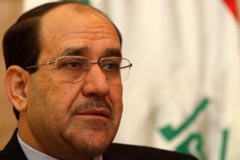
“The decision we made [to evacuate the camp by the end of 2011] is irreversible," Iraq’s Prime Minister Nuri al-Maliki told AFP on Thursday.

Maliki went on to describe the MKO as a “criminal gang,” adding, “We cannot permit a criminal gang to remain here.”

The comments by the Iraqi prime minister come on the heels of an appeal last week by the UN for the extension of the deadline to close down Camp Ashraf.

"I … appeal to the government of Iraq to extend this deadline in order to permit adequate time for a solution to be found," the UN envoy to Iraq, Martin Kobler, told the UN Security Council on December 6.

Camp Ashraf, about 120 kilometers (74.5 miles) west of the Iranian border, houses some 3,400 members of MKO terrorist group which is notorious for carrying out numerous acts of terror against Iranian civilians and officials.

The terrorist group is also known to have collaborated with Saddam in the bloody repression of the 1991 Shia Muslims in southern Iraq and the massacre of Iraqi Kurds in the country’s north.

Baghdad considers Camp Ashraf and its suspected terrorist residents as a threat to its national security and insists it is determined to close down the terrorist base by the end of 2011.

While the MKO is designated as a terrorist organization under the United States law, and has been described by State Department officials as a repressive cult, The New York Times recently reported that Washington is mulling over removing the MKO from its terrorist watch list and giving refuge to its members.

Last month, European Union foreign policy chief, Catherine Ashton, said she would urge EU member states to accept the residents of Camp Ashraf.

Iran has repeatedly called on the Iraqi government to expel the group, listed as a terrorist organization by much of the international community, but the US has been trying to block the expulsion by pressuring the Iraqi government.

In April, Iranian Justice Minister Morteza Bakhtiari said 12,000 Iranians have fallen victim to MKO’s acts of terror. He also condemned the US and Europe for their continued support for the terrorist group, referring to the EU decision to remove the group from its list of terrorist organizations in 2009.

December 17, 2011 0 comments
FacebookTwitterPinterestWhatsappTelegramSkypeEmail
Iraqi Authorities' stance on the MEK

Nuri al-Maliki: decision to close Camp Ashraf is final

Iraq will send a delegation to Syria to try to convince Damascus to implement an Iraqi initiative to end months of bloody conflict, Prime Minister Nuri al-Maliki told AFP in an exclusive interview. Nuri al-Maliki: decision to close Camp Ashraf is final

Maliki also said that oil giant ExxonMobil has promised to reconsider an exploration deal with Iraq’s autonomous Kurdistan region that has angered Baghdad, and that a year-end deadline for closing an Iranian opposition exile camp in Iraq is final.

"When I arrive in Baghdad, I will hold a meeting to prepare the plans to send a delegation to Syria in order to implement the Iraqi initiative," Maliki told AFP as he flew back to Iraq after a trip to Washington.

The initiative is aimed at opening a dialogue between the opposition and the Syrian government to reach a result that satisfies both sides, he said.

"America and Europe are afraid of the phase after (Syrian President) Bashar al-Assad. That is why they (the United States and Europe) understand the initiative" from Iraq, Maliki said.

The United Nations this week estimated that more than 5,000 people have been killed in the Syrian government’s crackdown on dissent, which enters its 10th month on Thursday.

Baghdad has so far shied away from punitive measures against Assad’s regime, abstaining from both a vote to suspend Syria from the Arab League, and another to impose sanctions against Syria.

Maliki also said that Exxonmobil has agreed to reconsider its controversial oil exploration deal with the autonomous Kurdistan region in north Iraq.

"We had a meeting with (Exxon) in Washington and we discussed the contracts, some of which are located in disputed areas," Maliki said.

"They promised to reconsider their decision," he said.

Kurdistan on October 18 inked a deal with ExxonMobil for it to explore six areas, but Baghdad regards any contracts not signed with the central government as invalid.

An official with the Iraqi oil ministry has said that two of the areas — Al-Qosh and Bardarash — are actually parts of Nineveh province that Kurdistan wants to annex into its autonomous region, a move Baghdad opposes.

The Kurdistan contract potentially puts an Exxon contract with the Iraqi government in jeopardy.

Iraq’s oil ministry completed the deal with ExxonMobil and Anglo-Dutch giant Shell in January 2010 to develop production at West Qurna-1, which with reserves of about 8.5 billion barrels is the country’s second-biggest field.

And Maliki also said that Iraq’s decision to close Camp Ashraf, which is occupied by the opposition People’s Mujahedeen Organisation of Iran (PMOI), is final.

"The decision we made is irreversible," Maliki said.

He said that a United Nations representative was not permitted to visit Camp Ashraf, and that the PMOI had also refused to implement a UN plan to shut down the camp, saying that this reinforced Iraq’s decision.

This "means that it (the PMOI) is a criminal gang, and we cannot allow a criminal gang to remain" in Iraq, Maliki said.

The United Nations appealed to the Iraqi government on December 6 to push back the deadline to close the camp, located in Diyala province northwest of Baghdad, warning of a growing risk of violence.

The positions of the residents and the government "remain far apart," the UN envoy to Iraq Martin Kobler told the Security Council, appealing to the international community to find new homes for the exiles.

Camp Ashraf, which has become a mounting international problem, has been in the spotlight since a deadly April raid on the camp by Iraqi security forces.

The camp was set up when Iraq and Iran were at war in the 1980s by the PMOI and later came under US control until January 2009, when US forces transferred security for the camp to Iraq.

The PMOI has been on the US government terrorist list since 1997.

Ammar Karim

December 17, 2011 0 comments
FacebookTwitterPinterestWhatsappTelegramSkypeEmail
USA

U.S. officials warn that MEK is obstructing humanitarian solution in Ashraf

Washington, DC – According to top U.S. officials, Mujahedin-e Khalq (MEK) leadership is blocking efforts to protect residents at the organization’s encampment at Camp Ashraf in Iraq.
U.S. officials warn that MEK is obstructing humanitarian solution in Ashraf
A December 31st deadline set by the Iraqi government to close the camp is being leveraged by pro-MEK advocates in their campaign to have the group removed from the U.S. list of Foreign Terrorist Organizations. They say that residents of Camp Ashraf could face a “massacre” at the hands of Iraqi security forces and that the terrorist designation only increases this risk.

But U.S. officials testified before the House Foreign Affairs Oversight and Investigations Subcommittee last week that efforts to peacefully resolve the standoff are being rebuffed by MEK leadership. U.S. Special Adviser on Camp Ashraf Daniel Fried said MEK leadership has impeded a refugee resettlement process and interfered with the UN’s ability to conduct interviews with individuals at the encampment.

Fried told Congress that the Administration’s efforts have been met “intransigence by Camp Ashraf leadership to agree to any relocation plan other than en masse relocation outside Iraq.” The MEK’s leadership has demanded that the group be relocated only as a single unit, rather than allowing residents to relocate individually.

According to leaked diplomatic cables, Iraqi President Nouri Al Maliki is under pressure from Iran to close Camp Ashraf, which straddles the Iranian border. Moving the residents away from the border has been proposed as a means to defuse Iranian pressure while allowing individuals at Camp Ashraf to seek resettlement elsewhere through the United Nations.

But the UN refugee relocation process, in order to be successfully completed, requires unmonitored interviews between residents of Camp Ashraf. MEK blocked this process, demanding that their leadership be present during the process, until September of this year when they announced they would allow interviews to go forward.

Immediately after that announcement, however, MEK advocates argued that the group should be allowed to stay at Ashraf beyond the December 31 Iraqi deadline to allow time for the process to go forward. And now, U.S. officials indicate MEK is obstructing the process, suggesting that the leadership may be attempting to delay the camp’s closure indefinitely.

“The U.S. government is taking every responsible action possible, working with the government of Iraq, the United Nations, and our allies and partners, and in contact with the residents of Camp Ashraf and those who speak for them, to assure that any relocation …is done humanely,” said Ambassador Fried.

But lawmakers at the hearing placed the onus on the United States rather than the MEK. Congressman Ted Poe (R-TX) said the MEK are “freedom fighters” not terrorists. Dana Rohrbacher (R-CA) implied that the MEK’s designation as a terrorist group was the main stumbling block in preventing a resolution to the Ashraf situation. The MEK’s supporters have engaged in a massive public relations and lobbying campaign to pressure lawmakers to support the group’s bid to be taken off the Foreign Terrorist Organizations list.

Rohrbacher challenged the sincerity of the administration, saying the MEK is “a secular opposition group…a peaceful community of political refugees which do not deserve a terrorist label.” He warned that if violence broke at Camp Ashraf, “The blood in the sand will stain the Gucci shoes of those in the State Department.”

Also testifying was Ambassador Lincoln P. Bloomfield, who works on behalf of Akin Gump, a group retained by pro-MEK Iranian American Community of Northern California to lobby for the organization’s removal from the terror list. Bloomfield said the MEK is not a terrorist group.

Ambassador Fried challenged such assertions, and summarized what he said is the long history of MEK involvement in terrorism. For instance, said Fried, “in April 1992, the MEK became one of the few groups to attempt an attack on U.S. soil when it launched near-simultaneous attacks in thirteen countries, including against the Iranian mission to the United Nations in New York.”

Co-director of the Brookings Institute Elizabeth Farris testified that a resolution needs the involvement of the international community. “Given the extraordinary politicization of Camp Ashraf, if durable situations are to be found, the situation needs to be depoliticized by relying on multilateral actors applying internationally-recognized standards and practices.” During his closing statement, representative Rohrabacher acknowledged that the MEK leadership can be more helpful in reaching a resolution.

Despite the complexity of the situation, Fried said “a humane and relocation is possible, but it will take intense and serious efforts by all parties.”

“The leaders of Ashraf…we encourage them to step forward…so that there can be a mutually agreed arrangement rather than something that is unilateral. Unilateral doesn’t work.”

By Ardavon Naimi

December 17, 2011 0 comments
FacebookTwitterPinterestWhatsappTelegramSkypeEmail
Iraq

Iraqis rally demanding MKO expulsion

Thousands of Iraqi people held a demonstration in Tahrir square in central Baghdad on Friday calling for the expulsion of the terrorist Mojahedin Khalq Organization (MKO) from their country.
Thousands of Iraqi people held a demonstration in Tahrir square in central Baghdad on Friday calling for the expulsion of the terrorist MKO
The MKO, The terrorist group, was granted asylum in Iraq in the 1980s under Saddam Hussein’s regime and set up home at Camp of New Iraq (which was formerly known as Camp Ashraf) in Diyala province. But after the 2003 U.S.-led invasion, they became an irritant to Iraq’s government.

According to AP, the demonstrators were urging the government to abide by an end-of-year deadline to expel the group from Iraq and close their camp here.

Shouting some slogans, the protesters condemned the MKO and warned the Iraqi government about the terrorist group’s plans to kill the Iraqi people and to plague the country by internal divisions.

Issuing a statement, the protesters also called on the government to prevent the European Union from interfering in the issue of expulsion of the MKO.

They also urged the government to bring to trial the MKO criminals who have the Iraqi people’s blood on their hand.

Decision to close MKO camp ‘irreversible’

In an interview with AFP on Thursday, Iraqi Prime Minister Nouri al-Maliki said that Baghdad’s decision to close Camp of New Iraq by year-end is ‘irreversible.’

“The decision we made is irreversible, especially because this organization refused the visit of a UN representative to Camp Ashraf,” Maliki said.

“They’ve rejected the UN plan, which means this is a criminal gang and we cannot permit a criminal gang to remain here,” he added.

The Iraqi government has reiterated that the camp, which is a threat to its relations with neighboring Iran, will be closed by December 31.

But last week the United Nations appealed for an extension to the end-of-year deadline to allow more time for a solution to be negotiated with the camp’s residents who are refusing to move unless they are given UN protection.

ICRC has not requested extension of MKO expulsion deadline

Speaking to the Fars News Agency, the representative of the International Committee of the Red Cross (ICRC) in Iran, Pierre Ryter, said that the Committee has never negotiated with Iraqi officials to persuade them into extending the deadline for the expulsion of the MKO members from Iraq.

To View the Video File Click Here

December 17, 2011 0 comments
FacebookTwitterPinterestWhatsappTelegramSkypeEmail
MEK Camp Ashraf

ICRI: situation remains uncertain for residents of Camp Ashraf

Camp Ashraf, 80 km north-east of Baghdad, is home to over 3,000 Iranian nationals who belong to the People’s Mujaheddin Organization of Iran. In recent months, the Iraqi authorities have repeatedly said that they intend to close the camp at the end of 2011. Beat Schweizer, head of the ICRC delegation in Iraq, explains the ICRC’s role and response.

The Iraqi authorities have said they will close the camp at the end of 2011. What is the ICRC’s Beat Schweizer, head of the ICRC delegation in Iraqview on this?

The ICRC welcomes the Iraqi authorities’ commitment not to transfer Camp Ashraf residents to Iran against their will, and will continue to monitor the situation, to ensure that the Iraqi authorities fulfil this commitment. The ICRC will also continue to insist that the authorities meet their obligation to preserve the dignity, physical well-being and mental well-being of the camp’s residents. While it is true that the residents of camp Ashraf must comply with Iraqi laws and regulations, it is also true that the Iraqi authorities must ensure ICRCrespect for these people’s fundamental rights, just as they would for anyone else on Iraqi territory. Furthermore, the Iraqi authorities must ensure that the residents of Camp Ashraf have access to such basic services as food, water and medical care, under all circumstances.

I must emphasize that the ICRC is not part of any mechanism to close down the camp or transfer its residents, and we are not going to be.

What will the ICRC do if force is used to transfer Camp Ashraf’s residents?

The ICRC will continue to call on all concerned to exercise restraint and to comply with applicable law. One legal requirement is that any use of force be in accordance with internationally-recognised principles governing law-enforcement operations. And respect for human dignity must be maintained whatever happens.

What will the ICRC do if residents are arrested?

The ICRC is prepared to visit anyone from Camp Ashraf whom the Iraqi authorities may detain. We would assess their conditions of detention and treatment, and would help them restore contact with their relatives, through Red Cross messages for instance. The ICRC is already making regular visits to detainees in Iraq, and we would assist any detained persons from Ashraf Camp in the same way.

In 2009, the ICRC visited 36 Ashraf residents detained by the Iraqi authorities. In April 2011, the ICRC visited six people arrested in relation with clashes between Iraqi security forces and residents of the camp. The authorities released those six people shortly after detaining them.

What is the ICRC doing for residents of Camp Ashraf who are seeking asylum and want to be resettled in a third country?

We have been facilitating the repatriation of former residents of Camp Ashraf who wish to go back to Iran. Since 2003, the ICRC has arranged for the repatriation of over 250 Camp Ashraf residents to their home country, in cooperation with its delegation in Tehran. The ICRC has helped repatriate seven former residents in 2011 so far, with the most recent repatriation taking place in August.

The ICRC is prepared to continue helping repatriate residents of Camp Ashraf to Iran at the request of the people concerned, with their full consent, and in agreement with both the Iraqi and the Iranian authorities. If residents of the camp want to seek asylum or resettlement in a third country, the ICRC will refer them to UNHCR. We may offer direct help in certain cases, for instance by issuing travel documents once the authorities of a particular country have agreed to take a person. The ICRC can also facilitate contact with relatives abroad.

What was the ICRC’s response to last April’s clashes between Iraqi forces and residents of the camp?

The ICRC maintained constant dialogue with the Iraqi authorities, in an effort to ensure that the use of force by law-enforcement personnel conformed to the standards that govern law-enforcement operations. We also dispatched kits of dressing material to Baquba Hospital, where casualties obtained treatment, and visited six residents arrested by the Iraqi authorities during the clashes.

What is the current situation in Camp Ashraf?

The ICRC has not made any visits to Camp Ashraf recently. The situation there is being monitored by the United Nations Assistance Mission for Iraq.

The ICRC remains committed to providing independent, humanitarian assistance to the residents and their families. While we have no precise figures, the population of the camp is estimated at over 3,200.

December 14, 2011 0 comments
FacebookTwitterPinterestWhatsappTelegramSkypeEmail
Iraqi Authorities' stance on the MEK

Iraqi speaker urges MKO expulsion by year end

Iraqi Parliament Speaker Osama Nujaifi called on the UN to take proper measures to facilitate expulsion of the anti-Iran terrorist Mojahedin-e Khalq Organization (MKO) from Iraq’s soil. Iraqi Parliament Speaker Urges MKO Expulsion by Year End

Speaking to reporters, Nujaifi reiterated Baghdad’s decisive stance on MKO’s expulsion from Iraq’s soil, and said their expulsion should take place through coordination with the United Nations.

He added that the main suggestion seems to be moving MKO member to a third country and not to another area in Iraq.

Earlier, Iraqi Ambassador to Tehran Mohammad Majid al-Sheikh underscored Baghdad’s serious decision for expelling the MKO, and said the decision is irreversible.

"Based on the Iraqi government’s decision, the MKO members should leave our country by the end of 2011," al-Sheikh told FNA on Monday, and reiterated, "The decision is irreversible and definite."

He also said that Iraqi officials in their different meetings with their counterparts at the EU, the UN and the International Committee of the Red Cross (ICRC) have underlined their seriousness in expelling the MKO from their country’s soil.

"We have always stressed that there is no possibility for their longer presence in Iraq at all and we have declared this to the international organizations," al-Sheikh said.

The MKO, whose main stronghold is in Iraq, is blacklisted by much of the international community, including the United States.

The MKO is behind a slew of assassinations and bombings inside Iran, a number of EU parliamentarians said in a recent letter in which they slammed a British court decision to remove the MKO from the British terror list. The EU officials also added that the group has no public support within Iran because of their role in helping Saddam Hussein in the Iraqi imposed war on Iran (1980-1988).

The group started assassination of the citizens and officials after the revolution in a bid to take control of the newly established Islamic Republic. It killed several of Iran’s new leaders in the early years after the revolution, including the then President, Mohammad Ali Rajayee, Prime Minister, Mohammad Javad Bahonar and the Judiciary Chief, Mohammad Hossein Beheshti who were killed in bomb attacks by MKO members in 1981.

The group fled to Iraq in 1986, where it was protected by Saddam Hussein and where it helped the Iraqi dictator suppress Shiite and Kurd uprisings in the country.

The terrorist group joined Saddam’s army during the Iraqi imposed war on Iran (1980-1988) and helped Saddam and killed thousands of Iranian civilians and soldiers during the US-backed Iraqi imposed war on Iran.

Since the 2003 US invasion of Iraq, the group, which now adheres to a pro-free-market philosophy, has been strongly backed by neo-conservatives in the United States, who also argue for the MKO to be taken off the US terror list.

Since the beginning of this year, the Baghdad government has repeatedly assured Iranian officials and people that it is determined to expel the MKO from Iraq by the end of 2011.

December 14, 2011 0 comments
FacebookTwitterPinterestWhatsappTelegramSkypeEmail
Newer Posts
Older Posts

Recent Posts

  • A Comparative Analysis of Psychological Control Mechanisms in Jeffrey Epstein’s Cult and the MEK

    August 3, 2026
  • Operation Mersad: How Iran foiled Saddam’s final gambit 37 years ago

    August 1, 2026
  • Ideology Cannot Prevail over Human Dignity

    July 29, 2026
  • Is Rudy Giuliani so naïve to support MEK terrorists?

    July 27, 2026
  • National Pride of Iranians: Reject the Rajavis and their Patrons

    July 22, 2026
  • Facebook
  • Twitter
  • Instagram
  • Youtube

© 2003 - 2025 NEJAT Society . All Rights Reserved. NejatNGO.org


Back To Top
Nejat Society
  • Home
  • Articles
  • Media
    • Cartoons
    • NewsPics
    • Photo Gallery
    • Videos
  • Publications
    • Books
    • Nejat NewsLetter
    • Pars Brief
  • About Us
  • Contact us
  • Editions
    • عربي
    • فارسی
    • Shqip