Nejat Society
  • Home
  • Articles
  • Media
    • Cartoons
    • NewsPics
    • Photo Gallery
    • Videos
  • Publications
    • Books
    • Nejat NewsLetter
    • Pars Brief
  • About Us
  • Contact us
  • Editions
    • عربي
    • فارسی
    • Shqip
Nejat Society
Nejat Society
  • Home
  • Articles
  • Media
    • Cartoons
    • NewsPics
    • Photo Gallery
    • Videos
  • Publications
    • Books
    • Nejat NewsLetter
    • Pars Brief
  • About Us
  • Contact us
  • Editions
    • عربي
    • فارسی
    • Shqip
© 2003 - 2024 NEJAT Society. nejatngo.org
Iraq

Iraq FM: Western Countries Who Care About MKO Can Take Them

Following a raid by the Iraqi military on the headquarters of the terrorist group the People’s Mujahedin of Iran, Iraq’s Foreign Minister Hoshyar Zebari has suggested that “countries who care about the fate and human rights of this group’s action … should welcome them and they should resettle them in their countries.”

Zebari made the remarks in an interview with Radio Free Europe/Radio Liberty, just days after the Iraqi military launched a raid on Camp Ashraf, 60 kilometers North of the Iraqi capital Baghdad. The camp is home to the People’s Mujahedin of Iran (PMOI), a terrorist organisation much despised by the Iranian people. The United Nations says 34 people were killed during the raid on the camp at which some 3,500 members of the death cult are stationed.

Iraq
Zebari told RFE/RL :“The Iraqi Constitution prohibits the presence of mujahedin or any other militia groups from neighboring countries, whether it’s the PKK [Kurdistan Workers’ Party], whether it’s the PJAK [Party for a Free Life in Kurdistan], or whoever to have presence on Iraqi territory and to launch attacks against our neighbors. Constitutionally, this is not allowed and the mujahedin or the MEK member [Mujahedin Khalq] of the Ashraf camp have to respect Iraqi law.”

“Iraq has a commitment not to extradite any of its members to Iran. Iraq has a commitment also to observe international humanitarian law and to have access by international organisations to them, like the United Nation missions, ICRC, and so on.”

Zebari continue: “No country in the world will tolerate any organisation to undermine its sovereignty, to defy its authority, and to act as if this is a liberated territory or a state within a state. So they have to abide by Iraqi rules and regulations, and we have called on European countries and others to resettle these peoples in their countries, for them to go on and continue their struggle. In Iraq, their presence is unacceptable.”

The Iraqi Foreign Minister said that his government’s decision to expel the group and set a deadline of the end of the year was “an Iraqi decision” while noting that the group was even “branded in the United States as a terrorist group, by the Department of State.”

“Those countries who care about the fate and human rights of this group’s action, should welcome them and they should resettle them in their countries. My government has requested such a thing from European countries and from other countries, to resettle members of the Ashraf camp in their countries.”

When asked where he saw the group’s members going, Zebari responded, “Wherever. Any country — in the northern countries, in Australia, in New Zealand, Canada, the United States, wherever.”

The PMOI is known by a number of different names including Mojahedin-e-Khalq Organization (MEK) or (MKO), The National Liberation Army of Iran (the group’s armed wing) and the National Council of Resistance of Iran, a front group for the PMOI.

In the 80s, the group joined forces with the invading of Saddam Hussein and developed an intimate relationship with the Iraqi dictator at a time when Iranians were struggling to liberate the occupied Iranian territories. Due to the MKO’s traitorous actions and its role in the massacre of Iraqi Kurds and Marsh Arabs, it has no political base inside Iran and no genuine support or credibility among ordinary Iranians.

Eurasia Review
April 23, 2011 0 comments
FacebookTwitterPinterestWhatsappTelegramSkypeEmail
Former members of the MEK

Ex-MKO members recount ordeal in Iraq

Three defected members of the terrorist group Mujahedin-e Khalq Organization (MKO) have given an account of their ordeal during their stay at Camp Ashraf in Iraq.


Three defected members of the terrorist group Mujahedin-e Khalq Organization (MKO) have given an account of their ordeal during their stay at Camp Ashraf in Iraq.

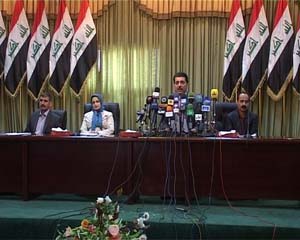
The spokesperson of the Iraqi defense ministry, General Mohammed al-Askari, said in a Tuesday press conference in the Iraqi capital of Baghdad that the three former MKO members escaped from Camp Ashraf, the terrorist group’s headquarters in Iraq, and surrendered to the Iraqi security forces, a Press TV correspondent reported.

The official said that the defected members have provided the Iraqi government with the evidence required to shut down the camp according to the international laws.

The former members of the terrorist group say the residents of Camp Ashraf are completely cut off from the outside world, and are tortured and traumatized, but are also afraid to escape.


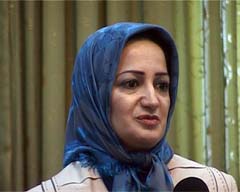
Maryam Sanjabi, one of the MKO deserters,

Having lived in misery and under pressure for many years, Maryam Sanjabi, one of the MKO deserters, surrendered herself to the Iraqi forces deployed near the camp last week.

“None of the residents of Camp Ashraf have the right to contact their families… The only thing that can separate a member from the MKO is death,” she said.

“The leaders of the camp have spent millions of dollars to train the residents of the camp how to launch attacks and even encounter the Iraqi security forces,” Sanjabi added.

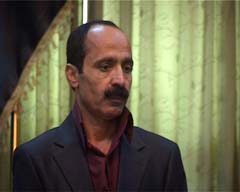
Another former MKO member, Abdullatif Shadvari, who escaped from the camp two months ago, former MKO member, Abdullatif Shadvari,earlier said, “The punishment of those who try to escape from Camp Ashraf… is execution.”
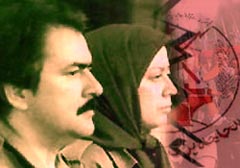
On April 8, 34 people were reportedly killed in clashes between Iraqi security forces and MKO members residing in Camp Ashraf in Diyala province.

Iraqi forces say there is evidence that the people have been killed by the organization itself.
On April 11, Iraqi government spokesman Ali al-Dabbagh said the cabinet is determined to shut down the camp.

The group fled to Iraq in 1986, where it enjoyed the support of Iraqi executed dictator Saddam Hussein, and set up Camp Ashraf in the eastern province of Diyala near the Iranian border.

More than 3,000 MKO members are residing at the camp. In addition, the MKO sends elements to Iran on spy and terrorist missions.

The organization is also known to have cooperated with Saddam in suppressing the 1991 uprisings in southern Iraq and the massacre of Iraqi Kurds.

Following the overthrow of Saddam in 2003, the Iraqi government has set numerous deadlines for the terrorist group to leave the country but MKO has managed to maintain its base due to US backing.

The MKO is listed as a terrorist organization by much of the international community, and is responsible for numerous terrorist acts against both Iranians and Iraqis.

Iran has repeatedly called on the Iraqi government to expel the group, but the US has been blocking its expulsion by pressuring the Iraqi government against such a move.
Download Ex-MKO members recount ordeal in Iraq

April 21, 2011 0 comments
FacebookTwitterPinterestWhatsappTelegramSkypeEmail
MEK Camp Ashraf

Dozens of MKO Members Escape Camp Ashraf

Tens of the members of the terrorist Mojahedin-e Khalq Organization (MKO) escaped from the group’s main training camp, the Camp of New Iraq, in Northern Iraq, local media reported on Wednesday.Tens of the members of the terrorist Mojahedin-e Khalq Organization (MKO) escaped from the group's main training camp

The Arabic-language Nahrainnet website said Iraq’s defense ministry has confirmed that scores of defectors have escaped the camp and sought Baghdad’s refuge.

The report pointed out that the move by the MKO fugitives would help further unveil the shocking secrets of the camp (formerly known as Camp Ashraf).

The website also stressed that the move by the MKO’s members also proves the Iranian officials’ righteous stance who had said earlier that a large number of MKO members wanted to exit the camp and return to Iran but they were incarcerated in the camp by the MKO ringleaders.

The MKO has been in Iraq’s Diyala province since the 1980s.

Iraqi security forces took control of the training base of the MKO at Camp Ashraf – about 60km (37 miles) north of Baghdad – in 2009 and detained dozens of the members of the terrorist group.

The Iraqi authority also changed the name of the military center from Camp Ashraf to the Camp of New Iraq.

Many of the MKO members abandoned the terrorist organization while most of those still remaining in the camp are said to be willing to quit but are under pressure and torture not to do so.

A May 2005 Human Rights Watch report accused the MKO of running prison camps in Iraq and committing human rights violations.

According to the Human Rights Watch report, the outlawed group puts defectors under torture and jail terms.

Numerous articles and letters posted on the Internet by family members of MKO recruits confirm reports of the horrific abuse that the group inflicts on its own members and the alluring recruitment methods it uses.

The most shocking of such stories includes accounts given by former British MKO member Ann Singleton and Mustafa Mohammadi — the father of an Iranian-Canadian girl who was drawn into the group during an MKO recruitment campaign in Canada.

Mohammadi recounts his desperate efforts to contact his daughter, who disappeared several years ago – a result of what the MKO called a ‘two-month tour’ of Camp Ashraf for teenagers.
He also explains how the group forces the families of its recruits to take part in pro-MKO demonstrations in Western countries by threatening to kill their loved ones.

Lacking a foothold in Iran, the terrorist group recruits ill-informed teens from Iranian immigrant communities in Western states and blocks their departure afterwards.

The MKO, whose main stronghold is in Iraq, is blacklisted by much of the international community, including the United States.

Before an overture by the EU, the MKO was on the European Union’s list of terrorist organizations subject to an EU-wide assets freeze. Yet, the MKO puppet leader, Maryam Rajavi, who has residency in France, regularly visited Brussels and despite the ban enjoyed full freedom in Europe.

The MKO is behind a slew of assassinations and bombings inside Iran, a number of EU parliamentarians said in a recent letter in which they slammed a British court decision to remove the MKO from the British terror list. The EU officials also added that the group has no public support within Iran because of their role in helping Saddam Hussein in the Iraqi imposed war on Iran (1980-1988).

Iraq had announced earlier this month that members of the terrorist group must leave by the end of 2011.

Earlier this week, the Baghdad government assured Iranian officials and people that it is determined to expel the terrorist organization from Iraq by the end of 2011.

"Expulsion of the MKO from Iraq’s soil and termination of its presence which has lasted for several years is a definite decision," Iraqi Government Spokesman Ali Al-Dabbaq told FNA, adding, "The MKO will be expelled from Iraq by the end of the current year."

"The only option for the members of the MKO is leaving Iraq and they have no other choice," he reiterated.

Reminding to the black record of the terrorist group and its crimes against the Iraqi people, Dabbaq said "collaboration with the former Iraqi dictator and massacre of thousands of our people is just part of their crimes".

April 21, 2011 0 comments
FacebookTwitterPinterestWhatsappTelegramSkypeEmail
The cult of Rajavi

MKO defectors offered suicide option

A Mujahedin-e Khalq Organization (MKO) defector says any member of the terrorist group who wishes to leave has no choice but to commit suicide with a cyanide pill.
Having lived in misery and under pressure for many years, Sanjabi surrendered herself to the Iraqi forces deployed near the camp last week.
Speaking at a press conference at the Iraqi Defense Ministry in Baghdad on Tuesday, former MKO member Maryam Sanjabi said, “When I was appointed as a senior member of the MKO leadership council, I was told that I could never leave the organization. Otherwise, I had to kill myself by taking a cyanide pill.

“It is a custom within the organization to exterminate its defectors. Such a measure on occasions has been emphasized by [MKO leader] Massoud Rajavi. Two members of the MKO leadership council were killed some 2 years ago when they wanted to desert the organization.”

“Even some members of MKO leadership council are currently held in captivity in Camp Ashraf because they have sought to defect. MKO members are afraid to disclose what is happening to them for fear of their lives.”

Having lived in misery and under pressure for many years, Sanjabi surrendered herself to the Iraqi forces deployed near the camp last week.

"None of the residents of Camp Ashraf have the right to contact their families… The only thing that can separate a member from the MKO is death," she said.

"The leaders of the camp have spent millions of dollars to train the residents of the camp on how to launch attacks and even encounter the Iraqi security forces," Sanjabi added.

On Tuesday, three MKO defectors gave an account of their ordeals during their stay at Camp Ashraf in Iraq.

The spokesperson of the Iraqi Defense Ministry, General Mohammed al-Askari, said in a Tuesday press conference in Baghdad that the three former MKO members had escaped from Camp Ashraf and surrendered to the Iraqi security forces, a Press TV correspondent reported.
The official said that the defectors have provided the Iraqi government with the evidence required to shut down the camp according to international law.

The former members of the terrorist group say the residents of Camp Ashraf are totally cut off from the outside world and are often tortured and traumatized for any show of dissent. Consequently, they are afraid to escape.

Abdullatif Shadvari, a former MKO member, who escaped from the camp two months ago, earlier said, “The punishment of those who try to escape from Camp Ashraf… is execution.”

On April 8, at least 34 people were reportedly killed in clashes between Iraqi security forces and MKO members residing in Camp Ashraf.

Iraqi forces say there is evidence that the people have been killed by the organization itself.
On April 11, Iraqi government spokesman Ali al-Dabbagh said the cabinet is determined to shut down the camp.

The group fled to Iraq in 1986, where it enjoyed the support of former Iraqi dictator Saddam Hussein, and set up Camp Ashraf in Diyala Province near the Iranian border.

More than 3,000 MKO members are residing at the camp. In addition, the MKO sends elements to Iran on spy and terrorist missions.

The organization is also known to have cooperated with Saddam in suppressing the 1991 uprisings in southern Iraq and the massacre of Iraqi Kurds.

The MKO is listed as a terrorist organization by much of the international community, and is responsible for numerous terrorist acts against both Iranians and Iraqis.

Iran has repeatedly called on the Iraqi government to expel the group, but the US has been blocking the group’s expulsion by pressuring Baghdad against such a move.

April 21, 2011 0 comments
FacebookTwitterPinterestWhatsappTelegramSkypeEmail
Mujahedin Khalq Organization's Propaganda System

MKO Exploits Crisis for Propaganda

The situation of Camp Ashraf poses complex challenges for MKO leaders with no easy answers.
The group leaders are the same criminals who have the blood of Americans, Iranians and Iraqi The situation of Camp Ashraf poses complex challenges for MKO leaders with no easy answers.Kurds and Shiites on their hands and are the most hated by the majority of Iranians, even those who criticize the current government of Tehran. They find no way to prolong their survival except by attracting the West’s attention towards their bankrupt organization.
The recent clashes at Camp Ashraf were part of MKO’s propaganda campaign to buy support of the West. Iraqi Defense Ministry spokesman, Mohammad Al-Askari attended a new conference a day after clashes, he showed the media a metal hook used by residents of camp Ashraf to attack Iraqi security forces. [1] While MKO websites claim that 31 Ashraf residents were killed during the clashes with Iraqi Security forces, Iraqi authorities say that these people were killed at Camp Ashraf on Friday when security forces responded to rock-throwing and threats by residents during an operation to reclaim land from the camp, according to Reuters.[2]

Along with their misinformation campaign MEK have posted videos on the Internet showing some soldiers appear to be Iraqi troops walking around and in one case targeting Ashraf residents. The videos also show an American Humvee bearing an Iraqi flag chasing some people on foot around. You see one man throw himself in front of the vehicle. The vehicle stops right away and reverses away. You may wonder who those dead and injured bodies MKO TV shows and claims the number to mount 31 are. The videos are so ambiguous that CNN declared that it could not confirm them.[3]

Haider Adel is an Iraqi policeman who was wounded by MKO forces on Friday. "We were at a checkpoint to provide protection for them (Ashraf residents), but all of the sudden they attacked us with stones and iron bars," he said.[4]

The comments from Iraqi government spokesman Ali al-Dabbagh came shortly after a United Nations Spokesman in New York said 34 people were killed in April8 raid on Camp Ashraf.[5]"Our security forces believe that this (the deaths) has been done by their (the PMOI) guards killing those who were willing to escape from the camp", Dabbagh said in a text message to AFP, adding that government was investigating the issue.[6]"Similar methods have been used before by them", he added.[7]

The Iraqi military, which rings the perimeter of the 19-sq-mil (49 sq km) Camp, denies using firearms and says only three residents were killed – when they threw themselves in front of military vehicles, according to an article by Rania Abouzeid of the TIME. [8]

Things can rapidly devolve into violence, given growing Iraqi frustration with the organization, whose members exhibit a cult-like obedience and willingness to sacrifice themselves for their cause, Abouzeid believes.[9]

Although the allegations of Iraqi officials and MKO propaganda on the case are entirely different, one thing is sure and that’s the victimization of a number of human beings whom unfortunately, among them there are intellectuals and educated people that have been caught in a destructive terrorist cult. Deprived of the most basic human rights, they have no way out except absolute obedience to a power-thirsty cult leader who doesn’t hesitate to sacrifice his followers just to guarantee his own survival.

By Mazda Parsi

References:
[1]Reuters, Iraq to probe Iranian camp deaths, April 12, 2011
[2]ibid
[3]NEW JESTIC, Iraq defends violence!, April 11, 2011-04-17
[4]ibid
[5]Agency France Press, Iran camp victims killed by own guards, April 14, 2011
[6]ibid
[7]ibid
[8]Abouzeid, Rania, TIME, Could the MEK Be Evicted From Camp Ashraf by Iraqi Military? , April15, 2011
[8]ibid
[9]ibid

April 21, 2011 0 comments
FacebookTwitterPinterestWhatsappTelegramSkypeEmail
Nejat Publications

Nejat NewsLetter NO.29

Inside this issue:

1.    MKO defected members in a Press Conference in Iraq

2.    Nejat Society Announcement on Camp Ashraf Clashes

3.    Give the Mojahedin- e Khalq an amnesty

4.    MKO Ringleaders Kill Dissidents to Control Iraq Base

5.    The Chameleon like Mujahedin-e Khalq

6.    Iraqi people want MEK terrorists out of Iraq

7.    Singleton visits Camp Ashraf in wake of violence by Rajavi cult loyalists

8.    MEK Terrorists Interfering in Iraq Democratisation

9.    MKO defectors offered suicide option

Download Nejat NewsLetter ISSUE NO.29

April 20, 2011 0 comments
FacebookTwitterPinterestWhatsappTelegramSkypeEmail
Mujahedin Khalq Organization as a terrorist group

Iraq unveils MKO’s hidden weaponry

Iraqi security forces say they have managed to discover a hidden munitions depot inside the terrorist Mujahedin Khalq Organization’s (MKO) Camp Ashraf in Diyala province north of Baghdad.
Local officials say that US troops had earlier claimed that they disarmed the MKO terrorists in the camp but that has turned out to be no true, it seemed that was not true, a Press TV correspondent reported Monday.

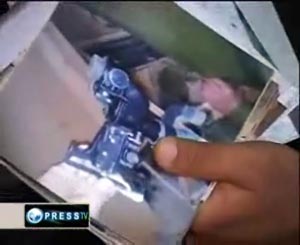
Iraqi security forces say they have managed to discover a hidden munitions depot inside the terrorist Mujahedin Khalq Organization's (MKO) Camp Ashraf

Camp Ashraf served for years as the armed training base for MKO members and provided the Iranian terrorist group with a massive shelter by former Iraqi president Saddam Hussein,
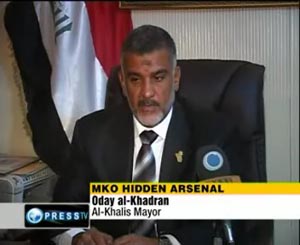
The Mayor of Al-Khalis, where the camp is located, displayed photos of the weapons discovered in the terrorist camp and said that they were buried inside the Ashraf camp.

Al-Khalis Mayor Oday al-Khadran

“Finding light and heavy weapons inside camp in a buried arsenal means they intend to attack the security forces,” Al-Khalis Mayor Oday al-Khadran said.

Meanwhile, Diayala police chief said that MKO leaders had claimed that they have already handed over 17,000 pieces of weaponry to American troops since the US-led invasion of Iraq in 2003.

“If the MKO had 17,000 pieces of weapons then how many hidden weapons do they have now? We confirmed that they attacked us with knives and tear gas,” Diyala Police chief Abdul Hussein Damouk said.

Recently, MKO claimed that the Iraqi security forces killed more than 34 of its members in the group’s latest clashes with Iraqi troops in April. However, AFP reported that only 10 terrorists were killed.

Iraqi officials say the clashes erupted when members of the camp began hurling stones and attacking security forces with knives and other weapons while they were carrying out their field duties.

Two days after the clashes, the Iraqi defense ministry held a press conference inside the camp to show that MKO claims were baseless.

Since the 2003 US-led invasion of Iraq, the group has received backing from a number of US lawmakers who continue to argue that the MKO terror group should be removed from the US international list of groups that support terrorism.

However, in line with the new Iraqi constitution, Baghdad government has vowed that it is determined to expel MKO terrorists from Iraq by the end of 2011.

Iraqi government spokesman Ali al-Dabbagh has recently said that the cabinet is determined to shut down the Camp and disband the terrorist group.

Most MKO terrorists fled Iran after they carried out a large number of terrorist assassinations and bombings in1980. They formally settled in Iraq in 1986, enjoying full support of former Iraqi dictator Saddam Hussein.

The MKO is responsible for numerous acts of terror against Iranian civilians and government officials as well as many Iraqi civilians that opposed the rule of the country’s last brutal dictator.
More than 3,000 MKO members reside at Camp Ashraf. In addition to cooperating with US operatives in Iraq, the MKO reportedly dispatches its elements from the terror camp to Iran to carry out espionage and terrorist operations for some Western countries.Download Iraq unveils MKO’s hidden weaponry

April 20, 2011 0 comments
FacebookTwitterPinterestWhatsappTelegramSkypeEmail
Iraq

Iraq: MKO presence violates constitution

Iraq’s foreign minister says his country will not allow the Mojahedin-e Khalq Organization (MKO) to use Iraq’s soil as a launchpad to conduct its terrorist activities.

In an interview with Radio Free Europe/Radio Liberty on Monday, Iraqi Hoshyar Zebari said, “The Iraqi Constitution prohibits the presence of MKO or any other militia groups to have presence on Iraqi territory and to launch attacks against our neighbors.” “Constitutionally, this is not allowed and the MKO members of the Ashraf camp have to respect Iraqi law,” he added.

Concerning Iraqi military’s raid on Camp Ashraf on April 8, Zebari said, “This was a military operation intended to take control of part of the territory. Ashraf camp is not a small camp; it is 50 kilometers large.”

“The Iraqi military extended its authority over about 20 kilometers of the camp. No country in the world will tolerate any organization to undermine its sovereignty, to defy its authority, and to act as if this is a liberated territory or a state within a state.” Zebari stated.

“So they have to abide by Iraqi rules and regulations, and we have called on European countries and others to resettle these peoples in their countries, for them to go on and continue their struggle. In Iraq, their presence is unacceptable,” Iraq’s top diplomat added.

The MKO was founded in Iran in the 1960s, but its members fled to Iraq in the 1980s after carrying out a series of assassinations and bombings inside the country.

The MKO cooperated with Saddam in suppressing the 1991 uprising in southern Iraq and the massacre of Iraqi Kurds.

Following the ouster of Saddam in 2003, the Iraqi government set numerous deadlines for the terrorist group to leave the country but MKO has managed to maintain Camp Ashraf due to US backing.

April 20, 2011 0 comments
FacebookTwitterPinterestWhatsappTelegramSkypeEmail
Iraqi Authorities' stance on the MEK

Iraqi Foreign Minister Says Camp Ashraf Must Go

On April 8, 2011, the Iraqi military launched a raid on Camp Ashraf, 60 kilometers north of Baghdad. The camp is the headquarters of the Mujahedin-e Khalq Organization (aka People’s Mujahedin of Iran), an organization opposed to the current government of Iran. According to the United Nations, some 34 people were killed in the raid and hundreds more injured.

The group was founded as a Marxist terrorist organization and was given sanctuary in Saddam Hussein’s Iraq in the 1980s. Today, Camp Ashraf is home to 3,500 members of the organization and their families.

During a visit to RFE/RL’s Prague headquarters, Iraqi Foreign Minister Hoshyar Zebari spoke to correspondent Joseph Hammond about Camp Ashraf, the pending U.S. military withdraw from the country, the tense situation around the ethnically mixed city of Kirkuk, and the transformative politics sweeping the Arab world.

RFER/RL: The United States is scheduled to withdraw its troops from Iraq by the end of this year. But U.S. Defense Secretary Robert Gates recently said that the United States could extend its role beyond that date. Does Iraq want U.S. troops to remain and, if so, in what role?

Hoshyar Zebari: Well, first of all, I think the agreement for the withdrawal of U.S. troops from Iraq ends at the end of 2011. And there are no plans to extend that agreement or to postpone the withdrawal. This is an issue that both the United States and the government of Iraq are committed to implement.
But it doesn’t mean that [the] American presence in Iraq will end. There will be a presence through the embassy, through the consulate, and also through the implementation of the Strategic Framework Agreement for Cooperation and Friendship between Iraq and the United States, which was concurrently signed with the [Status of Forces] agreement.
So we need some implementing tools for that agreement, in terms of training, in terms of advisers, in terms of capacity-building. But this would not be through a new agreement. This would be done bilaterally between the Iraqi ministers and its counterpart in the United States on various issues. This is how we approach the time beyond 2011.

RFE/RL: Will the Iraqi military and the Kurdish peshmerga militia be able maintain security in these tense regions after the United States withdraws?

Zebari: Well, the U.S. troops currently are not only in the north, actually. They are in different parts of the country. This is first. Secondly, I think that Iraqi security forces are capable of standing on [their] own. Of course, they will still need backup and support, but they are capable of maintaining law and order and internal security. That’s why, yes, after the withdrawal I think there has been plans to fill that vacuum, led by the United States forces. And the Iraqi military forces have some working mechanisms with the peshmerga forces in the north in order to avoid any misunderstandings or clashes in the disputed territories.

RFE/RL: What is the likelihood that the status of Kirkuk will be determined in the near future?

Zebari: This is a constitutional matter. Despite all the skeptics, all the people who raised the alarms that Kirkuk is the powder keg, it will blow up Iraq, since 2003 up to now it has not gone off. OK? Yes, there are disputed areas, claims, problems, but it has not led, really, to any all-out conflict or violence whatsoever.
This is a constitutional matter. There are procedures to address [and] resolve these issues. The new government was voted into power to implement this constitutional article, which is 140, which calls for the normalization of the situation in Kirkuk and other disputed territories. So it’s an obligation on this government.
Camp Ashraf Conflict

RFE/RL: Earlier this month, the Iraqi Army raided Camp Ashraf, home of the People’s Mujahedin Organization of Iran, which seeks to overthrow Iran’s leaders. The United Nations says 34 people were killed in this raid. The Iraqi government denies this and accuses guards in the camp of being responsible.

Zebari: The Iraqi Constitution prohibits the presence of mujahedin or any other militia groups from neighboring countries, whether it’s the PKK [Kurdistan Workers Party], whether it’s the PJAK [Party for a Free Life in Kurdistan], or whoever to have presence on Iraqi territory and to launch attacks against our neighbors. Constitutionally, this is not allowed and the mujahedin or the MEK member [Mujahedin-e Khalq] of the Ashraf camp have to respect Iraqi law.
Iraq has a commitment not to extradite any of its members to Iran. Iraq has a commitment also to observe international humanitarian law and to have access by international organizations to them, like the United Nation missions, ICRC [International Committee of the Red Cross], and so on. Yes, what happened was very unfortunate, really, but the aim was not to expel the members of the Ashraf camp to Iran.
This was a military operation intended to take control of part of the territory. Ashraf camp is not a small camp; it is 50 [square] kilometers large. The Iraqi military extended its authority over about 20 kilometers of the camp.
No country in the world will tolerate any organization to undermine its sovereignty, to defy its authority, and to act as if this is a liberated territory or a state within a state. So they have to abide by Iraqi rules and regulations, and we have called on European countries and others to resettle these peoples in their countries, for them to go on and continue their struggle. In Iraq, their presence is unacceptable.

RFE/RL: The U.S. government originally controlled Camp Ashraf following the 2003 invasion of Iraq. They disarmed the Mujahedin-e Khalq and transferred control of the camp to the Iraqi government in 2009. Has the United States government been kept abreast of developments at Camp Ashraf? The Iraqi government has called for the expulsion of this group and set a deadline of the end of the year.

Zebari: This is an Iraqi decision. This group is branded in the United States as a terrorist group, by the Department of State, and it was in Europe up until very recently, when it was lifted. Those countries who care about the fate and human rights of this group’s action, they should welcome them and they should resettle them in their countries. My government has requested such a thing from European countries and from other countries, to resettle members of the Ashraf camp in their countries.

RFE/RL: Where do you see the Iranians going?

Zebari: Wherever. Any country — in the northern countries, in Australia, in New Zealand, Canada, the United States, wherever.

RFE/RL: Right now, we’re seeing tremendous upheaval across the Arab world — revolutions in Tunisia, in Egypt, and uprisings in Yemen and elsewhere. What can other Arab countries learn from Iraq’s political experience?

Zebari: I think what the people of these Arab countries are calling for is basic rights, basic democratic rights, basic freedoms, representative government, elections, and being part of the decision-making. And Iraq has done this through the hard way, through a difficult, arduous road to building democracy. It hasn’t been easy with the foreign occupation, with the sectarian war, with the terrorism, with the regional interventions. But Iraq has passed the test.
Because what the Arab peoples in all these countries are demanding is what we have achieved. We don’t want to be the crown or the example, but I think Iraq draws a great deal of admiration [from] many, many people on the streets of Sanaa or Tripoli or Damascus or Cairo.

April 20, 2011 0 comments
FacebookTwitterPinterestWhatsappTelegramSkypeEmail
Missions of Nejat Society

Nejat Society Announcement on Camp Ashraf Clashes

The clashes between Iraqi security forces and Camp Ashraf residents on Friday April8, can beNejat Society Announcement on Camp Ashraf Clashes analyzed from several points of view. Either the act of Iraqi forces was aimed to set up a new station or to put pressure on the cult leaders to leave Iraq, MKO leaders should take the responsibility of the incidents because:

1. The opposition of Iraqi people and government against MKO presence in their territory is legal and reasonable regarding the MKO’s influential and active role in the massacre of Iraqi Kurds and Shiites in Saddam’s era.

2. Considering the fact that Ashraf residents are neither considered political refugees nor forth Geneva Convention applies to them, their presence in Iraq is definitely illegitimate.

3. Having morphed into a destructive cult, MKO is no more a political-military organization and Camp Ashraf has become one of its basic principles. Like many other cults, the camp is the container that keeps the cult members in and deprives them from all their basic human rights.

On April8th before dawn, forcing two members to commit suicide, MKO leaders make two hundred of the Camp residents attack Iraqi forces with iron hook and rocks in order to pave the way for the presence of American forces in the Camp.

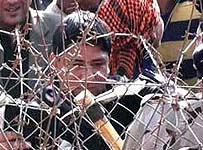
Outside the gates of Camp Ashraf, families of Ashraf residents are picketing waiting for their children who are not allowed by the cult leaders to visit their parents. These families are eager to see their loved ones rather than getting the news of their death or injury.

Unfortunately, the cult leaders do not care about people’s rights or freedom. They force some of the cult members to involve in clashes and some others who do not obey the cult leaders’ slang are made scapegoats in bloody clashes. This way, dissident members are eliminated.

Families neither confirm nor deny the number of killed members published by the cult but they ask Iraqi government to remove labyrinth of bars in Camp Ashraf in order to make the cult leaders engaged in providing the residents the chance to visit their families and choose their own fate whether they want to leave or they stay in the cult.

April 20, 2011 0 comments
FacebookTwitterPinterestWhatsappTelegramSkypeEmail
Newer Posts
Older Posts

Recent Posts

  • Expectations of human rights bodies regarding censorship within the MEK

    October 13, 2026
  • The Jamalis’ Plea for Help: Save Our Brother from the MEK!

    October 11, 2026
  • Testimonies of Participants in the MEK’s Staged Propaganda Stunt in Karaj

    October 7, 2026
  • Giuliani’s MEK ties have dogged him for years

    October 6, 2026
  • The Tragic Impact of MEK Isolation on Yazdan Teimorian and His Family

    October 5, 2026
  • Facebook
  • Twitter
  • Instagram
  • Youtube

© 2003 - 2025 NEJAT Society . All Rights Reserved. NejatNGO.org


Back To Top
Nejat Society
  • Home
  • Articles
  • Media
    • Cartoons
    • NewsPics
    • Photo Gallery
    • Videos
  • Publications
    • Books
    • Nejat NewsLetter
    • Pars Brief
  • About Us
  • Contact us
  • Editions
    • عربي
    • فارسی
    • Shqip