Nejat Society
  • Home
  • Articles
  • Media
    • Cartoons
    • NewsPics
    • Photo Gallery
    • Videos
  • Publications
    • Books
    • Nejat NewsLetter
    • Pars Brief
  • About Us
  • Contact us
  • Editions
    • عربي
    • فارسی
    • Shqip
Nejat Society
Nejat Society
  • Home
  • Articles
  • Media
    • Cartoons
    • NewsPics
    • Photo Gallery
    • Videos
  • Publications
    • Books
    • Nejat NewsLetter
    • Pars Brief
  • About Us
  • Contact us
  • Editions
    • عربي
    • فارسی
    • Shqip
© 2003 - 2024 NEJAT Society. nejatngo.org
Iraqi Authorities' stance on the MEK

Ali al-Dabbagh :MKO have no status in Iraq

Ali al-Dabbagh upbeat about Iraqi election
Ali al-Dabbagh, the Iraqi government spokesman and a candidate for the Rule of Law Coalition, gestures at a sample ballot as he speaks to Shia elders during a campaign event in Baghdad, Iraq.

Press TV has conducted an exclusive interview with Iraqi governmenAl-Dabbagh :Mujahedin have no status in Iraqt spokesman Ali al-Dabbagh on the country’s parliamentary elections, which are to be held on March 7.
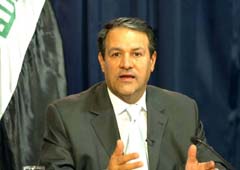
Following is the text of the interview:

Press TV: What is the importance of this election for the country?
Al-Dabbagh: The importance of the election based on and coming from that this is the first Iraqi people and the voters going to choose persons, by persons, by numbers. Unlike the others, just like the previous elections which just choose means of the list which they do not know who is that. This is very important which gives them the hope that they could be part of the change. They could nominate their representative by name, by person which they believe that he is going to be a real representative for them, a real defender of their right, and he is going to honestly representing them in a good way. This gives the hope. Second that, it is important that it is building up. It is building an accumulative advantage and record of the democracy. This is an importance. As well as, there is a challenges facing Iraq. Challenges for the reconstruction for the three services, for which the people are waiting after seven years. Some of the people are desperate because there is nothing delivered. Most of the difficulties are not yet fixed. So the people are looking forward to choose a real representative to keep the ministers, the cabinet accountable and the questionable for all the failure which might happen and it could improve the political situation in Iraq.

Press TV: Talking about the services, do you think that this election would lead the country to prosperity and unity?

al-Dabbagh: Well, it is not easy from the first time that they could achieve a hundred percent. But we could say that a certain percentage could be achieved. Once the heart of the political system in Iraq, parliamentary system, which is the council of representatives, which is the parliament, when it is healthy, that it could produce a healthy government, a healthy institution, a positive institution. This is the importance that they could be a good representative, a brave people which they could stand there and could bring a good people to the cabinet to improve the services. The political situation, this is the problem. It is a brittle situation still in Iraq. After seven years of the change in Iraq, still a consensus is ruling and governing the situation, which we do need to make a real democracy. A direct democracy is not a consensus democracy, which depends to on the acceptance of the other. The balanced way, which is being held during the past period, it produced a brittle situation. We hope that it will be a better… in the future.

Press TV: After the election campaigns and all the promises that were given by the candidates, do you think the turnout would be huge for the elections?

Al-Dabbagh: I do not think that. I do not think the promises could be fulfilled. It is not an easy, it is not a magic way that any candidates say I could do what, I could so. It is not the way. The most important thing that we have, I said, a healthy heart, a health of the political process, which is the parliament. When this built, of course, it will produce a better… A qualified and efficient… But a deficient… Some of the deficient minister and deficient senior official, which they could not play a major role in improving the services. I guess that the best thing to achieve that we will have a good governance which could produce a better performance. There is no problem of solving some of the difficulties. While the core is good, they could employ, they could nominate a qualified people which they could fix the difficulties and the problems in Iraq.

Press TV: You think the Iraqi people are looking for security. So what are the measures that you have taken or the government has taken to secure the electoral process?

Al-Dabbagh: Let me say that we do not need to say we do. I think we did. If there is a thing to be named to Mr. Maliki that the security situation… Everybody knows that they cannot move in the daytime. At the 3 o’clock, Baghdad is a ghost city. Nobody could move at 3 o’clock. But now nighttime they could travel. I do not say that there is no challenge. There is still challenge. We still are facing those devils which they make horrific attack on Iraqi people. We do need to work to maintain the security, to fix the security. But we had achieved a good performance in the security. What is after security? After security, I think the people would like to see a better life, to be a better living standard, a better education, healthcare, better rational, food, car, better jobs. Unemployment is high still in Iraq. The salaries, the incomes are still low. We want to improve it. All this people are… and it is legitimate. Iraq is a rich country. So this is the thing we are talking about. What is after security? We do not want to say we will do. We already did. But at the same time there are also some failure. Some of the services are not yet fixed. There is deficiency in some places which we do need to bridge this deficiency.

Press TV: I agree with you a hundred percent, but the question actually popped up after the recent threats which were made by the… groups or the terrorists that they are going to target the polling stations and target even the people who are going to vote. What kind of coordination have you done to secure the elections?

al-Dabbagh: I could say that this is not the first time. We had three elections and this is the election we have. We are just looking and hearing the threat. And at the end… Iraqi people are a brave people. As I said, at the time, some of the countries at the day of election, the percentage of the voters comes down, goes down. But here in Iraq, we have a threat. Bombs are coming and attacks are coming and terrorists may attack. But the people are coming. And this is the thing here in Iraq which might be different. This why they are coming, because we have good people, we have a wise people. Like Grand Ayatollah Sistani, like the other politicians, are calling the people to go for voting and this is good. For the Iraqi government is trying to take all the measures in order to secure the centers and the security of the voters, security of the papers, security of all related issues. This is the job of the government and I think there is a plan which is being done. Even we have a surveillance, area of surveillance, which is giving extra protection. This is in the capacity which we could do. And I think there is no way for us. Only to succeed. Failure and accepting¦ from those devil enemies is not in our agenda.

Press TV: Since the bilateral agreement or the withdrawal agreement between Iraq and the US, most of the US officials and actually the commanders are all the time saying that the security is fragile and the security forces are not well-prepared to take over the security file from the US Army. Why do you think they are all the time accusing the Iraqi security forces, or even the (Iraqi) Army, of being incapable of taking over the security file?

al-Dabbagh: I do not deny that there is a challenge, challenges which are facing us in Iraq. But the situation as… as in the media. We have a threat. Devil enemies are attacking us. I do not know monthly, weekly you could say, and it is horrific attack. We have lost a great number of our civilians. But at the end there is agenda, it has been signed and agreed before. The American administration are committed to that table. At the end of 2011, foreign troops staying in Iraq. That challenge. We have to work hard. There is no choice for us. We have to get the security all transferred to Iraq, the security file transferred to Iraq. And there is no other option for us. We have to succeed. Failure is not our agenda.

Press TV: Will you explain for me what is the meaning of the statement which was released by General Odierno when he said that the withdrawal of the US troops will be based on the results of the elections? What does that mean?

al-Dabbagh: I do not think that the decision is to be taken by the military people. This is a political decision and not a unilateral decision. It is a bilateral (one). It has been agreed. It is over. It is over. So talking on other issues, I do not think that it is right, and in the end Iraq is the main decision-making in this issue. We had this. We did the decision and it is final. 2011 whatever challenges. We feel that there is no major challenges. That cell which hates Iraq, that we are facing this one. And this cannot be overcome by the number of the military, whether it is American or Iraqi. There is another way to protect the Iraqis and to fight those devil enemies, by intelligence, by the other means, by the people. But not part of it that increases the number or maintaining that number, huge number of the military or foreign militaries.
Press TV: Do you call it an intervention by the US ambassador when he accuses the Accountability and Justice Commission members of being related to some countries like for example for Iran he said like Ahmad Chalabi and Faisal al-Lami is being related to Iran and ruled by Iran. How do you look at these accusations?
al-Dabbagh: I do not think that this is the role of any ambassador in Iraq should talk about this issue. This is an internal issue. Iraqis are… they have to fix it. And it is not right to talk in this way because it will create problems and difficulties. And we have noticed that the ambassador had said something positive and he said this is an Iraqi issue, Iraqis, they have to fix this problem. And the American administration is treating this issue as a pure Iraqi decision and they refer to it as an Iraqi decision.
Press TV: We have heard that some pressures have been put on the Accountability and Justice Commission and some other judges who are responsible. Can you tell us about this, if you know any?

al-Dabbagh: I think it has been over. The Iraqis are coming and meet those judges and they had chosen what is their function, how do they function. We do not interfere with their daily job, with their decision, with their technical decision, for legal decision. It is their job. Nobody is allowed to interfere in that. But they have to maintain what for they have been established and what is the function of that committee or that commission. The commission is in charge for checking the candidates names, whether they are complying with the Accountability and Justice law or not. Not the winners, the candidates. (This) means that they have to check it before the election, not after the election. I think that… was a mistake. Their declaration… it is not their job. They put them, the major leaders here in Iraq, they put them and they had explained to them this issue, and they accepted, so we overcame, and it is over.

Press TV: Some candidates made surprise visits, or let’s say visits, to the other countries or even neighboring countries like, for example, recently Mr. Iyad Allawi was in Saudi Arabia and met some Saudi officials and held some meetings with security figures. Why do you think he made such trip in this specific time?

al-Dabbagh: Most of the politicians, they pay a visit to foreign countries for different reasons. The visit is not, is not really a big question or anything which makes doubt or suspect. But at the time of election, it might be different, and especially when meeting some intelligence people. This might create question for Iraqis that we do need people to live among us We need the people to be, when I vote for you and you be a parliament member, you should attend the sessions of the parliament. You should not go just in tourism trips to other countries. I do need you here to defend my right. This is the question being raised by Iraqis. At the end, let me say Iraq is not ruling by one person. There is a chance for everyone to make a healthier relation with some of the regional countries. But based on what? Based on the right of the Iraqis.

Press TV: You know, we noticed that since the Iraqi government signed the bilateral or the withdrawal agreement, the US troops started to withdraw from certain cities. But, in the mean time they handed over the responsibility of the Mujahedin-e Khalq Organization (MKO) or Camp Ashraf or the New Iraq, as it is named now, to the Iraqi government, and we have heard many statements about their expulsion and many other things. So far, do you think that nothing has been done except for entering the camp and opening some police stations over there without making any progress in their expulsion from the country?

al-Dabbagh: We do not want to expel them against their right. We are dealing with them in the most humanitarian way. But at the same time they have to respect the law of the country. They treat themselves as guests. They have no status in Iraq. This is known for us, known for them, known for the United Nations, known for all the organizations, even the Red Cross. They have no status. But they are we treat them as a guest, as de facto we had inherited from the last regime. Once they do not follow the laws of the country here, they are going to face the law itself. So what is we do not want to create a problem for them. We have prepared that their families come to see them. We have arranged to go all the humanitarian aid to them, whatever is food or healthcare or medicines. It is the normal life they have But at the end, we tell them Iraq is not your choice. Look for a third country. We do not want to force you to go back to Iran. We do not want to do so. We do not want to take you and throw you on the border of Iraq like other countries may. But at the same time, it is that this MKO, they live in different places. Do they have that privilege the same as they have in Iraq or that Western countries? Do they give what we are giving to MKO? They have to respect the law. We are telling them we are not going to harm you. We are not going to create problem and difficulties for you. But you have to respect the prevailing law.

Press TV: But, a few months ago, they have rejected the sovereignty of Iraq when the Iraqi security forces tried to enter the camp and they faced the Iraqi government with knives and tear gas and many other stuff. And even, I have met with some Iraqi soldiers and officers, and they were extremely wounded. So, after the elections, what do you think their status is going to be?

al-Dabbagh: That is the status. That is; we are telling them we are working with the organizations, international organizations, to find a third country for them. We cannot keep them and Iraq be their third country. They have no hope to stay in this country. That is what we are telling them. So, friendly we are telling them we do not want to be harsh. We do not want to be dealing or taking any measure. We will not take that measure but at the same time, they have to help us, they have to help themselves. And we ask the international community to help them and find another country to host them and to accept them.

Press TV: One last question Dr. Ali Al-Dabbagh. Do you think there will be any fraud in this election?

al-Dabbagh: It will be. Iraq has not yet built its institution. And there is a weakness in that in the monitoring, in all performance. But it will not be that large-scale and big-scale which, you know, it is a crash or make the election not legitimate. I think we are trying to minimize. One of the good things that the competition between the blocs and alliances will create a self-monitoring. I have to monitor you. You have to monitor me. Plus that we have the media, we have the commission, we have also monitors, international monitors, which they are coming. This is a good… We are trying to build up. But I guess that in this election it will be less violation and fraud compared to the last election.

March 1, 2010 0 comments
FacebookTwitterPinterestWhatsappTelegramSkypeEmail
Mujahedin Khalq Organization members' families

Camp Ashraf,Families Picket and Media

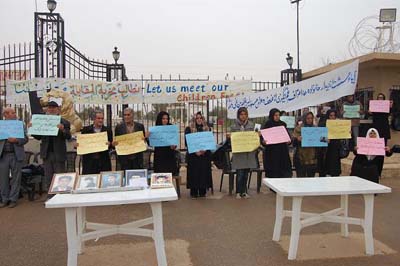
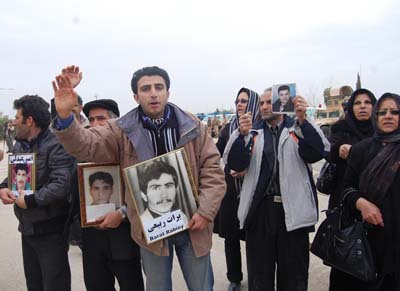
Reporters from Iraqi and International media are at the gates of Camp Ashraf to report on a protracted stand-off between the leaders of the terrorist cult Mojahedin-e Khalq and the families of residents held hostage in the camp. The families are demanding to meet with their relatives.

The MKO have refused. The MKO leadership enforces strict isolation on its members and does not allow them to leave the camp or have access to media or communications. Because of this, their families have not had news or met up for over twenty-five years.Camp Ashraf- Families Picket and Media
Camp Ashraf- Families Picket and Media

February 28, 2010 0 comments
FacebookTwitterPinterestWhatsappTelegramSkypeEmail
Mujahedin Khalq Organization members' families

MKO members escaped Ashraf and joined families’ picket

Seyed Yousef Jarfi and Abdolghader Ostadi escape the Washington backed terror group in Iraq – Rajavi cult – to join families picketing outside Camp Ashraf

(Mr. Seyed Yousef Jafari and Mr. Abdolghader Ostadi joined the Picket)


Reporters from Iraqi and International media are at the gates of Camp Ashraf to report on a protracted stand-off between the leaders of the terrorist cult Mojahedin-e Khalq and the families of residents held hostage in the camp. The families are demanding to meet with their relatives.

The MKO have refused. The MKO leadership enforces strict isolation on its members and does not allow them to leave the camp or have access to media or communications. Because of this, their families have not had news or met up for over twenty-five years.

Since the MKO was forced to disarm by US forces in 2003, many people have travelled from all over the world hoping to find their lost relatives held hostage by the Rajavi cult. Now a group of families have vowed to stay at the gates until Iraqi officials and the international community take notice of the grave human rights abuses committed by the Washington backed terrorist group against their family members.

For some of the families, this is not the first attempt to find their relatives. Mohammad Mohammadi has travelled many times from Canada to Iraq to rescue his daughter. Somayeh Mohammadi was taken to Iraq by the MKO when she was 17 at the time of Saddam Hussein and has not been allowed to leave since. This time her sister, Hourieh has joined her father in the rescue bid. Hourieh told reporters, “This time I will not leave until I take my sister with me. We are determined to free her from this cult”.

Employing its usual propaganda blitz, the Mojahedin leaders are convincing Western media and political circles that these families are dangerous, evil agents of the Iranian Intelligence Ministry who have come to suppress the Mojahedin. But media reports direct from the camp entrance tell a different story.

Al Iraqia TV channel broadcast a full report on its 8 pm news programme yesterday.

According to media reports from Baghdad two members of the Mojahedin were able to break away from the Rajavi cult and join the families in their picket outside the camp. Mr. Seyed Yousef Jafari from Ahwaz and Mr. Abdolghader Ostadi from Iranshahr spoke to reporters about their own ordeal as long-term captives inside the camp.

They expressed their joy at gaining their freedom and claimed the Mojahedin Khalq leaders have been deeply involved the murder and torture of Iraqi civilians and have carried out scores of terrorist activities during their stay in Iraq. They say they have unequivocal evidence to prove their claims. Iraq’s Judiciary is already investigating the many crimes committed by the leaders of this terrorist group.

The Mojahedin Khalq Organisation (Saddam Private Army) was disarmed by US military in 2003 as an enemy force, but the Pentagon ordered the US military to protect the group until the hand over of security to Iraqis in January 2009 despite the fact that the group has been listed as a terrorist entity in the US since 1997.

A report by RAND in August 2009 about the failings of the US army in dealing properly with the Mojahedin Khalq, said that 14 US army personnel were killed and up to 60 injured while providing protective escort services to the terrorist group’s leaders on their shopping trips to Baghdad.

MKO supreme leader Massoud Rajavi has been in hiding (believed to be under the protection of the CIA in Iraq) ever since the occupation. His second-in-command and 3rd wife Maryam Rajavi was discovered and arrested in Paris in 2003 where she was hiding with millions of dollars allegedly stolen from the central bank of Iraq.

to view the pictorial report click here

February 28, 2010 0 comments
FacebookTwitterPinterestWhatsappTelegramSkypeEmail
Mujahedin Khalq; A proxy force

Americans support Mojahedin Khalq Terrorists as well as Jondollah

Scandal over US-supported Terrorists in Iran

Iran insists the US was backing the leader of an armed Sunni group heading an insurgency in the country who was captured earlier this week. Washington denies the claims.
Abdolmalek Rigi says he was on his way to the Manas air base in Kyrgyzstan to meet with a US official when he was seized – sparking further mystery over American use of the facility in the Central Asian country.

It’s not the first time the Manas airbase has hit the headlines, and all for the wrong reasons.

The latest allegation is from Iran claiming the facility is an American front to transport terrorists to undermine the Iranian government.

Read more
“The Americans promised to give us aid, they said they would cooperate with us and give me arms and machine guns. They told me in Kyrgyzstan they had a base called Manas near Bishkek and that in a place like this some high ranking American person could come and we could make an agreement about making personal contacts,” Abdolmalek Rigi said.

This statement comes in a televised confession on Iranian state TV. Officials claim when they captured the terrorist leader he was carrying a fake Afghan passport.
“The Americans said that Iran was going its own way and they said their problem at the present is Iran, not Al-Qaeda, not the Taliban, but Iran,” Abdolmalek Rigi said. “One of the CIA officers said that it was too difficult for them to attack Iran militarily but they plan to give aid and support to all anti-Iranian groups that have the capability to wage war and create difficulty for this Islamic state.”

The confession has sparked criticism from those who let the United States set up shop in their backyard.

“The US is setting a precedent of double standards which manifests itself in the backing of Sunni terrorists who fight against the legitimate government of Iran to create a separatist state in the south of the country. It’s sad that the US air base has now become a transit corridor for pro-American militants from Sunni insurgent groups which organize attacks in Iran,” says political analyst Toktogul Kakchekeev.
The Jundallah group confirmed the arrest of Abdolmalek Rigi and now is accusing the US and other foreign intelligence services of helping the Iranian government capture its leader.

“The Jundallah group or The Rigi Brothers organization – it is a family firm, you might say – which operates as a terrorist organization and is widely thought to be based in Pakistan, but it operates in Iran on the other side of that border,” explained investigative journalist Webster Tarpley, who is sure there is an extra twist to the story involving Pakistan, which possibly gave the militant leader away.
The Jundallah group is believed to be engaged in drug smuggling and organizing terror acts.
They are accused of blowing up top Iranian Revolutionary Guard officers last year.
“This Abdolmalek Rigi was the number one most wanted terrorist on the Iranian most wanted list,” he said.
Despite the fact that the details of Abdolmalek Rigi’s arrest remain unclear, “either way it is a tremendous victory for the Iranians because they essentially decapitated this very threatening terror group,” believes Tarpley.
CIA’s dark ties
Webster Tarpley said that western political observers, like Seymour Hersh of The New Yorker and Brian Ross of the BBC, believe that the Jundallah group was on the CIA payroll.
“This is the US$400 million in Iran’s Regime Change Act approved under [George W.] Bush. This guy has been meeting with, as some say, NATO Secretary General Jaap de Hoop Scheffer who met this terrorist and certainly NATO generals in Afghanistan,” accused Tarpley and added that “they [Jundallah group] operate as an arm of NATO strategy in the entire region.”

In Webster Tarpley’s opinion, this episode is part of the battle for Belujistan, a critical area for Iran for hydrocarbon transit to China.

It appears, said Tarpley, that the goal of the offensive of the US in the Helmand province of Afghanistan is Iran’s economic interests. By announcing the offensive in Helmand province, they “wanted to drive the Taliban to Pakistan,” cutting Iranian exports to China through Pakistani seaports.

Dr. Seyed Mohammad Marandi of the University of Tehran claims that the US is being hypocritical and that Iranians are happy after Abdolmalek Rigi was captured.

“They were not only supporting this particular terrorist organization…[…] For many years, they’ve carried out many thousands of terrorist attacks on Iran, as well as other terrorist groups such as Pi-juk and so on,” Marandi told RT. “What is extraordinary about this particular terrorist organization, that has the backing of the United States, is that they carry out some of the most brutal murders, they cut people’s heads off on television and it does not get any coverage on BBC or CNN or in The New York Times, which is itself pretty extraordinary, but the murders that they carried out have angered the Iranians for the last few years. And it was a major victory for the Iranian intelligence organizations that they were able to capture the leader and his deputy the other day.”

Investigative journalist, Wayne Madsen, also posits there is a connection between the US and the group.

“What [Rigi] has stated on Iranian television is that he was there to meet a top US official,” says Madsen. “And the word I get from Asian intelligence services is that person was President Obama’s special envoy to Afghanistan and Pakistan Richard Holbrooke who happened to have been in Bishkek at the same time.”

Meanwhile, the US State Department strongly denies any involvement with Rigi and released this statement to RT:

“We view the arrest of Mr Rigi as a positive step to prevent potential attacks against innocent civilians. The US strongly condemns all forms of terrorism, including those that target Iran. Any allegations of US involvement are absurd. The US does not sponsor or support terrorism,” US State Department spokesperson Darby Holladay said.

Also, the Obama Administration has repeatedly said relations with Iran have to begin with renewed diplomacy, a sentiment that has critics growing increasingly more skeptical.

“I think it’s quite obvious that the United States is being very hypocritical,” Dr. Seyed Mohammad Marandi says. “They are not only supporting this terrorist organization but they were also supporting the MEK for a number of years, they have carried out many terrorists attacks in Iran over the last three decades.”

Russia today

February 28, 2010 0 comments
FacebookTwitterPinterestWhatsappTelegramSkypeEmail
Mujahedin Khalq Organization members' families

Families urge President Talebani helping them visit their children

Dear Mr. Talebani, President of the Republic of Iraq

We, some of the families of the residents of Camp New Iraq (formerly Ashraf) have been denied access to our children for over 20 years due to the deceitful policies of the Mojahedin Khalq Organisation.

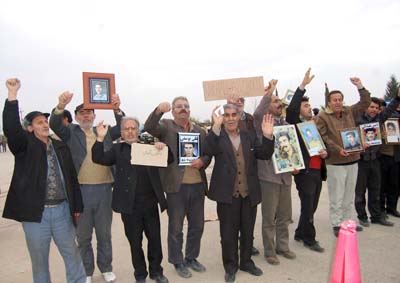
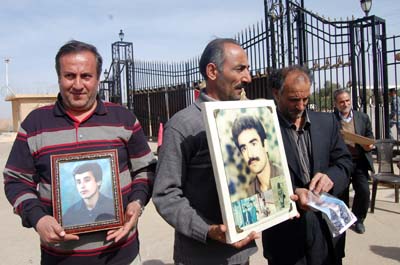
Families of some of the captives in Camp Ashraf, Outside the gate, February 2010

We have gathered from different places such as Iran, Canada, … in the land of Iraq to visit our loved ones. During the last two weeks of our stay here, the leaders of this organisation have refused our demand to meet our families on the direct order of Massoud Rajavi, fearing that such meetings may lead to the ability of our children to decide for themselves and break free from this organisation and join the free world.

We urge your good self, while condemning the anti-humane actions of Massoud Rajavi, to order the facilitation of free meetings between ourselves and our children.

Families of some of the captives in Camp Ashraf

February 18, 2010

CC:
Mr. Noori Al Maliki, Prime Minister of Iraq
Ms. Vojdan Michel, Human Rights Minister of Iraq
Mr. Ad Melkert, UN representative in Iraq

February 28, 2010 0 comments
FacebookTwitterPinterestWhatsappTelegramSkypeEmail
The MEK and Jundullah

Washington backed terrorist MKO condemned the arrest of their partner Rigi

As Abdolmalik Rigi expands on his mercenary relations with CIA, another Washingon backed terrorist organisation (MKO, MEK, Rajavi cult) goes on over dive to condemn the arrest of their partner in terror.
another Washingon backed terrorist organisation (MKO, MEK, Rajavi cult) goes on over dive to condemn the arrest of their partner in terror.
The captured ringleader of the Jundallah terrorist group, Abdolmalek Rigi, has confessed that the US administration had assured him of unlimited military aid and funding for waging an insurgency against the Islamic Republic of Iran.

The following is the detailed transcript of Rigi’s confession, stated in Farsi, as broadcasted on Press TV.

"After Obama was elected, the Americans contacted us and they met me in Pakistan.They met us after clashes with my group around March 17 in (the southeastern city of) Zahedan, and he (the US operative) said that Americans had requested a meeting."

"I said we didn’t have any time for a meeting and if we do help them they should promise to give us aid. They said they would cooperate with us and will give me military equipment, arms and machine guns. They also promised to give us a base along the border with Afghanistan next to Iran."

"They asked to meet me and we said where should we meet you and he said in Dubai. We sent someone to Dubai and we told a person to ask a place for myself in Afghanistan from the area near the operations and they complied that they would sort out the problem for us and they will find Mr. Rigi a base and guarantee his own security in Afghanistan or in any of the countries adjacent to Iran so that he can carry on his operations.

"They told me that in Kyrgyzstan they have a base called Manas near Bishkek, and that a high-ranking person was coming to meet me and that if such high-ranking people come to the United Arab Emirates, they may be observed by intelligence people but in a place like Bishkek this high-ranking American person could come and we could reach an agreement on making personal contacts. But after the last major operation we took part in, they said that they wanted to meet with us.

"The Americans said Iran was going its own way and they said our problem at the present is Iran… not al-Qaeda and not the Taliban, but the main problem is Iran. We don’t have a military plan against Iran. Attacking Iran is very difficult for us (the US). The CIA is very particular about you and is prepared to do anything for you because our government has reached the conclusion that there was nothing Americans could do about Iran and only I could take care of the operations for them.

"One of the CIA officers said that it was too difficult for us to attack Iran militarily, but we plan to give aid and support to all anti-Iran groups that have the capability to wage war and create difficulty for the Iranian (Islamic) system. They reached the conclusion that your organization has the power to create difficulties for the Islamic Republic and they are prepared to give you training and/or any assistance that you would require, in terms of telecommunications security and procedures as well as other support, the Americans said they would be willing to provide it at an extensive level."

Iran’s security forces arrested Rigi on Tuesday by bringing down his plane over the Iranian airspace, as he was onboard a flight from the United Arab Emirates to Kyrgyzstan.

February 27, 2010 0 comments
FacebookTwitterPinterestWhatsappTelegramSkypeEmail
The MEK and Jundullah

Rigi’s arrest disheartened MKO

Reported by many news networks, Iran’s security officers grounded the plane carrying the ringleader of Jundullah terrorist group Abdolmalek Rigi in one of Iran’s southern ports. Rigi was Iran’s most wanted terrorist captured on a flight en-route to Kyrgyzstan from Dubai along with one of his deputies.Rigi’s arrest disheartened MKO

According to Iran’s intelligence minister, the leader of Jundallah terrorist group was at a US base in Afghanistan 24 hours before his capture, in possession of a US-issued, forged Afghan passport. He had also met with NATO military chief in Afghanistan in April 2008 and also had links with some EU member states, as well as visiting such countries.

It was only a few weeks ago that reports of a meeting between the heads of the Rigi group and terrorist MKO was disclosed; they met in an area in Pakistan and held talks to make a joint front and to cooperate in line with making a terrorist group under the name of the Armed Forces Organization of Mojahedin. It was said that provision of weaponry and exchange of information have been among agreed issues in this meeting prior to finalizing the decision to make a joint front.

Just after Rigi’s arrest, MKO-run website tried to ridicule Iran’s potentiality that led to the arrest of Rigi whom the organization referred to as the leader of People’s Resistance Movement of Iran (Jundollah). It claims that it was Pakistan that arrested Rigi and surrendered him to Iranian forces a week earlier. It also warned Iranian regime of any use of pressure and torture against the arrested.

The two groups having a bloody history of terrorist operations against Iranian people, MKO’s support of Rigi’s group comes at a time when it tries to acquit itself of terrorist charges that has put it on the US and other countries’ list of terror. It makes no difference whether a terrorist group directly engages in terrorist activities or glorifies and supports the other’s deeds.

February 25, 2010 0 comments
FacebookTwitterPinterestWhatsappTelegramSkypeEmail
Mujahedin Khalq Organization members' families

MKO deprived families from visiting their beloveds


After ten days of a stand-off, a small group of Iranian families have staged a sit-in outside the gates of Camp Ashraf in Diyala province in Iraq. The families’ simple, straightforward and only demand is that they be able to meet with their relatives who are trapped inside the camp. Camp Ashraf still houses around 3500 members of the terrorist Mojahedin-e Khalq organisation which the Government of Iraq plans to remove from the country.


From the start, Iraqi security forces who guard Camp Ashraf would not allow the families to enter the camp because they could not guarantee their safety. Instead, the Iraqis told the MKO to release the handful of individuals concerned to meet with their families before returning to the camp.

So far the Mojahedin leaders are not cooperating. The MKO’s immediate reaction to the family visits was to state that “agents of the clerical regime’s Ministry of Intelligence and Security are being dispatched to Camp Ashraf under the cover of family members of Ashraf residents, the Iraqi committee responsible for suppression of the residents, under the instructions of Nouri al-Maliki, has intensified cruel and inhumane siege on Ashraf”.


Download MKO deprived families from visiting their beloveds

February 24, 2010 0 comments
FacebookTwitterPinterestWhatsappTelegramSkypeEmail
The MEK and Jundullah

Rigi; terror partner of Mojahedin arrested

Abdolmalek Rigi, ringleader of the Pakistan-based terrorist group of Jundallah, was captured in an operation on Tuesday.
Reports say Rigi was captured on a flight from Dubai to Kyrgyzstan.
Rigi; terror partner of Mojahedin arrested
Iranian Interior Minister Mostafa Mohammad-Najjar told reporters that Rigi was arrested outside the country as he was preparing for a new act of sabotage.
The minister added that he was consequently transferred to Iran.

Zahedan Prosecutor Mohammad Marzieh also told Fars news agency that the notorious terrorist was arrested early Tuesday in a pre-planned operation.
"Rigi’s arrest was eventually made through a series of security measures taken for a long period of time. He is now in Iran and will be handed to security and judicial officials," he said.

The Jundallah group has claimed responsibility for numerous terrorist attacks in Iran. The group has carried out mass murder, armed robbery, kidnapping, acts of sabotage and bombings. They have targeted civilians and government officials, as well as all ranks of Iran’s military.
In their latest attack, which occurred on October 18, more than 40 Iranians — among them 15 members of the Islamic Revolution Guards Corps (IRGC), including top commanders, in addition to several tribal elders — lost their lives when Jundallah terrorists carried out an operation in the border region of Pishin, located in Iran’s southeastern province of Sistan-Baluchestan.

Citing US and Pakistani intelligence sources, the news group of an American televison network, ABC, reported in 2007 that the terrorist group "has been secretly encouraged and advised by American officials" to destabilize the government of Iran.

Investigative journalist Seymour Hersh revealed in another report in July 2008 that US Congressional leaders had secretly agreed to former President George W. Bush’s USD 400 million funding request, which gave the US a free hand in arming and funding terrorist groups such as Jundallah militants.
The Pakistan-based terrorist organization denies having any link to Washington but Rigi’s brother, arrested earlier and now in Iran’s custody, confirmed in an interview with Press TV that the Jundallah leader had, in fact, established links with the US administration.

Abdolhamid revealed that a go-between, named Amanollh-Khan Rigi, put the terrorist group in connect with the US administration, which had promised the anti-Iran terrorist group a safe haven in Pakistan.

"His name is Amanollah-Khan Rigi. He is my father’s cousin. He was a royalist during the Shah’s regime," Abdulhamid told Press TV.
"After the [1979] Revolution in Iran, he left the country via Pakistan and sought asylum in the United States."

Abdulhamid said the Americans had asked Amanollah-Khan to forge a link between the US and Jundallah. "The Americans asked him [Amanollah-Khan] to introduce them to [Abdolmalek] Rigi in Pakistan and that’s how link was established."

He also claimed to have visited the US Embassy in Pakistan to seek more US cooperation with the terrorist group.
"The most important issue that I raised was Jundallah’s security in Pakistan," he said.

"I told the Americans that we needed support from the media, newspapers, radios and satellite channels to get our message across to the Baluch around the world," he said.
According to Abdolhamid, the Pakistani government was well aware of the whereabouts of the Jundallah terror group.

"It is impossible to believe that Pakistan is unaware of Jundallah’s presence on its soil," he said. "Pakistan is a perfect haven for Jundallah."

February 24, 2010 0 comments
FacebookTwitterPinterestWhatsappTelegramSkypeEmail
The Ideology of the MEK

MKO; Ideology Vs Ideology – 2

History has seen various ideologies that generally have been of the closed type. The most famous ideologies “Liberalism “ , “ Marxism” and “ Religion” are significant examples of closed ideologies that undemocratically view themselves as righteous.
Mujahedin Khalq Organization is the living instance of closed ideologies
The followers of such ideologies have prepared superficial answers to every question. They simply formulate and solve the most complicated problems of the world and never see any ambiguity or mistake in their analysis. The leaders of closed ideologies are not knowledgeable enough although they have enormous claims of helping humanity. They don’t believe in necessity of challenge, research and efforts to progress in their path. Thus their absolute approach and their non-dimensional view lead them to decline.

Mujahedin Khalq Organization is the living instance of closed ideologies which fanatically sticks to its cult-like doctrine. Justifying all phenomena along with its objectives, MKO represents a thought of which the social function supposes the absolute right of understanding the truth for itself and never believes in exchanging, choosing or adapting other thoughts. The consequence of closing the doors against external thoughts or communities is the declining situation in which MKO is trapped now.

On the opposite side, the supporters of open ideologies view problems relatively, dynamically and depending on phases. Although they believe in the righteousness of their values and ideas, they see themselves as responsible for moving toward growth of the values they are constantly reconstructing, elevating and flourishing.

The absolutism of MKO ideology has led it to an irrational society without variety of thoughts and a cult of personality.

The type of relationship between human and ideology has caused violence and tyranny in MKO. The closed ideology of MKO wants the human for the ideology so the members of Mujahedin serve their ideology.

That’s why they see an undemocratic legitimacy in their social and political functions.

The leaders of mujahedin and especially Massoud Rajavi do not recognize the knowledge and will of individual human beings denying their rights to decide for their own future. That’s the substantial characteristic of their closed ideology which ends in the cult of personality around Massoud Rajavi. For MKO change, evolution, perfection and continuous growth have been replaced by fossilization and dogmatism.

Thus, one cannot see any change in the cult-like system organized in MKO or in MKO’s language toward its supporters or against its dissidents. Although Maryam Rajavi makes too much effort to draw a democratic, modern progressive image of its organization, the reality, based on testimonies and evidences, proves the opposite fact.

By Mazda Parsi

February 24, 2010 0 comments
FacebookTwitterPinterestWhatsappTelegramSkypeEmail
Newer Posts
Older Posts

Recent Posts

  • Various Aspects of Massoud Rajavi’s Disappearance

    October 20, 2026
  • MEK agents near schools in Tirana, Albania

    October 17, 2026
  • Expectations of human rights bodies regarding censorship within the MEK

    October 13, 2026
  • The Jamalis’ Plea for Help: Save Our Brother from the MEK!

    October 11, 2026
  • Testimonies of Participants in the MEK’s Staged Propaganda Stunt in Karaj

    October 7, 2026
  • Facebook
  • Twitter
  • Instagram
  • Youtube

© 2003 - 2025 NEJAT Society . All Rights Reserved. NejatNGO.org


Back To Top
Nejat Society
  • Home
  • Articles
  • Media
    • Cartoons
    • NewsPics
    • Photo Gallery
    • Videos
  • Publications
    • Books
    • Nejat NewsLetter
    • Pars Brief
  • About Us
  • Contact us
  • Editions
    • عربي
    • فارسی
    • Shqip