Nejat Society
  • Home
  • Articles
  • Media
    • Cartoons
    • NewsPics
    • Photo Gallery
    • Videos
  • Publications
    • Books
    • Nejat NewsLetter
    • Pars Brief
  • About Us
  • Contact us
  • Editions
    • عربي
    • فارسی
    • Shqip
Nejat Society
Nejat Society
  • Home
  • Articles
  • Media
    • Cartoons
    • NewsPics
    • Photo Gallery
    • Videos
  • Publications
    • Books
    • Nejat NewsLetter
    • Pars Brief
  • About Us
  • Contact us
  • Editions
    • عربي
    • فارسی
    • Shqip
© 2003 - 2024 NEJAT Society. nejatngo.org
Massoud Rajavi

Totalitarian Ideological leader of MKO

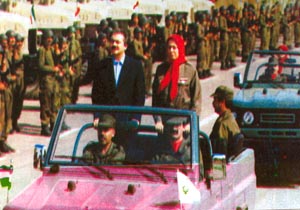
If political objectives are determined in accordance with true requirements of the society, they can simply play their role in the way to achieve human rights, freedom and the ideal democracy. The investigation of MKO’s objectives, ideas, functions and political positions, clearly show that the group’s ideological leader is a totalitarian, fascist one.

The manner a political group evaluates its political goals, will justify the existence or non-existence of the group.

Therefore, the gang of Rajavi who has been engaged in terrorist acts, armed struggle policy and suicide operations, for more than three decades – to achieve power in Iran – will have no fate except removal from international political scene although they have never had a significant role.

The final objective of terrorist cult of MKO is the absolute sovereignty on human beings and the accomplishment of Rajavi’s middle-aged ideas under the cover of religion and democracy. The final objective of terrorist cult of MKO is the absolute sovereignty on human beings

The investigation of MKO’s objectives, ideas, functions and political positions, clearly show that the group’s ideological leader is a totalitarian, fascist one.

The totalitarian, fascist approach of the leader is obviously represented in the internal relations of the group. Camp Ashraf, as the ideological and strategic container of MKO is the concrete symbol of totalitarianism in MKO style where the worst terrorist, manipulative approaches are performed.

The testimonies of a lot of defectors of the cult reveal physical and psychological torture of dissident members, solitary confinement, and suppression of emotional and sexual needs in the name of ideological revolution.

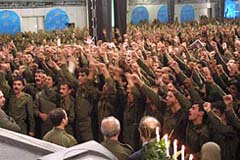
The mind control system which includes manipulation meetings and brainwashing sessions (Cult jargons) helps the ideological leader relate all aspects of the lives of Ashraf residents to their so-called armed struggle and terrorist strategy. When a group of individuals are isolated in a Camp in desert, under a mind control system behind physical and mental bars, for three decades and the relations are organized on the basis of an ill-minded leader’s thoughts, totalitarianism is definitely achieved. It is obvious that opposing such a horrifying system is not simply feasible.

In a totalitarian system, one can except any kind of behavior such as terror act, suicide, homicide, hunger strike … since the people in the system are some humiliated individuals without free will. They are very useful victims for their leader.

Doubtlessly, in the age of democratic evolutions, cults like MKO and Al-Qaida that prepare violent terrorist agents to accomplish their ambitious goals, will never succeed in running their ideas. The historical experiences prove the declining way of such cults as an unchangeable tradition.

By Arash Rezaiee

September 16, 2009 0 comments
FacebookTwitterPinterestWhatsappTelegramSkypeEmail
Former members of the MEK

Rajavi; the operations have higher potentialities to utilize

An interview with Batool Soltani on MKO self-immolations – Part seventeen

Sahar Family Foundation: Ms. Soltani, the June 17 operations, however, has recorded Rajavi; the operations have higher potentialities to utilizeachievements for the organization. They can be summed up from two aspects. One is the negative outside consequences and another is the internal achievements the organization thought it had achieved. It is the latter aspect that I mean you explain exclusively from Rajavi’s point of view.

Batool Soltani: The achievements were specifically summed up by Rajavi in one of his messages addressed to the members of the Leadership Council. One significant point to mention here is that Rajavi critically evaluated self-immolations as ‘dilly-dally’ meaning that the members had dwindled in June 17 self-burnings which had diminished the expected resultant outcomes. Then he began to enumerate the achievements of the very same ‘dilly-dally’. The first resultant he stated to be the French police’s pullback. But I think he meant recession of the whole judiciary of France.

I have already made clear that Rajavi’s insistence on Maryam’s release was mainly because of the probable challenging consequences of the case. If the case pursued a routine, legal course, the outcome could be absolutely different. But he was clever enough not to mention the odds and probabilities and briefly alluded to police’s back off. In spite of the fact that efforts were directed at releasing Maryam, Rajavi referred to it as the second achievement. Here he paused to say that further goals had been achieved had the volunteers been much sincere in carrying out their operations.

SFF: Sorry for interruption. What did he mean by sincere?

BS: To tell the truth, I fail to make out an exact connotation for the term. Maybe he wanted to say self-immolations were deficient in number of volunteers and operations. But he would always say that by self-burnings he intended those episodes that would not be necessarily marginalized as pyrrhic victories and carried with them the needed push and effect. Rajavi would say that they knew that even multitudes of self-burnings inside Camp Ashraf fell short of imposing needed effectiveness to score a victory; all depended on a decision in due time and place. It was Mozhgan (Parsai) to make decisions in Ashraf as it was Maryam in Auvers and all senior rankings stationed in the organization’s offices throughout the world. In fact, he was stressing on the efficiency of actions if any responsible ranking would adopt in the sphere of his responsibility.
In general, he was not satisfied with the immediate outcomes and believed that if the organization had less dawdled, the existing potentials and effectiveness would have caused the immediate release of Maryam.

SFF: Sorry again Ms. Soltani. If self-burnings were committed all on organizational command, then, what Rajavi really meant by the members’ dwindling that had caused deceleration of outcome?

BS: It seems that you did not consider my points. The organization has adopted a double behavior policy vis-à-vis the outsiders and insiders …

SFF: I got the point but I mean if 25 have committed self-immolation on organizational command, then, the cease of the 26th means the compliance with the same very order. If it is true, then what does this ‘dilly-dally’ mean? Does it mean that you have been remiss in your responsibility or anything else?

BS: He mainly implied that a member of the Leadership Council that was fully briefed on the strategy of self-immolation had to rush to the first police station to set himself on fire immediately after hearing the news of Maryam’s arrest. Instead, he/she had abandoned what had to do and had put it off for the next day. Self-burnings had to be executed immediately while they had been postponed for a later time after arrangements. Maryam should not have stayed so long in the prison. Rajavi was very sensitive about the due time and place and believed that any delay contributed to loss of a remarkable percentage of effectiveness and all efforts proved to have been in vain.

You see, although self-burnings were organizationally arranged and ordered, there existed still factors so Rajavi could be critical of the members and berate them for negligence in the accomplishment of their duties. In reference to your bringing up the number of self-burnings and that the 26th was ceased by organizational command, I have to say that it is not as you think. It is not at all an issue of the numbers and quantity; they are only instruments to reach the desired outcome. Maybe that is why Rajavi criticizes members’ hesitation to start off self-burnings. You see, the initiation of operations share similar origin but the pace of process and other factors influence the acceleration and deceleration in achieving the final objectives.

To be continued

September 15, 2009 0 comments
FacebookTwitterPinterestWhatsappTelegramSkypeEmail
Mujahedin Khalq Organization members' families

Mr. Jannat Sadeqi: The only responsible for grieves we bear is Rajavi

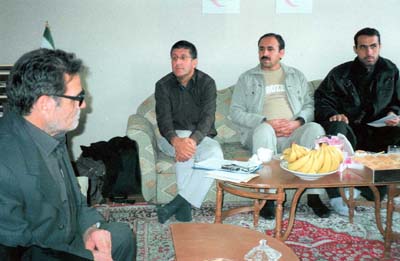
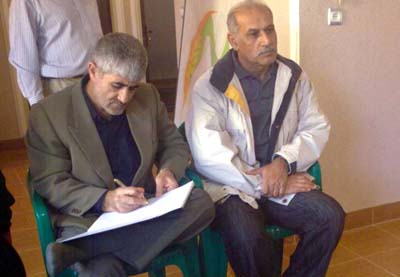
Nejat Society Mazandaran Office visited Jannat Sadeqi family

For years, Rajavi has kept a number of his members wondering in Iraq, with his vain promise of the overthrow of Islamic Republic. He has always tried to deceive the poor imprisoned members in order to maintain them far from the social events happening outside camp Ashraf. He could never gain results of the strategies he led for more than three decades. Nowadays he is stuck among his policies so he has kept a large number of his forces, in Iraqi territory, as hostages in order that he might find a way to release himself from this deadly cul-de-sac.

Today, his failed armed struggle has led him to a point that he concluded in writing letters to the highest authorities of IRI that he has long called as the leaders of crime and ignorance.

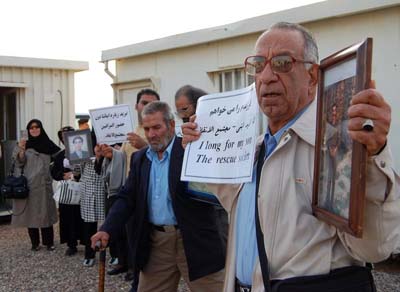
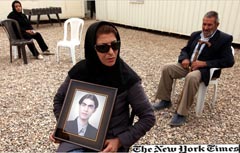
It is clear that Rajavi has always been on the wrong way but the families of Camp Ashraf residents are concerned about the lives of their beloved ones who are still behind the bars of hellish organization of Rajavi. Large group of families seek the accomplishment of Iraqi government’s ultimatum based on the expulsion of cult members from Iraq and the removal of Camp Ashraf. Immediately after the recent clashes at Camp Ashraf, they contacted Nejat Society and asked for further activities to visit their children and to pave the way for their return to Iran.

Mr. Behrouz Jannat Sadeqi is the brother of three residents of Camp Ashraf

At Nejat Society Mazandaran Office, we found an opportunity to visit Mr. Jannat Sadeqi at his work place. Mr. Behrouz Jannat Sadeqi is the brother of three residents of Camp Ashraf. His three brothers have been captured by Rajavi’s Cult for years. He was the only one to take care of his old parents. “The only responsible for grieves we bear is Rajavi” he said, “Who took my brothers to Iraqi deserts by deceiving them”. He continued:”I don’t know why Rajavi urges on staying in Iraq despite his political failure. What does he want of staying in Iraq? Why did he flee from Iraq if it was a good place for the organization?”

The visit took place with the presence of some defectors of MKO and former comrades of Mr. Sadeqi’s brothers. Mr. Sadeqi was so excited by visiting them; he tried to ask about the condition of his brothers in Camp Ashraf. He listened to explanations made by Nejat members on the recent situation of the cult.

The visited lasted an hour and at the end we asked him to let us visit his parents but he got worried saying that he wished he could get us visit them but the visit might make them sick since it might recall them their beloved sons. They cannot bear such a visit. They are just waiting their three children.

We are looking forward for the day that those beloved friends could get rid of Rajavi’s cult and join their families.

September 15, 2009 0 comments
FacebookTwitterPinterestWhatsappTelegramSkypeEmail
Iraq

Iraqi Court Receives 5,000 Complaints against MKO, Former Baghdad Regime

Iraq’s supreme criminal court assigned to review crimes done by the former Iraqi Baath regime during the 1991 uprising (Shabaniyah Intifada) announced that it has received 5,000 complaints filed against the regime and anti Iran terrorist group, the Mojahedin-e Khalq Organization (MKO).

The court confirmed in its first session that it has received 5,000 authentic and verifiable complaints from the people of the northern Iraqi region of Kurdistan.

The families of the victims as well as those disabled during the suppression of the uprising have asked for chasing and punishing those responsible for the crimes done during the suppression of intifada in northern and southern Iraq, the Iranian website Habilian reported.

The court also issued law suits for 112 members of the former Baath regime, the most prominent of them Ali Hassan Al-Majid, known as the Chemical Ali.

The Shabaniyah Intifada aimed to free Iraq from rule of the Baathist regime and to stand against the US raids and possible occupation of the country in 1991. The Intifada succeeded in setting free nine southern Iraqi provinces, but after Iraq’s withdrawal from Kuwait, the Shiite population came under a savage attack by the Iraqi army which claimed the lives of tens of thousands of them.

At the time, the MKO played such an outstanding role in suppressing the uprising that former Iraqi dictator Saddam Hussein described the MKO leader, Masoud Rajavi, as his savior and allocated a $30-million monthly budget to the terrorist organization until he was deposed in 2003.
The group fled to Iraq in 1986, where it was protected by Saddam Hussein and where it helped the Iraqi dictator suppress Shiite and Kurd uprisings in the country.
The terrorist group joined Saddam’s army during the Iraqi imposed war on Iran (1980-1988) and helped Saddam and killed thousands of Iranian civilians and soldiers during the US-backed Iraqi imposed war on Iran.

The MKO has been in Iraq’s Diyala province since the 1980s.

September 14, 2009 0 comments
FacebookTwitterPinterestWhatsappTelegramSkypeEmail
Mujahedin Khalq Organization

Hunger Strike: Idiot Behavior or Negative Reaction

Imposing hunger strike on Ashraf residents is a reality. It is a being which is now showing off in Camp Ashraf but it is not a truth. According to MEK leaders “the reality is the wisdom”: a formula that was only made to intrigue public opinion. This rationale is based on covering the true facts.Hunger Strike: Idiot Behavior or Negative Reaction

In political terms, hunger strike is a behavior that is acted as the last resort to achieve some logic demands while MEK leaders imposed hunger strike on the members to draw American attention and protection to themselves although the isolated members are totally unaware of the regional or international affairs going on.

With their silly demand, Rajavi’s gang is in fact driving to an amazing paradox. They forgot their reaction to September 11th disastrous attack on twin towers of WTC which ended with the death of thousands of innocent Americans and non-Americans.

At the time, Massoud Rajavi and Maryam Azdanlou held a public meeting in Camp Bagher zade, celebrating the event, cheering with victorious gestures.
 
Massoud Rajavi told his brainwashed members:”this was the reactionary Islam to do this to America, Wait for the revolutionary Islam when it shows its iron fist”.

During the meeting he tried to combine the violent acts of Usama Bin Laden with MEK’s terrorist trends, to conclude his own plan for the audience. In the September 11th meeting at Camp Bagher zade, he said:”If those courageous forces of Usama Bin Laden who are not well organized and are only able to commit military acts could enter our organization, they would be able to achieve many other objectives.”

In fact, Rajavi believed that terrorist acts should be led in MEK manner under its coherent organizational system, and then the objectives would be better achieved.

Thinking deeply about the ill mind of MEK’s ideological leader who just thinks of terror and killing to achieve power, brings questions on the motive of current hunger strike in Camp Ashraf. How could MKO leaders ask for favor of Americans whom they cheered their massacre on Sep.11th. A look at the two contradictory events recalls us that hunger strike of Ashraf residents is a deceitful behavior for vain goals.

The recent report issued by RAND notifies the motives of MEK leader for spying for the US and receiving the support of American officials.

It is clear that American political, military and security officials are determined to stop using MKO since their role is expired. Thus victimizing Ashraf residents, forcing them to go on hunger strike, is an idiot behavior which is like a suicide. But as usual the leaders of MKO will not bear the least expenses; instead they use the blood of the residents as the fuel of their propaganda machine. The members are the only ones to pay the raison of Rajavi’s blind strategy.

By Arash Rezaiee

September 13, 2009 0 comments
FacebookTwitterPinterestWhatsappTelegramSkypeEmail
Former members of the MEK

Rajavi; you were derelict in performance of your duty to save Maryam

An interview with Batool Soltani on MKO self-immolations – Part sixteen

Sahar Family Foundation: your explanations concerning the approach to carry out the June 17 immolations may indicate that ranking members like Sediqeh, Mozhgan, Beheshteh and more have undertaken the role of an intermediary to have the objectives of the leadership and the organization fulfilled. That is, they provoke others and then withdraw into the shadow or even they may directly engage themselves in the action and sacrifice.
 
In fact, they may either be instigators or professional activists who engender people like Neda Hassani to be victimized.

Batool Soltani: Somehow it can be said that they play a dual role. Some are stopped just before the attempt according to a schematic plan and some other continue to carry out the orders to the end and entice others to follow.

Furthermore, these intermediaries, as you call them, have a crucial role to play for the media. Much of the success relies on the spectacular achievements of propaganda and whatever the media are to air or release for the public concerning an incident; anything is already articulated and the interviewee selected. It is not so as you think that anybody at random happens to be interviewed by the reporters. Among the members who have set themselves on fire, for instance, Marzieh Babakhani had been selected to talk for the media, as she did with Algeria News Agency. Why did not they choose Hamid Orafa for the job?
 
Because he was not fully briefed on the whole issue and he could make things worse. Besides, Marzieh’s deformed profile could move people and cultivate in them what best helped organization to take advantage of the situation. She had been selected to be the spokeswoman for the organization and the leadership.

On the other hand, the organization had to first adopt a clear position vis-à-vis the victims, like Neda, and their families to fully figure things out to serve organizational interests. Second, the victim families’ position had to be a show of acquiescence of what their children had done for the organization. Neda family’s attitude had to be indicative of an unforced and arbitrary self-burning by their daughter as a display of her commitment to the leadership and the organization; of course, nobody could consequently condemn the organization and fill a complaint against it.

No doubt, the family had to be fully protected financially, emotionally and through encouraging media coverage to optimistically demonstrate its sympathy for the organization. A good model generated of its own vicious cunning, the protection provided for the family, the money spent, the blood and life of a beloved consumed, all serve to glorify the organization and the leader.

SFF: Does not it raise any question in the minds of the members where the Nada’s family has been to suddenly become the center of so much organizational attention?

BS: It is of no importance for the organization and Rajavi at all. I was in England for four years and Neda’s family were also there. There was no connection between the organization and the family in all these years and it all happened unexpectedly.
 
Following Neda’s self-burning, the organization exerted much energy to establish close contact with her family and have control over it to persuade it act in behalf of the organization before the camera. The founded intimacy with her parents was more a precautionary measure to avert any unexpected decision against the organization that could mess things up.

SFF: On the one hand the organization, as you say, tries to demonstrate Neda’s death as the outcome of an arbitrary act of immolation, but on the other hand seeks to glorify it within the organization and for the media as a sacred act calling Neda a martyr. How the contradiction is dealt with inside and outside of the organization?

BS: I was an insider and know well that the organization acclaimed Neda’s feat as it was organizationally decreed. The organization’s acknowledgment of her self-immolation bordered on idolatry because the feat was not self-induced but done in compliance with organizational order. It made no difference what they outside would say; the insiders were well aware of the truth.

SFF: Naturally enough, it is evident that the organization tries to justify her feat through an appeal to appraisal of her deed. And, of course, the insiders all know that it was organizationally enjoined.

But it is hard for the outsiders to believe the paradox. On the one hand, Maryam claimed that self-immolations were self-imposed and arbitrary and even accused the French police of preventing her messages to reach outside to stop self-burnings. But she is the first to pay tribute to her tomb to christen her a martyr.

And Massoud is the first to deliver a message to glorify self-immolations and Neda’s act. Mojahedi’s TV broadcasts programs and ceremonies inside Camp Ashraf to celebrate the feats. How, then, can the organization disavow its role in these actions? These are all evidences that approve the organization’s pivotal role. I mean, does the organization think that it can easily make the paradoxes acceptable for the outsiders, as it does concerning the members?

BS: Frankly speaking, the organization is not at all concerned about the prevalence of such contradictions outside let alone a convincing answer. The contradictions you refer to are absolutely natural. That is to say, if you are opposed to such actions, then, of what use are all these propaganda? When you idolize Neda, willingly or unwillingly, you are creating an archetype for others to follow to overcome organizational crisis as well as showing a way to salvation. What is of importance for the organization is the immediate interests and advantages it gains from these all. This is only one aspect of the issue. It is completely different inside of the organization.

Rajavi is frank and has no fear to unveil intended achievements behind the immolations. In answer to the question why people like Neda have to burn themselves for Maryam, Rajavi said when thousands of people were ready to kill themselves for (Abdullah) Ojalan, for Maryam all the organization had to. He compared Maryam with Ojalan in a videotaped message displayed exclusively for the members in the level of Leadership Council. He said nobody condemned neither the organizers and instigators of the mass suicide for Ojalan or Ojalan himself. In his message, Rajavi referred to at least 25 cases of immolations; he was displeased as he believed the members were indebted to Maryam and had not done all they had to.

He would say we had failed to do billionth of what we should have done for Maryam and that, it was Maryam who had suffered and shouldered all hardships. That is how they behave inside the organization. For the outside, it is not necessary to be privy of the details of the inside and the routine is to arrange a pattern not to embroil itself in any row or court case. The responsibility is thoroughly laid on the self-burners themselves.

SFF: forgive my interruption Ms. Soltani, are your explanations excerpts from the very Rajavi’s message delivered from the hideout?

BS: Yes, they are. They are parts of his message delivered for the Leadership Council from his hideout.

To be continued

September 12, 2009 0 comments
FacebookTwitterPinterestWhatsappTelegramSkypeEmail
USA

U.S. will stick to plan for Iraq pullout

U.S. will stick to plan for Iraq pullout – [U.S. monitoring MEK situation at Camp Ashraf]
 

The United States expects to keep to its plan to withdraw combat forces from Iraq within a year despite a spate of bomb attacks, the U.S. ambassador to Iraq said on Thursday.
The United States expects to keep to its plan to withdraw combat forces from Iraq within a year
"During this year we’ll ensure that our troops are withdrawn on schedule, by the president’s timetable," U.S. Ambassador Christopher Hill told the House Foreign Affairs Committee.
In their place would be a "strong healthy relationship between the U.S. and Iraq," he said.

U.S. forces invaded Iraq in 2003 to topple Saddam Hussein and 130,000 troops still remain to help secure the country and train Iraqi forces. They withdrew from urban centers in June.

President Barack Obama has set a deadline of August 2010 for the removal of U.S. combat forces and all American troops are to be withdrawn by the end of 2011. Some 4,300 U.S. soldiers have been killed, tens of thousands of Iraqis have died and millions displaced in the past six years.

Hill said the Aug. 19 bombings that killed nearly 100 people at the Iraqi finance and foreign ministries had been "particularly horrifying" but he believed the Iraqi people rejected a new cycle of violence.

"The bombings in recent months show that we still have to deal with al Qaeda in Iraq that tries to rekindle violence," said Hill, who has been ambassador since April. "To the great credit of the Iraqi people, they have not risen to the bait."

The top U.S. commander for day-to-day operations in Iraq, Lieutenant-General Charles Jacoby, said he believed that most of the high-profile attacks since June had been carried out by al Qaeda, and that any accelerated U.S. troop withdrawal may hinge on whether those attacks subsided.

DISSIDENTS
"It’s too early really to say right now whether the operational environment is going to support accelerated troop withdrawals. We’ll be ready to do that if we’re asked to and if we think that the security environment has improved," Jacoby told reporters at the Pentagon in a video-conference from Iraq.

"One of the questions is how much longer al Qaeda can continue these types of high-profile attacks. They are not frequent … we will see if they punch themselves out."

In the Senate, Foreign Relations Committee Chairman John Kerry said that if Iraqis rejected a bilateral security pact with the United States in a possible referendum next year, "then I believe we have no choice but to withdraw all of our forces as quickly as we can."

Hill also said the United States was monitoring the status of Iranian dissidents who were arrested in Iraq in July when Iraqi security forces moved into an Iranian exile camp.
He said U.S. officials had sought and received assurances from Iraq that the 36 detainees would be treated humanely and not sent back to Iran.
"We have made it very clear to the Iraqi government, that we are interested in the well being of these people, the preservation of their human rights; that they should not be forcibly repatriated to Iran," Hill said.

Residents of Camp Ashraf near the Iranian border say the Iraqi government killed at least seven people when security forces moved in on July 28, an incident that raises concerns about the dwindling U.S. influence in Iraq. Thirty-six camp residents were arrested by Iraqi police on charges of rioting.
Camp Ashraf is home to the People’s Mujahideen Organization of Iran (PMOI) dissident group, considered a terrorist organization by the United States, Iraq and Iran. The U.S. military had awarded the 3,500 camp residents protected status after they agreed to surrender weapons in 2004.
(Additional reporting by Adam Entous)
By Susan Cornwell

September 12, 2009 0 comments
FacebookTwitterPinterestWhatsappTelegramSkypeEmail
Mujahedin Khalq; A proxy force

Inept at Both Killing and Coddling Terrorists

The latest rationale – an old one, really, now recycled – for the endless NATO mission in Afghanistan – is that we are there to cleanse that country of terrorists. But not all terrorists are created equal. Some terrorists we rather like.

Washington is angry at Baghdad because Iraqi troops recently stormed a camp north of Baghdad belonging to the Mujahideen-e-Khalq.

That’s the Iranian group that several American administrations have backed, even though the state department branded it a terrorist organization for killing Americans and others in the 1970s. (Iran’s supreme leader, Ayatollah Seyed Khamenei, is partially paralyzed from an alleged Mujahid attack).

In 1986, the group was welcomed and armed in Iraq by Saddam Hussein, then waging a war on Iran – with American blessing.

The group joined his war on Iran and reportedly also his domestic wars on the Kurds and Shiites.

Even after the U.S. turned Saddam from friend to foe, it continued his policy of befriending the enemy of the enemy. Hawkish members of Congress shilled for the Mujahideen, despite reports that the group had become a cult. Defectors were telling horror stories of devotees being indoctrinated, forced to live gender-separated lives, and of families being broken up.

In a twist of fate, the U.S. inherited the Mujahideen camp after its 2003 occupation of Iraq. It disarmed the group but provided it protection. It ignored Iran’s calls for the extradition of the "terrorists."

With last month’s transfer of security to Iraq, the camp lost its U.S. military post. On Tuesday, Iraqi troops moved in. At least seven people were killed, dozens injured.

Iraq wants to close the camp and send its 3,400 inhabitants to Iran or some third countries. About 1,000 are said to hold non-Iranian documents, including Canadian papers.

The Camp Ashraf Iranians cannot be deported to Iran. They won’t feel safe there. That leaves the U.S. and its allies to resettle them. Any takers in Canada, the U.S. and Europe?

The European Union and Britain recently lifted the group’s terrorist designation. Perhaps the more enthusiastic pro-Mujahideen politicians in Europe and North America would now offer their home districts as hosts for their friends.

The war on terror in Afghanistan is going terribly and has been since 2006, as recently acknowledged by Robert Gates, U.S. defence secretary, and Mike Mullen, chairman of the joint chiefs of staff.

The policy of eradicating poppy production has also been "a failure," says Richard Holbrooke, special envoy for Afghanistan. "We wasted hundreds of millions of dollars, put farmers out of work, alienated families, and drove them into the arms of the Taliban."

Casualties, civilian and military, including Canadian, are at a record high. So are Taliban ambushes.

The situation is to be turned around by having more troops take on the Taliban; training more Afghan soldiers; minimizing civilian casualties from air attacks; letting poppy crops be, for now, since they are the largest source of income for farmers; and engaging "moderate Taliban" in negotiations.
Haven’t we heard this before?

How long have NATO and United Nations officials been saying that you can’t win by killing civilians?
Hasn’t the U.S. alone spent $15 billion on training programs? Why would another $10 billion to $20 billion that’s needed to train the required 260,000 Afghans be less prone to corruption and incompetence?

Hasn’t it been accepted wisdom for years that what Afghanistan needs is a political solution? Yet there’s no discernible effort.

While there’s a more honest assessment of the crisis as well as a military and a diplomatic surge under Barack Obama, there’s no coherent long-term plan. What we see instead are limited objectives:

Get Afghanistan through the Aug. 20 presidential election in as peaceful a manner as possible, and prepare the ground for an American exit in time for the midterm U.S. congressional elections in the fall of 2010.

by Haroon Siddiqui – August 2, 2009 by the Toronto Star/Canada
Common Dreams.org

September 12, 2009 0 comments
FacebookTwitterPinterestWhatsappTelegramSkypeEmail
Mujahedin Khalq Organization members' families

Sha’aban Izakian Family Worry about the fate of their son residing in Ashraf

Nejat Society Mazandaran Branch visit Sha’aban Izakian Family

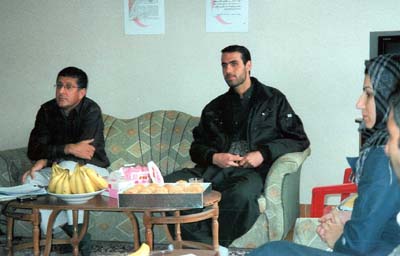
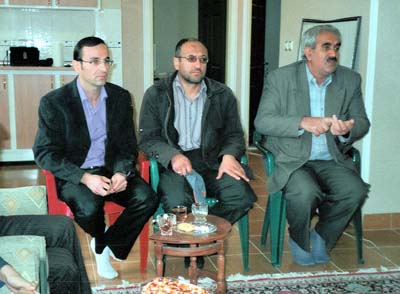
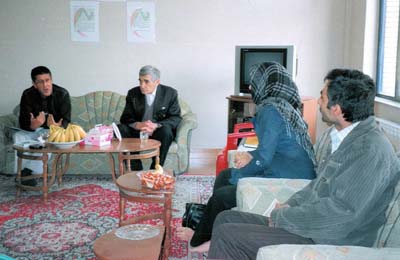
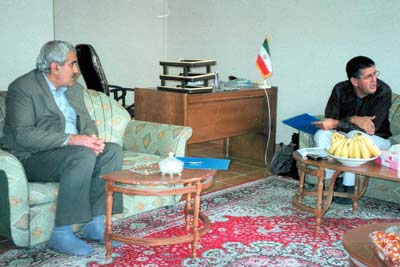
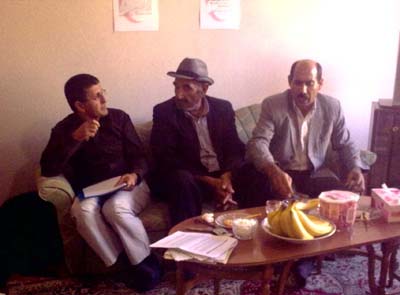
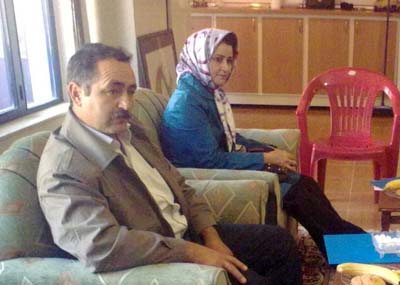
Nejat Society, Mazandaran Office reported that its members visited family members of Sha’aban Izakian. They succeeded to see his old mother, together with a number of recently defected members.
Nejat Society Mazandaran Branch visit Sha'aban Izakian Family
During the visit, the brother asked about the situation of Ashraf residents. One of the defectors explained the current situation ruling the cult in Camp Ashraf while the old mother was listening to him carefully. Then she began talking of her memoirs of his son “Musa”.
After, she listened to what others said about the actual condition of Camp Ashraf and the recent incidents; she got so upset and worried about the fate of her son who hasn’t contacted them for years.
The mother was moved by visiting the ex-members of MKO who succeeded to return home.
She was so motivated to see Musa again that she cursed Rajavi as the person who caused the separation of her son from her speaking of other disasters Rajavi caused on their neighbors and friends, she said:
Nejat Society Mazandaran Branch visit Sha'aban Izakian Family“Rajavi ruined a lot of families in this quarter. Kamran Khala’tbari and Iraj Taleshi are two of our neighbors who are now captured in Camp Ashraf. Hamide Kouzehgar was also in Ashraf but she died there due to cancer and was buried there too. The house behind ours is her Father’s.”
Mustafa shaa’ban Izakian, Musa’s brother showed his deep concern on the fate of his brother, asking Nejat Society to help them visit their brother and release him from the organization which has always used its members as tools of Rajavi’s ambition.
At the end, Mrs. Izakian condemned the acts of MKO during the eight years of Iran-Iraq war and asked for serious moves to release his son from Iraq.

September 10, 2009 0 comments
FacebookTwitterPinterestWhatsappTelegramSkypeEmail
Mujahedin Khalq; A proxy force

MEK as Human bargaining chips in deals with Iran

Seven summers ago, in a crowded conference room of a Washington hotel, an Iranian exile leader gave the first detailed public account of Iran’s until-then secret nuclear projects at the cities of Natanz and Arak. It greatly turned up the volume of a seemingly endless international controversy over Iran’s nuclear intentions.

The disclosures, on August 14, 2002, did little to earn the group that made them, the National Council of Resistance of Iran (NCRI), merit points from the U.S. government. A year later, the Washington office of the NCRI, the political offshoot of Iran’s Mujahideen-e-Khalq (MEK) resistance movement, was shut. The State Department placed the group on its list of terrorist organizations. (The MEK, also known as the People’s Mujahideen Organization of Iran, had been given that designation in 1997).

Now, another five summers later, two dozen MEK supporters are on hunger strike across from the White House to exhort the U.S. government to stick to promises to protect some 3,500 members of the organization in a camp north of Baghdad. Iraqi forces stormed Camp Ashraf in late July and the MEK says nine residents were killed in the initial assault. Two have since died of their injuries.

Hunger strikes in solidarity with the residents of Camp Ashraf were also taking place in Berlin, London, Brussels and Ottawa and at the camp itself. They draw attention to an arrangement that was both unique and bizarre – an enclave of people labeled terrorists by Washington but protected by U.S. military forces – and speak volumes about erratic U.S. policies on a group hated by Iran’s theocracy.

Those at Camp Ashraf, including around 1,000 women, have become, in effect, bargaining chips in the complicated relationship between the United States, Iraq and Iran. The raid on the camp coincided with a visit to Iraq by U.S. Secretary of Defense Robert Gates. What better way for Iraqi Prime Minister Nouri al-Maliki to demonstrate that the Iraqis, not the Americans, are in charge now that Iraqi troops have assumed control under the Status of Forces Agreement signed last year?

What better way, too for Maliki, once derided as an American puppet, to show Iran’s hard-liners and President Mahmoud Ahmadinejad that Iraq’s Shi’ite-dominated government wants to tighten relations with Tehran? The raid on Camp Ashraf drew applause from Iranian officials, including Ali Larijani, the hard-line speaker of parliament. "Praiseworthy," he said, "even though it is rather late."

The MEK was founded in 1965 by leftist students and intellectuals opposed to the Shah of Iran, and it played a part in the Islamic revolution that toppled his rule in 1979. But it soon fell out with the Ayatollah Ruhollah Khomeini and was banned in 1981, when it began a campaign of bombings and assassinations of government officials.

WARNINGS OF HUMANITARIAN DISASTER

In 1986, under an agreement with Saddam Hussein, it established bases in Iraq from where it launched cross-border raids into Iran.

Since 2003, when U.S. forces disarmed MEK guerrillas in Camp Ashraf and took over its protection, the government in Iran has repeatedly demanded that they be turned over to Iran. Their prospects there would be bleak, more so at a time when the Iranian government is staging mass trials of people who demonstrated against Ahmadinejad’s disputed re-election in June.

In an open letter to President Barack Obama, in the form of a full-page advertisement in the Washington Times, MEK supporters this week warned of a humanitarian disaster unless U.S. forces reassumed control, at least temporarily. "The long-term solution to the problem is the presence in Ashraf of United Nations forces or at least a U.N. monitoring mission."

This is not the first time that the MEK has served as a bargaining chip in Middle Eastern politics. The group was placed on the U.S. list of terrorist organizations in 1997 at a time when the Clinton administration hoped the move would facilitate opening a dialogue with Iran and its newly elected president, Mohammad Khatami, who was seen as a moderate.

The European Union put the MEK on its terrorist blacklist five years later. Critics of the decision saw it as kowtowing to Iranian demands to avoid harming important trade relations. After years of legal wrangling, the EU took the MEK off its list of banned terrorist organizations on Jan. 26, a decision that infuriated Tehran.

Somewhat ironically for a country described as the world’s "most active state sponsor of terrorism" by the U.S. State Department, Iran said the EU’s decision meant Europe had "distanced itself from the path of the international community in fighting terror."

The Obama administration has shown no sign of even considering taking the MEK off the terrorist list and thus further complicate its already complicated relations with Iran. Is abandoning the people at Camp Ashraf to an uncertain fate an option?

Bernd Debusmann August 20th, 2009

September 9, 2009 0 comments
FacebookTwitterPinterestWhatsappTelegramSkypeEmail
Newer Posts
Older Posts

Recent Posts

  • Rebranding, too Difficult for the MEK

    December 27, 2025
  • The black box of the torture camps of the MEK

    December 24, 2025
  • Pregnancy was taboo in the MEK

    December 22, 2025
  • MEPs who lack awareness about the MEK’s nature

    December 20, 2025
  • Why did Massoud Rajavi enforce divorces in the MEK?

    December 15, 2025
  • Facebook
  • Twitter
  • Instagram
  • Youtube

© 2003 - 2025 NEJAT Society . All Rights Reserved. NejatNGO.org


Back To Top
Nejat Society
  • Home
  • Articles
  • Media
    • Cartoons
    • NewsPics
    • Photo Gallery
    • Videos
  • Publications
    • Books
    • Nejat NewsLetter
    • Pars Brief
  • About Us
  • Contact us
  • Editions
    • عربي
    • فارسی
    • Shqip