Nejat Society
  • Home
  • Articles
  • Media
    • Cartoons
    • NewsPics
    • Photo Gallery
    • Videos
  • Publications
    • Books
    • Nejat NewsLetter
    • Pars Brief
  • About Us
  • Contact us
  • Editions
    • عربي
    • فارسی
    • Shqip
Nejat Society
Nejat Society
  • Home
  • Articles
  • Media
    • Cartoons
    • NewsPics
    • Photo Gallery
    • Videos
  • Publications
    • Books
    • Nejat NewsLetter
    • Pars Brief
  • About Us
  • Contact us
  • Editions
    • عربي
    • فارسی
    • Shqip
© 2003 - 2024 NEJAT Society. nejatngo.org
Mujahedin Khalq Organization

The raid to Ashraf could leave Iran cheering

Iran-Iraq Alliance?
Yesterday, Iraqi troops stormed a camp of Iranian exiles. The Daily Beast’s Reza Aslan on why the raid could signal Iraq’s shift away from the U.S.—and toward its former enemy.

Reports out of Iraq say government troops have raided the camp of an Iranian exile group, the Mujahedeen-e Khalq. Though the MEK has long been recognized as a terrorist organization by the U.S. State Department, its members housed in Camp Ashraf just north of Baghdad had been placed under U.S. protection since the Iraq invasion in 2003.

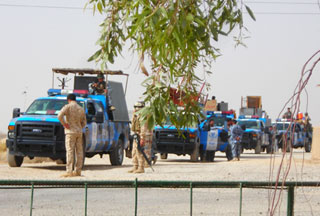
Iraqi troops stormed a camp of Iranian exiles

U.S. military officials, including Gen. Ray Odierno, commanding general of the U.S.-led Multi-National Force in Iraq, insist the raid was carried out without their knowledge. Considering that the Iranian government has been clamoring for years to have the camp disbanded and the MEK members extradited to Iran to stand trial on terrorism charges, the action by the Iraqi government may indicate a shift in Iraqi policy away from Washington and toward friendlier relations with Tehran.

The MEK’s support for Saddam Hussein during the horrific eight-year war with Iran has made it perhaps the group Iranians detest .

A Marxist paramilitary organization formed in Iran in the 1960s, the MEK was an integral part of the anti-imperialist coalition that overthrew the regime of Mohammad Reza Shah in 1979. Its guerrilla tactics, which killed dozens of the shah’s supporters as well as a number of American soldiers and civilian contractors working in Iran at the time, were instrumental to the revolution’s success. After the formation of the Islamic republic, however, the MEK lost favor with the clerical regime and was promptly outlawed. Its members were forced to flee to Iraq, where they were provided protection from Saddam Hussein in exchange for their assistance during the eight-year war between Iran and Iraq.

After the American invasion of Iraq, members of the MEK were rounded up at Camp Ashraf and detained, as negotiators in Iran and the United States began mulling over a prisoner exchange. The Iranians had dozens of captured Taliban and al Qaeda fighters that they were willing to hand over to the U.S. in return for members of the MEK who had been charged with terrorist activities in Iran.

The interim Iraqi government encouraged the prisoner exchange. Indeed, it wanted all of the MEK members expelled from Iraq and prosecuted for the active role they took in assisting with Hussein’s massacre of the Kurds and Shiites after the first Gulf War. But as negotiations were under way, the Bush administration suddenly changed course and granted the MEK protected status under the Geneva Conventions—something it had yet to grant Iraqi prisoners of the war.

There was, at the time, a simple reason for the shift in policy, as the conservative commentator (and professional Islamophobe) Daniel Pipes wrote in 2003. The MEK, Pipes claimed, offered the Bush Administration “an excellent way to intimidate and gain leverage over Tehran.”

Put another way, the MEK may have been a terrorist organization with what the State Department insists is “the capacity and will to commit terrorist acts in Europe, the Middle East, the United States, Canada, and beyond.” But with the proper assistance it could become our terrorist organization.

Since then, the MEK and its Paris-based political wing The National Council on Resistance in Iran has been increasingly viewed as the most viable alternative to Iran’s clerical regime: the Iranian equivalent of Ahmed Chalabi’s Iraqi National Congress. That explains why the MEK/NCRI is the only internationally recognized terrorist organization with offices in D.C. and an open line to some extremely influential people within the federal government. Indeed, the group has been championed by more than a few powerful personalities on Capitol Hill, as well as by neocon avatars like Pipes and Richard Perle.

Rep. Bob Filner, a Democrat of California, has called the MEK “our best hope to counter the [Iranian] regime.” Last month, Filner, who is chairman of the House Veterans’ Affairs Committee, along with his fellow California Democrat, Rep. Dana Rohrabacher, called on the Obama administration to actively assist the MEK/NCRI in its attempts to bring down the Iranian regime. (In 2002, more than 150 members of Congress signed a letter to the State Department demanding that the MEK be removed from its terrorist list; this year the European Union caved to pressure and removed the group from its own terror watch list.)

Senator Sam Brownback, a Republican of Kansas, echoes Filner. When I spoke to him a few years ago for a related story, Brownback told me: “There are serious questions to be raised about [the MEK’s] terrorist designation, particularly in light of the intelligence they have provided on Iran’s nuclear program.”

The MEK/NCRI has indeed provided both Israel and the United States with a trove of intelligence about Iran. Unfortunately, as was the case with the Iraqi National Congress, a great deal of that intelligence is not only uncorroborated but unquestionably tainted by the organization’s own personal interests.

Even some of the most ardent opponents of the Islamic Republic are wary of the MEK’s influence in the U.S. government. Michael Ledeen, founder of the Coalition for Democracy in Iran and one of the most vocal supporters of regime change in Iran, bluntly dismisses the possibility of cooperating with MEK.

“I do not think we should have anything to do with the MEK,” Ledeen once confided to me. “They are a terrorist organization despised by most Iranians.”

Ledeen is right. The MEK’s support for Saddam Hussein during the horrific eight-year war with Iran has made it perhaps the group Iranians detest. 

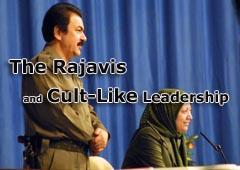
Yet for a great many of the group’s detractors, it is not so much its terrorist designation that is of concern but rather the bizarre devotion its members have for their husband and wife leaders, Maryam and Massoud Rajavi. Scholars and human-rights activists have long accused the organization of functioning like a religious cult, employing brainwashing techniques, ideological cleansings, forced celibacy (except when it comes to the Rajavis themselves), and even torture to condition its members to absolute obedience.

When French authorities arrested Maryam Rajavi—whom the group considers Iran’s president in exile—in 2002 for her alleged involvement in terrorist activities, several of her followers immolated themselves on the streets of Paris in protest. According to Human Rights Watch, members who have criticized the Rajavis or their organization have been detained against their will—and some have committed suicide to escape. Those who refuse to be rehabilitated were sometimes forced to make videotaped confessions of their disloyalty, then handed over to Saddam Hussein as Iranian spies to be tortured.

None of this fazes supporters like Filner, who has declared that since an invasion of Iran is not a viable option at the moment, the U.S. should just “get out of the way” and let the MEK do the job for us.

“We should not stand in their way of trying to get rid of the present regime,” Filner said.
In other words, the enemy of my enemy…

It is difficult to know how to read the sudden decision by the Iraqi government to raid and disband the MEK camp. Does the move imply increased tensions between the Iraqi and U.S. military? Is Iraq betting that, with American troops soon departing, warmer relations with Iran—which, after all, is not going anywhere—may serve its interests better than relations with the U.S.?

Thus far, it seems that no decision has been made about what to do with the MEK members rounded up in the raid. Will they be extradited to Iran, where they will surely face execution? Would that not drive a wedge between the U.S. and Iraq?
Stay tuned.

Reza Aslan, a contributor to The Daily Beast, is assistant professor of creative writing at the University of California, Riverside and senior fellow at the Orfalea Center on Global and International Studies at UC Santa Barbara. He is the author of the bestseller No god but God and How to Win a Cosmic War.

August 11, 2009 0 comments
FacebookTwitterPinterestWhatsappTelegramSkypeEmail
Jordan

Is Jordan the next option for MKO settlement?

Iran – following the collapse of the camp Ashraf, which was based for many years in Iraq to bring members of the "People’s Mojahedin Organization" (hypocrites) together, the leaders of the terrorist organization, are thinking of transition from Iraq to another Arab country.
MKO Begged Jordan to accept it !
"The People’s Mojahedin Organization", which was the active intelligence and operational arm of the defunct regime of Saddam, during the eight-year war imposed by Saddam against Iran, after the fall of the Baathist regime in Iraq were rounded up at camp Ashraf near Baghdad. Although the U.S. supported this terrorist organization as a means of exerting pressure on Iran, the Iraqi government, which accuses members of the terrorist organization guilty of criminal practices against Iraqi citizens have always been willing to get rid of the armed terrorist organization on its territory until the recent clashes that took place at Camp Ashraf where this terrorist base received a fatal blow, and now the leaders of the organization know very well that Iraq cannot be a safe place for their unsecure presence.

Consequently, Maryam Rajavi has recently traveled to Jordan to take permission from the Jordanian authorities and demand the officials of the country to accept the members of the MKO in Jordan.

Although there is no information on the details of the talks and Jordanians’ response to the terrorists, some political observers believe that the United States does not seem unwilling to transfer the headquarters of the MKO from Iraq to Jordan, because under the current circumstances, the United States itself and the European countries and the States bordering Persian Gulf do not want to move the headquarters into their territory, but Jordanian government, which remained loyal to Saddam until the last moments of his life as well as its absolute obedience to the United States, is the appropriate option to receive the members of this terrorist organization in its territory.

One of the concessions made by the MKO to the Jordanian authorities, is that this organization has a great operational and intelligence experience so it is able to assist the government and the security services in case of intensive presence of the Palestinians in Jordan (something that authorities of Jordan are not pleased with);it could act when it is necessary like the role it played in suppression of the Iraqi people uprising in 1991. Besides, considering the rapprochement between Jordan and Israel MKOwould serve them with its intelligence on Iran.

This point was noted last year by a group of MKO members during a meeting with a U.S. general in Iraq and the terrorist organization announced that if the United States was able to convince the government of Jordan to receive the organization’s members, they would not hesitate to cooperate with Israel to have paid the cost of their move to Jordan .

As MKO is despised by the people of Iran and isolated in Camp Ashraf and has lost of many of its troops, of course, will not be able to carry out such practices, but seeks to show itself as strong to convince Jordanians that it could be useful for them.

On the other hand, to stay safe from the reach of Iran and the Iraqi government – because it is accused by the two countries to carry out terrorist operations –MKO needs to gain Jordan’s support after the death of its former supporter and Jordan is betting on them as a political and intelligence tool.

Of course, in the light of the dwindling force of this failed terrorist organization, if the Jordanians, commit a terrible mistake and accept MKO members, they will not receive any benefit and but the ground of "insecurity" in their country will increase significantly.

After months of the arrival of the government of Nuri al-Maliki in Iraq, a number of Iraqi tribal leaders visited him and discussing various issues they raised the case of MKO existence in Iraq and noted that the organization is in charge of direct and indirect killing of a large number of both clans in an uprising in 1991 or what happened afterwards.

At this meeting, one of the tribal leaders said:” We want revenge for our dear ones and justice for the killers, but we consider that your Government is our Government, we will not intervene in the issue directly, we invite you to either of these options : to expel them from Iraq in order not to bear the responsibility their fate. We bust our order with them anywhere in the world, in addition to our enemies that we will know with the new host is found to the murderers of our children.

Now the choice for Jordanian government may be to accept existence of the terrorist organization to strain relations with Iran and the high ground where the lack of security, or will it act with tact and work like the rest of the Arab countries in order to avoid engaging in these dangerous and costly game.

August 11, 2009 0 comments
FacebookTwitterPinterestWhatsappTelegramSkypeEmail
Massoud Rajavi

Rajavi enjoys the smell of blood and death

The clash between the members of MKO settled in Camp Ashraf and the Iraqi police on July 28-29 that left remarkable casualties is a proven indication of Rajavi’s earlier serious forewarnings to convert Ashraf residents to human shields to resist any threat. His never ceasing insistence on the possible occurrence of a human tragedy in Ashraf following the Iraqi government determination to expel the group and close the camp was considered to be a token of concerns about forced repatriation of members to Iran. In contrast, he really meant what he said about human tragedy by lining members before Iraqi forces as human shields and to resist against the lawful execution of a government’s decision. Once, when surrendering arms to the coalition forces, Rajavi had said he preferred ‘arms carriers to the arms themselves’. He knew well how his forces were potential, trained under his ideological instructions, to become formidable barriers to pass over even when disarmed.

The strategy of preferring ‘arms carriers to the arms’ is the continuation of a theory adopted from the very beginning of the organization’s formation known as the theory of crossing the death, a strategy enabling the organization to have the upper hand in its struggle with the Pahlavi’s notorious security forces. Of course, the theory has since undergone a fundamental change in the course of Rajavi’s egocentric authority over the organization but the impressive consequences of such a theory can never be overlooked. In fact, when Rajavi consented to surrender arms to American forces, he was anticipating a future when the arms carriers needed no arms to be more effective than any arms. And he did his well to educate them as well as he could to take the leading role in a propaganda and psychological war to attract all international attention the organization needed. Having such an ideal in prospect, Rajavi’s ideological apparatus inaugurated a new fashion of training armless combatants to be exploited as walking weapons who instead of targeting the enemy stood as targets themselves to show another side of an innate brutality.

It makes no difference for Rajavi to sacrifice from any side; the emphasis is on the applied brutality to lead on. What he needs is some victims; by provoking the forces of the challenging side, he is sure that the outcome would be nothing less than some bodies from the both sides rolling in their blood. To what degree the other side can take self-control and tolerate the provocation is of no significance since he knows how he can easily break their tolerance and incite them to engage in an inevitably harsh react. What has happened in Camp Ashraf is in fact some aspect of the long adopted theory of crossing the death, an inspired, invisible strategy that takes advantage of vulnerabilities of armed forces when coming to confront armless forces.

Rajavi’s adversaries have been regarded remarkably helpful themselves and forthcoming in the scene of potential emerging threats that happen to threaten the organization. For him, political struggle and survival are two sides of a coin; when prevailing over adversaries, the highest possible amount of lives fall victim to its brutality and, again, when it feels entrapped and overcome by the antagonist side, it is victims of the suicide and self-immolation operations that piles bodies on bodies. The novel form of the latter is formation of human shield that sends members to their death under the pretention of defending Ashraf. The objective in all these is death and well plotted scenarios to send individuals to their death.

In all past years what has helped Rajavi to maintain his organization and the stability and effectiveness of his leadership as well as propelling his failed tactics is the blood of victims from the within and without. He has recurrently reiterated that his antagonists have to either stay for or against him. His exploited approach against the opposite front is use of lethal arms to take victims or turning those staying with him to lethal arms themselves to be sacrificed to the last one. And Ashraf is a depot of such lethal weapons.

Unlike the past that the innocent people were coerced by their captors into lining as the human walls and human shields against the opposite forces, here in Rajavi’s cult it is through ideological instillations and brainwashing that the insiders volunteer to stand vulnerable to any threat as human shields. Even beyond that, they can turn into aggressive beings that capitalize on the opposite front’s humane manner and incite them to react in a harsh manner. Now it is blood that is shed and spilled with the consequent cries that insiders have been tyrannized, the human rights violated and a tragedy taken place. And behind this entire bloodbath, regardless of all those leading rankings having the control of Ashraf in their hands, stands Rajavi who enjoys the smell of blood and death.

August 11, 2009 0 comments
FacebookTwitterPinterestWhatsappTelegramSkypeEmail
The MEK and Jundullah

Jundullah Threatens to Attack Iraqi Gov’t in Support of MKO

The Jundullah terrorist group warned Baghdad government that it would retaliate against the closure of a main camp of the anti-Iran terrorist Mojahedin-e Khalq Organization (MKO) by theThe Jundullah terrorist group warned Baghdad government that it would retaliate against the closure of a main camp of the anti-Iran terrorist Mojahedin-e Khalq Organization Iraqi forces.

"…the Iraqi government should know that its hostile measures against the residents of Camp Ashraf who are Iranian immigrants in this city are not and will not be in the interest of the Iraqi government," Jundullah said in statement.

The MKO, whose main stronghold is in Iraq, has been in the country’s Diyala province since the 1980s.

Six years after toppling Saddam government in 2003, the country’s security forces took control of the training base of the MKO at Camp Ashraf – about 60km (37 miles) north of Baghdad recently and detained dozens of the members of the terrorist group.

The Iraqi authority also changed the name of the military center from Camp Ashraf to the Camp of New Iraq.

Jundullah also in its statement urged the international organizations and opposition groups to stand against the measure and act for the urgent stop of the assaults on Camp Ashraf.
The ringleader of the Jundullah terrorist gang Abdulmalik Rigi on June 2 admitted receiving assistance from the MKO.

In a significant admission, Rigi told a US-based satellite TV station, that "They (MKO) have had good intelligence collaborations with us and have provided us with much information about the activities of the Iranian regime."

"They (MKO) inform us about the regime’s activities in our areas of operations and let us know of the regime’s forces in these districts and send us most of the intelligence of our interest by email and messages," Rigi told the station.

Rigi, a well-known gang leader whose group has already staged several terrorist operations in southeastern Iran, has long been chased by Iranian troops. In one of the worst cases, his group killed 22 citizens and abducted 7 more in Tasouki region on a road linking Zahedan – the capital city of the southeastern province of Sistan and Balouchestan – to another provincial town.

Rigi, who like his fellow al-Qaeda fanatics, has a penchant for videotaped decapitation of hostages, boasted in the interview, "We have treaties of friendship with all groups who act against Iran, and, among these, the MKO can do some things for us and we too can transit their members. But, I guess that they have certain limitations and are in countries where they cannot carry out their intended actions the way they want."

The MKO is behind a slew of assassinations and bombings inside Iran, a number of EU parliamentarians said in a recent letter in which they slammed a British court decision to remove the MKO from the British terror list. The EU officials also added that the group has no public support within Iran because of their role in helping Saddam Hussein in the Iraqi imposed war on Iran (1980-1988).

The group, founded in the 1960s, blended elements of Islamism and Stalinism and participated in the overthrow of the US-backed Shah of Iran in 1979. Ahead of the revolution, the MKO conducted attacks and assassinations against both Iranian and Western targets.

The group started assassination of the citizens and officials after the revolution in a bid to take control of the newly established Islamic Republic. It killed several of Iran’s new leaders in the early years after the revolution, including the then President, Mohammad Ali Rajayee, Prime Minister, Mohammad Javad Bahonar and the Judiciary Chief, Mohammad Hossein Beheshti who were killed in bomb attacks by MKO members in 1981.

The group fled to Iraq in 1986, where it was protected by Saddam Hussein and where it helped the Iraqi dictator suppress Shiite and Kurd uprisings in the country.

August 11, 2009 0 comments
FacebookTwitterPinterestWhatsappTelegramSkypeEmail
Mujahedin Khalq as an Opposition Group

Rioters Underline MKO’s Leading Role in Iran’s Recent Unrests

TEHRAN (FNA)- A rioter arrested during Iran’s post-election unrests confessed that he had received trainings in the Camp Ashraf of the anti-Iran terrorist group Mojahedin-e Khalq Organization (MKO) in Iraq to conduct sabotage and terror operations in Iran.

Nasser Abdul-Hosseini, alias Behrouz, who was detained for his major role in post-election unrests made the confessions to a court hearing in Tehran on Saturday. Abdul-Hosseni admitted all charges raised against him in the indictment.

"I went there (the camp) after crossing Iran-Iraq border at Qashr-e Shirin illegally and I was trained by a person named Siyavash in a bid to stage operations in Tehran," Hosseini said during the court hearing.

About the details of his training program, the detainee confessed that he had been trained to spark unrests in peaceful demonstrations, take photographs of any empty polling station and send them to MKO headquarters and raise pictures of MKO leaders at Iranian universities.

He further confessed that after June 12 presidential election he learned how to make Cocktail Molotov and received trainings from a woman named Zohreh, a London-based MKO member, to set buses and mosques on fire.

Hosseini added that he was arrested by Iranian security forces before fulfilling his mission.
The 100 culprits that are put to trail at these series of hearing sessions are categorized in three groups, namely the "plotters, intriguers, and planners of the riots", "the antagonists and those affiliated to foreign services", and "the opportunists, hooligans, and hoodlums who set ablaze, or destroyed private and public properties, and those that have had hands in disturbing public security."

The first hearing session of this kind was held on Saturday August 1st, in which big shot culprits, including the head of former President Seyed Mohammad Khatami’s Presidential Office Hojjatoleslam Mohammad Ali Abtahi and renowned reformist journalist Mohammad Atrianfar presented their defense.

August 9, 2009 0 comments
FacebookTwitterPinterestWhatsappTelegramSkypeEmail
Mujahedin Khalq as an Opposition Group

MKO Funds Attacks on Iranians in Iraq

The recent terrorist attacks against Iranian nationals and pilgrims in Iraq have been funded by the anti-Iran terrorist group, Mojahedin-e Khalq Organization (MKO), Iraqi media reported.

"A hireling Iraqi group paid by the MKO is responsible for the recent attacks on Iranian pilgrims," Alla al-Khatib, a prominent Iraqi writer and journalist said, Habilian website reported.

The journalist underlined that available documents and evidence display that the crime had been committed by MKO affiliates.

Khatib reiterated that the attacks are aimed at creating distrust among Iranian pilgrims and Iraqi officials.

The Iraqi writer, however, noted that such actions by the MKO cannot create a rift in Tehran-Baghdad friendly ties.

Elsewhere, Khatib described the vote by the Iraqi security forces to seize MKO’s main base and training camp as "completely legal", and added, "Existence of Camp Ashraf in this crisis-stricken region was a great problem."

Iraqi security forces took control of MKO’s Camp Ashraf about 60km (37 miles) north of Baghdad late July and detained dozens of the members of the terrorist group.

Following the operation, the Iraqi authority also changed the name of the military center from Camp Ashraf to the Camp of New Iraq.

August 9, 2009 0 comments
FacebookTwitterPinterestWhatsappTelegramSkypeEmail
Mujahedin Khalq Organization

A report of purges within Mojahedin Khaq

Massoud and Maryam Rajavi the cult leaders

Once in a letter addressed to Christopher George of Human Rights Watch/Middle East entitled Human Rights Abuse in Rajavi’s cult, Nowrooz Ali Rezvani, a disaffected and former member of MKO, presented documented reports of many physical and psychological mistreatments of the members by the leaders within the organization. The following is a detailed and proven list of engineering operations plotted in years 1981 to 1994 in an attempt to liquidate some members for certain organizational reasons.

The confessions by Mr. Rezvani well indicates the potentiality of the organization in subjecting the life of those in Camp Ashraf to severe jeopardy through a preplanned scenario and under the cover of defending the camp against the lawful interference of the Iraqi police to take the control in its hands.

Aggressive reaction of Camp Ashraf residents to confront the Iraqi police, that in the first look may seem to be inevitable in such occasions, demonstrates covert plots that were suspended until a golden opportunity could frame all together. The warning bells had been already rang and the least the Iraqi government can do is to decrease the costs which requires considerable and deliberate prudence when dealing with such a conundrum and odious organization. Now soon after the attacks the organization has started a new round of propaganda blitz mainly focusing on the killed members; a probe into the past thirty years clarifies that it has been typical of the organization and the Rajavis to advance cultic causes by moving over the victims whose death remains a matter of obscurity. The members who are claimed to have died in clashes between Iraqi police and Ashraf residents follow the same craftily plotted scenario that grants the opportunity of helping the organization to get rid of its dissidents.

Facts revealed by former members indicate that a number of MKO members committed suicide because they were prevented from leaving the organization and that suicide was also claimed as the cause of death for recalcitrant members who had to be erased. Once more, we forewarn the international organizations and bodies of the repetition of past incidents that can be best judged by the members themselves; does it sound believable that the members’ death in any form has merely been accidents? Mr. Rezvani’s references to some of these deaths within MKO can provide some answer to some degree.

The first floor in Camp Shafaee located in Kirkuk
A woman called Nahid dropped to her death falling out of the first floor of a building of Camp Shafaee located in Kirkuk, Iraq. She was announced to have committed suicide. According to MKO, she was psychologically ill and her suicide was identified the result of her nurse’s negligence.

Baghdad, Iraq, 1976
A woman named Zahra was designated to work as a kitchen porter in Camp Saadati after she was demoted of her organizational rank. Later, her frozen body was found in the refrigerator.

Sardasht, Kurdistan, 1986
In Sardasht zone, a man from southern Iranian province named Abbas was shot deliberately by his commander as reported by eye-witnesses. He was an old member of the organization and opposed to inter-organizational relations. He had long been watched and sent to the military section as a punishment where he was then liquidated through a plot.

Kirkuk, Iraq, Debs Prison
Mohammad Gamoush imprisoned in section 200 of Debs Prison was found hanged. The organization buried his body behind the walls of the section 200 of Debs Prison.

Kurdistan, Iran-Iraq borderline, 1987
Hassan Muhammadi, a member of MKO, is suspiciously drawn in the border river Zab. He had been condemned to death by the inter-organizational court located in Iraqi soil. Suffering long days in a prison located in Kurdistan, Iraq, he was transferred to Mesbah Prison in Suleymanieh where he managed to escape in an attempt to make contacts with the organization’s rankings and even the leader himself in Baghdad to inquire why he had been condemned to death and imprisoned.

For the second time in Camp Saadati in Baghdad he stood trial and again Abbas Davari and Muhammad Hayati condemned him to death and imprisonment. On Rajavi’s order his death verdict was commuted and he was employed in a transportation stock as a simple worker where he had to stay day and night. Two times he was violently attacked and beaten by Mojahedin thugs, two of whom can be named as Hassan Tahmasebi and Mashaallah from Tehran. Muhammadi was then dispatched to the organization’s military section where he was ostensibly drawn in the River Zab overnight. He was an old member of MKO and imprisoned in the Pahlavi’s regime. His brother was a ranking member and had detached from the organization in 1978 after being released from the prison.

Khalis Province, Iraq, Camp Ashraf 1991
A man was found smothered with a handkerchief in his mouth in a resident prison in Camp Ashraf. His body was found while they were checking and inspecting residential.
Two other women died in suspicious and the organization announced they had committed suicide by taking cyanides while access to such toxic substances was impossible in Camp Ashraf. The two were dissidents who intended to leave and had refused the ideologically enforced divorces.
A recalcitrant member had announced his separation; his head was crushed between two military IFA trucks in regiment 96. The organization announced his death an accident as a result of cloud and the darkness.

In 1991, nearly 1000 dissident members ran a hard life in the camps’ jails as well as Saddam’s notorious prisons where they spent weeks and months in solitary confinements. At the end it was the awful camp in Romadi that awaited the dissident, a fearsome place where Rajavi had sworn to banish the dissident, where they would pray one thousand or one million times a day to die and would see and touch death in any moment.

And so it was that a dissident named Javad failed to tolerate the rough condition dominating the camp and hanged himself before the Office of the Refugees’ Affairs just before the eyes of his comrades. Many reports have been so far directed to you concerning the act and I deem it necessary to unveil some facts about a number of murders committed by MKO.
In May 1984 in Paris, a woman named zhale commits suicide by jumping before a train to show her opposition to MKO’s internal ideological revolution and Masoud Rajavi’s leadership. She had been under psychological pressure by her organizational supervisors.

In 1984 in Kurdistan, Iraq, a MKO’s military commander, called Abbas, shots a dissident back in the head causing his immediate death. The murderer is still in the organization.

In 1984 in Kurdish zone of Iranian Sardasht-Baneh, for three times the injured, captive forces of Iranian army were machine-gunned on the command of a MKO’s commander named Nasser Gestapo.

In 1983 in Kurdish zone of Iranian Sardasht, Zamziran Village, a wounded POW was machine-gunned by a commander of MKO named Yahya from Zanjan.

In 1983 in Kurdish zone of Iranian Sardasht, Kavalan Village, two wounded POWs were machine-gunned by a commander of MKO’s operation team named Hadi Gestapo.

In 1984 in Kurdish zone of Iranian Bukan, two wounded POWs were machine-gunned by a commander of MKO named Reza Sanandaji.

In 1986, Baghdad, Iraq, Mojtaba Mirmiran, a member known to be poet working in the propaganda section of the Voice of Mojahed, was found hanged in Camp Mirzai located in Baghdad, Al-Saadun St. He was one of those recalcitrant members strongly opposed to Rajavi’s leadership. The organization announced his death another case of suicide.

August 9, 2009 0 comments
FacebookTwitterPinterestWhatsappTelegramSkypeEmail
MEK Camp Ashraf

Iraq denies blocking food to MKO camp

Iraq on Thursday denied it was preventing food, water or medical supplies from entering an Iranian exile camp it wants to shut down north of Baghdad. Government spokesman Ali al-Dabbagh denied reports by the camp's residents,MKO that its forces had blocked entry of food and water into the camp

Government spokesman Ali al-Dabbagh denied reports by the camp’s residents, the People’s Mujahideen Organization of Iran (PMOI) dissident group, that its forces had blocked entry of food and water into the camp for at least 10 days.

"That is incorrect … We do not block food or medical supplies, but we do block building supplies such as cement and metal," Dabbagh said.

Swiss-based human rights activists, including senior U.N. expert Jean Ziegler, said on Wednesday Iraqi authorities were blocking food and water.

Iraqi forces last week took control of the camp on the Iranian border, home to the PMOI for about two decades, sparking clashes with residents in which at least seven exiles were killed. Camp residents said 13 were killed.

Iraqi police arrested 36 Iranian exiles on rioting charges after the clashes.

Iraq has said it wants to close the camp and send residents to Iran or a third country, a proposal they bitterly oppose. The government has not said when it might evict them.

Iraq’s Shi’ite-led government, which includes many former opponents of Saddam Hussein who were exiled in Iran, has close ties to Tehran and is unsympathetic to the PMOI.

The group began as Islamist leftists against Iran’s Shah but fell out with Shi’ite clerics who took power in the 1979 revolution.

Iraq, like Iran and the United States, sees the PMOI as a terrorist organization. On Tuesday, Iraq’s state security minister said none of the camp’s 3,500 residents would be granted asylum in Iraq.
Reuters, Baghdad –  Reporting by Mohammed Abbas

August 8, 2009 0 comments
FacebookTwitterPinterestWhatsappTelegramSkypeEmail
MEK Camp Ashraf

Police general, analyst discuss Iraqi takeover of camp Ashraf

Iraqi government-controlled Al-Iraqiyah TV, at 1910 gmt on 29 July carries a new episode of its "Al-Iraqiyah and the Event" talk show featuring a live 41-minute discussion, moderated by Nusayr Lazim and hosting, in the studio, Major General Abd-al-Husayn al-Shammari, chief of police in the Diyala Governorate; and Dr Adnan al-Sarraj, director of the Iraqi Centre for Media Development, on the legitimacy or otherwise of the presence of the Mojahedin-e Khalq Organization (MKO) on Iraqi territory and the Iraqi military operation at Camp Ashraf, home to the MKO followers, to impose Iraqi forces control over the camp.

Introducing the discussion, Lazim gives a brief history of the MKO, saying that the Iraqi government had discovered that the existence of this organization on Iraqi territory is illegal "because this presence contravenes article 7 of the Iraqi constitution, which stipulates that the state shall be committed to fighting all forms of terrorism and preventing the Iraqi territory from being a launch pad, a passageway, or an arena for terrorist activities." He says "the government had decided not to use force to evict them but to encourage them to leave Iraq for any other country that grants them asylum or to return to Iran voluntarily."

Lazim begins the discussion by asking General al-Shammari "when negotiations began to enter Camp Ashraf and impose Iraqi control," he replies: "After the Cabinet’s decision No 216 of 16 June 2008, a committee was formed under Dr Muwaffaq al-Rubay’i and a number of representatives of the security ministries and it decided to establish contacts with the residents of Camp Ashraf." General al-Shammari notes that a number of meetings and conferences have been held since then, and they continue to be held. He notes that given the fact that the organization is considered a terrorist organization, it was decided that it would be considered a political organization and must leave Iraq, "but not by force or by violating human rights but by understanding and dialogue and based on human rights, even though the MKO members are not considered political refugees." He adds: "International organizations, such as the UN High Commission for Refugees, declined to visit the camp because it is of a military nature."

Asked if there were "direct negotiations" with the leaders in the camp, he says the negotiations were direct and were held at Camp Ashraf, noting that the talks took normal course, adding that the camp was searched for weapons and the camp’s population was counted. He adds that the Human Rights Ministry was involved and special forms were distributed to the inmates to fill, indicating whether they wanted to return to Iran or to go to a European state. They were asked who wanted to leave the camp, "which is considered a prison." Asked about the "third option," allowing them to stay on Iraqi territory, General al-Shammari replies that this option was "introduced later on."

He says that many meetings were held with them "but they presented impossible demands, as though this land belongs to them, subjecting it to haggling." He adds: "They claimed that the government wanted to force them out of the camp, that it did not treat them as human beings." He says the US forces representatives attended all meetings with the representatives of the camp. Asked if the US forces were active participants in the talks or only observers, he says: "At the beginning they supported, sponsored, and defended them based on the principles of human rights and freedom, telling us: You are a new state and should behave in different way. They forgot that they themselves considered this organization a terrorist organization in 1997."

General al-Shammari says: "Thus, after 30 June, a decision was made that they must leave or they have to be moved to another place," and adds: "There was a proposal to send them to other places in Iraq, because this place is really unsafe to them. If they come under Iranian aerial bombardment or missiles we will not be able to protect them."

He says the Iraqis considered that this is an Iraqi territory and the facilities on the camp are Iraqi property and must be managed by the Iraqis. He says that state employees started to send water into the camp and a healthcare centre was opened.

Turning to Dr al-Sarraj, Lazim asks him if he agrees that they should leave Iraq based on international law, he says: "The MKO is a terrorist organization, and this was reaffirmed by the Iraqi Governing Council, which obligated the MKO to leave Iraq and hand over their weapons and all their facilities that are on Iraqi territory, and this decision was binding on all successive Iraqi governments. However, the national unity government under Mr Nuri al-Maliki, who is the supreme commander of the Armed Forces, wanted to resolve the Camp Ashraf issue as soon as possible. It issued a number of decisions demanding that the organization either leave or find refugee in other countries and outside the Iraqi borders." He says the organization has a "long history" of deplorable and "heinous" deeds. He says that MKO has been described as a "terrorist organization since the 1980s." He says it supported Saddam and helped him quell the Sha’ban uprising in 1991.

He says that the Iraqi government cannot tolerate the existence of such an organization on its soil, adding that MKO members are trained on most modern weapons, combat operations, guerrilla warfare, and the use of explosives, and they can act as human bombs, noting that there are 3,500 of them in this camp.

Lazim then asks General al-Shammari to give a briefing on the negotiations that were held on this issue from 30 June to 28 July. General al-Shammari says that the area of the camp is about 48 square kilometres, of which 180 donums [ 0.18 square kilometres] is arable land, which they have been "usurping for the past 23 years." He says the Army was responsible for the area around the camp and the police was responsible for the internal area. He adds: "When negotiations began, they agreed to let the Army be deployed outside but they prevented the police from entering the camp. We were negotiating with them and we, the police, wanted to protect and serve them and provide security for them because the US forces left all the towns." He says "it took three meetings of negotiations to allow us to enter a building inside the camp, which is on Iraqi territory." He says a decision was made ordering "the police to enter the camp and establish a police station."

General al-Shammari says that the inmates of the camp prevented the establishment of the station and the raising of the Iraqi flag. He adds: "Then we held further negotiations and a decision was made that the police force must go inside, basically to protect them." He says after two hours of talks, they rejected the demand of the police forces to enter and open a police station. He adds: "Thus, our command told us to open the gates. We drew up a plan and wanted to go in peacefully but we found thousands – there are 3,428 inside – confronting us." He says they placed obstacles on the gates from which we might enter, noting that some were armed with sticks, some with knives, and some even with swords.

General al-Shammari says: "The police force was composed of two squads of a mechanized regiment – there were only nine Hummers," adding that about 325 entered the camp and "we faced stiff and sustained resistance, and you know they are experienced in terrorist operations." Al-Shammari says: "We were forced to enter the camp, occupy our target, raise the Iraqi flag, and open the police station. We sustained losses, including the injury of six of our best officers and 66 other personnel. We had been instructed to adhere to human rights principles and to avoid any friction or clashes with them. However, they staged a stiff attack and they wanted to jump over the wall, and indeed some of them crossed the wall and arrived at us, and we were positioned 200 meters from the wall. Some of them wanted to do something to us but we arrested them. We now have 33 detainees."

Lazim says that the media blew what happened out of proportion and described the operation as a "grinding battle." He asks Al-Sarraj to comment on media reports. Al-Sarraj says the MKO is known for its cunning in using the media and exploiting its international relations, and has always exploited the media to achieve its purposes. He says that the International Committee of the Red Cross (ICRC) has failed to provide a full report on Camp Ashraf, noting that not a single international organization has reported that the camp had been exposed to Iraqi violations, noting that "the MKO has tried time and again to give the impression that the Iraqis are oppressing them," and adds: "They are continuing to do that. Look at these dramatic actions that they have taken, such as confronting the police and carrying sticks." He says "they give the impression to the world that an annihilation campaign has been launched, even though the security forces did not fire a single bullet."

He says Iraq is always wronged and adds: "There are agendas against the political process in Iraq and there are states that have not yet made a decision to recognize the political process in Iraq."

Lazim asks General al-Shammari if it is true that some of the inmates of the camp were killed and that 350 were injured, he replies: "We have no information on how many were injured. We heard this on the media. We informed our men to avoid any friction." He says: "Our police and army personnel responded only in self-defence because the occupants of the camp were reckless and terrorists, prepared to burn themselves or throw themselves into our vehicles." He says the Iraqi police and army were surprised by their resistance, "because we had wanted to open a police centre on Iraqi territory and raise the Iraqi flag, in order to protect them, and apparently they were not convinced." He adds that the security forces received instructions from the prime minister and Dr Ali al-Yasir, to remove the magazines of our weapons to avoid any possible impulsive action by any policeman or soldier in case there were provocations."

General al-Shammari says that the police had not been certain about the existence of weapons inside the camp, and adds that "when we entered they put up an excellent military plan to prevent us," adding that they expected us from a certain gate but we move in from another direction. There have been no human rights violations. He adds: "We heard on the media yesterday that two of them died. Our own physician in the health centre inside the camp, Dr Ammar I believe, said that no dead bodies were brought to him. We told him to ask them to give us the names of the dead so we can prepare death certificates for them." He adds: "They refused to give names and we are not certain that there were fatalities among them." Al-Shammari says: "If there were fatalities, I would expect that it was one of their ploys. I remember that in the past they planned to kill a woman in order to tell the media that the Iraqi forces killed her. They are adept at such ploys. We did not use weapons and the Army did not use weapons."

He says the inmates of the camp used "stun grenades, smoke bombs, and burned tires and threw them in front of the police." And adds: "They used chlorine and we had three casualties and they are in hospital, cases of poisoning."

Asked if he thinks that a solution to this problem exists, Al-Sarraj say that some of the inmates, 22 of them, returned to Iran through the ICRC and were pardoned and the Iraqi government received a report that they were living a normal life without any harassment." He says MKO leader Rajavi’s "terms to Iran" prove that "she has lost the battle." Asked if they are going to leave, he says: "They will not leave easily because there are international measures to be taken. They want guarantees and Rajavi’s letter mentioned guarantees from the United Nations, the ICRC, the Iraqi government, and the US government."

Al-Sarraj is asked if Iraq will wait until Iran accepts Rajavi’s terms, he replies: "No, I think the problem will be resolved over the next few months. I believe that the Iranians are serious in receiving them but they themselves are not serious. This is one of their ploys. They want world nations to accept them as political refugees." He says not all of these people support the MKO, adding that "half of them are under the influence of the other half." He says: "For Iraq, this is neither a military nor a political problem. This is a terrorist organization and it is over politically. Militarily, the Iraqi army is capable of overcoming them."

In conclusion, General al-Shammari is asked who he thinks is controlling the Camp Ashraf now. He asserts that "Camp Ashraf is under the supervision of the Iraqi security forces." He denies that the inmates are oppressed by the Iraqi forces, and adds: "They have no other option except to ask for asylum or leave for Iran, benefiting from the amnesty decision, and we are resolved to solve this problem because it causes trouble to the Iraqis and has political and economic consequences." General al-Shammari adds: "At 1500 today, the Diyala Operations Commander and his delegation started another round of negotiations with them – they refused to negotiate at the beginning – and the negotiations continued until 1700 and they are still recalcitrant and refusing to yield." He says "God willing, this will eventually prove to be a very simple problem." 
Al-Iraqiyah TV, Baghdad, in Arabic – Translated by: BBC Monitoring Middle East

August 8, 2009 0 comments
FacebookTwitterPinterestWhatsappTelegramSkypeEmail
Former members of the MEK

Masud Rajavi Married every woman of the Leadership Council

Memoirs of Batoul Soltani – Part 20

As I explained previously about Masud and Maryam’s Marriage, it was a solution to remove the last obstacle between the leader and Maryam since no obstacle is accepted in this relationship. In the case of the leadership Council of which the members are all women, there was also the same legal, moral and religious contradiction that has to be removed.

Any woman who wants to enter the Leadership Council should obey the article B of the Ideological Revolution, which was actually related to “Joining the leader”. In this article the women are told to marry Masud Rajavi as soon as they are accepted in the Leadership Council.

As a matter of fact this article is mentioned just after the person has become a member of the Leadership Council. I remember Maryam discussing the argument for us saying: ”Now you are exclusively considered as Msaud’s wives”. Therefore the contradiction was removed. And only Masud could hold meetings for women of the Leadership Council since in his opinion when a woman is a member of the Leadership Council her relationship with the leader is totally different from the other members.

Thus, through a series of long-term meetings, the members of the Leadership council are convinced that the extent of their relation with the leader has changed due to their presence in the Leadership Council. Distinctively after that Masud is their husband. Then, he introduced a marriage certificate for each member of the Council.

It is worth informing that there were official ceremonies specifically held for the above mentioned marriages and I was present in one of them. Before the start of the ceremony, Maryam explained the article B again discussing its differences for a man and for a woman.

They presented some arguments on the issue but unfortunately I don’t remember them in details since they are related back to 1999. In fact the bottom line of those arguments was as Maryam said: ”you are not a divorced or abandoned woman any more … You are Msaud’s ideological wives”. She meant that this type of marriage is not ordinary but it is spiritual.

About the formation of the ceremony, Maryam herself was the one who hold the meeting. The scenario was like this “At the beginning Maryam asked Masud to enter the meeting and Masud refused at first and pretended that he was forced to come in. Apparently, Masud wasn’t willing to attend the meeting and Maryam insisted him to do so.

Even Maryam told the members of the Leadership Council that she was doing so to remove their contradictions. She said: ”Your minds are still bounded with legal and traditional restrictions and this might cause problems in the future”. She emphasized that marrying Masud would close their minds to any other man. Finally Masud got into the meeting and he himself announced the marriage agreement and each member said “I do”.

For the ceremony, after Masud went into the meeting, he gave a break. Then everyone made wudhu (ablution) and came back, Masud himself announced the agreement and the women said “I do” one by one. Apparently, they were not forced to say so.

It was a routine ceremony which was held for each group of the leadership Council members who were replaced. I myself attended the forth ceremony.

Before the ceremony, the meetings were completely different; members didn’t talk about anything; but after the marriage ceremony, the atmosphere was so different that the women could talk about their most personal and sexual problems.

Once, I remember a woman who didn’t say “I do” in the marriage ceremony. Then I saw that she was automatically excluded from our meetings. We never saw her in the meetings in that level anymore.

SFF – Translated by Nejat Society

August 8, 2009 0 comments
FacebookTwitterPinterestWhatsappTelegramSkypeEmail
Newer Posts
Older Posts

Recent Posts

  • The black box of the torture camps of the MEK

    December 24, 2025
  • Pregnancy was taboo in the MEK

    December 22, 2025
  • MEPs who lack awareness about the MEK’s nature

    December 20, 2025
  • Why did Massoud Rajavi enforce divorces in the MEK?

    December 15, 2025
  • Massoud Rajavi and widespread sexual abuse of female members

    December 10, 2025
  • Facebook
  • Twitter
  • Instagram
  • Youtube

© 2003 - 2025 NEJAT Society . All Rights Reserved. NejatNGO.org


Back To Top
Nejat Society
  • Home
  • Articles
  • Media
    • Cartoons
    • NewsPics
    • Photo Gallery
    • Videos
  • Publications
    • Books
    • Nejat NewsLetter
    • Pars Brief
  • About Us
  • Contact us
  • Editions
    • عربي
    • فارسی
    • Shqip