Iran’s Judiciary says three Iranians — two are responsible for a deadly bombing and the remaining convict is a member of a terrorist organization — have been shipped to death row.
Reports indicate that two of the convicts are professed members of the Iran Royal Association, a little known monarchist group that seeks to overthrow the country’s Islamic establishment and replace it with the old monarchy.
The group is responsible for a deadly bombing in the southern city of Shiraz back in April 2008, in which 13 people were killed and hundreds were wounded.
The other convict is a member of the anti-Iranian terrorist organization known as the Mujahedin-e-Khalq Organization (MKO).
The three convicts have a right of appeal, officials said.
The MKO was founded in Iran in the 1960s, but its leaders and members fled the country some twenty years later after carrying out numerous acts of terror inside the country.
The group, which had close ties with former Iraqi dictator Saddam Hussein, masterminded a series of assassinations and bombings inside Iran, including the 1981 bombing of the offices of the Islamic Republic Party, in which more than 72 senior Iranian officials were killed, including the then Judiciary Chief Ayatollah Mohammad Beheshti.
One of the monarchists identified as Mohammad-Reza Ali-Zamani was reported by Amnesty International as "the first person sentenced to death" over Iran’s post-election violence in June.
However, a diplomat, who spoke to Press TV on condition of anonymity, said Zamani is convicted for being a member of "a terrorist group, and for trying to overthrow the Islamic Republic as well as spying on behalf of the [Central Intelligence Agency] CIA."
"He has been arrested for his participation in the Shiraz bombing and killing a number of Iranian nationals," the source said.
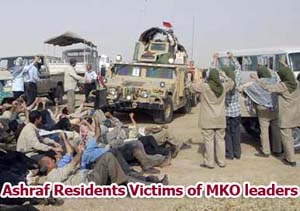

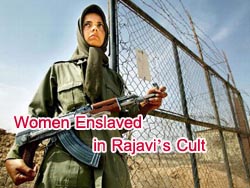 as MKO. Although Mojahedin have adopted the false ideological and strategic slogan of setting women free form social, conventional, religious, and historical bonds, yet in practice women have been subject to a kind of modern slavery under the cover of freedom through mental and physical convincing mechanisms.
  Iraq’s Human Rights Minister, Mikhail Salim, said her government does not intend to return members of the Mojahedin-e Khalq Organization Iranian opposition, to their country by force.
  on Neda who was hardly of any weight and importance within and without the organization until she was burned to death, an anonymous girl who had suddenly become the focal attention of the media in a week. I believe she achieved preeminence in public and it can be said that she had great impact on the whole situation. Of course, that was exactly what the organization expected. As Neda’s case is sensitive, let’s talk about her and her life and struggle background and I will pose further question if necessary.
 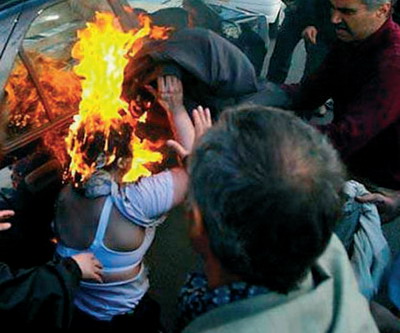 However, Neda left for the Europe simultaneous with Maryam’s relocation to France. Of course, Neda had been raised and living in Europe and came to Ashraf after she was graduated.