Nejat Society
  • Home
  • Articles
  • Media
    • Cartoons
    • NewsPics
    • Photo Gallery
    • Videos
  • Publications
    • Books
    • Nejat NewsLetter
    • Pars Brief
  • About Us
  • Contact us
  • Editions
    • عربي
    • فارسی
    • Shqip
Nejat Society
Nejat Society
  • Home
  • Articles
  • Media
    • Cartoons
    • NewsPics
    • Photo Gallery
    • Videos
  • Publications
    • Books
    • Nejat NewsLetter
    • Pars Brief
  • About Us
  • Contact us
  • Editions
    • عربي
    • فارسی
    • Shqip
© 2003 - 2024 NEJAT Society. nejatngo.org
Massoud Rajavi

Outcome of Rajavi’s Ambitions

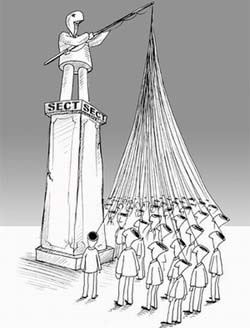
In any cult-like culture, cult leaders generally seek their own ambitions by enslaving a group of individuals who have left their ordinary life behind to achieve the goals of the cult leader. These members are prepared by the cult leader to run his ambitions. That’s why today the world is very crucial about groups that represent cult culture, as what the world saw in September 11th The leaders of Rajavi’s cult always consider the list of their victims as their honor.disastrous act that was committed by cult ( Al Qaida ) members who were able to perform the most unthinkable act of suicide.

In the cult of Rajavi, Massoud Rajavi’s extreme ambition for power has already taken the lives of a large number of people including the organization’s members, Iraqi and Iranian civilians and authorities. The shameful part is that the leaders of Rajavi’s cult always consider the list of their victims as their honor.

More important is the danger linked with MKO which endangers today’s international community.
 
As an ambitious cult leader, Massoud Rajavi and his co-leader Maryam “make the members believe that Massoud is the only one who is always ready for change and revolution; the only one who sacrifices himself to solve other people’s problems; the only one who assumes every responsibility. Therefore he is not an ordinary man! This is what the organization makes us believe” according to Batoul Soltani, former member of MEK’s Leadership Council. The figure that the cult draws of Massoud presents him as the master and owner of members, so they just obey the internal dynamic that dominates the cult.

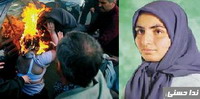
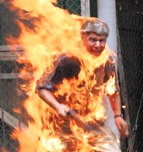
The position Massoud considers for himself is the one of a person who is “the bridge between people and God. Now from that position he can more or less order his followers to do anything” , says Ann Singleton an MKO ex-member. And this position is the one that convinces the members to set themselves on fire following the arrest of Maryam Rajavi in June 2003.

Marjan Malek, another defector of MKO who was arrested by Iranian Police when she was supposed to carry out a mortar attack in Tehran, says that “the MEK tells members that Massoud Rajavi is not only your leader, but also your husband, father and brother. He is the only one who should matter in your life and you shouldn’t think about any one else.”

Marjan Malek left her children, and husband after she joined MKO .she was trained in Camp Ashraf, sent to Iran where she launched mortar attacks against her own compatriots. She defected from the cult after her arrest and as one of the founders of Nejat Society, she could join her children in Sweden where they were kept by MKO supporters after they were separated from their mother. See how the ambitions of a cult leader change a mother to an assassin who leaves her family to kill the civilians of her own nation. And Massoud Rajavi is personally accountable for everything his cult members do.

Nowadays, while Camp Ashraf is completely going under the control of Iraqi Police, Massoud Rajavi is the only responsible for lives of those six members who were killed during riots at Ashraf gates. Those members are only some brainwashed manipulated individuals who were ordered by their leader to defend their Camp by rocks or knives.
By Mazda Parsi

August 6, 2009 0 comments
FacebookTwitterPinterestWhatsappTelegramSkypeEmail
Mujahedin Khalq Organization

Rand: The Mujahedin-e Khalq in Iraq – A policy conundrum

… A RAND study examined the evolution of this controversial decision, which has left the United States open to charges of hypocrisy in the war on terrorism. An examination of MeK activities establishes its cultic practices and its deceptive recruitment and public relations strategies. A series of coalition decisions served to facilitate the MeK leadership’s control over its members. The government of Iraq wants to expel the group, but no country other than Iran will accept it. Thus, the RAND study concludes that the best course of action would be …

___________________

Rand report on MEK

Link to the PDF File

The Mujahedin-e Khalq in Iraq

A Policy Conundrum

by Jeremiah Goulka, Lydia Hansell, Elizabeth Wilke, Judith Larson

During Operation Iraqi Freedom, coalition forces classified the Mujahedin-e Khalq (MeK), an Iranian dissident group dedicated to the violent overthrow of the Iranian government, as an enemy force. The MeK had provided security services to Saddam Hussein from its camps in Iraq and had been listed as a foreign terrorist organization by the Secretary of State. After a cease-fire was signed, the U.S. Secretary of Defense designated this group’s members as civilian “protected persons” rather than combatant prisoners of war under the Geneva Conventions. A RAND study examined the evolution of this controversial decision, which has left the United States open to charges of hypocrisy in the war on terrorism. An examination of MeK activities establishes its cultic practices and its deceptive recruitment and public relations strategies. A series of coalition decisions served to facilitate the MeK leadership’s control over its members. The government of Iraq wants to expel the group, but no country other than Iran will accept it. Thus, the RAND study concludes that the best course of action would be to repatriate the majority of its members to Iran, which in 2003 granted amnesty to the MeK rank and file and appears to have upheld its commitment. The coalition’s experience with the MeK also offers lessons for dealing with unusual militias in future military actions and for providing better training for field commanders and enlisted personnel.

Table of Contents

Chapter One

The Mujahedin-e Khalq: A U.S. Policy Conundrum

Chapter Two

The MeK During Operation Iraqi Freedom

Chapter Three

Options for Relocating the MeK

Chapter Four

Unexpected Challenges, Unintended Consequences, and Lessons Learned

Appendix A

A Brief History of the MeK Prior to Operation Iraqi Freedom

Appendix B

Cultic Characteristics of the MeK

Appendix C

Timeline of MeK Activities

Appendix D

What Is a Foreign Terrorist Organization?

Research conducted by

RAND National Security Research Division

To View The Full Document Click Here

Link to the source

August 6, 2009 0 comments
FacebookTwitterPinterestWhatsappTelegramSkypeEmail
Former members of the MEK

Rajavi; set your body on fire to defend Ashraf

An interview with Batool Soltani on MKO self-immolations – Part nine

Sahar Family Foundation: In our last talk you pointed out that the prerequisite for membership in Rajavi; set your body on fire to defend Ashrafthe organization is to volunteer for self-immolation. Does it mean that the organization reacts against the reluctant and how does it deal with such instances?

Batool Soltani: The organization takes no clear position to directly confront in such instances. To answer the question, we need to conduct a deep analysis of a whole organizational reaction against already confronted cases. There was a female colleague who had refused to volunteer for self-immolation but the organization showed no antagonistic attitude towards her before others. It was not the end of the story and the organization commanded me to watch her closely since they believed that she was in trouble with herself and cared not the least for the organization. They would justify that now even ten days after the detention of Maryam in France, she had refrained to be an abstentious volunteer. In fact, the organization avoided to tackle with these members just before the eyes of others and pretended to overlook them. In this way, many others would be impressed to join the side of majority since the impartiality proved to be a working propaganda to attract more than to repel. Furthermore, nobody could accuse the organization of coercing members into acts of suicide and the acts would be propagated as personal outbursts of passion and consequent of strong devotion to the ideology, Maryam and Massoud. The process of indirect control of the disobedient would continue until through an excuse they would be seriously censured. There were some among the rankings of the Leadership Council who refused to volunteer for suicide operations but after a while were suddenly evanesced from the council. In my opinion, the use of clever mechanisms of control to undermine the dissidents functioned much better than exploiting levers of pressure and coercion. And so far it has succeeded to expand glorification of suicide operation as a token of devotion among the insiders.

SFF: You have already stated that self-immolation as a kind of suicide operation has been innovated by the organization. Can you say exactly when the organization selected it as a working lever, and who was the first to suggest it and for what reason?

BS: Well, I have already explained that the suicide operation is not new but was innate in An interview with Batool Soltani on MKO self-immolationsorganization from its very formation.

SFF: I mean in its novel form of self-immolation.

BS: Well, it was first conducted to be committed in 17 June operations. We have never witnessed it before.
SFF: To make it more clear, when it was first suggested as a solution and by whom?

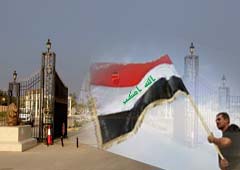
BS: It returns to Massoud Rajavi’s last meeting in Camp Ahraf before the fall of Saddam. It was a well known meeting called ‘the meeting of flag’. Of course, the issue was not explicitly mentioned there but it was later discussed in a meeting of the Leadership Council that what should have to be done to defend if Saddam collapsed and Camp Ashraf came under unexpected threat from the outside. For the first time Massoud suggested self-burning as a defensive advantage to safeguard Ashraf. He frankly stated that to repel any threat intended to dismantle Camp Ashraf all had to sacrifice and set themselves on fire. Of course, at the time the organization was not suffering the deteriorating condition of being disarmed and it was still equipped with a variety of heavy and light weapons that could defend itself to some extent. But it seemed that Rajavi was anticipating a near future of invasion that could seriously challenge the organization before it could use its arms. So the best defensive measure was resolved by Rajavi to be suicide through self-immolation. We never saw Massoud again till the manifestation of his novel suggestion in the incidents of 17 June.

SFF: To remind you, I have to point out that the issue of self-immolation emerged for the first time in the letters of the members who wrote them to Massoud Rajavi following his ideological revolution as an indication of devotion to him and his revolution. I remember a letter in Jafarzadeh’s handwriting published by a website in which he had volunteered to commit self-immolation to show his loyalty. These letters date back to 1985 and I mean to say that the issue was first proposed at that time as the letters indicate. Furthermore, even when France was expelling some members to Gabon, Maryam Rajavi is quoted to have said Massoud Rajavi had stopped remonstrant self-immolations as a raised objection against the decision taken by France. Your reference to the meeting dates back to 2002, then, can you remember any earlier occasion when the issue came under notice?

BS: To correct, I was not in the organization at the time you are referring to. I joined in mid 1980s and I have seen none of the things you say in the sources published by the organization.

SFF: All of the instances I stated you can find in the publications of the organization if you have access to them.

BS: It seems that my information as a member of the organization fails to surpass that of yours. I would be grateful if you could give me the address to these sources.

August 6, 2009 0 comments
FacebookTwitterPinterestWhatsappTelegramSkypeEmail
Italy

The Iranian Pen Club letter to Italy’s Minister of Foreign Affairs

Mr. Franco Frattini Minister of Foreign Affairs of the Italy

We were disappointed to hear about Mrs. Maryam Rajavi’s visit with many of members of Parliament in Rome, July 29, 2009. As you are well aware, Mrs. Maryam Rajavi is the leader of a cult terrorist organization called Mojahedin-e-Khalq Organization (MEK, MKO). National Council of Resistance of Iran (NCRI) is a cover name for this organization.

We think, Italian Government must not permit the wastage of its diplomatic credit through gestures which do not serve the cause of democracy and undermines the coherence of Italy’s policy. Because Maryam Rajavi is a leader of sect and terrorist Organization.

Respectfully, we would like to acknowledge that the Iranian Pen Club is consisted of those ex-members of the MKO who managed to free themselves from the mental and even physical barriers of the Organisation. The main object of the Association is of course to try to help the previous comrades in such way that they be able to free themselves too and start a decent normal life again along with their families and beloved ones.

we are sure that Mrs. Rajavi try to appear as leader of a peaceful movement but her movement , is a cover up for the MKO, a Cult which practiced forced marriage and now practices forced divorce, separation of children from parents, gender apartheid, imprisonment for criticizing leaders or even the leaders’ strategy. Victims inside the MEK have been sent to Abu Ghraib prison. Extrajudicial punishments include torture, death under torture, long term imprisonment in solitary confinement and sentencing to execution – not carried out by express order of Massoud Rajavi. The Human Rights Watch report of May 2005 ‘No Exit’, details only a small sample of such human rights abuses carried out systematically inside the Mojahedin. Former members will bear witness that none of the articles of the Universal Declaration of Human Rights are practiced inside the MEK organization.

We think the MKO in Iraq is finished, especially after the fall of Saddam Hussein and his government. The Iraqi Government wants to assert its sovereignty, regain its property, the garrison, and they do not want to keep those people on their soil who cooperated fully with Saddam Hussein against their people. So now we should ask ‘why do the leaders of a cult terrorist organization want to keep the Ashraf,s garrison?

We have enclosed a small sample of the evidence which has already been made public concerning the MKO. The charges against the MKO and in particular its leaders include but are not limited to: crimes against humanity and war crimes inside and outside Iran.

With many thanks and regards

The Iranian Pen Club

04.08.2009
Postfach 90 06 63
51116 Köln
Germany
00491756391365
info@iran-ghalam.de
kanoon-ghalam@hotmail.de

Cc:
Ministers of Affairs of the EU-
Relevant MEPs –
-Office of Iraqi Prime Minister Nouri al-Maleki
The Iranian Pen Club, August 05, 2009

August 6, 2009 0 comments
FacebookTwitterPinterestWhatsappTelegramSkypeEmail
Iraq

Iraq rejects MKO leaders call for talks

Iraqi security forces last week stormed Camp Ashraf that housed MKO members and seized control of the base.

The Iraqi government has rejected a request by the heads of the Mujahedin Khalq Organization (MKO), for negotiations, an Iraqi official says.

The official was quoted by IRNA as saying that MKO heads Maryam and Masoud Rajavi have made a request, through the intelligence organization of an Arab country, to meet with Iraqi executives.

"The Iraqi government rejects any contact and dialogue with the MKO heads, considering the terrorist nature of the organization," the Iraqi official said on condition of anonymity.

He did not name the Arab country but said that such a request, made following the Iraqi security forces’ takeover of a MKO camp north of Baghdad, shows how interwoven the terrorist group is with the intelligence agency of the unnamed Arab country.

Press TV has learned that Masoud Rajavi, known as the leader of the MKO, is now based in Jordan, and that Iraqi officials have actually refused a request transferred by the Jordanian intelligence agency to negotiate with MKO leaders.

The Iraqi official went on to criticize the request by the Arab intelligence agency and its relation with the MKO, terming it interference in Iraq’s internal affairs.

The MKO is listed as a terrorist organization by Iran, Iraq, Canada, and the US. It was recently removed from the category by the European Union.

Last week, Iraqi security forces stormed Camp Ashraf that housed MKO members and seized control of it.

Iraqi Minister of State for National Security, Shirwan al-Waeli, says Baghdad will not grant asylum to any Iranian living at Camp Ashraf.

The Iraqi government plans to close the camp and send its residents to Iran or a third country.

"Iraq will not give asylum (to them) as refugees in its territory and we cannot tolerate groups that cause problems in their countries of origin," Reuters quoted Waeli as saying. “We don’t want problems with our neighbors.”

In Iran, MKO members are regarded as traitors, especially for siding with the Ba’ath regime during the Iran-Iraq war (1980-1988).

August 6, 2009 0 comments
FacebookTwitterPinterestWhatsappTelegramSkypeEmail
Iraq

Iraq will not grant asylum to MKO members

Iraqi Minister of State for National Security Shirwan al-Waeli says Baghdad will not grant asylum to any Iranian living at Camp Ashraf. Iraqi Minister of State for National Security Shirwan al-Waeli

Last week, Iraqi security forces stormed the camp that housed members of the terrorist Mujahedin-e-Khalq Organization (MKO) and seized control of it.

The Iraqi government has declared that it wants to close the camp and send its residents to Iran or a third country.

"Iraq will not give asylum (to them) as refugees in its territory and we cannot tolerate groups that cause problems in their countries of origin," Reuters quoted Waeli as saying.

He declined to say when Camp Ashraf would be shut down and its 3,500 residents evicted.

"Our information says there are only 56 wanted by Iranian judicial courts and the others won’t have a problem if they go back to Iran," Waeli said.
"We don’t want problems with our neighbours," the Iraqi minister added.

The MKO was founded in Iran in the 1960s, but its top leadership and members fled the country in the 1980s after carrying out a series of assassinations and bombings inside the country.

The group is especially notorious in Iran because they allied with former Iraqi dictator Saddam Hussein during the 1980-1988 Iran-Iraq war.

August 5, 2009 0 comments
FacebookTwitterPinterestWhatsappTelegramSkypeEmail
Iraq

Reuters:Iraq says Iranian exiles not allowed to stay

BAGHDAD  – Iraq’s state security minister said on Tuesday that no Iranian exiles living in Camp Ashraf on the border with Iran would be granted asylum in Iraq, including 56 he said were wanted in Iranian courts.Iraq's state security minister said that no Iranian exiles living in Camp Ashraf would be granted asylum in Iraq

Iraqi forces last week took control of the camp on the Iranian border, home to the People’s Mujahideen Organization of Iran (PMOI) dissident group for about two decades, sparking confrontations between police and residents who fear eviction. At least seven exiles were killed in the clashes.

Iraq’s Shi’ite-led government has said it wants to close the camp and send residents to Iran or a third country, a proposal they are bitterly resisting. The dissidents fear they will be imprisoned or executed if they are sent home.

Iraqi Minister of State for National Security Shirwan al-Waeli said his country had no qualms about sending them back.

"Iraq will not give asylum (to them) as refugees in its territory and we cannot tolerate groups that cause problems in their countries of origin," Waeli said, but he declined to say when Ashraf would be shut and its 3,500 residents evicted.

Iraq, like Iran and the United States, sees the PMOI as a terrorist organization, although they surrendered most of their weapons to U.S. forces after the 2003 invasion to oust Saddam Hussein.
Iraq took formal charge of Ashraf from the U.S. military in January, under a bilateral security pact.
Some human rights groups and PMOI sympathizers in the West, who have been highly critical of the way Iraq has handled Ashraf, say closing the camp and driving residents out against their will would violate international human rights law.

"Our information says there are only 56 wanted by Iranian judicial courts and the others won’t have a problem if they go back to Iran," Waeli said.

The PMOI was given shelter in Iraq by Saddam, who fought an eight-year war against Iran in the 1980s. Iraq’s government, which includes former Saddam opponents who lived in exile in Iran, has a close relationship with Iran.

"We don’t want problems with our neighbors," Waeli said.
Writing by Tim Cocks; Editing by Sophie Hares

By Tim Cocks and Muhaned Mohammed

August 5, 2009 0 comments
FacebookTwitterPinterestWhatsappTelegramSkypeEmail
Pakistan

MKO not to be welcomed in Pakistan

With Iraq determined to rid its soil of the Mujahedin-e Khalq Organization (MKO), members of the terrorist group set out to seek political asylum in Pakistan.

MKO Leader Maryam Rajavi has camped-out in most of Europe’s parliaments for the past two years and has managed to gain scattered support from various high-ranking circles.

After the Pakistan-based Jundullah terror group admitted to receiving MKO support and assistance, Iraqi National Security Adviser, Mowaffaq al-Rubaie, said the soon-to-be expelled group may decide to move to Pakistan.

The revelations come amid reports that MKO leaders have sought political asylum in Pakistan and have reached out to Jundullah ringleader Abdolmalek Rigi for help.
Pakistani officials, however, have dismissed the reports out of hand, asserting that they would never allow MKO terrorists station themselves in their country and threaten the interests of their neighboring states.

“As part of its efforts to reduce terrorism in the region, Pakistan will not allow MKO refugees set foot on its soil,” said Pakistani Foreign Office spokesman Abdul Basit.

In Iran, members of the Mujahiden-e Khalq organizations are regarded as traitors for siding with the Ba’ath regime during the Iraq-imposed war on Iran (1980-1988).
The group became especially notorious after they masterminded a torrent of terrorist operations inside Iran, one of which was the 1981 bombing of the offices of the Islamic Republic Party, in which more than 72 Iranian officials were killed.

The Mujahedin Khalq Organization, which blended elements of Marxism, Stalinism, and Feminism, took refuge in Iraq after they were exiled from Iran in the 1980’s on charges of terrorism.

They resided in Camp Ashraf in northern Baghdad for the past two decades and were lucky enough to receive protected status following the US-led invasion of Iraq in 2003.
However, control of the camp was handed over to Iraqi forces earlier this year and the Baghdad government stepped up efforts to expel the anti-Iran dissidents.
Earlier last week, Iraqi forces engaged in a series of violent clashes with Camp Ashraf residents.
According to Iraqi security forces, 11 MKO members were killed in the two-day raids, while around 300 others were wounded.
The Baghdad government had been warning for months that its patience with the group was wearing thin.

In Iraq, MKO dissidents are seen as “brainwashed cult members from a high-trained terrorist organization” which assisted the Saddam regime to oppress the Iraqi nation.

August 5, 2009 0 comments
FacebookTwitterPinterestWhatsappTelegramSkypeEmail
MEK Camp Ashraf

U.S. seeks to protect Iran terror group

Iraqis urged to keep camp
The United States is quietly pressing Iraq not to close a camp that holds more than 3,000Iraqis urged to keep camp members of an Iranian opposition group that served as Saddam Hussein’s shock troops in 1991 when he crushed rebellions after the Gulf War and now is vulnerable to Iraqi and Iranian reprisals.

Last week, Iraqi police stormed Camp Ashraf outside Baghdad, killing at least seven and injuring dozens during clashes with the Mujahedeen-e Khalq, or MEK. At the time, members of a U.S. unit known as Task Force 134, which deals with prisoners of war, were present outside the compound, said two U.S. officials — one in Washington, one in Iraq — who asked not to be named because of the sensitivity of the issue.

A day after the raid, officials at the U.S. Embassy in Baghdad met with members of the Iraqi government to urge restraint. The next day, the U.S. Army helped medevac at least two dozen injured members of the MEK, the officials said.

Many Iranians despise the group for siding with Iraq during the 1980-88 Iran-Iraq war. Iraqi Shi’ites have grievances that grow out of the MEK’s participation in crushing an uprising in southern Iraq after the 1991 Gulf War.

The U.S. has designated the MEK as a terrorist group for these actions and for the assassinations of six Americans in Iran before the 1979 Iranian revolution. But the U.S. nevertheless has sought to protect Camp Ashraf members — who include women and children — from Iraqi or Iranian attack and forced repatriation.

The camp had been under U.S. protection since the 2003 invasion of Iraq. Iraq now seeks to reassert control under the provisions of the Status of Forces Agreement signed with Washington last year.

Iraqi media have reported that the government plans to close Camp Ashraf and disperse its residents to other locations in Iraq. Such a move could make the dissidents more vulnerable to Iranian intelligence and angry Iraqi Shi’ites who lost family members in 1991.

"Embassy officials met with representatives from the Government of Iraq [GOI] on July 29, to stress the importance of the GOI fulfilling its commitment to the United States Government to treat Ashraf’s residents humanely and to propose permitting an assessment of injuries and deaths by U.S. forces," one U.S. official wrote in an e-mail to The Washington Times. "The GOI allowed a U.S. medical assessment team to enter Ashraf and subsequently approved joint U.S.-Iraqi medical assistance to injured MEK Ashraf residents."

A spokesman for the Iraqi government, Ali al-Dabbagh, acknowledged that there had been meetings with Americans about the subject.

"There will be no plans to move [the MEK members] anywhere in the short term," he said, denying the Iraqi media reports. "We are thinking of their security about finding a safer place. But till now, this plan is not yet approved."
By Eli Lake

August 5, 2009 0 comments
FacebookTwitterPinterestWhatsappTelegramSkypeEmail
Iraq

Maliki Underlines Expulsion of MKO Members from Iraq

TEHRAN (FNA)- Iraqi Prime Minister Nouri al-Maliki on Tuesday stressed his government’s resolve to expel members of the anti-Iran terrorist group, Mojahedin-e Khalq Organization (MKO), from his country.
 
Speaking to FNA over the fate of MKO members in Iraq after seizure of the group’s training camp last Tuesday by Iraqi forces, Maliki noted, "We have always had a clear stance on all terrorist groups. They have to leave the Iraqi soil. The government has underlined this stance since the beginning."

Iraqi security forces took control of the training base of the MKO at Camp Ashraf – about 60km (37 miles) north of Baghdad – last Tuesday and detained dozens of the members of the terrorist group.

The Iraqi authority also changed the name of the military center from Camp Ashraf to the Camp of New Iraq.

Maliki further rejected allegations about mistreatment of the MKO members by the Iraqi security forces, saying, "Our behavior towards their (MKO) members has always been within the framework of the international conventions. We have not mistreated them." The Iraqi government has set a month-long deadline for members of the MKO to leave the country’s soil.

"Members of the MKO at Camp of New Iraq (Camp Ashraf) have to comply with the one-month time limit to leave Iraq. The organization members should either return to Iran or seek asylum in a third country," Diyala province’s Police Chief Major General Abdulhussein al-Shimari told reporters on Saturday.

The MKO has been in Iraq’s Diyala province since the 1980s. The Iraqi government and parliament has announced that it would not tolerate the group anymore and is seeking to expel the group from the country in the near future.

The anti-Iran terror group has been blacklisted as a terrorist organization by many international entities and countries.

The MKO is behind a slew of assassinations and bombings inside Iran, a number of EU parliamentarians said in a recent letter in which they slammed a British court decision to remove the MKO from the British terror list. The EU officials also added that the group has no public support within Iran because of their role in helping Saddam Hussein in the Iraqi imposed war on Iran (1980-1988).

Many of the MKO members abandoned the terrorist organization while most of those still remaining in the camp are said to be willing to quit but are under pressure and torture not to do so.

A May 2005 Human Rights Watch report accused the MKO of running prison camps in Iraq and committing human rights violations.

According to the Human Rights Watch report, the outlawed group puts defectors under torture and jail terms.

The group started assassination of the citizens and officials after the revolution in a bid to take control of the newly established Islamic Republic. It killed several of Iran’s new leaders in the early years after the revolution, including the then President, Mohammad Ali Rajayee, Prime Minister, Mohammad Javad Bahonar and the Judiciary Chief, Mohammad Hossein Beheshti who were killed in bomb attacks by MKO members in 1981.

The group fled to Iraq in 1986, where it was protected by Saddam Hussein and where it helped the Iraqi dictator suppress Shiite and Kurd uprisings in the country.

The terrorist group joined Saddam’s army during the Iraqi imposed war on Iran (1980-1988) and helped Saddam and killed thousands of Iranian civilians and soldiers during the US-backed Iraqi imposed war on Iran.

The MKO was put on the US terror list in 1997 by the then President, Bill Clinton, but since the 2003 US invasion of Iraq, the group has been strongly backed by the Washington Neocons, who also argue for the MKO to be taken off the US terror list.

August 5, 2009 0 comments
FacebookTwitterPinterestWhatsappTelegramSkypeEmail
Newer Posts
Older Posts

Recent Posts

  • The black box of the torture camps of the MEK

    December 24, 2025
  • Pregnancy was taboo in the MEK

    December 22, 2025
  • MEPs who lack awareness about the MEK’s nature

    December 20, 2025
  • Why did Massoud Rajavi enforce divorces in the MEK?

    December 15, 2025
  • Massoud Rajavi and widespread sexual abuse of female members

    December 10, 2025
  • Facebook
  • Twitter
  • Instagram
  • Youtube

© 2003 - 2025 NEJAT Society . All Rights Reserved. NejatNGO.org


Back To Top
Nejat Society
  • Home
  • Articles
  • Media
    • Cartoons
    • NewsPics
    • Photo Gallery
    • Videos
  • Publications
    • Books
    • Nejat NewsLetter
    • Pars Brief
  • About Us
  • Contact us
  • Editions
    • عربي
    • فارسی
    • Shqip