Nejat Society
  • Home
  • Articles
  • Media
    • Cartoons
    • NewsPics
    • Photo Gallery
    • Videos
  • Publications
    • Books
    • Nejat NewsLetter
    • Pars Brief
  • About Us
  • Contact us
  • Editions
    • عربي
    • فارسی
    • Shqip
Nejat Society
Nejat Society
  • Home
  • Articles
  • Media
    • Cartoons
    • NewsPics
    • Photo Gallery
    • Videos
  • Publications
    • Books
    • Nejat NewsLetter
    • Pars Brief
  • About Us
  • Contact us
  • Editions
    • عربي
    • فارسی
    • Shqip
© 2003 - 2024 NEJAT Society. nejatngo.org
Members of the MEK

Iraq governor says detained 36 Iranian exiles

We will deal with Mojahedin Khalq according to the Iraqi law
* Iraqi police detain Iranian exiles on rioting charges
* Detainees will not be returned to Iran
* Status of exiles’ still in doubt after U.S. handover

BAGHDAD, Aug 3 (Reuters) – Iraqi police have arrested 36 Iranian exiles on rioting charges after clashes with Iraqi forces at their camp killed at least seven exiles, but an Iraqi official said on Monday they would not be repatriated to Iran.

Iraqi forces on Tuesday took control of Camp Ashraf on the Iranian border, home to the People’s Mujahideen Organisation of Iran (PMOI) dissident group for two decades, sparking confrontations between police and residents who fear eviction.

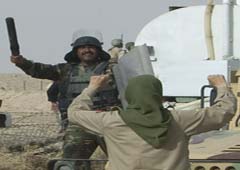
Residents said 13 people died in the clashes, many of them shot dead by police, and many others wounded. Iraq’s government said seven died, most of them because they threw themselves under police vehicles.

Abdul Nassir al-Mehdawi, governor of Diyala province, which has jurisdiction over Ashraf, confirmed 36 had been arrested the day after the clashes.
"Their cases are being investigated now. They are being charged with inciting trouble," Mehdawi said. "We will deal with them according to Iraqi law; we won’t send them back to Iran."
Although Iraq, Iran and the United States call the PMOI a terrorist organisation, it enjoyed a degree of protection by the U.S. military after the 2003 invasion to oust Saddam Hussein.
Iraq formally took charge of Camp Ashraf in January.

Iraq’s Shi’ite-led government has said it wants to close the camp and send residents to Iran or a third country, a proposal they are bitterly resisting. The dissidents fear they will be imprisoned or executed if they are sent to Iran.

Some human rights groups and PMOI sympathisers in the West, who have been highly critical of the way Iraq has handled Ashraf, say closing the camp and driving residents out against their will would violate international human rights law.

"The arrested people didn’t commit any crime against anyone," Ashraf spokesman Shahriar Kia said from the camp. "They just picked up some random people. It is just an excuse for their measures against Camp Ashraf. It’s a conspiracy."

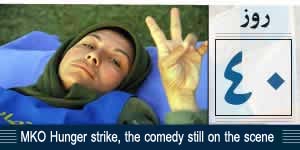
He added that the detainees were now on hunger strike.

The PMOI was given shelter in Iraq by Saddam, who fought an eight-year war against Iran in the 1980s.

Iraq’s government, which includes former Saddam opponents who lived in exile in Iran, has a close relationship with Iran.

Mehdawi said some of the 36 would be released but others would have to face trial. "We have two seriously injured Iraqi police. If they die, some of the detainees will go to court to face criminal charges," he said.
Reporting by Suadad al-Salhy and Tim Cocks; editing by Patrick Graham

August 5, 2009 0 comments
FacebookTwitterPinterestWhatsappTelegramSkypeEmail
Members of the MEK

36 MKO members arrested in Iraq

Iraqi police have arrested 36 members of the Mojahedeen Khalq Organization (MKO) after clashes erupted between MKO operatives and security forces in Camp Ashraf. Iraqi police have arrested 36 members of the Mojahedeen Khalq Organization (MKO) after clashes

The clashes broke out after Iraqi security forces on Tuesday took over the camp which was run by the terrorist group for almost two decades.

The skirmish left seven camp residents dead and many others wounded. Police said the seven were killed after they threw themselves under police vehicles.

The arrests were confirmed by Abdul Nassir al-Mehdawi, governor of Diyala province.

"Their cases are being investigated now. They are being charged with inciting trouble," he said. "We will deal with them according to Iraqi law; we won’t send them back to Iran."
MKO members were under US protection after the 2003 invasion of Iraq but the country formally took control of Camp Ashraf in January.

The organization which is blacklisted as a terrorist group by the US was given shelter by former Iraqi dictator Saddam Hussein in the 1980s. It actively participated in Saddam’s oppression of Iraqi people, including the Kurdish minority.

The Iraqi government has declared that it would no longer allow MKO members to stay in Iraq and they had to return to Iran or go to a third country.

August 4, 2009 0 comments
FacebookTwitterPinterestWhatsappTelegramSkypeEmail
Members of the MEK

35 Iranian dissidents sent to Baghdad for questioning

Thirty-five Iranian dissidents arrested by Iraqi security forces during a takeover of their base were transferred to Baghdad for questioning on Sunday, a senior Iraqi official told AFP.Thirty-five Iranian dissidents arrested by Iraqi security forces during a takeover of their base

"Today, 35 of the people arrested at Camp Ashraf were moved to Baghdad for questioning," said the official in Diyala province’s security operations centre.

A spokesman for the People’s Mujahedeen group, whose Camp Ashraf base was stormed by Iraqi security forces on Tuesday, said 36 residents had been arrested, of whom 32 had been sent to provincial capital Baquba, with the whereabouts of four still unknown.

Mujahedeen spokesman Shahriar Kia in a statement repeated allegations that Baghdad’s actions were being carried out at Tehran’s behest.

Eleven residents of Camp Ashraf have died since Iraqi forces stormed the site on Tuesday, an Iraqi security official has said, although the Mujahedeen say 12 have been killed. Camp Ashraf, in Diyala province northeast of Baghdad, is home to 3,500 People’s Mujahedeen members and their families.

The People’s Mujahedeen, a Marxist and Islamic movement, was founded in 1965 in opposition to the shah of Iran and has subsequently fought to oust the clerical regime which took power in the 1979 Islamic revolution.

The group set up Camp Ashraf in the 1980s — when former Iraqi dictator Saddam Hussein was at war with the Islamic republic — as a base to operate against the Tehran government. Amnesty International, meanwhile, has "called on the Iraqi government to investigate the excessive use of force by its security forces."

August 4, 2009 0 comments
FacebookTwitterPinterestWhatsappTelegramSkypeEmail
Iraq

Iraqi Politician Hails Seizure of MKO Camp by Baghdad Gov’t

The Iraqi security forces’ move to seize the training camp of the anti-Iran terrorist group, Mojahedin-e Khalq Organization (MKO), was "legal and accords with the international rules and conventions", an Iraqi politician said Sunday.

"Seizure of Camp Ashraf by the Iraqi army and security forces was a legal move and in accordance with the international rules and conventions," Forat al-Shar, A member of the Supreme Iraqi Islamic Council (SIIC), told FNA.

"The MKO has conducted illegal acts inside the camp and this is not acceptable to the Iraqi nation," Shar underlined.

Iraqi security forces took control of the training base of the MKO at Camp Ashraf – about 60km (37 miles) north of Baghdad – on Tuesday and detained dozens of the members of the terrorist group.

Earlier on Friday, Political Adviser of the head of the Supreme Iraqi Islamic Council (SIIC) Mohsen al-Hakim told FNA that UN Security Council’s 1773 and 1816 resolutions as well as other international conventions have underlined the need for the expulsion of the MKO members from Iraq.
Fora’t al-Shar further rejected any extension of the MKO’s stay on the Iraqi, and added, "If MKO members want to stay in Iraq they should not commit acts against the Iraqi nation’s will and the country’s laws."

"If they want to go outside the country or come back to Iran, there are no barriers in this regard," the SIIC official told FNA.
He underlined that the Iraqi nation is unlikely to accept presence of the terrorist group inside the country for a long time, given the crimes committed by them against the Iraqi nation.
The Iraqi government has set a month-long deadline for members of the MKO to leave Iraqi soil.

"Members of the MKO at Camp of New Iraq (Camp Ashraf) have to comply with the one-month time limit to leave Iraq. The organization members should either return to Iran or seek asylum in a third country," Diyala province’s Police Chief Major General Abdulhussein al-Shimari told reporters on Saturday.
The MKO has been in Iraq’s Diyala province since the 1980s. The Iraqi government and parliament has announced that it would not tolerate the group anymore and is seeking to expel the group from the country in the near future.

The anti-Iran terror group has been blacklisted as a terrorist organization by many international entities and countries.
The MKO is behind a slew of assassinations and bombings inside Iran, a number of EU parliamentarians said in a recent letter in which they slammed a British court decision to remove the MKO from the British terror list. The EU officials also added that the group has no public support within Iran because of their role in helping Saddam Hussein in the Iraqi imposed war on Iran (1980-1988).

Many of the MKO members abandoned the terrorist organization while most of those still remaining in the camp are said to be willing to quit but are under pressure and torture not to do so.
A May 2005 Human Rights Watch report accused the MKO of running prison camps in Iraq and committing human rights violations.

According to the Human Rights Watch report, the outlawed group puts defectors under torture and jail terms.
The group started assassination of the citizens and officials after the revolution in a bid to take control of the newly established Islamic Republic. It killed several of Iran’s new leaders in the early years after the revolution, including the then President, Mohammad Ali Rajayee, Prime Minister, Mohammad Javad Bahonar and the Judiciary Chief, Mohammad Hossein Beheshti who were killed in bomb attacks by MKO members in 1981.

The group fled to Iraq in 1986, where it was protected by Saddam Hussein and where it helped the Iraqi dictator suppress Shiite and Kurd uprisings in the country.
The terrorist group joined Saddam’s army during the Iraqi imposed war on Iran (1980-1988) and helped Saddam and killed thousands of Iranian civilians and soldiers during the US-backed Iraqi imposed war on Iran.

The MKO was put on the US terror list in 1997 by the then President, Bill Clinton, but since the 2003 US invasion of Iraq, the group has been strongly backed by the Washington Neocons, who also argue for the MKO to be taken off the US terror list.

August 4, 2009 0 comments
FacebookTwitterPinterestWhatsappTelegramSkypeEmail
Iraq

Iraq right to impose control over territory

The Iraqi government was right to take action against a People’s Mujahideen of Iran (PMOI) camp north of Baghdad, as it did not want to tolerate a group on Iraqi territory operating outside Iraqi Iraq right to impose control over territorycontrol. The left-wing Iranian opposition group has been fighting the Islamic Republic of Iran from several bases in Iraq since the early 1980s, when they were encouraged by the then president Saddam Hussain, who was at war with Iran.

Until the American led invasion in 2001, the PMOI was well armed with a wide range of weaponry including tanks and armoured personnel carriers, and it conducted continual operations against Iran. The PMOI renounced the armed struggle in 2001 and handed over all its arms. Its members then benefited from loose American protection, which lapsed last year when the US handed security control back to Iraq earlier this year.

Once Iraqi control is re-imposed on the camp, it is important for humanitarian reasons that the residents of Camp Ashraf are not deported to Iran, where they would face death for their armed opposition to the regime, or imprisonment . The Iraqi government has made several statements since 2003 that the Mujahideen will be expelled from Iraq, since they see their presence in Iraq as a deep embarrassment and a real hindrance to any improvement of relations between Iraq and Iran.

Deep fears of deportation and concern at losing control of their political fate led the PMOI members to resist the Iraqi forces when they entered the camp to impose Iraqi authority, which led to serious clashes leaving seven of the Iranian dissidents dead. The Iraqi government should come forward with a clear statement on where it thinks these people should go, and make it their responsibility to bring this anomaly to an end.

August 4, 2009 0 comments
FacebookTwitterPinterestWhatsappTelegramSkypeEmail
MEK Camp Ashraf

Mass grave links Mojahedin Khalq to Kuwait invasion

A mass grave discovered in the headquarters of the Mujahedin-e Khalq Organization in Iraq casts light on the crimes the terrorists committed during the 1991 Persian Gulf War. A mass grave discovered in the headquarters of the Mujahedin-e Khalq Organization in Iraq

Police officials in the Iraqi province of Diyalah said Sunday that the mass graves contained Kuwaiti nationals who had fallen victim to the Ba’ath regime’s seven month-long invasion of Kuwait.

“We have been informed that a mass grave has been found in Camp Ashraf. Of course we knew there was a graveyard in the MKO headquarters, but we had thought that it was a place of burial for MKO members,” said Abdulhussein al-Shemri, a local police commander.

If confirmed, the reports would expose MKO complicity in Saddam Hussein’s war on Kuwait, which killed more than 3,664 Iraqis and 1,000 Kuwaitis

MKO leaders are said to have kept the mass grave a secret so far by refusing the entry of Iraqi forces into their base.

The grisly discovery came at a time when scores of regional correspondents were granted a permit by the Iraqi government to prepare a report from Camp Ashraf, where MKO dissidents were stationed for more than two decades.

The incident, however, prompted Iraqi officials to withdraw the permits and prohibit the journalists from conducting video reports from the site.

The MKO is the most hated grouplet among both the Iranian and the Iraqi nations, and suffers from total unpopularity in these two countries.

The Mujahedin Khalq Organization, which blended elements of Marxism and Stalinism, was founded in Iran in the 1960s but was exiled some twenty years later over of terrorism.

The group masterminded a torrent of terrorist operations inside Iran, one of which was the 1981 bombing of the offices of the Islamic Republic Party, in which more than 72 Iranian officials were killed.

A 2007 German intelligence report from the Federal Office for the Protection of the Constitution has identified the MKO as a "repressive, sect-like and Stalinist authoritarian organization which centers around the personality cult of [MKO leaders] Maryam and Masoud Rajavi".

August 4, 2009 0 comments
FacebookTwitterPinterestWhatsappTelegramSkypeEmail
Maryam Rajavi

Who is Responsible for the Bloodshed and Death in Camp Ashraf?

A legitimate and realistic question that everyone who is against violence and savagery should ask from those authorities who have information about the bloodshed in the Iraqi garrisonI urge all humanitarian organizations to intervene and help those stranded people in that garrison to return back to their normal life named Ashraf. That question is: Who is really to blame?

Let me first review some important and substantial facts about this garrison before proceeding to the answer of this vital question.
This garrison, named Ashraf by the MKO, is an Iraqi base which was granted to Massoud Rajavi, the Supreme Leader and Commander in Chief of the Mojahedin-e Khalq organization (aka MEK, MKO, PMOI, Rajavi cult) by the late dictator of Iraq, Saddam Hussein.

This garrison had been utilized by the PMOI for decades to train its guerrillas for military incursions into Iran’s territory. These guerrillas had been trained by Iraq’s special and elite forces, such as Saddam’s Republican Guards, to become Special Forces who could operate either as a Classic Army or as Guerrilla Fighters in special military missions.

Several military attacks against the Iraqi people during their national uprising against the dictatorship of Saddam Hussein in 1991, were implemented and launched from this Iraqi garrison.

Many Iraqi citizens such as Kurds and Shias were killed or wounded in those attacks. Mr. Rajavi had a very robust and powerful relationship with the late dictator of Iraq. Little by little Saddam Hussein began granting more military garrisons to this organization throughout Iraq, but Ashraf, remained the main stronghold of this organization.

After the fall of Saddam Hussein, the PMOI had to surrender itself to Coalition Forces led by the USA. They handed over all their military means and were disarmed by the US Army. Massoud Rajavi fled Iraq and disappeared because he was involved in killing so many Iraqis during Saddam Hussein’s reign.

Maryam Ghajar Azdanloo also escaped from Iraq and went to Paris, France. She is Massoud Rajavi’s wife and his successor as a Commander in Chief as well. Many military incursions were launched against the Iraqi people and Iranians under her command.

The PMOI in Iraq is finished, especially after the fall of Saddam Hussein and his government. Its military wing, the NLA is completely dysfunctional and impaired because of disarmament. The PMOI’s military trained members who could implement military operations are now over 40 or 50 years old; obviously they cannot be useful in any mission any more. So we come to this conclusion that militarily the PMOI is disabled and disqualified.

The Iraqi Government wants to assert its sovereignty, regain its property, the garrison, and they do not want to keep those people on their soil who cooperated fully with Saddam Hussein against their people.

So now we should ask ‘why do the PMOI want to keep the garrison’? Logically, keeping that garrison is completely futile, especially as the new landlord wants it back.

The only answer I can think of is that the PMOI’s leaders do not want to deal with the destiny of 3500 personnel and members who have been stranded in that garrison for decades. The life of those stranded people in that garrison does not have any value for their leaders. Those people were worth something while they had tanks, artillery, and ammunition. Now they have become old and disarmed, so they are useless for their leaders.

As a result, many members have been wounded or killed during clashes with Iraqi police who legally and legitimately want to take back their garrison and impose Iraqi law over everyone in the camp.

Now Mrs. Maryam Ghajar Azdanloo (Rajavi) has ordered them to go on an unlimited hunger strike. God knows what is the next step that this lady wants to take to exterminate even more lives of those desperate people in that garrison.

She does not want to accept the reality that the PMOI’s military power is over for good, because her sham presidency is based only on the existence of those desperate people in that garrison. So they have to die just because she wants to show off as a sham president elect and they have to die for her ambition and power mongering.

So I, a victim of this organization, hold Mrs. Maryam Ghajar Azdanloo (Rajavi) responsible and accountable for the life and death of those stranded people in that Iraqi garrison. In my opinion no one is responsible for the deaths and wounds of those who were killed or injured in that garrison except her.

I urge all humanitarian organizations to intervene and help those stranded people in that garrison to return back to their normal life as a free person in free and democratic countries. Those people should be rescued from that hell hole, Ashraf, before is too late.
All the best,

A victim of PMOI
Hassan Piransar, Iran Peyvan, Paris

August 4, 2009 0 comments
FacebookTwitterPinterestWhatsappTelegramSkypeEmail
MEK Camp Ashraf

Documentary on the situation in Camp Ashraf

Documentary on the situation of Camp Ashraf after the Iraqi forces stormed the Camp and took complete control over the Camp and its aftermaths

Dr. al Rubaie explained,”This is an indoctrinated and tightly disciplined organization of extremist zealots who have employed terrorism and at times even self-immolation to secure their aims. In normal everyday language we can say that they have been”brainwashed”… 

Download Situation in Camp Ashraf

August 4, 2009 0 comments
FacebookTwitterPinterestWhatsappTelegramSkypeEmail
Iraq

Iraq’s obligation of protecting terrorists

In contrast to the United States long classification of MEK as a terrorist group, dating back to attacks by the group in the 1970’s that killed several US military personnel and civilians advising the government of the late Shah of Iran, it stands in full support of the group. MEK supported Iraq In an attempt to take the control of the group’s bastion, Camp Ashraf, Iraqi forces invaded the camp on Tuesdayin its 1980’s war against Iran and enjoyed protected status under Saddam, but it has to leave the country as the new government in Baghdad tries to purge the country of any source of violence that endangers the country’s social security and order.

In an attempt to take the control of the group’s bastion, Camp Ashraf, Iraqi forces invaded the camp on Tuesday but protests from the side of MEK caused numerous casualties and according to reports by Iraqi officials, several deaths. Earlier Wednesday, a State Department spokesman said reports of casualties among camp residents are disturbing and said the United States is seeking more information from the Iraqi government.

Reported by Voanews, the US Secretary of State Hillary Clinton said Wednesday she deplored the reported raid and said the United States is urging restraint on both sides in a confrontation between Iraqi security forces and Iranian dissidents in a camp east of Baghdad occupied by the Iranian exiles since before the U.S.-led invasion of Iraq in 2003.

Soon after the fall of Saddam, the US troops had provided security for the camp but ceded control in February of this year with the transfer of full authority in the country from coalition forces to the Iraqi government. Clinton said Iraq must uphold commitments to the United States that the MEK members will not be mistreated.

"We are very clear that we expect that the Government of Iraq, now that it has assumed this security responsibility, will fulfill its obligations, to show restraint, will not forcibly transfer anyone to a country where such a transfer might result in the mistreatment or the death of that person based on their political affiliation and activities," she said. "But it is now the responsibility of the Government of Iraq."

If full authority in the country from coalition forces is transferred to the Iraqi government, then, it is up to the government to decide for the country’s security by curbing the danger of a terrorist group still recognized a FTO.

August 3, 2009 0 comments
FacebookTwitterPinterestWhatsappTelegramSkypeEmail
Iraq

Al Rubaie : No Plans to Send Mujahideen-e-Khalq to Pakistan

Iraq National Security Adviser: No Plans to Send Mujahideen-e-Khalq to Pakistan

Iraqi National Security Adviser Dr. Muwaffaq al Rubaie denied that there were any plans to Iraq National Security Adviser: No Plans to Send Mujahideen-e-Khalq to Pakistantransfer members of the Iranian opposition movement Mujahideen-e-Khalq based in Camp Ashraf, northeast of Baghdad, to Pakistan.

“The US forces considered the idea when they were responsible for the security situation in Iraq since the US administration wanted to put them in confrontation with Iran there. But now the Iraqi government is responsible for their conditions and for Camp Ashraf,” Rubaie told Asharq Al-Awsat by telephone from Baghdad.

Al Rubaie stressed that “Iraq is committed to international conventions and to the American administration that it will preserve the security and wellbeing of those present in Camp Ashraf. We will not force them to leave Iraq.” He added, “It is their right to choose whether to return to Iran – on the condition that Iran promises not to punish them – or to go to a third country.”

A leading figure from the Mujahideen-e-Khalq movement spoke to Asharq Al-Awsat on the condition of anonymity and said that this information is “unfounded.” He said, “This is merely leaked news, the aim of which is to discredit the historical decision of Mujahideen-e-Khalq that it was willing to return to the country [Iran] on the condition that fundamental rights could be guaranteed by international parties.”

US Secretary of State Hillary Clinton said Wednesday, “Although the US government remains engaged and concerned about this issue, it is a matter now for the government of Iraq to resolve in accordance with its laws.”

She stressed that the Iraqi government must uphold commitments to protect those living in Camp Ashraf and not hand them over to “any country where such a transfer might result in the mistreatment or the death of that person based on their political affiliation and activities.” 
Baghdad: Rahma al Salim, Washington: Mina al Oraibi

August 3, 2009 0 comments
FacebookTwitterPinterestWhatsappTelegramSkypeEmail
Newer Posts
Older Posts

Recent Posts

  • The black box of the torture camps of the MEK

    December 24, 2025
  • Pregnancy was taboo in the MEK

    December 22, 2025
  • MEPs who lack awareness about the MEK’s nature

    December 20, 2025
  • Why did Massoud Rajavi enforce divorces in the MEK?

    December 15, 2025
  • Massoud Rajavi and widespread sexual abuse of female members

    December 10, 2025
  • Facebook
  • Twitter
  • Instagram
  • Youtube

© 2003 - 2025 NEJAT Society . All Rights Reserved. NejatNGO.org


Back To Top
Nejat Society
  • Home
  • Articles
  • Media
    • Cartoons
    • NewsPics
    • Photo Gallery
    • Videos
  • Publications
    • Books
    • Nejat NewsLetter
    • Pars Brief
  • About Us
  • Contact us
  • Editions
    • عربي
    • فارسی
    • Shqip