Nejat Society
  • Home
  • Articles
  • Media
    • Cartoons
    • NewsPics
    • Photo Gallery
    • Videos
  • Publications
    • Books
    • Nejat NewsLetter
    • Pars Brief
  • About Us
  • Contact us
  • Editions
    • عربي
    • فارسی
    • Shqip
Nejat Society
Nejat Society
  • Home
  • Articles
  • Media
    • Cartoons
    • NewsPics
    • Photo Gallery
    • Videos
  • Publications
    • Books
    • Nejat NewsLetter
    • Pars Brief
  • About Us
  • Contact us
  • Editions
    • عربي
    • فارسی
    • Shqip
© 2003 - 2024 NEJAT Society. nejatngo.org
Former members of the MEK

Rajavi; self-burnings were not enough, you should have sacrificed more

An interview with Batool Soltani on MKO self-immolations – Part eighteen

Sahar Family Foundation: Soon after the arrest of Maryam Rajavi, Rajavi is said to have delivered a videotaped message to Camp Ashraf. What was the message about?

Batool Soltani: in fact, it was neither a message nor videotaped; it was a phone call. It was directed at the self-burnings remarking that whatever we had done through an individual or organizational endeavor, that is, by setting ourselves on fire and sacrificing lives at any cost, failed to be enough for the freedom of Maryam. Interestingly, he used the expression ‘dilly-dally’ meaning that the members had dilly-dallied in June 17 self-burnings and we had to, and have to if necessary, sacrificed much more. He was accusing members of dawdling while more than twenty members had set themselves on fire throughout the Europe and some were in serious condition in hospital. His words denoted that self-burnings had to continue until Maryam would be released but at the same time judged that the very same dilly-dally hade greatly affected the French judicial system. Actually, he was calling for intensification of self-burnings to achieve desired result.

I have to point out that the organization was facing serious restrictions following Maryam’s detention; there were heavily imposed controlling measures and further mass arrests loomed. In fact, part of these self-burnings was considered countermeasure activities to stop losing momentum or dismantling of the organization in France. I mean to say that although all self-burnings were directed for the freedom of Maryam, the organization was concerned about the aftermath that posed a threat and irreversible damage against the organization in France. It was much disappointing that all rankings present in Auvers-sur-Oise were arrested.

Rajavi knew all these and his stress on extension of self-burnings justifiably warranted the survival of the organization. Thus, rather than appreciating the self-burning operations, he encouraged advent of more similar efforts. It was all about his phone call which made a profound impact on all. Although at the time they strongly prohibited committing these suicide operations in Camp Ashraf, Rajavi was encouraging a morality in members and preparing them not to hesitate to engage in such activities within Camp Ashraf whenever necessary. His call instigated a widespread excitement among different ranks in the camp and many volunteered for the self-burning operations. However, they were rejected since self-burnings in the camp were of no use and they had to be carried out just in France and before the eyes of the western media.

SFF: What happened in Camp Ashraf after Maryam was released? I mean how they reacted and what was its impact on the camp?

BS: Massoud made more contacts after her release, with high rankings of the Leadership Council in particular. The first message was mainly centered on congratulation for the achieved victory which he said was the consequent of the members’ sacrifice. But he showed his double face by complaining that Maryam’s confinement could have been made shorter if we had escalated the operations in full-scale. It seemed as if all were, and had to be, indebted to the organization and had to make more sacrifice when commanded.
 
I remember him saying we should not have hesitated one hour to release Maryam and that we could have played a more influential role in her freedom. I believe if we had access to his phone messages to have a reevaluation, we would find out many things that we, the separated members, had hardly noticed at the time but can reconsider more realistically at the present. That how can one, under any title, allow himself to risk many lives to defy the legal measures of a country that is investigating someone for presumably founded allegations?

When inside the organization, we looked at these as values that had been violated; but now in an open world where we can freely reconsider the past, we see, alas, we had long appraised big lies as values and had deified people who had nothing of extraordinary. It is not at all justifiable even for great leaders of the world to become the object of worship let alone the leader of a group whose members never exceeded four thousand at the time. I believe Rajavi acted so cleverly in respect to Maryam’s arrest because if the legal actions had not been ceased by intimidating reactions for sure the surfaced facts would lead to disbandment of the organization in France or expulsion of all its leading ranks.

That is the reason Rajavi restructured members for prolongation of Maryam’s detention. Less has been talked about the destiny of the organization if Maryam’s detention continued its routine, legal process. All know well that French police and the judiciary, because of political, human rights, social and individual freedom causes under the constitution, hardly ventures in such sensitive cases.

Rajavi is well aware the unfounded claims that the whole case was the product of a political compromise between Iran and France and he knew there were enough evidences to prove the allegations and posed charges. The organization’s appalling reaction did shocked and paralyzed the French police and, as it felt a responsibility to prevent further bruise of public emotions, made it to withdraw. The authorities had been convinced that the immolation would continue for a year-long if they kept Maryam in custody; the awful impress on public opinion was not something the state could tolerate. The sole solution to end the social crisis was then to temporally set Maryam free.
 
You may remember the widespread hunger strikes of the sympathizers on the banks of Auvers-sur-Oise with many strikers collapsed here and there. Such scenes were too loathsome for the culturally tender French to tolerate. Of course, at the time I was not in the Europe but watched the scenes on Mojahedin TV; I think neither in the past had France experienced such scenes nor it will in future unless re-erected by Mojahedin there or any other European country. The incident opened a new chapter for the West to develop a new understanding of an organization that could so easily violate the social and human principles by setting themselves on fire before the eyes of the public. People could not believe that a group warranted itself the right to breach adopted social rules for the mere claims that could be dealt with through the legal system.

SFF: Of course, the incident granted some Western researchers and reporters to an opportunity to conduct some research. Antoine Gessler’s Autopsy of an Ideological Drift and or Alain Chevalerias’s Brulé Vif (Burned Alive) for instance. Interestingly enough, as it is typical of the organization when reacting against the opponents, it denounced the two authors and accused them of a give and take with the IR regime. You may have come across these accusations in web sites.

BS: unfortunately, not yet. But I will be grateful if you could help me have access to. It can help to fathom the aspects of the tragedy and how they may analyze such incidents. When you come across such human tragedies, possibly you can look back at the backgrounds that led to the instigation of disasters that seemed impossible to occur at the first look. But, unfortunately, we see how easily and fast all those analyses and theories happen to be materialized in a way that bewilders you.

SFF: You touched the point. Can you now speculate about the extent and potentiality of such operations that the organization may put into action when facing similar circumstances anywhere in the world?

BS: To tell the truth, I have been convinced that nothing can surprise me anymore. I do not intend to state that the organization has demonstrated its ultimate potentialities, it is the nature of the demonstrated objection, self-burning, that looks appalling and pathetic in general. Hardly can you stay long beside the bed of a burned man in a hospital while you may spend hours at the bed of any other patient. Now imagine what may happen if you see people spilling gasoline over themselves to become human torches burning before the public.

And all for claimed rights that can be easily solved trough legal procedures. Now imagine the extent of tragedy if the demands necessarily fail to be legally settled and go against any logic and impossible to grant. So, I have learned that anything is possible in this organization and nothing may hit as unexpected. Above all, the members have already been briefed theoretically and ideologically on any unexpected circumstance and the only left option is to push them into action to create a human tragedy in Camp Ashraf or any other place.

SFF: To what degree you think it is possible that they will prompt a human tragedy?

BS: It is really possible. You may not believe, but once Rajavi propound the possibility and enforced it a duty for all and even prepared the instruments to carry it out. The Camp Ashraf residents, for instance, are equipped with cyanide capsules and there are as plenty as gasoline and other inflammable liquids at hand. The human tragedy was an option the organization had adopted even in the reign of Saddam. Rajavi’s excuse is that if disclosure of Ashraf might lead to our annihilation, then, it is better for us to die all here inside Ashraf. His logic is that at least our death here is for the defense of something, the organization, without which we are the walking dead outside. Then let’s die in its defense with a brave death. It was all stated in a meeting before the fall of Saddam.

SFF: Thank you. There are more questions concerning Maryam’s release, but I prefer to continue in the next session, adieu.

To be continued

September 21, 2009 0 comments
FacebookTwitterPinterestWhatsappTelegramSkypeEmail
UK

Camp Ashraf – Mojahedin Khalq – UK says Geneva Convention does not apply

Iraq: Human Rights

Sir John Stanley: To ask the Secretary of State for Foreign and Commonwealth Affairs what Camp Ashraf - Mojahedin Khalq - UK says Geneva Convention does not applyrepresentations he has made to the Iraqi Government on the deaths and injuries to protected persons under the Fourth Geneva Convention following the recent attack on Camp Ashraf by Iraqi forces; and if he will make a statement. [290777]


Chris Bryant: Our ambassador in Iraq has written to the Iraqi authorities to ask for a review into the recent events at the camp. Officials from our embassy in Baghdad are continuing to follow developments, and will shortly undertake a further visit to the camp.

Our view remains that the residents of Camp Ashraf are not entitled to ‘protected persons’ status as the Fourth Geneva Convention ceased to apply in Iraq after 28 June 2004, following the end of active hostilities and occupation.

Chris Bryant, House of Parliament,

September 21, 2009 0 comments
FacebookTwitterPinterestWhatsappTelegramSkypeEmail
Mujahedin Khalq Organization members' families

Nejat Society Golestan branch letter to Iraqi Ambassador

The letter of Families of Nejat Society Golestan branch to Iraqi Ambassador

The Honorable Iraqi Ambassador in Tehran

Your Excellency,
We are some families from Golestan Province who are members of Nejat Society. Our beloved children have been captured in bloody hands of Rajavi for years.

As you are aware, a few days have passed the deadline your respectful government had set for the expulsion of Mujahedin-e-Khalq Organization from Iraqi territory but no special plan has been considered for the arrest of MKO’s criminal leaders and the expulsion of its members yet.

Now that, the Iraqi police have succeeded to seize the military Camp Ashraf and the brainwashed residents of the camp have gone on forced hunger strike, we demand you to help us visit our beloved ones in Camp Ashraf in an appropriate situation, with the presence of ICRC officials and Iraqi authorities. We urge on our demand to meet our children in a secure, peaceful atmosphere, without the presence of MKO criminal leaders since we are eager to help our children release from the bars of the cult, get back to free life in a free society.

Dear Mr. Ambassador,
As we have already sent a few more letters to submit our demand for visiting our loved ones, we would like to assure you that we will not stop writing letters and statements to international and human rights bodies until we achieve our appeal.

We ask you and the respectful authorities of your country not to fear the rumor monger propaganda of MKO cult because this is their only tactic to face any problem. They always insist on their inhuman approaches.

Please consider us – the families who suffer the crimes of MKO cult – as your supporters.

We are always ready to attend any court to declare our testimonies against Mujahedin. 
 

                                                                                                                                    Sincerely Yours,

September 19, 2009 0 comments
FacebookTwitterPinterestWhatsappTelegramSkypeEmail
Iraq

Baghdad determined to expel Mujahedin

Iraqi National Security Advisor Mouwafak Al-Rubaie has said that Baghdad is determined to expel the terrorist Mojahedin Khalq Organization from Iraq. Iraqi National Security Advisor Mouwafak Al-Rubaie has said that Baghdad is determined to expel the terrorist Mojahedin Khalq Organization from Iraq.

“Baghdad has made the final decision not to allow the group to stay on its soil,” Al-Rubaie told the Mehr News Agency in an interview published on Monday.

The Iraqi national security advisor said Iraq has offered two options to the MKO: “Either a voluntary return to Iran or (they must) choose a third country.”

He added, “There is no other way.”

The Iraqi Constitution prohibits the presence of terrorist groups in the country, he noted.

Al-Rubaie said Iraq is conducting negotiations with certain countries that may be willing to accept MKO members.

Asked whether the Iraqi police’s decision to arrest some MKO members was related to the group’s involvement in the suppression of the Iraqi people during Saddam Hussein’s rule, he only said, “The judicial branch set its regulations and made the decision without the interference of the executive branch. In Iraq, all people are under the jurisdiction of the Judiciary and there is no distinction between them.”

Asked if Iraq is ready to extradite some of the MKO ringleaders, for whom Iran has issued arrest warrants, he replied, “Judicial agreements on the extradition of criminals specify such types of cooperation between countries.”

Camp Ashraf, which houses 3,418 MKO members, is on Iraqi soil and under Iraqi control and all the people residing in the camp are subject to Iraqi law, he explained.

The MKO began a campaign of assassinations and bombings in Iran shortly after the victory of the Islamic Revolution in 1979.

The group moved to Iraq in the early 1980s and fought Iran from there until the United States invaded in 2003.

Plus News Pakistan

September 17, 2009 0 comments
FacebookTwitterPinterestWhatsappTelegramSkypeEmail
Massoud Rajavi

Totalitarian Ideological leader of MKO

If political objectives are determined in accordance with true requirements of the society, they can simply play their role in the way to achieve human rights, freedom and the ideal democracy. The investigation of MKO’s objectives, ideas, functions and political positions, clearly show that the group’s ideological leader is a totalitarian, fascist one.

The manner a political group evaluates its political goals, will justify the existence or non-existence of the group.

Therefore, the gang of Rajavi who has been engaged in terrorist acts, armed struggle policy and suicide operations, for more than three decades – to achieve power in Iran – will have no fate except removal from international political scene although they have never had a significant role.

The final objective of terrorist cult of MKO is the absolute sovereignty on human beings and the accomplishment of Rajavi’s middle-aged ideas under the cover of religion and democracy. The final objective of terrorist cult of MKO is the absolute sovereignty on human beings

The investigation of MKO’s objectives, ideas, functions and political positions, clearly show that the group’s ideological leader is a totalitarian, fascist one.

The totalitarian, fascist approach of the leader is obviously represented in the internal relations of the group. Camp Ashraf, as the ideological and strategic container of MKO is the concrete symbol of totalitarianism in MKO style where the worst terrorist, manipulative approaches are performed.

The testimonies of a lot of defectors of the cult reveal physical and psychological torture of dissident members, solitary confinement, and suppression of emotional and sexual needs in the name of ideological revolution.

The mind control system which includes manipulation meetings and brainwashing sessions (Cult jargons) helps the ideological leader relate all aspects of the lives of Ashraf residents to their so-called armed struggle and terrorist strategy. When a group of individuals are isolated in a Camp in desert, under a mind control system behind physical and mental bars, for three decades and the relations are organized on the basis of an ill-minded leader’s thoughts, totalitarianism is definitely achieved. It is obvious that opposing such a horrifying system is not simply feasible.

In a totalitarian system, one can except any kind of behavior such as terror act, suicide, homicide, hunger strike … since the people in the system are some humiliated individuals without free will. They are very useful victims for their leader.

Doubtlessly, in the age of democratic evolutions, cults like MKO and Al-Qaida that prepare violent terrorist agents to accomplish their ambitious goals, will never succeed in running their ideas. The historical experiences prove the declining way of such cults as an unchangeable tradition.

By Arash Rezaiee

September 16, 2009 0 comments
FacebookTwitterPinterestWhatsappTelegramSkypeEmail
Former members of the MEK

Rajavi; the operations have higher potentialities to utilize

An interview with Batool Soltani on MKO self-immolations – Part seventeen

Sahar Family Foundation: Ms. Soltani, the June 17 operations, however, has recorded Rajavi; the operations have higher potentialities to utilizeachievements for the organization. They can be summed up from two aspects. One is the negative outside consequences and another is the internal achievements the organization thought it had achieved. It is the latter aspect that I mean you explain exclusively from Rajavi’s point of view.

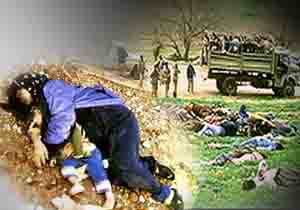
Batool Soltani: The achievements were specifically summed up by Rajavi in one of his messages addressed to the members of the Leadership Council. One significant point to mention here is that Rajavi critically evaluated self-immolations as ‘dilly-dally’ meaning that the members had dwindled in June 17 self-burnings which had diminished the expected resultant outcomes. Then he began to enumerate the achievements of the very same ‘dilly-dally’. The first resultant he stated to be the French police’s pullback. But I think he meant recession of the whole judiciary of France.

I have already made clear that Rajavi’s insistence on Maryam’s release was mainly because of the probable challenging consequences of the case. If the case pursued a routine, legal course, the outcome could be absolutely different. But he was clever enough not to mention the odds and probabilities and briefly alluded to police’s back off. In spite of the fact that efforts were directed at releasing Maryam, Rajavi referred to it as the second achievement. Here he paused to say that further goals had been achieved had the volunteers been much sincere in carrying out their operations.

SFF: Sorry for interruption. What did he mean by sincere?

BS: To tell the truth, I fail to make out an exact connotation for the term. Maybe he wanted to say self-immolations were deficient in number of volunteers and operations. But he would always say that by self-burnings he intended those episodes that would not be necessarily marginalized as pyrrhic victories and carried with them the needed push and effect. Rajavi would say that they knew that even multitudes of self-burnings inside Camp Ashraf fell short of imposing needed effectiveness to score a victory; all depended on a decision in due time and place. It was Mozhgan (Parsai) to make decisions in Ashraf as it was Maryam in Auvers and all senior rankings stationed in the organization’s offices throughout the world. In fact, he was stressing on the efficiency of actions if any responsible ranking would adopt in the sphere of his responsibility.
In general, he was not satisfied with the immediate outcomes and believed that if the organization had less dawdled, the existing potentials and effectiveness would have caused the immediate release of Maryam.

SFF: Sorry again Ms. Soltani. If self-burnings were committed all on organizational command, then, what Rajavi really meant by the members’ dwindling that had caused deceleration of outcome?

BS: It seems that you did not consider my points. The organization has adopted a double behavior policy vis-à-vis the outsiders and insiders …

SFF: I got the point but I mean if 25 have committed self-immolation on organizational command, then, the cease of the 26th means the compliance with the same very order. If it is true, then what does this ‘dilly-dally’ mean? Does it mean that you have been remiss in your responsibility or anything else?

BS: He mainly implied that a member of the Leadership Council that was fully briefed on the strategy of self-immolation had to rush to the first police station to set himself on fire immediately after hearing the news of Maryam’s arrest. Instead, he/she had abandoned what had to do and had put it off for the next day. Self-burnings had to be executed immediately while they had been postponed for a later time after arrangements. Maryam should not have stayed so long in the prison. Rajavi was very sensitive about the due time and place and believed that any delay contributed to loss of a remarkable percentage of effectiveness and all efforts proved to have been in vain.

You see, although self-burnings were organizationally arranged and ordered, there existed still factors so Rajavi could be critical of the members and berate them for negligence in the accomplishment of their duties. In reference to your bringing up the number of self-burnings and that the 26th was ceased by organizational command, I have to say that it is not as you think. It is not at all an issue of the numbers and quantity; they are only instruments to reach the desired outcome. Maybe that is why Rajavi criticizes members’ hesitation to start off self-burnings. You see, the initiation of operations share similar origin but the pace of process and other factors influence the acceleration and deceleration in achieving the final objectives.

To be continued

September 15, 2009 0 comments
FacebookTwitterPinterestWhatsappTelegramSkypeEmail
Mujahedin Khalq Organization members' families

Mr. Jannat Sadeqi: The only responsible for grieves we bear is Rajavi

Nejat Society Mazandaran Office visited Jannat Sadeqi family

For years, Rajavi has kept a number of his members wondering in Iraq, with his vain promise of the overthrow of Islamic Republic. He has always tried to deceive the poor imprisoned members in order to maintain them far from the social events happening outside camp Ashraf. He could never gain results of the strategies he led for more than three decades. Nowadays he is stuck among his policies so he has kept a large number of his forces, in Iraqi territory, as hostages in order that he might find a way to release himself from this deadly cul-de-sac.

Today, his failed armed struggle has led him to a point that he concluded in writing letters to the highest authorities of IRI that he has long called as the leaders of crime and ignorance.

It is clear that Rajavi has always been on the wrong way but the families of Camp Ashraf residents are concerned about the lives of their beloved ones who are still behind the bars of hellish organization of Rajavi. Large group of families seek the accomplishment of Iraqi government’s ultimatum based on the expulsion of cult members from Iraq and the removal of Camp Ashraf. Immediately after the recent clashes at Camp Ashraf, they contacted Nejat Society and asked for further activities to visit their children and to pave the way for their return to Iran.

Mr. Behrouz Jannat Sadeqi is the brother of three residents of Camp Ashraf

At Nejat Society Mazandaran Office, we found an opportunity to visit Mr. Jannat Sadeqi at his work place. Mr. Behrouz Jannat Sadeqi is the brother of three residents of Camp Ashraf. His three brothers have been captured by Rajavi’s Cult for years. He was the only one to take care of his old parents. “The only responsible for grieves we bear is Rajavi” he said, “Who took my brothers to Iraqi deserts by deceiving them”. He continued:”I don’t know why Rajavi urges on staying in Iraq despite his political failure. What does he want of staying in Iraq? Why did he flee from Iraq if it was a good place for the organization?”

The visit took place with the presence of some defectors of MKO and former comrades of Mr. Sadeqi’s brothers. Mr. Sadeqi was so excited by visiting them; he tried to ask about the condition of his brothers in Camp Ashraf. He listened to explanations made by Nejat members on the recent situation of the cult.

The visited lasted an hour and at the end we asked him to let us visit his parents but he got worried saying that he wished he could get us visit them but the visit might make them sick since it might recall them their beloved sons. They cannot bear such a visit. They are just waiting their three children.

We are looking forward for the day that those beloved friends could get rid of Rajavi’s cult and join their families.

September 15, 2009 0 comments
FacebookTwitterPinterestWhatsappTelegramSkypeEmail
Iraq

Iraqi Court Receives 5,000 Complaints against MKO, Former Baghdad Regime

Iraq’s supreme criminal court assigned to review crimes done by the former Iraqi Baath regime during the 1991 uprising (Shabaniyah Intifada) announced that it has received 5,000 complaints filed against the regime and anti Iran terrorist group, the Mojahedin-e Khalq Organization (MKO).

The court confirmed in its first session that it has received 5,000 authentic and verifiable complaints from the people of the northern Iraqi region of Kurdistan.

The families of the victims as well as those disabled during the suppression of the uprising have asked for chasing and punishing those responsible for the crimes done during the suppression of intifada in northern and southern Iraq, the Iranian website Habilian reported.

The court also issued law suits for 112 members of the former Baath regime, the most prominent of them Ali Hassan Al-Majid, known as the Chemical Ali.

The Shabaniyah Intifada aimed to free Iraq from rule of the Baathist regime and to stand against the US raids and possible occupation of the country in 1991. The Intifada succeeded in setting free nine southern Iraqi provinces, but after Iraq’s withdrawal from Kuwait, the Shiite population came under a savage attack by the Iraqi army which claimed the lives of tens of thousands of them.

At the time, the MKO played such an outstanding role in suppressing the uprising that former Iraqi dictator Saddam Hussein described the MKO leader, Masoud Rajavi, as his savior and allocated a $30-million monthly budget to the terrorist organization until he was deposed in 2003.
The group fled to Iraq in 1986, where it was protected by Saddam Hussein and where it helped the Iraqi dictator suppress Shiite and Kurd uprisings in the country.
The terrorist group joined Saddam’s army during the Iraqi imposed war on Iran (1980-1988) and helped Saddam and killed thousands of Iranian civilians and soldiers during the US-backed Iraqi imposed war on Iran.

The MKO has been in Iraq’s Diyala province since the 1980s.

September 14, 2009 0 comments
FacebookTwitterPinterestWhatsappTelegramSkypeEmail
Mujahedin Khalq Organization

Hunger Strike: Idiot Behavior or Negative Reaction

Imposing hunger strike on Ashraf residents is a reality. It is a being which is now showing off in Camp Ashraf but it is not a truth. According to MEK leaders “the reality is the wisdom”: a formula that was only made to intrigue public opinion. This rationale is based on covering the true facts.Hunger Strike: Idiot Behavior or Negative Reaction

In political terms, hunger strike is a behavior that is acted as the last resort to achieve some logic demands while MEK leaders imposed hunger strike on the members to draw American attention and protection to themselves although the isolated members are totally unaware of the regional or international affairs going on.

With their silly demand, Rajavi’s gang is in fact driving to an amazing paradox. They forgot their reaction to September 11th disastrous attack on twin towers of WTC which ended with the death of thousands of innocent Americans and non-Americans.

At the time, Massoud Rajavi and Maryam Azdanlou held a public meeting in Camp Bagher zade, celebrating the event, cheering with victorious gestures.
 
Massoud Rajavi told his brainwashed members:”this was the reactionary Islam to do this to America, Wait for the revolutionary Islam when it shows its iron fist”.

During the meeting he tried to combine the violent acts of Usama Bin Laden with MEK’s terrorist trends, to conclude his own plan for the audience. In the September 11th meeting at Camp Bagher zade, he said:”If those courageous forces of Usama Bin Laden who are not well organized and are only able to commit military acts could enter our organization, they would be able to achieve many other objectives.”

In fact, Rajavi believed that terrorist acts should be led in MEK manner under its coherent organizational system, and then the objectives would be better achieved.

Thinking deeply about the ill mind of MEK’s ideological leader who just thinks of terror and killing to achieve power, brings questions on the motive of current hunger strike in Camp Ashraf. How could MKO leaders ask for favor of Americans whom they cheered their massacre on Sep.11th. A look at the two contradictory events recalls us that hunger strike of Ashraf residents is a deceitful behavior for vain goals.

The recent report issued by RAND notifies the motives of MEK leader for spying for the US and receiving the support of American officials.

It is clear that American political, military and security officials are determined to stop using MKO since their role is expired. Thus victimizing Ashraf residents, forcing them to go on hunger strike, is an idiot behavior which is like a suicide. But as usual the leaders of MKO will not bear the least expenses; instead they use the blood of the residents as the fuel of their propaganda machine. The members are the only ones to pay the raison of Rajavi’s blind strategy.

By Arash Rezaiee

September 13, 2009 0 comments
FacebookTwitterPinterestWhatsappTelegramSkypeEmail
Former members of the MEK

Rajavi; you were derelict in performance of your duty to save Maryam

An interview with Batool Soltani on MKO self-immolations – Part sixteen

Sahar Family Foundation: your explanations concerning the approach to carry out the June 17 immolations may indicate that ranking members like Sediqeh, Mozhgan, Beheshteh and more have undertaken the role of an intermediary to have the objectives of the leadership and the organization fulfilled. That is, they provoke others and then withdraw into the shadow or even they may directly engage themselves in the action and sacrifice.
 
In fact, they may either be instigators or professional activists who engender people like Neda Hassani to be victimized.

Batool Soltani: Somehow it can be said that they play a dual role. Some are stopped just before the attempt according to a schematic plan and some other continue to carry out the orders to the end and entice others to follow.

Furthermore, these intermediaries, as you call them, have a crucial role to play for the media. Much of the success relies on the spectacular achievements of propaganda and whatever the media are to air or release for the public concerning an incident; anything is already articulated and the interviewee selected. It is not so as you think that anybody at random happens to be interviewed by the reporters. Among the members who have set themselves on fire, for instance, Marzieh Babakhani had been selected to talk for the media, as she did with Algeria News Agency. Why did not they choose Hamid Orafa for the job?
 
Because he was not fully briefed on the whole issue and he could make things worse. Besides, Marzieh’s deformed profile could move people and cultivate in them what best helped organization to take advantage of the situation. She had been selected to be the spokeswoman for the organization and the leadership.

On the other hand, the organization had to first adopt a clear position vis-à-vis the victims, like Neda, and their families to fully figure things out to serve organizational interests. Second, the victim families’ position had to be a show of acquiescence of what their children had done for the organization. Neda family’s attitude had to be indicative of an unforced and arbitrary self-burning by their daughter as a display of her commitment to the leadership and the organization; of course, nobody could consequently condemn the organization and fill a complaint against it.

No doubt, the family had to be fully protected financially, emotionally and through encouraging media coverage to optimistically demonstrate its sympathy for the organization. A good model generated of its own vicious cunning, the protection provided for the family, the money spent, the blood and life of a beloved consumed, all serve to glorify the organization and the leader.

SFF: Does not it raise any question in the minds of the members where the Nada’s family has been to suddenly become the center of so much organizational attention?

BS: It is of no importance for the organization and Rajavi at all. I was in England for four years and Neda’s family were also there. There was no connection between the organization and the family in all these years and it all happened unexpectedly.
 
Following Neda’s self-burning, the organization exerted much energy to establish close contact with her family and have control over it to persuade it act in behalf of the organization before the camera. The founded intimacy with her parents was more a precautionary measure to avert any unexpected decision against the organization that could mess things up.

SFF: On the one hand the organization, as you say, tries to demonstrate Neda’s death as the outcome of an arbitrary act of immolation, but on the other hand seeks to glorify it within the organization and for the media as a sacred act calling Neda a martyr. How the contradiction is dealt with inside and outside of the organization?

BS: I was an insider and know well that the organization acclaimed Neda’s feat as it was organizationally decreed. The organization’s acknowledgment of her self-immolation bordered on idolatry because the feat was not self-induced but done in compliance with organizational order. It made no difference what they outside would say; the insiders were well aware of the truth.

SFF: Naturally enough, it is evident that the organization tries to justify her feat through an appeal to appraisal of her deed. And, of course, the insiders all know that it was organizationally enjoined.

But it is hard for the outsiders to believe the paradox. On the one hand, Maryam claimed that self-immolations were self-imposed and arbitrary and even accused the French police of preventing her messages to reach outside to stop self-burnings. But she is the first to pay tribute to her tomb to christen her a martyr.

And Massoud is the first to deliver a message to glorify self-immolations and Neda’s act. Mojahedi’s TV broadcasts programs and ceremonies inside Camp Ashraf to celebrate the feats. How, then, can the organization disavow its role in these actions? These are all evidences that approve the organization’s pivotal role. I mean, does the organization think that it can easily make the paradoxes acceptable for the outsiders, as it does concerning the members?

BS: Frankly speaking, the organization is not at all concerned about the prevalence of such contradictions outside let alone a convincing answer. The contradictions you refer to are absolutely natural. That is to say, if you are opposed to such actions, then, of what use are all these propaganda? When you idolize Neda, willingly or unwillingly, you are creating an archetype for others to follow to overcome organizational crisis as well as showing a way to salvation. What is of importance for the organization is the immediate interests and advantages it gains from these all. This is only one aspect of the issue. It is completely different inside of the organization.

Rajavi is frank and has no fear to unveil intended achievements behind the immolations. In answer to the question why people like Neda have to burn themselves for Maryam, Rajavi said when thousands of people were ready to kill themselves for (Abdullah) Ojalan, for Maryam all the organization had to. He compared Maryam with Ojalan in a videotaped message displayed exclusively for the members in the level of Leadership Council. He said nobody condemned neither the organizers and instigators of the mass suicide for Ojalan or Ojalan himself. In his message, Rajavi referred to at least 25 cases of immolations; he was displeased as he believed the members were indebted to Maryam and had not done all they had to.

He would say we had failed to do billionth of what we should have done for Maryam and that, it was Maryam who had suffered and shouldered all hardships. That is how they behave inside the organization. For the outside, it is not necessary to be privy of the details of the inside and the routine is to arrange a pattern not to embroil itself in any row or court case. The responsibility is thoroughly laid on the self-burners themselves.

SFF: forgive my interruption Ms. Soltani, are your explanations excerpts from the very Rajavi’s message delivered from the hideout?

BS: Yes, they are. They are parts of his message delivered for the Leadership Council from his hideout.

To be continued

September 12, 2009 0 comments
FacebookTwitterPinterestWhatsappTelegramSkypeEmail
Newer Posts
Older Posts

Recent Posts

  • Various Aspects of Massoud Rajavi’s Disappearance

    October 20, 2026
  • MEK agents near schools in Tirana, Albania

    October 17, 2026
  • Expectations of human rights bodies regarding censorship within the MEK

    October 13, 2026
  • The Jamalis’ Plea for Help: Save Our Brother from the MEK!

    October 11, 2026
  • Testimonies of Participants in the MEK’s Staged Propaganda Stunt in Karaj

    October 7, 2026
  • Facebook
  • Twitter
  • Instagram
  • Youtube

© 2003 - 2025 NEJAT Society . All Rights Reserved. NejatNGO.org


Back To Top
Nejat Society
  • Home
  • Articles
  • Media
    • Cartoons
    • NewsPics
    • Photo Gallery
    • Videos
  • Publications
    • Books
    • Nejat NewsLetter
    • Pars Brief
  • About Us
  • Contact us
  • Editions
    • عربي
    • فارسی
    • Shqip