Nejat Society
  • Home
  • Articles
  • Media
    • Cartoons
    • NewsPics
    • Photo Gallery
    • Videos
  • Publications
    • Books
    • Nejat NewsLetter
    • Pars Brief
  • About Us
  • Contact us
  • Editions
    • عربي
    • فارسی
    • Shqip
Nejat Society
Nejat Society
  • Home
  • Articles
  • Media
    • Cartoons
    • NewsPics
    • Photo Gallery
    • Videos
  • Publications
    • Books
    • Nejat NewsLetter
    • Pars Brief
  • About Us
  • Contact us
  • Editions
    • عربي
    • فارسی
    • Shqip
© 2003 - 2024 NEJAT Society. nejatngo.org
Iraq

MKO Members Bribe Iraqi Politicians

"Available intelligence reports, which are very accurate, indicate that several political figures and groups have taken bribes from the MKO in exchange for their support," Iraqi National Security Advisor Mowaffaq al-Rubaie, said in remarks translated from Arabic.

"From a legal perspective, these briberies have reached a stage where they can be considered criminal activity," Rubaie told reporters following a Saturday meeting with top Shiite cleric Grand Ayatollah Ali al-Sistani, press tv reported.

However, the senior Iraqi advisor refrained from implicating any particular individual.

Rubaie said that Baghdad does not recognize the MKO cult to be a legal group nor is it allowed to carry out its activities in Iraq.

"Those 3,418 individuals who are currently residing at Camp Ashraf in the Diyala province are there as Iranian nationals," he explained.

Rubaie pointed out that although Iraq will not force occupants of Camp Ashraf to return to Iran, many of them are willing to go back to their homeland voluntarily.

The MKO, whose main stronghold is in Iraq, is blacklisted by much of the international community, including the United States.

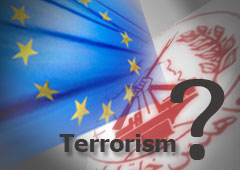
Before an overture by the EU, the MKO was on the European Union’s list of terrorist organizations subject to an EU-wide assets freeze. Yet, the MKO puppet leader, Maryam Rajavi, who has residency in France, regularly visited Brussels and despite the ban enjoyed full freedom in Europe.

The MKO is behind a slew of assassinations and bombings inside Iran, a number of EU parliamentarians said in a recent letter in which they slammed a British court decision to remove the MKO from the British terror list. The EU officials also added that the group has no public support within Iran because of their role in helping Saddam Hussein in the Iraqi imposed war on Iran (1980-1988).

Many of the MKO members abandoned the terrorist organization while most of those still remaining in the camp are said to be willing to quit but are under pressure and torture not to do so.

A May 2005 Human Rights Watch report accused the MKO of running prison camps in Iraq and committing human rights violations.

According to the Human Rights Watch report, the outlawed group puts defectors under torture and jail terms.

The group, founded in the 1960s, blended elements of Islamism and Stalinism and participated in the overthrow of the US-backed Shah of Iran in 1979. Ahead of the revolution, the MKO conducted attacks and assassinations against both Iranian and Western targets.

Leaders of the group have been fighting to shed its terrorist tag after a series of bloody anti-Western attacks in the 1970s, and nearly 30 years of violent struggle against the Islamic Republic of Iran.

In recent months, high-ranking MKO members have been lobbying governments around the world in the hope of acknowledgement as a legitimate opposition group.

The UK initiative, however, prompted the European Union to establish relations with the exiled organization now based in Paris. The European Court of First Instance threw its weight behind the MKO in December and annulled its previous decision to freeze its funds.

The group started assassination of the citizens and officials after the revolution in a bid to take control of the newly established Islamic Republic. It killed several of Iran’s new leaders in the early years after the revolution, including the then President, Mohammad Ali Rajayee, Prime Minister, Mohammad Javad Bahonar and the Judiciary Chief, Mohammad Hossein Beheshti who were killed in bomb attacks by MKO members in 1981.

The group fled to Iraq in 1986, where it was protected by Saddam Hussein and where it helped the Iraqi dictator suppress Shiite and Kurd uprisings in the country.

The terrorist group joined Saddam’s army during the Iraqi imposed war on Iran (1980-1988) and helped Saddam and killed thousands of Iranian civilians and soldiers during the US-backed Iraqi imposed war on Iran.

Since the 2003 US invasion of Iraq, the group, which now adheres to a pro-free-market philosophy, has been strongly backed by neo-conservatives in the United States, who also argue for the MKO to be taken off the US terror list.

The MKO has been in Iraq’s Diyala province since the 1980s.

In August 2008, the Iraqi parliament passed a resolution setting a six-month deadline for all MKO members to leave the country or face possible expulsion.

Tehran has pardoned several former MKO members who have expressed remorse, allowing them to return to the country. 

March 26, 2009 0 comments
FacebookTwitterPinterestWhatsappTelegramSkypeEmail
The Ideology of the MEK

Rajavi’s ideological purges

Besides approaches applied by Rajavi to purge qualified, old veterans while in Pahlavi’s jails, he devised whatever plots afterward to exclude the remnants of MKO’s early central cadre and intimates of Hanifnejad. Soon after the victory of Iranian revolution, they criticized Rajavi for his egotistic, ambitious, and totalitarian ideals in a statement issued in an Iranian newspaper, Keyhan. Instead of giving a convincing answer to the criticisms, Rajavi took a hostile stance and asserted that they were no longer MKO members while he had introduced them as the official representatives of the organization abroad a few weeks before. Finally, they published a book entitled “The process of separation” and therein they openly declared their separation from the organization and Rajavi. In this regard, Mohammad Mehdi Jafari states:

As far as I remember, I think in 1981, Mr. Raisi Toosi and his friends detached MKO and even wrote some articles in Keyhan paper disclosing the feats done by the organization and then published a book entitled “The process of separation”. 1

He further refers to ungenerous attitudes of Rajavi in expelling a particular group of three, as they were close comrades of Hanifnejad, from MKO:

The way organization dealt with those three and Reza in particular was very ungenerous. The organization even claimed that he has never been a fighter and that he had been studying in the Europe in years before the victory of the revolution while Reza Raisi Toosi was one of the early founders of MKO. Keyhan paper referred to this issue, too; yet it was denied by Mojahedin officially. Reza and his friends were among those who bravely stood against those members that perverted from Islam in the Europe and issued a long and detailed statement on it. 2

In this regard, Anne singleton, a European member of MKO who had contact with them in the Europe introduces Raisi as follows:

Reza Raisi was one of the close friends of Mohammad Hanif-Nezhad. He had been in close contact with the Mojahedin since its inception and had escaped from Iran when they were being attacked in the early 70s. He took up residence in London, studying a PhD. in politics. Then, about two years before the 1979 revolution, Raisi started an organisation named Committee in Support of the Mojahedin. 3

Jafari also expounds on Rajavi’s mischievous adoption of the same tactics for the removal of other early members of the organization including Meisami and Mohammad Gorgani, who were experienced veterans of the organization and would criticized Rajavi’s totalitarianism and egocentrism:

I was not in prison but I heard the news that the organization had boycotted people like the engineer Meisami and Mohammad Gorgani because they had adopted a clear position toward ideological deviation and drift to Marxism and opposed to “peaceful coexistence” of the rival sides and believed in self-criticism. But the imprisoned rankings like Massoud Rajavi and Musa Khiabani did not concurred with any criticism and moved on their own way although they bragged of observing criticisms. 4

As it was mentioned before, these mechanisms were common in all phases of Rajavi’s hegemony over the organization. Parviz Yaqoubi, one of the earliest members, as well as Saeed Shahsavandi, a member of the organization’s central cadre up to late 1985, are other victims of Rajavi’s inflexibility in his views who were expelled or Rajavi claimed their expulsion despite their voluntary separation from the organization. Anne singleton refers to Parviz Yaqoubi and writes:

Parviz Yaqoubi, a member of the former Central Committee, was in Paris and married to Ashraf Rajavi’s (nee Rabii) sister. He refused to accept the marriage and Ideological Revolution and refused also to keep quiet about his objections. He was put on trial in a court, which Rajavi concocted and headed, and was condemned. He was ‘convicted’ for not taking the side of the revolution, but rather taking the side of Khomeini. Masoud in this court on one occasion refused to accept that Yaqoubi has the normal rights of a court and said this is not a court rather it is a learning session for others to listen and take note. Of course, only selected people were present. Yaqoubi was placed under severe hardship. He was isolated, his financial support from the organisation was cut and he was evicted from his home as an example to others. 5

In fact, the ideological revolution of Rajavi can be considered the final phase of extending his political purges in MKO. Expelling Ali Zarkesh, his trial and sentencing to execution, his exile to Camp Ashraf, and plotting his death in the operation Eternal Light (Forouq-e Javidan) is another instance of Rajavi’s misusing power to eliminate all members who were much more qualified than him. Also, there are a great number of MKO members who were killed after the declaration of the ideological revolution due to their disagreement and criticism. However, their exact number is unknown but a handful of them have been mentioned in Human Rights Watch report or have been referred to by eyewitnesses.

Still much remains untold of methods applied by Rajavi to purge the dissidents as well as the parameters and factors paving the way for him to achieve his egocentric objectives which have to be investigated in depth. It is up to conscience of readers to judge if these cruel acts have been deliberately planed and put into practice or regarded as common errors of Rajavi, something far beyond reality. However, the fact is that according to many early members like Meisami, things could be different if Rajavi had assumed a peaceful mannerism, goodwill, tolerance, and sincerity.

Still there are people who believe Rajavi’s grave errors can be compensated if he will resign and let more qualified people accede to the leadership. It really requires honesty and courage, which Rajavi lacks, to sacrifice oneself for the legitimate causes of a political organization and apologize for the errors made before an authorized court regardless of personal and organizational prejudices.

Resources:

1. Dr. Mohammad Mehdi Jafari’s interview with Seyed Qasem Yahosseini, MKO from inside, Negah-e Emrooz publication, 2002, p.48.

2. ibid, p.78.

3. Singleton, Anne, Saddam’s private army, Iran-Interlink, 2003.

4. Dr. Mohammad Mehdi Jafari’s interview with Seyed Qasem Yahosseini, MKO from inside, Negah-e Emrouz publication, 2002, p.84.

5. Singleton, Anne, Saddam’s private army, Iran-Interlink, 2003.  

March 26, 2009 0 comments
FacebookTwitterPinterestWhatsappTelegramSkypeEmail
Iraq

Iraq urges foreign states to accept Iranian rebels

Iraq has appealed to foreign countries to accept members of an Iranian opposition group, which has been based in Iraq for about two decades but which Baghdad sees as a terrorist group and a diplomatic liability.

Iraqi officials and the People’s Mujahideen of Iran (PMOI) have been at loggerheads for years. The PMOI has run a high-profile campaign alleging abuses by the Iraqi government, and Iraq has labelled its members terrorists and liars.

The PMOI began as a group of Islamist leftists opposed to Iran’s shah but fell out with Shi’ite clerics who took power after the 1979 revolution.

Allowed to operate in Iraq by Saddam Hussein, who waged war with Iran in the 1980s, the group has been less welcome under the new Shi’ite-led government, which has mostly warm ties with neighboring Shi’ite Iran.

"We do not wish to take responsibility for the sin of the presence of a terrorist organisation in Iraq, which causes us domestic problems and problems with countries of the region," government spokesman Ali al-Dabbagh told Reuters.

"We ask the international community … to find another place for them other than Iraq," he added.

No country has yet come forward, Dabbagh said. The United States views the PMOI as a terrorist group, but the European Union agreed to take the group off its list of terrorist organisations following a protracted legal battle.

Human rights groups say forcing the 3,500 PMOI members out of their base at Camp Ashraf in northeastern Iraq would violate international law. The PMOI says Iraqi forces have beaten them, blocked aid and besieged their camp, charges Iraq denies.

There has been speculation that an unmanned Iranian aircraft that U.S. forces say they shot down over Iraq in February may have been monitoring PMOI activity.

Dabbagh did not confirm whether the downed aircraft was a drone or where it came from, but said Iraq placed high importance on maintaining good ties with Iran.

"With have joint concerns, problems, and want to develop our relationship and remove the fuse from any crisis that may happen," he said when questioned about the drone. (Additional reporting by Missy Ryan, Writing by Mohammed Abbas: Editing by Richard Balmforth)

March 26, 2009 0 comments
FacebookTwitterPinterestWhatsappTelegramSkypeEmail
Mujahedin-e-khalq Organization Members

MKO Operatives Secretly Transferred To Europe

The Iranian website Tabnak reports that 64 operatives from the Iranian opposition Mojahedeen-e Khalq organization have been secretly transferred from Iraq to a European country, on Jordanian aircraft, without the Iraqi government’s knowledge.

March 18, 2009 0 comments
FacebookTwitterPinterestWhatsappTelegramSkypeEmail
MEK Camp Ashraf

Iraqi Forces Blockading Iranian Opposition Camp

An Iranian opposition group based in Iraq said Iraqi forces are preventing passage of basic supplies to its compound north of Baghdad.

The Mojahedin-e Khalq, or People’s Mujahedeen of Iran, said the blockade of Camp Ashraf began Thursday.

In late January, Iraq’s National Security Advisor Mouwaffak al-Rubaie said the group must leave Iraq within two months. He added the decision to close the camp, home to about 3,500 people, was irreversible.

The group originated in Iran decades ago in opposition to the Shah. Many members of the group fled to Iraq after a falling out with supporters of Ayatollah Ruhhollah Khomeini, and fought fellow Iranians during Iraq’s war with Iran.

The Iraqi government promised the U.S. government, which vouched for the safety of the group when it disarmed, that its members would not be returned to Iran.

Supporters of Mujahedin e-Khalq rally across from the White House in Washington,
 
A Spokesman for the group expressed fears that members could face prison or death if they are sent to Iran, although some who have returned, were eventually allowed to settle in other countries.

The Mojahedin-e Khalq has also been accused of carrying out campaigns against Iraqis who opposed Saddam Hussein, earning the hatred of some in the current Iraqi government.

Iraq, Iran and the U.S, despite its support of the disarmed members, consider the group a terrorist organization… 

Some information for this report was provided by AP and Reuters.

March 18, 2009 0 comments
FacebookTwitterPinterestWhatsappTelegramSkypeEmail
MEK Camp Ashraf

Mojahedin Khalq had taken over a building belonging to the Iraqi army

.. An Iranian opposition group said Monday that Iraqi troops tightened their siege of a camp north of Baghdad where about 3,500 of their members have been based for about 20 years. Mojahedin Khalq had taken over a building belonging to the Iraqi army

The People’s Mujahedeen said Iraqi troops have prevented food and fuel from reaching Camp Ashraf for the past six days — despite written guarantees by the Iraqi government that it would guarantee human rights of the residents.

But Iraqi national security adviser Mouwaffak al-Rubaie branded the allegations "totally baseless." He said People’s Mujahedeen members had taken over a building belonging to the Iraqi army and were preventing soldiers from entering it.

"They have a huge propaganda machine all over the world and are known to exaggerate things," added al-Rubaie, whom the People’s Mujahedeen said was behind the alleged crackdown.

Iran and the United States consider the People’s Mujahedeen a terrorist group and Tehran has stepped up pressure on the Iraqis to close the camp. Iraq took over security for the camp from the U.S. on Jan. 1.

But the Iraqi government promised the U.S. that it would not force the group’s members to leave against their will.

The People’s Mujahedeen opposed Shah Mohammed Reza Pahlavi during the 1979 revolution but fell out with the clerical regime that replaced him. Saddam Hussein allowed the group to set up a camp during the Iran-Iraq war for staging raids across the border inside Iran.

U.S. troops disarmed the fighters and confined them to Camp Ashraf after the 2003 U.S.-led invasion that toppled Saddam.

Also Monday, residents of the Kurdish town of Halabja marked the 21st anniversary of the March 16-17 poison gas attack by Saddam’s forces against Kurdish separatists.

The 1988 attack killed thousands of people and was the biggest use of chemical weapons against a civilian populated area in history.

Local officials and victims’ relatives placed wreaths on a monument to the dead.

"The anniversary has become etched in the memory of many people," said Aras Abbadi, who lost 21 relatives in the attack. "Every year, we wait for the anniversary and condemn that deplorable attack committed by a dictatorial regime against its own people."

Another participant, Mariam Saleh, 59, pointed to a photograph on display that shows a truck full of victims.

http://www.asharq-e.com/news.asp?section=1&id=16091

March 18, 2009 0 comments
FacebookTwitterPinterestWhatsappTelegramSkypeEmail
MEK Camp Ashraf

MKO Camp Comes under Iraqi Siege after Torturing of Members

Confessions by two members of the anti-Iran terror group, the Mojahedin-e-Khalq Organization, about torturing and mistreatment of members by MKO officials and commanders led to a siege of the group’s headquarters, Camp Confessions by two members of the anti-Iran terror group, the Mojahedin-e-Khalq Organization, about torturing and mistreatment of members by MKO officials and commanders led to a siegeAshraf, by Iraqi forces.

Camp Ashraf has acted as the MKO’s headquarters and training base in Iraq’s Diyala Province for the past two decades. Baghdad had earlier vowed to shut down the camp and end the group’s presence in the country.

The move by Iraqi forces came after two members of the group disclosed top secret information to the Iraqi officials about psychological pressures and abuse of the members in the camp.

There are 3,416 people in Camp Ashraf, all fingerprinted and eye-scanned by the Iraqi officials.

The Iraqi government has vowed to expel the members of the terrorist group from the country, maintaining that their presence "in Iraq is not an option".

The US troops transferred control of the camp to Iraqi officials after Baghdad and Washington concluded an interim security agreement to take over the country’s national security issues.

The group, founded in the 1960s, started assassination of the citizens and officials after the revolution in a bid to take control of the newly established Islamic Republic. It killed several of Iran’s new leaders in the early years after the revolution, including the then President, Mohammad Ali Rajayee, Prime Minister, Mohammad Javad Bahonar and the Judiciary Chief, Mohammad Hossein Beheshti who was killed in bomb attacks by MKO members in 1981.

The terrorist group joined Saddam’s army during the Iraqi imposed war on Iran (1980-1988) and helped Saddam and killed thousands of Iranian civilians and soldiers during the US-backed Iraqi imposed war on Iran.
 
Since the 2003 US invasion of Iraq, the group has been strongly backed by neo-conservatives in the United States, who also argue for the MKO to be taken off the US terror list.

March 18, 2009 0 comments
FacebookTwitterPinterestWhatsappTelegramSkypeEmail
Iran

Iran summons Czech charge d’affairs Service

The charge d’affairs of Czech Republic embassy in Tehran was summoned to Iran’s Foreign Ministry on Monday. The charge d'affairs of Czech Republic embassy in Tehran was summoned to Iran's Foreign Ministry on Monday.

The Deputy of Iran’s Foreign Ministry Director General for human rights and women criticized the EU double standards on terrorism.

The Iranian official also called on the Czech official who is the current holder of the EU’s rotating presidency, to follow an unchanging and logical approach regarding terrorism and take stance based on correct information instead of issuing unfounded statements.

The Iranian official then asked the EU not to use human rights as an instrument.

The Czech official pledged to inform the EU of Iran’s criticism and comments.

The EU has already removed the name of Mojahedin Khalq Organization (MKO) from its terrorist black list. The move provoked strong condemnation in Iran.

The group carried out a large number of terrorist attacks in Iran and then fled to Iraq after Islamic Revolution in 1979.

The group helped the former Iraqi President Saddam Hossein in his attacks against Iranian territory.

March 17, 2009 0 comments
FacebookTwitterPinterestWhatsappTelegramSkypeEmail
Mujahedin Khalq 's Function

MKO called INSA’s statement “false and misleading”

Following the reports by the Iraq’s national security advisor saying that the leadership of camp Ashraf prevented the entry of survey team of the MinistryThe leaders of Camp Ashraf have refused to allow a committee from the Ministry of Human Rights to conduct its duty to establish the residents’ choice to return to Iran or leave for a third country of Human Rights, MKO’s political wing, NCRI, issued a statement claiming that what the office of Iraq’s National Security Advisor has issued is a “categorically false and misleading statement”. First MKO quotes the exact words of the statement that reads “The leaders of Camp Ashraf have refused to allow a committee from the Ministry of Human Rights to conduct its duty to establish the residents’ choice to return to Iran or leave for a third country.” It further adds that “The leaders of the camp also exercised their hegemony and control and deprived the residents of the camp the freedom of returning to Iran or to choose a third country. The government will not back away from its decision to close the camp.”

In a hasty, angry backlash, NCRI’s statement reads; “These entirely false claims are part of a new plot against the residents of Ashraf and at the same time a cover-up for recent unlawful positions and measures by Iraq’s National Security Advisor against Ashraf residents which have aroused widespread protests by the international community”.

In an attempt to justify its act of preventing the entry of survey team, the statement adds; “The truth is that the residents of Ashraf and its officials have extended their full cooperation to an Iraqi delegation which apparently wanted to interview the residents. Ashraf camp’s officials prepared buildings and premises for interviews at a location desired by the delegation”.

But of the most noticeable part of the statement is its threatening tone stating “the Iranian Resistance warns that such actions prepare the grounds for a human tragedy, and calls on all international organizations and specially the International Committee of the Red Cross and UNAMI to be present in Ashraf and to neutralize the conspiracies dictated by the Iranian regime”.

We also believe that all international, humanitarian organizations should be concerned about the tragic condition of members in Camp Ashraf and watchful of its cultic plots that may lead to a human tragedy. It is natural for a terrorist cult to react against legal moves by a country’s authorized body when it has its own advocates that thoroughly close their eyes on its atrocities and even strive to remove it from terrorist lists. They are also accountable for MKO’s anti-human deeds.

March 17, 2009 0 comments
FacebookTwitterPinterestWhatsappTelegramSkypeEmail
MEK Camp Ashraf

MKO members to be sent to Saudi Arabian border

The Iraqi government is trying to send members of terrorist Mujahideen Khalq The Iraqi government is trying to send members of terrorist Mujahideen Khalq Organization (MKO) to Saudi Arabian borderOrganization (MKO) to Saudi Arabian border, an informed source said on Monday. 


The source, speaking on condition of anonymity told IRNA that Iraq is going to send MKO members, also known as Munafiqin (hypocrites), from Ashraf camp to Nugrat Al-Salman region on Saudi Arabian border.


Located on Iraq’s border with Saudi Arabia, Nugrat Al-Salman prison was once the horrendous house to anti-Saddam political dissidents.

March 17, 2009 0 comments
FacebookTwitterPinterestWhatsappTelegramSkypeEmail
Newer Posts
Older Posts

Recent Posts

  • The black box of the torture camps of the MEK

    December 24, 2025
  • Pregnancy was taboo in the MEK

    December 22, 2025
  • MEPs who lack awareness about the MEK’s nature

    December 20, 2025
  • Why did Massoud Rajavi enforce divorces in the MEK?

    December 15, 2025
  • Massoud Rajavi and widespread sexual abuse of female members

    December 10, 2025
  • Facebook
  • Twitter
  • Instagram
  • Youtube

© 2003 - 2025 NEJAT Society . All Rights Reserved. NejatNGO.org


Back To Top
Nejat Society
  • Home
  • Articles
  • Media
    • Cartoons
    • NewsPics
    • Photo Gallery
    • Videos
  • Publications
    • Books
    • Nejat NewsLetter
    • Pars Brief
  • About Us
  • Contact us
  • Editions
    • عربي
    • فارسی
    • Shqip