Nejat Society
  • Home
  • Articles
  • Media
    • Cartoons
    • NewsPics
    • Photo Gallery
    • Videos
  • Publications
    • Books
    • Nejat NewsLetter
    • Pars Brief
  • About Us
  • Contact us
  • Editions
    • عربي
    • فارسی
    • Shqip
Nejat Society
Nejat Society
  • Home
  • Articles
  • Media
    • Cartoons
    • NewsPics
    • Photo Gallery
    • Videos
  • Publications
    • Books
    • Nejat NewsLetter
    • Pars Brief
  • About Us
  • Contact us
  • Editions
    • عربي
    • فارسی
    • Shqip
© 2003 - 2024 NEJAT Society. nejatngo.org
MEK Spy
Mujahedin Khalq; A proxy force

MKO members in UAE to spy on Iranians

About one hundred Mujahedin Khalq Organization (MKO) members have entered the United Arab Emirates to spy on Iranian nationals, a report says.

The MKO members have arrived in the country and are working closely with the UAE Security Forces and the US Central intelligence Agency (CIA), Nahrainnet news website quoted informed sources.

The terrorist agents are stationed inside the UAE in a bid to carry espionage operations against the Iranian embassy staff, Iranian businessmen, laborers and tourists, Nahrainnet added.

MEK Spy

Based on the report, the CIA officers who have already set up a regional center in Dubai have collaborated with UAE security forces to bring in the MKO agents.

It is not known when the MKO members launched the operation in the UAE, but it is understood that they have moved to the country from Iraq, Jordan and some European countries.

The Mujahedin Khalq Organization, which identifies itself as a Marxist-Islamist guerilla army, was founded in Iran in the 1960s.

The terror group was exiled twenty years later for carrying out numerous acts of terrorism in the country and targeting Iranian government officials and civilians within the country and abroad.

Outlawed in Iran, the group was relocated in France before being expelled at the order of the then-prime minister Jacques Chirac. The organization, eventually, moved to Iraq, where it allegedly assisted former dictator Saddam Hussein in the massacre of thousands of Iraqi civilians in the 1990s.

Many countries including the US have blacklisted the MKO as a”terrorist”organization. The US State Department says that the MKO assassinated at least six US citizens in Iran, prior to the victory of the Islamic Revolution in 1979.

This is while earlier in January, the 27-nation European Union ruled against the MKO’s seven-year inclusion in the blacklist. The ruling is widely believed to be politically motivated and the result of legal developments combined with intense lobbying by the terrorist group.

The Mujahedin Khalq Organization is blacklisted by many countries, including the United States as a terrorist organization. It relocated to Camp Ashraf from Iran after the Islamic Revolution.

The presence of Mujahedin Khalq Organization members at Camp Ashraf was not only due to the approval and support of Saddam; it was also welcomed by some leading Arab states, according to Nahrainnet.

The Iraqi parliament has called on the government to block the MKO’s main headquarter known as Camp Ashraf and expel its members from the Iraqi soil, but some members evade leaving the camp.

The Iraqi government says the MKO has played a significant role in destabilizing the war-torn country, blaming the group for terrorist attacks within Iraq.
April 14, 2009 0 comments
FacebookTwitterPinterestWhatsappTelegramSkypeEmail
Maryam Rajavi

MARYAM AZDANLO leads a very dangerous cult

I was thinking about the years which I spent in this so called organization, the PMOI. Actually I had better say I wasted all those years of my life spent inI was thinking about the years which I spent in this so called organization, the PMOI. Actually I had better say I wasted all those years of my life spent in that inhumane cult. that inhumane cult.

I was thinking about all those men and women who trusted the leaders of this cult and joined them to bring peace and democracy back to our motherland, Iran. Now as a result of the wrong and mistaken strategy which is a production of the medieval ideology and lack of brain of MASSOUD RAJAVI, all those men and women are in a terrible situation in Iraq right now.

The leaders of this cult put all kind of obstacles and hurdles so as not to allow Iraqi officials to enter that notorious garrison. The Iraqi officials who are in charge of their motherland, Iraq, after overthrowing the dictatorship of SADDAM HUSSEIN, want to help the stranded and hopeless captives of this cult to be released and rescued from this barbaric and inhumane cult after many decades. But the PMOI’s officials and its leader MARYAM RAJAVI are totally against such a humanitarian act and even threaten that in case of pressure, human catastrophe will occur in their Iraqi garrison called ASHRAF.

MARYAM RAJAVI sees her cultic survival in the remaining of the obscure and notorious ASHRAF GARRISON with all those men and women captives in it.

She is a very cruel tyrant, because she wants to keep all those men and women captive in that garrison just because she wants to keep the cult and the cultic ideology alive, why?

Why is she so dedicated and loyal to this cult?

Why is she trying her best to deny the right of freedom and right of having access to a normal life for all those people who have been stranded in that organization for a long period of time?

The only answer I can think about is, because she wants to continue her barbaric cult no matter of its cost and consequences. The lives of all those people are worthless for her.

She has been in Paris/France for a long time and she controls all the cultish ideology directly and exactly from Paris. She has made and established a deadly organization in Paris to export her cultish ideology to European countries and throughout the world, and this is the dangerous part, because MARYAM RAJAVI is taking advantage of the freedom and democracy in European countries cunningly to propagandize her cultic ideology.

This is the cultic ideology which, in complicity with the dictator of Iraq, massacred Iraqi people during the popular uprising of Iraqi people, and suppressed and oppressed the cult’s dissidents inside of the cult as well.

The French people have experienced the catastrophic burning to death of desperate members of this cult in Paris in 2003, who were ideologically forced to set themselves on fire.

These kind of violent and inhuman acts are the least that this ideology and cultish thoughts can do, especially while their cultish benefits are in danger.

All those inhumane and violent orders are declared directly from MARYAM’s cultish castle in Paris. The French Government should be aware of the real character and personality of this cult. The cult leaders in Paris pretend to be freedom lovers, peace and democracy advocates, but they are not.

I am one of their victims. I spent more than twenty years of my life there, so when I say something about this cult, it is based on facts and realities. Whether you believe or not, this cult is very dangerous and carries a very obscure and grim past.

I am fully ready to participate in any court of law to testify about the crimes which the leaders of this organization have done against the people of Iraq and the members of this cult.

Best Regards

HASSAN PIRANSAR

Iran Payvand, Paris, April 13, 2009

April 14, 2009 0 comments
FacebookTwitterPinterestWhatsappTelegramSkypeEmail
Nejat Publications

Pars Brief – Issue No.45

·         Talabani: Iraq wants Iranian opposition camp out

·         MKO imminent expulsion from Iraq

·         MKO still being monitored by Germany’s intelligence agency

·         Mojahedin Khalq had taken over a building belonging to the Iraqi army

·         Iran summons Czech charge d’affairs Service: Foreign Policy

·         Office of Iraq’s National security: camp Ashraf leaders prevent the entry of survey team

·         US-Protected Iran Exile Group in Line for Huge Cash Windfall

Download Pars Brief – Issue No.45

April 14, 2009 0 comments
FacebookTwitterPinterestWhatsappTelegramSkypeEmail
Mujahedin Khalq 's Function

CIA to relocate Mojahedin Khalq HQ to UAE

Informed sources familiar with the Gulf, said that about 100 elements of the Mujahedin-e-Khalq Organization, working in the UAE to spy on the Iranian nationals, including members of the Iranian embassy, merchants, workers and 100 of the elements of the Mujahedin-e-Khalq Organization, working in the UAE to spy on the Iranian community, including members of the Iranian embassy, merchants, workers and tourists.tourists.

The sources did not identify the date of arrival of these elements to the UAE. However their presence is based on the agreement between the leadership of this organization and the security services in the UAE.

According to the sources, these elements came from Iraq, Jordan and Europe.

The information circulating in diplomatic circles in Abu Dhabi indicates that the MKO members’ presence in UAE has been coordinated by the cooperation of the UAE security forces and American forces.

Setting up a regional center in the city of Dubai, the American officers responsible for the US Central Intelligence Organization “CIA “,became active in the UAE cooperated on the issue with the UAE intelligence forces.

The Iraqi parliament approved last year that the Mujahedin Khalq is a terrorist organization, and called on authorities to close their camp called Ashraf Camp, and to expel the group out if Iraqi soil.

April 13, 2009 0 comments
FacebookTwitterPinterestWhatsappTelegramSkypeEmail
MEK Camp Ashraf

An Anti-Iranian Enclave in Iraq Fights to Stay

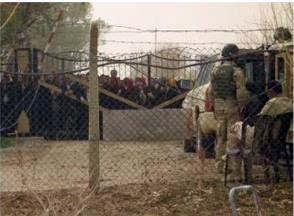
The dozens of middle-aged Iranians standing in six neat, gender-segregated rows stare straight ahead from behind the chain-link fence close to the entrance of Camp Ashraf, some 40 miles north of Baghdad in Diyala near the Iranian border. "Ashraf is our home, Ashraf is our home," they robotically chant in Iranian-accented Arabic, as they jab their right fists into the air in unison.
Some of the women, who are all dressed in pantsuits with long jackets and colorful headscarves tied under the chin, carry placards in Persian. A bright yellow banner shimmers in the mid-morning sun. "Ashraf is the city of peace," it says in Arabic.
Most of the time there’s nobody outside Camp Ashraf to hear the members of the Mujahedin-e Khalq (MEK), a fiercely anti-Tehran group who have been based here for the past two decades. That is, unless you count the Iraqi security forces who took over control of the perimeter of the 19-sq.-mile camp in February from U.S troops. The Americans had protected it since the 2003 invasion. But the Iraqi soldiers, like their government in Baghdad, don’t appear keen to listen to the chanting. The MEK should "understand that their days in Iraq are numbered," National Security Adviser Mowaffak al-Rubaie said recently. "We are literally counting them."

Saddam Hussein’s regime — no friend of the ayatollahs of Iran — welcomed the MEK in the mid-’80s, inviting them to set up a military camp and supplying them with hundreds of armored vehicles and other forms of support. Although in recent months Camp Ashraf’s residents have swapped their once-mandatory olive green military fatigues for civilian garb, both Iraq and the U.S State Department consider the MEK a terrorist group. In 2003, the U.S military disarmed Ashraf. (After a legal battle, the European Union removed the organization from its terrorist list in January; the United Kingdom did so in 2008).

The camp, which is more like a sprawling village with flower-filled parks and tree-lined avenues dotted with old-fashioned white lampposts, is home to 3,418 people, about a 1,000 of whom are dual citizens with non-Iranian travel documents issued by Western governments including the U.S, Canada, Australia, and the European Union. It has become an irritant to Baghdad’s increasingly close ties to Tehran. Iraq wants to close it, on the grounds that its residents are "terrorists" and "illegal foreigners." Still, deadlines for doing so have come and gone (the most recent was in late March). The stalemate continues: The MEK refuses to leave, and the Iraqi government has said it will not force them out.

"They want to physically purge everybody here," says Hossein Madani, an MEK spokesman and liaison to the Iraqi government. "There is an Iranian agenda that wants Ashraf residents out of Iraq." That may be, but government officials say the camp’s closure is also in Iraq’s national interest. "We do not want any friction with our neighbors," Rubaie says. The days when Iraq was used as a base to launch attacks against its neighbors, whether by the MEK along the eastern border with Iran, or by the Kurdish separatist PKK along the northern border with Turkey, are over, he says.
 
While the Iraqi government has made it clear it’s withdrawing the welcome mat extended to the MEK by Saddam Hussein, it has stopped short of saying how it will get them to leave. Despite its assurances against forced repatriation, especially if individuals may be harmed in their home country, MEK members fear they will be deported to Iran, where they say they will face imprisonment or execution. MEK representatives talk loudly of a potential humanitarian catastrophe.

While the MEK may question the veracity of Baghdad’s concerns, in recent years the International Committee of the Red Cross (ICRC) has helped more than 250 members enter Iran from across the Iranian border with little fanfare. "We are there as witnesses to make sure everything goes well," says Dorothea Krimitsas, ICRC spokesperson for the Middle East, adding that if allegations of ill treatment arose, the ICRC, would take them up with the authorities. Krimitsas says the ICRC hasn’t received any new requests for voluntary repatriation. But that’s only one way to leave. There are reports that in recent months defections from the camp have increased, although Ashraf leaders deny that anyone has left since January.

In the increasingly acrimonious debate about the future of Camp Ashraf, especially between Rubaie and MEK leaders, the quest for straight answers sometimes seems like a fool’s errand. It’s made more so by each side’s well-oiled PR machines that are adept at periodically sliding slippery claims and counter-claims into the media. For example, the MEK claims that Iraqis are withholding food and medical supplies and preventing doctors from entering the camp. That’s "baseless, it’s a pack of lies," Rubaie says. Similarly, Rubaie insists that the MEK is a cult, whose "brainwashed" members need to be separated from the 25 or so leaders and "detoxified" so they can resume normal lives. "Sheer lies," says Madani, the MEK spokesman.

Nevertheless, former members claim that the MEK is a cult, one that isolates adherents from their families, seeks to control them by limiting access to outside information, and prevents them from having sex. Indeed, there are no children at Camp Ashraf. The youngest residents are in their 20s, something MEK legal advisor Behzad Saffari says is because "military camps are not places for family life."

Yet when pressed for reasons why they should remain in Ashraf, given that they are not Iraqis and the new regime doesn’t want them, Saffari, Madani and several other MEK leaders as well as a number of residents, all bring up fervent, personal feelings. "We are not talking about different regimes, we are talking about personal lives," says Madani. "We have made a home here." He goes further. "We are not trying to have any impact on the Iranian regime. What does the Iranian regime want from us?"

The misunderstandings don’t stop there. An inter-agency task force including the CIA, FBI and other U.S bodies screened the residents of Ashraf in 2004 to determine if any were prosecutable under U.S law for alleged terrorist activities. The MEK insists that its members were all cleared. "The U.S. does not officially consider Ashraf residents as terrorists," says Madani. "MEK is something else." However, a U.S. official says that the residents of Ashraf who are members of the MEK are considered part of a terrorist organization. The official adds that non-member residents may also be considered to have provided material support to the organization. An MEK spokesman says all of the camp’s 3,418 residents are members of the group.

The MEK also insist its members still have the "protected persons status" issued by the U.S after the 2003 invasion. Madani pulls a photo ID out of his wallet that indicates that he is a protected person. "This is a permanent card," he says. "It has no time of expiration." The obligation to treat the MEK as protected persons under the law of war ended when the Coalition Provisional Authority handed over responsibility for governing Iraq to the Iraqi interim government in June 2004 which ended the occupation of Iraq. "Protected person status is never a permanent status as it applies only during circumstances of armed conflict or occupation," a Western official says.

The claims and counterclaims will no doubt continue to ricochet between Baghdad, Tehran, Washington and of course, Camp Ashraf. As two journalists head out of the camp in the early evening, past the segregated, one-story barracks-style dormitories and canteens, along paved streets lined by eucalyptus and palm trees and dotted with orange and yellow daisies, the faint echo of chanting protesters gradually gets louder. The people with the placards are still standing near the entrance, still staring out beyond the camp, still chanting. And there’s still nobody there to listen.  

http://www.time.com/time/world/article/0,8599,1890590,00.html 

Rania Abouzeid / Camp Ashraf

April 13, 2009 0 comments
FacebookTwitterPinterestWhatsappTelegramSkypeEmail
Massoud Rajavi

People’s court; Rajavi’s favored form of impeachment

Introduction

In the article “Who are the targets of Rajavi’s retaliation?” a brief look was taken on the connotation and meaning of the terms “trial” and “retaliation” as well as their structural contradiction compared to democratic views, and Masoud Rajavi was asked to elaborate more on this words and clarify what he meat by them. It is evident that Masoud Rajavi never clarify his statements; however, those familiar with the cultic literature of Mojahedin and those who have understood the ideological revolution by heart need no further explanation. Yet there are some who want to know what is the meaning and definition of terms like trial, retaliation, court, punishment, defendant, prosecutor from the viewpoint of Rajavi and his ideological revolution and how they are opposite to the culture and literature of democratic societies.

Or maybe some think that Masoud Rajavi might forget about his ideological past and look at the world from a different angle. However, as seen in his messages and statements, this matter is unlikely to happen. There have already some questions and paradoxes found in his message about threatening to trial and retaliation been elaborated on yet they never suffice for understanding the real intention of Rajavi behind these words. I acknowledge that no one but Mojahedin themselves can expound on the intended meaning of these terms. Therefore, it is necessary to return to three decades ago when after the fall of Pahlavi’s regime in Iran some courts were formed to investigate the crimes of its agents. The position taken by Mojahedin at that time, and one of them in particular, may represent a typical instance of justice and tribunal from their viewpoint.

In this instance, what Mojahedin mean by court, defendant, crime, judge, ruling and its credits, defendant and its rights, and everything on this issue is referred to and elaborated on. This is an ideological article titled “People’s court; a step toward masses governing their own destiny” published in the journal of Mojahed No.3, dated August 1979, less than 7 months after the victory of Iranian revolution, in complaint to the formed legal tribunals. Mojahedin strongly stressed that the courts had to be harsh and relentless when trying the criminal agents and figures of the collapsed regime and acted much revolutionary in the rulings rather than paying humanistic aspects. It was not actually a suggestion but rater enforcing their own revolutionary view they strictly believe, and still believe, in. even in some cases they threatened to be executors of the rules they deemed justifiable. Their preferred form of the court was a revolutionary court apart from the legally adopted civil laws where some self-appointed representatives of people, of course presiding or supervised and attended by Mojahedin, could freely try the adversaries therein with nobody holding them accountable for the rulings.

The following is Mojahedin’s general idea of such courts published in the form of an article. It has to be noted that the introductory part of the article has been omitted since it is irrelevant to the discussion.

****

Quoted from the Journal of Mojahed No. 3, dated August 1979

People’s court relies on the masses

People’s court as its title impels is a tribunal whose judges are representatives of different strata of the society and the issues investigated therein are related to all peoples and their destiny. The function of these tribunals relies on the revolutionary conscience of the masses and their judgment rather than following codified legal and statutory rules. Consequently, the judges of these courts are not only experts of legal and statutory affairs but also a combination of people’s representatives some of whom lack even the required skill and expertise in jurisdiction since in these courts more attention is paid to investigating the political and social responsibility of the trend to which the defendant is related to than the legal trial. The orders issued in these tribunals take the revolutionary interests of the society into consideration and it is likely that they fail to correspond with the compiled legal and statutory disciplines and rules. It happens that people’s courts sentence a convict to execution whereas the civil law issues a much lenient verdict when a crime has the punishment of execution; it may happen that according to the interests of people or political and ideological issues the people’s court refrains to be lenient and acts much harsher. It can be said that in people’s court, the angel of justice determines her votes according to people’s interests rather than predetermined inflexible disciplines.

The function of people’s court

Giving some instances may help us to clarify the above statements. These instances are seen in all revolutions and we have selected them from Palestinian revolution:

During the internal wars of Lebanon, Palestinian guerillas took part in wars actively beside Lebanese. In this war, all intellectual and leftist Muslims confronted with reactionary rightists. Once in a mission, a Palestinian guerilla fighter arrested a Christian family and raped their daughter. Subsequently, the leader of Palestinian revolution formed a people’s court, tried him at the site of his crime and sentenced him to death and immediately executed the order.

Another example is the revolutionary tribunal of Abu-Nazzal, a high ranking of Al-Fatah. Despite his definite and unquestionable betrayal that led to a hindrance in Palestinian revolution and the fact that the court sentenced him to execution, the vote was not pursued and executed. Why? Since enforcement of the issued order might result in spreading the perverted and non-revolutionary fabricated trend of Abu-Nazzal. The study of the above instances of revolutionary tribunals may give us a deep understanding of the real content and function of people’s courts.

If we look at the above instances with regard to the interests of Palestinian people, we can find out some significant points. In the first case, if we take into consideration the conditions like the singlehood of the felon, his tough living conditions and a life full of deprivation, his wicked past full of defeats and ethnical and family problems, and tens of internal and external factors that intermingled with his strong lust and in a lunatic mood made him commit this action, we can find out that he did not deserve execution. However, what is insisted by the revolutionary tribunal is the political repute of the revolution of Palestinian people. This action done by one of the soldiers of the revolution may turn to a danger polluting the revolutionary honor of this movement. The reason behind the determination of the people’’ court to order and put it into execution was thus well justified.

In respect to the latter case, the people’s court refrained to enforce the execution sentence of Abu-Nazzal. His execution seemed to be performing justice for a betrayer; however, the consequent would not be in any way helping the long-term interests of people; rather, his execution not only failed to annihilate his fabricated trend but also it was very likely that it turned him to a saint and hero that would increase the longevity of this trend and thus threatening the future interests of Palestinian revolutionary masses.

When the people’s court is formed and who are its members?

As it was said, people’s court is a court whose judges are representatives of people. To this definition it has to be added that: According to circumstances, the way of forming these courts may vary. It means that in the reign of a dictator, these tribunals are hidden and qualified members of a revolutionary organization constitute its members since such an organization is the upshot of the demands of the masses and aims to hear miserable people’s problems. In a democratic environment and particularly after the victory of [Iranian] revolution, people’s court is formed with the presence of different strata of the society and representatives of revolutionary-leading organizations. What are of interest in people’s court are the political and social aspects of crimes and less attention is paid to their legal and statutory aspect. Jurisdiction in penal code and law observes predetermined issues and has the same reaction to various instances of the same crime. The process of common trials is also based on a pre-made trend whereas people’s court aims to preserve and guarantee the interests of people and shows much dynamism and flexibility in this regard, therefore its members are representatives of different strata and classes of the society and the issue of juridiciary expertise and skill is replaced by the qualification in recognizing and understanding the interests of the masses that can only be done by their real and true representatives.

What are the crimes investigated in people’s court?

In people’s courts, the plaintiff is people; the crime is the injustice committed against people. The crimes investigated in this tribunal are various depending on the features of that phase of the revolution. However, their commonality is the political and social aspects of the committed action that has polluted the honor and political repute of the revolutionary society disregarding whether the mentioned action in the compiled laws has the title of crime or guilt. It means that the political significance of the committed action is so high that it affects other aspects of that crime and even an action that is not considered a crime in normal circumstances, may be regarded a crime due to its negative consequences and may sentence the criminal even to death to eradicate those negative consequences. Likewise, the person who leads ideologically to the creation of a perverted trend in the society and debar the original and natural movement of the society or slows its movement is to be tried for that perverted trend and the judgment of the tribunal is more concerned with the political and social effects of this trend rather than the individual penal conviction of the committed person. Execution of the tribunal’s order is not for revenging a certain person yet it is the enforcement of the penal conviction of that perverted trend. The rulling of the tribunal is the inevitable ruling of people who can recognize their own interests in any period of time and enforce it through their most trusted and faithful representatives.

Contemporary revolutionary experiences

The history of the revolutions in China, Algeria, Vietnam, Libya, and Palestine proves the necessity of forming a people’s court after the victory of the revolution to prevent any disagreement, disunity and split and has shown its efficiency since in people’s court it is the representatives of all strata of the society that try a perverted trend and agents of that trend not the ruling system that may constitute the representatives of a certain stratum. Moreover, if condemnation of a perverted trend is carried out through the representatives of all strata of people, the possibility of its survival and revival is negated; whereas, the same order on the part of the ruling system and its juridiciary may fail to annihilate the perverted trend and also it may result in arising of doubts and pessimism that may finally led to split and disintegration of the united lines of peoples. Taking this fact into consideration may confirm the necessity of the forming an open people’s court in this phase of our revolution.

****

Conclusion

What was mentioned above, clearly represents the ideas and viewpoints of Masoud Rajavi and MKO on the issue of trial, court, crime, criminal, judge, legal qualification, the right of plaintiff, law, punishment, etc. Surprisingly enough, Masoud Rajavi as the ideological leader of Mojahedin has been reminded of his past ideas calling international bodies and his audience to form people’s courts under the title of trial and retaliation in less than one month after the removal of MKO from the EU terrorist list. Furthermore, Maryam Azdanlu, the false pro-democratic leader of MKO in her recent speech on the 30th anniversary of Iranian anti-monarchy revolution uses the same words and expressions of Masoud Rajavi for threatening the global society despite the fact that she has repeatedly promised the Iranians to remove the sentence of execution from the judicial system of Iran in case of coming to power. Now, the judgment is on the clear conscience of international bodies and all those concerned with the destiny of MKO. 

April 12, 2009 0 comments
FacebookTwitterPinterestWhatsappTelegramSkypeEmail
Germany

Germany will not take in MKO members

A German official says the Berlin government will not house members of the terrorist Mujahedin Khalq Organization (MKO) currently based in Iraq. The Mujahedeen Khalq Organization (MKO) has claimed responsibility for numerous acts of terrorism against Iranian nationals and officials.

“No MKO member in Camp Ashraf is awarded with German residency. There are currently no plans to receive members of the group in Germany,” the German Foreign Ministry spokesperson was quoted saying by IRNA.

This is while Mohammad Javad Hasheminejad, head of the Habilian Association – an Iranian-based human rights group – says the MKO chiefs are systematically eliminating the disgruntled members.

“In his addresses to international circles, the Mujahedin Khalq Organization (MKO) leader, Masoud Rajavi has spoken of a looming humanitarian crisis in case Baghdad pushes further for the expulsion of the terror group,” Hasheminejad said.

“What the MKO leader was referring to as ‘humanitarian crisis’ was actually forced self-immolation.”

The human rights activist underlined that The MKO seeks to persuade international as well as Iraqi officials to forgo the drive for the group’s expulsion from the country.

The Mujahedin Khalq Organization, which identifies itself as a Marxist-Islamist guerilla army, was founded in Iran in the 1960s.

The terror group was exiled twenty years later for carrying out numerous acts of terrorism in the country and targeting Iranian government officials and civilians within the country and abroad.

Outlawed in Iran, the group was relocated in France before being expelled at the order of the then-prime minister Jacques Chirac. The organization, eventually, moved to Iraq, where it allegedly assisted former dictator Saddam Hussein in the massacre of thousands of Iraqi civilians in the 1990s.

Many countries including the US have blacklisted the MKO as a”terrorist”organization. The US State Department says that the MKO assassinated at least six US citizens in Iran, prior to the victory of the Islamic Revolution in 1979.

This is while earlier in January, the 27-nation European Union ruled against the MKO’s seven-year inclusion in the blacklist. The ruling is widely believed to be politically motivated and the result of legal developments combined with intense lobbying by the terrorist group.  

April 12, 2009 0 comments
FacebookTwitterPinterestWhatsappTelegramSkypeEmail
MEK Camp Ashraf

Iranian dissidents in Iraq. Where will they all go?

Iranians in Iraq who fought against the Islamic Republic face a shaky future

“IT WAS one of the strangest places I’d ever seen,” says one of the few Farsi-speaking Westerners to have spent weeks in Camp Ashraf, 65km (40 miles)Members are completely cut off from contact with their families. When wavering group members was enabled to talk to their some of their parents refused to believe it was their children, for they had been told by the PMOI that they were dead north-east of Baghdad, where some 3,400 Iranian dissidents are hunkered down and are now threatened with expulsion from Iraq, perhaps even back to Iran. It was “like a spiffy midsized town in Iran”, with parks, offices and buildings—but no children. It was “sterile, soulless and sad”. Nearly two decades ago, families living in the camp were “dissolved”, couples were forcibly divorced, and their children sent away, many of them to live with supporters living in the West, to be brought up in the faith of a movement widely described by independent observers as a cult.
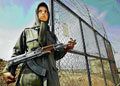
For the past six years, the Americans have protected the camp, whose raison d’être is generally opposed by the surrounding Iraqi communities and by most Iranians, whether or not they are for or against the clerical regime in Tehran. But as American troops prepare to go home, the Iraqi government, which wants cosy ties with Iran, now says the camp must be closed and its inhabitants dispersed, probably back to Iran, where they would face an uncertain future, to put it mildly.

The group is variously known as the People’s Mujahedeen of Iran (PMOI) or the Mujahedeen-e Khalq Organisation (abbreviated as both MEK and MKO). Founded in 1965 as a youthful underground opposition to Iran’s Shah, it was usually described as “Islamic Marxist”. When the Shah fell it at first backed Ayatollah Khomeini but soon fell out with him, embarking on a campaign of violence and bombings which, on a single occasion, is reckoned to have killed 70 civilians, including several senior clerics; the withered arm of Iran’s current supreme leader, Ayatollah Ali Khamenei, was a result of that bomb. The group’s political umbrella is called the National Council of Resistance of Iran.

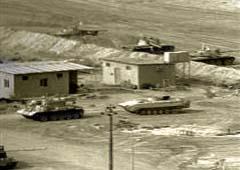
The PMOI’s leader, Massoud Rajavi, fled to France in 1981 but he and his followers, many of them women, relocated in 1986 to Iraq, where Saddam Hussein gave them a big base at Camp Ashraf, which is thought to be around 20km in circumference. Saddam abundantly supplied the PMOI with Brazilian and British tanks (captured from Iran during the war of 1980-1988) and Russian armoured personnel carriers, among other arms. In return, the PMOI made attacks on Iran itself, which is why Iranians of all stripes tend to regard the group as traitors. It is also said to have spearheaded Saddam’s attacks on rebellious Iraqi Kurds and Shias in 1991, after the first Gulf war, a charge it strongly denies.

Follow my leader

No less controversially, the PMOI is widely reviled by human-rights groups for nurturing a messianic cult of personality around Mr Rajavi and his wife, Maryam, and for enforcing a totalitarian discipline on its adherents. Several defectors testify, in the words of one of them, to a “constant bombardment of indoctrination” and a requirement to submit utterly and unquestioningly to the cause. No sources of news are allowed without the PMOI’s say-so. According to one defector, around 50 members who rebelled were sent to Saddam’s prison in Abu Ghraib, west of Baghdad.

Members are completely cut off from contact with their families. When the above-mentioned Farsi-speaking Westerner, who visited Ashraf in 2004, enabled wavering group members to talk to their families in Iran by satellite telephone, some of their parents refused to believe it was their children, for they had been told by the PMOI that they were dead.

No one is sure whether Mr Rajavi is alive but most think not; he has not been heard of since the American invasion of 2003. His wife, known as “the president-elect”, travels the world, soliciting support from a wide range of sympathisers, including some in the American Congress, the European Parliament and the British House of Lords. No one is sure who really controls the PMOI in Camp Ashraf. It is thought that nearly 400 residents have voluntarily returned to Iran, where they are said to have been treated adequately so far. But who can really tell? Several hundred more are seeking refugee status elsewhere. A few dozen have—or rather had—passports to Western countries, some of which have verified their bona fides.

In the past year, the European Parliament and Britain’s courts have removed the label of “terrorist” from the PMOI, mainly on the ground that the group says it has disavowed violence, is not known to have carried out any acts of terror since, at the latest, 2002, and surrendered its weapons (at any rate, its heavier ones) at Camp Ashraf after the American invasion. This has irritated several national governments, especially the British and French ones, which think the PMOI is a nasty nuisance and its presence on their soil bad for relations with both Iraq and Iran.

The outfit is still officially deemed a terrorist organisation in the United States but has a fierce lobby there too, backed by a mix of neoconservatives and leftists, that accepts at face value the group’s insistence that it is a secular and democratic movement with mass support in Iran and a real chance of eventually displacing the mullahs’ regime. Its lobby in Europe is much exercised by recent statements of Muwafaq al-Rubaie, Iraq’s national security adviser, who makes it plain he wants the camp disbanded and its people sent abroad, mostly to Iran, whose rulers have become more vociferous in calling its fellow reigning Shias in Baghdad to send them back.

The PMOI has a sophisticated network of ardent supporters. Without a doubt, its voice of despairing outrage will rise to a squeal if the Americans give way to Iraqi and Iranian demands to cut the movement loose. But it may happen.

The Economist print edition

http://www.economist.com/displaystory.cfm?story_id=13447429

April 11, 2009 0 comments
FacebookTwitterPinterestWhatsappTelegramSkypeEmail
MEK Camp Ashraf

Iranian opposition members refuse to leave Iraq outpost

Invited by Saddam: Iranian opposition members refuse to leave Iraq outpost

(Marriage here is forbidden. There have been no children for years) 

The isolated Camp Ashraf of MKO cult was visited by media workers after the Iraqi authorities took control of the Camp. Jane Arraf Correspondent of The Christian Science Monitor reported her visit including interviews with some Ashraf Residents. In her report she describes the isolated brainwashed members of Rajavi’s cult who allegedly “have left family life behind”. 


Texas-born Elham Kiamanesh seems thoroughly American, but in the last decade she’s spent working to overthrow the Iranian regime, this military camp with its tree-lined avenues and flower-filled parks north of Baghdad is the only home she’s known.

"You can call me Ellie, that’s my nickname," says Ms. Kiamanesh as she explains why she gave up normal life and her love of children to try to topple the government of a country she’s never visited.

Kiamanesh is one of some 3,400 residents, including several hundred Westerners, in the middle of one of the strangest episodes in the dramatic shift in relations between Iran, Iraq, and the United States.

In the 1980s, in the midst of Iraq’s bitter eight-year-war with Iran, Saddam Hussein invited the Iranian opposition to set up military operations here. When Saddam’s regime was toppled, US forces disarmed the group. In January, Camp Ashraf reverted to control by the Iraqi government, which plans to close the base as a sign of goodwill toward Iran.

Its residents – members of the People’s Mujahadeen (Mujahadeen e- Khalq, known by the Farsi acronyms MEK or MKO) – are either to return to Iran or to the third countries where they have citizenship. But to the Iraqi government’s consternation, they are not going willingly.

Militarily irrelevant, but still symbolic

Disarmed, Camp Ashraf has become militarily irrelevant. But as an embarrassment to both the Iranian and Iraqi governments, it still has considerable symbolic value.

In the first media visit granted by Iraqi authorities since they took control of the camp this year, residents told The Christian Science Monitor they would not voluntarily leave.

"I’ve decided to stay here until there’s a free Iran," says Hassan Mohammad. Mr. Mohammad lived in the camp with his mother until the age of eight and then was sent to Canada where the family had refugee status during the 1991 war over Kuwait. He returned here at the age of 17 and spent the next several years with a MEK tank unit in the south of Iraq.

Now, he spends his time here in computer classes and the evenings occasionally watching movies on the Iranian opposition’s television channel. "The last one was "Slum Dog Millionaire,’ " he says.

The sprawling camp, one of the biggest military bases in Iraq, has its own university classrooms and hospital. Men and women live in separate dormitories and for the most part study or work in segregated classes. The MEK’s philosophy is a mix of Marxism and Islam teaching with a dose of feminism and a very large element of control.

Marriage here is forbidden. There have been no children for years.

"We have left family life behind," says Hossein Madani, an urbane former aerospace instructor in Virginia and a senior official at Camp Ashraf.

Iraq: ‘The party is over’

Mr. Madani and other MEK officials invite guests into a cool, white reception room and serve tea and cake while producing a wide variety of documents and letters that do little to alleviate the ambiguity over the camp’s legal status.

Madani dismisses the issue of Iraqi law, which authorities say makes the MEK residents illegal foreigners in the country. Instead he cites the Geneva Conventions, under which the US military had recognized the MEK as noncombatants in the war and pledged to protect them.

"This is purely an agenda forced by the Iranian regime. Why do we have to give in to such a thing?" he says of the Iraqi government’s plan to shut down the camp and move residents to a more remote location in Iraq as a prelude to leaving the country.

Iraqi National Security Advisor Muwaffaq al-Rubaie has a simple answer for them.

"They have to understand that the party is over for them," Mr. Rubaie told journalists recently, after refuting allegations from the MEK that their members were being mistreated. "They need to understand that they have to leave. This is not [the era of] Saddam Hussein using them against Iran. We will never use them against Iran."

Describing the residents as "brainwashed cult members from a high- trained terrorist organization," Rubaie says Iraq does not intend to forcibly deport them but "if they resist and carry out this engineered crisis there will be some pain."

The Iraqi government is pressuring other countries to take back about one-third of the camp residents with either foreign passports or travel documents. The rest will be given the Iranian passports they are entitled to and a plane ticket home.

Plenty of places to go, but this is home

The residents include Americans, Canadians, Swedes, and Dutch. Rubaei says another 309 could legally return to France, where the MEK is based. While the US lists the group as a terrorist organization, the European Union has dropped that designation. As individuals, MEK members are also free to return to the US unless there are specific arrest warrants for them.

After 2003, the US military seized the MEK’s tanks and other weapons and confined its residents to the isolated base. All of the camp residents renounced violence and underwent background screening by US authorities.

MEK members argue that their cooperation entitles them to stay.

"We used our own money to build this, to plant every single tree and plant in this place," Madani says bitterly, driving past parks and streets punctuated with giant sculptures of tulips and birds. "This is their home. There are cemeteries, people who have died here, they are buried here, they have lived here.’

Outside the museum dedicated to Iranian atrocities, Kiamanesh sits with her friend, Gohar Mohajeri, on a walkway planted with flowers. Ms. Mohajeri was born in New York but grew up in Germany. She has never been to Iran.

"For outsiders, when they don’t know what our goal and aim is, obviously our life is abnormal for them," says Mohajeri. Kiamanesh translates for her from Farsi.

Neither seem to realize how isolated they are at the camp. "I do believe this is the greenest place in all of Iraq," says Kiamanesh, a former law student who without a headscarf would look like the girl next door. "Why would anyone ever want to leave this place

Jane Arraf Correspondent of The Christian Science Monitor

April 11, 2009 0 comments
FacebookTwitterPinterestWhatsappTelegramSkypeEmail
MEK Camp Ashraf

Access demanded to hundreds of MKO cult members who want out

Dire warnings are being issued in right wing western political circles that an American troop drawdown will leave Iran too influential in Iraq. The solution they are touting is to push for the reinstatement of Baathists into Iraq’s political establishment. This solution includes demands for the restoration of the terrorist Mojahedin-e Khalq (aka Saddam’s private army), which is still holed up in Camp Ashraf for this very purpose, as an ‘opposition’ force. (Is anyone in any doubt that the American soldiers who have remained at Camp Ashraf after the handover to Iraqi authorities are there for any other purpose than to protect the group’s leader Massoud Rajavi who has been in hiding there since 2003?)

The MKO’s backers do not specify at this stage what is meant by ‘opposition’ in the context of Iraq. One scenario is that Baathists in the Government of Iraq would be hostile to Iran and could provide political cover for the MKO to launch military attacks against Iranian targets. Another, more likely scenario is that the MKO would undertake political lobbying inside Iraq on behalf of anti-Iran groups just as they do in western democracies.

Certainly, the recent U.S. drive to create dialogue with Iran has been a blow to the MKO. Massoud and Maryam’s promise of ‘regime change’ lent the group popularity with western anti-Iran lobbies under the last U.S. president. Now, as the threat of military action against Iran has diminished to a few crumbs on the negotiating table, the role of the MKO has similarly diminished. The MKO’s place has been reduced to that of a nagging irritant sponsored by anti-Iran regimes and interests in the region and the west. Even then, they do not expect to have to fight, but merely to have their presence in Iraq act as an annoyance to Iran.

In the pro-MKO hype that is part of this solution the usual lies and deception are being regurgitated as fact – such as that the group is protected persons under the Fourth Geneva Convention, a status which the UN never granted and which in any case could not apply after 2007. Doomsday prophesies that the Government of Iraq would forcibly expel the group to Iran and that Iran would actually accept this group of sick, ageing, disturbed and brainwashed exiles have proven unfounded.

Instead, the Government of Iraq has put into action a sophisticated humanitarian plan to slowly, carefully dismantle the terrorist infrastructure of the group and detoxify its brainwashed members and restore their humanity.

Iraq has called not on Iran but on western governments to help in this plan. So far, the response has been underwhelming. Since the legal de-proscription of the MKO in Europe and the UK came into force in 2008 this surely is the only logical destination for members of the group who have renounced violence but who wish to continue democratic opposition to the Islamic Republic of Iran. Indeed, while the concept that a foreign terrorist mercenary group which belonged to Saddam Hussein and undertook the massacre of tens of hundreds of Iraqi Kurds in 1991 on his orders should be integrated into the new Iraqi political process must be treated with the withering contempt it deserves, the calls for removal of the MKO from America’s list of terrorism should be heeded. Allowing MKO members to take refuge in the U.S. is a minimum humanitarian gesture.

The Government of Iraq and the people of Iraq must make their own decisions about the political make-up of their country. But, the fate of the 3,400+ individuals in Camp Ashraf is of concern to the international community. Those lobbies intent on recruiting a fresh force to act against Iran must employ such people directly as mercenaries.

The existing MKO must not be ‘cut and pasted’ wholesale into this role. It is simply not acceptable to force people to be terrorists.

The Government of Iraq believes that every individual inside Camp Ashraf must be allowed to determine their own future. This freedom of choice is something the MKO leaders rigorously and even violently deny the members. The Government of Iraq is currently making efforts to facilitate the process of individual choice. Iraq’s national security advisor has explained that under his plan to “separate individuals from the all-encompassing domination by their leaders, we can allow them to begin to exercise their rights as individuals and make appropriate choices. That is, we hope to remove them from the toxic effects of their indoctrination and leaders.”

The MKO in turn have thrown up provocation, obstacles and staged demonstrations to delay this process. What is urgently needed is a temporary refuge for those who wish to leave Camp Ashraf but who because of western intransigence have no other place to go. The Government of Iraq must restore the temporary international protection facility (TIPF) adjacent to Camp Ashraf which was operated by the American army and which led to the successful rescue of around 800 former MKO members.

Groups campaigning to help the victims of MKO leaders have already helped many to escape the group. Sahar Family Foundation was established in Iraq to provide such help and most of those who left the TIPF when the American forces closed it precipitately in 2008, have been able to reach safety in Europe. The names of around two hundred more dissidents currently trapped inside Camp Ashraf are already known. Perhaps more want to leave. We will not know until someone gives them the freedom to choose.

Daily it is becoming clearer that the ordinary members of the MKO are being denied that freedom of choice and freedom of thought only because American soldiers have been tasked to protect Massoud Rajavi. The MKO leaders are threatening a ‘humanitarian disaster’ – which cult experts translate as acts of mass suicide – if the camp is opened up to external inspection and control. The Government of Iraq says that Camp Ashraf, its administration and its residents, must be subject to the rule of law.

The U.S. must withdraw its soldiers from the base – their presence is supporting the MKO’s outlandish resistance to the minimum exercise of control by Iraq’s elected government. The Government of Iraq must facilitate the establishment of a separate facility outside Camp Ashraf where individuals can initially take refuge before being transferred to third countries.

If President Obama’s promise of change is to have meaning beyond simply being words on the page, the standoff at Camp Ashraf is an ideal place to start putting words into action.

Anne Singleton, April 09, 2009

April 11, 2009 0 comments
FacebookTwitterPinterestWhatsappTelegramSkypeEmail
Newer Posts
Older Posts

Recent Posts

  • Various Aspects of Massoud Rajavi’s Disappearance

    October 20, 2026
  • MEK agents near schools in Tirana, Albania

    October 17, 2026
  • Expectations of human rights bodies regarding censorship within the MEK

    October 13, 2026
  • The Jamalis’ Plea for Help: Save Our Brother from the MEK!

    October 11, 2026
  • Testimonies of Participants in the MEK’s Staged Propaganda Stunt in Karaj

    October 7, 2026
  • Facebook
  • Twitter
  • Instagram
  • Youtube

© 2003 - 2025 NEJAT Society . All Rights Reserved. NejatNGO.org


Back To Top
Nejat Society
  • Home
  • Articles
  • Media
    • Cartoons
    • NewsPics
    • Photo Gallery
    • Videos
  • Publications
    • Books
    • Nejat NewsLetter
    • Pars Brief
  • About Us
  • Contact us
  • Editions
    • عربي
    • فارسی
    • Shqip