Nejat Society
  • Home
  • Articles
  • Media
    • Cartoons
    • NewsPics
    • Photo Gallery
    • Videos
  • Publications
    • Books
    • Nejat NewsLetter
    • Pars Brief
  • About Us
  • Contact us
  • Editions
    • عربي
    • فارسی
    • Shqip
Nejat Society
Nejat Society
  • Home
  • Articles
  • Media
    • Cartoons
    • NewsPics
    • Photo Gallery
    • Videos
  • Publications
    • Books
    • Nejat NewsLetter
    • Pars Brief
  • About Us
  • Contact us
  • Editions
    • عربي
    • فارسی
    • Shqip
© 2003 - 2024 NEJAT Society. nejatngo.org
Mujahedin Khalq; A proxy force

EU delisted MKO to manipulate it

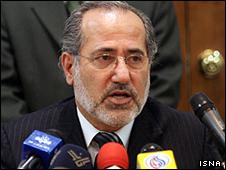
An Iranian parliamentarian said Friday that the European Union (EU) delisted the terrorist Mojahedeen Khalq Organization (MKO) only to exploit it in line with its own interests. Member of Majlis National Security and Foreign Policy Commission Javad Jahangirzadeh said the members of the terrorist MKO will continue to serve their new European masters just the way they did for the toppled Saddam Hussein in Iraq for a long time.
He said the MKO members will certainly try to stir unrest and make anti-revolutionary moves inside Iran but to no avail.
He predicted that soon the EU will brand the grouplet as a freedom-fighter and try to increase its support for it.
The parliamentarian termed the EU move in removing the MKO from its list of terrorist organizations as an explicit gesture of animosity with Iran.
Noting that the Europeans, too, like Iranian nation, detested the terrorist grouplet, Jahangirzadeh said delisting MKO stands in strong contrast with Europe’s claims of supporting human rights.
He opined that the EU made the decision under influence of the US and Zionist lobbies.

February 8, 2009 0 comments
FacebookTwitterPinterestWhatsappTelegramSkypeEmail
MEK Camp Ashraf

Joint committees formed to receive Ashraf Camp detainees

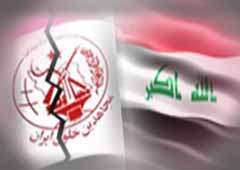
Iraq: Joint committees formed to receive Ashraf Camp detainees from Multinational Forces to close the file

Baghdad Al-Iraqiyah Television in Arabic reports in its 1700 gmt newscast on 5 February on the preliminary results of the provincial council elections. The channel also reports on a meeting between the finance minister and the Japanese ambassador in Baghdad, a meeting between the defence minister and the UN representative in Iraq, a meeting of the committee in charge of the Mojahedin-e Khalq Organization’s presence in Iraq, and other political developments.

– "Finance Minister Engineer Baqir Jabr al-Zubaydi has hailed the Japanese Government’s support through giving Iraq a $3.5-billion loan, which will contribute to the entry of Japanese companies to Iraq to implement important projects in the fields of power, water, roads, and other reconstruction projects. This came during Al-Zubaydi’s meeting with Japanese Ambassador to Iraq Shoji Ogawa."

– "Defence Minister Abd-al-Qadir Muhammad Jasim received Ambassador Staffan de Mistura, representative of the UN secretary general, today. The two sides discussed the success achieved by the Iraqi security forces in securing the provincial council elections. The two sides also discussed the means of providing protection for the UN mission in Iraq after the withdrawal of the US troops."

– "The committee in charge of ending the presence of the terrorist Mojahedin-e Khalq Organization [MKO] in Iraq has held a periodic meeting under National Security Adviser Dr Muwaffaq al-Rubay’i and in the presence of the minister of human rights and the US ambassador to Iraq. Al-Rubay’i stressed the need to expel this organization from Iraq. He noted that the government’s decision to close the Ashraf Camp and expel those living in it is irreversible. He stressed the need for the international community’s cooperation with Iraq to resolve this issue through renewing asylum permits to the organization’s members who were issued such permits in the past by European and other countries. He called on these countries to study the possibility of giving asylum permits to other members of the organization."

– "Human Rights Minister Wijdan Salim has said that the file of detainees in Iraq will be closed within the next six months. She said that joint committees have been formed to receive the detainees from the Multinational Force to close this file."

– "The security forces in the Ninawa Governorate have released 151 detainees who were not convicted of involvement in terrorist actions in Iraq."
Al-Iraqiyah TV, Baghdad, in Arabic, 6 February 2009
Translated by: BBC Monitoring Middle East

February 8, 2009 0 comments
FacebookTwitterPinterestWhatsappTelegramSkypeEmail
Mujahedin Khalq Organization as a terrorist group

PMOI crows … but probably not for long!

The People’s Mujahideen of Iran (PMOI alias, aka MKO, alias or NRCI) have been removed from the list of organizations considered terrorist by thePMOI crows ... but probably not for long! European Union. Just when the U.S. confirmed on their own … who can understand.

It is true that the decision to withdraw from the European list is motivated solely on technical issues and form such aspects of rights of defense.

But now, France has appealed this decision and the Belgian Minister of Foreign Affairs reiterated that for it, PMOI did have its place on this list.

Moreover, the text that was adopted makes it clear that several countries among the 27 "are not convinced that the Mujahedin were away from terrorism". It will be recalled that the process of withdrawal, the Swiss and the French had launched new accusations against PMOI.

It is therefore likely that PMOI will return to this famous list in July. Unfortunately, in the meantime, it has had time to recover the many assets it owns and those it had received from Saddam Hussein as a salary for being executive of his dirty works …

February 7, 2009 0 comments
FacebookTwitterPinterestWhatsappTelegramSkypeEmail
Iran

Iran warns EU over delisting MKO

Iranian Deputy Foreign Minister for European Affairs Mahdi Safari has lamented the European Union’s “double-standard and hypocritical” approach toward terrorism and warned about dire consequences of compromise with terrorists.
The comments by Safari came as foreign ministers of the 27-nation EU removed the name of the Mojahedin Khalq Organization (MKO) from its terror list on January 26.
The behavior of certain European countries toward terrorism is “politically motivated”, Safari said as he summoned EU ambassadors to protest against the decision on Wednesday.
Pointing to the EU’s international and domestic commitments to combating terrorism, he called the decision “political and unacceptable”.
Safari bewailed the fact that some European countries are interacting with terrorists to achieve their “illegitimate and temporary purposes”.
The MKO was given “carte blanche” after the EU removed its name from terror list, he said, adding that the EU itself will be responsible for the consequences of its decision.
Pointing to the sensitive situation in the region, he pointed out that terrorists are trying to destabilize the region.
Any cooperation with these groups will help intensify their destructive activities and give rise to regional insecurity, he explained.
The Czech diplomat whose country chairs the EU rotating presidency vowed to notify the block of Iran’s views as soon as possible.
The official also underscored the importance of campaign against terrorism and expressed hope that Iran-EU cooperation will continue in this regard and produce positive results.
http://www.tehrantimes.com/index_View.asp?code=188584

February 7, 2009 0 comments
FacebookTwitterPinterestWhatsappTelegramSkypeEmail
Iran

Iran summons EU envoys over MKO removal

Iran: EU countries responsible for the outcome
Iran summons ambassadors of the EU countries to protest against their decision to remove the MKO from the list of terrorist organizations.
Earlier in January, the foreign ministers of the European Union countries approved a decision to remove the Mujahedeen Khalq Organization (MKO) from the blacklist.
Iran’s Foreign Ministry condemned the move, saying, “It came despite the fact that the organization has not altered its trigger-happy ideology.”
The MKO has claimed responsibility for carrying out numerous terror attacks against Iranian nationals and officials, and has also been accused of assisting former Iraqi dictator Saddam Hussein in the slaughter of thousands of Iraqi civilians in the 1990s.
The US State Department has said that the MKO assassinated at least six US citizens in Iran, prior to the victory of the Islamic Revolution in 1979.
The US government has designated the MKO a “terrorist” organization.
Iran’s Deputy Foreign Minister Mehdi Safari told the summoned EU ambassadors on Wednesday that the removal of the MKO from the list of banned terrorist groups was “a political and unacceptable move.”
The ruling by the 27-nation EU against the MKO’s seven-year inclusion in the blacklist results from recent legal developments combined with intense lobbying by the terrorist group. Safari went on to warn about the consequences of giving in to the terrorist group’s demands, adding that the EU countries involved in making this decision would be responsible for its outcome.

February 7, 2009 0 comments
FacebookTwitterPinterestWhatsappTelegramSkypeEmail
Massoud Rajavi

Hypocrisy of a Marxist-biased leader

The errors of Rajavi concerning the ideological schism of 1954 and its consequences are countless. His twelve-point statement issued while in the prison indicates Rajavi’s position taking toward leftist faction and Marxists as well as his offensive attitude towards religiously inclined forces that can be considered as one of his main errors. In addition, his keeping silent on the events occurred in MKO and the issue of the Marxist wing manifesto for almost one and a half year led to the intensification of the challenges between Rajavi and non-Marxist forces.
The significance of this issue arises from the fact that hiding the internal schism of MKO and conversion of a great deal of members to Marxism made religious forces think that Mojahedin leadership considered them nothing but instruments for achieving his objectives. There are evidences that Rajavi made his utmost attempt to conceal the schism of the organization and hide it though religious forces had the right to know to where their political and social activities were drifting them. Another mistake made by Rajavi in this particular phase was coining the term leftist opportunist to refer to the converted Mojahedin. In fact he did so to have least contact and tension with Marxist trends and stabilize his status as their strategic ally. In this regard, Shahsavandi says:
Leftist opportunist trend is the label Mr. Masoud Rajavi gave to the intra organizational Marxist trend and called it as such. 1
Hence, in his twelve-point declaration he asserted that he distinguished between the Mojahedin Marxists and other Marxist groups and considered them the strategic ally of Mojahedin as did previously. On the other hand, this moderately taken position was restricted only those in prison and there was no trace of the reaction against Marxist Mojahedin active in the world outside. Even when the liberation movement published Rajavi’s statement outside, Mojahedin declared that it was not acceptable for them and that it had to be revised. They kept this position up to late 1979 when Rajavi took a position against the separated wing.
The coming event during the Iranian revolution clarified the dual and divisive stance of Rajavi. The arrest of Taqi Shahram, leader of the Marxist wing, after the victory of the Iranian revolution, and the position of MKO in this regard stating that revolutionary courts lacked the legitimacy to put him into trial and it was only Mojahedin that were qualified of trying him implied the fact that Mojahedin were under the effect of a luring attraction toward Marxist division, a fear that had already filled the early ranking cadres like Majid Sharif Vaqefi and Samadieh. There are evidences that Marxist Mojahedin collaborated with SAVAK; Rajavi was well informed of it but preferred to say nothing.
However, Rajavi’s unquestionable slant on Marxism and to follow the steps of the leftist revolutionary guerrillas emerged after the victory of the Iranian revolution. Rajavi even asked the family of Sharif Vaqefi to forgive Taqi Shahram who assassinated their son in order to save him from execution which is well reflected in the existing documents and statements of the organization. It was in a condition when Shahram was accused of doing intra-organizational clearance and preparing the background for the arrest of religious forces in late 1977 and even was tangled with the leader of Marxist wing and was subject to organizational purges.
It is not far from logic and reason if it is said that SAVAK had a role in making some high rankings of MKO declare their hidden ideology openly and remove the Qur’anic verse from their emblem. 2
In fact, the antagonist position of Rajavi toward non-Marxist forces led to his opposition to all those supporting the clerical leadership. Although his activities can be considered an organizational error resulting in the exile of MKO from Iran, the consequent events showed that he did so to stabilize his egocentric leadership over MKO and cared not the least about keeping the integration of MKO and hence he preferred Marxists to religious forces. He was unaware that his opposition to religious forces that constituted the most trustworthy members of MKO would result in his parting with Marxist trends too. On the one hand, he lost his religious followers as well as his position among leftist groups due to his ambitious and egocentric activities.

References
1. Saeed Shahsavandi interview with the voice of Iran, part 38.
2. Rohani, Hamid, The movement of Imam Khomeini, p.663.

February 7, 2009 0 comments
FacebookTwitterPinterestWhatsappTelegramSkypeEmail
Iraq

Arrest warrants for 14 top MKO terrorist Leaders

Official: Baghdad soon to close MKO fileHe went on to say that Iraqi courts have issued arrest warrants for 14 MKO members.
Iraqi National Security Advisor Muvafaq al-Rubai said here Friday that Iraqi government will in next few months close dossier of the terrorist Mujahideen Khalq Organization (MKO).
“The MKO is a terrorist group and a cancerous tumor in Iraq; The crimes and sins the group has committed are evident and well-documented. Several thousand Iraqi citizens have fallen victims of the terrorist organization and we have provable evidence, that we will submit them to Iraqi courts,” said al-Rubai in an exclusive interview with IRNA.
He said the MKO was stationed in Iraq by former Iraqi ruler Saddam Hussein and contrary to then regulations in Iraq, getting involved in suppression of Iraqi people’s Intifadha in 1991 and massacre of Kurds and Shiites.
He added that after formation of popular government of Iraq, the MKO has taken provocative moves against legal government of the country over recent years.
He went on to say that Iraqi courts have issued arrest warrants for 14 MKO members.
On removal of the MKO from Europe’s list of terrorist organizations, he said the MKO case is complicated and the European courts have thus far removed the outfit from the terrorism list and re-entered them into the list three times.
He said that the MKO will soon be put in the EU terrorist list.
“We have asked the EU to contribute to settlement of problem with the MKO and their exit from Iraq; we have recently discussed the issue with ambassadors of the countries and they have vowed to cooperate.” 

February 7, 2009 0 comments
FacebookTwitterPinterestWhatsappTelegramSkypeEmail
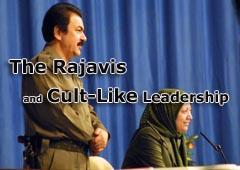
The cult of Rajavi

Mujahedin-e-Khalq as a religious political cult

The modern definition of a mind control cult is any group which employs mind control and deceptive recruiting techniques. In other words how cults trick people into joining and coerce them into staying. This is the definition that most people would agree with. Except the cults themselves of course!


According to howcultswork, cults use coercive manipulation techniques to keep their members in. All former members of MKO affirm the indoctrination practices in the cult of Rajavi.


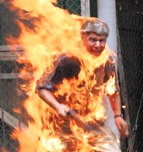
Ibrahim Khodabande, a former member of the cult, writes:’’ the cult like activities and creation of gods, and the creation of a relationship of total submission and the use of mind control tactics which eventually results in insane and unbelievable actions like self immolations”


Cults include various types such as religious, commercial, political ….


Religious
Cults that use a belief system as their base are very common. Their belief system could be standard Christianity, Hinduism, Islam or any other of the world religions, or they may have invented their own belief system. What makes them a cult is the fact that they use mind control, not what they believe.


Commercial
Cults that use commercial gain as their base are called "cults of greed". They will promise you that if you join them and follow their special programme for success then you will become very rich. Often they will hold up their leader as an example and explain that if you do what he or she says then you will be successful too. Commercial cults use mind control to get you working for them for free, and to make you pay for an endless stream of motivational tapes, videos, books and seminars all of which are supposedly designed to help you succeed, but in reality are designed to enhance the cult’s mind control environment and keep you believing in their almost impossible dream of success. Of course they never mention that the primary way the leaders make money are by selling these motivation materials to their group! For more information see below under the section, "Pressure Selling".

Self Help & Counseling
Cults that use "self help" or counseling or self improvement as their base often target business people and corporations. By doing their courses and seminars they claim you and your staff will become more successful. Business people locked away in hotel rooms are subjected to quasi-religious indoctrination as they play strange games, join in group activities, and share their innermost thoughts with the group. Once you have completed one course you are told you need to do the more advanced course, which naturally costs more than the last. These cults will sometimes request that you do volunteer work and that you help recruit your friends, family and work mates. These groups specialize in creating powerful emotional experiences which are then used to validate your involvement in the cult. The religious overtones are couched in terms which don’t sound religious. They usually come to the surface as you near the end of a seminar. Many people have been bankrupted by involvement with these cults.


Political
Cults that use political ideals as their base are well known throughout history. Hitler’s Nazi Germany and Stalin’s Communist USSR were classic examples of mind control on a very large scale. On smaller scales white and black supremacists, terrorists, and rebel groups commonly use forms of mind control to recruit and dominate their members.


Mujahedin-e-Khalq is considered as a religious political cult for they advocate their own version of Shiite Islam mixed with Marxism ideology.
Therefore they have invented their own belief system.


Besides, they have their deceptive ways to earn money including charity foundations of which some have been outlawed in Europe, so they can be called commercial too since all the members are exploited to work for free. The terrorist cult of MKO has long been dominating its members (victims) with an illusion of a political achievement in Iran. And this is only a mirage that they have convinced the members to see for years.

Reference: HowCultsWork

By Mazdak Parsi


Also Read: 

Cults, wonderful on the outside, manipulating on the inside
February 5, 2009 0 comments
FacebookTwitterPinterestWhatsappTelegramSkypeEmail
Iraq

EU will take Mojahedin Khalq back to Europe

President Talebani: God willing, with the new EU attitude, they will take Mojahedin Khalq back to Europe
… Asked about National Security adviser Muwaffaq al-Rubay’i’s statement that the Mojahedin-e Khalq Organization’s Camp Ashraf will be closed and a new security pact will be signed with Iran, Talabani says: "Dr Muwaffaq al-Rubay’i was not authorized to announce this because he is not the Iraqi Government’s spokesman. Dr Ali al-Dabbagh is the official spokesman. The Iraqi constitution rejects the presence of foreign armed forces on its land. It also rejects the presence of any non-Iraqi armed organization on its land be it Kurdish, Persian, or Turkish. We have always called for finding a solution to Camp Ashraf by closing it and finding safe places for those present in it. The Iraqi Government does not have the intention or legal international ability to hand them over to Iran. Iran made proposals to us. For example, it said it is ready to provide anyone of them wishing to travel to Europe with a passport. There is now a new attitude in Europe towards the Mojahedin-e Khalq Organization. God willing, the European states will reach a solution according to which they will accept them there. This group’s stay in Iraq is no longer accepted by the people and government. I can tell you that the leadership of this group committed big mistakes in the past. It cooperated with the dictatorial regime in the fight against the Kurds and the Shi’is in the central and southern regions. Therefore, they were involved in the bloody Iraqi conflict. Accordingly, the overwhelming majority of the Iraqi people want this group out of Iraq, but not by force or handover to Iran as reported. We reject this." …
—–
Iraqi president interviewed on elections, Obama’s message, domestic issues
Al-Arabiya TV, Dubai, in Arabic, February 01, 2009
Reported by: BBC Monitoring Middle East
["Frankly Speaking" programme, featuring an interview with Iraqi President Jalal Talabani in Al-Sulaymaniyah on 30 January by Elie Nakuzi in the studio – recorded]
Dubai Al-Arabiya Television in Arabic at 2004 gmt on 30 January carries a new 51-minute edition of its "Frankly Speaking" weekly programme, featuring an interview with Iraqi President Jalal Talabani, who is interviewed via satellite from Al-Sulaymaniyah on 30 January by Elie Nakuzi in the Dubai studio.
Talabani begins by responding to a question on his health. He denies what he calls "tendentious rumours" about his health and says he is fine.
Asked about US President Barack Obama’s message to the Islamic world through Al-Arabiya Television, Talabani says: "I think that the mere arrival of Mr Barack Obama at the White House was a major historic change. I also think that his new language, which is overflowing with friendly feelings and turn towards dialogue, bodes well. When Mr Obama took the constitutional oath, he did not hesitate to mention his name in full as Barack Hussein Obama. I think this, too, is a message to the Islamic world that he does not deny his relationship with it." He adds: "But there are many intricate problems the Islamic world and its leaders are requited to work on in order to facilitate the arduous task of solving the outstanding problems in the Islamic world."
When told that President Obama said he had "difficult and big decisions" to make on Iraq and that many think he would fulfil his promise to withdraw the US forces from Iraq, and asked if Iraq has apprehensions about a "prompt" US withdrawal from Iraq, Talabani says: "I have no fears about the gradual withdrawal Mr Barack Obama promised the American people during the electoral campaign. I think achieving security and stability in Iraq hinges on the unity of the political forces in a real national unity government and on the attainment of national reconciliation in Iraq. If these tasks are accomplished, security and stability will then prevail in Iraq. We can enforce the law and maintain security and stability in Iraq with the help of the Iraqi armed and police forces that we have now."
Asked about the Iraqi provincial council elections and the prime minister’s performance, Talabani says: "I think the Iraqi elections are going on normally. I take into consideration the fact that Iraq has not witnessed free and democratic elections for over 50 years. Therefore, we believe that elections are going on well. It is normal to exchange accusations during the electoral campaign, but we need evidence to prove interference by government agencies. Initial results do not support these accusations." He then hopes that no rigging will take place anywhere in Iraq.
On the difference between the past and current elections, Talabani says the current electoral lists do not depend on the sectarian factor because the Shi’i and Sunni coalitions are running in independent lists and platforms.
When told that opinion polls showed progress by seculars and moderates at the expense of sectarian and religious parties, and asked if he feels that the religious parties are retreating, Talabani says: "I cannot judge things now. I think the main influential forces continue to enjoy large popular support. I noticed progress by some secular parties. Also I noticed the appearance of several secular lists in the regions. This indicates there is progress."
Asked if the Iraqi religious authority supports one party against another, he says: "His Eminence Grand Ayatollah Ali al-Sistani, may God protect him, is neutral and rises above party ideologies. He calls for the participation of the masses in the elections and for choosing the ones that can represent them in the most ideal way. Therefore, he does not side with a faction or group against another. I think he has always played this glorious historic role in all Iraqi issues."
Asked if it is true that there is retreat in the position and popularity of the Kurds in Mosul, Talabani says: "I do not think so. Also I cannot make an accurate assessment before the results of the elections are announced. True, the Kurds in Mosul were exposed to large displacement campaigns. Thousands of families were displaced and tens of thousands of people left their areas. The Yazidi Kurds were also exposed to unjust campaigns and brutal genocide. Therefore, we have to see a change, but I do not think there is a large change or retreat in popular support for the lists. The Kurds did not run independently in these lists. There are also Arab, Islamic, and non-Islamic Iraqi parties in these lists."
On the issue of Kirkuk and why it will not participate in the new elections, Talabani says some of the people who came to Kirkuk from other places will take part in the elections. He adds that the original people of Kirkuk will not participate because the problem of Kirkuk has not been solved yet. He says a census should be held to know which people are eligible for voting.
Continuing, he says: "I think it is possible to normalize the situation in Kirkuk. I visited Kirkuk some time ago and met there with the representatives of all communities and entities. They all expressed a desire to achieve national reconciliation and normalize relations among them and a desire to solve the issue of Kirkuk through accord among all."
Asked about "differences" between the Kurds and Prime Minister Nuri al-Maliki, Talabani says: "As you know, differences emerged over certain issues. I regret to see these differences reach the news media. As a president of the republic who works for accord, I had hoped that these differences would be restricted to the lobbies of parties and halls where cordial meetings are held. Differences are not large and intense as some circles say. There are differences, of course, over the issues for which five committees were formed. One of these is the political reform committee. The Iraqi parliament endorsed a political reform paper. This means there is need for political reforms in Iraq. The parliament endorsed this paper, which became a law when the Presidency Council signed it and it should be implemented by the government, parties, and parliament. There are also the issues of security, armed forces, oil, and disputed areas. Committees have been formed for all these in order to address the outstanding issues. This means all admit that there are outstanding issues and these require joint solutions in accordance with the Iraqi constitution and the democratic principles currently prevailing in Iraq. I think that the success of the five committees formed from five parties to solve these problems will lead to the resolution of all differences and, consequently, bolster Iraqi national unity. As a Kurd, I do not think there is any problem that cannot be solved because I think Arab-Kurdish brotherhood is firmly entrenched in history and joint Arab-Kurdish struggle is the only way to achieve the aims of the Kurds, Arabs, and other Iraqi citizens." He adds: "We all have to try to solve problems so that these will not get complicated or create difficulties for the Iraqi people."
On the way he views the performance of Prime Minister Al-Maliki, Talabani says: "Frankly speaking, brother Nuri al-Maliki is an old friend of mine. We struggled together to reach this memorable day. Our personal relationship is good and continuing. There are, however, differences in opinion over certain issues. These could sometimes be between me and him or between him and Mas’ud Barzani, but this is not alienation or hostile and conflicting differences that cannot be solved. I think they can be solved. I would like to tell you that during our last meeting we agreed to bolster relations between the Presidency Council members and the prime minister in the Executive Council and on the basis of the political reform document, which should serve as a programme for all. Accordingly, there are large areas for agreement and accord."
Asked about National Security adviser Muwaffaq al-Rubay’i’s statement that the Mojahedin-e Khalq Organization’s Camp Ashraf will be closed and a new security pact will be signed with Iran, Talabani says: "Dr Muwaffaq al-Rubay’i was not authorized to announce this because he is not the Iraqi Government’s spokesman. Dr Ali al-Dabbagh is the official spokesman. The Iraqi constitution rejects the presence of foreign armed forces on its land. It also rejects the presence of any non-Iraqi armed organization on its land be it Kurdish, Persian, or Turkish. We have always called for finding a solution to Camp Ashraf by closing it and finding safe places for those present in it. The Iraqi Government does not have the intention or legal international ability to hand them over to Iran. Iran made proposals to us. For example, it said it is ready to provide anyone of them wishing to travel to Europe with a passport. There is now a new attitude in Europe towards the Mojahedin-e Khalq Organization. God willing, the European states will reach a solution according to which they will accept them there. This group’s stay in Iraq is no longer accepted by the people and government. I can tell you that the leadership of this group committed big mistakes in the past. It cooperated with the dictatorial regime in the fight against the Kurds and the Shi’is in the central and southern regions. Therefore, they were involved in the bloody Iraqi conflict. Accordingly, the overwhelming majority of the Iraqi people want this group out of Iraq, but not by force or handover to Iran as reported. We reject this."
Asked about the new security pact with Iran Al-Rubay’i mentioned in his statement, Talabani says: "I have no idea about it. It was an idea Dr Muwaffaq al-Rubay’i put forward. The idea was not studied by the Iraqi Government or parliament. Some officials sometimes make statements outside their jurisdiction and without consulting with the central government, presidency, or parliament. Iraq has not discussed such an issue."
On whether Iran is interfering in Iraq’s elections, Talabani says: "If interference means Iran sympathizes with some candidates and helps them financially, then I will not rule this out. However, if interference means actual daily and administrative interference, I will then rule this out."
Asked if he does not object to Iranian financial aid to some parties, he says: "I do not deny that some parties may have relations with and receive aid from Iran or Arab countries. Funds come to Iraq from all countries around Iraq. This phenomenon regrettably exists, but I do not exactly know who Iran, Syria, or Turkey is helping. These are secret issues that will later become known."
On Iranian-US ties during Obama’s administration, Obama says: "I believe that a serious US-Iranian dialogue will be in the interest of all. It will be in the interest of Iraq, Iran, and the United States." He adds: "I think the Americans and Iranians will use all cards on the table with regard to US-Iranian relations. Personally, I have no apprehensions because the Iraqi card is now in the hands of Iraq, especially after signing the SOFA [Status of Forces Agreement]. I have no apprehensions about any US-Iranian dialogue or negotiations and I do not think these will be at the expense of Iraq."
On Iraqi-Syrian relations, Talabani says: "Now I see a new atmosphere in relations between Syria and Iraq. During my recent meeting with President Bashar al-Asad in Kuwait, we agreed to bolster, develop, and expand these relations. We also appointed an ambassador to Syria to bolster these relations. We are now discussing the issue of renewing the oil pipeline across Syria and Lebanon to the Mediterranean. We are also trying to improve relations with Syria in other domains. I think Syria is aware of the importance of relations with Iraq. It knows that normal relations with Iraq are in its interest."
Asked if he supports the Saudi monarch’s statement in Kuwait about the Arab peace initiative and asked if he thinks this initiative is now dead, he says: "I do not think the initiative has died. I support what the custodian of the two holy mosques said. I think this initiative is present on the table, but as he said it will not be proposed for ever without a positive response from the Israeli side." He then urges the Israeli rulers to accept the Arab peace initiative, which he describes as "fair and balanced."
Asked if Al-Qa’idah is no longer present in Iraq, he says: "Al-Qa’idah has been much weakened. What is important is that the popular atmosphere that is hostile to terrorism is now large and extensive. The people began to realize that the crimes committed in the name of Islam, including crimes committed against humanity in the form of indiscriminate killing and crimes against the national economy, are all hostile to the Iraqi people. Therefore, people no longer support these operations or facilitate the work of terrorist organizations. On the contrary, people are now cooperating with the government forces in the fight against terrorists."
Asked why he asked Iraqi Deputy Prime Minister Barham Salih and Kurdistan Region Vice President Kusrat Rasul to take over party responsibilities in Al-Sulaymaniyah, he says: "This was done to facilitate the work of the political bureau and leaders present on the ground in Kurdistan so that the required decisions will not be delayed on the pretext that the president or secretary general of the Patriotic Union of Kurdistan is absent. The aim is consolidating the principle of collective leadership in the PUK and facilitating the accomplishments and reforms that are required in the government, party, democratic organizations, and the society."
Concluding, Talabani addresses the Iraqis by saying: "I hope that the elections will lead to choosing true representatives of the Iraqi people. I hope these elections will be a new successful democratic experience in Iraq. I hope that my Iraqi sisters and brothers will actively participate in the elections and choose the ones they believe are qualified and capable of serving them. I think these elections will produce new facts. In the light of these facts, we expect the next parliament to be somehow different from the current one." He adds: "I greatly hope that these elections will usher in a new stage, especially after SOFA has been signed with the United States."

Al-Arabiya TV, Dubai, in Arabic

February 4, 2009 0 comments
FacebookTwitterPinterestWhatsappTelegramSkypeEmail
France

Sobhani pens letter to Minister of Affairs of the Republic France

Dr. Bernard Kouchner Minister of Affairs of the Republic France Dr. Bernard Kouchner Minister of Affairs of the Republic France
During the time since the fall of Saddam Hussein’s regime and the forced disarmament of the Mojahedin Khalq Organisation by the American army, the Mojahedin have been trying to put a mask on their violent, terrorist faces in Europe and America in a bid to remove the organisation from the list of terrorist entities in US, EU and Canada and ….
Unfortunately On last Monday EU ministers removed the MKO from their list of terror organizations, following a European court ruling in favor of the group, which has accepted responsibility for many deadly attacks against Iranian and Iraqi civilians and cooperated actively with the regime of former Iraqi dictator Saddam Hussein.
Unfortunately, the EU’s act of removing this group from its list of terrorist entities has not been based on any credible investigative work.
When PMOI whispers statements denouncing terrorism, it is not referring to its own acts. Rather it means the acts of others that fall within the group’s own definition of terrorism. This is a trickery by which PMOI continues to deceive your politicians.
In your opinion, does a terrorist group which has been disarmed after the fall of Saddam Hussein by the US army and exists in quarantine within a limited geographic boundary inside Iraq, have any opportunity to perform terrorist activities?
Surely your answer must be ‘no’, as they have had no access to arms. Therefore the reasoning that “they have not performed any terrorist act” in the short time mentioned could not in any way be considered as a professional, specialist’s argument for the leaders of European Union. Or could it?
If the Mojahedin Khalq Organisation had access to arms and had refrained from carrying out further terror acts, then in that case perhaps the group would have had to announce this in a clear public statement signed by the leaders Massoud and Maryam Rajavi, then this might have been proper grounds to consider the situation and perhaps investigate the organisation’s intentions deeper. But that was not the case now.
But fortunately, your good self, as the highest authority in the French government have announced that you consider the Mojahedin Khalq Organisation a terrorist organisation and Figaro newspaper has quoted from you:
“France, as do Belgium and Germany, continues to consider this group (Mojahedin Khalq Organisation) as a terrorist organisation”.
I have enclosed a small sample of the evidence which has already been made public concerning the MKO. The charges against the MKO and in particular its leaders include but are not limited to: crimes against humanity and war crimes inside and outside Iran; deliberately targeting civilians in acts of terror; close co-operation with the secret services of Saddam Hussein against Iranians during an 8 years war in which chemical weapons were used against Iranian people; close co-operation with other hostile spying services and spying programs against the best interests of the people of Iran and Iraq; suppression and massacre of Kurds and Shiites in Iraq on the order of Saddam Hussein; criminal misuse of the democratic institutions of a majority of European countries and the US through fraud and deception.

Sincerly
Mohammad Hossein Sobhani

Postfach 90 06 63
51116 Köln – Deutschland
Telefon: +49 (0) 1774829905
Email: sobhani_m_h@hotmail.com

Cc:
Ministers of Affairs of the EU


Mohammad Hossein Sobhani , Iran Pen Association, Germany, February 02, 2009
http://www.iran-ghalam.de/2Haupt/3499-Sobhani-name%20be%20kouchner%20i01.02.09.HTM
sobhani_m_h@hotmail.com

February 4, 2009 0 comments
FacebookTwitterPinterestWhatsappTelegramSkypeEmail
Newer Posts
Older Posts

Recent Posts

  • Pregnancy was taboo in the MEK

    December 22, 2025
  • MEPs who lack awareness about the MEK’s nature

    December 20, 2025
  • Why did Massoud Rajavi enforce divorces in the MEK?

    December 15, 2025
  • Massoud Rajavi and widespread sexual abuse of female members

    December 10, 2025
  • Farman Shafabin, MEK member who committed suicide

    December 3, 2025
  • Facebook
  • Twitter
  • Instagram
  • Youtube

© 2003 - 2025 NEJAT Society . All Rights Reserved. NejatNGO.org


Back To Top
Nejat Society
  • Home
  • Articles
  • Media
    • Cartoons
    • NewsPics
    • Photo Gallery
    • Videos
  • Publications
    • Books
    • Nejat NewsLetter
    • Pars Brief
  • About Us
  • Contact us
  • Editions
    • عربي
    • فارسی
    • Shqip