Nejat Society
  • Home
  • Articles
  • Media
    • Cartoons
    • NewsPics
    • Photo Gallery
    • Videos
  • Publications
    • Books
    • Nejat NewsLetter
    • Pars Brief
  • About Us
  • Contact us
  • Editions
    • عربي
    • فارسی
    • Shqip
Nejat Society
Nejat Society
  • Home
  • Articles
  • Media
    • Cartoons
    • NewsPics
    • Photo Gallery
    • Videos
  • Publications
    • Books
    • Nejat NewsLetter
    • Pars Brief
  • About Us
  • Contact us
  • Editions
    • عربي
    • فارسی
    • Shqip
© 2003 - 2024 NEJAT Society. nejatngo.org
Mujahedin Khalq Organization as a terrorist group

The MKO movement is in decline

Response to Sergio D’Elia, secretary of Hands Off Cain”, the Mujahedin-e Khalq Organization (1) ANNA-MAHJAR :we are not against the removal of MKO from the list of terrorists. Indeed, the movement is in decline already

Caro D’Elia,
Our group had no intention of continuing to write about Mujahedin-e Khalq (MKO), but encouraged by your recent e-mail we feel obliged to make a few points. In principle, we are not against the removal of MKO from the list of terrorists. Indeed, the movement is already in decline  .Since the late nineties the internal dissent in Camp Ashraf is increasing and with the fall of the dictatorial regime of Saddam Hussein, the MKO will be deprived of their basic logistics. However, there are things that continue to preoccupancy.

First, we believe that the leadership of MKO should answer the killing of civilian Kurds. I’m sorry, in fact, contradicting, but under Saddam the MKO were involved directly in the massacre of the Kurdish population. We have received confirmation and documentation of what we are saying by the Kurdish Democratic Party and by independent Tolerancy International, based in Erbil (Iraqi Kurdistan) and headed by a former minister of the autonomous Kurdish government, Hussein Sinjari.

Secondly, we are sure that the meetings in Europe with several supporters and / or members of MKO led you to find them available and courteous. The image that, in fact, the movement has manufactured in the West is a democratic organization. But the situation is different at Camp Ashraf. Some members of MKO have in fact discovered at their expense, the detention camps in which under the leadership of the movement they were subjected to torture, often led to death. Members of MKO are victims of their own cynical leadership. Shown below the records of known and authoritative organization Human Rights Watch on this topic.


The third point is that, as you say it, the movement does not have a libertarian government structure and in light of the facts that we have listed above and that we are committed to detail, are needed to reconstruct the truth about the movement. Surprisingly when Italian parliamentary delegations – and Sen. Perduca – go on a visit to Camp Ashraf and then write in the Italian media praises to movement who do not know at all.
Another point which we would highlight was well summarized by a message left to us by a supporter of MKO in Italy:”It is not far the day when Iran and the Iranians celebrate their freedom and democracy under the flag of the Mojahedin and their president Mrs. Maryam Rajavi.”This concerns us. We want a free Iran, celebrating their freedom under the flag of their country, not a movement, and having as president a leader elected by democratic elections.


For ease of reading we will share this letter / document into four parts. In this letter, write the abuses at Camp Ashraf (which will be divided into two parts), providing evidence. In the coming days, we will post additional material on the killing of Kurds and the armed forces and American civilian, take our information directly from the Department of State. The material here is, we were given by Human Rights Watch and the complete document in English of 28 pages is also available on-line.


Brief Background of MKO
The MKO was founded in 1965 by three student from the University of Tehran, Mohammad Hanifnezhad, Saeed Mohsen and Asghar Badizadegan. The three believed that a peaceful resistance against the Pahlavi government does not lead to any result, and that only armed struggle could fall to the monarchy. Their ideology, however, was based on an interpretation of Islam compatible with the Marxism. during 70s, thirteen members of MKO and Giodania go into Lebanon to be trained . The friendship with Yasser Arafat, remains over the years.
With the revolution of 1979, Massoud Rajavi emerged as a leader of the movement. Immediately after the revolution, MKO supported the revolution but after a while Khomeini excluded them from the division of power. It, therefore, led to an intense rivalry between the leadership of MKO and the regime of Iran. In 1981, members of MKO launched a campaign of armed attacks against the Iranian government. The same year, Massoud Rajavi moved to Paris. In 1986, France asked Rajavi to leave the country and find a new ally: the dictator Saddam Hussein. (In movies we are in possession of Rajavi called Saddam”the big boss”).


The “ideological revolution” of the MKO
In 1985, Massoud Rajavi and Maryam Azdanlu got married. Massoud and Maryam Rajavi became co-leader of the movement. They announced the marriage is an”ideological revolution”resulted from tremendous sacrifices made by both spouses. Maryam was first married to the deputy of Massoud, Mehdi Abrishamchi. The”ideological revolution”of Rajavi was imposed on the movement and required”sacrifice”. First, the leadership has asked its members to divorce by their husbands and wives, ordering”mass divorce.”

In the book “Memoirs of an Iranian Rebel,”the former member of MKO, Masoud Banisadr (not to be confused with the former president Abolhasan Banisadr) fled from the movement in 1996, recounts a meeting for senior officers of the movement page. 37 of the English version.

The first thing I was required to do in Baghdad was watch a videotape of an ideological meeting for “executive and high-ranking members.” The meeting, called “Imam Zaman,” (in the Shiite faith is the hidden Imam), started with a simple question: “To whom do we owe all our achievements and everything that we have?”… Rajavi did not claim, as I thought he might, to be the Imam of our times, but merely said we owed everything to Imam Zaman… The object was to show that we could reach Tehran if we were more united with our leader, as he was with Imam Zaman and God.
“He (Rajavi) was ready to sacrifice everything he had (which in fact meant all of us!) for God, asserting that the only thing on his mind was doing the will of God,….we were expected to draw the conclusion that no “buffer” existed between Rajavi and Imam Zaman; yet there was a buffer between ourselves and him [Rajavi] … which prevented us from seeing him clearly. This “buffer” was our weakness. If we could recognize that, we would see why and how we had failed in Operation Forogh [Eternal Light] and elsewhere. Massoud and Maryam [Rajavi] had no doubt that the buffer was in all our cases our existing spouse…

In the next letter, provide the following themes:
“Birth of dissent in Camp Ashraf”
“Violation and Abuse of Human Rights in Camp Ashraf”
“Testimonies collected by Human Rights Watch.”


Anticipation of the next letter:
Testimony of Sayed Amir Mowaseghi, collected by Human Rights Watch
Sayed Amir Mowaseghi entered a part of MKO in 1984 and was imprisoned by the Iranian government from 1984-1987. After his release, went to Pakistan, from where he could reach Iraq and join forces in the MK 1988.Nel in June 2001, had decided to leave the movement, but he was not allowed. A session of court”was agreed in September 2001 with the presence of Maryam and Masoud Rajavi, who have not granted permission to leave the MKO.


Immediately after it happened as testified:
“I was brought to a gathering of about 600 people. I was dragged into a crowd, I was taken to blows, kicked, verbally abused. I was then led in a caravan, which they called Bangala, I was confined in isolation until 2 June, 2002, and then I was handed over to Iraqi government forces (of Saddam Hussein). The Iraqi forces have put me in the prison of Abu Ghraib, I was then sent back to Iran on 18 March 2003.”


ANNA-MAHJAR of Barducci – Secretary of the”Arab Liberal Democrats

http://www.agenziaradicale.com/index.php?option=com_content&task=view&id=7265&Itemid=52

Translated by Nejat Society

February 4, 2009 0 comments
FacebookTwitterPinterestWhatsappTelegramSkypeEmail
European Union

EU should take the next step

Reza Sadeghi: EU should take the next step by helping the victims of Rajavi cult in Camp Ashraf

Interview with the latest arrival from Camp Ashraf
Paris, January 30, 2009

Reza Sadeghi: EU should take the next step by helping the victims of Rajavi cult in Camp Ashraf

Download EU should take the next step

February 3, 2009 0 comments
FacebookTwitterPinterestWhatsappTelegramSkypeEmail
Massoud Rajavi

Rajavi’s position in the schism of 1975

The ideological schism of MKO in 1975, when actually the leaders of the group were in Pahlavi’s notorious prisons, resulted in different reactions on the part According to Rastegar, Rajavi made an attempt to hide his personal errors and stabilize his leadership over the organization by concealing the truth and labeling the former leaders as traitors as agentsof Mojahedin. The serious errors of Rajavi after the separation of Marxist wing following its declared manifesto was elaborated on and those aware of the course of events in that particular period of time were unanimous that the main mistake made by Rajavi was issuing his twelve-point statement that was considered to be the position taken by all non-Marxist Mojahedin about the schism. It stated that Mojahedin would consider the converted members as their strategic allies and openly revealed their opposition to religious members. It happened at a time when all MKO remnants except Rajavi insisted on reviewing and revising the organizational principles and ideological errors of MKO under the impact of Marxism. Karim Rastegar, an ex-member, elaborates on the impacts of this event saying that after the Marxist wing’s manifesto, Rajavi adopted a dual mannerism of keeping unwavering inclination to the left while role-played a devoted religious inside the prison.
An interesting point is that while siding with the non-Marxist wing, Rajavi took a different position toward the leaders of Marxist wing, i.e. Taqi Shahram, Bahram Aram and against truthful leaders opposed to Marxist wing like Majid Sharif Vaqefi and Morteza Samadieh Labaf. According to Rastegar, Rajavi made an attempt to hide his personal errors and stabilize his leadership over the organization by concealing the truth and labeling the former leaders as traitors as agents:
The leaders inside prison, and Rajavi in particular, tried to acquit themselves of accusations and after the terror of Sharif Vaqefi and Samadieh for a long time overturned the truth calling them traitors and introduced the leftist Vahid Afrakhteh as a hero. For instance, they quoted falsely of committee members that Vahid Afrakhteh has turned to a mythical figure under torture. 1
A more interesting point is that his appreciation of some problematic members like Vahid Afrakhteh intensified the crises and increased the doubt of religious members in Rajavi thus making the ground for his increasingly parting with them. In addition, Rajavi took an antagonist position against religious forces inside prison and worsened the conditions:
The behaviors of Masoud inside prison resulted in marginalization of religious forces. Evidently, appropriate reactions could prevent conflicts and detachments. The organization leadership tried to conceal the realities for five months calling us extremists and compromisers while everyone was well aware of the reality. It was no longer possible for us to bear lies and labels given to the religious members Muslims. Our complaint to the conditions resulted in our total boycott. Nobody dared to communicate with us. Some were so heated that even would kill us if they were allowed to. The news of our boycott by organization leaked to SAVAK and they regarded it a precious opportunity. 2
On the other hand, there is the status and position of Marxist wing. Although they took an overall defensive position regarding the ideological schism, their position is preferred to that of Rajavi that was dualistic and divisive. However, many are unanimous that the main reason of ideological schism of MKO was the dualistic and eclectic viewpoints of the early founders of MKO toward Islam rather than the effect of Marxists therein. Torab Haqshenas, a key figure of MKO in that period of time abroad, refers to significant points on the differences between inside as well as outside looking at the ideological schism of Mojahedin and the divisive position of Rajavi in this regard, saying:
In my opinion, the ideological schism had a principle that was neglected and it was the fact that we should not lie to ourselves. It is correct that we made some mistakes and acknowledged it in 1979 and criticized it, but the main point was that we should not lie to people. When we came to the point that our guide was no longer ideologically religious and it was of no effect to help us in struggle, we had to say it clearly to all people even if it resulted in our losing of many facilities and separation of many members. 3
However, it does not mean that religion was incapable to offer solutions for the challenges of MKO. It is another issue and needs to be investigated in depth. As he says, the hypocrisy and duality of Mojahedin, their eclectic ideology, lack of knowledge on religious precepts and refraining to take a clear position in this regard resulted in the occurrence of schism. In fact, the twelve-point statement of Rajavi issued inside prison was a summary of his real intention and ideas. Shahsavandi, a member of MKO sentenced to death by the order of the Marxist wing’s central committee clarifies the effects of this statement in escalation of inter-organizational tensions and conflicts inside prison:
These twelve articles defined the identity of MKO to the point that members and sympathizers had to recognize it as the basics of their activities word by word with no addition or omission and to transfer it to other prisons and those active outside. 4
The significance of this statement lies in the fact that according to Shahsavandi, it had a decisive role in the future events like that of June 1981:
These twelve articles were in fact the manifesto of Mr. Rajavi against the Marxist drift inside organization. It was a manifesto that led to the revival and reorganization of MKO and worked as infrastructure of activities after the victory of Iranian revolution. 5
Also, he elaborates on the key role of Rajavi in the development of the statement:
The essence and core of this issue is related to Masoud Rajavi and it was mainly for this reason that he tried to stabilize his leadership and bring his role to light. 6
Reviewing the points of this statement and the mistakes made by Rajavi in this regard requires another discussion of its own.

References:
1. Dr. Karim Rastegar’s interview with Cheshmandaz journal on the events of June 1981
2. ibid
3. Torab Haqshenas
4. Saeed Shahsavandi interview with the voice of Iran, part 38.
5. ibid
6. ibid, part 40.

February 3, 2009 0 comments
FacebookTwitterPinterestWhatsappTelegramSkypeEmail
Massoud Rajavi

Rajavi, a disseminator of cultic dogma

There are a number of gadgets at which cult leaders grab to convince members of their unquestionable leadership and charismatic figure. Eric Hoffer refers to the case of leftist political cult of Stalinism that was developed as a result of indoctrinating individuals with a self-fabricated ideology:
The official history of the Communist party states: "The power of Marxist-Leninist theory lies in the fact that it enables the Party to find the right orientation in any situation, to understand the inner connection of current events, to foresee their course, and to perceive not only how and in what direction they are developing in the present but how and in what direction they are bound to develop in the future." The true believer is emboldened to attempt the unprecedented and the impossible not only because his doctrine gives him a sense of omnipotence but also because it gives him unqualified confidence in the future. 1
There are other factors and tools in the hands of cult leaders to make them immune against challenges and criticism. Almost all cult leaders convince members that they have some problematic personal features that have to be corrected by means of cultic techniques and mechanisms. In order to achieve this objective, cult leaders resort to ideological dogmatism and prevent members from thinking. Also they stop the development of self-confidence on the part of members and replace it with total dependence on cultic relations and absolute submission to the point that members suffer from the loss of physical as well as mental independence for ever.
In the ideological revolution of Mojahedin, a phase transforming a political group into a cult of personality, many factors exploited by cult leaders to immunize them against challenges are traceable. Cult leaders make an attempt to convince members that they are endowed with a god-like status and unearthly power in foreseeing future events, a window that is totally closed for followers to see through. Furthermore, they expose members to absolute submission that are in most cases irrational and unreasonable. In this regard, Mohsen Rezaee, an MKO member, says:
The ideological leader has a deeper and greater insight compared to that of ordinary followers. He can foresee and interpret issues in the world that are inexplicable in their own time and it is only the passing of time that reveals their truth. Therefore, a follower has to obey his/her leader devotedly and based on absolute confidence rather than individual understanding. 2
Niyabati, one of the main theoreticians of the ideological revolution of Mojahedin, tries to justify his materialistic viewpoints on the necessity of the absolute submission of followers to cult leader by means of mystical concepts:
A wayfarer [meaning followers of MKO] has no responsibility and should be submissive like a piece of wood in the hands of carpenter. 3
He further adds:
In spiritual journey, no question is allowed. The wayfarer has to put his faith in Sheikh wholeheartedly and must regard him as the most perfect person to conduct him in spiritual training, guidance and education, be his interlocutor and obey Sheikh far from any inward or outward objection. 4
Here, the factor of anathema is added to the factor of sheikh-wayfarer relationship to convince and submit individuals. Furthermore, Rajavi and his apostles have drawn a red line by elaborating on the god-like position of Rajavi and his connection to God and have made attempt to indoctrinate the belief that challenging and disobeying him is an unforgivable sin. Anne Singleton, an MKO ex-member, refers to these factors and writes:
What Rajavi was asking everyone in the Mojahedin to do was to give him total obedience. He implied to them (through the mouths of Maryam and Fahimeh) that he had links with God and therefore knew things that ordinary members couldn’t be expected to understand. This meant that anyone who rejected him was blaspheming against God. The members were mostly willing to allow themselves to be indoctrinated with this new concept. 5
Abrishamchi, a theoretician of the ideological revolution, zealously tries to justify the unquestionable and unfathomable status of MKO leadership and states:
Leadership bears no responsibility downward. His responsibility is determined by the ideological-political considerations of the organization. 6
He further points out that questioning his decisions from lower-ranking members may result in serious disruption of the ideological principles and consequently destabilization of leadership status:
In order to clarify the ideological boundaries, it is necessary to introduce the ideological interpreter of the organization and the person who says the last word. In MKO, it is the thoughts of Masoud that are ideologically problem solving and determine ideological boundaries. Therefore, leader in the organization bears no responsiveness since it may disruptthe leader’s status. 7
In a nutshell, in MKO as in many other cults, there are mechanisms and devices used in order to raise the status of the leader to a point far from that of rank-and-files and to immunize him against criticism and questioning.

References:
1.Hoffer, Eric, The true believer, Harper &. Row, Publishers, New York, 1951, p.58.
2. Rezaee, Mohsen, p.249.
3. Niyabati, Bijan, A different look at the ideological revolution within Mojahedin, p.40.
4. ibid.
5. Singleton, Anne, Saddam’s private army, Iran-Interlink, 2003.
6. Mehdi Abrishamchi’s lecture on the ideological revolution of MKO, 1985, p.44.
7. Mojahed Journal, n. 255, p.23.

Research Bureau – Mojahedin.ws – February 1, 2009

February 3, 2009 0 comments
FacebookTwitterPinterestWhatsappTelegramSkypeEmail
The cult of Rajavi

Ex-member says MEK is like a cult

Ex-member says MEK ‘is like a cult’
Anne Khodabandeh, a former member of the Mojahedin-e Khalq organisation at her Leeds home. Lorne Campbell / The National
When the European Union removed a militant Iranian opposition group from its blacklist of terrorist organisations last month, it drew not only protestations from Iran but also the contempt of a former member who claims the group is little more than a cult.
The Mojahedin-e Khalq (MEK, or the People’s Mujahideen of Iran, and sometimes known as MKO), a leftist Islamist organisation that has vehemently opposed the Islamic Republic since its establishment in 1979, was taken off the EU’s terrorism blacklist on Jan 26 at a meeting of EU foreign ministers in Brussels, the culmination of intensive lobbying by the group and its European supporters.
But Anne Khodabandeh, née Singleton, a former member of the group for 20 years, was sceptical.
“Well, at least this shows the EU blacklist for what it really is – nothing more than a list of friend and foe,” she said.
“But realistically I don’t think it will make any difference to them in Europe. They will continue to carry on with their propaganda and fund-raising activities. They will continue to have their base in Paris where they hold their own members captive in isolation.”
Mrs Khodabandeh, 49, now a computer programmer, runs Iran-Interlink, an organisation that aims to inform the public about what she says is the reality of the MEK and provide assistance to former members, as well as current members who want to leave.
Mrs Khodabandeh said the group enforces strict segregation of men and women – even forcibly separating or divorcing couples – and employs psychological manipulation and mind control. She pointed to the practice of self-immolation at MEK demonstrations in Europe and the United States as further evidence of the group’s “cult-like” characteristics.
“The MEK is a cult, with every implication that has,” she said. “The leadership is unelected, unaccountable and perpetrates abuses against its own members.”
The MEK was established in the 1960s by a group of radical students in violent opposition to the US-backed shah, Mohammed Reza Pahlavi, and took part in the 1979 revolution.
But it soon fell out with Iran’s new ruler, Ayatollah Ruhollah Khomeini, and the the country’s religious establishment and many members were jailed and executed. Most fled the country for Europe and the United States while thousands of others set up a base in northern Iraq at Camp Ashraf, which is in the process of being closed down.
Various estimates put the group’s membership at anywhere between 5,000 and 20,000.
For its part, the MEK describes itself as a secular, democratic organisation that wants to bring democracy to Iran and enjoys significant support in Europe and the United States.
Brian Binley, a member of the British Parliamentary Committee for Iran Freedom, hailed the decision to remove the MEK from the EU blacklist and said descriptions of the group as a cult were “completely untrue”.
“I am delighted the battle has been won,” Mr Binley, a Conservative member of parliament, said of the EU ruling. “This is a perfectly legitimate group that opposes the medieval theocracy of Iran.
“I have found them to be good people, to be democrats who want a free and democratic Iran.”
Mrs Khodabandeh first learnt about the MEK in the early 1980s through an Iranian boyfriend while studying at Manchester University.
An idealist “who wanted to change the world”, she began attending the group’s campus meetings and gradually became more involved with its fund-raising and awareness activities.
Before long she was a fully fledged member, espousing the group’s militant opposition to the theocratic regime in Iran and calling for its overthrow.
But the MEK’s demands on her grew and through such techniques as peer pressure and “psychological manipulation”, Mrs Khodabandeh said, she came ever more under control of the group.
By the age of 30 she had lost touch with most of her friends and family, given up her job as a computer programmer and handed over her house, car and savings.
She left her home in Leeds, Yorkshire, to live with other members at a number of “safe houses” belonging to the MEK, first in London and then in Sweden, and was put to work in the “diplomacy section”, monitoring the news and writing press releases for the group.
“We were like children. We took all our orders from the leaders – we wouldn’t so much as leave the building without their permission,” she said.
Since 1985 the MEK has been led by the husband and wife team of Massoud and Maryam Rajavi – the latter a leading figure in the recent campaign to have the MEK removed from the EU’s terrorist list – both of whom, according to Mrs Khodobandeh, embody all the traits of “cult leadership”. Their authority within the group is unquestionable, she said, and Massoud Rajavi is proficient in mind-control techniques.
A number of rights groups support Mrs Khodobandeh’s claims.
“We have documented serious human rights abuses that the MKO was inflicting on its own members in their camp in Iraq,” said Tom Porteous, the London director of Human Rights Watch. “The organisation … has shown that criticism of leadership is certainly not tolerated.”
It was in 1993, at the height of her devotion to the MEK – “I was willing to die for them,” she said – that Mrs Khodabandeh began to have doubts about the group.
The Rajavis and other leading members had begun introducing bizarre rules, including the banning of marriage and compulsory divorces so that members could dedicate themselves fully to the cause.
She walked out on the MEK, though it took her another three years to finally cut her mental and emotional ties to the group and return to normal life.
In 1996 she met Massoud Khodabandeh, another member who had doubts about the organisation and who left at the same time. They married soon after and moved to Mrs Khodabandeh’s native Yorkshire, where they have lived since.
As a former member and current director of a support group for former MEK members, Mrs Khodabandeh is concerned about the inhabitants of Camp Ashraf in Iraq who will be evicted when the camp is closed in the coming months.
The group has been used by the EU over the years, she said, for a number of purposes, including as a propaganda tool against Iran and as a bargaining chip in nuclear negotiations.
And now that the MEK has been removed from the blacklist, there is no barrier to giving them refuge in Europe.
“EU countries have benefited from their existence for years. If you use them, take responsibility for them,” Mrs Khodabandeh said.
Telephone calls and e-mails to the MEK for comment went unanswered.
Jonathan Spollen, Assistant Foreign Editor – February 03. 2009
jspollen@thenational.ae
http://www.thenational.ae/article/20090203/

FOREIGN/119570883&SearchID=73344134565366

February 3, 2009 0 comments
FacebookTwitterPinterestWhatsappTelegramSkypeEmail
The cult of Rajavi

Individual Rights Denial within MKO

Individual Rights Denial within MKO

Individual Rights Denial within MKO

February 2, 2009 0 comments
FacebookTwitterPinterestWhatsappTelegramSkypeEmail
Former members of the MEK

Sweetness of Freedom

Sweetness  of Freedom

Sweetness of Freedom

February 2, 2009 0 comments
FacebookTwitterPinterestWhatsappTelegramSkypeEmail
The cult of Rajavi

An Organized Cult called PMOI

An Organized Cult called PMOI

An Organized Cult called PMOI

February 2, 2009 0 comments
FacebookTwitterPinterestWhatsappTelegramSkypeEmail
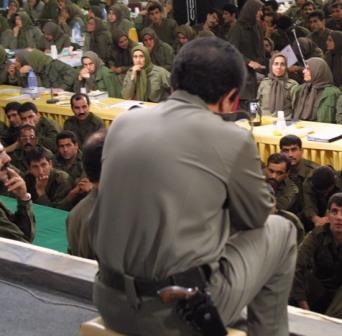
Mujahedin Khalq 's Function

Pulling out the fangs of a viper

Pulling out the fangs of a viper is much safer than pressing the venom out of it every day. But even the vendors of the venom that keep and feed it to make fortune out of it are cautious enough to protect against its mortal bite by keeping it away in a safe box. A deadly viper pretending to be lying dormant, Mojahedin Khalq Organization (MKO) suddenly went rampant just when the Iranian people tried to recover from the wreaks of a revolution and had just engaged in fending off the invasion of a greedy neighbor. It emptied all its venom into the nation and inflicted irreparable damages to the same people who had feed it.
And just when it was being hunted for to pull out its fangs, it escaped away to be cared by the advocates of democracy who were, of course, concerned a lot about the rights of animals. Soon it was passed to anther monster that provided for its shelter and food to extract voluminous amounts of venom to be used against both Iranian and Iraqi people. Nobody doubts how dangerously the viper has been crawling about after its escape from Iran inflicting harm by ejecting out its venom while taking shelter in the arms of its protectors who know well that it can neither be tamed nor controlled as it is a matter of nature rather than training and instruction.
The list of terrorist organizations that for some time worked as a secure cage to repulse its possible offenses against themselves was suddenly opened to take it out. Does it mean that they intend to pull out its fangs or use it to bully Iranian regime to achieve their own interests? At least they have come to know that Iranian people are waiting with shovels at the door for the vipers unless they are fangless. It is a rule that old and harmless creatures are pitied everywhere in the world.
It is best recommended that they draw the fangs out of the adders to let them free; for sure it will make the world more secure. Some believe that the howl of a toothless wolf has the magic of lullaby causing a calm, deep sleep. It won’t take long to see how wise the viper-keepers have been!
by Mahin Tajimalek

February 2, 2009 0 comments
FacebookTwitterPinterestWhatsappTelegramSkypeEmail
Former members of the MEK

Manipulating Cult Techniques to exploit the insiders

Memoirs of Mrs.Batoul Soltani- Part 7Memoirs of  Mrs.Batoul Soltani- Part 7

As I mentioned in “Part 6” there is a practice within MKO’s internal relations called “nil-nil” (a cult type jargon) wherein everyday the members are supposed to allegedly demoralize themselves because they say that anyone who demoralizes himself and releases his energies will reach higher degrees. So they order the members to criticize each other daily and then listen to the others criticizing them. This is called “nil-nil” “criticizing others and being criticized".
There is another internal phenomenon called “Current Operation” (another jargon). This has been practiced in MKO cult since 1994. At the beginning it was oral. I mean that the members moved forward and spoke; but later it became written. In this way the member had to write anything he or she wanted to say and then read it inside the group. Masud Rajavi made too much noise calling the current operation as “Spiritual Jihad” as and even “higher than martyrdom”. Therefore, the members must confess all the sins they commit and they should expect any reaction from their colleagues.
For example, the member who attends the “Current Operation”, reads his confessions saying “Today I saw something precious on my superior’s desk and I took it” or “when I saw my superior this morning I suddenly imagined that she really looks like a torturer” or “when today I was supposed to work from 8 to 12, I just worked until 9 and then I went to the dorm and relaxed.” While the member is reading the facts, the others in the group insult him or her with an abusive language using terms like lumpish, idiot, . . . and punishing him or her orally and put the blames on him or her like “how do you want to liberate Iran while you don’t do your duties just right”the member who attends the “Current Operation”, reads his confessions. While the member is reading the facts, the others in the group insult him or her with an abusive language using terms like lumpish, idiot, . . . and punishing him or her orally and put the blames on him or her
The “Current Operation” includes a stage called “cleansing” (jargon) that for the women in the leadership council should be practiced every moment and for the rest of women it is daily and for the men it is weekly. In these meetings the members must confess their sexual problems or thoughts. For Leadership Council the instruction was that if a female sees a male recalling her fiancé, she would have to confess her thoughts instantly and do the so-called “nil-nil” practice.
For ordinary female members this has to be practiced at the end of each day. For male members, the cleansing meeting is done every week on Fridays. They didn’t want to open up the relations between male and female members so the weekly meetings of men were held only by men (all meetings are generally held by women). As I noted in the previous session, there are some male members who are considered as the pins (jargon) of the organization and their responsibility is to control the members of each section. Their duties include holding the weekly meetings for the men and dealing with the problems between the male members and their female superiors. So the brother who was the pin of the organization in that section holds the meetings.
The women’s meetings are held by a member of Leadership Council and the meetings for a Leadership Council’s member are held by high-ranking members of the Council. If a member of the Leadership Council has a contradiction in mind, she has to declare it and do the so-called “nil-nil” practice. Then if it is found out through the reports, that person will be encountered and taken under more control. In fact, they have a goal. For example, the member thinks “I wish I could do something” or he thinks “How that woman looks like my ex-fiancé”. These are the moments, the moments wherein the member thinks about the outside world. But if she liked a boy (a teenager) and in a moment she liked to kiss him, she has to confess it immediately, this is a functional fact and as soon as the report of this confession is on hand, the situation of the both sides changes. A lot of efforts, in the MKO, are spent for cases such as who you have relations with and who you like.
One of the levers of the organizational control in MKO is the joint movements of female members which I mentioned in the first part of my memoirs. They said:”we order you to move jointly for your own sake. But everybody knows that this claim is baseless. Everybody knows that it’s because everyone should watch the others don’t escape. They even force the most high-ranking officials to move jointly . They said that there shouldn’t be any exclusions, because exceptions in the regulations would discredit them.
Thus everyone have to obey the regulations and execute them in order to control the lower ranks.
Translated by Nejat Society

February 2, 2009 0 comments
FacebookTwitterPinterestWhatsappTelegramSkypeEmail
Newer Posts
Older Posts

Recent Posts

  • Pregnancy was taboo in the MEK

    December 22, 2025
  • MEPs who lack awareness about the MEK’s nature

    December 20, 2025
  • Why did Massoud Rajavi enforce divorces in the MEK?

    December 15, 2025
  • Massoud Rajavi and widespread sexual abuse of female members

    December 10, 2025
  • Farman Shafabin, MEK member who committed suicide

    December 3, 2025
  • Facebook
  • Twitter
  • Instagram
  • Youtube

© 2003 - 2025 NEJAT Society . All Rights Reserved. NejatNGO.org


Back To Top
Nejat Society
  • Home
  • Articles
  • Media
    • Cartoons
    • NewsPics
    • Photo Gallery
    • Videos
  • Publications
    • Books
    • Nejat NewsLetter
    • Pars Brief
  • About Us
  • Contact us
  • Editions
    • عربي
    • فارسی
    • Shqip