Nejat Society
  • Home
  • Articles
  • Media
    • Cartoons
    • NewsPics
    • Photo Gallery
    • Videos
  • Publications
    • Books
    • Nejat NewsLetter
    • Pars Brief
  • About Us
  • Contact us
  • Editions
    • عربي
    • فارسی
    • Shqip
Nejat Society
Nejat Society
  • Home
  • Articles
  • Media
    • Cartoons
    • NewsPics
    • Photo Gallery
    • Videos
  • Publications
    • Books
    • Nejat NewsLetter
    • Pars Brief
  • About Us
  • Contact us
  • Editions
    • عربي
    • فارسی
    • Shqip
© 2003 - 2024 NEJAT Society. nejatngo.org
Massoud Rajavi

Cult leaders accountable to nobody- Part 2

Cult leaders grab at all means and levers to stabilize their position within cults in a manner of unaccountability to members; a feature leading finally to fascism and individual leadership. Religion and religious beliefs of followers are factors at the hands of cult leaders to be excused of accountability. In fact, they legitimize all their wrongdoings and egocentric decisions based on religious tenets and ideological concerns in a way not to be challenged by outsiders as well as insiders. 

Identification of the same features in MKO and on the part of Masoud Rajavi necessitates taking a closer look at his activities and statements. Keeping this issue into mind may give us a better understanding of the reasons why Rajavi introduced his ideological revolution as a manifestation of an exalted truth and unique value in terms of ideological and political concerns. He did so to conceal the apparent contradiction between the fulfillment of ideological objectives of Mojahedin as reflected in the early organizational principles of MKO and the consequences of his self-fabricated ideological revolution.

Of the consequences of the ideological revolution elaborated on by Rajavi as well as his catalysts is introducing Mojahedin leadership as a phenomenon beyond challenge and criticism, a timeless issue and one that is no longer selective and democratic. The result of this consideration is a wide gap made between the status of the leadership and that of the rank-and-files as well as minimization of organizational hierarchy.

Rajavi and his theoreticians made use of religious levers as well as scientific theories like Einstein’s theory of relativity to justify his self-appointed position at the top of MKO. Rajavi was much eager to follow footsteps of Hitler and Stalin in making use of religion, science and ideology to stabilize a status of unaccountability. He held grab to his ideological revolution, based simply on a divorce (that of Maryam Azdanlu and Mehdi Abrishamchi) and remarriage (that of Maryam Azdanlu and Masoud Rajavi), in order to achieve his egocentric objectives. The reaction of the outside world and a leftist party in particular to this action may suffice to show the feedback of the world outside to this dishonorable event:

The news on the marriage of Masoud Rajavi and Maryam Azdanlu, ex-wife of Mehdi Abrishamchi,aroused the complaint and aversion of revolutionary forces and public opinion


The news on the marriage of Masoud Rajavi and Maryam Azdanlu, ex-wife of Mehdi Abrishamchi, in recent weeks has aroused the complaint and aversion of revolutionary forces and public opinion. This action that is contrary to revolutionary morale and convention of the socity…surely leads to public complaint and hate… since this indecent and immoral activity is justified in a 14-page statement signed by the organization’s The news on the marriage of Masoud Rajavi and Maryam Azdanlu, ex-wife of Mehdi Abrishamchi,aroused the complaint and aversion of revolutionary forces and public opinionleader who has a long history of revolutionary struggle and claims to lead Iranian revolution against the current oppressive regime. The significance of this issue has its roots in the fact that while the act is a scandal offending woman and distorting the meaning of leadership, it is introduced as an ideological revolution aiming to esteem the status of women. 1
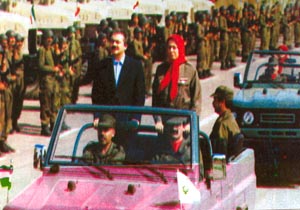
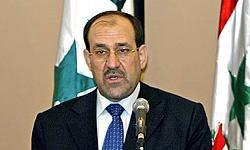
Despite all the negative consequences of the ideological revolution, it led to the irresistibility of Rajavi to inside challenges. The factor of surprise caused by the initiation of the ideological revolution under the issue of Rajavi had paradoxical results inside and outside MKO. While the world outside refused to recognize the legitimacy of Rajavi’s initiated ideological revolution, he managed to turn it into a belief system within MKO just as a cult leader. As Hoffer put into words:

It is the certitude of his (a cult leader) infallible doctrine that renders the true believer impervious to the uncertainties, surprises and the unpleasant realities of the world around him. 2

Cult leaders claim that understanding cultic codes and doctrines is problematic and difficult and it is just the true believer who manages to understand them. Cult leaders have the ability to deceive members by making false illustrations and predictions of the world from the beginning to the end to the point that turn followers to blind subordinates who consider it as a guilt if they demand accountability on the part of their leader who claims self-sacrificing for his followers’ salvation. When this belief is indoctrinated in members, they turn to devoted followers with absolute confidence in their leader and it may suffice to immune leaders of being challenged from inside. Hoffer believes that:

To be in possession of an absolute truth is to have a net of familiarity spread over the whole of eternity. There are no surprises and no unknowns. All questions have already been answered, all decisions made, all eventualities foreseen. The true believer is without wonder and hesitation. "Who knows Jesus knows the reason of all things." The true doctrine is a master key to all the world’s problems. With it the world can be taken apart and put together. 3

In a nutshell, the attempts made by the theoreticians of the ideological revolution of Mojahedin mainly aim to raise the status of Rajavi to a point beyond all challenges, questions, and doubts and free from accountability and responsibility to his decision makings and activities.  

References:

1. The theoretical and political journal of the organization of Fada’yian-e Khalq, 1985.

2. Hoffer, Eric, the true believer, Harper & Row Publishers, New York, 1951, p.76.

3. ibid, p.77.

January 8, 2009 0 comments
FacebookTwitterPinterestWhatsappTelegramSkypeEmail
The MEK to launch Armed Struggle

MKO’s Unproductive Means of Struggle

In Iran’s contemporary history, Mojahedin Khalq Organization (MKO,MEK, PMOI, NCRI, NLA) is the exact illustration of a political movement that strongly advocated a strategy of armed struggle that has proved defeated and unproductive. A review of its function in the course of all these years well depicts the clear and basic controversy between its organizational instructions and that Iran’s social-political conditions. They were moving on a wrong path from the very beginning but kept pretending an avant-garde of a struggle manner that people disapproved. It is always people, however, who have paid the heavy price of the factions’ deviation and dogmatism in the accomplishment of their ambitions.   

Nearly four decades ago, Mohammad Hanif-Nezhad along with a number of other students, formerly active in National Front, came together to establish an organization that has so far moved in a struggle path totally different from other previously established armed movements like Sazman-e Cherikhai-e Fedaye Khalq (People’s Devoted Militia Organization). Approved by the leaders of many pro-Marxist militias, none of the armed struggle moves in the process of Iran’s political and social fluctuations has proved to be productive and MKO has been no exception. Compared with its parallel armed groups, MKO seem to have suffered a more pitiful and deplorable destiny after selling itself to liberalism and imperialism.

The group’s past history is intermingled with a variety of different and controversial phases. It received two devastating internal and external blows, namely, the ideological split and mass arrests by monarchical regime’s notorious SAVAK. In both circumstances, the organization nearly lost 90 percent of its insiders, but a passing look over its activities, from its inception to the Islamic revolution, evidentially indicate that it had had no influential impact on social milieu and ambiance.

In contrast to the group’s baseless analyses claiming to have played a crucial role in Iran’s contemporary political history, in many cases it acted as a deterrent trying to misconduct the justly guided march of people to achieve their right wants. The armed move that MKO announced against the will of nation to overthrow the Islamic Republic proved to be a total failure; the outcome was a bloodbath targeting many innocent civilians and officials. In contrast to the group’s baseless analyses claiming to have played a crucial role in Iran’s contemporary political history, in many cases it acted as a deterrent trying to misconduct the justly guided march of people to achieve their right wants

The MKO’s first attempt to create a military spectacle the same as Fedayan’s daring operation of Siahkal failed, that is to say, its plan to disrupt the 1971 celebrations surrounding the 2500th anniversary of the Persian monarchy. In fact, although it was an attempt to win the control and leadership of the armed struggle, but the armed strategy in itself was in no way justifiable. The historical necessity of the armed struggle at the time was still a big question; yet, the important point was the influence of the rising tide of the guerilla struggles.

Mojahedin were imitators of Fedayan militia who also imitated the guerilla and armed activities of other countries like Algeria, Cuba, and Vietnam. The strategy heavily influenced by the struggling experiences of the guerillas in those countries was in absolute contradiction to Iranian social, cultural, and religious context.

Moreover, Fedayan were under the heavy influence of Marxism and were running on a path to corroborate the theoretical and philosophical aspects of Marxism while Mojahedin believed they were holding an ideological supremacy over other leftist rivals. Mojahedin were basically formed according to the left parties’ structure. Ideologically, the organization was under the heavy influence of the National Front’s scientific theory. Thus, Mojahedin and other active rivals advocating armed strategy against Shah, actually distanced from the main objectives of the armed struggle aimed to prepare a background for the masses to rise and join the struggle. The armed struggle, under the pretext of fighting against Shah’s tyranny, turned into a battle of the ideologies. Well aware of the fact that they were all walking in a wrong path, none of the sides dared to make a rational critique of the strategy; the discouraging factor was being labeled as compromisers. That is to say, if anyone made an appeal to justify that the objective conditions were inappropriate for revolution, he would be labeled a compromiser, reformist, opportunist, and lacking the needed political courage.

Disregarding the role of people in struggle and insistence on armed strategy as well as imposing its ideological dogmatism has raised big questions, after the Islamic revolution, over its formation and the cause for its existence. The motivation and the real objectives of the main founders, among whom faithful, devoted ones existed, have also encountered a big question mark. Mojahedin’s change of guideline aiming to assume power at all costs led it to an absolute ideological drift and, consequently, to the precipice of being dependant on imperialism. The heavily advertised glories of its past military achievements evaporated soon after its collusion with Saddam, an archenemy of Iran, its transmission into a cult, and its direct beg of support from the US to overthrow the Islamic Republic.

January 8, 2009 0 comments
FacebookTwitterPinterestWhatsappTelegramSkypeEmail
Iraq

Iraqi PM Seeks to Develop Relations with Iran

Iraqi Prime Minister Nouri al-Maliki said he has established a committee to develop the country’s relations with Iran.Maliki told Iranian state-run television that his government would not allow the use of Iraqi territory as a threat against its neighbors

Speaking to reporters in Tehran Monday after wrapping up meetings with Iran’s Supreme Leader Ayatollah Seyed Ali Khamenei, President Mahmoud Ahmadinejad and other officials, Maliki said his visit to Tehran has resulted in the formation of a supreme joint committee for bilateral relations development.

Maliki said an agreement was reached to form a reconstruction services company with Iran that would come into play after Iraq has gained more stability.

The prime minister said Iraq will also cooperate with other countries in the region, such as Saudi Arabia, Syria and Turkey, in bids to accelerate Iraq’s redevelopment.

Maliki also told Iranian state-run television that his government would not allow the use of Iraqi territory as a threat against its neighbors, alluding to the US troops deployed in Iraq and the anti-Iranian terrorist opposition group, the Mojahedin-e Khalq Organization.

Iraq has vowed to expel the MKO from the country in the near future.

The MKO, whose main stronghold is in Iraq, is blacklisted by much of the international community, including the United States.

The MKO is on the European Union’s list of terrorist organizations subject to an EU-wide assets freeze, and has been designated by the US government as a foreign terrorist organization. Yet, the MKO puppet leader, Maryam Rajavi, who has residency in France, regularly visits Brussels and despite the ban enjoys full freedom in Europe.

The MKO is behind a slew of assassinations and bombings inside Iran, a number of EU parliamentarians said in a recent letter in which they slammed a British court decision to remove the MKO from the British terror list. The EU officials also added that the group has no public support within Iran because of their role in helping Saddam Hussein in the Iraqi imposed war on Iran (1980-1988).

Many of the MKO members abandoned the terrorist organization while most of those still remaining in the camp are said to be willing to quit but are under pressure and torture not to do so.

A May 2005 Human Rights Watch report accused the MKO of running prison camps in Iraq and committing human rights violations.

According to Human Rights Watch report, the outlawed group puts defectors under torture and jail terms.

The group, founded in the 1960s, blended elements of Islamism and Stalinism and participated in the overthrow of the US-backed Shah of Iran in 1979. Ahead of the revolution, the MKO conducted attacks and assassinations against both Iranian and Western targets.

Leaders of the group have been fighting to shed its terrorist tag after a series of bloody anti-Western attacks in the 1970s, and nearly 30 years of violent struggle against the Islamic Republic of Iran.

In recent months, high-ranking MKO members have been lobbying governments around the world in the hope of acknowledgement as a legitimate opposition group.

The UK initiative, however, has prompted the European Union to establish relations with the exiled organization now based in Paris. The European Court of First Instance threw its weight behind the MKO in December and annulled its previous decision to freeze its funds.

The group started assassination of the citizens and officials after the revolution in a bid to take control of the newly established Islamic Republic. It killed several of Iran’s new leaders in the early years after the revolution, including the then President, Mohammad Ali Rajayee, Prime Minister, Mohammad Javad Bahonar and the Judiciary Chief, Mohammad Hossein Beheshti who were killed in bomb attacks by MKO members in 1981.

The group fled to Iraq in 1986, where it was protected by Saddam Hussein and where it helped the Iraqi dictator suppress Shiite and Kurd uprisings in the country.

The terrorist group joined Saddam’s army during the Iraqi imposed war on Iran (1980-1988) and helped Saddam and killed thousands of Iranian civilians and soldiers during the US-backed Iraqi imposed war on Iran.

Since the 2003 US invasion of Iraq, the group, which now adheres to a pro-free-market philosophy, has been strongly backed by neo-conservatives in the United States, who also argue for the MKO to be taken off the US terror list.

The MKO has been in Iraq’s Diyala province since the 1980s.

January 8, 2009 0 comments
FacebookTwitterPinterestWhatsappTelegramSkypeEmail
France

Iran divides French Parliamentarians

For or against the regime of Tehran:Iran divides French Parliamentarians

Iran divides French parliamentarians, in their political disagreement, to right asFor or against the regime of Tehran:Iran divides French Parliamentarians well as left. More than 290 of French deputies have recently singed a call for the support for Mujahedin Khalq Organization of which the leader, Maryam Rajavi is exiled in France Auvers-Sur-Oise. A group called “coordination Parliamentary”, solicited by Jean-Philippe Maurer the deputy of UMP, and Jean-Pierre Brard, the communist representative are working for the removal of the name of the movement from the list of terrorist organizations of the European Union.
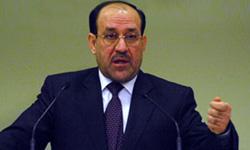
These activities that are relied of the recent decision made by a British court in favor of the Mujahedin, count on finding a positive opinion by Nicolas Sarkozy during the French presidency in EU. “We support this Iranian opposition group because it’s the only democratic foundation that struggles against the regime of Iran,” estimated Jean-Philippe Maurer. The deputy of Strasbourg refuses the critics that have been presented against the organization of Maryam Rajavi since 2003. Following a police raid, many militants set themselves on fire. The leaders of National Council of Resistance of Iran, the political cover of these dissidents, are still under investigations. ” Since 2003, this organization has moderated its excessive behavior.” revealed Jean-Philippe Maurer.

Lobbying Activities in Elysée

Among the same ranks of the French Assembly, other deputies of UMP totally disagree.” The parliamentarians who singed this call for support do not know the situation in Iran well.” Says Didier Julia, vice-president of the France-Iran group, “Iran is not such a simple state. It is led by Experts Council and the execution of the laws is performed by three different sources. In my opinion, People’s Mujahedin enjoys a very small support. They are very weak inside Iran. Instead, France should reinforce its relations with Iranian civil society and the Iranian government in order to achieve the public liberty. It’s not the regime change that we should look for. Iran can evolve   gradually, like Syria.”

Whose lobby is more effective towards the French Parliament members; The Iranian dissidents or the representatives of the Iranian State? Didier Julia declares that the diplomatic advisor of Nicolas Sarkozy has the same opinion as he has.  

Jean – Philippe Maurer thinks that the debates on Iran have not reached a clear position, in Elysée.

VSD.fr by Nathalie Gillot

January 8, 2009 0 comments
FacebookTwitterPinterestWhatsappTelegramSkypeEmail
Iraq

Iraq assures Tehran on MKO

Iraq assures Tehran on MKO, pilgrims and Iranian detainees

TEHRAN – Iraqi Prime Minister Nouri al-Maliki on Saturday reiterated that his country will take legal action against Mojahedin Khalq Organization, provide the Iranian pilgrims with more facilities, and release the Iranian diplomats from illegal detention in Iraq.

He made the remarks in a meeting with Iran’s Foreign minister Manouchehr Mottaki in Tehran.

Maliki pointed out cementing ties with the Islamic Republic of Iran is his country’s priority in efforts to strengthen relations with regional countries.

Thus Iranian and Iraqi officials will willingly try to overcome any obstacles on the way, he added.

He insisted that the Iraqi government will enforce the laws in regard to the presence of terrorist groups in Iraq.

The Iraqi government took over the control of Camp Ashraf home to 3,500 MKO members on January 1, as part of a bilateral security deal between the U.S. and the country.

Iraqi officials will try to resolve the issue of Iranian detainees, he added.

U.S. forces broke into the Iranian consulate in Iraq’s Kurdish city of Arbil on Jan. 11, 2007, detaining three Iranian diplomats.

Mottaki hoped that the agreements between Tehran and Baghdad will pave the way for establishing comprehensive relations between the two countries

Political Desk 

January 5, 2009 0 comments
FacebookTwitterPinterestWhatsappTelegramSkypeEmail
The MEK Expulsion from Iraq

Maliki: Iraq to Expel MKO

TEHRAN (FNA)- Prime Minister Nuri al-Maliki vowed that he would expel the terrorist Mojahedin-e Khalq Organization (MKO) from the country after takingBased on taking over everything and in accordance with our constitution and our policies of opening up to our neighbors... our forces are going to take full control of the camp where the Mojahedin-e Khalq Organization live over their base from US forces.

"Based on taking over everything and in accordance with our constitution and our policies of opening up to our neighbors… our forces are going to take full control of the camp where the Mojahedin-e Khalq Organization live,"" Maliki said alluding to Camp Ashraf.

Maliki was speaking to reporters on the sideline of a ceremony during which the United States handed over to Iraqi forces security control of the Green Zone, symbol of the American occupation of the country.

The MKO "is a terrorist organization and thus cannot operate in Iraq because it will create a political crisis in contradiction with the constitution," Maliki said.

"We will treat them based on the international laws. We will not force them to go back (to Iran) but we will give them the opportunity to either go home, or to another country," he added.

"(Staying in) Iraq will not be an alternative for them," Maliki said.

Maliki, who was speaking ahead of a visit Saturday to Tehran, told Iranian President Mahmoud Ahmadinejad in March that he would take steps to ensure that Iraq was not used by "terrorists" from Al-Qaeda, or from Iranian rebel groups.

US forces confiscated the organization’s weapons following the March 2003 US-led invasion, taking away some 300 tanks, many of which were subsequently given to the Iraqi armed forces.

Two years ago Iraq decided to restrict the movements of the estimated 3,500 MKO members to their base at Camp Ashraf, near the Iranian border, where they have been held under a kind of US-supervised house arrest.

The MKO, whose main stronghold is in Iraq, is blacklisted by much of the international community, including the United States.

The MKO is on the European Union’s list of terrorist organizations subject to an EU-wide assets freeze, and has been designated by the US government as a foreign terrorist organization. Yet, the MKO puppet leader, Maryam Rajavi, who has residency in France, regularly visits Brussels and despite the ban enjoys full freedom in Europe.

The MKO is behind a slew of assassinations and bombings inside Iran, a number of EU parliamentarians said in a recent letter in which they slammed a British court decision to remove the MKO from the British terror list. The EU officials also added that the group has no public support within Iran because of their role in helping Saddam Hussein in the Iraqi imposed war on Iran (1980-1988).

Many of the MKO members abandoned the terrorist organization while most of those still remaining in the camp are said to be willing to quit but are under pressure and torture not to do so.

A May 2005 Human Rights Watch report accused the MKO of running prison camps in Iraq and committing human rights violations.

According to Human Rights Watch report, the outlawed group puts defectors under torture and jail terms.

The group, founded in the 1960s, blended elements of Islamism and Stalinism and participated in the overthrow of the US-backed Shah of Iran in 1979. Ahead of the revolution, the MKO conducted attacks and assassinations against both Iranian and Western targets.

Leaders of the group have been fighting to shed its terrorist tag after a series of bloody anti-Western attacks in the 1970s, and nearly 30 years of violent struggle against the Islamic Republic of Iran.

In recent months, high-ranking MKO members have been lobbying governments around the world in the hope of acknowledgement as a legitimate opposition group.

The UK initiative, however, has prompted the European Union to establish relations with the exiled organization now based in Paris. The European Court of First Instance threw its weight behind the MKO in December and annulled its previous decision to freeze its funds.

The group started assassination of the citizens and officials after the revolution in a bid to take control of the newly established Islamic Republic. It killed several of Iran’s new leaders in the early years after the revolution, including the then President, Mohammad Ali Rajayee, Prime Minister, Mohammad Javad Bahonar and the Judiciary Chief, Mohammad Hossein Beheshti who were killed in bomb attacks by MKO members in 1981.

The group fled to Iraq in 1986, where it was protected by Saddam Hussein and where it helped the Iraqi dictator suppress Shiite and Kurd uprisings in the country.

The terrorist group joined Saddam’s army during the Iraqi imposed war on Iran (1980-1988) and helped Saddam and killed thousands of Iranian civilians and soldiers during the US-backed Iraqi imposed war on Iran.

Since the 2003 US invasion of Iraq, the group, which now adheres to a pro-free-market philosophy, has been strongly backed by neo-conservatives in the United States, who also argue for the MKO to be taken off the US terror list.

The MKO has been in Iraq’s Diyala province since the 1980s.

FNA- 2009-01-03

January 5, 2009 0 comments
FacebookTwitterPinterestWhatsappTelegramSkypeEmail
Iraq

Maliki: Iraq won’t Be Used to Threaten Neighbors

Maliki said Iraq”will not let any terrorist party harm its relations withIraq will not let any terrorist party harm its relations with neighboring governments neighboring governments”and named the Mjahedin Khalq (MKO, MEK,PMOI,Rajavi cult)
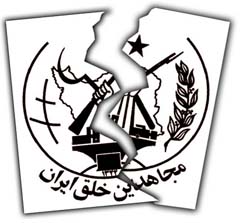
Iraq’s government said on Wednesday it wanted 3,500 members of the terrorist Mojahedin-e Khalq Organization (MKO/PMOI) in Camp Ashraf, north of Baghdad, to leave the country.

The MKO, whose main stronghold is in Iraq, is blacklisted by much of the international community, including the United States.

Maliki repeated his government’s call for members of the group to leave in his comments to Al-Alam. He also said Iraq would not force them to leave to Iran or another country but would leave the choice to them.

Maliki said Iraq”will not let any terrorist party harm its relations with neighboring governments”and named the MKO, the Kurdistan Workers Party (PKK) that wants a homeland in southeast Turkey and PKK offshoot, the Party of Free Life of Kurdistan (PJAK), that stages terrorist operations in Iran’s western border areas and often clashes with Iranian forces.

MKO started assassination of the citizens and officials after the revolution in a bid to take control of the newly established Islamic Republic. It killed several of Iran’s new leaders in the early years after the revolution, including the then President, Mohammad Ali Rajayee, Prime Minister, Mohammad Javad Bahonar and the Judiciary Chief, Mohammad Hossein Beheshti who were killed in bomb attacks by MKO members in 1981.

The group fled to Iraq in 1986, where it was protected by Saddam Hussein and where it helped the Iraqi dictator suppress Shiite and Kurd uprisings in the country.

The terrorist group joined Saddam’s army during the Iraqi imposed war on Iran (1980-1988) and helped Saddam and killed thousands of Iranian civilians and soldiers during the US-backed Iraqi imposed war on Iran.

Since the 2003 US invasion of Iraq, the group, which now adheres to a pro-free-market philosophy, has been strongly backed by neo-conservatives in the United States, who also argue for the MKO to be taken off the US terror list.

The MKO has been in Iraq’s Diyala province since the 1980s…..

Full Report:

Maliki: Iraq won’t Be Used to Threaten Neighbors

TEHRAN (FNA)- Iraq’s prime minister, who started a visit to Iran on Saturday, said his government would not allow Iraq to be used as a base to threaten its neighbors.

Prime Minister Nuri al-Maliki told Iran’s Arabic news channel on Friday that Baghdad”will not let Iraq be a launching ground to threaten any country,”Al-Alam said on its website.

US forces in Iraq came under Iraqi mandate on January 1, a move Maliki said restored sovereignty nearly six years after the US-led invasion.

Iran is embroiled in a row over its nuclear plans with the United States, which has refused to rule out military action to end the dispute.

Washington and its Western allies accuse Iran of trying to develop nuclear weapons under the cover of a civilian nuclear program, while they have never presented any corroborative evidence to substantiate their allegations. Iran denies the charges and insists that its nuclear program is for peaceful purposes only.

Tehran stresses that the country has always pursued a civilian path to provide power to the growing number of Iranian population, whose fossil fuel would eventually run dry.

A US attack on the Syrian village of Sukkariyah on October 26, has raised speculation about the likelihood of a US unilateral strike on the Islamic Republic.

Speculation that Israel could also bomb Iran mounted after a big Israeli air drill in June. In the first week of June, 100 Israeli F-16 and F-15 fighters reportedly took part in an exercise over the eastern Mediterranean and Greece, which was interpreted as a dress rehearsal for a possible attack on Iran’s nuclear installations.

Iran has warned that it would target Israel and its worldwide interests in case it comes under attack by the Tel Aviv.

The United States has always stressed that military action is a main option for the White House to deter Iran’s progress in the field of nuclear technology.

Iran has warned that in case of an attack by either the US or Israel, it will target 32 American bases in the Middle East and close the strategic Strait of Hormoz.

An estimated 40 percent of the world’s oil supply passes through the waterway.

Analysts say any US attack against Iran would most likely involve air strikes rather than any land invasion. Washington used its bases in regional countries to attack Iraq in 2003.

Maliki also”emphasized that Iraq will open all pending files with neighboring states and others in order to build sound relations with them,”the report said, adding that Iraq would be an”axis for positive relations with Iran”.

Iraq’s government said on Wednesday it wanted 3,500 members of the terrorist Mojahedin-e Khalq Organization (MKO) in Camp Ashraf, north of Baghdad, to leave the country.

The MKO, whose main stronghold is in Iraq, is blacklisted by much of the international community, including the United States.

Maliki repeated his government’s call for members of the group to leave in his comments to Al-Alam. He also said Iraq would not force them to leave to Iran or another country but would leave the choice to them.

Maliki said Iraq”will not let any terrorist party harm its relations with neighboring governments”and named the MKO, the Kurdistan Workers Party (PKK) that wants a homeland in southeast Turkey and PKK offshoot, the Party of Free Life of Kurdistan (PJAK), that stages terrorist operations in Iran’s western border areas and often clashes with Iranian forces.

MKO started assassination of the citizens and officials after the revolution in a bid to take control of the newly established Islamic Republic. It killed several of Iran’s new leaders in the early years after the revolution, including the then President, Mohammad Ali Rajayee, Prime Minister, Mohammad Javad Bahonar and the Judiciary Chief, Mohammad Hossein Beheshti who were killed in bomb attacks by MKO members in 1981.

The group fled to Iraq in 1986, where it was protected by Saddam Hussein and where it helped the Iraqi dictator suppress Shiite and Kurd uprisings in the country.

The terrorist group joined Saddam’s army during the Iraqi imposed war on Iran (1980-1988) and helped Saddam and killed thousands of Iranian civilians and soldiers during the US-backed Iraqi imposed war on Iran.

Since the 2003 US invasion of Iraq, the group, which now adheres to a pro-free-market philosophy, has been strongly backed by neo-conservatives in the United States, who also argue for the MKO to be taken off the US terror list.

The MKO has been in Iraq’s Diyala province since the 1980s.

Maliki is expected to meet Supreme Leader of the Islamic Revolution Ayatollah Seyed Ali Khamenei, and President Mahmoud Ahmadinejad during his two-day visit.

January 5, 2009 0 comments
FacebookTwitterPinterestWhatsappTelegramSkypeEmail
The MEK Expulsion from Iraq

A comment on the expulsion of Iranian Rebels

Iraq to expel Iranian rebels once it takes over camp from USIraq to expel Iranian rebels once it takes over camp from US

In June 2004, under the Geneva Conventions the United States granted “protected status” to 3,000 members of an Iranian opposition group interned in Iraq.

Listed as a terrorist organization, an US-led coalition disarmed these members of the People’s Mujahideen. Since 2004, they have been held in Camp Ashraf, northeast of Baghdad under the protection of the United States government.

On December 22, the Iraqi government announced their intent to expel the Iranian exile group. An expulsion, which has been long sought by the Shiite-led government, will become feasible once the U.N. mandate that regulates the presence of U.S. troops in Iraq and gave the Iranian opposition group protected status expires at the end of the year (2008).

“Iraqi national security adviser Mowaffak al-Rubaie on Saturday traveled to the camp with several other government officials to deliver the message to members of the Mujaheddin-e Khalq, or MEK, an Iranian opposition group that was closely aligned with deposed Iraqi president Saddam Hussein but has been under U.S. military protection since shortly after the 2003 U.S.-led invasion.

The government informed the group that it would soon assume responsibility for security at Camp Ashraf and that residents would be repatriated unless they find a third country willing to take them. The U.S. military currently protects Camp Ashraf, which is 40 miles north of Baghdad.

‘Staying in Iraq is not an option for them,’ the government said in a statement issued Sunday. The Iranian government has long called for the group’s expulsion.

The statement did not set a deadline for removing the MEK. Iraqi officials have pledged to treat the group’s members humanely but have made their disdain for the MEK clear. The delegation that visited the camp included officials of the Defense and Interior ministries as well as Iraqi intelligence officials.

The statement also said the group is barred from participating in political activities and ordered it to cease media campaigns.

The Shiite-led Iraqi government, which has close ties to Iran, has for years threatened to shut down Camp Ashraf because it regards the MEK, also known as the People’s Mujaheddin Organization of Iran, as a terrorist organization.”

The MEK was founded in the 1960s in opposition to the late shah of Iran, Mohammad Reza Pahlavi. They were accused of carrying out several attacks in Iran, including some targeting U.S. officials.

When Iraq and Iran were at war during the 1980’s, the MEK relocated its headquarters to Iraq where they were embraced by Saddam Hussein who provided them with weapons and financial support.

According to the Kurds and Shiites, these rebels are guilty of suppressing the failed Kurdish and Shiite uprisings that followed the Persian Gulf War.

“Shortly after the 2003 invasion, the U.S. military persuaded the MEK to disarm and offered to protect the group. The arrangement was awkward because it tasked the U.S. military with sheltering a group that remains on the State Department’s terrorism list.

The group’s charismatic leader, Maryam Rajavi, is based in Paris, but France and many other countries have been reluctant to resettle the group’s members.

Also Sunday, Iraq’s Interior Ministry issued a statement calling the recent detention of ministry officials by a special unit that reports directly to Prime Minister Nouri al-Maliki ‘a brazen act of political retribution.”

On New Year’s Day, Iraq’s Prime Minister Nouri al-Maliki announced that he would expel the Iranian armed opposition group from the country after taking over their base from US forces.

“Based on taking over everything and in accordance with our constitution and our policies of opening up to our neighbours… our forces are going to take full control of the camp where the People’s Mujahedeen Organisation of Iran (PMOI) live,’ Maliki said.

Maliki was speaking to reporters on the sideline of a ceremony during which the United States handed over to Iraqi forces security control of the Green Zone, symbol of the American occupation of the country.”

Maliki made it clear that the PMOI is a terrorist organization and, therefore, cannot and will not operate in Iraq.  Iraq officials are in fear that the PMOI will create a political crisis in contradiction with their constitution.

Maliki while making it perfectly clear that Iraq is no longer a home for the rebels, indicated that the rebels would be treated in accordance with international laws. Iraq will not force the rebels to return to Iran.  They will instead give them the opportunity to either go back to Iran or another country.

“Maliki, who was speaking ahead of a visit Saturday to Tehran, told Iranian President Mahmoud Ahmadinejad in March that he would take steps to ensure that Iraq was not used by ‘terrorists’ from Al-Qaeda, or from Iranian rebel groups.

Last month the White House said it received assurances from Baghdad that the rebel group will not be expelled to a country where they may be persecuted, apparently excluding their return to Iran.”

Pumabydesign


January 5, 2009 0 comments
FacebookTwitterPinterestWhatsappTelegramSkypeEmail
Mujahedin Khalq 's Function

MKO futile efforts to survive as a Guerrilla force

The armed struggle is mostly defined as Guerilla warfare which is considered as the unconventional warfare in which the guerrilla army uses mobile tacticsThis shows the importance of Camp Ashraf while MKO has no public support to rely on, no weapon to fight with and no border to launch cross border attacks. (ambushes, raids, etc) to fight a larger army or enemy.

According to Wikipedia this term (guerrilla) means “little war” in Spanish and the concept acknowledges a conflict between armed civilians against a powerful nation state army. Also, as Che Guevara, the Argentine revolutionist, writes in his book “Guerrilla Warfare”:

”the guerrilla band is an armed nucleus, the fighting vanguard of the people. It draws its great force from the mass of the people themselves “

In China, the Maoist Theory of People’s War believes that the guerrilla earns population’s support by distributing propaganda. To answer the question “why does the guerrilla fighter fight?” Ernesto Che Guevara responds:

”the guerrilla fighter is a social reformer that he takes up arms responding to the angry protest of the people against their oppressors.”

Therefore, as the most revolutionary guerrilla leaders believe the support of the population is of great importance to guerrilla fighters to provide shelter, supply, finance and intelligence for them. So having the base of the people guarantees the success of a guerrilla movement and this is what the MKO lacks. Instead they could operate by enjoying the protection of the friendly regime of Saddam Hussein that provided them with funds, weapons, military training and bases, but the support of Baath regime for MKO just made their situation among the masses of Iranian population worst because their cooperation with the enemy of Iran turn these freedom fighters into traitors who have been Saddam’s mercenary forces for 3 decades. The experts think that relationships with civil populations are one of the most important factors in the guerrilla fighters’ success or failure.

MKO futile efforts to survive as a Guerrilla forceMKO lost its public support in three phases. The first phase happened following their use of terror after the Islamic Revolution, when they launched terror operations in civil targets and assassinated a large number of their compatriots. Like the communist forces in the Philippines and Malaysia, these strikes helped turn civilian opinion against the so-called freedom fighters. Such tactics had no result except the withdrawal of the support of Iranians for MKO terrorists.
As mentioned above the second phase of the withdrawal of public support for MKO was after their cooperation with Saddam dictatorship during the eight years of Iran- Iraq war in which the MEK served as Saddam’s private army, provided intelligence for Baathist Intelligence services. MKO bases donated by Saddam Hussein were mostly located near Iranian border of which is an important factor in guerrilla warfare but after the fall of Saddam, their bases were reduced to the one in the Northern part of Baghdad, Camp Ashraf, in Diala province. Thus after the American invasion to Iraq and the take over of Camp Ashraf by the US army, the MEK were restricted to their only remote base, Ashraf.

The third phase of the public hatred toward MKO was as recent as the visits made by the families of captured MKO members in Camp Ashraf. Families of MEK/MKO members were the only people who were considered as sympathizers by MKO leaders but they are also turning to their enemies because they are seriously seeking the visit of their beloved ones who are captives of MKO cult in Camp Ashraf. The best example is their former supporter, Mustafa Muhammadi who has appealed for the arrest of Camp Ashraf leaders who have kept his daughter for years.

Another important element in guerrilla warfare is weapon of which the NLA had plenty of, due to their ex-master Saddam Hussein’s donations .But they had to submit all their weapons to the US army that disarmed the group after the seizure of Camp Ashraf in 2003.

Nowadays the MKO lacks public support ,weapon and also border but their only last resort includes Camp Ashraf that itself is supposed to be handed over to Iraqi Government and eventually to be shut down.

MKO leaders find no way except prolonging their stay in Camp Ashraf, Iraq since their vital need is now awning a location where they can survive as a coercive army.

This shows the importance of Camp Ashraf while MKO has no public support to rely on, no weapon to fight with and no border to launch cross border attacks.

January 5, 2009 0 comments
FacebookTwitterPinterestWhatsappTelegramSkypeEmail
Maryam Rajavi

The Real visage of Maryam Rajavi

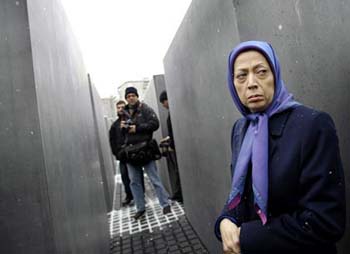
Commonly, everyone who stands in front of a camera is willing to express a cheerful mood and adopts a positive posture to take a photo of good quality. However, this norm has some exceptions. For instance, there are cases in which individuals try intentionally to present a depressed, annoyed, disappointed, and unpleasant mood in front of a camera. From a psychological point of view, these individuals suffer from some complexes and a sense of despair to the point that bear not to be seen pleased even for a moment. A photo taken of Maryam Azdanlu, MKO’s second leader now in the absence of her husband, when visiting the Holocaust memorial in Berlin, is the subject of this paper. It can be considered her worst photo appearing up to now in websites among her countless photos put in allied as well as rival websites. In fact, putting this photo beside others may leave everyone with an uneasy feeling.

Her mood is not to be attributed to her sympathy arousing from visiting Jews shambles since her past history shows that even in most terrible and intolerable situations, Maryam Azdanlu has managed to control herself, conceal her real feelings,


Here, we intend to grasp the implied meaning of this photo. Her mood is not to be attributed to her sympathy arousing from visiting Jews shambles since her past history shows that even in most terrible and intolerable situations, Maryam Azdanlu has managed to control herself, conceal her real feelings, thus standing with her Giaconda-like smile in front of camera lenses.  There remains the idea that this has been a hunted photo in which the photographer caught a moment she was representing her unmasked and with no celebrity posture for reporters. The photo is taken when she is no one but Maryam Rajavi with her own personality, feelings, and emotions free from any pretension and stilted gesture.

In fact, this photo may be considered the most exact presentation of Maryam Azdanlu untainted of any razzle-dazzle in a vestibule of informal status and position. It is for the first time she is seen using no make-up, with wrinkles on her forehead, hollow cheeks and eyes, wrinkled skin, etc. Let us finish these descriptions lest annoying her womanish and tender feelings.

This photo is better to be equated with the moments when Maryam is engaged in a never ceasing struggle with herself within her Auvers-sur-Oise camp behind the high walls of Mojahedin fortress in the heart of Europe. It represents the times when she is heavily engaged in internal conflicts with herself to reconcile her numerous inner selves that are irreconcilable with her womanish nature and have long been tormenting her soul. First, her aristocratic self rooted in Qajar dynasty and her class conflict resulting from being engaged in cultist relations. Second, a cultist self rooted in the ideological revolution of Masoud Rajavi. Third, a wretched self rooted in all her political failures and despairs. Fourth, an organizational self rooted in lengthy ideological sessions of Mojahedin, lack of sleep, weekly cleansing sessions, and Jari operations. Finally, her womanish self rooted in her loss of family, husband, and child as well as being accused of infidelity.

In a nutshell, Maryam is to be considered the most miserable woman in MKO due to her internal conflicts and tensions. Also, she is one of the most piteous women of the world since she has met a destiny similar to that of other ill-famed women in the history who played a key role in the historical events and crises and has been exposed to paradoxical judgment on the part of the history. It is only God who knows her suffering in her formal visits of Auvers-sur-Oise families and the time when she hugs and kisses their children yearning to have a real family and life free from any playacting. She is well aware that she is not a leader but a big loser loosing her youth, family, country, fortune and freedom. It is only Maryam who can feel the bitter taste of her out-and-out defeat.

January 4, 2009 0 comments
FacebookTwitterPinterestWhatsappTelegramSkypeEmail
Newer Posts
Older Posts

Recent Posts

  • Echoes in an Empty Room: MEK Propaganda, Western Media Silence, and the Cuneo Case

    October 24, 2026
  • Various Aspects of Massoud Rajavi’s Disappearance

    October 20, 2026
  • MEK agents near schools in Tirana, Albania

    October 17, 2026
  • Expectations of human rights bodies regarding censorship within the MEK

    October 13, 2026
  • The Jamalis’ Plea for Help: Save Our Brother from the MEK!

    October 11, 2026
  • Facebook
  • Twitter
  • Instagram
  • Youtube

© 2003 - 2025 NEJAT Society . All Rights Reserved. NejatNGO.org


Back To Top
Nejat Society
  • Home
  • Articles
  • Media
    • Cartoons
    • NewsPics
    • Photo Gallery
    • Videos
  • Publications
    • Books
    • Nejat NewsLetter
    • Pars Brief
  • About Us
  • Contact us
  • Editions
    • عربي
    • فارسی
    • Shqip