Nejat Society
  • Home
  • Articles
  • Media
    • Cartoons
    • NewsPics
    • Photo Gallery
    • Videos
  • Publications
    • Books
    • Nejat NewsLetter
    • Pars Brief
  • About Us
  • Contact us
  • Editions
    • عربي
    • فارسی
    • Shqip
Nejat Society
Nejat Society
  • Home
  • Articles
  • Media
    • Cartoons
    • NewsPics
    • Photo Gallery
    • Videos
  • Publications
    • Books
    • Nejat NewsLetter
    • Pars Brief
  • About Us
  • Contact us
  • Editions
    • عربي
    • فارسی
    • Shqip
© 2003 - 2024 NEJAT Society. nejatngo.org
Missions of Nejat Society

Nejat Society Letter to The representative of ICRC in Iran

Your Excellency,We hope that the humanitarian efforts of you and your colleagues in Iraq will pave the way for the release of our children from Rajavi’s camp

We would like to inform you that the terrorists of Mujahedin Khalq Organization, according to their cult-like practices, are systematically insulting their dissidents calling them as traitors and mercenaries. 

The families, whose names are attached to the letter, have relatives in Camp Ashraf, Iraq. They have always complained against MKO leaders who do not allow them to leave the cult and to contact their families. Instead of answering these demands, the MKO leaders insult the families with indecent words like “animals”. 

In their TV show called File (Parvande), the MKO tries to make its audience believe that all those who attend Nejat Society’s gathering in front of British Embassy to protest against the removal of MKO from the terrorist list, in order to prevent their children from being abused by the cult, are the agents of Iranian regime. As your Excellency has enough information on cult practices, you would agree that this is the popular method used by all cults that consider themselves as superior to the society and are prepared to revenge from us and our beloved ones in Camp Ashraf. 

We hope that the humanitarian efforts of you and your colleagues in Iraq will pave the way for the release of our children from Rajavi’s camp. We are definitely sure that their freedom is only feasible by reviving their individuality and family relations. The insults made by MKO will not influence the determination of the families to liberate their children.


Cc:

UN office in Tehran

British Embassy in Tehran

Fars News Agency

Press TV website 


 Families signed the Letter:

Tehran:


1.     Mohammad Ali Sasani 

2.     Mohammad Ghayumi 

3.    Masud Nuri 

4.    Mahmoud Ahani

5.    Alireza Ba’ba’ri 

6.    Mehran Diyale  

7.    Majid Amini 

8.    Rouh AllahBorhani 

9.    Hussein Jannat

10. Meitham Sakhaee

11. Ramezan Saeedi

12. Mehdi Nikbakht

13. HassanAli Baha’rlu

14. Hesam A’mel

15. Ziba Moheb Mohammadi

16. Aghil Sa’beri

17. Fahim Azara’ni 


Lorestan:


18. Hadi Arba’bi

19. Nur Mohammad Biranvand

20. Mojtaba Java’heri

21. Masume Shah Karami

22. Ali Asgar JaafarPur

23. Zohreh Qobari

24. Ahmad Golpayegan

25. Gholam Ali Mirzaee

26. Rahman Mohammadian

27. Hamed Moradi

28. Eskandar Arjmandi

29. Sedighe Molaee

30. Mohammad Khatibi


Tabriz:


31. Mohammad Hussein Da’dgar Eghdam

32. Naser Saeedi

33. Mohammad Reza Seddiq

34. Hassan Rahnamay, Ana Khatun

35. Mohammad Reza Purmahdi

36. Mansur Abba’skhani

37. Hamid Sojud

38. Ali Jowdat

39. Mir Mohsen Mortazavi

40. Bakhsh Ali Alizade

41. Ra‘min Hassan pur Showti

42. Ra‘min Hassan pur Showti

43. Majid Hassan Pur Showti

44. Mehdi Sojudi

45. Shahram Bahadori

46. Shahrud Bahadori

47. Abulfazl Sheikh Beglu

48. Ali Asqar Karami haft Cheshme

49. Seyyed Morteza Akbari Nasab

50. Musa Akberi Nasab

51. Salman Dolat Panah

52. Shokrollah Sadeghlu

53. Mehdi Saraee

54. Maryam Torabi

55. Masume Torabi

56. Ghorban Torabi

57. Mohammad Reza Torabi

58. Barat Ali Rigi

59. Hadi Naser Moghaddam

60. Hamid Mohammad Agh Atabay

61. Ashur Mohammad Varshi

62. Ali Khormali

63. Abdolhamid Raufian

64. Leila Nargesi

65. Hushang Gol Ali Pur

66. Iraj Gol Ali Pur

67. Farhan Ghovanlu

68. Marziye Ghafari

69. Ghorban Arab

70. Reza Ali Mirzaiee

71. Yahya’ Ziyarati

72. Esmaeel Shafaghi Kakhaki

73. Ebrahim Rezvani


Mazandaran:


74. Mostafa Asefi

75. Ayub Esta

76. Majid Mohammadi

77. Azar Karim Pur

78. Davoud Karim Pur

79. Yaqub Musavi Uraymi

80. Somaye Mohammadi

81. Kazem Samadi

82. Ali Reza Tavakoli

83. Javad Seddiqi

84. Mohammad Reza Khomeisi

85. Mohammad Reza Qanbar Zade

86. Seyyed Javad Yaqubi

87. Mehdi Thabet rostami

88. Ahmad Rezaiee

89. Mohammad Reza Khaza‘ee

90. Pari Amirzad

91. Rokhsare Zamani

92. Fakhri Amir Ali Pur

93. Musa Izakiyan

94. Hassan Shaa‘ba‘n Pur 

95. Mohsen Shaabani

96. Mir Nezam Hassani Motlagh

97. Parwiz Heidar Zade

98. Mahin Ghobadi

99. Iraj Soltani

100.               Behzad Farokhi

101.               Ali Shirgahi

102.               Zari Akhani

103.               Maryam Motevalli

104.               Ensiye Gol Dust

105.               Mehdi Fard

106.               Eynollah Shaabani

107.               Jamal Mohammad Janpur

108.               Mohammad Taghi Ab Khezr

109.               Ali Asghar Baba pur

110.               Rahim Sohrabi

111.               Masud Daryabari

112.               Dust Mohammad Farahi

113.               Hussein Ali Alizade

114.               Jamal Nateghi

115.               Hadi Shabani

116.               Samad Nazari


Yazd:


117.               Khadije Adib

118.               Massih

119.               Ahmad Paydar Ardekani

120.               Shahin Haeri Zade

121.               Esmaieel Vafa Yaghmaiee

122.               Seyyed Hussein Razavi Zade

123.               Mohammad Zare Zade

124.               Tahere Soltani Gord Faramarzi

125.               Ali Reza Karbalaiee Sabagh

126.               Abual Ghasem Ghafuri Rokn Abadi


Ahwaz:


127.               Mohammad Hamadi

128.               Alireza Moazen Tabrizi

129.               Abdolreza Kalantari

130.               Mohammad Karimi

131.               Rahim Chahar Lang

132.               Leila Dalafi

133.               Maryam Dalafi

134.               Gholam Ali Sajedi far

135.               Amir Mazrae Fard

136.               Seyyed Nader Achrash

137.               Saieed Naseri

138.               Ali Sorkhyan

139.               Ali Akbar Karami

140.               Yaber Hazbavi

141.               Kazem Pur Khafajiyan

142.               Seyyed Reza seyyed Latifi

143.               Iman Tork Ali Askari Rizi

144.               Thaleb Farhan

145.               Seyyed Nader Bani Farahiyan

146.               Yabar Qanava’ti

147.               Hamid Dehdar Hassani

148.               Shahreza Babadi


Qom:


149.               Fazlollah Samieeyan

150.               Abdollah Ostovari

151.               Hadi –Saeed Ahmadiyan Shirdel

152.               Ahmad Jahantab

153.               Jalal –Faride Sharifi

154.               Ali Rasekhi

155.               Ahmad – Yaser Haj Mehdi


Kermanshah:


156.               Mohsen Hassan Kaviyar

157.               Shahab Foruzande

158.               Mehdi Hamid far

159.               Peyman Korde Mir

160.               Ali morad Lotfi

161.               Ali panah Farahnaki

162.               Bahmab Aazami

163.               Saaadollah Seyfi

164.               Bozorgmehr

165.               Suri

166.               Khalu Kakaiee


Gilan:


167.               Hassan Zade

168.               alafteh

169.               Balaiee

170.               Talavati

171.               Pur Hassan

172.               Hamid Haji Pur

173.               Amin Asadiyan

174.               Ashgar Hatam Churi

175.               Khosro Salighe Dar

176.               Mohammad Mahmoudi

177.               Esmaiel Nik Zade

178.               Mohammad Ali Zade

179.               Jahangir Jamali

180.               Jabbar  Sabaiee

181.               Mohammad Javad Noruzi

182.               Ali Tulami Moghaddam

183.               Hamid Ali Akbari

184.               Abdolreza Zahedi

185.               Hojjat Rafiee

186.               Ali Gholi Zade

187.               Narges Latifi

188.               Seyyede Zahra Husseini

189.               Esmaeel Pur Mohammad Ali

190.               Farhad Hassanpur


Karaj:


191.               Fereydun Oqbaiee

192.               Ali Ardalani

193.               Mojtaba Alimardani

194.               Mehdi Fard

195.               Azade Sabur

196.               Kave Pur Hamedani

197.               Mostafa Attar

198.               Mahmoud reza Gholi

199.               Ali Ashrafi

200.               Bijan Reza vandi

201.               Soheyl Khattar


Shiraz:


202.               Mohammad Reza & Ahmad Reza Iranpur

203.               Mahmud Talebi Miyandeh

204.               Mahmud Dashtestani Nejad

205.               Alireza Rahmati

206.               Farhad Bazr Afkan

207.               Alkhas Kuh Peyma

208.               Mohammad Shahriyari

209.               Mohammad Kazem Nematollahi

210.               Abuthaleb Hashemi

211.               Mostafa Zare Mohazabiye

212.               Kaka Jan Azad

213.               Iraj Basiri

214.               Mohammad Bagher Momen Zade

215.               Qolamreza Behruzi


Mashhad:


216.               Mehran Karimi

217.               Abdolmajid Abdollahi

218.               Aliashgar Amini

219.               Qolamreza Sadehgi Abkuh

220.               Qolamreza Ghanbari

221.               Qolamreza Musavi

222.               Teymur Esmaeeli

223.               Reza Almasi Zade

224.               Ramezan Gharban zade


Zanjan:


225.               Asghar Mohamamdi Kamiyab

226.               Naser Yegani Karomchi

227.               Habibollah Ghasemi

228.               Ali Madad Sadeghi

229.               Ali Hussein Jamaati


Bandar Abbas:


230.               Hassan Atash Afzun

231.               Siyavosh Darya Peyma


Qazvin:


232.               Alireza Rahmani

233.               Hussein Shojaiee Ali Abadi

234.               Masume Oladi Salkhurie

235.               Zahra Fonudi

236.               Mohammad Hussein Kam bakhsh

237.               Alireza Gholami

238.               Mahmoud Zulghadri

239.               Ebrahim Mohammadiyan Asl

240.               Bahman Rahimi

241.               Jaa‘far Ba‘ba‘iee Nejad

242.               Fa‘teme Ameli

243.               Mir Mozaffar mir Azizi

244.               Mohammad Hadi Taali

245.               Isa‘ Akbar Zade

246.               Davud Heidari

247.               Hekmatollah Safar Kha‘nlu

December 25, 2008 0 comments
FacebookTwitterPinterestWhatsappTelegramSkypeEmail
Iraq

Iraq wants departure of MKO terrorists

The Iraqi government has ordered main members of the Mujahedin Khalq Organization (MKO) currently residing in Iraq to leave the country.

Baghdad announced in a statement on Sunday that MKO members at Camp Ashraf must close their training ground and leave in a”non-forcible”manner.

“Staying in Iraq is not an option for them,”the statement said.

The Iraqi government intends to take charge of the security of the terrorist training camp.

The MKO has been blacklisted as a terrorist organization by both the United States and the European Union. It was involved in terrorist operations against Iranian and Iraqi nationals following the Islamic Revolution of 1979 and during the Iraq-Iran war from 1980-88.

After the US-led invasion of Iraq in 2003, reports surfaced that Washington had long employed the MKO in launching espionage and violence-related activities in the region. The US fueled speculation on the issue by bringing the camp under its umbrella of protection.

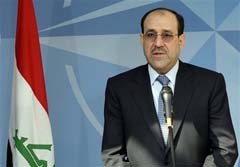
[IMG] In recent months, high-ranking MKO members have been lobbying governments around the world in the hope of acknowledgement as a legitimate opposition group. The White House disarmed members of the camp and seized more than 2,000 MKO tanks, armored personnel carriers and other weaponry. The MKO and anti-Iran lobbyists have been using claims that the group has been disarmed to demand the removal of the group from blacklists worldwide.

Iraqi government officials believe the terrorist group is playing a significant role in fueling violence and insecurity in their country. They have banned dealing with members of the MKO and have called on the US to end its support for the group.

Among the various terrorist activities carried out by the MKO is their massacre of Iraqi Kurds for their opposition to the last dictator of Iraq, Saddam Hussein — from whom the organization received financial support.

The Islamic Republic of Iran has long called for the expulsion of the MKO from Iraq.

In its recent statement, the Iraqi government warned MKO members residing in Camp Ashraf against carrying out activities whether legal or illegal”against any neighboring country”.

“Iraq will treat those in the camp in accordance with Iraqi law, Islamic values and international order,”the statement, issued by a delegation headed by Iraqi National Security Adviser Mowaffaq al-Rubaie, concluded.

December 24, 2008 0 comments
FacebookTwitterPinterestWhatsappTelegramSkypeEmail
Iraq

Iraq calls for international MKO tribunal

A top Iraqi judge has reportedly called on The Hague to probe into the terrorist activities of the Mujahedin Khalq Organization (MKO).

Addressing family members of terrorism victims in Mashhad, an Iraqi judge tasked with investigating war crimes in oil-rich Iraq, suggested that The Hague launch an investigation into human rights abuses and terrorist activities conducted by the MKO, Fars news agency reported.

“The war on terror has a long way to go and to that end governments and nations need to be united,”said Jom’eh Abdul Davoud.

The MKO is blacklisted as a terrorist organization by many countries — including the United States and most EU member states — for launching terror attacks inside Iran and Iraq.

According to the judge, some 150 MKO operatives are wanted in Iraq but any other members of the organization are permitted to leave the country.

Under the leadership of Massoud Rajavi, the MKO helped the Baath regime of Saddam in the suppression of the Iraqi Kurds in ‘Operation Morvarid’. Thousands of Iraqi civilians were brutally massacred in the operation.

Iraq believes the MKO plays a significant role in fueling violence and insecurity in the country. Officials in Baghdad plan to take legal action against the group and have repeatedly called for its expulsion from the war-torn country.

After the invasion of Iraq, Baghdad sought to take control of the main MKO military training area — Camp Ashraf — and banned any Iraqi dealings with the terrorist group.

The United States responded by bringing MKO members under its protection, fueling speculation that Washington had long employed the group for espionage and violence-related activities.

Following the US intervention, an informed source at the Iraqi Foreign Ministry exposed US plans to relocate selected members of the organization.

Defectors accuse the group of resorting to mind control in an effort to brainwash supporters and establishing a cult mindset among members. Most MKO members stationed at the camp now suffer from physical and mental ailments.

Defectors have also called on the British parliament, Amnesty International and human rights organizations to visit Camp Ashraf and liberate members who wish to leave the organization.

December 24, 2008 0 comments
FacebookTwitterPinterestWhatsappTelegramSkypeEmail
Iraq

Baghdad not willing to give shelter to MKO

George Malbrunot, special Le Figaro correspondent, TehranAccompanied with a smuggler, having 3000$ in his pocket, several Kalashnikovs and two satellite cell-phones, Babak and another Mojahed tried to infiltrate the Iranian border during the night. A few weeks later, he succeeded to launch grenade attacks against the Defence Ministry in Tehran to show the world that the Islamic Republic can be destabilized internally before the presidential election of 2001.

“Then we had to recruit the Iranians and wait for the supplementary forces and munitions that were sent from Mujahedin’s base, Camp Ashraf, in Iraq” Babak remembers. Neither forces, nor munitions arrived to help Babak who had received the order to return to Iraq. But, one night, the Iranian police arrested him in a shopping center in Tehran. Sentenced to ten years of imprisonment of which he is now spending the ending years.

Today this former member seeks for the return of the last soldiers disappeared from Ashraf where 3300 Mujahedins have been settled for almost twenty years.

On January first, the US army will hand over the control of Ashraf to Iraqi government. But Baghdad is willing to close the camp. ‘’They have no passport any more; Most of them want to go to Europe to get status of political refugee.”, believes Arash who is another defector of MKO. He left Camp Ashraf in 2004 and is now working in an NGO in Tehran.

 Under the pressure of its Iranian allies, Baghdad is likely to decide to send some of them to Iran. Even the Iraqi government has declared that choosing the receiving country could not be “voluntarily”. To escape from an obligatory return to Iran, some of Mujahedin members having no other choice, despite going to Europe, escape to France where more than 300 to 400 members of MKO are seriously supervised by DST but also infiltrated by the Iranian agents. However, a French expert on security issues says that “we do not like them to arrive in our territory.”

The actual problem is that no one is willing to receive them. However, during the recent years, Americans several times solicited France and Jordan to shelter the members but every time, all of them refused to grant refugee to their leader, Masud Rajavi and his militants in Ashraf.

In 2003 when they arrived in Baghdad, the Americans disarmed MKO. “Since the American invasion, they are killing the time as much as they can in Ashraf,” Arash says.”If they had the possibility, Most of the Mujahedin would leave Ashraf” he adds. The Americans consider MKO as a terrorist organization but this doesn’t prevent them from having an ambiguous relationship with MKO.”CIA doesn’t trust them but the Pentagon uses some of them for espionage in Iran “, confess a former member. Using the Americans’ welcome, 600 have left Camp Ashraf for Iran in recent years. ‘Tehran works on this file so intelligently, seeking to hire these defectors rather than eliminating them,” a European diplomat in Iran says. Since the time of the reformist president of Iran, Mohammad Khatami; ” we haven’t  considered them as a political organization any more but as a dangerous cult of which the members are the prisoners of their leaders”, an Iranian official states.

Their capacity of action in Iran was almost zero. The opponents of regime also include the sympathizers inside Iran. “Mujahedin used the opportunity under the presidency of Khatami to recruit the Iranians who were more easily traveling abroad.” explains the foreign diplomat.

With the money that Saddam gave them and the funds they laundered, Mujahedin have launched an intensive lobbying activity among Western Medias and political authorities. With some success: recently 290 French representatives have asked for the removal of MKO from the list of terrorist organizations. And lately in London and Luxemburg, some similar decisions have been made.

George Malbrunot, special Le Figaro correspondent, Tehran

to view the original text in French click here


December 24, 2008 0 comments
FacebookTwitterPinterestWhatsappTelegramSkypeEmail
Mujahedin Khalq; A proxy force

Terrorist groups says Iran NIE wrong…

You could not make this stuff up even if you tried. Under the direction of new owner Rupert Murdoch, the Wall Street Journal is becoming the paper version of Faux News. Here is their latest nonsense on the Iran NIE: "The Iranian opposition group that first exposed Iran’s nuclear-fuel program said a U.S. intelligence analysis is correct that Tehran shut down its weaponization program in 2003, but claims that the program was relocated and restarted in 2004.
 
The claim, to be made public today by the National Council for Resistance in Iran, joins a broad pushback by conservative hawks who say the U.S. analysis has wrongly given the impression that Iran’s nuclear-fuel program doesn’t present an urgent threat." Since when is a terrorist group a credible source for anything, let alone one to be used in a mainstream article? The National Council for Resistance in Iran is the MEK lobby in DC. They call themselves the true government of Iran in exile and their president is Maryam Rajavi. Let’s do a MEK/MKO basics crash course:

• During the 1970s, the MeK was accused of conducting several assassinations of US military personnel and civilians working in Iran, and of actively supporting the takeover of the US Embassy in Tehran in 1979. That same year, the MeK helped to overthrow the Shah and install the new Shiite regime led by the Ayatollah Khomeini. 

• The Secretary of State has amended the designation, under Executive Order 13224 on terrorist financing, of the Mujahedin-e Khalq, known as the MEK, to add its aliases National Council of Resistance (NCR) and National Council of Resistance of Iran (NCRI). That Executive Order blocks the assets of organizations and individuals linked to terrorism. The decision also clarifies that the designation includes the U.S. representative office of NCRI and all its other offices worldwide, and that the designation of the People’s Mujahedin of Iran (‘PMOI’) as an alias of the MEK includes the PMOI’s U.S. representative office and all other offices worldwide. 

• Tehran proposed ending support for Lebanese and Palestinian militant groups and helping to stabilise Iraq following the US-led invasion. Offers, including making its nuclear programme more transparent, were conditional on the US ending hostility. But Vice-President Dick Cheney’s office rejected the plan, the official said. The offers came in a letter, seen by Newsnight, which was unsigned but which the US state department apparently believed to have been approved by the highest authorities. In return for its concessions, Tehran asked Washington to end its hostility, to end sanctions, and to disband the Iranian rebel group the Mujahedeen-e-Khalq and repatriate its members. 

So basically, what the Wall Street Journal is saying is that a terrorist group on the US State Department’s list of terrorist organization – who has also killed US citizens and was close to Saddam Hussein – is unhappy with the Iran NIE.

Moreover this same group is close to the Vice President, who chose to protect his friends rather than hand them over to Iran in exchange for…Iran giving up all enrichment activities – the thing that Cheney has claimed is the problem. Do you follow this logic? Does the WSJ not have a fact-checking crew? Is the Wall Street Journal now aiding a terrorist organization by giving them a say in US foreign policy? This is good to know. So next time there is a Saudi Arabia NIE, perhaps the Wall Street Journal can feature al Qaeda as supporting the conservative position. Like I said, you could not make this crap up if you tried. Propaganda news at its finest folks… and the war on terror at its most laughable.
at-Largely

December 24, 2008 0 comments
FacebookTwitterPinterestWhatsappTelegramSkypeEmail
Mujahedin Khalq; A proxy force

Unpardonable Neoconservative Treason

Neoconservative (Neo-Trotskyite) Use of Communist Terrorists

“Iraq shelters terrorist groups including the Mujahedin-e-Khalq Organization (MKO), which has used terrorist violence against Iran and in the 1970s was responsible for killing several U.S. military personnel and U.S. civilians.”

–“A Decade of Deception and Defiance”, the White House’s background paper for President George W. Bush’s September 12, 2002 remarks to the United Nations General Assembly

http://www.whitehouse.gov/infocus/iraq/decade/book.html

A major pretext for the Iraq War was Saddam Hussein’s support of the Iranian Communist MEK (MKO, PMOI, NCRI, Rajavi Cult, or Pol Pot of Iran) terrorists at Camp Ashraf and at other camps in Iraq.  In 2003, American and coalition forces attacked Camp Ashraf, Iraq and killed some of the terrorists.  However, neoconservatives (neo-Trotskyites) in the American government arranged for the protection in Iraq and for the use of these communist terrorists inside Iran.


Fox News Channel Viewers Duped by Neo-Trotskyites

After the Federal government raided the home of Alireza Jafarzadeh, confiscated boxes of his documents, and closed the NCRI office in the National Press Building, Jafarzade became a Foreign Affairs Analyst with the Fox News Channel.  On television and in postings, Jafarzadeh claimed that he was revealing secrets about Iranian terrorist networks and front organizations.  See, for example:

http://www.foxnews.com/printer_friendly_story/0,3566,307452,00.html

Of course, he did not reveal to the dupes who watch the Fox News Channel that he had worked for an Iranian communist terrorist organization responsible for murdering American military officers, Rockwell International employees, and large numbers of Iranian and Iraqi civilians. 


For books by former MEK members, read:


–      Saddam’s Private Army

By Anne Singleton


–      Masoud: Memoirs of an Iranian Rebel

By Masoud Banisadr

http://www.amazon.com/Masoud-Memoirs-Iranian-Rebel-Banisadr/dp/0863563740/ref=sr_1_1?ie=UTF8&s=books&qid=1230001161&sr=8-1


Covert American Military Operations Inside Iran

Some of the guests on the Fox News Channel have bragged about American military forces conducting “boots on the ground” covert operations inside Iran.  There are some others in the American media providing vague details of these operations.  For example, Seymour Hersh’s articles in the New Yorker, such as:


Annals of National Security

The Iran Plans

Would President Bush go to war to stop Tehran from getting the bomb?

by Seymour M. Hersh April 17, 2006

“The Bush Administration, while publicly advocating diplomacy in order to stop Iran from pursuing a nuclear weapon, has increased clandestine activities inside Iran and intensified planning for a possible major air attack. Current and former American military and intelligence officials said that Air Force planning groups are drawing up lists of targets, and teams of American combat troops have been ordered into Iran, under cover, to collect targeting data and to establish contact with anti-government ethnic-minority groups.”

http://www.newyorker.com/archive/2006/04/17/060417fa_fact


Using Communist Terrorists Inside Iran

Americans with international satellite television dishes or who research foreign news sources will discover that the American military has been using Iranian communist terrorists from Camp Ashraf, Iraq on covert missions of gathering information or of committing acts of terrorism in Iran.


On December 21, 2008, former MEK member Arash Sametipoor appeared in London, England on George Galloway’s “The Real Deal” (Press TV and Sky TV).  For the next few days, you can watch this television program online or download it to your computer at:

http://www.presstv.com

You can find other interviews and details posted at Web sites, such as:

–      Iran-Interlink

 http://www.iran-interlink.org/?mod=view&id=5551

–      Nejat Society

https://www.nejatngo.org/en/

Arash Sametipoor reported that he had been captured in Iran during a covert mission.  He attempted to kill himself using an old cyanide pill provided for him.  While he was sentenced to serve eight years in prison in Iran, he was released after four years.  He knows firsthand about life inside a terrorist cult.  While America’s neo-conservatives (neo-Trotskyites) claim that Iraq has its own government now, the truth is that Iraqi political leaders continue to demand that the MEK surrender their weapons or leave Iraq.  Not only has the American military been protecting these communist terrorists, but also the American military has prevented parents of these terrorists from seeing their children at or near Camp Ashraf, Iraq. 


Unpardonable Neoconservative Treason

During the American Revolution, Benedict Arnold was a revolutionary war hero until he betrayed the American Revolution. 

http://www.americanrevolution.com/TreasonofBenedictArnold.htm

Now, America’s neo-conservatives (neo-Trotskyites) have replaced Benedict Arnold as the worst traitors in American history.  There should be no presidential pardons for any of these traitors.

December 23, 2008 0 comments
FacebookTwitterPinterestWhatsappTelegramSkypeEmail
Missions of Nejat Society

Nejat Society Representative on Press TV

Arash Sametipoor reported that he had been captured in Iran during a covert Director of the Iran-based Nejat [Rescue] Association's Foreign Relations Department, Arash Sametimission.  He attempted to kill himself using an old cyanide pill provided for him.  While he was sentenced to serve eight years in prison in Iran, he was released after four years.  He knows firsthand about life inside a terrorist cult.  While America’s neo-conservatives (neo-Trotskyites) claim that Iraq has its own government now, the truth is that Iraqi political leaders continue to demand that the MEK surrender their weapons or leave Iraq.  Not only has the American military been protecting these communist terrorists, but also the American military has prevented parents of these terrorists from seeing their children at or near Camp Ashraf, Iraq.

Director of the Iran-based Nejat [Rescue] Association’s Foreign Relations Department, Arash Sameti, said the United States refuses to hand Camp Ashraf over to the Iraqi government.

Most of the MKO members currently in Camp Ashraf are ailing, and being physically and mentally abused by their terrorist leaders, he added.

Most of the MKO members currently in Camp Ashraf are ailing, and being physically and mentally abused by their terrorist leadersNejat Association members have recently held meetings with the European parliament, human rights organizations, Amnesty International and British government officials in London to raise awareness about the humanitarian crisis occurring within the MKO. The leaders of the group, headed by Maryam Rajavi, are committing crimes against their own members.

“We urged the European officials to open Camp Ashraf doors to doctors and human rights organizations and rescue the trapped members who don’t want to be part of this terrorist group anymore,”Sameti elaborated.

“We welcome the Iraqi government’s decision to take over the control of the Ashraf Camp and seek the European countries’ support for the release of its members.”

After the US-led invasion of the country, the US put the members under protection in north Iraq amid reports that they had been used by Washington for espionage and violence-related activities.

Iraqi government officials believe the Mujahedeen Khalq Organization is playing a significant role in fueling violence and insecurity in the country. They have banned any deal with members of the MKO, calling on the US to stop supporting the terrorist group.

Real Deal Program

Download Arash Sametipour on Press TV

December 23, 2008 0 comments
FacebookTwitterPinterestWhatsappTelegramSkypeEmail
Massoud Rajavi

The instrumental misuse of MKO history – part 2

The instrumental misuse of MKO founders and history – part 2

Of the current issues prevalent in the world of politics regarding the challenges MKO has risen to is that Rajavi has manipulated the history of MKO and its founders. It is said that he and his fellows have made an attempt to misuse the history of the organization in a way to legitimize his unauthentic leadership imposed on the organization and its members. Here a number of fabricated memories made by a number of self-seeker MKO members are reviewed in order to bring the matter to light. In this regard, Mohammad Hayati, one of the theoreticians of the ideological revolution introduces Rajavi as the sole advisor of Hanifnejad and says:

I saw no one closer and more active than Masoud in discussion and negotiation with Mohammad [Hanifnejad], no one even Saeed [Mohsen] and Asqar [Badizadegan]. 1

Mehdi Khodaee-Sefat who has not met Hanifnejad grabs at other techniques in order to exalt Rajavi, saying:

Once in 1972, I met Masoud in cell No. 3 in Qasr prison and discovered the mysteries of life in him. Again, in 1975, in the cell No. 6 when I heard his voice for the second time, it was as if I got everything in a blink of an eye and considered the tortures of prison and Savak unimportant. 2

Hamid Asadian, Mojahedin’s poet, makes a generalization and states:

Masoud represents the revolutionary values of a generation who had a historical presence in the political, social, and cultural scene of Iran since 1965. 3

He adds:

All resistances, solution findings, victories and in a nutshell the survival of Mojahedin depends on one person who represents the ideals of Mojahed generation. He is the story of Mojahedin and Mojahedin are his story. 4

And Abrishamchi introduces Rajavi as the sole discoverer of Hanifnejad, stating:

His role [Hanifnejad] was a unique historical and ideological one which was unknown at his time. Just one person, Masoud, discovered it and made a close relationship with him and paid a considerable cost for doing so. 5

In order to check the truthfulness of these statements, we’d better take a brief look at the statements made by Lotfollah Meisami, one of the closest cadres to Hanifnejad, and raise the question that why all these fabricated memories have been recalled simultaneously and after a number of decades and all have a similar theme and form. 

Meisami expounds on some points in contradiction to those mentioned before. In contrast to what Rajavi’s allies mean by fabricating theses memories, he says that the main reason Hanifnejad paid more attention to Rajavi was the flaws he had had noticed in Rajavi including selfishness, vanity, egoism and so forth. Thus, Hanifnejad always had him under full control and warned him of his flaws. According to Meisami:

It has to be pointed out that everyone has some traces of egoism and vanity. Yet, in a well-formed organization, all these defects can be surmounted. It was so for Rajavi too and whenever he was in their companion, Mohammad and Saeed kept close to him and controlled him fully. 6

Or:

In the same period of time, the personality of Masoud Rajavi came under question and there appeared many quotations from Hanifnejad. For instance, Hanifnejad was quoted saying that the prevalent egoism in Masoud would be destructive for the organization. The members of central council of leadership were well aware of this statement. 7

Interestingly, in these memories there are some individuals who took a hostile position toward Rajavi at that time and now have changed their mind and come to remember, or better to say fabricating, memories in Rajavi’s favor:


After the schism of 1971 and its consequences, the issue of the leadership was raised in Qasr prison. There were seventy members therein and they needed to be organized so Masoud was already in charge of solving problems. For example, if someone or something was snitched he informed those outside and also made us aware of the outside news. After the imprisonment of Bahman Bazargan, they cooperated with each other, yet when the number of members increased and almost all Mojahedin came to prison, Masoud came under question to some extent. Some members like Musa Khiabani, Fathollah Khamene’i, Kazem Shafiee, Nabi Moazemi, Ebrahim Avoukh, and those gone to Palestine criticized Masoud for his flaws. 8

Furthermore, Meisami points out that Rajavi was so isolated in goal and neglected by MKO prisoners that despite assuming the leadership of the organization, prisoners formed a council of leadership in the prison and conducted polls in which Rajavi was defeated:

There were a lot of members in Qasr prison and it seemed that nothing could fill the void left by the martyrdom of the founders. Also, members were unsure of Rajavi. It was said that there had to open polls for selecting the central cadre in which Musa Khiabani and two other candidates were at the lead; but Rajavi got no vote. 9

In another part of the memories of Meisami, it has been stated that:

Members refrained to accept a fixed leadership. So polls were carried out in which Fathollah Khamene’i, Kazem Shafiee and Musa Khiabani were elected for the first central cadre in the prison yet Rajavi got just a single vote. 10

Most important of all, Meisami believes that Rajavi followed a different path after the execution of founders and even considered them as outsiders:

After the martyrdom of the founders, some members like Masoud Rajavi had a different viewpoint against the early founders and even refrained to consider the former members of the organization as true insiders. 11

References:

1. The book of founders, MKO publications, p.121.

2. ibid, p.138

3. ibid, p.160

4. ibid, p.161

5. ibid, p.87

6. Meisami, Lotfollah; Degeneration of a Mojahed, Mojahed journal, No. 32.

7. The memoirs of Lotfollah Meisami, 2003, p.74

8. ibid, p.194

9. Meisami, Lotfollah; Degeneration of a Mojahed, Mojahed journal, No. 32.

10. The memoirs of Lotfollah Meisami, 2003, p.194.

11. ibid, p.157

December 23, 2008 0 comments
FacebookTwitterPinterestWhatsappTelegramSkypeEmail
Iraq

Iraq Threatens to Expel Iranian Rebels

Iraq Threatens to Expel Iranian Rebels; Exile Group Has Protected Status Under Soon-to-Expire U.N. Mandate Iraq Threatens to Expel Iranian Rebels; Exile Group Has Protected Status Under Soon-to-Expire U.N. Mandate

Iraqi officials say they intend to expel members of an Iranian exile group living in a camp north of Baghdad that is protected by the U.S. military. The expulsion, which the Shiite-led government has long sought, is expected to become feasible once the U.N. mandate that regulates the presence of U.S. troops — and which gave the Iranian opposition group protected status — expires at the end of the year.

Iraqi national security adviser Mowaffak al-Rubaie on Saturday traveled to the camp with several other government officials to deliver the message to members of the Mujaheddin-e Khalq, or MEK, an Iranian opposition group that was closely aligned with deposed Iraqi president Saddam Hussein but has been under U.S. military protection since shortly after the 2003 U.S.-led invasion.

The government informed the group that it would soon assume responsibility for security at Camp Ashraf and that residents would be repatriated unless they find a third country willing to take them. The U.S. military currently protects Camp Ashraf, which is 40 miles north of Baghdad.

“Staying in Iraq is not an option for them,”the government said in a statement issued Sunday. The Iranian government has long called for the group’s expulsion.

The statement did not set a deadline for removing the MEK. Iraqi officials have pledged to treat the group’s members humanely but have made their disdain for the MEK clear. The delegation that visited the camp included officials of the Defense and Interior ministries as well as Iraqi intelligence officials.

The statement also said the group is barred from participating in political activities and ordered it to cease media campaigns.

The Shiite-led Iraqi government, which has close ties to Iran, has for years threatened to shut down Camp Ashraf because it regards the MEK, also known as the People’s Mujaheddin Organization of Iran, as a terrorist organization.

The European Union and the U.S. State Department have also labeled the group a terrorist organization.

The MEK, which has about 3,500 members in Iraq, has strongly resisted the Iraqi government’s expulsion efforts, saying members could be executed if they are forced to return to Iran. The group has aggressively lobbied U.S. and European lawmakers and has relentlessly sought sympathetic coverage in the Western news media.

The MEK was founded in the 1960s as an opponent of the late shah of Iran, Mohammad Reza Pahlavi. It was accused of carrying out several attacks in Iran, including some targeting U.S. officials.

The MEK moved its headquarters to Iraq during the 1980s, when Iraq and Iran were at war. Former Iraqi leader Saddam Hussein embraced the group, providing them weapons and financial support.

Kurds and Shiites have long reviled the MEK because they say the group helped suppress the failed Kurdish and Shiite uprisings that followed the Persian Gulf War.

Shortly after the 2003 invasion, the U.S. military persuaded the MEK to disarm and offered to protect the group. The arrangement was awkward because it tasked the U.S. military with sheltering a group that remains on the State Department’s terrorism list.

The group’s charismatic leader, Maryam Rajavi, is based in Paris, but France and many other countries have been reluctant to resettle the group’s members.

Also Sunday, Iraq’s Interior Ministry issued a statement calling the recent detention of ministry officials by a special unit that reports directly to Prime Minister Nouri al-Maliki”a brazen act of political retribution.”

Interior Minister Jawad al-Bolani had dismissed reports that the roughly two dozen detained officials were plotting to reconstitute Saddam Hussein’s Baath Party, possibly to stage a coup. The statement makes clear Bolani was deeply unsettled by the detentions. Bolani, an independent, secular Shiite, has not previously criticized the Maliki government in such stark terms. With provincial elections a few weeks away, competition among Shiite parties has intensified. Bolani recently created his own party, and the statement appears to indicate he believes that the prime minister ordered the raid to undermine him.

Under Bolani’s stewardship, the ministry has fired or criminally charged tens of thousands of employees accused of corruption. The raid occurred last week while Bolani was out of the country. He said any concerns about misdeeds by ministry officials should be brought to his attention and not handled”Saddam-like under cover of the night under dubious threats of an imminent coup.”

“The Minister was outraged that anyone would interfere in the administration of the Ministry he is sworn to lead,”the statement said.”He alone is responsible for this Ministry and he is accountable only to the Iraqi people.”

The statement, signed by Rafae Munahe, an adviser to Bolani, was e-mailed to reporters late Sunday by a representative of Brown Lloyd James, a public relations firm.

Special correspondent Qais Mizher contributed to this report.

Washington Post, Ernesto Londono,

December 23, 2008 0 comments
FacebookTwitterPinterestWhatsappTelegramSkypeEmail
European Union

A row that is likely to continue

In its judgment made on 4 December, the European Court of First Instance ruled that the Council of Ministers had infringed the legal rights of the MKO when it updated the blacklist on 15 July 2008 without explaining its inclusion. The second clause of the Council Decision (2008/583/EC), however, explicitly states that it has provided for the groups and entities statements of reasons for their proscription:

2.      The Council has provided all the persons, groups and entities for which it was practically possible with statements of reasons explaining why they were listed in Decision 2007/868/EC. Concerning one group and three persons the amended statements of reasons has been provided to them, if possible, in April 2008.

Following the MKO’s application to contest the Council’s decision, the court ruled that it “Annuls Council Decision 2008/583/EC of 15 July 2008 implementing Article 2(3) of Regulation No 2580/2001 on specific restrictive measures directed against certain persons and entities with a view to combating terrorism and repealing Decision 2007/868/EC, in so far as it concerns the People’s Mojahedin Organization of Iran”. Of the restrictive measures was freezing the assets and funds of the listed groups.

The court in its 47 paragraph judgment says that “the Court finds that the continued freezing of the applicant’s funds by the contested decision was the result of a procedure during which the applicant’s rights of the defence were not respected” and consequently annuls the decision concerning MKO’s assets-freezing. Then, what it has to do with the removal of the organization from the terrorist list?

Since the Council applied for interpretation of the Court judgment of the Court of First Instance on 4 December 2008, the court issued a latest order in which the application for interpretation was dismissed as inadmissible. commenting on the court order released on 17 December 2008, MKO states that “the Court of First Instance of the European Communities (CFI), in its fourth ruling over the past two years, rejected a request by the EU Council and France to delay implementation of the December 4 court ruling on the People’s Mojahedin Organization of Iran (PMOI ) until the deadline to submit an appeal against the ruling has ended. It described their demand as ’clearly unacceptable’ and ordered the Council to pay all legal costs incurred by the PMOI. Thus, the Court put an end to unlawful delays and excuses by the Council, leaving it with no alternative but to comply with the court ruling and acknowledge that the PMOI is no longer on the terrorist list”.

But in none of these orders the court has ruled and acknowledged that MKO “is no longer on the terrorist list”. Still, since 4 December, member states have been working on the assumption that the judgment is in suspension and MKO’s name remains on the blacklist after it was updated on 16 December. The court’s decision not to provide further clarification on the nature of its decision means that the row between the MKO and the EU member states is likely to continue.

December 22, 2008 0 comments
FacebookTwitterPinterestWhatsappTelegramSkypeEmail
Newer Posts
Older Posts

Recent Posts

  • A study on the financial mechanism of the Mujahedin-e Khalq

    August 10, 2026
  • A Child behind the Ideological Bars of Massoud and Maryam Rajavi

    August 8, 2026
  • A Comparative Analysis of Psychological Control Mechanisms in Jeffrey Epstein’s Cult and the MEK

    August 3, 2026
  • Operation Mersad: How Iran foiled Saddam’s final gambit 37 years ago

    August 1, 2026
  • Ideology Cannot Prevail over Human Dignity

    July 29, 2026
  • Facebook
  • Twitter
  • Instagram
  • Youtube

© 2003 - 2025 NEJAT Society . All Rights Reserved. NejatNGO.org


Back To Top
Nejat Society
  • Home
  • Articles
  • Media
    • Cartoons
    • NewsPics
    • Photo Gallery
    • Videos
  • Publications
    • Books
    • Nejat NewsLetter
    • Pars Brief
  • About Us
  • Contact us
  • Editions
    • عربي
    • فارسی
    • Shqip