Nejat Society
  • Home
  • Articles
  • Media
    • Cartoons
    • NewsPics
    • Photo Gallery
    • Videos
  • Publications
    • Books
    • Nejat NewsLetter
    • Pars Brief
  • About Us
  • Contact us
  • Editions
    • عربي
    • فارسی
    • Shqip
Nejat Society
Nejat Society
  • Home
  • Articles
  • Media
    • Cartoons
    • NewsPics
    • Photo Gallery
    • Videos
  • Publications
    • Books
    • Nejat NewsLetter
    • Pars Brief
  • About Us
  • Contact us
  • Editions
    • عربي
    • فارسی
    • Shqip
© 2003 - 2024 NEJAT Society. nejatngo.org
Iraq

Iraq to close camp for Iranian dissidents and expel inmates

IRAQ PLANS to close a camp for Iranian dissidents who used to cross into Iran to mount assassinations and sabotage – a decision that has sharpened political differences between Baghdad and Washington.Iraq to close camp for Iranian dissidents and expel inmates

Camp Ashraf, about 130km north of Baghdad, came under Iraqi control yesterday in a broad security handover that forms part of the US withdrawal agreement concluded late last year.

Iraq’s national security adviser, Mowaffaq al-Rubaie, led a delegation of defence and interior ministry officials to the camp last weekend, warning its 2,500 male and 1,000 female inmates that “staying in Iraq is not an option”.

The Iraqi government said it was “keen to execute its plans to close the camp and send its inhabitants to their country or other countries in a non-forcible manner”.

US troops disarmed the opposition group known as the Mujahideen-e-Khalq (MEK) after the 2003 invasion. They removed hundreds of armoured vehicles donated by Saddam Hussein but kept the camp intact because some Bush administration officials allegedly saw the MEK as a potential tool for regime change in Iran.

The Shia-led government in Baghdad has forged close relations with fellow Shias in Tehran and rejects such ambitions. It insisted that the US/Iraq security agreement contains a promise that Iraq would not be used for attacks on Iran or any other country.

Under the security deal, Iraq yesterday took over the Green Zone and Saddam’s former presidential palace. Prime minister Nouri al- Maliki declared a national holiday, saying it amounted to the moment when sovereignty was restored.

The MEK helped to bring the shah’s overthrow but soon clashed with Ayatollah Khomeini and his drive to put clerics in charge of the country. Like almost every other political party and group that had created the revolution, it lost hundreds of members to torture and execution in the early 1980s.

It now describes itself as “democratic and secular”. Insisting the camp’s inmates have conducted no armed operations in Iran since 2001, Nasser Razii, a London spokesman for the group’s political arm, said: “Camp Ashraf provides hope to the Iranian nation and keeps the flame of resistance burning. We want to keep it on the doorstep of our homeland.”

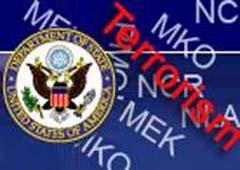
The US and EU placed the MEK on their lists of terrorist organisations after the September 11th attacks. Last year, Europe’s court of first instance ruled it should be removed from the EU list on the grounds it has not carried out terrorist activities for years.

Lord Corbett, a Labour peer who has long supported the movement, and other British parliamentarians last month signed a letter to the Iraqi government urging it not to close Camp Ashraf. MPs in other European countries have made similar appeals.

Former members claim the MEK is a cult that forces members to break ties with their families, orders married couples to separate and demands total devotion. Closing the camp will restore members’ human rights, they say. MEK members though fear they will be deported to Iran, a fear Baghdad says is groundless.

The International Committee for the Red Cross has helped more than 250 to cross the border to Iran after conducting private interviews with each to ensure they are going voluntarily. – (Guardian service)

Irish Times – JONATHAN STEELE

http://www.irishtimes.com/newspaper/world/2009/0102/1230842350664.html

January 3, 2009 0 comments
FacebookTwitterPinterestWhatsappTelegramSkypeEmail
Iraq

Iraq plans to close Iranian dissidents’ border camp

Base was used in sabotage and assassination sorties Iraq plans to close a camp for Iranian dissidents who used to cross into Iran to mount assassinations and sabotage

US fostered sect as tool for regime change in Tehran

Iraq plans to close a camp for Iranian dissidents who used to cross into Iran to mount assassinations and sabotage – a decision that has sharpened political differences between Baghdad and Washington.

Camp Ashraf, about 80 miles north of Baghdad, came under Iraqi control yesterday in a broad security handover that forms part of the US withdrawal agreement concluded late last year.

Iraq’s national security adviser, Mowaffaq al-Rubaie, led a delegation of defence and interior ministry officials to the camp last weekend, warning its 2,500 male and 1,000 female inmates that "staying in Iraq is not an option". The Iraqi government said it "is keen to execute its plans to close the camp and send its inhabitants to their country or other countries in a non-forcible manner".

US troops disarmed the opposition group known as the Mojahedin-e-Khalq (MEK) after the 2003 invasion. They removed hundreds of armoured vehicles donated by Saddam Hussein but kept the camp intact because some Bush administration officials allegedly saw the MEK as a potential tool for regime change in Iran.

The Shia-led government in Baghdad has forged close relations with fellow Shias in Tehran and rejects such ambitions. It insisted that the US/Iraq security agreement contain a promise that Iraq would not be used for attacks on Iran or any other country.

Under the security deal Iraq yesterday took over the Green Zone and Saddam’s former presidential palace. The prime minister, Nouri al-Maliki, declared a national holiday, saying it amounted to the moment when sovereignty was restored.

The MEK helped to bring the Shah’s overthrow but soon clashed with Ayatollah Khomeini and his drive to put clerics in charge of the country.

It now describes itself as "democratic and secular". Insisting the camp’s inmates have conducted no armed operations in Iran since 2001, Nasser Razii, a London spokesman for the group’s political arm, said: "Camp Ashraf provides hope to the Iranian nation and keeps the flame of resistance burning. We want to keep it on the doorstep of our homeland."

The US and EU placed the MEK on their lists of terrorist organisations after 9/11. Last year Europe’s court of first instance ruled it should be removed from the EU list on the grounds it had not carried out terrorist activities for years. Lord Corbett, a Labour peer who has long supported the movement, and other British parliamentarians last month signed a letter to the Iraqi government urging it not to close Camp Ashraf. MPs in other European countries have made similar appeals.

Former members claim the MEK is a cult that forces members to break ties with their families, orders married couples to separate and demands they devote themselves totally to the movement. Closing the camp will restore members’ human rights and allow them to decide whether to resume normal life, they say. But MEK members fear they will be deported to Iran, a fear Baghdad says is groundless.

Independent visitors to Camp Ashraf report that the inmates live in segregated barracks-style rooms. The International Committee for the Red Cross says several hundred former MEK members have left Camp Ashraf since 2003. The ICRC has helped more than 250 cross the border to Iran after conducting private interviews with each to ensure they are going voluntarily.

In spite of MEK claims that returnees face arrest and imprisonment or have been offered unfair inducements by the Iranian authorities, the ICRC is continuing the repatriation programme. "If we had any allegations of ill-treatment of people who have returned to Iran we would follow up with the authorities in Tehran," said Dorothea Krimitsas, ICRC spokesperson for the Middle East.

Jonathan Steele

http://www.guardian.co.uk/world/2009/jan/02/camp-ashraf-closure-baghdad-iran

January 3, 2009 0 comments
FacebookTwitterPinterestWhatsappTelegramSkypeEmail
The MEK Expulsion from Iraq

Iraq to expel Iran rebels as it takes over camp from US

Prime Minister Nuri al-Maliki said on Thursday that he would expel an Iranian armed opposition group from the country after taking over their base from US forces. Agence France Press

"Based on taking over everything and in accordance with our constitution and our policies of opening up to our neighbours… our forces are going to take full control of the camp where the People’s Mujahedeen Organisation of Iran (PMOI) live," Maliki said.

Maliki was speaking to reporters on the sideline of a ceremony during which the United States handed over to Iraqi forces security control of the Green Zone, symbol of the American occupation of the country.

The PMOI "is a terrorist organisation and thus cannot operate in Iraq because it will create a political crisis in contradiction with the constitution," Maliki said.

"We will treat them based on the international laws. We will not force them to go back (to Iran) but we will give them the opportunity to either go home, or to another country," he added.

"(Staying in) Iraq will not be an alternative for them," Maliki said.

Maliki, who was speaking ahead of a visit Saturday to Tehran, told Iranian President Mahmoud Ahmadinejad in March that he would take steps to ensure that Iraq was not used by "terrorists" from Al-Qaeda, or from Iranian rebel groups.

Last month the White House said it received assurances from Baghdad that the rebel group will not be expelled to a country where they may be persecuted, apparently excluding their return to Iran.

US forces confiscated the organisation’s weapons following the March 2003 US-led invasion, taking away some 300 tanks, many of which were subsequently given to the Iraqi armed forces.

Two years ago Iraq decided to restrict the movements of the estimated 3,500 PMOI members to their base at Camp Ashraf, near the Iranian border, where they have been held under a kind of US-supervised house arrest.

Described as a terrorist group by the United States and the European Union, the PMOI, which was founded in 1965, has many supporters in the US Congress and British parliament.

Group members fought alongside Iraqi forces in the 1980-1988 war between Iraq and Iran and then settled in Iraq.

January 3, 2009 0 comments
FacebookTwitterPinterestWhatsappTelegramSkypeEmail
The MEK Expulsion from Iraq

MEK Terror Group to Leave Iraq

Al-Maliki also announced that there is "no place in Iraq for the terrorist" Mujahidin-e Khalq (MEK) organization. The Iraqi government has taken control Iraq Regains National Sovereignty; Takes Control of Green Zone, Basra Airport;MEK Terror Group to Leaveof Camp Ashraf, northeast of Baghdad, the terrorist training camp leased by Saddam Hussein to 3500 members of the Iranian MEK cult. The MEK carried out terrorist attacks inside Iran on behalf of Iraq, as well as spying on, and making false allegations about, Iran’s civilian nuclear energy program. MEK have probably been triple agents, sharing information with and pushing disinformation on Saddam, Israel and the US through various channels. They also served Saddam as an SS, repressing Iraqi dissidents. When the US took Iraq in 2003, the Neoconservatives at the Pentagon wanted to adopt the terrorist group for covert operations against Iran and against the Shiite fundamentalist parties in Iraq that had been hosted in exile by Tehran. The Pentagon/ Neoconservative interest in the MEK appears to have been connected to its secret ties to Israel, and prominent members of the American Israel lobby such as Daniel Pipes and Patrick Clawson went to bat for this motley crew of bombers and saboteurs (ironically, they have been prolific in accusing ordinary Americans of being ‘terrorist supporters’ if they declined to ask ‘how high’ whenever Bibi Netanyahu commanded us to jump). The State Department, in contrast, pushed for listing the MEK as a terrorist organization. In the end, as usual in the Bush administration, Washington gave us the worst compromise possible, declaring MEK a terrorist organization and going on using it for espionage and sabotage in Iran as well as against Iraqi Shiites. In 2005 the Islamic Supreme Council of Iraq and the Da`wa Party came to power in elections in Baghdad, the very parties against which MEK had been conspiring, and they have repeatedly tried to get rid of the Mojahedin, but were stopped by the Pentagon. The ‘Islamic Marxist’ guerrillas are likely now to be expelled. Al-Maliki said that they would not be forced to return to Iran, and could go to other destinations of their choice, but could not remain in Iraq.

http://www.juancole.com/2009/01/iraq-regains-national-sovereignty-takes.html

The full article:

Iraq Regains National Sovereignty;

Takes Control of Green Zone, Basra Airport;

MEK Terror Group to Leave

Iraqi Prime Minister Nuri al-Maliki announced Thursday that Iraq had "regained its national sovereignty". It could in fact be argued that for the first time since the end of the Gulf War, Iraq is again for most purposes an independent country in international law. It was put under Chapter 7 of the United Nations charter in the early 90s, having been found an aggressor against Kuwait. In some ways, its Chapter 7 status was taken advantage of by the Bush administration in its invasion of Iraq. There are still some things Iraq wants from the UN, and the Russian ambassador there has suggested that some Article 7 provisions will last for a while yet. But the main thing standing between Iraq and sovereignty now is anyway not international law but the large foreign troop presence on Iraqi soil. Still, that presence is underpinned by a bilateral treaty concluded by a sovereign Iraqi parliament with the United States. Cont’d . . .

US troops now need warrants for arrests, though they can detain suspects for 24 hours while they seek to justify it to a judge. Thousands of Iraqis imprisoned by the US will have to be released unless valid legal cases can be built against them.

In a move of the utmost symbolism, Iraqi troops are now taking control of the Green Zone, the few acres in downtown Baghdad, surrounded by blast walls, where US military and diplomatic personnel have worked, and where parliament and many Iraqi government offices are located. US military control of this area has often provoked tensions. Once Marines manhandled a member of parliament from the Sadr Movement who was coming in for a vote, provoking widespread criticism. The nerve center of the US in Iraq and of its Iraqi political allies had to be put behind blast walls because otherwise it would have been constantly bombed and sniped at. The area took a great deal of mortar fire as it was, endangering US State Department personnel who were sleeping in flimsy shelters. Prime Minister Nuri al-Maliki has announced his determination to take down the blast walls. Minister of Defense Abdul Qadir al-`Ubaidi pledged to reopen the road between the Green Zone and the Republic Bridge within days, according to al-Hayat.

Bombings and other violence killed 8 in the northern cities of Mosul and Kirkuk or their environs on Thursday.

Basra authorities arrested a leader of the "Army of Heaven" millenarian cult that launched attacks last year this time. It is the beginning of the Islamic new year, and apparently the cult is seeking ways of taking power.

Al-Maliki also announced that there is "no place in Iraq for the terrorist" Mujahidin-e Khalq (MEK) organization. The Iraqi government has taken control of Camp Ashraf, northeast of Baghdad, the terrorist training camp leased by Saddam Hussein to 3500 members of the Iranian MEK cult. The MEK carried out terrorist attacks inside Iran on behalf of Iraq, as well as spying on, and making false allegations about, Iran’s civilian nuclear energy program. MEK have probably been triple agents, sharing information with and pushing disinformation on Saddam, Israel and the US through various channels. They also served Saddam as an SS, repressing Iraqi dissidents. When the US took Iraq in 2003, the Neoconservatives at the Pentagon wanted to adopt the terrorist group for covert operations against Iran and against the Shiite fundamentalist parties in Iraq that had been hosted in exile by Tehran. The Pentagon/ Neoconservative interest in the MEK appears to have been connected to its secret ties to Israel, and prominent members of the American Israel lobby such as Daniel Pipes and Patrick Clawson went to bat for this motley crew of bombers and saboteurs (ironically, they have been prolific in accusing ordinary Americans of being ‘terrorist supporters’ if they declined to ask ‘how high’ whenever Bibi Netanyahu commanded us to jump). The State Department, in contrast, pushed for listing the MEK as a terrorist organization. In the end, as usual in the Bush administration, Washington gave us the worst compromise possible, declaring MEK a terrorist organization and going on using it for espionage and sabotage in Iran as well as against Iraqi Shiites. In 2005 the Islamic Supreme Council of Iraq and the Da`wa Party came to power in elections in Baghdad, the very parties against which MEK had been conspiring, and they have repeatedly tried to get rid of the Mojahedin, but were stopped by the Pentagon. The ‘Islamic Marxist’ guerrillas are likely now to be expelled. Al-Maliki said that they would not be forced to return to Iran, and could go to other destinations of their choice, but could not remain in Iraq.

The British military has handed over the control tower at Basra International Airport to Iraqi authorities. Britain had been using the airport as a military base, but now will withdraw outside it and allow it to function as a civilian, Iraqi facility. This step is a further phase in the British withdrawal from Iraq; the UK once had 40,000 troops in the country, and is now down to about 4,000. They will likely all be out by July 1.

As the foreign troops leave, Iraqis will have to settle their differences themselves. Kurdistan President Masoud Barzani slammed Iraqi Arab leaders for provoking ethnic tensions with Kurds.

Juan Cole is President of the Global Americana Institute 

http://www.juancole.com/2009/01/iraq-regains-national-sovereignty-takes.html

January 3, 2009 0 comments
FacebookTwitterPinterestWhatsappTelegramSkypeEmail
Iraq

Iraq to close MKO camp in Iraq

Iraq has decided to shut down the terrorist Mojahedin Khalq Organization (MKO) Ashraf Camp as soon as possible, expel the MKO members from Iraq and close their file forever, said a senior Iraqi official.

Political advisor of the Supreme Council for the Islamic Revolution in Iraq (SCIRI), Muhsin Al-Hakim exclusively told IRNA that Baghdad considered the MKO as a terrorist group.

Most of its members are based in Ashraf Camp north of Baghdad.

According to Al-Hakim, continued presence of the terrorist group in Iraq would be against Paragraph 33 of the Resolution 687 of the United Nations Security Council.

It would also be against the Iraqi Constitution, decisions made by the country’s presidency council and approvals of the Iraqi parliament, added the advisor.

The Paragraph 33 of the UN Security Council resolution, approved in April 3, 1991, required the government of Iraq to expel all terrorist groups that are present in the country.

The MKO members have two options of either returning home or leaving for another country but they cannot remain in Iraq any longer, Al-Hakim said stressing that the terrorist group was legally in an unclear situation as its members are neither considered refugees nor prisoners of war.

According to reports by human rights advocates, former members of MKO who returned home were living in good conditions, Al-Hakim added.

The advisor stressed that the grouplet has been barred from conducting all political, social and media activities on Iraqi territory.

He added that an Iraqi battalion was currently in charge of providing external security of Ashraf Camp while its internal affairs are undertaken by the foreign nationals department of the Iraqi Foreign Ministry.

MKO is known as a terrorist group for conducting violent operations in Iran.

It is labeled a terrorist organisation by the United States, the European Union and many other countries.

Many of the MKO members abandoned the terrorist organisation while most of those still remaining in the camp are said to be willing to quit but are under pressure and torture not to do so.

January 1, 2009 0 comments
FacebookTwitterPinterestWhatsappTelegramSkypeEmail
Massoud Rajavi

Cult leaders accountable to nobody

Of the common characteristics of cult leaders referred to in most academic resources is a lack of accountability for their activities and decision-makings. This practice is in full contrast to the norms of leadership in democratic and free societies in which leaders’ decisions and activities have to be parallel to the social major interests and demands of the public. However, leaders in cults not only consider themselves too superior to be reprimanded for what they do but also regard themselves as heavenly gifts bestowed to earthly followers; super-humans beyond restrictions of ordinary people and free from any error. Their self-appointed position necessitates that cult leaders assume responsibility only to a higher position like that of a god or ideology. These features are easily traceable within the notorious cultist relations of MKO, already blacklisted as a terrorist political cult.

Where this approach is rooted and on what basis it is founded constitutes one of the most basic discussions of the field of cult studies. However, it has to be pointed out that its scope depends on the specific content and orientation of each cult and despite the existing subtle differences, it is exercised commonly within all cults. Also, it has to be noted that unaccountability is more outstanding in political cults due to their external manifestations and broad objectives compared to other cults. A factor distinguishing MKO from other parallel political groups is that its leadership is not only unaccountable to the insiders but also prevents other opposition groups to assume responsibility of their doings by means of many factors like accusation, labeling, perversion, threat, subornation and other levers and sometimes even resorts to improper language to beat them off in the course of political struggle and eliminate all rivals. Therefore, the study of this aspect of cultic relations is of a wider dimension in MKO.

Here, there is an attempt to review these aspects in cults in general and in social relations of MKO in particular. First, the fundamentals and foundations of cults are taken into consideration. Stated in the Advanced Bonewits’ Cult Danger Evaluation Frame, Bonewits, classifies unaccountability of cult leaders as one of the cults’ 16 factors:

Charismatic and self-appointed leader who claims divinity or special knowledge and demands his followers unquestioning and total loyalty and obedience. 1

And, according to Ian Haworth of the Cult Information Centre:

All cults share the same characteristics. The definition of any cult is that it indoctrinates its members; forms a closed, totalitarian society; has a self-appointed, Messianic and charismatic leader. 2

This is the very prominent feature of Mojahedin leadership particularly after the development of the ideological revolution that aimed at the legitimization of the idea that the ideological leadership of Rajavi would be no longer accountable to anybody. In addition, it was assumed that faultfinding with Rajavi would be a great and unforgivable sin. The study of the background and reasons of the occurrence of this feature in cult relations from a historical and theoretical point of view may give us a better understanding of the issue.

The factor of unaccountability has an obvious manifestation in all political cults and leftist parties in particular and even has influenced the right groups of fascist orientations. In the contemporary history, and especially in the reign of Stalin in USSR Communist Party as well as that of Hitler in the world of capitalism, there appeared more cases of this orientation. It has to be noted that this feature is found almost in all totalitarian and dictator leaders but it is unlikely to imply that all political leaders are cultic. In fact, this factor along with other features may confirm the cultic nature of a group.

Despite the liberal and modern gestures of some contemporary leaders like Stalin and Hitler, they were of a full totalitarian and dictator nature. Stalin made use of ideological basics of Marxism-Leninism to stabilize his god-like position at the top of the Communist Party and Hitler used the factors of ideology, science and religion to exercise his authority on Nazis. As Stalin used his self-fabricated interpretations of historical and philosophical materialism as the basis of his unaccountable leadership, Hitler grabbed at scientific theories like that of Darwin to impose his leadership on Nazis. Therefore, these leaders paved the way for constituting categorized cults of personality relying on their unaccountable status free from any challenge and question.

The main lever of these leaders for stabilizing their unaccountable position in an egocentric manner is religious taboos and deceiving members by claiming to be connected with the unseen world. However, every cult has its own unique approach in furthering the personal interests of its leader.

References:

1. www.la.info.org/library/programming/bonewits.shtml

2. Singleton, A., Saddam’s private army, Iran-Interlink, 2003, p.xvii.

January 1, 2009 0 comments
FacebookTwitterPinterestWhatsappTelegramSkypeEmail
MEK Camp Ashraf

MKO claims to win US protection

The Mujahedin Khalq Organization claims that the US has granted it immunity amid reports that Iraq will soon take charge of the group.

A US embassy statement said on Sunday that Iraq would take charge of Camp Ashraf, MKO’s headquarters and training site, as of Jan. 1, 2009. The statement, however, added that a US force will be present in the camp.

It also said that Washington and Baghdad will work to”assist the camp residents in securing a safe future”.

MKO leaders said on Monday that the US embassy statement was a”real victory”, indicating that the members of the group fell under Washington’s protection and could remain in safety.

“It means the United States has recognized its responsibility to ensure the safety and security of our people in Ashraf,”an MKO leader said.

Earlier, in a statement on Dec. 21, the Iraqi government called on the MKO members to leave the country in a”non-forcible”manner. Iraq”plans to shut down the camp and to either deport its population to their country or to a third country,”read the statement.”Remaining in Iraq is not an option for them.”

Following the Iraqi government’s statement, a White House spokesman, Benjamin Chang, said that the US received guarantees from Baghdad that MKO members residing in Iraq would not be”forcibly transferred”to a country where they may face charges.

An Iraqi official, however, disputed the claims, indicating that no security guarantees had been granted to MKO members.

“The Iraqi government is determined to abide by a parliamentary verdict to extradite members of the Mujahedin Khalq Organization,”IRIB quoted the high-ranking Iraqi official as saying on condition of anonymity on Saturday.

The MKO, blacklisted by both the US and the EU, moved to Iraq in 1986, where it enjoyed the support of the former Iraqi dictator Saddam Hussein.

After the US-led invasion of Iraq in 2003 and the fall of Saddam Hussein, the group came under the protection of the United States.

Iran has repeatedly called for the expulsion of the terrorist group from Iraq. The group is responsible for launching operations against Iran during the Iraq-Iran war from Camp Ashraf. It also masterminded a slew of assassinations and bombings inside Iran.

January 1, 2009 0 comments
FacebookTwitterPinterestWhatsappTelegramSkypeEmail
Mujahedin Khalq 's Function

MKO: Turned On…Turned Down… Turned Out

MKO: Turned On…Turned Down… Turned Out


4 Corners, Press TV

Download MKO: Turned On…Turned Down… Turned Out

January 1, 2009 0 comments
FacebookTwitterPinterestWhatsappTelegramSkypeEmail
Iraq

Iraq seeks departure of Iranian opposition exiles

BAGHDAD, Dec 31 (Reuters) – Iraq said on Wednesday it wants thousands of Iranian opposition exiles at a camp north of Baghdad to leave the country, Iraq said on Wednesday it wants thousands of Iranian opposition exiles at a camp north of Baghdad to leave the countryalthough it does not plan to expel them by force.

Iraqi forces take over responsibility for Camp Ashraf, home to 3,500 exiles of the People’s Mujahideen of Iran, on Jan. 1 as part of a bilateral deal governing the presence of U.S. troops who guarded the camp in the past.

The U.S. embassy said this week some U.S. troops will remain at the camp to help Iraqi authorities protect it after it passes to Iraqi control, but the Iranian exiles say they fear Baghdad may still try to shut it and drive them out.

The People’s Mujahideen fled to Saddam Hussein’s Iraq during the 1980s and fought with Iraqis during the Iran-Iraq war. U.S. forces declared the exiles “protected persons” after the 2003 invasion that toppled Saddam.

Baghdad and Washington both consider the exiles to be a terrorist group. The exiles say they fear that the Shi’ite-led Iraqi government, which has friendly ties with Iran, might bow to Iranian pressure to crack down on them.

“The Iraqi government will deal with the people in this camp in a humane way and according to internationally adopted standards, the Iraqi constitution and Iraqi laws,” Iraqi government spokesman Ali al-Dabbagh said in a statement.

“The government of Iraq does not have any intention to expel the people of this organisation or force them to leave Iraq. But it calls on those people to find another place outside Iraq in any state that may accept them as refugees, or for those who wish to return to Iran to go of their own free will,” it said.

“Iraq is no longer a suitable place for them because the Iraqi constitution does not permit dealings with an organisation classified as a terrorist group.”

December 31, 2008 0 comments
FacebookTwitterPinterestWhatsappTelegramSkypeEmail
The cult of Rajavi

The City of Robots

Basically, the robots are built to help human being live an easier, more comfortable life aiding him to reach his goals. Man can get closer to his ambitions or ideals by using the robots. The leaders of MKO, as well as the leaders of the other destructive cults try to make robots out of the human beings who are under their rule in order to get their ambitions.

The leaders of MKO, as well as the leaders of the other destructive cults have chosen a simpler solution to their problems. They try to make robots out of the human beings who are under their rule in order to get their ambitions.
 
Now, after three decades of the existence of Camp Ashraf in Diala Province, Iraq and Camp Maryam in Auvers-sur-Oise France, the two bases have turned into the cities of robots:

In the city of robots everyday is like the other day. Any event, revolution and change happen around the world, no change happens in robots’ schedule. The ability of making a decision, choosing and changing is a gift that the robots miss. Indeed change is something necessary that makes the life more interesting and makes the hope blossom in the heart of people.

For the human-like robots of camp Ashraf and even Camp Maryam, in the heart of modern Europe, everyday is the same as yesterday. They get up at a certain time early in the morning; they eat at a certain time, in a certain place. They do the same thing everyday for example watering a garden or cleaning a tank…. They go to bed at certain time every night. While they are asleep, they should care about their dreams and nightmares because they shouldn’t be against the organization’s ideology. If so, the member has to write the contradictions and submit to his or her official and accept the consequences.
 

They should attend the manipulation meetings everyday to reveal their internal thoughts so as nothing of their thought remain hidden to their leaders. Therefore in the city of robots no one has individuality. Everybody belongs to the leader and has to devote his entire life to him.

But the robots of MKO are not equipped with remote control because they sometimes remember their owns and their belongings like the mothers including Batoul Soltani who had kept her children’s photos for years and watched them in the bathroom under heavy fear and anxiety, to keep the least hope in her heart.

But the leaders of MKO go further to kill the hope and will. They force the women in the cult to have hysterectomy surgery because the robots do not substantially have the power of reproduction or giving birth to the other people. This is the way the destructive cult of Rajavi uses along with its process of building robots.

December 31, 2008 0 comments
FacebookTwitterPinterestWhatsappTelegramSkypeEmail
Newer Posts
Older Posts

Recent Posts

  • A study on the financial mechanism of the Mujahedin-e Khalq

    August 10, 2026
  • A Child behind the Ideological Bars of Massoud and Maryam Rajavi

    August 8, 2026
  • A Comparative Analysis of Psychological Control Mechanisms in Jeffrey Epstein’s Cult and the MEK

    August 3, 2026
  • Operation Mersad: How Iran foiled Saddam’s final gambit 37 years ago

    August 1, 2026
  • Ideology Cannot Prevail over Human Dignity

    July 29, 2026
  • Facebook
  • Twitter
  • Instagram
  • Youtube

© 2003 - 2025 NEJAT Society . All Rights Reserved. NejatNGO.org


Back To Top
Nejat Society
  • Home
  • Articles
  • Media
    • Cartoons
    • NewsPics
    • Photo Gallery
    • Videos
  • Publications
    • Books
    • Nejat NewsLetter
    • Pars Brief
  • About Us
  • Contact us
  • Editions
    • عربي
    • فارسی
    • Shqip