Nejat Society
  • Home
  • Articles
  • Media
    • Cartoons
    • NewsPics
    • Photo Gallery
    • Videos
  • Publications
    • Books
    • Nejat NewsLetter
    • Pars Brief
  • About Us
  • Contact us
  • Editions
    • عربي
    • فارسی
    • Shqip
Nejat Society
Nejat Society
  • Home
  • Articles
  • Media
    • Cartoons
    • NewsPics
    • Photo Gallery
    • Videos
  • Publications
    • Books
    • Nejat NewsLetter
    • Pars Brief
  • About Us
  • Contact us
  • Editions
    • عربي
    • فارسی
    • Shqip
© 2003 - 2024 NEJAT Society. nejatngo.org
USA

Bush,Iran and Bomb

  Research on a Programmed War –  Chapter 13 

To fight the Iranian Regime, the Bush administration decided to not only sit at a table with the evil but also to invite itself to evil ‘s table, allying with a group that has been designated as a foreign terror organization by the State Department since 1997. In fact the position taken by the group and its ideology are perfectly opposite to those of the United Stated as well as the Islamic Republics ideas, but its leaders impudent manipulators, animated by a logic of existence ,are making alliance with the worst enemies of the Islamic Regime to prolong their existence. Michael Rubin qualifies the MEK (Mujahedin-e-Kalq) as “monsters of the left”, a lable that perfectly characterizes this cult-like group which has mixed terrorism, autocracy, Islamism and Marxism since its creation.   Born on the vestige of a reformist movement formed in 1960’s by Mehdi Bazargan, MEK was created by a group of students of whom Masud Rajavi supposes that God not only created the world but he leads it to a historical evolution that ends to a society without classes, omitting the capitalistic inequalities. Their theory is a strange “syncretism” where Marxism and Islam coexist and reject the conservative clerics. According to them, the Shiite clerics as well as the Sunnites failed to understand the real essence of Quran and its dynamism. Masud Rajavi who affirms himself as the only leader, interpret religion to justify terrorism. In his opinion, a person who dies while a terror operation is equal to martyr and in his interpretation of Shiite, he  has the glorification of a martyr. 

A dictator who never had power MEK, engaged in armed struggle without kindness against Shah multiply the assassination and attempts against American interests in Iran.   In 1979, the movement was one of the elements who supported the hostage taking of American diplomats in Tehran. Meanwhile, the group supported the Soviet invasion to Afqanistan and opposed the resistance of Afghan Mujahedin. Reorganized by Rajavi, MEK functioned as a communist party inspired by Trotskyite, with its central committee and political office and youth and propaganda organizations to recruit new members.  Rajavi, with his Stalinist mustache, has not invented a democratic system but a tyranny and rigorous hierarchy that put him on the head with the absolute power. For Muajhedin’s leader, Khomeini’s reaching power, means the victory of conservative clerics to which he has always opposed. On the other hand, the revolution’s leader views the mix of Marxism and Islam as intolerable. At the head of a delegation, on the early days after the revolution, Rajavi was received by Ayatollah Khomeini in Qom but the leader of the revolution refuses his offers frigidly presenting a lesson on what the true Islam is. The gap between the two sides deepened everyday so as Khomeini’s supporters call Mujahedin “hypocrites” or “infidels”, the verbal oppression increased and reached a physical phase that is forgotten today. The MKO’s partisans who were called,” God’s enemies “ were executed in large numbers. And of course MKO respond by the assassinations and attempts which mounted to 10000 victims during 1981 to 1982.  On July 29th, 1981, Rajavi accompanied by Bani Sadr, the ex-president of Islamic Republic, fled Iran on a military aircraft that landed on military base of Evreux. Rajavi found refugee in Auver-sur-Oise where his medicine brother resided, a few meters from Ravoux motel in which Vincent van Gohg died, Rajavi installed his general base and changed it to a camp which still exists there.  In order to continue his existence, this dictator who has never had power, rules a weakened group, serves the worst enemy of his country: Saddam Hussein.  Mujahedin became the supplementary army for Iraqis in the bloody war between Iran and Iraq. Today all Iranians with any opinion share one idea: the betrayal and hatred towards Mujahedin as a group of “traitors” and” terrorists”.   Murder with Tanks In 1991, following the defeat of Saddam Hussein, the future of Iraq is the subject of discussions among a small group of advisors of Bush father. Robert Gates has already prepared a lot of scenarios. One of them considers the creation of a mini-state in Southern Iraq dominated by Shiites. Gates was supposed to create an army similar to that of South of Lebanon which is Israelis’ agent. Washington repeatedly calls the Shiites and Kurds for uprising. These calculations were due to the Americans’ assurance of Saddam’s heavy failure. They were sure that he could not oppress the internal uprisings.  On the first occasion, a message of support was sent to Iranian Kurds, however it was so vague that the Kurds couldn’t confirm or deny it. At the same time, the American military experts crossed Turkey borders and arrived in Kurdistan.  Bush and his partisans were shocked when Saddam Hussein oppressed Kurdish and Shiites uprisings violently. “They had no plan any more” told me a collaborator of Dick Cheney at that time. “I remember that we asked our intelligence Service: how could the Revolutionary Guard of President oppress the uprisings. They were not able to give any answer.” And the reason: “ the soldiers who were wearing the uniforms of revolutionary Guard , Saddam’s favorite force, and assassinated Kurdish civilians and Shiites opponents in Basra were all MEK members. The son of Jalal Talibani, Iraqi Kurds’ leader, says: “Until the fall of Saddam’s Regime, it (MKO) was a part of Iraqi army that played an important role in oppressing Kurdish uprisings in 1991.”  New York Times published the testimony, on these events, of a former member of MEK who was the body guard of Masud Rajavi and his second wife Maryam. He says:” they told us that if these rebels succeed to overthrow saddam Hussien, it would be the end to our movement too”¦ Maryam Rajavi advised us to take them under the tanks and keep our bullets for the other  operations.”

Unique Manipulators There are evil states” out there but some allegedly “Revolutionary” movements are also evil, including FARC in Colombia and MEK.  Masud Rajavi and his second wife Maryam control their movement with despotism: the members are not allowed to read anything except that of MEK, living collectively ,they must remain single ,deprived of any sexual relations, attend regular meetings of auto-criticizing.   In 1985, Maryam and Masud got married, believing that their marriage is the beginner of an ideological revolution in the organization, forced the few married couples of MKO to divorce in order to devote themselves  physically and mentally to the cult  of personality that they created. These qualified manipulators know well how naive and oblivious the democratic governments of the world are. Therefore, in 1986 they set out for lobbying in European parliaments especially in that of France they succeed to collect the signatures and 3000 parliamentarians on a petition. In 1992 they repeated the same operation in the United States and could collect the signatures of 1500 of members and collaborators of American congress to “support National Council of Resistance of Iran as a democratic alternative to Khomeini’s regime in Iran.” They also sent some delegations to meet British Workers Party, communist Party of Italy and Greece, attracting the welcome of several human rights organization and famous scholars. They all had forgotten that enemy of an enemy is not necessarily their friend. Michael Rubin, the specialist of Iran in American Enterprise Institute who is however close to neo-conservatives, speaks of a real aversion for the movement: “Within the United States, MKO members tell Congressmen, their staffs, and other policymakers what they want to hear: That the MKO is the only opposition movement capable of ousting the unpopular and repressive Islamic Republic. They are slick. Friendly lawmakers and commentators get Christmas baskets full of nuts and sweets. Well-dressed and well-spoken representatives of MKO front organizations approach American writers, politicians, and pundits who are critical of the regime.’’

Four points that are not negotiable. Tehran has repeatedly asked Paris for the extradition of MKO leaders and the halt of their activities in French soil. According to the research on relations between Iran and France, published in 2006: “”¦ Iran has decided to put pressure on France to accept the expulsion of MKO’s chief and organize the content of Eurodif.” For the cause, the hostage takings in Lebanon and several attempts were organized by Iran. “At beginning of December 1985” write Dominique Lorentz “the Iranians awaken President Mitterrand with two operations. On December 7th two bombs exploded simultaneously in Galeries Lafayette and Printemp.” I visited Ronald Dumas in his house in Paris, he told me of his first visit in Iran:” it was 1951, I was working for a small newspaper and I had a skin problem that made me have beard. Mossadeqh was on power at that time and had sympathy for me.” Having finished his nostalgic memories, Duma talked of four points that are not negotiable according to Mitterrand, in Iran-France relations: Refusing to pay ransom for the release of detained hostages, to discuss the military contracts with Iraq or to deliver arms to Iran. The last point: he refused the expulsion of Iranian political refugees including Masud Rajavi and former president Bani Sadr.”

The Queen of Bees

A few months later Masud Rajavi was extradited to Iraq by Jacque Chirac who had just come to the head of federal government. The Iranian authorities pleased of such decision were definitely wrong. Rajavi became the ally of their worst enemy and the executor of Saddam’s dirtiest deals. Rajavi possessed an army included of 7000 to 8000 men, heavily armed that  its main mission was the oppression of internal uprisings for Baath regime in Iraqi territory and launching sabotage operations and assassinations in Iran.  In 1987, the Interior Minister, Charles  Pasqua, announced the expulsion of Iranian opponents, especially the Mujahedin. The decision causes a wave of protests. High Commissioner for Refugees declares its concern and Human Rights League protests.  Jack Lang claims:” Shame on Pasqua. Shame on Chirac’s government for  this inappropriate act means the denial of  refugees’ rights and alliance with Khomeini’s dictatorship .” Lionel Jospin names it “brutal expulsion.” Charles Pasqua’ s response is  both ironic and exact:” you are free to have sympathy for Muajhedin-e-Khalq that today, fight the regime of Khomeini as well as yesterday that they helped him to reach the power. You will fail to represent them as democratic and you can not imagine what kind of regime will they establish in Iran if they take the power.” The only problem was that a few months later, Pasqua signed a text of support for MEK” The movement which has a little interest in democracy starts a large campaign of protestation all over Europe and America in July 1985, with the blind help of Western newspapers. The pressures succeed finally. Paris accepts the return of seven of the extradited people.  On June 17th, 2003, 1300 policemen raided the organization’s headquarter in Auver-Sur-Oise . One hundred sixty-five members and responsible were arrested including their president Maryam Rajavi. In a protest gesture, ten of Mujahedin self- immolated; two of them died. Maryam Rajavi, wearing her Chanel jacket and the scarf always on her head, was released.   According to the study made by “ journal of study on eastern Mediterranean and the  Turkish-Iranian world” , “ this operation can mark a new step in Iran-European relations, characterized, on one hand, by the pressure Europe put on Iran due to its nuclear program, not to give a pretext to the Americans who are seeking a regime change in Iran if the later refuses to cooperate with AIEA; from the other hand, European union, following its approaches on Iran including the support for “ reformists” , wants to omit the  options that  could lead to the destabilization of the political scene in Iran. In this perspective, considering that People’s Muajhedin as a well-organized organization can play a role in destabilization of Islamic Republic French government launched the operation to limit MKO’s action on French soil [“¦]. In order to justify the operation, the interior minister Nicolas Sarkozy explains:” Mujahedin wanted to make a protection base of France and we can not accept it.”

The explanation was a little short. The movement has used France as a support base for years. And, in Auver-Sur-Oise, behind the walls and towers that protect her headquarter, Maryam Rajavi continue to control her organization like a queen of bees in her beehive. 2003 was an excellent year for MEK. The fall of Saddam served them with another supporter: The United Stated. 

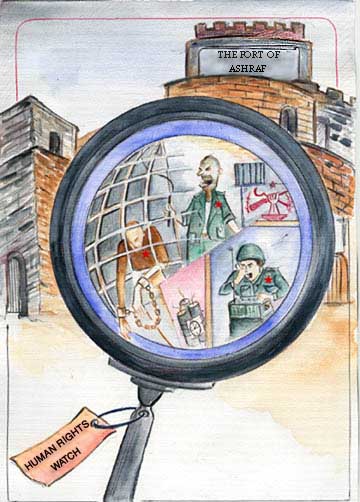
Chapter14 In March 2003,the American troops surrounded camp Ashraf ,the principal military base of Mujahedin in Iraqi territory ,located on the West of Iranian border at a hundred kilometers North of  Bagdad. It contained 3850 men, armed with heavy arms including tanks and artilleries. They are disarmed and detained in the camp.  Tehran sent a message to White House, by its intermediate Javad Zarif, its ambassador in United Nations. Iran proposed to exchange the Al-Qiada high-ranking members who had been detained in Iran, following the September 11th, for the 3850 men of MEK. “Your terrorists instead of ours” mentioned Zarif.  The suggestion that was made in the middle of March became the subject of a meeting between Bush and his top advisors. As always, Cheney was sitting on the right side of the president ,in the Situation Room. This conference room , especially decorated ,is located in the basement of the White House. A lot of rooms surround it, with large maps of different regions of the world on the walls. The information that is transmitted every morning to the White House by the secret services are reproduced on these maps. The Situation Room is also equipped with extra ordinarily sophisticated computers that let the authorities in the room contact instantly with any part of the world.  Bush, who had had the war on terror and particularly the elimination of terrorists, should have been satisfied with this suggestion. Besides, the deal was good to Iran because if they could have reached the [MKO] leaders, they could have used their intelligence to prohibit the emergence of possible attacks.  But, finally the Americans refused the suggestion that Cheney resumed declaring:”we preserve all the options.” 

“This group loves the United States”  For Washington, MEK is not only an “option”, but also a reality; it has an office in the very official building of National Press, a high place of the whole American Press in American Capital.  On April 8th, 2003, Ileana Rose-Lehtinen, republican from Florida, president  of the sub-committee on international relations for Near-East  and Central Asia declared about Mujahedin:” this group loves the United States. They are assisting us in war on terrorism they’re pro-US . This group has not fought  against the US. It’s simply not true. .”  In Washington, numerous figures including Paul Wolfowitz and Dauglas Feith are reviewing MEK as an ideal instrument for the politics they would like to take against Iran. The grouplet also tries to seem credible. Its spokesman in Washington, AliReza Jaafar zade, who took distance from the MKO in 2003, fed the Americans with the revelations on Iranian nuclear program.  On May 10th,2003 general Ray Odierno, commandant of the forth infantry division installed in Iraq. declared:”I would say that any organization that has given up its equipment to the coalition clearly is cooperating with us, and I believe that it  should be reviewed whether  they are  still a terrorist organization or not.”  A declaration that is a little thought of, shows the spiritual status of many military officials. Michael Ledeen has well said:” I’m not the man to get closer that 300 kilometers to MEK, these men are not supported, they have no legality.” He knows well that it is a lie. Mujahidin were received at least by the United States that became their really political sponsor.

“A terrorist group is not necessarily illegal” Just after the reelection of George W.Bush, the Vice-president Cheney declared on January 20th, 2005 on CBS:” if you provide a list of potential zones of problem, Iran is on the top.“ At the same time, he asked the director of CIA to think of using MKO forces for sabotage operations inside Iran.  Maryam Rajavi and her movement who assassinated in the past several Americans and served Saddam Hussein as supplemetary force, became an arm in the hands of American president and his advisors. The only obstacle against an open cooperation between MEK and the American administration: the organization has figured on the list of foreign terrorist organizations of the State Department since 1997. A designation that curiously didn’t forbid it from having an office and activities in American capital. John Ashcroft, the ultra-conservative minister of Justice, supports the group actively and one of his collaborators explains this juridical ambiguity:”the simple designation of a group as a foreign terrorist organization doesn’t make it necessarily illegal.” The organization is recorded by the Justice Department as a lobbyist foundation, an activity that they are skilled in.  In January 2005, a former collaborator of Ronald Reagan, Raymond Tanter, created Iran Policy Committee, composed of “former officials of White House, State Department and Pentagon, The Intelligence Agencies, the research centers and universities.” And, he fails to mention the several important representatives of arm industries. According to members of IPC “Iran poses the main treat against the United States and its allies.” Since its creation, the committee put pressure on the Administration to remove MEK from the terrorist list and “to put these freedom fighters on the top of the strategy for regime change in Iran.” During a conference, on November 21st 2005, Taner declared :” one of the military options is the ‘ Robust Nuclear Earth Penetrator [ a nuclear bomb tactic in large measure] that could have the capacity to destruct the tunnels profoundly undergrounded and sub terrain installations.” After, this radical introduction, he adds: “the international community should realize that there is only one group that can terrify the regime of Tehran: the People’s Mujahedin and National Council Resistance of Iran, the political coalition that MEK belongs to. [..] They are not only the best sources of Intelligence on the potential violation of the rules of non-proliferation, by Iran; but also they are possible allies of the West to bring regime change in Tehran.”  

“The Increasing quarrel of  the civilizations” Tanter’s innovation was supported by Tom Tancerdo, the Representative of Colorado in house of Representatives. The man whose reputation is due to his plan for the deport of clandestine workers on American territory, the construction of a wall throughout the borders of the country and the necessity for the United States to engage in the “The Increasing quarrel of  the civilizations’’. “ I think” he says, “we are not fighting only a small group who took religion as hostage, but a civilization that is determined to destruct us: radical Islam. Radical Islam has been the enemy of Christians since centuries ago. ‘’ In 2005, he also founded “the Assembly for Democracy and the League for Human Rights in Iran.” He described Maryam Rajavi as “very charismatic; she believes in the women’s rights, she believes in democracy in Iran. I support her efforts. I know that the US has qualified it as a terrorist organization, but you have to know that they were designated after the Clinton Administration was seeking to achieve a relation with Iran and with Mullahs; these ones wanted to formulate an only exigency: that the Mujahedin be listed as a terrorist organization and the designation was made due to political reasons and it doesn’t mean that they pose a threat to the United States. “ 

“Thanks, sister Maryam”  On the early days of May 2005, MEK organized a large demonstration in Washington, at Constitution Hall, to represent itself as the legitimate representative of resistance .A lot of members of Congress were present. A number of lecturer were there too. One of them was Captain Vivian Gembara of the fourth infantry division, a jurist who negotiated the disarmement of Mujahedin in Iraq. She is the daughter of an officer of special forces that was a really legend during the Vietnam War:”It’s just simply imprudent” she said “ to continue the exclusion of MEK, since we have to  face a much more important threat in Iran.”  On October 20th,2005, Maryam Rajavi addressed the congress. The self-proclaimed President of Iran attended the Capitol by video satellite directly from Auver-Sur-d’Oise . The 51 year-old woman received the cheers of the audience with a humble smile. At the end of her speeches, the democrat representative of Texas, Sheila Jackson said emotionally:” thanks, sister Maryam.”  The title “Freedom Fighter” is an appropriate title for any political rebel … At their eras, Jonas Savimbi in Angola and Masud in Afghanistan practiced it successfully, having received financial and military support.  Maryam Rajavi promises exactly what her sympathizers like to hear. In January 2005, she engaged in organizing the free elections in six months following the regime change and to form a constituent assembly in order to lead the affairs by the representatives elected by people.” The admirable declarations that were contradicted by the report published Human Rights Watch at the same time. Twenty–eight onerous pages with the appropriate title:” No Exit: Human Rights abuses inside the MEK Camp.” According to Joe Stork the director of Middle East branch of HRW, in Washington: ”The Iranian government  has a shameful record on human rights, but it will be a big mistake to support a dissident group that is responsible of a lot of cases of human rights violations.”  The reports are based on the evidences of twelve former Mujahedin who were interviewed from February to May, 2005. They explained the use of torture, maltreatment and solidarity confinement after they had criticized the undemocratic methods of the movement and declared their willingness to leave the organization.  Two of them declared that they had witnessed the death of two prisoners during the interrogations. “The MEK” they said “ has installed special prisons in its Iraqi Camps where the dissidents are detained.” One of the eyewitnesses explained that he had been imprisoned for eight and a half years, the other one,  for five years.The four other defectors, accused of having opinions, affirmed of having been severely tortured and forced to sign false confessions in which they are recognized of having links with the agents of Iranians Intelligence Service.  Three former Mujahedin witnessed the death of Parviz Ahmadi, the commander of a unit. He died in February 1995 after he was beaten violently. It lasted three years for the MEK to announce his death, in the organization journal, Mojahed, as a “martyr” assassinated by the Iranian Intelligence Service.  All these testimonies, finally describe the very evidence that ” People’s Mujahedin is not a political movement but a cult devoted to the personality of the couple leaders.’’ The report was not considered as important by the media.  It should be said that nowadays in Washington the tensions are on the rise as well as 2002-2003 while the American invasion to Iraq.

” CIA attracts too much lightening”  In the fall 2004,while George Bush was campaigning for his reelection , declared in an interview by Fox NEWS network that feeds him with a pleasant support:” Iran will never be allowed to achieve nuclear weapons”  In February 2005, in his annual lecture on state of Union , he spoke a long speech on Iran that “ is the principal state sponsor of terrorism that seeks the program of the development of nuclear weapons, depriving its own people of liberty […]” . A few days before that, in January 2005 , “ Iran  Freedom Support Act” , intended to support a transition toward democracy in Iran, was introduced in the Chamber of Representatives. A month later it would be adopted by Senate. The act permits financing the opposition groups. At the head is the MEK which the only one that has an operational structure.  In the unrevealed scene of American politics, including the State Department and the Pentagon, MEK is a source of confrontations.  A testimony of this iron arm summarizes the situation:” the militarists consider them as their comrades and the diplomats consider them as terrorists” Condi Rice reproaches Rumsfeld for using MEK secretly for the clandestine operations. The information of the State Secretary is exact. They have become the “counter Iranian”, used in a totally illegal way, by the pentagon and DIA, the secret military services for the guerilla’s activity inside Iran. CIA is totally put away,” because it attracts too much complaints against the administration“ said to me, one of the officials of CIA. 

“Our policy has not changed”  There is not any presidential directive to permit such operations. The thing that, allows, at least in theory, to short-circuit  the eventual investigations of Senate and home of Representatives. The camps, controlled by the Special Forces and located in the deserts around Iran – Iraq border, have been used for the formation and military training of Mujahedin for their sabotage operations inside Iran.   An only man who knows everything on these clandestine operations is the sub-secretary of Defense, Stephen Combone, and a neo-conservative that a lot of people consider him as the real arm of Rumsfeld. A man “in shadow”, according to one of his collaborators, he is literally fascinated by the potentiality of MEK: about the intelligence on the Iranian nuclear program, but also because it is the only group that has the power to launch terrorist operations to   make  the Iranian leaders anxious. Cambone has also negotiated with the Pakistani authorities and gained the agreement of President Parvis Musharaf so as the Mujahedin could use the Baluchistan Province to launch their operations.  Interviewed by a reporter, the spokesman of the White House, Scott Mc Clellan, denies the intervention of the Administration.  “ – a lot of reports” asks a journalist,” reveal the operations launched in Iran, from three different areas. PKK on Iraqi border, MEK on the Southern border and also some operations from Baluchistan. Does the United- States have any policy? There are also some reports on the possible operations launched by the Special Forces in Iran.”  “- our policies towards these organization haven’t changed” replied the spokesman of White house. […] “We still consider them as terrorist organizations.”  “ – and we have never cooperated with them, I mean ….?”  “Our policies haven’t changed” repeated Mc Clellan. Auver-Sur-Oise, April 2007. The man who joins us in the garden of this property, located at 200 meters from Mairie Place, is a close collaborator of Maryam Rajavi … in his forties, fine moustache, imposing glasses, he oppose my questions as well as the spokesman of the White House :’ we have no contact with the United States and we don’t launch ,with their help , any operation inside Iran.” To any question he gives the same smile. “No, we don’t receive any financial aid from Washington.” an American military operation against Iran? His fingers touch the edge of the cup of coffee: “our position is very clear. We oppose any foreign intervention.”

Translation: Nejat Society   


Download”Bush,Iran and Bomb”

March 11, 2008 0 comments
FacebookTwitterPinterestWhatsappTelegramSkypeEmail
Former members of the MEK

Ms Batul Soltani, former member of the Leadership Council of the MKO,interviewed by SFF in Iraq

 SFF: Please describe your political and organisational life briefly.  BS: My name is Batul Soltani daughter of Morteza. I was born in 1965 in Iran and at the moment I live in Baghdad. I married Mr Hosein Moradi in Iran in 1986 and then we moved to Pakistan the same year. There we were recruited into the MKO and the next year, which is 1987, we were ordered to go to Iraq. In 1991 we were separated by the order of the organisation and yet again by their order our children were taken away from us and sent to Europe. My husband and I initially resisted these orders and did not wish to either be separated from each other, nor to abandon our children, but we were put under enormous psychological pressure and we were forced to submit to their demands. 

My daughter Hajar Moradi was born in Pakistan in 1987 and my son Mi’ad was born in Iraq in 1991. In the year 1991 while Hajar was 5 years old and Mi’ad was 6 months old, they were separated from us – after we were forcibly separated from each other – and they were sent to Europe. They did not allow us to have any contact with them at all. I still remember my daughter crying hard as she was leaving me. And the innocent face of my six months’ old son is always before my eyes.   Many years later I found out that my daughter had been given to a family in the south of Sweden with the fake name of Setareh Khabbazan, and she is now studying in a university in the north of that country. My son was taken to Holland by a family and later moved to another family and eventually was left in an orphanage and now he lives in a care centre for youth in Holland. I do not have any further trace of them and do not even know if they know me at all. The MKO would not give me any addresses and I have no means to contact my children.  While I was in the organisation in Iraq I had no permission to contact my family in Iran unless it was to ask for money or try to deceive them into joining the organisation. My father died four years ago whilst under severe mental pressure because of my mysterious absence and my mother is ill and lives with the bitterness of being away from me for such long time.  I left the organisation last year, which is 2006, while I was a member of the Leadership Council of the MKO. I escaped from Camp Ashraf and moved into TIPF, which is run by the US forces in Iraq. Then on 14 January 2008 I left the TIPF and moved to Baghdad in order to go abroad. I managed to achieve that possibility but I preferred to stay in Iraq since I have complaints against the MKO and I wish for the Iraqi judicial system to deal with my case urgently.  SFF: Why didn’t you go to abroad after you left the TIPF and had the possibility to do so? Why did you decide to stay in Iraq?

BS: I stayed in Iraq to save my husband who is the father of my children and also I wish to help other shattered families like that of my own. I will do anything in my capacity for the families and for the dissident members of the MKO. The truth is that the leader of the MKO has committed many atrocities against these families and he must be questioned for all his actions.

SFF: As a wife and as a mother what demands are you following?

BS: You’d better ask ‘as a human being’ what demands am I following. Of course a human being who has lost 20 years of her life and could not be with her father when he was dying and whose mother is badly missing her and who now wants to regain her husband and her children and her crushed life and rebuild everything from scratch. I will strive to attract the attention of all international political bodies as well as the media to the case of the families of MKO members in Iraq and I wish to help them by any means that I can.

SFF: You have obviously experienced the destruction of a family inside a cult. How do you reckon that one could help other families?

BS: I will do anything I can for these families. I would urge international and humanitarian organisations everywhere to help these suffering families – families who in some cases have not seen their beloved ones for nearly 20 years. The members of the MKO are in a sort of captivity which is worse than any ordinary prison.

SFF: Why is the MKO basically opposing the establishment of any family and what is their definition of a family?

BS: In my opinion the MKO is opposing families because the existence of any kind of feelings and emotions in the members and followers is considered as an obstacle in the way of brainwashing them. The essential state needed to control one’s mind is to suppress anything of that sort in that person. Therefore every trace of love and care most be demolished in the mind of the subject in order to make that person successfully obedient of the leader. No other tendency must exist in the heart of the follower than that towards the leader in order to make the person ready to accept any illogical demand of the leader and to fulfil any of his bizarre desires.

SFF: How are the dissidents of the MKO in Iraq living now and what sort of help they can receive?

BS: At the moment the dissidents of the MKO in Iraq need urgent help. On the one hand they face threats from the Rajavi cult since this the rule of cults, that they cannot tolerate their dissidents and they harass them all the time, and on the other hand these people need legal and financial aid to be able to rebuild their destroyed lives where they wish. In this regard the SFF which is a humanitarian foundation and has been established by Iraqi personalities and international bodies as well as some families of the MKO members in Camp Ashraf is aiming to rescue these people as much as possible and help their families.

SFF: What is the demand of the families who come to Iraq and approach the gates of Camp Ashraf?

BS: They have a righteous and just demand. They want to see their beloved ones without any control and observation imposed by the MKO. For many years these people have been indoctrinated within the isolated boundaries of Camp Ashraf, and they have been denied their basic rights, above all of which is the right to choose freely and to enjoy family relationships. They have always been forced to choose what the leaders want them to. The members of a cult are the prime victims of that cult who need urgent help.

SFF: How could the families help their beloved ones and what can they achieve?

BS: In my opinion some important things could be done. Initially they can neutralize the belief imposed on them under the guise of ‘the path to emancipation’ that family relationships are a sin. This is vital in order to bring their beloved ones back to normal ideas and ordinary life so they can choose for themselves. The truth is that family values and relationships are contrary to cult relationships and would surely deactivate it.

SFF: In your opinion why is the MKO so strongly opposed to its members’ free and direct meeting with their families in Baghdad?

BS: Because as soon as some sort of family tie is established, the lost human feeling of love and affection would come to life in them again, something which Rajavi’s cult is so afraid of. The MKO insists that all members’ feelings and emotions be directed towards Maryam Rajavi and through her to Mas’ud Rajavi.

SFF: What are your plans for the future?

BS: From now on I want to live freely and I wish to decide for myself what to do. I do not wish to be a captive in the boundaries of a destructive cult and will not let them decide for me. I am experiencing the outside world again after 20 years and now I have a better understanding of the realities of the misery inside a cult. I wish to help all those still bound within Camp Ashraf and also their awaiting families as much as I can.

In this respect I wish to refer to the touching will of the father of one of those mental captives in Camp Ashraf who wrote: "I do not know for what reason I should not hold the warm hand of my beloved one while my hand is turning cold?’" He passed away without being able to see his child one more time after so many years.

SFF: We do thank you Ms Soltani for the time you provided us and the good work that you are doing and we wish you every success.

BS: I thank you too and I appreciate the efforts of all Iraqi and Iranian associates of the SFF in Iraq. I believe that you do very good work.

March 9, 2008 0 comments
FacebookTwitterPinterestWhatsappTelegramSkypeEmail
Raymond Tanter

Raymond Tanter’s Quest to Free Iran

Irving Kristol, a founder of neoconservatism, once said that a neoconservative is a liberal who’s been mugged by reality. At Georgetown, we have Raymond Tanter, a conservative who’s had his bike stolen. After the theft, he got a new chain intended for motorcycles, which looks more appropriate in the hand of a wrathful Hell’s Angel than a dapper Georgetown professor.

“That’s a heavy bike. The lock is over here, you’re not even reaching the lock, he said before leaving campus to bike to Capitol Hill to talk with members of Congress (he wouldn’t reveal their names) about his plan for solving America’s problems in Iran and Iraq: relying on a group the State Department calls terrorists.

As the president of the Iran Policy Committee, a non-profit organization that promotes using Iranian oppositionists against Iran, Tanter is a tireless booster for the Mujahedin-e-Khalq (MEK), an armed group of Iranian exiles that seeks to overthrow the Iranian government. Its efforts are hampered by its placement on the State Department’s list of foreign terrorist organizations, a classification Tanter says should be reversed so the MEK can counter Iran. Still, dressed in a matching plaid blazer, pants and bow tie, Tanter doesn’t look like a Washington lobbyist. Only the phone clipped to his belt suggests that he is tied to a worldwide effort to change U.S. policy on a controversial army that the Council on Foreign Relations estimates has 10,000 members. Tanter does not consider himself a lobbyist”because the MEK is considered a terrorist group, advocacy on their behalf is illegal. The Thinker Professor Raymond Tanter says the Iranian rebel group Mujahedin-e-Khalq can reduce Sunni terrorism in Iraq and counter Iran’s ayatollah regime.   EMILY VOIGTLANDER “I’m not an advocacy group either, I’m 501©(3),” he said, referring to the tax provision for non-profit groups. The Iran Policy Committee is a 501©(3). We educate the public, we don’t advocate.”   Tanter has been busy educating people on both sides of the Atlantic in the past year. In addition to meeting with Congress, Tanter spoke in the British Houses of Lords and Commons last year and met with members of the European Parliament in Belgium. At the beginning of February, he held a press conference in France calling for the delisting of the MEK-linked National Council. I’m on a roll, don’t you think he said of his recent activities abroad.  The MEK has been on the State Department’s list of foreign terrorist organizations since 1997 and has been blamed for killing civilians and American military personnel before the 1979 Iranian Revolution. A one-time ally of Iran’s religious government, the MEK was exiled and fought on the Iraqi side in the Iran-Iraq War. The group, which has a largely female officer corps, has been tied to numerous violent incidents; a 1981 bombing attack of the Iranian government killed 70 high-ranking officials. The MEK also allegedly helped Iraqi dictator Saddam Hussein in the bloody suppression of Kurdish and Shia rebellions in 1991, though the group denies involvement. Recently, the MEK has provided the United States with information about sites suspected to be involved in an Iranian nuclear program.  During the 2003 invasion of Iraq, the American military bombed the MEK camp until a ceasefire was reached with the group that allowed it to keep its camp in exchange for not fighting Coalition forces. The MEK was not disbanded after the war, avoiding the fate of much of the Iraqi military, and Human Rights Watch reported in 2005 that the MEK’s base was used to hold prisoners for the U.S. government. While the United States and the MEK coexist in Iraq, their relationship is different in this country. In 2002, the State Department shut down the Washington offices of the National Council of Resistance of Iran, an umbrella group to which the MEK belongs. According to Tanter, treating the MEK like terrorists is counterproductive to American interests. In his evocatively-titled books Baghdad Ablaze and Appeasing the Ayatollahs and Suppressing Democracy, he promises a plethora of benefits to come from removing the MEK from the terrorist list: it would wean Sunnis from the insurgency and break the cycle of sectarian violence in Iraq and help democratic forces establish liberty  in Iran.

Alireza Jafarzadeh at the National Press Club. Next to him (l to r) are Lt. Gen. Thomas McInerney (ret.), Bruce McColm and Professor Tanter.

Courtesy ALIREZA JAFARZADEH

When he taught at the University of Michigan, Tanter helped convince prospective athletic recruits to choose the Wolverines. Now that he’s at Georgetown, he insists he’s not trying to recruit his students to his school of thought. “I’m not a preacher, I’m a scholar,” he said. In his class, Terrorism and Proliferation, Tanter uses an aggressive cold calling technique, imploring some students to “be Googling!”, others to challenge their classmates and one girl to smile. Tanter uses his connections with special guests to surprise his students, he once made them present threat assessments to Iranian dissident Alireza Jafarzadeh and former Spanish president José María Aznar.

during another class, former Polish president Aleksander Kwasniewski discussed threats from Iran and Russia, and complimented the class on their presentations (he offered to send one student’s analysis to the Polish foreign minister).

“I’m probably in over my head,”  Devon Cohen (SFS “˜10), one of Tanter’s students this semester, said, “But I love the class.” Tanter is aggressive about his views in class, according to Cohen. “It’s kind of his way or the highway in his perspective,” she said.  Tanter runs his class imperiously, telling students and presidents alike to speak louder or stand up when they talk.   “I do sound like a general, don’t I? Maybe a colonel,” he said, adding that despite his work on Iran he remains dedicated to teaching. Tanter and his students frequently refer to his books about Iran and the MEK in class, though some question his estimate of the MEK’s power to change Iraq and Iran. Russ Greene (SFS “˜09) critiqued Tanter’s optimistic assessment of the group’s abilities in class, noting that It kind of sounds like [Tanter is] a lobbyist for the MEK.” “I forgive you for calling me a lobbyist,” he replied.  Once, while Tanter was a professor at Michigan, pro-Palestinian activists disrupted a speech he was giving.  “The protesters laid down on the ground and forced the security people to pick them up,” he said. “They put on YouTube that this was violence against students.” While nothing similar has happened at Georgetown, some on campus, like Daniel Byman, the director of Georgetown’s Center for Peace and Security Studies, oppose Tanter’s positive view of the MEK. 50,000 Strong for the MEK Last June, 50,000 Iranians rallied in Paris for Maryam Rajavi, the leader of the MEK.  Courtesy THE NATIONAL COUNCIL OF RESISTANCE OF IRAN  “I generally agree with the U.S. government’s view that it is a terrorist organization,” he said, adding that he did not think the MEK should be taken off the Foreign Terrorist Organizations list. “It would anger some Shia groups we’re having trouble with.” Byman did not discount Tanter himself, though, saying that despite their different views, he considers Tanter “serious.”  “I work in hot topics,” Tanter said, trying to explain the breadth of issues he has covered in his government and teaching jobs. Tanter’s career plays like a highlight reel of American foreign policy crises: he has written books about Lebanon, Vietnam and rogue states, and was the personal representative for Secretary of Defense Caspar Weinberger at multiple arms control meetings. Tanter came to Washington after 9/11 because he “wanted to be closer to the action.” Here in D.C., besides teaching and running the Iran Policy Committee, Tanter has worked with the Department of Justice on terrorism issues.

“I think Professor Tanter has played an important role in igniting a debate in Washington about a policy option that was before him limited to Congress,” Alireza Jafarzadeh, a former spokesman for the National Council of Resistance of Iran, the umbrella group that includes the MEK which had its Washington office closed, said. In 2002, Jafarzadeh gave the United States information which he said demonstrated a budding Iranian nuclear program.

“There was a lot of talk in the U.S. Congress supporting the idea of regime change through relying on the Iranian opposition,” Jafarzadeh said. “But Professor Tanter made that an academic debate, a debate among the think tanks, the experts doing research on it, giving it much more depth than it was before.”

Tanter can’t remember when he started wearing bow ties, which have become, like the MEK, linked to his public persona. “I’ve been bow-tieing forever, “ he said. The bow ties have contributed to Tanter’s reputation as a snappy dresser””in an article on the MEK, MSNBC called him “nattily dressed.”

After working for the Department of Defense and teaching at several American universities, Tanter was appointed to Ronald Reagan’s National Security Council in 1981 (he also worked on Reagan’s 1980 presidential campaign). Asked if he knows anything about rumored negotiations between Ronald Reagan’s campaign staff and the Iranian government to hurt Jimmy Carter’s chances in the election, Tanter laughed and said he didn’ t work in that part of the campaign””then pointed out that he didn’t deny or confirm the rumor.

Journalist Yvonne Ridley thinks Tanter’s   claims about the MEK are ridiculous. Courtesy YVONNE RIDLEY During the campaign, Tanter worked with Zalmay Khalilzad, the current U.S. Ambassador to the United Nations. Tanter called Khalilzad his friend, then backtracked, saying “When someone is a friend who goes higher [professionally], you can’t really call them a friend anymore.”  Watching Khalilzad deliver a speech about the Middle East in Gaston Hall in November, Tanter knit his fingers under his chin, pointing out when the Ambassador echoed a point Tanter made in Baghdad Ablaze. When Khalilzad mentioned “internal elements in Iran,” Tanter leaned over excitedly and whispered “Did you hear that? Internal elements in Iran.” Despite this possible nod to the MEK, Tanter said he does not think his opinions have been adopted by the Washington foreign policy establishment.  Working in the Reagan administration gave Tanter access not only to Khalilzad, but also other influential Republicans who continue to influence foreign policy. In the acknowledgments chapter of his book Who’s At the Helm?: Lessons of Lebanon, he thanks Ronald Reagan, Donald Rumsfeld, and George Bush for being “supportive of [his] professional development.”

Still, Tanter’s connections and history with Republicans haven’t been able to get him a meeting with the woman who could most help him get the MEK delisted: Secretary of State Condoleezza Rice.

“I’m trying to get a “˜date’ with her,” he said, “But her staff is keeping me away.” Since the State Department decides what groups are designated as foreign terrorist organizations, one good meeting with Secretary Rice could mean new resources and status for the MEK and vindication for Tanter.

Tanter last visited Iran in 1975 when it was still ruled by the pro-Western Shah. After the Shah’s repressive regime was overthrown by a coalition of bourgeois intellectuals and fundamentalist Shia ayatollahs, the ayatollahs gained the upperhand and turned against the Shah’s foreign backers, including the United States.

“I’ve gotten invitations from the Iranian regime to come, which I consider to be””gick!” Tanter said, drawing his hand across his neck and making a noise like his throat was being cut. “They ask me to come on Iranian television all the time. No, I don’t want to give them the legitimacy.”

At least some in Iranian television aren’t eager to give him legitimacy, either.

“You’d have more chance of seeing the Pope’s b**ls [sic] than seeing this lot being taken seriously by anyone,” journalist Yvonne Ridley wrote in an e-mail. Ridley hosts a show on Press TV, an international television channel funded by the Iranian government.  Ridley also questioned Tanter’s claim that the MEK can bring change to Iran. “The Iranian Government hates them, the pro-Shah/return-the-Peacock-Throne lobby hate them. Saddam loved them and they were part of the famous “˜Saddam’s Tank Girls,’” she wrote, referring to the large number of women in the MEK army. Tanter’s personal conversation continually echoes his professional interest; he lists Lawrence of Arabia, a film whose hero gains his government’s support for a rebel movement in the Middle East, as one of his favorite movies, and he can turn anything into a metaphor about Iran. He plays tennis twice a week, and is quick to draw an analogy between this hobby and his passion. “In tennis, stroke the ball leaning forward, not on your backfoot,” he wrote in an e-mail, “Similarly, the Iranian regime is leaning forward by building the Bomb, destabilizing Iraq and threatening its neighbors.” Even the air he breathes is fodder for a metaphor””Iranian meddling in Iraq “is like oxygen fanning the flames of conflict in Iraq.” Despite his relentless focus on Iran and the MEK, Tanter says he will not let his work as an educator suffer. “I’m still committed to my teaching, even though I’m involved in all this transformational business,” Tanter said. Whether in the classroom, Congress, or Europe, Tanter’s work is teaching. Speaking about his research on Iran, Tanter said, “You don’t have to buy mine, just do yours.”  Will Sommer – georgetownvoice – March 5, 2008



March 9, 2008 0 comments
FacebookTwitterPinterestWhatsappTelegramSkypeEmail
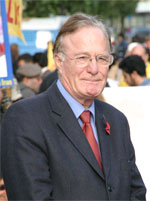
Lord Corbett

Member of Parliament for Hire?

Joseph Joubert said: “Imagination is the eye of the soul”. It therefore comes as no surprise that with terrorists lending their imagination to Lord Corbett of Castle Vale, a member of the House of Lords from Gordon Brown’s ruling Labor Party, his soul is blinded. Lord Corbett would have us believe that millions of Iranians are eagerly waiting for the “freedoms offered by Iran’s parliament-in-exile, the National Council of Resistance of Iran.” Perhaps it is the inaccuracy of the number that troubles this writer.  , the only terrorists in Iraq, the MEK, were given ‘special persons status’; hardly a noteworthy credential for ‘self-acclaimed parliamentarians in exile’ who wants to offer freedom, unless the sort offered by the Bush-Blair coalition – complete destruction of Iran.   One must wonder what has prompted a distinguished British Lord to rise up in the defense of terrorists, and more importantly, to accept the highly visible position of chairman of the British Parliamentary Committee for Iran Freedom? To believe in a ‘good Samaritan’ state is fool-hardy. Empirical evidence supports the fact that Britain’s foreign policy has been in direct conflict with that of Iran’s national interest. Given that the MEK’s history has been fully explored and recorded by the Human Rights Watch organization and the United States State Department, one has to examine Lord Corbett’s risky undertaking in associating his distinguished title with this group.  Ronal Reagan once said: “Politics is supposed to be the second oldest profession. I have come to realize that it bears a very close resemblance to the first”. He was remarkably astute in his observation. In 1995, it became painfully clear to Lord Nolan that 30% of all MPs were being paid for consultancies (advice and lobbying) related to their parliamentary role. At the time of this revelation, the majority of Conservative backbenchers were ‘spoken for’ by one commercial lobby or another.  An influential lobby group called ‘Decision Makers’ had Dame Angela Rumbold, Vice-Chairman of the Conservative Party as one of its directors. She resigned when Mohammed Al-Fayed, father of Princess Diana’s fiancé, Dodi Fayed, made allegations against senior party figures[iii]. Another ‘lobbying company’ was set up by lan Greer who began in politics working for Cabinet Minister Peter Walker. He remained a Conservative agent for thirteen years after which he has enjoyed close links with senior Conservative politicians. In 1969 he began lobbying as a business. Among Ian Greer Associates (IGA) was Prime Minister Bhutto.  Could it be that the MEK is using a lobby group to influence the likes of LordLord Corbett Corbett? This group is not without influence. Indeed, they have many friends in the United States Congress. They are cunning and skillful in the art of deception. They have also had the world believe that the minority religious in Iran are being persecuted setting Iran in the ‘Orientalist’ perspective of the Muslim ‘otherness’ denoting barbarism. This will give the neocons who believe in a combination of force, ideas, and morality the ammunition to attack Iran. However, nothing is further from the truth. The minorities themselves have spoken to this fact:”Christians and Zoroastrians leave because of unemployment, the bad economy, but these problems affect all Iranians,”said Yonathan Betkolia, an Assyrian Christian leader and member of Iran’s parliament who holds the United States responsible for his community’s decline.”They give all those green cards to our people. Their only goal is to propagate the idea that Iran is mistreating its minorities.”  Who is providing this group with such logistical support? Heilbrunn, a former neoconservative who is now senior editor at the Nixon Center’s journal,”The National Interest”, asserts that neoconservatism”is in a decisive respect a Jewish phenomenon,”even if many adherents — albeit a minority — are not Jewish. Moreover, neoconservatives, both Jew and gentile, are bound by a”shared commitment to the largest, most important Jewish cause: the survival of Israel.”Let us hope, for the sake of the British people, and others, that the good Lord Corbett of Castle Vale will not be so easily misguided by unsavory groups in the future.  Soraya Sepahpour-Ulrich is an Iranian-American who was educated in Iran, England and France. She is a member of World Association of International Studies – Stanford. Her research focus is US Foreign Policy towards Iran and Iran’s nuclear program, and the role of lobby groups in influencing US foreign policy. She is a peace activist, essayist and public speaker.

Middle East Online, Opinion, March 4, 2008 http://www.middle-east-online.com/english/opinion/?id=24624

March 9, 2008 0 comments
FacebookTwitterPinterestWhatsappTelegramSkypeEmail
Iraq

Uprooting Terrorism, the Solution to Chaos in Iraq


The first outcomes of Iranian president’s visit to Iraq was al-Maliki’s reiteration that Iraq will not let terrorist groups like al-Qaeda, the Mujahedin Khalq uprootinh terrorism in IraqOrganization (MKO) or the Kurdistan Workers Party (PKK) terrorist groups turn Iraq into a base against friendly countries in the region. That is what Iraq needs to end a phase of anarchy following the fall of the dictator who acted as the god-father of terrorism and groups like MKO that is notoriously known to have acted as Saddam’s mercenaries and private army. Ahmadinejad’s landmark visit to Baghdad is referred to as a "hero’s welcome" and "extremely helpful" even by the critics of the Iranian regime and slogans on the walls of houses and public markets in Baghdad’s Sadr City are reported to be all welcoming Ahmadinejad and hailing him as a hero. Of course, none of the active insurgent and terrorist groups can tolerate any move taken to uproot terrorism in Iraq and smash their fortified safe-havens in a variety of provinces. In a widespread propaganda blitz, for instance, MKO is trying to overstress protests against Ahmadinejad’s presence in Iraq and it is not wrong to say that the organization is the main instigator of a trifle of public demonstration. Once one of Saddam’s chief internal accomplices in his crimes against Iraqi people, MKO now plays a key role in masterminding organized protests against the decisions adopted by Iraq’s legal government. Following a given report of protests in some parts of Iraq, MKO adds: Last November more than 300,000 Iraqis including hundreds of Shiite tribal leaders from Southern provinces signed a petition condemning Iranian regime’s meddling in Iraq and supported the presence of the main Iranian opposition group, the People’s Mojahedin Organization of Iran (PMOI/MEK) in that country. The petition was viewed as a turning point in Iraq. For the first time there was a public and organized display of opposition toward Iranian regime’s meddling by tribal leaders in the predominantly Shiite south. National solidarity and a united front to uproot terrorism will put an end to Iraq’s chaotic social disorder. Unfortunately, terrorists and insurgents meddling has disheartened efforts toward the accomplishment of a comprehensive social peace.   

‘Terrorists will not use Iraq soil’

Presstv, March 3, 2008

Iraqi ambassador: MKO presence not permanent

IRNA, February 27, 2008

Iraqi Ambassador to Tehran Mohammad Majeed Al-Sheikh said here on Tuesday that the presence of members of the terrorist Mujahideen Khalq Organization ”MKO” in Iraq is not permanent. "The MKO members have been staying in Iraq before the Saddam Hussein regime was toppled," he said, adding the necessary measures have been taken to expel them. Al-Sheikh noted that the Iraqi government is not satisfied with their presence and said they would stay in Iraq until they find another country to accept them. The envoy assured that the Iraqi government does not permit any action against the Islamic Republic. He put the volume of Tehran-Baghdad trade at dlrs 2.4 billion, calling for expansion of mutual cooperation in all fields. Referring to the exporting electricity to Iraq, he underlined that the Islamic Republic has launched some electricity projects in the cities of Shalamcheh and Basra which are in final stages. He also termed the Tehran-Baghdad cultural and medical cooperation as proper, adding the bilateral cooperation in this regard is very good and effective. With the aim of boosting the cultural and medical cooperation, al-Sheikh stated that a medical conference is going to held in Naseriyeh in near future. He also called for holding talks between Iran and US, adding the Iraq issue is a good opportunity for them to set aside their differences. "We want to prove to the world that negotiations is the only solution to any problem," he observed. The envoy also voiced his country readiness to release some of the Iranian prisoners, adding currently a few Iranian prisoners are behind bars in Badreh Prison and negotiations are underway to release them. Referring to boosting bilateral cultural cooperation, the ambassador concluded that currently the issuance of visas for Iranian pilgrims have increased.   

Iraq Not a Place to Raid Neighbors

  A member of Iraqi parliament criticizes the Turkish incursion against PKK rebels in northern Iraq, stressing that Iraq’s territories should not be used to attack neighboring countries. "Before attacking northern Iraq, Turkey was supposed to attempt resolving the crisis by exercising the bilateral cooperation and diplomatic measures to prevent PKK from threatening Turkey’s security, a crucial measure that has regrettably not adopted, " said Abdul Aziz Al- Enzi, an Iraqi MP on Sunday evening to Alalam TV. He said that Iran has also expressed concerns over ‘Mujahedin Khalgh’ an Iranian opposition terrorist group (MKO) to employ Iraq’s territories to target some ends in Iran. "Iraqi government should adopt swift measures to resolve this crisis," he said. Al- Enzi stressed that any delay in resolving the MKO terrorists and PKK rebels’ crisis would have negative affect on Iraq- Turkey and Iraq- Iran ties. "Iraq’s Foreign Ministry should try to find a way out of this crisis to avoid such accidents with the adjacent countries, "he added. Al- Enzi rejected any rumors, saying, "Iraqi President Jalal Talabani has demanded Turkish government to suppress the PKK in northern Iraq," stressing that the president strongly respects Iraq’s sovereignty. He pointed out that the US has double standard policy towards Iraqi armed insurgents and US troops protect some armed militants such as the PKK rebels and MKO terrorists.

Alalam, February 25, 2008

"Iraqi government is not able to resolve the crisis of the armed groups, because it has not power to control the whole country, "he concluded.

Mojahedin.ws, March 3, 2008 

Iraqi Prime Minister Nouri al-Maliki has said that Baghdad would not let terrorists use its soil to attack neighboring countries. Democratic Iraq has a constitution and will not let terrorist groups including al-Qaeda, the Mujahedin Khalq Organization (MKO) or the Kurdistan Workers Party (PKK) insurgents turn Iraq into a base against friendly countries in the region, al-Maliki told IRNA Sunday. He added that Iraq is the ‘safety valve’ of the region and gave assurances that Baghdad would destroy terrorist group bases in the country to restore regional stability and security. The premier pointed to the current historic visit by the Iranian President Mahmoud Ahmadinejad to Iraq and invited Iran to carry out projects for the reconstruction of Iraq.  

March 9, 2008 0 comments
FacebookTwitterPinterestWhatsappTelegramSkypeEmail
Iraq

The presence of MKO terrorists prohibited by Iraqi constitution

Ahmadinejad and his Iraqi counterpart condemn an Iranian opposition group under U.S. guard northeast of Baghdad.

BAGHDAD” The presidents of Iran and Iraq today harshly condemned an Iranian opposition group here which has ties to U.S. neoconservatives and remains under the shelter of American forces.

President Mahmoud Ahmadinejad, who arrived here today on a historic visit, blasted the Mujahedin Khalq Organization, as munafiqin, or hypocrites. The term refers to an account in the Koran of a group who pretended to follow the Prophet Mohammed’s teachings only to betray Muslims.

Talabani, appearing with Ahmadinejad at a press conference, repeated the insulting word and added, "The presence of this terrorist organization is prohibited according to the constitution and we are seeking to get rid of them soon."

The armed opposition group, which sometimes goes by the abbreviations MKO, MEK or PMOI, fought the Iranian government during the 1980s, when it received shelter from Saddam Hussein. Both Europe and the U.S. State Dept. list the group as a terrorist organization.

But as tensions between the U.S. and Iran have mounted, some in Washington have cultivated ties with the group and advocated using them to destabilize the Tehran government. Numbering up to 3,000, they remain under U.S. guard at their former base northeast of Baghdad.

Before the press conference, Ahmadinejad strode up a red carpet and into the Iraqi presidential compound today for the start of what may be the first-ever visit by an Iranian head of state to Iraq. The deposed late Shah Mohammed Reza Pahlavi fled briefly to Iraq in 1953 amid political turmoil in Tehran.

Iran and Iraq fought a brutal eight-year war during the 1980s that left up to 1 million people in both countries dead and maimed. The United States accuses Iran of meddling in Iraq’s political affairs and violence.

But there was no sign of lingering animosity during today’s lavish arrival. Iraq’s president, Jalal Talabani, smiled broadly as he guided his guest from a dark sedan into his compound in Baghdad’s Karada district. Iran sheltered many leaders of the current Baghdad government during Hussein’s rule.

"We welcome them and all who helped the Iraqi people during the hard days when the Iraqis were displaced and deprived from all human rights," Talabani said at the press conference, which was aired live on Iraqi television. "We think that this visit will produce good results and the preliminary discussions have had good results."

Ahmadinejad, a divisive figure in his home country and internationally, steered clear of controversies during his first appearance. Iranian officials say the primary purpose of the visit is to enhance economic ties between Iran and Iraq. Since Hussein’s ouster five years ago, trade between the two countries has reached about $8 billion a year, and Iran recently announced a $1 billion loan to Iraq.

"It seems that the Iraqi people are passing through critical circumstances," Ahmadinejad told reporters. "But according to our knowledge with the Iraqi people we know that they have huge natural and human abilities and they will overcome these circumstances."

In a striking departure from other high-profile visitors to Iraq, Ahmadinejad did not use a helicopter to come into the center of the city from the airport. Instead, his convoy used the airport road, once notorious for bombs and other attacks and heavily patrolled by U.S. forces. He also did not head into the heavily protected Green Zone, going instead to Talabani’s home outside the fortified area.

A military band played rousing anthems as Ahmadinejad shook countless hands on his way into the building. Amid the stern-looking security men who surrounded the entourage, there was a notable omission: U.S. troops, who usually form the bulk of protection forces for high-profile guests in Iraq.

This time, the U.S. military made clear it would not be involved in protecting the Iranian president, who denies White House claims that his country has provided lethal bombs as well as training and financing to Shiite militias in Iraq.

Iraq’s government has also accused Iran of fomenting violence here and has indicated that the topic will be up for discussion during Ahmadinejad’s two-day visit.

"This should be presented at the table and discussed and negotiated," the Iraqi government spokesman, Ali Dabbagh, said recently when asked what would be on the agenda. "This is something that worries us in Iraq. We need to find a way to stop all this," he said, referring to alleged arms smuggling over the Iranian border.

Talabani, who visited Tehran in June, will host Ahmadinejad. The Iraqi president’s ties to Iran stretch back to the 1980s, when he and other Kurds as well as Iraqi Shiite Muslim political parties and militias sought refuge there and fought alongside Iranian forces against Saddam Hussein’s army. On Saturday, on the eve of Ahmadinejad’s visit, Talabani met with both the U.S. and British ambassadors to Iraq.

By Tina Susman and Borzou Daragahi, Los Angeles Times Staff Writers, March 2, 2008

http:www.latimes.comnewsnationworldworldla-fg-iraniraq3mar03,0,4974258.story

Also on:

http:www.chicagotribune.comnewsnationworldla-fg-iraniraq3mar03,1,715485.story

tina.susman@latimes.com, daragahi@latimes.com

March 9, 2008 0 comments
FacebookTwitterPinterestWhatsappTelegramSkypeEmail
Former members of the MEK

The Humanitarian Move appreciated by the opposition

In a new humanitarian move taken by Anne Singleton and Massoud Khodabandeh, ex-members of MKO, they strive to help other members of the terrorist MKO held against their will within the walls of Camp Ashraf in Iraq detach from the group. Their move is appreciated by a number of other oppositions including Alireza Nourizadeh who has long been revealing facts on MKO and voicing urgency to help dissatisfied members whose destiny is unclear.

Nourizadeh’s remarks stated on humanitarian grounds rather than a political notion has filled MKO with indignation and the group showed a harsh and insulting backlash against him in its media as it is its typical. Regardless of any political stance, the move by Sahar Family Foundation (SFF) run by the Khodabandehs for the survival of the reminders of their comrades from the clutches of the terrorist cult of Mojahedin is a worthwhile activity.

Mojahedin.ws- March 5, 2008

March 9, 2008 0 comments
FacebookTwitterPinterestWhatsappTelegramSkypeEmail
Nejat Publications

Pars Brief – Issue No.39

1.    Nejat Society Letter to The President of Higher Judicial Council

2.    Britain still considers MKO terrorist

3.    Four Mojahedin-e Khalq combatants arrested in Iraq

4.    Iraq FM: 200 former MKO members exit Iraq

5.    Open Letter to Bryan Wilfert MP from Mohammad Mohammady in Canada

6.    Symposium on Terrorism in Iraq

7.    Iran sees less threat in exiled MKO militants

 
Download Pars Brief – Issue No.39

March 5, 2008 0 comments
FacebookTwitterPinterestWhatsappTelegramSkypeEmail
Soheyl Khattar

Mr Teymur Khattar and Mrs Khattar Appeal to the Iraqi legal authorities

Mr Teymur Khattar and Mrs Khattar Appeal to the Iraqi legal authorities to deal with the case of the suspicious death of their son Soheyl Kattar in the base of the MKO in Iraq called Camp Ashraf

 Mr Teymur Khattar (father of Soheyl)

Honourable Judicial Authority of the Republic of Iraq,

My name is Teymur Kattar. I was born in 1948 in the city of Hamadan in Iran and at the moment I live in the city of Karaj in the province of Tehran. My wife and I wish to appeal to the Iraqi security and judicial authorities to deal with the case of the suspicious death of our son Soheyl Kattar in the base of the Mojahedin-e Khalq Organisation (MKO) in Iraq called Camp Ashraf.

It is worth mentioning that Sohey Khattar left Iran legally with his Iranian passport along with my nephew Mehran Rastegar to go to Turkey to eventually go to Europe for employment. One week or ten days after their departure, my brother Manuchehr Kattar who lives in Holland contacted them and offered them a chance to go to some place to learn the language first and then move to Holland to join their uncle. But contrary to his promises they ended up in Camp Ashraf the base of the MKO in Iraq, a place which is quite hard to leave.

I was unaware of their situation for about four months until they called and told me that they are well and are busy training. We were relieved to learn that. They did not mention anything about going to Iraq and Camp Ashraf. Then they sent some letters and photographs which were posted from Europe. As I learned later my son had quarrels with the MKO officials and had asked them that he was supposed to go to Europe but now he remains in Iraq. He had even told them that he would escape from Camp Ashraf any time he finds the chance. I learned about all these through those who parted from the MKO and came back to Iran. He was even once put in solitary confinement for 48 hours just for opposing the MKO.

We had no further news from them until my brother Manuchehr called me from Holland and informed me that Soheyl was killed in a border clash four months earlier. I was quite suspicious about the reason of his death.

My wife and I along with one of our relatives went to Iraq and Camp Ashraf on the beginning of 2004. They told us a different story. While they had published my son’s picture in their publication and claimed that he was killed during the bombings of Iraq, they told us that he was killed when cleaning his gun by an undesired shot under his chin.

We had gone to Iraq and Champ Ashraf to claim for the body and belongings of our son which they never let us have them and eventually we left there with frustrations. They did not even show us a picture of his body or a picture of his funeral. Someone there who I prefer not to reveal his name for security reasons (if I am assured that the person would be taken out of the MKO control I would give the name to the relevant authorities) informed me covertly that our son Soheyl was killed by the MKO since he was discontented and restless and he wanted to part from the them. This person told me that the story of undesired shot is false. Apparently our son Soheyl was eliminated because he was opposing the organisation.

My nephew Mehran Rastegar, who had left Iran along with my son and escaped later from Camp Ashraf and returned to Iran, told me the whole story from the beginning and said that they were taken to Dubai for a few days first and then to Iraq. When he returned to Iran he was suffering from psychological disorders and was completely depressed. He told us that he was continuously under mental and physical pressure in Camp Ashraf. He died two years later at the age of 25 due to heart stroke caused by all he had gone through in the MKO. Soheyl was 20 when he left Iran and was killed when he was 22.

While in Iraq, once a well build commander called Asad approached us and told us that apparently Soheyl had committed suicide. Then he said that Soheyl enjoyed high moral and was very cheerful. I asked him how a cheerful person with a high moral commits suicide. Later I found out that a girl called Alan Mohammadi was also killed exactly the same way. She was shot under her chin and they claimed that it was an undesired shot or perhaps committing suicide.

Hessam Shakeri and Bizhan Rezavandi from Karaj are amongst those who had escaped from Camp Ashraf and returned to Iran and they know about our son Soheyl Kattar. They say that Soheyl was killed by the MKO.

Now which story is true? Was he killed in a border clash by the Iranian guards as my brother told me? Was he killed under the US and its allies’ bombings as published in Mojahed weekly publication? Was he killed because of an undesired shot as we were told by the officials in Camp Ashraf? Or did he commit suicide as a commander mentioned? I would say none of these stories are right and they fabricate these lies to cover the truth which is my son was killed in Iraq by the MKO.

At this moment the wish of my wife and I is to know the real cause to our son’s death and we urge the judicial authorities in Iraq to investigate the reason. Our son Soheyl Khattar was killed in Iraq and it is up to the Iraqi security and judiciary officials to take up with the detection of the cause.

I must also add I was a firm supporter of the MKO in the past and I even went to Turkey and made contacts with this organisation and introduced them a few individuals. But now I hate them so much that I do not wish my son’s body or any of his belongings remain with them.

Therefore I summarise my demands as follows once again and I appeal all legal authorities in Iraq to help me.

1. I appeal that the case of murdering my son Soheyl Khattar be investigated by the relevant judicial authorities in Iraq and the persons responsible be prosecuted.


2. I wish to visit one individual in Camp Ashraf that I personally encouraged him to join the MKO without the presence of the MKO officials in Baghdad or somewhere ells.

3. I would like to go to the grave of my son in Camp Ashraf and also seek his body and belongings with the aid of Iraqi officials.

Sahar (Dawn) Family Foundation, Baghdad, February 29, 2008-http://www.saharngo.com/en-articles.html

Link to the original letter (Arabic)

March 2, 2008 0 comments
FacebookTwitterPinterestWhatsappTelegramSkypeEmail
Iraqi Authorities' stance on the MEK

Iraqi ambassador: MKO presence not permanent

 Iraqi Ambassador to Tehran Mohammad Majeed Al-Sheikh said here on Tuesday that the presence of members of the terrorist Mujahideen Khalq Organization ”MKO” in Iraq is not permanent.

“The MKO members have been staying in Iraq before the Saddam Hussein regime was toppled,”he said, adding the necessary measures have been taken to expel them.

Al-Sheikh noted that the Iraqi government is not satisfied with their presence and said they would stay in Iraq until they find another country to accept them.

The envoy assured that the Iraqi government does not permit any action against the Islamic Republic.

He put the volume of Tehran-Baghdad trade at dlrs 2.4 billion, calling for expansion of mutual cooperation in all fields.

Referring to the exporting electricity to Iraq, he underlined that the Islamic Republic has launched some electricity projects in the cities of Shalamcheh and Basra which are in final stages.

He also termed the Tehran-Baghdad cultural and medical cooperation as proper, adding the bilateral cooperation in this regard is very good and effective.

With the aim of boosting the cultural and medical cooperation, al-Sheikh stated that a medical conference is going to held in Naseriyeh in near future.

He also called for holding talks between Iran and US, adding the Iraq issue is a good opportunity for them to set aside their differences.

“We want to prove to the world that negotiations is the only solution to any problem,”he observed.

The envoy also voiced his country readiness to release some of the Iranian prisoners, adding currently a few Iranian prisoners are behind bars in Badreh Prison and negotiations are underway to release them.

Referring to boosting bilateral cultural cooperation, the ambassador concluded that currently the issuance of visas for Iranian pilgrims have increased.

IRNA -2008/02/27

March 2, 2008 0 comments
FacebookTwitterPinterestWhatsappTelegramSkypeEmail
Newer Posts
Older Posts

Recent Posts

  • MEPs who lack awareness about the MEK’s nature

    December 20, 2025
  • Why did Massoud Rajavi enforce divorces in the MEK?

    December 15, 2025
  • Massoud Rajavi and widespread sexual abuse of female members

    December 10, 2025
  • Farman Shafabin, MEK member who committed suicide

    December 3, 2025
  • Nejat Newsletter No.131

    December 3, 2025
  • Facebook
  • Twitter
  • Instagram
  • Youtube

© 2003 - 2025 NEJAT Society . All Rights Reserved. NejatNGO.org


Back To Top
Nejat Society
  • Home
  • Articles
  • Media
    • Cartoons
    • NewsPics
    • Photo Gallery
    • Videos
  • Publications
    • Books
    • Nejat NewsLetter
    • Pars Brief
  • About Us
  • Contact us
  • Editions
    • عربي
    • فارسی
    • Shqip