Nejat Society
  • Home
  • Articles
  • Media
    • Cartoons
    • NewsPics
    • Photo Gallery
    • Videos
  • Publications
    • Books
    • Nejat NewsLetter
    • Pars Brief
  • About Us
  • Contact us
  • Editions
    • عربي
    • فارسی
    • Shqip
Nejat Society
Nejat Society
  • Home
  • Articles
  • Media
    • Cartoons
    • NewsPics
    • Photo Gallery
    • Videos
  • Publications
    • Books
    • Nejat NewsLetter
    • Pars Brief
  • About Us
  • Contact us
  • Editions
    • عربي
    • فارسی
    • Shqip
© 2003 - 2024 NEJAT Society. nejatngo.org
Former members of the MEK

U.S. Protected Iranian Exiles in Limbo in Iraq

(Anne Garrels reporting from Baghdad) RENEE MONTAGNE, host:  This is MORNING EDITION from NPR News. I’m Renee Montagne.  STEVE INSKEEP, host:  And I’m Steve Inskeep. Good morning.  We’re about to bring you up to date on a group that’s called a terrorist organization or even a cult. It’s called those things but it’s under the protection of the U.S. military. It’s a group of Iranians. They want to overthrow Iran’s government and they are in exile right now in Iraq.

We’re going to hear this morning from both sides of the border about one of the stranger stories to emerge from the war. The story centers around the Iranian exiles who call themselves the People’s Mujahideen, or MEK. Their U.S.-protected camp is called Camp Ashraf.

NPR’s Anne Garrels begins with the story of one woman who escaped them.  ANNE GARRELS: Last spring after living in Camp Ashraf for half her life, 40-year-old Batul Soltani made a run for it. She fled to the nearby American military compound. Though U.S. soldiers protect Ashraf from outside attacks, Batul says they do nothing to stop the MEK from continuing to persecute its members.  

Ms. BATUL SOLTANI (Former Member, MEK): (Through translator) The MEK leadership remains in control in the camp and we had no choice but to stay. We were under psychological and physical pressure. The U.S. does nothing inside Ashraf. They allow the MEK to terrorize the inmates. Ms. Batul Soltani
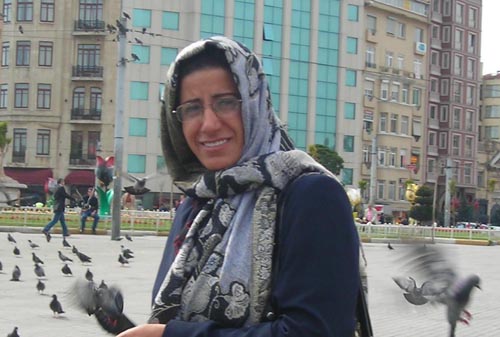
(Ms. Soltani)

GARRELS: Until the U.S. invasion, the MEK carried out cross-border attacks against the government in Tehran. It also helped Saddam Hussein target his enemies at home. The new Iraqi government made up of those former enemies has no love for the MEK. After the U.S. invasion, American soldiers disarmed the militants and set up checkpoints around the camp to protect its members from Iraqi retribution.

Some in the Bush administration and Congress believe the MEK could be a useful ally against the Iranian government, though U.S. officials say that view is no longer widely held. They and the Iraqi government would like the militants at Camp Ashraf to leave the country. A few hundred have fled but Batul says most cult members cannot act freely, either because they’ve been brainwashed or because of MEK pressure.

Ms. SOLTANI: (Through translator) I never saw the Red Cross or American soldiers inside the camp. The MEK leadership manipulates anyone who comes in so they see only what they want them to see.

GARRELS: Recruited in Tehran as a teenager, Batul says her dreams of overthrowing the Iranian government turned into a nightmare. Once she and her young husband arrived in Ashraf, all couples were ordered to divorce. Her children were taken away.

Ms. SOLTANI: (Through translator) My son was six months old and my daughter was five. They said you can’t keep your children here. We will send them overseas to Europe. I have not seen my children in 16 years.

GARRELS: MEK commanders also took away the members’ documents and warned them they would be arrested by Saddam’s security if they tried to leave. Then after the U.S. invasion, Batul says MEK leaders warned them the Americans would kill anyone who left.

Batul says she stayed on hoping if she were a dutiful member she would eventually be reunited with both her children and her husband. Finally a year ago she stole a car, made a dash for a U.S. checkpoint, and was given refuge by the American military. She’s now searching for her children.

Ms. SOLTANI: (Through translator) I am asking Iranians all over the world if they know anything about my children. The Mujahideen won’t tell me where they are.

GARRELS: Defectors say the Mujahideen keep those wishing to leave out of sight. Asghar Farzin says he was one of the lucky ones. An American colonel during an initial search of Ashraf five years ago discovered him by chance in an MEK prison.

Mr. ASGHAR FARZIN (MEK Defector): One day someone knocked my door. I saw American commander because I can explain for him in English, he sat next to me and listened to me.

GARRELS: With the help of the American officer and the Red Cross, he was able to leave Ashraf. But he says others still there need help and counseling.

Though they acknowledge a significant number of cult members are trapped, U.S. officials speaking on background say it’s not safe for American soldiers to go into the camp. U.S. and U.N. officials say they cannot force members to go back to Iran against their wishes. But the U.N. has not found other countries willing to take them. The clock is ticking.

Under a new status of forces agreement, the Iraqi government will likely take control of Ashraf by the end of the year. Caught at the end of a press conference, General Douglas Stone, who’s currently in charge of Ashraf, made it clear he would like this mess to go away. He said it’s going to be discussed with the Iraqis, adding, things like this don’t go on forever, right? But after five years he still has no solution.

Anne Garrels, NPR News, Baghdad.

NPR News Morning Edition April 28, 2008

April 28, 2008 0 comments
FacebookTwitterPinterestWhatsappTelegramSkypeEmail
France

The EU Presidency and Terrorism

France is already preparing for its EU Presidency which is scheduled for July-December 2008. For sure, France has identified a number of key policy areas on which to focus when it assumes the presidency. The first issue that is of great importance for the country members of the EU is security and preventive measures against terrorism and its global threat, a responsibility all the countries have a share to fulfill. The first measure is to identify any group that may pose even a minimum of threat and the sensible precautionary measure is not to unleash those already under the control.

Residing long in France, the blacklisted MKO has proven how dangerous it will be if granted a bit of freedom. France never forgets the group’s cult-like self-immolation operations in June 2003 with the case of terrorist allegation still open and investigated in French courts. The recently held seminar in Strasburg organized by the terrorist MKO was not merely an attempt to gather support for the removal of its terrorist tag. MKO’s she-guru Maryam Rajavi anticipated that there are signs that France has adopted a firm policy against Iran, particularly on the nuclear issue. As a result, it has fostered hope in her that France will show more leniency toward Iranian opposition.

Even if France for any reason has adopted a hard policy against Iran, it does not necessarily mean that it consents to the rule of terrorism and prescribes it for another country as a trusted means to establish democracy. No doubt, the French presidency of the EU from 1 July will not be a backsliding to the appeasement of terrorism particularly one of the most notorious ones that France is well acquainted with its nature. 

Self Immolation

The EU presidency and Terrorism

Mojahedin.ws – April 27, 2008

April 27, 2008 0 comments
FacebookTwitterPinterestWhatsappTelegramSkypeEmail
UN High Commissioner for Refugees

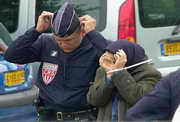
UNHCR deplores refugee expulsion by Turkey which resulted in four deaths

GENEVA – Four men, including an Iranian refugee, drowned after a group of 18 people were forced to cross a fast-flowing river by the Turkish police at Turkey’s southeastern border with Iraq, witnesses have told the UN refugee agency.

The incident took place on Wednesday 23 April at an unpatrolled stretch of theUNHCR border, near the Habur (Silopi) official border crossing in Sirnak province in southeastern Turkey. According to eyewitnesses, the Turkish authorities had earlier attempted to forcibly deport 60 people of various nationalities to Iraq through the official border crossing. The Iraqi border authorities allowed 42 Iraqis to enter the country, but refused to admit 18 Iranian and Syrian nationals. The Turkish police then took the 18, which included five Iranian refugees recognised by UNHCR, to a place where a river separates the two countries, and forced them to swim across.  According to the witnesses interviewed by UNHCR, four persons, including a refugee from Iran, were swept away by the strong river current and drowned. Their bodies could not be recovered.  UNHCR is in contact with the surviving refugees through its office in Erbil, in northern Iraq. They are deeply traumatized by the experience, UNHCR staff reported.  UNHCR had sent previous communications to the Turkish government requesting that the five Iranian refugees, who had all been detained after attempting to cross into Greece in an irregular manner, not be deported. Despite UNHCR’s requests, the refugees were put in a bus, together with other persons to be deported, and taken on a 23-hour trip to the Iraqi border last Tuesday. UNHCR had expressed in a number of communications sent to the Government of Turkey that it did not consider Iraq a safe country of asylum for these refugees.  UNHCR is seeking clarification from the Government of Turkey on the circumstances surrounding the forced expulsion of the refugees and the tragic loss of life.  Story date: 25 April 2008 UNHCR Press Releases  UNHCR, April 25, 2008 http://www.unhcr.org/news/NEWS/4811e23c4.html
April 25, 2008 0 comments
FacebookTwitterPinterestWhatsappTelegramSkypeEmail
The cult of Rajavi

Continuous monitoring of the individuals active in cults

Legal Measures to Combat Cult Violence: Continuous monitoring of the individuals active in cults Since the cults spread their threat among the societies throughout the world and nations experienced a great cult scare, the need to establish agencies and regulating laws to monitor the activities of suspicious groups and cults seemed to be an inevitable preventive measure. From the Manson family to the Moonies, the Waco sect to the Jonestown massacre, the activities of cults prompt great public concern and many NGOs and government-run agencies have devoted their resources to monitoring the activities of deviant groups. In the US alone the media continually warn of the dangers of cultic brainwashing strategies and the FBI continues to monitor closely religious groups they perceive to be potential dangers. Despite the great public and governmental attention afforded to detect destructive cults and sects, however, still a great number escape unnoticed.

The role of government to establish effective procedures besides constant monitoring of the individuals that are known to be active in certain cults is of great importance. Moreover, to ascertain the social security and build a protective wall against the threat of the cults, the government might maintain a militant protection which thereby obligates it to monitor and, if necessary, take action against destructive cults operating in a country. Indeed, it is not in any way against the practice of democracy to determine which cult or organizations or associated members have to come under the scope of a cult-monitoring activity since the society may suffer irreparable damages after unwarned, psychopathic attack or operation of a cult. In fact, it is people’s right to know and be informed of possible threats of cults and as Singer states:

Without the citizenry being aware of the power and control certain cults are wielding, democracy and freedom can be curbed one step at a time. 1

It has to be noted that because of unsettling presence of cults more people are susceptible to the threats of cults and in the same way it requires strenuous task to monitor the activists and activities. Moreover, in some occasions cults take advantage of existing flaws in the law to evade prosecution. For instance, Japan’s Aum Supreme Truth cult, responsible for a Tokyo subway gas attack which killed 12 people and injured thousands, escaped outlaw under Japan’s anti-subversion laws in January 1997 because a legal panel ruled there was no reason to believe it could still be a threat to society. Although Japan’s Public Security Investigation Agency later in 1999 conducted further investigations and began close monitoring of the cult activities with a view to re-apply for anti-subversion laws, there was no guarantee that the cult would not engage in further destructive and menacing operations.

In Iran, because of hypocritical nature of Mojahedin-e Khalq Organization (MKO/MEK), the organization managed to escape security scrutiny of the newly established government. The result was irremediable for the government and the nation. It cost Iran at least two tragic explosions in the prime minister’s office and the main office of the Islamic Republic Party killing the late president Rajaee and his prime minister and more than seventy key Iranian figures. Expelled from Iran, MKO continued its clandestine activities in other countries. In Germany, for example, it was after a two-year close monitoring of the government that the group’s illegal fundraising activities were discovered:

In Germany, the government uncovered the Mojahedin’s financial activities. After a two year investigation, the German High Court on 21st December 2001 closed the Mojahedin ‘shop’ – twenty-five houses and bases – after evidence was found of misuse of Social Security and fraud. 2

Then, it becomes evident that fundraising activities of the cults, although seemingly harmless at the first look, helps equipping the cult, if it is a terrorist cult like MKO, with sophisticated, destructive arms for military operations. The devoted members of cults are motivated to engage in fundraising activities with remarkable results. As Anne Singleton, a Briton ex-member of MKO, explains:

When Maryam came to Europe in 1993, she brought with her a totally dedicated force who undertook any task required. They set about taking over from the supporters’ role of fundraising. With their bullying tactics, their productivity far exceeded anything seen before. Some were able to return up to 1500 pounds sterling, per day. But even before this, in one year alone, Iran Aid charity in the UK had a declared income of 5 million pounds. Its undeclared income has been estimated at over twice this, making a total of over 15 million pounds in one year. If this amount is multiplied for just ten countries: UK, USA, Canada, France, Germany, Italy, the Netherlands, Sweden, Norway and Denmark, then an annual amount of 150 million pounds can be estimated to have made its way to the Mojahedin organisation. If this is multiplied over ten years, then the figure of 1.5 billion pounds gives a rough estimate of the resources which Massoud Rajavi has amassed through the efforts of his devoted followers only in the streets of the West. 3

In France too, it cost the government a high price before discovering the threatening, cult nature of MKO residing there in Paris. Suspecting that MKO’s headquarters acted as the cells of plotting terrorist and cult-like activities, the French police raided its headquarters in the vicinity of Paris and arrested its leader, Maryam Rajavi, and a number of her accomplices. Reported by the Figaro after the police’s raid:

The PMOI has carried out a number of activities on French soil that are clandestine, sectarian, delinquent, and even seriously criminal. In France, tile organisation has two or three hundred militants and sympathisers. Its ‘hard nucleus’ is made up of a few dozen militants. 4

The following shocking activities by the members of MKO proved that the police had acted on the basis of confidential reports; more than twenty members set themselves on fire in the streets of Paris and other European cities with two consequent deaths. The danger of cultism isn’t always restricted to be suspicious of a cult but activities and its members whose monitoring can sound the alarm before it is too late.

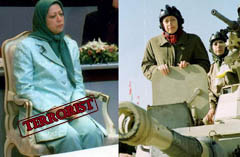
Self Immolation self Immolation of The Cult of Rajavi

References:

1. Thaler Singer, Margaret; Cults in Our Midst: The Continuing Fight Against Their Hidden Menace, introduction, XXVIII.

2. Anne Singleton; Saddam’s Private Army, Iran-Interlink, 2003.

3. ibid.

4. Antoine Gessler; Autopsy of an Ideological Drift, Translated by Thomas R. Forstenzer, 2004, p. 95.

April 25, 2008 0 comments
FacebookTwitterPinterestWhatsappTelegramSkypeEmail
Maryam Rajavi

Sister Hillary

It seems Hillary Clinton has sacrificed her conscience to ambition. Chinese proverb has it that “he who sacrifices his conscience to ambition, burns a picture to obtain the ashes”. She announced her readiness to reduce 70 million Sister Hillaryinnocent Iranian lives to ashes so that she could imagine her picture in the White House. Her lust for ambition will never be satisfied; on the contrary, it seems to grow more inflamed with the prospect of mass murder. After all, this is nothing new to her.

Hillary knowingly supported the Iraq war to defend the “future of freedom”. In her drive for the Iraq war, she was supported by the Progressive Policy Institute, a self-described think-tank of the Democratic Leadership Council[i]. Perhaps no one describes the group better than former neoconservative Jacob Heilbrunn who wrote: “Don’t look now, but neoconservatism is making a comeback-and not among the Republicans who have made it famous, but in the Democratic Party,”[ii]. Indeed, many of them supported the war for the purpose of promoting democracy.

Her ideology has contributed to the nation’s moral bankruptcy, the loss of over one million lives, and the depletion of America’s treasury. These neoliberals who have driven us into a quagmire, elaborated it would serve America’s interest to promote the Democratic peace theory. Scholars, university professors, and neoliberal jurists presented the concept that sovereignty, as it stood in international law did not provide immunity from attack to states engaging in systematic human rights abuses or amassing weapons of mass destruction. These would be considered ‘pariah’ states to be attacked by democratic coalitions with a warrant to liberalize them.[iii] Candidate Hillary comes from this stock. It seems that the only thing which differentiates her from McCain is the conduct of the war in Iraq, not the immoral and illegal war itself.

One can see why she would oppose the Bush conduct in this war by understanding the PPI. A book entitled “With All Our Might: A Progressive Strategy for Defeating Jihadism and Defending Liberty” edited by Will Marshall (President of PPI) outlines the strategy difference the ‘progressives’ (neoliberals) and the Bush unilateralism. The war in Iraq is part of a strategy for”building a world safe for individual liberty and democracy.”[iv]. She has endorsed the illegal invasion of a sovereign nation based on her belief that she holds a superior ideology which must be imposed on others, regardless of the cost and the consequences.

No doubt a person’s character is never so well disclosed as when it is seen through the company he/she keeps. It appears that Congresswoman Sheila Jackson Lee (D -Texas), co-chair of Hillary’s presidential campaign, not only shares her friendship with America’s presidential hopeful, but she also promotes America’s terrorists[v]. The Mojaheden-e Khalgh (MEK) were put on the Foreign Terrorist Organization list by President Clinton for they were responsible for the assassination of Americans in Iran in the 1970’s, as well as for their role in the US embassy takeover[vi], yet their leader and Hillary have a common friend and promoter. Congresswoman Jackson Lee went as far as calling Rajavi “Sister Maryam,[vii]. Are Hillary and Maryam ‘sisters’ too? Is our presidential candidate ‘sister’ to a notorious cult leader?

Raymond Tanter, a former National Security Agency staffer who led the IPC, predicted that the MEK would be removed from the terrorist list and be used by the US against the regime.”I foresee a situation where Laura Bush, Condi Rice, Karen Hughes, and Maryam Rajavi are posing for a picture in the White House,”[viii]. Tanter was not far off. The MEK is certainly being used, and in all likelihood they will be moved from the terrorist list. However, Maryam Rajavi may have to wait for the photo op and take it with Sister Hillary.

Soraya Sepahpour-Ulrich is an Iranian-American studying at the University of Southern California, Los Angeles. Her research focus is US foreign policy towards Iran, Iran’s nuclear program, and influence of lobby groups. She is a peace activist, essayist, radio commentator and public speaker.

Notes:

[i] Tony Smith, “A Pact with the Devil. Washington’s bid for world supremacy and the betrayal of the American promise’. Routledge 2007.

[ii] Jacob Heilbrunn,”Neocons in the Democratic Party,”Los Angeles Times, May 28, 2006.

[iii] Tony Smith. Ibid.

[iv] Will Marshall, editor, With All Our Might: A Progressive Strategy for Defeating Jihadism and Defending Liberty, PPI (Rowman & Littlefield, 2006).

[v] http://www.maryam-rajavi.com/content/view/168/66/

[vi] http://www.cfr.org/publication/9158/

[vii] Financial Times, October 6, 2005.

[viii] Connie Bruck, “A reporter at large: Exiles; How Iran’s expatriates are gaming the nuclear threat”. The New Yorker, March 6, 2006.

Middle-east-online – Soraya Sepahpour-Ulrich

April 24, 2008

April 24, 2008 0 comments
FacebookTwitterPinterestWhatsappTelegramSkypeEmail
The cult of Rajavi

Taking advantage of security-information measures against the cults’ ploys

Legal Measures to Combat Cult Violence: Taking advantage of security-information measures against the cults’ ploys It remains a matter of controversy to what extent security-information systems and measures can be productive against the cults’ threats and ploys. But, no doubt, it calls upon any country’s security apparatus to be alert to cults’ menacing activities and, in the government’s words, to smash them rigorously. It is only in these cases of destructive groups engaging in threatening social and national security that does the state security forces might have the permission to intervene. As not all the established cults are destructive and some are peacefully religious cults with regular religious rituals, the security apparatus can be advised to adopt measures against cults that might pose any harm under a peaceful guise. In the US, for example, the FBI agents trained to negotiate in hostage and armed standoff confrontations have rethought their tactics following the 1993 debacle at the Branch Davidian cult’s compound near Waco, Texas. The tragedy, a 51-day siege of followers of David Koresh, ended in the deaths of more than 80 people after cult members set fire to their fortress-like structure when federal agents tried to storm the building.  Although freedom of religion is guaranteed in France by the constitutional rights set forth in the 1789 Declaration of the Rights of Man and of the Citizen, however, in recent years, some legislation and government actions were taken against some groups and cults considered to be dangerous or criminal. Officials and associations fighting excesses of such groups justified these measures by the need to have appropriate legal tools and the need to fight criminal organizations masquerading as legitimate religious groups. With a little modification, it has been the same with active political groups particularly those with a history of violence and practice of terrorism.  Taking refuge in France, the Iranian Mojahedin-e Khalq Organization has shown its cult potentiality and to mobilize people for multiple protest demonstrations. In the course of Iran-US football match in Lyon in 1998, for example, and the visits of Iranian key officials to France, notably that of President Khatami in 1999 and Iranian members of parliament in February, 2001, the organization demonstrated the degree of its mass mobilizing threats that alarmed France. Reported by Associated Press, 21 June 1998, quoting some French authorities talking about some taken security measures before Iran-US football match, we read:  Several Iranian opponents were not permitted to cross the Franco-Belgium border and prevented from entering French territory when the Iran-United States match was about to played Sunday night in Lyon, Interior Ministry sources stated. These Iranians, coming from Germany and the Netherlands, whose number was not given, are linked to the opposition group, the People’s Mojahedin, according to the same sources. They went on to point out that most of them had no tickets to the match and ‘did not meet the requirements for visiting France’. They were refused entry, because they represented a ‘threat to public order’. 1 The raid on MKO’s headquarters in Paris was also the result of intelligence and security preventive measures:  The raid, carried out under a search warrant issued by the Paris-based anti-terrorism investigative magistrate, Jean-Louis Bruguiere, mobilised more than 1200 officials, including 80 members of the elite GIGN: France’s SWAT team. It was carried out by the Directorate for National Internal Security (DST or French counter-intelligence) with the support of the Central Command of the Judiciary Police and under the technical direction of the RAID (France’s specialised unit for hostage and terrorist incidents). Thirteen targets were surrounded in the Val d’Oise and Yvelines departments, with a particular focus on the Auvers-sur-Oise camp which was suspected to be a refuge for many active PMOI members. 2 Not only MKO in France were engaged in activities that disrupted the environment and injured public sentiments, but also severely confronted the critics and opponents as well as carrying out operations against Iranian objectives in Europe, that is to say, embassies, consulates and etc. They even considered the physical elimination of former members of movements working with Iranian intelligence (Vevak). 3 Similar preventive measures were taken in Germany in the course of the World-Cup 2006 and the German security system warned Mojahedin about any troublesome activity before the plays started. In another case, the German police raided and arrested a number of suspect MKO members: The police stated that they detained 50 persons for criminal enquiries and searched dozens of homes belonging to opposition members. The border guards prevented Iranians resident in other countries from entering Germany. Thirty Swiss members of the opposition had tried to enter Germany, according to the press release of the NCIR". 4 Long known as a globally blacklisted terrorist group, MKO is transformed into a destructive cult and a cult of personality as proscribed by the US state Department report in May 2007. In many cases, MKO is referred to as second to al-Qaeda for its globally threatening features and, in spite of being expelled from Iraq, majority of Western countries’ security apparatus are cautious about the entry of its members since they know they would have a hard task to deal with the organization if settled:  In any case, there is no sanctuary for the PMOI and governments who do open their borders to them will have to exert a constant vigilance. If not, their national territory could become bases for action in violation of host countries. 5 The killing of a Brazilian man by armed plainclothes Metropolitan police who chased him into London’s Underground and killed him with shots to the head because they thought he might be a suicide bomber was only a preventive measure against further possible violent operations of al-Qaeda cult in England. It has to be taken into consideration that MKO is not an exception and security systems have to be necessarily more watchful of the organization since terrorism and cultism are interrelated features of the organization.  Although its activities banned in Western countries, MKO has proved to carry destructive cult potentialities that ignore decrees of law and principles as it did in Self-immolation episodes. Unremitting surveillance of MKO as a destructive cult will be the best preventive measure to minimize its threats that jeopardizes the Western societies among whom it resides and plots cult-like activities. References: 1- Antoine Gessler; Autopsy of an Ideological Drift, “Des opposants iraniens empéchés de pénétrer en France”, Associated Press, 21 June 1998. 2- Antoine Gessler; Autopsy of an Ideological Drift, “Pierre de Bousquet: les Moudjahidin ont bascule dans une derive sectaire” interviewed by Le Figaro, 20 june 2003. 3- Antoine Gessler; Autopsy of an Ideological Drift, “Debut en Allemagne de Ia visite de Khatarni sous haute surveillance”, Reuters and Agence France-Presse, 10 July 2000 239.- Delphine Minoui, op. cit. 4- ibid. 5- Antoine Gessler; Autopsy of an Ideological Drift, p. 179. Research Bureau – Mojahedin.ws – April 24, 2008

April 24, 2008 0 comments
FacebookTwitterPinterestWhatsappTelegramSkypeEmail
Mujahedin Khalq Organization as a terrorist group

The List of Designated Terrorist Organizations Was Released

Rajavi cult failed again in its lobbying efforts  Designation of Foreign Terrorist Organizations by the US State Department play a critical role in fighting against terrorism and is an effective means of curtailing support for terrorist activities and pressuring groups to get out of the terrorism business as asserted by the State Department. Through a fact sheet published by Office of the Coordinator for Counterterrorism on April 8, 2008, the current list of designated foreign terrorist organizations (FTO) wasThe list of Designated Terrorist Organizations was released released. The name of Mujahedin-e Khalq Organization (MEK/MKO/PMOI), a terrorist Iranian group also proscribed by some other countries including the country members of EU, occupies the row 29 of the total 44 names as it has been in the list since 1997.  To identify a FTO, as explained in the report, the Office of the Coordinator for Counterterrorism in the State Department (S/CT) continually monitors the activities of terrorist groups active around the world to identify potential targets for designation. When reviewing potential targets, S/CT looks not only at the actual terrorist attacks that a group has carried out, but also at whether the group has engaged in planning and preparations for possible future acts of terrorism or retains the capability and intent to carry out such acts.  Redesignation of MKO as a terrorist organization underlines the fact that the organization has failed in its lobbying efforts to convince its supporters in the Congress to reconsider its outlaw position. Reportedly, MKO has been engaged in unproductive intelligence collaboration with American forces in Iraq to appease them since they are well aware of the hypocritical nature of MKO especially after was transformed into a cult of personality asserted in the State Department’s report of April 30, 2007.  Mojahedin ws, April 23, 2008————  State Department Issues List of Foreign Terrorist Groups State Department, 10 April 2008
http://www.america.gov/st/texttrans-english/2008/April/20080410111249xjsnommis0.111355.html


State Department Issues List of Foreign Terrorist Groups


Fact sheet lists current designated foreign terrorist organizations


(begin fact sheet)


United States Department of State

Office of the Coordinator for Counterterrorism

Washington, DC

April 8, 2008


Fact Sheet


Foreign Terrorist Organizations


Foreign Terrorist Organizations (FTOs) are foreign organizations that are designated by the Secretary of State in accordance with section 219 of the Immigration and Nationality Act (INA), as amended. FTO designations play a critical role in our fight against terrorism and are an effective means of curtailing support for terrorist activities and pressuring groups to get out of the terrorism business.  Current List of Designated Foreign Terrorist Organizations  1. Abu Nidal Organization (ANO)

2. Abu Sayyaf Group

3. Al-Aqsa Martyrs Brigade

4. Al-Shabaab

5. Ansar al-Islam

6. Armed Islamic Group (GIA)

7. Asbat al-Ansar

8. Aum Shinrikyo

9. Basque Fatherland and Liberty (ETA)

10. Communist Party of the Philippines/New People’s Army (CPP/NPA)

11. Continuity Irish Republican Army

12. Gama’a al-Islamiyya (Islamic Group)

13. HAMAS (Islamic Resistance Movement)

14. Harakat ul-Jihad-i-Islami/Bangladesh (HUJI-B)

15. Harakat ul-Mujahidin (HUM)

16. Hizballah (Party of God)

17. Islamic Jihad Group

18. Islamic Movement of Uzbekistan (IMU)

19. Jaish-e-Mohammed (JEM) (Army of Mohammed)

20. Jemaah Islamiya organization (JI)

21. al-Jihad (Egyptian Islamic Jihad)

22. Kahane Chai (Kach)

23. Kongra-Gel (KGK, formerly Kurdistan Workers’ Party, PKK, KADEK)

24. Lashkar-e Tayyiba (LT) (Army of the Righteous)

25. Lashkar i Jhangvi

26. Liberation Tigers of Tamil Eelam (LTTE)

27. Libyan Islamic Fighting Group (LIFG)

28. Moroccan Islamic Combatant Group (GICM)

29. Mujahedin-e Khalq Organization (MEK)

30. National Liberation Army (ELN)

31. Palestine Liberation Front (PLF)

32. Palestinian Islamic Jihad (PIJ)

33. Popular Front for the Liberation of Palestine (PFLF)

34. PFLP-General Command (PFLP-GC)

35. Tanzim Qa’idat al-Jihad fi Bilad al-Rafidayn (QJBR) (al-Qaida in Iraq) (formerly Jama’at al-Tawhid wa’al-Jihad, JTJ, al-Zarqawi Network)

36. al-Qa’ida

37. al-Qaida in the Islamic Maghreb (formerly GSPC)

38. Real IRA

39. Revolutionary Armed Forces of Colombia (FARC)

40. Revolutionary Nuclei (formerly ELA)

41. Revolutionary Organization 17 November

42. Revolutionary People’s Liberation Party/Front (DHKP/C)

43. Shining Path (Sendero Luminoso, SL)

44. United Self-Defense Forces of Colombia (AUC)


Identification


The Office of the Coordinator for Counterterrorism in the State Department (S/CT) continually monitors the activities of terrorist groups active around the world to identify potential targets for designation. When reviewing potential targets, S/CT looks not only at the actual terrorist attacks that a group has carried out, but also at whether the group has engaged in planning and preparations for possible future acts of terrorism or retains the capability and intent to carry out such acts.


Designation


Once a target is identified, S/CT prepares a detailed”administrative record,”which is a compilation of information, typically including both classified and open sources information, demonstrating that the statutory criteria for designation have been satisfied. If the Secretary of State, in consultation with the Attorney General and the Secretary of the Treasury, decides to make the designation, Congress is notified of the Secretary’s intent to designate the organization and given seven days to review the designation, as the INA requires. Upon the expiration of the seven-day waiting period and in the absence of Congressional action to block the designation, notice of the designation is published in the Federal Register, at which point the designation takes effect. By law an organization designated as an FTO may seek judicial review of the designation in the United States Court of Appeals for the District of Columbia Circuit not later than 30 days after the designation is published in the Federal Register.


Until recently the INA provided that FTOs must be redesignated every 2 years or the designation would lapse. Under the Intelligence Reform and Terrorism Prevention Act of 2004 (IRTPA), however, the redesignation requirement was replaced by certain review and revocation procedures. IRTPA provides that an FTO may file a petition for revocation 2 years after its designation date (or in the case of redesignated FTOs, its most recent redesignation date) or 2 years after the determination date on its most recent petition for revocation. In order to provide a basis for revocation, the petitioning FTO must provide evidence that the circumstances forming the basis for the designation are sufficiently different as to warrant revocation. If no such review has been conducted during a 5 year period with respect to a designation, then the Secretary of State is required to review the designation to determine whether revocation would be appropriate. In addition, the Secretary of State may at any time revoke a designation upon a finding that the circumstances forming the basis for the designation have changed in such a manner as to warrant revocation, or that the national security of the United States warrants a revocation. The same procedural requirements apply to revocations made by the Secretary of State as apply to designations. A designation may be revoked by an Act of Congress, or set aside by a Court order.


Legal Criteria for Designation under Section 219 of the INA as amended


1. It must be a foreign organization.


2. The organization must engage in terrorist activity, as defined in section 212 (a)(3)(B) of the INA (8 U.S.C. § 1182(a)(3)(B)),* or terrorism, as defined in section 140(d)(2) of the Foreign Relations Authorization Act, Fiscal Years 1988 and 1989 (22 U.S.C. § 2656f(d)(2)),** or retain the capability and intent to engage in terrorist activity or terrorism.


3. The organization’s terrorist activity or terrorism must threaten the security of U.S. nationals or the national security (national defense, foreign relations, or the economic interests) of the United States.


Legal Ramifications of Designation


1. It is unlawful for a person in the United States or subject to the jurisdiction of the United States to knowingly provide”material support or resources”to a designated FTO. (The term”material support or resources”is defined in 18 U.S.C. § 2339A(b)(1) as”any property, tangible or intangible, or service, including currency or monetary instruments or financial securities, financial services, lodging, training, expert advice or assistance, safehouses, false documentation or identification, communications equipment, facilities, weapons, lethal substances, explosives, personnel (1 or more individuals who maybe or include oneself), and transportation, except medicine or religious materials.” 18 U.S.C. § 2339A(b)(2) provides that for these purposes “the term ‘training’ means instruction or teaching designed to impart a specific skill, as opposed to general knowledge.” 18 U.S.C. § 2339A(b)(3) further provides that for these purposes the term ‘expert advice or assistance’ means advice or assistance derived from scientific, technical or other specialized knowledge.’’


2. Representatives and members of a designated FTO, if they are aliens, are inadmissible to and, in certain circumstances, removable from the United States (see 8 U.S.C. §§ 1182 (a)(3)(B)(i)(IV)-(V), 1227 (a)(1)(A)).


3. Any U.S. financial institution that becomes aware that it has possession of or control over funds in which a designated FTO or its agent has an interest must retain possession of or control over the funds and report the funds to the Office of Foreign Assets Control of the U.S. Department of the Treasury.


Other Effects of Designation


1. Supports our efforts to curb terrorism financing and to encourage other nations to do the same.

2. Stigmatizes and isolates designated terrorist organizations internationally.

3. Deters donations or contributions to and economic transactions with named organizations.

4. Heightens public awareness and knowledge of terrorist organizations.

5. Signals to other governments our concern about named organizations.  (end fact sheet)  (Distributed by the Bureau of International Information Programs, U.S. Department of State. Web site: http://usinfo.state.gov)

April 23, 2008 0 comments
FacebookTwitterPinterestWhatsappTelegramSkypeEmail
Former members of the MEK

Repatriating after being paid by the MEK

Nejat Society Interviewed Mr. Mansour Asari

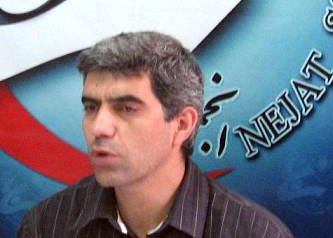
Nejat Association had talked with Mr. Mansour Asari who recently defected from MKO and joined his family in Iran, at Nejat NGO’s Tehran office:  Mr.Mansour AsariI’m Mansour Assari, the son of Mojtaba. I was born in Khansar, in 1972. In July, 2000, I was recruited by MKO in Turkey where I had gone to reach Europe. Then they sent me to Camp Ashraf.

In 2004, after the organization was disarmed, I found an opportunity to leave MEK and join TIPF.

Immediately after I stepped in Ashraf, I figured out that I have nothing in common with MKO’s ideology and functions. Every thing was contradictory to what I saw on MKO’s satellite TV but I was afraid of expressing my idea because they would cause too much pressure on me in their so called current operations (self-criticizing meetings).

I was told, in Turkey, hat the exit of the organization is always open but in camp Ashraf, Masud Rajavi  and Nasrin ( Mahvash Sepehri) told clearly that any one who is willing to leave the organization,has to confess ,in front of the cameras,that he or she is the agent of Iranian Intelligence Ministry and then write and sign what she/ he has said. There fore, I kept quiet waiting for a chance to leave.

In TIPF, no country would  like to receive us since the MKO is on the terror list. In January 2008,I left TIPF, without any money and return to Ashraf since the group had announced that any one who wants to go to Europe ,they would give him money. We were 5 people who returned to Ashraf. There, Zhila Deihim,Reza Moradi,Mohammad Ali Salehi and Hamid Araste and Yousef Anbaz encountered  us. We stayed with them for 21 days. Mohammad Ali Salehi  talked to me to convince me to stay there, he took me to the entrance part. Ne’mat Oulaiee and Adel ( Mohammad Sadat Darbandi) tried to keep me but finally I said to Batul Rajaiee:” I am insistent to leave “ they paid 1800 $,took my signature and receipt. I left Ashraf for Turkey where the defectors of the organization helped me be settled in Istanbul.

I called my family and explained everything. A few days after the Iranian’s New Year, my parents came to Istanbul to visit me. They were always crying during our visit but I had no feeling. I couldn’t recognize them at first, because they had became too old. After a while , I felt my feelings starting to revive and began to cry. Up to that time, I had decided not to return to Iran since I thought it was treason to the organization. But the logic was replacing my fanatic cult-like thoughts. I felt that I loved my family and country. When I was assured that I would have no trouble in Iran,I decided to return with my family, to Iran. They were ready to help me go to Europe but I wanted to go nowhere except Iran. I arrived in Iran this March without any problem. I plan to work here, building my new life.

In my opinions, all those who are in MKO, are captives and deserved to be released . I was imprisoned in Ashraf psychologically and physically. In fact the fear of the peer pressure and mental bars, had kept me in Camp Ashraf. Most of the members of Ashraf have no way out. It is even difficult to leave Ashraf and Join the TIPF. When you are kept in a place like Ashraf, you feel the world is limited to that only place. They try to inspire the members the illusion of being the superior people of the world.

As a matter of fact, I had an extraordinary experience. I had totally forgotten all my family, emotions and love. Visiting my family helped me a lot ,find my normal life style reviving my human emotions. Now, I realize why MKO is terrified by family contacts, why the cults see the families as their enemies.  The reality is that MKO paid the money to Mr. Assari and some other defectors to leave Iraq. But the question is that why MKO didn’t do such a  thing in all those previous years and didn’t try to help the other separated members who had lost a big part of their life. At the first view one may think that MKO doesn’t want them to return to Iran . But this reason is not accceptbale since they could help the defectors in the past too but they didn’t . The reason of such a change in MKO’s behavior cant be anything but the trip Mr. Khodabande took in Iraq and the meetings he had with Iraqi authorities discussing the MKO affairs in Iraq and the result was the foundation  of SFF (Sahar Family Foundation ) . this action will absolutely be a changing point in MKO’s activities in Iraq. At the present time the most terrifying problem for MKO is the members’ joining to SFF since the testimonies made by these people will from an important part of MKO’ criminal case in Iraqi courts.

April 23, 2008 0 comments
FacebookTwitterPinterestWhatsappTelegramSkypeEmail
The MEK Expulsion from Iraq

Iraqi MP: 18 million Iraqis want MKO expelled

TEHRAN — Petitions signed by the Iraqi people show that about 18 million Iraqis want to see members of the terrorist Mojahedin Khalq Organization expelled from their country, Iraqi MP Honein Qaddu said Sunday in a meeting with a number of Iranian political figures in Mashhad.

“The MKO have killed a thousand of our people,” Honein Qaddu, who is also the secretary general of the Iraqi Democratic Society, stated in a meeting with Mohammad Javad Hasheminejad, the secretary general of the Iranian Habilian Society.

“Since their arrival in Iraq, the MKO began to serve Saddam. They are complicit in the mass murder of Iranian and Iraqi people, so the Iranian and Iraqi people have the right to call for expulsion (from Iraq),” Hasheminejad stated.

Saddam Hussein assassinated some 3000 individuals from the big family of the Iraqi Democratic Society and leveled 23 of their villages, the Iraqi lawmaker said.

However, Honein stated that despite repressions by the MKO and the U.S. occupation of Iraq, the relations between Iranian and Iraqi people are improving in social, economic and political dimensions.

Political analyst Dr. Khaldun (first name not given), who was present at the meeting, also said a petition bearing the signatures of 18 million Iraqis is ready for submission to Iraqi criminal courts and human rights organizations.

The Habilian Society, established in 2005, aims to fight terrorism, disclose the criminal actions of the MKO to the Iranian nation, file complaints against MKO assassins, and honor the memory of their victims

Tehran Times Political Desk, April 22 2008

http://www.tehrantimes.com/index_View.asp?code=166834

April 22, 2008 0 comments
FacebookTwitterPinterestWhatsappTelegramSkypeEmail
Former members of the MEK

Rerepsentavie of Anjomane Solh in Oslo meets with Ms.Erika Man MEP

Oslo, Friday, 11.04.2008 — Mr.Ghasem Ghezi, the representative of Anjomane Solh Norway along with his delegation met honourable member of European Parliament, Ms.Erika Man at the sideline of Peace Conference on South Asia recently held in Oslo, the capital of Norway. The purpose of the talks was to introduce the organization specially activities of the Anjoman with regard to human rights and secondly, explaining about disaffected people from Mojahedin Khalig (MOK) in Iraq. Mr.Ghasem Ghezi presented a document about the issue and urged for necessary assistance to the people

Mr.Erika Mann welcomed the delegation of Anjomane Solh and paid essential overview on the document and assured that she would forward it to the relevant people at the EU parliament. She also appreciated the work of Anjomane Solh specially helping the disaffected people by highlighting their issue.

Solh Association, Oslo,

April 21, 2008 0 comments
FacebookTwitterPinterestWhatsappTelegramSkypeEmail
Newer Posts
Older Posts

Recent Posts

  • A study on the financial mechanism of the Mujahedin-e Khalq

    August 10, 2026
  • A Child behind the Ideological Bars of Massoud and Maryam Rajavi

    August 8, 2026
  • A Comparative Analysis of Psychological Control Mechanisms in Jeffrey Epstein’s Cult and the MEK

    August 3, 2026
  • Operation Mersad: How Iran foiled Saddam’s final gambit 37 years ago

    August 1, 2026
  • Ideology Cannot Prevail over Human Dignity

    July 29, 2026
  • Facebook
  • Twitter
  • Instagram
  • Youtube

© 2003 - 2025 NEJAT Society . All Rights Reserved. NejatNGO.org


Back To Top
Nejat Society
  • Home
  • Articles
  • Media
    • Cartoons
    • NewsPics
    • Photo Gallery
    • Videos
  • Publications
    • Books
    • Nejat NewsLetter
    • Pars Brief
  • About Us
  • Contact us
  • Editions
    • عربي
    • فارسی
    • Shqip