Nejat Society
  • Home
  • Articles
  • Media
    • Cartoons
    • NewsPics
    • Photo Gallery
    • Videos
  • Publications
    • Books
    • Nejat NewsLetter
    • Pars Brief
  • About Us
  • Contact us
  • Editions
    • عربي
    • فارسی
    • Shqip
Nejat Society
Nejat Society
  • Home
  • Articles
  • Media
    • Cartoons
    • NewsPics
    • Photo Gallery
    • Videos
  • Publications
    • Books
    • Nejat NewsLetter
    • Pars Brief
  • About Us
  • Contact us
  • Editions
    • عربي
    • فارسی
    • Shqip
© 2003 - 2024 NEJAT Society. nejatngo.org
Mujahedin Khalq 's Function

MKO’s Extreme Frustration

A number of MKO-run sites have recently published an announcement entitled Deployment of previously used agents against Iranian Resistance depicts Clerical Regime’s extreme frustration in an attempt to justify landslide member splinter within the organization. During the past recent months, a number ofMKO Extreme Frustration the detached members who had taken refuge in American-run TIPF returned to Iran; they were all called to be criminals, infiltrated agents, proxies of Ministry of Intelligence, expelled members and much more as it is MKO’s typical. The ever-growing demand of members held in Camp Ashraf to separate the organization has forced MKO to isolate about 200 dissatisfied members to stop further instigation in other members.
The announcement names the separated members one by one and accuses them with cliché allegations atop of which lies their affiliation to Iran’s Ministry of Intelligence. It also attacks “Sahar Family Foundation”, an NGO established to help MKO’s separated members exit from TIPF and Iraq and to defend their rights, and its founder Massoud Khodabandeh and accused him and his other colleagues of being the regime’s agents.

At the present, the splinter of members within MKO has turned to be the most critical challenge the organization is facing. Also, the intensified challenges among American parties following the released report by American intelligence agencies that Iran has halted its nuclear weapons program in 2003 necessitates a logical and peaceful solution to an issue which have totally disappointed MKO. Through disclosing Iran’s nuclear threat, MKO anticipated instigation of a militarist conflict between Iran and the US; it was the supposition behind Rajavi’s fixing January 2009 as the deadline for the collapse of Iranian regime and Rajavi promised that if nothing happen at the end of the deadline, all the Ashraf residents were free to stay or leave. The countdown being already started, with the Bush nearing the end of his presidency, the Ashraf residents seem to be eager to leave sooner than the promised deadline.

Such deeds by MKO to accuse separated members of being the rival’s agents is an unusual deed looking it from the conventional approaches adopted by majority of campaigning political organizations. It is common among the active groups to recruit members and let them leave whenever they wish. The only organization that seems to have no dissatisfied member and the members have signed to stay to the end is MKO! And, of course, all those who have left, escaped and have appealed to leave are infiltrated agents and more. But there is one exception. The organization has so far taken no position to talk about the separation of Batul Soltani, a member of the Leadership Council of MKO, who two years ago escaped from Camp Ashraf and moved into TIPF. On 14 January 2008 she left the TIPF and moved to Baghdad in order to go abroad but she changed her mind to stay in Iraq and start a legal battle against the organization for all torments she had undergone and suffered.

The path to Camp Ashraf is a one-way path; entering it, nobody is permitted to leave and the organization presents legal excuses for not letting anybody to leave. As stated in item sixteen of the announcement “Since the MOIS insists on introducing its newly- recruited agents as the “former PMOI members”, it should be reminded that the Secretariat of the National Council of Resistance of Iran announced four years ago in its statement of August 3, 2004, on the legal status of the PMOI, “As the agreement of the legal status of the Ashraf Residents as protected persons under the Fourth Geneva Convention was signed, the leadership of the Resistance and the officials of the PMOI strongly emphasized on the need and importance of making the final choice at this turning point. Thus, all individuals were reminded that before signing the Agreement, they must once again think of their final choice freely and voluntarily. They can go after their desired life and pursue their desirable option. But if they want to stay in Ashraf and continue their struggle for freedom, they must consider all the probable risks”.

As implied, the Ashraf residents have no choice but to stay and those who escape are Iranian regime’s agents. But the question still exist that accusing minor members of many allegations, why MKO rejects to take any clear stance concerning high-ranking separated members?  Mojahedin.ws, April 19, 2008

 

April 19, 2008 0 comments
FacebookTwitterPinterestWhatsappTelegramSkypeEmail
Former members of the MEK

Appeal to supporters of MKO/MEK

We are former members of MKO who are appealing to you and your colleagues to use your influence and contacts to allow members of MKO in camp Ashraf the opportunity to see their families.Appeals to supporters of MKO

Some politicians and lawmakers have chosen to stand with the MKO and have spoken on their behalf in different occasions (like removing them from the terrorist list, falsely presenting them as a “third alternative”, and so on).

We are asking that you make an appeal on behalf of people who are left without a voice in their plight.

As you know there are more than 3000 members of MKO stationed in Iraq on an isolated location called Camp Ashraf (or Ashraf City as is also known). Here they have been imprisoned since 2003 after the fall of Saddam Hussein.

As relations between the governments of Iran and Iraq got better, some attempts were made by families of MKO members in camp Ashraf to arrange for a visit with their sons & daughters. These attempts were made primarily by the parents or siblings of the members in camp Ashraf. The very first attempts started as early as 2003, some months after the fall of Saddam Hussein. Family members had to travel on very harsh and dangerous roads to reach Camp Ashraf which at that point was under the control of the United States Army.

Today however the MKO have made it impossible and downright dangerous for family members to get anywhere near Camp Ashraf. Parents and siblings who haven’t met their loved ones in years or decades are turned away at the gates under threats and abuse. The Mojahedin accuse them of being “spies” for the Iranian regime, even though all they want to do is meet their sons and daughters after years of separation.

This matter goes beyond politics and is just a basic matter of human rights. We ask respectfully that you make any effort possible to convince the leaders of the MKO to do the right thing in this matter and allow the families to visit their loved ones in camp Ashraf.

Please voice your concern on this matter to the MKO and demand that they allow the families of their own members to reconnect with their parents and siblings.

Here are some articles and videos highlighting this issue:

Children of ‘the resistance’ – Canadian National Post article from 2006

Parents of MKO members in Camp Ashraf – Baghdad 2003 – YouTube Video / Parents getting denied to enter Camp Ashraf and accused of being agents of the Iranian Regime

By Iranpeyvand on Apr 17, 2008

April 19, 2008 0 comments
FacebookTwitterPinterestWhatsappTelegramSkypeEmail
Mujahedin Khalq Organization's Propaganda System

Terrorists Among Us

Mojahedin’s Khalgh’s foothold in U.S. Congress and the mass media

In recent months, there has been significant activity by a terrorist group lobbying Senators and Congressmen on Capitol Hill.

The Mojahedin-e Khalq (MEK), an Islamic socialist organization listed on the State Department list of terrorists, has launched a widespread lobbying campaign to persuade US politicians to unfreeze bank accounts associated with the MEK and to promote war with Iran. In pursuit of these objectives, the MEK and its affiliate, the National Council of Resistance of Iran (NCRI), have created numerous front groups, with the express aim to lobby prominent California members of Congress. Their targets include Senators Dianne Feinstein and Barbara Boxer, and Speaker of the House Nancy Pelosi—all individuals who urge high-level diplomacy with Iran.

The MEK identify themselves as representatives of the Iranian American community in order to persuade Congress that the Iranian Americans support a foreign invasion. As a result, the MEK have falsely represented the perspectives of the Iranian-American community. Iranian Americans have no association with the MEK have largely condemned the group’s activities. The MEK was formed in the 1960s as an opposition group to the Shah and, since then, has been responsible for killing numerous Iranians and Americans throughout the 1970s, 1980s and 1990s.

Following the Islamic Revolution in 1979, members of the MEK assisted Saddam Hussein’s Republican Guards suppress the Kurdish and Shiite uprisings in Iraq, and are responsible for assassinating several political and military figures inside Iran.As a result of these actions, the MEK are widely condemned by all Iranians around the world as an extremist Islamist cult.

To the Iranian community, the MEK represent the same threatening extremism that al-Qaeda poses to the general American public. It is disturbing, to say the least, that such an organization is utilizing the name of Iranian Americans to justify its political ideology.

It is equally disturbing that a terrorist organization is being allowed a foothold in both Congress and the mass media.

In addition to lobbying Congress, the MEK have held themselves out as representatives of Iranian Americans on major news networks. For example, Alireza Jafarzadeh, a former spokesman for the MEK, currently works as a FOX News Channel Foreign Affairs Analyst.

Fox News has also invited MEK Secretary General, Mojgan Parsai, to discuss Iranian affairs as an expert. Nevertheless, Iranian-Americans throughout the United States, including California, do not subscribe to the political beliefs of the MEK.

In fact, according to a recent poll by the University of California at Berkeley on the political attitudes of Iranian Americans, over 66% of California Iranian-Americans believe that the US should establish diplomatic relations with Iran. In fact, only 13% maintain that the US should engage in strategic bombings of Iran’s nuclear targets; and only 8% favor the bombings of Iranian military and oil installations.

This stands in stark contrast with the perspectives of the MEK and its front organization. As part of its propaganda campaign, the MEK publish newspapers and websites like IranTerror.com and IranFocus.com. As an Iranian American, I am outraged that the MEK is attempting to hijack the perspectives of my community. The MEK do not represent Iranian-Americans in California – or anywhere else for that matter.

Our politicians and media officials should be wary that the MEK and its fringe organizations have their own political beliefs, and that these political beliefs do not reflect mainstream attitudes. The Iranian-American community wishes peace between Iran and the United States with an eye toward diplomacy, democracy, and human rights. by nmilaninia , Iranian.com, April 14, 2008 –  http://www.iranian.com/main/2008/terrorists-among-us

April 14, 2008 0 comments
FacebookTwitterPinterestWhatsappTelegramSkypeEmail
Iran

Iran, Turkey to Cement Joint Campaign against Terrorism

TEHRAN (FNA)- Iran is fighting the PJAK, a PKK offshoot operating in Iran. Tehran has long accused the United States of supporting anti-Iranian armed groups, including the PJAK and Mojahedin-e Khalq Organization (MKO). Both PJAK and MKO have been enlisted by the European Union and even the US as terrorist groups.

The latest round of the commission meetings at the undersecretary level was held back in February 2006 in Tehran. The upcoming five-day meeting will kick off on Monday, also marking the first senior-level meeting in the security field between Iranian and Turkish officials following an eight-day ground incursion by the Turkish military into northern Iraq in order to eliminate the PKK members based there, Today’s Zaman said.

The eight-member Iranian delegation, led by a deputy interior minister, is expected to arrive in Ankara tomorrow. The Turkish delegation will be led by Interior Ministry Undersecretary Osman Gunes, with senior officials from the police department, the National Intelligence Organization (MIT), the Gendarmerie Command and the Foreign Ministry participating in the meeting.

The Turkish military launched a ground offensive against the PKK in northern Iraq on Feb. 21 and announced that it had destroyed dozens of PKK targets and killed at least 240 terrorists before the operation was called off on Feb. 29.

Turkey carried out several cross-border operations against the PKK after Parliament gave the government authorization in October for sending troops into Iraq to fight the terrorist organization.

The ground incursion in late February was the only confirmed ground incursion during this period. It was also the first of its kind since the US-led invasion toppled Saddam Hussein’s regime in Iraq in 2003.

Iran is fighting the PJAK, a PKK offshoot operating in Iran. Tehran has long accused the United States of supporting anti-Iranian armed groups, including the PJAK and Mojahedin-e Khalq Organization (MKO). Both PJAK and MKO have been enlisted by the European Union and even the US as terrorist groups.

The PKK is also considered a terrorist organization by a large majority of the international community, including the European Union and the United States. US officials have repeatedly stressed that Washington considers both the PKK and the PJAK to be terrorist organizations, saying the US would not get involved in any kind of contact or relations with terrorists. But, PJAK and MKO members arrested by Iranian troops have said that the US provides information, weapons and financial supports for the two terrorist groups

April 13, 2008 0 comments
FacebookTwitterPinterestWhatsappTelegramSkypeEmail
The cult of Rajavi

What is a Destructive Cults?

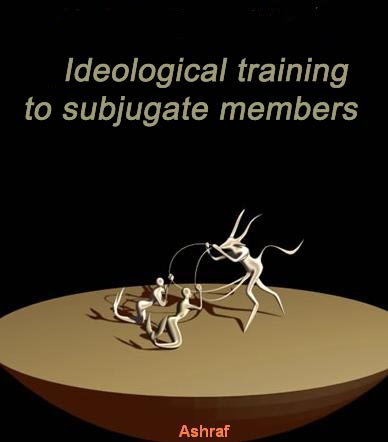
There are many different types of destructive cults, and the diversity of cult beliefs and practices sometimes makes it hard for family members and friends to decide whether their loved one is in trouble or not. Although there are still groups whose followers cut their hair short and wear identical clothing, like the member of Heaven’s Gate, this is by no mean the case with most modern-day cults group. Today, for example, many cults require their members to wear business suits so that they blend in with their environment. All cult members may not look alike, but I have found that destructive cults follow specific behavior patterns that set them apart from other groups. By learning to identify the these patterns you will be better qualified to determine if someone you care about is actually involved with a cult. A group should not be considered a “cult” merely because of its unorthodox belief or practices. Instead, destructive cults are distinguished by their use of deception and mind control techniques to determine a person’s free will and make him dependent on the group’s leader. Authoritarian Leadership  In essence a destructive cult is an authoritarian group that is headed by aAuthoritarian Leadership person or group of people that has near-complete control. Charismatic cult leaders often make extreme claims of divine or “otherworldly” power to exercise influence over their members. Many legitimate religions have had powerful figures who have inspired enormous dedication in people. Being a powerful leader is not inherently wrong , though it carries a high potential for abuse. A group becomes destructive when its leader actively uses such power to deceive members and to rob them of their individuality and free will. For example, I was told to surrender my free will (viewed as Satanic) to God’s representative, Moon, and his subleaders. Marshall Applewhite told followers that an alien entity was speaking through him, and used his message to justify his absolute control over their lives.  Deception  Destructive cults also use deception to recruit new members. When I was first approached by Moonie recruiters, they told me they were part f the “One World Crusade,” which I later learned was one of many front groups for the Unification Church . They claimed to be students who were involved with a small community of young people struggling to overcome cultural barriers. It was not until much later that I found what its members really believed, and what would be expected of me. What makes this all so insidious is that members often speak and act with the greatest sincerity because they have been subjected to the same mind control techniques that they used to recruit others. Destructive Cult Destructive Mind Control  Finally, destructive cults use mind control techniques to keep members dependent and obedient. You will learn the specific criteria that define mind control in later but, generally, speaking, cult mind control can be understood as a system of influence that is designed to disrupt a person’s authentic identity and replace it with a new identity. By immersing people in a tightly controlled, high pressure social environment, destructive cults gain control of their members’ behavior, thoughts, emotions and access to information. They take over their mind.
April 13, 2008 0 comments
FacebookTwitterPinterestWhatsappTelegramSkypeEmail
USA

Nazi Biglari’s interview with Rayan Crocker

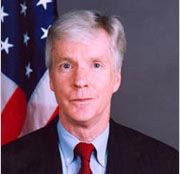
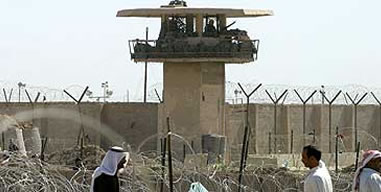
An extract of Nazi Biglari’s interview with Rayan Crocker American Ambassador in Bagdad, Nazi Biglari: there are two Iranian dissident groups in Iraq: Mujahedin-e-Khalq and the Kurds of Iraqi Kurdistan. Do the Americans have any links with these two?  Rayan Crocker ;American Ambassador in BagdadRayan Crocker: we consider MKO as a terrorist group. They killed American military officials in Tehran and were a part of Saddam’s intelligence service. Everything is clear. We oppose all terrorist organizations whoever and wherever they are.  Nazi Biglari: what will you do with the Mujahedin Khalq in Camp Ashraf? Jalal Talebani has called them terrorist group and said that their presence in Iraq is illegal.  Rayan Crocker: this is a crucial question and we are negotiating the case with Iraqi administration. If they are supposed to leave Iraq, they should have a destination that should be designated.   March 4th,2008  Translation: Nejat Society
April 10, 2008 0 comments
FacebookTwitterPinterestWhatsappTelegramSkypeEmail
MEK Camp Ashraf

Camp Ashraf Countdown by Anne Singleton

 Background  In a message issued in 2006, Mojahedin leader Massoud Rajavi set his cult members a deadline of January 2009 by which time he told them if the Mojahedin had not overthrown the Islamic Republic of Iran, then all the residents of Camp Ashraf would be free to stay or leave: “Anyone who wantsCamp Ashraf Countdown may leave, and I will myself throw out all those who are worthless. I will keep the rest who are pure, and then, I will tell them what they can do for me”. Although Rajavi has index-linked his group to the fortunes of the American Administration for the past five years, cult experts understand that such deadlines and threats are essentially meaningless in terms of actual action. But they are part of a powerful armoury of tactics which cult leaders use in order to threaten, frighten and coerce members into staying in a cult and not facing the outside world. Members of the Rajavi cult will certainly have been galvanized by fear provoked by this deadline. The worst fear of a Rajavi cultist is to be expelled from the cult and labelled an agent of the Iranian regime.  The main tactic which the Rajavi cult uses to inculcate artificial fear in members is to depict the world outside of the cult as peopled by ‘the enemy’. The Rajavi cult members are indoctrinated with the belief that they face an imminent, all-pervasive yet unspecified threat of annihilation from ‘agents of the Iranian regime’; a generic label which encompasses everyone who challenges the false reality which the members live by. In this way they see even close family members as enemies. It can produce such a climate of fear that cult members do not even trust one another any more.  In this atmosphere of induced fear and paranoia, the clock on Massoud Rajavi’s deadline is ticking. The focal point of events which will determine the future of his cult is Camp Ashraf. The following diary describes events at the camp.  December 2007 
 

http://iran-interlink.org/?mod=view&id=3737

TIPF clearance – US military police told the 209 Iranian dissidents who had taken refuge in the US run camp that they must leave. Just over 100 refused to leave claiming that US authorities must arrange safe passage for them through humanitarian agencies such as the UNHCR and ICRC to go to third countries. Those who accepted to leave were taken separately in small groups of up to five to a nearby highway. They were filmed to prove they were fit and healthy before being dismissed with American issued laissez-passer which they were told would facilitate their exit from Iraq. According to Scott Peterson of the Christian Science Monitor who followed their fate,

“No nation has taken the militants who left Camp Ashraf, north of Baghdad, some of them carrying US military letters for travel to Turkey. Documents of the UN High Commissioner for Refugees show that at one point in their saga nearly two weeks ago, 19 were turned back to Iraq by Turkey, dozens were picked up in Kurdish northern Iraq and some forced to return to the dangers of central Iraq, and 26 were missing.” (February 11, 2008)

Mohammad and Mabobeh Mohammady have been in Baghdad for three months – their eighth visit – in order to try to meet with their daughter Somayeh. On December 6 they arrive at Camp Ashraf. The following day Somayeh meets with her mother for 45 minutes. She refuses to speak to her father saying she is afraid because she has been told that he is ‘an agent of the Iranian regime’. The next day, American soldiers ask the parents to leave the camp since they have met with their daughter. As they began walking to the nearest highway three MKO members confronted the Mohammadys and American soldiers were forced to intervene to prevent further injury and abduction. The Baghdad Criminal Court issued arrest warrants against three leading members of the Rajavi cult following the incident.


January 2008


Mr. Massoud Khodabandeh of Iran-Interlink is invited to Iraq by Government officials to take part in various meetings addressing the problem of foreign terrorist entities in Iraq and how to deal with them.

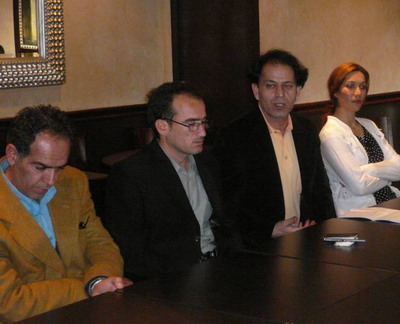
31st Centre for International and Inter-governmental Studies in the University of Baghdad holds a Symposium on the problem of foreign terrorist entities in Iraq. Mr. Massoud Khodabandeh is consulted about the situation of the Mojahedin-e Khalq at Camp Ashraf.  During the consultation process Mr. Khodabandeh met with various ministers and experts who all expressed the same view: the MKO is a foreign terrorist group and is a danger to Iraq’s national interests. Some of them must be prosecuted for crimes committed against Iraqi people and the remainder must be expelled in totality from the country.  February 2008  Mr. Ali Bashiri and his daughter from Norway meet with the girl’s mother at Camp Ashraf. She is accompanied by MKO members. She stands at a distance of three metres and swears at her daughter before leaving.  10th The Baghdad Criminal Court issue arrest warrants for three leading members of the Mojahedin. They are Abbas Davari, the political liaison of MKO in Camp Ashraf, Mozhgan Parsaii, the Commander of Rajavi’s army in Iraq and Sediqeh Hoseini, the Secretary General of the MKO.  11th Mr. Reza Akbari Nasab travels to Camp Ashraf to visit his brother and nephew. His other nephew Yaser killed himself in 2006. Mr Akbari Nasab is hosted by American soldiers for some hours at Camp Ashraf before he meets his brother Morteza. His brother is accompanied by MKO members. He stands at around three metres distance and swears at his brother whom he has not seen for several years and says he is ‘an agent of the Iranian regime’. Then he leaves. Mr. Akbari Nasab’s nephew Musa has German citizenship and does not meet with his uncle. Mr. Akbar Nasab’s request to visit the grave of Yaser was refused.  15th The establishment of Sahar Family Foundation in Iraq, a humanitarian, non-governmental organisation is formally announced. Sahar was established in Iraq at the instigation of Massoud Khodabandeh in response to the crisis created by the expulsion of people from TIPF who had taken refuge there and who were now facing prison in Iraq or even risked being summarily shot as members of a foreign terrorist group.  23rd Mr. Teymur Khattar and Mrs. Khattar make an appeal to the Iraqi legal authorities to investigate the suspicious death of their son Soheyl Kattar in Camp Ashraf in 2003. The Khattar family have been given various explanations of the death by the MKO. They now want to know: ”Was he killed in a border clash by the Iranian guards as my brother told me? Was he killed under the US and its allies’ bombings as published in Mojahed weekly publication? Was he killed because of an accidental shot as we were told by the MKO officials in Camp Ashraf? Or did he commit suicide as one MKO commander mentioned? I would say none of these stories are right and they fabricate these lies to cover the truth which is my son was killed in Iraq by the MKO.”  26th Massoud Khodabandeh publishes a Special Report from Baghdad on Camp Ashraf and the Mojahedin-e Khalq. The report concludes that the American military must facilitate family visits under the terms of protected persons’ status which Camp Ashraf residents enjoy. The report also concludes that the MKO can be removed from Iraq to safety following de-proscription of the organisation in the UK and other western countries. De-proscription will allow the 3000 plus former fighters to be taken to safety and be granted refugee status in whichever countries no longer consider them as terrorists. So far no western country has been willing to de-proscribe the MKO.  March 2008  2nd Nejat Society Gilan branch met in Rasht. Families of MKO members in Camp Ashraf state their determination to prevent Rajavi using their relatives as hostages.  6th Ms. Batul Soltani speaks from Baghdad about her escape from the Rajavi cult. Up to 2006 Ms Soltani was a member of the MKO’s Leadership Council (Massoud Rajavi’s appointed group of 12 women who ‘lead’ the organisation under his lieutenant Maryam Rajavi’s direction). Soltani escaped to TIPF where she remained until December 2007 when the US military police tried to empty the camp. She made her way to Baghdad and was helped by the Sahar Family Foundation. Soltani has pledged to stay in Iraq and help SFF, even though passage to a third country had been arranged for her by SFF. She said: “I will do anything in my power to help these families”.  6th A round-table meeting is held in Europe among Iranian human rights activists to discuss ways to help the people of both Camp Ashraf and TIPF. Batul Soltani talks to the group by telephone from Baghdad.  11th Batul Soltani visits Camp Ashraf to see her husband. 19th In its programme ‘Frankly Speaking’, Al-Arabiya TV, Dubai Eli Nakuzi in Amman interviews Iraqi Deputy Prime Minister Barham Salih. He says the Iraqi Government “is committed to preventing the presence of elements that harm neighbouring states…” Noting that the MKO have protected persons status he said, “We do not want this organization to operate in Iraq and thus spoil relations with Iran, and equally we do not want Iran to use any cards against us internally…”  25th Mr. Keyvan Radbin, former member of the MKO who escaped to Canada shortly after the 2003 invasion of Iraq, writes to Sahar Family Foundation about his experience of Camp Ashraf. 31st NZZ Online in Switzerland interviews Mr. Hoshiar Esmail, a former refugee in that country. He is now among the tens of MKO defectors stuck in Iraq after being asked to leave TIPF by the American Army.  The article explains: “…the leadership ranks of the Mojahedin-e Khalq handed their weapons to the Americans and offered them their services. [In 2003] The Americans interned the remaining Mojahedin-e Khalq in Camp Ashraf and put them under their protection. Two years later, about 200 ex-fighters applied to become UN Refugees (UNHCR). Walpurga Engelbrecht of the UNHCR in Baghdad said, with the recognition of political persecution the ex-fighters were given refugee status. But no country was prepared to take the refugees. In European diplomatic circles in Baghdad, it is assumed that the Americans’ Camp Ashraf [TIPF and FOB Grizzly] will soon close and that they want to get rid of the separated Mojahedin-e Khalq fighters as quickly as possible. Now Hoshiar and several dozen former Mojahedin-e Khalq have travel documents. Some 50 of them are stranded in Kurdistan. One of them, Mohammed Rostam, has twice tried to get to Turkey but each time he was re-arrested and deported to Iraq where the Kurds also briefly put him into jail. His attempt to get to Baghdad also ended in prison. The security chief of Erbil, Ismet Ergushi, confirmed the arrests and gave assurance that the Government is trying to achieve a lasting solution.”  April 2008 3rd Mr. Gholam-Reza Sadeghi,travelled to Camp Ashraf to obtain evidence for his court case from the American military about his mistreatment by the Mojahedin-e Khalq while in the camp. The MKO falsely and maliciously told the Iraqi police he was an Afghan suicide bomber and he was arrested outside the camp. Intervention by an American colonel secured Mr. Sadeghi’s release and a full apology from the Iraqi police who “assured me that from now on he would brief his forces not to react immediately on misinformation received form the MKO. He said that such mistakes would not happen again and we would not be trapped within their conspiracy any more. He emphasised that now they are sure the MKO has deliberately misguided them and he is happy that his forces did not harm me when they were provoked by the MKO. . . "  4th Mr. Asghar Farzin, Mr. Reza Sadeghi, and Mr. Ali Biglary, former members of the MKO, plead for justice against the organisation to the Iraqi judicial authorities and urge them to deal with the situation in Ashraf camp.  6th BBC Persian reports on the first public appearance by seven of the series of survivors of Camp Ashraf who have now arrived in Europe with the help of the Sahar Family Foundation. At a press conference in Paris organised by the Association for the Protection of Iranian Refugees in France the former MKO members from TIPF described their experiences. Among them, Ms. Nasrin Ebrahimi, 26 years old, who served in the group for over 10 years explained how two years ago she used a military vehicle to escape the terrorist run camp and take sanctuary with the American Army. She alleged that Marjan Akbari, daughter of Bashir Akbari, was killed by the organisation about two years ago.

Anne Singleton, April 10 2008

April 10, 2008 0 comments
FacebookTwitterPinterestWhatsappTelegramSkypeEmail
The cult of Rajavi

Getting to know the Cult of Mojahedin

A cult, particularly a destructive one, is almost any kind of organization whose followers have been deceptively and unethically recruited and retained. They use manipulative techniques, which are imposed without the informed consent of the recruit and are designed to alter personality and behavior. These groups are only concerned about advancing the mission or business of the group, and not the well being of the individual members. They pose great dangers not only against the society among whom they live but also against their own followers. Our modern history contains records of cults’ threats and human tragedies that have shaken the world. Talking on the tragic end the followers of a destructive cult might be led to Margaret Thaler Singer has said:  Twice in less than fifteen years we have been shown the deadly ends to which cult followers can be led. In 1978, aerial photos of 912 brightly clad followers of Jim Jones, dead by cyanidelaced drinks and gunshots in a steamy Guyanese jungle, were shown in magazines and on television, reappearing with each subsequent anniversary of the end of Jonestown. And in early 1993, television news programs showed the Koresh cult’s shoot-out, then several weeks later its flaming end on the Texas plains. 1  They are only an example of many countless instances. As reported recently, Texas police raided a gated compound outside the tiny Texas cattle town of Eldorado built and run by the Fundamentalist Church of Jesus Christ of Latter Day Saints. Reportedly, more than 400 children and teens had been rescued and taken into temporary state custody while the authorities continued investigating allegations that girls at the compound were being sexually abused by men.  The number of active cults only in the US is estimated to range from 3,000 to 5,000. It is hard to get a precise number as cults change their names, splinter off into other groups, or shut down in one area only to open back up in another. Unfortunately, there are approximately 180,000 new cult recruits every year and the cults are developing more sophisticated techniques to form and establish new aliases. They originally start under religious and political covers and it is only after getting totally involved in the cults that the followers come to recognize the real intention of the cults.  One way to avoid being entrapped by the cults is to learn to recognize common cult-recruitment tactics and situations. The people who have suffered tensions or are in search of Utopia are most vulnerable to be recruited by the cults. In general, cults follow nearly the same tactics for deception and misrepresentation to recruit, retain and achieve cult-related ends. Today, it is really a hard task to distinguish a cult from another legal group but in the past decades there have been attempts to help people in cult prevention. There are identical factors shared by majority of cults which can be of great help to recognize a cult. Referring to important characteristics of a cult Robert Jay Lifton observes:  First, all cults have a charismatic leader, who himself or her- self increasingly becomes the object of worship, and in many cases, the dispenser of immortality. Spiritual ideas of a general kind give way to this deification of the leader. Second, in cults there occurs a series of psychological processes that can be associated with what has been called”coercive persuasion”or”thought reform,”as described in some detail in this book. And third, there is a pattern of manipulation and exploitation from above (by leaders and ruling coteries) and idealism from below (on the part of supplicants and recruits). 2  Thus, the characteristics to mark a cult are three: 1. Charismatic and self-appointed leader who claims divinity or special knowledge and demands his followers unquestioning and total loyalty and obedience.  2. An organized structure of totalitarian hegemony with the leader at the top

3. Planned thought reform and brainwashing techniques to induce a state of high suggestibility and dependency on the group and self-alienation.

To determine how dangerous a cult might be, Bonewits draws a Cult Danger Evaluation Frame which can be a good help to determine just how dangerous a cult or group might be in comparison with other groups. The factors indicated by Bonewits include:

1. INTERNAL CONTROL 2. WISDOM CLAIMED by leader(s3. WISDOM CREDITED to leader(s) by members 4. DOGMA 5. RECRUITING6. FRONT GROUPS 7. WEALTH 8. POLITICAL POWER 9. SEXUAL MANIPULATION 10. CENSORSHIP11. DROPOUT CONTROL 12. VIOLENCE13. PARANOIA 14. GRIMNESS 15. SURRENDER OF WILL16. HYPOCRISY 3

It seems that Bonewits has developed a good understanding of cults’ menace in the modern world which is shared with other researchers. A look at Dr. Robert Jay Lifton’s criteria for a destructive cult is a precise approbation:

1. Authoritarian pyramid structure with authority at the top

2. Charismatic or messianic leader(s) (Messianic meaning they either say they are God or that they alone can interpret the scriptures the way God intended.

3. Deception in recruitment and/or fund raising

4. Isolation from society — not necessarily physical isolation, but this can be psychological isolation.

5. Use of mind control (Mileu Control, Mystical Manipulation, Demand for Purity, Confession, Sacred Science, Loading the Language, Doctrine Over Person, Dispensing of Existence) 4


Considering signs that distinguish a destructive cult, a precise evaluation of MKO well crystallizes it as one of the most destructive and visible examples of a cult that jeopardizes the security and thought well-being of the people among whom it takes refuge under the cover of a pro-democratic, political group. Far beyond being recognized as an alternative to Iranian regime as MKO claims, it is an alternative to a destructive cult sharing their characteristics. For sure, no sensible people consent to a dangerous cult to steer the country.

References:  1- Thaler Singer, Margaret; Cults in Our Midst: The Continuing Fight Against Their Hidden Menace, p. 3.

2- Ibid, XII.

3- www.qed.net/bonewits/ABCDEF.HTML

4- www.refocus.org  Research Bureau, Mojahedin.ws, April 9, 2008

April 10, 2008 0 comments
FacebookTwitterPinterestWhatsappTelegramSkypeEmail
The cult of Rajavi

Save children from the cult abuse

Children are the most vulnerable victims to cults’ abuses and even in this modern world and in the heart of countries enthusiastically battling for the revival of the human rights we witness instances of children’s abuses by cults freely acting before the eyes and even protection of the law.  It was only yesterday that the news came out with the reports of the removal of an additional 85 children from a polygamist remote compound Ranch of the Fundamentalist Church of Jesus Christ of Latter-day Saints, a breakaway Mormon sect, bringing the total to 137 survivors. Officially released, State troopers, Texas Rangers and investigators from Child Protective Services raided the ranch on Thursday night to serve search and arrest warrants after a 16-year-old girl complained of sexual and physical abuse within the cult.  It is not the first and will not be the last report of the children being abused by a cult. Mojahedin-e Khalq Organization (a.k.a. MKO, MEK, PMOI, NCRI), a globally blacklisted terrorist cult, has long abused children and has separated them from their parents sending them to many countries far from their parents to live with foster-parents or in orphanages in an attempt to force their parents stay with the organization. In fact, in this form of manipulation, children were abused as hostages whose destiny is now unknown even to their parents.  Batul Soltani, an ex-member, was a member of the Leadership Council of the MKO who left the organization in 2006. She is the mother of two children taken away from her long ago. In an interview with SFF, she briefly talked of what has happened to her and her children: My name is Batul Soltani daughter of Morteza. I was born in 1965 in Iran and at the moment I live in Baghdad. I married Mr Hosein Moradi in Iran in 1986 and then we moved to Pakistan the same year. There we were recruited into the MKO and the next year, which is 1987, we were ordered to go to Iraq. In 1991 we were separated by the order of the organisation and yet again by their order our children were taken away from us and sent to Europe. My husband and I initially resisted these orders and did not wish to either be separated from each other, nor to abandon our children, but we were put under enormous psychological pressure and we were forced to submit to their demands.  My daughter Hajar Moradi was born in Pakistan in 1987 and my son Mi’ad was born in Iraq in 1991. In the year 1991 while Hajar was 5 years old and Mi’ad was 6 months old, they were separated from us – after we were forcibly separated from each other – and they were sent to Europe. They did not allow us to have any contact with them at all. I still remember my daughter crying hard as she was leaving me. And the innocent face of my six months’ old son is always before my eyes.  Many years later I found out that my daughter had been given to a family in the south of Sweden with the fake name of Setareh Khabbazan, and she is now studying in a university in the north of that country. My son was taken to Holland by a family and later moved to another family and eventually was left in an orphanage and now he lives in a care centre for youth in Holland. I do not have any further trace of them and do not even know if they know me at all. The MKO would not give me any addresses and I have no means to contact my children.  Has any child protective organization ever investigated MKO for countless instances of child abuses and unknown destiny and whereabouts of about 800 taken apart children? Not talking of many sons and girls whose parents are impatiently looking over the walls of Camp Ashraf, located in a remote desert in Iraq, to see them unbound. Being known as a destructive terrorist cult, MKO is a big threat for the global peace and its own insiders. It is a responsibility on humanitarian bodies to intervene before it is too late. 

Mojahedin.ws,

April 7, 2008 0 comments
FacebookTwitterPinterestWhatsappTelegramSkypeEmail
Former members of the MEK

First Series of Survivors of MeK’s Camp Ashraf in Iraq Arrive in France

PRNewswire-USNewswire/ — At a press conference in Paris on April 5, 2008, the first series of survivors of the Mojahedin-e Khalq Organisation, aka the Rajavi cult or Saddam’s private army, announced their escape from Camp Ashraf in Iraq and their arrival in Europe.

the first series of survivors of the Mojahedin-e Khalq Organisation, aka the Rajavi cult or Saddam's private army, announced their escape from Camp Ashraf in Iraq

The Mojahedin, which is proscribed as a foreign terrorist entity in the US, UK, EU and Canada, was bombarded and disarmed by the US army back in 2003 and have been confined since in Camp Ashraf in Iraq.

Ms. Nasrin Ebrahimi, who served in the group for over 10 years

Ms. Nasrin Ebrahimi, 26 years old, who served in the group for over 10 years explained how two years ago she used a military vehicle to escape the terrorist run camp and take sanctuary with the American Army. She alleged that Marjan Akbari, daughter of Bashir Akbari, was killed by the organisation about two years ago.

Marjan Akbari, who was killed by the organisation about two years ago.


Mr. Jamshid Charlang, 49 years old, alleged imprisonment and torture by the Mojahedin for criticising the group’s leaders. He said during his imprisonment he witnessed the torture and murder of Parivis Ahmadi in an MKO run prison inside Camp Ashraf. The MKO prevented Charlang from seeing his wife and child for twenty years. After the fall of Saddam he escaped and reached the American army camp before arriving in Paris.

Ebad, 33 years old, and Alireza, 36 years old, were among others talking about the situation of Camp Ashraf which is protected by the American Army, but is still run internally by the uniformed military structure kept intact during the past five years.

In February 2008, Massoud Khodabandeh of Iran-Interlink reported from Baghdad after several meetings addressing the issue of foreign terrorism in Iraq. Iraq’s government demand to expel all 3,000+ Camp Ashraf captives is stalled because no western country will de-proscribe the group so that asylum can be granted them. In the interim, Sahar Family Foundation was established in Iraq to help disaffected Mojahedin members who renounce terrorism find asylum, be reunited with their families and integrate back into mainstream life.

The Conference was organised by the Association for the Protection of Iranian Refugees in France. According to BBC reporting, the Association’s spokesman Javad Firoozmand said this is only the first group to arrive in France after the establishment of Sahar Family Foundation

Prnews wire,

April 6, 2008 0 comments
FacebookTwitterPinterestWhatsappTelegramSkypeEmail
Newer Posts
Older Posts

Recent Posts

  • A study on the financial mechanism of the Mujahedin-e Khalq

    August 10, 2026
  • A Child behind the Ideological Bars of Massoud and Maryam Rajavi

    August 8, 2026
  • A Comparative Analysis of Psychological Control Mechanisms in Jeffrey Epstein’s Cult and the MEK

    August 3, 2026
  • Operation Mersad: How Iran foiled Saddam’s final gambit 37 years ago

    August 1, 2026
  • Ideology Cannot Prevail over Human Dignity

    July 29, 2026
  • Facebook
  • Twitter
  • Instagram
  • Youtube

© 2003 - 2025 NEJAT Society . All Rights Reserved. NejatNGO.org


Back To Top
Nejat Society
  • Home
  • Articles
  • Media
    • Cartoons
    • NewsPics
    • Photo Gallery
    • Videos
  • Publications
    • Books
    • Nejat NewsLetter
    • Pars Brief
  • About Us
  • Contact us
  • Editions
    • عربي
    • فارسی
    • Shqip