Nejat Society
  • Home
  • Articles
  • Media
    • Cartoons
    • NewsPics
    • Photo Gallery
    • Videos
  • Publications
    • Books
    • Nejat NewsLetter
    • Pars Brief
  • About Us
  • Contact us
  • Editions
    • عربي
    • فارسی
    • Shqip
Nejat Society
Nejat Society
  • Home
  • Articles
  • Media
    • Cartoons
    • NewsPics
    • Photo Gallery
    • Videos
  • Publications
    • Books
    • Nejat NewsLetter
    • Pars Brief
  • About Us
  • Contact us
  • Editions
    • عربي
    • فارسی
    • Shqip
© 2003 - 2024 NEJAT Society. nejatngo.org
Iran

Iran is a victim of terrorist backed by US backed terrorist Mojahedin Khalq Organisation

IRGC: US attack ‘highly unlikely’

The Commander of the IRGC has described the US attack on Iran as ‘highly unlikely’, saying Washington knows Iran is different from Iraq.

Brigadier General Mohammad-Ali Jafari said the US is aware of Iran’s military capabilities and added that Tehran will give an ‘appropriate response’ if the US attacks the country.

The Commander of the Islamic Revolutionary Guards Corps (IRGC) made the remarks in an exclusive interview with Press TV on the 28th anniversary of the foundation of the Mobilization Resistance Force or Basij.

Jafari said, however, that there was the possibility of a ‘limited air campaign’ by the US on a number of sites in Iran.

In that case, we have to defend our country and we have the means to nullify their attacks, he added.

In another part of the interview, Jafari said the recent IAEA report indicated that Iran’s nuclear program is for peaceful purposes and described the US and Israel’s threats regarding the issue as ‘psychological warfare’.

In response to a question regarding the US accusations against the IRGC, Jafari said Iran is a victim of terrorism while the US backs the Mojahedin Khalq Organization (MKO), an anti-Iranian terrorist group based in Iraq.

Jafari concluded that Iran will never wage a war on any country but will always remain prepared to defend its soil.

December 2, 2007 0 comments
FacebookTwitterPinterestWhatsappTelegramSkypeEmail
USA

US military does not support terrorist Mojahedin Khalq

 Adm Gregory Smith: US military does not support terrorist Mojahedin Khalq (MKO) Interview with MEHR News, November 25, 2007 BBC Monitoring Middle East  Text of report by Iranian conservative news agency Mehr

Tehran, 25 Nov: Rear Adm Gregory Smith, Communication Division Chief for the Multi-National Force-Iraq, who has repeatedly – and without proof – accused the Islamic Republic of Iran of engaging in negative activities in Iraq responded to questions form Mehr news agency concerning US military support to the Monafeghin terrorist group [pejorative meaning hypocrites used by the Iranian government to refer to the Mojahedin-e Khalq (MKO)]. The group has been placed on the list of terrorist groups. He claimed that the US military does not support any terrorist group including the MKO. He admitted: The American government considers the MKO group to be a terrorist group and once again claimed that the US military was not supporting them.  Responding to a question from Mehr asking if the US government and the American military would assist the Iraqi government should it expel these individuals – or at the very not interfere with the expulsions, he answered in generalities, saying: We don’t respond to questions that are based on conjecture. This question is speculative, we don’t work on speculations.

Gregory Smith said he had no knowledge of plans for a new round of Iran-US talks on Iraq, saying: Issues relating to these talks are handled by the US embassy in Iraq.

The official spokesperson for the American forces in Iraq commented on the fate of Iranian diplomats who have been held captive by the occupiers since they were taken in Dey last year [Iranian month starts on 22 December], saying: As far as US officials are concerned these individuals are not diplomats. They shall remain in detention for as long as US official believe them to be a threat to Iraq.

Smith went on to say: A committee made up of representatives form the coalition [forces] and the Iraqi government is reviewing this issue.

Iraqi MP Ali al-Adib contradicts claims by this American military official that his country does not support the MKO group, saying: Even though the Iraqi constitution has banned the activities of opposition groups and organization form neighbouring countries, the US military supports the presence of mko terrorist group

In a recent interview with Mehr, Iraq’s Prosecutor General Ja’far al-Musavi confirmed that the file of the mojahedin terrorist group was under review and would not rule out the possibility of an agreement between Tehran and Baghdad that would include provisions for the extradition of the criminals.

He said that members of the mko terrorist group were guilty of participating in the massacre of innocent Iraqis, adding: The judicial process for the prosecution of these this group has started.

During the early days of the revolution, the mojahedin terrorist group acted to the great determent of our nation. They based themselves in camp Ashraf in the Iraqi province of Diala east of Bagdad. The former Ba’th government under the leadership of the executed dictator Saddam cooperated with this group during the imposed war against Iran in the early eighties [Iran-Iraq war 1980-88] and supported them extensively.

The current elected government of Iraq is attempting to remove traces of this terrorist group from its territorial borders because of their role in the massacre of Iraqi dissidents and the genocide against the shi’i uprising in 1991.

Claims made by this American official about Iranian diplomats that were abducted in Arbil this past Dey are being made while the Iraqi government and officials of the Kurdish Regional Government stress that these individuals were engaged in legal activities the Iranian consulate in Arbil. The Americans have only released two of the diplomats.

December 2, 2007 0 comments
FacebookTwitterPinterestWhatsappTelegramSkypeEmail
Mujahedin Khalq Organization as a terrorist group

The UK adopts a cautious approach in de-proscription of MKO

LONDON — In a victory for British politicians pushing for regime change in Iran, an appeals tribunal ruled Friday that their government had no authority to ban a leading Iranian opposition group as a terrorist organization.

The ruling, which could help the group gain legal status across Europe, was hailed by proponents of the cause as a significant boost to efforts to organize democratic opposition to the Islamic government in Tehran.

But by legitimizing an organization with a history of deadly attacks in Iran, the British panel’s decision could also undermine Iran’s willingness to cooperate on international anti-terrorism fronts and inject a new stumbling block into negotiations over the Persian Gulf nation’s nuclear program, British officials have warned.

The successful appeal was filed by three dozen members of the British Parliament, many of whom say they hope to empower Iranian opposition groups to peacefully overthrow the government in Tehran.

"This judgment will help Iran build a new country," said Robin Corbett, chairman of the parliamentary committee that filed the appeal. "Iran will be free."

The British government said it would probably appeal the ruling.

The case involves the People’s Mujahedin, also known as the Mujahedin Khalq, which over the years has carried out bombings, assassinations and cross-border attacks aimed at unseating Iran’s government. The group maintains that it has abandoned violence and is working to promote democratic transition, but it says it cannot effectively carry out its political activities when it is banned as a terrorist organization.


Outlawed in U.S., Europe

The group is outlawed by the U.S. and throughout the European Union. Its lawyers said it hoped to use Friday’s ruling to win reconsideration internationally and step up efforts to topple the Iranian government.

"The fundamental solution to Iran’s crisis is neither foreign military intervention nor appeasement. The solution is democratic change by the Iranian people, and resistance. For this solution to work, all obstacles placed in the path of the resistance must be removed," said Maryam Rajavi, president-elect of the National Council of Resistance of Iran, an umbrella political opposition group that includes the People’s Mujahedin.


Rajavi spoke to cheering supporters in London by video link from the group’s headquarters in Paris. Dozens of Iranians filled the street outside the courthouse in London after the decision was announced, some weeping, many waving the group’s flag, while organizers handed out sweets.


"Thank you!" the crowd chanted repeatedly.

The British warned in evidence presented to the Proscribed Organizations Appeal Commission that delisting the group could present foreign policy problems for Britain.


"The government adopted a cautious approach in relation to the de-proscription of the People’s Mujahedin Organization of Iran," Home Office minister Tony McNulty said in a statement.

"I remain convinced that where terrorism is concerned, the rights of the law-abiding majority and the overriding need to protect the public, both in the U.K. and abroad, must lead us to take such a cautious approach," he said.


The secretary of Iran’s Supreme National Security Council, Saeed Jalili, noted that U.S. officials also regard the group as a terrorist organization, and he said he had been assured that the British government would attempt to retain its prohibition.


"Some of you have seen for yourselves the terrorist activities of this group inside Iran. They have assassinated, they have killed and injured innocent Iranian citizens. This will not at all be a good precedent for Britain," he said during a visit to London to negotiate Iran’s nuclear dossier with European Union foreign policy chief Javier Solana.

In 2002, the National Council of Resistance provided the first public reports of Iran’s then- secret nuclear program, and some U.S. military officers say the group has provided valuable intelligence about Iran’s leadership and could be a key ally.

A State Department counter-terrorism official said Friday that the Bush administration was not considering removing the People’s Mujahedin from its own terrorist list, where it was placed in 1997.

U.S. officials believe the group, also referred to as the MEK, is capable of committing acts of violence harmful to American interests.


By Kim Murphy

December 2, 2007 0 comments
FacebookTwitterPinterestWhatsappTelegramSkypeEmail
The Ideology of the MEK

The Role of Strategic Stalemates in MKO ideological Shift

The ideological revolution within Mojahedin-e Khalq Organization (MKO) that led the whole organization onto the precipice of being labeled as a notorious cult of personality was not the result of an abrupt and overnight decision. A look at a multitude of the crises the organization ran into following its declare of armed warfare after the initiation of the Islamic Republic in Iran well explain that the organization’s resort to ideological shift was the last option to surmount crises and guarantee the organization’s survival. However, the key role of Massoud Rajavi in the process of deviation is of great significance.

Majority of the organization’s theoreticians are unanimous that the ideological revolution was the byproduct of a strategic dilemma but none of them attempts to dig out the truth about the roots of successive defeats and crises. An investigation into the history of the organization since 1975 and following the great schism within it discloses indisputably critical role of Rajavi since his assuming the lead. His decisions, regardless of their grave impact on strategic, political and ideological deviation, were inventions of a deviant mind spoiled by power ambitions. That is true that power corrupts but his later ideological revolution to gain full hegemony over the organization is a proof that the absolute power corrupts absolutely; no better destiny could be destined for the organization with Rajavi atop but a cult of personality.

The intention here is to examine the roots of the ideological revolution and the causes behind its start with Rajavi behind the steer. The following is an outline of the factors to be studied in detail.

The failed strategy of armed warfare and the aftermath crises

Failure in overthrowing the regime

Gradual dwindling of MKO’s social prestige

Possible occurrence of schism within the organization

serious deterioration of NCRI

political bankruptcy and loss of external backing

The statements and accounts by other opposition groups, active members of the organization as well as the separated members are the best presented evidences throughout the study. Bijan Niyabaty’s A Different Look at the Ideological Revolution within MKO, since it is a source composed by an active left sympathizer of the organization, can give detailed accounts on the process.

The failed strategy of armed warfare and the aftermath crises

The failed strategy of overthrowing the newly established ruling system in Iran is rooted in the irrationally adopted tactic of armed warfare following the organization’s first mass movement on 20 June in 1981. The turning point that was broadly being propagated at the time an which was supposed to speed up the inevitable collapse of the regime could no more stand the heavy squash of defeats and crises. As a result, the tone of Rajavi changed in justifying his unreasonably taken decision saying that his decision abided by no political, ideological and organizational logic but was a move following the example of Ashura. [1]

Being a fallacy or anything else, his reasoning worked well in wining over a multitude of insiders who supposedly had to challenge him and his ineffectiveness. Publicized passionate speeches and writings could easily convince and hush up whoever presumed to criticize:

Khordad 30th (20 June 1981) is our ‘Ashura”. On that day we had to stand up and resist Khomeini’s bloodthirsty and reactionary regime, even if it meant sacrificing our lives and the whole of our organization. We had to take this road to Karbala to keep alive our tawhidi ideology, follow the example set by Imam Hosayn, fulfill our historic mission to the Iranian people, and fight the most bloodthirsty, most reactionary, and most savage regime in world history. [2]

It took at least two decades to be admitted by a left analyzer of the organization that what MKO anticipated being a supposed mass movement turned to be nothing but failed militia warfare:

The strategy of a widespread and national-wide armed struggle was nothing more than declining a massive public uprising into the level of a limited militia struggle with no prospect. [3]

Rajavi’s strategy of urban militia warfare expanded into much sophisticated tactics of resistance cells, suicidal and armed operations following the June 20 uprising. Niyabati assumes that even long before, Mojahedin had lost their hope in the utility of the so called ‘esistance cells’ and Mojahedin’s strategic tactic had proved to be nothing but a great failure:

Now after five years, the armed warfare is still immobilized in the first stage of preparing a mass uprising. Mojahedin have so far tried all the possible approaches, from the urban militia warfare to the formation of resistance cells and from the suicidal operations to guerrilla warfare launched in the mountains and woods. [4]

In his analysis of Mojahedin’s received heavy blow on 8 February 1982, the raid of Iranian police forces into a MKO’s safe-house in Tehran that resulted in the killing of 20 members of Mojahedin including Musa Khyabani, MKO commander inside Iran after Rajavi’s escape to France, and Ashraf Rabiee, Rajavi’s first wife, Niyabati once more questions the accuracy of Mojahedin’s strategy of armed struggle:

The strategic blow on 8 February 1982 was an end to the accuracy of the urban guerilla warfare. [5]

The consequent doubts and uncertainty raised among a portion of the rational minds though remained covered up, but in the eyes of the leaders were undeniable facts that could possibly intensify internal crises. A large number of separated members admit that it created the best opportunity to persuade an internal reconsideration of the organizational strategies, but instead, unfounded justification and excuses gave way to a rapid grow of internal challenges. The seriousness of the challenge even worsens when one comes across the fact that before facing the crises, unquestionable faith in armed struggle was an essential prerequisite for the recruits of the organization. It was a taboo nobody was permitted to touch upon and any criticism of the approach was absolutely illegitimate even if convincing explanation and facts were adduced beforehand:

Any criticism of the widespread strategy of armed warfare adopted by Mojahedin in the military phase, if made to disapprove the essentiality of the armed resistance, is definitely illegitimate. [6]

Rajavi’s frequent shift to adopt various unsound tactics more than anything indicates a telling indecisiveness in Mojahedin’s leadership. Not only it deepens the already existing crises but also makes the organization vulnerable to further crushing crises that can hardly be curbed. Depicting a much realistic view, an ex-member has said:

What can be done? Does it mean that we should again resort to urban militia warfare? This vicious circle is the work of Rajavi; from the urban militia to terror teams, then to war in fronts, then to an army, and then to cross the border operation teams to launch mortar attacks. It seems he cannot, or does not want, decide on any tactic but associated with arms. [7]

Rajavi’s egocentric decision making has exposed him to the criticism of the insiders to the core. Although he never desists from rejecting allegations of leading the organization to total decadence, his critics believe he lacked the needed political acumen and experience as well as mental aptitude to surmount the crises:

Of course, this guy [Rajavi] suffers a lack of mental aptitude, political experience and insight. If he were experienced and his studies were not restricted to those of Marxist texts or was not hampered by organizational enterprise, that is much a pseudo-security and clandestine activity than political, actually the 20 June incident would never happen. [8]

Notes:

[1]. A historical incident when the third Shiit imam, Imam Hosayn, rose against the tyrant of the time and was martyred along with his 72 followers in Karbala in Iraq on 10 Moharram 61 A.H., publically called Ashura. Mojahedin from the very beginning argued that they were exemplifying the model of his uprising to justify their misdeeds. Mehdi Rezai, a member of Mojahedin, tried and executed by Pahlavi’s regime, in his court testimonies declared ‘each day should be turned into Ashura and each place into Karbala arguing that ‘history had taught the organization one clear lesson: that the only path to liberation is the armed struggle. (The court testimony of martyred mojahed Mehdi Rezai) (1973), pp. 90-3.

[2]. Mojahed, 129-31 (2-16 December 1982).

[3]. Niyabati, Bijan; A Different Look at the Ideological Revolution within MKO, Khavaran Publication, p. 14.

[4]. Ibid, 69.

[5]. Ibid, 14.

[6]. The statute of the National Council of Resistance

[7]. Soliloquies in solitude, a collection; interview with an ex-member of MKO.

[8]. Ibid.

 Bahar Irani,November 29, 2007


December 2, 2007 0 comments
FacebookTwitterPinterestWhatsappTelegramSkypeEmail
Missions of Nejat Society

seeking liberty

Salvation

December 2, 2007 0 comments
FacebookTwitterPinterestWhatsappTelegramSkypeEmail
Nejat Publications

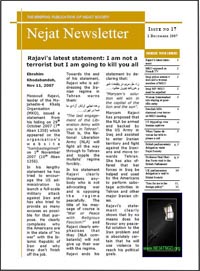
Nejat NewsLetter NO.17

Nejat News Letter

INSIDE THIS ISSUE:

1.    Rajavi’s latest statement

2.    MKO exposed on French TV

3.    Iraqi police arrests 4 Men and a woman member of MKO

4.    Iraqi MP: MKO must be expelled

5.    Woman brainwashed into staying at guerrilla camp

6.    Swedish MPs slammed over terrorist MKO meeting

7.    US tripped up over Iranian captives

8.    When Tanter divorces his wife to please a cult

9.    British parliamentary Delegation visits Nejat Society

10. Professor Paul Sheldon Foote visit to the British Parliament

11. UK parliamentary Delegation’s visit to Edalat Society

12. “Iran for me is the Foreign policy”


Download Nejat NewsLetter-ISSUE NO.17

December 1, 2007 0 comments
FacebookTwitterPinterestWhatsappTelegramSkypeEmail
Missions of Nejat Society

British parliamentary delegation visits Nejat Society in Tehran

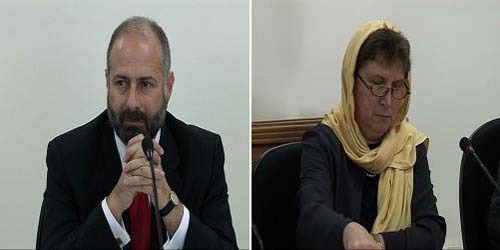
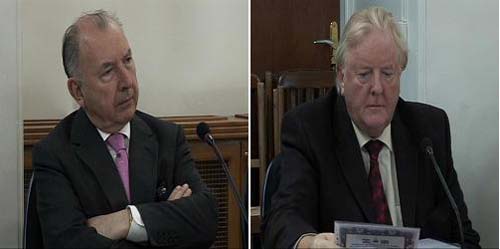
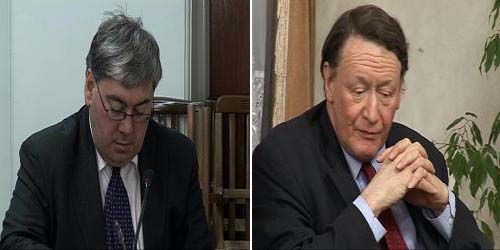
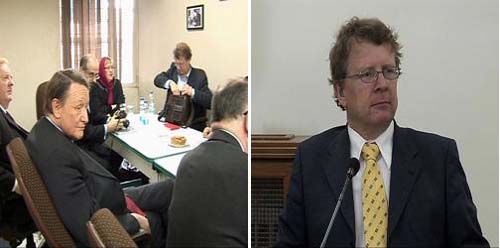
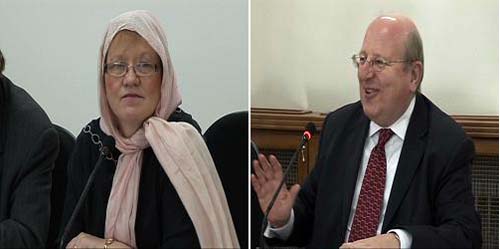
A parliamentary delegation from Britain who is visiting Iran, met with the members and associates of Nejat (Salvation) Society in their office in Tehran on Wednesday 14th November 2007.  The delegation headed by Mr Mike Gapes, the chairman of the foreign affairs committee of the House of Commons, consisted of the members of that committee including Mr Richard Younger-Ross, Mr Ken Purchase, Ms Gisela Stuart, Sir John Stanley, Mr John Horam, Mr Fabian Hamilton and other MPs. 

British parliamentary delegation visits Nejat Society in Tehran

British parliamentary delegation visits Nejat Society in Tehran

British parliamentary delegation visits Nejat Society in Tehran

British parliamentary delegation visits Nejat Society in Tehran

Mr Ebrahim Khodabandeh, an associate of the Nejat Society opened the meeting and welcomed the guests and introduced the officials of the society including Mr Babak Amin the general secretary, Mr Arash Sametipour the international relations secretary and Ms Hura Shalchi the public relations secretary.

 British parliamentary delegation visits Nejat Society in Tehran

November 27, 2007 0 comments
FacebookTwitterPinterestWhatsappTelegramSkypeEmail
Professor Paul Sheldon Foote

Professor Paul Sheldon Foote visit to the British Parliament

Members of Parliament in Britain got to hear what traditional Republican Party members really think about the US Administration’s neoconservative approach toward Iran yesterday.

Professor Paul Sheldon Foote on a short visit from the USA was invited by Conservative members of parliament to present a briefing talk about US foreign policy toward Iran.

Paul Sheldon Foote is a Professor at the California State University and an outspoken critic of US neoconservatives and American political leaders who support war on Iran. Professor Foote served as an elected member of the Republican Party Central Committee, Los Angeles County (1990 to 1992) and as a conservative Republican candidate for the California State Assembly endorsed by the California Republican Assembly (1992). He is also a Vietnam veteran. Professor Foote is married to an Iranian-American and has conducted extensive research on Iran’s political and cultural issues.

Professor Foote was welcomed in London by some individual members of parliament, researchers and media representatives.

On Thursday, November 22, 2007 (Thanksgiving Day in America), at the invitation of the Conservative Middle East Council (CMEC) http://www.cmec.org.uk,

Professor Foote addressed a group of MPs in a Q & A meeting in parliament with the title ‘US Division of Foreign Policy Towards Iran’.

The talk highlighted the false positioning of neoconservatives as representing the far right. Instead, Professor Foote identified their agenda as being in-line with communist totalitarian ideology. From this position, neoconservatives promote the exiled Iranian Mojahedin-e Khalq organization (aka MKO, MEK, NCRI, Rajavi cult) in the pursuit of ‘regime change’. As well as being a totalitarian cult which acted as Saddam Hussein’s private army for two decades, the MEK is listed as a terrorist group in the EU and USA.

In this way, Professor Foote explained, the neoconservatives have hijacked the traditional right wing in America. According to Professor Foote, opposition toward the Administration’s foreign policy does not come exclusively from the American left and the Democratic Party. America’s traditional right is also outspoken in criticism of the neoconservatives. Among these are Congressman Ron Paul and Patrick J. Buchanan author of ‘Where the Right went Wrong’.

“Real American conservatives support setting an example of how to have a great republic at home, not how to invade other countries to steal resources”said Professor Foote.

Others include Justin Raimondo, Claes Ryn, Lew Rockwell and Bruce Laingen – a Republican and highest ranking diplomatic hostage in Iran, who has supported talks and diplomatic relations with Iran.


Professor Foote and Massoud Khodabandeh from”Centre de Recherche sur le Terrorism (Paris)”met with members of the Home Affairs Select Committee and Foreign Affairs Select Committee in the House of Parliament during which they highlighted the damage which the British parliament’s reputation has received worldwide by ignoring the infiltration into parliament of proscribed terrorist organization Mojahedin Khalq (aka Rajavi cult). The banned group’s abuse of democratic institutions, including the misuse of privileges given historically to some unelected members appears to have gone unchallenged. Mr. Khodabandeh presented documents clearly illustrating the gravity of this issue and the impact it has already had on the reputation of Parliament.

Professor Foote participated in a one hour round-table review on the significant issues in the Middle East during 2007 which will be broadcast for Press TV’s ‘Middle East Today’ program on 26 December 2007.

He also gave his expert view on the subject of the US Administration and possible ways of engaging in the problems posed by the Middle East, which will be published in next month’s edition of CFSOT (Centre for the Study of Terrorism – London) , the”Islamism Digest”.

During his trip Professor Foote also met with Anne Singleton of Iran-Interlink.

November 25, 2007 0 comments
FacebookTwitterPinterestWhatsappTelegramSkypeEmail
Mujahedin Khalq 's Function

Another Big Crowd of Advocates!

Referring to recent news released by Washington Post , Reuters , CNN and the Chinese newspaper People’s Daily, Cernig goes through a propaganda claim about how 300,000 Iraqis supposedly signed a petition complaining about alleged Iranian involvement in Iraq. The claim is strongly supported by a globally blacklisted terrorist organization, Mojahedin-e Khalq Organization (MKO), aka MEK, PMOI, NCRI. It is not the first time that the terrorist group, on the verge of expulsion from Iraq, exaggerates the supposed number of some supporters, this time 300,000. As Cering says:

That’s a lot, isn’t it?

But…

It isn’t as many as when this story was last hawked around, back in June. Then, according to the MeK’s own website, it was 450,000 members of the Iraqi tribes of Diyala who were condemning Iran’s presence as part and parcel of expressing "full solidarity with the Mujahideen Khalq (MEK)"

But…

Even that is nothing compared to the attempt before that to hawk the self-same story. Back in June 2006, the MeK’s political wing – the National Council of Resistance of Iran, which FOX News expert on Iran Alireza Jafarzadeh used to be spokesman for – announced that:

Solidarity Congress of Iraqi People announced the support of 5.2 million Iraqi’s to a declaration condemning Iranian regime’s meddling in their country. The declaration also lends support to People’s Mojahedin Organization of Iran [The MeK’s other alias – C] whose presence in Iraq has acted as a major obstacle to mullahs’ fundamentalist ambitions in Iraq. The announcement was made before a huge crowd of Iraqis in Ashraf City on June 17.

Ashraf City, by the by, is the MeK’s own name for "Camp Ashraf" – the rather salubrious location, situated conveniently close to iraq’s biggest munitions dump – where thousands of MeK members are "guarded" by a handful of US and Bulgarian troops.

Back then, the breakdown of the notable signatories to the petition was even more admirable:

121 political parties and social groups, 700,000 women, 14,000 lawyers and jurists, 19,000 physicians, 35,000 engineers, 320 clerics, 540 professors, 2,000 tribal sheikhs and 300 local officials among 5.2 million signitaries of the declaration.

Maybe it was the claim that fully a third of Iraq’s population had signed something supporting such an odious terror group that lead to general disbelief and the story sinking without a trace.

So either the folk supporting the MeK against an alleged infiltration of the Iraqi government from top to bottom are changing their minds – by the millions – or the latest version is just the MeK scaling down their entirely fictitious nonsense to a more believable level.

Were it not for the fact that anti-Iranian rhetoric is currently fashionable, and is being stirred at every opportunity by U.S. neoconservatives both in and out of the White House, this latest story would have sunk without a trace too.

 Mojahedin.ws, November 24, 2007

November 25, 2007 0 comments
FacebookTwitterPinterestWhatsappTelegramSkypeEmail
Raymond Tanter

Raymond Tanter turns out his wife to please a cult

At the end of October a symposium was held in the French National Assembly, attended by a few second rate persons from the world of France and politics which brought nothing new to confront the Iranian threat.

More interesting is the guest of honor: Raymond Tanter.

Interesting first in his capacity as a professor at Georgetown University in the USA and as a former member of the National Security Council at the White House. But also because it is a striking example of an ambiguous relationship between a part of American political circles and certain terrorist groups.

Indeed, Tanter currently chairs the Iran Policy Committee (IPC) which performs lobbying for the Mojahedin-e Khalq (aka PMOI, MEK, MKO, NCRI,… etc.), recognized as a terrorist organization by both the European Union and the USA.

But what is interesting is how Tanter has been under the control of the Mojahedin. At one point his wife, Constance Anderson-Tanter, accused the People’s Mujahideen of being responsible for the separation of the couple.

In several testimonies she clearly accuses the spokesman of the Mojahedin in the USA, Alireza Jafarzadeh, of first becoming a friend, then the confidant and finally mentor to her husband. At that point he convinced Tanter to leave his wife.

This kind of mental manipulation is usual in the Mojahedin and is the methodology of a typical type of sectarian group (cult) that has been frequently described.

Although curious this has been the fate of Raymond Tanter. A US academic who has become faithful to a terrorist cult…

It is, in this case, inappropriate for him to pretend to be an independent expert…


————

Original in French:


Quand un membre de l’administration US vire sa femme pour faire plaisir à une secte

Fin octobre s’est tenue à l’Assemblée nationale française, un colloque réunissant quelques seconds couteaux du monde politique français et qui n’a rien apporté de neuf à la rengaine sur la menace iranienne.

Plus intéressant en est l’invité d’honneur : Raymond Tanter.

Intéressant par sa qualité de professeur à l’université de Georgetown aux Etats-Unis et d’ancien membre du Conseil de sécurité nationale à la Maison Blanche, d’abord. Mais aussi, car il est un exemple marquant des relations ambiguës entre une partie de l’administration américaine et certains groupes terroristes.

En effet, Tanter préside actuellement le Comité pour une politique iranienne (Iran Policy Committee IPC) qui fait du lobbyng en faveur des Moudjahidine du peuple iranien (connu aussi sous le nom de l’OMPI, CNRI, etc…), organisation reconnue comme terroriste tant par l’Union européenne que par les USA dont Tanter fut pourtant un très haut fonctionnaire.

Mais ce qui est emblématique, c’est la manière dont l’OMPI l’a mis sous sa coupe. Au point que son épouse, Constance Anderson-Tanter, a accusé les Moudjahidine du peuple d’être responsables de la séparation du couple.

Elle accuse clairement dans plusieurs témoignages, le porte parole de l’OMPI aux USA, Alireza Jafarzadeh d’être devenu l’ami, le confident et finalement le mentor de son époux. Au point qu’il l’aurait convaincu de quitter sa femme.

Cette sorte de manipulation mentale est habituelle au sein des Moudjahidines et typique d’un fonctionnement de type sectaire qui a déjà été souvent démontré :

Bien curieux destin de Raymond Tanter, agent du gouvernement US, qui serait devenu un vrai fidèle de la secte terroriste…

Il est en tous les cas bien mal venu pour jouer à l’expert indépendant…

November 25, 2007 0 comments
FacebookTwitterPinterestWhatsappTelegramSkypeEmail
Newer Posts
Older Posts

Recent Posts

  • The Psychological Impact of MEK Ideology on Members

    August 17, 2026
  • A study on the financial mechanism of the Mujahedin-e Khalq

    August 10, 2026
  • A Child behind the Ideological Bars of Massoud and Maryam Rajavi

    August 8, 2026
  • A Comparative Analysis of Psychological Control Mechanisms in Jeffrey Epstein’s Cult and the MEK

    August 3, 2026
  • Operation Mersad: How Iran foiled Saddam’s final gambit 37 years ago

    August 1, 2026
  • Facebook
  • Twitter
  • Instagram
  • Youtube

© 2003 - 2025 NEJAT Society . All Rights Reserved. NejatNGO.org


Back To Top
Nejat Society
  • Home
  • Articles
  • Media
    • Cartoons
    • NewsPics
    • Photo Gallery
    • Videos
  • Publications
    • Books
    • Nejat NewsLetter
    • Pars Brief
  • About Us
  • Contact us
  • Editions
    • عربي
    • فارسی
    • Shqip