Nejat Society
  • Home
  • Articles
  • Media
    • Cartoons
    • NewsPics
    • Photo Gallery
    • Videos
  • Publications
    • Books
    • Nejat NewsLetter
    • Pars Brief
  • About Us
  • Contact us
  • Editions
    • عربي
    • فارسی
    • Shqip
Nejat Society
Nejat Society
  • Home
  • Articles
  • Media
    • Cartoons
    • NewsPics
    • Photo Gallery
    • Videos
  • Publications
    • Books
    • Nejat NewsLetter
    • Pars Brief
  • About Us
  • Contact us
  • Editions
    • عربي
    • فارسی
    • Shqip
© 2003 - 2024 NEJAT Society. nejatngo.org
USA

Momentum built for Cheney impeachment

Cheney linked to Mojahedin Khalq Terrorist cult in Iraq

Congressman Dennis Kucinich says he will offer a resolution to the House of Representatives to impeach Vice President Dick Cheney.

The Democratic lawmaker who will introduce his privileged resolution next week said on Friday that the momentum is built for Cheney’s impeachment.

"Millions of citizens across the nation are demanding Congress to stand up against the Vice President’s abuse of power," Kucinich said.

"The Vice President continues to use his office to advocate continued occupation of Iraq and prod our nation into a belligerent stance against Iran," added the US presidential hopeful.

While the American media has decided to keep Kucinich’s announcement on a low profile 54 percent of the Americans are in favor of impeaching Cheney according to an American Research Group survey conducted last July.

Analysts believe the number of pro-impeachment Americans is on the rise due to Cheney’s hawkish policies towards the Islamic republic.

the resolution reads:

…

(D) The United States has been linked to anti-Iranian organizations that are attempting to destabilize the Iranian government, in particular the Mujahideen-e Khalq (MEK), even though the state department has branded it a terrorist organization.

…

————-

Iran Interlink reported on 4 July 2007

http://iran-interlink.org/index.php?mod=view&id=2720

Impeaching Richard B. Cheney, Vice President of the United States, for high crimes and misdemeanors.

Cheney linked to Mojahedin Khalq Terrorist cult in Iraq

News has emerged that US Vice President Dick Cheney is subject to impeachment. Part of the accusation against him involves links with the terrorist Mojahedin Khalq cult as highlighted in article 3 below:


(3) The Vice President is fully aware of the actions taken by the United States towards Iran that are further destabilizing the world as evidenced by the following:

(D) The United States has been linked to anti-Iranian organizations that are attempting to destabilize the Iranian government, in particular the Mujahideen-e Khalq (MEK), even though the state department has branded it a terrorist organization.

———-

Full Report:


Press Release

US House Resolution 333

Dennis Kucinich

4 July 2007

04:15


110th CONGRESS

1st Session

H. RES. 333


Impeaching Richard B. Cheney, Vice President of the United States, for high crimes and misdemeanors.


IN THE HOUSE OF REPRESENTATIVES


April 24, 2007


Mr. KUCINICH submitted the following resolution; which was referred to the Committee on the Judiciary


RESOLUTION


Impeaching Richard B. Cheney, Vice President of the United States, for high crimes and misdemeanors.


Resolved, That Richard B. Cheney, Vice President of the United States, is impeached for high crimes and misdemeanors, and that the following articles of impeachment be exhibited to the United States Senate:

Articles of impeachment exhibited by the House of Representatives of the United States of America in the name of itself and of the people of the United States of America, against Richard B. Cheney, Vice President of the United States of America, in maintenance and support of its impeachment against him for high crimes and misdemeanors.


Article I


In his conduct while Vice President of the United States, Richard B. Cheney, in violation of his constitutional oath to faithfully execute the office of Vice President of the United States and, to the best of his ability, preserve, protect, and defend the Constitution of the United States, and in violation of his constitutional duty to take care that the laws be faithfully executed, has purposely manipulated the intelligence process to deceive the citizens and Congress of the United States by fabricating a threat of Iraqi weapons of mass destruction to justify the use of the United States Armed Forces against the nation of Iraq in a manner damaging to our national security interests, to wit:

(1) Despite all evidence to the contrary, the Vice President actively and systematically sought to deceive the citizens and Congress of the United States about an alleged threat of Iraqi weapons of mass destruction:

(A) `We know they have biological and chemical weapons.’ March 17, 2002, Press Conference by Vice President Dick Cheney and His Highness Salman bin Hamad Al Khalifa, Crown Prince of Bahrain at Shaikh Hamad Palace.

(B) `. . . and we know they are pursuing nuclear weapons.’ March 19, 2002, Press Briefing by Vice President Dick Cheney and Israeli Prime Minister Ariel Sharon in Jerusalem.

(C) `And he is actively pursuing nuclear weapons at this time . . .’ March 24, 2002, CNN Late Edition interview with Vice President Cheney.

(D) `We know he’s got chemicals and biological and we know he’s working on nuclear.’ May 19, 2002, NBC Meet the Press interview with Vice President Cheney.


(E) `But we now know that Saddam has resumed his efforts to acquire nuclear weapons . . . Simply stated, there is no doubt that Saddam Hussein now has weapons of mass destruction. There is no doubt that he is amassing them to use against our friends, against our allies, and against us.’ August 26, 2002, Speech of Vice President Cheney at VFW 103rd National Convention.

(F) `Based on intelligence that’s becoming available, some of it has been made public, more of it hopefully will be, that he has indeed stepped up his capacity to produce and deliver biological weapons, that he has reconstituted his nuclear program to develop a nuclear weapon, that there are efforts under way inside Iraq to significantly expand his capability.’ September 8, 2002, NBC Meet the Press interview with Vice President Cheney.

(G) `He is, in fact, actively and aggressively seeking to acquire nuclear weapons.’ September 8, 2002, NBC Meet the Press interview with Vice President Cheney.

(H) `And we believe he has, in fact, reconstituted nuclear weapons.’ March 16, 2003, NBC Meet the Press interview with Vice President Cheney.

(2) Preceding the March 2003 invasion of Iraq the Vice President was fully informed that no legitimate evidence existed of weapons of mass destruction in Iraq. The Vice President pressured the intelligence community to change their findings to enable the deception of the citizens and Congress of the United States.

(A) Vice President Cheney and his Chief of Staff, Lewis Libby, made multiple trips to the CIA in 2002 to question analysts studying Iraq’s weapons programs and alleged links to al Qaeda, creating an environment in which analysts felt they were being pressured to make their assessments fit with the Bush administration’s policy objectives accounts.

(B) Vice President Cheney sought out unverified and ultimately inaccurate raw intelligence to prove his preconceived beliefs. This strategy of cherry picking was employed to influence the interpretation of the intelligence.

(3) The Vice President’s actions corrupted or attempted to corrupt the 2002 National Intelligence Estimate, an intelligence document issued on October 1, 2002, and carefully considered by Congress prior to the October 10, 2002, vote to authorize the use of force. The Vice President’s actions prevented the necessary reconciliation of facts for the National Intelligence Estimate which resulted in a high number of dissenting opinions from technical experts in two Federal agencies.

(A) The State Department’s Bureau of Intelligence and Research dissenting view in the October 2002 National Intelligence Estimate stated `Lacking persuasive evidence that Baghdad has launched a coherent effort to reconstitute it’s nuclear weapons program INR is unwilling to speculate that such an effort began soon after the departure of UN inspectors or to project a timeline for the completion of activities it does not now see happening. As a result INR is unable to predict that Iraq could acquire a nuclear device or weapon.’.


(B) The State Department’s Bureau of Intelligence and Research dissenting view in the October 2002 National Intelligence Estimate also stated that `Finally, the claims of Iraqi pursuit of natural uranium in Africa are, in INR’s assessment, highly dubious.’.

(C) The State Department’s Bureau of Intelligence and Research dissenting view in the October 2002 National Intelligence Estimate references a Department of Energy opinion by stating that `INR accepts the judgment of technical experts at the US Department of Energy (DOE) who have concluded that the tubes Iraq seeks to acquire are poorly suited for use in gas centrifuges to be used for uranium enrichment and finds unpersuasive the arguments advanced by others to make the case that they are intended for that purpose.’.

The Vice President subverted the national security interests of the United States by setting the stage for the loss of more than 3300 United States service members; the loss of 650,000 Iraqi citizens since the United States invasion; the loss of approximately $500 billion in war costs which has increased our Federal debt; the loss of military readiness within the United States Armed Services due to overextension, lack of training and lack of equipment; the loss of United States credibility in world affairs; and the decades of likely blowback created by the invasion of Iraq.

In all of this, Vice President Richard B. Cheney has acted in a manner contrary to his trust as Vice President, and subversive of constitutional government, to the prejudice of the cause of law and justice and the manifest injury of the people of the United States. Wherefore, Vice President Richard B. Cheney, by such conduct, is guilty of an impeachable offense warranting removal from office.


Article II

In his conduct while Vice President of the United States, Richard B. Cheney, in violation of his constitutional oath to faithfully execute the office of Vice President of the United States and, to the best of his ability, preserve, protect, and defend the Constitution of the United States, and in violation of his constitutional duty to take care that the laws be faithfully executed, purposely manipulated the intelligence process to deceive the citizens and Congress of the United States about an alleged relationship between Iraq and al Qaeda in order to justify the use of the United States Armed Forces against the nation of Iraq in a manner damaging to our national security interests, to wit:

(1) Despite all evidence to the contrary, the Vice President actively and systematically sought to deceive the citizens and the Congress of the United States about an alleged relationship between Iraq and al Qaeda:

(A) `His regime has had high-level contacts with Al Qaeda going back a decade and has provided training to Al Qaeda terrorists.’ December 2, 2002, Speech of Vice President Cheney at the Air National Guard Senior Leadership Conference.


(B) `His regime aids and protects terrorists, including members of Al Qaeda. He could decide secretly to provide weapons of mass destruction to terrorists for use against us.’ January 30, 2003, Speech of Vice President Cheney to 30th Political Action Conference in Arlington, Virginia.

(C) `We know he’s out trying once again to produce nuclear weapons and we know that he has a long-standing relationship with various terrorist groups, including the Al Qaeda organization.’ March 16, 2003, NBC Meet the Press interview with Vice President Cheney.

(D) `We learned more and more that there was a relationship between Iraq and Al Qaeda that stretched back through most of the decade of the ’90s, that it involved training, for example, on biological weapons and chemical weapons . . .’ September 14, 2003, NBC Meet the Press interview with Vice President Cheney.

(E) `Al Qaeda had a base of operation there up in Northeastern Iraq where they ran a large poisons factory for attacks against Europeans and U.S. forces.’ October 3, 2003, Speech of Vice President Cheney at Bush-Cheney ’04 Fundraiser in Iowa.

(F) `He also had an established relationship with Al Qaeda providing training to Al Qaeda members in areas of poisons, gases, and conventional bombs.’ October 10, 2003, Speech of Vice President Cheney to the Heritage Foundation.

(G) `Al Qaeda and the Iraqi intelligence services have worked together on a number of occasions.’ January 9, 2004, Rocky Mountain News interview with Vice President Cheney.

(H) `I think there’s overwhelming evidence that there was a connection between Al Qaeda and the Iraqi government.’ January 22, 2004, NPR: Morning Edition interview with Vice President Cheney.

(I) `First of all, on the question of–of whether or not there was any kind of relationship, there clearly was a relationship. It’s been testified to; the evidence is overwhelming.’ June 17, 2004, CNBC: Capital Report interview with Vice President Cheney.

(2) Preceding the March 2003 invasion of Iraq the Vice President was fully informed that no credible evidence existed of a working relationship between Iraq and al Qaeda, a fact articulated in several official documents, including:

(A) A classified Presidential Daily Briefing ten days after the September 11, 2001, attacks indicating that the United States intelligence community had no evidence linking Saddam Hussein to the September 11th attacks and that there was `scant credible evidence that Iraq had any significant collaborative ties with Al Qaeda’.

(B) Defense Intelligence Terrorism Summary No. 044-02, issued in February 2002 by the United States Defense Intelligence Agency, which challenged the credibility of information gleaned from captured al Qaeda leader al-Libi. The DIA report also cast significant doubt on the possibility of a Saddam Hussein-al-Qaeda conspiracy: `Saddam’s regime is intensely secular and is wary of Islamic revolutionary movements. Moreover, Baghdad is unlikely to provide assistance to a group it cannot control.’.


(C) A January 2003 British intelligence classified report on Iraq that concluded that `there are no current links between the Iraqi regime and the al-Qaeda network’.

The Vice President subverted the national security interests of the United States by setting the stage for the loss of more than 3,300 United States service members; the loss of 650,000 Iraqi citizens since the United States invasion; the loss of approximately $500 billion in war costs which has increased our Federal debt; the loss of military readiness within the United States Armed Services due to overextension, lack of training and lack of equipment; the loss of United States credibility in world affairs; and the decades of likely blowback created by the invasion of Iraq.

In all of this, Vice President Richard B. Cheney has acted in a manner contrary to his trust as Vice President, and subversive of constitutional government, to the prejudice of the cause of law and justice and the manifest injury of the people of the United States.

Wherefore, Vice President Richard B. Cheney, by such conduct, is guilty of an impeachable offense warranting removal from office.


Article III

In his conduct while Vice President of the United States, Richard B. Cheney, in violation of his constitutional oath to faithfully execute the office of Vice President of the United States and, to the best of his ability, preserve, protect, and defend the Constitution of the United States, and in violation of his constitutional duty to take care that the laws be faithfully executed, has openly threatened aggression against the Republic of Iran absent any real threat to the United States, and done so with the United States proven capability to carry out such threats, thus undermining the national security of the United States, to wit:

(1) Despite no evidence that Iran has the intention or the capability of attacking the United States and despite the turmoil created by United States invasion of Iraq, the Vice President has openly threatened aggression against Iran as evidenced by the following:

(A) `For our part, the United States is keeping all options on the table in addressing the irresponsible conduct of the regime. And we join other nations in sending that regime a clear message: We will not allow Iran to have a nuclear weapon.’ March 7, 2006, Speech of Vice President Cheney to American Israel Public Affairs Committee 2006 Policy Conference.

(B) `But we’ve also made it clear that all options are on the table.’ January 24, 2007, CNN Situation Room interview with Vice President Cheney.

(C) `When we–as the President did, for example, recently–deploy another aircraft carrier task force to the Gulf, that sends a very strong signal to everybody in the region that the United States is here to stay, that we clearly have significant capabilities, and that we are working with friends and allies as well as the international organizations to deal with the Iranian threat.’ January 29, 2007, Newsweek interview with Vice President Cheney.


(D) `But I’ve also made the point and the President has made the point that all options are still on the table.’ February 24, 2007, Vice President Cheney at Press Briefing with Australian Prime Minister in Sydney, Australia.

(2) The Vice President, who repeatedly and falsely claimed to have had specific, detailed knowledge of Iraq’s alleged weapons of mass destruction capabilities, is no doubt fully aware of evidence that demonstrates Iran poses no real threat to the United States as evidenced by the following:

(A) `I know that what we see in Iran right now is not the industrial capacity you can [use to develop a] bomb.’ Mohamed ElBaradei, Director General of International Atomic Energy Agency, February 19, 2007.

(B) Iran indicated its `full readiness and willingness to negotiate on the modality for the resolution of the outstanding issues with the IAEA, subject to the assurances for dealing with the issues in the framework of the Agency, without the interference of the United Nations Security Council’. IAEA Board Report, February 22, 2007.

(C) `. . . so whatever they have, what we have seen today, is not the kind of capacity that would enable them to make bombs.’ Mohamed El Baradei, Director General of International Atomic Energy Agency, February 19, 2007.

(3) The Vice President is fully aware of the actions taken by the United States towards Iran that are further destabilizing the world as evidenced by the following:

(A) The United States has refused to engage in meaningful diplomatic relations with Iran since 2002, rebuffing both bilateral and multilateral offers to dialogue.

(B) The United States is currently engaged in a military buildup in the Middle East that includes the increased presence of the United States Navy in the waters near Iran, significant United States Armed Forces in two nations neighboring to Iran, and the installation of anti-missile technology in the region.

(C) News accounts have indicated that military planners have considered the B61-11, a tactical nuclear weapon, as one of the options to strike underground bunkers in Iran.

(D) The United States has been linked to anti-Iranian organizations that are attempting to destabilize the Iranian government, in particular the Mujahideen-e Khalq (MEK), even though the state department has branded it a terrorist organization.

(E) News accounts indicate that United States troops have been ordered into Iran to collect data and establish contact with anti-government groups.

(4) In the last three years the Vice President has repeatedly threatened Iran. However, the Vice President is legally bound by the U.S. Constitution’s adherence to international law that prohibits threats of use of force.


(A) Article VI of the United States Constitution states, `This Constitution, and the Laws of the United States which shall be made in Pursuance thereof; and all Treaties made, or which shall be made, under the Authority of the United States, shall be the supreme Law of the Land.’ Any provision of an international treaty ratified by the United States becomes the law of the United States.

(B) The United States is a signatory to the United Nations Charter, a treaty among the nations of the world. Article II, Section 4 of the United Nations Charter states, `All Members shall refrain in their international relations from the threat or use of force against the territorial integrity or political independence of any state, or in any other manner inconsistent with the Purposes of the United Nations.’ The threat of force is illegal.

(C) Article 51 lays out the only exception, `Nothing in the present Charter shall impair the inherent right of individual or collective self-defense if an armed attack occurs against a Member of the United Nations, until the Security Council has taken measures necessary to maintain international peace and security.’ Iran has not attacked the United States; therefore any threat against Iran by the United States is illegal.

The Vice President’s deception upon the citizens and Congress of the United States that enabled the failed United States invasion of Iraq forcibly altered the rules of diplomacy such that the Vice President’s recent belligerent actions towards Iran are destabilizing and counterproductive to the national security of the United States.

In all of this, Vice President Richard B. Cheney has acted in a manner contrary to his trust as Vice President, and subversive of constitutional government, to the prejudice of the cause of law and justice and the manifest injury of the people of the United States.

Wherefore Richard B. Cheney, by such conduct, warrants impeachment and trial, and removal from office.


Press TV, November 04, 2007

http://www.presstv.ir/detail.aspx?id=29792&sectionid=3510203


November 13, 2007 0 comments
FacebookTwitterPinterestWhatsappTelegramSkypeEmail
Massoud Rajavi

Masud Rajavi (Cult leader): We will never give up militarism to assume power

A Masqueraded Partisan of Democracy Preaching War

In contrast to its widespread propaganda to have adopted a strategy of pro-democracy in its struggle, MKO’s bellicosely terrorist nature pops out of its leader’s messages. In most of speeches delivered by Maryam Rajavi after the organization’s great shift following the fall of Saddam, she has put forth the third option of democratic change in Iran. The organization has also expressly renounced all military activities since June 2001, as stated in the judgment of the Court of First Instance. The spell seems to have worked on some European lawmakers and American congressmen since they might have been kept in dark about the true nature of the organization that for solid evidences occupies a permanent position on global terrorist lists.

While in Western countries MKO’s appointed agents are in a ceaseless attempt to remove the terrorist tag from the group through advertising pseudo-democratic claims, the leader’s message to the insiders residing in Camp Ashraf, and of course the sympathizers throughout the world, aims to bolsters the members’ combative morale and contains military threats against Iran. The gist of Massoud Rajavi’s latest message issued from his hideout on 29 October is that the organization never withdraws from its long-advocated policy of resorting to terrorism and militarism to assume political power. Addressing Iranian statesmen Rajavi concludes:

But if you paid no heed and fancied that there would possibly be no war and no land forces,… the final rendezvous of the National Liberation Army (NLA) with you would be in Tehran.

It is an evident fact that Mojahedin adopted the policy of armed struggle not since it was deemed to be a necessity but much because it is innately instituted in its ideology. A review of the organization’s early pamphlets and publications proves that resort to militarism and armed warfare before delineating the struggle strategy is a solution to the vital question of to be or not to be. Renunciation of terrorism and militarism, although MKO has refrained to denounce publicly, first needs a through ideological polish, something MKO has dodged to go through at least up to now.

The main problem lies in the fact that many have failed to grasp the seriousness of the threat. By taking advantage of the global underestimation, Mojahedin play for time through a disguise of pro-democracy. The world has the right to know, so as to be protected against the horrors and atrocities of terrorism, that what the organization advertises and practices in the face of the public is in total contradiction with its ideological bindings. And the world has the right to know why Massoud Rajavi’s messages, originally in Farsi, are rarely translated into other languages while his wife’s speeches are translated into many languages before they are delivered!

Mojahedin.ws, November 9, 2007  

http://www.mojahedin.ws/news/text_news_en.php?id=1464

November 13, 2007 0 comments
FacebookTwitterPinterestWhatsappTelegramSkypeEmail
Iraq

US main opponent to MKO extradition

Abdolaziz Hakim says US opposition to the extradition of MKO terrorists from Iraq is the main reason behind their stay in the country.

"Washington considers members of the terrorist Mujahedin Khalq Organization as political refugees. Due to this attitude, MKO members have not been extradited from Iraq," Head of United Iraq Coalition Seyyed Abdolaziz Hakim told IRNA.

Referring to the Iraqi government’s decision to deport the Mujahedin Khalq terrorist group from Iraq in 2004 and the disagreement of the US, Hakim stated, "Deportation of MKO members from Iraq has always been one of the subjects of discussion among Iraqi and US officials."

Hakim added that the Iraqi people and government consistently demand the expulsion of the MKO terrorists from Iraq due to the atrocities committed by the group against the Iranian and Iraqi people during Saddam’s regime, but they always encounter US opposition.

The Iraqi official also dismissed allegations of Iran’s interference in Iraq, saying the Islamic Republic supported Iraq’s transitional council and the Iraqi government after the collapse of the Saddam regime

PressTV

Nov. 11, 2007

November 13, 2007 0 comments
FacebookTwitterPinterestWhatsappTelegramSkypeEmail
Iran

Mojahedin Khalq , Dual-Purpose Terrorists


The Dual Stance and Global Order  In an article contributed for Dailystar, Manouchehr Mottaki, Iranian Foreign Minister, condemned the US bellicose attitudes toward Iran and its dual stance in dealing with terrorism. He said:

With regard to international terrorism, Iran, as a victim of terrorism, condemns it in all its forms. But the same double standards are apparent here. The US has used and is still using extremist organizations to promote its foreign policy goals.  This could be said of US conduct with regard to Al-Qaeda’s precursors in Afghanistan in the 1980s, and of its current dealings with terrorist groups such as the People’s Mujahadeen Organization (MKO), and the Kurdish PEJAK and PKK. The MKO, which was once on Saddam Hussein’s payroll and responsible for the loss of many innocent lives in Iran and Iraq, is now under the protection of the US government in Iraq and operates freely in the US itself.


November 10, 2007


Here is the full text:

Iran’s quest for a just global order  By Manouchehr Mottaki, Dailystar, Thursday, November 08, 2007

A major shortcoming in today’s world is the persistence of a zero-sum sense of geopolitics. The world expected something different in the post-Cold War era to promote peace and stability. Instead, after the terrorist attacks of September 11, 2001, momentum swung toward a”global war on terror”that, in practice, became the rationale for maintaining a Cold War mentality and supporting strategies of pre-emptive war and regime change that have intensified insecurity, instability and international terrorism.

Consider my country, Iran, which has not invaded any country in the past 250 years. After decades of struggle against dictatorship and foreign domination, we secured our freedom and independence in 1979 by establishing a political system of our own choosing. But instead of establishing friendly relations with Iran based on this new reality, the United States has consistently sought to restore its domination, even providing massive diplomatic, financial and military support to Saddam Hussein in his war against my country during the 1980’s.

The current dispute over Iran’s peaceful and legal nuclear program is part of this pattern, replete with unfounded accusations, double standards, and moral and legal inconsistency, all hidden behind the alleged threat of proliferation. But Iran’s peaceful nuclear program originates from the late 1960s and 1970s. Iran’s energy demand will exceed its supply, possibly reducing or even eliminating its oil export capacity in the near future. Thus, Iran urgently needs to produce 20,000 megawatts of nuclear power by 2020.  As long ago as 1973, the US government itself saw that Iran would need nuclear power. Indeed, the US expected that Iran would be capable of generating 20,000 megawatts by 1994. Despite the encouragement of Iran’s civil nuclear program by the US, Britain, Germany, and France, they all ultimately reneged on their contractual commitments after our revolution in 1979. Today, some of these governments are even questioning Iran’s need for nuclear energy – a matter that was obvious to them 30 years ago.

Iran does not need nuclear weapons to protect its regional interests, and such weapons have no place in Iran’s security strategy. It seeks to win the confidence of its neighbors and has remained within the confines of the nuclear Non-Proliferation Treaty (NPT). The latest report from the International Atomic Energy Agency has verified that there has been no diversion of Iran’s civil nuclear program to weapons development. Iran has even proposed regional and multinational participation in its uranium enrichment facilities – only to be met by resounding silence from the Western powers.

Meanwhile, US policy toward nuclear non-proliferation and the NPT regime is a case in point of double standards and the lack of sensitivity to other countries’ security concerns. While the US seeks to use unilateral and unlawful pressure to preclude Iran’s legitimate right to peaceful nuclear energy, it has assisted in developing Israel’s nuclear capabilities. Indeed, the US has acted as a buffer to insulate Israel – whose prime minister has boasted about its nuclear weapons – from any international scrutiny, while ignoring calls by Iran and other countries to create a Middle East nuclear weapons-free zone.


With regard to international terrorism, Iran, as a victim of terrorism, condemns it in all its forms. But the same double standards are apparent here. The US has used and is still using extremist organizations to promote its foreign policy goals.

This could be said of US conduct with regard to Al-Qaeda’s precursors in Afghanistan in the 1980s, and of its current dealings with terrorist groups such as the People’s Mujahadeen Organization (MKO), and the Kurdish PEJAK and PKK. The MKO, which was once on Saddam Hussein’s payroll and responsible for the loss of many innocent lives in Iran and Iraq, is now under the protection of the US government in Iraq and operates freely in the US itself.  Iran has always considered regional stability to be in the vital interest of its own security and development. Our efforts to establish a regional security and cooperation arrangement in the Persian Gulf date back to 1986, at the height of the war with Iraq. We have continued to pursue these initiatives in the post-Saddam era, engaging in confidence-building measures with our immediate neighbors in order to offset extra-regional agitations.

Iran currently applies the same policy considerations to Iraq and Afghanistan, despite its opposition to the US-led invasions of these countries. Iran has established excellent relations with post-Taliban Afghanistan and post-Saddam Iraq, and the most senior officials of both countries consistently reject US allegations of Iranian interference. These accusations are designed to portray Iran as a threat to regional stability and frighten other countries into creating an anti-Iran coalition, with the aim of diverting attention from the consequences of failed US policies not only in Iraq, but also in Lebanon and with respect to the Israeli-Palestinian conflict.  The world deserves better. A just global order must be defined in terms of peace and security, alleviation of poverty, a fairer distribution of wealth, better protection of the environment, and respect for local cultural particularities. We can build a global order based on justice, one that negates the current unipolar order by developing tolerance for diversity instead of seeking imposition and assimilation.

Such an order will be culturally inclusive and less hegemonic, encompassing states, non-state actors and social groups to minimize violence and maximize economic well-being.

Erich Fromm, the late German psychologist and philosopher, once said that”history is a graveyard of cultures that came to their catastrophic ends because of their incapacity for planned and rational voluntary reaction to challenges.”We cannot predict our fate, but we can be certain that security will only come through real solidarity and global partnership.

Manouchehr Mottaki is foreign minister of the Islamic Republic of Iran. This commentary is published in collaboration with Project Syndicate/Asia Society (c)

November 13, 2007 0 comments
FacebookTwitterPinterestWhatsappTelegramSkypeEmail
Iran

US, Israel hinder friendly ties

Iran: Unfortunatley some western countries openly support terrorist

Iran’s judiciary chief says the US and Israel prevent other countries from having friendly ties through their false media propaganda.

Ayatollah Seyyed Mahmoud Hashemi Shahroudi called on European countries to adopt a serious stance vis-Ã -vis efforts by Washington and Tel Aviv aimed at undermining relations of other countries.

In a meeting with the Dutch ambassador to Tehran, Radnik van Vollenhoven, Hashemi Shahroudi noted that the more European countries come to realize the main intention of the US and Israel, the more they will help to establishment of peace and tranquility in the world.

“If we are looking for a brighter future in international relations we should come to understand the realities of Iran and those of the Middle East,” he added.

Commenting on the issue of terrorism, Ayatollah Shahroudi noted that unfortunately some European countries support the members of the terrorist Mujahideen Khalq Organization (MKO) by providing safe haven for them in Europe.

Hashemi Shahroudi called on certain European countries to reconsider their stance vis-Ã -vis the issue of terrorism and terrorist groups.

November 13, 2007 0 comments
FacebookTwitterPinterestWhatsappTelegramSkypeEmail
USA

Why are MKO terrorists supported by Neocons and Israelis?

Our Schizophrenic Policy Towards Iran Confuses Mid-East

 (A State Department diplomat who recently returned from Iraqi Kurdistan revealed that”Israelis are everywhere in Kurdistan.”Some are there for business reasons but a number are engaged in support for the PKK, PEJAK, and the MKO. This Israeli support, carried out with a wink and a nod from the neocon cabal in Washington, has strained Turkey’s relations with both Jerusalem and Washington.)

by Wayne Madsen, Opednews.com, November 9, 2007

http://www.opednews.com/articles/opedne_wayne_ma_071109_our_schizophrenic_po.htm

Wayne Madsen

http://www.opednews.com

U.S. State Department sources have told WMR that the neocon strategy to force a U.S. military attack on Iran runs counter to efforts of U.S. diplomats in the region to deal with Iran on some pressing issues of mutual interest.

Although the United States military command in Iraq recently announced that nine Iranians arrested in Iraq by U.S. forces will soon be released, neocons in the Bush administration are delaying the release. The arrested Iranians, including five diplomats seized at an Iranian diplomatic office in the Iraqi Kurdistan capital of Erbil, have never had any charges brought against them and the Iranian and Iraqi governments have protested their detention and America’s violation of international law in storming the diplomatic compound, which recently reopened as a full consulate.

Iran is also concerned about Israeli military and intelligence personnel in Iraqi Kurdistan who are providing logistics and training support to terrorist organizations, including PEJAK, an off-shoot of the Kurdistan Workers Party (PKK) that is active against both Iran and Turkey, and the People’s Mohajedin Organization (MKO), that is using bases in Iraqi Kurdistan to launch attacks against Iran. The MKO is also supported by leading neocons in the United States.

A State Department diplomat who recently returned from Iraqi Kurdistan revealed that”Israelis are everywhere in Kurdistan.”Some are there for business reasons but a number are engaged in support for the PKK, PEJAK, and the MKO. This Israeli support, carried out with a wink and a nod from the neocon cabal in Washington, has strained Turkey’s relations with both Jerusalem and Washington.

The United States officially designates the PKK and MKO as terrorist organizations, which is causing Ankara and Tehran to question America’s so-called”war against terrorism.”

The Bush administration’s schizophrenic policy toward Iran has also complicated efforts to locate and free retired FBI agent Robert Levinson, who disappeared on Iran’s Kish Island while investigating the counterfeiting of American brand cigarettes by Iranian and Russian-Israeli organized crime syndicates. Although neocon elements in Washington have suggested Levinson was arrested by Iranian police and is being held at a prison in Iran, State Department sources claim that Iranian law enforcement, also concerned about the cigarette smuggling syndicates operating in Iran and Dubai, has tried to cooperate with American authorities in locating Levinson but have been rebuffed by administration officials who want no government-to-government contacts with Tehran.

WMR has also learned that a charitable organization called the Mosaic Foundation (named for the Jewish prophet Moses) and which is largely funded by Saudi Arabia and Kuwait, works closely with Israeli Lobby interests in Washington to discourage any U.S rapprochement with Iran or a rapid military withdrawal from Iraq. The Mosaic Foundation proclaims that it serves as a bridge between Islam, Christianity, and Judaism and emphasizes that all three religions are from the same Abrahamic and Mosaic roots. The group also reportedly attempted to make a large donation to Hillary Clinton’s presidential campaign.

http://www.waynemadsenreport.com

For more, visit Wayne Madsen Report, which its publisher, Wayne Madsen, keeps refreshed with more news than any one reporter has a right to.

Wayne Madsen is an investigative journalist, nationally distributed columnist, and author who has covered Washington, DC, politics, national security, and intelligence issues since 1994. He has written for The Village Voice, The Progressive, CAQ, Counterpunch, and the Intelligence Newsletter (based in Paris).

November 13, 2007 0 comments
FacebookTwitterPinterestWhatsappTelegramSkypeEmail
The Ideology of the MEK

Mujahedin’s hatred towards Peace Movement

Peace Movement is a kind of movement in which various people are active. Its principal objective is challenging wars especially imperialistic wars. And of course, in all peace movements most of their efforts are focused on fighting US imperialism since the thing that is important to Europeans and Americans is the take over of neo-cons and neo-liberals in Europe and America. Neo-cons and neo-liberals have violated people‘s civil rights and social and political freedom. They also caused several billion dollars paid by American and European tax-payers, slope to warship against innocent people. Democrat chief of US congress said:” 10 million children, in the US enjoy no health services and the Bush administration refuses the plan for the development of health services at the same time asks for two billion dollars for its war in Iraq or Afghanistan while it can provide health services for 10 million children with the money spent for 40 days fighting in Iraq. The same system is working in Europe now, because the reforms are developing against the benefits of low class of the society and the neo-liberal governments are trying to load the expenses on poor people. Therefore the gap between poor and rich, according to European media and experts, is becoming bigger and bigger. Thus the Europeans and Americans have figured out that “war on terror” has become a pretext for Imperialists in order to pour much more money into big concerns and to violate human rights. Now the people of Europe and America know well of the atrocities made in Iraq and Afghanistan, in the name of “civilized” world and are well-informed of the nature of such wars.

The public hatred toward war has also made right wing Iranian oppositions such as monarchists, Mujahedin, PKK and Komola and a part of republicans apparently oppose the war but actually and practically they act along with the objectives of war-mongers. This is particularly obvious in Muajhedin-e-Khalq whose leader Maryam Rajavi asks for “The absence of military intervention” but suggests a third option of which you can only find the war odor and from the other side she strongly supports Bush’s policy under the name of “Democracy from Tehran to Damascus” including sanctions. Her lobbies throughout Europe and America are feeding the propaganda machine of Imperialism mass media. MKO’s representative in the US, Ali Reza Jaafarzade is an employee of Fox News Cannel which belongs to Mordakai, a Zionist Lobby which has a lot of mass Medias in Europe, America and Australia. And this is a significant example of MKO’s cooperation for hitting war drums. Also it should be told that Ali Reza Jaafar Zade has a political expertise office in Washington DC and serves as a foreign affair analyst and also political advisor for neo-cons. He has close relations with Zionist lobbyist like Richard Perle and neo-cons’ channels and warmongers of Israel lobby including Raymond Tanter former American security advisor. Therefore whenever the US brings an issue to its propaganda field in order to incite war, MKO also does its best to heat the war up and sharpens its propaganda services trying to present itself including holding press conference on Bush’s propaganda for “war on terror”.

Along with warmongers, Mujahedin have shown their deep hatred toward peace and antiwar movements and they claim that any analysis against warmongers of Bush administration is linked to Islamic Regime. Now they try to criticize the whole peace movement claiming “Islamic Regime’s lobbies in peace movement” in order to destroy any effort for peace using lies and slanders. MKO’s leader hostility against peace movement is exactly along with their warmonger policies. They intentionally want to link all peace movements to regime’s lobby so that they can impose suffocation

atmosphere to peace movements. The same work they do to their own dissidents that anyone who criticizes their ideology automatically is viewed as an element of regime! Those elements are of course among politicmen of Iranian oppositions or international Medias or even the leaders of other countries!

With this method of considering people as white or black so oppressively, now Mujahedin are entering a new scene for suppression of their dissidents and that is Peace Movement. Speaking ambiguously of Iranian regime lobbies and their links with Peace Movement, They try to pollute Peace Movement with Islamic Regime so that they can show any peaceful movement as pro-Islamic regime, accusing peace supporters and oppressing them psychologically and politically. Millions people around the world have shown their opposition to war mongers’ policies not only while the occupation of Iraq but also today (like last weekend when several thousands of broad –minded people demonstrated against Bush’s aggressive policies, in various cities in the United States). This shows the failure of the plots of Iranians Chalabis who don’t have any coverage on their actions anymore and neither have they denied their cooperation with war firms and for their services as mercenaries they are paid by Americans. The good example is Ali Reza Jaafarzade’s service office in Washington DC where he gives services to propaganda machine of Imperialism, Israeli lobbies in the US and Mujahedin’s communications in Bagdad. Another example is what the director of the war institute “Edition Global” said;" I have had relations with MKO since thirty years ago.” Thus you can conclude the entire story.

MKO’s policy has always had double standards and their slogans have always been contradictory to their actions. During Iran-Iraq war MKO became a close friend of Saddam Hussein and according to Rajavi they concluded a “ pact of brotherhood”, shouting freedom and peace slogans they benefited from the overture ,contradiction and fight between Iran and Iraq along with the massacre of millions of innocent people, However they yelled peace slogans, they were drumming up for the war. Even after the American occupation of Iraq their analysis was that Islamic Regime is living with crisis and to pass the crisis it would again get war with Iraq and because of that they made the waters more troubled. Today, as what they did before, they face the Iran-America relations with a contradictory policy, for example Maryam Rajavi speaks of “the absence of military intervention” and bargains for the removal of MKO from terror list but virtually she tries to deteriorate the war crisis. Such a movement must have a deep hostility against Peace Movement since it sees everything in American invasion to Iran in order to get rid of the dangerous situation it has stuck in, in Iraq: exposing the risk of expulsion. Besides it has encountered a lot of restrictions in France! The MKO’s leaders have allegedly said “any alternative for them is better than the current situation and the war is one of the alternatives.”

Ali Shams

Translation: Nejat Society

November 13, 2007 0 comments
FacebookTwitterPinterestWhatsappTelegramSkypeEmail
The Ideology of the MEK

The Plotted Ideological Rajavis Marriage for the Organizational Revival

The ideological marriage of Maryam and Massoud [1984] and intra-organizational obligatory divorces [1988] constitute the strategic hallmarks of the ideological revolution within Mojahedin-e Khalq Organization [MKO] or the Mojahedin Cult as notoriously entitled. Although there is a five-year interval between the two events, ideological divorces are a complementary step to the marriage of Maryam and Massoud that deteriorated the status of family life in MKO. Mehdi Abrishamchi, Maryam Rajavi’s late husband, justifies the act of Maryam’s divorce from him and her remarriage to Massoud as removing the problem of family as a barrier in the way of Maryam and Massoud. It is the first time the structure of family life is put into challenge. He says:

Maryam had to be either unquestionably promoted to a high status in the organization released of any [conjugal] obligation, just like Massoud, and be totally devoted to revolution or had to give it up. Here, the simple issue of family was creating an incongruity. [1]

The contradiction solved through the marriage of Maryam and Massoud as a necessary and inevitable phenomenon, it leads to a peaceful coexistence in the organization. According to Abrishamchi, since Maryam was being promoted to a leadership status and every decision in the organization had to be made by Maryam and Massoud together, the matrimonial obligations and restrictions prevented Maryam to be in Massoud’s company all the time. She had to deny all her obligations and tear whatever bonded her except to Massoud and the revolution. As such, her divorce and remarriage before anything was the accomplishment of a revolutionary obligation. The organization moving on a revolutionary path required Maryam’s all-time presence and thus the marriage was regarded to be totally ideological and revolutionary. As justified by Abrishamchi:

We had to accept the fact that it was probable that in the future there happened an event in which there was a one percent probability that Maryam would be unable to take part in decision making and Massoud had to solve the problems alone or by his other assistants since Maryam was obliged to her husband. In such a condition, Maryam could not take part in confrontation of all organizational challenges and could lead to losing her organizational status. However, the essentiality of being unified with her responsibility was her ever-presence in revolutionary problem solving; otherwise her status of compeer was nothing more than an ideological formality. [2]

However, it is not all the reason justifying the mechanism of Maryam’s divorce and remarriage. It really takes time to develop a true understanding of inter- organizational obligatory and ideological divorces that Abrishamchi termed as an act of ‘sacrifice’ and ‘beheading the emotions’. In fact, the ideological marriage was the first taken step that explicitly predicted what would be required of the members in near future. Niyabati writes:

On that day [Maryam’s divorce and remarriage] it was difficult to fathom what was happening. It was only a matter of a few years to generalize the divorce and remarriage model in the organization, a criterion to decide members’ degree of ideological loyalty. As Massoud had already put it, ‘If you fail to understand now, then wait. I don’t know how long, but one, five or ten years later you will come to understand’. [3]

The strategic objective of the marriage of Maryam and Massoud and finally generalization of obligatory divorces in the organization is an issue which needs to be reflected on carefully and as Rajavi had said, it took some time to be surfaced.

Another possibility that led the organization to mastermind and theatricalize such a show was to open a passage out of the encountered strategic cul-de-sac following the organization’s failure in overthrowing the Iranian regime on the one hand and to deter the possibility of any organizational split or demise on the other hand. According to Abrishamchi and Niyabati, the ideological revolution was a process of externalizing the contradictions and paradoxes in order to prevent any rapture or split in the organization. The marriage in itself was working as a mechanism of shock that could lead to externalizing the doubts and ambiguities remained long latent in the members. As described by Niyabati, the ceremony worked as a key to open those closed boxes which the leadership had failed to open up to that time:

The year 1985 is to accomplish the integrity of Mojahedin organization. The arranged regular revolutionary sessions that were held at the beginning among the top layers of the organization, at the end of the year began to encompass even the most distant spheres of the organization. The doubtful sympathizers who expected inevitable demise of their ideal organization were suddenly coming face to face with scenes that had never been imagined before. Surprisingly in these sessions, they were witnessing both men and women expressing their feelings and emotions openly before hundreds of people disregarding what would be thought of them or happen to them in the future. In such sessions, it was for the first time that some closed boxes were opened; boxes that neither wives nor husbands had ever opened for each other. [4]

Both Niyabati and Abrishamchi acknowledge the fact that ideological revolution in fact was an instrument to unlocking the concealed interior chaotic situation. It was a risk that in the most optimistic presupposition culminated in organizational schism or absolute demise if one was pessimistic. Niyabati speaks more frankly than Abrishamchi when he acknowledges the marriage as the first stage of the ideological revolution:

To unlock the boxes [minds of members] is the main theme and the first stage of ideological revolution. [5]

A larger number of MKO’s separated members especially in recent years have exclusively focused on the ideological revolution and the internal objectives Rajavi sought. In his review, Hadi Shams Haeri writes:

The so-called ideological revolution in 1985 that was much a cover for the strategic failure of the organization and a move aimed at averting accusations posed against Rajavi could not achieve all its objectives and acquit Rajavi completely. Therefore, it deemed necessary to find a scapegoat for the organizational failures and the strategic impasse. The plotted conspiracy against [Ali] Zarkesh was the continuation of the conspired [ideological] revolution in 1985. As such, we come to the conclusion that the other consequent ideological revolutions were in fact conspiracies in order to overcome the challenges at hand in every stage. [6]

A number of other former MKO members also evaluate the ideological revolution in the same way and believe that the ideological revolution was based on the mechanism of externalizing the internal contradictions within the organization and delineating a new line of relation based on an all-encompassing and blind obedience to Rajavi.

As pointed before, Niyabati and Abrishamchi have referred to the objective in their writings. It is worth noting that nearly two years before the development of the ideological revolution and obligatory divorces, Rajavi held a completely different idea on intra-organizational marriages and the concept of family. Believing to be modeling on some legal, Islamic ideological creeds, he encouraged marriage and foundation of family as a revolutionary act. In summarizing his one-year struggle in armed phase, Rajavi has said:

In organizational reports, there are cases in which those members who have lost their wives or husbands in armed operations are so emotionally depressed that have declared they prefer to remain single for ever… But this is not a perfect and revolutionary idea since the Prophet, Islamic Imams and also all the reformers and revolutionary leaders of the world have denounced it. Therefore, the organization advises such members, and also the unmarried, to get married to anybody they will if possible. According to the Holy Quran and the doctrines of our ideological leaders, we have to consider the marriage as a part of our struggle not something to be thrown away. [7]


Resources:

 1. the delivered lecture by Mehdi Abrishamchi on the internal ideological revolution within MKO, [1985].

2. Ibid

3. Niyabati, Bijan. A different look at the internal ideological revolution within MKO, Khavaran publication, p.38.

4. Ibid, p.42

5. Ibid, p.44

6. Shams-e Haeri, Hadi; The swamp.

7. Summary of one-year armed struggle, p.186


Mojahedin.ws

November 13, 2007 0 comments
FacebookTwitterPinterestWhatsappTelegramSkypeEmail
MEK Camp Ashraf

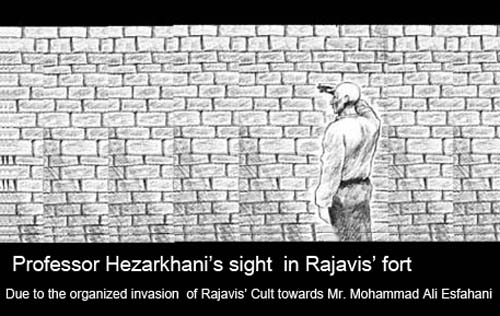
Professor Hezarkhani’s sight in Rajavis’ Fort

Professor Hezarkhani’s sight in Rajavis’ Fort

Professor Hezarkhani's sight in Rajavis' Fort

November 13, 2007 0 comments
FacebookTwitterPinterestWhatsappTelegramSkypeEmail
Mujahedin Khalq 's Function

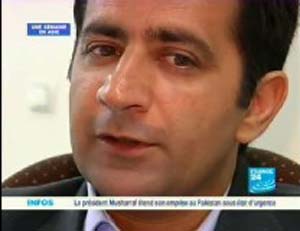
Mojahedin Khalq exposed on French TV

Who are Mojahedin Khalq?


Download Mojahedin Khalq Organisation exposed on French TV

November 4, 2007 0 comments
FacebookTwitterPinterestWhatsappTelegramSkypeEmail
Newer Posts
Older Posts

Recent Posts

  • The Psychological Impact of MEK Ideology on Members

    August 17, 2026
  • A study on the financial mechanism of the Mujahedin-e Khalq

    August 10, 2026
  • A Child behind the Ideological Bars of Massoud and Maryam Rajavi

    August 8, 2026
  • A Comparative Analysis of Psychological Control Mechanisms in Jeffrey Epstein’s Cult and the MEK

    August 3, 2026
  • Operation Mersad: How Iran foiled Saddam’s final gambit 37 years ago

    August 1, 2026
  • Facebook
  • Twitter
  • Instagram
  • Youtube

© 2003 - 2025 NEJAT Society . All Rights Reserved. NejatNGO.org


Back To Top
Nejat Society
  • Home
  • Articles
  • Media
    • Cartoons
    • NewsPics
    • Photo Gallery
    • Videos
  • Publications
    • Books
    • Nejat NewsLetter
    • Pars Brief
  • About Us
  • Contact us
  • Editions
    • عربي
    • فارسی
    • Shqip