Nejat Society
  • Home
  • Articles
  • Media
    • Cartoons
    • NewsPics
    • Photo Gallery
    • Videos
  • Publications
    • Books
    • Nejat NewsLetter
    • Pars Brief
  • About Us
  • Contact us
  • Editions
    • عربي
    • فارسی
    • Shqip
Nejat Society
Nejat Society
  • Home
  • Articles
  • Media
    • Cartoons
    • NewsPics
    • Photo Gallery
    • Videos
  • Publications
    • Books
    • Nejat NewsLetter
    • Pars Brief
  • About Us
  • Contact us
  • Editions
    • عربي
    • فارسی
    • Shqip
© 2003 - 2024 NEJAT Society. nejatngo.org
The cult of Rajavi

Morphology of Terrorism, Cult, and Mojahedin-e-Khalq Organization (part 3)

Comparing cult characteristics with different phases of formation of ideological revolution in MKO proves that it is a cult

The translated text of Dr. Massoudinia’s speech made at the Symposium of the Link between Cults and Terrorism held in Isfahan.

3. Cult and Cult-like relations

Nowadays, there are at least two organization accused of being terrorist and cultist, namely Al-Qa’ede and MKO. In 1997, U.S. foreign ministry introduced MKO as a sect following cultist doctrine. The US State Department’s report refers to the terrorist nature of MKO and their cultist doctrine:

Rajavi, who heads the Mojahedin’s political and military wings, has fostered a cult of personality around himself. These characteristics have alienated most Iranian expatriates, who assert they do not want to replace one objectionable regime for another. (24)

These comments imply that such a cultist approach has been intensified after the so-called ideological revolution of MKO under the leadership of Mas’ud Rajavi:

The internal organizational structure of the Mojahedin has varied little throughout the group’s history. Importantly, the autocratic decision-making style of the leadership and the cult-like behavior of its members — two defining patterns of the organization’s operations — have combined to deny the Mojahedin the support of most Iranians (25)

In this regard, Eerevand Abrahamian writes:

Mujahedin-e-Khalq has a strict hierarchical system based on the commands issued from the top. The main duty of members is blind obedience. (26)

It has to be taken into consideration that the structural relations of political parties and democratic organizations is based on eliminating any kind of political and ideological ambiguity not to order blind obedience. In such groups, criticism is the absolute right of every member and the leader should eliminate all members’ ambiguities and doubts. However, in MKO even asking questions equals disobedience and is regarded as sinful. Its basic principle is “no thinking”. After the so-called ideological revolution in MKO, the Human Rights Watch issued a report and accused MKO of violating human rights and following trends of a cult. He refers to the internal ideological revolution of MKO and says:

The MKO’s leadership consists of the husband and wife team of Masoud and Maryam Rajavi. Their marriage in 1985 was hailed by the organization as the beginning of a permanent “ideological revolution.” Various phases of this “revolution” include: divorce by decree of married couples, regular writings of self-criticism reports, renunciation of sexuality, and absolute mental and physical dedication to the leadership. The level of devotion expected of members was in stark display in 2003 when the French police arrested Maryam Rajavi in Paris. In protest, ten MKO members and sympathizers set themselves on fire in various European cities; two of them subsequently died. (27)

A number of former members of MKO have predicted the shift of the group to a cult in 1970s. A good example may be the separation of three high-ranking officials from the organization, namely Reza Ra’eisi, Hamid Nuhi and Hossein Rafi’i in 1976. They have expressed the factors resulting in their separation from the MKO in a book titled “the Process of Separation”, saying:

As a result of the probable failure of Liberal party in the future, Mujahedin-e-Khalq may become a religious cult. (28)

Another former member of MKO believes that the shift of MKO to a cult is not an immediate process but has a historical background. He rejects the claim of organization as being a democratic one. He refers to the fact that if there was a democratic leadership in MKO, their ideological disintegration in 1975 did not occur. He says:

Disintegration of organization in 1975 and its splitting into a Marxist and a religious sect reveals that the leadership has never been a democratic one. (29)

Mas’ud Jabani, a former member, reports that Rajavi in 1985 asked the information office of the organization to conduct a research on cults which was justified it as follows:

Imperialists, through religious sects, are busy doing something. We want to know what they are doing. (30)

Despite such claims, we will review the modern and traditional indices of cultist organizations. Comparing such indices with the present doctrine of MKO would reveal its cultist nature. According to Singer, the author of the book “Cults in our Midst”, cults are a center for recruiting members rather than an organization with predetermined titles and goals. He defines cultist relations as follows:

Cultist relation means a relation through which one person consciously forces others to be dependent on him in making all his decisions. The followers are convinced that the leader has a special faculty, genius, and knowledge. (31)

In other words, cult is a process used to convince a person or develop an idea quantitatively or qualitatively regarding political, religious, ideological, military, economical, mental or other objectives. Singer concludes his studies concerning cult structure in three parts:

1. A self-appointed and life-long leader of a spiritual role. He is to be praised but not criticized and all members are linked to him mentally and ideologically.

2. A top-down organizational structure of totalitarian pyramid with the leader on top.

3. Mental reforming (brainwashing) and pushing members to extremism and absolute submission. (32)

Similar studies show that the role of the leader is highly determining in two-fold axes. In addition, a number of former members thus analyze the indices of cultist leadership:

Authoritative leadership is the main characteristic of a cult leader. Many former members of cults expounding on the characteristics of the leader say that he is the absolute authority, 2. has a doubtful character, 3. demands absolute confidence, 4.claims to have a direct connection to God, 5. Indulges in sexual abuse, 6. poses ambitious claims, 7.demands monetary support, 8.claims that evil forces are to deceive members. (33)

Another resource describes the characteristics of deviated cults as such:

Having a pyramidal structure and a leader on top, 2.charismatic leader(claiming that he is the agent of God and can interpret divine resources, 3.deceptive strategies for recruiting members and collecting money, 4.mental and physical isolation, 5.using mental controlling strategies.(34)

There is a question that is the degree of danger identical in all the cults? To determine how dangerous a cult might be, “the Advanced Bonewits’ Cult Danger Evaluation Frame” can be a good help. The frame refers to the factors as:

1- INTERNAL CONTROL: Amount of internal political power exercised by leader(s) over members.

2- WISDOM CLAIMED by leader(s); amount of infallibility declared or implied about decisions or doctrinal/scriptural interpretations.

3- WISDOM CREDITED to leader(s) by members; amount of trust in decisions or doctrinal/scriptural interpretations made by leader(s).

4- DOGMA: Rigidity of reality concepts taught; amount of doctrinal inflexibility or "fundamentalism."

5- RECRUITING: Emphasis put on attracting new members; amount of proselytizing.

6- FRONT GROUPS: Number of subsidiary groups using different names from that of main group

7- WEALTH: Amount of money and/or property desired or obtained by group; emphasis on members’ donations; economic lifestyle of leader(s) compared to ordinary members.

8- POLITICAL POWER: Amount of external political influence desired or obtained; emphasis on directing members’ secular votes.

9- SEXUAL MANIPULATION: of members by leader(s); amount of control exercised over sexuality of members; advancement dependent upon sexual favors or specific lifestyle.

10- CENSORSHIP: Amount of control over members’ access to outside opinions on group, its doctrines or leader(s).

11- DROPOUT CONTROL: Intensity of efforts directed at preventing or returning dropouts.

12- VIOLENCE: amount of approval when used by or for the group, its doctrines or leader(s).

13- PARANOIA: amount of fear concerning real or imagined enemies; perceived power of opponents; prevalence of conspiracy theories.

14- GRIMNESS: Amount of disapproval concerning jokes about the group, its doctrines or its leader(s).

15- SURRENDER OF WILL: Amount of emphasis on members not having to be responsible for personal decisions; degree of individual disempowerment created by the group, its doctrines or its leader(s).

16- HYPOCRISY: amount of approval for other actions (not included above) which the group officially considers immoral or unethical, when done by or for the group, its doctrines or leader(s); willingness to violate group’s declared principles for political, psychological, economic, or other gain. (35)

Bonewits draws a linear graph, numbering 1 to 10 to mark 16-fold characteristics of cults. According to him, resultant grade shows the extent of danger of a cult. It can also be used as a means for revealing the cultist nature of MKO and their danger. Comparing the studies done by Bonewits and Singer reveals the following points in common about a cult leader:

– A life long, self-appointed leader

– Pyramidal structure of organization.

– Brainwashing strategies for recruiting members, controlling and exploiting them.

After the ideological revolution of MKO in 1985, these points were taken into consideration as prerequisites for being a member of the organization. However, they have been implied in the morphological structure of MKO before it since at first it was not possible to express such conditions openly. Many of characteristics mentioned by Bonewits have been the most self evident principles of the formation of organization from the beginning. Comparing such characteristics with different phases of formation of ideological revolution in the organization proves that MKO is a cult.

Endnotes

24. The State Department Report on MKO. (1997).

25. ibid.

26. Abrahamian, Ervand; The Iranian Mojahedin,Yale University Press, 1989.

27. The Human Rights Watch Report; No Exit, (2005).

28. Raeis Tusi, Reza. The Process of Separation. Samadie Publication.

29. Rastgu, Mohammad Ali. MKO in the Mirror of the History. (2005).Islamic Revolution Centre Publication.

30. Jabani, Mas’ud. Psychology of Aggression and Terror.

31. Singer, Margaret Thaler. Cults in our midst.

32. ibid.

33. www.Phact.Org

34. www. refocus.org.

35. www.GED.Net/bonewits/ABCDEF.Html

Nejat Association May 2007

Translated by mojahedin.ws

July, 2007

August 4, 2007 0 comments
FacebookTwitterPinterestWhatsappTelegramSkypeEmail
The Ideology of the MEK

The Shaped Destiny of Children in the Ideological Revolution (10)

Coming to pass MKO-run media bureaus in the Europe and also among the member residents of Camp Ashraf we encounter young people that hardly you can see any relative correspondence between their age and the atmosphere wherein they are exhausting their juvenile vigorousness. These youths, who can be well denominated as the fourth generation of Mojahedin, represent the same enthusiast and decisiveness of their previous generation. Furthermore, their amazing authority over organizational doctrines and teachings is in no way a deniable fact nor a media display to attract attentions. Many may ask, then, who are they and how they have been so experienced, being so young, in organizational, political and ideological issues.

In the history of political movements, Mojahedin are believed to be the sole organization that the impact of their activities has imposed heavy costs on whoever is in the reach of its surroundings. In the same way, the tragic destiny of children in MKO, before and after the ideological revolution, has not been investigated sufficiently. Political, fundraising as well as emotional exploitation of children by Mojahedin is one of the cases reported by many former MKO members as instances of human rights abuses in MKO.

The general consensus of opinion is that children should enjoy complete immunity from any form of manipulation and abuse. Human rights institutions and the Universal Declaration of Human Rights have repeatedly confirmed that children are entitled to special care and assistance and that especial measures have to be taken to protect children from all forms of physical and mental abuse, maltreatment and exploitation.

After the ideological revolution, Mojahedin concluded to separate children from their parents in an attempt to destabilize the foundation of family which the group believed to be a strategic impediment. The U.S first invasion to Iraq was a good alibi to accomplish the goal. The evacuation of children to other countries under the pretext of providing safety and security for them not only guarantied the accomplishment of the ideological objective but also paved the way to upbring and discipline the organization’s future combat force. Now, after two decades, the various dimensions of such an action have been fully revealed. Mojahedin’s attempt to undertake the guardianship of the children whose parents have separated from the organization signifies Mojahedin’s exploitative nature concerning the children. A number of former members of MKO have elaborated on the various dimensions of the group’s inhuman practices. Ann Singleton in her “Saddam’s private army” well refers to the process of separating babies from their parents as part of speeding up the application of the Internal Revolution:

More cynically still, Rajavi used the Gulf War as a pretext to have all the children removed from the bases in Iraq. The children had acted as a brake on the application of the Internal Revolution. Whilst the children were around, it provided an excuse for spouses to meet up in a family context. There was the possibility for ‘divorced’ couples to continue a covert relationship. Rajavi wanted the total devotion of everyone with no rivals. For him, the children represented his most dangerous rivals for their parents’ affections and loyalties. So on the pretext of having them evacuated to safety during the allied bombing, he had children even as young as two months old, sent abroad where they were adopted by Iranian families or kept in dormitories. (1)

However, that is not the full dimension of the oppression suffered by children at the hands of Mojahedin. The potential and practical European laws and regulations concerning the children granted Mojahedin an opportunity to exploit the European governments as well as citizens. The Europe provided MKO the best milieu to educate children for its cult-like purposes. But under drastic measures and vigilance of related state-run institutions the real intention of MKO is exposed for the public:

In Germany, the government uncovered the Mojahedin’s financial activities. After a two year investigation, the German High Court on 21st December 2001 closed the Mojahedin ‘shop’ – twenty-five houses and bases – after evidence was found of misuse of Social Security and fraud. Disturbingly, the Mojahedin had used the members’ children who had been evacuated during the Gulf War of 1991. These children, whilst they lived in the Mojahedin’s bases in Germany, were required to undertake work in the base and take part in fund-raising activities, collecting money in the street. At the same time, the Mojahedin were abusing every possible avenue of Social Security in Germany in order to claim benefits for these children. Documents in Germany showed that ten to twelve million Marks had been used by the Mojahedin to buy weapons. Considering that a Social Security claim of 130 – 260 Marks could be made per child per day, this is a conservative figure of the amount that the Mojahedin collected on account of these children. (2)

Further appalling aspects of MKO’s abuse of children include application of brainwashing techniques to indoctrinate them with subversive organizational ideologies to be later recruited into NLA based in Camp Ashraf. The two instances of self-immolation by Neda Hassani in England and Yaser Mohammadi in Camp Ashraf can be mentioned as explicit consequences of children trained according to mentioned techniques. The low age of these two young victims confirms the terrible process the children have gone through in the European and Iraqi camps. Of course, any raised objection was neutralized by a variety of tricks. According to Ann Singleton, Mojahedin shaped the destiny of these young victims by means of preplanned ideological, political, military, as well as terrorist schemes:

Some of the older children soon returned to Iraq and though still under-age, became members of the NLA. They were expected to ‘reject’ their parents as part of the new ideology. In other cases, a parent bravely refused to be separated and decided to accompany their children abroad. As usual, although the Mojahedin denounced these people as defectors, as weak and useless people, they did all they could to keep hold of them and have them work in their bases in the West. In all, the losses were few and Rajavi consolidated his hold over the members’ minds, hearts and lives. (3)

Bijan Niyabati, a left activist of NCRI, has made open confessions regarding emotional and organizational misuse of children within MKO. He has elaborated on such events far beyond what other former MKO members have stated. He confesses openly that Mojahedin indoctrinate children in such a way to make them highly vengeful and aggressive. He also maintains that these innocent children are implanted by ideological relations and principles of their adoptive parents:

On the other hand, there are innocent children whose only sins are to be born in a family engaged in revolutionary struggle without considering the children’s opinion for the sacrifice of majority. Hundreds of such children have to undergo an awful fate. You have to be yourself a child and have experienced such a destiny to develop a full comprehension of such a human tragedy. You have to have been separated from your mother and have been raised by a foster mother to feel the pain of worry and rage suffered by these children. Then you can make a dagger of your tears and sigh and a bullet of your wrath to hit the heart and head of the agents who are responsible for all these human tragedies. So you may have no doubt for unquestionable necessity of overthrowing the regime of whip and gallows. (4)

He acknowledges the fact that the process of separating children from their parents, at the command of the leader of MKO, aims at making children bear the grudge against MKO enemies; a fact referred to by many former MKO members as the most anti-human aspect of ideological revolution. Mojahedin, however, deny the accusation. According to Niyabati, the innocent children are inspired with violence and trained where to surface it while they do not know why they have to do so. The statements made by Niyabati surfaces the hidden dimensions of the awful process taking place inside MKO and they are even more telling than what other MKO’s ex-members expose. He refers to the hegemony and cultist relations onto which children are exposed and these statements work as verified evidences for any international human activist and organization, evidences which unveil the truth about the abuse and exploitation of defenseless children by Mojahedin-e Khalq.


References


1. Singleton, Ann; “Saddam’s private army”, Iran-Interlink.

2. Ibid

3. Ibid

4. Niyabati, Bijan; A different look at the ideological revolution within MKO, Khavaran Publication, p.100.


Bahar Irani – Mojahedin.ws – August , 2007

August 4, 2007 0 comments
FacebookTwitterPinterestWhatsappTelegramSkypeEmail
The cult of Rajavi

Morphology of Terrorism, Cult, and Mojahedin-e-Khalq Organization (part 4)

The translated text of Dr. Massoudinia’s speech made at the Symposium of the Link between Cults and Terrorism held in Isfahan.


 4. Structural and formal similarities between Mojahedin-e-Khalq and Cults


It has to be pointed out that there are no significant differences between traditional cult methods (like that of Hassan Sabbah) and the modern cults getting advantage of psychological modes. In all, the main identical factors are the self-appointed leader, total devotion and exploitation of members. After ideological revolution in MKO, leadership was considered as the zenith of the organization that, emphasized in inter-organizational meetings, had to be obeyed blindly and whose superiority could never be questioned. Such a leader is only accountable to God. In other words, he is regarded as the vicegerent of God. Mahdi Abrishamchi describes the position of leader as follows:

Leader is not accountable to low-ranking members. His responsibilities are determined by ideological and political necessities of the organization. (36)

Therefore, the leader is on top. Such a position makes the leader unchallengeable and holy to the point that the entrance of others to this position may be considered as a serious sin. Abrishamchi says:

Normally, all members are accountable to high-ranking officials. Now, to whom is Mas’ud accountable? Only to revolution. He is just accountable to God. Everybody has a responsibility in the organization except for the leader. Maryam and Mas’ud are not accountable to anybody. (37)

Such a view places the leader in the status of God. Abrishamchi believes that the whole universe depends on God; likewise, MKO depends on its ideology, i.e. leadership. He believes that:

The issue of ideology, is the issue of a revolutionary organization, the issue of being or not to be. If philosophy considers God as the creator of whole being, in a revolutionary organization, ideology works as such. The existence of organization depends on its ideology. (38)

Logical reasoning of Abrishamchi is like that of Hassan Sabbah. He proves his mission for leadership as follows:

The Arabic phrase ‘لا اله الا الله’ means that there is no God but Allah. First it says ‘there is no god’ and denies the existence of any god and in the second part it says ‘but Allah’. There is no logical relationship between these parts and it does not say why there is no god but Allah. So accepting the fact that there is no god but Allah is a obligatory. (39)

Mahdi Abrishamchi like his historical counterpart, Hassan Sabbah, regards leadership as an ideological matter of inevitable legitimacy. He says:

There should be an ideological interpreter in the organization to determine its ideological boundaries. In Mojahedin-e-Khalq, Mas’ud Rajavi does so. As such, leader is not accountable downward; otherwise his position would be interrupted. (40)

Such comments, compared with that of Batinis leaders who accused their supporters of failing to develop an esoteric understanding of divine verses and of the leadership, seems to be identical. Furthermore, irrational belief of some members in absolute leadership is like that of self-appointed Batinis leaders. A comparison between this claim of Hassan II, the third imam of Batinis, regarding his legitimate leadership with those of MKO helps develop a better understanding:

When you see the sunlight it is as if you see the sun itself. It is not possible to see sun without its light. As such, I am the divine light. When you see me it is as if you see God. Whoever wants to be blissful in this world and the hereafter should love me. (41)

Now, if not explicitly, such claims are implicitly made by the self-appointed leader of MKO. A high-ranking member when praising Rajavi says:


Thanks God I came to know you, otherwise, according to the holy prophet of Islam, if did not know my imam of the time, I would have died in ignorance. Today, I see myself embraced by God and I found Him at the end of the route wherein I saw you at the beginning. I feel his absolute presence as I feel yours. (42)

These cases show clearly the amazing similarities between doctrines of MKO and that of exoteric sect of Hassan Sabbah.

Such a background is formed by a mental shock imposed on the beliefs of members. Such a strategy reminds us of debriefing strategies in the medieval ages. Only the goals are different. It is similar to the strategies of exoteric sect (Hassan Sabbah). Despite what can be imagined regarding the brainwashing strategies for making people ready for any kind of sacrifice, physical sacrifice is a minor part of the demands of the leader of cults who exploit members. What determines the extent of members’ obedience is not only their self-sacrifice but also their blind obedience. It is a fact that physical self-sacrifice in cults is a preface to next steps. The significance of such organizational disciplines can be seen in exoteric sects. They force members to be devoted completely to all principles and values of cult and this happens before physical sacrifice. In principles of cults we read:

We don’t need exited members but members of stable belief. We want to be sure whenever a command is issued nothing may prevent it. (43)

The danger of boldness for cult leaders is the possibility that it leads to disobedience. Such a self-devotion is justified in exoteric sects as follows:

Only calm members are reliable and those who are so exited calm down quickly. (44)

It has to be taken into consideration that scientific studies focus on those components in cultist psychological strategies which have been mentioned as the key of success by cultists. Singer refers to falsification of conscience as the most important consequence of cultist strategies while studying empirical and psychological strategies for recruiting members in cults and says:

Nowadays, cults’ plans is based on forming personal imbalance through falsification of conscience, awareness, beliefs, worldview, emotions, etc. their main technique is attacking mental balance of members and also attacking a person capacity for self-evaluation. Such attacks are carried out under different conditions and rarely involve any force or physical imposing. Such a strong psychological process results in personal imbalance and dependence to others. (45)


Such components are the basis of mental background of mechanisms in terrorist groups. Comparing such components with theoretical analyses would show the points of similarity between these trends. It seems that so-called ideological revolution in MKO has been a starting point for using such strategies and developing blind obedience in members toward revolutionary principles.

Bijan Niyabati, a Marxist supporter of MKO, describes ideological revolution of the group based on cultist leadership of Rajavi, absolute mental, ideological and even sexual self-sacrifice of members. He refers to above-mentioned components as attacking conscience and basic receptions and thus shocking members. He refers to member’s conscience as old understanding and regards cultist components as new understanding. Comparing such comments with findings of Singer shows the amazing structural similarities between cults and MKO. Niyabati says:

A successive interpolation of new elements of value into the old system of values is possible only through upsetting the equilibrium of old value system that occurs only by the means of a sudden shock. (46)

He considers destabilizing of values as the starting point to reform the dominant values in the society. In other words, disruption of personal beliefs is followed by its disruption in the society. The success of personal effectiveness depends on the generalization of such strategies to the society.

However, he asserts that forming such a shift in society demands political power while mental shocking is sufficient for individual imbalance. He says:

However, although to disrupt the predominant value equilibrium in an individual in order to be substituted by new value equilibrium proves not to be unmanageable, it is a long, hard task to be accomplished either through assuming an authoritative political power (as well as controlling economy and the media) or a stricken shock. To disrupt the subsisting equilibrium and to prepare an individual to be reconciled with the new milieu, it is evident that only a shock and nothing else can possibly be productive. (47)

He regards such intra-organizational shifts as an index of an ideal cultist society resulting in political revolution. He also refers to all symbols and institutions of such a society and says:


Such a micro society needs all indices and political structure of a real society, i.e. government, president, parliament, army, police force, prison, legal courts, broadcast, diplomacy system, financial systems, etc. Such a micro society should be a pioneer in the transfer of human beings to humanistic values far from the existing animal-like values.(48)

He is aware of the mental consequences of this shock. He believes that such an attack may result in the person being wise or mad. In this strategy, classification of values into absolute good and absolute bad prevents person from a realistic analysis. Mahdi Abrishamchi, a member of MKO, justifies ideological revolution and the marriage of Rajavi with Maryam Azodanloo after her divorce, using an absolute reasoning. In such a situation any evaluation depends on absolute acceptance or absolute rejection. Such logic makes this act as a holy one beyond our understanding. Mahdi Abrishamchi says:

Our mind is aware of the logic of sacrifice. It is an amazing story. Everybody who hears it (their marriage) cannot remain indifferent or express a moderate idea. You have to regard it either as deceitful or eclectic or a purely ideological one. There is no middle point. You have to either confirm or reject it. (49)

The leader himself emphasizes such an analysis of subjects. He is not afraid that others regard this action as a dishonored one. Rajavi says:

This is a rebirth. You can accuse me of being whimsical, dishonorable and even a person who stole the wife of his friend. But if I were acquitted, you have to follow me to the end. (50)

Niyabati asserts the mental consequences of such a shock. He refers to the fact that if such a personal imbalance is not replaced with another system, it would not lead to expected results. He says:

Madness or wisdom is the inevitable consequence of such a value imbalance. The difference between a mad person with a wise one is that the former has not replaced his value system with an alternative but the latter has. In both cases, the main factor of such personal imbalance is a mental shock. (51)

He also refers to a third situation between madness and wisdom; A situation which results in the sense of absurdity and passivity in members. In this regard we read:

In summary, without that imbalance there is neither wisdom nor madness. It is evident that absurdity and absolute determinism are added to the consequences of such an imbalance. (52)

According to Singer, the main factor in the success of members’ brainwashing is the disruption of their value system to the point that makes them fully submissive toward predetermined behaviors and activities. Singer describes such a disaster as follows:

These latter-day efforts have built upon the age-old influence techniques to perfect amazingly successful programs of persuasion and change. What’s new-and crucial–is that these programs change attitudes by attacking essential aspects of a person’s sense of self, unlike the earlier brainwashing programs. (53)

Niyabati refers to the third index of cults as the determining factor in political exploitation and says:

Power equations should be changed objectively rather than subjectively and this is not possible without a basic change in value systems. (54)

Instrumental use of latest achievements of empirical sciences, and psychology in particular, shows only slight differences between brainwashing strategies of MKO and those of cults. Niyabati says:

In a conference on the study of the latest scientific findings concerning functions of different parts of human brain, it was argued that activating different parts of the brain may affect social behavior and characteristics of people. For instance, while the left hemisphere is the center of mathematics, logic, politics, etc the right hemisphere is the centre of culture, arts, poetry and emotion. Activating these hemispheres may determine the future role of children in the society. (55)

Despite all scientific and political reasoning of Niyabati for focusing on the achievements of ideological revolution, he finally refers to history. Such inevitable similarities relate cultist mechanisms to Sufis’ styles. He quotes Shams-Al-Din Ameli to justify the leadership of Rajavi:

"During spiritual path, there should be no question. The wayfarer has to be a devotee to Sheikh and accompany him submissively, never complaining of anything" and quotes Moulavi (Sufi poet) as follows:

A wayfarer has no responsibility and should be submissive like a piece of wood in the hands of carpenter. (56)

Such reasoning for proving ideological revolution and absolute leadership of Rajavi is that of a person who doesn’t believe in religion and metaphysics. Such a method is using religion for theorizing cultist principles.


Endnotes


36. Lectures of Mahdi Abrishamchi on the Ideological Revolution in MKO. (1985). Taleghani Publication.

37. ibid.

38. ibid.

39. Amir, Paul. (TR). . (2006). the Lord of Almout. Javid Publication.

40. Mojahed journal. No.255.p. 23.

41. Amir, Paul. (TR). . (2006). The Lord of Almout. Javid Publication.

42. Mojahed journal. No. 241. p.20.

43. Amir, Paul. (Tr). .(2006). The Lord of Almout. Javid Publication.

44. ibid.

45. Niyabati, Bijan. A different look at Mojahedin’s Ideological Revolution, 2004.

46. ibid .

47. ibid .

48. ibid .

49. Lectures of Mahdi Abrishamchi on the Ideological Revolution in MKO. (1985). Taleghani Publication.

50. Mojahed Journal. (1985). Marriage of Maryam and Mas’ud.

51..Niyabati, Bijan, A different look at Mojahedin’s Ideological Revolution, 2004.

52. ibid.

53. Singer, Margaret Thaler. Cults in our midst, 60.

54. Niyabati, Bijan. A different look at Mojahedin’s Ideological Revolution, 2004.

55. ibid.

56. ibid.


Nejat Association May 2007

Translated by mojahedin.ws,August, 2007

August 4, 2007 0 comments
FacebookTwitterPinterestWhatsappTelegramSkypeEmail
Bulgaria

Bulgaria Sends Fourth Unit to Ashraf Camp

Bulgaria’s fourth non-combat unit to guard the Ashraf refugee camp north of Baghdad leaves for Iraq on Monday.

Deputy Defense Minister Sonya Yankulova, army staff and defense officials, families and friends of the troops will attend the official ceremony in the town of Vratsa, Northwestern Bulgaria.

Bulgaria and the United States agreed to extend the Balkan country’s mission in Iraq in the middle of January this year.

Bulgaria’s non-combat unit is 154-strong and guards the Ashraf refugee camp, located 60 km north of Baghdad.

At the end of December the United States sent an invitation for extending the term of the mission from the end of March 2007 till the end of the year.

Bulgaria News Agency/30 July 2007

August 4, 2007 0 comments
FacebookTwitterPinterestWhatsappTelegramSkypeEmail
Iran

Iran will be the first to benefit from peace and security in Iraq.

Araghchi: Massoud Rajavi is either in Iraq or somewhere in western countries


Press TV, August 03, 2007

link to the full interview:

http://www.presstv.ir/detail.aspx?id=18372&sectionid=3510302


Iran will be the first to benefit from peace and security in Iraq.


Fri, 03 Aug 2007 20:02:40

By Gareth Smyth, Financial Times


Iran’s Deputy Foreign Minister Abbas Araghchi


The following is the transcript of an interview that Iran’s Deputy Foreign Minister for legal and international affairs, Abbas Araghchi, has given to UK’s Financial Times.


Financial Times: What is the big obstacle to Iran and the US talking to each other?


Abbas Araghchi: We had no plan to do so, although the Americans were obviously interested ,We didn’t think the theatrical behavior would help with this very complicated situation, and the difficult relationship between the two sides “ We need understanding of each other, and understanding of the situation in Iraq. If the US wants to solve their problems in Iraq, they should understand their mistakes so far.


Their invasion was a disaster – let there not be a double disaster with a disastrous withdrawal. If they have the good will to solve problems, they should introduce an exist strategy, and then there can be a face-saving withdrawal.


FT: So Iraq is the first step to wider progress?


AA: We want to bring stability back to Iraq – this is very important. We are interested in the peace and security of Iraq, its unity, its territorial integrity, that it be at peace with its neighbors. We consider peace and security in Iraq [to be] our own peace and security.


It is very important for us to see that the Iraqi government and Prime Minister [Nouri] Maliki are successful, because …the only alternative is absolute chaos, maybe a civil war or the breaking of Iraq into different pieces.


Iran would be the first to benefit from the return of peace and security in Iraq.


( … )


FT: What do you know about the Americans’ relationship with Pejak, the so-called Iranian wing of the PKK (Kurdistan Workers Party)?


AA: We have some information, and some indication, that contrary to what the Americans claim, there has been some contact with some terrorist groups.

This is why I talked about good will at the beginning. One of the bad policies of the United States is this double standard towards terrorism, to divide terrorists into good and bad terrorists. This is the source of so many problems.


You named one of those groups. We may name others as well – the MKO [the Mujahedin-e Khalq], for example, which is based in Iraq under the protection of the Americans. They are terrorists, recognized by the European Union, by the United States, and they should be sent to trial.


FT: Where do you think [Massoud] Rajavi [the MKO leader] is?


AA: I don’t know. He is either in Iraq or somewhere in western countries, I don’t know, I have no information, no intelligence. But the kind of MKO terrorists we know are either in Iraq or in European countries, and in the US This is very bad. We see that they are doing whatever they want in European countries, in Britain, in France, in Germany. Of course, under the cover of different names, but everyone knows they are the same group.


They killed Americans before the Revolution in Iran, they have killed so many Iranian officials after the Revolution, Iranian people, and they are proud of that. Then they went to Iraq, helping Saddam Hussein in fighting with Iran during the war, then fighting with Shias and Kurds during the 1991 uprising, giving Saddam Hussein intelligence and every assistance. Now they are in Iraq. A good number of them have already been transferred to Europe, but some foot-soldiers – worthless in the current situation – have remained in camp Ashraf.

We have tried hard – from a humanitarian point of view – to help those people in Ashraf camp. We have given them an amnesty if they return to Iran. A group – 500 all together – has already returned to Iran, and they have joined their families. The Red Cross has their records, they know they have started a new life …


If they come back to Iran, they are welcomed by their families … If they have committed a crime inside Iran, they should be sent to trial, but we know that most of them have done nothing ….


FT: Do the Americans have relationships with other groups that have carried out violent acts in Iran – Baluchi groups, or Arab groups in Ahvaz?


AA: Well, we have some indications. Our intelligence ministry has said they have some indications of contacts between both American and British soldiers in Iraq with this kind of group “


FT: Have you made any estimation of the amount of arms that have come in Iran from Iraq since the 2003 invasion?


AA: I don’t have any figures, but the number is high, as you can see by reading the page of incidents [crime page] of Iranian newspapers … in almost all of them where a person has killed someone, he says he bought the gun from Iraq …it was so cheap, I got one.


So we have a problem with the number of individuals who buy guns from Iraq.. Terrorist groups as well as criminals see Iraq as an opportunity.


FT: The Americans accuse Iran of supplying weapons to insurgents in Iraq, particular kinds of weapons [amour-piercing explosive devices]. Why don’t you counter that by pointing out the amount of weapons coming the other way?


AA: Their claim that Iran is sending arms to Iraq is baseless. They have never been able to present any acceptable documents, valid proof that Iran has sent arms to Iraq. Even some of their own officials have questioned publicly the validity of these claims. The only things they have presented so far is that some arms and munitions they have found in Iraq are manufactured in Iran. This cannot prove anything, it cannot prove the involvement of any agency from Iran.


If governments were to be held responsible for the use by terrorists of all the weapons manufactured in their country, the Americans should be blamed first.


They haven’t been able to provide any valid proof – and there is also no reason. Why should we help them? Why should we arm them? We are suffering from the same problem, terrorism.


Both us and other groups [countries] such as Turkey. This is why in the statement of the Sharm el-Sheikh meeting [paragraph 4], it is said that the transit of arms to and from Iraq should be stopped. This recognizes that there is a problem for neighboring countries, which arms are coming into their countries from Iraq as well.


( … )


August 4, 2007 0 comments
FacebookTwitterPinterestWhatsappTelegramSkypeEmail
Terrorist groups and the MEK

Establishing Sunni Arab Force in Baghdad Revealed

A plan for establishing an illegal Sunni Arab forces in Baghdad, which will act as a disciplined army against Iraqi armed forces, was revealed on Tuesday.

Some Sunni Arab figures and groups, as well as members of former Baath party and Iraqi Estekhbarat, are trying to establish this force in Iraq with the assistance of the U.S. and some Arab countries.

Al-Nahrain Net quoted European diplomatic sources saying that this plan is aimed at taking the control of Baghdad and its security.

"That’s why the Accord Front announced last week that it would leave the government, in order to pave the way for the execution of this plan," sources added.

The sources, not named by this news agency, also said that the plan had been prepared long time ago by countries like Saudi Arabia, Jordan, Egypt and UAE with the assistance of the U.S.

"This Sunni force would act like a second army in Baghdad and some Iraqi provinces and its establishment has been scheduled," the news agency added.

"After the establishment of this pseudo-army, Baath and Sunni Arabs would be allowed, according to an American plan, to take the control of security in Western Baghdad, known as Karkh area. According to this paln, the control of some Sunni areas, including Al-Dowrah, Al-Aamel, Al-Baya’, Al-Sayedeh, and Al-Mekanik, in western, southern and eastern Baghdad, would be given to terrorist organization of al-Qaeda, mostly comprised of Baathist elements."

A number of European countries have warned London over the risks of executing this plan and asked British officials to put pressure on Washington to stop it.

European sources also added that U.S.’s decision to give the security of Al-Dowrah and Al-Sayedah … to Sunni Arabs and Baathsis is aimed at blocking southern parts of Baghdad on Iraq’s central and southern provinces.

Al-Nahrain Net has said that a number of elements from former Baath party, based in Amman, have recently promised each other that they are going to reclaim their lost power by the help of U.S.’s military forces and the wealth of Saudis.

"An Arab country has recently contacted Saudi officials, asking them to stop this plan because it would deteriorate the security in Iraq and particularly Baghdad," Al-Nahrain has said. The name of the Arab country has not been revealed.

The news agency says it has the names of some former Baath Party commanders involved in this plan.

Most of the commanders, according to the news agency, are the leaders of armed groups like Islamic Army, the Army of Mohammed, Ansar Al-Sunnah, The Army of Omar and The Army of Mojahedin in Iraq.

Most of these commanders have been trained by Saudi and Jordanian officers in Amman.

The report adds that Khalaf El-Elyan, the head of Sunni Dialog Council and former officer of Iraqi Army, as well as "Zafer Al-Aani", formerly a member of Baath party, and Saleh Mutlaq, supporter of terrorist MEK, and Mohammed al-Dayeni, another member of former Baath party, are of MPs whose names have been reveled in the report.

Accord Front’s decision to leave the government and then launching media war on the government and later threats by Khalaf Elyan and Zafer al-Aani to carry weapons have all been along the plan, coordinated by Amman, Riyadh and the U.S.

Al-Nahrain Net has added that U.S.’s embassy in Baghdad had been informed of Accord Front’s decision 12 hours before it was announced by the party.

August 4, 2007 0 comments
FacebookTwitterPinterestWhatsappTelegramSkypeEmail
Terrorist groups and the MEK

MKO Helping Other Terrorists

Terrorist groups assisted by the elements of terrorist MEK attacked Al-Wajiha district and tried to take the control over the area but encountered resistance by Iraqi armed forces.

This terrorist attack was conducted near Baladruz and terrorists used grenades and light weapons.


Zolfaqar Ali/Al-Balagh website

August 4, 2007 0 comments
FacebookTwitterPinterestWhatsappTelegramSkypeEmail
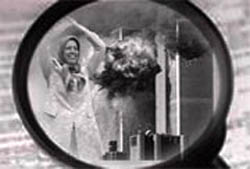
Mujahedin Khalq 's Function

Subjugating The Members

subjugating the members

Subjugating The Members

August 2, 2007 0 comments
FacebookTwitterPinterestWhatsappTelegramSkypeEmail
Former members of the MEK

Four more defectors of Rajavis’ Cult repatriated

According to Nejat Society correspondent, four other people defected MKO and repatriated. The four defectors, who were MKO members for a long time, spent a few weeks in TIPF Camp and finally could return Iran with Red Cross cooperation.

The defectors’ names:

Ahmad Rostamian

GholamReza Shirdom

Jamil Abdollahzade

AliReza Naghashzade

The above-named people will consequently state their comments on the disruptive atmosphere in Camp Ashraf.

Nejat Society

Tehran-July 30th 2007

August 1, 2007 0 comments
FacebookTwitterPinterestWhatsappTelegramSkypeEmail
Mujahedin Khalq Organization's Propaganda System

Response to Christopher Booker

Mr. Booker’s article has been translated in to Farsi and posted in Mojahedin Khalq Organisation web sites (on the list of Terrorist organisation in USA, EU, Canada and United Kingdam!!) shortly before the publication of this article in Telegraph!! (Iran Interlink)

Link to: State Department’s Report on Mojahedin Khalq Orgainsation, Rajavi cult headed by Massoud Rajavi and Maryam Rajavi (2007)

http://www.iran-interlink.org/?mod=view&id=2309

————–

Response to Christopher Booke Ahmad Baaraan, Paris, July 29, 2007 Your Sunday Telegraph article of July 29 titled “EU flouts its own highest court…” has some serious flaws that deserve your attention. I have known MEK (PMOI, NCRI, MKO, …) for more than 25 years up-close and personal. I have also studied the group in my role as a researcher. Therefore, I see myself qualified to comment about it. Quite frankly, your article is just an echo of the PMOI’s own propaganda filled with false and misleading information.

The enlistment of the group in the EU’s terror list is based on the group’s own behavior which is nothing short of a personality cult revolving around its leader, Massoud Rajavi, with a history of violence and a philosophy based on hatred. The group has also been enlisted by the US Government as an FTO (Foreign Terrorist Organization) which was later upheld in court. In concurring with the Court of Appeals for the District of Colombia, Judge Harry T. Edwards notes: “…the public, unclassified administrative record, including petitioner’s own submission to the Secretary, contains more than enough evidence to support the determination that petitioner (PMOI) engages in terrorist activity.” (1)

The December ruling by the EU Court you have referred in your article did not favor de-listing the group. To the contrary, it clearly dismissed the action sought by the PMOI to annul the EU Common Position 2005/936/CFSP- the updated terror list that included the PMOI. It did however order to unfreeze the group’s assets due to lack of proper procedure for such freezing. Therefore, your assertion that the British Government is flouting its own court is not accurate. This ruling is readily available in 16 different languages on the Court’s own official web site. (2) PMOI and its paid politician supporters have misled many about this, relying on that most would not read the actual ruling. I challenged the PMOI to translate the entire ruling (not just the select parts) in Farsi (Persian), and to post the translation on the Internet. They have refused to do so, and will continue such. More than 7 months after the ruling, only the favorable part of the ruling has been published on the group’s Internet site.

Your article also refers to NCRI as a coalition of which PMOI is a member. This is simply not true. Not only people familiar with the group know that NCRI is just a decoy for PMOI; the United States Court of Appeals in Washington DC ruled the following:

After an extensive investigation of MEK and NCRI, the FBI reported to the State Department that “it is the unanimous view of the FBI personnel who are involved in and familiar with the FBI’s investigation of the [MEK]that NCRI is not a separate organization, but is instead, and has been, an integral part of the MEK at all relevant times…. Contrary to NCRI’s portrayal of itself as an umbrella organization, of which the MEK was just one member, the FBI concluded that is NCRI that is “the political branch” of the MEK.”(3)

I caution you not to drift into the PMOI’s propaganda traps by echoing their statistics about the number of people attendant their gatherings, people executed in Iran, and the number of supporters of the group in Iran.

Regards

Ahmad Baaraan

Paris

ABaaraan@yahoo.fr

(1) http://uniset.ca/other/cs5/327F3d1238.html

(2) http://curia.europa.eu (case number T-228/02)

(3) 362 U.S. App. D.C. 143; 373 F.3d 152; 2004


(Farsi translation of Mr. Booker’s article was posted in Terrorist websites before coming out in Telegraph!!)


Link to Mr. Booker article in Telegraph.co.uk.

http://www.telegraph.co.uk/news/main.jhtml?xml=/news/2007/07/29/nbook129.xml

August 1, 2007 0 comments
FacebookTwitterPinterestWhatsappTelegramSkypeEmail
Newer Posts
Older Posts

Recent Posts

  • Pregnancy was taboo in the MEK

    December 22, 2025
  • MEPs who lack awareness about the MEK’s nature

    December 20, 2025
  • Why did Massoud Rajavi enforce divorces in the MEK?

    December 15, 2025
  • Massoud Rajavi and widespread sexual abuse of female members

    December 10, 2025
  • Farman Shafabin, MEK member who committed suicide

    December 3, 2025
  • Facebook
  • Twitter
  • Instagram
  • Youtube

© 2003 - 2025 NEJAT Society . All Rights Reserved. NejatNGO.org


Back To Top
Nejat Society
  • Home
  • Articles
  • Media
    • Cartoons
    • NewsPics
    • Photo Gallery
    • Videos
  • Publications
    • Books
    • Nejat NewsLetter
    • Pars Brief
  • About Us
  • Contact us
  • Editions
    • عربي
    • فارسی
    • Shqip