
Mrs. Marzieh Qorsi returned home and after a longtime of separation from her beloved son, saw him, embraced him warmly with tearful eyes.
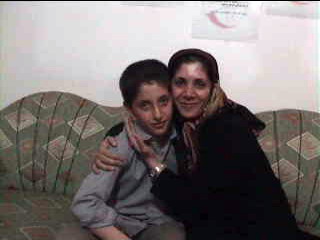
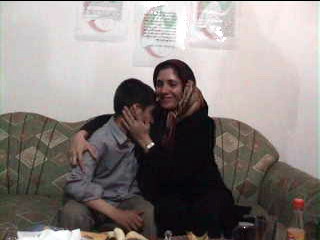
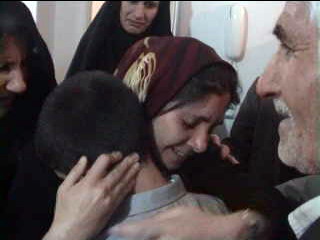
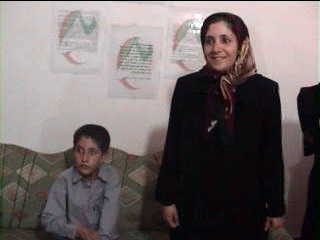
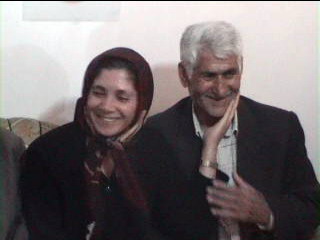
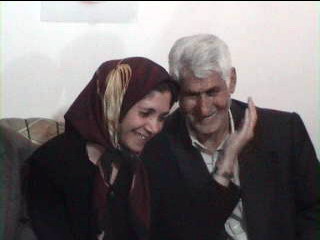
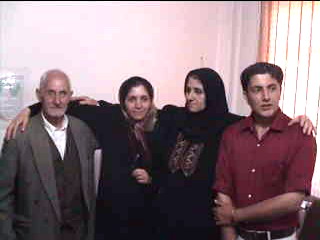
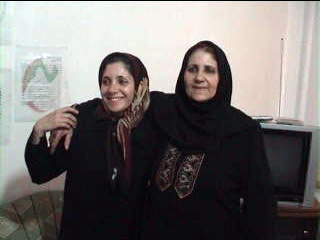
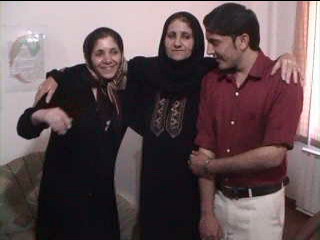
Mrs. Marzieh Qorsi returned home and after a longtime of separation from her beloved son, saw him, embraced him warmly with tearful eyes.
The Bush Regime is sponsoring terrorist attacks as a means of ratcheting up its campaign of aggression against Iran A US-backed militant Pakistani Islamist group has carried out a string of terrorist attacks against Iranian targets The group known as Jundullah (Army of God), a Sunni militant organization made up of members of the Baluchi tribe, “has been secretly encouraged and advised by American officials since 2005” as it has carried out its deadly operations inside Iran This US-backed terrorist group has close ties to both Al Qaeda and the Taliban, supposedly the principal enemies in Washington’s “global war on terrorism”
A leading government official in Teheran charged Thursday that the Bush Regime is sponsoring terrorist attacks as a means of ratcheting up its campaign of aggression against Iran.
The charge by the speaker of the Iranian parliament, Gholamali Haddadadel, followed a report by ABC News in the US that Washington has been covertly aiding and advising a militant Pakistani Islamist group that has carried out a string of terrorist attacks against Iranian targets.
“There is no doubt in our minds that the United States spares no efforts to put pressure on the Islamic Republic of Iraq,” Haddadadel told reporters following a meeting with Pakistani officials in Islamabad.
“The best indication of United States support to a particular terrorist group is that one of the leaders of his terrorist group was given the opportunity to speak on VoA [Voice of America] after committing the crime.”
In its report aired first on Tuesday night, ABC charged that a group known as Jundullah (Army of God), a Sunni militant organization made up of members of the Baluchi tribe, “has been secretly encouraged and advised by American officials since 2005” as it has carried out its deadly operations inside Iran.
According to numerous published reports, this US-backed terrorist group has close ties to both Al Qaeda and the Taliban, supposedly the principal enemies in Washington’s “global war on terrorism.”
The organization is also believed to be involved in narcotics trafficking across the porous Iranian-Pakistani border.
Jundullah’s attacks have centered on the Iranian province of Sistan-Baluchestan, which borders both Afghanistan and Pakistan. In February, Jundullah terrorists carried out a car bomb attack on a bus in the Iranian city of Zehedan, killing at least 11 Iranians, most of them apparently members of Iran’s Revolutionary Guard. Another 31 people were wounded in the blast.
Other bloody attacks included a May 2006 bombing of a motorcade, which claimed the lives of at least 20. The group has also filmed the beheadings of captured Iranian soldiers and officials.
According to the ABC report, Pakistani intelligence sources said that the covert terror campaign was a central topic of discussion when US Vice President Dick Cheney met Pakistan’s dictator, President Pervez Musharraf, in February.
When asked by the Reuters news agency about this account, a spokeswoman for Cheney replied, “We don’t discuss conversations between the vice president and foreign leaders.”
Haddadadel, who was in Islamabad in part to seek Pakistani cooperation in stemming the cross-border attacks, dismissed this aspect of the ABC report.
“Some of the militants…are active in our border areas and we should work with Pakistan in order to increase security cooperation,” he said.
“There is no news, no evidence, and we don’t have any reason to believe that the military establishment in Pakistan is also supporting such militant groups.”
ABC indicated that the US-sponsored terrorism is an “off-the-books” operation, which some officials told the network was reminiscent of the illegal covert US “contra” war against Nicaragua under the Reagan administration in the 1980s.
Money, according to ABC’s sources, is funneled through Iranian exile groups in Europe and elsewhere to Jundullah’s leader, Abd el Malik Regi. Counterrorism expert Alexis Debat told ABC that Regi “used to fight with the Taliban. He’s part drug smuggler, part Taliban, part Sunni activist.”
The purpose of this arrangement, US officials told the network is to avoid the necessity of “an official presidential order or ‘finding’ as well as congressional oversight.”
It is evident that the covert US links with Jundullah are only part of a broader destabilization campaign being waged by Washington with the aim of fomenting conflict between Iran’s Shia majority and a Sunni minority that accounts for nearly 12 percent of the country’s 70 million people.
The largest component of this Sunni population is made up of Kurds, followed by the Baluch and then the Turkoman, based in the northeast.
The CIA is also reportedly funding the Iran-based Kurdistan Free Life party to destabilize the Iranian government.
And Washington has come into conflict with the Iraqi regime over the presence in Iraq of some 3,800 expatriate Iranian members of the Mujahedin-e Khalq, or MEK, which has claimed responsibility for numerous terrorist attacks against Iran.
Even though the State Department has classified the MEK as a foreign terrorist organization, and the Iraqi regime accuses it of acting as an arm of the Saddam Hussein regime security forces, the Pentagon and CIA have provided it with protection at a base outside Baghdad and have reportedly sponsored its operations inside Iran.
Washington’s covert terror war against Iran is aimed at furthering a goal of “regime change” in Teheran. It is likewise designed to pave the way for a far more direct US military intervention.
As ABC aired its report of US-sponsored terrorism, a third US nuclear aircraft carrier battle group set sail for the Persian Gulf.
The USS Nimitz and its accompanying warships left San Diego on Monday, supposedly to relieve the USS Dwight D. Eisenhower.
The John C. Stennis Strike Group is also in the Gulf. Obviously, the Pentagon has the option of reversing the order to withdraw the Eisenhower, thereby concentrating unprecedented firepower against Iran.
The preparations for a US war against Iran are being carried out—with support from both Democrats and Republicans in Washington—under the same propaganda slogans used to justify the attack on Iraq: the threat from a supposed drive to build “weapons of mass destruction” and terrorist ties.
But, as the ABC report indicates, Washington itself appears to be pursuing its militarist policy by funding and advising a terrorist group connected to Al Qaeda, the organization blamed for the September 11, 2001, attacks. http://www.wsws.org/articles/2007/apr2007/iran-a06.shtml
The Best That’s Left 8 April 2007
MKO as well as its critics and its ex-members acknowledge the fact that Camp Ashraf, symbolizing MKO’s ideological capacity, is of a high strategic significance. The insistence of MKO on its stay in Iraq needs more time to be reflected upon. MKO does not submit to departure from Iraq for two main reasons:
1. Any change of location inevitably makes internal relation of the organization to be broken off. It is a fact that MKO can not bear its existing relations anywhere but in the city of Ashraf in Iraq now turned into an ideological and strategic fortress. Any circumstantial replacement on the part of the organization takes a considerable amount of time to establish a second Ashraf. Moreover, the prerequisite of their admission to other countries is the individual asylum of members so the organization can not preserve its cohesion by means of psychological levers anywhere but in Iraq. Camp Ashraf, considered similar to Alamout of Hassan Sabbah Assassins, is indeed a fortress.
2. Another reason is their strategic position on Iraqi soil. Maryam Rajavi has repeatedly drawn the attention of the Americans to the fact that they can take advantage of MKO’s so-called Liberation Army for any move against the Iranian soil is. MKO convince its members residing in Camp Ashraf that their stay in Iraq is the sole possible solution of overthrowing Iranian regime. They insist on saying that such a supposition is unlikely to come true unless they remain in Iraq.
Mojahedin have to make their destiny tied with their stay in Iraq. However, the insistence of Iraqi government to expel MKO for its interference in internal affairs and its link with questionable groups indicates that MKO’s present stay in Iraq is indebted to the Iraq’s instable situation. The comments of Shirvan al-Vaeli, Iraq’s security minister published in ‘Al-Hayat’ newspaper in London indicates that "Initial agreements have been reached between Iraqi government and the US” concerning the situating of MKO in Iraq. He urged once more for the expulsion of MKO from Iraq declaring that some European countries have announced preparedness to accept MKO members. Although MKO transfer from Iraq is costly, it gives members an opportunity to make their mind for their future far from any threat or enticing. The present position of MKO implies that they are not going to exit Iraq under any condition. They have even threatened Iraqi and the U.S. authorities that they would strongly resist against any decision of the kind.
Comments of Iraq’s security minister maintain Iraq’s decision to expel MKO. Now, the confrontation of Iraqi government and MKO has entered a critical phase. It seems that MKO would persistently resist the made decision and reject the facilities provided by the US for their settlement in another country. MKO’s offensive and even threatening position toward the EU and the others is a good example of its indifference to and disobedience of international statements and regulations. Likewise, their current position in Iraq confirms the fact that MKO is not a legally granted asylum in Iraq, rather it is an invisible occupier, disregarding the heavy costs it impose on Iraqi people.
Omid Pouya – Mojahedin.ws – May 13, 2007
The terrorist organizations that for national causes decide to forswear violent campaign and practice of terrorism may be granted the opportunity to accomplish their political demands through peaceful avenues. The groups and organizations that claim to have renounced armed campaign are mostly judged by their actions rather than the words. There are groups that indeed mean what they say and declare it publicly for the world to see and judge. On the contrary, there exist groups that their non-proclaimed but quoted claims of renouncing terrorism corroborate the intention of evading a just judgment rather than adhering to non-violent practices to fulfill the rightful objectives.
The Ulster Volunteer Force (UVF) is a loyalist paramilitary group in Northern Ireland which was formed in 1966. Formed as an armed group from the very beginning, it declared war on the IRA, and made note of the fact that they were "heavily armed Protestants dedicated to this cause”.
In the course of its forty-year long armed activities, UVF has been reportedly responsible for the killing of some 550 people. Whatever the cause, it had created a nightmare of terrorism threat that led to its proscription as a terrorist group. Although the group had declared a ceasefire 13 years ago, but since then its members have been blamed for more than 20 murders. However, through an officially issued statement, UVF declared that “as of 12 midnight, Thursday 3 May 2007, the Ulster Volunteer Force and Red Hand Commando will assume a non-military, civilianised, role”.
Transformation from a terrorist to a civilian organization includes measures as stated in the statement: “All recruitment has ceased; military training has ceased; targeting has ceased and all intelligence rendered obsolete; all active service units have been de-activated; all ordinance has been put beyond reach and the IICD instructed accordingly”.
The statement seems to be a sensible recognition of a new political reality that the world is no more a place for armed or violent actions, rather any pro-democratic move is welcomed if the repentant armed groups really mean it.
The Iranian Mojahedin-e Khalq Organization (MKO) is also a proscribed terrorist group with a forty-year long history of violence and the most vicious terrorist activities against Iranian people. There is no exact number of the victims of its atrocities but it is believed to reach thousands. Habilian Association has announced that it has collected a list of 12000 terrorism victims that have been killed and assassinated by the terrorist agents of MKO across Iran.
Failing to accomplish its political ambitions after the Islamic revolution in Iran, MKO declared war against the newly established government and its heads fled to France. In a 54-page booklet entitled “Resistance on the Rise” which was published by MKO as a hallmark of its military operations in 1987, the group gave a detailed account of more than 20 terrorist operations perpetrated by its terrorists teams in various Iranian regions and cities. In these attacks, Mojahedin’s operation teams killed and wounded hundreds of Iranian officials and innocent civilians. The State Department’s report on the People’s Mojahedin Organization of Iran presents an evidential summary of the group’s bloody history although leaves many other details untold.
Expelled by France in 1986, MKO leaders turned to Saddam Hussein who invited them and granted them military base, equipment and training as well as financial support. Settled near the Iran-Iraq borderlines, the group operation teams had the precious opportunity to plan and carry out their terrorist operations across the border onto the Iranian territories. Soon they turned into Saddam’s mercenaries and assisted his regimes in its bloody crackdown on Iraqi Shiits and Kurds who rose up against Saddam Hussein’s regime. But it was not the end of the group’ decadence. Desperately attempting to survive the political cul-de-sac, the group underwent a total change and transformed into a cult with an ideologically terrorist infrastructure.
The threat of MKO’s terrorist members at the service of the tyrant Saddam and a great number of them then known as the insiders of a destructive cult being at large in Western countries caused its proscription on the US State Department’s list of the terrorist organizations which was updated on April 30, 2007.
An example of the group’s cult-terrorist operations in the European countries occurred in June 2003 after the French anti-terrorist forces arrested 164 suspected members of the group including the head of the group, Maryam Rajavi, on charges of planning “terrorist activities, association with a terrorist organization and financing terrorist operations”. Immediately following the arrest, the group’s protesting members and sympathizers poured into the streets of Paris and some other European cities and a number of them set themselves on fire. These human torches forced the French authorities to set the she-guru free.
In May 2002 the Council of the European Union, in order to implement the Security Council Resolution 1373 to combat terrorism, proscribed, as the United Kingdom in March 2001 had already done, MKO as a terrorist group whose funds and other financial assets or economic resources had to be frozen. In reaction to the Council’s decision, MKO brought an action against the Council of the European Union before the Court of First Instance of the European Communities on 26 July 2002. In an attempt to win the judicial decision against the Council, MKO claimed that “it and all its members have expressly renounced all military activity since June 2001 and it no longer has an armed structure at the present time”.
However, there are broad evidences of many instances of launching mortar attacks and detonating bombs inside Iran after the claimed renunciation of military activities since June 2001. The evidences are all rendered as official reports published in Mojahed, the official organ of MKO.
These evidences, along with the self-immolations of June 2003, well indicate that MKO neither has forsworn violence and terrorism nor intends to do so. If MKO is really sincere in its decision to assume a non-military campaign, a legally gifted right to many other political campaigners, then, why it does not issue a statement to declare it forswears violence and terrorism as UVF did? Unless MKO officially declares renunciation of terrorism, its leaders’ wear of pro-democracy in Western countries are doomed to be counterproductive and short-sting.
The people who claim to be supporting the establishment of democracy in Iran should first themselves adopt the principles of democracy. To run a military camp in Iraq, Camp Ashraf, with some 3400 insiders held against their will, in no way corresponds with the tenets of democracy the group advertises in the European communities.
Furthermore, recently we encounter a widespread rallies and demonstrations orchestrated by MKO in a number of European capitals demanding to be removed from the terror list of the EU. The demand might be liable to reconsideration on condition MKO declares renunciation of terrorism and disbands its military bases.
The European backers of MKO, especially those in the UK parliament including Lord Tavern, Roger Gale, Brian Binley, and Lord Corbett of Castle Vale, should give a good account of their backing if they have concluded to support a proscribed group that has bought their support with a pro-democratic wear for whatever collective political cause. The reasons for the inclusion of MKO on the terror list are unquestioned, and if the group’s backers indeed follow peaceful causes, which is appreciated by the public opinion, the best they can do is to encourage MKO to officially forswear terrorism, as UVF did. It is practically a good test for both the group and its backers to prove they mean what they say.
Mojahedin.ws – May 13, 2007
There’s no doubt that the appeasement of the West, particularly the US, with terrorists is the most important factor in endangering the countries of the world and their people; the issue has become so significant that today "International terrorism" is considered to be one of the main international security threats and controlling it requires considerable attention by governments and international community.
Two clear examples of this issue (appeasement with terrorists) are those of Al-Qaeda and Mujahieen-e Khalq.
What started during the Cold War by the US in Afghanistan- against the Soviet Union- and later took the form of Taliban to protect the interests of oil companies and secure oil pipes has turned into today’s "Al-Qaeda", which is responsible for many of bloody terrorist operations in the world.
Terrorist organization of Mojahedin-e khalq also has similar situation. When the Western countries ignored its terrorist operations, they didn’t think that it would become a threat for their own national security.
Terrorist organization of Mojahedin-e Khalq, led by the murderous gang of Rajavi, has for years tried- by bribery and interfering in election campaigns- to help the victory of people they thought would be supporters of the group.
This is not the whole story; facing deep and unsolvable problems, the bankrupt gang of Rajavi resorts to interference in other countries’ internal affairs with mafia-like methods to achieve their goals.
In addition to documents on MKO’s interference in parliamentary elections in UK and the US and bribing some individuals and groups, murderers of Rajavi in Iraq hired remnants of Baath party and Saddam regime to effect the process of elections in Iraq. They acted extremely against Shiites and went further to the level of threatening independent political forces.
MKO was emboldened by the experience of interfering in Iraqi elections, where no one had protested to its activities. Therefore, they decided to do the same in French presidential campains.
Like Al-Qaeda, MKO needs terrorist activities in order to hide their failures and to come out of crisis.
Reports from France indicate that remnants of Rajavi have taken part in clashes after the victory of Nicolas Sarkozy and that they have been involved in organizing some of the unrest in parts of Paris and Parisian.
The gang of Rajavi has ordered its members and the people they hired (nearly 2000) to avoid direct clashes with police and of course being chased and only engage in instigating young immigrants.
Heinous acts by the MKO in 2003 and after Maryam Rajavi’s detention in France, bloody interferences of this group in Iraq that still continue as well as its interferences in political affairs of France show well that the group has changed from "national terrorist" group to an "international terrorist organization".
This function indicates that the bankrupt remnants of Rajavi are desperately trying the last resorts and have serous plans for encountering the Western countries. From now on, we would witness more of such encounters.
This is undoubtedly a small part of threats by Rajavi’s terrorist group against the Western countries. These threats are the outcomes of Western politicians’ appeasement with MKO when taking advantage of this group.
Irandidban – 2007/05/10
On Saturday 5 May 2007, Dr Masoud Banisadr Writer and Former Member of the Mojahedin-é Khalq Organisation (MKO), participated in a day long seminar in London School of Economics & Political Science and delivered a speech on The Use of the Philosophy of Martyrdom within Religious Cults for Acts of Terrorism.
At the opening of the seminar it was stated that: “Death and dying are universal facts of life to which all faith traditions offer responses. The doctrinal and practical responses of the mainstream religions are well known, but some new religious movements develop startlingly novel ways of coping with death and dying. The views of scholars will be considered alongside those of the movements’ members and former members.”
In this seminar, Dr Banisadr examined the topic of his speech from a variety of perspectives. When discussing about Cult and Terrorism, he described how terrorist cults such as Al-Qaeda or Mojahedin of Iran show their “list of martyrs as their flag of glory and honour”.
In his speech Dr Banisadr stated: “For example in 2003 when the co-leader of the MKO; Maryam Rajavi was arrested for few days in France, eleven members of the organization set themselves on fire in front of the French embassies in several countries and two of them, one in London, were killed as a result.
Tom Spender, in new shoppers, writes about one of those who set himself on fire in London but survived. He writes: “Hamid, 21, of Lanacre Avenue, Grahame Park, was one of several Iranians across Europe to register the most extreme of protests at the arrest in France of about 160 members of the People’s Mojahedin Organisation of Iran (PMOI) – including the group’s leader Maryam Rajavi …. What followed stunned the Western world. Images of men and women silhouetted in flames on the streets of London and Paris dominated the television news. One Iranian in London, Neda Hassani, a 26-year-old Canadian computer science student, later died of her burns. Another woman in Paris also died.” When Hamid is asked why did he set himself on fire? He replies:” “I wanted to shock the world. Injustices are committed all over the world but most of them are not reported well.” And when he asked if he regret? He replies: “It was definitely worth it. I have not for one second thought that I shouldn’t have done it.”
If they can set themselves on fire over the arrest of their leader, what can stop them from using martyrdom as a mean for any end?”
Dr Banisadr then emphasised: “How could they persuade their followers to ignore all Islamic norms and limits, and do whatever they were asked to?
The answer to these questions doesn’t lie in understanding Islam or the different sects of Islam, but the relation between Cults and Terrorism.
Religious cults are not a new phenomena; their history goes back perhaps to the beginning of the history of mankind.”
He continued his speech by referring to the relationship between the desire to be martyred and abandoning passions and emotions of a normal life. He added: “Interestingly, the Mojahedin (MKO), the organization that I was a member of for almost seventeen years, had almost the same idea (of most cults) about the relation between sex and preparation for dying or becoming a martyr (to love martyrdom we should reject life, and sex as its most joyful act). They were not castrating us (the same as some cults of past centuries) as it is not practical in modern day to castrate thousands of young men; instead they forced their followers; men and women alike, into celibacy. In a single day, the guru or leader of the organization asked us, all of us except himself, to divorce our spouses and forget about sex as long as we are alive. This order was given with the pretext that this was necessary for overthrowing Iranian Regime and for materialization of his rule over the Iranian people. We did as he said and all of us, in a single day, decided to forget about sex, emotions and feelings toward our families, as long as we are alive.”
Dr Banisadr further described Martyrdom “as an asset for a cult” and mentioned that: “in modern day Iran we can see the Mojahedin’s list of martyrs as their flag of glory and honour. Why martyrs are so important? Mojahedin’s leader says it all by few words to his enemy: ‘for any person you take from us and make him or her Shahid (martyred); he or she will be replaced by hundred if not thousand.’
He then took the subject of “Suicide bombers” to discuss about and argued as: “Although one might say that the modern history of suicide attacks started with the Japanese Kamikazes. But I think the new phenomenon called suicide bombers started with the Mojahedin’s suicide attacks against Iranian authorities during 1980’s. Let me read part of the will of one of them mentioned in the publication of MKO 19th of June 1982, Gohar AdabAvaz. She killed the Friday Prayer Imam of Shiraz after praying with a few others who were present there. She writes in her will, “I don’t think my life belongs to me, it belongs to God and the people and the Mojahedin Organization. If a new path can be opened with my life, then I will be very happy that I be small token in this path. I have chosen this path knowingly, and am waiting that moment of martyrdom, impatiently.”
Self burning of a Mojahedin’s member in Paris after arrest of Maryam Rajavi. 2003
Self burning of another member of Mojahedin in Paris 2003
A scene from ceremony of signing an oath with Mojahedin’s leader in Iraq.
Another scene from ceremony of signing an oath with Mojahedin’s leader in Iraq.
Finally under the title of Cults and New Meaning for Old Ideas, Dr Banisadr concluded that: “Modern Cults have given new meaning not only to martyrdom but Jihad, both greater and lesser. They have superseded the religious conditions put on these terms, such as conditions put on Jihad or who is an enemy. According to the cult’s definition there is no grey area, either others are with you or are against you. Al Qaeda, and Wahabism divides the world between Dar al Islam and Dar al Harb, and the Mojahedin of Iran divide all Iranians between followers of themselves and followers of the Iranian Regime, either you are with them, or with the enemy. If you are with them and are killed you will be martyred and go to heaven, and if you are not with them, then you are with the enemy and if you are killed it is just, and you will go to hell. Therefore, as we could see during the eighties in Iran, they did not show any hesitation in killing anybody who was not with them.”
Dr Banisadr continued saying: “Let me conclude that the use of the rich philosophy of martyrdom within a cult has given new meaning to martyrdom; it has changed it into new tools for materialization of the goals of the cult. To conclude we have to separate terrorist cults from mainstream Muslims and never never call them Moslem, as they are not.
Iran terrorist group PMOI [and its other phony names like MKO, MEK, NRCI] is suing the EU for 1 million euro in damages and to clear its name of being stuck on Brussels’ terrorist register, with the EU’s attitude to the Iraqi-based terrorist group also causing a stink in the Danish parliament.
Lawyers for the MKO on Wednesday (9 May) filed the law suit at the European Court of Justice in Luxembourg, saying the EU is breaking its own laws by not following a verdict by the Court of First Instance last December, which annulled the EU’s earlier decision to list the group.
Any officially-designated "terrorist" organisations have their financial assets frozen and are forbidden from fundraising in Europe, with a MKO spokesman telling EU observer "the true [loss] is much higher…the MKO has suffered serious financial and moral damage."
EU experts are using legal technicalities to argue they are in compliance with the December verdict, which based its annulment on the fact the EU had given MKO no evidence as to why it was put on the register, violating its basic right of appeal.
In the past few weeks, Brussels has sent so-called "statements of reasoning" to all 104 people and groups on its list, including the MKO, and is waiting to see which of the parties appeal before reviewing who should stay on the register in July.
"The only people that can say a word on the legality of this situation is the court of justice itself," an EU official said, adding that the latest MKO legal action is "premature" before the comprehensive July review.
The MKO started out in 1965 as a Marxist-Islamist cult in Iran but fled after suffering purges that saw over 150,000 members slaughtered by the post-cultural revolution Islamic regime.
The Mujahidin organised cross-border raids against Iran from bases in Iraq in the 1990s but says it renounced the use of arms in 2001, with a 2003 US army report saying the Iraq MKO wing no longer has any guns.
In the past few years MKO and its sister group, the NRCI, has positioned itself as the democratic opposition in Iran and attracted backers including retired US generals, members of the UK House of Lords, former EU judges and MEPs.
The movement accuses the UK and France of putting it on the EU terrorist register in order to have cards to play in the Iran nuclear diplomacy game.
French diplomats and some Iranian expats in Europe believe it still has a sinister, fanatical fringe, however.
links:
State Department Report on Mojahedin Khalq Orgainsation. Rajavi clut headed by Massoud Rajavi and Maryam Rajavi (May 02, 2007)
World wide condemnation of Mojahedin Khalq – Rajavi cult headed by Massoud Rajavi and Maryam Rajavi (Jan, 2007)
Evidences Dismissing MKO Mojahedin Khalq Organisation, Rajavi cult headed by Massoud Rajavi and Maryam Rjavi) Disclaim of Terrorism (Feb 2007)
Zebari says Iraq government has decided to expel MKO (Rajavi cult) from Iraq (April 2007)
Anne Singleton interview with BBC Radio about Rajavi cult headed by Massoud Rajavi and Maryam Rajavi (2007)
Anne Singleton interview with SUN newspaper (March 2007)
Scott Ritter on Target Iran: The Truth About the White House Plans for Regime Change (April 2007)
The State Department Office of the Coordinator for Counterterrorism on April 30,2007 released the list of designated terrorist organizations. Once again Mujahedin-e Khalq Organization (MEK) continues to occupy the status it has been designated since 1997. ina part we read: "In addition to its terrorist credentials, the MEK has also displayed cult-like characteristics. Upon entry into the group, new members are indoctrinated in MEK ideology and revisionist Iranian history. "

A series of irreversible setbacks in recent months has apparently sealed the fate of the Mojahedin-e Khalq’s (MKO, aka Rajavi cult) in political circles.
On December 12, 2006 Judgement of the Court of First Instance of the European Court of Justice in case T-228/02 was announced. By pouring money into top legal teams, the MKO had been convinced of a favourable outcome. But British Foreign Minister Margaret Beckett clarified the European position; new legislation has ensured that all the MKO’s assets remained frozen and its proscription as a terrorist entity remained unchanged. The Court did, however, rule that the EC give the reasons for its proscription to the MKO.
The MKO reaction to this setback was to pretend it wasn’t true and to disseminate its own version of the Court ruling. Rajavi sent two MEPs to Camp Ashraf in Iraq to celebrate with the captive combatants ‘the removal of the MKO from the terrorist list’. Rajavi told his followers they would soon be re-armed to resume training in earnest to pursue their twenty-five year quest to overthrow the Iranian regime in its entirety through the National Liberation Army (the front name used for Mojahedin military activity).
The MKO also had its members in Europe, North America and Australia set up any publicity stunt possible, from pickets to petitions to say the Court must abide by its own ruling and remove the MKO from the EU terrorist list – as though the Court was defying the law which itself had just ruled upon.
Links:
http://www.iran-interlink.org/index.php?mod=view&id=1619
The European judgement was rapidly followed by an equally damning US Supreme Court ruling on MKO fundraising. Then the Iraqi government announced its determination to close (actually to reclaim as Iraqi territory) Camp Ashraf, and have the foreign terrorist MKO expelled from the country.
Links:
http://www.iran-interlink.org/index.php?mod=view&id=1498
At the end of April 2007, the US State Department published its review of terrorist entities. The report marks the MKO out as a dangerous cult with operatives, trained by the former Iraqi regime in bomb making and weapons use, still at-large.
Link:
http://www.iran-interlink.org/index.php?mod=view&id=2309
Now, the final nail in the MKO’s political coffin has surely been the election of Nicolas Sarkozy as France’s President. France is home to the MKO’s western HQ and residence of co-leader Maryam Rajavi. As Interior Minister in 2003, Sarkozy gave the go-ahead to Judge Brugiere to raid the MKO headquarters in Auvers-sur-Oise during which 160 members were arrested and evidence of planning and financing terrorist activity uncovered. Evidence which is referenced by the State Department report.
Link:
http://www.iran-interlink.org/index.php?mod=view&id=2092
Identified as both a terrorist organisation and as a cult, how are the Rajavis responding to this series of devastating setbacks? Can the group stage a comeback?
The MKO has already closed some websites, stopped live discussion on their TV and refuse to give any reaction to the US report. However, if we take the MKO’s reaction to the EU Court ruling as typical, it is certain we have not heard the last from them. We also know from the reaction to Maryam Rajavi’s arrest in 2003 when she ordered self-immolations to force the French judiciary to release her on bail, that this group will not go quietly.
Significantly, the MKO’s own analysis places blame for the group’s difficulties on its critics. Of these critics, the most troublesome have been ex-members of the organisation who have been outspoken in their exposure of the organisation’s cult activity and its close ties with the Saddam Hussein regime. With ex-members constantly giving the lie to the Mojahedin’s seductive claims to democracy, feminism and popular regime change, it is not surprising that the MKO leaders see these people as the biggest obstacle to their ambitions.
Massoud Rajavi’s plan fourteen years ago was for his wife – whom he nominated president elect – to carry this seductive message to western politicians and media and for her to find western sponsors to allow him to continue the quest he began under the patronage of Saddam Hussein – to somehow engineer the violent overthrow the Iranian regime and to install the Rajavi regime in its place.
It would be easy to assume from this that Rajavi’s efforts to keep Camp Ashraf intact is based on its military capacity. However, with the continuation of the FTO label, if Rajavi agreed to the removal of the Camp and its members, this would allow him to forge ahead with the claim that the MKO has renounced violence. But the Camp has much greater significance to the Rajavis as their ideological training ground. The camp provides the conditions of isolation and de facto imprisonment which are necessary to the imposition of cult mind control and psychological coercion on the members. Without these conditions, members would be free to have contact with their families, and to make value judgements using external points of reference which would certainly result in mass exodus from the organisation.
Rajavi will keep his people in Camp Ashraf at any price. He has employed people to lobby the Defence Ministries of European countries on his behalf. In the UK a minor academic, who has a track record of support for the Rajavis, has been tasked to make overtures to the Ministry of Defence in order to create a bridge for senior MKO members to pressure the department (the threat of mass suicide in Camp Ashraf is just one of those ‘pressures’). The only purpose for such contact would be to beg for the preservation of Camp Ashraf or provision of a similar discreet base in a third country, possibly Jordan.
While this is ongoing, the situation in Rajavi’s western bases is hardly less desperate. With Sarkozy’s election, Maryam Rajavi’s trial on terrorism charges will likely go ahead sooner rather than later. The Rajavis will need diversionary tactics such as the self-immolations staged while she was held in custody in 2003.
To mark the anniversary of her arrest on June 17 the MKO is planning to announce that five million French citizens have signed a petition to have the MKO removed from the terror list. However, this will only work if the ex-members are not able to expose these funny numbers. The aim is to keep them quiet for as long as possible to allow the MKO propaganda machine to work unhindered.
Reliable sources have revealed to Iran-Interlink that the Rajavis have already set in motion a new wave of attacks by Mojahedin cult members, particularly in the UK, aimed to intimidate and silence the ex-members and other critics whom they blame for this situation (the Rajavis never believe their own activities to be at fault). The attacks typically begin with distribution of slanderous colour brochures in the places of residence and work followed by indirect harassment and intimidation. The next step is to send members to physically intimidate the target. Criminal damage and physical harm have been reported previously in several cases, including a Catholic priest who was attacked while coming to the aid of one such ex-member.
The information given to Iran-Interlink ties in with previous attempts by the MKO to undermine the ex-members’ efforts. For years the Rajavis have tried to discredit them with the accusation that they are working for the Iranian Intelligence Ministry. Inside the Mojahedin the ‘crime’ of working for the regime carries with it an automatic death penalty. Whenever this accusation is made the Rajavis are giving tacit permission to MKO members to execute the target.
While this kind of low-level intimidation has become standard for this terrorist group (as with many others), the conditions which it faces now should alert western governments to act quickly to prevent any escalation into violence, even death.
The main consideration with the Mojahedin is that it is a cult. When Maryam Rajavi goes to trial the Mojahedin will, without doubt, respond with a series of orchestrated protests including more self-immolations. But, with their backs now against the wall the Rajavis may have no option but to order more forceful expression to avoid submitting to the course of justice. As a destructive cult, there is no doubt that the MKO will resort to violence in response to outer threat. The MKO will follow the predicted path of all cults and kill its own members as well as killing external threats. This may begin with self-immolations and targeted assassination of its critics. It may even affect a wider circle, including members of the public. Whatever violence ensues, the perpetrators of these acts will be as much the victims of the Rajavis as the targets are.
Iran-Interlink,
PO Box 148
Leeds LS16 5YJ
+44 113 278 0503
http://www.iran-interlink.org
info@iran-interlink.org
Iran Interlink Brief – Iran Interlink, May 2007
National Council of Resistance of Iran spokesman Farzin Hashemi at a hotel in Brussels, 10 May 2007
An Iranian resistance group has gone to court to force the European Union to remove the organization from a terror blacklist and pay it $1.4 million in damages.
At a news conference Thursday in Brussels, lawyers representing the People’s Mujahadeen Organization of Iran complained that the EU continued to list the group as a terrorist organization, despite a court ruling annulling that designation.
The European Court of First Instance decided last December to annul the listing. But the EU has argued that the decision was based on procedural matters and refers only to an older list, not the current one. The EU says it has sent the People’s Mujahadeen a letter explaining why it is blacklisted.
The group’s political arm (the National Council of Resistance of Iran) claims the EU has taken the decision in order to appease the Iranian government.
Iran protested last week’s visit by one of the group’s leaders, Maryam Rajavi, to the European Parliament.
The organization began in the 1960s as a leftist-Islamist militant group challenging the rule of Shah Mohammad Reza Pahlavi, but split with the ruling Shi’ite clerics, including Ayatollah Khomenei, after the Shah was overthrown. The organization established bases in Iraq during the Iran-Iraq War.
The group claims to have given up its militancy in 2001, but the United States continues to consider it a terrorist organization as well.
Some information for this report was provided by AFP, AP and Reuters.
By VOA News – 10 May 2007