Nejat Society
  • Home
  • Articles
  • Media
    • Cartoons
    • NewsPics
    • Photo Gallery
    • Videos
  • Publications
    • Books
    • Nejat NewsLetter
    • Pars Brief
  • About Us
  • Contact us
  • Editions
    • عربي
    • فارسی
    • Shqip
Nejat Society
Nejat Society
  • Home
  • Articles
  • Media
    • Cartoons
    • NewsPics
    • Photo Gallery
    • Videos
  • Publications
    • Books
    • Nejat NewsLetter
    • Pars Brief
  • About Us
  • Contact us
  • Editions
    • عربي
    • فارسی
    • Shqip
© 2003 - 2024 NEJAT Society. nejatngo.org
Mujahedin Khalq 's Terrorism

A letter to Mr. Zvernia!

Dear Mr. Zverina!

During a session of the European Parliament in Strassburg on May, 19th 2006 you are reported to have said: „The National Resistance Council (NRC) of Iran is a solution against the islamic fundamentalism in Iran….” Furthermore, you are said to be of the opinion Mrs Rajavi would be the only hope to Iran. We just cannot understand your motives.

As you should know, the armed combat and terrorist activities of this organisation killed many innocent people in the last twenty years. There is numerous evidence for this. The terrorist attacks hampered the peaceful process for freedom and democracy in Iran. Mr. and Mrs. Rajavi are MKO´s religious leaders with reactionary ideology. Members of MKO are forced to divorce from their present partners or are dictated to marry partners having been selected by the leaders. Parents and children are being separated from each other. Within the organisation, there is no freedom of speech or democracy. For religious reasons, men and women are not allowed to give their hands to each other – it might imply sexual desire.

Mr. and Mrs. Rajavi instruct and form the members to propensity of violence (see persons burning themselves to death in 2003 in Paris). The Iranian people do not support the MKO for having collaborated with Iraq´s former dictator Saddam Hussein. Therefore, MKO pursues its campaign by propaganda in Europe and abroad in order to find their way out of isolation.

We should all wonder, how it would be possible for a woman like Maryam Rajavi to ever bring freedom and democracy to Iran?

Attached please find a short documentation of MKO´s previous terrorist activities. We would appreciate if you would ask our news service for more information.

Best regards

 30 May 2006
June 6, 2006 0 comments
FacebookTwitterPinterestWhatsappTelegramSkypeEmail
Nejat Publications

Pars Brief – Issue No.24

1.    Two more repatriated

2.    Defectors of MEK were granted refugee status

3.    We would never cooperate with Mojahedin Khalq Organisation of Iran

4.    Germany reaffirms MKO terrorist status

5.    Nejat Society letter to TIPF

6.    Nejat Society letter to the Belgium parliament

7.    Third Option: A Window to Nowhere

 
Download Pars Brief – Issue No.24

June 5, 2006 0 comments
FacebookTwitterPinterestWhatsappTelegramSkypeEmail
Mujahedin Khalq; A proxy force

The Iranian ‘Left’ in Exile

The Iranian ‘Left’ in Exile: Collaborators with US Imperialism A glance at websites and newspapers of many Iranian "left" groups residing outside the country, gives one little impression that Iran’s neighboring country, Iraq, is in a state of war and occupation by the US Empire.

There seems to be little concern among Iran’s traditional left about the United States’ intentions to take over and control Middle East’s oil resources.

The neoconservative "Project for the New American Century (PNAC)" signifies little (if anything) to many of Iran’s left groups.

Some, even, under the pretext of fighting fundamentalist Islamists, indirectly cheer the American incursion into Afghanistan and Iraq. In reality, however, Iraq is a mirror reflecting the many flaws and shortcomings of the left in the Middle East.

Some in the Iranian left might be evasive on the issue of their silence about the US imperialism’s crimes in the region, but the Iraqi left’s direct collaboration with the Bush administration is undeniable.

As part of the Iraqi Governing Council, the Iraqi Communist Party (with the exception of the breakaway faction) and the Kurdish forces headed by Jalal Talebani and Masoud Barezani, collaborated with the US occupation forces.

Not just in the arrest, torture, and murder of thousands of Iraqi insurgents, but also in the process of building a neo-liberal state that will sell out the future of Iraqis (Kurds, Sunnis and Shiites alike) to the capitalist institutions, such as the World Bank, the International Monetary Fund and such transnational corporations as Halliburton, Bechtel, etc.

In their impotent (if not incompetent) quest against Saddam’s regime, they have ended up collaborating with a colonial power to topple a secular government, only to replace it with a fundamentalist, theocratic regime in a landscape leaning towards civil war. Do they really think they will have any following among the people of Iraq when the present puppet government is gone?

The same unfortunate parallels can be drawn with respect to the Iranian left.

Instead of questioning their tactics and strategy as a result of which the Mullahs, not the left were able to take power after the fall of the Shah’s dictatorship, at a moment of ultimate debility, the Western-cultured leftists seem to be waiting for the overthrow of Iran’s Islamic Republic regime in the hands of the US imperialism without the slightest concern over (or understanding of) what will pursue in the aftermath.

Before disputing any of the above assertions, these intellectuals would have to explain their disregard, silence, or cheerleading for a number of issues, some of which are listed below:


1) The US imperialism has frozen (in essence stolen) and is holding millions of dollars of funds belonging to the Iranian people. Why has the left remained silent all these years on this issue?

2) At a time when global sources of fuel and energy are becoming more and more scarce and critical, why are these groups remaining silent or collaborating with colonial powers (propaganda-wise) in their attempts to deny the Iranian people their right to enrich uranium for peaceful purposes?

3) Why all the silence with respect to the crimes of the US imperialism in Iraq?

4) Why are they being silent about the fact that their "Mecca for democracy" is about to impose yet another "Islamic Republic" government in the Middle East region (not counting Saudi Arabia and all the other puppet dictatorships) while they are cheering the downfall of the Taliban and Saddam Hussein?

5) How can they claim to be in opposition with the regime of the Islamic Republic when they remain silent to the crimes of another religious state, Israel, that has enslaved the Palestinian population and denies non-Jews (and not just the Muslims) the right to own land in many parts of that country, to marry Jews and to enjoy status equal to Jewish citizens?


Instead of working towards grass roots organizing, most left groups have preferred to take on the role of the "truth-telling Messiah,"

They fill their newspapers and websites with general talk, obvious, trivial, and often impertinent facts, and trite slogans, thus further isolating themselves from the masses of the Iranian people and their circumstances.

Likewise, in place of dealing with the issue of social justice as a whole, which today, unequivocally includes the struggle against neo-liberalism at its heart, many groups focus on and attempt to build around the slogan of "democracy" or "secular republic" in its most nebulous form.

Which yet again exposes their lack of understanding of today’s globalized economy and the role of the United States and international finance capital.

With such tactics, not only will the Iranian left make no headway in its efforts (as has been the case so far), but in the end, its feeble activities will only end up benefiting the US imperialism.

On this issue of collaboration with the United States, we should especially mention and condemn organizations funded and supported by the US Intelligence:

The Organization of People’s Mojahedin Khalq that has mutated into a mercenary force at the service of anti-Iranian propaganda, the various Monarchist factions who, from their websites and twenty-or-so CIA-financed TV Satellite channels (out of Los Angeles, California) spew poison and lies against the Iranian people, and the reactionary leadership of Hezbe Komoniste Kargari (Workers Communist Party) and its offshoot, the Hekmatists.

Iranian American Community (IACUS) –   January8,2006

May 31, 2006 0 comments
FacebookTwitterPinterestWhatsappTelegramSkypeEmail
Mujahedin Khalq; A proxy force

MKO Receives the Pro-Israel Lobby

Mojahedin Khalq Organization

Michael Massing, in his detailed study of the Israel Lobby network in the US published in NYREV, refers to Mearsheimer and Walt arguing the case. The network is constituted of many affiliated parts whose fellows back whoever opposes Iranian ruling power. He argues that Washington Institute for Near East Policy, AIPAC, has a stranglehold on the US Congress and helps to decide who Israel’s friends are according to AIPAC’s criteria and liable to receive its support. MKO has proved to be worthy of receiving supports as we regularly meet AIPAC associates that talk and pen in support of it. In a the last parts of the study we read:

One key part of the network is the Washington Institute for Near East Policy. AIPAC helped to create this think tank in 1985, with Martin Indyk, AIPAC’s research director, becoming its first director. Today, the Washington Institute is fully independent of AIPAC, and there is some diversity among its fellows (Dennis Ross is one). Overall, though, its policies mirror AIPAC’s. Its executive director, Robert Satloff, is a neoconservative with very hawkish views on the Middle East. Its deputy director of research, Patrick Clawson, has been a leading proponent of regime change in Iran and of a US confrontation with Tehran over its nuclear program. (AIPAC features him as an expert on its Web site.) Raymond Tanter, an adjunct scholar at the institute, has been championing the MEK, or People’s Mujaheddin, a shadowy group of Iranian guerrillas who want to overthrow the government in Tehran (and whom the State Department regards as terrorists). Members of the Washington Institute’s board of advisers include Paul Wolfowitz, Richard Perle, James Woolsey, Jeane Kirkpatrick, Mort Zuckerman, and Max Kampelman; its single most important source of funding is Larry Weinberg, one of AIPAC’s Gang of Four, and his wife Barbi.

nybooks

May 31, 2006 0 comments
FacebookTwitterPinterestWhatsappTelegramSkypeEmail
Iraq

Blast Kills 11 Iraqi Laborers from Bulgaria-Guarded Ashraf

Eleven Iraqis were killed and a dozen more wounded in a blast in a volatile area north of Baghdad on Monday.

The bomb was apparently planted in a bus, 20 km outside the town of Baquba.

Police says the Iraqis were traveling to work in the camp of Ashraf, which is currently guarded by a 120-strong Bulgarian contingent.

Baquba is 65 km north of Baghdad, in a religiously mixed region.

Sofia news agency 29 May, 2006

http://www.novinite.com/view_news.php?id=64163

May 31, 2006 0 comments
FacebookTwitterPinterestWhatsappTelegramSkypeEmail
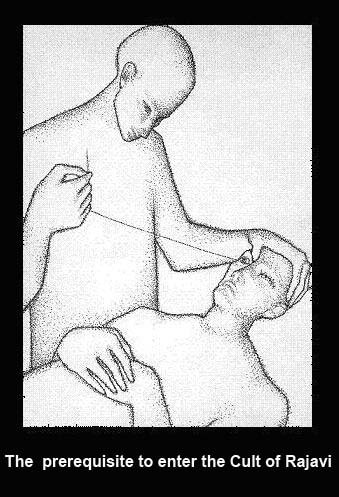
The cult of Rajavi

The essential prerequisite to enter the cult of Rajavi

The essential prerequisite to enter the cult of Rajavi

The essential prerequisite to enter the cult of Rajavi

May 31, 2006 0 comments
FacebookTwitterPinterestWhatsappTelegramSkypeEmail
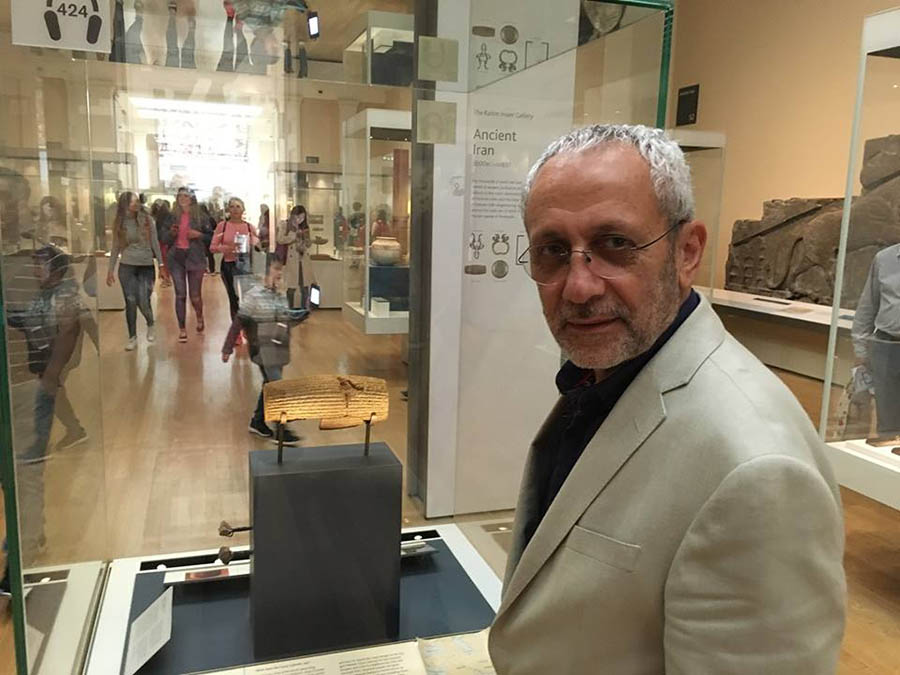
Massoud Khodabandeh
Former members of the MEK

Brief Biography by Masud Khodabandeh

Born into a middle class family in Tehran in 1956, I completed my elementary schooling in Alborz High School, in 1974. A year later I joined my brother, Ebrahim Khodabandeh in the UK where he was already studying Electrical Engineering in Newcastle University (Newcastle-upon-Tyne).

I graduated from Newcastle Polytechnic (now Northumberland University) in Electrical and Electronic engineering and spent another year in Leeds (UK) to gain my Chartered Engineering Diploma, before moving to Loughborough University to study for a Master’s degree.

I was first introduced to politics in Iran, but became more interested in the various opposition groups while a student in Newcastle. I joined groups of students opposing the Shah’s regime, and in the last years of my stay in Newcastle became more and more interested in the so-called ‘revolutionary groups’, one of which was the Mojahedin-e Khalq Organisation of Iran (MKO).

In 1978, when Ayatollah Khomeini moved from Iraq to Paris, I joined a group of young people who went to visit him. This had, of course, a profound effect on me. On my return, I started a Society for Iranian Students in Newcastle Polytechnic, and soon joined with another group of people who were supporting the Mojahedin and who were in contact with them. By doing so, I was able to establish a strong ‘foothold’ in our university. In those days the Mojahedin comprised no more than a group of martyred or imprisoned young people who were following Ayatollah Khomeini – or at least that’s what they told people like me!

Later on I became more involved and was instrumental in the foundation of the “Committee for the Support of the Mojahedin-e Khalq Organisation”. The Committee was founded and led by a known member of the organisation, Dr. Reza Ra’eesi, who had come to London a few years previously; a man of principle, with a wealth of philosophical, political and organisational skills and knowledge. (Shortly after the Revolution, Ra’eesi left the organisation due to his belief that the organisation was no longer following the minimum standards of democratic practices.)

During the course of the revolution in Iran the Committee went through dramatic changes. The name changed to the Moslem Iranian Students’ Society, and the members, who studied and followed the teachings of the Mojahedin literature, became full-time ‘Revolutionaries’. Demonstrations, printing and distributing publications, fundraising, and etc became not just part of my (and my colleagues’) life, but all of it. Individual rooms and flats were given up and we were now living in communal houses, incorporating offices and dormitories. I was soon transferred from Loughborough, where I was studying a research course, to London, and was given the task of heading the organisation in the north of England.

In 1980, I and another 51 members occupied the Iranian embassy in London for which we were sentenced to some months of imprisonment. Dr. Ra’eesi had already left the organisation by this time and had returned to Iran, and we were now receiving direct orders from the Mojahedin HQ in Tehran. I believe that the Mojahedin ordered attacks on Iranian embassies to all of the branches in different European and north American countries as a last show of power before Massoud Rajavi fled Iran following his failed coup d’etat on June 20, 1981.

When I was released from prison, Massoud Rajavi had already arrived in Paris. I joined him and the other Mojahedin after a few days, and spent a few months in the Paris base handing over my responsibilities as head of all the Societies outside Iran. The Moslem Iranian Students’ Society was the only asset left for the Mojahedin outside Iran, and it was rapidly transforming itself into the “Union of Moslem Iranian Students’ Societies” with the HQ in Paris. I was being relieved from all my responsibilities in order to start my next assignment: to go to Iran for a specific mission.

I met with Mr. Saeed Shahsavandi in Germany. (Shahsavandi was a well-known member of the Mojahedin who had suffered in the prisons of SAVAK. He later left the organisation due to disagreements with Massoud Rajavi; in particular over the Internal Revolution of Massoud and Maryam.) Shahsavandi headed a team tasked with purchasing a 10 Kilowatts radio transmitter as well as other telecoms equipment – intended to connect Iran to the Paris HQ – and other materials and to transfer them to Iranian Kurdistan where the new Iranian Government could not exert its power. I was appointed as technical advisor and subsequently, the technical head of broadcasting once the stations were installed in Kurdistan.

Saeed and I ended up in Baghdad airport the same day that Mousa Khiabani and Ashraf Rabiee (who had been left in Iran after Massoud Rajavi had fled to Paris) were killed in a gun battle with the Revolutionary Guards in Tehran. We had with us a huge load of telecoms and other equipment. We were working under the protection of the Kurdish Democratic Parity (KDP) which would allow us passage from Iraqi into Iranian Kurdistan. The equipment was shipped by the Iraqi military to Soleimanieh – where the Iraqis would go no further – and from there we were taken towards the border of Iran by Kurdish people sympathetic to the KDP. It was winter and it took us several months to transfer the dismantled pieces of radio equipment into the mountains of Sardasht (in Iran) from where the transmitter started broadcasting the clandestine short and medium wave ‘Radio Mojahed’ into Iran. The transmitter (and therefore me and my team) had to change place in the mountains of Kurdistan more than 7 times over the next two years in order to survive the air attacks. We survived as a team (though of course some individuals didn’t) and continued our broadcasting successfully.

When we first arrived in Iranian Kurdistan, the Mojahedin base was inside the KDP compound just outside Sardasht. But our numbers were growing rapidly. Kurdistan was becoming the HQ for training terror teams to carry out operations inside Iranian cities and it was the major transit route for transferring Mojahedin executives from Iran to France (via Turkey or Iraq/Jordan).

It took two years of military battles during the summers and fighting with nature in the mountains of Kurdistan in the winters before the Iranian army reached the ‘Free Zone’ of Iranian Kurdistan. After a few days of battle, we had no other choice than to abandon everything and, crossing the border river Zab, to retreat into Iraq. We had to blow-up everything we had in order not to let them fall in the hands of enemy but managed to bring the transmitter with us and even managed to get it up and running again in only a few days to broadcast Radio Mojahed. But now we were living alongside an Iraqi military base with direct connection to roads, and after two years I enjoyed the luxury of moving around with cars instead of mules! It didn’t take long before I was given the go-ahead to return to Paris. Now that transmission was taking place from Iraqi territory with the help of the Iraqi Government, I was perhaps needed more in Europe than in Iraq. So, I went back to Paris.

With fluent English and a little French, I was assigned to a team specifically taking care of Rajavi’s personal affairs. He was then married to Firoozeh Banisadr and my main job was partly her protection and partly working with the Mojahedin intelligence system which was mainly occupied with intelligence gathering about other opposition forces outside Iran. My boss for the specific matters involving Firoozeh was Maryam Azodanloo (who was the head of a team providing personal needs of Massoud Rajavi. She later became the 3rd wife of Massoud and co-leader of the organisation), and for the intelligence section I had Bijan Rahimi as my boss. When Massoud divorced Firoozeh and married Maryam (then the wife of his friend Mehdi Abrishamchi), I was freed from my other responsibilities to move into the HQ of Auvers-sur-Oise to become an overt member of the personal protection of the Leadership, which meant Massoud and his new wife (my old boss) Maryam. My responsibilities were mainly security, liaison with French Security and above all, updating and reforming the system of security according to the available resources in Europe. Technical aspects of the matter were my main focus. This continued until the departure of the organisation to Iraq.

I travelled to Baghdad a few weeks before the arrival of Massoud Rajavi from Paris. I took Maryam with us and she prepared for his arrival.

I was now in a new environment. We were now working in a totally different atmosphere. In Paris everything was systematic and at the end of the day we were a force outside the government. In Paris, security meant a totally different thing than in Iraq. Here we desperately needed training in every aspect if we were going to work and survive with the Iraqi security. But I could also see that there were a lot of things we had brought with us that the Iraqis hadn’t known about. We were now expected to be confident, very confident with arms. We needed to adjust ourselves and become a military force. We were going to be trained to become part of Saddam’s apparatus and that’s what we did.

During the years to come I never separated myself from telecoms, IT and electronics. It was needed both for security and for the army. I would make a few trips to Europe every year to update myself on security and telecoms issues. I would attend Interpol and other security exhibitions and meetings, and of course buy and import the necessary materials for ourselves and for the Iraqis, from simple closed circuit cameras to metal and explosive detectors, up to sophisticated surveillance and counter surveillance equipment, coders, decoders,…, . I also became the person entrusted with arranging for the personal needs of Massoud and Maryam, providing them with whatever was necessary for the ‘Leadership’. During the years of my stay in Iraq I participated in many joint projects and training with the Iraqi army. These included military and security training, special forces training specific to the Republican Guards of Saddam Hussein, as well as joint projects in VIP Shelter technology and infrastructural projects in electrical and telecommunication grids. During these years I even escorted Maryam Rajavi on her holidays to European as well as Arab countries across the world. And of course, every now and then, I would be part of the team carrying messages between Iraq and whichever country they were destined for. I have been responsible for the telecommunication of all the major military operations of the MKO, sitting in the command room connecting Rajavi and his top commanders to the field commanders from his HQ (usually part of an Iraqi military base near the border). Many memories from the four days of the Forough-e Javidan operation (aka Mersad or Eternal Light), the few months of the First Gulf War (Kuwait), and many other events, perhaps need more time and space. I have to bring myself to start writing about them but not right now.

In 1994, after two years of push and pull by Massoud to convince a few remaining non Mojahed members of the National Council of Resistance of Iran (NCRI) to accept Maryam as ‘the President Elect'(!!), he sent her to Europe to “create a foothold for Massoud if things don’t go as well as they should” (maybe he was thinking about a rainy day like today!). As usual it was up to me to bring her to Paris. We were supposed to take her to the USA where she could impose herself as a refugee, but by over-estimating the connections we had, she insisted on getting a valid visa for the US before departure. (She of course, did not even have valid papers for France and the French did not know that she had again been brought to Paris.) The visa application alerted the Americans, and of course after they rejected her we had to surface Maryam in Paris. That was annoying enough, but not as annoying as the fact that she tried to put the blame on Mohammad Mohaddessin (Rajavi’s Pentagon contact who after being arrested in Paris in 2003 and awaiting trial alongside Maryam, has now been replaced by Alireza Jafarzadeh), accusing him of not using his influence with the Americans enough.

In 1995, after a period of disagreements, now directly conducted with Maryam Rajavi, over what was going on in Iraq as well as her increasingly un-diplomatic and un-political and in many cases inhumane conduct, the culmination of years of disagreement was reached and I demanded to leave. Being in Paris was of course to my advantage. But even so, I was forcefully kept and even injected with sleeping and other drugs to the point that even a few days after they stopped the injections I still could not stand up for more than a few minutes. This was of course the minimum just to keep me quiet. After some compromise, agreements and accepting some of my criticisms at face value, I was sent back to Iraq (I was told that the VIP (anti nuclear) shelter compound in Ashraf camp had malfunctioned, which they could not sort out and the engineers had asked for me). In Iraq, I found out that I was being checked by Massoud himself and there I realised that I would lose everything (including my life!) if I continued to insist on my criticisms. I acted compliant for a few weeks until I got my Iraqi and Jordanian documents back and was allowed to get out of Iraq once more. This time I left for London. Soon I contacted Maryam (and later Massoud) and told them of my final decision to have noting to do with them any more.

I presented myself to the British authorities (and later the French authorities) and told them about my exit from the Mojahedin-e Khalq Organisation. (In those days they had not yet been proscribed as terrorists). In the same year (1996) Maryam Rajavi went back to Iraq after a totally disastrous failure in achieving what she came for. The money Saddam had invested was spent on dinner meetings promoting the ‘Ideological Revolution’ and expensive gatherings “teaching feminism to Western women” and the human resource which went back to Iraq was considerably less than what she had come out with.

Having left the Mojahedin with nothing but a few pounds in my pocket, I went to an old student friend of mine in the north of England for help. To his lasting credit, he gave me more than just financial help at a time when I needed every help possible to stand on my feet again. Rajavi tried a few times to get me back and even called to convince me to go back to Iraq for a few days (we both knew he would not let me out again!) But as soon as he became convinced that I am no longer his man, he started announcing that I am, and had been for some time, working for the Iranian Intelligence ministry, a label he has used for more than 800 ex members and critics of the MKO among Iranian opposition forces in Europe and America. In one way this was good news. It meant he has accepted the fact that I have escaped him. Now the problems he would make for me could not be more than some annoyance in the western security services or the British Home Office. I had run away safely. I was much luckier than many of my friends. I couldn’t believe it myself.

When I left the Mojahedin, I was a high ranking commander of the National Liberation Army in charge of the security of the leadership. I was a member of the Executive Committee of the Mojahedin Khalq Organisation and I was a member of the National Council of Resistance of Iran, the so called political wing of the Mojahedin. My departure coincides with the departure of many, many others including high profile people Dr. Massoud Banisadr, Dr. Bahman Etemad and Dr. Hedayat Matindaftary and Mrs. Maryam Matindaftary and … . later Rajavi even blamed me for the departure of others!

It was not surprising that one year after we came out, in 1997 the US government despite all their grievances with the Iranian government, added the name of the Mojahedin in their list of terrorist entities. In the year 2000, Britain followed suit and announced the MKO as a proscribed terrorist organisation. In 2002 the European Union announced them as terrorists and in 2005, Canada officially listed the organisation. In May of the same year, Human Rights Watch published a 40 page report about human rights abuse inside the Mojahedin. I always consider myself one of the luckiest ones. Those who stayed after me have gone through a much harsher experience, many lost their lives, many their sanity.

After leaving the Mojahedin, it took me a few years to retrain myself, get a proper job and stand on my own feet. In 1997 I met Anne Singleton whom I had seen a couple of times before in the Mojahedin’s bases. She had also left them alongside many others outside Iraq. Later we married and now have a son called Babak.

I started working with my friend in his factory for a year and after retraining got back to my main line of work, Telecoms. I have since worked for a variety of companies in direct employment and/or subcontracting, including Ericsson in the UK, Alcatel in Germany and France, and a range of smaller companies outsourcing parts of their Intercontinental Terrestrial Transmission projects.

In 2001 together with Anne we founded Iran Interlink organisation to help the people who leave the organisation to come to terms with their experiences inside the organisation. Now our organisation along with many other similar organisations throughout the world are of themselves a noticeable weight among the opposition forces outside Iran – opposed to the Mojahedin and to the Islamic regime. Many of my friends have been killed during the past two decades, but the ones whose backs did not break under the cruelties of Rajavi and Saddam have now grown even stronger.

In 2002 I joined the centre de recheche sur le terrorisme in Paris as an analyst on terrorism, with which I still work closely. I have widened my circle ever since and now have very good friends across the world from Tel Aviv to Riyadh and from Moscow to Washington. In 2003, after the fall of Saddam and the arrest of Maryam Rajavi I added my own complaints against her to the court case in Paris. The investigations are still ongoing but I certainly hope that one day the truth about what has happened will come out whether in a court room or elsewhere.

After the fall of Saddam many of my friends have managed to leave Iraq and the Mojahedin; some from Abu Ghraib prison. Their stories are horrifying. To think that one day I was a member of such an organisation sends shivers down my back. Now over a thousand people have freed themselves from the cult. Some have gone back to Iran, and some live in western countries. Of course many have lost their lives and many are still trapped inside – about 3500 in Iraq and about 300 outside Iraq in western countries and of course none in Iran. Their average age is approaching 50. You can guess about their morale yourselves. I can’t ignore the number of Iranians killed during the Mojahedin’s so called operations either. To come to terms with these events – on whichever side you find yourself – will certainly take a generation if not more.

As a brief biography, I have tried my best not to enter into specific events and/or specific instances, each of which will need their own article or even book.

One day I may enjoy the luxury of having the time to write a thorough biography of my life (or even write about the Mojahedin), but for the time being I see my time as more beneficially spent putting more time in my work as a consultant, supporting my family and raising my child Babak as best as I can, and of course sparing all the effort possible to help those people who joined the Mojahedin with the sole purpose of helping bring about prosperity and democracy to Iran, but who found themselves siding with the enemies of their own country and with no escape.

May 28, 2006 0 comments
FacebookTwitterPinterestWhatsappTelegramSkypeEmail
Mujahedin Khalq; A proxy force

U.S. AGENDAS IN IRAN MAY PRESENT A PUBLIC DIPLOMACY QUAGMIRE

Editor’s Note: Research Associate Reza Aslan, a scholar of religions and the author of No god but God: The Origins, Evolution, and Future of Islam (Random House), recently published in paperback, submits this examination of a public diplomacy challenge for the United States and its image in Iran and surrounding Muslim countries. Aslan offers that current U.S. policy considerations may provide an untenable challenge for public diplomacy practitioners.

Over the last few months, there have been an increasing number of reports that the Pentagon, under special instructions from the vice president’s office, has been using an Iranian terrorist organization called the Mujahedin-e Kalq (MEK) to conduct stealth operations in Iran in anticipation of a possible military attack. Indeed, a number of recent bombing attacks in Baluchistan and Khuzestan have been linked to MEK fighters who have infiltrated Iran’s borders from bases in Iraq and Pakistan. It seems the purpose of these infiltrations is not only to set up possible staging grounds for an invasion but also to stir up Iran’s small Sunni community (centered in these regions) to help bring down the clerical regime once the bombs start falling. The strategic use of the MEK, therefore, is a sign that, as Seymour Hersh reported in the New Yorker, the Administration believes that a sustained bombing campaign would not only halt Iran’s nuclear program, but would also weaken the clerical regime to the point that Iranians would be compelled to rise up and overthrow it.

The idea that the MEK could serve as an Iranian version of the Iraqi National Congress once again demonstrates the almost willful ignorance this administration when it comes to the people, politics, religion, and culture of the Middle East. The MEK is a pseudo-Marxist organization that, along with its Paris-based political wing, the National Council of Resistance in Iran (NCRI), has been on both the U.S. and E.U. terrorist watch-lists for years. However, since the invasion of Iraq brought with it the specter of seriously pursuing regime change in Iran, the MEK has begun to transform itself into the Iranian equivalent of Ahmed Chalabi’s ill-fated INC. In fact, the MEK may be the only internationally recognized terrorist organization in the world with offices in D.C. and an open line to some very influential members of Congress, including Senator Sam Brownback (R-Kan) and Representatives Gary Ackerman (D-NY) and Bob Filner (D-CA), not to mention neo-con avatars Richard Perle and Daniel Pipes.

Formed in the 1960s as an anti-imperialist organization, the MEK gained fame for their guerilla tactics, which killed dozens of Muhammad Reza Shah’s political cronies and several American soldiers and civilian contractors working in Iran. However, after the Shah’s expulsion in 1979, both the secular-minded democrats who formed the provisional government and the religious factions who followed the Ayatollah Khomeini rejected the MEK and their radical Marxist agenda, forcing its members to flee to Iraq. There, in exchange for assistance and intelligence during the Iran/Iraq war, the MEK was protected and armed by Saddam Hussein.

The ceasefire between Iran and Iraq in 1988 put the MEK in a vulnerable position. Isolated in remote camps on the border of Iraq, the group gradually transformed from a revolutionary Marxist guerrilla organization into a fanatical cult of personality centered on absolute devotion to its husband-and-wife leaders, Maryam and Massoud Rajavi. As with most cults, it is incredibly difficult to break through the veil of secrecy that shrouds the MEK. However, based on the research of Professor Ervand Abrahamian, who has written extensively on the group, and the testimony of former members who have escaped the organization, a horrifying history of terrorist activity, mass murder, and human rights abuses has emerged.

According to published reports by Human Rights Watch, MEK members are forced to line up every morning in front of pictures of Maryam and Massoud to salute them and sing their praises. Members who have criticized the Rajavis or their organization have been detained against their will — some have committed suicide to escape. The Rajavis have outlawed all contact between their male and female followers. Celibacy is strictly enforced, and all members must undergo weekly ideological cleansings in which they are compelled to publicly confess their sexual desires. Many MEK members are orphans who joined the organization as children. They refer to themselves as martyrs and have been conditioned for absolute obedience to the Rajavis. Indeed, when French authorities arrested Maryam Rajavi in 2002 for her involvement in terrorist activities, nine of her followers immolated themselves in protest.

After the American invasion of Iraq, the MEK was rounded up and detained while diplomats in the U.S. and Iran began negotiations for a prisoner exchange. The Iranians were willing to hand over dozens of Taliban and al-Qaeda fighters they had captured trying to cross the country’s borders in return for members of the MEK who had been charged with terrorist activities in Iran. The Iraqi leaders of the interim government encouraged the exchange of prisoners and called for the expulsion the MEK from Iraq. The Iraqis had good reason to want the MEK brought to justice. After all, the group took an active role in Saddam Hussein’s brutal massacre of the Kurds and Shi’ites who rose up after the Persian Gulf War.

But before negotiations with Iran could continue, the MEK was inexplicably granted protected status under the Geneva Convention. At the time, the move was lauded by neo-cons like Daniel Pipes, who wrote an op-ed for the Washington Institute for Near Eastern Policy arguing that the MEK offers "an excellent way to intimidate and gain leverage over Tehran." Since then, the organization has been increasingly viewed as the most viable alternative to Iran’s clerical regime. More than 150 members of Congress have signed a letter to the State Department demanding that the MEK be removed from its terrorist list. Speaking at a rally organized last year by the NCRI in D.C., Representative Bob Filner (D-CA) referred to the group as, "our best hope to counter the [Iranian] regime." Filner is not alone in trumpeting the MEK. Senator Sam Brownback (R-Kansas), whose Iran Freedom Act calls for funding Iranian opposition groups like the MEK, told me in a phone interview conducted last year that, "there are serious questions to be raised about [the MEK’s] terrorist designation, particularly in light of the intelligence they have provided on Iran’s nuclear program."

It is true that the MEK has been a major source of U.S. intelligence on Iran’s clandestine nuclear activity. Some of that intelligence, including information on Iran’s nuclear program at Natanz, seems to have originated with Israeli intelligence services, who then filtered the information to the US through the MEK. However, a great deal of the intelligence provided by members of the MEK has proven to be unsubstantiated and unquestionably tainted by the organization’s own personal interests. Moreover, the MEK’s support for Saddam Hussein during his horrific eight-year war with Iran has made it the only group Iranians detest. It is for this reason that some of the most ardent opponents of the clerical regime are wary of their influence in the U.S. Michael Ledeen, founder of the Coalition for Democracy in Iran (CDI) and one of the most vocal supporters of regime change in Iran bluntly dismisses the possibility of cooperating with MEK. "I do not think we should have anything to do with…a terrorist organization despised by most Iranians."

Still, despite its checkered past and its dubious intelligence claims, the MEK seems to have once again emerged as a viable partner in the pursuit of regime change in Iran. Of course, when an unreliable and, as some would argue, criminal exile group begins furnishing the U.S. government with intelligence designed specifically to encourage it to preemptively strike a foreign country so as to bring about regime change, we should all stand up and take notice.

In the run-up to the Iraq war, the president assured Americans he would exhaust all his diplomatic options before considering war. We now know this was a lie. Plans for the invasion of Iraq had begun soon after the attacks of September 11, 2001 and were unlikely to be derailed by any act of diplomacy short of Saddam Hussein’s withdrawal from Iraq. If the reports about the MEK’s infiltration into Iran are true, then it could mean the president is once again lying about working toward a diplomatic option in Iran, even while preparing for an second pre-emptive invasion.

Reza Aslan – USC center on PUBLIC DIPLOMACY BLOG –  MAY 19, 2006

May 28, 2006 0 comments
FacebookTwitterPinterestWhatsappTelegramSkypeEmail
Mujahedin Khalq; A proxy force

playing with Mojahedin as the football

‘Alternative World Cup’ playing with Mojahedin as the football

Group tied to terror seeks U.S. inroads — Anti-Tehran exiles have some support despite hostile past

Washington — AS TENSIONS between the U.S. and Iran continue to mount, an Iranian exile group viewed here as a terrorist organization is lobbying to play a greater role in the struggle against Tehran. And it is winning some support in Congress.

The Mojahedin-e Khalq, or People’s Mojahedin of Iran, was formally listed as a terrorist group by the State Department because of its attacks on American military personnel and Iranian officials. It fiercely opposed the Shah and his supporters during the 1970s and allied with former Iraqi dictator Saddam Hussein in his 1980-88 war against Iran.

But today, the MEK and its supporters say the organization should be supported by the Bush administration as part of a broader effort to promote regime change in Tehran. They say the group has developed among the most-sophisticated intelligence operations covering Iran’s leadership and nuclear operations, and it has networks inside Iran that can spread propaganda on democracy and on the need to remove the Islamic regime. The MEK also has 4,000 fighters that can target Iran from Iraq, though they have been demobilized by U.S. military commanders and held in a kind of house arrest.

As the White House deploys $85 million this year to promote pro-democracy groups in Iran, the MEK says it can support this campaign without receiving a penny. "We seek neither money nor weapons from the U.S. We just want our legitimate right to resist tyranny in our country," says Mohammad Mohaddessin, a Paris-based member of the MEK who serves as foreign-affairs chairman of its affiliated organization, the National Council of Resistance of Iran. "Let the Iranian people deal with the mullahs."

[Note: Mohaddessin is currently awaiting trial in France on terrorism charges.]

Mr. Mohaddessin and other MEK leaders say they want the U.S. to remove their organization from the terrorism list so that they can more easily raise money and support globally. They also want their fighters released in Iraq.

For more than a decade, the MEK has been employed as a political football in the diplomatic games played between Washington and Tehran, say current and former U.S. officials. The Clinton administration placed the MEK on the State Department’s terrorism list in 1997, as Washington sought to appeal to moderate leaders inside the theocratic government in Tehran. A blacklisting of the MEK was among the actions the Iranians sought in exchange for better relations, these officials say.

The State Department’s 2006 terrorism report says the MEK has been launching attacks on Western and Iranian targets since the 1970s. In the last years of the Shah’s rule, elements of the MEK assassinated U.S. security advisers and military contractors, and assisted in the takeover of the American Embassy in Tehran. It subsequently turned on Iran’s new theocratic government due to ideological differences and launched bombing campaigns against senior Iranian officials.

Under pressure inside Iran, MEK fighters shifted their base to Iraq, conducting operations from there against Iran’s Islamic government throughout the 1980s and ’90s. Most of their activities were concentrated on Iranian military installations and commanders. But the U.S. also accuses the MEK of conducting terrorist strikes outside of the Middle East, including simultaneous attacks in 1992 on Iranian embassies and installations in 13 countries.

Some U.S. diplomats say that to delist the MEK now would make Washington appear inconsistent on terrorism and could further incite Iranian President Mahmoud Ahmadinejad. They also believe Iran’s leadership could use U.S. support of the MEK to further strengthen Mr. Ahmadinejad’s position, due to what is perceived as widespread antipathy toward the MEK inside Iran. "It could be incredibly provocative in Iran’s eyes," a U.S. official said.

In 2003, the Bush administration also placed the National Council of Resistance of Iran on the terrorist list, as U.S. military planners sought assistance from Iran in stabilizing post-Saddam Iraq. Among the issues the Iranians and Americans discussed that year, said officials involved in the talks, was a plan to swap MEK members it was detaining in Iraq for al Qaeda leaders hiding inside Iran. But the talks ultimately bogged down, as American commanders grew increasingly convinced that Tehran was working to destabilize Iraq.

"Iran wanted the MEK first" before they would hand over al Qaeda leaders, says Michael Rubin, an Iran specialist who served in the Pentagon’s Office of Special Plans during the first Bush term. "We made it clear to Iran, that if al Qaeda planned an attack, they’d be held responsible."

The MEK, however, has used the Iraq invasion to try to build bridges to the Bush administration. U.S. officials say the MEK has largely cooperated with U.S. military commanders in agreeing to disarm their troops based in Camp Ashraf, which sits about 100 kilometers north of Baghdad. The fighters are being held as protected combatants under a United Nations charter, though some groups in Iraq have sought to try the MEK for atrocities it allegedly committed in league with Mr. Hussein.

Leaders of the MEK and National Council of Resistance, meanwhile, have aggressively moved to highlight the threats posed by Iran’s nuclear programs. In a string of news conferences tracing back more than a decade, first the MEK and then the resistance council have accused Tehran of flouting its international treaty obligations by clandestinely seeking to produce nuclear-weapons fuel.

In an August 2002 news conference, council leaders in Washington specifically charged Iran with running a stable of centrifuges to enrich uranium in the central Iranian city of Natanz. International Atomic Energy Agency inspectors would confirm the accusations a few months later. U.S. officials, including President George W. Bush, have cited the role played by Iranian exile groups in exposing Iran’s nuclear programs.

Still, the MEK remains a deeply divisive issue inside Washington. In 2002, 150 members of Congress signed a letter seeking the MEK’s removal from the terrorism list. Lawmakers also have quizzed the State Department on the MEK’s status in recent weeks, after it was again named to the U.S. list of global terrorist organizations.

"It’s the only group on the terrorist list that’s been more helpful to the U.S. and more harmful to our enemies," said Rep. Brad Sherman (D., California), who is among those representatives questioning the MEK’s designation. "It played a very important role in telling us what happened in Natanz. We should be clear on what we expect of them to get off the list."

Despite this support in Congress, however, many current and former U.S. officials say the Bush administration should stay clear of any dealings with the MEK. They describe the group as operating like a cult under the control of its founder, Massoud Rajavi, and his France-based wife, Maryam. They say the two have very little support in Iran and face deep hostility from the populations of Iran and Iraq, due to the MEK’s alleged complicity in Mr. Hussein’s atrocities.

"An enemy of my enemy is not my friend" in this case, said Mr. Rubin, the former Pentagon official. "From a policy standpoint, the problem with the war on terrorism is the propensity for moral relativism. But we shouldn’t accept certain terrorists and not others."

By Jay Solomon  –  The Wall Street Journal Europe  –  22 May 2006

May 28, 2006 0 comments
FacebookTwitterPinterestWhatsappTelegramSkypeEmail
Mujahedin Khalq; A proxy force

Terrorist Group Supporters Meet in Washington

WASHINGTON -– Dozens of self-avowed supporters of an Iranian group on the State Department’s list of international terrorist organizations met Thursday in a public building in Washington, D.C., to call on the Bush administration to legalize the activities of their group.

The Mujahedin-e Khalq, also known as the People’s Mujahedin Organization of Iran, was first blacklisted by the State Department in June 1994. Various front organizations, including the National Council of the Iranian Resistance, were added to the U.S. blacklist in 1997.

While the blacklisting has prohibited the group from openly lobbying Congress, a variety of like-minded organizations have championed its cause, claiming to have no operational ties to the banned terrorist group.

“We sympathize with them,”one of the organizers of Thursday’s event told NewsMax, when asked why people attending the rally had been given banners with photographs of MEK leaders Massoud and Maryam Rajavi.

He said the event had been organized and paid for by”Iranian-American organizations,”but would not name any specific group.

The MEK and its front groups have distributed letters in Congress in support of its cause that have garnered as many as 226 signatures from members of the House of Representatives. Many congressmen who signed later said they had no idea they were supporting a terrorist group.  Story Continues Below

The MEK calls itself the Iranian”resistance,”but other organized Iranian opposition groups in the United States and inside Iran consider them traitors, because the MEK allied with Saddam Hussein during the 1980-1988 Iran-Iraq war.

Called”Islamic-Marxists”by the former shah, today even the Marxist Organization of the People’s Fedaii Guerillas of Iran (OPFGI) has rejected the group.

But some U.S. military officers who processed MEK members after their training camp in Iraq was seized during Operation Iraqi Freedom in 2003 believe the United States could use the MEK to lead an armed uprising against the Tehran regime.

Thursday’s pro-MEK rally was sparsely attended compared to similar events in the past. Elaborately staged to ressemble a U.S. presidential nominating convention in an elegant hall at 1301 Constitution Ave., barely 100 people attended the event.

Participants were given noisemakers and other props to make the event appear like a mass rally. Professional video crews were posted around the large ballroom and sent live footage to a satellite truck outside, which beamed it to Florida and then to Europe, technicians said.

Organizers said the only member of Congress who addressed the rally was Rep. Ted Poe, R-Texas. An officer from the Department of Homeland Security’s Office of Protective Services said he had been assigned to assist the private security detail hired by the organizers.

When asked why the U.S. government was allowing sympathizers of a group on the State Department’s terrorist list to gather in a government-owned building — the Andrew Mellon auditorium -– he said the decision had been made by his superiors.”I’m here to ensure that people can express their First Amendment rights without threat or restriction,”he said.

Also addressing the group was proferssor Raymond Tanter, who chairs the Iran Policy Committee, a private group in Washington that is lobbying Congress and the Bush administration to remove the MEK and its front groups from the terrorist list.

Tanter had just returned from Paris, where he and other members of the Iran Policy Committee had been invited to address a similar event sponsored by pro-MEK groups. IPC does not disclose its source of funding, but invites donations over the Internet.

While the MEK today opposes the clerical regime in Tehran, it took part in the 1979 revolution against the Shah. In a 1994 report to Congress, the State Department explained that it had designated the group as a terrorist organization because it had taken part in the 1979 taking of the U.S. embassy in Tehran and had murdered Americans working in Iran under the shah. 

newsmax 

May 28, 2006 0 comments
FacebookTwitterPinterestWhatsappTelegramSkypeEmail
Newer Posts
Older Posts

Recent Posts

  • Why the MEK Failed to Become a National Movement

    August 26, 2026
  • From Studying in America to Death in a Village in Albania

    August 22, 2026
  • The Psychological Impact of MEK Ideology on Members

    August 17, 2026
  • A study on the financial mechanism of the Mujahedin-e Khalq

    August 10, 2026
  • A Child behind the Ideological Bars of Massoud and Maryam Rajavi

    August 8, 2026
  • Facebook
  • Twitter
  • Instagram
  • Youtube

© 2003 - 2025 NEJAT Society . All Rights Reserved. NejatNGO.org


Back To Top
Nejat Society
  • Home
  • Articles
  • Media
    • Cartoons
    • NewsPics
    • Photo Gallery
    • Videos
  • Publications
    • Books
    • Nejat NewsLetter
    • Pars Brief
  • About Us
  • Contact us
  • Editions
    • عربي
    • فارسی
    • Shqip