Nejat Society
  • Home
  • Articles
  • Media
    • Cartoons
    • NewsPics
    • Photo Gallery
    • Videos
  • Publications
    • Books
    • Nejat NewsLetter
    • Pars Brief
  • About Us
  • Contact us
  • Editions
    • عربي
    • فارسی
    • Shqip
Nejat Society
Nejat Society
  • Home
  • Articles
  • Media
    • Cartoons
    • NewsPics
    • Photo Gallery
    • Videos
  • Publications
    • Books
    • Nejat NewsLetter
    • Pars Brief
  • About Us
  • Contact us
  • Editions
    • عربي
    • فارسی
    • Shqip
© 2003 - 2024 NEJAT Society. nejatngo.org
Human Rights Abuse in the MEK

Statement on Responses to HRW Report on Abuses by the MKO

In May 2005, Human Rights Watch issued a report on alleged human rights abuses committed by an Iranian opposition group, the Mojahedin-e Khalq Organization (MKO/MEK),1 inside its military camps in Iraq from 1991 to February 2003, prior to the fall of Saddam Hussein’s government. The report, No Exit: Human Rights Abuses Inside the MKO Camps, detailed allegations by twelve former members of the MKO who told Human Rights Watch of a range of physical and psychological abuses they had suffered and witnessed.2 In addition, the report made use of the published memoir of the MKO’s former chief diplomatic representative in Europe and North America, Masoud Banisadr.3

Following publication of this Human Rights Watch report, individuals associated with the MKO and others, in communications to Human Rights Watch as well as publicly on Web sites connected with the MKO, raised objections to the findings of the report. We have investigated with care the criticisms we received concerning the substance and methodology of the report, and find those criticisms to be unwarranted.

A number of critics of the report claimed that Human Rights Watch was calling on the United States, Canada, and the European Union not to remove the MKO from their respective lists of groups identified as perpetrating or advocating acts of terrorism, in the face of a campaign by the MKO to have itself removed from such lists. Human Rights Watch in fact at no point, either in the report or in responses to media and other queries, took any position whatsoever on whether the MKO should be on such lists or removed from them. Rather, we did no more than report what we believed to be credible testimonies alleging serious abuses perpetrated by MKO officials against dissident members of the group, including prolonged deprivation of liberty and torture.

A group known as Friends of a Free Iran (FOFI), comprising four Members of the European Parliament – Alejo Vidal Quadras, Paulo Casaca, Andre Brie, and Struan Stevenson – presented the most extensive of the critiques of the No Exit report on September 21, 2005.4 The FOFI document disputed the testimonies and challenged the credibility of the witnesses interviewed by Human Rights Watch, saying, among other things, that their allegations were “widely believed to be orchestrated by Iran’s Ministry of Intelligence.”5 The MKO has similarly alleged that Human Rights Watch’s witnesses, and dissident former members generally, are in fact agents of Iranian intelligence. Neither FOFI nor any of the other critics of the Human Rights Watch report have provided any credible evidence to support this charge.

The FOFI document followed a five-day visit by a delegation of FOFI members to the MKO’s main base in Iraq, Camp Ashraf, in July 2005. The FOFI delegation reportedly interviewed 19 MKO members inside Camp Ashraf. According to the FOFI document, these present MKO members disputed testimonies given by the former MKO members to Human Rights Watch. The FOFI delegation did

not interview any of the individuals who gave testimonies to Human Rights

Watch.

Because Human Rights Watch places a high premium on the accuracy of our reporting and public statements, the organization took these allegations seriously. We went back to our sources to review and reevaluate the credibility of their allegations.In October 2005 Human Rights Watch researchers met in person with all twelve witnesses quoted in the No Exit report. The researchers conducted interviews lasting several hours with each witness, individually and privately. All interviews were conducted in Germany and the Netherlands, where the witnesses now live.

All of the witnesses recounted in extensive detail their experiences inside the MKO camps from the 1991-2003 period, and how MKO officials subjected them to various forms of physical and psychological abuses once they made known their wishes to leave the organization. Human Rights Watch researchers questioned the witnesses at great length about the circumstances under which these abuses allegedly took place. The researchers also asked the witnesses to respond to the specific issues raised in the FOFI document with regard to their testimonies. The witnesses provided detailed and credible responses to these challenges that were consistent with their earlier testimony as recounted in No Exit and are detailed in the appendix to this statement.

The only piece of information that emerged during these detailed face-to-face interviews that differed from the account in No Exit concerned the period of Mohammad Hussein Sobhani’s detention by the MKO. In No Exit, Human Rights Watch reported that MKO officials had held Sobhani in solitary confinement for eight-and-a-half years, from September 1992 to January 2001. The FOFI document stated that “upon his own request, he [Sobhani] lived in an apartment furnished with all living commodities of a comfortable life. Despite PMOI’s insistence that he must leave the organization, he was not willing to do so…”6

In his testimony in October 2005, Sobhani told Human Rights Watch that MKO officials held him continuously in solitary confinement from September 1992 until February 1998 inside Camp Ashraf, a period of five-and-a-half years. He said that in February 1998 the MKO leadership offered to transfer him to a better location and then to facilitate his transfer to Europe, where his daughter was living. Subsequently, the MKO moved Sobhani to another MKO camp near Baghdad, called Camp Parsian. He said he stayed there until June 1999, under circumstances that he described as “house arrest.” He said he was free to leave his apartment in Camp Parsian but could not leave the camp unless accompanied by MKO guards, and could not leave for Europe. In June 1999, during a visit to Baghdad, he escaped and attempted to reach the United Nations office there. He was captured by the Iraqi police and turned over to MKO officials. From June 1999 until January 2001, Sobhani said, the MKO again held him in a prison inside Camp Ashraf, once again in solitary confinement. In January 2001, the MKO transferred Sobhani to Iraqi custody. The Iraqi authorities imprisoned him in Abu Ghraib until January 21, 2002.7

As reported by the witnesses interviewed for No Exit, the MKO transferred scores of dissident members from MKO detention into Iraqi custody. Iraqi authorities then incarcerated the men in Abu Ghraib prison. Five of the twelve individuals interviewed by Human Rights Watch for No Exit said theyended up in Abu Ghraib as a result of such transfers, and they told Human Rights Watch that former MKO members were being held there when they arrived. The FOFI document fails to address the MKO’s transfer of the

dissidents to Iraqi custody or their subsequent detention in Abu Ghraib.

The FOFI document also raised two other objections to the Human Rights Watch report. Firstly, the FOFI document questioned Human Rights Watch’s methodology of conducting interviews with witnesses by phone. Human Rights Watch, like other organizations that conduct research and report on current affairs, sometimes relies on telephone interviews to gather information. Telephone interviews are a recognized and appropriate method of information gathering. Human Rights Watch has no reason to believe that any of the witnesses misidentified or (misrepresented) themselves in any way whatsoever. They reaffirmed their credibility in face to face interviews in October 2005.

Secondly, the FOFI document challenged Human Rights Watch’s report by stating that, during their visit to Camp Ashraf, the FOFI delegation did not find any indications of abuse or ill-treatment of MKO members. The Human Rights Watch report, as was made clear in that text, covered allegations of abuse inside the MKO camps prior to the overthrow of the government of Saddam Hussein in April 2003. The testimonies by witnesses who recounted allegations of detention and physical abuse cover the period from 1991 to February 2003. After the U.S.-led invasion of Iraq in March 2003, U.S. forces interviewed MKO members inside the MKO camps. The U.S. military set up a separate camp for those members who indicated that they wished to leave the organization. At least 300 members (out of a total of nearly 4000) chose to leave the organization. The Human Rights Watch report did not include any testimonies or allegations of witnesses as to whether there were ongoing abuses inside Camp Ashraf after the invasion of Iraq. Thus, the findings of FOFI with respect to current conditions in the MKO camp have no relevance to the Human Rights Watch report of testimonies about conditions in the camp from 1991 to February 2003.

Appendix

MKO members inside Camp Ashraf who the FOFI delegation interviewed disputed certain statements by the witnesses whose accounts appeared in the Human Rights Watch report. Human Rights Watch researchers questioned the witnesses at length concerning the allegations contained in the FOFI document.

Their responses, in the view of Human Rights Watch, confirm the credibility and reliability of their original testimonies in No Exit. The Human Rights Watch report contained allegations by witnesses that two MKO members, Ghorbanali Torabi and Parviz Ahmadi, died as a result of abuse suffered in MKO detention. The FOFI document challenged these testimonies.

With regard to Ghorbanali Torabi’s death, the FOFI delegation interviewed two MKO members in Camp Ashraf who disputed these testimonies. These two MKO members, Zahra Seraj, Torabi’s wife, and Masoume Torabi, Torabi’s sister, told the FOFI delegation that he had died of a heart attack, and not as a result of beatings at the hands of MKO officials. Neither of them claimed to have been present when he died. According to a communication to Human Rights Watch from Lord Avebury, who said he had interviewed Masouma Torabi by telephone on June 13, 2005, “Masouma saw Ghorbanali a week before he died.”8

Human Rights Watch again questioned Abbas Sedeghinejad, one of Human Right Watch’s original sources on these events, about Torabi’s death. Abbas Sadeghinejad confirmed his earlier testimony, based on his experience of sharing a prison cell with Torabi.9 He again told Human Rights Watch that late one night, after Torabi had been taken out of the cell for two days, two men carried Torabi back to the cell, threw him inside, and locked the cell again. Torabi, Sadeghinejad said, was not breathing and his face showed signs of severe beating. He said that other cellmates examined Torabi more closely and believed that he had suffered broken bones. Sadeghinejad acknowledged that Torabi may have died of a heart attack, but maintained that the MKO had severely beaten Torabi, apparently during interrogation.

Alireza Mir Asgari corroborated the fact of Torabi’s detention and ill-treatment at the hands of the MKO, based on his own direct experience. Mir Asgari told Human Rights Watch that the MKO also detained him at the time Torabi was detained. He said that he knew Torabi well as a child in Iran, and that Torabi had recruited him in Tehran at the age of seventeen to join the MKO ranks in Iraq. Mir Asgari told Human Rights Watch that during his detention in 1995, he encountered Torabi face-to-face during an interrogation session. He said that the interrogators questioned them both about Torabi’s motivation for recruiting Mir Asgari to the MKO camps in Iraq and accused them of working for the Iranian government. Mir Asgari said that when he met Torabi during this interrogation, Torabi’s body showed signs of beatings and physical abuse.10

Mir Asgari told Human Rights Watch that when he raised the subject of Torabi’s

death with MKO leader Massoud Rajavi, Rajavi alternately responded that Torabi had committed suicide and that Mir Asgari and other prisoners had themselves killed Torabi because they suspected him of being an informant. He said Rajavi at no point claimed that Torabi had died from a heart attack.

Concerning the death of Parviz Ahmadi, the FOFI delegation reported that Hossein Roboubi, an MKO member, told them that Ahmadi died during a military operation inside Iran.11 In its report, Human Rights Watch cited the MKO’s claim that Ahmadi was killed by Iranian agents.12 Human Rights Watch also presented the testimony of three witnesses, Abbas Sadeghinejad, Ali Ghashghavi, and Alireza Mir Asgari, who said that they had shared a prison cell with Ahmadi and saw him die inside the prison after prison guards returned him from an interrogation session. During Human Rights Watch’s face-to-face interviews in October 2005, each of these witnesses gave separate, detailed, and consistent accounts of their recollection regarding Ahmadi’s death. These testimonies were consistent with their earlier statements as published in the No Exit report.13

The FOFI document contains an interview with Hassan Ezati in Camp Ashraf. Hassan Ezati is the father of Yasser Ezati one of the witnesses quoted in the Human Rights Watch report. Hassan Ezati reportedly told the FOFI delegation that “Yasser having left Camp Ashraf went directly to the Iranian Embassy in Baghdad.”14 When asked about this statement, Yasser Ezati strongly denied it. He said that he first went to the German Embassy in Baghdad because he had lived in Germany before moving to Iraq. He told Human Rights Watch that because the German Embassy was closed at the time, his only options were either to return to Camp Ashraf or to go to Iran. He said he was desperate not to return to Camp Ashraf because he had waited for so many years to find the opportunity to leave. He decided to risk returning to Iran for lack of any alternative. He told Human Rights

Watch that he went to the Iranian border on his own. Yasser Ezati said that during his stay in Iran, the Iranian local police arrested him three times for “moral offenses.” Yasser decided that because he had never lived in Iran previously he could not stay there and left for Germany.15

The FOFI document contains an interview with Leila Ghanbari, an MKO member in Camp Ashraf who disputed the testimonies of Habib Khorrami, Tahereh Eskandari, and Mohammad Reza Eskandari in Human Rights Watch’s report. Tahereh Eskandari and Habib Khorrami are sister and brother. Tahereh and Mohammad Reza Eskandari are married. Leila Ghanbari is the former wife of Habib Khorrami and had left Iran for Iraq with Khorrami and Tahereh Eskandari in 1988. The Human Rights Watch report quoted the Eskandaris as saying: “The organization had taken our passports and identification documents upon our arrival in the [MKO] camp [in Iraq]. When we expressed our intention to leave, they never returned our documents. We were held in detention centers in Iskan as well as other locations.” Leila Ghanbari disputed this statement, telling the FOFI delegation: “In one place they say my passport was taken from me. Let me tell you that I laughed at this claim… What passport? They were escapees!”16 The FOFI authors state that MKO officials “said both Mohammad Reza Eskandari and Tahereh Eskandari crossed the border from Iran to Iraq and they never had passports to begin with.”17

Human Rights Watch questioned Mohammad Reza Eskandari, Tahereh Eskandari, and Habib Khorrami separately regarding these allegations by Leila Ghanbari and the unnamed MKO officials. The Eskandaris and Khorrami separately told Human Rights Watch that Tahereh Eskandari, Habib Khorrami, and Leila Ghanbari left Iran together in March 1988 to go to Iraq, crossing the Turkish border and using their passports to do so. They said the MKO confiscated their passports and never returned them. Mohammad Reza Eskandari was the only member of this family who escaped Iran without a passport across the Iraqi border. All three also noted in separate individual interviews that Leila Ghanbari was pregnant when she left Iran for Turkey, and that her and Habib Khorrami’s son was born in Turkey. Habib Khorrami,

Ghanbari’s former husband and the boy’s father, showed Human Rights Watch a copy of their son’s birth certificate issued in Istanbul in April 1994 and stating the date of birth as June 13, 1988.

Leila Ghanbari also disputed the statements by these witnesses that the MKO had confined them in various MKO detention centers. Mohammad Reza Eskandari, Tahereh Eskandari, and Habib Khorrami, in separate face-to-face interviews again provided Human Rights Watch with detailed and consistent accounts of their confinement in various MKO detention centers.18

——————————————————————————–

[1] Alsoknown as People’s Mojahedin Organization of Iran (PMOI).

[2] http://hrw.org/backgrounder/mena/iran0505/index.htm

[3] MasoudBanisadr, Memoirs of an Iranian Rebel (London: Saqi Books, 2004).

[4] Thereport was presented on September 21 at a meeting in Brussels sponsored by theFOFI, according to a September 23 press release on the website of the NationalCouncil of Resistance of Iran, an MKO-related group The text of the FOFIdocument later became available on the same website: http://ncr-iran.org/images/stories/advertising/ep%20report-with%20cover.pdf Many of the points raised in the FOFI document also were raised separately incorrespondence addressed to Human Rights Watch by Lars Rise, a member of theNorwegian Parliament, and two members of the U.K. House of Lords, Lord EricAvebury and Lord Gordon Slynn.

[5] FOFI document, pg. 6.

[6] FOFI document, pg. 65.

[7] HumanRights Watch interview with Mohammad Hussein Sobhani, Germany, October 4, 2005.

[8] LordAvebury email to Human Rights Watch, June 15, 2005.

[9] HumanRights Watch interview with Abbas Sedeghinejad, Germany, October 2, 2005.

[10] HumanRights Watch interview with Alireza Mir Asgari, Germany, October 2, 2005.

[11] FOFIdocument, pgs. 60-62.

[12] http://hrw.org/backgrounder/mena/iran0505/4.htm#_Toc103593132:: “… the MKO’s publication Mojahed of March 2, 1998, lists Parviz Ahmadias an MKO ‘martyr’ killed by Iranian intelligence agents.”

[13] HumanRights Watch interview with Abbas Sedeghinejad, Germany, October 2, 2005. HumanRights Watch interview with Alireza Mir Asgari, Germany, October 2, 2005. HumanRights Watch interview with Ali Ghashghavi, Germany, October 3, 2005. Theirtestimonies regarding Ahmadi’s death appeared in No Exit, Pgs. 16-17.

[14] FOFIdocument, p. 69.

[15] HumanRights Watch interview with Yasser Ezati, Germany, October 3, 2005.

[16] FOFI document, p. 78.

[17] FOFI document, p. 78.

[18] HumanRights Watch interview with Tahereh Eskandari, The Netherlands, October 6,2005. Human Rights Watch interview with Mohammad Reza eskandari, TheNetherlands, October 6, 2005. Human Rights Watch interview with Habib Khorrami,The Netherlands, October 6, 2005.

http://hrw.org/english/docs/2006/02/15/iran12678.htm


February 21, 2006 0 comments
FacebookTwitterPinterestWhatsappTelegramSkypeEmail
Mujahedin Khalq; A proxy force

Opposition a stick against Tehran?

It has been variously described as a cult and the only significant Iranian resistance movement. The People’s Mujahedeen is listed as a terrorist organization in Europe and the United States, yet the group continues to stage rallies and court lawmakers on both sides of the Atlantic.

The U.S. military that bombed its Iraq-based armed wing two years ago now protects its camp north of Baghdad, where its members have been granted Geneva Convention refugee status. And in France, where the People’s Mujahedeen established its political headquarters in the 1980s, it regularly hosts press conferences in Paris to level fresh charges about Tehran’s alleged nuclear weapons program.

Now, as the standoff continues over Iran’s nuclear enrichment activities, some suggest the People’s Mujahedeen could play another role: As one of the few sticks available to Western governments — short of U.N. sanctions — to prod Tehran into compliance.

"I think the way we have treated the Mujahedeen has not been very intelligent," said Yves Bonnet, a former head of France’s internal DST intelligence service, and author of a book on Iranian politics. "Instead of making the Tehran regime worried by supporting an opposition movement they fear, we’re trying to sterilize the Mujahedeen. And in doing so, we’re playing into the arms of their adversaries — the Iranian government."

Such a view is hardly universal. Critics argue that supporting the People’s Mujahedeen grants legitimacy to a disreputable organization, dogged by allegations of human rights abuses and undemocratic behavior.

Other analysts point to a bad precedent: Bogus information on Saddam Hussein’s nuclear weapons program provided by Iraqi opposition groups. "I think we need to view what the Mujahedeen is saying with some very healthy skepticism," said Bob Ayers, a terrorism expert at the Royal Institute of International Affairs in London. Still others suggest that using the Mujahedeen to pressure Tehran would have only limited effect.

For its part, the Mujahedeen has spared no effort to clean up its reputation. It organizes periodic rallies — including one in front of the White House Thursday — to get off the U.S. and European terrorist lists, and to promote itself as a democratic alternative to the Mullah’s regime.

Based in the picturesque Paris suburb of Auvers-sur-Oise, the Mujahedeen’s political wing — known formally as the National Council of Resistance of Iran — has a formidable public relations machine. It publishes a slick magazine peppered with articles about the Western lawmakers and Iranians who support it.

"The Iranian community abroad is a microcosm of the Iranian community in Iran," said 53-year-old Ali Safavi, a member of the Mujahedeen’s foreign affairs committee, in an interview in Paris. He claims the vast majority of those politically active in the Iranian diaspora support the group.

"If there were an election held tomorrow in Iran under U.N. auspices — free of rigging and fraud and all parties could participate — I think our movement would by far gain the most number of votes," Safavi added.

Many scoff at such claims.

"They’ve managed to convince more than a few unsuspecting members of the European parliament and U.S. congressmen and women that they are a legitimate democratic opposition group," said Karim Sadjadpour, an expert on Iran at the International Crisis Group in Washington, DC, echoing the view of a number of experts. "But in reality, anybody who has been to Iran in the last 10 years would tell you they have little, if any, support on the streets."

There was a time, however, when the Mujahedeen enjoyed considerable support on the Iranian streets. Founded in 1965 by Iranian students bent on toppling Shah Mohammad Reza Pahlavi, the group briefly allied itself with the 1979 Islamic Revolution. But the Mujahedeen, which mixed Islam with Marxist philosophy, soon fell afoul of Iran’s new theocratic government.

In 1981, after several of its leaders were executed, the group moved to an unsettled exile in France. When Paris began forging diplomatic ties with Iran’s Ayatollah Khomeini in 1986, it expelled the Mujahedeen’s charismatic leader, Massoud Rajavi.

Rajavi moved to Iraq, where Saddam gave him shelter and millions of dollars in funding. He established the group’s military wing there, launching terrorist attacks across the border in Iran, and targeting Iranian interests overseas.

In 2003 — as French authorities again appeared to be seeking closer ties with Tehran — police raided the Mujahedeen’s sprawling compound in Auvers-sur-Oise, arresting 160 people on allegations of funding terrorist activities. Among those detained were Rajavi’s wife Maryam, who heads the group’s political wing.

But today, Maryam Rajavi meets freely with French and other European politicians, and reportedly enjoys police protection whenever she leaves her home. A French judicial investigation putters on — to save face, Mujahedeen members say, for lack of incriminating evidence.

Treatment of the Mujahedeen by other Western governments also appears pegged to shifting diplomatic relations with Tehran. In 1997, the Clinton administration classified the Mujahedeen’s armed and political factions as terrorist organizations — reportedly to score points with former Iranian president Mohammad Khatami. In 2002, the European Union put the group’s armed branch on its terrorist list.

Today, however, some U.S. and European lawmakers are lobbying for the Mujahedeen to be treated as a credible weapon against Tehran. "We should use them for information on what’s going on inside Iran," said Congressman Tom Tancredo (R-Colorado), who supports lifting the group’s terrorist designation. "They’re willing to do what’s necessary to bring the regime down, and we could take advantage of that."

Supporters say the Mujahedeen could be used in providing intelligence information on Iran’s nuclear program. That may be one reason, according to reports, why the U.S. military shifted from bombing to guarding the Mujahedeen’s camp in Iraq. Indeed, the group’s allegations three years ago about an Iranian enrichment facility in Nantanz were "on the mark," said a diplomat close to the International Atomic Energy Agency, in Vienna.

But the group’s subsequent nuclear disclosures have been of dubious value, the diplomat added, speaking on background. "The IAEA certainly doesn’t rely on them as a credible or regular source of information," she said, "even though it does read and check them out."

More worrying, perhaps, is the organization’s reputation. The Mujahedeen has long been described as a personality cult revolving around its leaders, the Rajavis. Men and women at the Iraq camp sleep separately and are barred from marrying. Last year, Human Rights Watch published a report accusing the Mujahedeen of torturing and preventing some of its dissenting members from leaving the camp, during Saddam’s time.

Some U.S. soldiers and European lawmakers say they have found no evidence of past abuse there. And the group argues former members interviewed by Human Rights Watch are on the payroll of Iran’s intelligence service. But critics like Ervand Abrahamian, author of a 1989 book on the Mujahedeen, says that is its standard response to damaging allegations.

"It would be a sign of desperation if Washington resorted to the Mujahedeen as an instrument against the Iranian regime," added Abrahamian, a Middle East history professor at Baruch College, in New York. "I can’t imagine anyone more discredited in Iran than the Mujahedeen."

ELIZABETH BRYANT/UPI/Feb.7/Paris

February 19, 2006 0 comments
FacebookTwitterPinterestWhatsappTelegramSkypeEmail
UK

Maryam Rajavi’s gaffe sabotages MKO’s House of Lords push

Thursday February 9, 2006. In a debate on Iran, several members of the House spoke about the immediate problems concerning Iran, and British policy toward that country. But the main thrust of the debate was to lobby for the de-proscription of the MKO from the UK’s list of terrorist entities.

In reviewing their arguments, those who spoke in favour of the MKO could readily be accused of reading by rote from the MKO’s own propaganda material.

As usual, the MKO’s supporters portrayed it as democratic, defenders of human rights, active inside Iran, non-terrorist and the only opposition group of any note. All of which are easily refutable with evidence already in the public domain.

It appears that the MKO’s supporters in the House of Lords are woefully ignorant as to the true nature of that organisation and in particular its leaders.

However this ignorance is not a unique phenomenon, it is also endemic among the neoconservatives’ of the US Government.

Fortunately some members are not ignorant of the Mojahedin. Lord Phillips of Sudbury was able to bring real knowledge to the debate when he said:

"I should remind those who want to bring back the PMOI, give it support and let it loose that it was harboured, supported and sustained by Saddam Hussein scarcely the most benign of patrons. The idea that we could do that and encourage regime change in a way that will really bring about that for which we devoutly hope a fully democratic Iran in which human rights are fully respected is pie in the sky and a dangerous illusion."

Toward the end of the three hour debate, the MKO’s supporters became desperate for any mention of the MKO. Unwilling to leave Maryam Rajavi empty handed, Lord Taverne interjected:

"My Lords, the time allocated for the noble Lord’s speech is running to an end. I hope that he will not ignore the point made by many speakers about the de-proscription of the PMOI."

The Parliamentary Under-Secretary of State, Foreign and Commonwealth Office (Lord Triesman) replied:

"My Lords, I have not the smallest intention of doing so. I shall turn to that point immediately.

"It is clear that there is a range of concerns, and I hope that that will not turn into uncritical enthusiasm for groups opposed to the Iranian regime, particularly those calling for the repeal of proscription currently in place. The MeK, or the PMOI, now tends to describe itself as a democratic party working for human rights, but there has been a history of involvement in terrorism. I have looked at the balance of the information available. In 2001 there were two armed attacks for which it accepted responsibility. It was accused of a further armed attack in June 2002, about which it has said nothing.

"Let me bring us right up to date. In an interview with the LA Times in February this year, Maryam Rajavi was asked whether the use of violence was a PMOI option now and answered,

"The tactics and methods have been imposed not by us, but by the mullahs".

"Some may say that that is ambiguous rather than direct, but noble Lords have provided interesting information about the new disposition of these groups—as they have described it. I am willing to look at this group in particular. Fundamentally, of course, the whole of the question would need to be put to the review commission, although there are regular reviews. That is in the hands of the group itself. If it has things to say about a non-violent trajectory, that must be the way in which it carries it forward."

Iran-Interlink, February 9, 2006

http://www.publications.parliament.uk/pa/ld199900/ldhansrd/pdvn/lds06/text/60209-04.htm#60209-04_head2

February 13, 2006 0 comments
FacebookTwitterPinterestWhatsappTelegramSkypeEmail
Mujahedin Khalq Organization as a terrorist group

Terrorism, Weapon to Achieve Political Goals

There have been reports on MKO’s unofficials stance on renouncing armed struggle strategy. Some time ago, we also heard news on passivism of non-Mojahed members of NCRI. These sign may be related. We even heard that putting NCRI’s name on terror lists has been intensified. Since the NCRI was the only cover for the MKO, they decided to renounce armed struggle to be able to get out of defensive position.

For 24 years, MKO used terrorism as a means for getting to its political aims. They used it as a strategy that had no alternative. During 24 years, they blocked all other opposition groups; they delayed the victory of opposition group for 10 years by following the line of terror and suppression in Iraq.

Mojahedin, in the years when their armed strategy went to its peak, tried to legitimize armed battle through their non-Mojahed members; this was how they used it to serve their political goals.

Whenever they wanted to prove its strength and power, MKO conducted a series of terrorist operations inside Iran; then, they introduced it as their own popular base. This was, in fact, one of their repetitious methods. Many innocent people were killed in these operations of Rajavi, but he used them for his own political aims.

Theblackfile.com

February 13, 2006 0 comments
FacebookTwitterPinterestWhatsappTelegramSkypeEmail
Europe

Avoiding an error of great historical proportions

As a concerned Iranian, I am dismayed that the European Court is considering removal of the Mujahedin-e Khalq (MEK/MKO) from the list of organizations participating in acts of terrorism and violence. The prospect of support for this group is not only a grave foreign policy error in the ongoing war on terror but a great dishonor to the victims of September 11th and a disgrace to the civilized world.

The MKO’s terror record is extensive and includes assassinations of American citizens and widespread bombings in Iran throughout the 1970s. Following the revolution of 1979, the MKO claimed some credit for the seizure of the U.S. embassy and subsequent hostage taking, and later demonstrated against their release. In the 1980s and 1990s, the group conducted attacks against targets of the Iranian regime in countries such as Canada, Denmark, Italy, Spain and the United States. The MIPT Terrorism Knowledge Base http://www.mipt.org/ has recorded 16 verified incidents of terrorist activities by the MKO, which resulted in a total of 80 injuries and 34 fatalities. Furthermore, the MKO acted as Saddam’s private army and received millions of dollars in financial and military support from the Ba’athist regime and participated in the massacre of the Iraqi Kurds in an operation code named Morvarid, soon after the Iraqi army was evicted by coalition forces from Kuwait in 1991. According to Human Rights Watch May 2005 report http://www.hrw.org/ , MKO routinely imprisoned, tortured and executed its dissident members for either criticizing the MKO leadership or wanting to leave the organization.

Although Tehran’s attempts to acquire nuclear technology, its efforts to fund radical groups in the Middle East, and its stifling of democratic currents in Iran need to be addressed through diplomacy and dialogue, European policy makers need to know that the vast majority of Iranians absolutely despise the MKO for taking sides with Saddam’s Ba’athist regime during the Iran-Iraq war, therefore any shift towards a policy in support of the MKO would simply mean turning a pro-European Iranian public against the west; an error of great historical scale.

Saeed Hazrati./Iran Pars, Canada, February 6, 2006

February 13, 2006 0 comments
FacebookTwitterPinterestWhatsappTelegramSkypeEmail
Mujahedin Khalq; A proxy force

The End of Puppet’s Games

-Ehud Olmert, acting Israeli prime minister, welcomed IAEA’s decision to report Iran’s nuclear case to the UN Security Council and said: "IAEA’s decision was a result of multilateral complex efforts in which Israel played an important role".

– Maryam Rajavi, expressing her satisfaction over the move of the IAEA against Iran, said the resolution was a victory for her group; she said that decision was the result of efforts of the MKO, which announced top secret information on Iran’s nuclear sites.

***

The comments of Ehud Olmert are reminding of some facts behind the anti-Iranian activities of the Western countries in the IAEA.

1. Olmert believes that guaranteeing the safety of Israel was the main drive for IAEA’s move.

2. IAEA’s decision was the result of multilateral efforts of Israel.

These multilateral complex efforts, to which he points, are simple plans the evidence of which was revealed two years ago:

– Introducing Iran’s nuclear program as a military, that these activities have targeted Israel and that Iran’s case should be referred to the Security Council

– Opposing Europe’s policy of engagement with Iran.

– Pushing the US toward taking a touch stance (possibly, military action) against Iran.

At the first step, Israel received a big blow by trying to convince the world that Iran’s nuclear programs are for military purposes; official experts have not announced in their analyses that Iran’s nuclear programs are military-bound.

But on other issues, the US entered the game of Israel and took Europe and the IAEA- with threat and subornation- from temporary suspension policy to "permanent suspension of all nuclear research". This was totally in contradiction with the policies of the IAEA and was in itself a weakness for Israel’s complicated game.

However, what’s related to the terrorist MKO is the role it played with the direction of Israelis. MKO’s game started two years and half ago.

The first duty of the group was to hold so-called revelation meetings, according to the false and forged documents of Israelis; this was all done in order to prove that Iran’s nuclear activities are for military purposes.

For instance, the MKO never explained how it got aerial photos of Natanz and Arak nuclear sites!

The complexity of Israel’s plans can be explained in the way of directing and controlling the MKO, for giving false information to them and hide the real agenda. The US also tried to do the same; it paid attention to MKO’s scenarios in order to save its spies, but the show didn’t go on for a long time and the spies were arrested very soon in Iran.

After the MKO understood it was being played by Israel, went on with the game to get credit for itself. But the game had no benefits for the group, so that the leaders of MKO started complaining that why no one was listening to them in the IAEA and elsewhere! Instead, IAEA spokespersons said that MKO claims were baseless.

For the second time, Israelis used the MKO to make a nightmare of Iran’s nuclear activities for Europeans; they were ordered to repeat that Iran had long-rang missiles that could hit Europe if equipped with nuke warheads.

This was to weaken European’s policies of negotiations with Iran and the MKO, that had understood that these policies didn’t allow Israel’s plan to come true, opposed them openly and called it "policy of appeasement". They hurriedly put aside various claims and in an insolent move (particularly after the presidential elections in Iran) said that these policies were in contradiction with guaranteeing the safety of Israel and the peace of Middle East.

Having realized the importance of Israel for the US, purposes of warmongers, and with open interpretation of "the big Middle East" plan, Mojahedin put Israel’s policy in its own agenda: instigating the US to attack Iran. MKO tried all possible ways to push the US toward encountering Iran militarily (it should be noted that both Israel and MKO failed in this regard and part of US’s diplomatic efforts against Iran come of this failure).

Mojahedin desperately try to introduce this event to their members as a victory. But the history has proved that this will certainly lead to a big failure for the MKO. In Iraq’s war against Iran, MKO became Saddam’s toy and felt victory by serving him as fifth column; but those countries that helped Saddam at that time were the first to label the MKO as traitor; they were the first to bomb MKO bases and disarm them.

Recent events could be a victory for the MKO only if the Westerners paid attention to them; but the current situation indicates that the West has to stand against this group to prove its own credibility. In addition, the survival of the group- despite the claims of its leaders- requires getting out of terror list. Diplomatic encountering with Iran will keep this group in the list of terrorist organization.

Irandidban

February 13, 2006 0 comments
FacebookTwitterPinterestWhatsappTelegramSkypeEmail
Bulgaria

Bulgarians to Dismantle Iranian Terrorist Group MKO in Iraq

As the United States advances steadily toward a confrontation with Iran, the fate of an Iraqi-based Iranian opposition group appears to have been sealed. It has now been confirmed that Bulgarian troops will assume control of the formerly-armed Mojahedin-e-Khalq (MKO) organization’s Ashraf camp. This move likely constitutes the final stage of removing the MKO from Iraq, a process that began with the U.S. bombing of the organization’s bases in April 2003.

The most important question is whether the dismantlement of the MKO (listed as a terrorist organization in the U.S. and Europe) in Iraq will have any impact on U.S.-Iranian relations, especially at a time when the latter is laying the foundations for a long-term confrontation with the Islamic Republic. Moreover, it is unclear whether the U.S. decision to dissolve the military component of the MKO will propel the Iranians to reciprocate with greater cooperation in the battle against al-Qaeda and other Islamic militant organizations.

Bulgarians in Ashraf

According to the Bulgarian Ministry of Defense, the mission of 154 soldiers, including 34 staff officers, will be a military-humanitarian mission and is not expected to last for more than 12 months (Xinhua, January 14). Bulgarian soldiers will travel to Iraq with their conventional equipment, including sub-machine guns, which would only be used in response to threats from outside the Ashraf camp. Ashraf is close to Khalis (in Diyala province), an area that is considered to be a stronghold of Iraqi nationalist guerrillas. Not surprisingly, U.S. forces will be deployed around Ashraf to ensure wider security, but the Bulgarians are expected to have "considerable" control over daily life inside Ashraf where several thousand aging Iranian dissidents remain in limbo.

This will be the first time that non-U.S. soldiers have been involved in dealing with the MKO in Iraq. Interestingly, the Bulgarians’ primary task is to ensure security "inside" the camp. There is little doubt this signifies a major development relating to the status of the MKO in the near future, with the camp’s complete dismantlement within 12 months a distinct possibility. After all, this is the first time coalition troops have been deployed inside Ashraf. Previously, U.S. forces have been stationed immediately outside the camp and rarely interfere in the daily routine of its inhabitants.

Gradual Dismantlement

The fact that it has taken nearly three years to decisively deal with the MKO in Iraq has led some observers to claim the group enjoys the protection of influential groups in the Pentagon and other U.S. agencies, which are anxious to use the organization as leverage against Iran. There is no evidence, however, of collusion between any agency of the U.S. government and the MKO. In fact, careful review of how the U.S. has treated the MKO since April 2003 reveals a very skillful, subtle and almost passive approach to dissolve what is a remarkably cohesive and fanatical cult-army with the least amount of resistance.

From the outset, U.S. military intelligence was concerned about the possibility of carnage and mass suicides inside Ashraf in the event of a sudden move to dissolve the camp. A senior U.S. military source, speaking anonymously, told this author in September 2005 that from the beginning of negotiations with the MKO, the leaders began to issue vague but unmistakable threats of mass suicide should any action be taken to forcibly disperse members. The seriousness of this threat became evident when several members set themselves on fire in Europe to protest the detention of Maryam Rajavi and other leaders by French counter-terrorism forces in June 2003.

By September 2003, a Temporary International Presence Facility (TIPF) was established just outside Ashraf to house the steady drip of disaffected MKO members who sought "refuge" with U.S. military police during the identification interviews. The total number of detained MKO inside Ashraf was 3,855, including 800 women. Currently just over 3,450 remain in the camp itself. Of the disaffected and dissident members who transferred to TIPF, 370 have accepted an amnesty by the Iranian government and returned to the country with the help of the International Committee of the Red Cross and the Iraqi Ministry of Human Rights.

The advent of "voluntary repatriation" for disaffected members was seen as a major threat by the MKO, whose enmity toward Iran is so deep-rooted that for the past 25 years it has ordered its members and active sympathizers to sever all links with Iran. In the past, even peripheral sympathizers who traveled to Iran were shunned by the organization, fearing that its attempts to depict life inside the country as darkly as possible would be fatally undermined by such travels.

Not surprisingly, the MKO began a vociferous propaganda campaign against TIPF, telling members the U.S. was running a "mini Abu Ghraib," where men and women are tortured and the latter would even run the risk of being raped by U.S. soldiers. At a more sophisticated level, the organization projected TIPF as a bastion of Iranian intelligence, and tried to connect this to the wider reality in post-Saddam Iraq where pro-Iranian forces stand accused of exploiting the U.S. military presence to seize control of key aspects of Iraqi life. Interestingly, this kind of sweeping and banal analysis converges with the rhetoric of the nationalist insurgents in Iraq who bemoan a covert Iranian "occupation," masked by the highly-visible U.S. military presence.

Yet, the MKO’s relentless psychological warfare against TIPF and its residents was essentially driven by credible fears of a complete collapse of morale inside Ashraf. This fear was amplified by the remarkably quick process through which disaffected MKO left TIPF for Iran and then turned up in Europe to further expose the organization’s bizarre cult-like practices. It is worth noting that Amnesty International has "concerns" about conditions in the Ashraf camp, while Human Rights Watch published a report in May 2005 detailing some of the serious human rights violations practiced routinely by the MKO in the years up to 2002, based on witness statements made by former members now living in Europe (Human Rights Watch, May 2005).

In spite of, or perhaps because of, this morale remains a major problem and defections have recently increased. Four former MKO members, who returned to Iran on January 14, said depression and desperation are endemic and that members are showing a greater propensity to disobey orders and refuse to attend daily brainwashing sessions (https://www.nejatngo.org/news.php?news_id=1622, January 24). Behzad Alishahi, the most recent defector to reach Europe, told Voice of America: "if the Red Cross provides a safe haven, over 80 percent of the camp would leave and only a core of around 20 percent would remain" (Voice of America, November 13, 2005).

Endgame

An astute move to designate MKO members as protected persons in July 2004, rather than as prisoners of war—which the MKO wrongly interpreted as a favor—enabled the U.S. to diminish this small fanatical army to the point of dissolution before it hands them over to the Bulgarians, and subsequently to the Iraqis and the UN. The designation of July 2004 was an intrinsic part of a highly sophisticated policy of duping the MKO into believing it had influence with the U.S., while at the same time weakening its formidable internal command structure to the point that it can no longer control dissent inside Ashraf, let alone resist forced dismantlement.

Articles 25 and 26 of the Fourth Geneva Convention obliged the U.S. to facilitate visits to Camp Ashraf by the inhabitants’ families. Some families traveling from Iran had not seen their relatives for more than 20 years. The emotional reunions inevitably led to more disaffection, leading the MKO to complain to U.S. military authorities that Iranian intelligence was exploiting the visits to gather information and recruit disaffected members. Moreover, as telephone and e-mail contact were established with relatives, news from the outside world increasingly penetrated the camp, alerting long-term inhabitants to the depth of their estrangement.

As MKO control gradually weakened, U.S. control increased. Last summer, restrictions were imposed on the movement of MKO leaders outside Camp Ashraf who had previously enjoyed freedom of movement under escort. In the autumn, a letter was issued to every individual resident outlining their rights under the Fourth Geneva Convention and emphasizing their right to leave Iraq if they wish (Survivors’ Report, November 2005). Moreover, while U.S. forces have allowed physical conditions in Camp Ashraf to gradually degenerate, they have taken care to improve conditions in TIPF, thus creating more incentives for disaffected members to defect. Indeed, education programs, recreation facilities, paid work and the building of two new compounds indicate that the movement of greater numbers to TIPF is expected over the coming months.

It is at this point that the U.S. military in Iraq is handing Ashraf and its inhabitants to the Bulgarian military. It is expected that a small Bulgarian military force, working alongside the ICRC and UNHCR, will dismantle the remaining internal command structure of the organization. Chief of the General Staff of the Bulgarian Army General Nikola Kolev, speaking informally to journalists in Sofia, said the mission included "maintaining order and rendering assistance to the refugees living there" (Focus News, December 22, 2005). In an interview with the author on January 14, the Bulgarian Ministry of Defense admitted the unit will be armed with electroshock truncheons and other equipment designed for crowd control. The use of such equipment indicates that U.S. authorities anticipate MKO commanders will foment resistance should the Bulgarians try to forcibly remove the rank and file members.

Implications for U.S.-Iranian Relations

It is ironic that the United States is dismantling the MKO at a time when relations with Iran have reached an all-time low. While the MKO is a listed terrorist entity and is widely regarded as a bizarre cult, it is also the only organized and noteworthy opposition to the Islamic Republic. Yet, the organization has very little (if any) support inside Iran and is generally despised by Iranians, not least because of its former alliance with Saddam Hussein. Moreover, the Iranian security establishment has long let it be known it is not interested in the fate of the MKO, which it regarded as a spent force well before the 2003 war against Saddam Hussein’s regime.

It is perhaps this reality that led the U.S. to decisively deal with the MKO and remove it from Iraq. While the U.S. cannot expect to win praise from Iran and its supporters, its skillful handling of the MKO file will win it much sympathy from victims of MKO terrorism in Iran who number in the tens of thousands.

Insofar as the war on terrorism is concerned, the Iranians have always denied rumors of near-deals with the U.S. to swap senior MKO members for al-Qaeda operatives allegedly in Iranian detention. On the more credible issue of Iranian support for Hezbollah, Hamas and Palestinian Islamic Jihad, it is highly unlikely that any half-hearted gesture by the U.S. would entice the Islamic Republic to end its support for organizations that it regards as central to its national security interests in the Middle East.

Find this article at:

http://www.jamestown.org/terrorism/news/article.php?articleid=2369895

By Massoud Khodabandeh, Terrorism Monitor

Volume 4, Issue 3 (February 9, 2006)

February 13, 2006 0 comments
FacebookTwitterPinterestWhatsappTelegramSkypeEmail
Duplicity of the MEK nature

False Letters

Lying, forgery, saying their own words from the other people’s tongue are the tricks that the Rajavi’s cult has always used to survive. These tricks include and cover the entire news and analysis of the cult; but I wish when they used such words, they paid attention to the interests and activities of the cult and its leaders regarding those words.

They have published letters allegedly from the families or members who are in Iran, of which the publishers know the truth better. They know that the so-called letters are falsely made. But what shall we do?! Publishing lies is a part of the hypocrites’ character! I myself am a former member of Rajavi’s cult and I am familiar with some families of whom some members were fighting for Mujahedin and now are separated or are still staying in Camp Ashraf or other countries with the MKO. As a person who has separated from the cult, I have to say that I and the  families I khow haven’t received such letters at all.

By the way, the phrases and sentences brought in these letters never fit the Mujahedin character; for instance in a letter allegedly from Mashad somebody has said that the family affections disappeared and there’s no love or kindness! If that so-called person from Mashad who you are using as a cover to say your own words, has a little information about the relations of the cult, he or she surely knows about the public and forced divorces in the organization and the homeless children separated from parents wondering in different countries. This is the best symbol of violating family as a basic social structure. So say something which has even a minimal element agreeing your interests.

In another letter from Shiraz (of course from Rajavi’s gossipy members) it is written:" they brought a letter against Ashraf members to my house and I tore it… I said: don’t bring us these nonsenses any more" .Suppose that such a letter was written by a Shirazi, again it is against the cult’s propaganda which is constantly talking of palpitation and lack of expressing a critic and idea in Iran! How you gossip that nobody dares to say a word in Iran but the alleged Shirazi dealt with the officials that way. When Ms.Yaganeh who, with Rajavi’s writers dictation, wrote about threat and suppression against families in Iran, which one should we believe? It is obvious that none of them is acceptable since the organization is entirely wrong –founded!!

From the beginning, when Rajavi joined the aggressive force (Saddam Hussein), no Iranian confirmed the organization and it became an important reason for members inside or outside Iran to separate from the MKO. Besides, the families were seeking a track of their captured children in Rajavi’s cult, for years. Therefore, even if they oppose Iran government they welcome Nejat Society or any other organization that helps them get news of their beloveds’ health. Despite the false propaganda of the cult, here in Iran, family, affection and love exist and nobody bothers their foundation. So, poor the cult whose reputation of violating love, instincts and basic human rights was scandalized everywhere.

Be sure that your new tricks have no effect. Get lost.  

February 13, 2006 0 comments
FacebookTwitterPinterestWhatsappTelegramSkypeEmail
Former members of the MEK

Delegation visits European Court of Justice

On 2nd February 2006, Mr. Abbas Sadeghi headed a delegation to the European Court of Justice in Luxemburg, to emphasise the concern expressed previously in a letter signed to the court by tens of people over the action by the terrorist Mojahedin-e Khalq (MEK) organisation against the Council of Europe.

The Court of First Instance will hear the case on Tuesday, 7th February, 2006. Mojahedin-e Khalq organisation lawyers will represent their client against the decision made by Council of Europe in 2002 to include the group in the European list of terrorist entities. The group claims ‘breach of its rights of defence in that it was not given the opportunity to be heard before being included in the contested lists.’

The delegation on Thursday brought documents and evidence to the Court exposing the organisation’s twenty five year history of financial, military, intelligence and terrorist cooperation with Saddam Hussein, and raised the concerns of many about what has apparently been a new, duplicitous move by the organisation in which their lawyers would declare to the court that:

As the forces of the MEK surrendered their arms to the Special Forces of the American Army during Operation Free Iraq, they have therefore rejected violent means to achieve their political aims since that date".

Mr. Sadeghi explained and produced documents and clear evidence to show that the MEK surrendered only after it was bombarded by allied aircraft and suffered severe casualties. He also emphasised that the disarmament took place only with coalition forces aircraft flying constantly over the military camps of the MEK.

Since its disarmament, the MEK has continued to depict its so-called "armed struggle" as the only possible way to struggle against the Iranian ruling regime, and has refused even to accept that there may be any other means to achieve democracy and freedom in Iran.

The delegation went on to explain and produce evidence of countless cases of imprisonment, torture and murder of disaffected members under the full protection of Saddam’s intelligence services, as well as cases of targeting civilians in Iran and elsewhere during armed attacks. The delegation also explained how the MEK, headed by Massoud and Maryam Rajavi, participated in the massacre of Iraqi Shiites and Kurds during their uprising against Saddam in 1991.

The delegation produced evidence which clearly show that the Mojahedin-e Khalq organisation and the National Council of Resistance (NCR) headed by Massoud and Maryam Rajavi, have, in their propaganda outlets as recently as a few months ago, publicly issued death sentences against their critics who are the citizens of European countries. Mr Sadeghi also referred to the clandestine activities of the ‘Intelligence Section’ of the National Council of Resistance (an alias which the MEK uses to hide the illegal activities of the military cult in the European Union), in particular in London and Cologne. One instance of such activity resulted in attacks against reporters who may have written negatively about the NCR and MEK. Another case led to the assault and injury of ex-members who have openly criticised the NCR and MEK.

The delegation emphasised that the answer to the MKO’s lawyers who would claim the group has changed its strategy from violent means to peaceable means, comes from the NCR leader Maryam Rajavi herself who told an LA Times reporter from Auvers Sur Oise that:

…she declined to rule out armed intervention, saying, "The tactics and methods have been imposed not by us, but by the mullahs." (LA Times, February 01, 2006)

Mr. Sadeghi was welcomed and assured that the Court of First Instance would thoroughly consider all relevant information presented by both parties.

He was also advised that should the Court of First Instance decide to progress the action against the Council of the European Union, then more documents should be submitted to its offices in Strasbourg, and an application should be lodged for the concerned parties to directly take part in the procedure through an appointed lawyer.

Mr. Sadeghi said, "We will wait for the verdict on this case, which the MEK brought in 2002, and if necessary we will raise our own legal arguments in the Court. Our first issue will be whether the MEK’s claim to have renounced violence is genuine by asking for the MEK to make a public statement accepting the dismantlement of its military Camp Ashraf in Iraq as a first step." Mr Sadeghi also said, "we hope the MEK will give up its cult practices before too long."

February 3, 2006 –  Iraninterlink

February 7, 2006 0 comments
FacebookTwitterPinterestWhatsappTelegramSkypeEmail
Mujahedin Khalq Organization members' families

MKO members’ families call for their children release

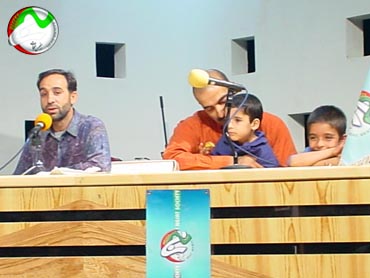
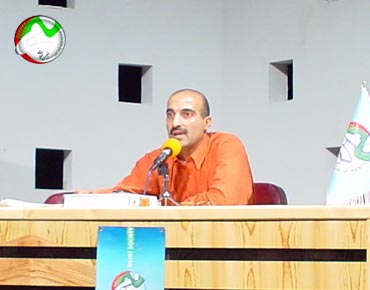
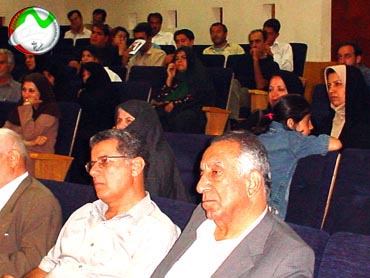
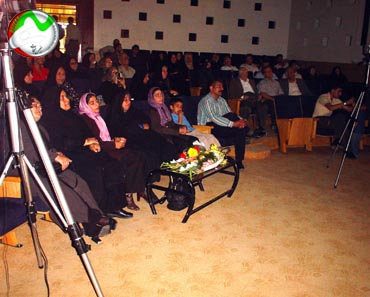
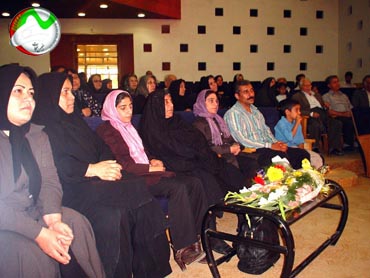
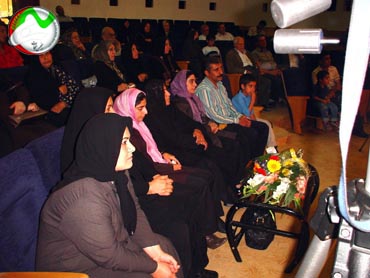
A conference was held in which a large number of MEK members’ families attended .In the gathering, which was held by Nejat Society, Eastern Azarbayjan branch, besides the families, a number of former members of MKO and members of Nejat Society as well as Mr.Yazdchi the attorney general of Revolutionary Court of Tabriz were present and addressed the audiences.

After a brief report on Nejat Society activities stated by a member of the NGO, he declared the way MKO leaders deal with families who are willing to visit their beloveds. Mr. Yazdchi through his speech offered sympathy to families.

He appreciated the philanthropic activities of Nejat NGO and asked the authorities and the families to cooperate more and more.

In addition, Nejat members promised the families to facilitate their visits with their children and according to the agreements made with Iraqi authorities, on MEK affairs, a group of family members could travel to Iraq to visit their children in near future. 

During the meeting, Mr. Sajadi Afsari a defector who has recently returned to Iran talk to the families.

Besides, through this gathering the families made a statement calling international communities for aid to release their loved ones:

"Republic of IRAQ Embassy in Tehran

SWITZERLAND Embassy in Tehran

ENGLAND Embassy in Tehran

RED CROSS office in Tehran

Dear Sirs,

Through this letter we declare that our children are captured in camp ASHRAF in IRAQ and are under pressure by the terrorist group MOJAHEDIN KHALG

We would like to request international communities and IRAQ government to make the leaders of group leave their country and give a chance of freedom to our children. We also ask Iranian authorities to offer amnesty to the captured members of MKO,as before so that we could return our children home easily."

Thursday, Feb3th, 2006 “ Tabriz 

February 6, 2006 0 comments
FacebookTwitterPinterestWhatsappTelegramSkypeEmail
Newer Posts
Older Posts

Recent Posts

  • A Criterion for Proving the Violent Nature of the MEK

    December 31, 2025
  • Rebranding, too Difficult for the MEK

    December 27, 2025
  • The black box of the torture camps of the MEK

    December 24, 2025
  • Pregnancy was taboo in the MEK

    December 22, 2025
  • MEPs who lack awareness about the MEK’s nature

    December 20, 2025
  • Facebook
  • Twitter
  • Instagram
  • Youtube

© 2003 - 2025 NEJAT Society . All Rights Reserved. NejatNGO.org


Back To Top
Nejat Society
  • Home
  • Articles
  • Media
    • Cartoons
    • NewsPics
    • Photo Gallery
    • Videos
  • Publications
    • Books
    • Nejat NewsLetter
    • Pars Brief
  • About Us
  • Contact us
  • Editions
    • عربي
    • فارسی
    • Shqip