Nejat Society
  • Home
  • Articles
  • Media
    • Cartoons
    • NewsPics
    • Photo Gallery
    • Videos
  • Publications
    • Books
    • Nejat NewsLetter
    • Pars Brief
  • About Us
  • Contact us
  • Editions
    • عربي
    • فارسی
    • Shqip
Nejat Society
Nejat Society
  • Home
  • Articles
  • Media
    • Cartoons
    • NewsPics
    • Photo Gallery
    • Videos
  • Publications
    • Books
    • Nejat NewsLetter
    • Pars Brief
  • About Us
  • Contact us
  • Editions
    • عربي
    • فارسی
    • Shqip
© 2003 - 2024 NEJAT Society. nejatngo.org
Former members of the MEK

Delegation visits European Court of Justice

On 2nd February 2006, Mr. Abbas Sadeghi headed a delegation to the European Court of Justice in Luxemburg, to emphasise the concern expressed previously in a letter signed to the court by tens of people over the action by the terrorist Mojahedin-e Khalq (MEK) organisation against the Council of Europe.

The Court of First Instance will hear the case on Tuesday, 7th February, 2006. Mojahedin-e Khalq organisation lawyers will represent their client against the decision made by Council of Europe in 2002 to include the group in the European list of terrorist entities. The group claims ‘breach of its rights of defence in that it was not given the opportunity to be heard before being included in the contested lists.’

The delegation on Thursday brought documents and evidence to the Court exposing the organisation’s twenty five year history of financial, military, intelligence and terrorist cooperation with Saddam Hussein, and raised the concerns of many about what has apparently been a new, duplicitous move by the organisation in which their lawyers would declare to the court that:

As the forces of the MEK surrendered their arms to the Special Forces of the American Army during Operation Free Iraq, they have therefore rejected violent means to achieve their political aims since that date".

Mr. Sadeghi explained and produced documents and clear evidence to show that the MEK surrendered only after it was bombarded by allied aircraft and suffered severe casualties. He also emphasised that the disarmament took place only with coalition forces aircraft flying constantly over the military camps of the MEK.

Since its disarmament, the MEK has continued to depict its so-called "armed struggle" as the only possible way to struggle against the Iranian ruling regime, and has refused even to accept that there may be any other means to achieve democracy and freedom in Iran.

The delegation went on to explain and produce evidence of countless cases of imprisonment, torture and murder of disaffected members under the full protection of Saddam’s intelligence services, as well as cases of targeting civilians in Iran and elsewhere during armed attacks. The delegation also explained how the MEK, headed by Massoud and Maryam Rajavi, participated in the massacre of Iraqi Shiites and Kurds during their uprising against Saddam in 1991.

The delegation produced evidence which clearly show that the Mojahedin-e Khalq organisation and the National Council of Resistance (NCR) headed by Massoud and Maryam Rajavi, have, in their propaganda outlets as recently as a few months ago, publicly issued death sentences against their critics who are the citizens of European countries. Mr Sadeghi also referred to the clandestine activities of the ‘Intelligence Section’ of the National Council of Resistance (an alias which the MEK uses to hide the illegal activities of the military cult in the European Union), in particular in London and Cologne. One instance of such activity resulted in attacks against reporters who may have written negatively about the NCR and MEK. Another case led to the assault and injury of ex-members who have openly criticised the NCR and MEK.

The delegation emphasised that the answer to the MKO’s lawyers who would claim the group has changed its strategy from violent means to peaceable means, comes from the NCR leader Maryam Rajavi herself who told an LA Times reporter from Auvers Sur Oise that:

…she declined to rule out armed intervention, saying, "The tactics and methods have been imposed not by us, but by the mullahs." (LA Times, February 01, 2006)

Mr. Sadeghi was welcomed and assured that the Court of First Instance would thoroughly consider all relevant information presented by both parties.

He was also advised that should the Court of First Instance decide to progress the action against the Council of the European Union, then more documents should be submitted to its offices in Strasbourg, and an application should be lodged for the concerned parties to directly take part in the procedure through an appointed lawyer.

Mr. Sadeghi said, "We will wait for the verdict on this case, which the MEK brought in 2002, and if necessary we will raise our own legal arguments in the Court. Our first issue will be whether the MEK’s claim to have renounced violence is genuine by asking for the MEK to make a public statement accepting the dismantlement of its military Camp Ashraf in Iraq as a first step." Mr Sadeghi also said, "we hope the MEK will give up its cult practices before too long."

February 3, 2006 –  Iraninterlink
February 7, 2006 0 comments
FacebookTwitterPinterestWhatsappTelegramSkypeEmail
Mujahedin Khalq Organization members' families

MKO members’ families call for their children release

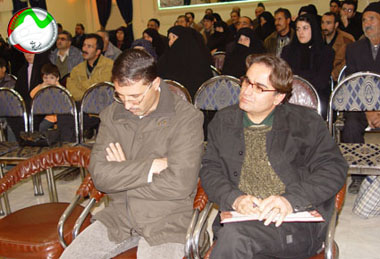
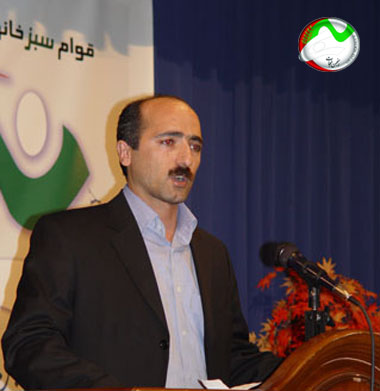
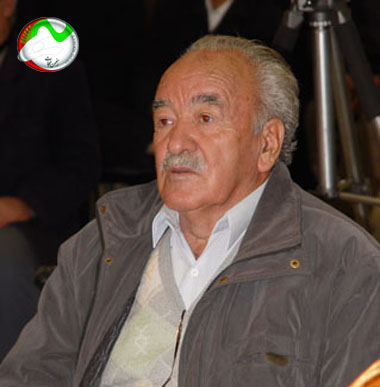
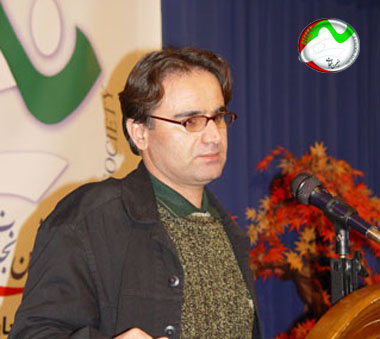
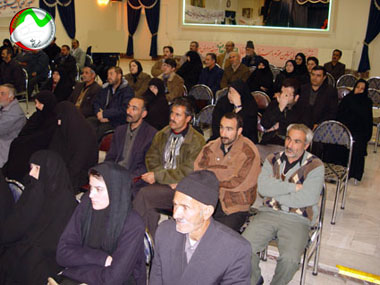
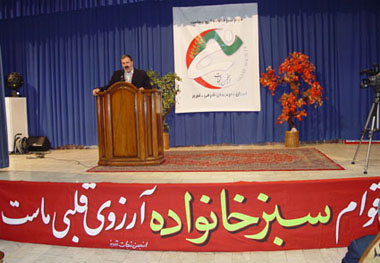
A conference was held in which a large number of MEK members’ families attended .In the gathering, which was held by Nejat Society, Eastern Azarbayjan branch, besides the families, a number of former members of MKO and members of Nejat Society as well as Mr.Yazdchi the attorney general of Revolutionary Court of Tabriz were present and addressed the audiences.

After a brief report on Nejat Society activities stated by a member of the NGO, he declared the way MKO leaders deal with families who are willing to visit their beloveds. Mr. Yazdchi through his speech offered sympathy to families.

He appreciated the philanthropic activities of Nejat NGO and asked the authorities and the families to cooperate more and more.

In addition, Nejat members promised the families to facilitate their visits with their children and according to the agreements made with Iraqi authorities, on MEK affairs, a group of family members could travel to Iraq to visit their children in near future. 

During the meeting, Mr. Sajadi Afsari a defector who has recently returned to Iran talk to the families.

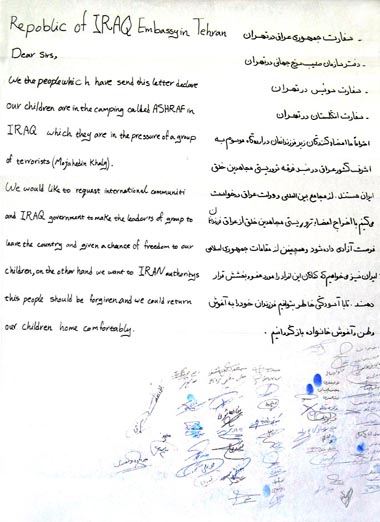
Besides, through this gathering the families made a statement calling international communities for aid to release their loved ones:

"Republic of IRAQ Embassy in Tehran

SWITZERLAND Embassy in Tehran

ENGLAND Embassy in Tehran

RED CROSS office in Tehran

Dear Sirs,

Through this letter we declare that our children are captured in camp ASHRAF in IRAQ and are under pressure by the terrorist group MOJAHEDIN KHALG

We would like to request international communities and IRAQ government to make the leaders of group leave their country and give a chance of freedom to our children. We also ask Iranian authorities to offer amnesty to the captured members of MKO,as before so that we could return our children home easily."

Thursday, Feb3th, 2006 “ Tabriz 

February 6, 2006 0 comments
FacebookTwitterPinterestWhatsappTelegramSkypeEmail
Former members of the MEK

Nejat Society meeting in Tabriz

Nejat Society meeting in TabrizNejat Society meeting in Tabriz
Nejat Society meeting in Tabriz

February 2, 2006 0 comments
FacebookTwitterPinterestWhatsappTelegramSkypeEmail
UK

British ambassador to Tehran meets with Iranian MP

British Ambassador to Tehran Richard Dalton met with head of Iran-Britain parliamentary friendship group Hossein Nejabat here Wednesday.

According to Majlis Media Department, Nejabat referring to the ups and downs in mutual relations in recent years, said, parliamentary diplomacy and the existence of parliamentary friendship groups are among important and effective tools in removing misunderstanding and expanding cultural and parliamentary ties between the two countries.

Condemning the West’s double standards in facing with some international issues, including terrorism, Nejabat called Iran a victim of terrorism and asked for a true and deep campaign against this world ominous phenomenon.

Head of Iran-Britain parliamentary friendship group stressed on Iran’s inalienable rights of access to the peaceful nuclear energy and use of this energy in the fields of electrical power, agriculture and industry adding these things are among the rights of developing countries all around the world.

British ambassador to Tehran, for his part, welcomed the activity of parliamentary groups and described the role of such groups in promoting parliamentary ties very effective and useful.

Referring to the Britain Anti-terrorism Law, passed in year 2000, Dalton named Mojahedin organization as a terroristic group and said the members of the group have no right to be active in Britain.

The British ambassador to Tehran called on more negotiations between political and parliamentary officials of both countries and requested Iran’s more cooperation with International Atomic Energy Agency (IAEA).

Tehran, Feb 2, IRNA

February 2, 2006 0 comments
FacebookTwitterPinterestWhatsappTelegramSkypeEmail
The MEK Expulsion from Iraq

Iraqis Want MKO’s Expulsion

Iraqis want the new government to issue a statement on expelling the members of terrorist MKO from Iraq.

History shows that terrorist MKO had an active role in former Iraqi government. Since its arrival in Iraq, MKO started to conduct former regime’s evil plans against Iraqi people.

After the fall of former regime, Iraqis heard happy news on the expulsion of this group from the country; a decision that was made by interim government but the US forces didn’t allow it.

Today, we live under the shade of a popular government with elected parliament. Despite being threatened by terrorists, Iraqis showed up at polling stations to elect their representatives.

Now, the nation asks members of parliament to expel this organization due to its terrorist records.

We talked to a number of our compatriots to know their ideas about MKO’s expulsion from Iraq:

Sa’doon Jalil said: "Through your magazine, I ask Iraqi officials not to forget the martyrs. They should make a tough decision to expel the terrorist organization of Mojahedin-e Khalq from Iraq. In the past, people suffered much from this organization and it’s still a big threat for Iraq.

A man, introducing himself as Doctor Sabih, said: "Interim government’s decision on the issue is clear. It insists on expelling this group from Iraq and it allows Iraqi people to press charges against the leaders of the organization for the crimes they have done. This can be a base for a tougher decision on this organization and I believe that Iraqi parliament (comprised of elected representatives) can make the decision.

Ms. Asra Aziz, from Iraqi National Assembly wants to advocate those who have suffered from former regime and its security organizations: "Mojahedin-e Khalq was a leverage working for former regime’s security and intelligence services. It committed numerous crimes against our nation and making a decision on the expulsion of this organization boosts the decision of interim government and meets the requests of Iraqi people. "

Sheikh Saheb Abbas, cleric from the city of Al-Sho’leh, remembers the crimes of terrorist MKO and says: "I am a witness of MKO crimes. This organization surrounded prayers in Al-Mohsen mosque and the former regime used the members of this organization to beat the prayers and martyr a number of them. Those prayers had gathered to protest the killing of Seyed Mohammed Sadr. I saw foul behavior of Mojahedin with Iraqi people. I don’t know why there’s silence on the presence of this group in our country. This organization is a dirty stain on pure soil of Iraq. Does their presence in Iraq is beneficial for our country? I ask Iraqi officials and our representatives in Iraq National Assembly to issue a decision on the expulsion of this terrorist organization from Iraq. The Assembly should ban all interactions with this group, as ordered in Fatwas of supreme religious leaders."

Mr. Ghassem Hassan, owner of a bookstore in Motnabi Street, expressed his views as follows:

"The presence of this group in Iraq is a threat for Iraq and Iraqis. Despite the decision of interim government, they are still active in Iraq. It seems that it’s beneficial for the US. They want to keep the group in Iraq to do what they desire.

This organization has the capability to work for any devil in order to get to its own goals. They proved this when working for Saddam. It served former regime and denied it after the fall of Saddam, although they used millions of dollars of Iraqis. We Iraqis don’t know why interim government’s decision on the group is not executed. This is what people want."

Majid Ali, referring to the necessity of developing a law for the trial of leaders of MKO in special courts, says: "this organization plundered the properties of Iraqi people. They martyred our compatriot sand conducted anti-human crimes. I ask for the expulsion of this group and trial of its members for their crimes against Iraqis.

At the end of the interview, we found that all Iraqis insist on making a tough decision on MKO expulsion by National Assembly. Iraqi people also asked for the trial of MKO leaders and commanders for their crimes in Iraq. We want Iraqi to be purified from terrorist groups.

Al-Shahid/No. 259

February 2, 2006 0 comments
FacebookTwitterPinterestWhatsappTelegramSkypeEmail
Former members of the MEK

A Former Member Returns Home

In a ceremony held in Samen Al-A’emeh complex in Abadan on Wednesday, a former member of the cult of Rajavi returned to his family.

Jaber Majdmian, expressing his happiness, said the situation in the MKO is inhumane.

"In 1987, I joined the MKO in Iraq but from the beginning, I realized the terrorist and inhuman nature of the group."

"I repeatedly tried to return to my family, but the MKO didn’t allow me to do so. After the fall of Saddam Hussein and due to the hatred of Iraqis for the MKO, there appeared a chance for us to return and I could come back home with the assistance of Red Cross and Nejat Association in Khuzestan Province. I believe I was born again. I try to be useful for my society."

Majdmian said that he had been treated well by Iranian security officials; he hopes he can compensate his past.

In the ceremony, Hamid Hassani, the head of Nejat Association in Khuzestan province, said: "300 former members of terrorist MKO have already returned to their families. The ouster of former Iraqi regime and the detention of Saddam Hussein weakened the MKO so that it lost the support of foreign countries and its members realized their own group’s terrorist nature."

He said the purposes of Nejat Associatin include "helping the deceived members of MKO, revealing the truth and nature of hypocrisy in the MKO and exposing the ugly face of the group in domestic and international scenes to the members".

"Former members can encourage their friends in Iraq, still with MKO, to leave the terrorist group; they can do this by radio messages, internet and phone."

We guarantee that MKO members won’t be harmed in the case of returning to the country. They will be protected by Iranian officials.

He asked MKO members’ families to make contact with their loved ones and encourage them to return.

"ID cards and Military Service Cards (that indicate they have finished military service) would be issued for former members who return to the country. The association is ready to help them if they face any problems," he added.

IRNA  –  2006/01/29

February 2, 2006 0 comments
FacebookTwitterPinterestWhatsappTelegramSkypeEmail
Maryam Rajavi

Terrorists Exploit Diplomatic Pressure

* Head of a group labeled terrorist by the U.S. urges the West to back an internal political push against Tehran.

AUVERS-SUR-OISE, France – Opening the gates of the secretive world of her headquarters North of Paris, the leader of an Iranian exile group urged Western governments Tuesday to support a campaign of internal political resistance to the regime in Tehran.

Maryam Rajavi of the Mujahedin Khalq, which has been officially designated a terrorist group by the United States and European Union, capitalized on the escalating diplomatic confrontation with Iran to hold a rare news conference at the heavily guarded compound on the wooded banks of the Oise River.

Rajavi, 52, called for the West to avoid responding to Iran’s nuclear ambitions with appeasement or a military invasion. Instead, she said political and economic sanctions would fortify democratic resistance among Iranians, with her group, whose name translates as People’s Holy Warriors, serving as a vanguard.

"The Iranian resistance has a capacity to bring about change," Rajavi said. "Knowing this, the mullahs have always in their dealings with their foreign counterparts demanded the imposition of harsh restrictions on the resistance, branding it as terrorist and a sect."

Despite Rajavi’s contention that she is a moderate Muslim espousing a peaceful, democratic Iran, her initiative seems a longshot at best.

Her group remains under investigation in France for allegedly carrying out terrorist attacks in Iran and plotting against Iranian government targets in Europe.

After French police arrested Rajavi during a raid on the compound by more than 1,000 officers in 2003, a number of her followers around Europe set themselves on fire. The grisly protests exposed an internal culture that mixes Marxism and Islam, isolates members from their families and gives Rajavi the status of a guru, according to French investigators and former members.

Moreover, Mujahedin Khalq’s former alliance with since-deposed Iraqi President Saddam Hussein in Iraq’s war against Iran alienated many Iranians. Because of the group’s lack of support in Iran and dubious image, Washington, Paris and other capitals do not see the group as a viable force, according to analysts and Western officials.

"Given the sect-like, totalitarian and terrorist nature of this organization," enlisting it as an ally seems "indefensible," said analyst Dimitri Delalieu in a recent report for the European Strategic Intelligence and Security Center, a Brussels think tank.

Rajavi and fellow leaders were released pending the outcome of the French investigation. They say the charges are groundless and part of a politically motivated attempt by France to facilitate deal-making with the Iranian government.

In any case, the group retains a measure of relevance because it periodically has made significant disclosures about Tehran’s nuclear program. It relies on an espionage network in Iran and sometimes, analysts say, tips from Western and Israeli spy services.

"They are more marginal than ever," said Olivier Roy, a Middle East expert at the National Center for Scientific Research in Paris. "They will maintain their contacts with Western governments only because intelligence services have so little on Iran. The CIA and others have great difficulty getting information in Iran. So because of the lack of anything better, the Mujahedin will still be able to play that role."

Rajavi appeared determined Tuesday to rehabilitate her image. A legislator each from Britain, France, Belgium and Portugal were on hand to endorse her and demand that her group be removed from lists of terrorist organizations.

Rajavi said the West should use sanctions to pressure the Iranian government to submit to a referendum on the future of the country’s political leadership that would be watched by international monitors.

"It would be fantastic if the international community could intervene and impose a referendum," she said.

But she declined to rule out armed intervention, saying, "The tactics and methods have been imposed not by us, but by the mullahs."

By Sebastian Rotella

February 2, 2006 0 comments
FacebookTwitterPinterestWhatsappTelegramSkypeEmail
European Union

MKO lies to Court to Save its Skin

January 30, 2006

Letter to:

Court of Justice

Court of First Instance

Rue du Fort Niedergrünewald

L-2925 Luxembourg

To the Judges of the Court of First Instance

At 09:30, on February 7, 2006 in the Second Chamber of the Court of First Instance of the Court of Justice of the European Communities, hearing T-228/02 Organisation des Modjahedines du peuple d’Iran v Council (Common foreign and security policy) will take place. http://curia.eu.int/en/actu/calendriers/index.htm

This action against the Council of the European Union was first brought before the Court on 26 July 2002 by the People’s Mojahedin Organisation of Iran (PMOI) – also known as Mojahedin-e Khalq (MEK).

In simple terms we understand that through this action, the MEK wishes to be removed from the European list of terrorist entities.

Some of the main arguments brought by the MEK are that it is:

Conducting legitimate resistance against the Iranian regime

Complying with the fundamental principles of democracy

Complying with the fundamental principles of respect for human rights

Supported by the international community

Never undertaken actions against civilians

The only resistance movement which is now acting within Iran’s borders

Defending peace in the region

In response, and in opposition to this action, the people signatory to this letter all declare themselves willing and able to bear witness to the facts set out in this letter thus:

1 From its inception, the MEK has been the main anti-western force before and during the 1979 revolution in Iran. The MEK killed six Americans in Iran during the 1960s. During the ‘hostage crisis’ in 1980, the MEK advocated killing the American hostages. The MEK openly took up arms against the regime of Iran again only after a failed coup d’état against the new revolutionary government in 1980.

Since then, the MEK has carried out mortar attacks against civilian targets, resulting in the deaths of shopkeepers, passers by. The MEK has bombed factories, schools and residential areas. The MEK received orders from Saddam Hussein to attack targets chosen by his regime and were paid accordingly.

2 The MEK is organized internally as an autocracy, with Massoud Rajavi the sole, self-appointed leader for life. He occupies the role of supreme leader and is above the law. No one has the right to remove or even criticize his leadership. Below him in rank is his wife Maryam Rajavi, also appointed by Massoud Rajavi. He presented her to the National Council of Resistance (NCR) for ‘election’ to the position of ‘president elect’ of the NCR. The ‘election’ took place in an open meeting in which there was no secret ballot, the vote was 100% in her favour. The NCR comprises at least 95% MEK members who only claim to be independent members but who without exception believe in the MEK ideology.

3 There are countless examples of suppression and repressive measures inside the MEK. The MEK has practiced forced marriage and now practices forced divorce, separation of children from parents, gender apartheid, imprisonment for criticizing leaders or even the leaders’ strategy. Victims inside the MEK have been sent to Abu Ghraib prison. Extrajudicial punishments include torture, death under torture, long term imprisonment in solitary confinement and sentencing to execution – not carried out by express order of Massoud Rajavi. The Human Rights Watch report of May 2005 ‘No Exit’, details only a small sample of such human rights abuses carried out systematically inside the Mojahedin. Former members will bear witness that none of the articles of the Universal Declaration of Human Rights are practiced inside the MEK organization.

4 The MEK claims to have collected hundreds of signatures from western parliamentarians. However, the names have never been published and no-one has had sight of the signatures. The MEK has a known history of forging signatures. The MEK collects signatures through lies, deception and misinformation. Signatories do not have immediate access to necessary information by which to make balanced judgment about the MEK.

5 There are numerous instances of civilian deaths and injuries caused by the deliberately imprecise methods of armed attack used by the MEK in Iran. The use of mortars, fired in civilian areas, have led to schools, public parks and residential buildings being hit. The largest number of civilians killed by the MEK was in the Eternal Light operation of 1988. In this operation, the organization sent thousands of untrained civilians into battle with Iran’s Revolutionary Guards in Rajavi’s bid to pursue regime change by armed means. Thousands were killed and injured in this abortive operation. Rajavi is culpable for war crimes based on his orders and decisions during this operation.

6 The MEK is not supported inside Iran – most of Iran’s younger generation have never heard of the MEK except as a historical group which betrayed their country by fighting alongside Saddam Hussein during the Iran-Iraq war. The MEK does not mention its twenty year existence in Iraq and its dependence on Saddam Hussein during that time. No opposition group (inside or outside Iran) has ever accepted the group which is universally regarded as traitors. The lack of support for them outside country by exiled Iranians is a clear indication of how much support they have inside the country. The only beneficiary of the MEK’s existence has been the hardliners of the Iranian government who refuse to accept any other opposition except them because they are known as assassins and traitors to their country. This allows the hardliners to continue a policy of repression against any legitimate opposition.

7 The MEK’s most recent public stance is to support regime change involving war waged against Iran by the USA or Israel. The MEK’s ‘third way’ states clearly that the MEK can bring about regime change only if its forces in Iraq are re-armed.

Since 2002 many things have changed.

"The Mojahedin Khalq Organisation claims that it rejects armed struggle and commits itself only to non-violent means of struggle and therefore asks the relevant authorities to remove it from the lists of terrorist organizations." The MEK claims that in future it will only engage in political, social and cultural activities against the Iranian regime.

Firstly, this claim has never been made publicly and has only been made in private to the officials involved in this court. Secondly, this is a lie. The MEK has no intention of abandoning armed struggle.

As recently as two months ago the MEK clearly issued death sentences against their critics in European countries. This was broadcast on their clandestine TV program copies of which area available.

The MEK continues to advertise its National Liberation Army (currently disarmed by US forces in Iraq) as the only possible way of achieving regime change in Iran. The MEK openly promotes the use of violence in Iraq, Iran and in western countries.

Information from a source close to the MEK states that the organization is now actively collecting signatures from its members who swear that:

armed struggle is the only possible means to achieve regime change and take power in Iran. (The real meaning of this is the belief that Camp Ashraf in Iraq should be preserved and the combatants re-armed.)

they adhere to every step of the Ideological revolution and pass through it consciously and believe in every part of it. (The real meaning of this is that they accept the conditions of slavery imposed by the MEK’s cult culture.)

they declare total and unswerving loyalty to the ideological leader, who is Massoud Rajavi. (The real meaning of this is that Rajavi will never be removed from leadership of the MEK, thus denying any semblance of a democratic process.)

These three articles, which every member is being asked to affirm and sign to, are exactly the opposite to the conditions necessary to prove their case in this court.

Indeed, the MEK is more committed to these principles than ever in its history as this is the only means by which the organization can be kept intact.

Since the fall of Saddam Hussein in 2003, reams of evidence has come to light concerning the MEK’s behaviour in Iraq and elsewhere. Examples include: video evidence of payments made by Saddam to the MEK in payment for the assassination of specific people; selling oil illegally for Saddam in the west (under the UN oil for food program); involvement in the suppression of the Shiite and Kurdish uprisings in March 1991 which involved the massacre of civilians.

The MEK have never condemned their fallen benefactor Saddam Hussein and refuse to refer to him as anything less than "the ex president of Iraq". The MEK has not cut its ties with the remnants of Saddam in Iraq and elsewhere, including the Baath Party and tribal leaders loyal to Saddam Hussein. The MEK celebrated the 11 September tragedy in their camps in Iraq. The MEK leaders directly ordered members to commit self-immolation in European cities in June 2003, resulting several disabilities and two deaths.

If the MEK wishes to refute the evidence which led to its inclusion in the terrorist lists of every major western country, it must:

1- publicly and unequivocally renounce violence as a means to achieve political aims – including publicly agreeing to the dismantlement of Camp Ashraf in Iraq

2- abandon the practice of collective living, compulsory divorce, separation of people from their children and families, cutting people off from their finances and stop the use of psychological manipulation to indoctrinate members; the MEK must free its members from conditions of slavery.

3- respect democratic principles by holding real elections for the first time – which allow for the removal and replacement of all its leadership cadre through secret ballot; run the organization as a normal political group.

4- provide answers in public to the issues arising from MEK behavior over the past twenty five years, including; the massacre of Iraqi Shiites and Kurds in 1991; the massacre of thousands of civilians in the Eternal Light operation of 1988; the incarceration of dissidents in its own prisons and in Iraq’s infamous Abu Ghraib prison.

Signatories:

Abbass Sadeghi

Akbar Akbari

Ali Akbar Rastgoo

Ali Bashiri

Ali Ghashghavi

Alireza Mir Esmaili

Alireza Mirasgari

Amir Atefe

Amir Kord-Rostamie

Anne Khodabandeh

Aylar Seraji

Batool Ahmadi

Batool Maleki

Behzad Alishahi

Behzad Kazemi

Daryoush Mir Esmaili

Edward Tormado

Elham Kakavand

Faride Barati

Farhad JavaheriYar

Faride Sadri

Farzad Fazinfar

Fatolah Firooz

Ghasem Ghezi

Gholam Mehdioghli

Habib Khorami

Hadi Shams Haeri

Hanif Baghalnejad

Hassan Azizi

Hassan Haghi

Hassan Khalaj

Hassan Mohamadi

Hassan Sadeghian

Homayoon Elahi

Hossein Baghalnejad

Iraj Haghverdi

Jafar Baghalnejad

Jafar Gonjeshki

Jamshid Tahmasbi

Javad Firoozmand

Karim Haghi

Katayoon Mir Esmaili

Kazem Molahosseini

Khaodabakhsh Rudgar

Majid Farahani

Mahboobe Barati

Masoome Behnam

Massoud Jabani

Massoud Khodabandeh

Marjan Malek

Mehdi Baghalnejad

Mehdi Khoshhal

Milad Ariyayi

Mina Vatandoost

Mitra Yoosefi

Mohamed Hossein Sobhani

Mostafa Mohammadi

Mostafa Mostafai

Naser Haghi

Naser Razvani

Nasrin Behboudi

Omid Ahmadi

Parvin Haji

Maryam Jokar

Rassoul Ahmadi Nejad

Reza Haghi

Robabe Shahrokhi

Ronak Mostafai

Roya Roodsaz

Saeed Khodashenas

Samad Alesiad

Sara Baghalnejad

Shafighe Haghi

Shokat Haghverdili

Soheila Behboodi

Yaser Ezati

Zahra Lotfi

 …

February 2, 2006 0 comments
FacebookTwitterPinterestWhatsappTelegramSkypeEmail
The Ideology of the MEK

Members of Mojahedin are obliged to kill themselves when they face arrest

Did you know… that members of Mojahedin are obliged to kill themselves when they face arrest?

Why is it that no member of the Mojahedin is ever briefed as to what they should do if they fall into enemy hands?

From the time of the Shah, carrying a cyanide tablet and, where possible, a hand grenade has been a part of the everyday life of any member of MEK. To allow yourself to be arrested alive is regarded as a sin, as betrayal and as a crime committed against the organization and its leaders. Conversely, ‘martyrdom’ through suicide by any available means has been encouraged whenever and wherever a member has faced the enemy. During the era of the Shah, this enemy was the police or any other law enforcement agent. The idea had been originally taken from the revolutionary groups existing during the 1960s and 1970s in South America and other parts of the world which were engaged in guerrilla war against Imperialism backed by the communist Soviet Union. The explanation for this requirement was that it was”to protect information”and”to sacrifice yourself in a way that the enemy could not obtain any information from you under torture”.

A long time has past since then, but in the Mojahedin the idea of killing yourself in the event of facing arrest has not changed. It is an established fact that a Mojahed-e Khalq (People’s Warrior) will kill him/her self before being arrested. It is for this reason that no member of the MEK is ever advised what they must do if they are unable to kill themselves when they are arrested.

After the 1979 Islamic Revolution and the consequent sidelining of the Mojahedin in the establishment of the new Islamic Republic, Massoud Rajavi introduced a new phase referred to as”Lebanonisation”. This meant instigating antagonistic action which would lead to bloodshed. Any kind of conflict, any kind of riot, unrest, attack from any side… and especially having a supporter injured or, even better, killed, was a good point from which to fire up morale, to advertise the victimization of the organisation and in particular to ask for revenge.

Later, living on the blood of both friend and foe became an integral part of Rajavi’s strategy. The defeat of the tragic paramilitary assault on Iran in 1988, in which about 5,000 untrained civilians including old women, teenagers, PhD students from western universities and even disabled people, were asked to go to Iraq to fight against the Iranian Army with eight years’ war experience, was announced by Rajavi as”the insurance of the organization for years to come”. The ensuing massacre of about 3,000 untrained Mojahedin civilians and the deaths and injuries suffered by the Iranian Army created enough enmity between them to pave the way for acts of violence and vengeance for several years to come and to negate the emergence of any non-violent ideas which could have arisen. Rajavi’s concept of”insuring the future of the organisation”was that this fresh blood would halt the advance of any possible solution except that of the bloody take over of power – which, obviously, was reserved for the only force which enjoyed the use of Saddam Hussein’s tanks and guns.

Later this need for blood brought Rajavi to employ even more sinister and even nastier ways and tactics. In recent years there have been numerous cases in which individuals who had been sent to perform terrorist acts inside Iran had been sent deliberately to their death in order to provide fresh blood and increase the number of martyrs.

The majority of these individuals had been given just enough training and planning to carry out their terrorist operation and had been told nothing about what should happen afterwards. They were given no information about how to return or how to deal with arrest. The only possible interpretation of this was that they were not only expected to not come back, but were in fact not expected to survive.

The expectation was that if they faced arrest, they would fight to the last bullet, to kill or injure as many as possible and then kill themselves. The numbers of people who have used their cyanide tablet and/or exploded their grenade tight to their bodies are countless.

A few who have survived, like Mrs. Marjan Malek or Mr. Arash Sameti, or people like Ebrahim Khodabandeh and Jamil Bassam who did not have the opportunity to kill themselves, revealed later that they had been indoctrinated by the cult such that the torture they had been told would be inflicted upon them after their arrest was so terrifying that suicide seemed to be the only option.

But Rajavi’s quest for fresh martyrs did not stop here. Numerous cases have been recorded in which disaffected members have been taken to the Iraq- Iran border in the middle of the night and made to walk towards Iranian border posts. From behind them the MEK would shoot to prevent them turning back and to alert the Iranian border guards, who would in turn shoot at the advancing victim. There are also numerous cases in which someone has vanished, or has died in suspicions circumstances, but who has later been announced as a martyr killed by the Iranian regime.

The use of cyanide and grenades and the obligation to die before capture has continued from the time of Shah to the present, but the purpose of it has changed completely. It is no longer about protecting information (otherwise Maryam Rajavi and her cohorts would have killed themselves upon their arrest in Paris in June 2003). It is now about providing numbers to add to the list of Mojahedin Martyrs.

The purpose is to”insure”the organisation’s future since, in the atmosphere of bloodshed and revenge, no nonviolent alternative or opposition to the ruling regime could emerge.

One of the most deplorable ways of achieving this”insurance policy”has been where the terrorist teams sent for operations have been instructed that anyone who might suspect their identities while travelling should be killed. Behzad Alishahi explained one such incident in which his team mates killed an innocent worker who was in their way only because he had seen them and told them not to go through a factory.

Alishahi later was sent back to the camp and underwent all kinds of pressure for arguing against this cold blooded killing.

Fortunately since the fall of Saddam Hussein, although Rajavi has desperately tried every avenue to generate some killings and/or torture to produce fresh blood, the cult’s success has been minimal. Even the arrest of Khodabandeh and Bassam in Syria and their transfer to Evin prison, which Rajavi hoped would buy”new insurance”for the organisation, failed totally. During the past three and a half years, the only new blood they have achieved has been the deaths of two members and the permanent disability of several more who committed acts of self-immolation. Interestingly, the culture of carrying cyanide tablets, even in western countries, is encouraged more than ever. The cult leaders’ only hope for survival is linked to bloodshed, and they are impatiently waiting for any opportunity to kill any number of people no matter if they are friends, foes or even passers by.

Survivors’ Report/No. 20/January 2006

January 31, 2006 0 comments
FacebookTwitterPinterestWhatsappTelegramSkypeEmail
Iraq

Al-Zarqawi Reportedly Moves to New Area of Iraq

A report by al-Jazeera satellite TV on January 22, citing Iraqi military officials who claim that Abu Musab al-Zarqawi, the head of al-Qaeda in Iraq, is in the Diyala province (northeast of Baghdad), runs contrary to the assessments of Iraqi intelligence services and U.S. military intelligence in Iraq.

The new Iraqi intelligence service (headed by Mohammad Shahwani), U.S. military intelligence and the Badr Organization (which operates an independent parallel intelligence service) have long believed that the core of the al-Zarqawi network is concentrated around the Euphrates River valley in northern Anbar, along which the key towns of Qaim, Haditha, Hit, Ramadi, Habbaniyah and Fallujah are situated. These towns are considered to be the most insecure and dangerous in Iraq, where insurgents have—at one time or another—exerted complete control.

The assessment of U.S. and Iraqi intelligence derives from intense counter-insurgency operations and the interrogation of thousands of captured insurgents. Moreover, Anbar and Nineveh provinces are the only areas in Iraq where the al-Zarqawi network has developed roots, not least because of the proximity to the Syrian border, from where the vast majority of jihadis infiltrate the strife-torn country. Given the realities on the ground, the al-Zarqawi network is highly unlikely to move key figures outside its main base of operation for prolonged periods.

More broadly, Diyala is a stronghold of the so-called "Nationalist" insurgency, where even indigenous Islamist rebels (mostly connected to the "Islamic Army in Iraq") have been discouraged from operating in the province. The local characteristics of Diyala’s insurgents, coupled with the proliferation of Iraqi nationalist organizations (which operate in the open under the guise of civil society forums), make it extremely difficult for jihadis to operate in the province. If al-Zarqawi was operating from Diyala, it is likely that he would be quickly identified and killed by Iraqi rebels who are now beginning to distance themselves from extremist insurgents and jihadis.

After Anbar province, Diyala ranks as the most strife-torn region in Iraq. There are four factors that explain the volatility of this most strategic region of Iraq’s 18 provinces. First of all, Diyala has historically been a bastion of Arab and Iraqi nationalism (Baathist or otherwise). The province’s strategic location and its proximity to Iran make it a highly prized and sensitive region in the eyes of Iraqi nationalists. While the downfall of Saddam Hussein had a catastrophic impact on the morale of Arab and Iraqi nationalists in Diyala, these forces quickly mobilized to fight the U.S. and its Iraqi allies.

Second, Diyala is the only province in Iraq where Shi’ites and Sunnis are represented in roughly equal numbers. While there are no official statistics, the former are believed to have a slight majority. The finely balanced sectarian demographics became a violently contentious issue after the intervention, which has promoted identity politics in Iraq. Broadly speaking, the Shi’ites in Diyala regard SCIRI and the Badr Organization as protectors and employers, while the Sunnis see these organizations as Iranian-backed quislings that are exploiting the occupation to consolidate power.

Third, SCIRI and the Badr Organization have had a strong presence in Diyala since the overthrow of Saddam Hussein. In fact, the Badr Organization (in its previous capacity as the Badr Corps) entered Iraq from the Diyala province from April 9, 2003 to early May 2003 and established bases in Baqouba (the province’s capital), Miqdadiyah and Khalis. In that crucial month, Badr forces fought pitched battles with remnants of the ousted regime, including Baath party diehards, Diyala tribesmen loyal to Saddam Hussein and the Mojahedin-e-Khalq Organization (Terrorism Monitor, Volume 1: Issue 5, November 7, 2003). As the insurgency deteriorated in Diyala, the Badr Organization steadily increased its presence and operations.

Finally, the presence of an Iranian dissident group, the formerly-armed Mojahedin-e-Khalq Organization (MKO), in Diyala has created tensions between prominent tribesmen and other influential actors in and around Khalis, where the MKO’s Ashraf base is located. While the MKO (which is classified as a terrorist organization by the U.S. government and the European Union) was disarmed in May 2003 and the movement of its members are supposedly monitored by U.S. forces, the organization regularly hosts meetings in Ashraf in which tribesmen and other influential individuals from Diyala (many with links to the former Iraqi regime of Saddam Hussein) voice support for the organization, demand a withdrawal of foreign troops and strongly attack the new Iraqi government. The emergence of Ashraf as a platform for Iraqi nationalists has prompted the Badr Organization to increase surveillance operations in and around Khalis, and to engage in intimidation campaigns against key individuals who visit the camp.

The visit to Mashad (northeast Iran) by a Diyala tribal, legal and religious delegation reveals an intriguing (and under-reported) feature of the Iraq conflict. The delegation was hosted by the Habilian Association (http://habilian.com), a research and propaganda outlet that is close to the Iranian security establishment. While the visit was ostensibly touted as an opportunity to discuss ways of expelling the MKO from Iraq, the transcript of the main meeting (http://habilian.com/view.asp?ID=00439) leaves little doubt that the event was tied to the growing insurgency in Diyala and its local, national and international ramifications.

Global Terrorism analysis

January 31, 2006 0 comments
FacebookTwitterPinterestWhatsappTelegramSkypeEmail
Newer Posts
Older Posts

Recent Posts

  • Why the MEK Failed to Become a National Movement

    August 26, 2026
  • From Studying in America to Death in a Village in Albania

    August 22, 2026
  • The Psychological Impact of MEK Ideology on Members

    August 17, 2026
  • A study on the financial mechanism of the Mujahedin-e Khalq

    August 10, 2026
  • A Child behind the Ideological Bars of Massoud and Maryam Rajavi

    August 8, 2026
  • Facebook
  • Twitter
  • Instagram
  • Youtube

© 2003 - 2025 NEJAT Society . All Rights Reserved. NejatNGO.org


Back To Top
Nejat Society
  • Home
  • Articles
  • Media
    • Cartoons
    • NewsPics
    • Photo Gallery
    • Videos
  • Publications
    • Books
    • Nejat NewsLetter
    • Pars Brief
  • About Us
  • Contact us
  • Editions
    • عربي
    • فارسی
    • Shqip