Nejat Society
  • Home
  • Articles
  • Media
    • Cartoons
    • NewsPics
    • Photo Gallery
    • Videos
  • Publications
    • Books
    • Nejat NewsLetter
    • Pars Brief
  • About Us
  • Contact us
  • Editions
    • عربي
    • فارسی
    • Shqip
Nejat Society
Nejat Society
  • Home
  • Articles
  • Media
    • Cartoons
    • NewsPics
    • Photo Gallery
    • Videos
  • Publications
    • Books
    • Nejat NewsLetter
    • Pars Brief
  • About Us
  • Contact us
  • Editions
    • عربي
    • فارسی
    • Shqip
© 2003 - 2024 NEJAT Society. nejatngo.org
Albania - MEK - Ashraf 3
The cult of Rajavi

MEK camp, the forty-year-long dreadful jail

Fereydoon Nedayee is a member of the Mujahedin Khalq Organization (the MKO/ MEK/ PMOI/ the Cult of Rajavi). He is now residing in the group’s camp in Albania.

Fereydoun Nedaei mum

Fereydoon is not an original member of the MEK. In fact, he was recruited by the group’s agents in Iraqi prisons where Fereydoon was kept as a war prisoner of the Iran-Iraq war.

In 1980, Fereydoon was an Iranian soldier fighting in Iran-Iraq war. Very soon he was taken as a war prisoner by Iraqi forces. He endured the miseries in Iraqi POW camps for eight years. In 1988, the two countries agreed a ceasefire but it took them almost two years to exchange the war prisoners.
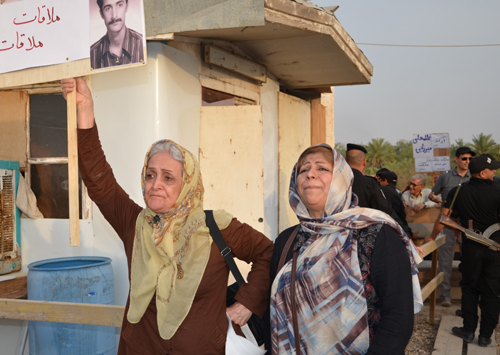
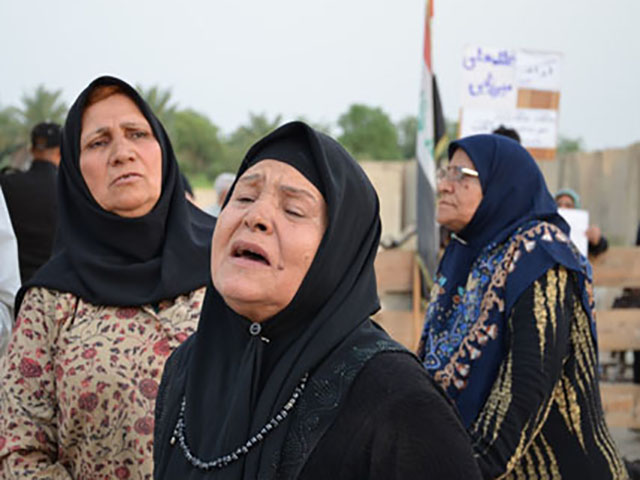
Ms. Nedaei in front of Camp Ashraf

The time was enough for the MEK recruiters to launch a propaganda campaign in POW camps among Iranian soldiers in order to convince them to join their group. They promised them better life conditions in Camp Ashraf rather than the ones of Iraqi camps and also opportunities to immigrate to Europe.

Fereydoon and some other Iranian POWs were finally deceived by the MEK authorities so as they fell in the new trap that they have not been able to get released from, for over thirty years. Evidently, His parents have not seen Fereydoon for over forty years.
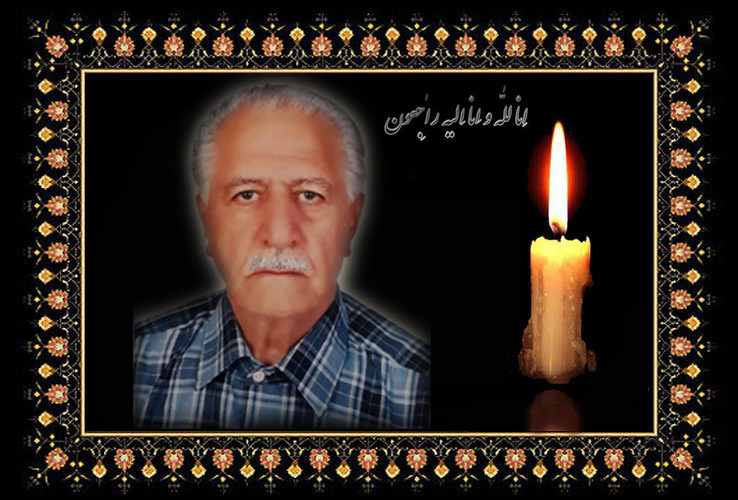
Fereydoun Nedaei dad

His father, MohammadReza Nedayee passed away a few days ago. His mother, Roghaieh Farazian is still trying her best to contact her son. They traveled to Camp Ashraf, Iraq several times but they were not allowed by the MEK leaders to visit their loved son.

After the group’s relocation to Albania, the Albanian government did not offer visa to families of the MEK members so they could not travel there. Instead, they took legal actions by writing letters to Albanian authorities and to the international bodies asking for humanitarian aids to help them contact and visit their children in the MEK isolated camp in Albania.
April 25, 2021 0 comments
FacebookTwitterPinterestWhatsappTelegramSkypeEmail
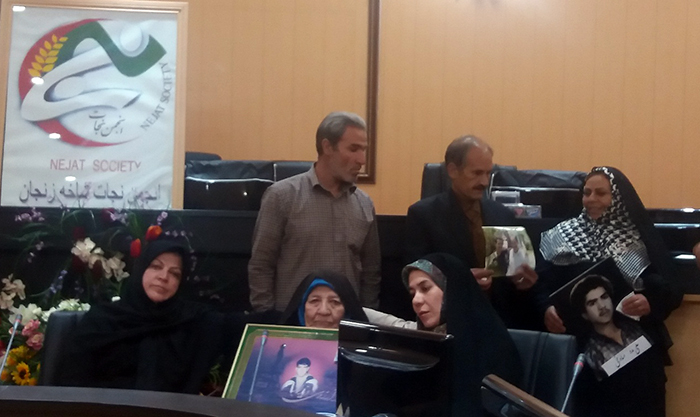
Zanjani families
Mujahedin Khalq Organization members' families

To the representative of WHO in Albania

Honorable representative of the World Health Organization in Albania

Greetings and Regards:
In the current situation, the new mutated Corona virus has caused many deaths around the world.

Zanjani families

This fact has made us worried since our family members are captivated in the MEK manez camp in Albania.

Unfortunately, despite repeated correspondence, Maryam Rajavi refuses to let us visit our beloves residing at the MEK Camp.

As part of human society, in addition to the loss of our loved ones due to the Covid 19 virus, we have suffered a great deal and we seriously expect the World Health Organization, especially its representative in Albania, help our children.

With thanks and respect,

Families of MEK members
Zanjan Province, Iran

April 25, 2021 0 comments
FacebookTwitterPinterestWhatsappTelegramSkypeEmail
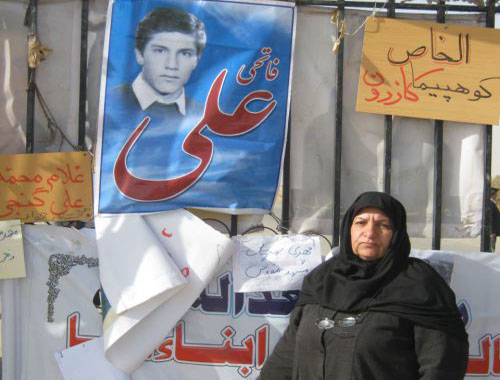
Ali Fatehi mum
Mujahedin Khalq Organization members' families

Dear Peyman Recall Your Sweet Memories of Home!

Ali (Peyman) Fatehi was a soldier at Iran-Iraq war when 1988 he was taken as a war prisoner by Iraqi forces. Supported by Saddam Hussein, the authorities of the Mujahedin Khalq Organization (the MKO/ MEK/ PMOI/ Cult of Rajavi) used to deceive Iranian soldiers to join their group in POW camps. Peyman was deceived to join the MEK, probably in the hope of a better life condition than the disastrous one of Iraqi camps. However, he has been taken as a hostage by the group for over 35 years now.

Ali Fatehi mum

His parents made a lot of efforts to visit him in Camp Ashraf, Iraq, but they were never allowed by the group authorities to meet their son. They picketed in front of the gates of Camp Ashraf several times, calling the name of their son, showing his name and picture on placards. Unfortunately, it did not work. In response, the MEK leaders labeled them as the agents of the Quds force of the Iranian government.

Ten years ago, Peyman’s father died while he was awaiting his beloved son. His mother, Mehangiz Rezaiee still suffers this long-life separation. She is expecting the return of his son from Albania to Iran. She publishes letters and voice messages, on the Internet, for her imprisoned son. She hopes that Peyman will receive the message someday.

In her recent voice message, the heartbroken mother asks Peyman to recall his sweet memories of home, his friends and family. Her desperate voice is an evidence for the horrific human rights violation that is taking place in the MEK.

April 24, 2021 0 comments
FacebookTwitterPinterestWhatsappTelegramSkypeEmail
AmirAslan Hassanzadeh
Mujahedin Khalq Organization members' families

Amir Aslan! Your mother is the real Mujahed

Mujahed is a Quranic word meaning holy fighter. Those who take part in the holy war are Mujahedin (plural form of Mujahed) according to Quran. Currently most Islamic movements use the term to glorify fighters for its cause.

Mujahedin Khalq Organization (the MKO/ MEK/ PMOI/ Cult of Rajavi) was one of the first movements to name itself as such to fight against the Shah of Iran, the American Imperialism and then the Islamic Republic of Iran!

The outcome of half a century of their”holy war”was nothing but several thousands of victims including civilians, military men, Iranian, Iraqi and American civilians and politicians. As an armed group, the MEK has killed at least 17 thousand people. Nevertheless, it was disarmed by the US army in 2003 after the American invasion to Iraq. The MEK signed an agreement with its former Imperialist enemy and started offering services to them. It has been working as a proxy force for the US and its strategic ally, Israel.

However, victims of the MEK are not just those who were killed in its terrorist operations. The rank and file of the group are the main victims today. They are under the cult-like rule of Maryam Rajavi and his disappeared husband Massoud Rajavi. They are isolated in the group’s camp under daily pressure of the indoctrinations of Masoud’s cult of personality.

In 2005, the Human Rights Watch (HRW) published a report on human rights violations taking place within MKO Camps. The report was based on interviews with 12 former members of the group now living in Europe. They spoke of abuses ranging from detention, solitary confinement, beatings and torture. According to the testimonies, at least in two cases torture of the MEK members has led to death inside the MEK jails.

In mid-2009, the Pentagon- Funded Rand Corporation also published a report titled ‘Mujahedin-e Khalq in Iraq: A Policy Conundrum‘. The RAND report also reaffirmed that the MEK abuses its own members with cult-like attitudes. The report asserted that the MEK members are due to brainwashing, sleep deprivation, forced labor and mandatory celibacy. The report approved that dissent in the group can lead a member to solitary confinement and torture.

Actually, the rank and file of the MEK have families outside the group who have no access to their loved ones inside the group. They are concerned about the fate of them, particularly because each day, they read and hear testimonies of those who defected the group. They hear horrific stories of cult-like suppression in the MEK so they wish to try their best to help their loved one release from the group.

Soraya Abdollahi

Ms. Soraya Abdollahi

Soraya Abdollahi is the mother of one of the MEK hostages. Her son AmirAslan Hassanzadeh was recruited by the MEK agents when he was very young.

Ms. Abdollahi has been endeavoring to free AmirAslan from the hands of the MEK leaders, for over two decades. She has taken every kind of legal action to call on the international community for the release of their son.

AmirAslan Hassanzadeh

AmirAslan Hassanzadeh

She has met several authorities in Iran, Iraq, Europe and the United Nations. She has written so many letters to anyone who can do anything for them. She has founded an NGO called”Mothers, Forgotten Victims”to help the voice of mothers of the MEK members to be heard. She has launched several campaigns to collect signatures to make Albanian government take action in order to help Ashraf residents choose for their fate.

Soraya Abdollahi

As it is expected, she has been labeled by the MEK as an agent of the Iranian Intelligence. The MEK leaders even made AmirAslan to show up on their TV channel to insult his own mother accusing her of being the”agent of the regime”but Ms. Abdollahi did not stop her struggle to liberate her son and the children of other mothers.

Soraya Abdollahi

Can`t she be considered a holy warrior whose only motivation is the love of her son? Isn’t she really fighting for a sacred cause: the liberation of hundreds of individuals who are taken as hostage by the Cult of Rajavi?

Soraya Abdollahi

Mazda Parsi

April 22, 2021 0 comments
FacebookTwitterPinterestWhatsappTelegramSkypeEmail
Massoud Rajavi
Massoud Rajavi

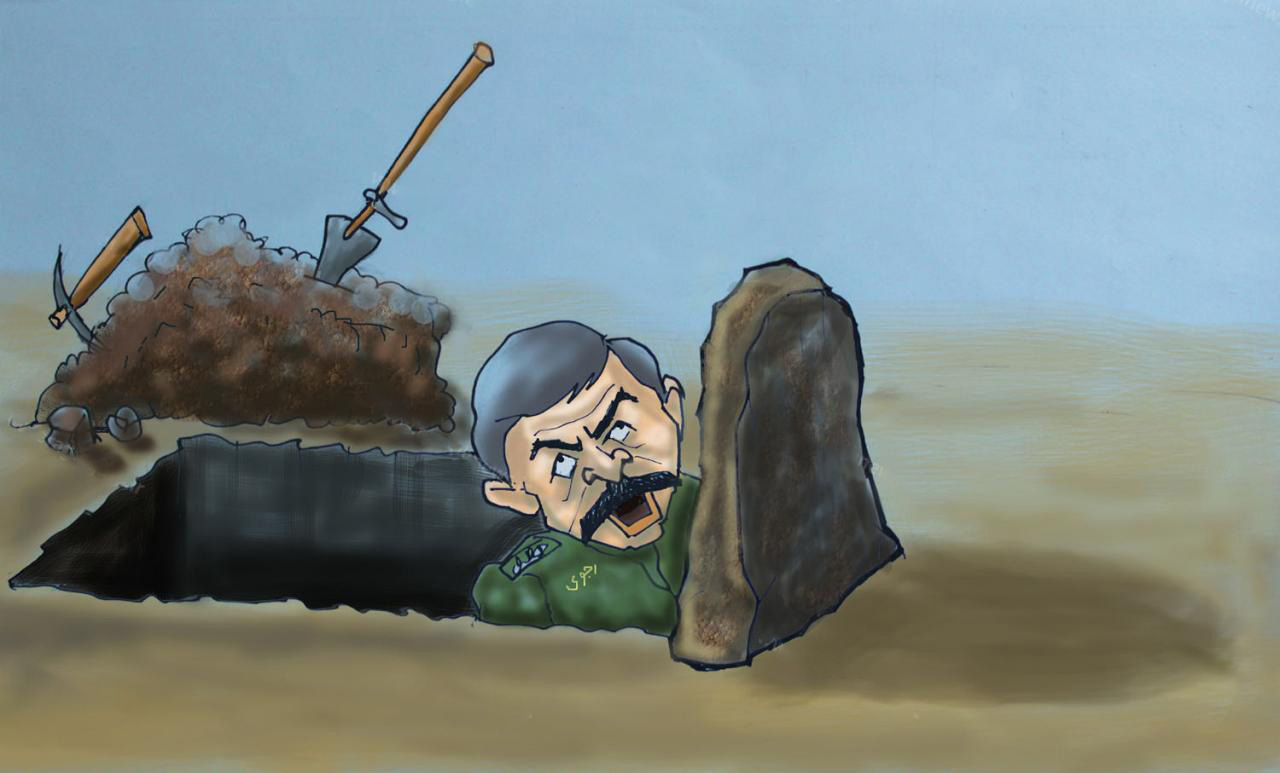
Where is Massoud Rajavi?

Massoud Rajavi disappeared in 2003
The last time Rajavi was heard of was in 2003 when he issued a statement on Ashura Day. Since then, no video of him has appeared.

Massoud Rajavi

There have been numerous accounts about Massoud Rajavi’s destiny. But what is very significant about him is that he disappeared just in the most critical situation. He disappeared after the US invasion but the most iconic event at that time was the arrest of Maryam Rajavi by French Police and the fall of Saddam Hussein as the main financial and military supporter of the group.

Occasionally the group publishes statements under the came of Massoud Rajavi.

The MKO’s propaganda might be seeking to maintain the sacred figure they have always portrayed for Massoud Rajavi, according to critics, because after the US invasion of Iraq in 2003 and the coincident disappearance of Massoud Rajavi, many criticized him for leaving his members in danger and escaping to save his own life.

The fact is that nobody outside the MEK really cares whether Rajavi is dead or alive.

April 21, 2021 0 comments
FacebookTwitterPinterestWhatsappTelegramSkypeEmail
Mehdi Hamidfar mum
The cult of Rajavi

Mother and son, a separation by the MEK

Mehdi Hamidfar, member of the Mujahedin Khalq Organization (the MKO/ MEK/ PMOI/ Cult of Rajavi) is from Kermanshah, Iran. In 1997, as a young boy, he told his mother that he was supposed to go mountain climbing with his friends but he never got home back. The MEK recruiters deceived him to move to Iraq. They smuggled him through Kurdestan, Iraq to join the group in camp Ashraf.

Mehdi Hamidfar mother-kermanshah

Since then, Mehdi has not contacted his family. In 2003, a former member of the MEK called Mehdi’s family telling them that Mehdi was in the MEK. His parents went to Camp Ashraf to visit him. Mehdi was allowed meet his parents for only two hours. The parents were not allowed to stay in Ashraf. “It was clear that he wanted to leave the camp and come with us but he was terrified,” Mehdi’s mother, Tajodoleh Heidarian says. “If I talk of leaving the group, I will be tortured, he said.”

After that short visit, Mehdi’s family traveled to Iraq several times but the MEK leaders did not allow them to visit their beloved son any more. His brothers, Bizhan and Iraj believe that Mehdi is not actually a member of the MEK but he is taken as a hostage by the group leaders.

Today, Mehdi is still in the MEK’s Camp Ashaf 3 in Albania. He is not permitted to leave the group. His mother is still looking forward to his release from the Cult of Rajavi. She has written several letters to her beloved son, to the International human rights bodies and the Albanian government.

April 21, 2021 0 comments
FacebookTwitterPinterestWhatsappTelegramSkypeEmail
Maryam Rajavi
Maryam Rajavi

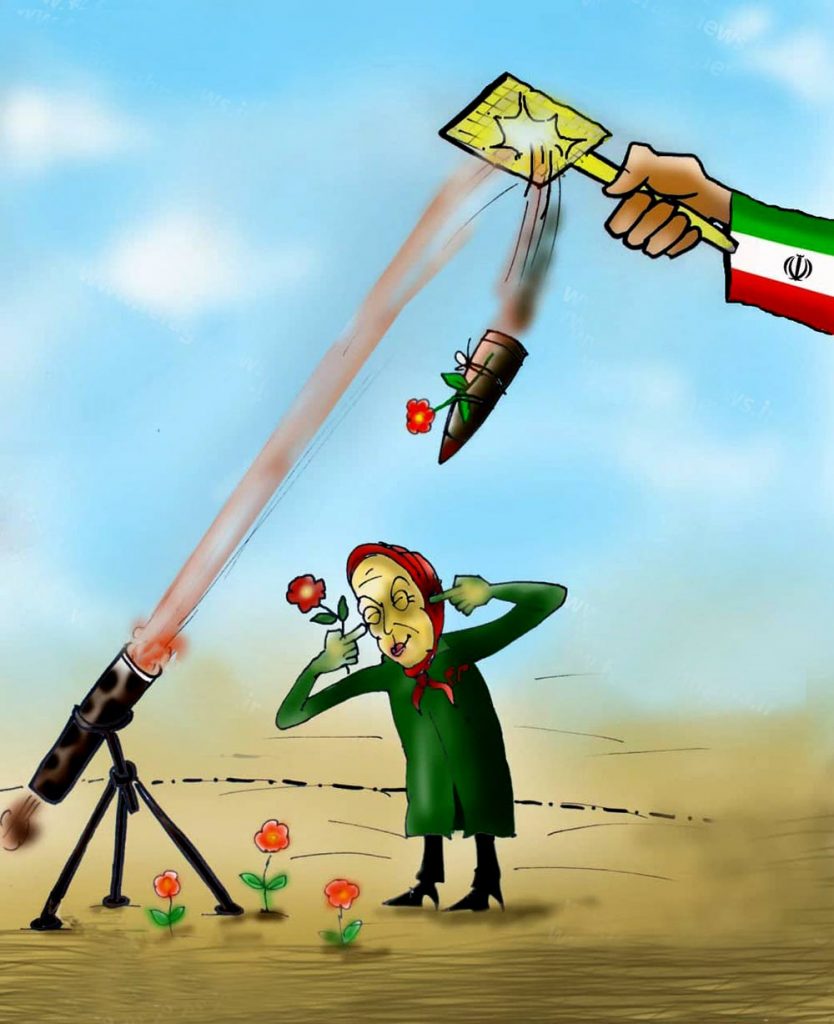
Maryam Rajavi tries to cover her violence under benevolent gestures

Maryam Rajavi tries to cover her violence under benevolent gestures but the Iranian people’s hatred returns the path of the bullet against herself

Maryam Rajavi

April 21, 2021 0 comments
FacebookTwitterPinterestWhatsappTelegramSkypeEmail
MEK Israel
Mujahedin Khalq; A proxy force

Attempts to sabotage America’s return to the Iran nuclear deal

Attempts to sabotage America’s return to the Iran nuclear deal. When the United States (US) and Iran held a meeting in Vienna last week – Iran’s Natanz nuclear facility suddenly came under a power cut sabotage attack. Reports indicate that the Mossad, Israel’s intelligence agency, was behind the attack.

The latest attack follows a number of explosions that took place across Iran last summer as a series of Israeli strikes in an attempt to derail negotiations – given that during the US presidential election campaign, Biden promised that if elected he would reinstate the US in the 2015 Iran nuclear deal or the Joint Comprehensive Plan of Action. (JCPOA) that Trump withdrew in 2018.

Mohsen fakhrizade

Mohsen fakhrizade- iran nuclear scientists assassinated – israel – mek

Iran, aware of Israel’s hard and open game, does not seem provoked to retaliate, including responding to the assassination of its top nuclear scientist, Mohsen Fakhrizadeh, carried out by Israel using sophisticated weapons in November 2020 in the city of Absard outside Tehran.

Not only through attacks, high-ranking Israeli officials also went directly to lobbying the US Congress to cancel the agreement. This time, Mossad chief Yossi Cohen will travel to Washington to meet top White House and US intelligence officials, and hopes to meet in person with Biden to make sure that Iran cannot be trusted because it has hidden details about its nuclear program.

It is ironic, considering that Israel itself has never disclosed about its nuclear weapons and refuses to disclose any information about its program.

Apart from that, Iran’s enemies on American soil also did not stay silent to thwart Iran’s nuclear diplomacy. Like the American Israel Public Affairs Committee (AIPAC), the Israeli lobby group tried to convince Biden not to return to the JCPOA. Even last month AIPAC pressed the Biden administration using the hands of the House and Senate to demand an expanded deal that includes missiles, human rights and Iranian activities in the region. If the pressure is successful, of course Tehran will refuse to continue talks with Washington.

Meanwhile, the neoconservative think-tank Foundation for the Defense of Democracies (FDD), which worked within the Trump administration during and after Trump withdrew from the JCPOA, has been relentlessly pushing for war with Iran. This came to light most clearly when former CIA officer and FDD colleague Reuel Marc Gerecht, speaking on CNN on April 11 voiced their disappointment that Trump had not led the US and Iran to war.

Then there is the Christians United for Israel (CUFI) group, one of the most powerful pro-Israel voices in the US that recently urged the Senate not to confirm Colin Kahl’s top policy position at the Pentagon, claiming “Kahl was the one driving the US comeback. in the Iran nuclear deal.

Maryam Rajavi and Giuliani

Do not miss the Mujahidin-e Khalq terrorist organization, abbreviated as MEK, which is known for its killings and bombings. This terrorist organization strongly opposes US-Iran diplomacy. In March 2021, a number of US Senators, including Senator Bob Menendez, the strong chair of the Senate Foreign Relations Committee, attended a virtual event hosted by the MEK-backed Iranian American Community Organization (OIAC) calling for continued US sanctions on Iran.

fakhrIsrael, AIPAC, CUFI, FDD, MEK, Menendez, and similar groups probably really hope that Iran will immediately take revenge as often called by their top brass. If Iran takes revenge, it will certainly drag the US into a war it will not necessarily win. (Agus Setiawan)

NUSANTARANEWS.CO – originally Indonesian – Translated by Nejat Society

April 19, 2021 0 comments
FacebookTwitterPinterestWhatsappTelegramSkypeEmail
MEK trolls on Twitter
Mujahedin Khalq Organization's Propaganda System

A list of over 250 MeK’s Fake Twitter Accounts releases

A list of 256 fake Twitter accounts owned by the Mujahedin-e Khalq Organization was released by Habilian.

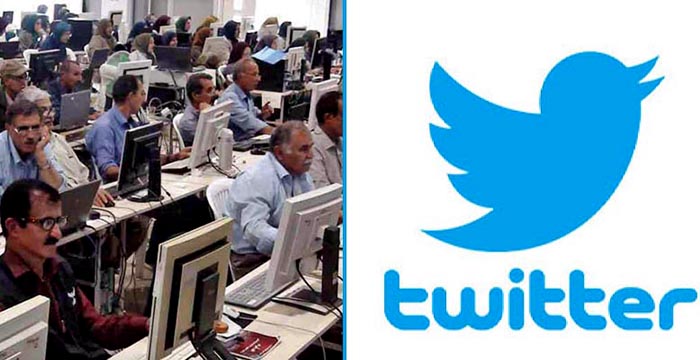
These accounts, most of which operating from Albania, were identified by the cyber monitoring division of Habilian Association, which is engaged in monitoring online activities of anti-Iranian terrorist groups.

MEK trolls on Twitter

According to Habilian, at least hundreds of other fake accounts affiliated with the Mujahedin-e Khalq are operating in Twitter.

the Mujahedin-e Khalq Organization (MeK) is a violent anti-Iranian terrorist group which has formed a cyber army to launch large-scale propaganda operations against Iranian Government.

In late November of 2020, Twitter suspended the official account of the MEK leader Maryam Rajavi for three weeks due to the promotion of violence. After that, users’ access to other pages of this group was restricted.

Also, in early April 2021, Facebook announced that it has removed a network of over 300 Facebook accounts, Pages, Groups and accounts on Instagram operated by the MeK which appear to be run from a troll farm located in Albania. In its Coordinated Inauthentic Behavior monthly report, Facebook wrote that these accounts targeted primarily Iran and also global audiences with content related to Iran.

In his letter to the Twitter company, Habilian announced its readiness to send details of hundreds of other fake accounts affiliated with the MeK terrorist group.

Earlier, a number of dissident members of the group, who had previously worked in the group’s cyber sector, reported the existence of a troll farm inside the Tirana camp, in which 1,000 to 1,500 members are operating thousands of fake Twitter accounts dedicated to incite violence throughout Iran in order to advance political goals and portray Iranian government as an authoritarian regime opposing the rights of its citizens.

Most of these fake accounts were launched after Donald Trump came to power. Taking advantage of this new opportunity, the terrorist group focused its content on hate speech and promotion of violence as a means to further their cause.

April 19, 2021 0 comments
FacebookTwitterPinterestWhatsappTelegramSkypeEmail
Salimi Namin argument on a book
Iran

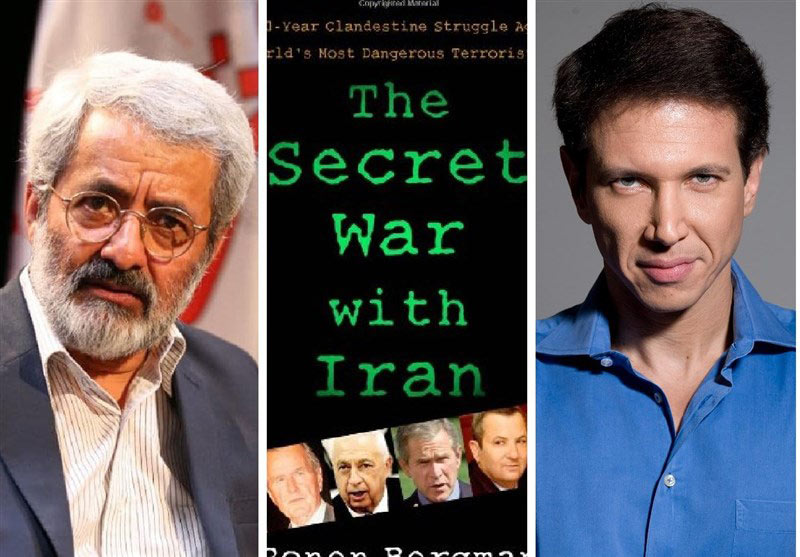
The Secret War With Iran . An Argument Against Ronen Bergman’s Book- Part 7

Imam Khomeini expressed himself in clear and honest terms in private meetings with other anti-Pahlavi groups about their policies and struggles. But at the same time he always recommended that his followers refrain from highlighting such differences.

Iranian journalist and expert Abbas Salimi Namin has disproved the claims and opinions of Israeli analyst Ronen Bergman in the book ‘The Secret War with Iran’. ‘The Secret War with Iran’, written by renowned Zionist journalist Ronen Bergman, was published in 2008 by Simon & Schuster publishing company in the United States.

Salimi Namin argument on a book

Born in 1972, Bergman is a graduate of Tel Aviv University in the Middle East political relations. He is a famous Zionist journalist and analyst in the military and security fields who has worked with Israeli newspapers ‘Haaretz’ and ‘Yedioth Ahronoth’, American dailies and weeklies such as ‘The New York Times’, ‘Newsweek’, ‘The Wall street Journal’, and British media groups including ‘The Guardian’ and ‘The Times’.

Bergman has been interested in topics relating to the enemies of the Zionist regime (particularly Iran, Hezbollah and the Palestinian resistance groups), as well as subjects on the history of the Israeli regime’s assassination operations, which are cited in his recent book ‘Rise and Kill First’.

In an interview with Persian TV channel ‘Iran International’, Bergman has pointed to the Iranian nuclear program and the issues surrounding it -particularly the Zionist regime’s secret attempts to halt the process of nuclear activities in Iran and assassinate Iranian scientists. He has also cited ex-CIA chief Michael Hayden as saying that the assassination of nuclear scientists is the best way to impede Iran’s growing process in that field, and has implicitly held Israel responsible for it.

In the book ‘The Secret War with Iran’, Bergman has written a history of encounters between Iran and the Zionist regime, while the bulk of the book relates to the Lebanese Hezbollah -Iran’s main ally in the battle against the Zionist regime since its formation until the 33-day War- focusing on the role of Martyr Imad Mughniyeh.

His book also includes sections about the final years of the Pahlavi regime and victory of the Islamic Revolution in Iran, short periods of the war imposed by the Ba’thist party of Iraq on Iran (focusing on the McFarlane affair), Iran’s role in supporting the Palestinian groups, and the Iranian nuclear program.

Bergman’s multiple undocumented and untrue comments as well as personal and purposeful analyses (with the main purpose of displaying Israel’s power, specially in a competition with the US) that have repeatedly come in his book make a critical review of the book necessary for Iranian readers.

Director of the Iran History Studies and Compilation Bureau, Abbas Salimi Namin, has written an extensive criticism in a book about ‘The Secret War with Iran’. Born in 1954, Salimi Namin is an experienced journalist and a renowned Iranian researcher in history and political sciences who has published many articles and books.

Part 7:

In this passage, in a stark contrast with himself, the author first acknowledges that Israel was seeking to harm the Islamic Revolution in Iran since its triumph. Second, he implicitly acknowledges Israel’s involvement in inciting Arab governments hostile to developments in Iran, including the Baath party of Iraq. Third, Imam Khomeini brought to victory Iran’s nationwide uprising, creating an unprecedented obstacle in the way of the Zionists’ attempts to dominate the Muslim world.

This fact implies that as much as nations have become resentful of Zionist-leaning regional Arab leaders they have become interested in the developments created by the Islamic Revolution and its leadership. Therefore, it is not unreasonable if Bergman seeks in vain to sully the squeaky clean image and character of Imam Khomeini.

“Khomeini’s next step was to shatter the most important traditional custom of Shi’ite theology. He allowed the believers, even encouraged them, to call him ‘Imam’. This title had been reserved by the Iranian Shias for Ali and the eleven leaders who came after him. Until the inevitable return of the missing thirteenth imam at some unpredictable time, no religious sage had had the right to use the title. Without stating it explicitly, Khomeini was creating the impression that he was the missing imam, who had returned as a messiah, or Mahdi.” (p. 12)

Without presenting any reason, the author portrays the founder of the Islamic Revolution totally different from his real character. First and foremost, Ayatollah Khomeini never and under no circumstances showed willingness to be referred to as “Imam” and he was totally strange with such things. Second, the title “imam”, meaning leader and harbinger, has been common in the history of Islam (among both Shias and Sunnis) and is not reserved to the 12 infallible Shia imams. Imam Ghazali, Imam Bukhari and Imam Musa Sadr are just cases in point that the author has preferred to not note. Third, such outdated and threadbare allegations stem from Savak before the Islamic Revolution, which were never accepted by people. Has the author bothered himself studying slogans chanted by several million people who welcomed Ayatollah Khomeini? The answer is negative.

“During the 1970s he became, from afar, one of the most powerful of the Shah’s opponents. This physically weak, stern-featured seventy-seven-year-old, after a brief sojourn as an exile in Paris from September 1978, returned to his homeland on February 1, 1979. He was received by millions at Tehran’s airport, and without any weapons, defeated the sixth strongest army in the world.” (p. 12)

How did the millions who attended the welcoming ceremony refer to Ayatollah Khamenei? Wasn’t this devotion and deep-seated belief born out of his reputation for honesty and piety? Could anyone claim to be Mahdi and the public then recognize him as their spiritual leader? Shia hadiths have clearly noted that even if someone claims to have ties with the 12th imam as long as Imam Mahdi remains occult, he has to be billed as liar. Therefore, people’s ties with Imam Khomeini during nearly two decades of costly struggle stemmed from this assessment he was moving in the way of revival of dignity in this land, far from any mundane passion, but the performance of other opponents of the Pahlavi dictatorship during that time was assessed as exactly contrary. Bergman has deliberately ignored this field experience and instead he tries to attribute the failure of other political leaders in attracting people to Imam Khomeini.

“The elderly cleric realized that he would never be able to take power without the help of certain opposition groups, some of which were ideologically opposed to him. With the Shah as their common enemy, however, he entered into pacts with all of the rivals of the monarchy, playing down the vast differences among them. The Shi’ites have a name for this technique: khod’e, which means tricking someone into misjudging his position.” (p. 14)

Imam Khomeini expressed himself in clear and honest terms in private meetings with other anti-Pahlavi groups about their policies and struggles. But at the same time he always recommended that his followers refrain from highlighting such differences. He believed that the main issue in Iranian society was to bring an end to the ruling dictatorship and the US, British and Israeli dominance. Ayatollah Khomeini believed that any political current has to follow its own methodology and that such differences of view should not eclipse the main enemy, i.e. dictatorship and dominance. Without taking into account this reasonable and principled policy of the Imam, Bergman puts it:

“As for the opposition movement closest to his ideology, the Mujahideen Khalq, he (Khomeini) promised the group a share of power when he got his hands on it. It was a promise he would fail to keep.” (p. 15)

A review of exchanged words between the Imam and the representative of Mujahideen Khalq Organization (MKO) in Najaf in 1972 shows the nullity of Bergman’s allegations. In those meetings, which were held for hours during different days, the Imam never endorsed MKO and he even warned that the armed struggle policy they had adopted was doomed to failure.

Hossein Rouhani, an MKO leader, said in an interview following the victory of the Islamic Revolution: “From within, I [along with Torab Haqshenas] was advised to contact the Imam to tell him about MKO’s affairs and internal issues so that the Imam would issue a statement, if possible, in support of death-row prisoners, i.e. our combatant leaders. I accepted to handle it. I contacted Mr. Mahmoud Doaei who was our sympathizer at that time. In 1972 I managed to have numerous meetings with the Imam. Except for the first session where he (Mr. Doaei) was present to introduce me, I was alone in future meetings which total 7. They lasted about one month. Each meeting was one hour to one hour and a half. I discussed various issues with the Imam. We discussed the politico-ideological fundamentals of MKO. I had two books on me: Imam Hussein and The Prophets’ Route. I gave him both and he studied them completely and shared his written views with us. One issue was our analysis of Judgment Day. He considered our analysis as material and in conflict with what is in the Quran. The other issue was ‘evolution’. We believed in the Darwin principle of evolution, but he considered it to contradict Quranic instructions. Another issue under discussion was ‘armed struggle’ in Iran…The Imam was firmly opposed to it, saying:

‘I’m opposed to armed struggle and I believe that it would destroy your organization.’

Of course, it was the issue whose truth we saw in 1977 and 1978 in the intra-organizational ideological struggles in our splinter groups.” (MKO, From Beginning to End, Institute for Political Studies and Research, Winter 2005, vol. 1, pp. 522-523)

The Imam did not make public what he had noted in the private meeting with the MKO representative up until after the nationwide revolt of the Iranian nation in 1979. But his prediction, as confirmed by Hossein Rouhani, came true and in the second half of 1970s, MKO was disbanded and only some of its members were seen in prisons. However, under the auspices of the Islamic Revolution under the leadership of the Imam from 1978 until the victory of the revolt in 1979, MKO prisoners were released and the organization was revived. Therefore, it is not clear which Imam-MKO agreement Bergman refers to. No MKO agent has ever expressed this allegation of Bergman, which has no solid basis. Meantime, after the meeting between MKO’s senior member and the Imam in Najaf, no other such meeting has been recorded until after the Islamic Revolution as the Imam rejected MKO’s theoretical fundamentals and cast doubt on the organization’s strategy and tactic. In light of its dogmatism, this group never spoke publicly against the Imam as people massively showed willingness for the Imam’s leadership, but in private meetings they missed no chance to discredit him.

But Bergman is trying to create the impression that before the victory of the Islamic Revolution, Imam Khomeini was seeking to rally political groups behind himself on false promises. But the undeniable truth is that leaders of various groups who travelled to Paris saw that the Imam stuck strongly with his principles. For instance, Dr. Sanjabi, leader of the National Front, received no promise in return for aligning himself with the Islamic Revolution; rather, he was presented with some preconditions. In an interview in Paris, Dr. Sanjabi openly declared the Pahlavi regime illegitimate and laid emphasis on the dismissal of foreign dominance as another pillar of the Islamic Revolution. The same procedure befell to Mehdi Bazargan. The leader of the Freedom Movement of Iran sought in vain to convince the Leader of the Islamic Revolution to modify his position on these two pillars. Bazargan received no concessions. Finally, the FMI leadership either genuinely or tactically agreed with the two pillars. Therefore, what caused other political leaders to get closer to the Imam was his outspokenness and sincerity in declaring his positions and his firm and brave resistance against dictatorship and dominance. That is exactly for this reason that various social classes distanced themselves from other political leaders and accepted the Imam’s leadership. If he had had minimum trickery, he would have been marginalized like many others. Of course, it has to be noted that playing tricks on the enemy would be a reasonable act. In wars, one way of defeating the enemy is to deceive it. In other words, applying misleading schemes so that the enemy could not predict the attack is among skills of a qualified commander and manager.
Link to previous parts:

Part0, Part 1, Part2, Part3, Part4, Part5, Part6

Abbas Salimi Namin,

April 19, 2021 0 comments
FacebookTwitterPinterestWhatsappTelegramSkypeEmail
Newer Posts
Older Posts

Recent Posts

  • The black box of the torture camps of the MEK

    December 24, 2025
  • Pregnancy was taboo in the MEK

    December 22, 2025
  • MEPs who lack awareness about the MEK’s nature

    December 20, 2025
  • Why did Massoud Rajavi enforce divorces in the MEK?

    December 15, 2025
  • Massoud Rajavi and widespread sexual abuse of female members

    December 10, 2025
  • Facebook
  • Twitter
  • Instagram
  • Youtube

© 2003 - 2025 NEJAT Society . All Rights Reserved. NejatNGO.org


Back To Top
Nejat Society
  • Home
  • Articles
  • Media
    • Cartoons
    • NewsPics
    • Photo Gallery
    • Videos
  • Publications
    • Books
    • Nejat NewsLetter
    • Pars Brief
  • About Us
  • Contact us
  • Editions
    • عربي
    • فارسی
    • Shqip