Nejat Society
  • Home
  • Articles
  • Media
    • Cartoons
    • NewsPics
    • Photo Gallery
    • Videos
  • Publications
    • Books
    • Nejat NewsLetter
    • Pars Brief
  • About Us
  • Contact us
  • Editions
    • عربي
    • فارسی
    • Shqip
Nejat Society
Nejat Society
  • Home
  • Articles
  • Media
    • Cartoons
    • NewsPics
    • Photo Gallery
    • Videos
  • Publications
    • Books
    • Nejat NewsLetter
    • Pars Brief
  • About Us
  • Contact us
  • Editions
    • عربي
    • فارسی
    • Shqip
© 2003 - 2024 NEJAT Society. nejatngo.org
Massoud Rajavi
Massoud Rajavi

A cult with a missing leader

All cults in the world are composed of a base and top of the pyramid. The top of the pyramid is the highest position in a cult that finds itself needless to consult and decides on the basis of its own thoughts or desires.

The bodies of these pyramids are forced to follow their hierarchical superiors, which eventually reaches the top of the pyramid.

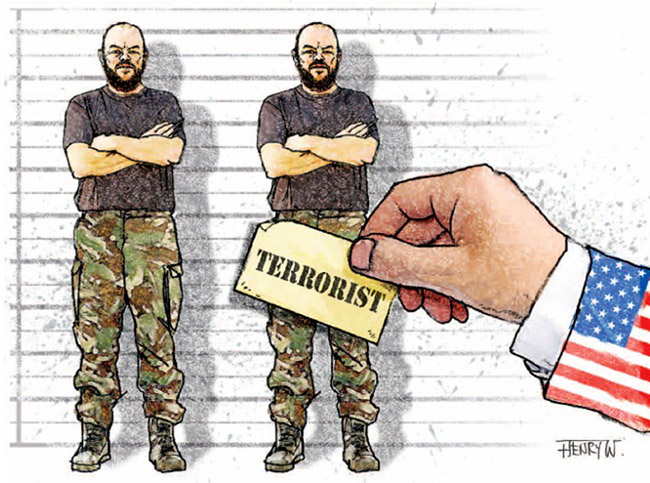
The terrorist People’s Mojahedin Organization (MEK) is no exception: A leftist political organization that was formed in the 1940s and gradually changed in nature into a true cult.
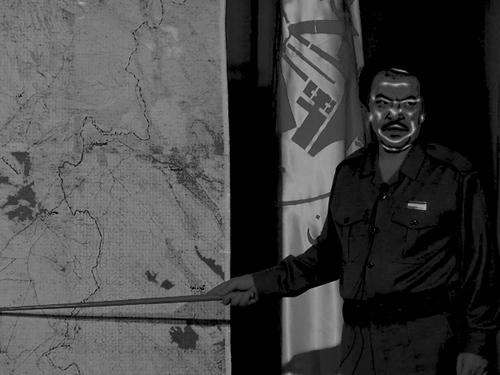
Massoud Rajavi

The leader of this cult, Masoud Rajavi, has been missing in the past 13 years, just after the US-led war against Iraq in 2003 that toppled Saddam, Rajavi’s friend and ally.

Why has Rajavi disappeared since then, or where is he now, are questions that occasionally come to the minds of those who deal with this cult. There is no doubt that members of this group, especially those living in the MEK’s camp in Tirana, Albania, have repeatedly asked this question from themselves. they can only ask this question from themselves because asking questions in cults, such as the Rajavi’s cult, is a sign of criticism and would immediately be repressed or harshly responded.

But why Rajavi disappeared?

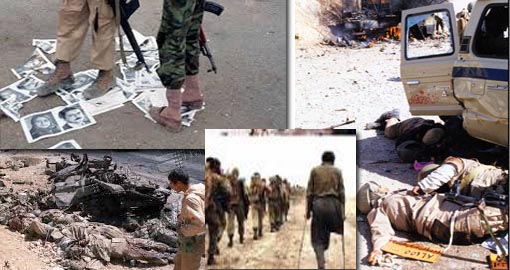
Massoud Rajavi has been the leader of the MEK for more than two and a half decades. He is accused of killing several thousand Iranian citizens and officials over the years by his death squads. In addition, Iraqis believe his group has worked directly with Saddam’s military and security apparatus to suppress the Kurds and Turkmen in the country after the 1991 war with Kuwait. Along with these allegations, which have been admitted by hundreds of the cult’s ex-members, his migration to Iraq during the country’s war with Iran is seen as an unforgivable betrayal by the Iranian people and even by political opponents of the Iranian government.

Thus, with the overthrow of Saddam’s regime and the prosecution of its officials, it was very likely that Massoud Rajavi be prosecuted by Iran or Iraq on charges of murder and war crimes.

In addition, the fear of assassination and physical extermination has obviously scared Rajavi. By his absence, Rajavi appointed his well-dressed wife, Maryam, at the head of the pyramid to indicate that the MEK has changed from a violent armed group to a political movement led by a woman.

In the years following his absence, Massoud Rajavi repeatedly sent audio messages to members of the group in order to prevent the frustration of members out of his prolonged absence.

However, this absence has been so prolonged that it has led members to criticize and even flee the group. Fear of the group’s collapse has forced Maryam Rajavi to repeatedly move from her Paris headquarters to Tirana to lecture to members in order to show that the situation is under control.

It seems that measures such as former Saudi intelligence chief Turki al-Faisal’s statements among members of the cult a few years ago in which he had called Masoud Rajavi dead or putting Masoud’s image among Iran’s deceased historical leaders, and, at the same time, denying his death by the cult’s ringleaders by occasionally broadcasting Masoud’s voice messages are the cult’s game to confuse members and even Iranian officials about the status of the group’s leader. The goals of this game are preventing the members’ exit as well as blinding Iranians’ desire to prosecute or exterminate Rajavi.

It seems that under the current circumstances, whether Massoud is alive or not will have little effect on the group’s situation. The MEK continues to be viewed as a notorious group with a bad record among Iranian people and the Iranian opposition groups; A group which had been on the list of terrorist organizations in the US and the EU, with no credible social base in Iran, dozens of its members fled its camps since 2014 when the group was relocated to Albania, the average age of its members on the rise, and many of them already too old. It is even feared that because of its relocation to Albania, the MEK could be considered a serious obstacle to Albania’s EU accession negotiations and the group’s presence in Albania could turn into a challenge for the Balkan country.

So whether or not the elderly leader of this cult is alive, when the MEK is facing a lot of challenges, may not matter much.

By: Reza Alghurabi

Reza Alghurabi is an Arab journalist who lives in Iran. He is a former researcher at the Beirut Center for Middle East Studies and an independent researcher and journalist writing in Iranian newspapers including the Khorasan daily.
August 25, 2019 0 comments
FacebookTwitterPinterestWhatsappTelegramSkypeEmail
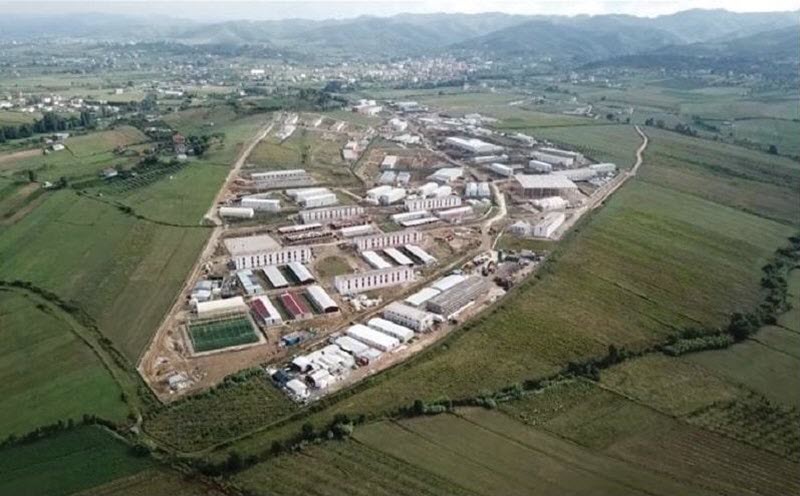
Ashraf 3 in Albania
The cult of Rajavi

Nobody Can Be “Comfortable” with Regime Change Involving MEK

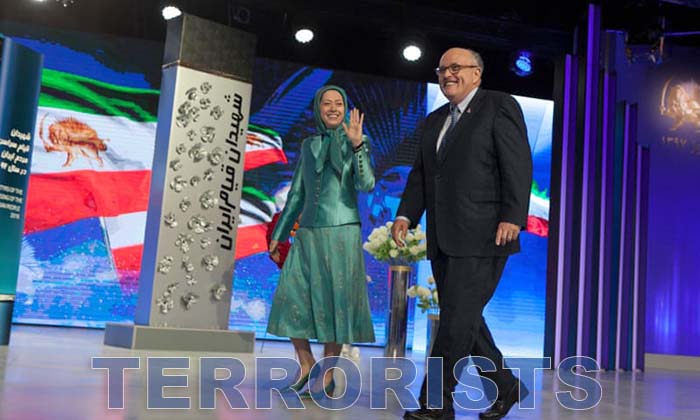
In 2017, John Bolton promised the Mojahedin-e Khalq (MEK)—wrongly, it turned out—that they would be celebrating in Tehran before the Iranian Revolution’s 40th anniversary in February 2019. This July, at the MEK’s five-day conference in Albania, keynote speaker Rudy Giuliani still insisted the MEK is a “government in exile” and claimed the MEK is “a group that should make us comfortable having regime change”.

For context, promoting a group which is universally despised by Iranians inside and outside the country as traitors already stretches credulity. There is no evidence that Iranians are calling for severe sanctions against themselves. Nor are they calling for regime change. The MEK’s only audience in this respect are a warmongering cabal of Americans, Saudis, Israelis, and British, who like to hear what they want to hear. The rest of the world just isn’t that comfortable with this bizarre, terrorist cult.

Lately, even Europe has distanced itself from lending succour to the group. The MEK no longer has free access to the European Parliament where its activists would harass the MEPs and their staff. This year the MEK was barred from holding its annual Villepinte rally in France and was also banned from rallying by Germany. As a result of this, MEK leader Maryam Rajavi has decamped from Paris to Albania and the MEK announced that Albania is the group’s new headquarters.

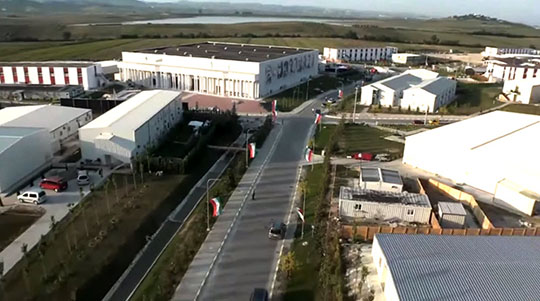
The move from Iraq to Albania ought to have allowed unprecedented access to Western journalists keen to investigate the honey pot around which the anti-Iran cabal buzz with excitement. They were soon disappointed, as the MEK built a de facto extra-territorial enclave in Manëz and posted armed guards to keep out unwanted attention. But although the group were physically hidden from view, they were very exposed through their cyber activities.

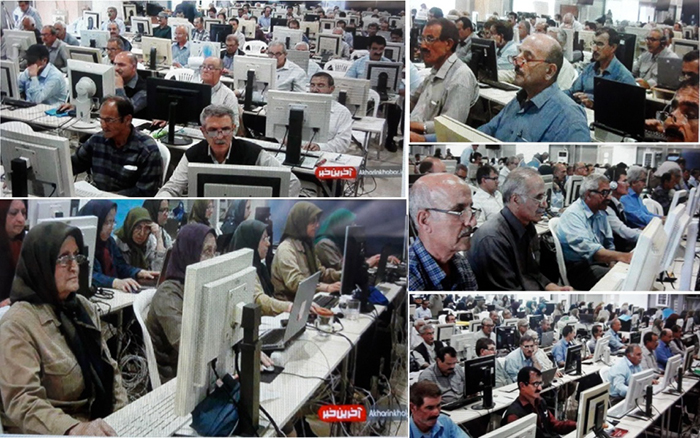
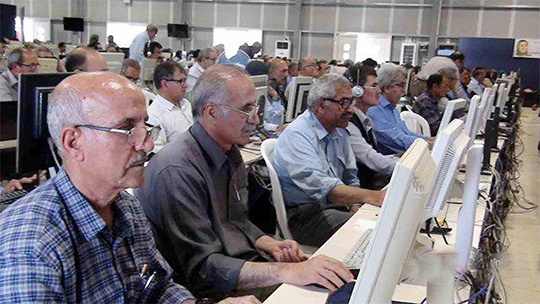
Although it had been known for some time that the MEK operates a click farm from Albania, it was Murteza Hussain in The Intercept who revealed how the MEK uses fake social media accounts to curate a false narrative about Iran to influence US policy. The Heshmat Alavi scandal focused media attention on what is really happening inside the MEK behind the slickly marketed brand image that Giuliani so admires. This endeavour to scrutinise the MEK has been aided by a series of photographs which were leaked from inside the MEK’s camp in Albania and published in Iran. The photos are very revealing, but in ways that the MEK probably didn’t intend or realise when they were taken. Since the MEK so zealously hides its inner world from public scrutiny, these photos offer us an unguarded glimpse into the operational and organisational life of the cult.

The fact that the photos were taken at all is significant. At first glance they could be showing a session for seniors at the local library or community centre. But we see the women are wearing military uniforms and the men are all wearing similar shirts. Some are wearing ties. This is something the MEK don’t ever do unless in a public facing role. This indicates the images have been deliberately staged for a particular external audience. Certainly they were not meant for internal consumption, but neither is this for the wider public or else they would be on the MEK’s own websites. Based on information about the MEK already in the public domain, we can assume these photos were commissioned by Maryam Rajavi as a marketing ploy to ‘sell’ the MEK brand to financiers and backers.

There is clearly a deliberate effort to show that the MEK are “professional” workers in this computer room. Everyone is posed looking intently at a screen. Nobody is “off duty” in the pictures; yawning, stretching, drinking coffee, the normal activities of any workers. There is no evidence of relaxed, friendly chat between co-workers, everyone looks very serious. There are no cups of coffee or snacks on the desks. No pictures of family, husbands, wives, children, pets even. No plants or flowers. In spite of the rows of desks being squashed together closely, everyone looks very isolated.

There might be nothing wrong with that. After all, employers want to see their workers busy. But organisational photographs are also about marketing a brand, which includes marketing the core values of an entity. A group which claims, as the MEK does, that it is funded by public donations to struggle for democracy and human rights would surely want to create an image in the mind of the public about transparency, effectiveness, and positivity. By way of contrast, see how Human Rights Watch advertises its work culture. Even a quick Google image search on ‘call center worker’ reveals pictures of relaxed and smiling workers rather than people who look like battery hens. This is not the image any normal company or government office would use to promote their workplace.

In the MEK’s advertising photos the workers are gender segregated. Men sit in one room, women in another. The women all wear hijab. There is no pluralism here. The use of garden chairs and workers using glasses unsuited to screen work reveals that this management doesn’t care at all about the safety, comfort or wellbeing of the workers. They are using a mixture of outdated monitors and laptops. The cables are frayed and tangled.

There is no indication that the workers are happy at their workstations or enjoying their work. Why would they be with the picture of their leader bearing down on them, as in all dictatorships, lest they forget why they are there and who is in charge? (The picture of a solitary Maryam Rajavi is a clear acknowledgement that her husband Massoud Rajavi is dead.)

The MEK’s cultic system means that decisions are imposed from the top down. This means that those decisions are only as intelligent as the leadership. What Rajavi doesn’t understand is that these photos show beyond any words that the MEK doesn’t share our values. The leader is selling unthinking, unquestioning, obedient slaves, people who won’t act or speak unless ordered to do so. And that would only be ordered if it were productive for the MEK, regardless of the needs or desires of the worker.

What these images portray are conditions of modern slavery. These are elderly people who are unable to escape this cult and are coerced into performing work for which they receive no recompense. They exist on cruelly basic accommodation and sustenance, whereby even asking for new underwear puts the petitioner under question about their loyalty to the leader and the cause. They cannot leave because in Albania they have nowhere to go, no identity documents or work permits, no money, and they do not speak the local language. And also because the Trump administration wants the MEK to be there.

So, when Giuliani says we should be “comfortable” with this group, right-minded people the world over can honestly and unequivocally answer, “No, we are not comfortable ignoring this harsh reality just because the MEK amplifies an anti-Iran message to the world, and no, we don’t believe the MEK have any kind of future in Iran”.
by Massoud and Anne Khodabandeh

August 24, 2019 0 comments
FacebookTwitterPinterestWhatsappTelegramSkypeEmail
blank
Mujahedin Khalq; A proxy force

Amb. John Limbert on Iran and the U.S. policy of maximum pressure

The Trump Administration says it’s maximum pressure campaign against Iran is working, and its leadership is weakening. Part of that campaign – includes abandoning the 2015 nuclear agreement – which president trump called “the worst deal ever.” Since then, the U.S. has reimposed economic sanctions on Iran – and sanctioned its top diplomat, Foreign Minister, Mohammad Javad Zarif.
One veteran U.S. diplomat says sanctions are not the answer.

Asieh Namdar sat down with Ambassador John Limbert – who worked and lived in Iran – and was one of the 52 American Hostages taken captive at the US Embassy in Tehran in 1979.
They discussed everything from the current US policy on Iran, the need for diplomacy, and his memories as a hostage 40 years ago.

More memories from John Limbert

@asiehnamdar
America.cgtn.com

August 22, 2019 0 comments
FacebookTwitterPinterestWhatsappTelegramSkypeEmail
Professor Tim Anderson
Mujahedin Khalq; A proxy force

MEK has been a U.S. tool against Iran

For decades the MEK has been a tool the U.S. has tried to use against Iran, even though the U.S. had it listed as a terrorist group until 2012, an Australian expert has said.
In an interview with Balkans Post, Professor Tim Anderson said, “With few other options, Washington has tried to clean up the image of a group which has become little more than a personality cult, with no real support inside Iran.”

Professor Tim Anderson

The following is the full transcript of the interview:

BP: The Mojahedin-e Khalq (MEK) terrorist group has ramped up its activities aimed at bringing about a regime change in Iran. What’s your take on this issue?

Tim Anderson: For decades the MEK has been a tool the U.S. has tried to use against Iran, even though the U.S. had it listed as a terrorist group until 2012. With few other options, Washington has tried to clean up the image of a group which has become little more than a personality cult, with no real support inside Iran.

Initially the MEK opposed the Shah’s regime and participated in the 1979 Revolution, but it quickly turned on the new government and its supporters. After the MEK was driven out of the country it was adopted by the Iraq-Saudi-CIA bloc, helping Saddam Hussein in his aggression against Iran. With Saddam’s support the MEK created a ‘National Liberation Army’ (NLA) of Iran, based in Baghdad, and used this to destroy Iranian villages, even during a UN brokered ceasefire. Their role in the slaughter of Iranian patriots destroyed the MEK’s reputation within Iran (Carey 2018). Very quickly the group’s hybrid anti-imperialist, socialist and Islamic philosophy was abandoned as it became an opportunistic cult (Merat 2018).

In the 1990s they continued as mercenaries for Saddam Hussein, helping suppress Iraqi Shi’a and Kurd resistance in Iraq (USDOS 2007; Merat 2018). After the 2003 invasion of Iraq they were protected by U.S. forces at the ‘Camp Ashraf’ base, precisely because they were seen as a tool which could be used against Iran (Cartalucci 2018). The U.S. Brookings Institute admitted that the MEK was “undemocratic and enjoys little popularity in Iran itself”. Nevertheless, the think tank recognized that the MEK might be used as a proxy force. However, to do so openly “Washington would need to remove it from the list of foreign terrorist organizations” (Pollack et al 2009). The Obama administration did that in 2012 (USDOS 2012).

BP: How effective are they in their anti-Islamic Republic agenda?

Tim Anderson: They are not at all effective inside Iran, but have some appeal to some shallow western politicians and NGOs, many of whom have been paid to visit or praise cult leader Maryam Rajavi. The MEK has been adopted by Washington as a proxy force, like the al Qaeda groups used against Iraq and Syria, but with a distinct ideology. They are a nominal ‘alternative’, like the many other exile bodies set up by Washington for Iraq, Libya and Syria. Their tiny support within Iran is not considered that important. They are useful to denounce, destabilize and attack (Parsi 2018; Carey 2018). They also help confuse gullible people in the organized misinformation campaigns against Iran.

BP: Would the presence of the MEK in Albania threaten the country’s stability?

Tim Anderson: Yes it is quite possible that Albania will de destabilized by U.S. proxies the MEK, and also by DAESH members. Between 2013 and 2016 Washington moved the 2,900 Camp Ashraf MEK members to Albania, where they had also moved some former DAESH/ISIS fighters (Spahiu 2018; Khodabandeh and Khodabandeh 2018). The U.S. and NATO appear to be using Albania as a home for these terrorist ‘assets’; and the Albanian government seems to expect some leverage with the U.S. for performing this hosting service. The MEK in Albania runs social media campaigns, attacking Tehran and promoting its leader, Maryam Rajavi (Merat 2018).

It seems likely the group is still backed by Saudi money and Israeli advisers. In September 2018 the MEK was linked to an attack on a military parade in the southwest Iranian city of Ahvaz (MNA 2018). Saudi sponsorship of the MEK-linked ‘al Ahwazia’ group was strongly suspected by Iranian authorities (Osman 2018). DAESH may also have been involved. With common sponsors and a common safe haven in Albania, the two terrorist groups might be working together.

BP: Former New York Mayor Rudy Giuliani recently told Fox News Channel’s “Hannity” that the MEK represents the democratic alternative to the Islamic Republic. Considering that he is currently working for U.S. President Donald Trump, is it safe to assume that he’s echoing the Trump administration’s true Iran policy?

Tim Anderson: Yes, there is a concerted effort by many within the Trump administration to promote the MEK. NATO has also been ‘normalizing’ the MEK among the European states, as various European figures have endorsed or attended their ‘Free Iran’ rallies in recent years. For example, Trump advisor John Bolton is reported to have been paid large sums of money to advocate for the MEK (Merat 2018), while Trump’s legal advisor Rudy Giuliani has also visited the MEK in Albania, on the invitation of Maryam Rajavi (Jazexhi 2018).

BP: Over the years, many have argued that due the group’s unpopularity within Iran and its undemocratic nature, it cannot be a legitimate alternative to the current government in Iran. What’s your view on this?

Tim Anderson: The MEK has virtually no support within Iran, not even amongst those nationalists who oppose the current form of government. Many remember its traitorous actions during the war with Saddam Hussein. Since the 1980s it became a foreign creation, ready to work for any anti-Iranian sponsor. It is only capable of occasional terrorist acts and funded PR events.

Dr. Tim Anderson is Director of the Sydney-based Centre for Counter Hegemonic Studies. He has worked at Australian universities for more than 30 years, teaching, researching and publishing on development, human rights and self-determination in the Asia-Pacific, Latin America and the Middle East. In 2014 he was awarded Cuba’s medal of friendship. He is Australia and Pacific representative for the Latin America based Network in Defence of Humanity. His most recent books are: Land and Livelihoods in Papua New Guinea (2015), The Dirty War on Syria (2016), now published in ten languages; and Countering War Propaganda of the Dirty War on Syria (2017). His next book Axis of Resistance is due out in 2019.

References

Carey, James (2018) ‘The MEK: from revolutionary group to imperialist asset’, Mint Press, 24 January, online: https://www.mintpressnews.com/mekrevolutionary-group-imperialist-asset/236653/

Cartalucci, Tony (2018) ‘The US has delisted anti-Iranian MEK terrorists still openly committed to violence’, Global Research, 2 October, online: https://www.globalresearch.ca/the-us-has-delisted-anti-iranian-mekterrorists-still-openly-committed-to-violence/56558

Jazexhi, Olsi (2018) ‘Is Albania a Partner of the US In Supporting International Terrorism?’, Global Research, 27 March, online: https://www.globalresearch.ca/is-albania-a-partner-of-the-us-in-supportinginternational-terrorism/5633671

Khodabandeh, Anne and Massoud Khodabandeh (2018) ‘US Forces Albania To Take IS Fighters After Hosting MEK’, LobeLog, 8 June, online: https://lobelog.com/trump-forces-albania-to-host-islamic-state/

Merat, Arron (2018) ‘Terrorists, cultists – or champions of democracy?’ The wild story of the MEK’, The Guardian, 9 November, online: https://www.theguardian.com/news/2018/nov/09/mek-iran-revolution-regimetrump-rajavi

MNA (2018) ‘Iran: US masters responsible for today terror attack in Ahvaz (joint “al-Ahwaz” and “MEK” terror attack)’, Mehr News Agency, 22 September, online: https://iran-interlink.org/wordpress/iran-usmasters-responsible-for-today-terror-attack-in-ahvaz-joint-al-ahwazand-mek-terror-attack/

Osman, Marwa (2018) ‘Ahvaz Terrorist Attack Exposes US’s New Chapter of Regime Change Wars’, Al Ahed, September, online: https://english.alahednews.com.lb/44667/269#.W6j0R5NKhbU

Parsi, Trita (2018) ‘Why Trump’s hawks back the MEK terrorist cult’, The New York Review of Books, 20 July, online: https://www.nybooks.com/daily/2018/07/20/why-trumps-hawks-back-the-mek-terrorist-cult/

Pollack, Kenneth, Daniel Byman, Martin Indyk, Suzanne Maloney, Michael O’Hanlon and Bruce Riedel (2009) ‘Which Path to Persia? Options for a New American Strategy toward Iran’, The Saban Center for Middle East Policy at the Brookings Institute, Analysis paper No 20, June, online: https://www.brookings.edu/wp-content/uploads/2016/06/06_iran_strategy.pdf

Spahiu, Ebi (2018) ‘MEK in Albania—Potential Implications and Security Concerns for Albania’, Terrorism Monitor, Volume: 16 Issue: 19, The Jamestown Foundation, 12 October, online: https://jamestown.org/program/mek-in-albania-potential-implications-and-securityconcerns-for-albania/

USDOS (2007) ‘Mujahedin-e Khalq Organization (MEK)’, Foreign Terrorist Organizations’, US State Department, 30 April, online: https://www.state.gov/j/ct/rls/crt/2006/82738.htm

USDOS (2012) ‘Delisting of the Mujahedin-e Khalq’, US Department of State, Bureau of Counterterrorism and countering violent extremism, 28 September, online: ttps://www.state.gov/j/ct/rls/other/des/266607.htm

balkanspost.com

August 21, 2019 0 comments
FacebookTwitterPinterestWhatsappTelegramSkypeEmail
Rajavi_Giuliani
Mujahedin Khalq; A proxy force

US-Backed MEK In Albania Akin To Dumping Toxic Waste Without A Decontamination Plan

Under the influence of the Trump administration, Albanians are increasingly angry about the problems that have arisen in their country. Continued crime and corruption at the top levels of the country are not the only problems. In several recent articles, Rama has been criticised for hosting the Mojahedin Khalq on behalf of the Trump administration.
In the Balkans Post, Olsi Jazexhi, a Canadian Albanian historian describes the problem:

“Edi Rama, whose family belonged to communist nomenklatura has reinvented himself as a new autocrat of Albania. For this he has the backing of the Trump administration and top U.S. officials who do not care what goes on in Albania as long as the Rama government hosts the Mojahedin-e Khalq (MEK) and other extremist organizations in the country.”

Reza Alghurabi in The American Herald Tribune says MEK terrorists are complicating Rama’s EU accession talks.

“The presence of the [MEK] … in a base around Tirana could also make Albania’s situation more complicated in its EU accession talks. The MEK was relocated to Albania under U.S. pressure after no other countries took the group in following its expulsion from Iraq.”

Since arriving in Albania from Iraq, the MEK has built a de facto extra-territorial enclave with armed guards which it calls Camp Ashraf III. When Donald Trump became president, plans to de-radicalize the group were halted. Albanian citizens feel MEK crimes are increasingly infecting every aspect of their country, with neither the police nor the security services able to intervene in their camp or their activities. It is akin to having toxic waste dumped on the country but without the means to de-toxify it.
President Rama is unrepentant. In an interview with FaxNews (see translation below), journalist and activist Aulon Kalaja commented that Rama has used hosting the MEK for America as an excuse to remain in power and delay the reforms to the judicial system which are necessary if Albania is to accede to the EU.

Dr Olsi Jazexhi also pointed out that the MEK have corrupted government officials to such an extent that they are perceived as running the country’s foreign policy in relation to Iran. He also says the “verbal and slander attacks that MEK conducts against the free media in Albania, have created a climate of fear in the country”. MEK reportedly pays media outlets to quash news about its nefarious activities being made public.

“MEK has managed to terrorize not only the media but even many Albanian MPs. An Albanian MP who takes part in the meetings that MEK and Maryam Rajavi holds every year in Paris under the banner of Free Iran, told the writer of this article that ‘We know who the MEK are. They are a terrorist organization, whom the Americans killed themselves. But the Americans have told us to protect them, and we are protecting them’.”

The Trump administration loves the MEK solely because the group echoes regime change chants against Iran. The price for this is being paid by Albanians as American protection has allowed the MEK to continue its criminal activities in Albania with impunity. It’s time the citizens of Albania regain control of their country.

——-
Kalaja: Rama has done America a favour – he is using it to stay in power longer | FaxNews, August 13, 2019:

Invited to FaxNews studio tonight, renowned journalist and activist Aulon Kalaja has commented on recent political movements in the country, ranging from “cracks” within the Socialist Party to Rama’s “abandonment” of the new mayor of Shkodra, Valdrin Peter, Fran Frrokaj’s departure the day before the new mayor of Lezha was sworn in, and even problems in the justice system.

Referring to Rama’s statements to Peter, which came at a time when the Democratic Party published documents showing the arrest, conviction and subsequent expulsion of Peter from Italy, Kalaja says such moves are expected by Rama. According to Kalaja, Rama often dismisses his associates as truths come to light.

“Rama dismisses his associates the moment the truth comes out. This has always happened and everyone who is close to him has this fear.

I judge that Valdrin Peter’s case is not a coincidence but a phenomenon, which you no longer need to betray, despite Peter’s being there with his orders and found there thanks to Rama’s faith.”

Referring to the oaths made by the new mayors in the municipalities, the journalist says that they are illegal because if we consider the way the elections were held, these mayors have gained their positions without competition.

Asked about the dismissal of Lezha’s mayor, Fran Frrokaj, the day before the new mayor was constituted, Kalaja says this is not an emergency but simply something different from the other oaths we are used to seeing so far.

“City Council oaths are made illegally. Neither in form nor in content has June 30 produced a proper mayor. Entering the elections and governing means defeating your opponent in the race. Who beat Edi Rama?

Most of the citizens are under-represented, the figures clearly show. Rama will not hold all 61 Municipalities. It will be impossible. There is nothing remarkable about the Fran Frrokaj case. This was the release of the post by the mayor in a way different from what happened before. But the situation should not stop there. Such a case does not make a difference. “There must be unified action by the opposition”, said the journalist.

Asked about Justice Reform and the Constitutional Court, Kalaja says Rama is exploiting the Mojahedin, who, in his view, are Trump’s ‘weakness’ to drag out Justice reform.

As for the Constitutional Court, the journalist said that because this court is the most important institution in the country, politics should stay away from it. According to Kalaja, even in the event of political rotation, this court must be invalid.

“Rama has given the keys to Justice reform to the Americans, but he is using a contribution he has made to America. He is exploiting Albania’s hosting of the Iranian opposition, which for Trump is an extremely important issue.

“Rama is holding on to the American state because of the Mojahedin. This is a very sensitive issue for them. That is why it gives Rama the space to drag out Justice reform, only by using the Mojahedin.

“This is absurd… The Constitutional Court is sacred and is set in motion by 1/4 of the deputies, the individual or the ombudsman; this itself shows the strength of this court. It must be invulnerable. I don’t know what will happen with the change of power, but I think the right thing would be for the government not to intervene in the judiciary at all.”

Speaking, among other things, about the artists’ protest, the reporter reiterated that the idea of demolishing the building is to devour public funds.

He has called for all art lovers to contribute some money so artists can restore the theater themselves.

“There is no ammonia there or a toilet,” says Mr Veliaj. Those who are lovers of art, let them set up another theater elsewhere but not touch the existing one. But this is not about theater but about swallowing up funds.

However, artists will strive to rebuild this theater with the proceeds from art lovers and international donors. So, when you leave the theater, you contribute”, Journalist Aulon Kalaja concluded his interview.

August 19, 2019 0 comments
FacebookTwitterPinterestWhatsappTelegramSkypeEmail
Albania
Mujahedin Khalq; A proxy force

MEK, a US-built state within a state

When it comes to the alleged US government’s efforts to bring democracy to the world and particularly the Middle East, journalists, analysts and scholars across the world never hesitate to cover the love affairs of prominent US politicians with the insurgents, extremists and terrorist groups including the Mujahedin Khalq (MKO/ MEK/ PMOI/ the Cult of Rajavi). In case of the MEK, the relationship is more controversial because of the group’s past anti-American, Anti-Imperialism background.

“The Mujahedin-e-Khalq (MEK), which was once a sworn enemy of the United States, has over the past few years reinvented itself as a tactical ally to several Western governments in view of its desire to see Iran’s government collapse,” Catherine Shakdam of citizentruth.org writes. The old saying “The enemy of my enemy is my friend” is the root of these notorious affairs. [1]

Indeed, the US sponsorship for the cult-like MEK group –although it was once listed as a foreign terrorist organization by the State Department— together with Saudi dollars has led the group to organize its new headquarters in Albania to launch its propaganda campaign against the Iranian Government.

“With the support of the United States and a few other governments, the MEK has assembled a group of mainly elderly people who create social media accounts under fictitious names, and ‘tweet’ and post anti-Iranian information,” Robert Fantina writes in the CounterPunch. “They write articles and submit them, often successfully (one must give them credit for deceiving some major U.S. news outlets) under the name of a non-existent journalist. Like all those social media accounts, said journalist is a figment of MEK’s creative imagination. They take their instructions from a woman who sees herself as Iran’s new savior. They see themselves as being able, with the assistance of the U.S., of course, to defeat the 40-year-old people’s revolution.” [2]

As a recent article by Murtaza Hussain in The Intercept states, MEK has become a reference point to for the US government to formulate its Iranian agenda. The Intercept article reads:

“In 2018, President Donald Trump was seeking to jettison the landmark nuclear deal that his predecessor had signed with Iran in 2015, and he was looking for ways to win over a skeptical press. The White House claimed that the nuclear deal had allowed Iran to increase its military budget, and Washington Post reporters Salvador Rizzo and Meg Kelly asked for a source. In response, the White House passed along an article published in Forbes by a writer named Heshmat Alavi.” [3]

However, “Heshmat Alavi appears not to exist. Alavi’s persona is a propaganda operation run by the Iranian opposition group Mojahedin-e-Khalq, which is known by the initials MEK, two sources told The Intercept.” Alavi, the Intercepts suggests, is the outcome of the US-MEK-Saudi effort for war against Iranian nation. [4]
The notorious relation also includes the Albanian politicians. As the Canadian-Albanian historian Olsi Jazexhi tells the Balkan Post, “The MEK has created a state within a state in Albania like Osama bin Laden and al-Qaeda created in Afghanistan in the era of Mullah Omar.”
“Albanian police, courts, prosecutors etc. have no power over the MEK,” Dr. Jazexhi asserts. “If any state body will ever dare to challenge what the MEK is doing – they will face the wrath of the Americans. By hosting the MEK and supporting its illegal activities the Americans have turned Albania into a kind of a European Guantanamo Bay.”
He warns about the influence of the US policy over Albanian politicians.

“If you ask in private any Albanian politicians – including those who attend the MEK meetings with Maryam Rajavi – as to how much democratic MEK is, they will laugh,” he reveals. “The most enthusiastic supporters of the MEK will tell you in private “we know that they are terrorists. But America has told us to support them and we do it.” [5]

Dr. Jazexhi believes that many Albanians have now understood that the democratic system that the Americans would like to install in Iran will look like the regime of Edi Rama in Albania or the cult of Maryam Rajavi. “A “democracy” like the democracy of the time of Shah Mohammad Reza Pahlavi when the U.S. Embassy was determining the fate of the Iranian nation,” he says. [6]
But, is it a rational argument by warmongers to invest on the terrorist cultist like the MEK?
“To disavow Iran politically should not translate into an alliance of convenience with groups we know to have promoted and perpetrated heinous acts of terrorism,” Catherine Shakdam suggests. “Recent attempts at regime change in Libya and Syria, through the weaponization of less than desirable factions, on the basis that the end justified the means should serve as cautionary tales.” [7]
“To offer more than an ear to a group, which not too long ago, rejoiced at the misfortune of U.S. diplomats certainly flies in the face of the America President Trump has been not only so keen on but vocal on defending and promoting,” she writes.
Georgio Cafiero of Inside Arabia sees Shakdam’s hypothesis for a US-MEK led regime change in Iran as impossible. He properly concludes:
“Realistically, the MEK lacks any means to mobilize support in Iran for an overthrow of the regime. Furthermore, if there is one thing that unites all Iranians of different affiliations, it is the loathing for a cult that sided with Iraq during its war against their homeland… it is difficult to imagine a group, which still castigates its defecting members, successfully orchestrating a regime change in Iran, let alone one that is coordinated from southeastern Europe…Yet none of the actors that want to see the Iranian regime fall should have any reason to believe that the MEK is a reliable actor capable of bringing about the desired outcome.” [8]
Ultimately, Robert Fantina provides the best answer:

“The MEK and its criminal members and leaders will not prevail; the Iranian people are proud of what they have accomplished, and will not allow a few disillusioned people, even those who have the support of the United States, to defeat them.” [9]

By Mazda Parsi

References:
[1] Shakdam, Catherine, Is the Trump Administration Allowing a Terrorist Group to Shape Its Iran Policy?, citizentruth.org, August 2nd , 2019.
[2] Fantina, Robert,The MEK: Illusion vs. Reality, Counter Punch, August 2nd , 2019.
[3] Hussain, Murtaza, An Iranian Activist Wrote Dozens of Articles for Right-Wing Outlets. But Is He a Real Person?, The Intercept, June 9th, 2019.
[4] ibid
[5] Balkan Post, The American ‘democratic alternative against Iran’ is helping Albania slide toward authoritarianism, August 6th, 2019.
[6] ibid
[7] Shakdam, Catherine, Is the Trump Administration Allowing a Terrorist Group to Shape Its Iran Policy?, citizentruth.org, August 2nd , 2019.
[8] Cafiero, Giorgio, MEK: Totalitarian Cult, or Iran’s Brightest Hope for “Democracy”?, Inside Arabia, Aug 5th, 2019.
[9] Fantina, Robert,The MEK: Illusion vs. Reality, Counter Punch, August 2nd , 2019.

August 17, 2019 0 comments
FacebookTwitterPinterestWhatsappTelegramSkypeEmail
MEK after Trump
Mujahedin Khalq Organization's Propaganda System

VOA: MEK – Trump PR Machine!

How Voice of America Persian Became a Trump Administration PR Machine

AS AN IRANIAN AMERICAN journalist covering the Iran-U.S. relationship, Negar Mortazavi is accustomed to receiving vitriol on social media. Still, she found it unusual when she saw on Twitter that someone had called her a “treasonous criminal” and “a spy and an enemy of the people.” The tweets got darker: “If the U.S. had laws of the Middle Ages like Iran, this mouthpiece of the corrupt regime would have been executed,” one read, in Farsi.

What made the tweets unusual was that the person targeting her was Ali Javanmardi. Javanmardi is a prominent television journalist at the Voice of America Persian, the U.S.-owned network broadcasting to Iranians — which means that he works for the U.S. government. Mortazavi is a former VOA Persian reporter herself and was a colleague of Javanmardi’s, and she was shocked enough by his tweets to complain to VOA editors. An editor told her that he had reminded Javanmardi that personal attacks online were unacceptable to the agency, Mortazavi said in an email to The Intercept. But Javanmardi did not remove his attacks, and they are still available.

The online tirade directed at Mortazavi is part of a pattern: Journalists at VOA Persian have been lashing out at Americans they deem unsupportive of President Donald Trump’s Iran policy, in apparent violation of VOA’s declared standards.

The public attacks are the most visible manifestation of a transformation that’s been underway since November 2016. VOA Persian and many of its staffers have become rabidly pro-Trump, abandoning their stated mission of providing balanced news to Iranians. So perhaps it’s not surprising that its reporters are now acting on social media like Trump himself.

For years, hawks complained that VOA Persian wasn’t sufficiently hostile enough to the Iranian government. In 2012, a Heritage Foundation report accused VOA Persian of being “pro-Iranian” and “anti-American” for having done such things as “reported only the negative aspects of bombing in Iraq and implied that the war was a mistake.” Writers for theWall Street Journal and Commentary lodged similar complaints.

The irony is that that station, which premiered as a radio station in the 1940s, was widely known for hostility to the Iranian government since the 1979 Islamic Revolution. “It was always anti-regime,” said Ali Sajjadi, who was the senior managing editor there before retiring last year. Former executive editor Mohammad Manzarpour told me that he was shocked when he arrived at VOA Persian in 2013, after many years at the BBC, to discover that his new company was filled with monarchists and supporters of the Mojahedin-e Khalq, or MEK, an Iranian opposition group in exile that advocates relentlessly for the Iranian regime’s overthrow.

Camp Ashraf 3

For all its flaws, however, VOA Persian also upheld some journalistic standards and ran stories critical of the United States. It showcased positive aspects of the Obama administration’s engagement with Iran. Those qualities were, of course, why hawks despised the station: It didn’t act simply as a propaganda network for the right-wing view of Iran. Guests sometimes spoke of Iran as if it could play a constructive role in the region and didn’t always treat the Iranian government as something that needed to be overthrown.

And then Trump was elected.

Since then, the network has become, as Sajjadi puts it, “a mouthpiece of Trump — only Trump and nothing but Trump.” Manzarpour describes the situation as “blatant propaganda.” He said, “There is no objectivity or factuality.”

For example, the MEK is covered heavily and favorably, despite having almost no support inside Iran, a history of terroristic violence, and a well-founded reputation as a cult. A VOA employee, who asked to speak anonymously for fear of reprisal, said, “VOA Persian, for the first time in decades, has been acting as media arm of MEK and is giving wall-to-wall live coverage of their gatherings and events.” And VOA Persian published multiple articles by Heshmat Alavi, a pro-MEK persona exposed by The Intercept this June as having been the product of a multiperson propaganda outfit housed in an MEK compound in Albania. (VOA Persian later said it would remove the articles.)

The VOA has broadcast puff pieces on Reza Pahlavi, the son of the Shah, whom Iran hawks see as a viable opposition leader. Hard-line Iran hawks are frequent guests on the network, often on the receiving end of friendly interviews. These guests include current Trump administration officials like Secretary of State Mike Pompeo, national security adviser John Bolton, Trump’s special envoy for Venezuela Elliott Abrams, as well as Israeli Prime Minister Benjamin Netanyahu, an inveterate Iran hawk. Pundits like Michael Ledeen have appeared, as have personnel from three heavily neoconservative Washington-based think tanks: the Foundation for the Defense of Democracies, the Heritage Foundation, and the Hudson Institute.

“It’s pro-Trump in a way that disregards the way Trump’s polices are hurting Iranians, whether through sanctions or anything else.”

A spokesperson for VOA declined to discuss “individual personnel matters” but told The Intercept that “all VOA journalists, be it federal government employees or contractors, are expected to adhere to VOA’s social media policy as delineated clearly in its Best Practices Guide. When potential policy violations are brought to the attention of VOA management, employees are reminded of the policy and expected to ensure that their social media accounts comply.” She added, “VOA pursues its mission by producing accurate, balanced and comprehensive reporting, programming, as well as online and social media content for a global audience, particularly for those who are denied access to open and free media.”

Azadeh Moaveni, an Iran expert at the Crisis Group, says that VOA’s decline worsens the possibilities for engagement between the U.S. and Iran. “It’s pro-Trump in a way that disregards the way Trump’s polices are hurting Iranians, whether through sanctions or anything else,” she told The Intercept. “To the extent that it might have served as a medium through which Iranians learned about the U.S. and better understood its policies, its present condition as a naked propaganda mouthpiece doesn’t help relations.”

SEVERAL PEOPLE INTERVIEWED for this article described VOA Persian’s shift toward becoming a Trump administration PR service as one that was mostly motivated by internal factors. Careerists, anti-regime journalists, and staff members sought to curry favor with the Trump administration. Some saw an opportunity to promote their like-minded views. For others, “the only reason” to push Trump’s policies “is because they want to save their jobs,” said Vafa Azarbahari, a former writer at VOA Persian.

At the same time, soon after Trump was elected, his allies began campaigning to change VOA Persian. Right-wing pundit Kenneth Timmerman penned an op-ed saying the station had “long been a disaster;” he soon wrote another column calling it “The Voice of Tehran.” Other op-eds followed suit, in the Wall Street Journal and Washington Examiner.

In December 2016, Republicans in Congress disbanded the board of the Broadcasting Board of Governors, the independent agency that oversees VOA, and concentrated its power in the hands of a politically appointed CEO. It was clear that things would change: In January 2017, VOA’s Twitter account shared then-White House spokesperson Sean Spicer’s infamous claims that Trump’s inauguration crowds were the largest ever. Days later, two aides from Trump’s campaign visited the VOA studios, sending a conspicuous message about who was in charge.

Republicans disbanded the board of the Broadcasting Board of Governors, the independent agency that oversaw VOA, and concentrated its power in the hands of a politically appointed CEO.

In 2017, the new BBG chair, Kenneth Weinstein — who is also CEO of the Hudson Institute — asked a different conservative think tank, the hawkish American Foreign Policy Council, to review the BBG’s Iran programs. Unsurprisingly, the resulting reportdetermined that VOA had not been critical enough of the regime or the nuclear deal signed in 2015 by President Barack Obama and Iran — even while acknowledging that the station frequently devoted attention to the plight of minorities inside Iran. “Significant coverage of the state of U.S.-Iranian relations reflected the mistaken notion that the Iranian regime is now friendlier to the United States,” the report read.

The analysis lamented that sometimes the United States and Iran were treated as equals, stating “reportage on bilateral relations between the U.S. government and the Iranian regime conveyed an impression of equivalence between the parties, a position that is both surprising and improper for broadcasting that is funded by the U.S. government.”

Perhaps most consequentially, in 2018, the Senate Committee on Appropriations cleared legislation directing Pompeo to use the BBG to counter Iranian influence. The law directed the BBG to devote its resources to highlighting the Iranian government’s proxies in Syria and Yemen and the damage caused by the Iranians’ foreign policy. In February 2019, Masih Alinejad, who hosts a show on VOA Persian, appeared with Pompeo in Washington to do a photo op purportedly demonstrating the administration’s concern for women’s rights inside Iran. (The BBG, which in 2018 rebranded as the U.S. Agency for Global Media, did not respond to requests for comment.)

VOA Persian journalists and staffers began demonstrating their support for the Trump administration on social media, sometimes urging the administration to be even tougher on Iran. On May 20, a missile believed to have originated in east Baghdad, home to Iranian-backed Shiite militias, struck near the U.S. embassy in Baghdad. Trump tweeted in response, “Iran made a very big mistake!” Javanmardi responded to Trump: “Mr. President you have to punish the Iranian regime. They have attacked the site of the American Embassy and should be punished. A simple warning should not be sufficient.”

In time, VOA employees began targeting critics of Trump’s policies. In March, Saman Arbabi, the co-host, creator, and executive director of “Parazit,” a popular satirical program that has been compared to The Daily Show, sent a tweet to Rep. Ilhan Omar, D-Minn., comparing her hijab to hoods worn by the Ku Klux Klan. He and fellow VOA host Alinejad have repeatedly targeted the National Iranian American Council, which favors engagement between the U.S. and Iran.

Similar attacks directed at anti-Trump journalists and human rights experts were leveled earlier this year by the Iran Disinformation Project, an organization funded by the State Department’s Global Engagement Center. But when the Iran Disinformation Project’s actions were publicized, Congress terminated its government funding. The center’s special envoy and coordinator, Lea Gabrielle, said, “It was never the intent of the Global Engagement Center to have anyone tweeting at U.S. citizens.”

Yet that’s exactly what’s happening at the VOA Persian. It’s not just Trump-style tweets. The changing editorial direction of the site is turning it into a potentially dangerous propaganda channel for hard-line Iran hawks at a time when parts of the U.S. government seem determined to start a war with Iran.
By Jordan Michael Smith, the intercept

August 15, 2019 0 comments
FacebookTwitterPinterestWhatsappTelegramSkypeEmail
Maryam Rajavi
Mujahedin Khalq Organization's Propaganda System

MEK Adopts Deceptive New Tactic

Recently, I came across a website by the name of Organization of Iranian American communities or (OIAC). Its mission statement says: “OIAC works to promote human rights and democratic freedoms for the people of Iran. This includes advocating for a democratic secular government in Iran, founded on respect for human rights, religious tolerance, and equality among all citizens.” Nothing could be further from the truth.

Well, it appears OIAC or better known as the MEK is following in the footsteps of the National Iranian American Council (NIAC), an influential IRI lobby in Washington, DC, one which has long sought rapprochement between Washington and Tehran and has infiltrated the US Congress promoting Iran’s Mullahs agenda while claiming “NIAC promotes an active and engaged Iranian-American community in the US and celebrates the community’s deep historical and cultural roots and traditions.” Pure garbage.

Hassan Dai , an Iranian activist and political analyst in an OP-ED slammed this despised and deceptive group that has used the White House (during the Obama administration) to advance The Islamic Republic’s agenda.

Maryam Rajavi

OIAC or MEK is an Islamist-Marxist cultish group headed by Maryam Rajavi, the wife of the deceased co-founder of MEK, Massoud Rajavi. During the 1970’s they rebelled against the Shah and were involved in bombing and shooting American and Iranian targets. The MEK or (OIAC) executed U.S. Army Lt. Col. Lewis Hawkins in 1973 as he was walking home from the U.S. Embassy and in 1975 killed two American Air Force officers in their chauffeur driven car, an incident that was studied and used in CIA training subsequently as an example of how not to get caught and killed by terrorists. Between 1976 and 1978, the group bombed American commercial targets and killed three Rockwell defense contractors and one Texaco executive

Mujahedin-e Khalq (MEK) is known for its cultish Foreign Terrorist Organizations and represents a critical threat to Iran’s indigenous democratic movement. Unlike Iran’s democratic opposition, which advances through nonviolence, the principles of democracy and human rights, the MEK is an undemocratic organization that pursues its agenda through violence.

Michael Rubin, penned an Op-Ed stating: The Mujahidin e-Khalq Aren’t America’s Friends.

“The Trump administration, however, is reportedly reconsidering the pariah status of the MEK within U.S. diplomacy. Barbara Slavin, an American analyst often apologetic to the Islamic Republic, reports that “US administration talking points no longer exclude the Mujahidin-e Khalq as a potential replacement for the government of the Islamic Republic of Iran.” While there remains a great difference between “refuses to exclude” and “supports,” Slavin is correct to raise concern.”

Houston, we have a problem. The MEK cult was listed as a terrorist group in the US until 2012 – but its opposition to Tehran has attracted the backing of John Bolton, Rudy Giuliani and others bent on regime change.


After the American invasion of Iraq, Maryam fled to France. Her headquarters in Auver sur d’oise in the suburb of Paris was raided by the French Police in June 2003. She was placed under arrest together with 160 of the group members and the assets of the MEK were frozen by the French judiciary. The Police seized millions of dollars from the group’s headquarters. The group was accused of preparing to commit or finance acts of terrorism and money laundering.

A dozen diehard supporters of the Cult of Rajavi set themselves on fire to protest the arrest of Maryam. Two women were killed eventually.

French Police released the cult leader to stop the horrible scenes of self-immolations in European capitals. In France, Maryam became the administrator of Massoud’s office. The close relationship between Maryam and Massoud in the office led to their dramatic marriage in 1985 immediately after her divorce from Medi Abrishamchi. The marriage was celebrated as an ideological revolution in the history of the group. Maryam Rajavi was named the co-leader of the MEK.

Maryam Rajavi is highly admired by America’s mayor, Rudy Giuliani. For years, Giuliani has been one of the most prominent American officials to advocate on behalf of the MEK, a Marxist Iranian opposition group that claims to be the legitimate government of Iran and more resembles a cult.

Giuliani went so far as to call Maryam Rajavi a heroic woman. He twittered: “2018 Iran Uprising Summit #FREEIRAN2018 is focused on the uprising in Iran posing an alternative to the homicidal regime. The regime has announced that the MEK is the only organization that can realistically replace them. The movement is led by Maryam Rajavi, a heroic woman.”

[..]Like her deceased husband, she [Maryam Rajavi] is extremely narcissistic and an Islamist-Marxist fanatic. If she ever grabs the power in Iran, the first thing she would do is to eliminate the opposition and use the mass media to brainwash the people just as the MEK has done to their handful of followers. They will create a Stalinist dictatorship that would make both Iranians and Westerners nostalgic for the mullahs. Don’t do it!

BY AMIL IMANI- PipeLineNews,

August 14, 2019 0 comments
FacebookTwitterPinterestWhatsappTelegramSkypeEmail
Ebrahim Khodabandeh
Mujahedin Khalq Organization as a terrorist group

When I was in a dark room…

According to the Iranian Oral History website, the 304th ‘Night of Memorials of Holy Defense’ was held on Thursday evening, July 25, 2019 at the Sureh Hall of the Hozeh Honari.

In this meeting, Bakhshali Alizadeh, Ibrahim Khodabandeh and Mohammad Mosaheb, related some of their memories of Mujahidin Khalq Organization and Mersad Operation. In the first part of this report you read the memoirs of Bakhshali Alizadeh.

Ibrahim Khodabandeh was the second narrator. ‘I was born in Tehran in 1943,’ he said, ‘I went to England to continue my education in 1971, after graduating in mathematics from Alborz High School. I was a member of Islamic Associations until Revolution. In 1978, I was active in Neauphle-le-Château. I was involved in the MKO in England since 1980 and worked mainly in the international affairs of the organization until 2003, which is for 23 years. I traveled to over 20 countries and did missions in that regard.

I was in charge of the organization’s activities in Dubai when operation of Forough Javidan (against Mersad Operation) was done. We had an organization there and in some of the for-profit companies, I did political and financial works. I was told to send all forces to Iraq. They were in a hurry. We quickly stopped working and shut down the companies. There were some supporters whom we released all. We had people in Dubai as police. We said that their relationship is suspended for now to see what will happen in the future. I sent all members to Iraq, and as a last person, I traveled to Kuwait, Jordan and then Baghdad.

I had worn a suit and carried a Samsonite bag when arrived airport and was taken to Ashraf Camp. They gave me an olive green uniform which was well ironed but was two size bigger. They drove us to a camp in Khanaqin. We were briefed that the operation had begun, the troops had gone, and were now withdrawing.

Somewhere a member asked me if I have ever touched a gun. I said no. He asked if I have ever fired. I said no. Within minutes he brought a Kalashnikov and trained me and I shot. He said it was over. You’re trained right now! When the firing was over, I grabbed the barrel of gun, and as it was very hot, my hand burned badly and blistered.

He said: ‘You’re so much inexperienced that don’t know after firing, the barrel gun is hot and can’t be touched.’ Later I found out that many people were in this situation, that is, they had quickly gathered people from outside.

In Khaneqin, since there were not enough stretchers, I was put in charge to carry the wounded and to take them inside a hospital-like place. It was unclear which one of those injured was alive and which one was dead. The injured were brought by a truck and we evacuated it. All my clothes and my face were bloody. One of members noticed me and said, ‘lie down fast, it seems you’ve injured! I said, I have never been harmed. This’s not my blood. The operation ended. As Mr. Alizadeh pointed out, this failure was more than just a military blow, it was a psychological blow to everyone, because all of them thought that they would easily go to Tehran.

As a brief history I should say when we worked abroad, were sometimes sent to the Iraq for meetings. Sometimes we were in Iraq for one or two months until it came to our turn. We had a meeting with Massoud Rajavi. He briefed us for political affairs and then we returned. On one of these trips I was asked to participate in one of military tactics courses. Ahmad Waqif, whose real name was Mehdi Baraei and was one of the commanders of the organization, trained us a type of blitz invasion. He said that this kind of invasion was first carried out by Hitler and the Germans called it ‘blitzkrieg’. Using this type of invasion, Hitler could cross all the fortifications of France for six days and occupy the country. The way it works is very simple and fast. ‘Forough Javidan’ operation was also based on this tactic, which was done all on the road, in fast, and even the armored was very light and wheeled and the tanks were Brazilian Cascavel. Iraq was at unequally war against Iran. It was unequal because Iraq could buy Mirage Fighter from France, Sukhoi aircraft from Soviet and Scania vehicle from Sweden, but Iran could not buy even barbed wire because of sanction. The war went on. I studied later. The type of hypocrites’ invasion to Iran is very similar to the ISIL attack and conquering the Mosul. That is to say, it happened the same way. The Iranian artillery and armored lines were passed in short time. It was supposed to be prepared in several operations and then reached the final operations and conquered Tehran. First Khorshid Operations for conquering Fakkeh and then Chelcheragh Operations for conquering Mehran. It was supposed another operation was done to conquer West Islamabad and then they moved toward Kermanshah. What happened and surprised the MEK was Iran’s acceptance of Resolution 598. It caused all their plans broke down. Massoud Rajavi immediately visited Saddam Hussein after that. The first step in accepting the resolution was acceptance of ceasefire. Rajavi urged Saddam not to accept the ceasefire and promised him that he would win the war, because their planning was perfect. Saddam’s answer was that he had accepted the resolution earlier, plus that he could no longer continue the war. Rajavi was the only one who could convinced Saddam to leave the ceasefire over for few days and did not respond until the operation to be done; therefore, the organization’s plan changed and the occupation of west Islamabad was turned to move to Tehran.

The operations went on to the west Islamabad as previously planned and then they began moving toward Kermanshah. Again, the organization was faced with another surprise from Iran, which was that Iran did not advance with the classical army, unlike the organization. Shahid Sayyad Shirazi changed completely the tactics of the war. The tactic was that only volunteers were recruited and were armed with Kalashnikov and RPGs, and heliboarding was provided in the highlands around the operational area. Because cannon, tanks, aircraft and bombing didn’t work on that plan of organization. As you saw, Mosul fell immediately and the classical army could not resist. It was the same in Aleppo, and the classical army could not do anything against ISIL. It was different in Iran. Iranian forces were immediately helicoptered in the hills around the Mujahedin’s path and waited in ambush, especially in the Chaharzebar Strait. For this reason, the operation was called Mersad (which means ‘ambush’ in Arabic language); because the main thing was stopping Mujahedin in Hassanabad plain and Mahidashtt, in Siahkhor and especially in Chaharzebar Strait. The Mujahedin forces were stopped near Kermanshah and dispersed. Later, when I spoke with some members, they declare that were fired with Kalashnikov on every side, as if they were near them. So, they had to withdraw and to suffer casualties. This way which was later used by ISIL, has several features. One is that the invaders try to hide quickly among people. As result, the opposing force cannot use air bombardment or heavy weapons. When the Mujahidin moved on the roads where ordinary people traversed, when they entered the cities, even the Iranian aircrafts could not bomb the roads because ordinary people were at aim too. The second is that they showed brutality, just as ISIL did. They did not even show mercy to the animals during Mersad Operation. The fields and houses were set on fire. They struck terror into people’s heart. Some people who were in Mersad Operation told that they were asked not to capture, but must kill whoever appeared, even if surrendered themselves! Even the patients of Islamabad hospital were brought out in the yard and were executed by shooting! The news spread. They had enter into war in this manner that were forced to retreat from Chaharzebar Strait on Mersad Operation. Many Americans, who were members of the organization, came immediately from the United States for the operation. The proof is those burnt American passports displayed at the newly opened Museum of the Chaharzebar Strait. The plan of organization was not too irrational. Later, the plan which was implemented by ISIL in Syria and Iraq, was the one the organization wished to do in the west of Iran. Later on, Massoud Rajavi had a great grudge against Shahid Sayyad Shirazi, because he did not foresee this outcome at all.

Once an assassination attempt was made on Saddam’s son. Rajavi told Saddam that Shahid Sayyad Shirazi has done it, in order Saddam helped him in the assassination attempt.

Mujahidin, like ISIL, made the most use of Islam for controlling its members’ mind. That is, the members really thought they were fighting for Islam. I thought about Massoud Rajavi’s words. Once, when he had to retreated after Mersad Operation, said that our front against Iran is first Syria, then Iraq and after that Iran! I did not understand what he meant. How he wants to go to Syria first, then to Iraq and after that to Iran? What type of tactic it is?! Actually it was a code which was later decoded in action. Another similarity of the organization with ISIL was that the troops were brought to Turkey from Europe and the United States and then entered Iraq from Turkey. That is, all the forces of the Organization entered in this way, even those who were in Iran, went to Turkey and then to Iraq. ISIL has also deployed its forces in this way.’
Maryam Rajabi – Translated by: Zahra Hosseinian  – Oral History,

August 14, 2019 0 comments
FacebookTwitterPinterestWhatsappTelegramSkypeEmail
Camp Ashraf 3
Mujahedin Khalq; A proxy force

Who is behind the expenditures of the”Miracle”in Ashraf 3?

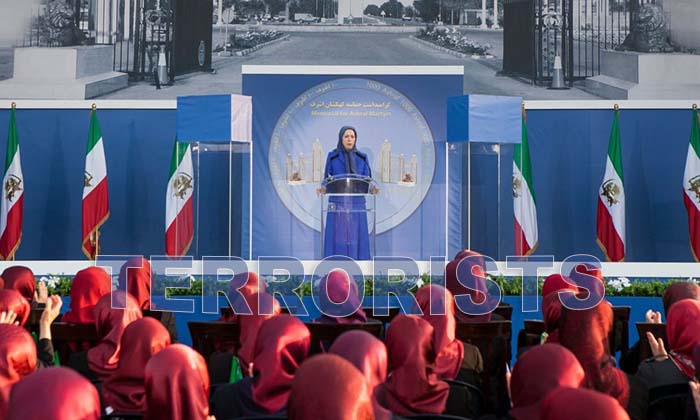
This year’s so-called”grand gathering”of the Mujahedin Khalq Organization (the MKO/ MEK/ PMOI/ the Cult of Rajavi) was held in Albania, instead of holding it near the group’s headquarters in Paris. The group held a five day ceremony to inaugurate its lavish headquarters in a rural region in Albania. The newly built camp is called Ashraf 3, following the name of the group’s infamous camp in Iraq. The five-day event was attended by a large number of former politicians from all over the world including pro-Israeli lobbyist Joe Lieberman, Donald Trump’s personal attorney Rudy Giuliani, and Saudi lobbyist Salman al-Ansari.

Balkan Post describes the paid speakers of the events as”relatively unknown and belong to the opposition parties”asserting that just a few incumbents are among them. However, they are all offered first class flights and luxurious hotels to attend the inauguration ceremony of the group’s new base in the heart of Europe. These special guests were received in the splendidly decorated halls of the camp. The monuments, museums, billboards and posters mesmerized the guests. So there is no surprise to hear Rudy Giuliani –one of the few incumbents– calling Ashraf 3 a”miracle”!

Who pays for the construction of such a”miracle”?
Definitely, one should add the expenses of the life of at least 2000 residents of the camp, the speaking fees of dozens of speakers who speak in favor of the group in its numerous rallies around the world, the expenses of transportation and accommodation of the hundreds who are rented to make the rallies look crowded, to the expenses of Ashraf 3 construction.
One should also take it into consideration that the labor force including those 2000 people work for free. They are not paid for what they serve the MEK. The MEK propaganda has always claimed that the money comes from the Iranian sympathizers of the group all over the world. The group’s propaganda TV regularly broadcast fund raising shows in which some alleged Iranians donate money to the group’s cause. However, the donations do not seem to afford such huge expenditures of the group.
Indeed, the MEK enjoys Saudi oil dollars as it once enjoyed millions of dollars from the oil for food program in Iraq in Saddam Hussein’s era. Philip M. Giraldi, a former CIA counter-terrorism specialist and military intelligence officer assets:

“The MEK, which is financially supported by Saudi Arabia, stages events in the United States in Europe where it generously pays politicians like John Bolton, Rudy Giuliani and Elaine Chao to make fifteen-minute speeches praising the organization and everything it does. It’s paying of inside the Beltway power brokers proved so successful that it was removed from the State Department terrorist list in 2012 by Hillary Clinton even though it had killed Americans in the 1970s. MEK also finds favor in Washington because it is used by Israel as a resource for anti-Iranian terrorism acts currently, including assassinations carried out in Tehran.”[2]

Giraldi had earlier written about the Saudi-Israeli support for the group in Albania.”And then there is the Saudi and Israeli angle,”he wrote on the Unz Review.”Saudi Arabia is now the major funder of MEK/NCRI. Its intelligence chief Turki al-Faisal spoke before the group in 2017. Israel funded the group in its early days and its external spy service Mossad continues to use MEK stay-behinds in Iran to assassinate scientists and tamper with computer systems. The CIA, which recently expanded its anti-Iran task force, it also working closely with MEK. And Giuliani, Bolton, Chao are all in the White House inner circle, which, not coincidentally, is baying for Iranian blood.”[3]
Thus, building the luxurious Ashraf 3 in a pretty short time is not impossible regarding the abundance of free labor and lavish financial sponsorship. The MEK leaders can buy everything in exchange for selling their nation. But,”The only thing the MEK’s money can’t buy is popular support among Iranians,”states Trita Parsi, the founder of the National Iranian American Council. [4]
Mazda Parsi

Sources:
[1] Balkan Post, Newest MEK terror festival in Albania: a few incumbents among the mass of former officeholders, July 17, 2019.
[2] Giraldi, Philip, False Identities Become the New Weapon: War with Iran Promoted by Fake Journalists, American Herald Tribune, June 17, 2019.
[3] Giraldi, Philip, MEK’s Money Sure Can’t Buy Love But it can buy a lot of politicians, Unz Review, May 29, 2018.
[4] Parsi, Trita, Why Trump’s Hawks Back the MEK Terrorist Cult, NYR Daily, July 20, 2018

August 13, 2019 0 comments
FacebookTwitterPinterestWhatsappTelegramSkypeEmail
Newer Posts
Older Posts

Recent Posts

  • The black box of the torture camps of the MEK

    December 24, 2025
  • Pregnancy was taboo in the MEK

    December 22, 2025
  • MEPs who lack awareness about the MEK’s nature

    December 20, 2025
  • Why did Massoud Rajavi enforce divorces in the MEK?

    December 15, 2025
  • Massoud Rajavi and widespread sexual abuse of female members

    December 10, 2025
  • Facebook
  • Twitter
  • Instagram
  • Youtube

© 2003 - 2025 NEJAT Society . All Rights Reserved. NejatNGO.org


Back To Top
Nejat Society
  • Home
  • Articles
  • Media
    • Cartoons
    • NewsPics
    • Photo Gallery
    • Videos
  • Publications
    • Books
    • Nejat NewsLetter
    • Pars Brief
  • About Us
  • Contact us
  • Editions
    • عربي
    • فارسی
    • Shqip