Nejat Society
  • Home
  • Articles
  • Media
    • Cartoons
    • NewsPics
    • Photo Gallery
    • Videos
  • Publications
    • Books
    • Nejat NewsLetter
    • Pars Brief
  • About Us
  • Contact us
  • Editions
    • عربي
    • فارسی
    • Shqip
Nejat Society
Nejat Society
  • Home
  • Articles
  • Media
    • Cartoons
    • NewsPics
    • Photo Gallery
    • Videos
  • Publications
    • Books
    • Nejat NewsLetter
    • Pars Brief
  • About Us
  • Contact us
  • Editions
    • عربي
    • فارسی
    • Shqip
© 2003 - 2024 NEJAT Society. nejatngo.org
Mujahedin Khalq; A proxy force

Will President Rouhani meet genuine human rights advocates halfway?

President Rouhani’s visit to Europe this week is a reminder of how much has changed since last July. But Iran’s eventual rehabilitation into the international community is by no means a done deal. Now that the nuclear deal has been struck and sanctions lifted, what is the next demand to be made of Iran? All sides appear to agree that it should be based around Iran’s human rights record.

Of course, the ultimate aim of any genuine human rights activist must surely be for the UNCHR, Amnesty International and Human Rights Watch to one day be able to open offices in Tehran. Access for the UN Special Rapporteur Ahmad Shahid to visit Iran would be a good start. The way this might be achieved reveals a lot about the different approaches and real aims of those voicing concerns over Iran’s human rights record.

But although when President Rouhani arrives in France he will be greeted by President Hollande and French businesses, he will also be jeered by protestors and demonstrators.

One group of protestors believe that improvements in human rights will only come about through engagement, dialogue and diplomacy. They demand that Rouhani brings Iran to conform with international standards and laws. The country needs to be opened up to greater scrutiny – a bit like the nuclear inspections regime. Activists like Shirin Ebadi further acknowledge that indigenous pressure groups can only flourish in an atmosphere of security, stability and economic prosperity.

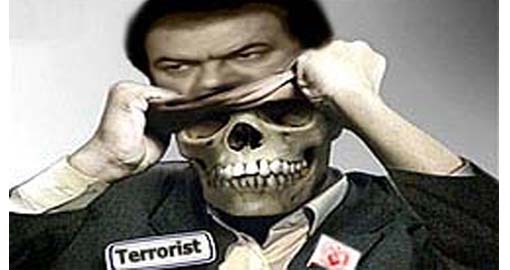
Other protestors, like the Mojahedin Khalq, are simply ratcheting up a new phase of post-nuclear anti-Iran protest. Their demand is ‘Don’t let Rouhani into France’. They say that the only way to make Iran comply with the international community’s demand for improved human rights is for Iran to be isolated and threatened with regime change. This aggressive stance, shared by neoconservatives, Israel and Saudi Arabia, is profoundly incompatible with human rights. Nowhere has this been more nakedly stated than in Senator John McCain’s warning that “peace with Iran could greatly limit our ability to bomb it“. Although recent events in Libya, Iraq and Syria should be a salutary lesson in how difficult it is to bomb regime change into country.

Iran’s president was elected to office on a two-pronged platform of alleviating economic sanctions and improving human rights. He – his government – has achieved the first. Sanctions have been lifted, a sensitive prisoner exchange negotiated with the US and Chinese President Xi Jinping agreed a mega $600billion trade deal with the Islamic Republic. Next, Rohani will arrive in France with a shopping list: 114 Airbus jest.

It is not going to be possible to put this economic genie back in the bottle. Britain’s newly appointed trade envoy, Lord Lamont has identified Iran as “the world’s biggest emerging market since the collapse of the Soviet Union 25 years ago“, and warns that “Britain is languishing behind rivals in its share of business.”

So it is certainly right for the international community to hold President Rouhani to his promise to improve human rights in Iran. How this is done demands mutual acknowledgement of where Iran stands and what is possible.

Rohani has said that he will use the nuclear negotiations with world powers as a model for pursuing Iran’s domestic policy goals. Certainly he will capitalise on Iran’s success in Syria and Iraq to assert Iran’s regional power on the international stage – Rohani is unequivocally part of the establishment, Iran’s military are allies not rivals – but his preferred agenda is clearly to strengthen civic society and the rule of law.

Does this signal that Iran is prepared to meet genuine human rights advocates halfway? Dialogue and negotiation will widen Iran’s engagement with the international community just as economic prosperity and stability will provide ground to strengthen indigenous pressure groups. Maybe this is a trade-off Iran is now in a position to accept. In contrast, those who advocate improving human rights through the barrel of a gun will surely become more and more isolated and their arguments more and more redundant.

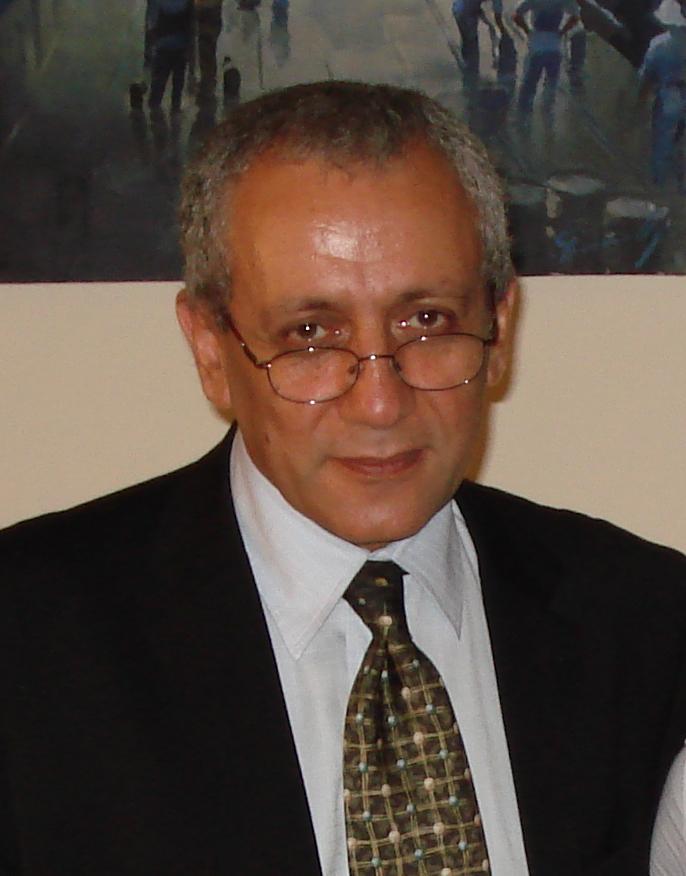
By Massoud Khodabandh Middle East Strategy Consultants,
January 28, 2016 0 comments
FacebookTwitterPinterestWhatsappTelegramSkypeEmail
Massoud Rajavi

Many faces of Masoud Rajavi and his supporters

Lack of ideological consistency in certain politic men causes smacks of corruption. This is one of the main reasons to describe the Mujahedin Khalq Organization as hypocrites who have changed many faces since the establishment of the group. Supporters of such a group seem to own the same factor –hypocrisy—in their carrier.

As an anti-Shah anti-imperialist group the MKO supported the Islamic Revolution in Iran embracing the revolution leader Ayatollah Khomeini. The leader of the group, Massoud Rajavi turned against the newly-established government of Iran and sided with the enemy fighting his country, Saddam Hussein. After a decade of serving Saddam Hossein to suppress the uprising of Iraqi Kurds and Shiites, the collapse of the land lord in 2003 made Massoud Rajavi to sell his cult-like group to American military. Since then, the MKO –that was once an anti-America armed group—has shifted to a pro-American cult that lobbies in the US government paying large sums to US politicians in order to run its regime change agenda.

It is not surprising that those well-paid politicians who embrace the MKO have at least one characteristic in common with the group: they both change many faces just to run their goals. For them, the ends justifies the means. Howard Dean sounds to be one example of these politic men whose “ends” include the money he receives from different lobbies.

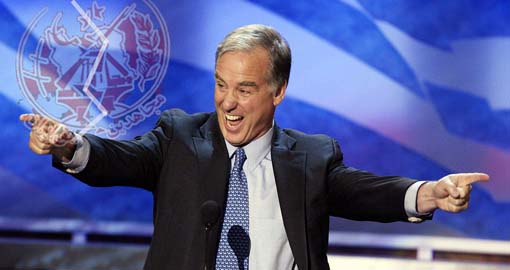
According to a report by Lee Fang on the Intercept, Dean who has been a longtime supporter of a single-payer health care plan has changed tune. Lee Fang states, “This evolution of Dean, known within many circles for his spirited critique of the Iraq War during the 2004 Democratic primary, comes as he has settled into a corporate lobbying career.” [1]

 “ In his new career, he has helped drug companies maintain monopoly power, reversed his old positions on Medicare prices, and worked to undermine a critical component of the Affordable Care Act,” The Intercept’s correspondent describes Howard Dean’s shifting ideas. “ Though known for his anti-war rhetoric in 2004, Dean has accepted money from Mojahedin-e Khalq, an extremist group seeking regime change in Iran and has criticized President Obama’s negotiations with Iran.”

As an alleged democrat figure who opposes military action, he was an MKO agent in the US Congress to obstruct negotiations with Iran. Lee Fang introduces Dean by this subtitle “Paid by Iranian extremist group, bashing Iran negotiations”. He states Dean’s greed to receive the MKO’s money. ”In 2011, the Wall Street Journal reported that Dean was receiving speaking fees from the group,” He writes. “Around that time, Dean began vociferously arguing on behalf of the MEK, even though he conceded that he had known little about the group before joining its cause.”

Fang describes the MKO’s violent substance in this paragraph to reveal the extent the group supporters are misled:

“The Mojahedin-e Khalq, an exiled Iranian group that has attempted for years to overthrow the government of Iran, paid Dean to help in its campaign to be delisted as a U.S.-recognized terrorist group. That year, Dean traveled along with other paid MEK supporters, including Rudy Giuliani, to appear in Berlin with the group and demand that Western nations recognize the MEK leader Maryam Rajavi as the president of Iran. In addition to carrying out a campaign of terrorism against Iran, the MEK helped Saddam Hussein after the Gulf War crush rebellions in Iraq’s Shiite and Kurdish communities. “Take the Kurds under your tanks, and save your bullets for the Iranian Revolutionary Guards,” Rajavi once said.”

Brainwashed and/or bribed by the MKO, “Dean came out against President Obama’s policy of engagement with Iran, declaring that the U.S. negotiations failed to account for the interests of the MEK”. Last year, he criticized Secretary of State John Kerry and President Obama “far, far too eager for a deal with Iran.”

But, It seems that Howard Dean is “far, far too eager” for money, just like his contributor Massoud Rajavi. Logic, morality and even politics are of no value for these people. What pushes them forward is their ambitions to reach their goals. No matter how immoral and inhumane are their goals. 

By Mazda Parsi

Source:

Fang, Lee, Howard Dean Says He’s Not a Lobbyist But He Sure Acts Like One, the Intercept,

Jan. 21 2016

January 27, 2016 0 comments
FacebookTwitterPinterestWhatsappTelegramSkypeEmail
UN

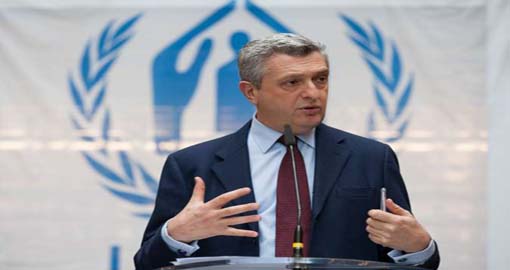
Letter of SFF to the UN High Commissioner for Refugees

Sahar Family Foundation in Baghdad sent a letter to Mr. Filippo Grandi, the new UN High Commissioner for Refugees, simultaneous to the presence of the families in front of the gates of Camp Liberty in Iraq.

The text of the letter is as follows:

Mr. Filippo Grandi, UN High Commissioner for Refugees – Geneva

With respect, we wish to let you know that after 12 years since the overthrow of Saddam Hussein, and continuous focus on relocating the members of the Mojahedin-e Khalq Organization from Iraq during this period, there are still more than two thirds of the members living in insecure conditions in Iraq.         `

The anguished families of the members would like to know what the obstacles are which stand in the way of relocating them to places of safety and then to third countries. The families would also like to know exactly why they are denied visits with their loved ones which is their very natural and basic right.

We are awaiting your kind response.

Sahar Family Foundation

January 26, 2016 0 comments
FacebookTwitterPinterestWhatsappTelegramSkypeEmail
Mujahedin Khalq; A proxy force

Howard Dean Says He’s Not a Lobbyist But He Sure Acts Like One

Last week, we reported that Howard Dean, former presidential candidate and current supporter of Hillary Clinton’s presidential campaign, had attacked Bernie Sanders for supporting a single-payer health plan, claiming that having the government pay for everyone’s health care would “undo people’s health care” and result in “chaos.” In our story, we noted that Dean, once a proponent of single-payer, now works for the lobbying practice of Dentons, a law firm retained to lobby on behalf of a number of pharmaceutical and for-profit health care interests.

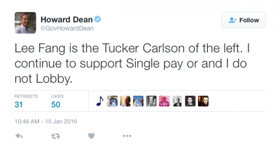
In response, Dean tweeted: “I continue to support Single pay or [sic] and I do not Lobby.”

He tweeted the next day: “The Intercept=The Daily Caller of the left. Same propaganda techniques.”

Dean did not respond to multiple requests for comment. Dentons’ director of communications, Bennett Kleinberg, wrote to us to say, “Howard Dean is a senior advisor with Dentons in our Public Policy and Regulation practice. However, he is not a registered lobbyist and does not lobby public officials on behalf of clients of the Firm.”

Since joining the lobbying industry, Dean has oddly argued on multiple occasions that he does “not lobby.” But he engages in virtually every lobbying activity imaginable, helping corporate interests reach out to lawmakers on legislation, advising them on political strategy, and using his credibility as a former liberal lion to build public support on behalf of his lobby firm clients.

In his new career, he has helped drug companies maintain monopoly power, reversed his old positions on Medicare prices, and worked to undermine a critical component of the Affordable Care Act. Though known for his anti-war rhetoric in 2004, Dean has accepted money from Mojahedin-e Khalq, an extremist group seeking regime change in Iran and has criticized President Obama’s negotiations with Iran.

The fact that Dean is not a registered lobbyist reflects a distinction that is largely meaningless in today’s Washington. Thousands of other professionals in the lobbying business have either never registered or de-registered and lobby registration law has almost never been enforced. Newt Gingrich, who was widely criticized in 2011 for acting as a lobbyist for various clients without registering, was hired last year by Dentons’ lobbying practice, where he works closely with Dean to consult with clients on political strategy. As Legal Times reported, the Dean-Gingrich team is now a selling point for Dentons as the “pair aims to become another Washington-based bipartisan tag team who can act as political soothsayers for whichever corporate clients call upon them.”

Helping keep drugs expensive

In 2009, Dean joined the lobbying division of the law firm McKenna Long & Aldridge LLP, which represents a number of health care interests. Through the firm, he was retained that year to work for Biotechnology Industry Organization, or BIO, a lobbying group for biotech and pharmaceutical companies.

After being retained by BIO, Dean authored an opinion column for The Hill newspaper arguing in support of a bill backed by his client that called for extending the exclusivity period for drugs made from living organisms, such as vaccines or Herceptin/trastuzumab, a treatment for breast cancer.

Dean claimed in the piece that a “commonsense and fair approach, similar to the process and timeline currently in place for generic versions of chemical-based medicines, would allow the original developer of the biologic to protect the proprietary data used to develop the medicine for at least 12 years.”

Dean’s call for extending the exclusivity period for biologics — a move that would boost prices for life-saving drugs — shocked patient and consumer advocates. Dean did not initially disclose that he was working for BIO in his column, although The Hill later updated his byline to note that Dean’s law firm represented biotech companies.

The inside story of Dean’s work for the biotech lobby was revealed in an article by BioCentury, a trade publication. According to the report, Dean and his former campaign manager Joe Trippi were hired by BIO to help move forward the biologic legislation backed by the industry. Jim Greenwood, the president of BIO, told BioCentury that Dean was brought on to help with messaging, strategy, and even to contact lawmakers on Capitol Hill on behalf of the industry. BIO made clear that Dean was hired specifically for his reputation as a liberal. “As a physician clearly focused on health care, a Democrat leader and clearly to left of center, his efforts were impactful,” Greenwood said.

Dean defended his efforts to BioCentury by saying, “I do not lobby.”

In the end, a version of the biologic legislation was folded into the Affordable Care Act.

“Howard Dean navigated around the lobbying rules to push Democrats to back big drug companies on the term of the monopoly for biologic drugs,” said Jamie Love, the director of Knowledge Ecology International, a nonprofit organization that addresses human rights aspects of intellectual property rights and medical innovation. “His ‘trust me, I’m a doctor’ routine was worth billions to Roche and the other companies he represented on this. Now it is very hard to undo the damage.”

Screen grab of Dentons’ website with Howard Dean’s bio.

 Photo: Dentons.com

Bashing PhRMA, then parroting it

On the 2004 campaign trail, Dean criticized the role of health care lobbyists in setting prescription drug policies, such as the deal engineered by drug companies that prevents Medicare from using its bargaining power as the Veterans Administration does to negotiate for lower drug prices. Such a change would save over $116 billion over 10 years. Dean told the Associated Press: “As president, a high and early legislative priority of my new administration would be to improve the prescription drug benefit to create one that is affordable, federally administered, and for all of America’s seniors; uses the government’s buying power on behalf of 41 million seniors to negotiate and drive down drug prices; contains meaningful cost containment including reimportation of safe, effective medicines.”

But Dean, whose new employer, Dentons, represents the Pharmaceutical Research and Manufacturers of America, the powerful drug lobby group known as PhRMA, has now changed his tune. During a discussion with Gingrich last year, Dean reversed his position and said he is now against allowing Medicare to bargain for lower drug prices. Dean told the audience that some expensive drugs, like those used to treat hepatitis C, could eventually save money long term, a claim Inside Health Policy noted closely echoed drugmakers’ arguments.

In September of last year, Dean took his newfound love of drug companies to the pages of the New York Times. In a letter to the editor opposing an op-ed that proposed to allow Medicare to bargain for cheaper prices, Dean wrote that “schemes to launch a federal attack on one of the last growing, innovative industries in America are in the long run counterproductive for both job creation and, more important, for the health of human beings around the world.”

Working to undermine Obamacare

In 2013, Dean again surprised health care advocates by publishing a Wall Street Journal opinion column criticizing a key component of the Affordable Care Act: the Independent Payment Advisory Board, also known as IPAB. The board is designed to allow a group of experts to make recommendations on how Medicare can save money, but only in ways that do not reduce benefits and low-income subsidies or raise premiums. Dean, repeating GOP arguments against the board, called IPAB “essentially a health-care rationing body,” and he said it should be repealed.

Health policy experts reacted furiously. The New Republic writer Jonathan Cohn noted that it was quite puzzling that Dean, supposedly a supporter of government programs designed to use evidence-based approaches to set provider payment rates, would suddenly decide to oppose IPAB. “Or maybe it’s not so strange to hear Dean say this,” Cohn wrote. “Since his career in politics ended, Dean has found a home in the K Street establishment he once held in such disdain.”

“Shame on Howard Dean,” wrote economist J. Bradford DeLong, who noted that it appears as though Dean was “being mendacious to try to protect the profits of the clients of McKenna Long & Aldridge.”

Dean conceded to Time that his firm has clients that oppose IPAB, but refused to disclose them.

And in December 2009, as the Affordable Care Act nearly died as conservative opposition grew to a fever pitch and Democratic leaders struggled to find enough votes to move it forward, Dean appeared on national network news programs to call for President Obama to scrap the legislation and start over, a process that would have doomed any chance for health care reform.

Paid by Iranian extremist group, bashing Iran negotiations

The Mojahedin-e Khalq, an exiled Iranian group that has attempted for years to overthrow the government of Iran, paid Dean to help in its campaign to be delisted as a U.S.-recognized terrorist group. In 2011, the Wall Street Journal reported that Dean was receiving speaking fees from the group. Around that time, Dean began vociferously arguing on behalf of the MEK, even though he conceded that he had known little about the group before joining its cause.

That year, Dean traveled along with other paid MEK supporters, including Rudy Giuliani, to appear in Berlin with the group and demand that Western nations recognize the MEK leader Maryam Rajavi as the president of Iran. In addition to carrying out a campaign of terrorism against Iran, the MEK helped Saddam Hussein after the Gulf War crush rebellions in Iraq’s Shiite and Kurdish communities. “Take the Kurds under your tanks, and save your bullets for the Iranian Revolutionary Guards,” Rajavi once said.

In 2014, Dean came out against President Obama’s policy of engagement with Iran, declaring that the U.S. negotiations failed to account for the interests of the MEK. (Dean even spoke on Capitol Hill on behalf of an MEK-affiliated group, which posted the video online.) Last year, Dean continued to advocate against a nuclear accord with Iran, calling Secretary of State John Kerry and Obama “far, far too eager for a deal with Iran.”

Dean’s success on the other side of the revolving door rests in part on his credibility as a left-wing icon. And yet, despite his fiery rhetoric on the campaign trail in 2003, Dean by most accounts governed Vermont as a business-friendly, moderate Democrat. Even his record on single-payer is far less supportive than what he has attempted to project.

In 1991, as the lieutenant governor of Vermont, Dean testified in support of single-payer. But as governor, he quickly backtracked, claiming that single-payer would be too expensive for the state.

John McClaughry, Dean’s Republican opponent for governor during the 1991 election, recalls that Dean continually shifted the goal posts for single-payer. “I don’t know that Howard has any fixed principles about this issue — it’s what sells at the moment,” McClaughry said.

Dean’s evolution as a politician is discussed at length during the first Huffington Post podcast Candidate Confessional. During the interview, Dean explains that he knew well before the infamous post-Iowa caucus scream that he had little chance of becoming president as an insurrectionist populist. He yearned to be regarded as a serious, establishment-friendly politician, but was too slow in making the transition as a candidate.

“I couldn’t make the turn to become an establishment candidate,” he lamented.

Contact the author:

Lee Fang, the intercept

January 25, 2016 0 comments
FacebookTwitterPinterestWhatsappTelegramSkypeEmail
Mujahedin Khalq Organization members' families

After 12 years families of Rajavi cult hostages in Camp Liberty demand UNAMI action

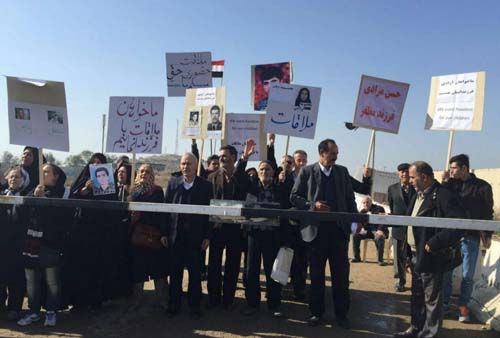
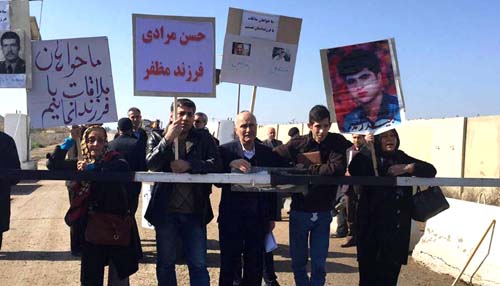
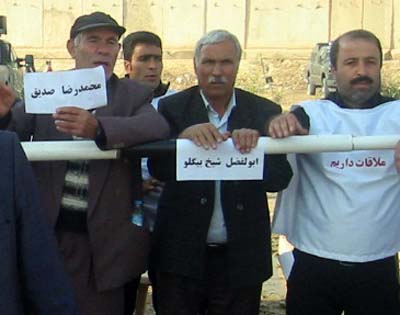
Today over 30 families from different provinces in Iran have arrived at the gates of Camp Liberty. They want simply to have the right to visit their loved ones. They are asking the UNHCR and UNAMI as well as Ms Jane Holl Lute, the UN Special Adviser for Relocation of Camp Liberty Residents to Outside Iraq, why is it that 12 years after the fall of Saddam Hussein (the benefactor of fugitive terrorist leader Massoud Rajavi), there is still no sign that the terrorists’ camp will close and the residents held hostage by the MEK leaders will be rescued and taken to safety. Why, after twelve years do the families of Camp Liberty residents still not have access to their loved ones? What is preventing anyone from helping these people and what power lies behind supporting the hostage taker to the point that all the affairs of the camp are still in the hands of the criminal Massoud Rajavi and his henchmen?

Rajavi denies that the families are “real” and claims that these are all “agents of Iranian intelligence services” coming to “kill” the members of the “National Liberation Army” which is about to “topple” the Iranian regime and its puppet regime i.e. Iraqi government.

The families have brought with them all the documentation necessary to prove their legal position and their family relations with the hostages inside the camp. They have handed these documents to the Iraqi and UN authorities demanding action and are waiting for some result.

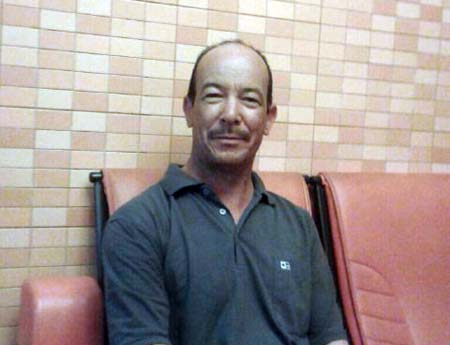
At the same time Nejat Society announced today that Ashur Varshi escaped from Camp Liberty and immediately contacted his family.

Link to the source:

Ashur Varshi escaped Camp Liberty and contact his family

Mr. Varshi defected the Mojahedin- e Khalq group and managed to run away the Cult after 27 years.

Ashur Varshi now resides in a hotel in Baghdad, Iraq. As soon as he stepped the free world, Ashur called his brother; Ghorban. He introduced himself and said that he was free, living in a hotel in Baghdad. His brother was shocked and couldn’t stop crying. The Varshi family were really happy they could hear Ashur’s voice after nearly three decades.

Ashur asked to talk to his parents. He said that he missed his mother a lot. Unfortunately his parents were dead while he was captive of MKO Cult.

Another camp liberty resident escaped along with Ashur. Mr. Mahmoud Ruhollahi is from Babolsar and now resides in the same hotel as Ashur.

January 25, 2016 0 comments
FacebookTwitterPinterestWhatsappTelegramSkypeEmail
Camp Liberty

Ashur Varshi escaped Camp Liberty and contact his family

Mr. Varshi defected the Mojahedin- e Khalq group and managed to run away the Cult after 27 years.

Ashur Varshi now resides in a hotel in Baghdad, Iraq. As soon as he stepped the free world, Ashur called his brother; Ghorban. He introduced himself and said that he was free, living in a hotel in Baghdad. His brother was shocked and couldn’t stop crying. The Varshi family were really happy they could hear Ashur’s voice after nearly three decades.

Ashur asked to talk to his parents. He said that he missed his mother a lot. Unfortunately his parents were dead while he was captive of MKO Cult.   

Another camp liberty resident escaped along with Ashur. Mr. Mahmoud Ruhollahi is from Babolsar and now resides in the same hotel as Ashur.

January 24, 2016 0 comments
FacebookTwitterPinterestWhatsappTelegramSkypeEmail
Mujahedin Khalq; A proxy force

Using Mojahedin Khalq made the Americans look extremely hypocritical

‘US needs help to disentangle from Syrian misadventures’

Iran nuclear talks drew to a close and a historic agreement was reached between Iran and P5+1 and the deal was implemented, but the opponents, from the Israeli Prme Minister and Saudi Arabia to Iran hawks in US congress to the Iranian terrorist groups functioning unhindered in the West, went out of their ways to sabotage the agreement from the very beginning.
A Beirut-based commentator and analyst covering Middle East geopolitics says Saudi Arabia and Israel were desperate to strike a blow at Iran’s further international ‘rehabilitation’. Holding a master’s degree in International Relations from Columbia University, Sharmin Narwani says the deal was also struck as the US and its allies “desperately needed the support of rational, capable parties within the Middle East to help disentangle from their Syrian misadventures.”

In the following interview with Habilian Association, Narwani speaks about those who’ve failed to influence the deal. Having a great knowledge of Iranian society, she also touches upon the Mujahedin-e Khalq (MEK, a.k.a. MKO) and describes them as “useful to the deal spoilers” who lacks any kind of support in Iran.

1. What is your take on the opponents of Iran nuclear deal before the agreement was reached between Iran and P5+1?

The primary opponents of the P5+1-Iran negotiations were Saudi Arabia and Israel – these two states were on the forefront of a large-scale propaganda campaign intended to derail the talks and prevent a deal from being struck. Their motivations were entirely political as both states actively seek to undermine Iranian influence in the Middle East and beyond. Both states view growing Iranian clout as a direct and existential threat to their nations, and to their ability to manipulate the region to advantage. During the one and a half years of negotiations, the Islamic Republic was in ascendency in the region, while Saudi Arabia and Israel were hemorrhaging credibility – even with their western allies. Their desperation to therefore strike a blow at Iran’s further international ‘rehabilitation’ was even more urgent than usual, and they were successful, on the surface at least, of gaining public support from at least one P5 member state, France. The French took some very hardline public postures – they managed to secure some large weapons sales to Saudi Arabia and Qatar during this period – but behind the scenes and at the actual negotiating table, I am told they barely made a peep.

2. How do you assess such activities after the agreement was reached? What are their post-Iran-deal plans?

Of course the French came into line immediately post-deal, mainly to try to gain a piece of the Iranian post-sanctions-relief economic pie. I believe France’s Foreign Minister Laurent Fabius may have even been the first P5+1 official to visit Iran. You can see from the slew of western officials and business delegations making pilgrimages to Tehran in the immediate aftermath of the Vienna deal, that commerce is of paramount importance to these states suffering from stagnant economies.

Economic considerations aside, this deal was also struck because the US and its allies desperately needed the support of rational, capable parties within the Middle East to help disentangle from their Syrian misadventures. By mid-2012, the US and its western allies suddenly realized that Syria would not be a quick ‘regime-change’ operation and were starting to grow concerned about the proliferation of jihadis and other extremists outside of their control, most of them armed, funded and supported by western allies in the Persian Gulf and Turkey. That’s when the US reached out to Iran in a secret meeting in Oman. So I think another consideration for the P5+1 is definitely to gain Iran’s assistance in helping to put out some of these fires. Iran will help, in the sense that eradicating political violence, re-stabilizing states and halting extremism is high on its priority list, but it is important to understand that western goals are not the same. The west is perfectly happy with weakened Mideast states – it just doesn’t want the extremism it has spawned to breach its own borders. At the present moment, the nuclear deal has been helpful in that the US can openly work in the same military theaters (Syria, Iraq) with Iran without a confrontation breaking out between the two. This is a direct result of Vienna.

3. Please tell me what do you think of Netanyahu’s March 2015 address to the US Congress over Iran accord?

I didn’t watch the speech – Netanyahu never has anything interesting or truthful to say. I did, however, watch the circus around it, and I have to say that if I was an American I would be seriously appalled at the pandering of my elected officials to a foreign official. I do think Netanyahu was a net loser by giving that speech. He created a contentious split in the American body politic and gained acrimony instead of galvanizing support. Clearly he lost, as the Iran nuclear agreement is a reality today. But it would be a mistake to write off Netanyahu. He – and his allies in the US and elsewhere – intend to exploit every opportunity, at every turn of this agreement, to put a wrench in the works. One way to do this is to undermine the ‘spirit’ of this deal, which we are seeing at the moment with further sanctions talk, threats about Iran’s missile program, and the ridiculous visa restriction measure that was signed into law by Obama a few weeks ago…

4. What is your opinion about the activities of Iranian groups such as the Mujahedin-e Khalq (MEK, aka MKO) against this agreement?

I was in Vienna covering the final round of talks and there were some MEK people around with their usual stunts. I don’t really see this group as significant in any way. They are useful to the deal spoilers only insofar as they provide them with token ‘Iranians’ to parrot more anti-Iran propaganda. The MEK’s main interest is in constant demonization of the Iranian government because it enhances their funding opportunities and gives them access to some rather shifty ‘policymaking’ rooms in the west. So Vienna was a valuable platform for them – it probably earned them a few extra dollars. They make good parrots, but nothing more.

5. What is your take on the MEK which was until recently listed as a foreign terrorist organization in the US and is now functioning unhindered in the US and European countries?

Look, the MEK doesn’t really figure into any serious analyst’s calculations on anything to do with Iran. They are an extremely marginalized group within Iran – in all my visits to the country over the years, I have never heard a supportive word for the MEK from a single Iranian. On the contrary, Iranians tend to view them as traitors for fighting alongside Saddam Hussein’s military in an aggressive 8-year war that saw hundreds of thousands of Iranians die. So there is no love lost for the MEK inside Iran. Furthermore, the group’s support comes almost exclusively from foreign adversaries of Iran, which adds to the perception of MEK treachery.

Even when the organization was listed as a terrorist group in the west, it continued to function under different aliases, with the tacit approval of its western hosts. It has only ever been used as a tool by the west, to be pulled out when these states want a ‘lever’ against Iran. Look at the delisting in the US…it took place in late 2012, a few months after Washington had initiated quiet meetings in Oman with Ahmadinejad’s government which ultimately was the ‘opening’ that led to this nuclear deal. The Americans delisted MEK so they could have a pressure ‘card’ in their hand – to show the Iranians the US was willing to escalate if the Iranians didn’t fall into line. But Iran is well-versed in US tactics. I can’t imagine this bothered them much – though it did make the Americans look extremely hypocritical on their “War on Terror.” After all, the MEK had killed US citizens in Iran in the 1970s, attacked US soil in 1992, and continues to abuse its own members. This was the State Department’s very language when they delisted the group.

Listed or delisted, the MEK remains exactly the same. It always enjoyed western cover of sorts. Like many other western-groomed ‘opposition’ groups based outside the Middle East, it will be employed opportunistically by its hosts, and cut off when it is no longer of use.

Sharmine Narwani,

January 23, 2016 0 comments
FacebookTwitterPinterestWhatsappTelegramSkypeEmail
Iran Interlink Weekly Digest

Iran Interlink Weekly Digest – 130

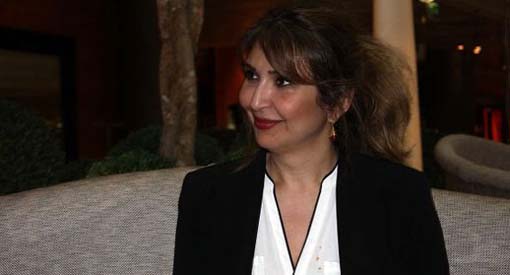
++ Former MEK Leadership Council member Maryam Sanjabi has published an autobiographical book in Iran titled ‘The Mirage of Freedom’ about her life with the MEK. The book is in Farsi.

++ A few items have been written anticipating the end of Massoud Rajavi’s career now that the nuclear issue has ended. They say, even though he is trying to jump on the human rights, bandwagon, with his background he is at the back of the queue. He was militarily dead after Saddam died, now he’s politically dead.

++ Every week Maryam Rajavi fabricates the support of one group of people or another; distinct from paid supporters. This week she claims that MEK supporters in Tabriz have asked the Americans to invade the area to liberate them. In reaction, a few people writing from Tabriz and elsewhere have ridiculed this. “There is nobody here from the MEK” they say, “the MEK are hated. Even when we do hold demonstrations it has nothing to do with the MEK.”

++ The series of interviews Davoud Arshad had with Alireza Nourizadeh over the past few weeks are done. Now the MEK have launched a vitriolic attack Nourizadeh in every one of their sites; tens of pages swearing at him and fabricating lies against him. Commentators say it is ironic that Nourizadeh is close to Saudi Arabia and Egypt, and that while on one hand the MEK are trying to smooch the Saudis, they can’t stop attacking people close to them either. “Let this be a warning to the Saudis. Use the MEK and this is what you get – the MEK will bite the hand that feeds it.”

++ The funeral of Ebrahim Mohammad Rahimi will be held on Saturday 23 January after he succumbed to cancer. Former member of the NCRI, Mohammad Reza Rohani, responded with a short, curt note titled ‘Mr Rajavi why don’t you write with your own name?’ Rohani explains that all this swearing at Mohammad Rahimi is from Rajavi himself but that he has it published under everyone else’s name like Mehdi Abrishamchi. “You still claim to be Muslim? I remind you, the prophet said ‘once someone has died, leave them alone’. But you can’t do that, you have to keep at it. This begs the question, is this swearing about him or issued as a warning against others doing the same thing he did?”

There is a spectrum of MEK and formers who have reacted to Massoud Khodabandeh’s article ‘Massoud Rajavi strangled by his own red line’. The old red line between the internal critics and the ex-members is the same of course, nothing has changed there. But inside the MEK, with the appearance of this new red line, there is chaos. On the surface, internal critics all agree about Mohammad Rahimi’s heroic struggle against the Iranian regime. But beyond this there are clearly two camps. Some ask ‘why did Rajavi not allow him bring his wife to be with her son?’ These people recognise a red line. They realise now that even as a supporter you can’t ask for anything or you’ll be labelled an ‘agent of the Iranian regime’. Some others in this camp simply say, ‘he’s dead, let’s forget it and move on’. But the MEK has been badly burned by the exposure that this new red line has come inside the organisation itself. To sort this out the MEK – which long ago infiltrated the so-called circles of internal critics – has tried pretend that Mohammad Rahimi has nothing to do with the MEK and therefore there is no such thing as a red line. A memorial letter has been signed by tens of sympathetic people which does not mention the MEK at all, as though he wasn’t a member for decades. Signatories include the Matin Daftarys- former members of the NCRI – who have signed it out of good will, but whose names act to dilute Mohammad Rahimi’s association with the MEK. This kind of activity is particularly targeted at the English speaking audience.

The effect of this whole affair has been to create doubt, confusion and infighting to the extent that nobody in the MEK is capable of paying any attention to Massoud Rajavi. He has lost his hold over the members and supporters. We will expect to see an internal crackdown fairly soon.

In English:

++ Mazda Parsi writing in Nejat Bloggers analyses ‘New Evidence on Mojahedin Khalq-Israel Alliance to Thwart Nuclear Deal’. Parsi writes that “Attempts by Israel and American GOP and also the mujahedin Khalq organization (the MKO) to push the West towards more hostility against Islamic Republic have so far failed… The outcome of the deal was very appalling for the three above- mentioned groups. It was a failure for the Israeli lobby AIPAC and the MKO’s lobby who had spent large amounts of money for their lobbying campaigns to obstruct the deal. Their target audience in the congress are paid large sums to run the anti-Iran agenda.” Parsi then exposes the corruption of Republican Senator Tom Cotton in this campaign, referencing Eli Clifton who wrote about this in Lobelog in March 2015 in an article titled ‘Tom Cotton Allies Himself with the MEK’.

++ Nejat Society reports “Two brothers, defected from Mojahedin Khalq. The Bahadori brothers have now returned to their home town Jolfa, Eastern Azarbayjan.

Shahram and Shahrouz Bahadori were warmly welcomed by their family after 14 years of imprisonment in the camps of the Mujahedin Khalq Organization (the MKO). The Bahadori brothers were recruited by the MKO in 2002 in Baku Azarbayjan where the older one was working. The MKO recruiters promised to provide them with European refuge.

Although they were promised a better life in Europe, they found themselves in Turkey and then Iraqi Camp Ashraf where they were immediately separated from each other. They were not allowed to meet each other for years. They were not told about their family who had several times come to visit them in Camp Ashraf, Iraq. The brothers made efforts to meet each other for eight years. Whenever they asked for a visit they were punished by the group leaders.

After their relocation from Camp Ashraf to Camp Liberty, they succeeded to meet each other randomly and eventually they managed to escape from the cult of Rajavi after the recent rocket attack on Camp Liberty in November. Then, they were aided by the UN and Iraqi human rights bodies and the Iranian embassy in Baghdad in order to return to their country.

One of the brothers told Nejat Society that a large number of members of the group are thinking of leaving the group but they are kept busy in computer classes – without the Internet – because leaders claim that they will be sent to Europe after finishing their alleged computer training course. Cult leaders keep members in a state of hesitation and passiveness by threatening them that leaving the MKO ends with death and destruction.”

++ Habilian Association: “A Beirut-based commentator and analyst covering Middle East geopolitics says Saudi Arabia and Israel were desperate to strike a blow at Iran’s further international ‘rehabilitation’. Holding a master’s degree in International Relations from Columbia University, Sharmin Narwani says the deal was also struck as the US and its allies ‘desperately needed the support of rational, capable parties within the Middle East to help disentangle from their Syrian misadventures.’ In the following interview with Habilian Association, Narwani speaks about those who’ve failed to influence the deal. Having a great knowledge of Iranian society, she also touches upon the Mujahedin-e Khalq (MEK, a.k.a. MKO) and describes them as ‘useful to the deal spoilers’ who lacks any kind of support in Iran.”

January 22, 2016

January 23, 2016 0 comments
FacebookTwitterPinterestWhatsappTelegramSkypeEmail
Former members of the MEK

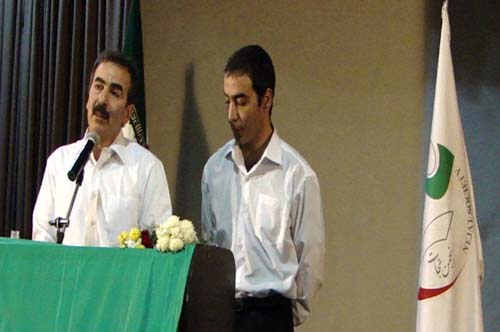
Two brothers, defected from the MKO, returned home

Bahadori brothers returned to their home town Jolfa,Eastern Azarbayjan.

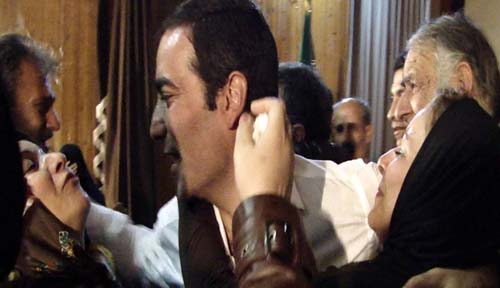
Shahram and Shahrouz Bahadori were warmly welcomed by their family after 14 years of imprisonment in the camps of the Mujahedin Khalq Organization (the MKO).

Bahadori brothers were recruited by the MKO in 2002 in Baku Azarbayjan where the older one was working. The MKO recruiters promised to provide them with European refuge.

 Although they were promised a better life in Europe, they found themselves in Turkey and then Iraqi Camp Ashraf where they were immediately separated from each other. They were not allowed to meet each other for years. They were not told about their family who had several times come to visit them in Camp Ashraf, Iraq. The brothers made efforts to meet each other for eight years. Whenever they asked for a visit they were punished by the group leaders.

After their relocation from Camp Ashraf to Camp Liberty, they succeeded to meet each other randomly and eventually they managed to escape from the cult of Rajavi after the recent rocket attack on Camp Liberty in November.

Then, they were aided by the UN and Iraqi human rights bodies and the Iranian embassy in Baghdad in order to return to their country.

One of the brothers told Nejat Society that a large number of members of the group are thinking of leaving the group but they are kept busy in computer classes- without the Internet – because leaders claim that they will be sent to Europe after finishing their alleged computer training course.

Cult leaders keep members in a state of hesitation and passiveness by threatening them that leaving the MKO ends with death and destruction.

January 21, 2016 0 comments
FacebookTwitterPinterestWhatsappTelegramSkypeEmail
Mujahedin Khalq Organization members' families

Does the UN recognize our right to meet our children?

Mr. Ghodrat Sedigh is an aged father of one of Mujahedin-e Khalq hostages; Mohammadreza. He has recently went to Camp Liberty in accompany with some other families of Rajavis’ hostages. In an interview with Nejat Society he defines his trip to Camp Liberty, Iraq:

Rajavis henchmen started swearing at us and throwing stones as soon as we arrived at Camp Liberty gate. I was there just to visit my son. I was neither military man nor did I have government job.

We stayed at Camp Liberty gate for three days.  

I’d even be happy to see my son from a distance where I could recognize his face, still the Cult leaders denied.

We visited Iraqi MPs at the parliament. The Deputy Prime Minister promised to peruse our demands after the Christmas holidays. Our only demand as families of Camp Liberty residents is to visit our beloved children. ..

A representative from the UN who participated the meeting also promised to facilitate the meeting between us and our children at UN base near Camp Liberty.

We returned to Iran hoping the visit with our beloved ones be expedited.

At the end I want to ask some questions: does the UN recognize our right to meet our children? If yes, why don’t they oppose Rajavi not to enslave our children..?

Is there any legal authority to investigate the Rajavis’ crimes?

January 18, 2016 0 comments
FacebookTwitterPinterestWhatsappTelegramSkypeEmail
Newer Posts
Older Posts

Recent Posts

  • MEPs who lack awareness about the MEK’s nature

    December 20, 2025
  • Why did Massoud Rajavi enforce divorces in the MEK?

    December 15, 2025
  • Massoud Rajavi and widespread sexual abuse of female members

    December 10, 2025
  • Farman Shafabin, MEK member who committed suicide

    December 3, 2025
  • Nejat Newsletter No.131

    December 3, 2025
  • Facebook
  • Twitter
  • Instagram
  • Youtube

© 2003 - 2025 NEJAT Society . All Rights Reserved. NejatNGO.org


Back To Top
Nejat Society
  • Home
  • Articles
  • Media
    • Cartoons
    • NewsPics
    • Photo Gallery
    • Videos
  • Publications
    • Books
    • Nejat NewsLetter
    • Pars Brief
  • About Us
  • Contact us
  • Editions
    • عربي
    • فارسی
    • Shqip