Nejat Society
  • Home
  • Articles
  • Media
    • Cartoons
    • NewsPics
    • Photo Gallery
    • Videos
  • Publications
    • Books
    • Nejat NewsLetter
    • Pars Brief
  • About Us
  • Contact us
  • Editions
    • عربي
    • فارسی
    • Shqip
Nejat Society
Nejat Society
  • Home
  • Articles
  • Media
    • Cartoons
    • NewsPics
    • Photo Gallery
    • Videos
  • Publications
    • Books
    • Nejat NewsLetter
    • Pars Brief
  • About Us
  • Contact us
  • Editions
    • عربي
    • فارسی
    • Shqip
© 2003 - 2024 NEJAT Society. nejatngo.org
Iran Interlink Weekly Digest

Iran Interlink Weekly Digest – 129

++ Several items have criticised Saudi Arabia for using the MEK on its Al Arabiyeh television. These say that the Saudis have no tools and have resorted to wearing Saddam’s old boots. We are reminded that the MEK are not as they were before and the negative impact of using them outweighs the positive for Saudi Arabia. Some articles look at the situation of the MEK themselves as a mercenary force which will work for anyone. Irandidban has published a short bullet point article following the history of treason and mercenary activity of the MEK from its start up to now. Fars News in Iran also has a short bullet point article about the Al Arabiyeh channel’s use of the MEK and the separatist groups titled, ‘Al Arabiyeh the mouthpiece of terrorists and separatists’.

++ Atefeh Eghbal and others have written short notes comparing the MEK with Daesh in terms of how they treat families. This was in response to the incident in which a Daesh fighter executed his own mother because she wanted to help him get back to normal life. Iranian writers identify the MEK as being the same, saying the only reason they don’t publicly execute the families is because they can’t. The fundamental approach is the same, swearing, name calling, throwing stones, etc.

++ US and Iranian Foreign Ministers along with EU representative Federica Mogherini are in Vienna in expectation that sanctions will be lifted this weekend. On January 28, President Rohani will visit President Holland in Paris. Iranian exiles in Paris are preparing to start a new phase of anti-Iran activities after the unclear issue has ended. At the top of that agenda is human rights. Tens of different groups and individuals have made a joint announcement about pickets and demonstrations held from 27-28 January. This varies from known groups like the Iranian Democratic Party of Kurdistan to unknown people from Chicago or a group calling itself ‘the book table of the Netherlands’. The main event will be a picket at Les Invalides. Ironically the MEK have announced that they will hold a separate picket on the same day, at the same time, only in Trocadero, which is a stone’s throw away. Contrary to the other events which are organised and attended by Iranian and French groups, the MEK event is all in Arabic and is Saudi backed. It is expected that the flags of Saudi and Israel will be flying together alongside the MEK logo at this picket. It is also expected that there will be more of the so-called Syrian Free Army there than the dwindling MEK people, and already the SFA’s local radio in France is being used solely to advertise this MEK event in Arabic and French. The MEK placards are all in Arabic – we haven’t seen any in Hebrew yet. As usual the MEK are touring Europe’s refugee camps and promising a trip meals and pocket money to any refugees willing to come along. Buses are prepared to set off from London on the 27th and from Brussels and the rest of Europe. These activities are being monitored closely by security services because of recent terrorist activities.

In English:

++ An interview with former MEK member Masoud Banisadr appeared in Fair Observer as ‘Living and Escaping a Terrorist Cult. In it, Banisadr describes the philosophy behind cultic abuse as used by the MEK. He describes his feelings after leaving: “It was great and horrible at the same time. If you find a very close friend has robbed you, it hurts; if you find him violating your trust and dignity and deceiving you for years, it hurts much more. Then imagine finding out a guy who you thought of as a saint and the holiest person on earth has been just a charlatan wanting to make you his slave through manipulating your mind—robbing not only your wealth, health and happiness, but your individuality, personality and humanity. Then you will understand what I felt.”

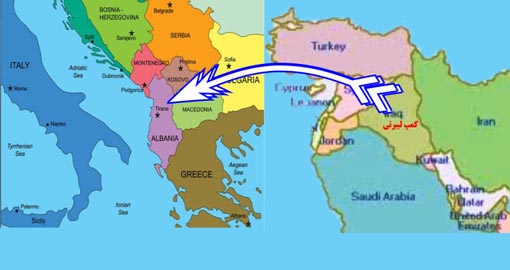
++ The names of twenty six more Camp Liberty residents who were transferred to Albania have been published by Nejat Society to help families identify where their loved ones are.

++ Mazda Parsi writes for Nejat Bloggers ‘The Cult of Rajavi (Mojahedin Khalq), a tool for Iran hawks’. “The media of the Mujahedin Khalq Organization (the MKO) has launched a huge Saudi-oriented propaganda against the Iranian Government following the recent conflicts between the two countries. Unsurprisingly, the MKO is on the side of any country that happens to be hostile to Tehran, as the time of the nuclear negotiations the MKO made efforts to obstruct talks by repeating the same old misinformation about the Iranian nuclear activities.”

++ Peyvand Rahaee published an open letter to UN Secretary General Ban Ki Moon from forty families of MEK members asking for help to free them from Camp Liberty in Iraq.

++ Neday-e Haqiqat reports that Narges Behesthi has been seeking contact with two brothers for over ten years since they were taken by the MEK to Iraq. “In 2001 my older brother; Morteza went to Turkey to find a better job. For two months he took a temporary job. After two months that we had no contact with him, Moteza sent us a letter saying that he worked in a shipping company and that they would help him to go to Europe. He wanted us to send our younger brother Mostafa to Turkey. This way Mostafa who was seeking a good job went to Turkey as well. We later understood that the MKO recruiters in Turkey had promised my brother to send him to Europe provided that he stay at Camp Ashraf, Iraq for six months.”

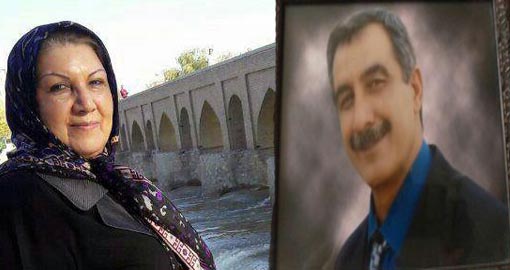
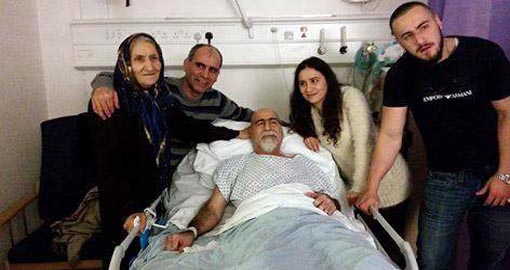
++ Massoud Khodabandeh published an article on Iranian.com titled ‘Massoud Rajavi strangled by his own red line’. In it he describes the plight of loyal MEK supporter Ebrahim Mohammad Rahimi who is dying of brain cancer and his son Sepher. They want to contact the wife and mother who is in Camp Liberty, but Rajavi’s red line has now tightened to include his own supporters as well as external critics. Ebrahim is outside the MEK red line now because of this humanitarian request. He is accused of being ‘an agent of the Khomeini [sic] regime’. Khodabandeh predicts that this constant purging of members will continue until Rajavi is alone. He puts this down to Rajavi’s incompetence even as a cult leader.
January 17, 2016 0 comments
FacebookTwitterPinterestWhatsappTelegramSkypeEmail
Mujahedin Khalq; A proxy force

New Evidence on MKO-Israel Alliance to Thwart Nuclear Deal

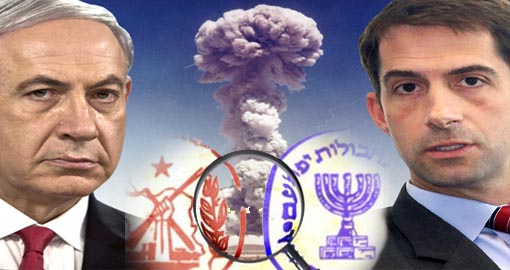
Attempts by Israel and American GOP and also the mujahedin Khalq organization (the MKO) to push the West towards more hostility against Islamic Republic have so far failed. However, measures of the efforts were not clear to the world until the recent news was published on the bribes given to US republicans by the Israeli state.

 The historic nuclear agreement with Iran, labeled the Joint Comprehensive Plan of Action, was negotiated for months and finally signed by Iran and the U.S., UK, Russia, China, France (the P5) and Germany (+1) on 14 July, 2015.

According to the deal Iran has promised to eliminate its supply of medium-enriched uranium, decrease its supply of low-enriched uranium by 98% and reduce approximately two-thirds the total number of gas centrifuges for 13 years. The deal is objectively good but perhaps more importantly, it has allowed both the West and Iran to declare victories through diplomacy, avoiding any military action.

The outcomes of the deal was very appalling for the three above- mentioned groups. It was a failure for the Israeli lobby AIPAC and the MKO’s lobby who had spent large amounts of money for their lobbying campaigns to obstruct the deal.

Their target audience in the congress are paid large sums to run the anti-Iran agenda. Republican Senator Tom Cotton from Arkansas is one of the vocal Iran Hawks in the Us Congress. New revelations about his corrupt relations with Israel has been recently published. “Given his ardent support, the Israel lobby paying for U.S. Sen. Tom Cotton’s recent trip to Israel  with his wife likely has little complaint that it was the third most expensive congressional junket in 15 years,”  according to the report posted on Arkansas Blog. [1]

 The travel was sponsored by the American Israel Education Foundation, the charity arm of pro-Israel lobbying giant AIPAC. About $14,000 was spent on transportation, $4,000 on lodging and meals and $18,000 on other expenses, which includes a $7,000 bill for security in a region characterized by volatility. [2]

Daily News Bin described Tom Cotton as the one who “spearheaded a letter signed by forty-seven republicans who informed Iran’s leadership that they would do everything they could to undermine the deal if they ever gained executive power.” The report denounces Cotton for his “hyperbolic and dishonest rhetoric against the deal which often had him sounding like a cartoon character.” [3]

Cotton was bought by Israel for a good price.” It turns out he had a good reason to be so one-sided: Israel gave him a million dollar campaign contribution for his efforts,” according Daily News Bin. [4]

What the news websites just revealed a week ago had been previously covered by Eli Clifton of the Lobloge in March 2015. He noticed the alliance between the MKO and Tom Cotton in an article titled “Tom Cotton Allies Himself with the MEK”. [5]

About the association of the MKO and the Zionist agent Tom Cotton, Clifton states:

”But Cotton and the MEK share a common agenda when it comes to the nuclear negotiations with Iran. In a controversial video appearance from her Paris headquarters before the House Foreign Affairs subcommittee on counterterrorism last week, the group’s co-leader, Maryam Rajavi, recommended that the best way to defeat the Islamic State in Syria and Iraq was to pursue regime change in Iran. And, in January, Cotton, a protégé of Bill Kristol of the Emergency Committee for Israel, told an audience at the Heritage Foundation:

“Certain voices call for congressional restraint urging Congress not to act now, lest Iran walk away from the negotiating table, undermining the fabled yet always absent moderates in Iran. But the end of these negotiations isn’t an unintended consequence of congressional action. It is very much an intended consequence — a feature, not a bug.” [6]

21st Century Wire also suggests, “Tom Cotton has proven early just how low he is willing to go for money and power.” It makes fun of the Senator’s failed attempt to thwart the nuclear deal. “The other reason for Cotton running point on this failed mission is obvious: he was paid to do it. “ [7]

According to the Wire, the US senators are also paid by the other Iran’s foe, the MKO:

 “In addition, many American politicians – both Republicans and Democrats, including Rudolph Giuliani and Howard Dean, regularly pocket thousands of dollars each from the “Iranian-American” lobbying front representing the wealthy cult terrorist organization known as MEK (aka MKO, PMOI, NCRI, Rajavi Cult). In exchange for money, US politicians will speak publicly on behalf of the MEK and their cause for ‘regime change’ in Iran, and US politicians will regularly tell crowds of exiled Iranian donors that the US will “liberate” Iran for them. Granted, US politicians are selling pure fantasy here, but it’s this fantasy which keeps their campaign coffers full. Did Tom Cotton also receive money from the MEK/Iranian-American lobby too? We’d like to know.

“More than anything, this was a crass and cowardly attempt by the GOP and the Israeli and MEK lobbies – to push the US closer towards war footing with Iran – a country which has not attacked any of its neighbors in 400 years.” [8]

Mazda Parsi

References:

[1] Brantley, Max, Tom Cotton’s expensive trip to Israel, Arkansas Blog, October 17, 2015

[2] ibid

[3] Dailynewsbin, Republican senator took million dollar bribe from Israel to sabotage Obama’s Iran deal, January 5, 2016

[4] ibid

[5]Clifton, Eli, Tom Cotton Allies Himself with the MEK, LobeLog, May 6th, 2015

[6] ibid

[7] 21st Century Wire, Scarlet Letter: Foreign Money Drives Republican Senators’ Push for World War III

March 11, 2015

[8] ibid

January 17, 2016 0 comments
FacebookTwitterPinterestWhatsappTelegramSkypeEmail
Massoud Rajavi

Massoud Rajavi strangled by his own red line

There was a time when Ebrahim Mohammad Rahimi and others like him were willing to fight and die for the MEK and its leader Massoud Rajavi. Not any more. What was once a mass movement of over half a million Iranians has been reduced to a group of old and sick former combatants sitting it out in a closed camp in Iraq with no hope for the future. Neither struggle nor normal life are open to them now. In many ways, Ebrahim has been among the lucky ones. After the 2003 invasion he decided to leave Iraq and, after spending four years in the Temporary Internment and Protection Facility (TIPF) run by the American army, was able to join family members in England. In 2010, he was reunited with his fifteen-year-old son who had been left with his grandparents in Iran as a baby when both his parents – former political prisoners – joined other MEK combatants in Iraq in the 1980s. Ebrahim continued to support the MEK in England as an activist. He encouraged his son to be involved too. But what should have been the beginning of a new and happy future for father and son has been sadly cut short. Ebrahim is dying of brain cancer in a London hospital. His son, Sepher, and other family members and friends attend him in his last days.
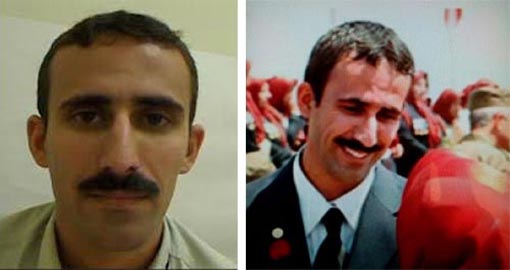
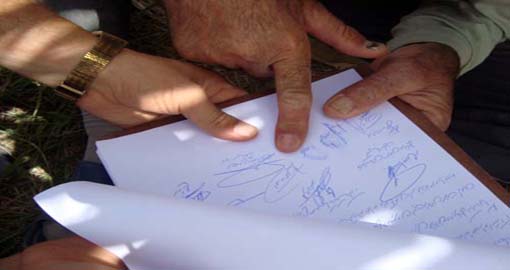
Ebrahim’s only dying wish is to speak a few words with his estranged wife who is still trapped in Camp Liberty in Iraq. Sepher, who is now twenty, would also like to renew a relationship with his mother. Since 2010 he has only been able to speak by phone to his mother three times, and each time, he says, the call was controlled by MEK minders. In August 2015, after Ebrahim’s devastating diagnosis, they wrote to Maryam Rajavi in Paris asking her to allow this contact. They had no answer. They tried through the MEK in London, with the paperwork needed to bring her to London prepared by their lawyer through the UNHCR in Iraq. Still they received no help.

Instead the MEK began a vicious defamation campaign against the father and son. The MEK’s efshahgah website and others accused Ebrahim of being a long standing “agent of the Iranian regime’. Although this is the standard response of the MEK to its enemies, nobody could have been more surprised than Ebrahim himself that he is now being accused of this faux crime. Ebrahim remains a loyal supporter of the MEK. His son also. Even worse, the MEK began writing on behalf of his former wife; this time saying that Ebrahim had forced their son Sepher to work for the Intelligence agency of the “Khomeini regime”. Of course, for anyone familiar with the MEK this label is not new, nor does it carry any weight. It is not based on fact but is in fact the name given to the ‘red line’ used by Massoud Rajavi to define who he thinks his enemies are. MEK members and supporters at all levels are inculcated with fear of these enemies. It is a cultic control mechanism.

Rajavi first began delineating this red line in order to take control of the MEK after he and others left Iran in the early 1980s. The first victims of this red line were members of the newly formed National Council of Resistance of Iran (NCRI) of which the MEK was only one member among several. Rajavi systematically began to draw his red line closer and closer to the needs and demands of his Mojahedin Khalq organisation. Those who disagreed with him were forced to leave the NCRI. Rajavi labelled them traitors and enemies of the Iranian people, addicted to the regime as agents of the Intelligence Ministry of Iran. This red line tactic suited him well. With hundreds of thousands of members and supporters in Iran and in the west, Rajavi intensified his aim to be recognised as the ‘sole leader of the Iranian resistance movement against the regime’. In 1985 he used his controversial marriage to Maryam Azodanloo to re-position this red line. Anyone who did not agree with his leadership was ousted from the MEK. Many left – including some who could have rivalled Rajavi for leadership of the organisation. Over the intervening years Rajavi used this strategy many times. Each time he announced a new ideological demand the red line would fall between those who accepted his leadership and those who didn’t. After each round of purges Rajavi would set about trying to recruit new members with the changed ideological framework. It didn’t work.

Little by little the MEK has shrunk as he labelled more and more people as his enemies. Alongside this strategy Rajavi tried to frighten his followers into staying with him by labelling anyone who spoke out against the organisation as ‘agents of the Iranian regime’. What outsiders may not be aware of is that Rajavi deems this ‘crime’ as punishable by death and that the reason such enemies are still alive are lack of opportunity and because of prioritising the overthrow of the ‘Iranian regime in its entirety’ before dealing with such critics. All well and good when these enemies really are against you. One such former member was Hadi Shams Haeri who rejected membership of the MEK following Rajavi’s forced divorces. Shams Haeri came to live in Holland where he began to campaign alongside other former MEK members to get his children back with him. Unfortunately, he succumbed to cancer in June 2012 without ever being reunited with his grown-up children. Shams Haeri’s actions attracted vitriolic attacks from the MEK. His demand to see his family fell outside Rajavi’s red line that separated families and banned all relationships except with him. Shams Haeri rejected Rajavi and paid the price.

Now with the situation of the Mohammad Rahimi father and son, it appears the red line is drawn even tighter. Ebrahim came from the heart of the MEK to help them in London. He and his son remain loyal to Rajavi and his aims but find themselves outside the red line simply because they want to have contact with a family member. Rajavi cannot tolerate any such contact. He wants to ban every relationship which doesn’t centre on him. Perhaps as a result of this unbearable, impossible demand, ten names have come to light over the past year of men and women inside the MEK base in Paris – from high ranking members right up to the top cult lieutenants (those just below second-in-command Maryam Rajavi) – who are on the brink of committing suicide or running away from the MEK. This will happen. It is inevitable.

As Rajavi’s red line grows ever tighter there will soon be no more room for anyone. It wouldn’t be a surprise if Mehdi Abrishamchi himself – Rajavi’s most trusted lieutenant – is soon found outside the red line. The only real task of everyone’s existence at this point is about how they can squeeze themselves inside the red line and not attract Rajavi’s wrath. Surely they are suffocating. The wonder is that these people appear unaware of their predicament. Someone who is on the brink, don’t they see that they will be next to be expelled from the MEK and subjected to character assassination on the Efshahgar website?

What is amazing is that the people remaining in the MEK do not appear to see that it is not the excluded who have changed but that Rajavi’s red line is drawn tighter and tighter around him to exclude thousands of former members and supporters. Normally, cult leaders grow their cults, attracting and recruiting new members, or as a minimum, maintaining what numbers they have. But since Rajavi stole the half-a-million-strong movement in the 1980s he has shrunk the MEK to fewer than two thousand people, most of whom are sick and old and trapped in the base in Iraq waiting to be moved to safety. This can only lead us to conclude that Massoud Rajavi is not a very effective cult leader. Not only has he failed to attract any new members for many years, but he cannot even tolerate the few followers he has left. If his red line gets any tighter only he and Maryam will be left. After he rejects her will he be unable to tolerate even his own company? Suicide then will be his only option; he can use his red line to hang himself.

Massoud Khodabandeh, Iranian.com

January 16, 2016 0 comments
FacebookTwitterPinterestWhatsappTelegramSkypeEmail
Human Rights Abuse in the MEK

How Mujahedin Khalq abducted my brothers

Maryam sanjabi;MKO separated member interviewed Ms. Narges Beheshti

Ms. Narges Behesthi is a suffering sister who lost her brothers within the Mujahedin-e Khalq Cult.

It is now a decade that Ms. Beheshti is seeking to visit or at least have a contact with her two brothers; Mostafa and Morteza.

Unfortunately her older brother Morteza was killed during the Iraqi police invasion to Camp Ashraf. Actually Morteza was victimized for the cult leader’s interests and his passion for power.

Even after such a disastrous and painful event, the Rajavis denied the Beheshti family’s visit their younger brother; Mostafa.

Ms. Beheshti went to the Camp Ashraf dozens of times and requested for a visit, still she couldn’t.  

In an interview with Ms. Maryam Sanjabi – MKO separated member, she describes how her brothers joined the Cult:

My brothers were not supporters of Mujahedin-e Khalq. We didn’t know these unpatriotic and traitors.

In 2011 my older brother; Morteza went to Turkey to find a better job. For two months he took a temporary job. After two months that we had no contact with him, Moteza sent us a letter saying that he worked in a shipping company and that they would help him to go to Europe. He wanted us to send our younger brother Mostafa to Turkey. This way Mostafa who was seeking a good job went to Turkey as well.  

We later understood that the MKO recruiters in Turkey had promised my brother to send him to Europe provided that he stay at Camp Ashraf, Iraq for six months.

We had no contact with my brothers for a year when we received a letter from Mostafa. In the letter he had asked us to send our sister to Turkey as well. Though we were somehow doubtful, we agreed that my sister go to Turkey. My sister went to Turkey in accompany with one of our relatives. We were worried so we wanted our relative to make sure that my sister would reach our brothers.  In Turkey someone else had gone to welcome my sister. The two men said that we would drive you to your brothers. Our relative refused my sister to go with them. And after some disputes with the two men he took my sister back to Iran.

Two weeks later Mostafa called us. While crying he said “.. why didn’t my sister  come here.. they will kill me…,” he was crying when the connection suddenly cut out.  

Tanks God. We were lucky that the Rajavi army didn’t succeed to take another member of our family as hostage.

After the last call we could not find my brothers. We had no news of them.

 After the fall of Saddam Hussein, through NejatNGO we understood that my brothers had not gone to Europe. They had no job rather they were transferred to camp Ashraf,Iraq. In fact they were deceived by the MKO Cult recruiters in turkey. The Rajavis henchmen had assured my brothers that they will help them with sending them to Europe and providing them with residency in case that they stay at Camp Ashraf, Iraq for six months. Then they wanted Mostafa to write a letter to get my sister to Iraq as well.

In 2004 my mother could visit my brothers for the first time after three years. In that year for the first time the Cult leaders allowed the families to visit their children at Camp Ashraf. My mother could have a short visit with my brothers. The conversations were strictly controlled by the Cult in a way that my brothers couldn’t speak freely to their mother. My younger brother had taken my mother’s hands from under the table while crying. They didn’t dear to express their emotions….

From then on we have had no contact with my beloved brothers.

Unfortunately Morteza was killed in 2011 during the clash between Iraqi police and Camp Ashraf residents.

We went to Camp Ashraf several times but the Cult leaders didn’t allow us to visit Mostafa…. The separated members of MKO told us that the members are kept under pressure within the Cult and some even do not know that their families come to visit them….

Neday-e Haqiqat website published the interview in Persian.

January 14, 2016 0 comments
FacebookTwitterPinterestWhatsappTelegramSkypeEmail
UN

Families of Rajavi’s hostages in Camp Liberty ask Ban Ki-moon for help

Dear Mr. Ban Ki-moon!

In the present modern world and specially in the world that the people care for their relief and security, the assassination and slavery are not of any meanings and without doubt the persons who proceed to the mentioned actions are far from the world liberal people eyes and live in isolation, as DAESH the Excommunicating-Terrorist Group, has made insecurities all over the world at present and it’s a model of all criminal factions.
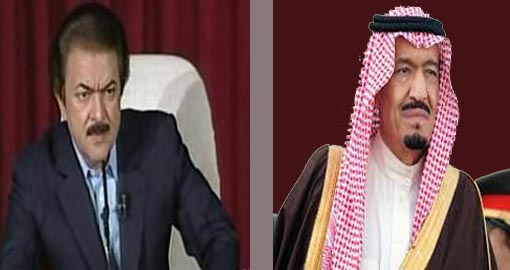

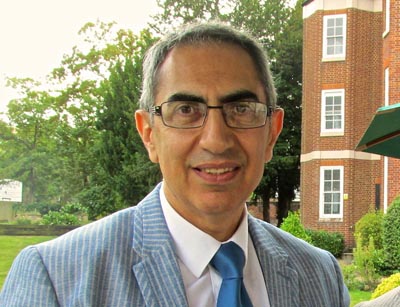
United Nations Secretary –General!

MKO (Mujahedin-e-Khalq Organization) is one of the terrorist groups, maybe more dangerous than it, that captured some of Iranian family members over 30 years and makes them for terrorist actions.

Hereby we remind you of some crimes of the terrorist faction heads (MKO):

  • Assassination and terrorism before Islamic Revolution such as assassination of some American advisors and top managers
  • Partnership in 8-year imposed war, together with Saddam and slaying of Iranian border zone people.
  • Killing of in-camp members such as Ghorban Torabi, Alan Mohammadi , Parviz ahmadi, Mehri Mousavi, Alinagi Haddadi & etc .
  • torture of the members and the prisoners in Ashraf camp and now in Liberty camp.
  • Intense brainwashing of Iranian family offspring for doing criminal actions.
  • make restraint the relocation and movement of the organization members to third countries.

Mr. Ban Ki-moon!

Hereby we, injured families of the faction members in Golestan Province- Iran, request you to fulfill releasing and rescuing our children from MKO perfidious commanders’ hands. As to insecurities in Iraq, for instance in some weeks ago its proved by missile attacks to Liberty camp, whereas the guilt was on MKO heads shoulders that fail to move the members and the prisoners to other countries, and now our beloveds are at risk of severe threats by some Iraqi militia groups. They are in dangerous and insecure situation. We request you and other Union advisors to take measures about movement of the prisoners and make them free in their lives, including communication with the outside world and their families in the shortest time after decades away and unaware from them.

Regards

Families of MKO members in Golestan province of Iran

11 January 2016

Signatories:

1.Ali-asghar Mardani, father of the prisoner “Ali-akbar Mardani”.

2.Abolghasem Mudabber, brother of the prisoner “Seiyed-taghi Nowkandehei”.

3.Gol-agha Mudabber, brother of the prisoner “Seiyed-taghi Nowkandehei”.

4.Ahmad Saghaei, brother of the prisoner Ms. “Shayesteh-banoo Saghaei”.

5.Mahmood Torabi, brothers son of the prisoners Ms. “Masomeh” & “Maryam-banoo” and “Mohammad-reza Torabi”.

6.Moslem Torabi, brothers son of the prisoners Ms. “Masomeh” & “Maryam-banoo” and “Mohammad-reza Torabi”.

7.Ata Torabi, brothers son of the prisoners Ms. “Masomeh” & “Maryam-banoo” and “Mohammad-reza Torabi”.

8.Nad-ali Torabi, brothers son of the prisoners Ms. “Masomeh” &” Maryam-banoo” and “Mohammad-reza Torabi”.

9.Vali-ullah Seraj, brother of the prisoner Ms. “Zahra Seraj”.

10.Mohammad-hussein Livaninejad, uncle of the prisoners “Hossein-ali” and “Abbas-ali Livaninejad”.

11.Shahram Riyahi, Son of the prisoner “Mohammad-taghi Riyahi”.

12.Khalil Riyahi, brother of the prisoner “Mohammad-taghi Riyahi”.

13.Samad Golalipour, brother of the prisoner I”raj” and “Hoshang Golalipour”.

14.Abolghasem Mottaki, brother of the prisoners “Mohammad-hossein” & “Ali-hossein” and “Gholam-hossein Mottaki”.

15. Motaki, Mother of prisoner “Roohallah Ramouz”

16.Ahmad Golalipour, father of the prisoner “Iraj” and “Hoshang Golalipour”.

17.Hamid Zahed, brother of the prisoners Ms. “Habibeh” and Ms. “Halimeh Zahed”.

18.Mohammad-ali Arab, father of the prisoner “Ghorban Arab”.

19.Ali Hashemi, brother of the prisoner “Ali-akbar Hashemi”.

20.Kamran Bazazi, brother of the prisoner Ms. “Mahnaz Bazazi”.

21.Hossein-ali Rigi, brother of the prisoner “Barat-ali Rigi”.

22.Cheragh-ali Rigi, brother of the prisoner “Barat-ali Rigi”.

23.Morad-mohammad Aghatabai, brother of the prisoner “Hamid-mohammad Aghatabai”.

24.Mohammad Aghatabai, brother of the prisoner “Hamid-mohammad Aghatabai”.

25. Hamid-reza Rigi, brother of the prisoner “Barat-ali Rigi”.

26.Mohammad-ali Rigi, brother of the prisoner “Barat-ali Rigi”.

27.Zoleikha Rigi, sister of the prisoner “Barat-ali Rigi”.

28.Mohammad-mehdi Naserimoghadam, brother of the prisoner “Hadi Naserimoghadam”.

29.Muhtaram Najmi, mother of the prisoner “Hadi Naserimoghadam”.

30.Maryam Naserimoghadam, sister of the prisoner “Hadi Naserimoghadam”.

31.Nafas Varshi, brother of the prisoner “Ashor-mohammad Varshi”.

32.Karim Khormali, brother of the prisoner “Bahram Khormali”.

33.Mehrnoosh Nick-sir, sister of the prisoners “Mehrnaz” and “Mehran Nick-sir”.

34.Abdolrahim Abedi, nephew of the prisoner “Mohammad-khaled Masoodi”.

35.Mohammad-ali Ghezelsoflo, brother of the prisoner “Nor-ullah hezelsoflo”.

36.Hossein Hajili-davaji, brother of the prisoner “Emam-verdi Hajili-davaji”.

37.Haj Mehdi Mohammadi-zadeh, father of the prisoner “Fereshteh Mohammadi-zadeh”.

38.Nase Rahim-arbabi, brother of the prisoner “Ahmad Rahim-arbabi”.

39.Ali-reza Nargesi, brother of the prisoner Ms. “Leila Nargesi”.

40- Bibihajar Vahedi mother of prisoner “Yalmaz Vahedi”.

41- Masoumeh Heydari sister of prisoner “Massoud Heydari”.

Peyvand-e Rahayee Website published the letter

January 13, 2016 0 comments
FacebookTwitterPinterestWhatsappTelegramSkypeEmail
Mujahedin Khalq; A proxy force

The Cult of Rajavi, a tool for Iran hawks

The media of the Mujahedin Khalq Organization (the MKO) has launched a huge Saudi-oriented propaganda against the Iranian Government following the recent conflicts between the two countries. Unsurprisingly, the MKO is on the side of any country that happens to be hostile to Tehran, as the time of the nuclear negotiations the MKO made efforts to obstruct talks by repeating the same old misinformation about the Iranian nuclear activities.

Although the MKO’s propaganda usually does not succeed to run its anti-Iranian agenda in the international community –because of its very insignificant role in the region—there are some groups who indulge it. The American Iran hawks as well as Saudi authorities try to coddle the MKO in response to material and spiritual services the group offers them.

Daniel Larison of the American Conservative magazine explains what motivates the US supporters of the MKO to get in bed with a violent cult-like exiled group that they know it is detested by the Iranians. “The views and preferences of the people in the other country are of no concern for the hawks except insofar as they can be misrepresented to support their preferred policy,” writes Daniel Larison. “The exiles pretend to speak for their country, and their patrons here pretend to believe them.”

Larison describes the MKO as “a totalitarian cult” and “a horrible organization” which is cynically indulged by US policy makers for their own reasons. He suggests that MKO sponsors in the US will cite the opposition’s imaginary preferences in the government’s policy debates to insist that the U.S. ought to be doing what they claim the opposition wants.

This policy is effective for the MKO to fuel its propaganda machine and especially to feed its brainwashed members inside the cult. However, this policy of hypocrisy does not work for the group either in the US or in the region.

The same thing is applicable about Saudi Arabia.  Saudis are seeking any ally to strengthen their hostile unity against their powerful rival in the region, the Islamic Republic. As a neighboring country, they know better than Americans that the MKO does not represent the aspirations of the Iranian people but they also prefer to ignore the fact and to harbor terrorist cult-like groups such as ISIS and the MKO to stabilize their state in the region and to help their warmonger friends in the West.

Daniel Larison believes that “the ambitions of exiles and the delusions of hawks” harm the interests of both the US and Iran but he fails to mention that the support of Iran opponents for the MKO also deteriorates the group’s situation among the Iranian people.

While the group’s propaganda about death penalty in Iran is endless and the group’s leader promises a future Iran without death penalty, its large-scale support for Saudi Arabia after the execution of 47 people in one day explains its deceitful tactics in its anti-Iran attitude.

By the way, the MKO’s fraudulence to gain the support of Iran’s enemies has only made it a tool in the hands of its supporters. Ultimately the support does not result in prosperity for the group. The expiration date of the MKO will pass someday just like what happened to al Qaeda and other terrorist groups.

Mazda Parsi

*Larison, Daniel, Beware of Exiles and Their Promises, American conservative Magazine, January 2nd, 2016

January 12, 2016 0 comments
FacebookTwitterPinterestWhatsappTelegramSkypeEmail
Former members of the MEK

Masoud Banisadr:Living and Escaping a Terrorist Cult

In this edition of The Interview, Fair Observer talks to Masoud Banisadr, a former member of Mujahedeen-e-Khalq.

In 1965, Mujahedeen-e-Khalq (MeK) was established in Iran in opposition to US imperialism. Espousing a blend of Marxism and Islam, the group helped bring about the Iranian Revolution of 1979. However, after breaking with the revolutionary government, MeK embarked on a terrorism campaign and was forced into exile, losing followers in Iran after its support for Saddam Hussein in the Iran-Iraq War.

MeK was designated as a terrorist organization by the US State Department until 2012. The Iranian government estimates that MeK activity has claimed some 12,000 Iranian lives over the last three decades.

Operating from exile, the organization had all the trappings of a cult. Attracting young, idealistic Muslims with slogans of Islamic justice and social freedom, it disrupted familial and social ties, forcing members to divorce their spouses and abandon relatives, making them dependent on the group through isolation, misinformation and manipulation.

Masoud Banisadr, a cousin of former Iranian President Abolhassan Banisadr, joined MeK while studying in Britain and served in its political wing for nearly 20 years. Finally leaving the group in 1996, he now writes about the dangers of cult ideology and the appeal of extremism. His books include Masoud: Memoirs of an Iranian Rebel and Destructive and Terrorist Cults: A New Kind of Slavery.

In this edition of The Interview, Fair Observer talks to Masoud Banisadr about what first attracted him to the MeK and what eventually forced him to escape.

Anna Pivovarchuk: How was MeK different from other political organizations? What is your definition of a cult, and how does it fit into that image?

Masoud Banisadr: Cults resemble slavery more than they do political parties, which are idea-based. Cults, on the contrary, are leader- and behavior-based. They claim to have an ideology that is useful for recruitment, to use it as a mind manipulation tool and to glue followers to each other. But when you look at them closely, you will see that they have taken shape around a leader and a code of behavior dictated by that leader.

Cult dogmas are shaped around behavior. For example, for a cult member, it is more important how he looks than how he thinks. In MeK, you could say I don’t believe in this or that principal of Islam, and nobody cared much. But if you behaved differently, if you didn’t follow or have enough loyalty toward the leader, you couldn’t stay in MeK for a second—same as al-Qaeda, same as Daesh [Islamic State]. In all of these organizations, you can see that what is important is survival of the group and absolute loyalty and obedience toward the leader.

The other main difference is that a cult is a way of life, and as slavery there is no way out of it till you die. When you are a member of a cult, it is the whole of you. Your motherhood and sisterhood is defined by being member of a cult. Your work is defined by being a member of a cult.

Pivovarchuk: So what makes people join a cult in the first place? Are there some common reasons?

Banisadr: I think people are recruited by cults rather than joining them freely. However, some people might be more vulnerable than others to fall in the trap of cults due to three main reasons.

The first is personal: I might have a problem of belonging, identity or not having a sense of purpose in life. These days, many young people lack a sense of belonging. Family ties are not as strong as before. Religion is not as important as before. Even nationality is not as relevant as before. This lack of feeling of belonging might attract them toward gangs, cults or groups of any sort to feed that longing. Imagine a young Muslim on the street who has nothing: Suddenly, when he joins a group like al-Qaeda or Daesh, he becomes a warrior, a martyr, a great hero. It’s a great change. People either love you or hate you, but at least you are not insignificant anymore.

The second is the cause: ideological, political, or philosophical, mainly as a means to seek justice. If you feel or see injustice and discrimination against yourself or against your community or religion, you feel you have to do something. Many young Muslims feel injustice against Palestinians in Israel, or they see the rise of Islamophobia in Western countries and feel they have to do something against it. Cults feed on injustice and claim they can offer people a way to seek justice. Cults also give an illusion of a sense of honor and a way for an ordinary normal person to feel that he/she can have an honorable life and that if one dies for the cause, they will be remembered as a martyr or a hero.

And the third reason might be that you have been born into a cult. Your parents have been followers of a cult, and as a result you have been raised in the cult.

Pivovarchuk: You talk about the personality of a cult leader being very important. You have to get people to buy into your narrative. How is that achieved?

Banisadr: After being recruited comes their mind manipulation. Although they have recruited you, using some sort of doctrine, or cause, forcing you to accept that if you join their cult you will become a better person. Still, they have to change you into a committed or, if I may say, blind follower or a “zealot” member. And here comes mind manipulation that I have divided in three intertwined stages.

The first stage is rational trickery and influence techniques that change your belief system. For example, if you are attached to the family, through some rational trickery, through some influence techniques, they can persuade you that your new family are the cult members rather than your parents or your siblings. They persuade you to fight for them—[as] the only way that you can seek justice for yourself or your community. Then using some influence techniques they will force you to do something to affiliate yourself with the group. They might start with small requests and then build on those small steps and gradually pull you deeper and deeper into their swamp.

The next stage is of “mind control”—control of environment and control of behavior. Because at this stage you are divided between who you were and who you are going to be, your feelings, your personality will force you to go back toward who you were.

I was born the year when the first democratically elected prime minister of Iran, Mohammad Mosaddegh was violently overthrown by a CIA coup. It affected my generation and the later ones deeply.

To overcome the effect of your old feelings, cult leaders have to isolate you from the society and your past life; this will be done through control of environment. There is an Iranian expression that says, “Whoever leaves your eyes will eventually leave your heart.” By stopping you from having any contact with your parents and friends, gradually cults can stop you remembering your feelings toward your loved ones.

They can change your personality gradually by changing your behavior. For example, if you look at the people who became followers of Daesh or al-Qaeda, you can immediately see a change of appearances and behavior. For example, they grow a beard, or they grow or cut their hair, their clothes change, and also their behavior will change—in extreme form of it, used by Daesh. You have seen in the media that they have asked a British-born person to behead another person, or even destroy shrine of a Muslim saint. By doing that, Daesh will force that person to stand against his old personality by an extreme change of behavior. It is also a way of dehumanizing the outsiders and isolating a new follower not only from the society, but also from history, tradition, ethic and culture of his previous being.

Pivovarchuk: How important is this isolation from family and friends in altering someone’s idea of yourself? In your personal experience, what have you been told to do or asked to do?

Banisadr: When you say that I am a person, what does it mean? I am a person because of my set of beliefs, because of my principles, because of the way I think, because of the things that I enjoy, because of my relation to my family, my relation to parents, siblings, wife, children and so on. If you lose them one by one, then eventually you become an “unperson.” Nobody.

For example, I was in the last year of my PhD. But the way that MeK educated me, I was feeling ashamed of being a PhD student, not proud of it. Why? Because they were telling me that while I was studying and wanted to become a doctor, followers of the group were in prison under torture during the shah’s time. So instead of fighting, instead of sacrificing my life for the people, selfishly, I was studying. So instead of being proud of who I was, I was ashamed of it.

I was even ashamed of my family, because of my family name—because of my cousin, who was the president of Iran.

This is the new you—this new personality of yours. You change into a nobody, and you define yourself according to your cult personality. What is your rank in the cult? What is the relationship between you and the leader of the cult? How have you behaved in the cult? How successful have you been in the pursuit of the cult’s objectives?

I am calling it slavery because you change into an “unperson.” Your relationship with everybody else is defined via your relationship with the cult leader. Because whatever you do, you are not gaining anything for yourself and even your family and your society but for the cult leader. Like slaves whose existence was defined through their relationship to the master, and the fruit of their life was going to the master.

In MeK, we were not even allowed to think of our children and their wellbeing. The logic behind it was that while children in Iran are suffering, you wouldn’t dare let yourself think about your own children. As with slavery, you are a parent, but you are not a parent. You are a supervisor of your children, a person responsible for educating a child so he can change into another follower/slave of the leader/master. You have to teach your children: instead of loving you, love the leader. Instead of remembering grandparents, remember those who have sacrificed their life for the cult.

In slavery, at least in your dreams, in your desires, you are free. You can desire freedom because you can see that you are a slave. In your dream, you can remember your old life. Your country, your family. But in cults you can’t. Because through brainwashing, they have changed you into your own jailer. You even don’t dream of freedom as you are educated to think that you are freest person on earth.

Pivovarchuk: In your book, you say that you underwent a transformation from a “liberal middle-class semi-intellectual” to a zealot ready to die for the leader. It shows that those who join cults are not stupid or naïve, but that it’s a complicated psychological process. What caused this transformation that you talk about?

Banisadr: For me personally, I guess I have to go back to three slogans of the Iranian Revolution: independence, freedom and Islamic Republic.

I was born the year when the first democratically elected prime minister of Iran, Mohammad Mosaddegh was violently overthrown by a CIA coup. It affected my generation and the later ones deeply. We wanted independence because we used to feel that our country was ruled by Americans—not physically, but we knew that the shah was a puppet of the US. So independence was very important to us.

The first thing to understand is what attracts young Muslims to these groups. I believe it is injustice—injustice against Muslims in different countries. It is very important we recognize this.

The second one was freedom, which was opposite of the dictatorship, and the censorship of shah’s regime. We understood political freedom more than any other freedom, probably because of the lack of it. So when we talked about freedom, we meant political freedom rather than liberalism as it is in the West, where it is mostly about personal freedom. During the shah’s regime, we almost had all personal freedom enjoyed by the Western youth, but there was a total lack of political freedom.

The third one was the Islamic Republic, which was mainly about social justice promised in Islam. We felt that people were divided between the superrich and super-poor, and if you were part of the system you could have everything. What attracted me among many other young people to the revolution were these three ideas, these slogans.

After the revolution, because I was in the UK, I couldn’t see for myself what was going on in Iran. I couldn’t judge for myself. The only source of information we had about what is going on in Iran was MeK papers. Even Western media, because they were against the Islamic Revolution and the new government in Iran, were feeding us with the same kind of news—all negative ones. So we felt that our country was even more unjust than before. What happened to freedom and Islamic justice?

MeK was even telling us that sooner or later, this new government would become the puppet of the United States. That because they cannot run the country, they will need the help of foreigners and will invite Americans and British. As you can see, for us it looked like everything was ruined and lost.

Pivovarchuk: What made you change your mind? What was the catalyst for you leaving the MeK?

Banisadr: As I mentioned before, cults—I believe all cults—have one weakness. They can change you, they can change your set of beliefs and everything, they can change your behavior, your appearance and so on. But they are unable to change one very important thing: They are unable to wipe out your memories. There are some fantasy stories where people have been brainwashed and have lost their memories and have found completely new personalities. That is fiction.

If you do not think about your feelings toward your past life, friends and families, your feeling toward them is still alive—though it is passive, paralyzed or asleep.

Anything can make it active. A smell reminds you of your childhood. A flower, a color or kindness from a stranger. Walking in the streets, seeing somebody who looks like your mother. Seeing love between a parent and children in the street. For the majority of followers of groups like MeK, Daesh and al-Qaeda that have been isolated (both psychologically and physically) from society and normal life, it is more difficult to save themselves because their feelings toward their loved ones cannot be triggered and remembered.

But for a person like me, who had to travel to different countries to represent the group politically at the United Nations in Europe and the United States, the situation was different, because I could see other ordinary people.

The first thing that forced me to remember ordinary kindness was when I was traveling from France to the United States. I was so tired that I slept on the airplane, from the beginning almost to the end. When I woke up, there was an old lady sitting beside me, and I found out that she kept for me whatever was given out in the plane. It was a very natural, ordinary kindness, but it affected me greatly to understand ordinary life, ordinary human behavior, because in the cult you will categorize ordinary people just above animals. They dehumanize outsiders, so followers are ready to do anything for the cult. As you have noticed, followers of Daesh are ready to behead other human beings without any remorse or doubt.

In MeK, if you were called ordinary, it meant that they had called you a dog or a pig. To be ordinary is worse than any other swear words. And suddenly, I was facing the beauty of being ordinary. Beauty through love, through understanding, through simple empathy and compassion.

And the second thing that saved me was seeing my daughter and old friends in the UK. Remembering my love for my daughter. My family and friends.

And also after that, I was lucky because of my back problem I had to be hospitalized. And because the group was so busy with the different political meetings that Maryam Rajavi [wife of Masoud Rajavi and co-leader of MEK] had in London, they forgot about me. So for almost a month, or three weeks, I was in the hospital without having any kind of connection to the group.

In the hospital I could see other people. I remember there was a guy beside me who had an accident and his hands were in plaster. I used to give him lunch and I even helped him to shave. And he showed me kindness as well. These kinds of things suddenly force you to remember who you were and who you truly are: a human being.

Remembering feelings suddenly forced me to wake up from a very, very bad dream. Although I can admit that still I could not understand what was happening or what had happened. I could not understand the political deception; I could not understand the hypocrisy of the group. But I could understand and I could see who I was. I could see my old personality, I could see my old feelings, and I think this was the trigger that helped me leave the group.

Pivovarchuk: How long would you say it took you to process all that had happened to you?

Banisadr: Very long. They say you can leave a cult, but it takes a long time for the cult to leave you. Because it infiltrated your mind, your heart, your philosophy, your way of thinking, and it’s very difficult to get rid of it.

I think for a year I couldn’t understand it as a cult. I couldn’t understand the procedure as brainwashing or mind manipulation. After I started writing my memoirs—gradually, because I was remembering stage by stage what had happened—I think it was in the last chapter of the book that I finally felt that it was a cult and I had been brainwashed.

Pivovarchuk: How did this realization make you feel?

Banisadr: It was great and horrible at the same time.  If you find a very close friend has robbed you, it hurts; if you find him violating your trust and dignity and deceiving you for years, it hurts much more. Then imagine finding out a guy who you thought of as a saint and the holiest person on earth has been just a charlatan wanting to make you his slave through manipulating your mind—robbing not only your wealth, health and happiness, but your individuality, personality and humanity. Then you will understand what I felt.

After that comes realization of nothingness, loneliness and powerlessness. You feel you are free to do anything you like, but you are neither who you were before the cult, nor a follower of the cult.

So you ask yourself, who am I? If I am going to buy clothes for myself, what should I buy? What kind of food do I enjoy? Suddenly making any decision became huge. Impossible. I used to get help from my daughter. Ask her to choose for me, to buy clothes.

What do you consider as honor, and what are you proud of? What are your political or philosophical beliefs? And how do you run your daily life and make a new relation? All these are very big questions.

When people look at you, they see a grown man. But I can say that somehow you are a newborn child without the support of parents. There is no solid wall to lean on. You are really vulnerable, and there is nobody to tell you what has happened to you and how should you find your way.

Suddenly you’re coming out of a cult penniless—the things that I knew were obsolete. For example, I went to a job interview, and they asked me, “What do you know?” I answered: mathematics, chemical engineering, programming and so on. The guy asked me, “Okay, very good, nice great, what kind of programming do you know?” I started saying, “Fortran, Assembly, basic language…” And he looked at me: “Where are you from?”

Suddenly I realized that I knew nothing. I even didn’t have common sense of ordinary people. I had lost it. If you wanted to talk with me about music or movies, or the kind of programs I like on TV, I didn’t have a clue what to say. So what kind of connection and communication could I have with you?

After that you will face another big problem: how to get rid of the cult in your mind. How to change your behavior. How to change your way of thinking, your worldview from a black-and-white into a colorful one. How to see bad and good beside each other. How to get rid of the cult’s way of thinking, what they have forced you to believe and accept as reality. All this will take a lot of time.

Pivovarchuk: Ironically, what they tried to isolate you from—your family, your children—has become something that brought you back to normality. As you said, you can’t destroy memory, so there’s this hope that people can find their way back.

Banisadr: I think so. And this is my advice to parents of all those children who have been recruited by cults: show them love. Instead of arguing and discussing political, religious or philosophical issues, give them love. Let them remember the kind of relationship, the kind of emotion that they had with you. The kind of feelings that existed between you. In this way, they can remember who they were, and in this way they can find a way to get rid of cultic manipulation and become somebody again.

Pivovarchuk: It’s interesting that you mentioned that, because obviously there’s been a lot of attention given to Islamic extremism and groups like al-Qaeda, al-Shabab, ISIS. How do we stop people from joining? Where does this battle for their hearts and minds begin?

Banisadr: The first thing to understand is what attracts young Muslims to these groups. I believe it is injustice—injustice against Muslims in different countries. It is very important we recognize this. For politicians and the media to recognize it—accept that yes, there is injustice against, for example, Palestinians in Israel. There are double-standards toward Israel. We understand this, we accept this. This acceptance is very important.

Then we have to separate the religion of Islam and Muslims from these groups. Calling them Islamic or Muslim is a horrible thing to do. Why? Because we are enabling them to recruit from a 1.6 billion population pool. If you call them Muslim, you will create sympathy, shared ideas and religion between them and these 1.6 billion Muslims. Even these Muslims might see them as their own children—they might see them as their fellow Muslims in need of help and support.

So it’s a very big mistake, which unfortunately many mass media and some politicians make and in a way will help these groups to recruit even more. By calling these terrorist groups Muslim and using Islamic State instead of Daesh, first they enable these groups to recruit more. At the same time, they advocate Islamophobia among non-Muslims in society, and finally alienate ordinary Muslims from the rest of the society.

Therefore, Muslims in the West think of themselves more as Muslim than, for example, as British. Even if the media want to talk about ideology of these groups, they should use the name of their ideology—Wahhabism or Takfiri—and not Islam. The same thing they do when they want to talk about other groups such as David Koresh’s or Jim Jones’s cults, or when they talk about the Moonies.

Second, we have to educate young people about Islam as a religion of peace and tolerance, and at the same time, we have to educate them about cult and mind manipulation—to immunize them against mind manipulation of the cults. To teach them how people can be manipulated, how people can be influenced, be tricked by rational manners. How they can be brainwashed.

Finally, we have to show them a way out of the cult. Instead of criminalizing them, which will stop them coming back. We should realize that followers of a cult are victims as well—a victim of mind manipulation and not a criminal. If we help them and show them kindness and education, they can change into an antidote of cults and terrorism. It is very important for those who have left Daesh and al-Qaeda to say what they have witnessed and educate other people not to fall in the trap of cults.

By criminalizing them, by putting them in prison, we change them into heroes of the next generation of terrorist cults. By executing them, we make them into martyrs.

Pivovarchuk: Can Iran and the US work together against Daesh successfully?

Banisadr: To get rid of Daesh and al-Qaeda in the Middle East, to find a long-lasting peace and stability in the region, America and Iran have to talk and work with each other. But can they? True, every week in the Friday prayer, Iranians chant “Death to America,” but what they mean is “Death to those Americans who tried to destroy our country and still want to do so.”

After all, while no American has ever been killed by any Iranian (except those killed by MeK), but on the opposite side. The CIA overthrew the first democratically-elected prime minster of Iran; America established and supported the shah’s dictatorship; supported Saddam Hussein’s war and his chemical attacks against Iran. During aggression of Saddam against Iran, Americans even shot down Iran Air Flight 655, an Iran Air civilian passenger flight from Tehran to Dubai in 1988, killing all 290 passengers, without any proper apology.

And now some warmongering American politicians are supporting MeK, who have been the lobbying force behind the sanctions against Iran and are lobbying Western countries to attack the country, praying for the destruction of Iran so they might become its new rulers. They are mostly hated in Iran, and I believe this will add to why Iranians don’t trust Americans.

As long as America doesn’t review its foreign policy, realizing who its friends and who its enemies are, and the Western media doesn’t stop this propaganda against Iran based on its love for Saudi petrol dollars, we will hardly see any improvement in Iran-US relations. And, unfortunately, we have to witness growth of Saudi-backed Wahhabi terrorist groups and more instability and suffering in the region.

By Anna Pivovarchuk and Masoud Banisadr , Fair Observer.com

January 11, 2016 0 comments
FacebookTwitterPinterestWhatsappTelegramSkypeEmail
Nejat Publications

Pars Brief – Issue No. 90

Inside This Issue:

  1. Iraqi militia takes credit for rocket attack targeting Iranian dissident camp
  2. UNHCR Update on the situation of Camp Liberty residents
  3. US War in Syria, Iraq Part of Bigger Plan Aimed Against Iran and Beyond
  4. Beware of Exiles and Their Promises

Download Pars Brief No. 90

January 10, 2016 0 comments
FacebookTwitterPinterestWhatsappTelegramSkypeEmail
Albania

26 more Camp Liberty residents moved to Albania

At the end of the last year another group of 26 people relocated in Tirana, Peyvan-e Rahayee Website reported.

The group relocated at December 26, 2015. The delay to release the names was due to the Christmas holidays.

Based on the UNHCR statement of December14 by the end of 2015, more than 1,100 residents were due to be relocated to a third country. This represents more than a third of the residents registered by UNHCR.

Albania has housed more than three-quarters of those transferred.

Based on the statement some 1900 people have remained in Camp Liberty by now.

Stating the significantly heightened security risks for the residents, the UNHCR emphasized on the need for the relocation of all Temporary Transit Location residents and called on all States to cooperate on the issue.

Names of those recently transferred are as follows:

  1. Mojtaba Akhgar
  2. Babak Arjmandi
  3. Asaad Akbari
  4. Morteza Akbarinasab
  5. Ali Asghar Torabi
  6. Sedigheh Hassanzadeh
  7. Naser Khoshkad
  8. Behrouz Sohrabi
  9. Khalil Shabaz
  10. Sorayya Sheikh zadeh
  11. Mehran Sabouhi
  12. Mehdi Abdolrahimi
  13. Abdolmalek Alavi
  14. Manijeh Aliyarzadeh
  15. Mirhafez Isapour
  16. Azizollah Gholamizadeh
  17. Mohammadreza Ghasemzadeh
  18. Yousof Kiya Fotouhi
  19. Fazlollah Mahmoudi
  20. Shohreh Maadanchi
  21. Mohammadjavad Musavi
  22. Farideh Nemati
  23. Mohamamd Nurali
  24. Mohammadhasan Nayyeri
  25. Ghader Veysi
  26. Mashallah Hemmati
January 10, 2016 0 comments
FacebookTwitterPinterestWhatsappTelegramSkypeEmail
UN High Commissioner for Refugees

Open Letter from a mother to the UNHCR

To the High Commissioner of the UNHCR

I am Mahnaz Akafian, the mother of Mohammad Ali Sasani, who was a prisoner of war in Iraq but he is now prisoner in MKO in Iraq.

I have not had any news from my son for 28 years. Some time ago I went to Ashraf Camp and more recently I went to Liberty Camp in Iraq to find him. Unfortunately, I did not get any result. I do not know if humans have different rights. I ask you a question as a human rights representative. If a person is in prison and is condemned to death, do they have the rights to have contact with and see their family members? We ask from the MKO that we see our children. Even if we are guilty of all the sins they accuse us of, why shouldn’t we be allowed us to see our children? So many fathers and mothers were not allowed to see their children and they died. With this weak body of mine I ask, let us meet our son!

Kind regards,

Mahnaz Akafian, a mother

7 January 2016CC:

The head office of the International Committee of the Red Cross – Geneva

ICRC office in Baghdad

Mahnaz Akafian, Peyvande-rahaee,

January 9, 2016 0 comments
FacebookTwitterPinterestWhatsappTelegramSkypeEmail
Newer Posts
Older Posts

Recent Posts

  • MEPs who lack awareness about the MEK’s nature

    December 20, 2025
  • Why did Massoud Rajavi enforce divorces in the MEK?

    December 15, 2025
  • Massoud Rajavi and widespread sexual abuse of female members

    December 10, 2025
  • Farman Shafabin, MEK member who committed suicide

    December 3, 2025
  • Nejat Newsletter No.131

    December 3, 2025
  • Facebook
  • Twitter
  • Instagram
  • Youtube

© 2003 - 2025 NEJAT Society . All Rights Reserved. NejatNGO.org


Back To Top
Nejat Society
  • Home
  • Articles
  • Media
    • Cartoons
    • NewsPics
    • Photo Gallery
    • Videos
  • Publications
    • Books
    • Nejat NewsLetter
    • Pars Brief
  • About Us
  • Contact us
  • Editions
    • عربي
    • فارسی
    • Shqip