Nejat Society
  • Home
  • Articles
  • Media
    • Cartoons
    • NewsPics
    • Photo Gallery
    • Videos
  • Publications
    • Books
    • Nejat NewsLetter
    • Pars Brief
  • About Us
  • Contact us
  • Editions
    • عربي
    • فارسی
    • Shqip
Nejat Society
Nejat Society
  • Home
  • Articles
  • Media
    • Cartoons
    • NewsPics
    • Photo Gallery
    • Videos
  • Publications
    • Books
    • Nejat NewsLetter
    • Pars Brief
  • About Us
  • Contact us
  • Editions
    • عربي
    • فارسی
    • Shqip
© 2003 - 2024 NEJAT Society. nejatngo.org
Iran Interlink Weekly Digest

Iran Interlink Weekly Digest – 128

++ The families have been busy writing to various organisations to get help, in particular the UNHCR. They complain that in both Iraq and Albania, the local UNHCR officials are under the control of Massoud Rajavi and playing into his hands, whether by denying visits in Iraq or by refusing to accept the people in Albania as individuals. The UNHCR office in Tirana sends them back to the MEK telling them “they are your lawyers”. This has made it extremely difficult for people to get out of Iraq or to leave the MEK once in Albania.

On this issue of the families, irandidban website has a short comment titled ‘Iran is obliged to help the families of the people stranded in Camp Liberty’. The article says that families who visit Iraq from Iran must naturally be given consular support by their country. In the same way, families who visit or campaign from other countries must be supported by those other countries – which includes the families in London like the Mohammad Rahimi father and son. The concept that the MEK is labelling every family that wants to visit their loved one as an agent of the Iranian regime is the most ridiculous thing and is irrelevant to the task of the families. Their task is concerned with basic human rights which are not related to or affected by anyone’s allegiances or job in any way. The UNHCR should follow the law and not be intimidated by the MEK’s phobias and threats which are all just words.

++ This week people have continued writing about the pitiful situation of Ebrahim Mohammad Rahimi and his son who want to talk to the wife and mother, but are denied by Maryam Rajavi and the MEK.

++ The reaction to Rajavi’s silence over the execution of Sheikh Nimr Baqr al-Nimr in Saudi Arabia was to compare this with the MEK’s very overblown and public weeping and commiserations following the death of Zahran Alloush, the leader of Jaish al-Islam. Many writers talk about the mercenary relation between Massoud Rajavi and the Saudis going back to the time of Saddam Hussein, with some articles accompanied by documents and pictures of Rajavi travelling to Riyadh to collect his money. They remind us that the Saudi owned al Arabiyah TV replaced Baghdad TV to broadcast the MEK’s propaganda and interviews with Maryam Rajavi, etc. Some articles position the MEK as sitting somewhere between Saudi Arabia and Israel. Among them Dr Mohammad Sahimi, a prominent lecturer from the US, wrote an article expanding on the significance of Sheikh al-Nimr within the history between Iran and Saudi Arabia. In this analysis he includes a section discussing the Iranian opposition outside Iran. In this he says the most shameful are those who call themselves Iranian but who, at this time, take the side of the Saudis. Those who work for al Arabiyah or other media outlets may have an excuse because it is their job. But those who take backhanders and don’t openly claim any relation are truly despicable.

++ Farsi comments have gone to town over the Christmas activities of Maryam Rajavi. She has gone to a church in Paris and instead of joining the ceremony has positioned herself at the head of all the priests, attendants and congregation and pretended to pray. This has been ridiculed as the dirtiest kind of self-promotion. An article by Zahra Moini from the Iran Women’s Association reminds us of Edvard Termador, an Armenian Christian, who while inside the MEK was forced to denounce his faith and announce he has become a Muslim. At the same time, the MEK would parade him around the Christian churches in Baghdad to pretend they have Christians among them as well. Moini reminds us of Termador’s testimony as well as others that the only other Christian in the MEK, a man called Phillip, was killed when he protested and refused to give up his religion and tried to run away. Zahra has attached documents showing how Edvard Termador managed to contact the Pope who then arranged safe transit for him out of Ramardi camp – where he was hiding from the MEK – to Europe.

In English:

++ Emma Ashford in The American Conservative writes that ‘Exiles bend Washington’s ear—and drag us into conflict’ using Ahmed Chalabi as an example of exiles who want to influence American foreign policy for their own agenda. “Policymakers in Washington are not blameless in this. A recent invitation by Congress to the Mujahedeen-e-Khalq (MEK), an Iranian opposition group, to testify before the House Subcommittee on Terrorism on issues relating to Iran and ISIS highlights how little scrutiny such groups sometimes face. Though certainly a vocal opponent of the regime in Tehran, MEK was only removed by the State Department from the list of foreign terrorist organizations in 2012, after heavily lobbying Congress. The group is communist and is often described as a cult. It is so extreme and so unrepresentative of the Iranian opposition in general that other regional experts testifying before Congress refused to appear on the same panel.”

++ Mazda Parsi writing in Nejat Bloggers explains that cult members like those in the MEK are deliberately made terrified of leaving their group. Parsi says the way to rescue such people is to first remove them from under the hegemony of the cult leaders. In Iraq, the UNHCR must cooperate with the families of Camp Liberty residents to open the gates and allow them to leave and get help.

++ Nejat Society reports on what is happening inside the MEK‘s closed camp in Albania. Since the relocation of hundreds of people from Iraq, defections have increased dramatically. One defector, using the pseudonym Mehdi Tofiqi, describes panic among the leaders and a subsequent tightening of control over everyone. He says that contrary to conditions in Camp Ashraf where all the members were in one place, Rajavi now tries to isolate people in small groups in dormitories where the windows are covered in newspaper to prevent people looking in, or out. Female commanders have been sent from Paris to reinvigorate the brainwashing sessions. In addition, spies are distributed throughout the population to report on any signs of dissent.

++ The letter of one mother to the High Commissioner of the UNHCR makes a very simple and logical point: “I am Mahnaz Akafian, the mother of Mohammad Ali Sasani, who was a prisoner of war in Iraq but he is now prisoner in MKO in Iraq. I have not had any news from my son for 28 years. Some time ago I went to Ashraf Camp and more recently I went to Liberty Camp in Iraq to find him. Unfortunately, I did not get any result. I do not know if humans have different rights. I ask you a question as a human rights representative. If a person is in prison and is condemned to death, do they have the rights to have contact with and see their family members? We ask from the MKO that we see our children. Even if we are guilty of all the sins they accuse us of, why shouldn’t we be allowed us to see our children? So many fathers and mothers were not allowed to see their children and they died. With this weak body of mine I ask, let us meet our son! Kind regards, Mahnaz Akafian, a mother, 7 January 2016.”

January 9, 2016 0 comments
FacebookTwitterPinterestWhatsappTelegramSkypeEmail
Albania

What’s going on in the MKO camp in Albania?

Following the relocation of hundreds of the MKO members from Iraq to Albania, defecting from the group has increased. A defector of the group is publishing reports on the situation of the group’s base in Albania; the reports are published under the pseudonym “Mehdi Tofiqi”. According to his reports, leaders of the cult of Rajavi awfully panic the decline of their establishment. Therefore, supervision and control over members have become stricter. Here’s an extract of Tofiqi’s account of what is going on in the MKO base in Tirana, Albania:



The leadership of the MKO tries to change the list that is prepared by the UNHCR. They make efforts to list the names of those who should be relocated under their own control and supervision.

They want the relocation process to be gradual and under their control. Their meticulously prepared list includes fifteen people who should be supervised by a Rajavi’s henchman. Besides, the leadership has sent thugs like Javad Khorasan and Farzaneh Meidanshahi to Albania to control the collapsing structure of the group, here.

The main camp in Tirana is located near a highway. The building‘s façade is made of glass. It is called “Camp 49”. The group’s officials have made an eating place in the building which opens to a Police Station – the Albanian police controls our arrival and exit. The Albanian government have also placed a guarding team in front of the camp because they do not trust the group authorities. The cult-like organizational meetings are held in this building too.

Despite Rajavi’s insistence on concentration of the group forces in a single base like camp Ashraf and Camp Liberty, here in Tirana, he has taken a new policy; he prevents the accumulation of members. Particularly, recently relocated ones are kept in small rooms. The windows of the building are covered by newspapers because they want to prevent members from seeing the outside world…

Teams of female commandants come to Tirana from Auver sur d’Oise, Paris to hold brainwashing sessions regularly. The dispatched teams of Maryam Rajavi have two main goals. First, to hold meetings where films of the so-called ideological revolution and speeches of Massoud Rajavi are shown repeatedly in order to stop the deep depression of members and the increasing process of defection.

The second goal of the authorities in Albania is to send their spies to penetrate among defected members. The spies provide daily reports on the conditions of the defectors’ lives in Albania. The reports are then sent to the authorities in order that they can plan new agenda to impose more pressure on defectors…

January 6, 2016 0 comments
FacebookTwitterPinterestWhatsappTelegramSkypeEmail
The cult of Rajavi

How to end the Cult of Rajavi

Terrified people who are restricted in a cult-like system do not want to be free, they want to be protected. Cult leaders keep people in the state of terror so they cannot think of freedom, even they may give their freedom to the cult leaders willingly. They won’t realize the necessity of freedom unless they are aided from the outside world.

The Mujahedin Khalq Organization (the MKO/the Cult of Rajavi) is a destructive cult according to the criteria suggested by the prominent cult expert, Margaret Thaler Singer.

The first criterion comes from the group’s use of a specific set of mind control tactics. The MKO leaders use various tactics to brainwash their rank and file. Members are forced to report their thoughts and their dreams. They have to attend daily self-criticism meetings where they are under severe peer pressure. They are totally barred from family and friends.

A destructive cult is an authoritarian in its power structure. Although the Rajavis chant slogans of democracy and freedom, they keep their followers under a restrict totalitarian hierarchy. Everyone in the cult of Rajavi supervised by his superior comrades. Celibacy is obligatory. Forced labor is scheduled for all members. Protesting against the system or the leaders results in solitary confinement, torture or even death.

However, the charismatic, determined, and dominating portrait that the leaders show keeps the focus of love, devotion and allegiance on them. That’s why after the arrest of Rajavi by the French Police in June 2003, several members of the cult set themselves on fire.

Thus, it is absolutely vital to help and facilitate the release of the members who are still taken as hostages in the Cult of Rajavi. Most of the group members will eventually walk away from the totalitarian system, but this may take place after decades of exploitation and personality destruction. So-, it is vitally important to stop the cult-like dominance of the Rajavis.

Today, families of the MKO members try their best to help their children leave the cult system. They travel to Baghdad, Iraq to urge the authorities of Camp Liberty to have contact with their loved ones. They write letters to international human rights bodies. They visit certain officials who are in charge of the group’s relocation from Iraq. However, the authorities of the Cult of Rajavi obstruct all efforts made by the families who want to express their unconditional love to their loved ones in the cult. The authorities of the UNHCR should work to make the least rupture in the tall walls of the Rajavi- made castle. They should cooperate with the families to help their children liberate themselves from the bars of Rajavi’s prison, otherwise there is no end for the tragedy of lost lives of abused individuals.

By Mazda Parsi

January 5, 2016 0 comments
FacebookTwitterPinterestWhatsappTelegramSkypeEmail
Former members of the MEK

Pictorial- Member of the MKO Central Council defected the group

Ms. Fereshteh Khalaj Hedayati; member of the so called central Council of MKO noticed her separation from the Cult after 30 years of membership in the group. She declared his defection publishing a statement on her Facebook page, titled: ”Don’t be Silent”

member of the MKO Central Council defected the group

January 5, 2016 0 comments
FacebookTwitterPinterestWhatsappTelegramSkypeEmail
Former members of the MEK

Pictorial- MKO defectors meet official of the Albanian Embassy

On December18, 2015 members of Women Association visited an Albanian official in the country’s Embassy in Berlin.

Members of Women Association described their bitter experiences of their long-time imprisonment in the Mujahedin Khalq Organization (the MKO). They also recounted how they were released from the group.

Then, they raised the following issues to enlighten the Albanian authority:

Warning on the presence and activities of the cult of Rajavi (the MKO) in the Albanian territory considering their true nature as a sect.
Concern of families whose loved ones are taken as hostages in the group; they have not had the least information on the situation of their loved ones for many years; and even after their relocation to Europe, the leadership of the group continues this inhumane policy…..

Women Association Meet Official of the Albanian Embassy

January 5, 2016 0 comments
FacebookTwitterPinterestWhatsappTelegramSkypeEmail
Mujahedin Khalq Organization members' families

My mother divorced her husband during the MEK Ideological revolution

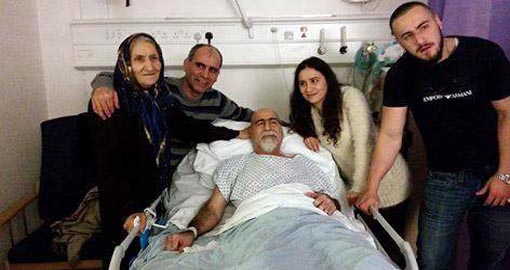
The long-time MEK supporter Ebrahim Mohammad Rahimi is dying of brain cancer in a London hospital. His son Sepher Mohammad Rahimi also in London wants to contact his mother, who is in Iraq. The MEK’s response is swearing and defamation – saying Ebrahim has covertly worked for the Iranian regime for many years.

This week, Sepher wrote to the UNHCR and the ICRC refuting the MEK’s statements.

He added, “during the ideological revolution inside the MEK, my mother divorced her husband. That has nothing to do with me. Why is she refusing to speak with me, her child? Neither I nor my father have ever said a single word against the MEK. Please arrange contact with her before he dies.”

Ebrahim Mohammad Rahimi spent many years with the MEK. He eventually managed to escape the camp in Iraq by taking refuge in the American run TIPF for four years before getting back to London. During the internal revolution of the MEK, Rahimi sent his son, Sepher, live with his grandparents in Iran. Sepher has now returned to London where his father is terminally ill in hospital. Sepher’s mother is still with the MEK and Rahimi and his son have tried to make contact with her before he dies. They have now begun asking MEK lobbyists for help since the MEK leaders only reacted by calling them “agents of the Iranian regime”.

January 3, 2016 0 comments
FacebookTwitterPinterestWhatsappTelegramSkypeEmail
Iran Interlink Weekly Digest

Iran Interlink Weekly Digest – 127

++ In the UK, long-time MEK supporter Ebrahim Mohammad Rahimi is dying of brain cancer in a London hospital. His son Sepher Mohammad Rahimi also in London wants to contact his mother, who is in Iraq. The MEK’s response is swearing and defamation – saying Ebrahim has covertly worked for the Iranian regime for many years. This week, Sepher wrote to the UNHCR and the ICRC refuting the MEK’s statements. He added, “during the ideological revolution inside the MEK, my mother divorced her husband. That has nothing to do with me. Why is she refusing to speak with me, her child? Neither I nor my father have ever said a single word against the MEK. Please arrange contact with her before he dies.”

++ There have been several articles about the MEK reviewing the past year and speculating what the future will bring for the group. The situation of Camp Ashraf and Camp Liberty are dominant in this writing, as is the loss of the atomic issue as a platform. With all these setbacks, many predict the end of Rajavi and his cult as a viable organisation. There are signs coming from Albania – where people arrive and then quickly disperse and disappear – that the MEK will soon stop trying to keep face as it shrinks to a small group.

++ As the families of Camp Liberty residents become more successful in getting the UNHCR and the Iraqi authorities to act to help free their loved ones, the MEK has embarked on a counter campaign. The message is that ‘Iraq will not grant visas to genuine families and this proves that the families visiting Iraq and Camp Liberty are all “agents of the Iranian regime”.

In order to provide evidence of this, the MEK has contacted some families who live outside Iran, mostly in Europe, and told them to fill in visa applications for the Iraqi embassy, but instead of submitting the documentation, to hand it over to the MEK which will pursue it on their behalf. The MEK then submits an incomplete or wrong application in order to manufacture a default rejection. They then publicise this as a rejection on the MEK websites. Some families have exposed this scam on Facebook and other social media. One says “I want my son out of Iraq but you [MEK] are asking me to go there!”

The MEK have also asked a few families in Iran who still have some sympathy for the group, to do the same thing. Telephone numbers used to call Iran are: 0044 2070 978 509; 0059 162 604436; 0088 622 740879. Families in Iran have said the MEK call using these numbers, but pretend to be families in Iran themselves saying “they don’t give us visas from here” and asking if there are plans to go to Iraq. The MEK is trying to get information from them about any proposed visits to Iraq. While doing that, the MEK announced that 400 families signed a petition against Iraq not giving visas. There were no names as usual.

In response, Atefeh Eghbal – who is not against the MEK but is running a campaign from France for them to be moved to third countries – says this petition is obviously made up. “I have been with you and know you don’t have contact with that many families. I do have contact with many, and most don’t like the MEK. It is clear to everyone, the UN, ICRC and Iraq all say it is you who are stopping the Camp Liberty residents from leaving. The issue is not about families.” The MEK has viciously attacked Eghbal using extreme language. One attack accused her, among other things, of being a narcissist. Sahar Family Association in Baghdad has given dictionary definitions of these terms and said this exactly describes Massoud Rajavi.

++ The annual NCRI meeting in Paris has been criticised. Commentators say “shame on you for getting money from Rajavi while MEK members are dying”. The NCRI announced its support for terrorism and sent condolences for the deaths of terrorist leaders calling them martyrs. Commentators condemn the French government for permitting support for terrorism from their country.

In English:

++ Mazda Parsi in Nejat Bloggers explores the ‘True Threat of Terrorism: Human Beings who turned into “acolytes” of Rajavi’. The article begins: “Over the past decades, much of the attention of the world has been focused on the radical extremist groups such as Al Qaeda and ISIS. But the true threat actually comes from the cult-like structure of these groups. Cult-like controlling system and the indoctrination methodology of these groups finally results in the most horrible acts of violence. The Mujahedin Khalq Organization (the MKO/MEK) is characterized as one of these destructive cults that threaten the world’s security.”

++ Daniel Larson writing in The American Conservative warns ‘Beware of Exiles and Their Promises’. The article highlights the MEK as an example: “…Most Iranians in Iran and around the world detest the MEK for good reason, but to listen to their many fans in and out of government one would think that they are a democratic government-in-waiting and that cult leader Maryam Rajavi is Liberty incarnate. That allows many Iran hawks to align themselves openly with a group that is rejected by Iranians everywhere while presenting themselves as champions of the “Iranian people” against their government. The views and preferences of the people in the other country are of no concern for the hawks except insofar as they can be misrepresented to support their preferred policy. The exiles pretend to speak for their country, and their patrons here pretend to believe them. Maybe a few are genuinely gullible enough to believe that a totalitarian cult is Iran’s real “secular, democratic opposition,” but most can’t be that clueless and are cynically indulging a horrible organization for their own reasons…”

January 1, 2016

January 3, 2016 0 comments
FacebookTwitterPinterestWhatsappTelegramSkypeEmail
Mujahedin Khalq; A proxy force

Two, Three, Many Chalabis

Exiles bend Washington’s ear—and drag us into conflict.

Ahmad Chalabi’s death on November 3rd brought him back to public prominence for the first time in years. As the avalanche of editorials exploring Chalabi’s life showed, Americans are still divided about his motivations—conniving or noble—and the extent of his role in misdirecting Middle East policy. But whether he was a master manipulator or merely manipulated, Chalabi was little different from any archetypal Westernized, pro-democratic exile. His life and influence in Washington should serve as a warning to U.S. policymakers: beware exiles who promise much but possess their own agendas.
Chalabi was the face of American policy toward Iraq after the 1991 Gulf War, cultivating strong ties with the U.S. military and intelligence agencies. Though he had been an exile for much of his life, his influence was predicated on his supposed knowledge of and connections inside Iraq. Indeed, his Iraqi National Congress was a vehicle for U.S. opposition to Saddam Hussein throughout the 1990s, receiving millions of dollars from both the CIA and directly from Congress.

Yet Chalabi’s sway within Iraq was less than he implied to policymakers. Despite U.S. financial support, his attempted coup against Saddam in 1995 collapsed when the Iraqi army failed to fold as he expected, leading to the deaths of a number of his own men. Though the CIA largely stopped supplying Chalabi after this debacle, his influence in Washington continued to grow, in particular among a subset of influential neoconservative politicians—including Dick Cheney, Paul Wolfowitz and Donald Rumsfeld—who were receptive to Chalabi’s pro-democratic pronouncements.

After the 9/11 attacks, these relationships were to prove key in the U.S. invasion of Iraq. Though many point to Chalabi’s role in providing flawed intelligence—the Iraqi National Congress was behind the defectors whose unsubstantiated claims pointed to Saddam’s supposed weapons of mass destruction—his quiet conversations with policymakers may have been more instrumental. He convinced administration insiders that the takeover of Iraq would require few American troops, that Iraqis themselves would rise up, and that the country would transition easily to democracy.

There is little to be gained from further recriminations about Chalabi’s role in the Iraq War. But policymakers could certainly learn from this episode. Though Chalabi was perhaps the most prominent example in recent history, the role of exiles on the political scene is not new. Nor is their influence limited to Washington: groups such as Boris Berezovsky’s London-based group of Russian exiles have attempted to influence British policymakers to oppose the Putin regime. The appeal of such exiles to Western policymakers is obvious: these individuals promise insider information about some of the world’s most closed regimes, like the Soviet Union of old, Libya, or North Korea.

As Chalabi proved, however, exiles also have a strong incentive to mislead. The role of exiles in U.S. Cuba policy during the 1960s was similarly catastrophic. Among the most prominent of these exiles was José Miró Cardona, a former confidante of Fidel Castro. Under his leadership, the Cuban Revolutionary Council cooperated closely with the Kennedy administration in its anti-Castro activities, culminating in the Bay of Pigs disaster. Like Chalabi’s 1995 coup, that operation failed in part because the Cuban exiles dramatically overestimated their support within Cuba.

From Chiang Kai-shek in the 1960s to Garry Kasparov today, U.S. policymakers have often looked favorably on opposition politicians when they visit Washington, regardless of their actual levels of support at home. And with the possibility of American taxpayer aid of millions or billions of dollars in the balance, the incentive for foreign dissidents to overrepresent their own support and underestimate the difficulties associated with regime change is high.

Policymakers in Washington are not blameless in this. A recent invitation by Congress to the Mujahedeen-e-Khalq (MEK), an Iranian opposition group, to testify before the House Subcommittee on Terrorism on issues relating to Iran and ISIS highlights how little scrutiny such groups sometimes face. Though certainly a vocal opponent of the regime in Tehran, MEK was only removed by the State Department from the list of foreign terrorist organizations in 2012, after heavily lobbying Congress. The group is communist and is often described as a cult. It is so extreme and so unrepresentative of the Iranian opposition in general that other regional experts testifying before Congress refused to appear on the same panel.
In today’s Syrian conflict, the lack of a well-connected opposition-in-exile has made it somewhat easier for policymakers to resist calls to overthrow the Assad regime. If there were a Syrian Chalabi, it might well be the case that the U.S. would be attempting regime change in Damascus rather than concentrating on ISIS.

What Chalabi’s story highlights is the need for skepticism among policymakers. Machiavelli once warned: “How vain the faith and promise of men who are exiles. Such is their extreme desire to return to their homes that they naturally believe many things that are not true, and add many others on purpose … they will fill you with hopes to that degree that if you attempt to act upon them, you will incur a fruitless expense or engage in an undertaking that will involve you in ruin.” Ahmad Chalabi epitomized this problem—and there are many more like him.

By Emma Ashford

Emma Ashford is a visiting research fellow at the Cato Institute.

January 2, 2016 0 comments
FacebookTwitterPinterestWhatsappTelegramSkypeEmail
Mujahedin Khalq; A proxy force

Beware of Exiles and Their Promises

Emma Ashford points out some of the dangers of making policy with the guidance of self-interested exiles:

Policymakers in Washington are not blameless in this. A recent invitation by Congress to the Mujahedeen-e-Khalq (MEK), an Iranian opposition group, to testify before the House Subcommittee on Terrorism on issues relating to Iran and ISIS highlights how little scrutiny such groups sometimes face. Though certainly a vocal opponent of the regime in Tehran, MEK was only removed by the State Department from the list of foreign terrorist organizations in 2012, after heavily lobbying Congress. The group is communist and is often described as a cult. It is so extreme and so unrepresentative of the Iranian opposition in general that other regional experts testifying before Congress refused to appear on the same panel.

Ashford is right about all of this, and she had more to say along these lines in her excellent presentation at our conference in November. I would just add that the failure of policymakers goes beyond the lack of scrutiny applied to exile groups and individuals. Many policymakers are so preoccupied with hostility towards a certain regime that they will be go out of their way to find and promote the exiles that share their position, and they will do so knowing that the exiles aren’t what they claim to be. They will then boast that a position held by a few Westerners and an extremely unrepresentative exile group represents “the will” of the nation in question. The support of the exiles “legitimizes” the hawks’ desire for regime change by providing “evidence” that U.S. interference will be welcomed (useful for P.R. purposes if for nothing else), and the hawks’ backing gives the exiles a stamp of approval in Washington.

The ongoing rehabilitation of the MEK is a good example of this. Most Iranians in Iran and around the world detest the MEK for good reason, but to listen to their many fans in and out of government one would think that they area democratic government-in-waiting and that cult leader Maryam Rajavi is Liberty incarnate. That allows many Iran hawks to align themselves openly with a group that is rejected by Iranians everywhere while presenting themselves as champions of the “Iranian people” against their government. The views and preferences of the people in the other country are of no concern for the hawks except insofar as they can be misrepresented to support their preferred policy. The exiles pretend to speak for their country, and their patrons here pretend to believe them. Maybe a few are genuinely gullible enough to believe that a totalitarian cult is Iran’s real “secular, democratic opposition,” but most can’t be that clueless and are cynically indulging a horrible organization for their own reasons.

Something similar happens with political oppositions in other countries that don’t have much representation in Washington. Instead of accepting the promises of exiles, many interventionists will claim to know the goals of a foreign opposition movement because those happen to be their goals. They will cite the opposition’s imaginary preferences in our policy debates to insist that the U.S. ought to be doing what they claim the opposition wants. Iran hawks adopted the Green movement protests because they wrongly saw them as an opportunity to destabilize and even topple the regime, and they faulted Obama for “missing” that opportunity by not “doing more” to support them. It didn’t matter to them that most protesters didn’t want U.S. help, and it also didn’t matter that the protesters weren’t seeking regime change. Iran hawks deemed the protests worthy of U.S. support in large part because they perceived them to have the potential to bring down the regime, and once it became clear that this wasn’t going to happen they lost interest in the Iranian opposition until it was time to draft them into the campaign against the nuclear deal very much against their will.

In all of this, U.S. interests are entirely neglected, and more often than not the interests of the exiles’ country are also ignored, and both countries end up being ill-served by the ambitions of exiles and the delusions of hawks.

By Daniel Larison,

January 2, 2016 0 comments
FacebookTwitterPinterestWhatsappTelegramSkypeEmail
Human Rights Abuse in the MEK

MEK hostages families’ campaign to free their beloveds

Families of members of Terrorist Cult MEK, launched a campaign to free their beloved ones from the terrorist Cult

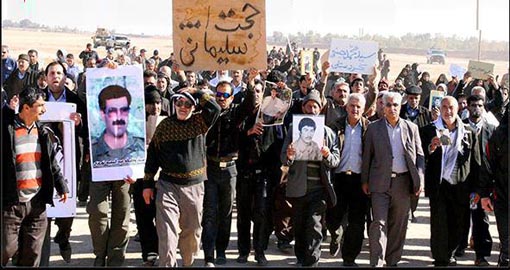
It has been more than 30 years since Mojahedin-e-Khalq Organization (MKO) has kept thousands of deceived people under their captivity using and applying the most sophisticated methods of mind control and brainwashing, and has deprived them of their most basic human rights, including the right to meet or contact their families (either via telephone, post, or email), marriage, etc. However, over several years, their families have made great and consistent efforts to save their children and relatives from this organization; protest gatherings in Iraq and launching campaign are some of those efforts.

We, the members of MKO “Families’ Campaign”, who have been deprived of meeting our loved ones for years, kindly ask for support, cooperation and consideration of all human rights organizations, and UNHCR (esp. the officials is Iraq and Albania) and we hope that you will take side with us and support us.

Many thanks and regards,

Campaign of Rajavi cult prisoners’ families

December 24, 2015

_ _ _ _ _ _ _ _ _ _ _ _ _ _ _ _ _ _ _ _ _ _ _ _ _ _ _ _

Below is the letter of Ms. Mahmonir Iranpour who is sister of two Camp liberty residents. Her brothers; Ahmadreza and Mohammadreza were deceived by the MKO Cult elements in Turkey into joining the group in 2002.  They were then transferred to Camp Ashraf, Iraq. From then on the Iranpour family have had no contact with their beloveds.

Open Letter of the sister of two Members of a terrorist group to free her brothers from terrorism

Secretary-General United Nations

New York, N.Y. 10017 U.S.A.

H.E. Mr. Ban Ki-moon

Dear Mr. Secretary-General,

I would like to introduce myself as Mah Monir Iranpour from Shiraz, Iran.

This is a desperate request from you as the Secretary-General of the United Nations. Two of my brothers, named Ahmad Reza Iranpour and Mohammad Reza Iranpour, left Iran to Turkey in December 2002 to travel either to Canada or a European country hoping for a brighter future. However, unfortunately, they were caught and deceived by MKO members and were taken to Iraq and then to Camp Ashraf. We did not know anything about them for a long time till we heard about them from those who had fled from Camp Ashraf at that time.

At the moment, my brothers are captivated in Camp Liberty. My family and I have travelled 10 times to Iraq since 2002 just to meet my brothers, but MKO prevents us from meeting them. It seems that UNHCR in Baqdad unilaterally defends MKO while according to human rights, he should try to reserve families’ rights especially in meeting their children. Unfortunately, despite our repeated requests through e-mail and phone calls, the UNHCR has not undertaken the slightest cooperation with us as families. You are aware that Iraq is a very unsafe country, and also we are all aware of the terrorist attacks to Camp Liberty in recent years.

We are so worried about my brothers’ lives and health condition. We do consider MKO responsible for death of a number of those captivated in Camp Liberty in recent attacks because their delay in sending people to Albania has caused such tragic consequences; and it is apparent that our children’s lives are of no importance to this organization. We, therefore, kindly ask you to (1) accelerate sending our children from Camp Liberty to any safe place determined by the UN, and (2) arrange meeting of my family with Ahmad Reza and Mohammad Reza Iranpour without the presence of MKO members.

My parents are very old and sick, and they have not met their captive sons for almost 13 years. I desperately beg you to help me and my families. Thank you in advance for giving due consideration to our request and I pray that God will help you in fulfilling your philanthropic and humanistic goals.

Mah Monir Iranpour, Shiraz, I.R.Iran

Source: Nototerrorism weblog

December 31, 2015 0 comments
FacebookTwitterPinterestWhatsappTelegramSkypeEmail
Newer Posts
Older Posts

Recent Posts

  • MEPs who lack awareness about the MEK’s nature

    December 20, 2025
  • Why did Massoud Rajavi enforce divorces in the MEK?

    December 15, 2025
  • Massoud Rajavi and widespread sexual abuse of female members

    December 10, 2025
  • Farman Shafabin, MEK member who committed suicide

    December 3, 2025
  • Nejat Newsletter No.131

    December 3, 2025
  • Facebook
  • Twitter
  • Instagram
  • Youtube

© 2003 - 2025 NEJAT Society . All Rights Reserved. NejatNGO.org


Back To Top
Nejat Society
  • Home
  • Articles
  • Media
    • Cartoons
    • NewsPics
    • Photo Gallery
    • Videos
  • Publications
    • Books
    • Nejat NewsLetter
    • Pars Brief
  • About Us
  • Contact us
  • Editions
    • عربي
    • فارسی
    • Shqip