Nejat Society
  • Home
  • Articles
  • Media
    • Cartoons
    • NewsPics
    • Photo Gallery
    • Videos
  • Publications
    • Books
    • Nejat NewsLetter
    • Pars Brief
  • About Us
  • Contact us
  • Editions
    • عربي
    • فارسی
    • Shqip
Nejat Society
Nejat Society
  • Home
  • Articles
  • Media
    • Cartoons
    • NewsPics
    • Photo Gallery
    • Videos
  • Publications
    • Books
    • Nejat NewsLetter
    • Pars Brief
  • About Us
  • Contact us
  • Editions
    • عربي
    • فارسی
    • Shqip
© 2003 - 2024 NEJAT Society. nejatngo.org
Iran Interlink Weekly Digest

Iran Interlink Weekly Digest – 106

++ This week saw the anniversary of the MEK’s disastrous Forough Javidan (Eternal Light) operation. Several ex-members and internal critics published articles reminding us of the crime of sending untrained civilians into war. Many said this had been a deliberate attempt to get people killed rather than an attempt to kill Iranians and march on Tehran and the reason was that Iran and Iraq had signed a peace agreement. Rajavi, whose existence relies on war and violence, used the blood of his members to divert attention from this peace and keep the organisation together. Even before he launched the operation he famously stated “this is my insurance policy”. Now it is clear what he meant by that.

++ There were a few reactions to this week’s call by Israeli lobbyists and the MEK asking for the MEK to be armed. These comments all point out that they want to create the conditions for another Forough Javidan. That is, by arming the MEK in Camp Liberty this makes them a legitimate target for an attack in which many of them would be killed. Again Rajavi wants to use the blood of his members to divert attention from the nuclear agreement and keep his cult together by providing an external fight.

++ The Israeli right wing and MEK held joint demonstrations yesterday in Washington against the nuclear agreement demanding the Senate reject it. These are the pro-war lobby. Iranian papers reported this without surprise that the MEK, as mercenaries of Israel, were doing this.

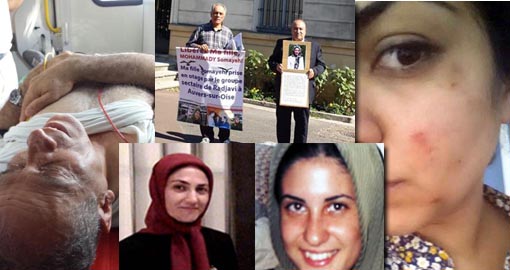
++ The MEK reaction to the activities of Mostafa Mohammadi and Ghorban Ali Hossein Nejad in Auvers-sur-Oise trying everything they can to get their daughters out of the grip of the MEK, has been to publish false reports in an attempt to overturn the turn of events and blame the fathers for the trouble, saying they had been arrested by the police. This even stretched to Yves Bonnet writing an article in the French Huffington Post full of lies which claimed the men were “agents of the Iranian regime”. The two fathers published a copy of the police report showing that they have made complaints, and also the report of the hospital showing the extent of their injuries at the hands of MEK thugs. The men have also written a compliant to the Huffington Post specifically for defaming Mohammadi who is a Canadian citizen and demanded the right to reply. They have published this on their weblog, but so far the Huffington Post has not responded.

In English:

++ Mazda Parsi in Nejat Bloggers analyses the MEK’s reaction to the nuclear agreement. They are faced with spending millions of dollars trying to overturn the agreement through lobbying Congress. Maryam Rajavi has been forced to make a speech which is full of contradictions and hopelessness.

++ M. Reza Behnam in The Register-Guard, examines the complex history between the US and Iran. In it he identifies the role of the MEK in American attempts to destabilise Iran. “Washington’s efforts to destabilize the Iranian government have been ongoing. In 1996 and again in 2006, Congress authorized millions of dollars to aid groups opposed to the Iranian government. One such group, the Mujahedin-e-Khalq was put on the U.S. State Department foreign terrorist list in 1977. The MEK moved its operation to Iraq and allied itself with Saddam Hussein in the war against Iran. The group assisted Saddam in his bloody crackdown of the Iraqi Shia Muslims and Kurds. It is widely believed in Iran that the MEK, trained and armed by Israel’s Mossad, assassinated four Iranian nuclear scientists since 2010. Seen as a vehicle for regime change, the U.S. Congress voted to remove the MEK from the U.S. Foreign Terrorist Organization list in September 2012.”

++ Jon Schwarz in The Intercept poses the question’ Why Is Iran’s Refusal to Allow No-Notice Inspections Legit?’ and in answer examines the ‘U.S. History With Iraq’. He concludes: “So Iran’s refusal to allow snap inspections doesn’t prove that its leadership wants to conceal a nuclear weapons program. It more likely suggests that its leadership simply wants to preserve its conventional military and personally remain alive. This is especially plausible given that Iran’s Supreme Leader Ali Khamenei was crippled in a 1981 assassination attempt carried by out the Mujahedeen-e-Khalq, or MEK, an Iranian opposition organization that supported Iraq during the 1980s Iran-Iraq war. Making this even more threatening from Iran’s perspective, the MEK is now beloved by much of the U.S. foreign policy elite, and has apparently killed numerous Iranian nuclear scientists with Israeli funding and training. And if you hope Iran may simply be unaware of our use of arms control as cover for spying, think again: an Iranian spy in Baghdad at the time actually discovered what we were doing before even the UK, our closest ally. (Wonderfully enough, the UK only found out when it intercepted the Iranian spy’s message back to Tehran.)”

++ ‘Our story thus far: Another Mojahedin attack on two fathers and the sister of MEK’s captives’ is a report on the most recent events in Auvers-sur-Oise following a second violent attack on them by MEK thugs. “Outside of the station the Mojahedin men and women were gathered there with cameras and still yelling curses and swear words at us. This was our second complaint file we made towards them. We did not come to Paris to be attacked and treated this way. We came here begging to see our children. Why is it that to ask for the return of our child, or just plain contact with them is threatening these people so much?

What are they so afraid of that they are not allowing families to be in contact? Somayeh Mohammady was taken from Canada 18 years ago and we haven’t been able to even make a phone call with her for more than twelve years. Murders in prison have visiting rights but these people in the camp, the ones taken away from their lives are not even allowed a letter or phone call. How are we in the wrong to ask for the safety and happiness of our children?

We ask the people of France, nay, the people of the world to see the injustice in this and to help spread the word about these captors. Help our voices be heard. We are now living in fear as they are constantly posting threatening words on their websites and have followed us to our rented home in Paris. They have come to our apartment and handed out flyers filled with lies to everyone in our neighbourhood. They call us spies and people working for the Iranian government, but all we have ever wanted was the return of our child to their home. To take them back to where they belong and have always belonged. To live their lives be with their family and be happy if they can find meaning in that feeling anymore…”

 July 24, 2015
July 25, 2015 0 comments
FacebookTwitterPinterestWhatsappTelegramSkypeEmail
Former members of the MEK

Mojtaba Bidaqi fled Camp Liberty

Mr. Mojtaba Bidaqi succeeded to leave the Cult of Rajavi(the MKO)

He left camp Liberty after 31 years of membership in the destructive cult of Rajavi.

Submitting himself to the United Nation’s officials in charge of camp Liberty, Mojtaba stepped in free world.

He was first recruited by the MKO recruiters in Turkey in 1984 when he had gone there to find job. He was trapped by the MKO agents and were sent to Camp Ashraf where he was brainwashed under the cult structure for 31 years.

Mojtaba’s brother, Amir was also recruited by the MKO. Last year he defected from the group after he was relocated in Albania.

Nejat Society congratulated Bidaqi family for the release of their loved ones.

July 23, 2015 0 comments
FacebookTwitterPinterestWhatsappTelegramSkypeEmail
Mujahedin Khalq Organization members' families

Our story thus far: Another Mojahedin attack on two fathers and the sister of MEK’s captives

On Monday July 13, 2015 we rented a car in Paris, France and drove to Auvers-Sur-Oise. Who are we? We are two fathers and a sister, all three in Paris doing all we can to free our daughter/sister from a cult’s terrorist camp in Baghdad, Iraq called Camp Liberty. The irony of the name of this camp is that the people kept in the camp haven’t had a glimpse of liberty or freedom for fifteen plus years. The people in charge of the camp are Maryam Rajavi, Massoud Rajavi and Mehdi Abrishamchi. They are the leaders of the Mojahedin-e-Khalq – the name of the group that fifty years ago started out as a noble group for the freedom of the Iranian people.

Today, and for the past 30 odd years, this group has become a cult in which the leaders were/are affiliated with Saddam Hussein and other known terrorist leaders in the Middle East. They prey on the simple hearted, the young and the hopeless to gain power and money. They use any deceitful tactics such as propaganda, lying, torture, threats and more to get their way. They have taken the lives of many young people and kept them captive in Iraq.

Our daughters are two of the thousands of these innocent victims. We are here to open the eyes of the French government and citizens to show them that the people in charge of the kidnapping and brainwashing of thousands of people over the years are residing in Auvers-Sur-Oise, France. This was the second time that I, Mustafa Mohammady, and my daughter Hurieh have been attacked in the streets of Auvers by the Mojahedin. We want nothing more than a meeting with the town’s mayor to explain to her our story so she will know the true colours of these people.

The first occurrence of attack was a month ago on June 12, 2015. We took the train to Auvers with our lawyer and walked to rue des Gordes in the hope of getting a meeting with a Mojahedin leader since our lawyer was with us. As we turned onto the street not taking more than five steps we saw a man and a woman running towards us from different directions of the road. They begin yelling horrible vulgar curses at us without any engagement or provocation from us. They start pulling at our camera and belongings and throwing punches at us. At this time our lawyer phoned the police and alerted them to come to our rescue immediately.

We were three people, a senior Canadian, a female student and a French lawyer, and within seconds we were cornered onto a gated driveway with dozens of people attacking us. As we were trying to protect ourselves from their terrifying blows to our bodies they succeeded in separating us from each other. They threw each one of us to the ground and five/six people at a time would attempt to steal our phones, wallets and camera while throwing kicks and punches. The police came about ten minutes after the call and pulled them off us.

That did not stop them from gathering around and yelling threats and curses at us by surrounding the police and the ambulance. As we were being taken by stretcher into the ambulance a man jumped on top of Hurieh in front of the police and attacked her to the ground breaking our camera. We was handcuffed and taken to the police station and kept in a cell for one night. We were treated in the hospital in Pontoise with many cuts and bruises all over our bodies. We were traumatized but the fire in us grew bigger as now we know how little humanity is left in them and how much we need to get our children out from their clutches.

We gave our statement to the police the day after and got a full body report of our injuries in the hospital and are filing a complaint against their actions towards us. This case is now being dealt with in the court of Pointoise but we have not given up on bringing our children home to us. We talked to different police officers of Paris and Pontoise and recounted our story to them. This brings us to last week’s events.

So we drove to Auvers-Sur-Oise, with lingering fear of what happened the first time, we went there to arrange a meeting with the mayor. We drove to just outside of the town and decided to stop and enjoy the scenery as there were large beautiful wheat fields which we wanted to take pictures of. As we were about to walk towards our parked car, a man (Mojahedin member) with a camera started coming towards us. With fear we quickly ran faster towards our car, as did he, following us and pushing Hurieh to the ground. She got up and ran into the car and locked herself in waiting for Mustafa and Ali Hossein to so the same. Mustafa was able to get in but when we looked back Ali Hossein couldn’t make it fast enough and we saw that more of the Mojahedin had arrived.

The man clutched at our car trying to grab at us through the open window but we started the car and began to drive away. Ali Hossein stopped a passing car hoping to get help and security from strangers to drive him away from the Mojahedin who, by now were more than five. The driver of the car however did not drive away and the Mojahedin opened their car door trying to pull Ali Hossein out onto the streets. We were circling the roundabout trying to figure out how to save him and to get other car drivers to phone the police. We were yelling for help and for the police as we watched them forcefully pulling him out of the car and onto the ground.

We were trying to distract them until the police came when a black car approached with speed and rammed their car into ours. With fear we had no choice but to flee the scene as the car chased us through the streets at over hundred kilometres per hour. We were calling the police unable to give our whereabouts as we were not only unfamiliar with the location but nothing seemed to be around for miles. The chase went on until we reached the town of Cergy, Pontoise and headed towards the Police station there.

Once there we told them what had happened and our anxiety about what happened to Ali Hossein, hoping the police got there in time to save him. With police cars guiding us back to the station in Auvers we found out that Ali Hossein was saved in time and taken to the station and was secure. Outside of the station the Mojahedin men and women were gathered there with cameras and still yelling curses and swear words at us. This was our second complaint file we made towards them. We did not come to Paris to be attacked and treated this way. We came here begging to see our children. Why is it that to ask for the return of our child, or just plain contact with them is threatening these people so much?

What are they so afraid of that they are not allowing families to be in contact? Somayeh Mohammady was taken from Canada 18 years ago and we haven’t been able to even make a phone call with her for more than twelve years. Murders in prison have visiting rights but these people in the camp, the ones taken away from their lives are not even allowed a letter or phone call. How are we in the wrong to ask for the safety and happiness of our children?

We ask the people of France, nay, the people of the world to see the injustice in this and to help spread the word about these captors. Help our voices be heard. We are now living in fear as they are constantly posting threatening words on their websites and have followed us to our rented home in Paris. They have come to our apartment and handed out flyers filled with lies to everyone in our neighbourhood. They call us spies and people working for the Iranian government, but all we have ever wanted was the return of our child to their home. To take them back to where they belong and have always belonged. To live their lives be with their family and be happy if they can find meaning in that feeling anymore.

The Mojahedin are threatened by a father and daughter that have put their lives on hold many times and have used the little resources they have to fly to Paris to ask for the safety of Somayeh. They call themselves an organization for the liberation of the people of Iran yet they cannot even provide freedom to the ones they call their own. We will not stop fighting for the safety of our children and this will not be over until these captives are freed.

We will go to any lengths and are begging anyone who can hear our voices to help us. Please help free our kids from their evil clutches. Help their voices be heard. Help mothers take their children back into their arms. Help children see the advancement of the world and live the rest of their lives not in fear but tranquillity and peace.

‘Together we’ll stand, divided we’ll fall’ -Pink Floyd.

Mustafa Mohammady

Ali Hossein Nejad

Hurieh Mohammady

By Hurieh Mohammady, Paris

July 23, 2015 0 comments
FacebookTwitterPinterestWhatsappTelegramSkypeEmail
Nejat Publications

Pars Brief – Issue No. 87

Inside This Issue:

  1. A group of 15 Liberty residents fly to Albania
  2. Mojahedin Khalq supports Daesh, plans terrorist training camp in Albania
  3. Iranian resistance group MKO to move to Albania
  4. Please reconsider your decision to participate in Mojahedin Khalq cult gathering (letter to Bujar Nishani)
  5. MeK Modern Muslims, Bedfellow of Islamophobes
  6. Anti-Iran Deal AIPAC Spin-off Relies on Iranian Ex-Terrorist Group

Download Pars Brief No. 87

July 22, 2015 0 comments
FacebookTwitterPinterestWhatsappTelegramSkypeEmail
Mujahedin Khalq; A proxy force

Anti-Iran Deal AIPAC Spin-off Relies on Iranian Ex-Terrorist Group

When the American Israel Public Affairs Committee (AIPAC) declared war on the nuclear accord between Iran and world powers signed last week in Vienna, it put its money where its mouth is. AIPAC, Washington’s most influential pro-Israel lobby reportedly plans on spending $20 million over the next two months urging Congress to vote against the deal. But its efforts at a full frontal attack on the accord, inked by the P5+1 (the US, China, France, Russia, the UK, and Germany) and Iran is leading to some politically awkward alliances.
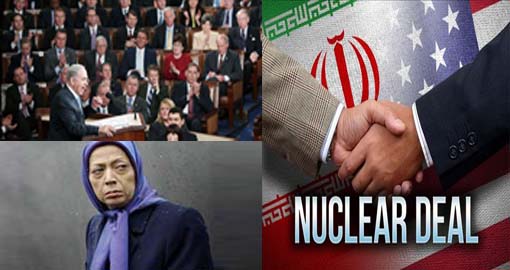
As part of its efforts to kill the deal with a congressional vote, AIPAC launched a 501c4 advocacy group called Citizens For A Nuclear Free Iran. The group, according to The New York Times, was “formed with the sole mission of educating the public ‘about the dangers of the proposed Iran deal,’” said spokesman Patrick Dorton. The Times reported that the $20 million budget would go to ad buys in as many as 40 states as well as other advocacy.

Now that the campaign is taking shape, the AIPAC spin-off appears to be relying on a typical, if troubling, ally of American groups and individuals opposed to diplomacy with Iran. Namely, two items on the website of Citizens for a Nuclear Iran, one of which was later removed, featured an exiled Iranian opposition group called the Mojahedin-e Khalq (MEK).

The MEK makes a cameo appearance in the television ad crafted by Citizens For a Nuclear Free Iran, the well-financed AIPAC spin-off, as well as on a now-removed news items on the group’s “Press Room” webpage—indicating that Nuclear Free Iran recognized a PR misstep by promoting the group.

MEK Footage in TV Ad

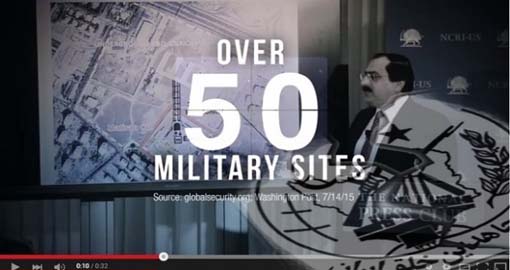
The ad Citizens For a Nuclear Free Iran is splashing across television screens the country over—which the group posted to YouTube on Friday—incorporates b-roll footage from a press conference held by the National Council of Resistance of Iran (NCRI), which the State Department deemed the MEK’s “political wing” (earning it a corresponding terrorist designation).

The footage in the Nuclear Free Iran ad shows Alireza Jafarzadeh, a longtime Washington-based MEK apparatchik, at the National Press Club using a pointer aimed at a satellite photograph. It’s not clear which press conference the footage is taken from (the MEK frequently holds these sorts of events). As Jafarzadeh gestures at the photograph, the slickly produced ad’s voiceover says, “Military sites can go uninspected” and the words “Over 50 military sites” flash onto the screen.

“We were not aware of this matter, though the statements and b-roll footage are in the public domain,” said Ali Safavi, who works with the NCRI, when asked about the commercial.

The MEK’s most prominent act since the 1981 bombing of Iran’s Islamic Republic Party headquarters—killing 73 party officials—was its 2002 public exposure of the Natanz uranium enrichment facility and Arak heavy water production plant for plutonium extraction. Although the MEK claimed its clandestine network in Iran had unearthed the nuclear facilities, The New Yorker reported in 2006 that Israeli intelligence had passed the information about the sites to the MEK.

Since exposing Natanz and Arak, the MEK has periodically drummed up publicity for other purported blockbuster revelations; many turn out to be busts. This winter, as nuclear talks with Iran talks heated up, the MEK released a report they claimed exposed a secret Iranian enrichment facility. The report garnered much credulous press from right-wing media and even a mainstream outlet or two. But a blogger at the liberal site Daily Kos quickly noticed that the photograph the MEK claimed was a steel door to the secret facility had been ripped from the public website of an Iranian company that sells safes.

According to the Sunlight Foundation’s Political Ad Sleuth project, Citizens United for a Nuclear Free Iran has already inked 247 contracts to air the aid, some of which went into effect last Friday.

Promoting MEK’s Leadership Views on Iran Deal

Citizens for a Nuclear Free Iran’s dalliance with the MEK, however, didn’t end at drawing footage from one of the opposition group’s press conferences. In the “Press Room” section of Nuclear Free Iran’s website, the group late last week reprinted an item from the right-wing Israeli news organization Arutz Sheva that promoted the MEK’s views on the nuclear deal.

(Screencaps can be viewed here and here.)

The Arutz Sheva piece is headlined “Iranian Opposition Leader in Exile: Deal Bad for Iranian People”—a headline that carries over to the Citizens for a Nuclear Free Iran website—and paraphrases quotes from an interview with Maryam Rajavi, the co-leader of the MEK (her husband, Massoud, the other co-leader, has not been seen publicly in a dozen years). In the interview, according to Arutz Sheva, Rajavi condemned the deal and, in the words of the pro-settler news outlet, “called on the international community to work to replace the Islamic religious regime in Iran.”

On Sunday, Citizens for a Nuclear Free Iran pulled the Rajavi article from its “Press Room” page. No explanation was given, and a query on the issue to Citizens for a Nuclear Free Iran went unanswered.

New Group’s Advisor Backs MEK

Pulling the article from its website may indicate that Nuclear Free Iran realized the potential public relations problems associating the group with the MEK could bring.

With bizarre Islamo-Marxist guerrilla roots, the MEK and its affiliates were listed as terrorists by the US State Department thanks to years of violence, including attacks against Americans and the Shah’s government in Iran in the 1970s and, after falling out of favor with Iran’s revolutionary clerics, the Islamic Republic. But the designation was lifted in 2012 as part of a deal to try to extricate remaining MEK members from peril in Iraq, where the group had fought alongside Saddam Hussein but was disarmed in the 2003 American invasion.

The MEK’s multi-million dollar lobbying campaign to get removed from the terror rolls gave it a newfound prominence in Washington. Its ardent anti-Iranian regime stance, robust lobbying operations and hefty political donations have kept up their favorable relations with many hawks on Capitol Hill—despite the group’s reputation for cult-like behavior and past human rights abuses against its own members. (For more background, see our February feature in The Intercept on the MEK’s history and influence in Washington.) Rajavi and her followers use their contacts in Washington to relentlessly push for overthrowing the Iranian regime—and making this goal official US policy.

Rajavi counts among her supporters one of Citizens for a Nuclear Free Iran’s advisory board members: former Democrat and former senator Joe Lieberman. Lieberman has made several appearances at MEK events, including this June when he appeared at a MEK confab in Paris. Lieberman told the audience there that the US “should be working closely with your resistance group”—making, in other words, regime change into an official US policy.

A spokesman for Citizens for a Nuclear Free Iran did not respond to request for comment about whether it supported an American policy of regime change in Iran.

by Eli Clifton and Ali Gharib

July 22, 2015 0 comments
FacebookTwitterPinterestWhatsappTelegramSkypeEmail
Mujahedin Khalq Organization as a terrorist group

What About Iran’s Assassinated Nuclear Scientists?

Now that the nuclear deal is on the table, the United States, Britain, France and Germany should help Tehran track down, arrest and bring to justice all those suspected operatives that were involved in the assassination of Iranian nuclear scientists. That is if they really are after rapprochement with Tehran.

Since 2007, the culprits have been given state protection in return for their "valuable information and services.” At the time, some countries helped exfiltrate these murderers from Iran and the region. They used ratlines to escape Iran to places such as Israel, Europe and even the United States.

The deadly attacks began in 2007, so the race to catch the culprits hasn’t been lost yet. In fact, catching and bringing them to trial has to become a priority now that a nuclear deal is being fully implemented. After all, the "historic deal” has to be about international cooperation and not further enmity!

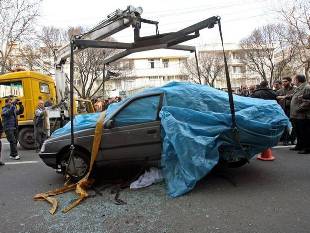
The timing of the negotiations invites questions about the role of proxies too. Iran was busy negotiating with the West when the assassinations were carried out. According to mainstream media in the West, the killings were a desperate attempt by Israel and the terrorist group the Mojahedin-e-Khalq Organization (MEK or MKO) to sabotage the talks.

Five nuclear scientists were murdered and several others injured in professional attacks. An obvious motive was to kill the talks, stop any progress in nuclear activities, and pave the way for an all-out war. It was also designed to demonstrate that Iran’s enemies had a long reach and could  identify and kill top specialists in modern warfare. The MKO denies any involvement but Israeli officials and commentators have confirmed the MKO-Israeli connection.

According to the Western media, "The deadly attacks were carried out by the MKO, a terrorist group that is financed, trained and armed by the US army, the CIA and Israel’s secret service Mossad.” They cite senior Obama administration officials as confirming that the MKO is responsible for the killings. Some of the culprits arrested in Iran have made similar confessions.

Before and after the fall of Saddam, the MKO had a military base in Iraq. The group later established shadowy connections with the US occupation authorities, often through American contractors. This allowed Washington to deny it was working with a group designated as "terrorist" by its own State Department in 1997 –  though that designation was lifted later.

While listed as a terror group, MKO members received training from the Joint Special Operations Command in Nevada. During the confrontation between Tehran and Washington over the nuclear program, the MKO was attractive to CIA and Mossad as it already had committed adherents on the ground in Iran.

It is naïve to assume the MKO was the only player in the covert war with Iran. There were others such the American and Israeli intelligence agencies. Without their much-needed  support and intelligence, the MKO would have never been able to carry out the attacks.

Some might say the historic deal with the P5+1 means forgive and forget. True, prospects might be a lot better than they have been for a long time. But it doesn’t change the fact that the scientists’ families are still suffering. They want justice and they want justice to be served now.

This could only happen if Washington is prepared to help Tehran bring the perpetrators to account. That’s the best possible way for Washington to prove that it had thing to do with the assassinations and that the covert war between Iran and its enemies is ending.

With US Defense Secretary Ash Carter in Tel Aviv this is yet to be the case. According to the Pentagon Chief, attacking Iran out of nowhere is one the best things about the nuclear deal. In his words, "One of the reasons this deal is a good one is that it does nothing to prevent the military option. The US and Israel could agree to disagree about the merits of the plan, but that the planning for an aggressive war against Iran would continue.”

By: Kayhan.ir Int’l Staff Writer,

July 21, 2015 0 comments
FacebookTwitterPinterestWhatsappTelegramSkypeEmail
Mujahedin Khalq; A proxy force

Why Is Iran’s Refusal to Allow No-Notice Inspections Legit? U.S. History With Iraq

Americans and Israelis who hate the new nuclear agreement with Iran are already focusing on one part in particular: It doesn’t authorize snap, no-notice inspections of all locations. Israel’s hard-right Education Minister Naftali Bennett claims the accord is a “farce” because “in order to go and make an inspection, you have to notify the Iranians 24 days in advance.”

This is not exactly right, but close enough. (Iran’s declared nuclear sites will be under continuous monitoring. If the International Atomic Energy Agency wants to inspect a non-declared site and Iran refuses, Iran has 14 days to convince the IAEA it’s doing nothing wrong without providing access. If it can’t, the commission governing the agreement has seven days to vote on whether to force Iran to provide access, and if it does Iran has three more days to comply. The exact procedure is established in paragraphs 74-78 of the agreement text.)

For people unfamiliar with the history of arms control generally and in the Middle East in particular, this might seem like a bad deal. If Iran doesn’t have anything to hide, why wouldn’t it allow the IAEA to go anywhere at anytime?

The answer is twofold:

First, all countries have things they legitimately want to hide, such as conventional military secrets and the security procedures of their leaders.

Second, during the 1990s the U.S. demonstrated with Iraq that it would routinely abuse the weapons inspections process in order to uncover such legitimate secrets — and use them to target the Iraqi military and try to overthrow the Iraqi government.

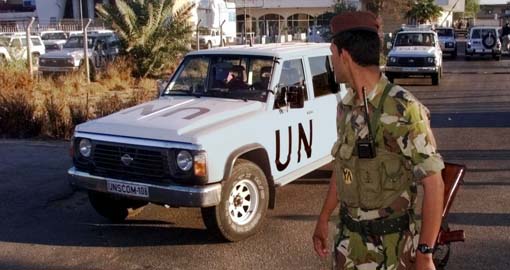
The United Nations Special Commission, or UNSCOM, was created in 1991 after the Gulf War to verify that Iraq no longer had any nuclear, chemical or biological weapons programs. And though we now know Iraq was essentially disarmed within several years, UNSCOM stayed in business thanks to a combination of Iraq’s lies about its past WMD activities and a U.S. desire to maintain harsh economic sanctions justified by Iraq’s purported WMD.

By the mid-1990s, Iraq claimed that the U.S. was using UNSCOM as cover for espionage aimed at things that had nothing to do with WMD, such as Saddam Hussein’s location. While the U.S. strenuously denied this for years, it turned out to be true. Moreover, former UNSCOM inspector Scott Ritter contends that the U.S. attempted to manipulate UNSCOM so that it could be used as a tool in an attempted coup against Saddam Hussein organized by the U.S. in 1996.

Iraq acted at the time just as the U.S. would if the Organization for the Prohibition of Chemical Weapons had been infiltrated with “inspectors” who wanted to assassinate Bill Clinton and then showed up at the White House. For instance, when Clinton bombed Iraq in Operation Desert Fox in 1998, one of the justifications he gave was that Iraq had “shut off [UNSCOM] access to the headquarters of its ruling party.” The CIA later discovered that Saddam had in fact been at the party headquarters when UNSCOM arrived, and had stopped UNSCOM from entering “to prevent the inspectors from knowing his whereabouts, not because he had something to hide.”

Moreover, the U.S. made extensive use of UNSCOM to target Iraq for bombing campaigns. According to Ritter, toward the beginning of the UNSCOM process CIA agents who were part of the inspection team used GPS to record the precise location of sites used for Iraqi military manufacturing — sites that soon afterwards were struck by U.S. cruise missiles. And as the Washington Post reported and the U.S. Air Force later confirmed, the U.S. used UNSCOM’s data to choose targets for Operation Desert Fox, including many that had nothing to do with Iraq’s purported WMD programs. (In retrospect, what’s remarkable about the history of UNSCOM isn’t Iraq’s real but largely minor obstruction, but its extensive cooperation. Ritter remembers inspections when he was “looking through a logbook dealing with presidential security, such as how they arranged convoys” and at Iraqi intelligence headquarters “examining the darkest secrets of how they recruited agents and how they paid them.”)

So Iran’s refusal to allow snap inspections doesn’t prove that its leadership wants to conceal a nuclear weapons program. It more likely suggests that its leadership simply wants to preserve its conventional military and personally remain alive. This is especially plausible given that Iran’s Supreme Leader Ali Khamenei was crippled in an 1981 assassination attempt carried by out the Mujahedeen-e-Khalq, or MEK, an Iranian opposition organization that supported Iraq during the 1980s Iran-Iraq war. Making this even more threatening from Iran’s perspective, the MEK is now beloved by much of the U.S. foreign policy elite, and has apparently killed numerous Iranian nuclear scientists with Israeli funding and training.

And if you hope Iran may simply be unaware of our use of arms control as cover for spying, think again: an Iranian spy in Baghdad at the time actually discovered what we were doing before even the UK, our closest ally. (Wonderfully enough, the UK only found out when it intercepted the Iranian spy’s message back to Tehran.)

So while Iran’s recalcitrance may make the U.S. and Israel unhappy, it’s largely the fruit of our own poisoned tree. They will never accept the conditions we imposed on Iraq, and any neutral observer would agree they’d be fools to do so.

By Jon Schwarz, firstlook.org

July 21, 2015 0 comments
FacebookTwitterPinterestWhatsappTelegramSkypeEmail
Mujahedin Khalq; A proxy force

The MKO frustrated by the Nuke deal, look to Congress and Israel

As the international community welcomes the historic deal reached between Iran and the world powers, there are some groups who oppose any deal with Iran. These groups include Israel and its advocates in Washington and its proxy force, the Mujahedin Khalq Organization.

The above mentioned groups form a complicated network that has so far tried hard to derail diplomacy between Iran and the West. They aided each other vigorously in order to launch war against Iran instead of reaching a peaceful solution for the Iranian nuclear issue. Fortunately their campaign did not succeed.

By the way, after the nuclear deal is reached, the MKO propaganda website reluctantly publishes the news under the neutral title “there is a deal in Vienna”. The short news of the nuclear deal put on the MKO’s propaganda website, is undermined by a tricky question in the subtitle: “What happens next?”. 

The biased report answers the question by magnifying the part of the US Congress in working out of any deal with Iran.

Having allied themselves with the warmongers of the US Congress, the Mujahedin Khalq have invested on their vote to reject the nuclear deal with Iran: “Both houses of Congress now have 60 days to review the deal and hold hearings. While that is going on, the president cannot wave sanctions against Iran on his own authority.

“If Congress does vote to reject the deal, the president most likely would veto that measure. Two third of each house (67 votes in Senate and 290 votes in the House) could then vote to override the veto. If that override fails, the president can seal the deal and lift those sanctions.”

However, The MKO is definitely disappointed by what President Obama called a "comprehensive long-term deal".  Obama has promised that he will veto any legislation that prevents the successful implementation of the deal. Thus, the MKO’s lobbying campaign in the Congress has to spend large amounts of money to override the veto.

 The controversial reaction of the MKO propaganda machine towards the N deal was followed by the so-called statement of the group leader Maryam Rajavi. In the statement, she blames the West for “many shortcomings and unwarranted concessions” to the Iranian government and for not being decisive enough to stop Iranian nuclear program while she claims that the deal represents “a reluctant retreat” by the Iranian leader!

Maryam Rajavi’s fallacious argument continues. This is another example of her fallacy: “The nuclear program that projected the power of the velayat-e faqih regime for the past quarter century is now a source of the mullahs’ weakness and impasse”!

She does not explain that if the nuclear program is “a source of weakness and impasse” for the Islamic Republic, so how come that the nuclear deal is “a reluctant retreat” for it?

Puzzled by its current declining instable situation in Iraq and the likely rapprochement of the West and Iran, the MKO has no way out except tying its survival to the US warmonger like John Bolton and The Israeli Prime Minister Netanyahu as both see the deal disastrous for themselves. Netanyahou called the historic deal between Iran and the West a “historic mistake” while the majority of the world confirm that the deal is the start of a path to the international peace.  

By Mazda Parsi

July 20, 2015 0 comments
FacebookTwitterPinterestWhatsappTelegramSkypeEmail
Mujahedin Khalq; A proxy force

U.S., Iran share complex past

“When Mossadegh and Persia started basic reforms, we became alarmed. We united with the British to destroy him; we succeeded; and ever since, our name has not been an honored one in the Middle East” — U.S. Supreme Court Justice William O. Douglas, November 1965

Much hope resides in Iran and the United States over the success of the nuclear accord just concluded. Tehran and Washington now face the difficult task of persuading domestic critics that the agreement is just, balanced and in their best interests.

Now more than ever, it is important to put the difficult history between the two countries in perspective — first by looking at the period of trust and goodwill that existed between them, and then by examining the genesis of the deep distrust that has soured the relationship for so long.

Before the First World War, Iran considered the United States a neutral international power willing to support its independence against the great power rivalry of Britain and Russia over its territory. The spirit of friendship began with the first formal act of diplomatic engagement and recognition between the two countries in 1850, leading to the exchange of diplomatic representatives in 1883.

This cordial understanding continued into the Constitutional Revolution era of 1905-11, as Iranians struggled to maintain their fledgling democracy and newly created Majlis, or parliament, from the occupying powers — Britain and Russia.

The positive reputation of the United States was due in large part to the actions of individual Americans who lived and worked in Iran. Two, for example — W. Morgan Shuster (1911) and Arthur C. Millspaugh (1922-27) — helped stabilize Iran’s finances during tumultuous times. Others, such as Howard C. Baskerville, a 26-year-old teacher who died in Tabriz in 1909 defending the Iranian constitution, and Samuel M. Jordan, founder of what is now Alborz High School in Tehran, are esteemed in Iran for their bravery and humanitarian deeds.

Washington’s policy of non-intervention in Iran’s domestic affairs fostered trust that endured until the Second World War. And when the Soviet Union failed to honor the Tripartite Agreement and remove troops from Iranian territory at the end of the war, President Harry Truman threatened to send troops to Iran if the Soviets failed to withdraw. They were removed in May 1946.

Cold War tensions, Iran’s strategic

location and the growing importance of oil contributed to the increased involvement of the United States in the affairs of the Middle East in the post-war years.

The beginning of anti-Americanism can be traced to the U.S.-engineered coup d’etat of 1953. The coup has set in motion decades of mistrust and suspicion. Barack Obama became the first sitting U.S. president to acknowledge the coup during a major speech in Cairo in June 2009.

Obama said, “For many years, Iran has defined itself in part by its opposition to my country, and there is in fact a tumultuous history between us. In the middle of the Cold War, the United States played a role in the overthrow of a democratically elected Iranian government. … Rather than remain trapped in the past, I’ve made it clear to Iran’s leaders and people that my country is prepared to move forward… .”

However, the United States played more than “a role.” In August 2013, the CIA formally admitted it was involved in the planning and execution of Operation Ajax, the overthrow of Iran’s democratically elected government, headed by Prime Minister Mohammad Mossadegh.

Based on personal friendships with individual Americans and a history of cooperation, Mossadegh turned to Washington in 1951 to mediate in the face of British hostility and sanctions. Despite official handshakes and reassurances, Mossadegh was betrayed. In 1953, the United States carried out a policy of regime change and reinstalled the shah on the Peacock Throne — and the United States and Iran have been isolated from one another ever since.

America’s unwavering support for the repressive Pahlavi regime undermined Iran’s incipient democracy and political development. Opposition was brutally put down by the shah’s secret police, the Savak — an intelligence service trained by the CIA and Israel’s Mossad.

The traumatic memory of 1953 lingers in the Iranian psyche and was fueled by continued American meddling in Iran’s affairs. Although the United States reaped its share of Iran’s oil wealth and strengthened its strategic military presence in the Middle East, its uncritical support of the shah’s regime set off a bitter anti-Western, anti-American revolution in 1978-79, leading to the reinvention of Iran as an Islamic republic.

In the hostage crisis, which began months after the revolution, Iranian students stormed the American embassy, taking 52 Americans hostage for 444 days. The crisis heightened the hostility and mistrust on both sides. While it exposed the extensive spying and involvement of Washington in Iran’s affairs, it humiliated the United States.

Subsequent American policies of military threats, financing of opposition groups, economic sanctions, diplomatic isolation and containment have fueled the distrust. Many in Iran’s leadership, including Supreme Leader Ayatollah Ali Khamenei, firmly believe that the United States and its regional allies, particularly Israel and Saudi Arabia, are intent on destroying the Islamic republic and would delight in regime change.

Iran’s conviction that Washington’s strategic goal was regime change was reinforced by U.S. support for Saddam Hussein in the Iraq-Iran war of 1980-88. It is widely believed in Iran that Iraq would not have invaded Iran without Washington’s approval. In exchange for U.S. diplomatic recognition, vital intelligence and Saudi financing, Washington encouraged Saddam to attack Iran. He did so in September 1980, launching a war that lasted eight brutal years with America’s support.

Washington removed the Iraqi regime from the State Department’s Sponsors of Terrorism list in 1982, facilitating Iraq’s purchase of arms from the United States and the international market. That same year, Israel invaded Lebanon. Washington supported both aggressive acts.

By the late 1980s, the U.S. military had become directly involved in the war. On July 3, 1988, a civilian airliner, while flying over Iranian territorial waters, was shot down by the USS Vincennes, a guided missile cruiser, killing 290 civilians. An apology was never given — instead, the Vincennes crew were awarded Combat Action Ribbons.

During confrontations in the Persian Gulf, the U.S. Navy destroyed Iran’s Sassan and Sirri oil platforms in 1988, with the loss of many lives and several ships.

These overt acts of aggression convinced Iran’s leaders of their vulnerability and contributed to the buildup of their military and defense systems.

 Washington’s efforts to destabilize the Iranian government have been ongoing. In 1996 and again in 2006, Congress authorized millions of dollars to aid groups opposed to the Iranian government. One such group, the Mujahedin-e-Khalq was put on the U.S. State Department foreign terrorist list in 1977. The MEK moved its operation to Iraq and allied itself with Saddam Hussein in the war against Iran. The group assisted Saddam in his bloody crackdown of the Iraqi Shia Muslims and Kurds. It is widely believed in Iran that the MEK, trained and armed by Israel’s Mossad, assassinated four Iranian nuclear scientists since 2010. Seen as a vehicle for regime change, the U.S. Congress voted to remove the MEK from the U.S. Foreign Terrorist Organization list in September 2012.

Iran has made a number of attempts to normalize relations with the United States, merely to be rebuffed. President Hashimi Rafsanjani (1989-97), a moderate and pragmatist, advocated rapprochement with the West upon taking office, particularly with the United States. He was dealt a severe setback in 1991 when, after successfully managing the release of the last Western hostage in Lebanon, Terry Anderson, Washington reneged on its promise to respond in kind.

His reform-minded successor, Mohammad Khatami, called for a “dialogue among civilizations,” which led to diplomatic meetings and cooperative measures. The spirit of cooperation accelerated after the Sept. 11, 2001, attack on the United States. The two countries found common foes in al-Qaeda and the Taliban. When the Taliban was routed with Iran’s help, Tehran supported Washington’s preferred leader, Hamid Karzai, as president of Afghanistan. Building on their cooperation, secret talks began in Geneva, and the prospect of a new relationship developed.

In January 2002, Iranians were shocked when President George W. Bush, instead of acknowledging Iran’s cooperation in the anti-terror war, included it among the “axis of evil” countries in his State of the Union address.

Iran tried again with a grand bargain for peace in 2003. In a proposal to Washington, Tehran offered to end material support for militant groups in the Middle East and to accept full transparency in its nuclear program. In exchange, the United States should end economic sanctions, recognize Iran’s legitimate security interests and guarantee it access to peaceful nuclear technology. The Bush administration ignored the proposal.

Washington’s denial of Iran’s right to peaceful enrichment under the Non-Proliferation Treaty adds to Iranian suspicions. Iran’s leaders see the hand of Israel in the West’s intransigence and its intense focus on Iran’s nuclear program. They wonder why it has been singled out and denied its right to peaceful enrichment as a signatory to the NPT. Tehran sees a double standard in the fact that while it has no nuclear bombs, the Western nuclear powers and non-signatories to the NPT such as Pakistan, India, Israel and North Korea, all armed with nuclear weapons, can do whatever they want.

To avoid future pitfalls and to further its interests in the region, U.S.-Iran policy should be de-linked from the influences of Israeli Zionism and Saudi Salafism in the United States and in the Middle East. History evinces that the United States has experienced positive results when it has recognized their common interests and cooperated with Iran.

In a major speech in September 2013, Ayatollah Khamenei seemed to want a change. He signaled the end of his ban on direct talks with the United States, giving the new policy a label “heroic flexibility.” In his diplomatic overtures to Tehran, President Obama has revealed his audacity to hope for a different relationship based on mutual respect.

The nuclear negotiations and accord may have set the stage for a more realistic policy that recognizes that no other country in the Middle East has more in common with the United States than Iran, and the important role Iran can play as a regional partner rather than a foe. It may be that with Obama’s diplomatic outreach to Tehran the spirit of cooperation and respect can be reignited and the U.S. name can once again be honored in Iran and the Middle East.

By M. Reza Behnam,  The Register-Guard

July 20, 2015 0 comments
FacebookTwitterPinterestWhatsappTelegramSkypeEmail
Iran Interlink Weekly Digest

Iran Interlink Weekly Digest – 105

++ Three days after the nuclear agreement and the MEK has still made no comment. Instead, the cult is busy translating every comment and article published which swears at President Obama and publishing them on its own websites. The Farsi Commentariat, whether for the agreement or against it, all agree that the biggest loser has been the MEK. For twelve years since 2003, the MEK’s job has been to act as a tool to disrupt or prevent any nuclear agreement. Now whatever happens next, they are redundant. Obviously, they were banking on war with Iran and that has gone out of the window as well. Some have interpreted their silence as Massoud Rajavi having had a heart attack!

++ Mostafa Mohammadi and Ghorban Ali Hossein Nejad went to Auvers-sur-Oise and picketed outside the town hall and distributed leaflets around town. The following day travelled to Auvers-sur-Oise again for a meeting when their car was rammed by the MEK’s so-called security patrol. Mohammadi and his daughter were slightly injured, but Hossein Nejad was more seriously injured after being beaten by the MEK in the street. They were all rescued by the local police and taken to the police station where they each registered a complaint. Ironically the Rajavis issued a statement claiming they had been arrested and deported from the area. In order to expose the fallacy of this the two fathers published the documents from the police showing what really happened. Hossein Nejad added, “How can we be “deported” from the area when we don’t live there? You say I was afraid. Of course I was. Why would I be afraid of you if you weren’t beating me up? You are showing yourselves by this action.” Interestingly, the MEK is adding to its legal file with the French Judiciary every day by doing these things, until it has come to the attention of the government. French authorities are now raising the issue that ‘how can we have this going on in France? This is not Iraq nor the era of Saddam Hussein.’

In English:

++ Mazda Parsi of Nejat Bloggers writes about the MEK’s futile efforts derail to the nuclear agreement. “For the past weeks, the propaganda arm of the Mujahedin Khalq Organization (the MKO) has resorted to every means to derail the nuclear negotiations between Iran and the world powers. The MKO is not alone in its crisis mongering policy. It is widely supported by American Neo-cons, Israel and Saudi Arabia. The MKO’s consensus with enemies of the Iranian nation and government is mainly seen in its regime change policy which is the dream of Israel, American warmongers and even Saudi Arabia. Their ultimate ambition is Bombing Iran.”

++ Under the title ‘Let’s stand up together and free our children from Rajavi and the MEK’, Iran Interlink has published a video of the activities two fathers have undertaken to highlight their long struggle to free their daughters from the MEK. The film shows their recent visit to Auvers-sur-Oise to picket and leaflet the local citizens and tourists informing them of the MEK’s illegal hold on their children.

++ On Monday 6th July, 2015 members of Iran-Zanan [Women’s] Association met Ms Julia Klöckner; the German politician and member of the Christian Democratic Union of Germany or CDU. Ms Batul Soltani and Ms Homeyra Mohammadnejad from Iran-Zanan Association met Ms Klockner in the “Landtag” building. During the meeting Iran-Zanan Association talked about the expansion of the MEK in European countries, the cultic manipulation techniques used to brainwash members, the MEK’s efforts to establish and expand bases in Albania and the cult’s techniques for deceptively recruiting individuals living in refugee camps. They also mentioned the ruthless efforts of the MKO cult towards the disassociated members in order to silence them and prevent them from exposing the cult. Finally Iran-Zanan Association referred to the group leader Maryam Rajavi’s intrinsic belief in armed struggle.”

 July 17, 2015

July 20, 2015 0 comments
FacebookTwitterPinterestWhatsappTelegramSkypeEmail
Newer Posts
Older Posts

Recent Posts

  • Pregnancy was taboo in the MEK

    December 22, 2025
  • MEPs who lack awareness about the MEK’s nature

    December 20, 2025
  • Why did Massoud Rajavi enforce divorces in the MEK?

    December 15, 2025
  • Massoud Rajavi and widespread sexual abuse of female members

    December 10, 2025
  • Farman Shafabin, MEK member who committed suicide

    December 3, 2025
  • Facebook
  • Twitter
  • Instagram
  • Youtube

© 2003 - 2025 NEJAT Society . All Rights Reserved. NejatNGO.org


Back To Top
Nejat Society
  • Home
  • Articles
  • Media
    • Cartoons
    • NewsPics
    • Photo Gallery
    • Videos
  • Publications
    • Books
    • Nejat NewsLetter
    • Pars Brief
  • About Us
  • Contact us
  • Editions
    • عربي
    • فارسی
    • Shqip