Nejat Society
  • Home
  • Articles
  • Media
    • Cartoons
    • NewsPics
    • Photo Gallery
    • Videos
  • Publications
    • Books
    • Nejat NewsLetter
    • Pars Brief
  • About Us
  • Contact us
  • Editions
    • عربي
    • فارسی
    • Shqip
Nejat Society
Nejat Society
  • Home
  • Articles
  • Media
    • Cartoons
    • NewsPics
    • Photo Gallery
    • Videos
  • Publications
    • Books
    • Nejat NewsLetter
    • Pars Brief
  • About Us
  • Contact us
  • Editions
    • عربي
    • فارسی
    • Shqip
© 2003 - 2024 NEJAT Society. nejatngo.org
Mujahedin Khalq; A proxy force

Behind Struan Stevenson’s book “Self Sacrifice”

The MEK has not only failed to make one iota of progress in all its forty year mission to take power in Iran, but as Eldar Mamedov pointed out in his article ‘Iranian Parliamentarians Discover Brussels’ published in Lobelog, in recent times the MEK’s regime change lobbying is even failing to make any impact among parliamentarians wise to its lies and deceptions. In short, the MEK’s star is on the wane.
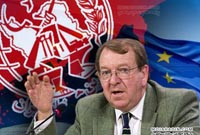
An indication of the anxiety resulting from this change of tide is found in the publication of a book by long term MEK advocate, Struan Stevenson. Reading the blurb, this book looks like a ‘Self Inflicted Wound’; Stevenson admits he was warned off collaboration with the MEK by the UK government and MI5. Why would either Stevenson or the MEK believe that writing about their grubby relationship is a good idea? But then, one reason the MEK have singularly failed to succeed in anything is because nothing they do makes sense. Except, that is, in the warped world of cultic abuse and its belief that the ends justify the means.

The MEK is well-known for its deceptive media and internet campaigns, its hyperbole-filled anti-Iran propaganda and ridiculous self-promotion. But rather than dismiss this book as the work of an MEK stooge, it is useful to briefly examine what is really behind it.

Stevenson tied his career to the MEK presumably because he believed they would aid his own mission to “intensify his attacks on Tehran’s meddling in Iraq”. Now he is no longer an MEP, he has inverted this relationship by working for the MEK’s office in Brussels. The book is a way to perhaps normalise and thereby justify this stance by putting a positive humanitarian gloss on it. Accordingly, he has interspersed his own story with accounts of the self-sacrifice of MEK members, presumably to gain sympathy. But we can be certain there will be not a word from former members of the group or from human rights organisations which have spent two decades documenting the internal harmful practices of the MEK. The 2005 Human Rights Watch report ‘No Exit’ provides a window into the inner workings of this cultic group. Instead, we can be sure that the testimony of former members is dismissed as ‘evidence’ that they are ‘agents of Iran’s Intelligence ministry’ working to keep the MEK on Western terrorism lists.

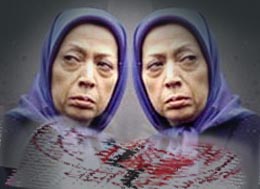
What is of real interest however is that the MEK’s motives behind the publication of this book are blatantly clear only from its dust jacket. This picture tells its own story, perhaps unbeknown to Stevenson.
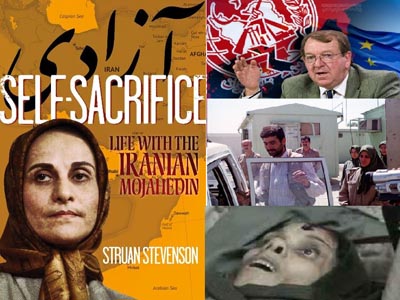
The woman pictured is Zohreh Ghaemi. She was one of the MEK’s top commanders. She commanded the team which assassinated General Sayad Shirazi, a popular Iranian war hero in 1999. In September 2103, Ghaemi was among 53 MEK members killed in Camp Ashraf during a raid by masked commandos. The MEK’s several versions of the attack is that it was variously undertaken by unidentified Iraqi or Iranian government sponsored assassins. After extensive investigations by Iraqi officials, hindered only by the MEK themselves, there is very little doubt among experts that this was almost certainly carried out by the MEK themselves – a real Self Inflicted Wound. The purpose was twofold: to cleanse the group of dissidents and unwanted liabilities – like Ghaemi – who had outlived their usefulness, and to assign blame to Iran as part of the long term MEK regime change narrative.

Thus the cover of this book is the story behind book: the MEK’s willingness to shed the blood of its members in its relentless and pernicious attempts to promote regime change in Iran through false narratives.
May 28, 2015 0 comments
FacebookTwitterPinterestWhatsappTelegramSkypeEmail
Former members of the MEK

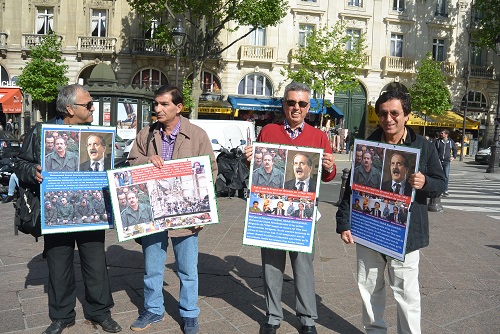
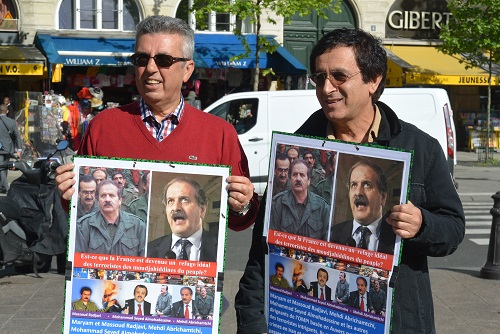
Pictorial – MEK ex-members support for the group lieutenant prosecution in Paris

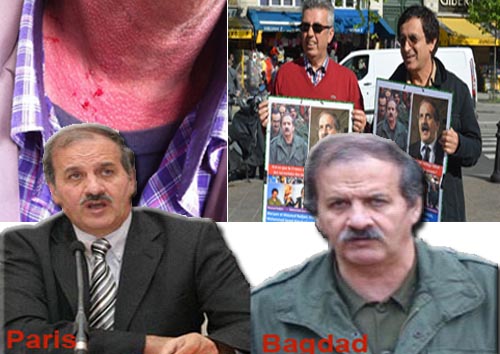
Former MEK members picketing outside the court in support of the prosecution of MEK lieutenant Mehdi Abrishamchi on terrorism charges ,

MEK ex-members support for the group lieutenant prosecution in Paris

May 26, 2015 0 comments
FacebookTwitterPinterestWhatsappTelegramSkypeEmail
Former members of the MEK

Pictorial – Former MEK members picketing in support of Abrishamchi prosecution

Former MEK members picketing outside the court in support of the prosecution of MEK lieutenant Mehdi Abrishamchi on terrorism charges ,

Former MEK members picketing in support of Abrishamchi prosecution

May 26, 2015 0 comments
FacebookTwitterPinterestWhatsappTelegramSkypeEmail
Mujahedin Khalq Organization's Propaganda System

Mrs. Rajavi! Your Propaganda Just doesn’t work well!

The Mujahedin Khalq Organization (the MKO) has apparently had only one goal since the Islamic revolution in Iran, in 1979: the overthrow of the Islamic Republic. Regardless of its real capacity to achieve such an aim orMrs. Rajavi! Your Propaganda Just doesn’t work well! not, for decades, the group has strained to take opportunities of regional and political ups and downs into its aim, even though in most cases there is no true relation between what is going on in the region and what the group is trying benefit from. It seems the group is confused.

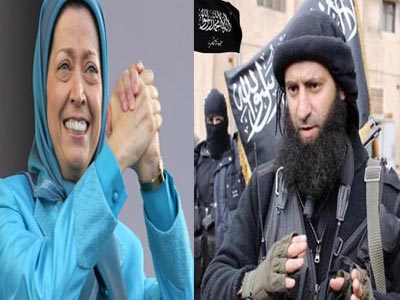
An instance of the group’s opportunistic nature was recently seen in the so-called testimony given by Maryam Rajavi in the US Congress where she presents the overthrow of the Iranian government as the main solution to fight ISIS!

Daniel Larison of the American conservative Magazine writes about Rajavi’s weird recommendation to the West: “The plan to bring down ISIS by toppling Iran’s government, then, is little more than the latest chapter of group’s 50-year history of monomaniacally trying to install itself atop the Iranian government.” [1]

He adds, ”This obviously has nothing to do with combating or understanding ISIS, and allowing her to speak at such a meeting just lends a totalitarian cult a platform from which it can promote its own warped agenda. Inviting Rajavi demonstrates exceptionally poor judgment, and her testimony will make a farce of the proceedings tomorrow.’’ [2]

 “It sounds counter-intuitive—Iran’s aid to the Iraqi government and various Iraqi militias, after all, is widely credited with stopping ISIS’s advances there—but not when you know about the MEK’s tortuous past,’ suggests Ali Gharib of the Nation. “Over the years, the MEK has been nothing if not opportunistic; animated by the twisted logic that the enemy of its enemy is its friend, the group seizes whatever political angle is fashionable at the moment to bring them relevance (Congress is happy to oblige).” [3]

engage in diplomacy with Islamic Republic.

Eldar Mamedov who has served as a political adviser for the social-democrats in the Foreign Affairs Committee of the European Parliament (EP) and is in charge of the delegation for inter-parliamentary relations between the EP and Iran, analyzes the MKO’s part to obstruct diplomacy with Iran. He refers to the Cult’s large-scale efforts to demonize the Iranian Government and to derail any relation between the EP and Iran. Nonetheless, he asserts the group’s lobbying efforts to accomplish its aim has so far failed. On the contrary to the group wishes, Islamic Republic has become an important ally for the Europe in fighting ISIS.

  “A growing realization of the converging interests between the EU and Iran accounts for this dramatic change,’’ Eldar Mamedov submits.” This time, the discussions in Brussels were not so much focused on traditional European concerns, such as Iran´s nuclear program and human rights, as on the situation in the Middle East.” [4]

Mamedov concludes, “In a scenario of rapidly disintegrating states and spreading terrorist threats, European officials are discovering that Iran is among the most stable and predictable state actors in the region.” [5]

In his opinion, the EU´s foreign policy supremo Federica Mogherini mentions the advantages of engaging with Iran because she “definitely doesn´t share the Saudi narrative of Iran being the root of all tumult in the Middle East. In fact, she sees the nuclear deal with Iran as a gate opener for engaging Iran on the regional issues, including in Syria and Yemen, which is an anathema to Saudis."

The MKO leaders, namely Maryam Rajavi would be disappointed to know that “officials from the Mogherini-led European External Action Service (EEAS) now discuss the possibility of a regional dialogue with Iran, which is a sharp departure from her predecessor Catherine Ashton, who approached Iran as an exclusively nuclear problem.” [6]

Despite the MKO’s harsh opposition against the visits of the Iranian Parliamentary delegation to EP, the visits took place anyway. The visit of the Iranian MPs to Brussels is considered by Mamedov as “another sign of changing times in the Middle East.”

Mamedov notifies, “Although a wholesale rapprochement between the EU and Iran may still be some way off, inter-parliamentary diplomacy has the potential to build trust, bridge differences, and eventually make a re-alignment possible,” inviting US Congressmen to join such peaceful policy.[7]

It seems that Maryam Rajavi and her supporters should work harder to survive the new geopolitical and regional undercurrents.

Mazda Parsi

Sources:

[1] Larison, Daniel, The Backlash Against the MEK’s Fans in Congress, The American conservative Magazine, May 05 2015

[2] ibid

[3] Gharib, Ali, Cult Leader Will Tell Congress: Fight ISIS by Regime Change in Iran, The Nation, April 28, 2015

[4] Mamedov, Eldar, Mojahedin Khalq (MEK) Lobby in European Parliament fails to deliver, Lobelog,

May 19 2015

[5] ibid

[6] ibid

[7] ibid

May 26, 2015 0 comments
FacebookTwitterPinterestWhatsappTelegramSkypeEmail
The cult of Rajavi

REPORT – FECRIS Marseille 2015

Expert in cultic abuse and terrorism in the MEK speaks in London charity meeting

REPORT – FECRIS Marseille 2015

The FECRIS Conference provides a forum for the world’s leading experts in cultic abuse to meet and talk and to share ideas, knowledge and experiences. The Conference is a safe place for researchers, practitioners, campaigners and support groups to mingle with former cult members and families of people who remain trapped in cultic relationships. The value of this unique forum was acknowledged by the board during the AGM.
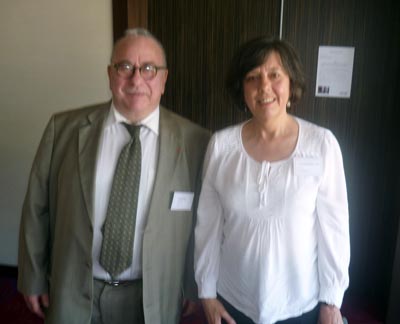

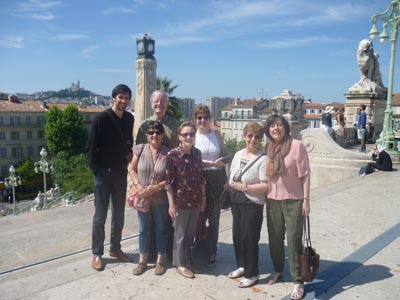
After several years as Chairman of FECRIS, Tom Sackville retired and was replaced by Danièle Muller-Tulli. Good wishes to Danièle for success in this important role.

The theme of this year’s Conference which was hosted in Marseille by GEMPPI, was ‘Deliberately Planned and Encouraged Confusion Between Cults and Religion’. Serge Blisko, President of MIVILUDES, presented the opening speech which outlined this subject. He said that the widespread use of exploitative cultic abuse undermines democratic institutions and social functions. Those who employ these methods deflect criticism by claiming that their critics want to deprive them of ‘freedom of belief’ or that they are not accorded proper status as ‘religions’. Blisko also talked about the growing problem of ‘religious’ terrorism and its links to cultic behaviour.

Anne Khodabandeh, representative of The Family Survival Trust, was in a unique position to brief M. Blisko and the audience about this issue. She explained that it is possible to construct a model for describing and analysing the use of cultic abuse by terrorist entities without mentioning religion. Anne then went on to describe the deceptive recruitment and brainwashing methods used by terrorist groups and said that from her fifteen years as an activist in this field she was able to suggest solutions to tackle this phenomenon. This briefing was greeted enthusiastically by M. Blisko and the audience.

President of MIVILUDES Serge Blisko with Anne Khodabandeh (Singleton) of the FST

There were several informative and interesting talks and also first-hand testimonies. Some stood out as particularly interesting. Pierre Le Coz Director of the Department of Social Science at the Faculty of Medicine, University Aix-Marseilles, gave a fascinating presentation in which he described step by step how individuals can be brought under the influence of a manipulator using specific psychological techniques.

In contrast, Alexey Voat a researcher from Moscow, gave a very pertinent presentation on the Aum Shinriyo cult’s use of the internet for deceptive recruitment. Voat had undertaken to act as a recruit to delve deep inside the cult’s workings. His revelations were instructive for understanding any other cultic recruitment over the internet.

Olivier Faelens, President of SAS Seckten from Belgium, inspired the audience with his advice on how to avoid false arguments presented by groups such as The Church of Scientology, with its continual demands for debate on the subject of whether or not it is a true religion. The real issue, said Faelens, is the internal harmful practices. It is these we must insist on addressing when debating cultic abuse.

Anne Edelstam, journalist, talked about Fundamentalism. She described the history of the Muslim Brotherhood in Egypt and how in spite of the people’s revolution, its creation of alternative social structures dedicated to the reintroduction of fundamentalist strictures on society still have the potential to undermine the country’s democratic processes.

Finally, leading cult expert Janja Lalich explored the struggle for justice in the American legal system. She described several case studies and talked about her own experience as an expert witness and how the cults deliberately exploit ignorance and misconceptions regarding cultic abuse. This talk linked the various issues raised in previous speeches with the subject of the Conference: ‘Deliberately Planned and Encouraged Confusion Between Cults and Religion’.

Maurizio, Lalich, Khodabandeh (Singleton), Corvaglia

During the Conference the audience participated with lively and informative questions and discussions at various points in the day. A light lunch was served al Fresco in a convivial atmosphere. The host association GEMPPI is to be congratulated on the success of the Conference. The simultaneous translators are appreciated for their hard work in bringing the full content of the speeches and interjections to all the audience. The new Chair of FECRIS, Danièle Muller-Tulli closed the Conference and thanked the outgoing Chairman Tom Sackville in his absence for all his hard work.

Anne Khodabandeh representing TFST at the FECRIS Conference, Marseille 2015

[Note: FECRIS – European Federation of Centres of Research and Information on Cults and Sects – created in 1994, serves as an umbrella organisation for associations which defend cult victims in more than 30 countries, including 5 non-European organisations. FECRIS is active at an international level with representation at the UN (ECOSOC).]

(END)

Family Survival Trust,

May 25, 2015 0 comments
FacebookTwitterPinterestWhatsappTelegramSkypeEmail
Mujahedin Khalq Organization as a terrorist group

High- Ranking member Prosecution; MKO reaction to the deponents

Mehdi Abrishamchi; a high ranking member of MKO and the ex-husband of the so called president elect of the group – Maryam Rajavi was summoned for a court hearing by the French Court of First Instance at the Palais de Justice in Paris on terrorism charges .

The MKO has kept up silence over the Abrishamchi’s appearance in the court, However it couldn’t keep cool over the activities of former members of the group.

MKO ex-members staged a picket outside the court in support of the prosecution. The Mujahedin- e Khalq elements reacted to the demonstration by posting defamatory leaflets around their residency areas.

The group agents also attacked those ex-members who offer testimony to the investigative judge. 

In its weekly Digest Iran Interlink reports: ” .. One of these is Mansour Nazari who was physically attacked and injured in his neck. His attackers were commanded by notorious lumpen Mehran Kakavand whose role is to perform such jobs for the MEK. The Police are now involved and the Investigative judge has added the case of distribution of defamatory leaflets around the homes of ex members to the file against Mehdi Abrishamchi. So the MEK have stupidly made it worse for him.”

Nejat Society

May 24, 2015 0 comments
FacebookTwitterPinterestWhatsappTelegramSkypeEmail
Iran Interlink Weekly Digest

Iran Interlink Weekly Digest – 97

++The MEK have maintained absolute silence about Mehdi Abrishamchi’s appearance in the Court of First Instance at the Palais de Justice in Paris. Instead the sites are full of news about Syria, Iraq and everywhere else under the sun. The Commentariat points out that usually if somebody sneezes the MEK will take advantage of it for publicity purposes, but they haven’t even acknowledged that the court case exists. So, they are doubly angry about the picket by former MEK members outside the court in support of the prosecution. MEK defamation and intimidation attacks against ex members have specifically targeted those offering testimony to the investigative judge. One of these is Mansour Nazari who was physically attacked and injured in his neck. His attackers were commanded by notorious lumpen Mehran Kakavand whose role is to perform such jobs for the MEK. The Police are now involved and the Investigative judge has added the case of distribution of defamatory leaflets around the homes of ex members to the file against Mehdi Abrishamchi. So the MEK have stupidly made it worse for him. Several articles state that Iranian people are lucky the MEK has no power. But they also question the role of the French government, asking is it a victim of the cult or a perpetrator of the problem.

++ Iraj Mesdaghi, an internal critic of the MEK held interviews with Said Bahbahani of Mihan TV. Asked for his views of Rajavi’s shows and publicity stunts, Mesdaghi provides an in depth history of this phenomenon. He explains that as the MEK has lost in real terms – their leader is a fugitive, Maryam Rajavi’s so-called Presidency has not changed for years, they lost their army and more – the MEK has consequently increased the focus on its presentation. Mesdaghi points to the MEK wearing suits and ties, the men dying their hair and posing as important people. This, he says, is simply a sign of their defeat.

In English

++ Retired Colonel Patrick Lang of the US Army writes about ‘The MeK – Washington’s Favourite Communist Terrorist Cult’ in the blog Sic Semper Tyrannis. Lang describes the cult nature of the MEK, calling on the RAND report which he urges everyone to read in full in order to really understand the MEK, and the Human Rights Watch report ‘No Exit’, which also gives a clear understanding of the cult nature of the group. He concludes humorously saying “Given the choice between joining the MeK or the North Korean Army, to me it’d really be a toss up.”

++ Mazda Parsi writing for Nejat Bloggers says ““Human Rights” a tool for Mojahedin Khalq (Rajavi cult) to trap EP members”. “Obsessed with the idea of regime change in Iran, the Mujahedin Khalq Organization (the MKO/ Rajavi’s Cult) have always resorted to any tool. Today, as the final nuclear deal between Iran and the West is highly expected, the MKO cult is trying to sell its regime change agenda in the European Parliament running propaganda about the alleged human rights abuses committed by the Iranian government. The MKO propaganda arm spends huge amounts of money and energy to organize hearing sessions in the US Congress or EU parliament. One of the recent events was the controversial hearing at the US Congress in which the so-called president of the MKO testified about the threat of ISIS in Iraq!”

++ Eldar Mamedov published in Lobelog notes the MEK’s failed attempts to coerce members of the European Parliament into taking a position which would derail the nuclear negotiations. “In 2010, when Iran´s then-minister of foreign affairs Manouchehr Mottaki visited the European Parliament in Brussels, he was greeted by protests from MPs. Some of them, known for their close links with the exiled Iranian dissident group Mojaheddeen-e Khalk (MEK), carried the picture of Neda Soltan, a young Iranian woman killed during the protests following the fraudulent presidential elections of 2009. They also tried to block the minister from entering the meeting room and even briefly scuffled with security guards.

The contrast with a visit of a delegation from the Iranian Majles to Brussels on May 6-7 could not be greater. Sure enough, the MEK tried to derail the visit by lobbying the MPs to adopt a resolution on capital punishment in Iran, which would have almost certainly led to the cancellation of the visit. When that plan failed, they called on Euro MPs to boycott the delegation.

In the end, however, the five member-strong delegation led by the leader of the “principa list” faction of the Majles Kazem Jalali did make it to Brussels, in the first such parliamentary visit in seven years. Apart from holding sessions with their counterparts from the EP delegation for relations with Iran, Majles members were received by the President of the EP Martin Schultz (a German Social Democrat) and the Chairman of the Foreign Affairs Committee Elmar Brok (a German Christian Democrat).”

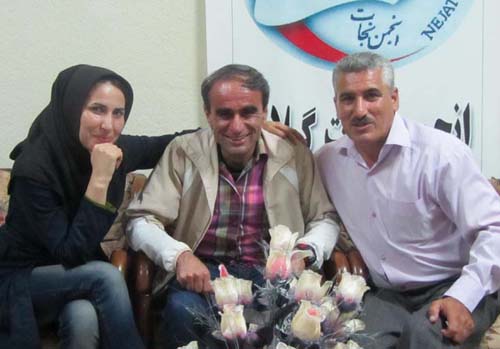
++ Nejat Bloggers also reports on the repatriation of one former MEK member from Albania: “Mansour Shaabani returned his hometown after 27 years of imprisonment in the camps of the Mujahedin Khalq Organization. Shaabani was relocated in Albania two years ago. Finally he succeeded to get back to Iran by the help Iranian officials on May 10th, 2015. Mansour’s brother had several times gone to Camp Ashraf, Iraq, to visit him but he was never allowed by the cult leaders. Nejat Society, Gilan office aided Shaabani family to receive their beloved Mansour.”

 May 22, 2015

May 23, 2015 0 comments
FacebookTwitterPinterestWhatsappTelegramSkypeEmail
Mujahedin Khalq; A proxy force

Ramadi and America’s Fracturing of Iraq

The Western media has been consumed in recent days with the news that Islamic State militants have captured the strategically critical city of Ramadi in Iraq. The narrative is one of incompetence on the part of Iraqi military forces who, the corporate media tells us, are simply either ineffectual or hopelessly corrupt. Some analysts and pundits, especially those on the right who oppose Obama for various reasons, have used the fall of Ramadi to legitimize their claims that Obama’s “weakness” on the ISIS issue brought events to this point.
While there is truth to the assertion that Iraqi military forces are riddled with severe problems, from sectarianism in the command hierarchy, to poor training and, at times, organizational disarray, none of these issues is singularly responsible for the loss of Ramadi. Nor is it entirely accurate to say that Obama’s alleged weakness is really the cause.

Rather the primary reason, the one which the media carefully avoids including in their reportage, is the political and military sabotage of Iraq perpetrated by the United States in pursuit of its long-term agenda.

Indeed, while Washington waxes poetic about the need to more forcefully confront ISIS and destroy its military and terrorist infrastructure, the actual policies it has pursued are designed to achieve just the opposite. Instead of promoting unity of command and execution within the Iraqi armed forces, the Pentagon, Congress, and the White House have done everything to fracture Iraq’s political and military structures, fomenting rather than mollifying sectarian conflicts. Then the Washington Post can publish editorials blasting Iraqi fecklessness, and calling for a more robust US military presence. In this way, the US policy of promoting division and weakness within Iraq has directly led to the dire situation in Ramadi and throughout the country.

How Washington is Destroying Iraq…Again!

The fall of Ramadi has provided ammunition to opponents of Obama whose central argument – if such insanity can be believed – remains that the US should wage further war in Iraq. Leading warmongers, Republican Senators John McCain and Lindsey Graham, both claim that the failure is due to Obama’s “big mistake” in not leaving behind troops in 2011. Graham described US policy as “a failure of Obama’s military strategy,” while McCain referred to it as “one of the most disgraceful episodes in American history… [The] policy…is not enough of anything,” Aside from the obvious absurdity of their claims, McCain and Graham, and the media narrative surrounding the entire issue, are a perfect illustration of the utterly backwards narrative presented by the corporate media to the American public.

In reality, the US, with Congress very much playing a central role, has studiously worked to undermine any chances for national resistance and military victory inside Iraq by Iraqi security forces. Perhaps Graham and McCain forgot that the US has worked diligently to create divisions between Sunni, Shia, and Kurdish elements within the Iraqi military architecture.

As recently as late April 2015, Congressional Republicans were pushing for a defense authorization bill that would directly arm and fund Sunni and Kurdish militias inside Iraq, treating them as “independent countries.” An obvious means of fomenting further sectarian conflicts and fracturing the fragile and precarious unity of the government in Baghdad and its military forces, this bill is indicative of a broader policy, one aimed at de facto partition of Iraq along ethno-religious lines. Moreover, those who follow US politics and military adventurism should understand that legislation follows rather than precedes the policy. The US has likely been arming Sunni and Kurdish factions for a long time already, thereby further degrading the continuity of the military.

But aside from the political attempts to fragment the country, US military actions belie the real agenda which, rather than combating ISIS, is geared towards degradation of military capability of all sides, which is, in effect, support for ISIS.

Since the US campaign against the group in Iraq began, there have been countless media reports of US weapons and supplies falling directly into the clutches of ISIS, succoring it at precisely the time that it has suffered heavy losses at the hands of Shiite militias in Iraq and the Syrian Arab Army and Hezbollah across the border in Syria. As Naeem al-Uboudi, the spokesman for one of the main groups fighting ISIS in Tikrit told the NY Times, “We don’t trust the American-led coalition in combating ISIS… In the past, they have targeted our security forces and dropped aid to ISIS by mistake.”

This fact is critical to understanding the true motivation of Washington in this campaign, namely inflicting maximum damage on both ISIS and Shiite militias fighting it. In effect, this ‘controlled chaos’ strategy promotes and extends, rather than concludes the war. Additionally, the allegation of US-ISIS collusion is further supported by dozens of accounts of airdropped US weapons being seized by ISIS. As Iraqi MP Majid al-Ghraoui noted in January, “The information that has reached us in the security and defense committee indicates that an American aircraft dropped a load of weapons and equipment to the ISIS group militants at the area of al-Dour in the province of Salahuddin… This incident is continuously happening and has also occurred in some other regions.”

Looking at a map, one begins to see then that ISIS has received US support in each of the strategically significant areas where it has made important gains. When reports of US airdrops going to ISIS in the province of Salahuddin first emerged, it coincided with the group’s military success in Tikrit. Now we see Ramadi in the easternmost part of Anbar province has fallen within weeks of more reports emerging of US-supplied arms being destined for ISIS in the al-Baqdadi region of Anbar.

Taken in total then, it seems that US strategy has been to overtly attack ISIS while covertly supporting it. Similarly, the US has claimed to be supporting, or at least collaborating indirectly, with Shiite militias connected to Iran. At the very same time, those militias have repeatedly claimed that US has bombed them deliberately. Such seemingly contradictory military objectives lead to the inescapable conclusion that US policy has been, and continues to be, chaos and fomenting war. So for Washington to now claim that the fall of Ramadi is somehow a major tragedy, that it represents a failure of strategy, is utter disinformation. In effect, the fall of Ramadi is an orchestrated outgrowth of the “managed chaos” strategy.

The History and Politics of America’s Chaos Theory in Iraq

From a purely geopolitical perspective, the aim of the US is to foment sectarian conflict and prolong the war in Iraq as a means of checking Iranian influence in Iraq and throughout the region. The US is mostly incapable of achieving such an objective in Syria due to the continued success and cohesion of the Syrian Arab Army; in Iraq this is very much achievable. But this fragmentation and de facto partition of the country has been a long-standing policy, one that the US has pursued in myriad ways for more than a decade.

Keen political observers will recall that even before, and during the early stages, of the Iraq War in 2003, there was serious talk of dividing Iraq into religiously and ethnically homogenous territories. As influential neocon and President Emeritus of the Council on Foreign Relations Leslie Gelb wrote in an op-ed in the NY Times in November 2003, “The only viable strategy…may be to correct the historical defect and move in stages toward a three-state solution: Kurds in the north, Sunnis in the center and Shiites in the south.” While this policy was not enacted immediately, the United States has always pursued this long-term strategy to varying degrees.

The major stumbling block has been the stubborn desire of various members of Iraq’s political elite to be independent and sovereign actors, not US puppets. The primary offender from Washington’s perspective was former Prime Minister, and current Vice President, Nouri al-Maliki, who refused to bow to the diktats of Washington, and was instead portrayed as a corrupt, autocratic Iranian stooge. But what were Maliki’s real transgressions from Washington’s perspective?

First and foremost were Maliki’s attitudes and policies towards the US occupation and the presence of military and non-military personnel. In fact, it was Maliki’s refusal to grant the US request to maintain military bases in the country after the withdrawal – against Obama’s wishes – which prompted the first round of attacks on him and his government. And it was then that the image of Maliki as Iranian puppet truly became popularized, at least in Western media. Indeed, as The Guardian noted at the time, “The Pentagon had wanted the bases to help counter growing Iranian influence in the Middle East. Just a few years ago, the US had plans for leaving behind four large bases but, in the face of Iraqi resistance, this plan had to be scaled down this year to a force of 10,000. But even this proved too much for the Iraqis.”

Maliki also took the absolutely monumental step of closing down Camp Ashraf and killing or expelling its inhabitants.  he was immediately convicted in the court of US public opinion which described the operation as an assault on Iranian “freedom fighters.” We know all too well what the US means when it describes terrorists as freedom fighters.

And so, by refusing basing rights, refusing to extend immunity and legal protections to US contractors operating in Iraq, and wiping out Camp Ashraf and MEK members, Maliki became a villain. More to the point, it was his refusal to allow Iraq to be used by the US and its allies as a military and political bulwark against Iran that earned him the West’s ire. Far from wanting a “sovereign, self-reliant and democratic Iraq” as Obama eloquently proclaimed, Washington needed the country to remain a client state to be used as a weapon of US foreign policy in the region. By rejecting this, Maliki, almost overnight, became “a dictator.”

By ousting Maliki, the US once again pursued a policy of fragmentation, deliberately installing current Prime Minister Abadi who they knew would be weak, incapable of maintaining the unity of Iraq, and most importantly, amenable to US demands. As the NY Times wrote in the wake of the fall of Ramadi last week:

At the urging of American officials who sought to sideline the [Shiite] militias, Mr. Abadi… gambled that the combination of United States airstrikes and local Sunni tribal fighters would be able to drive Islamic State fighters out of [Ramadi]…But as the setback brought the Shiite militias, and their Iranian backers, back into the picture in Anbar, intensified Shiite infighting appeared to leave the prime minister more vulnerable than ever… He became prime minister last year with strong backing from the United States on the belief that he would be a more inclusive leader than his predecessor, Nuri Kamal al-Maliki, and would reach out to the country’s minority Sunni Arabs and Kurds. Mr. Abadi has done so, by pushing for the arming of local Sunni tribesmen and reaching a deal with the Kurds to share oil revenue.

As the Times correctly notes, Abadi has, quite predictably, followed orders from Washington and pursued a strategy which, from the western perspective is “inclusive,” but is in reality very much sectarian. This is the inverted reality that the US and the Western media portrays; the arming and support for Sunni and Kurdish factions is “inclusive” rather than divisive, which is what it is in the real world. By forcing the Shiites, the dominant group demographically and politically in Iraq, into a secondary role, the US once again foments, rather than bridges sectarian divides. What is this called if not “divide and conquer”?

It should not be lost on anyone that this policy which, as noted above, dates back more than a decade, is all designed to curb Iranian influence in Iraq and throughout the Middle East. By forcing Shiites into the back seat politically, economically, and militarily, the US has hoped to stifle Iran’s development from isolated nation into a regional power. By doing so, the US once again acts in its own interests, as well as those, of course, of Israel, Saudi Arabia, Qatar, and Turkey. Perhaps that grouping of countries rings a bell for people following the development of the war on Syria these past four years? Indeed, it is the same actors.

Seen in this way then, the US agenda and strategy in Iraq is precisely the same as that for the entire region: block Iran (and, on a grander scale, Russia and China) with regime change when and where possible. When regime change is impossible or undesirable, inflict chaos and foment conflict.

One might call such a policy cynicism of the highest order. While true, there are still other words that perhaps better reflect the true insidiousness of it all: colonialism and imperialism.

Eric Draitser is an independent geopolitical analyst based in New York City, he is the founder of StopImperialism.org and OP-ed columnist for RT, exclusively for the online magazine “New Eastern Outlook”.

By Eric Draitser, journal-neo.org

May 23, 2015 0 comments
FacebookTwitterPinterestWhatsappTelegramSkypeEmail
Former members of the MEK

MKO defector return home from Albania

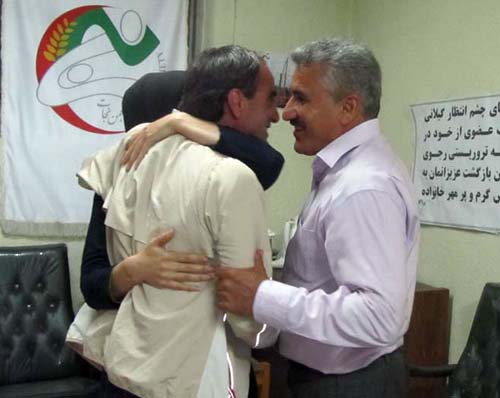
Mansour Shaabani returned his hometown after 27 years of imprisonment in the camps of the Mujahedin khalq Organization.

Shaabani was relocated in Albania two years ago. Finally he succeeded to get back to Iran by the help Iranian officials on May 10th, 2015.

Mansour’s brother had several times gone to Camp Ashraf, Iraq, to visit him but he was never allowed by the cult leaders.

Nejat Society, Gilan office aided Shaabani family to receive their beloved Mansour.

May 20, 2015 0 comments
FacebookTwitterPinterestWhatsappTelegramSkypeEmail
Mujahedin Khalq as an Opposition Group

Mojahedin Khalq (MEK) Lobby in European Parliament fails to deliver

Iranian Parliamentarians Discover Brussels
 
In 2010, when Iran´s then-minister of foreign affairs Manouchehr Mottaki visited the European Parliament in Brussels, he was greeted by protests from MPs. Some of them, known for their close links with the exiled Iranian dissident group Mojaheddeen-e Khalk (MEK), carried the picture of Neda Soltan, a young Iranian woman killed during the protests following the fraudulent presidential elections of 2009. They also tried to block the minister from entering the meeting room and even briefly scuffled with security guards.
 
The contrast with a visit of a delegation from the Iranian Majles to Brussels on May 6-7 could not be greater. Sure enough, the MEK tried to derail the visit by lobbying the MPs to adopt a resolution on capital punishment in Iran, which would have almost certainly led to the cancellation of the visit. When that plan failed, they called on Euro MPs to boycott the delegation.
 
In the end, however, the five member-strong delegation led by the leader of the “principlist” faction of the Majles Kazem Jalali did make it to Brussels, in the first such parliamentary visit in seven years. Apart from holding sessions with their counterparts from the EP delegation for relations with Iran, Majles members were received by the President of the EP Martin Schultz (a German Social Democrat) and the Chairman of the Foreign Affairs Committee Elmar Brok (a German Christian Democrat).
 
Regional Concerns
 
A growing realization of the converging interests between the EU and Iran accounts for this dramatic change. This time, the discussions in Brussels were not so much focused on traditional European concerns, such as Iran´s nuclear program and human rights, as on the situation in the Middle East. In a scenario of rapidly disintegrating states and spreading terrorist threats, European officials are discovering that Iran is among the most stable and predictable state actors in the region.
 
In fact, privately many of them are uneasy, to say the least, with Saudi Arabia’s newfound regional efforts to consolidate a Sunni front against the “Iranian threat.” In a curious twist, it is Saudi Arabia, and not Iran, that is increasingly emerging as a revolutionary Middle Eastern power. Its refusal to take up a seat in the UN Security Council in 2013, alleging the structure´s inability to take action against Syria´s president Bashar Assad and confront Iran, was already a harbinger. Now, many in Brussels view with apprehension the departure of the cautious King Abdullah and a newly assertive policy of rolling back ” Iranian influence” in Yemen and Syria.
 
The EU´s foreign policy supremo Federica Mogherini definitely doesn´t share the Saudi narrative of Iran being the root of all tumult in the Middle East. In fact, she sees the nuclear deal with Iran as a gate opener for engaging Iran on the regional issues, including in Syria and Yemen, which is an anathema to Saudis. Officials from the Mogherini-led European External Action Service (EEAS) now discuss the possibility of a regional dialogue with Iran, which is a sharp departure from her predecessor Catherine Ashton, who approached Iran as an exclusively nuclear problem.
 
The Problem with the Gulf States
 
A major obstacle to this re-alignment is, of course, the position of some EU member states. Shortly before the group of Iranian MPs arrived in Brussels, French President Francois Hollande visited Saudi Arabia and Qatar, two major buyers of the French arms. As the French-Saudi joint declaration makes it clear, both countries are looking to consolidate their cooperation, notably in the defence sphere. This explains why France is also the toughest of the P5+1 group of powers in nuclear negotiations with Iran, its positions closest to the Saudis and Israelis. The French government, of course, is looking for ways to boost the country´s struggling economy. But massive arms sales to the Gulf monarchies may carry a considerable strategic cost, namely in the fight against the so-called Islamic State (IS or ISIS) and al-Qaeda.
 
Iranian MPs are upset that no major steps have been taken to combat IS and al-Qaeda terrorism. There is some truth to these claims.
 
Although Saudi Arabia and its Gulf allies are formally part of the anti-ISIS coalition, their real actions seem to go in an opposite direction. Operation “Decisive Storm” in Yemen contrasts sharply with Saudi Arabia´s and its allies´ notorious lack of enthusiasm in the fight against IS. Bombing Yemen (including with cluster munitions, which are prohibited by international law) not only leads to numerous civilian deaths but also takes the heat off al-Qaeda, enabling it to regroup and liberate dangerous terrorists from prisons. And the anti-Shiite, anti-Christian, and anti-Jewish hate campaigns emanating from Saudi Arabia, Qatar, and United Arab Emirates show no sign of abating. These countries are providing pulpits for firebrand clerics and hosting “debates” on the convenience of committing genocide against Alawites (a heterodox offshoot of Shia Islam), like the one organised by al-Jazeera Arabic in Doha.
 
Iranian MPs also rejected the interpretation of the current strife in the Middle East as a Sunni-Shiite conflict. They pointed out that Sunnis and Shiites have co-existed peacefully for centuries and blamed Saudi Arabia for stoking the sectarian conflict in the region through its aggressive promotion and financing of Wahhabism. Supporting Saudi Arabia and its Gulf allies is, in this reading, a recipe for a strategic disaster in the region.
 
Overall, this narrative lacks self-criticism as regards Iran´s own role in region´s woes—from its staunch support of Bashar Assad´s regime in Syria to the failure to rein in more effectively Shiite militias in Iraq, some of which have been accused of war crimes. But that does not mean that the Iranian narrative should be rejected out of hand. If the West is serious about the security of the Middle East, and its own security as well, it would be wise to use its close ties with Saudi Arabia and other Gulf regimes to confront them over their destabilizing activities, even at the cost of some lucrative arms deals.
 
The visit of the Iranian MPs to Brussels is another sign of changing times in the Middle East. Although a wholesale rapprochement between the EU and Iran may still be some way off, inter-parliamentary diplomacy has the potential to build trust, bridge differences, and eventually make a re-alignment possible. There is a need for more, not less, of such contacts. US Congress members would do well to join their European counterparts in a direct dialogue with Iran. The West, after all, does not have the luxury of choice in picking its interlocutors in the Middle East these days.
 ***
About the Author
 Eldar Mamedov has degrees from the University of Latvia and the Diplomatic School in Madrid, Spain. He has worked in the Ministry of Foreign Affairs of Latvia and as a diplomat in Latvian embassies in Washington D.C. and Madrid. Since 2007, Mamedov has served as a political adviser for the social-democrats in the Foreign Affairs Committee of the European Parliament (EP) and is in charge of the delegation for inter-parliamentary relations between the EP and Iran.

Eldar Mamedov

May 19, 2015 0 comments
FacebookTwitterPinterestWhatsappTelegramSkypeEmail
Newer Posts
Older Posts

Recent Posts

  • Pregnancy was taboo in the MEK

    December 22, 2025
  • MEPs who lack awareness about the MEK’s nature

    December 20, 2025
  • Why did Massoud Rajavi enforce divorces in the MEK?

    December 15, 2025
  • Massoud Rajavi and widespread sexual abuse of female members

    December 10, 2025
  • Farman Shafabin, MEK member who committed suicide

    December 3, 2025
  • Facebook
  • Twitter
  • Instagram
  • Youtube

© 2003 - 2025 NEJAT Society . All Rights Reserved. NejatNGO.org


Back To Top
Nejat Society
  • Home
  • Articles
  • Media
    • Cartoons
    • NewsPics
    • Photo Gallery
    • Videos
  • Publications
    • Books
    • Nejat NewsLetter
    • Pars Brief
  • About Us
  • Contact us
  • Editions
    • عربي
    • فارسی
    • Shqip