
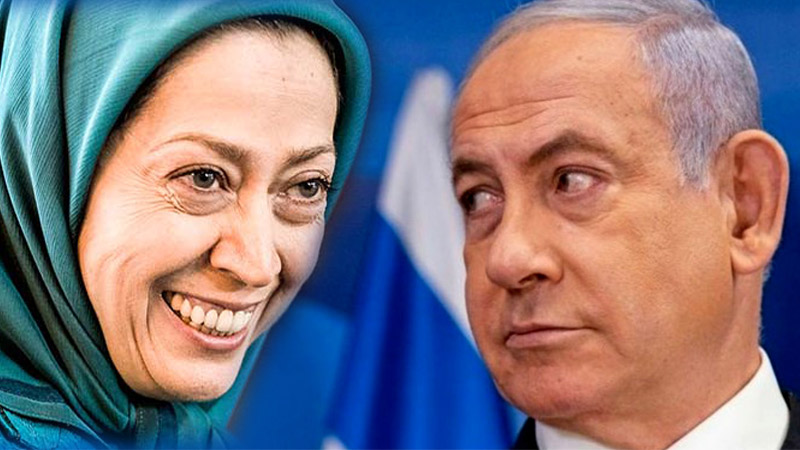
Following the publication of an article on the Times of Israel, it was once more proved that the Israeli Intelligence service has used the Mujahedin-e Khalq (MEK)’s agents for spying and military operations. Moreover, the author, Julian Rennell, suggests that Israel should prioritize the operational effectiveness of the MEK over “moral purity” due to their “unique operational advantages,” despite the group’s unpopularity and undemocratic nature. His presented argument raises several significant ethical, strategic, and practical concerns.
The core flaw in this argument lies in its narrow, short-sighted focus on immediate operational gains at the expense of long-term strategic stability, ethical considerations, and international legitimacy. While the MEK may offer certain intelligence or operational advantages, overlooking their problematic history, lack of popular support within Iran, and undemocratic ideology can lead to several negative consequences.
Ethical considerations
Ethical considerations are paramount in foreign policy and intelligence operations. Supporting a group with a history of human rights abuses, cult-like characteristics, and a lack of democratic principles, as the MEK has been accused of, can severely damage a nation’s moral standing and international reputation.
Aligning with such a group, even for perceived operational benefits, can be seen as a betrayal of democratic values and human rights principles, potentially alienating allies and providing propaganda fodder for adversaries. The argument implicitly suggests that “moral purity” is a dispensable luxury, which is a dangerous precedent for any state claiming to uphold democratic values.
MEK, unlikely to bring sustainable, positive change and stable future
Secondly, the argument overlooks the practical implications of supporting an unpopular and undemocratic group. The MEK’s lack of popular support within Iran means that any success achieved through their operations is unlikely to translate into sustainable, positive change for the Iranian people or a stable future for the region.
In fact, their historical association with Saddam Hussein and their past violent actions have made them widely reviled by many Iranians, including those who oppose the Iranian gov.
Relying on such a group for intelligence or operational effectiveness risks alienating the very population whose support would be crucial for any long-term strategic goals, such as fostering a more democratic or stable Iran. This approach could inadvertently strengthen the Iranian government’s narrative that external powers are supporting unpopular, exiled groups.
Doubt the MEK’s actual capabilities and reliability
The “unique operational advantages”, Rennell claims for the MEK must be critically assessed against their actual capabilities and reliability. While they may possess specific intelligence networks or operational experience, their effectiveness can be overstated, particularly given their isolation and lack of broad support.
Relying heavily on a group with a history of internal purges, questionable intelligence, and a vested interest in exaggerating their capabilities can lead to flawed assessments and strategic missteps.
Furthermore, the MEK’s primary goal is their own return to power, which may not align with the broader strategic interests of Israel. Their actions could be driven by self-preservation or a desire to provoke conflict, rather than a genuine commitment to regional stability or democratic reform.
Supporting the MEK escalate regional tensions
The argument ignores the potential for blowback and unintended consequences. Supporting a controversial group like the MEK can lead to accusations of interference in internal affairs, escalate regional tensions, and potentially provoke retaliatory actions. It can also complicate diplomatic efforts and make it harder to build broad international coalitions to engage with the Iranian government. The short-term operational gains might be outweighed by the long-term strategic liabilities and the erosion of international trust.
Using the MEK, a fragile and unsustainable strategy
The argument presents a false dichotomy between “operational effectiveness” and “moral purity.” Effective long-term strategy often requires a foundation of ethical conduct and adherence to principles. A strategy built on morally questionable alliances is inherently fragile and unsustainable.
True operational effectiveness, especially in complex geopolitical environments, often stems from legitimacy, popular support, and alignment with broader international norms, rather than from clandestine operations with unpopular groups like the MEK. Julian Rennell must learn that relying on a controversial proxy force with a background of extremism, terrorism and cult-like practices will lead to a disaster in the region including the very Israeli sponsors of the group.
Mazda Parsi
