

A study of cult phenomena in contemporary history shows that cult leaders, regardless of their geographical, political, or social contexts, use very similar behavioral and psychological patterns to dominate their members, especially women. A comparison of the documents related to the organization of Jeffrey Epstein, the American capitalist, with the cult-like structure of the People’s Mojahedin Organization (MKO/ MEK) led by Massoud Rajavi reveals striking similarities in the areas of coercive control, the collapse of self-confidence, the isolation of victims, and the implementation of humiliating rituals. In what follows, various dimensions of these structural and behavioral similarities are analyzed.
Common patterns in the recruitment and deception process
One of the most important common aspects of the structure of the Epstein cult and the Rajavi cult is the use of sophisticated techniques of deception and psychological preparation to ensnare victims. In Jeffrey Epstein’s organization, victims were mainly recruited from among young girls with tempting promises of careers in the modeling industry, while in the MEK, recruitment was often carried out with promises of fighting for freedom, social justice or asylum in Europe and a better job and life to overcome personal crises. In both cases, the cult leaders initially introduce themselves as “saviors” or powerful supporters who can create a bright future for the individual. Over time, this process leads to the creation of intense emotional and financial dependence, such that the individual has no way of returning or making independent decisions.
Anya is the pseudonym of one of the women who was one of Jeffrey Epstein’s victims. In a recent interview with the BBC, she confirmed the statements of other female victims of Epstein: “I am still trying to come to terms with the fact that I was abused for years.” According to her, although she was apparently free, in reality she was trapped in restrictions and dependencies that acted like invisible chains, and she only realized this after Epstein’s death.
The female victims of Massoud Rajavi, however, did not and do not even enjoy apparent freedom. They have been imprisoned for years in closed camps of the organization in Iraq or Albania, but with Rajavi’s special values, such as the “denial of individuality and gender”, not only do they not realize their captivity, but they see themselves on the path to “perfection” and “salvation of the people.”
The victims who managed to escape the physical and mental bars of the MEK, after leaving the organizational context, managed to break away from the invisible chains and, like Batoul Soltani, Nasrin Ebrahimi, Fereshteh Hedayati, Zhina Hossein Nejad, and many others, speak of what happened to them in Rajavi’s cult of personality.
Destruction of individual autonomy
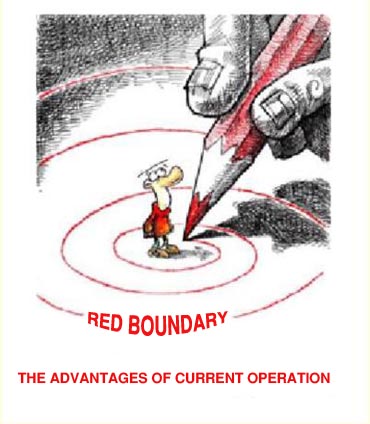
In the clinical psychology literature of cults, the destruction of individual autonomy and the right to choose is the main foundation of the dominance of cult leaders. In Epstein’s cult, victims such as “Anya” have testified that Epstein deprived them of the ability to think independently by constantly humiliating them, criticizing their physical appearance, and controlling their relationships and finances. Similarly, in Rajavi’s cult, Massoud Rajavi used meetings called “ideological revolution,” “bait,” “weekly bath,” and “current operations” and intense mental control to destroy the personal, emotional, and family attachments of members. Forced divorces, forced celibacy, separating children from parents, and imposing ideas in which the individual does not have the slightest right or will for his or her personal life are evaluated precisely in this context; a strategy whose ultimate goal is to turn people into unwilling tools serving the interests of the cult leader.
Creating all-encompassing dependency and tools of economic and social control
The victim’s attachment to the system is the main obstacle to their escape or protest. In Epstein’s organization, women lacked independent bank accounts, health insurance, or financial support, and Epstein trapped them in invisible chains with the phrase “I am your health insurance.” In Rajavi’s cult, the complete severance of members’ connections with the outside world, family, and society, as well as strict control over all their basic necessities, placed them in a position where they could not imagine any refuge outside the organization. The use of fabricated debts or embarrassing documents in Epstein’s cult to silence victims is very similar to the creation of a sense of permanent guilt and organizational accountability in the MEK. The self-criticism meetings held daily in Camp Ashraf and Ashraf 3 under the title of “Current Operation” function to create a sense of permanent shame and indebtedness to “Brother Massoud” and “Sister Maryam.”
Humiliating rituals and physical control (Salvation dance and naked dance)
One of the most obvious points of commonality between these two organizations is the use of collective and humiliating rituals to break self-respect and ensure non-disclosure. Published testimonies from Epstein’s victims, including Anya, mention cases in which women were forced to strip and dance in front of Epstein’s camera and eyes so that, as he said, “they would never be able to act against him”; because having this visual evidence turned the fear of humiliation into a tool for silence.
This method is exactly reminiscent of the phenomenon known as the “Salvation Dance” in the leadership council of the MEK, which was carried out under the management of Maryam Rajavi and under the orders of Massoud Rajavi. There, too, under the guise of fabricated ideological concepts, women members of the Leadership Council were forced to take actions that violated their privacy and human dignity and fatally cemented their emotional and organizational ties to Massoud Rajavi. In both systems, the purpose of these forced rituals is to create a point of no return for the victim, so that she feels that she has no way to protest or leave because of her participation in a humiliating and dirty act.
Finally, examining the structure of these two organizations shows that the apparent differences between an unhealthy network of financial and sexual corruption (Epstein) and an extremist political organization (Rajavi) do not prevent their deep and substantial similarities in the use of mind control tools, the exploitation of people, and especially the victimization of women.
Mazda Parsi

 recruits so as not to make a free approval and disapproval of the cult they are invited to join. If the targets are to join and exist in the cult, they must conform to the rules even if they are not privately accepted. Once joined, the targets have to conform to the cult’s standards regardless of having developed an awareness of the existing discrepancy between personal and social standards and those of the cult’s.
 Mojahedin began their military operations in August 1971. Their first operations were designed to disrupt the extravagant celebrations of the 25-century anniversary of the monarchy. SAVAK [the Monarchy’s security-information apparatus] through one of the old member of Tudeh party, who was recruited by them, could infiltrate into Mojahedin and soon was able to arrest another sixty-six members. In the subsequent months, the group lost the whole of its original leadership through executions or street battles. 1
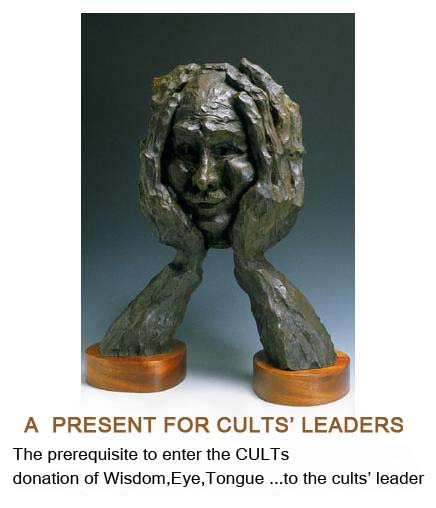 person or group of people that has near-complete control. Charismatic cult leaders often make extreme claims of divine or “otherworldly” power to exercise influence over their members. Many legitimate religions have had powerful figures who have inspired enormous dedication in people. Being a powerful leader is not inherently wrong , though it carries a high potential for abuse. A group becomes destructive when its leader actively uses such power to deceive members and to rob them of their individuality and free will. For example, I was told to surrender my free will (viewed as Satanic) to God’s representative, Moon, and his subleaders. Marshall Applewhite told followers that an alien entity was speaking through him, and used his message to justify his absolute control over their lives.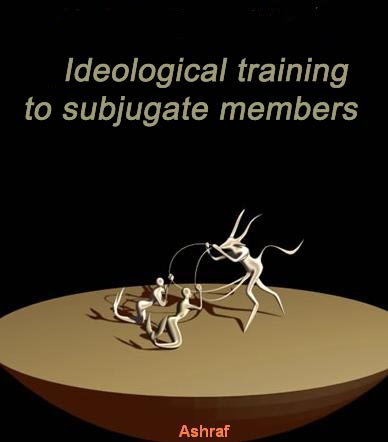
 for censure, persuasion, distortion, brainwashing and mind-control activities against their insiders and sympathizers. Cults show diverse and double reactions in their dealing with the media that draw substantial public attention to accomplish a variety of objectives. Besides, the media in any form play a key role in the formation of public opinion and thought, life-style, and even the depiction of a nation’s destiny. For sure so important, versatile phenomena of the modernity never escape the attention of the cults. In the same way that the media can give warning against the threat and the evil nature of the cults, they can also be at their service, depending on the amount of revenue and how influentially they can master them, to instil noxious ideas into a society. However, since the media can hardly be an exclusive medium for the cults and in many occasions it is too expensive a means for propagation with the least expected outcome, and sometimes inflicts irreparable damages, the cults prefer not to invest much trust in the media. The case is sometimes different with the political cults. If we consider deliberate isolation tactic as one of the cults’ most common mechanisms of control and enforced dependency, then the social persuasion is the identical definition of the mechanism. The recruits are encouraged to disrupt their common lifestyle and leave whatever they are attached to behind to adapt themselves to the cult’s milieu in isolation. In this process, what is considered to be a threat in neutralizing the effects of the social persuasion will be the media which the cults favour to avoid. That is mostly because cults’ prompt of black-and-white thinking fails to be functional and productive in the media which has to be repelled. However, cults are not so powerful as the governments that can have total control over the media for social persuasion and people’s mind-control if they will. Quoting Orwell reasoning the effectiveness of the media coming under the complete control of the governments, Singer states: Orwell reasoned that if a government could control all media and interpersonal communication while simultaneously forcing citizens to speak in a politically controlled jargon, it could blunt independent thinking. If thought could be controlled, then rebellious actions against a regime could be pre- vented. 1 Milieu control, that is total control of members’ communication in the cults, is a mechanism to keep members from communicating anything other than what the cults approve and often involves discouraging members from contacting relatives or friends outside the cult and from reading, watching and listening to anything unapproved by the cult or the organization. Consequently, the effectiveness of the media in illuminating facts about the cults and active organizations is actually neutralized and the insiders are told not to believe and trust in anything they see or hear reported by the media that has to be accounted as an agent in the enemy’s front. In this way, the cults’ leaders blindfold members about historical facts: Milieu control also often involves discouraging members from contacting relatives or friends outside the group and from reading anything not approved by the organization. They are sometimes told not to believe anything they see or hear reported by the media. One left-wing political cult, for example, maintains that the Berlin Wall is still standing and that the "bourgeois capitalist" press war people to think otherwise in order to discredit communism. 2 As a result, cults’ hostile position against the media decreases the influence of the media on the members to a zero degree. Furthermore, cults exploit a variety of approaches and legal levers in the war against the media. Sometimes they use violent tactics such as threatening, intimidation and harassment to frighten away the critics, reporters, journalists and authors and to compel them cease anti-cult productions and programs: A metropolitan newspaper’s desk editor was harassed after he ran a piece critical of a local cult. He and his family had to move out of their home after receiving seventy-two hours of continuous phone calls from cult members. 3 As mentioned earlier, if possible, cults will set up complex networks of public relations and radio-TV stations to make a direct channel of communication and contact with the sympathizers rather than letting them refer to public media for information. Such a biased medium works as sufficient to hold the followers hooked onto the cult. As Singer explains: Cults have found many ways to restrict and control public information about them. Some groups have brochures, handouts for the press, and written overviews and endorsements of the group, often prepared by sophisticated public relations firms. In essence, these materials imply that "you need go no further. Here is who we are. Here is all you need to know to understand us perfectly. Take this material and use it. Everything is fine." The implication is that the material is objectively represented and relatively comprehensive. 4 As a leftist cult, Mojahedin-e Khalq Organization (MKO) has adopted various tactics to muzzle and beat the media. It will be discussed in the following article. References: 1. Margaret Thaler Singer; Cults in Our Midst, JOSSEY-BASS, 2003, introduction. 2. Ibid, p. 70. 3. Ibid, p. 224. 4. Ibid, p. 226.