
Nejat Society Mazandaran Branch visit Sha’aban Izakian Family
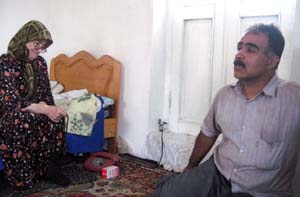
Nejat Society, Mazandaran Office reported that its members visited family members of Sha’aban Izakian. They succeeded to see his old mother, together with a number of recently defected members.

During the visit, the brother asked about the situation of Ashraf residents. One of the defectors explained the current situation ruling the cult in Camp Ashraf while the old mother was listening to him carefully. Then she began talking of her memoirs of his son “Musa”.
After, she listened to what others said about the actual condition of Camp Ashraf and the recent incidents; she got so upset and worried about the fate of her son who hasn’t contacted them for years.
The mother was moved by visiting the ex-members of MKO who succeeded to return home.
She was so motivated to see Musa again that she cursed Rajavi as the person who caused the separation of her son from her speaking of other disasters Rajavi caused on their neighbors and friends, she said:
 “Rajavi ruined a lot of families in this quarter. Kamran Khala’tbari and Iraj Taleshi are two of our neighbors who are now captured in Camp Ashraf. Hamide Kouzehgar was also in Ashraf but she died there due to cancer and was buried there too. The house behind ours is her Father’s.”
Mustafa shaa’ban Izakian, Musa’s brother showed his deep concern on the fate of his brother, asking Nejat Society to help them visit their brother and release him from the organization which has always used its members as tools of Rajavi’s ambition.
At the end, Mrs. Izakian condemned the acts of MKO during the eight years of Iran-Iraq war and asked for serious moves to release his son from Iraq.
 Leadership Council to Maryam’s arrest was a histrionic rather than genuine; a mixture of pretense, sincerity, and the agitated atmosphere that made quite an impression on the audience. Then, it becomes clear that in spite of the created flutter following the news of Maryam’s arrest, the shown sentiments lacked the needed depth and most were imitating and role playing feelings. In such an abrupt outpour of emotions, it won’t be surprising to see a senior member, excited and impressed by the atmosphere, set himself on fire. Imagine what would have been the effect on the lower ranks.
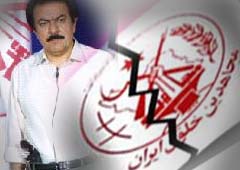 relationships was the outcome of those arguments made by Maryam about “traditional woman “or “woman in quotation marks”. Massoud Rajavi never limited himself to present any sort of problem. Even before marrying every woman in the leadership council, he was always relaxed to ask his questions or to convey his arguments in a manner he desired.
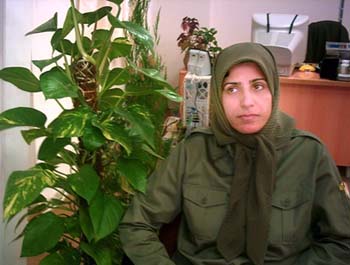 In order to convince us to marry him, Massoud Rajavi said in a meeting: “if the peak of sexual marriage is 10, then the peak of ideological marriage will be one thousand. Imagine that you are in a hall with a very high ceiling, if you are under a table, the top side of the table will be the peak of an ordinary marriage which signifies a wife-husband relationship, but the ceiling of the hall will be the peak of an ideological ideal relationship. Your mind is filled with old thoughts; you think that I am stranger to you, so you are not comfortable with me. Now that we want to remove this obstacle and we want to remove the quotation marks from the women, we use this scheme.” According to the leaders of MKO, “Women in quotation marks” (cult jargon) signifies women who have grown up in an ordinary society with normal regulations ruling it. They meant the traditional weak women.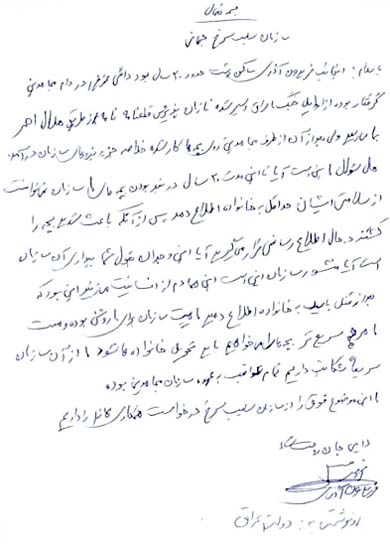
 mechanism of suicide operations and self-immolations, that is, how easily one can carry out these organizationally inculcated operations just by making a liaison with a point out of one’s own self. That is, one overruns his individuality and will for a greater cause crystallized in another person called leader. The logic, regardless of its justifiably luring virtue, does not end here because any thought and attitude can easily justify itself through such a logic. That is true about many adherents of cults who do anything for the guru, preaching right or wrong notwithstanding. Following such logic, any group can claim to be rightfully on the right path and it has nothing to do at all with the nature of the source of liaison. There were people on the side of Yazid (a reference to a historical event when the army of Yazid massacred all forces on the side of Imam Hussein, the third Shi’it imam) who had accepted the leadership of Yazid and fought against Imam Hussein with a gesture of goodwill and for the sake of God. Is it right to say that liaison with a source of leadership justifies a truth? If so, there are many antitheses to discuss. Was there any opportunity to discuss these discrepancies and what were Rajavi’s responses?