
As readers of this blog already know, Sen. Robert Menendez (D-NJ) was the top congressional recipient of “pro-Israel” campaign funding in the 2012 election cycle, the last time he ran for office, according to the Center for Responsive Politics. He has since distinguished himself as the leading proponent among Senate’s 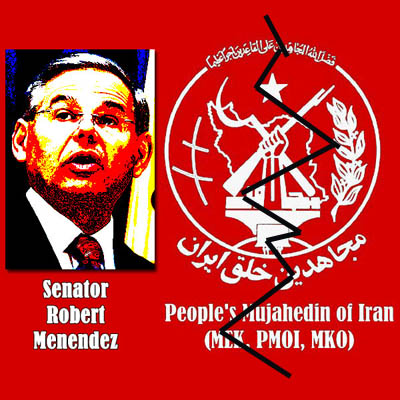 Democrats of new sanctions against Iran. He has repeatedly co-sponsored sanctions legislation-with Mark Kirk (R-IL), the top recipient of pro-Israel campaign funding for the past decade-with the ostensible purpose of increasing pressure on Tehran to make far-reaching concessions at the negotiating table.
It appears that Menendez has also been the top recipient of campaign funding from donors with ties to the Mojahedin-e Khalq (MeK), the cultish group that was until recently included on the State Department’s terrorism list, according to a new investigative report published Thursday by LobeLogalumni and occasional contributors Ali Gharib and Eli Clifton on The Intercept website. The article,“Long March of the Yellow Jackets: How a One-Time Terrorist Group Prevailed on Capitol Hill,” details how Menendez, then chairman of the Senate Foreign Relations Committee, maintained a hold for some six months-from July 2013 until late January 2014-on an arms package for the Iraqi government that included 24 Apache helicopters. Menendez explained publicly that he was concerned about then-Iraqi Prime Minister Nouri al-Maliki’s record of attacks against civilians and his tacitly allowing Iran to use Iraqi airspace to transport weapons to Syria.
But Ali and Eli cite sources that cumulatively suggest that Menendez’s position may have been influenced by intense lobbying on the part of pro-MeK individuals, including the lobbyist for one of the MeK’s political fronts and Menendez’s immediate predecessor, Robert Torricelli. Menendez finally lifted his hold after the Islamic State of Iraq and the Levant (ISIL) launched their first major offensive into al-Anbar province from bases along the Syrian-Iraqi border, taking Fallujah and most of Ramadi.
As noted in the article, the delayed Apaches would not likely have been ready to be flown by Iraqi pilots by the time ISIL launched its January offensive even if the hold had been lifted six months before. But the fact that those six months were lost made Baghdad more reliant on the air power of the United States and other countries (including Iran) to halt ISIL’s advance some nine months later after the jihadi group and its tribal allies had captured Mosul and driven to within 30 kilometers of Kirkuk. Although it would be unfair to conclude that Menendez was motivated only by his sympathy for the MeK, sources quoted by Ali and Eli suggest pretty strongly that the issue played a role. As Iraq’s ambassador to the United States Lukman Faily told Ali in relation to his efforts to release the hold on the Apaches, “The issue of the MEK came up in most of my meetings with the House and Senate, especially the Foreign [Relations Committee].”
According to the article,Menendez accepted more than $25,000 from donors with ties to the MEK, making him the largest recipient from 2012, when the MeK was delisted that September, to the present. That’s not much compared to the well over $300,000 Menendez received from pro-Israel groups during the 2012 election cycle, but it was more than twice what was provided to the next biggest recipients, Sen. John McCain (R-AZ) and Rep. Dana Rohrabacher (R-CA).
In any event, the article casts light on the seamier side of the politics around Iran, and it’s a good read besides.
By Jim Lobe
About the Author:
Jim Lobe is best known for his coverage of U.S. foreign policy, particularly the neoconservative influence in the Bush administration. The Washington Bureau Chief of the international news agency Inter Press Service (IPS), Lobe has written for various outlets and was featured in BBC and ABC television documentaries about motivations for the US invasion of Iraq. Read his complete biography.
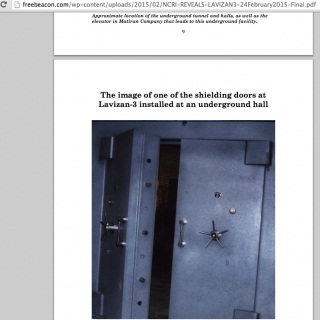
 Appear Fabricated By M.E.K.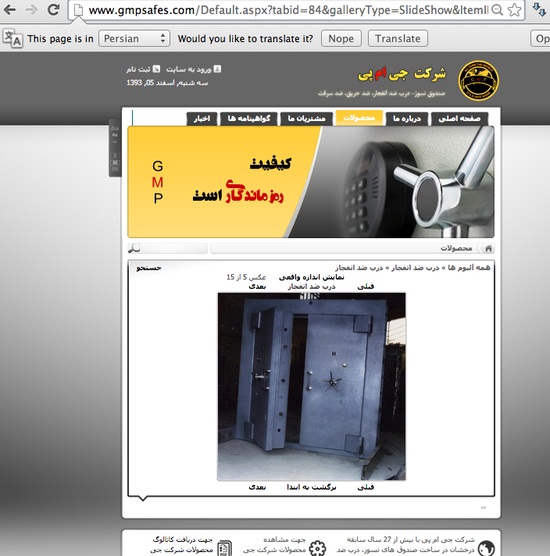
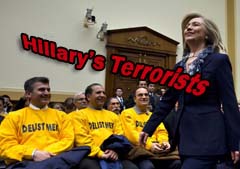 gn Relations Committee hearing on Iran’s nuclear program in October 2013, more than a dozen men and women in yellow rain jackets sat in the gallery seats of the wood-paneled room, a bright presence amid the standard-issue dark suits of Washington. It wasn’t raining.
 endure as one of the longest-running militant groups opposing the Islamic Republic of Iran.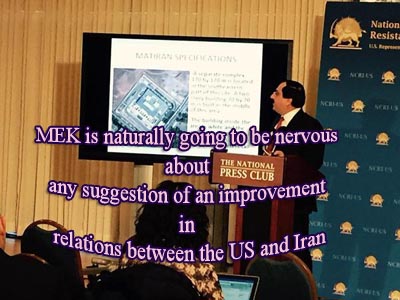
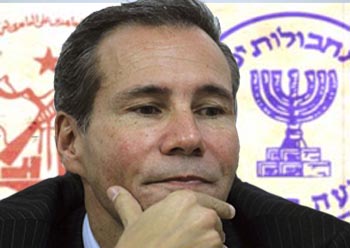 President Christina Fernández de Kirchner and her foreign minister, Héctor Timerman conspired to absolve Iran of the 1994 AMIA bombing and lift the Interpol red notices on the accused Iranians.
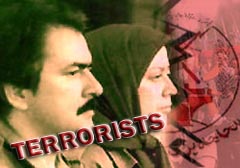 called the cradle of freedom. We, former members of the People’s Mojahedin Organization of Iran (PMOI, aka MEK, MKO, Rajavi cult), unequivocally condemn this crime and express our solidarity with the French people and the families of the victims of upholding freedom of ex
 decade-long attempts to prevent a negotiated settlement between Iran and the P5+1 (the United States, the United Kingdom, France, Russia, China, and Germany), on the former’s nuclear program. When the negotiations hit a difficult phase in Vienna in May 2014, Porter suggested in an article for Al Jazeera that “If the talks fail … it will be the result of the toxic combination of wilful U.S. self-deception and deliberate falsification of intelligence by the Israelis” (Porter, 2014a).
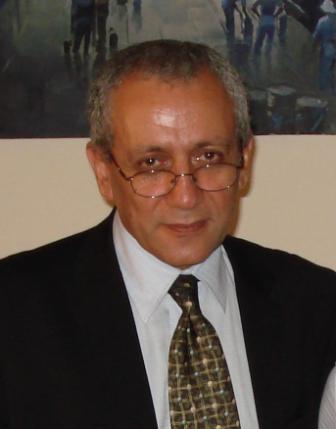 The MEK stands out as perhaps a unique example of a belligerent entity that exploits to the maximum a range of propaganda methods and outlets in the West to project itself in the international community as a constructive, almost benign, force. Far from avoiding publicity, the MEK has done everything in its power to maximize what can be described as its virtual presence. In addition to its native Farsi, the group disseminates information about and projects an image of itself in English, French, German and Arabic, in print, in broadcast and on Internet media. But insofar as it has no popular support among indigenous or diaspora Iranians, its image as a popular resistance movement has been largely invented.