The “all-or-nothing” way of thinking is one of the very destructive thinking patterns that a person can have. This thinking pattern is also called “black and white thinking”. Thinking in black and white arranges the world into extremes: good and bad, yes and no.
It’s like seeing only in black and white and ignoring the shades of gray in between. This thinking pattern leads the person to absolutism. Absolutism refers to ideas, phrases and words that denote totality, either in magnitude or probability. Absolutist thoughts are unqualified by nuance and overlook the complexity of a given subject.
Those who are not with us are against us!
For absolutists, there is nothing more than two possible positions. They do not admit that a person or group can have a neutral stance or could disagree in part with their position without entirely opposing them. In the cults of personality such as the Mujahedin Khalq (MEK, MKO, PMOI, Cult of Rajavi), the absolute leader is the main person to coerce members into such a thinking pattern.
In the MEK, any voice of dissent is forbidden and eventually will be silenced by any means. Based on interviews that he made with former members of the MEK, Aron Merat wrote in the Guardian that “MEK commanders systematically abused members to silence dissent and prevent defections – using torture, solitary confinement, the confiscation of assets and the segregation of families to maintain control over members”.
Members of the MEK often undergo sever punishment as soon as they express their willingness to leave the group. As the former high ranking member of the group Saeed Shahsavandi told the BBC inside the MEK’s ruling system “people do not leave the group, but they are expelled from the group”. According to Shahsavandi, the organization do not tolerate any criticism. “Criticism and polyphonic ideas are not tolerated, so the dissident member is considered as traitor,” he says. “In such organizations, relationships are based on zero or one hundred, black or white, you are either a servant or a traitor.”
Absolutism of the MEK leaders explains why families of the MEK members are called mercenaries of the Iranian government just because they ask the international human rights bodies to aid them contact their children who are kept like hostages in the MEK.
As absolute powers of their ruling system, dictators suffer such personal disorder. Lack of balanced thinking make the MEK leaders fail to bring together the dichotomy of both positive and negative qualities of a phenomenon. Like other totalitarian leaders such as Stalin or Hitler, Massoud Rajavi is considered as a narcissistic personality. Narcissism is one of the popular causes of the all or nothing way of thinking.
A Narcissist devalues people, considers them worthless and thinks highly of them. Therefore his mind gradually adopts the all or nothing thinking. The narcissist thinks that things are either perfect or imperfect. Massoud Rajavi calls members as “unique gems” or “freedom fighters” as far as they obey his absolute power. As soon as a member decides to leave the group, he is labeled a “traitor” or “agent of the Iranian Intelligence”.
The duality of black and white thinking prevent the MEK leaders from realizing the truth because in reality most things can be approached from multiple perspectives. The fictional black and white world that the Rajavis have built inside their cult has a very destructive effect on the members’ lives. They are hardly ever capable of leaving the group in a normal process. There is an urgent need of human rights bodies to aid the release of the group members from the bars of the Cult of Rajavi.
Mazda Parsi
Manipulation Techniques of the MEK cult leaders
Cults make the news when there is a large number of deaths of their victims. Terrorism is also in the news when there is violence or catastrophe, such as numerous acts of terror all over the world by alQaeda, ISIS and other terrorist groups. Not all cults are dangerous but there is a risk and likelihood of violence from cult members. As their name implies, terrorists intentionally use violence to achieve their goals, but cult members are always potentially expected to turn into terrorists.

The same person can be identified as a”cult member”or”terrorist”in one society and at the same time welcomed as a”freedom fighter”or”hero”in her or his own group. In case of members of the Mujahedin Khalq Organization (the MKO/ MEK/ PMOI/the Cult of Rajavi),”terrorist”can simply fit the group based on its evident undisputed background of violent acts although it not listed as a terrorist organization by western states.
The group leaders claim that they are”freedom fighters for people”which is the equivalent of the term”Mujahedin_e Khalq”. However, the group is considered as a cult by experts and based on many evidences. Leaders of the Cult of Rajavi have used manipulative techniques to run their cult.
Herd mentality is a behavior pattern in human beings that helps leaders to program the crowd. Once the crowd is programmed, cult leaders indoctrinate them. Members of the MEK have been enduring the state of being programmed for over 40 years –at least since Massoud Rajavi became the leader of the group.
In the late 1979, following the Iranian revolution and the MEK’s breakdown with the newly established Iranian government, the MEK formed its militia. The semi military MEK members included ambitious youth who were recruited by the MEK agents; they were excited and influenced by their leaders and peers to commit certain acts of violence. They were terribly influenced by the leaders of the MEK. The consequence was the loss of thousands of innocent civilians, the arrest and the execution of a large number of the group members by the Iranian government.
This was how herd mentality functioned. When a crowd is led under herd mentality, it adopts some characteristics:
*They lose fear of the consequences so they commit any violent act that they are ordered or indoctrinated to do even if their victims are children and women. The documents on MEK’s homicide or suicide attacks against civilians is the proof.
*They lose moral responsibility; they are no more sensitive to violation of moral, religious or social norms. They are told to boycott their family, to divorce their spouses, to leave their children, to insult them all and they are coerced to accept.
*They enjoy a feeling of invincibility. Thus they are courageous enough to act unethically, immorally and violently. They are ready to set themselves on fire for the release of their leader Maryam Rajavi.
*The act of the crowd is contagious. This is empowered by peer pressure in the cults. In the Cult of Rajavi peer pressure is a tool to keep members under control. Self-criticism sessions are regularly held inside Camp Ashraf 3 in which members have to confess their thoughts in front of their peers and eventually get verbal and physical abused by them.
*The crowd interests are preferred over personal interests. This turns out to be a jargon in the cults that every cult member should follow. In the MEK, the consequences of such a jargon have been a range of human rights abuses including forced labor, sleep deprivation, mandatory celibacy, separation of children from parents and etc.
Even irrational acts become contagious. Self-immolations of a dozen of MEK members in June 2003 to protest the arrest of Maryam Rajavi by the French Police is an example of irrational acts. Agitated by the group’s propaganda and manipulative meetings, certain members were not able to decide over their lives. Herd mentality and eventually cult-like indoctrinations made them choose that catastrophic death.
*Human herding is usually led by a Demagogue. In case of the MEK, Maryam Rajavi tries her best to play the part of a demagogue. Despite the huge violation of human rights that are taking place in her establishment, she always vows for democracy, women rights and freedom in Iran. Although she hardly ever enjoys Iranians’ public support, her claims can be taken as serious by the isolated members inside the cult or at least she wishes to influence them.
Being in a cult, under the rule of a Demagogue, individuals enter a hypnotic-like state mesmerized by the leader. So the leader can influence the crowd. Glorified as”unique gems”who are”freedom fighters”for the Iranian Khalq (people), the MEK member became more and more suggestible. They started to turn Rajavi’s thoughts to acts. This has had a lot of disastrous outcomes in the MEK. To mention one, you can refer to the marriage of Massoud Rajavi with a large number of female members of the group’s Elite Council.
In human societies, herding often involves people using the actions of others as a guide to sensible behavior, instead of independently seeking out high-quality information about the likely outcomes of these actions. It seems that destructive cults such as the MEK go much further misusing this behavior pattern in human beings. The outcome has been numerous acts of violence against the Iranian civilians, Iraqi Kurds and even their own members.
Those who could manage to leave the MEK, before their departure they definitely could take some time and look at what they were following for decades, who they were following and why. They might be surprised by what they found. That was the time they could make a decision by their own. However, most of these people were not lucky enough to find a way to escape the group.
The human rights bodies including the UNHCR must take proper action to help those MEK members who are under the rule of Rajavi’s cult of personality. The threat of a cult herding some thousand rank and file should not be neglected.
Mazda Parsi
A recent report by BBC once more revealed facts on the world inside the Mujahedin Khalq Organization (the MKO/ MEK/ PMOI/ Cult of Rajavi). The investigated report describes members of the MEK as those”who mustn’t think about sex“. Although the BBC correspondents were not allowed to enter the group’s headquarters in Tirana’s countryside, they could interview former members of the group. Not surprisingly former members are accused by the MEK of being agents of the Iranian regime.
Meanwhile, the report quotes the group’s longtime sponsor Rudy Guilliani as saying:”If you think this is a cult, then there’s something wrong with you”
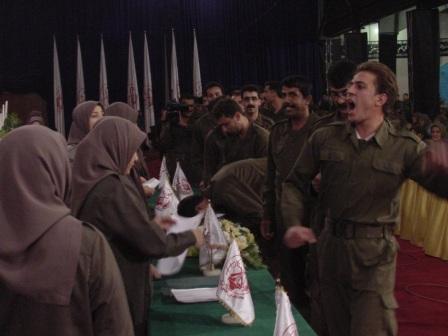
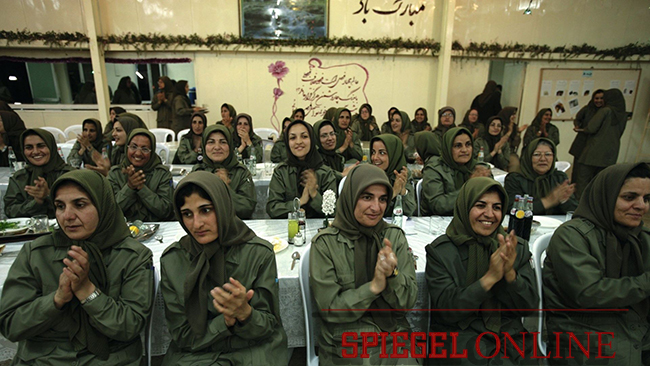
“These are people who are dedicated to freedom,”he said, referring to the uniformly dressed and gender-segregated MEK members present in the hall. [1]
However, testimonies of the former members including Hassan Heyrani and Gholam Mirzai interviewed by BBC, confirms numerous testimonies made by other ex-members of the group. The entire evidences prove that the Mujahedin Khalq is a cult-like group if not a cult. However, many cult experts argue that the MEK is a cult in which lives of members are under daily threat and the cult itself is a threat for the outside world. Rick Alan Ross an American deprogrammer, founder and executive director of the nonprofit Cult Education Institute asserts:”The MEK fits well into the definition of cult”. [2] Here are reasons why the MEK should be considered a destructive cult listed by Rick Ross and confirmed by the testimonies of former members and journalists’ accounts of the group of which just a few examples are stated:
Mind Control (undue Influence): Manipulation by use of coercive persuasion or behavior modification techniques without informed consent. Hassan Heyrany told BBC of the leadership’s oppressive control of his private life inside the MEK.
The nadir of Heyrany’s life with the MEK an evening meeting he was obliged to attend, according to BBC. [3]
“We had a little notebook, and if we had any sexual moments we should write them down. For example, ‘Today, in the morning, I had an erection.'”[4]
Romantic relationships and marriage are prohibited by the MEK. It was not always like that – parents and their children used to join the Mujahideen. But after the bloody defeat of one MEK offensive by the Iranians, the leadership argued it had happened because the Mujahideen were distracted by personal relationships. Mass divorce followed. Children were sent away – often to foster homes in Europe – and single MEK members pledged to stay that way. [5]
Charismatic Leadership: Claiming divinity or special knowledge and demanding un-questioning obedience with power and privilege. Leadership may consist of one individual or a small core of leaders. In the MEK, the couple Masoud and Maryam Rajavi are the core of MEK’s cult of personality. Their leadership is so undisputed that no one dares to ask about the whereabouts of Massoud Rajavi who has been disappeared since 2003 and even his death was declared by Saudi prince Turkie Faisal in the group’s gathering in Paris.
“Rajavi and his wife are the defining role of authoritarian charismatic leadership that has become the focus, defining element and driving force of MEK,”Rick Ross says.”There are no checks and balances to their power, meaningful accountability or transparency.”[6]
Deception: Recruiting and fundraising with hidden objectives and without full disclosure of the use of mind controlling techniques; and the use of”front groups.”
MEK recruiters had their fraudulent techniques to recruit young Iranians looking for a better life outside Iran. They were promised to be granted European passports but their own ID cards were confiscated by the MEK as soon as they entered the group.
Once they are in the group, members are bombarded with fake news and propaganda about the outside world particularly Iran. They are constantly promised by the group leaders that the overthrow of the Iranian government is close. They are so isolated from the reality that cannot believe their eyes when they see an Albanian child talking on a mobile phone. According to the BBC report, Gholam Mirzai was astonished that even children had mobile phones. [6]
Moreover, several charity associations that in fact were front group of the MEK have been delegitimized by European states.
Exclusivity: Secretiveness or vagueness by followers regarding activities and beliefs. The MEK’s internal relations were secret to the outside world until the early 2000s when a large number of members started defecting the group. The increasing process of defection resulted in huge revelations on the mysterious issues inside the MEK. Elizabeth Rubin of the New York Times Magazine, described the group’s Camp Ashraf in Iraq as “fictional world of female worker bees.” [7]
Alienation: Separation from family, friends and society, including a change in values and substitution of the cult as the new”family;”evidence of the subtle or abrupt personality changes. The latest example of an alienated member who was interviewed by BBC is Gholam Mirzai who has not seen his family for almost 40 years.”When Mirzai left to go to war against Iraq in 1980, he had a one-month-old son,”BBC reports.”After the Iran/Iraq war ended, his wife and other members of his family came to the MEK camp in Iraq to look for Mirzai. But the MEK sent them away, and told him nothing about their visit. This 60-year-old man never knew he was a much-missed father and husband until he made that first call home after 37 years.”[8]
“They didn’t tell me that my family came searching for me in Iraq,”he told BBC.”They didn’t tell me anything about my wife and son. All of these years I thought about my wife and son. Maybe they died in the war… I just didn’t know.”[9]
Exploitation: Can be financial, physical, or psychological; pressure to give money, to spend a great deal on courses or give excessively to special projects and to engage in inappropriate sexual activities, even child abuse. According to RAND report sponsored by the US Defense Department, members of the MEK are subjected to forced labor, sleep deprivation, mandatory celibacy. [10]
BBC’s account on the exploitation in the MEK states:
“Romantic relationships and marriage are prohibited by the MEK. It was not always like that – parents and their children used to join the Mujahideen. But after the bloody defeat of one MEK offensive by the Iranians, the leadership argued it had happened because the Mujahideen were distracted by personal relationships. Mass divorce followed. Children were sent away – often to foster homes in Europe – and single MEK members pledged to stay that way.”[11]
However, the most shocking issue on human rights abuses in the MEK is polygamy. Massoud Rajavi married dozens of female members of what is called the Elite Council in the MEK. He had sex with a large number of these women. The Guardian reported the horrible story of female victims of the MEK. Batul Soltani was sexually abused by Massoud Rajavi before she left the group. [12]
Besides, Female defectors Zahra Mirbagheri, Batul Soltani and Nasrin Ebrahimi revealed the list of a hundred women who underwent forced hysterectomy surgeries. They became barren under the order of the Rajavis. [13]
Totalitarian Worldview (we/they syndrome): Effecting dependence, promoting goals of the group over the individual and approving unethical behavior while claiming goodness. That’s why all defectors of the MEK are labeled as traitors and agents of the Islamic Republic. The group leaders indoctrinate the rank and file that”anyone who is not with us is against us”.
Hassan Heyrani, Gholam Mirzai and other defectors of the MEK –who live in Albania or any other side of the world speaking to the media about what they underwent in the cult-like system of the group—are accused of being spies of the Iranian Intelligence. [14]
“Now he scrapes by in the city, full of regrets and accused by his former Mujahideen comrades of spying for their sworn enemy, the government of the Islamic Republic of Iran,”BBC write about Gholam Mirzai, the 60 year old former cult member. [15]
Rajavi’s totalitarian character allows him to have sex with dozens of female members of the group but members mustn’t even think about it.
By Mazda Parsi
References:
[1] Pressly, Linda & Kasapi, Albana, The Iranian opposition fighters who mustn’t think about sex, BBC News, November 11th, 2019.
[2] MEK fits well into definition of cult, Mehr News Agency, February 8th, 2017
[3] Pressly, Linda & Kasapi, Albana, The Iranian opposition fighters who mustn’t think about sex, BBC News, November 11th, 2019.
[4]ibid
[5] MEK fits well into definition of cult, Mehr News Agency, February 8th, 2017
[6] Pressly, Linda & Kasapi, Albana, The Iranian opposition fighters who mustn’t think about sex, BBC News, November 11th, 2019.
[7] Rubin, Elizabeth, The Cult of Rajavi, The New York Times Magazine, July 13th, 2003.
[8] Pressly, Linda & Kasapi, Albana, The Iranian opposition fighters who mustn’t think about sex, BBC News, November 11th, 2019.
[9] ibid
[10] Goulka, Jeremiah & Hansell, Lydia & Wilke, Elizabeth & Larson, Judith, The Mujahedin-e Khalq in Iraq, A Policy Conundrum, National Defense Research Institute, August 4th, 2009.
[11] Pressly, Linda & Kasapi, Albana, The Iranian opposition fighters who mustn’t think about sex, BBC News, November 11th, 2019.
[12] Merat, Aron, Terrorists, cultists – or champions of Iranian democracy? The wild wild story of the MEK, The Guardian, November 9th, 2018.
[13] ibid
[14] Pressly, Linda & Kasapi, Albana, The Iranian opposition fighters who mustn’t think about sex, BBC News, November 11th, 2019.
[15] ibid
The American author, journalist, and blogger “Max Blumenthal” working as the editor at the Grayzone Project and Co-host of Moderate Rebels published a wide range of tweets to denounce the “rent – a crowd” MEK rally at Washington DC:
Shout out to my personal MEK media minder from the cult’s rally today at the State Department.
This guy was part of the team tasked with preventing me from interviewing any of the Iranian emigres bussed in to cheer for regime change:
In a recent meeting with cult members, Maryam Rajavi told them that ‘the regime is now ruined, we clearly see signs and symptoms of overthrow of the regime – with this situation and the conditions that the regime has been going through for up to a year and a half, we will see that the regime cannot continue and it’s over, over, over …’
After her speech, one of the members called Mohammad Ali Agahi stood up and asked, ‘Sister Maryam, why are you lying to us about this’. Many then attacked him, but more people came to support him and some minutes later the meeting was ended. Mohammad Ali and the other people who supported him were then sent to Quarantine. For those who don’t know, ‘Quarantine’ is a place of isolation where a person is kept alone until the commanders and leading members of the organization come to talk in a process of so-called ‘Virus Removal’.
The fact is that the slogans of the cult have changed so often – according to circumstances – that it has become another ideological joke in their meetings. One day overthrow is the slogan, next day it was our fault there is no overthrow, next day overthrow is not important only obeying the ideology matters. What a joke.
BY Hassan Heyrani,
The Cult-Like Group Fighting Iran
Members of the Trump administration have been providing support to a political sect that aims to topple the Iranian regime in Tehran. Around 2,000 of its members live in a camp in Albania. Former members say it subjected followers to torture and psychological terror.

Political sect from Albania fights against Tehran
On a country road in northwestern Albania, a rather odd collection of men and women living together in a camp are busy preparing themselves to topple the Iranian regime. Three times per week, many of them apparently practice slitting throats, breaking hands, jabbing out eyeballs with fingers and performing the so-called Glasgow Smile, which involves cutting cheeks from the corner of the mouth up toward the ear. That, at least, is the story told by a former member of the group.
The camp, roughly the size of 50 football fields and surrounded by high fences, is located just a 35-minute drive from the lively bars of downtown Tirana, but the people inside live in something of a time capsule. Former members of the group report that most of the 2,000 camp residents aren’t allowed to possess mobile phones, watches or calendars, though members of the organization that operates the camp deny those claims.
“My daughter is living somewhere in there,” says Mostafa Mohammadi, a 61-year-old Iranian man with a high forehead and deep eye sockets. Her name is Somayeh, a woman of 38. Her father, who lives in Canada, claims that she is being held in the camp against her will, which is why he spent several months in Albania last year. During a meeting there, he said:”I don’t have anything to do with politics. Please, I just want to see my daughter.”
Just like everyone in the camp, Somayeh Mohammadi is a member of the People’s Mujahedin, a once-militant Iranian opposition group that was listed by the United States. and Europe as a terrorist group until 2012. These days, however, several members of the administration of U.S. President Donald Trump are supporting the group, commonly known by the abbreviation MEK. Both the administration and the MEK, after all, want to see the end of the current regime in Iran — and now that the group has Washington’s backing, the Mujahedin apparently hopes that its time has finally come.
On the sidelines of the Middle East conference in Warsaw, which began on Wednesday, Israeli President Benjamin Netanyahu spoke of possible”war”with Iran. And at an MEK rally in Warsaw, Trump’s lawyer Rudy Giuliani called for regime change in Tehran.
For almost 30 years, several thousand members of the People’s Mujahedin lived in exile in Iraq, but in 2013, many of them moved to Albania. And since 2017, the majority of the group has lived in the isolated camp near Tirana.
Growing Influence
Ever since the group set up shop in Albania, however, more and more members have defected.
Some tell stories of torture experienced in the camp and of group sessions in which members are required to open up about their sexual fantasies. Women are allegedly forced to wear headscarves. And all of it takes place in the name of a phantom leader named Masoud Rajavi, who hasn’t been seen since 2003. Indeed, it isn’t even clear if he is still alive; photos from the 1990s show a mustachioed man in a green uniform.
The residents of the camp are just one part of the movement, which is led by Maryam Rajavi, the wife of the vanished leader. The 65-year-old commutes between Albania and her office in Paris, from which she leads the group’s political arm, the National Council of Resistance of Iran (NCRI), which is active in both Europe and the U.S. NCRI is structured as a kind of interim government, ready to take over in Tehran as soon as the current regime is toppled and the group has offices in many capital cities, including one in Washington not far from the White House. In Berlin, NCRI has an office in the Wilmersdorf district, located just southwest of the city center. The movement in Germany has just a few hundred members, but it has several thousand members around the world.
Maryam Rajavi is the acting leader of the People’s Mujahedin. Her husband has not been seen since 2003.
And they have proven to be adept lobbyists, having won over influential supporters in recent years. U.S. Transportation Secretary Elaine Chao, National Security Adviser John Bolton and Giuliani have all spoken at NCRI events and they all view the group as a viable alternative to the current regime in power in Tehran.
“The mullahs must go, the ayatollah must go, and they must be replaced by a democratic government, which Madam Rajavi represents,”Giuliani said at an annual NCRI rally in Paris in June 2018. And he suggested that such a regime change could come soon:”Next year, I want to have this convention in Tehran!”he said. Both Giuliani and Bolton have even visited the group in Albania, and last Monday, the 40th anniversary of the Iranian Revolution, the national security adviser issued a video message addressing Iranian Supreme Leader Ali Khamenei, in which he said:”I don’t think you’ll have many more anniversaries to enjoy.”
But who are Trump’s allies inside the secretive camp? Two lion statues guard the large iron gate at the camp’s entrance and guards call out”No, no!”if anyone stops out front. Three men march out of the gate and refuse to answer any questions, promising that interview requests will be responded to the next day. But nobody ever calls.
DER SPIEGEL never received a response from the People’s Mujahedin or from the NCRI to any of its interview queries prior to the visit, neither from Tirana, Paris or Berlin. A lawyer representing the group likewise declined to discuss the case of Somayeh Mohammadi. Indeed, the group only responded when DER SPIEGEL sent an email outlining the accusations that had been made against it, with an NCRI spokesman in Berlin essentially denying everything. On its websites, the organization claims to stand for democracy, human rights and the strict separation of church and state in Iran.”We want a pluralist system, freedom of parties and assembly,”it says, for example, in an article entitled”Maryam Rajavi’s Ten Point Plan for Future Iran.”
The statements suggest that once the People’s Mujahedin take over power in Iran, everything will immediately improve. But reports from those who have experienced life in the camp do not reflect that message. Instead, they appear to be prisoners of their own rebellion.

Gholamreza Shekari; Tirana; Der Spiegel
‘Lies, Manipulation and Fear’
It is, of course, undeniable that the regime in Tehran and the People’s Mujahedin are engaged in a propaganda war and lies from both sides are to be expected. But DER SPIEGEL has spoken with 15 former camp residents, some of them for several hours — and their stories are largely consistent on the most important point: The organization is essentially a sect that is difficult to escape.
Gholamreza Shekari, a slender 50-year-old man with bony cheeks, says he spent 27 years as a member of the People’s Mujahedin, adding”the organization’s public face is liberal. Internally, though, it works by way of lies, manipulation and fear.”
Shekari fell into the group of fighters as a 20-year-old, as many others apparently did as well — through false promises. In 1988, during the confusion of the Iran-Iraq War, he fled across the Iraqi border, where he met members of the People’s Mujahedin.”They spoke of freedom and democracy for Iran,”Shekari says.”And then they promised me that they would arrange a visa for Europe for me.”He believed them.
Later, he says, they took his documents and told him that if he left the group, he would end up in an Iraqi torture prison. An organization spokesman rejects the claim as a”ridiculous and fictitious film scenario.”
“They told us lies to ensure our obedience,”says Shekari.”We were guarded and forced to break off contact with our families.”Claims that fighters were banned from maintaining contact with their families are”baseless lies,”says the organization.
Shekari says that he repeatedly asked when he would be allowed to leave. But that turned out to be a mistake: According to Human Rights Watch, the organization began torturing members who wanted to leave the group or who asked critical questions in the mid-1990s.
“They insulted me as a spy, beat my shins until they were bloody and put out burning cigarettes on my skin,”Shekari says. After a week, he says, his lower legs were completely black. He rolls up his jeans to reveal scars covering his legs.
Ultimately, he says, the leader Masoud Rajavi gathered all those who had been tortured.”He threatened that if we ever spoke about it, we would be handed over to the Iraqis, which would mean additional torture or death.”
Group Denies Torture Claims
When confronted with these accusations, the spokesman for the organization’s German chapter says that”neither in the 1990s, nor before or after, did the group keep its members prisoner or torture them.”
Despite everything, Shekari remained with the organization for another 23 years, which at best could be explained as being the result of brainwashing. Only in Albania did the others allow him to leave, in September 2016. Now, he lives in a sparsely furnished apartment in Tirana and receives financial support from the UN Refugee Agency. He doesn’t have much choice but to stay where he is because, as an Iranian, getting visas is difficult and there are many countries to which he is not allowed to travel.
After he left the group, he says he received the equivalent of 350 euros per month from the group for half a year”so that I would keep my mouth shut,”Shekari claims.”The organization claims that we are all agents so that nobody believes us,”he says.”But I’m not working for anyone.”

The People’s Mujahedin used to receive funding from the erstwhile Iraqi dictator Saddam Hussein, but these days, group supporters collect donations and can often be seen in the pedestrian zones of German cities, showing passersby photos of executions in Iran. They operate under the cover of organizations with names like the”Association for Future Hope”or”Aid Organization for Human Rights in Iran.”According to the Federal Office for the Protection of the Constitution, Germany’s domestic intelligence agency, these and other groups are linked with the People’s Mujahedin. In a message written to DER SPIEGEL about the camp’s financing, the group wrote:”All costs are covered by supporters of the resistance both inside and outside of Iran.”
Security experts believe that the U.S., Saudi Arabia and Israel also provide the group with financial support, but there is no proof for that supposition. The organization writes:”We haven’t received even a single euro from any government.”

Masoud Rajavi launched what he called an”ideological revolution”in 1985. He married the wife of a confidant and forced all others to get divorced
An ‘Ideological Revolution’
The transformation into a sect-like organization can be explained by history. After the overthrow of the shah, the militant group, still adamantly anti-American at the time, lost the ensuing power struggle and was persecuted by the religious regime under the leadership of Ayatollah Khomeini. The members fled to Iraq, from where they carried out terrorist attacks in Iran and fought against their own country in the Iran-Iraq War.
Fearing that the group might disintegrate, leader, Masoud Rajavi launched what he called an”ideological revolution”in 1985. He married the wife of a confidant and forced all others to get divorced, with children being sent abroad. Loyalties other than the one to the group’s leader were no longer to be tolerated — and that is when the personality cult surrounding Rajavi and his new wife Maryam began. Still today, many camp residents continue to wear the leader’s likeness on a chain around their necks.
The last time Masoud Rajavi was seen was in March 2003, shortly before the first American bombs began falling in Baghdad. But Maryam Rajavi continues speaking about her husband as though he were still alive. Not long after the beginning of the 2003 invasion of Iraq, the Americans captured the People’s Mujahedin’s camp and disarmed the group. Soon, though, the organization began claiming it backed the U.S., even though it had been fighting on behalf of Saddam Hussein only a short time before.
The group’s disarming could have spelled the end, but hardliners like then-U.S. Defense Secretary Donald Rumsfeld and Vice President Dick Cheney wanted to use them as leverage against Iran. Already in 2002, the group had worked with the Israeli secret service Mossad in revealing that Iran had begun covertly enriching uranium.

In 2007, units of the People’s Mujahedin began to receive training at a U.S. military facility in the desert of Nevada — even though the group was still listed by Washington as a terrorist organization at the time. And now, the Trump administration has taken the position that the People’s Mujahedin has been demanding for years: a hardline stance toward Iran. And the group believes that it has played a role: When Trump abandoned the nuclear deal with Iran in May, the group’s commanders celebrated as though they had just won a great victory.
Their list of supporters is currently longer than it has ever been, including numerous U.S. Senators and members of the U.S. military and security apparatus. The former Saudi Arabian intelligence chief, Turki Bin Faisal al Saud, is also a proponent. In the European Parliament, a group called Friends of a Free Iran advocates on behalf of the People’s Mujahedin as does a multipartisan group in the German federal parliament, the Bundestag, called the German Solidarity Committee for a Free Iran.
Trump confidant Rudy Giuliani:”The mullahs must go, the ayatollah must go, and they must be replaced by a democratic government, which Madam Rajavi represents.”
In October, Martin Patzelt, a parliamentarian with Chancellor Angela Merkel’s Christian Democratic Union (CDU), visited the camp in Albania together with former Bundestag President Rita Süssmuth, also of the CDU. Süssmuth raved about the”joie de vivre culture”among the People’s Mujahedin, adding that the Iranian secret service has repeatedly propagated”terrible things”about the group.
The People’s Mujahedin has often rejected all manner of accusations as propaganda from Tehran. And it has been an effective strategy, in part because Iran has brutally persecuted the group in the past and executed thousands of its followers.

around a thousand members work in the so-called”computer division,”allegedly using fake accounts to post pro-organization propaganda on Twitter and Facebook
War Footing
The depictions of those who have left the organization make it sound like the group is constantly on war footing. Eight residents sleep in each room and they have to get up between 4:30 and 5:00 a.m. In addition to combat training, they also take care of construction projects in the camp. The defectors also say that around a thousand members work in the so-called”computer division,”allegedly using fake accounts to post pro-organization propaganda on Twitter and Facebook. Others, say former members, use the messenger service Telegram to entice new Iranian recruits to join them in Albania.
The group’s spokesman counters that claims that the organization is running a troll factory are merely an”attempt to cover up fake accounts belonging to the Iranian regime.”
Former group members say that there are some 200 commanders in the camp and they sometimes read out a letter from their vanished leader, including sentences like:”Have no fear, victory is ours, we will be in Iran.”
The question as to why the Albanian government tolerates the Iranian group in their country is one that the Interior Ministry in Tirana is not willing to answer. But U.S. government documents make it clear why the People’s Mujahedin ended up in Albania in the first place.
After the fall of Saddam Hussein in 2003, the situation became increasingly dangerous for them. During her time in office, Secretary of State Hillary Clinton helped find a solution, together with the United Nations, and ultimately Albania agreed to accept a number of group members. In return, the U.S. donated $20 million to the UN Refugee Agency and pledged development aid to Albania.
Starting in 2013, group leaders began buying up more and more land and ultimately built the camp, including dozens of white containers and gray, two-story buildings. They house a large kitchen, a bakery, a music studio, a computer center and a dentistry practice — at least according to a propaganda video. On another one of the few videos from inside the camp, Somayeh Mohammadi can be seen, the woman whose father has been trying to free her for 21 years. In the clip, she is wearing a uniform with a headscarf and is being interviewed by two Albanian journalists. Her father, she says, is an agent of the Iranian regime and insists she wants to remain in the camp.”Here is a free country. If I want to go anywhere, I can go.”
The story that her father has to tell, one backed up with documents and video material, sounds quite different. Mohammadi himself was a long-time supporter of the organization and he collected donations for the group in Canada, where he has lived since 1994. When Somayeh was 17 years old, a woman from the organization offered her a”short trip”to the camp in Iraq.

Iranian families of some of the 3,200 members of the MEK, who said loved ones were trapped at the MEK base in Iraq at Camp Ashraf, during a conference on Nov. 25, 2011, in Baghdad, Iraq. The Iraqi government said it would close the base by the end of that year.
Photo: Scott Peterson/Getty Images
‘The Organization Gives Nothing’
Somayeh never came back. The organization sent a cassette recording of Somayeh saying that she had decided to remain in the camp. Her father says that the organization lured him to places in various countries with the promise that he could see her, but instead used him in demonstrations.”The organization gives nothing without getting something in return,”Mohammadi says.
On one video from June 2003, Mohammadi can be seen in front of the French Embassy in Ottawa, apparently drenched in gasoline as he pulls out a match — which a journalist then knocks out of his hand. At the time, group leader Maryam Rajavi was in pre-trial detention in France on suspicions of terrorism and protesters in many countries had lit themselves on fire in front of French embassies. Because he too had apparently been preparing to do the same, Mohammadi was considered a hero within the group from that moment on. He was even allowed to visit his daughter in the camp. But he ultimately distanced himself from the group and began filming everything in an attempt at collecting evidence that she was being held against her will.
On Oct. 17, 2013, Somayeh sent a letter to Canadian authorities, in which she wrote:”Please help me return to my former country, Canada, as soon as possible.”But Somayeh doesn’t have a Canadian passport and the authorities were unable to help her.
But then, she apparently changed her mind yet again — and a book was even published in her name as a PDF document, in which she claims that she wants to stay with the People’s Mujahedin.
“Who knows what they did to her,”says her father.
By Luisa Hommerich / DER SPIEGEL
Luisa Hommerich of Spiegel posts a detailed report on the Mujahedin Khalq Organization (the MKO/ MEK/ PMOI) as apolitical cult with violent practices, on February 15, 2019.

The article that was published in German sheds light on the violent nature of the group.
“Over 2000 of their people live in a camp in Albania – defectors tell of physical and psychological torture”, according to the report.
“On a country road in northwestern Albania, strange men and women are preparing for the overthrow of the Iranian regime at a camp,” Luisa Hommerich states.
“Three times a week, many of them allegedly practice cutting throats with knives, breaking hand bones”, the German journalist reports referring to the testimonies of former members.
She provides a clear portrait of the isolated camp of the Cult of Rajavi in Albania.
“It is just 35 minutes’ drive from Tirana’s colorful bars, but in it people live like in a time capsule,” she writes. “Defectors say most of the approximately 2,000 residents are likely to have no cell phones, no clocks, no calendars; Representatives of the organization running the camp deny that.”
Hommerich who has interviewed several individuals for this documented report cites Mostafa Mohammadi whose daughter Somayeh has been imprisoned in the MKO since teen age.
“Somewhere in there my daughter lives,”She cites.”Her name is Somayeh, she is an adult woman of 38 years.”
The Spiegel correspondent describes certain cases of human rights violations that take place in the MKO camps every day. Somayeh is one of the 2000 people who are held in the MKO against their will.
Although it is thought that the dictatorship of communism was perished with the collapse of the Soviet Union, the monster is still alive. One may find it strange that the symbolic world that George Orwell depicted in “1984” is still practiced in some communities. As a former member of the Mujahedin Khalq Organization (the MKO/ MEK/ PMOI/ the Cult of Rajavi), the book might astonish you with the huge similarity of the real world inside the MKO and the fictional world in Oceania – the fictional country in the book.
“I was in Turkey in 1992 when a friend recommended me reading “1984” of George Orwell,” writes Mehdi Khoshal, ex-member of the MKO.
“I read the book three times in six months because it was very similar to the situation inside the Cult of Rajavi that I had personally experienced.”
Creating the fictional world of a dictatorship in 1984, George Orwell coined some words and expressions that are called ‘Orwellian’, defined by the Oxford English Dictionary as “Characteristic or suggestive of the writings of George Orwell, esp. of the totalitarian state depicted in his dystopian account of the future, Nineteen Eighty-four”.
It’s the dystopian substance of Oceania which fits so accurately with the Mujahedin Khalq Organization. It is 2019 and members of the MKO are living in an Oceania-like world. This means that ruling system in Oceania is not only a government but also a life style that removes individuality from human beings and make them follow the community and its ruler.
The parallel of the term “Big Brother”—referring to the absolute leader of Oceania—is “Brother Massoud” referring to the co-leaders of the MKO.
Using the terms brother or sister is a successful attempt to diminish the notion of family in the minds of members of the community. Big Brother and Brother Massoud neglect the identity of members. Under their rule, mother and father are taboos. Members should revolt against the opposite sex.
According to the symbolic world that George Orwell creates in “Animal Farm” and “1984”, totalitarians can be communists, fascists or terrorist extremist like ISIS and the MKO. The leaders of the MKO were the leftist Islamists in 1970s but turned out to extremist cultists who rule their rank and file by their propaganda that launches lie, hatred, war and hypocrisy among the public.
George Orwell also created the word “doublethink” in his dystopian novel. “Doublethink is the act of holding, simultaneously, two opposite, individually exclusive ideas or opinions and believing in both simultaneously and absolutely”, based on Oxford dictionary.
In “1984”, the three slogans of the party —”War Is Peace; Freedom Is Slavery; Ignorance Is Strength”— are obvious examples of doublethink. The act of doublethink also occurs in more subtle details throughout the novel. In the MKO, members are called “freedom fighters” but they are not free. They are not allowed to leave the group. They are called “unique gems” but they bear sever verbal and physical abuses under brainwashing programs imposed by the group leaders everyday.
The novel explicitly shows people learning doublethink and newspeak due to peer pressure and a desire to”fit in”, or gain status within the Party—to be seen as a loyal Party Member. In the novel, for someone to even recognize—let alone mention—any contradiction within the context of the Party line was akin to blasphemy, and could subject that person to disciplinary action and to the instant social disapproval of fellow Party Members. This is exactly what the MKO members have been enduring in their everyday life at least for the past three decades. Amir Yaghmaiee who once has been one of the MKO militia recently recounted the very contradictions he experienced inside the MKO. He ultimately could manage to leave the group after the American invasion of Iraq. He was under a 24-hour-long brainwashing session just because he had declared his willingness to leave the group. [link of the video]
1984 demonstrates the rule of ignorance instead of the rule of wisdom. Isolation and brainwashing of members of the community leads to the ignorance of the public opinion. In Oceania, technology in form of telescreens and televisions brainwashes people. In the MKO, the group’s satellite TV and its websites together with the bots in the social media deviate the realities, cover the truth and launch misinformation.
Big brother is alive even if brother Massoud is dead. Brother Massoud is a notion that rules the minds of victims of the MKO.
Mazda Parsi
A former member of the Mujahedin Khalq Organization (the MKO/MEK/PMOI/Cult of Rajavi) Nabi Ahmadi states new dimensions on the death of Malik Sharaei in the group’s camp in Albania.
Malik Sharaei, 47, was one of the few remaining witnesses of the mysterious death of 53 MKO members in Camp Ashraf, Iraq.
Nabi Ahmadi asserts that Malik was on of his intimate friends when he was in the MKO.
“Before my departure we used to talk a lot, “Nabi writes. “Malik said he wanted to leave the group but he didn’t know how he would be able to do that.”
According to Nabi, Malik had two problems. One was his fear of the outside world and the second was his involvement in the clashes of Camp Ashraf.
Nabi tried to convince him that the world outside the MKO is not a problem but he could not help him with his concerns on his presence in the clashes in Camp Ashraf. Malik was concerned about all the information he had about the last days in Camp Ashraf.
“After my escape from the MKO, Malik could not tolerate the group anymore,” Nabi states. “He asked to leave the group but in response he was jailed in a quarantine and then he was physically eliminated by the MKO leaders.”
Malik’s death was declared by the MKO news media as he was drowned in the irrigation channel after he got into it to help a comrade who was at risk of drowning. “Malik was a professional swimmer.” Nabi wonders. ”it’s not logical that he was drowned after he rescued another person!”
Abdorrahman Mohammadian declared his defection from the Mujahedin Khalq Organization (the MKO/ MEK/ PMOI/ the Cult of Rajavi).
Mr. Mohammadian was a soldier of the Iranian army in the Iran-Iraq war when he was imprisoned by Iraqi forces in 1980. He spent 9 rough years in Saddam’s jail before he was recruited by the MKO.
“In 1989 a team of MKO recruiters headed by Mehdi Abrishamchi launched their propaganda in the POW’s camps to recruit us,” Mohammadian writes in his statement of defection. “Together with some other Iranian prisoners, I joined them but, soon I found out that their propaganda was completely false.”
He witnessed an immoral, undemocratic and inhuman atmosphere in the group. It was like the collapse of a mirage for him. “It was a pity that we had no way out despite the entire hypocrisy we witnessed there,” he asserts.
After the MKO’s relocation in Albania, Mohammadian felt more discrimination because he saw other refuge seekers from other countries who were free to go out and back to the camp but as a member of the MKO he was not allowed to go out to visit the city like a normal resident. This helped him to get determined to leave the cult-like group that has taken him as a hostage for 28 years.
“I felt that I could no more tolerate the group,” he says. So, he left the group on November 10th, 2018 and on the early days of January, 2019, he officially declared his defection from the MKO.
Nejat Society