
Confessions by two members of the anti-Iran terror group, the Mojahedin-e-Khalq Organization, about torturing and mistreatment of members by MKO officials and commanders led to a siege of the group’s headquarters, Camp 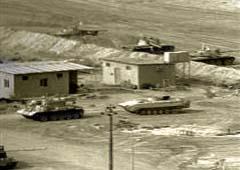 Ashraf, by Iraqi forces.
Camp Ashraf has acted as the MKO’s headquarters and training base in Iraq’s Diyala Province for the past two decades. Baghdad had earlier vowed to shut down the camp and end the group’s presence in the country.
The move by Iraqi forces came after two members of the group disclosed top secret information to the Iraqi officials about psychological pressures and abuse of the members in the camp.
There are 3,416 people in Camp Ashraf, all fingerprinted and eye-scanned by the Iraqi officials.
The Iraqi government has vowed to expel the members of the terrorist group from the country, maintaining that their presence "in Iraq is not an option".
The US troops transferred control of the camp to Iraqi officials after Baghdad and Washington concluded an interim security agreement to take over the country’s national security issues.
The group, founded in the 1960s, started assassination of the citizens and officials after the revolution in a bid to take control of the newly established Islamic Republic. It killed several of Iran’s new leaders in the early years after the revolution, including the then President, Mohammad Ali Rajayee, Prime Minister, Mohammad Javad Bahonar and the Judiciary Chief, Mohammad Hossein Beheshti who was killed in bomb attacks by MKO members in 1981.
The terrorist group joined Saddam’s army during the Iraqi imposed war on Iran (1980-1988) and helped Saddam and killed thousands of Iranian civilians and soldiers during the US-backed Iraqi imposed war on Iran.
Since the 2003 US invasion of Iraq, the group has been strongly backed by neo-conservatives in the United States, who also argue for the MKO to be taken off the US terror list.
 of Human Rights, MKO’s political wing, NCRI, issued a statement claiming that what the office of Iraq’s National Security Advisor has issued is a “categorically false and misleading statement”. First MKO quotes the exact words of the statement that reads “The leaders of Camp Ashraf have refused to allow a committee from the Ministry of Human Rights to conduct its duty to establish the residents’ choice to return to Iran or leave for a third country.” It further adds that “The leaders of the camp also exercised their hegemony and control and deprived the residents of the camp the freedom of returning to Iran or to choose a third country. The government will not back away from its decision to close the camp.”
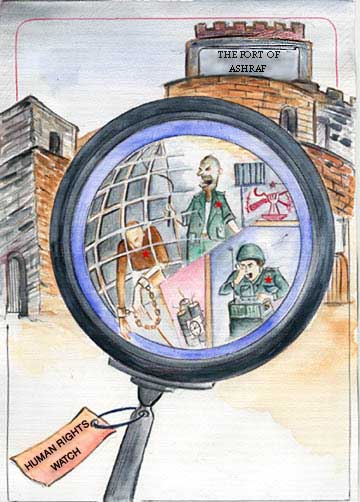 Considering itself an alternative, MKO, in spite of chanting slogans, hardly believes in and adheres to the principles of human rights. Reportedly, the organization is notoriously known to be abusing its insiders through a various instances of human rights violations. Reported by Human Rights Watch, “abuses carried out by MKO leaders against dissident members ranged from prolonged incommunicado and solitary confinement to beatings, verbal and psychological abuse, coerced confessions, threats of execution, and torture that in two cases led to death”. 1
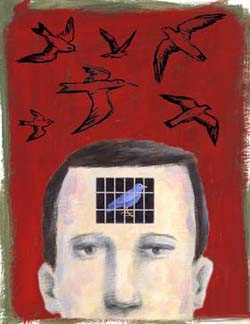 of the major issues in internal cultist relations. The reasons why a person submits to be subjected to mental, physical , psychological, and financial misuse to the extent that he/she gives up job, family, and the individual freedom are very important issues for those interested in investigating cultist mechanisms and levers. In simple words, those outside cults, out of curiosity, strive for public awareness and preventing people’s deviation as well as discovering how in an age of scientific development and communication there people who easily fall in the cults’ trap and are are hoodwinked by their tricks. In order to understand such an issue we must look at the social and psychological techniques used by cults and cultic groups. This process of planned, convert coordinated influence-popularly called brainwashing or mind control or, more technically, thought reform-is the means by which the cult leader subjugates the followers.