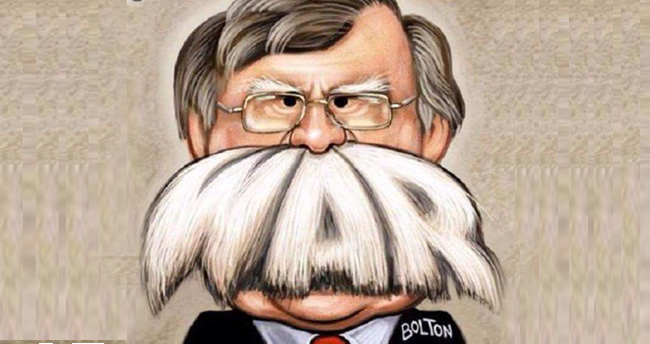
Bolton was a wrong choice by the impulsive president
Donald Trump trumped his national security advisor John Bolton on Tuesday via a Twitter, saying he had”strongly disagreed”with many of Bolton’s positions.
Naming Bolton as national security advisor was in sharp contrast to Trump’s campaign promises including his criticism of “unending wars” that Republican President George W. Bush and his close team, Bolton included, had started in Afghanistan and Iraq.
After firing him, Trump admitted Bolton made a number of “big mistakes”, including pushing for the U.S. invasion of Iraq in 2003.
Trump has turned his administration into a trial and error system. Analysts say Trump’s decisions are based on his impulses and that he has no strategy.
It was quite clear that Bolton was a wrong choice for the important post of national security advisor. Even moderate Republican politicians did not approve of Bolton’s ultra-hawkish tendencies.
He is a hard-hearted person. He has shown no remorse for the disastrous Iraq war.
Not being affected by the tragedy of the Iraq war, he advocated for war against North Korea, Iran, Syria and Venezuela.
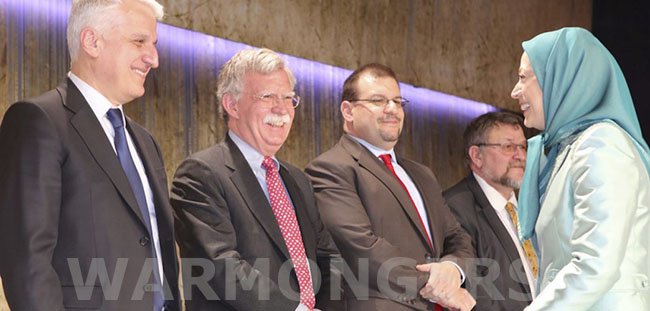
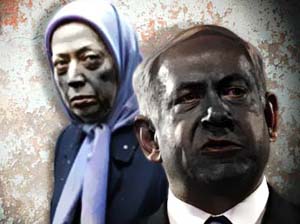
Bolton’s thirst for war against Iran was so high that he favored Mojahdin Khalq Organization (MKO/MEK) – a cult group that some analysts have likened to Cambodia’s Khmer Rouge – as a replacement for the Islamic Republic system.
Trump’s administration is fraught with repeated mistakes. Trump knew beforehand that Bolton had pushed for the Iraq war and that he was paid by the MEK, which was on the State Department terrorist list until 2012.
Also, in March 2015, while Iran and the 5+1 group (the five permanent members of the UN Security Council plus Germany) were busy negotiating a deal over Iran’s nuclear program, he wrote an editorial in the New York Times suggesting strikes on Iran’s nuclear sites.
Trump himself was a fierce critic of the 2015 nuclear deal. But, he ditched the deal in May 2018, just one month after naming Bolton for the senior post.
Though Bolton is not the only culprit for all the chaos haunting the Trump administration, he added new problems to the old ones. To the detriment of Europe, he triggered a new arms race with Russia by encouraging the Trump administration to abandon the Cold War-era INF Treaty, sabotaged dialogue between Washington and Pyongyang, and disgraced the U.S. for his unsuccessful push for the ouster of the Venezuelan government.
Writing in the National Interest on September 10, Paul Pillar, author of Why America Misunderstands the World, says, “Bolton’s wrecking career began as an undersecretary in the George W. Bush administration, when Bolton boasted of his role in killing the earlier Agreed Framework dealing with the North Korean nuclear program.”
Pillar also says, “In each of his positions in government, Bolton has made the world a more conflictual place and the United States a more isolated and despised country.”
Now, Bolton has been sacked or forced to resign but the U.S. is left with a number of emerging problems: Iran is reducing its commitments under the nuclear deal, or the JCPOA, to an extent that may lead to its demise, Washington’s allies in Europe and Asia have largely lost their trust America and now see Washington as a part of the problem rather than part of the solution.
Mujahedin Warmongers
The price of oil fell by 2.2% just minutes after news spread that US National Security Advisor John Bolton was out of a job. In an instant, the prospect of a catastrophic war in the Middle East seemed to recede dramatically.
Bolton is famously the man who never met a war he didn’t like (except Vietnam, which he avoided). And conflict with Iran was the war he seemed to like most.

In 2015, he penned an editorial in the New York Times entitled”To Stop Iran’s Bomb, Bomb Iran.”He was a regular (paid) speaker at the annual meetings of Mujahedin-e-Khalq (MEK), an Iranian exile group which for years was hosted by Saddam Hussain, and which until 2012 was on the US State Department’s terrorist list.
At his most recent appearance at a MEK meeting, in 2018, Bolton declared:”The behavior and the objectives of the [Iranian] regime are not going to change and, therefore, the only solution is to change the regime itself.”
He has previously advocated for regime change in Venezuela, Iraq, North Korea, Libya and Syria, to name a few.
Bolton was, mostly via his perch at Fox News, one of the most vocal critics of the 2015 Iran nuclear deal. He assumed the position of National Security Advisor in April 2018 and, a month later, the US unilaterally pulled out of the agreement.
With Bolton gone, the mantle of Iran hawk now passes to Secretary of State Mike Pompeo. But, unlike Bolton, Pompeo seems to have prioritized his relationship with President Trump.
A recent profile of Pompeo in The New Yorker included a quote from a former senior White House official describing the Secretary of State as”among the most sycophantic and obsequious people around Trump.”A former US ambassador told the article’s author that Pompeo is”like a heat-seeking missile for Trump’s ass.”
The departure of Bolton may change the style of Trump’s position on Iran, but perhaps not the substance.
Washington’s policy of”maximum pressure”is designed, according to Pompeo, to change Tehran’s behavior. But going by the severity of the sanctions, they appear designed to bring Iran to its knees.
“We’ve now made Iran’s economy a shambles,”Pompeo boasted to ABC’s George Stephanopoulos Sunday, describing the effect of US sanctions.”We think their economy could shrink as much as 10 or 12% in the year ahead.”
Just two days later — a few hours after Bolton’s departure — Pompeo said Trump could meet with Iranian President Hassan Rouhani”with no preconditions.”
With Bolton out of the way, such a meeting can now go ahead without much resistance within the Trump White House.
It’s not clear, however, what might come out of a Trump-Rouhani meeting. If we look at the example of North Korea, while the nature of the relationship between Trump and Kim Jong Un may have changed — the leaders now exchange”love letters”instead of insults — the underlying issues, such as North Korea’s nuclear program, international sanctions, and so on, remain unchanged.
Without sanctions relief, or the promise of it, the Iranians are unlikely to play like Kim.
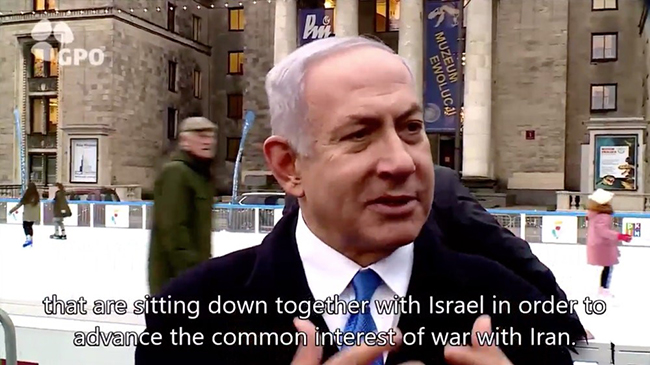
Also mitigating against a dramatic shift in US-Iran policy is Israeli Prime Minister Benjamin Netanyahu, who has lobbied successive American administrations to take a harder stand on Tehran.
Trump has been more than willing to grant Netanyahu almost all his wishes. He has recognized Jerusalem as Israel’s capital and moved the US embassy there, cold-shouldered and cut funding to the Palestinian Authority and to the UN agency for Palestinian refugees, and closed down the Palestinian diplomatic mission to Washington.
After months of bellicose rhetoric on Iran, this summer Trump began to change his tune. Rather than bomb Iran, he began to toy with the idea of talking with it.
So has Trump gone cold on confronting Iran? The 2020 elections loom large and the prospect of war with Iran combined with the real possibility of an economic downtown in the US could spell disaster for the President.
Never big on loyalty, Trump dumped Bolton unceremoniously. The loudest voice for confrontation with Iran has now been banished to the wilderness, or perhaps to Fox News, from whence he came.
While it’s always dangerous to try to predict Trump’s actions, there is now a real prospect of a slight improvement in the long and unhappy relationship between the US and Iran.
Trump is not known for his deep understanding of the complexities of the Middle East, or for a thoughtful approach to the delicate affairs of state.
Nor has he ever expressed much interest or sympathy for those who live here. But perhaps by design or — more likely — by happy coincidence, by dumping Bolton, President Trump may have made war less likely.
Analysis by Ben Wedeman, CNN Senior International Correspondent
Bolton’s departure will fundamentally alter Trump’s Iran policy
Whether national security adviser John Bolton was fired by President Trump or he quit is irrelevant. The change in foreign policy leadership will have a profound impact on how this administration’s Iran policy is shaped and implemented.
While it’s fair to call both Bolton and Secretary of State Mike Pompeo hawkish on Iran, their posturing on best practices for dealing with Tehran have always differed.
Bolton favored the ever-present threat of military action against the Islamic republic and has often openly advocated for it, including the episode in June when Trump approved military strikes in response to the downing of a U.S. drone, which he abruptly aborted when he learned the projected casualties.
Bolton, though, thought the attacks should proceed as planned. For decades he has been consistent in his contempt for the leaders in Iran — and other longtime adversaries — and not shy about the need to spill innocent blood sometimes to reach what he perceived to be U.S. strategic goals.
The Iraqi people now have
lead responsibility
The State Department is about to capitulate to the Taliban, al-Qaeda’s longtime ally, in order to withdraw U.S. forces from Afghanistan, argues Rep. Liz Cheney. (Video: Joy Sharon Yi, Danielle Kunitz/Photo: Rafiq Maqbool/AP Photo and Jabin Botsford/The Washington Post)
His absence also means that the Mujahideen-e Khalq (MEK), a reviled Iranian opposition group that long lived on the State Department’s list of foreign terrorist groups, no longer has a powerful ally in the White House.
The now former national security adviser and U.S. to the United Nations was one of dozens of U.S. politicians, including Rudolph W. Giuliani, to accept large speaking fees in exchange for publicly advocating the organization as a viable replacement for the Islamic republic.
The MEK can claim no popular support, and among Iranians of nearly all political orientations, inside the country and in the diaspora, it was Bolton’s paid alliance with the cultlike group that made him such an odious character.
With the MEK suddenly nowhere in the conversation, ordinary Iranians who would prefer to see their government negotiate its way out of the sanctions that currently have a stranglehold on the country’s economy will be more inclined than ever to support such a process with U.S. leaders.
And those millions of Iranians who prefer a regime change can be more confident now that the United States has no serious plans to install the hated group if the Islamic republic were ever toppled.
Either way, when it comes to Iran, the Trump administration’s hands are no longer tied by Bolton, an ideologue who views diplomacy as a weakness rather than a tool.
The shake-up creates the first real opportunity for Trump to pursue a policy of engaging Iran, which both he and Pompeo have publicly advocated for since this administration’s decision to exit the 2015 nuclear accord with the Islamic republic.
Bolton assumed duties as the national security adviser in April 2018, a month before Trump pulled out of the deal. Although Trump threatened to do so long before he took office, the timing probably pleased Bolton, as he loved to be seen as tough on Iran.
It was yet another reason Bolton’s mere presence in the administration — and at such a high level — made talks between the Trump administration and Tehran all but impossible.
Trump and Pompeo must now make a clear choice and stick with it: actively pursue a new deal with Iran’s leadership as Trump has promised to do since he was a candidate, or continue with the disingenuous charade that is their “maximum pressure” campaign, a policy that has only had the discernible effect of making the lives of average Iranians more miserable.
Trump and Pompeo have time and again put the possibility of new talks, without preconditions, on the table. Now they can prove it. Bolton’s departure, two weeks before the annual United Nations General Assembly session, puts the ball squarely in Tehran’s court.
If President Hassan Rouhani and his foreign minister, Mohammad Javad Zarif, refuse the offer to meet with their U.S. counterparts while in New York, it is they who will suddenly appear to be the unreasonable party.
The only thing that can be said for Bolton’s position on Iran was that it was clear, but he was a liability from the moment he joined this administration. The ways in which his ouster might change the direction of Trump’s Iran policy will prove it.
By Jason Rezaian
Lie, beat and cheat: John Bolton’s desperate attempt to awaken the U.S. war machine
In June, the U.S. came to the brink of war with Iran. Jets were reportedly scrambled and ready to strike Iranian targets in retaliation for the downing of an American surveillance drone flying near the Strait of Hormuz. Yet, everything was going according to plan as per John Bolton, Trump’s mustachioed National Security Advisor and Washington’s highest-flying hawk at the moment.
Throughout his career spanning over four decades in Washington, Bolton has mastered the art of maneuvering the complex web of federal bureaucracy, one-upping his enemies with quick wits and a fiery temper. As an early subscriber of American conservatism, he worked for Barry Goldwater’s 1964 campaign for president while in middle school. Despite Goldwater’s loss, Bolton’s dedication to the conservative cause became more fervent. Coming from a working-class background, he grew to despise his more sophisticated and liberal-leaning classmates while attending Yale University.
Over the years, his ideology has evolved into what resembles self-styled American absolutism where the U.S. can freely punish those who do not fall in line without any constraint from international agreements. To Bolton, where every problem is a nail that justifies a good pounding from America’s mighty hammer.
Bolton’s step-by-step program to lead the U.S. to war with Iran
“And that’s why before 2019, we here will celebrate in Tehran,”declared a flamboyant John Bolton in 2017 to a cultish group of Iranian exiles known as the Mojahedin-e Khalq (MEK), or”Holy Warriors of the People.”Since becoming the National Security Advisor in April 2018, he has skillfully persuaded the Trump administration to pursue policies aimed at dismantling the two countries’ relationship, carefully leading the U.S. into committing military action against Iran.
One month into the new job, Bolton achieved a major milestone when the administration announced that it was withdrawing from its nuclear agreement with Iran – a signature Obama-era policy that gathered major world powers in ensuring Iran would abandon its nuclear weapons program. At the time, the agreement was widely regarded as a buffer toward conflict between the two countries and establishing peace in the Middle East, which had suffered the terror of Islamic States for years. By giving up its ability to produce nuclear weapons, Iran’s economy would catch a break from U.S. sanctions.
Bolton was so proud about pulling the U.S. out of the equation that he hung a framed copy of Trump’s executive order to nullify the deal in his office, according to The New Yorker.
In the following months, he tightened the choke on Iran by bringing back two rounds of sanctions targeting key sectors of the Iranian economy, such as its oil exports, looking to rouse an increasingly angry public to overthrow the government.
As U.S.-Iran relations rapidly disentangled toward the end of last year, Bolton turned things up a notch. In May, he announced the administration was sending a carrier strike group along with a bomber task force to the Persian Gulf, further goading Iran into making a mistake in a game of chicken. He said the U.S. was not looking for a war with Iran but was “fully prepared to respond to any attack, whether by proxy, the Islamic Revolutionary Guard Corps, or regular Iranian forces.” In a moment that eerily resembles the Gulf of Tonkin incident that triggered the Vietnam War, the world watched as Iran shot down an American drone, which it claimed, had violated its airspace. Yet, the ensuing strike never happened as President Trump decided to abort the mission.
After learning 150 Iranians would be killed for an unmanned drone, Trump did not deem the response “proportionate.” But for Bolton, human lives were the least important concern; it does not matter if Iran turns into another Iraq or Libya so long as he sees the collapse of the current order within the country. Neither does the aftermath of a”regime-change”pose a big concern for Bolton, who looks to back the MEK to lead Iran. Over the years, the self-described”pro-American”has fostered a close relationship with the MEK, which the U.S. designated a Foreign Terrorist Organization partially for assassinating six American citizens during the Iranian Revolution. For the uber-hawk, almost any means is justified for waging war.
Intimidation tactics
“We know where your kids live.”These are the words reportedly uttered by Bolton during a meeting with Jose Bustani, then director-general of watchdog group Organization for the Prohibition of Chemical Weapons (OPWC), according to The Intercept and other sources. Before the Iraq War, OPWC under the direction of Bustani, negotiated with Saddam Hussein to allow its inspectors inside the country to ensure its disposal of chemical weapons. This fell out of favor with the Bush administration which was ready to use Iraq’s possession of chemical weapons as a casus belli. To clear the way for an invasion of Iraq, Bolton issued a 24-hour ultimatum for Bustani to resign during the exchange. After asserting that he was elected by OPWC member states and owed no loyalty to the United States, Bolton threatened the chief’s children in front of other OPWC officials, according to The Intercept.
“We know where your kids live. You have two sons in New York,”he was quoted as saying.
In his memoir,”Surrender Is Not an Option,”Bolton claimed he was ready to offer the chief a”gracious and dignified exit”if he complied with his demand. Otherwise, the U.S. government would have him fired. The next year, Bustani was voted out. This was not only time Bolton employed intimidation tactics.
Former director-general of chemical weapons watchdog OPWC and Brazilian diplomat Jose Bustani in a 2011 picture. /VCG Photo
Last year, he threatened the International Criminal Court (ICC) with sanctions if it proceeded to investigate alleged war crimes committed by American troops. He went as far as to suggest criminally prosecuting ICC officials in the American legal system.
Bolton’s history of bullying was put under the microscope during the Senate confirmation process for his nomination as the U.S. ambassador to the United Nations.
“He’s a quintessential kiss-up, kick-down sort of guy,”said Carl Ford Jr. who worked with Bolton during his time at the State Department, to a group of Senators in 2005.”I’ve never seen anybody quite like Secretary Bolton in terms of the way he abuses his power and authority with little people.”During his testimony, Ford brought up an incident involving Christian Watermann, an in-house intelligence analyst who suggested that Bolton’s claim of Cuba’s biological weapons program had been an overstatement not supported by intelligence. A furious Bolton then reached out to Westermann’s supervisor and tried to get the”munchkin”fired.
Bolton’s voracious appetite for war recently got the attention of Fox News host Tucker Carlson, who went on a seven-minute on-air rampage against him.”In other words, last night has been in the works for years,”said Carlson while referring to the short-of-war moment between the U.S. and Iran in June.”John Bolton is that kind of bureaucratic tapeworm. Try as you might, you can’t expel him. He seems to live forever in the bowels of the Federal agencies, periodically reemerging to cause pain and suffering, but critically, somehow never suffering himself.”
By Zeng Ziyi, CGTN.com
What Does Israel Want in Iraq?
An Iranian political analyst has enumerated the reasons behind the Israeli regime’s willingness to get closer to Iraq, saying Tel Aviv’s main objective is to cut off Iran’s links with the axis of anti-Israel nations in the Middle East.
The following in an article by Abdolrahman Fathollahi, written exclusively for the Iran Front Page website:
Only 10 days after an Israeli attack on the Hashd al-Shaabi’s base in Amerli in the Saladin province of Iraq, media reports indicate that Tel Aviv has once again launched an attack, this time on “Abu Muntazir al-Mohammadawi” base, formerly known as Camp Ashraf, located in Diyali province north of Baghdad. However, Hashd al-Shaabi commander, Talib al-Mousawi, has dismissed the reports of such an attack, drawing a link between the attempts to prompt speculation about the issue and the Hashd al-Shaabi’s move to detonate and dismantle the remaining weapons of war inside Camp Ashraf.
Moreover, news reports show that an investigation committee formed to probe into the Amerli incident has concluded that there has been no attack. On the other hand, it seems that a visit by Maryam Rajavi, leader of the MKO terrorist group, and the launch of the recent attack was not a coincidence. Above all, the MKO’s perfect familiarity with the region after 30 years of presence there could have been taken advantage of by Israel for carrying out the attack.
Furthermore, according to the estimates provided by a number of Iraqi security and intelligence officials, the July 19 attack has involved the launch of three “Harop” loitering munitions from F-16 fighter jets. Since Israel is the only actor in the Middle East in possession of such weapons, it seems that Tel Aviv has perpetrated the strike against that base in Amerli of Saladin province.
In addition, what has become apparent is that the actual developments taking place in the Middle East, particularly at the Strait of Hormuz and the Persian Gulf, have resulted in an escalation of tensions. The path initiated by Trump’s withdrawal from the JCPOA and the re-imposition of sanctions was also affected by a security approach later; meanwhile, the deployment and presence of warships from the European and Southeast Asian countries could add to the security atmosphere in the region.
In the wake of these developments, one of the focal centers of the White House’s attempts to mount pressures on Tehran will be definitely Iraq, a country and actor with which Iran has established the highest degree of economic, political, diplomatic, military and security cooperation. The two nations have also strong cultural and religious commonalities.
Specifically mindful of this fact, Washington is seeking to turn Iraq into its trump card in the pressure campaign.

The Latest Act in Israel’s Iran Nuclear Disinformation Campaign
While the US has imposed economic sanctions and has also put its forces in Iraq at a high level of alert –citing concerns about some military and security developments in the wake of a possible skirmish with the military forces allegedly affiliated with Iran, Hashd al-Shaabi in particular– the ground has been prepared for Israel to look for a role in Iraq in order to exert an influence over Iraq’s ties with Syria and over the ongoing developments in the war-hit country on the one hand and, on the other, to overshadow Tehran-Baghdad relations in the current delicate situation.
In this regard, the news reports that Israeli intelligence agents had patrolled and scouted around downtown Baghdad with American military forces in 2018 and early 2019 certainly reveal that Tel Aviv had been seeking a metamorphosis of Iraq in relation to the regional developments for the pivotal purpose of improving the West Asia’s view of Israel, amid the period of heightened tensions between Tehran and Washington in the wake of Trump’s withdrawal from the JCPOA.
Israelis’ reasoning is that Iraq is the main bridge linking Iran to Syria, and then to Lebanon, Palestine and the occupied territories, so they believe that if Iraq’s role and position in such axis diminishes for any reason, it will definitely affect Tehran’s connection with those regions, and will therefore decrease Iran’s activities and role-playing along the border of Israel. All these facts have now made Iraq into a country with special significance for Israelis, especially after a series of anti-Israeli armed forces rose to power, like Hashd al-Shaabi which, after the defeat of ISIS, has turned into an influential actor in Iraq’s security, intelligence, military and even political-diplomatic interaction with Syria, Lebanon and Iran in the course of strengthening the anti-Israeli axis in the Middle East.
Israel’s concerns about the role of such Iraqi forces reached the highest degree in October 2018, when reports came out that a number of short-range ballistic missiles had been transferred from Iran to Iraq and to its western border regions near Jordan. As a result, it was already predictable that Israel’s focus on Iran’s presence and activities in Iraq on various pretexts would pave the way for the Israelis to launch attacks on Iranian-sponsored forces in Iraq.
Besides, Israel is pursuing a step-by-step plan for Iraq apart from those attacks. Tel Aviv is trying to force Iraq into a situation that would encourage it to seek normalization of ties with Israel, like a number of Persian Gulf littoral Arab states. Some cases of the Israeli ploy include a recent visit to Israel by Nobel Peace Prize 2019 laureate, Nadia Murad, and by Lamiya Aji Bashar, winner of 2016 Sakharov Prize, with a 15-strong delegation. Nadia Murad had already visited Israel back in July 2017. The other clues include the comments by Iraq’s Ambassador to Washington Fareed Yasseen a few weeks ago on the possibility of normalization of Iraq’s relations with Israel, as well as the last year’s trips to Israel by three Iraqi delegations comprised of Sunni and Shi’ite figures.
For the second step, Tel Aviv is trying to change the policies of Baghdad towards the ongoing developments in Syria, the military and security cooperation between Baghdad and Damascus along the common border, and above all towards the broad interaction between Iran and Iraq in all areas, in an attempt to exclude Iraq from the anti-Israeli axis in the region.
Nonetheless, the Iraqi political leaders, including Sayyid Ammar al-Hakim, Prime Minster Adil Abdul-Mahdi, Head of the Badr Organization Hadi Al-Amiri, national security adviser Falih Al-Fayyadh, President Barham Salih, and many others emphasize the necessity for Iraq to stay away from any foreign or regional tension, and even stress the need for Iraq’s role in reducing the tensions.
By Abdolrahman Fathollahi
Abdolrahman Fathollahi is a journalist who writes on Iraq and the Iraqi Kurdistan. He has been a journalist since 2007.
“If it seems like fake news is everywhere, that may be because it is”, suggested NBC News in March 2018, quoting researchers that “Falsehoods spread like wildfire on social media, getting quicker and longer-lasting pickup than the truth”. [1]
This capacity of social media and mass media has been well used by the Mujahedin Khalq Organization (the MKO/ MEK/ PMOI/ Cult of Rajavi) to spread disinformation against the Iranian government. But what will the group gain in exchange?
The MEK launched its propaganda campaign in 2002 when it first published the alleged information on the Iranian nuclear weapon program. The campaign has been working aggressively for the past two decades. The disinformation fabricated by the MEK has so far been used by the US and its allies as a pretext to take the most hostile policies against Iran.
On July 4th, 2019 Gareth Porter, a historian, investigative journalist, and analyst specializing in US national security policy, told Radio Sputnik’s Loud & Clear that the US’ claim that Iran had a nuclear weapons program is based on false ideas bolstered by the US intelligence community and that China is unlikely to succumb to the US’ anti-Iran campaign. [2] Porter had previously published several investigated articles on the very subject.
“The problem in part is that the US intelligence community completely muffed it – they blew this even more thoroughly than they blew the questions of weapons of mass destruction in Iraq,” Porter told Sputnik. [3]
“It was based on a series of false ideas that the intelligence communities began with and some maneuvering by high-ranking CIA officials … who interfered with the process of the assessment of Iran’s nuclear program within the CIA,” Porter explained. “It culminated in the approval of this set of documents that came from the Mujahedin-e-Khalq [MEK] that was aligned with and did work with the Israelis” to allegedly prove that Iran had an active nuclear weapons program. [4]
The peak of the MEK’s successful deal –to sell fake news and buy war drums—was the case of the fictional persona named Heshmat Alavi that was revealed by the Intercept, a few weeks ago. “His purported work has appeared in a wide variety of journals over the years, write Robert Fantina of the Global Research. “However, on closer scrutiny, we learn that Mr. Alavi simply doesn’t exist! He is a creation of the political wing of the terrorist organization known as Mojahedin-e-Khalq (MEK), which exists for the sole purpose of overthrowing the government of Iran.” [5]
Fantina clarifies: “This raises even more questions: why does the U.S. need invented ‘journalists’ to sell its anti-Iran story? Could it be, possibly, because the truth is nothing like the U.S. says, and so relying on a made-up writer for made-up stories is the best it can do?” [6]
“Most journalists (this writer included), don’t hide from the public. In addition to writing, they speak at public forums, and their faces may be almost as well-known as their names,” he continues scrutinizing the MEK and its supporters over Alavi. “Where has the illusive Mr. Alavi been? Was he too busy writing all those articles for Forbes to crawl out of whatever hole he lived in to speak publicly about issues important to him? No, that is not the case; he was unable to speak at any conference, symposium, rally, etc., because he doesn’t exist.” [7]
“This is the ‘writer’ whose ‘work’ Donald Trump cited to justify violating international law, and to bring the threat of a devastating war to an area of the world that his predecessor had made significant progress in calming. This is the ‘writer’ that not only Forbes, but The Hill, the Daily Caller, the Diplomat and other so-called responsible news outlets gave a platform to.” [8]
Assal Rad writes on Lobelog that Trump and his regime-change cabinet are now touting the MEK as a viable alternative to the current government in Iran. “Despite these parallels, the mainstream media continues to give a platform to radical groups like the MEK, which are weaving together a questionable story to build a case for regime change and war with Iran,” She asserts. [9]
Comparing the MEK with Iraqi National Congress, Rad warns about the fraudulent part of the of the MEK in leading the West to another war in the Middle East. “Also similar to the INC, which claimed that it did not seek power in Iraq, the MEK pretends to work for democracy in Iran in the name of the Iranian people”, she states. “Though both organizations have used fabrications to push their agenda, the tools of disinformation have evolved over time and the MEK has mastered the art of false narratives.” [10]
She refers to the MEK as a pro-war entity that is skilled manipulator of mass media: “Revelations have come to light on the role of the MEK in magnifying efforts at misrepresentation through inauthentic social media accounts aimed at manufacturing “Iranian” support for the Trump administration’s pro-war policies. The MEK also utilizes promoted content on news sites. For instance, The Hill is running a 10-week mini-series on Iran sponsored by the Organization of Iranian-American Communities (OIAC), a front group for the MEK.” [11]
As the MEK and its sponsors in the US government continue to push for an all-out war with Iran, remember that these same people and their peers have been repeatedly lying in order to start nearly every war in US history. War and its natural consequence, violence, cannot be excluded from the history of the Mujahedin Khalq as well.
Mazda Parsi
References:
[1] Fox, Maggie, Fake News: Lies spread faster on social media than truth does, NBC News, March 8th, 2018.
[2] Sputnik News, US Intelligence Has ‘Muffed’ Proof on Iran’s Alleged WMD Programs for Decades, July 4th, 2019.
[3] ibid
[4] ibid
[5] Fantina, Robert, America’s War against Iran: The Insidious Role of the Mojahedin-e-Khalq (MEK) Terrorist Entity, Global Research, June 19th, 2019.
[6] ibid
[7] ibid
[8] ibid
[9] Rad, Assal, Propaganda War to Real War: The MEK’s Treacherous Operation, Lobelog, July 1st, 2019.
[10] ibid
[11] ibid
Bolton giving Trump poor advice on Iran
Americans will die if John Bolton gets his way. Slowly but surely, the ultra-hawkish National Security Advisor is dragging President Trump into a war with Iran. If you’re feeling déjà vu watching the news, you’re not alone. It’s the run-up to the Iraq disaster all over again — and Bolton is a big reason why.
Taking a page out of the Dick Cheney playbook, Bolton is manipulating intelligence before it reaches President Trump’s desk in an effort to inflate the Iran threat. Throughout his career in government, Bolton has been notorious for sidelining views that contradict his own. Now, as President Trump’s top security advisor, he’s bypassing the intelligence community and their diligent methods of providing the president with well-informed and reasoned analysis, and is instead funneling in assessments that align with his hawkish strategy.
In another echo of Iraq, Bolton is championing a fringe diaspora group, the Mujahedin-e Khalq Organization (MEK) that is telling us we’ll be greeted as liberators once we overthrow the Iranian regime. Bolton has received tens of thousands of dollars from the MEK, despite the State Department having previously designated them as a foreign terrorist organization for their role in assassinating American contractors and fighting on behalf of Saddam Hussein. Meanwhile, the group is nearly unanimously despised in Iran.

America first vs America only: How John Bolton is fuelling Iran ‘hysteria’
Just as he did prior to the Iraq war, Bolton is also downplaying how devastating a conflict would be. He believes that the Iranian government will likely back down when faced with maximum pressure but, if all else fails, some limited air strikes are sure to put them back in their place. However, that’s not what history tells us. In the 1980s, Iran fought off an eight-year attack from Saddam, losing half a million Iranians in the process. Decades later, crushing sanctions weren’t enough to persuade Iran to give up its nuclear program. Only when Washington showed a willingness to make a deal did Tehran agree to limit its uranium enrichment. Instead of cowing Iran, the administration’s decisions to pull out of the nuclear deal, strangle the country through sanctions, and empower hawks like Bolton have sent the message that President Trump is out to get the Iranians no matter what they do. In this siege environment, we shouldn’t be surprised when Iran attacks U.S. drones or oil tankers and increases its levels of enriched uranium.
Iran’s activities in the Middle East are undoubtedly problematic. Just ask the people of Syria, or the Iranian people for that matter. Iran, as well as our allies in the region, should be pressed to promote stability and human rights. But Bolton’s current strategy is manufacturing a crisis, goading Iran into taking actions that can justify his desire for war. Despite its anti-American rhetoric, the Islamic Republic isn’t out to attack the United States directly — unless its leaders feel they have no other option. Iran has prepared for a defensive war against the United States for the past 40 years, and Iran’s population is over three times larger than Iraq’s was when we invaded. A war with Iran will kill thousands of Americans and put an end to our economic recovery.
The president is getting dangerous advice. To protect the thousands of brave New Mexican men and women in uniform, our representatives in Congress must speak with one voice and say, John Bolton must go.
By Ali G. Scotten,lcsun-news.com
Ali G. Scotten heads the New Mexico Chapter of the National Iranian American Council and is a Security Fellow with the Truman National Security Project. Opinions are his own.
US Intelligence Has ‘Muffed’ Proof on Iran’s Alleged WMD Programs for Decades
Gareth Porter ; the American historian, investigative journalist, author and policy analyst specializing in U.S. national security policy who was active as a Vietnam specialist and anti-war activist during the Vietnam War whose analysis and reporting including on Mujahedin-e Khalq issue has appeared in academic journals, news publications
told Radio Sputnik’s Loud & Clear that the US’ claim that Iran had a nuclear weapons program is based on false ideas bolstered by the US intelligence community and that China is unlikely to succumb to the US’ anti-Iran campaign.
“The problem in part is that the US intelligence community completely muffed it – they blew this even more thoroughly than they blew the questions of weapons of mass destruction in Iraq,” Porter told host John Kiriakou on Wednesday.
“It was based on a series of false ideas that the intelligence communities began with and some maneuvering by high-ranking CIA officials … who interfered with the process of the assessment of Iran’s nuclear program within the CIA,” Porter explained. “It culminated in the approval of this set of documents that came from the Mujahedin-e-Khalq [MEK] that was aligned with and did work with the Israelis” to allegedly prove that Iran had an active nuclear weapons program.
“They were fakes, they were fabricated documents,” Porter said,
referring to a laptop the MEK allegedly supplied Israeli intelligence with in 2005, claiming it belonged to an Iranian nuclear scientist. “And the Israelis were behind it. They were the ones who had the capability and the motivation to produce such fabrication and the CIA did not do their job appropriately and they gave it the go ahead. The reality is that those documents were the central evidence that was offered to the world and accepted by the International Atomic Energy Agency as sufficient evidence to put Iran in the dock.”
“So ever since 2005, the US and its allies have been getting the rest of the world to get along with the idea that Iran was trying to get nuclear weapons,” Porter explained.
“During the Iran-Iraq War, when Iran was subjected to eight years of chemical weapons attack by the Iraqi government which killed upwards of 100,000 Iranians, the Iranians had the capability to produce chemical weapons.
Porter noted that during the 1980-88 Iran-Iraq War, over 100,000 Iranians died – many of them at the hands of Iraqi poison gas attacks – and Tehran had the capability at that time to produce chemical weapons.
“They never did it. They never used a single chemical weapon during the war. Ayatollah Khomeini forbade that … the reason was it was illegal, illcit under Shia Islam,” Porter said about the Iranian revolutionary leader, also adding that there has never been “hard evidence” that Iran has produced nuclear weapons.
“I think that people need to understand that the truth is fundamentally different than the narrative that has been accepted by virtually everybody, by this political system, and in Europe as well,” Porter said.
Tehran is partially discontinuing its commitments under the Joint Comprehensive Plan of Action (JCPOA) agreement in a bid to salvage the multilateral nuclear deal, Iranian President Hassan Rouhani said on Wednesday, Sputnik reported. The president warned that beginning July 7, Iran’s uranium enrichment would exceed 3.67% purity, and earlier this week, it exceeded the 300 kg maximum allowable mass of enriched uranium stockpiles.
Despite the US’ “maximum pressure” campaign against Iran, “the fundamental reality” is that Trump doesn’t want a war with the Middle Eastern country, Porter told Sputnik.
“It is clear he had made a decision. I don’t think he was ever ready to really go to war with Iran. I think he had made up his mind that unless Americans were attacked by Iran directly, he was not going to war with them,” Porter said, noting “the Iranians clearly don’t want to have a war with the US.”
In addition, according to ship-tracking data obtained by Paris-based energy researcher Kpler SAS, at least five supertankers headed to China were loaded with Iranian liquified petroleum gas, suggesting that China isn’t going to abide by the US’ maximum pressure campaign. In recent days, the Chinese-owned ship “Sino Energy 1” was seen approaching Iranian waters before dropping off radar. It then reappeared days later, apparently full and leaving Iranian waters, the New York Times reported.
“I think it’s pretty clear that what this signals is that China is not going to go along with the maximum pressure campaign in any way such as the Trump administration is demanding … I think the bigger question at the moment is whether the Europeans are capable of playing any independent role in regards to this issue. They are poised in this moment to move in the direction of the US despite the fact that they know it’s wrong and the risks are very high. My guess is that they are not ready to openly defy the US on this issue because of the power that the US financial system continues to wield in the world economy,” Porter explained.
According to Porter, there are two likely possibilities regarding the Iran-US situation.
“The most likely two possiblies are that, a) the same cast of characters remains in place over the next few months and the Iranians inevitably take actions take actions that cause [US Secretary of State Mike Pompeo and National Security Adviser John Bolton] people to insist we [the US] have to take more decisive action militarily … and we have the beginning of an actual war; or b) Bolton is replaced as national security adviser by someone who is prepared to actually do something diplomatically to end this crisis,” Porter explained.
BEHROUZ MEHRI, sputniknews.com
Crisis of Trust — Trump Tries to Lead on Iran, But Few Follow
The president cannot form an international coalition, weakening America’s position
Last week, two commercial tankers were attacked in the Gulf of Oman, near the Strait of Hormuz, a narrow waterway through which about 20% of the world’s oil passes. United States officials, including President Trump and Secretary of State Mike Pompeo, quickly blamed Iran. When pressed for evidence, the U.S. released a video of Iranians on a small boat removing what appears to be an unexploded limpet mine from one of the tankers.
Major U.S. allies, such as Germany and Japan, were skeptical and said so in public. Yutaka Katada, the Japanese owner of one of the tankers, said the ship was attacked by a flying object, not a mine. U.K. Foreign Minister Jeremy Hunt said his country is “almost certain” Iran was behind the attacks, but instead of condemning the Iranians or calling for freedom of the seas, he urged “all sides to de-escalate.” The European Union offered a similar message.
Europe and Japan probably suspect Iran too, even if they doubt Trump and Pompeo’s statements. Their publicly-expressed skepticism and calls for restraint from all sides sends a signal. They do not want to join Trump’s “maximum pressure” campaign, they do not want conflict, and if the situation escalates to war, America will be alone.
That’s Trump’s fault.
Reasonable Doubt
Donald Trump is not the only reason one might question an American accusation. An accidental explosion on the USS Maine, blamed on Spain, helped lead to the Spanish-American War. False claims about a North Vietnamese attack in the Gulf of Tonkin led to escalation in Vietnam. More recently, the United States justified invading Iraq with inaccurate accusations about nuclear and biological weapons.
But none of this prevented George W. Bush or Barack Obama from leading a global coalition to pressure Iran. Escalating sanctions, authorized by Security Counsel resolutions, had support from the U.K., E.U., Russia, China, Japan, India, and others. That effort culminated in the Joint Comprehensive Plan of Action (JCPOA), which traded sanctions relief for most of Iran’s enriched uranium — i.e. bomb fuel — and their capacity to create more, moving the country further away from a nuclear weapon.
In May 2018, Trump withdrew from the JCPOA, even though the International Atomic Energy Agency certified that Iran was upholding its end of the bargain — an assessment shared by U.S. and allied intelligence. The U.S. imposed sanctions, going against the wishes of every other party to the deal, including NATO allies U.K., France, and Germany.
As a result, everyone outside of the United States blames Trump for the current Iran situation (except for Saudi Arabia, the United Arab Emirates, and Israel, Iran’s regional rivals). But the president’s inability to build an international anti-Iran coalition stems from more than just disagreement over the JCPOA.
It’s About Trust
Freedom of the seas is an international right. Threats to it merit an international response. But the country that usually leads such an effort is the United States, and the U.S. is suffering a crisis of trust.
Few trust that the Trump administration will be honest with them, consider their interests, or move the situation in a productive direction, so they don’t want to line up behind America now. While the Iraq war plays a role, a lot is specific to this presidency.
In his first trip abroad, Trump gave a speech in Saudi Arabia, delighting his hosts by inaccurately blaming Iran for most terrorism. He publicly backed the Saudi-led diplomatic isolation of Qatar — now in its third year — even though Qatar hosts America’s largest Middle East airbase. He repeatedly lied about the murder of journalist Jamal Khashoggi to cover for Saudi Crown Prince Mohammed bin Salman (MBS). His son-in-law/adviser Jared Kushner took an unannounced trip to Riyadh in October 2017, reportedly giving MBS intelligence on influential Saudis the Crown Prince later arrested in a power grab.
This is different than previous presidents, and makes American allies less confident the United States will do the right thing when it comes to Saudi Arabia’s main rival.
In Syria, Trump oversaw the successful conclusion of the campaign to retake territory from ISIS, and then in December 2018 issued a surprise order to withdraw. Quickly leaving would abandon the Syrian Democratic Forces, America’s local partners, and risk increasing instability. Trump’s order prompted resignations from Secretary of Defense James Mattis and special envoy to the anti-ISIS coalition Brett McGurk, who were arguably the administration’s two most credible officials on Middle East issues. Later, the president partially reversed course, agreeing to leave half the force in Syria.
The officials currently at the forefront of Iran policy — Secretary Pompeo and National Security Advisor John Bolton — have advocated regime change for years. Bolton has openly backed the MEK, an Iranian dissident group, which the U.S. designated a foreign terrorist organization from 1997–2012. The MEK recently got caught running a fake Iranian activist persona online, who got articles published in Forbes, the Hill, the Daily Caller, the Federalist and other U.S. outlets.
On May 31, a suicide bomber attacked a U.S. convoy in Kabul, Afghanistan and the Taliban took responsibility. But two weeks later, Pompeo called it one “in a series of attacks instigated by the Islamic Republic of Iran and its surrogates against American and allied interests.” The Secretary has not presented any evidence, and almost no one shares his assessment.
This doesn’t mean Pompeo’s accusation that Iran was behind the tanker attacks is false. Iran is one of the few actors with access, and may have wanted to signal that it can disrupt shipping through the Strait of Hormuz. But that’s not the only possibility, and Pompeo’s boy-who-cried-Iran routine makes him a poor messenger.
The Uncertainty Isn’t Helping
Compounding the problem of the administration’s credibility, it’s not clear what the U.S. wants.
Is America after regime change, hoping the sanctions will collapse the government or spark a revolution? Is pressure supposed to antagonize Iran into an action that justifies a military response? Or is it designed to bring Iran to the negotiating table, ideally with new concessions?
And with the tanker attacks, is the U.S. aiming for freedom of the seas? In that case, a smart approach would involve coordinated international condemnation, a Security Counsel resolution, and perhaps an offer to provide military escorts for merchant vessels near the Strait of Hormuz. But if the U.S. aims to frighten Iran into concessions, or is looking for an excuse to bomb, there’s value in ratcheting up tensions.
Republican Senator Tom Cotton of the Armed Services Committee called for “a retaliatory military strike against the Islamic Republic of Iran.” New York Times columnist Bret Stephens said the U.S. should threaten to sink Iran’s navy. Both advocate regime change, but argue these threats would deter Iran from further attacks on shipping.
Where the Trump administration falls is less certain.
In May 2018, Pompeo issued twelve demands, including ending support for Hezbollah, withdrawing from Syria, and leaving Iraq alone. Essentially, the secretary told Iran to abandon its foreign policy interests — a degree of capitulation to which no country would agree, except after losing a major war. This week Pompeo said the U.S. doesn’t want war, but considering his pre-administration calls for regime change and his absolutist demands, he probably wouldn’t mind it.
Acting Secretary of Defense Pat Shanahan also said the U.S. doesn’t want war with Iran, but he just resigned over accusations that he punched his wife, leaving civilian military leadership in flux.
Mixed messages combined with poor credibility undermines strategies of deterrence and coercion. If the Iranians don’t know where the U.S. draws the line, and what will happen if they cross it, then they’re less likely to be deterred. If Iran doesn’t know what non-absolutist concessions the U.S. would accept, then it’s less likely to be open to negotiations.
What About the President?
Trump seems like he might want a deal. In July 2018, the president publicly floated the idea of meeting without preconditions. This month, Trump asked Shinzo Abe to convey an openness to negotiations when the Japanese prime minister traveled to Tehran.
After the tanker attacks, the president struck a different tone from his senior staffers. “So far, it’s been very minor,” Trump said in an interview with Time, downplaying the possibility of a military response, but “I would certainly go [to war] over nuclear weapons.” This sounds like something out of a gangster movie: how about I let the little thing slide and then you and I have a talk about the big thing?
And it suggests an under-appreciated possibility: Trump might be following the same strategy he used with North Korea. In that case, we’re currently in the “fire and fury” stage, with sanctions and threats. Trump might be trying to get to the Singapore summit stage, where he gets a photo op and something he can call a deal to tout back home.
Some theorize that Trump would like a war to distract from domestic problems or create a rally-around-the-flag effect to help his re-election. But I don’t think the president who ordered withdrawal from Syria, refrained from attacking Venezuela, and sings Kim Jong-un’s praises is eager for war. And he has little trouble creating distractions.
Wars are messy. Expensive. Trump is willing to use force against terrorists and insurgents in Afghanistan, Iraq, Syria, Yemen, and Somalia, who have little ability to respond. But with governments, which can resist and retaliate, he sticks to threats, hoping that bullying will work.
Military action could go wrong and hurt his electoral chances. A chunk of Trump’s base is isolationist and wouldn’t like it, much as they denounced limited missile strikes against Syria in April 2018.
But this situation is different from North Korea. Iran does not have nuclear weapons, and may worry that it has to establish deterrence by demonstrating the ability to impose costs, such as by disrupting global oil markets. North Korea is boxed in by China, Russia, South Korea, and Japan, while Iran is involved in Iraq, Syria, Yemen, Lebanon, and Gaza. And Iran has domestic politics.
It’s not a democracy, but it’s not built around one man like North Korea. Iran has factions competing for influence, and when Trump broke the JCPOA, the faction that’s open to negotiations lost ground to the one that said America can’t be trusted. Iran rejected Trump’s offer to meet, and the government has domestic political incentives to stand firm, even as sanctions create pressure to come to the table.
This week, Iran announced it will resume some uranium enrichment activities banned under the JCPOA. It’s not surprising, since the U.S. reneged on its commitments first, but it’s still a sign that Iran plans to escalate. However, whether they’re trying to generate leverage for negotiation, deter American action, or increase the chances of conflict isn’t clear.
The most worrisome part is not that Trump personally wants war. It’s that without unified global pressure Iran won’t back down, the sanctions will achieve little besides suffering, and Trump won’t get an agreement he can take credit for. And then people with the president’s ear — from Bolton and Pompeo to the Saudis and Israelis — will tell him he has no choice but to bomb because otherwise he’ll look weak.
Then what?
Nicholas Grossman, arcdigital.media
MEK’ing history
Why the State Department Let a Terrorist Cult Gather on its Doorstep
How did the MEK go from terrorist cult to State Dept partner in pushing regime change in Iran? MintPress went to their DC rally to find out.
Watching the Trump administration’s push for war with Iran, news consumers may find it hard to be surprised by the lengths the U.S. government is willing to go to in order to instigate war — or regime change at the very least — against the Islamic Republic. U.S. citizens have been treated to lengthy lectures by the mainstream media, which laments the loss of an unmanned drone and a targeted Japanese oil tanker whose owner disputes Washington’s version of events.
Yet, it isn’t the Trump administration that solidified the U.S.’s relationship with its strangest bedfellow in the battle against the Iranian government. That distinction goes to then-Secretary of State Hillary Clinton.
Clinton declassified the Mojahedin-e Khalq (People’s Mujahedin of Iran, or MEK) as a terrorist organization in 2012. The Guardian described the move as a result of a “multimillion-dollar campaign.”
The campaign to bury the MEK’s bloody history of bombings and assassinations that killed American businessmen, Iranian politicians and thousands of civilians, and to portray it as a loyal U.S. ally against the Islamic government in Tehran, has seen large sums of money directed at three principal targets: members of Congress, Washington lobby groups and influential former officials.”
The outlet continued:
Three top Washington lobby firms — DLA Piper; Akin Gump Strauss Hauer & Feld; and DiGenova & Toensing — have been paid a total of nearly $1.5 million over the past year to press the U.S. administration and legislators to support the delisting of the MEK and protection for its members in camps in Iraq.
Two other lobby groups were hired for much smaller amounts. The firms employed former members of Congress to press their ex-colleagues on Capitol Hill to back the unbanning of the MEK.”
Today, years after the group was removed from Washington’s terror list, it enjoys even more access to the halls of power, despite its dismal levels of approval in Iran, the country it claims to represent.
“The MEK has incredible influence in the White House and on the Hill. I frequently see them lobbying members of Congress and attending hearings with matching yellow jackets that say ‘Iranians support regime change,’ Lily Tajaddini, Iran Coordinator at CodePink, told MintPress News.
The group claims to want democracy, but it is abundantly clear that their ideal leader for the future of Iran is Maryam Rajavi, the woman who leads their cult. The contradiction was laid bare last week at a protest held by the group in Washington with chants of “Democracy and freedom, with Maryam Rajavi.”
A recent investigation by The Intercept revealed that the White House used an article by one Heshmat Alavi to justify its illegal withdrawal from the Joint Comprehensive Plan of Action (JCPOA, or Iran Nuclear Deal). The only problem is that Alavi “is a persona run by a team of people from the political wing of the MEK. This is not and has never been a real person {emphasis added),” according to one former member of the cult, whose story was corroborated by other former members.
As LobeLog reported:
This new scandal…involves a wide political and media class that has become so besotted with an unrealistic anti-Iran agenda that it has left the door open to an unchecked, unverified flow of MEK propaganda throughout American politics and the media. Thanks to these regime-change advocates, a foreign group funded by a foreign government has easily manufactured a false narrative aimed at sending American soldiers to die in a war with Iran that is against U.S. national interests.”
That foreign government is the Kingdom of Saudi Arabia. Even the U.S. government’s own Voice of America outlet reports:
Observers have long been puzzled about how the group [MEK] managed to shell out $25,000 speaker fees to the likes of [former Speaker of the House Newt] Gingrich, [former Governor of New Mexico and U.S. Ambassador to the United Nations Bill] Richardson, [former Chairman of the Democratic National Committee Howard] Dean, former New York Mayor [and President Trump’s lawyer] Rudy Giuliani and others, given its small basis of support within the Iranian diaspora. It’s entirely possible that the Saudis have funded the MEK for years.”
And there is a consensus that Saudi Arabia is financing the group across the axis, with Russia’s SputnikNews reporting:
A former MEK member who oversaw the transfer of hundreds of millions of dollars’ worth of materials explained how the group has stayed financially afloat.
Massoud Khodabandeh explained that three tons of solid gold, a minimum of four suitcases of customized Rolex watches, and fabric that had been used to cover the Muslim holy site of Kaaba in Mecca were among the commodities shipped from Saudi Arabia to MEK operatives in Baghdad as part of the scheme.”
As MintPress News previously reported:
Testimony from a former high-ranking official from the Iranian militant opposition group…has confirmed that the group had been covertly financed by the Kingdom of Saudi Arabia. For decades, the Gulf Kingdom…contributed hundreds of millions of dollars in gold and other valuables.”
Several fronts and bigtime backers
The MEK operates through several fronts, including the National Council of Resistance of Iran (NCRI), the Organization of Iranian American Communities (OIAC), inter alia.
The former is a “little-known advocacy group determined to install itself as the new government of Iran,” which “continues to build a powerful influence network in Washington and beyond,” according to the Center for Responsive Politics (CRP). The latter is a U.S.-based lobbying group.
NCRI has “been hosting opulent events at the National Press Club and elsewhere, publicizing itself through national and international media, and meeting with dozens of current and former government officials, all with the end goal of toppling the current Iranian government and rising to power in its place,” the watchdog reports. CRP adds:
“The [C]ouncil of [R]esistance either submitted or was quoted in 51 media pieces between December 2018 and May 2019, according to FARA [law requiring registration of foreign lobbyists] filings.”
Meanwhile, some of the biggest names in American politics openly back the group. The ultra-hawkish Sen. Tom Cotton, who has advocated for a pre-emptive strike on Iran, has spoken at their events. National Security Advisor John Bolton promised the group at its 2017 conference in Albania that “before 2019, we here will celebrate in Tehran.” Richardson, Gingrich and Guiliani also gave speeches there.
Among other prominent supporters of the group: former Sen. Robert Torricelli (D-NJ); retired General and former Vice Chief of Staff of the United States Army Jack Keane; Sen. Jeanne Shaheen (D-NH); Sen. John Boozman (R-AR); Sen. Thom Tillis (R-NC); Sen. Roy Blunt (R-MO); Rep. Brad Sherman (D-CA); Rep. Tom McClintock (R-CA); and former Attorney General Michael Mukasey, among many, many more.
Chaos at the State Department
On Friday, some 500 MEK members demonstrated in front of the State Department building in Washington, equipped with stages, two large-screen TVs, and three confetti cannons. In between speeches, demonstrators chanted “Change, change, change / Regime change in Iran!”
They also chanted their support for MEK leader Maryam Rajavi — who is banned from entering the United Kingdom, yet bills herself as a progressive reformer despite her group’s terrorist past. “Rajavi yes / Mullahs no / They are terrorists, they must go!” MEK members chanted.
According to organizers, the MEK members flew in from “40 different states.”
One speaker opened the rally by proclaiming:
In one voice, we declare that the only solution is for the Iranian people to overthrow this regime and create a democratic nation. Our rally is timely, our message is clear. Thousands of Iranians are here to say it loud: ‘We call on the United States to support the Iranian uprisings for regime change.’”
He went on to call for more sanctions and for the designation of Iranian intelligence agencies as terrorist groups. The speaker continued:
With this comes the recognition of an alternative to the Iranian regime. Misses Maryam Rajavi and the NCRI have demonstrated leadership, a significant network, and the organizational capabilities to free Iran. And we support Misses Rajavi and her 10-point plan for a free, democratic, and non-nuclear Iran.
Let’s make sure that we are heard and on social media with the following hashtags: #MarchForRegimeChangeByIranians, #IStandWithMaryamRajavi, and #FreeIran.”
Schedule for the “Iran Rally In Solidarity with Iranian People’s Uprisings for Regime Change.”
Some people who spoke were not included on the list of speakers, including representatives McClintock and Sherman. Sen. Bob Menendez (D-NJ), ranking member of the Senate Foreign Relations Committee, and Rep. Van Taylor (R-TX) also had statements read to the MEK crowd. Later, former U.S. Ambassador to Bahrain Adam Ereli also spoke.
A handful of counter demonstrators with the anti-war women’s group CodePink showed up to rally against the MEK group. Tajaddini had organized the protest but stayed at a distance, noting:
They target me because I am Iranian. They have yelled sexist slurs at me and make false claims that I am paid by the regime inside of Iran solely because I do not support sanctions or war against Iran.”
Days prior, CodePink co-founder Medea Benjamin had confronted MEK members as they attempted to lobby Congress. On Friday, MEK had pictures on hand of Benjamin meeting with Iranian officials during her participation in peace delegations printed out in an effort to intimidate her.
They surrounded her, pushed her, and called her a terrorist.
Immediately after the State Department security personnel escorted Benjamin from the mob, she told MintPress News:
This is an example of the mentality among these people. They have no respect for democracy.
If it weren’t for the police, they would be hitting us and assaulting like they have done many times. They are a cult and a former terrorist group. They have been legitimized with the support of John Bolton and other people in the administration. They’re hated inside Iran.”
One of the MEK members who was captured on video being pushed away by police for being too aggressive towards Benjamin, told MintPress News that Benjamin and the other members of CodePink “have got money from the Iranian agent to participate here.” The accusation of spying for or being on the payroll of Iran is included in most public testimony of those targeted by the group. The MEK member continued:
We want just change of the regime, nothing more, but they are supporting the Iranian terrorist regime.
I hope that the Iranian terrorist regime [is] overthrown and the people can choose anybody they want to. For example, if they elect Maryam Rajavi.”
Maryam Rajavi is the de-facto leader of the MEK since her husband mysteriously disappeared. Rajavi addressed the protest remotely, on two occasions reminding her supporters that the U.S. is their ally and accusing the Iranian government of having it backwards. She congratulated MEK members for their growing support in Washington and shared her vision of opening up markets in Iran. Despite originally billing itself as a Marxist organization, MEK is now staunchly capitalist — perhaps a necessary condition for alliance with the U.S. According to the group:
The council accepts national capitalism and the bazaar [marketplace], private ownership and enterprise, as well as private investment.”
But it isn’t only about the benjamins, CodePink’s Tajaddini argues:
Many members in Congress and the White House have strong ties to the Israeli and Saudi lobby groups [that] support sanctions and a war with Iran. They also support the MEK because they are then able to say that Iranians support the U.S.-led regime change.”
The Congressional Cult Caucus
Gov. Richardson opened his speech with red meat for the MEK: “We need a new regime. That regime is you, the MEK.” Richardson concluded by leading a chant of “M-E-K!”
Richardson’s interest in the outcome of United States policy in the Middle East isn’t just confined to his support for the MEK, for which he is rewarded generously. He is also involved in a U.S. oil project in the Syrian Golan Heights, which are illegally occupied by Israel, via a company called Genie Energy Ltd. Given the transnational nature of pipelines, Genie Energy stands to benefit from both regime change in Syria and Iran. Other figures on the company’s advisory board include former Vice President Dick Cheney, media mogul Rupert Murdoch, investment banker Jacob Rothschild and former CIA Director James Woosley.
Former Sen. Robert Torricelli, who helped lobby the Clinton state department to drop the MEK from its terrorist list, cheered Rajavi’s sacrifices for the movement.
Rep. Brad Sherman, Democratic member of the House Foreign Affairs Committee, assured the crowd that the Iranian government “may be on its last leg.” He said that he was sure that Iran’s military was watching the protest remotely. “So Rouhani, this is the future of Iran. Watch it on your video streams,” he said.
Rep. Tom McClintock told the crowd that “the gang of thugs that have appointed themselves the rulers of Iran — their claim on power is illegitimate and the time to topple them is approaching.”
Jack Keane, a retired four-star general and former Vice Chief of Staff of the U.S. Army, said Iran is “choking” on U.S. sanctions and condemned Iran for its alleged support of Houthi rebels in Yemen and Hezbollah in Syria. He told the MEK to “keep up your fight, keep up your resistance.”
Sharing a bit of what appears to be insider knowledge with the cultists, the general told them “the United States will lead a coalition of nations to keep the shipping lanes open in the Persian Gulf and the Gulf of Oman. That will unfold in the days ahead.”
Following the rally, the MEK marched to the White House, again calling for regime change.
MEKing history
Virtually every investigation into the so-called “People’s Mujahedeen” — whether by think tanks, NGOs, or the media — concludes that their support inside of Iran is virtually non-existent.
The group participated in the revolution against the Shah but was not invited to the table as a new government was being formed. And so they rebelled, engaging in a campaign of terror marked with assassination attempts against Iranian, U.S. and Jordanian officials. They bombed many businesses. Three U.S. military officials were killed; as were three contractors, and that was prior to the revolution. Afterwards, MEK attacks would see as many as 70 high-ranking officials from other political parties killed. Suicide attacks and assassinations continued.
Eventually, the MEK sided with Saddam Hussein in the Iran-Iraq war and was responsible for scores of Iranian casualties. This is largely credited as the reason the group is so widely despised in Iran.
In 1989, Maryam and Masoud Rajavi made divorce compulsory to advance the so-called “ideological revolution.” In 1992, the group conducted “near-simultaneous” raids on Iranian embassies in 13 countries. By August 2002, the group started holding press conferences in Washington highlighting the threat of a nuclear-armed Iran. The next year, it bombed a UN compound in Iraq, causing the international body to vacate the country.
The RAND Corporation, a U.S. government-funded militarist think tank, was asked by a Marine Corps major-general to provide a “rigorous analysis” of the group. The 133-page report states:
The MeK naturally sought out Iranian dissidents, but it also approached Iranian economic migrants in such countries as Turkey and the United Arab Emirates with false promises of employment, land, aid in applying for asylum in Western countries, and even marriage, to attract them to Iraq. Relatives of members were given free trips to visit the MeK’s camps. Most of these ‘recruits’ were brought into Iraq illegally and then required to hand over their identity documents for ‘safekeeping.’ Thus, they were effectively trapped.
During the more than four decades since its founding, the MeK has become increasingly adept at crafting and promoting its image as a democratic organization that seeks to bring down Iranian tyrants, both secular and religious. This profile has been especially effective in the United States and Europe, where, until recently, the MeK’s extensive fundraising activities have been very successful.”
In the internet era, the cult has managed to keep up with the times. A Channel 4 report found one defector whose job it was to run pro-MEK sockpuppet accounts pretending to be Iranian.
In a possible testament to the group’s effectiveness at manipulating narratives, one media outlet has released what it says is leaked audio of the head of MEK’s cyber unit speaking to a U.S.-based supporter. “We did our best to blame the [Iranian] regime for the [oil tanker] blasts. The Saudis have called Sister Maryam [Rajavi’s] office to follow up on the results,” the MEK official tells him.
One leading NGO — Human Rights Watch — did even more digging into the cultish behavior of the group. It interviewed a number of former members, uncovering one case in which a man was “held in solitary confinement for eight-and-a-half years” for wanting to leave. Two people were killed in interrogations.
The level of devotion expected of members was [on] stark display in 2003 when the French police arrested Maryam Rajavi in Paris. In protest, ten MKO members and sympathizers set themselves on fire in various European cities; two of them subsequently died.”
The rights group also reported “mass divorces” as a result of leadership’s “ideological revolution.” MEK told members it would enhance their “capacity for struggle.” Celibacy is likewise mandatory.
Human rights abuses carried out by [MEK] leaders against dissident members ranged from prolonged incommunicado and solitary confinement to beatings, verbal and psychological abuse, coerced confessions, threats of execution, and torture.”
Today, the MEK is constructing a massive compound in Tirana, Albania. A former head of Albanian military intelligence told Channel 4 he thought they were trying to build “a state within a state.”
The outlet reported that Albania agreed to allow the camp to be set up in order to earn itself additional support from the United States. The report contains the story of one couple from Canada who say their daughter was kidnapped 20 years ago by the group and who traveled to Albania to find her. The MEK social-media troll said there was “forced public confession about any thoughts about sex,” every night. Another said he was tortured for 45 days. The journalist behind the report was repeatedly harassed by MEK and its Albanian private security on camera.
A separate report, in LobeLog, states:
“One journalist confessed to me he felt afraid in his own country when the MEK, accompanied by hired armed Albanian security personnel, followed him. In a public space, they photographed him and made verbal threats, demanding that he hand over his phone on which he had earlier filmed activity outside the MEK camp gate.”
These horrifying anecdotes are apparently of little concern to former Sen. Torricelli, who lobbied to have the group removed from the U.S. terrorist list. “To those of you in Tirana, thank you for being who you are: the point of the spear in the effort for Iranian freedom,” he told the MEK crowd in D.C. on Friday.
Media downplay the MEK
It appears that the horror stories from MEK compounds from Europe to the Middle East are also of little concern to the D.C. press corps. Multiple journalists tweeted about the events in manners clearly designed to manufacture a pro-war consensus. Reuters’ White House reporter Steve Holland and Eamon Javers, Washington correspondent for CNBC, offered no context on the group, thereby presenting the pro-regime change cultists as ordinary, concerned, Iranian-Americans.
NBC News White House Correspondent Kelly O’Donnell called the group “pro-democracy protesters seeking Iran regime change.” She eventually deleted the tweet without offering an explanation.
But despite the correspondent’s likely realization of the complete failure in her characterization, the report from NBC News that aired on its local affiliate made no mention of the MEK, yet somehow managed to regurgitate MEK’s inflated claim that it had “thousands” of protesters who attended, when it was clearly far less. The report even concluded with an unsourced claim:
I am told this march and rally was seen in Iran because of live coverage streamed over the internet. Reporting from the White House, Chris Gordon, News 4.”
The report was also tilted “US-Iran Tensions Trigger Protests in DC.” The headline gives the impression that the MEK was protesting in response to recent escalations, when its protest had in fact been long planned to mark the anniversary of a major protest held by the group in Tehran decades ago.
But when CodePink decided to have its own rally out in front of the White House — a feat organized in just three days — calling for an end to sanctions on Sunday, the media virtually ignored it save for a handful of independent reporters.
The MEK’s influence operation in the United States is monied and arguably successful. The cult has the backing of a number of Trump administration officials and allies, current and former members of Congress, and the establishment media. As they say, politics makes strange bedfellows. When it comes to the overthrow of a sovereign foreign government, it seems they are made even with those who are not allowed to keep bedfellows.
by Alexander Rubinstein , MintPress News
Alexander Rubinstein is a staff writer for MintPress News based in Washington, DC. He reports on police, prisons and protests in the United States and the United States’ policing of the world.