Reporters who talk about the MEK usually want to talk about the politics and the money. They say, for example, that John Bolton supports them, that they get money from Saudi Arabia, that they want regime change in Iran. Sometimes these reporters even mention Iranians. When they do, they say the MEK doesn’t have much support in Iran because of siding with Saddam Hussein in the war that ended in 1988. That’s all.
Maybe they don’t say anything else because they don’t know anything else. Maybe they don’t care what Iranians think of the MEK because they are too busy talking about what America wants and what Europe wants from Iran.
Iranians have a lot to say about the MEK. Not just inside Iran. Not just ex-members. The Iranian opposition outside Iran has its own view of the MEK.
Let’s hear more from Iranians about the MEK.
Ali Alavi,
The MEK and the Iranian People
The co-founder of Pinkcode, an anti-war NGO based in the US, blasted members of the Congress for supporting the anti-Iran Mojahedin-e Khalq Organization (MKO, also known as the MEK, PMOI and NCRI) terrorist group.

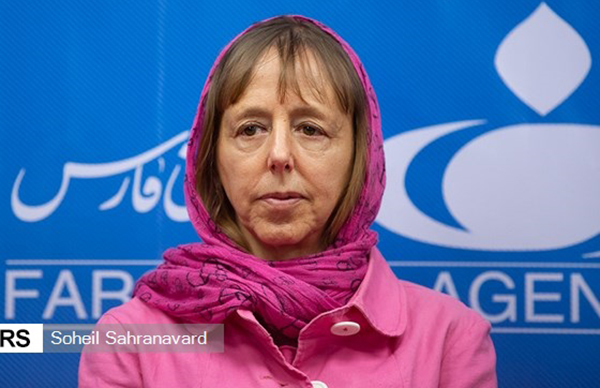
Speaking at a press conference at FNA College of Journalism in Tehran on Tuesday, Medea Benjamin, the co-founder of Codepink: Women for Peace, voiced concern about the relationship between the US congresspersons and the terrorist groups like the MKO.
She underlined that the American people are tired of new wars and conflicts as well as the propaganda launched by the US media and officials against Iran, adding that they are more suspicious of Saudi Arabia’s activities, specially in Yemen, and after the brutal killing of prominent journalist Jamal Khashoggi.
“The American people are also tired of the US government’s unconditional support for Israel,” Benjamin said.
Asked by journalists if they will be troubled when returning from Iran to the US, she said, “We do not know if we will have problem. But when we go back, some of us may undergo questioning.”
Benjamin noted the hospitality of the Iranian people during the visit to Tehran and other Iranian cities and voiced concern over Washington’s inhumane sanctions on Iranian citizens.
The delegation said they have traveled to Tehran to stress the difference in the stances between the American government and people, reiterating that the American people are against their country’s sanctions on Iran.
Banjamin said that the travel ban against the Iranians, the US unilateral sanctions against Iran and the difficulties created for the Iranian people in their access to medicine and different technological goods by the embargoes have upset the Codepink members and many American people.
She said that after returning to the US, the anti-war group will push the US congresspersons and presidential candidates to make efforts to rejoin the 2015 nuclear deal with Iran, adding that the American people want to leave in peace with the world community.
On February 24, Code Pink activists met with Iranian Foreign Minister Mohammad Javad Zarif and students at University of Tehran.
After the meeting, Benjamin criticized Donald Trump for “ramping up confrontation with Iran”.
Also last Wednesday, the US anti-war activists participated in a press conference at Tehran’s Milad Tower where they criticized the US administration for abandoning the multilateral 2015 nuclear deal and re-imposing bans on Iran, saying such a move is the outcome of extensive lobbying by the Israeli and Saudi regimes, America’s staunchest allies in the Middle-East.
Trump unilaterally pulled the US out of the nuclear accord, officially named the Joint Comprehensive Plan of Action (JCPOA), and unleashed the “toughest ever” sanctions against Iran.
Since then, the US has been trying to coerce the Europeans into following its lead and withdrawing from the nuclear accord with Iran.
The MKO, founded in the 1960s, blended elements of Islamism and Stalinism and participated in the overthrow of the US-backed Shah of Iran in 1979. Ahead of the revolution, the MKO conducted attacks and assassinations against both Iranian and western targets.
The group started assassination of the citizens and officials after the revolution in a bid to take control of the newly-established Islamic Republic. It killed several of Iran’s new leaders in the early years after the revolution, including the then President, Mohammad Ali Rajayee, Prime Minister, Mohammad Javad Bahonar and the Judiciary Chief, Mohammad Hossein Beheshti who were killed in bomb attacks by the MKO members in 1981.
The group fled to Iraq in 1986, where it was protected by Saddam Hussein and where it helped the Iraqi dictator suppress Shiite and Kurd uprisings in the country.
The terrorist group joined Saddam’s army during the Iraqi imposed war on Iran (1980-1988) and helped Saddam and killed thousands of Iranian civilians and soldiers during the US-backed Iraqi imposed war on Iran.
Since the 2003 US invasion of Iraq, the group, which now adheres to a pro-free-market philosophy, has been strongly backed by neo-conservatives in the United States, who argued for the MKO to be taken off the US terror list.
The US formally removed the MKO from its list of terror organizations in September 2012, one week after Secretary of State Hillary Clinton sent the US Congress a classified communication about the move. The decision made by Clinton enabled the group to have its assets under the US jurisdiction unfrozen and do business with the American entities, the State Department said in a statement at the time.
In September 2012, the last groups of the MKO terrorists left Camp Ashraf, their main training center in Iraq’s Diyala province. They have been transferred to Camp Liberty. Hundreds of the MKO terrorists have now been sent to Europe, where their names were taken off the blacklist even two years before the US.
The MKO has assassinated over 12,000 Iranians in the last 4 decades. The terrorist group had even killed large numbers of Americans and Europeans in several terror attacks before the 1979 Islamic Revolution.
Some 17,000 Iranians have lost their lives in terror attacks in the 35 years after the Revolution.
Rumors were confirmed in September 2016 about the death of MKO ringleader, Massoud Rajavi, as a former top Saudi intelligence official disclosed in a gaffe during an address to his followers.
Rajavi’s death was revealed after Turki al-Faisal who was attending the MKO annual gathering in Paris made a gaffe and spoke of the terrorist group’s ringleader as the “late Rajavi” twice.
Faced with Faisal’s surprising gaffe, Rajavi’s wife, Maryam, changed her happy face with a complaining gesture and cued the interpreter to be watchful of translation words and exclude the gaffe from the Persian translation.
Documents had shown last year that US National Security Adviser John Bolton received $40,000 to participate and address the audience in a gathering of the MKO terrorist group in Paris in July 2017.
TEHRAN – Television Channel 2 of the Islamic Republic of Iran’s Broadcasting (IRIB) aired a documentary film on an anti-Iran figure famous for his self-proclaimed leaked information against the country, revealing how the country’s intelligence forces had extensive surveillance over him and played him for a long span of time.

Amad News, a website and a Telegram-based news outlet with over one million subscribers, was a glimmer of hope for anti-Iran groups and their financial supporters who are mostly based in Western countries, with its self-proclaimed leaked pieces of information allegedly disclosing “much less known realities” about Iran.
After the Telegram channel of Amad News invited people to use violence and instructed how to assemble Molotov cocktails in last year unrests in a number of Iranian cities, the channel was closed by the social networking platform and the owners of the outlet opened a new one with the new name of Sedaei Mardom. Iran filed a complaint to shut down the new channel on charges of provoking violence, but Telegram’s Russian owner defied the request.
The anti-Iran mouthpiece was founded in 2015 mainly by Ruhollah Zam, the son of an Iranian official of 1990s.
In the documentary made by an Iranian intelligence service and aired by the IRIB’s Channel 2, an insider who had been cooperating with Zam is first identified and detained by the intelligence forces and the collaborator, self-called Alireza and sometimes Hajj Ali, continues his relationship with the head of Amad News.
Alireza had been in touch with Zam, who is known to his audience as Nima, for a long time from his room in Tehran through Whatsapp, and he was found and arrested through monitoring all of Zam’s contacts with his links through the application. Intelligence forces discovered that Alireza happens to be among the most important people in Iran that Zam is in touch with via Whatsapp.
A room in an intelligence organization of Iran is specified to the operation with changes in the decoration so that Nima would feel nothing suspicious. Alireza is still keeping in touch with Zam on a regular basis but this time under round-the-clock surveillance by cameras and microphones of the intelligence forces.
The operation is managed and commanded with a team of scenario writers of the intelligence body who are directing Alireza through this new chapter of his relations with Nima.
The intelligence experts conduct a series of gimmicks to find out more about the depth of Nima’s character and the nuances of his personality.
At first they find out that Nima is thirsty for more attention with more surprising news. They concoct new stories to feed the attention-beggar with fake stuff to see how he would deal with weird stories.
Much to their surprise, the sky is the limit for him and Nima’s obsession with astounding others has blinded him with stupidity. The con man likes fake news and the more fictional, the merrier.
In the film, you can see all the video dialogues of Alireza and Nima via Whatsapp recorded; in one of the scenes, Alireza is dictating a piece of fake news about travel ban to Iran’s central deserts, and Amad News chief hesitates not for even a single moment to release the news immediately on November 22.
During the dialogue, Nima asks Alireza if it is OK to publish the news also on the Asharq Al-Awsat, which shows the close ties between the anti-Iran figure and Saudi-funded media.
However, it is not the first time that the links between anti-Iran elements and Saudi funds is disclosed and, earlier, there were reports about financial supports for the Amad News by entities linked to Saudi Arabia, Israeli intelligence service Mossad, and Turkey.
Seven days later, Nima is fed with another fake news which he again publishes on his outlet, supposing that he has insiders with access to highly classified documents.
This time, Nima surprises his audience with the news that Telegram will be replaced by Elegram by a British national Vasily Dorsiev, a name that you will find no bearer for it online, with zero results in Google. Nima even believes such a big lie, and reassures his followers that he has access to very high secretive information which no one else can verify but he himself.
Little by little, the intelligence experts are more reassured with the fact that Nima is suffering from a malign level of delusions of grandeur.
At a time in the film you can see that Alireza has won Nima’s trust and Zam discloses more of his inner feelings to him.
Once Zam tells Alireza that a Jewish astrologist has told a friend of him that Nima will surely become an important person by the future 22 months. He then calls himself as a sun-like god who is shining and kills those who approach him too much.
Gradually, Zam spins more stuff around this illusion and asks other friends to enquire his fortune from more palm readers and horoscopists.
Music to his ear, Nima hears more of this sort of flattery and is offered more mesmerizing soft soap by friends and manipulators.
With his mind-blowing pieces of news, now Zam has accumulated a high level of reputation for himself among the anti-Iran figures linked to Western intelligence services.
Accordingly, the intelligence commanders and experts involved in the operation decide to find out more about other anti-Iran figures in touch with Zam who are mainly residing in France and the US. They decide to use the newly won fame of Nima, as bait to attract other anti-Iran people.
Alireza asks Nima to establish closer relations with former Iranian president Abolhassen Banisadr who was impeached by the Iranian legislature in June 1981 and fled to Paris the following month.
Banisadr tells Zam that the Islamic Republic of Iran is too strong to be challenged by US’ regime change campaign
Nima calls Banisadr’s office and an appointment is arranged. French security forces escort him to the venue and while he is in a bullet-proof vehicle, he tells Alireza through a video call that bodyguards with machine guns are accompanying him. With his cellphone, he films one of the machine guns and says, “The French intelligence service is perfect.”
After meeting Baniasdr, Nima tells Alireza that guards protecting Baniasdr’s place were shocked with the bodyguards in his company who all carried machine guns, and did not let Nima and his protectors to enter in till a call from superior French security ranks issues the permit. He adds that even Banisadr has lost his hope for regime change in Iran.
He adds that Banisadr has reassured him that the US will never attack Iran and Reza Pahlavi is a minor player with no significance.
Reza Pahlavi, the son of Iran’s last dictator who left the country along with his father in 1979, is another anti-Iran person Nima is asked to get in touch.
Reza Pahlavi, the son of Iran’s former dictator, is described by Zam as an incompetent person under tight control of his mum, the widow of Mohammad Reza Pahlavi
Nima downplays Reza Pahlavi, saying that Pahlavi is under total control of his mother, the widow of the toppled king of Iran, and is regarded as an unimportant pawn in this game.
“Reza Pahlavi is no good even for occupying the post of a governor in a village,”Nima (Zam) says, despising the son of the deposed king.
“I have information from his close buddies, and I know that he even walks at home at nights imagining himself as reviewing Iran’s army,” Nima says, quoting a link named as Yasser.
Nima says that the heir to Iran’s toppled throne has repetitively sent him messages through mediators to ask for help.
In another scene, Pahlavi and Zam are exchanging messages, and Nima asks Pahlavi what his rank and position will be in the post-coup government of the dreaming prince, hoping that the US will help for staging a coup in Iran.
Amir Abbas Fakhravar is another anti-Iran figure Nima talks about in his video calls with Alireza.
Zam: “Nobody likes to sit beside Fakhravar (the right in the photo). He is the most abhorred…”
He says that Fakhravar is the most hated anti-Iran person among the US-backed fellows, adding that he is paid $300,000 per annum for anti-Iran operation.
Zam recounts that a Jewish American is funding Fakhravar, adding that he squanders the whole sum of money with luxurious travels to Washington and other cities with no accomplishment.
Zam brags about his contacts with all anti-Iran figures, and to prove his close ties to Alireza, Nima calls Ardashir Amir Arjmand – the top advisor of Mir-Hossein Moussavi the leader of the 2009 post-election unrests in Iran who is now under house arrest – telling him that he is in Paris and he wants to meet Amir Arjmand.
Amir Arjmand had a destructive role in post-election unrests of 2009 in Iran. Thanks to his brother’s high rank in the terrorist Mojahedin-e Khalq Organization (MKO, also known as MEK, NCRI or PMOI), Amir Arjmand escaped to Iraqi Kurdistan and there he met with French security agents who took him to Paris.
About the status of MKO terrorist group among US-sponsored anti-Iran groups, Zam tells Alireza that Americans have an instrumental approach to the MKO. Nima says that if Americans manage to stage a coup in Iran, they would use MKO for a short period of reign of terror. “They will be tasked with carrying out a flash massacre to kill a few millions in the first phase, and then they will be eliminated,” he adds.
Touching upon Masih Alinejad, Nima says that she is a sentimental and minor role player of no significance.
About his own source of finance, Zam says he and his family were given a bank account upon their arrivcal in France, adding that he is paid 12,000 euros a month through the bank account of his daughter Mahsa by French authorities.
In their long video talks, Alireza asks for Zam’s opinion about other anti-Iran fellows like Noureddin Pirmoazzen, Fatemeh Haqiqatjou, Mohsen Sazgara, Farah Diba, Masih Alinejad, Davoud Kashi, and in most cases, Nima uses pejorative language to describe his fellows as foolhearted idiots, saying that all are his puppets looking up to him.
In another scene, Fakhravar, in a telephone call, tells him that he is looking forward to hearing the latest announcement of the Amad news.
Zam also talks about the network of Western-sponsored media run or presented by Mohammad Hosseini, Bijan Farhoudi, Hassan Shariatmadari, Ali Javanmardi, Hassan Etemadi, and Manouchehr Mohammadi, all the figures who claim to be the noteworthy and at times leader of the opposition of the Islamic Republic.
He boasts in most of the dialogues that all of the media people of anti-Iran networks are lower than him, manipulated by his news.
Early in December, Iranian intelligence experts make up another fake news, concocting that a top secret operation will kick off in Tel Aviv to revive a new monarchy in Tehran with the new king named as Cyrus the Second.
Following that, Nima released the news about operation Cyrus the Second on December 09 with keywords like “Tehran’s Conquest” and the “Big Operation of Restoring Cyrus the Great”. The piece jolts the disintegrated opposition front like a powerful quake with many claiming to be the next king!!!
With the latest fake news on line, all the opposition of the Islamic Republic from Mohammad Hosseini, a TV host who has been nicknamed as the clown of opposition, to Farah Diba the widow of the deposed King Pahlavi and her son Reza Pahlavi start new programs to say that they are part of the operation, informed of it, and even claiming to be the Cyrus the Second.
Pressured to realize US National Security Adviser John Bolton’s dream of preventing Iran from seeing the 40th anniversary of the victory of the Islamic Revolution, Zam was awarded funds to join a big anti-Iran campaign, codenamed as the Hard Winter.
Zam knows himself as the spiritual father of riots in Iran and the leader of the last year’s sporadic protests. He thinks that he can stage a second winter of protests.
In the operation Hard Winter, all anti-Iran people are formed in three ties and all the people involved are promised to be disclosed to the public in future episodes of this documentary by Iranian security bodies. The first tie is called the Council of Media Coordination with ten members.
The tie is comprised of the media people tasked with stirring discontent and unhappiness among the masses of people in Iran.
Ali Javanmardi, a reporter the Voice of America (VOA), is commissioned with stirring disruptions in Iran’s foreign currencies exchange markets through fake news to stir anxiety among the Iranian public. He runs a Telegram channel with objectives to sabotage Iran’s economy, and is stationed in one of Iran’s neighboring counties.
Americans were hopeful to hold the Warsaw conference concurrent with the promised operations of people like Zam inside Iran.
But much to their dismay, all these efforts fruited nothing and the Western funders of the operation got angry.
Following the massive turnout of Iranians in the public rallies of February 11 to mark the 40th anniversary of the victory of the Islamic Revolution, Zam tells Alireza that he is very disappointed and he will turn into husbandry to change his job.
Revealing more of his inner feelings, in another dialogue with Alireza, Nima says that the Islamic Republic of Iran is formidably strengthened.
Angry and disappointed, he says that he was very dispirited how he was treated after he softly criticized Reza Pahlavi. “I found out that these people would hang all our mothers and fathers if they could claim the throne in Tehran.”
Shocked with Iran’s intelligence superiority in dealing with Western-backed groups, Maziar, the technician in charge of supporting anti-Iran media, tells Nima and Alireza that Iran has managed to gain access to all data transactions through Whatsapp and Instagram social media platforms saying that the Iranian security bodies have eventually broken the key codes of these two social media networks.
Disheartened and much concerned, Zam says that all their connection channels are leaked with holes and Iran is exercising surveillance over them.
The Iranian TV has already aired two episodes of the documentary and promised more in coming days.
Founded in the early 1960s, the Mujahedin Khalq Organization (the MKO/ MEK/ PMOI/ the Cult of Rajavi) was the first opposition group to fight against the Shah of Iran. Today, more than half a century after the foundation of the group it is not considered an opposition group anymore. However, it is mostly regarded as a cult-like establishment that opposes the Islamic Republic and is used as a tool to pressure the Iranian government.
In other words, as Mohammad Sahimi asserts, the MEK should be called a “fake opposition”. Muhammad Sahimi, a professor at the University of Southern California in Los Angeles, has been analyzing Iran’s political developments and its nuclear program for 25 years. He labels the entire Iranian opposition groups as “true” and “fake”. He correctly clarifies that a fake opposition is the one that does not enjoy the support of the Iranian public opinion and does supports any position against its nation including sanctions, military attack and so on.
“Two main groups have emerged among the opposition to Iran’s hardliners, both within Iran and in the diaspora,” Sahimi suggests. “One group, the true opposition that includes the reformists, religious-nationalists, secular leftists, various labor groups, human rights activists, and others, believes that it is up to the Iranian people living in Iran how to change the political system in their country. This group is opposed to foreign intervention, particularly by the United States and its allies, the illegal economic sanctions imposed by the United States on Iran, and the constant threats of military confrontation espoused by John Bolton, President Trump’s national security advisor, and other Iran hawks.” [1]
He puts the MEK in the list of the second group: fake oppositions. “Many Iranians refer to the second group as the “fake” opposition,” he writes. “It consists mostly of the monarchists, some ethnic groups, and the Mojahedin-e Khalq (MEK), the exiled group that is universally despised in Iran and was on the State Department’s list of “Foreign Terrorist Organizations” from 1997 until 2011. It is called the “fake” opposition because it supports the economic sanctions and the threat of military attacks, and has completely aligned itself not only with the Trump administration, but also with Saudi Arabia, the United Arab Emirates (UAE), and Israel, and endorses their propaganda against Iran. This group, whose followers are based mostly in the diaspora, acts more like a lobby for convincing the Iranian people to support the Trump-Mohammed bin Salman(MbS)-Benjamin Netanyahu triangle in their confrontation with Iran, rather than as a group supporting the true opposition within Iran for lasting, irreversible, and positive changes in the political system.” [2]
Ann Khodabandeh, former member of the MEK confirms that the group is never a normal opposition, not only because of its anti-national stances but also because of its potential threat as a terrorist entity. Referring to several cases of assassination and death attempts committed by the MEK, she proves that the group is a cult that is engaged in violence and is never responsive to journalists and critics despite all its efforts to take the gesture of a democratic alternative for the Iranian government. “It is a mistake to approach the MEK as a normal opposition,” she writes. [3]
Nonetheless, every now and then we see the American high profiles like John Bolton, Trump’s national security advisor who shout their ardent support for the MEK as their desired Iranian future government. Are they really such naïve to ignore the MEK’s fake face?
Ebrahim Khodabandeh, former member of the MEK and the general director of Nejat Society believes that current leader of the MEK Maryam Rajavi has also an expiration date just like her predecessor Massoud. “The MEK under Maryam Rajavi’s leadership has not met any of her new sponsors’ needs and requirements,” Khodabandeh asserts. “It is time, therefore, for a new face if the MEK is going to be of any value against the Islamic Republic of Iran. We are waiting for her disappearance after that of her husband.” [4]
Mazda Parsi
Sources:
[1] Sahimi, Mohammad, Pompeo, Bolton, and Iran’s “Fake Opposition”, Lobelog, February 6th, 2019.
[2] ibid
[3] Khodabandeh, Ann, It’s a mistake to treat the MEK as a normal opposition group, Iran Interlink, February 27th, 2019.
[4] Khodabandeh, Ebrahim, When would Maryam Rajavi disappear?, Iran Interlink , Feb 28, 2019
Despite the huge propaganda the Mujahedin Khalq Organization (the MKO/ MEK/ PMOI/ the Cult of Rajavi) launched for the Warsaw Summit, the US-led conference was a failure. The MKO leaders who apparently are too optimistic about Trump’s anti Iran policy, made their utmost efforts to exploit the shambolic conference in Warsaw. Alex Ward of VOX accurately asserts that the meeting “was intended to isolate Iran has ended up isolating America instead — highlighting one of the central problems of President Donald Trump’s foreign policy”. [1]
Ward’s assertion was confirmed by several other journalists and experts. Ron Ben YIshai of the YNetNews writes,
“The Warsaw Summit was a mostly failed attempt by the United States to form a broad international coalition to support the Trump administration’s Middle East policies.” [2]
“U.S. officials have been trying to portray the Warsaw Conference as a success for their plans; the concrete results are far from that,” And Saeb Erekat of Haaretz states.
“Just as with other aspects of foreign policy under the Trump administration, its emissaries have exaggerated its results.” [3]
It seems that the dreams of the MKO leaders have shattered by the end of the Warsaw Summit even though they spent a lot of money to nurture their cause in the sidelines of the program. As usual the group rented speaker and participants in front of the conference hall. At the time, Gregg Carlstrom of the Economist wrote on his twitter account,
“The MEK is having a rally in Warsaw where as usual about a third of the crowd is random non-Iranians who’ve been bussed in from Slovakia and can’t read the signs they’re holding”. [4]
Former New York mayor, Giuliani spoke at the MKO’s show to suggest that “peace in the region would only come when Iran was ruled instead by his clients, the National Council of Resistance of Iran”. [5]
It is widely known that Giuliani’s motivation to support a formerly designated terrorist group which has the blood of Americans in its hand, is just financial. “If the MEK were holding an event on the South Pole, Rudy Giuliani would participate,”Ambassador Daniel Benjamin, Director of the John Sloan Dickey Center for International Understanding at Dartmouth College and former Coordinator for Counterterrorism at the State Department, told Newsweek.
“He seems wholly addicted to the group’s honorarium checks, and he refuses to let it bother him that the MEK has American blood on its hands. He is the picture of a man without principle.”[6]
The scandals of the MKO reached their peak when Des Spiegel exposed more revelations about the true nature of the group a few days after the Poland Summit. In order to prepare the report, Luisa Hommerich interviewed a dozen of the MKO defectors in Albania. “Members of the Trump administration have been providing support to a political sect that aims to topple the Iranian regime in Tehran,” she writes.
“Around 2,000 of its members live in a camp in Albania. Former members say it is subjecting followers to torture and psychological terror.” [7]
The report exposes horrific violation of human rights inside the MKO and eventually the author is accused of being the agent of the IR intelligence by the MKO’s political arm, the so-called National Council of Resistance. The main question that should be answered by the MKO leaders is that given that all the evidences and testimonies on the human rights abuses by the MKO are misinformation forged by the Iranian government, what are the group’s achievements in the past forty years?
As soon as Saddam Hussein’s regime was collapsed in 2003, the MKO was disarmed by the US army. As a result it created a big gap in the then isolated structure of the group. A large number of Ashraf residents defected the group. The process of defection has been going on until now that the group is settling in Albania. This is happening despite the severe control and manipulation by the MKO to prevent defection.
Exploring the history of the MKO in the forty years of its existence after the 1979 revolution in Iran, you are not able to find a step forward to the group’s claimed cause which is the overthrow of the Islamic Republic. The only improvement that the group has made during the recent past decades can be seen in the number of its paid supporters. This is in an absolute contrast with the loss in the number of the group’s loyal fighters.
By Mazda Parsi
[1] Ward, Alex, The US held a global summit to isolate Iran. America isolated itself instead, VOX, February 15th, 2019.
[2] Yishai, Ron Ben, Warsaw Summit winners and losers, YNetNews, February 17th, 2019.
[3] Erekat, Saeb, The Arab World Just Trashed Trump’s Mideast ‘Peace’ Plan, Haaretz, February 18th, 2019.
[4] Mackey, Robert, As Giuliani Calls for Regime Change in Iran, Netanyahu Raises the Specter of “War”, The Intercept, February 14th, 2019.
[5] ibid
[6] Maza, Cristina, Trump Lawyer Rudy Giuliani Gives Rally Calling for Iran Regime Change Right Outside Warsaw Middle East Summit Featuring Jared Kushner, Mike Pence, NewsWeek, February 13th, 2019.
[7] Hommerich, Luisa, Prisoners of Their Own Rebellion.The Cult-Like Group Fighting Iran, Spiegel Online, February 18th, 2019.
Iran celebrated the 40th anniversary of its revolution on Monday, with people marching to honour an unexpected victory that birthed the Islamic Republic.

Packed crowds of Iranians were on the streets in Iranian cities to commemorate the sweeping away of the US-backed rule of Shah Mohammad Reza Pahlavi, defying a prediction that few in Iran are in celebration mood considering rising unemployment and inflation exacerbated by US sanctions.
But this was not the only prediction proven false. The celebrations left unfulfilled the latest prophecy of the hawkish US national security advisor John Bolton, who hoped last year “the Ayatollah Khomeini’s 1979 revolution will not last until its fortieth birthday.”
In his speech to a conference of the Mujahedin-e Khalq Organization (MKO), the notorious group behind biggest terror attacks in Iran, Bolton also said they would hold celebrations in Tehran before 2019.
Even at that time, the statement appeared more like a case of wishful thinking.
It’s All Illusion
In fact, the US politicians have long been talking of the Islamic Republic’s imminent demise.
The US pressure campaign against Tehran was launched just months into the revolution, after US officials were convinced the Islamic Republic was not something they could stand.
Western governments could live without Iran’s petrodollars and its highly profitable economic opportunities, but they couldn’t afford to see Mideast people ruled by similar dictatorships to follow in Iranians’ footsteps and copy this model in the region’s oil kingdoms.
Throughout the years since the 1979 revolution, US officials and their propaganda mouthpieces have periodically asserted the Islamic Republic is merely months away from collapse.
In fact, Bolton’s friends at MKO are a big victim of such mentality, losing thousands of forces in a plainly ridiculous operation to take Tehran and other Iranian cities in 1988.
Before them, the former Iraqi dictator Saddam Hussein had tried to bring an end to the Islamic Republic in weeks, taking advantage of Iran’s post-revolutionary chaos in the 1980s.
However, despite generous financial and arms support provided by wealthy Arab governments and the west, the Iraqi war machine failed to achieve tangible achievements after eight years of relentless war.

Manufactured Revolution
The last time we were told the end is near for the Islamic Republic was 2009, when allegations of widespread fraud in the presidential elections that year ignited street protests in Tehran and other cities.
Such claims could hardly be credible, as the victor, Mahmoud Ahmadinejad, had won by an 11-million lead over his nearest rival and it was impossible for him to collude with hundreds of thousands of election organisers to steal so many votes.
But facts were no important to western media and politicians, who portrayed a nation tired of the revolution which had stood up to finish off a decaying regime.
For a few months, the uprising was heroically advancing, and the so-called Green Movement was to take over the country soon.
However, despite the hopes of overexcited commentators in the western press, things didn’t go as their audience would have expected.
With the predictions of the western dreamers proven untrue, then US president Barack Obama appeared to start admitting the reality about Iran, beginning with the recognition of Iran’s right to peaceful atomic energy.
The Obama administration concluded the nuclear deal with Iran and exchanged prisoners with the country, believing that the experience of decades of US hostility towards Tehran provided the Iran problem is not just another nail to be tapped by the strong US hammer.
Illusions Make Comeback
Then Donald Trump came to power and pulled out of the nuclear deal, alleging that his predecessors had not been tough enough with Tehran, mocking Obama for being too soft on Iran.
People inside the new US administration claimed there are many parallels between Iran and the former Soviet Union, believing the current president could play a part similar to former president Ronald Reagan by taking an uncompromising position towards Iran.
Soon, western governments’ propaganda mouthpieces took up the Soviet analogy as their watchword and started repeating a nearly forgotten mantra: Iranians want change.
The narrative was set up skilfully: Iran’s youth, particularly the army of the unemployed, have been hit hard by the economic downturn and other challenges and are fed up with a regime full of mischief.
The western mainstream media’s audience were endlessly told that Iranians have grown wary of the regime’s corruption and are yearning from within for transformation.
According to this narrative, the US and other western governments have a humanitarian duty to intervene and help Iranians realize their hope.

Soviet Analogy in Action
Before the 40th anniversary of the revolution, western media were publishing mountains of commentary and strident headlines raising the familiar theme of Iran’s need for change.
Reuters ran the story of a former judge who is frustrated with the revolution; the Daily Telegraph remembered “horrors” of the post-revolution Iran; and Bloomberg assertedIranians have endured 40 years of “terror, deprivation and cruelty” under the Islamic Republic.
Moreover, the Wall Street Journal said the Revolution has failed to fulfil promises; The Washington Post believed the “decaying” Islamic Republic is “showing its age” and the Christian Science Monitor claimed the country has reached a turning point.
Likewise, Financial Times reported many of those born since the 1979 Revolution want reform, France 24 quoted an expert saying the Iranian state represses its people and deprives them of the country’s wealth, and Deutsche Welle predicted the Islamic Republic is likely to be toppled in the near future.
But the noisy celebrations on Monday showed once again that the stories by narrated the dreamers in the western press and fantasies woven by hawks in the US government have little to do with reality.
The case was too big to ignore, and the western agencies had no choice but to cover the celebrations, although they sought to play down the annual event.
The celebrations were frequently referred to as “state-organized” marches that saw tens of thousands or at best hundreds of thousands of people in Iran’s 31 provinces in attendance.
Pipe Dreams
The reaction of the US government was even more interesting.
Presumably, the size of crowds in the February 11 celebrations could be the first indicator of the success of the so-called “maximum pressure” campaign, designed to bring Iran to its knees.
Trump and Bolton were so annoyed by the popular celebrations that they issued separate messages hours later, with the advisor denouncing the “Iranian regime” which “has failed to fulfil its promises.”
They seem to be convinced that the Iranian government is vulnerable to collapse and tough US sanctions could hasten its demise.
But Iran has been under sanctions for over forty years. Why should we believe the new round of US sanctions will bring a collapse of the Islamic Republic now?
The reason why the Islamic Republic survives such undue pressure is a story for another day, but it seems safe to conclude that the current US pressure campaign is doomed.
There is no doubt that the Iranian government faces a series of unnerving domestic and foreign challenges. But the 40-year-old Islamic Republic is different from the one that emerged in 1979.
Iran has now secured itself, boosted its regional influence and established a buffer zone between its borders and hostile powers.
It has grown domestically, too, trying to keep up with a dynamic society.
More importantly, many Iranians are now convinced they have to stand on their feet and bear US pressures, having experienced first-hand that the US is a hopeless case.
Alireza Hashemi, Iran Front Page,
Alireza Hashemi is an Iranian political journalist with several years of experince working for Iran’s English and Persian-Language media who regularly contributes to IFPnews. He previosly served as a staff writer at Financial Tribune.
RUDY GIULIANI, the former mayor of New York City who now serves as President Donald Trump’s personal lawyer, called for the overthrow of Iran’s government on Wednesday during a rally in Poland staged by a cult-like group of Iranian exiles who pay him to represent them.
Speaking outside the Warsaw venue for an international conference on the Middle East attended by U.S. Secretary of State Mike Pompeo and Israeli Prime Minister Benjamin Netanyahu, Giuliani said that his message for the 65 governments discussing ways to confront Iran was simple. “The theocratic dictatorship in Tehran,” Giuliani said, “must end and end quickly.”
Former NY Mayor @RudyGiuliani in Warsaw:
In order to have peace & security in the Mid-East there has to be a major change in the theocratic dictatorship in #Iran. It must end & end quickly in order to have stability#FreeIranWithMaryamRajavi#PolandSummit#IStandWithMaryamRajavi pic.twitter.com/aKafMjxq4k
— NCRI-FAC (@iran_policy) February 13, 2019
Giuliani went on to suggest that peace in the region would only come when Iran was ruled instead by his clients, the National Council of Resistance of Iran, an exile group of former terrorists also known as the Mojahedin-e Khalq, or People’s Mujahedin. The group’s leader, Maryam Rajavi, already refers to herself as “President-elect.”
.@RudyGiuliani: We have seen regime change work & fail. In #Iran’s case we don’t have to worry. There is a viable alternative. Maryam Rajavi’s 10-point plan stands for a #FreeIran w/ a democratically-elected Gov instead of a tyrant/monarch.#FreeIranWithMaryamRajavi #WarsawSummit pic.twitter.com/EFJHIw2WUV
— NCRI-FAC (@iran_policy) February 13, 2019
Off-stage, the U.S. president’s lawyer admitted that he was paid by the exile group, but stressed to reporters that he was in Warsaw on behalf of the MEK in his personal capacity and would not be attending the diplomatic conference organized by the State Department.
Even before the conference began, the Israeli prime minister appeared to shrug off efforts by the State Department and the Polish government to portray the gathering as broadly focused on Middle East peace, describing it as primarily a meeting of Iran’s enemies.
In video posted on the prime minister’s official Twitter feed, Netanyahu characterized a meeting with Oman’s foreign minister as “excellent,” and one focused on “additional steps we can take together with the countries of the region in order to advance common interests.”
According to the English translation of Netanyahu’s remarks in Hebrew prepared by his office, the prime minister then added: “What is important about this meeting — and it is not in secret because there are many of those — is that this is an open meeting with representatives of leading Arab countries that are sitting down together with Israel in order to advance the common interest of war with Iran.”
Netanyahu’s use of the word “war” seemed to throw Israel’s diplomatic corps into chaos. Within minutes, as journalists speculated that the prime minister’s office might have mistranslated his comment, Netanyahu’s spokesperson to the Arab media, Ofir Gendelman, wrote that the Israeli leader had described his nation’s common interest with Arab nations as “combatting Iran,” not “war with Iran.”
The subtitled video produced by the prime minister’s office was then deleted from his Twitter feed and replaced with the text of Gendelman’s alternative translation.
As my colleague Talya Cooper explains, however, Netanyahu did in fact use the Hebrew word for “war” in the video, which has not yet been deleted from his Hebrew-language YouTube channel. In a separate video, posted by Netanyahu’s office on Facebook earlier in the day, the prime minister had used the Hebrew word for “combat.”
Aron Heller, an Associated Press correspondent based in Jerusalem, also filmed the remarks and reported that although Netanyahu had mentioned “war,” his office said later that he was referring to “combatting Iran.”
Did @netanyahu really say “war” with Iran? I was there and the word was ”milchama” = war. pic.twitter.com/ZzhrDs2lWA
— Aron Heller (@aronhellerap) February 13, 2019
Iran’s foreign minister, Mohammad Javad Zarif, seized on the Israeli leader’s apparent Freudian slip as evidence that Netanyahu’s true aim of provoking a war with Iran was now out in the open
We’ve always known Netanyahu’s illusions. Now, the world – and those attending #WarsawCircus – know, too pic.twitter.com/0TSDzIak9e
— Javad Zarif (@JZarif) February 13, 2019
Zarif also suggested that the Trump administration and the exiles of the MEK might have been behind a suicide bombing on a bus in southeastern Iran on Wednesday, which killed 41 members of the Islamic Revolutionary Guards Corps.
“Is it no coincidence that Iran is hit by terror on the very day that #WarsawCircus begins?” Zarif tweeted. “Especially when cohorts of same terrorists cheer it from Warsaw streets & support it with twitter bots? US seems to always make the same wrong choices, but expect different results.”
The foreign minister was clearly referring to the MEK, which spent three decades trying to achieve regime change in Iran through violence, including terrorist attacks. The well-funded exile group was also suspected of being behind social media trickery discovered by the BBC, which reported that Twitter bots had been deployed “to artificially create a trend which hints at popular support for the summit and — by extension — widespread resentment towards the Iranian establishment.”
The Iranian exiles have been caught in the past paying nonsupporters to fill out its crowds at rallies, a tactic reportedly used at the event in Warsaw on Wednesday, according to journalists on the ground.
The MEK is having a rally in Warsaw where as usual about a third of the crowd is random non-Iranians who’ve been bussed in from Slovakia and can’t read the signs they’re holding pic.twitter.com/NnJyqMxnEY
— Gregg Carlstrom (@glcarlstrom) February 13, 2019
Spoke to journalist in #WarsawSummit. He had attended the MEK terrorist org’s rally. Many of the”demonstartors”were Slovak high school kids who couldnt really provide an answer as to why they were there.
Just as the MEK buys bots on Twitter, they do so in real life as well…
— Trita Parsi (@tparsi) February 13, 2019
Members of the MEK helped foment the 1979 Iranian revolution, in part by killing American civilians working in Tehran, but the group then lost a struggle for power to the Islamists. With its leadership forced to flee Iran in 1981, the MEK’s members set up a government-in-exile in France and established a military base in Iraq, where they were given arms and training by Saddam Hussein as part of a strategy to destabilize the government in Tehran that he was at war with.
In recent years, as The Intercept has reported, the MEK has poured millions of dollars into reinventing itself as a moderate political group ready to take power in Iran if Western-backed regime change ever takes place. To that end, it lobbied successfully to be removed from the State Department’s list of foreign terrorist organizations in 2012. The Iranian exiles achieved this over the apparent opposition of then-Secretary of State Hillary Clinton, in part by paying a long list of former U.S. officials from both parties hefty speaking fees of between $10,000 to $50,000 for hymns of praise.
Despite the claims of paid spokespeople like Giuliani and John Bolton — who predicted regime change would come at a lavish MEK rally in Paris just months before being named Trump’s national security adviser — the MEK appears to be as unprepared to take power in Iran as Ahmad Chalabi’s exiled Iraqi National Congress was after the American invasion of Iraq.
#JohnBolton 8 months ago among MEK supporters tells them they will overthrow #Iran’s regime and celebrate in #Tehran with Bolton himself present, “before 2019” pic.twitter.com/H7oaaU3faU
— Bahman Kalbasi (@BahmanKalbasi) March 22, 2018
Ariane Tabatabai, a Georgetown University scholar, has argued that the “cult-like dissident group” — whose married members were reportedly forced to divorce and take a vow of lifelong celibacy — “has no viable chance of seizing power in Iran.”
If the current government is not Iranians’ first choice for a government, the MEK is not even their last — and for good reason. The MEK supported Saddam Hussein during the Iran-Iraq War. The people’s discontent with the Iranian government at that time did not translate into their supporting an external enemy that was firing Scuds into Tehran, using chemical weapons and killing hundreds of thousands of Iranians, including many civilians. Today, the MEK is viewed negatively by most Iranians, who would prefer to maintain the status quo than rush to the arms of what they consider a corrupt, criminal cult.
Despite such doubts, spending lavishly on paid endorsements has earned the MEK a bipartisan roster of Washington politicians willing to sign up as supporters. At a gala in 2016, Bolton was joined in singing the group’s praises by another former U.N. ambassador, Bill Richardson; a former attorney general, Michael Mukasey; the former State Department spokesperson P.J. Crowley; the former Homeland Security adviser Frances Townsend; the former Rep. Patrick Kennedy, D-R.I.; and the former Vermont Gov. Howard Dean. That Paris gala was hosted by Linda Chavez, a former Reagan administration official, and headlined by Newt Gingrich, the former speaker who was under consideration to be Trump’s running mate at the time.
Fears about Bolton’s apparently open desire to start a war with Iran have been exacerbated by his boosting of the MEK and his steadfast denial of the catastrophe unleashed by the invasion of Iraq that he worked for as a member of the Bush administration. Last year, when Fox News host Tucker Carlson pointed out that Bolton had called for regime change in Iraq, Libya, Iran, and Syria, and the first of those had been “a disaster,” Bolton disagreed.
“I think the overthrow of Saddam Hussein, that military action, was a resounding success,” Bolton insisted to Carlson. The chaos that followed in Iraq, he said, was caused by a poorly executed occupation that ended too soon. On the bright side, Bolton said, the mistakes the U.S. made in Iraq offered “lessons about what to do after a regime is overthrown” in the future.
Earlier this week, Sen. Chris Murphy warned that Bolton appeared to be laying the groundwork for war in a belligerent video message from the White House to mark the 40th anniversary of the Iranian revolution.
Here Bolton says Iran is seeking nuclear weapons. This simply isn’t true. The intelligence says the opposite and he knows it. He is laying the groundwork for war and we all must be vigilant. https://t.co/1zHR5vaEGn
— Chris Murphy (@ChrisMurphyCT) February 12, 2019
Another strong supporter of the disastrous U.S. invasion of Iraq was Netanyahu, who, between terms as prime minister, testified to Congress on Sept. 12, 2002 as a private citizen, and advised lawmakers that attacking Iraq would be wise.
A review of Netanyahu’s 2002 testimony — in which he said, “I think the choice of Iraq is a good choice, it’s the right choice” — reveals that he linked his strong support for a United States invasion of Iraq to topple Saddam Hussein with the possibility of inspiring the implosion of the ruling theocracy in neighboring Iran.
“It’s not a question of whether Iraq’s regime should be taken out but when should it be taken out; it’s not a question of whether you’d like to see a regime change in Iran but how to achieve it,” Netanyahu said then. “If you take out Saddam, Saddam’s regime, I guarantee you that it will have enormous positive reverberations on the region. And I think that people sitting right next door in Iran, young people, and many others, will say the time of such regimes, of such despots is gone.”
“If you take out Saddam,”Netanyahu told Congress in 2002,”I guarantee you that it will have enormous positive reverberations on the region. And I think that people sitting right next door in Iran… will say the time of such regimes, of such despots is gone.”pic.twitter.com/ZNTxpSP3a2
— Robert Mackey (@RobertMackey) February 14, 2019
Updated: Feb. 14, 2019
This article was updated to include Congressional testimony from Benjamin Netanyahu on Sept. 12, 2002, in which he advocated a U.S. invasion of Iraq.
Robert Mackey, The Intercept,
During the past decade, the Mujahedin Khalq Organization (the MKO/ MEK/ PMOI/ the Cult of Rajavi) has been notoriously known for its deep pockets to donate the US high profiles for their lobbying campaign to advocate the group against the Iranian government. However, the group’s multi-million dollar contributions are not restricted to the US. The Spanish political party, Vox has recently been in the limelight for receiving donations from the MKO. In addition, the group has paid hefty sums to Spanish politicians for speaking on behalf of the group in its gatherings.
“The so-called National Council of Resistance of Iran (NCRI), is under the spotlight for having financed the campaign of Vox in the European elections of 2014,” El Confidencial reported. “This Iranian sect, whose members live confined in a camp in Albania, it also counted on the participation of other former Spanish high-ranking officials in its conferences.” [1]
However, El Confidencial asserts that the US politicians have been the favorite political figures to receive MKO’s money.
“Rudolph Giuliani, former mayor of New York, still charged 150,000 euros or 200,000 more expenses. Bill Richardson, former governor of New Mexico, between 75,000 and 100,000 euros, ”El Confidencial cites a person who has collaborated in the organization. “The cache of Spanish politicians is lower, perhaps 50,000 euros or less, for a former president, according to industry sources.” [2]
The MKO’s lavish funding of Western politicians is their unfailing tactic to cultivate sponsors. As they could manage to gain the support of John Bolton and Rudy Giuliani. The Spanish journalist explains how the tactic works in his country. “For Iranian dissident it was a way to make high-level contacts,” he suggests.
“They say that they did not supervise the speech and did ask for a previous meeting in Madrid to explain their plans and their movement. The ex-politicians converted into lecturers accepted without asking much about the origin of the funds, which, according to most specialists, come largely from Saudi Arabia, in addition to the donations of their followers and other sources of support.” [3]
Robert Fantina of the Counter Punch sees the threat of the MKO’s presence in another part of Europe: France. “At present, there are two groups active in France,” he asserts.
“One is known as the ‘Yellow Vests’ an informal organization that started to protest an increase in fuel taxes, and expanded to oppose a wide range of practices of the government of president Emmanuel Macron that are seen as detrimental to the public. There was no well-established plan and no recognized leader. The second organization is the MEK (Mujahideen-e Khalq), a terrorist organization that seeks the overthrow of the Iranian government. MEK members have been responsible for the deaths of thousands of innocent people.” [4]
Fantina believes that by sheltering the MKO, the French government is following the American hypocrisy.
“France, one of the signatories of the Joint Comprehensive Plan of Action, condemned the U.S. withdrawal from this international agreement, and French government officials are looking for a means to circumvent the threatened US sanctions if its corporations continue to do business with Iran,” he writes. “Yet they support a terrorist organization whose sole purpose is the overthrow of the Iranian government.” [5]
Fantina advises the French government to be clear on its stance towards Iran emphasizing on the decline of US’s power and influence in the international politics. He points out that the many nations are seeking ways to continue trading with Iran despite the US sanctions.
“The fact that several nations are looking for ways around his threatened sanctions is in itself a good sign, one that is indicative of dwindling US power and influence,” he writes. “While France praises the terrorist MEK, it also seeks ways of continuing to trade with Iran.” [6]
Today, 40 years after the Iranian Revolution, It is not hard to understand the root and legacy of Iranian hatred towards the West. Even, Thamar E.Gindin, the pro-Israel activist confirms that the MKO is one of the reasons of the Iranians’ concern over the Western interference in their country. She investigates the roots of such a resentment. In his recent article titled “Understanding ‘Nofuzophobia”, he correctly accomplishes that most Iranians embrace Western culture but
“they do remain apprehensive about foreign political involvement and interference”. “One of the fears expressed by many Iranians, people who detest the current regime but do not take active measures to overthrow it, is that because there is no clear alternative, they are afraid the West would interfere again and impose a regime they don’t want, such as the Mojahedin-e Khalq (MEK)—the People’s Mojahedin Organization of Iran, an Iranian opposition group favored by the West,” he writes. [7]
Thus, Western governments should take it into consideration that the Iranians want to stop their reckless policies regarding the terrorist cult-like MKO. Otherwise, the European countries may be haunted by the cells of terrorist extremists of the MKO someday.
By Mazda Parsi
References:
[1] El Confidencial, Aznar, Zapatero … The other politicians financed by terrorists, January 16, 2019.
[2] ibid
[3] ibid
[4] Fantina, Robert, France, Yellow Vests and the MEK, Counter Punch, January 25, 2019.
[5] ibid
[6] ibid
[7]E. Gindin, Thamar, Understanding ‘Nofuzophobia’, The roots and legacy of Iranian resentment of the West, part of a weeklong look at 40 years of the revolution, Tabletmag.com, January 17, 2019.
John Bolton is carefully uniting an unholy alliance of terrorist groups who all share one goal: opposition to Iran
In 1978, President Carter’s National Security Advisor, Zbignew Brzezinski, decided to use the Muslim Brotherhood against the Soviets, and sent Arab combatants to support the Afghan opposition against the Communist regime. Responding to a call for help from the Afghan government, the Red Army became bogged down in an unwinnable conflict.
In Afghanistan, the Muslim Brotherhood was not armed by the CIA, who were unable to obtain the authorization from Congress for an operation of that magnitude, but by Israel. In view of their success, the Arab-Afghans were later mobilized in many other theatres of operation. It followed, amongst other things, that the Brotherhood, armed both by Israel and Iraq, took a shot at the Syrian Arab Republic, in 1978-82. One thing leading to another, a representative of the Brotherhood was incorporated into the staff of NATO during the attack in Kosovo against Yugoslavia.
The position of the Muslim Brotherhood as auxiliary troops for NATO was canceled at the end of the Clinton presidency, but the collaboration of the Brotherhood with the CIA has never been terminated. It was clearly re-instated with the attack on Libya under the Obama presidency, where it furnished almost all of the ground troops for the Atlantic Alliance. One of their representatives was even incorporated into the U.S. National Security Council. Then, during the attack on Syria, NATO’s LandCom, situated in Izmir, coordinated the jihadist troops.
Since the Trump administration opposes on principle the use of terrorist groups by U.S. military, the moment arrived for the White House to redefine the role of the Muslim Brotherhood.
We do not yet know the new strategy defined by National Security Advisor John Bolton. However, several elements enable us to guess its general form.
Daesh
At the beginning of 2018, U.S. Special Forces illegally stationed in Syria exfiltrated thousands of Daesh (ISIS) combatants overseas. In May 2018, General Yahya Rahim Safavi, military advisor to Ayatollah Khamenei, accused the U.S. of organizing the transfer of Daesh combatants to Afghanistan.
Currently, approximately 7,000 of them are still on Afghani soil. Contrary to their past position, they do not support the Taliban, who are currently opposed to all foreign presence, but now oppose them.
According to the spokesman for the Islamic Emirate of Afghanistan (in other words the Taliban), Qari Muhammad Yousuf Ahmadi,
The American invaders and their lackeys carried out a raid last night [12 January 2019] against a Mujahedin camp where members of Daesh were being held, situated in Pani Bus in the district of Jwand, Bâdghîs province. The joint enemy forces martyred two guards and left with 40 Daesh-affiliated prisoners. Apparently, the American invaders and their henchmen from the Kabul administration launched this raid in order to help the Daesh prisoners. Every time the Mujahedin of the Islamic Emirate [the Taliban] have fought Daesh, the American invaders have assisted Daesh and bombed Mujahedin positions. Exactly the same way that when Daesh was uprooted by the Mujahedin of Darzab, in the district of Jowzjan, and was about to be destroyed [last August], the American invaders and the Kabul administration jointly assisted 200 members of Daesh by helicopter.”
It was at this moment that the Combating Terrorism Center of the Military Academy of West Point published a historical study of the divergences between the Mujahedin during the war against the Soviets. This document noted that in 1989, during the retreat of the Red Army, and when Osama Bin Laden had returned to Saudi Arabia, certain young members of the Muslim Brotherhood questioned the laxism of their senior officers. They created the “Jalalabad School”, which was much more strict, and began to accuse various people of impiety and excommunicated them (takfir). This, they say, is the conflict that blew up again in 2014, provoking the split between al-Qaida and Daesh.
This flashback should not blind us to the fact that the Muslim Brotherhood continued to welcome not only the Taliban but all Afghani resistants, until the assassination of Ahmed Chah Massoud (himself an ex-member of the Muslim Brotherhood), on September 9, 2001 (two days before the attacks of New York and the Pentagon). For two decades, Afghanistan became the training ground for jihadists from all over the world, particularly the combatants from the Russian Caucasus. Today the Taliban are much more careful with their choice of allies and their friends. It is true that today they control 60 % of the territory. They no longer base themselves on theological grounds, but on nationalist criteria.
During the war against the Soviets, the Muslim Brotherhood were mainly aligned with ex-Prime Minister Gulbuddin Hekmatyar, who was their representative in the country. On 22 September 2016, with the support of the Obama administration, he was awarded the pardon of the new Afghan state and was removed from the UN list of terrorists.
The arrival of Daesh in Afghanistan occurred at the time when the Trump administration had been trying – since July 2018 – to negotiate with the Taliban. Preliminary contacts took place in Qatar with ambassador Alice Wells, assistant to Mike Pompeo for Central Asia. The negotiations were headed by ambassador Zalmay Khalilzad in September and October, despite the anxiety of the Afghan government, which sent a representative but were not admitted. Khalilzad had fought alongside the Talibans, Pachtuns like himself, against the Soviets, before taking US citizenship. He was trained in neoconservatism and became ambassador to the UNO in 2007, when the Senate opposed the nomination of John Bolton.
The People’s Mujaheddin
Last week, the head of the People’s Mujaheddin (MEK) of Iran, Maryam Radjavi, traveled to Kabul on an official visit, from Tirana, where she lives. She met specifically with the President of the National Security Council and ex-ambassador to the United States, Hamdullah Mohib. Within the next few days, she should be traveling to Herat, in the district of Shindand, to establish a military base for her organization. According to the Pakistani newspaper Ummat, the Pentagon has already trained 2,000 of the People’s Mujahedin there, in October 2012.
Despite their apparent similarity in name, there is no connection between the Mujahedin (with one d) of the Muslim Brotherhood (who are Arabs and Sunnis) and the Mujaheddin (with two d’s) of the MEK (who are Persian). The only objective link between the two groups is that they have both been used by the United States and both practice terrorism.
As from 2013, the MEK has been transferred from Iraq to Albania with the support of the United States. A small town has been built for them by Israeli companies. However, on 23 June 2014, Maryam Radjavi, in a long speech given before 80,000 members of the sect and 600 Western personalities, spoke of her satisfaction that Iraq had been conquered by Daesh. We should remember that this victory had been organized with the help of General Ezzat Ibrahim al-Douri, ex-right-hand man for President Saddam Hussein, and as such, protector of the People’s Mujahedin.
John Bolton’s links with the MEK date back to the Bush administration. They were strengthened by his presence – for a price of 40,000 dollars – during their annual meetings at Villepinte (France), in 2010 and 2017. Having become the National Security Advisor, he now unites the jihadists from Daesh and the loyal followers of Maryam Radjavi against their common objective.
The most immediate of the targets of this terrorist is Iran, with whom Afghanistan shares a long frontier, hard to defend.
Thierry Meyssan is a political consultant, President-founder of the Réseau Voltaire (Voltaire Network). His latest work in French is Sous nos Yeux. Du 11-Septembre à Donald Trump (Right Before our Eyes. From 9/11 to Donald Trump).
Thierry Meyssan, Mint Press News
While we have been focused on domestic politics, some of what this Administration has been doing abroad poses serious risks. The Administration has been trying to make Iran the devil behind everything we don’t like and threats have been flying back and forth. That has many of us concerned about where we are going.
The MEK has been the darling of the Administration as a potential successor to the mullahs because they both dislike the Iranian regime. Never mind that the MEK objected when Khomeini decided to release the hostages, that it has been a terrorist organization and killed Americans. Never mind that it has no support in Iran because it backed Iraq against Iran in a war that left 300,000 Iranians dead, and never mind that human rights organizations have documented its abuses. Never mind that Iranians despise the MEK’s version of Islam because it is “worse than the current mullahs.” But it is apparently enough that it dislikes the mullahs regardless of what might happen if they actually tried to take power in Iran, mirroring the tragedy of the second Bush war with Iraq.
Our handling of Iran is both juvenile and dangerous.
We, in this country, are very upset that Russia may have interfered in our elections. Yet we behave dismissively about the American engineered coup d’etat that removed the democratically selected prime minister of Iran and brought the Shah back.
That was a while ago but it led directly to the taking of hostages 26 years later. Everyone in Iran knew that American staff inside the Embassy had reorganized a failed coup d’etat, ended democratic government and brought monarchy back. So yes, the Iranians violated international norms by storming and seizing the Embassy, but would we do less if we believed that Russia was organizing a coup in their Washington embassy? Or would it have been our patriotic duty to stop it by any means necessary?
Yet all the enmity between Iran and the US stems from those two events and we don’t seem to be able to get past it. Iran tried on several occasions to reestablish a decent relationship with the US. It offered to negotiate the full panoply of differences between us. But no president before Obama was willing to deal with them. It was considered unpatriotic even to talk with Iran.
We changed the balance of power in the Middle East by defeating Iraq, leaving Iran the sole major local power and target because power in the region had become unbalanced. This country then worked to complete their local isolation, refusing to include them in regional meetings and arrangements. Their relationship with Israel had been fine and productive until we tried to squeeze them out. Like Germany in NATO, Iran could easily have been included in regional security arrangements. It could and would have become a much better friend than the likes of the Saudis.
But we got furious at every step, shaking fists, making threats, even threatening war, instead of using our heads to create a peaceful Middle East. It’s been much like a fight between kids in a sandbox except that all the kids have powerful weapons. Some presidents need to grow up, for the sake of our fellow citizens.
Tyrants want enemies to vilify in order to unite the country behind them instead of against them. It’s also a distraction from the embarrassments of domestic politics. But warlike behavior can get out of hand, leading some young men to their deaths and families to become refugees. Getting people to unite behind an unpopular president is a sick reason for people to go to their deaths.
Steve Gottlieb’s latest book is Unfit for Democracy: The Roberts Court and The Breakdown of American Politics. He is the Jay and Ruth Caplan Distinguished Professor Emeritus at Albany Law School, served on the New York Civil Liberties Union board, on the New York Advisory Committee to the U.S. Civil Rights Commission, and as a US Peace Corps Volunteer in Iran.
Stephen Gottlieb, WAMC, Morning Edition,