
Hardly anyone doubts that al-Qaeda perpetrated 11 September attacks had a great impact on Mojahedin-e Khalq Organization, or Mojahedin cult, to make a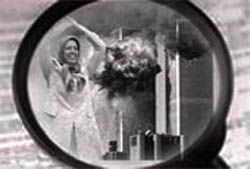 shift in its terrorist conducts. The global reaction against the attacks and a shown decisiveness to combat against the abominable phenomena of terrorism made MKO to denounce armed activity if not in nature but provisionally in words.
The US invasion of Iraq as 9/11’s aftermath and the consequent fall of Saddam actually deprived MKO of a bountiful, reliable strategic ally. Not only Saddam granted Mojahedin soil and abode, but also supplied them with logistics and arms, espionage equipments, training and abundant dollars. In fact, Mojahedin’s greatest enthusiasm to overthrow the Iranian regime came all from Saddam’s support. Saddam’s fall absolutely disappointed MKO of further availability of the precious opportunity that destined the group’s survival or demise.
The global war on terrorism turns to be an internationally sensitive issue at the present. Consequently, Mojahedin had to start a new phase to avoid coming under the central focus of anti-terrorism moves as well as enabling them to take a different step and a new democratic array in its struggle against the Islamic Republic. It was impossible unless Mojahedin could be adopted inside a new sphere of power and influence that was dominating the region. Fortunate enough for Mojahedin, the long friction between the new authoritative power in Iraq and Iran’s ruling power was at its climax.
But there existed an impediment; MKO was on the State Department’s FTO since it was initiated. Now the blacklisted group had to convince the invader-host that it no more advocated armed and aggressive means and sought democratic approaches. The first steps were taken by its novel proposition of the “third option” and establishment of a “Solidarity Front”. Such moves were much the outcome of its lost military equipments and potentialities that were indispensables of armed struggle rather than a fundamental shift to democracy in its strategy of struggle.
The ECJ’s lower court ruling wherein it was stated that MKO had denounced terrorist deeds since June 2001 emboldened the group to start an overall propaganda blitz to get rid of the terrorist tag and draw supports especially among the Americans. However, neither the US nor the EU paid were duped by what they concluded to be a new tactic by a terrorist group. One of the reasons contradicting MEK’s claim of renouncing terrorist activities since June 2001 was presented by the State Department’s April 30 report releasing the list of designated terrorist organizations:
In 2003, French authorities arrested 160 MEK members at operational bases they believed the MEK was using to coordinate financing and planning for terrorist attacks. Upon the arrest of MEK leader Maryam Rajavi, MEK members took to Paris’ streets and engaged in self-immolation. French authorities eventually released Rajavi.”[Rajavi was released on bail and is currently awaiting trial on terrorism charges].
Furthermore, in an unprecedented move, the report branded MKO as a “cult of personality”. It happened at a time when Mojahedin eluded to show a clear position concerning 9/11 plots and maintained a meaningful silence over a most lambasted terrorist deed that exemplified the highest threat of terrorism which demanded a global move to confront. Developing a deep comprehension of Mojahedin’s terrorist nature, America is well aware that MKO cannot change a terrorist mentality it has preserved for nearly forty years. As asserted in the State Department’s report, MEK leadership and members across the world maintain the capacity and will to commit terrorist acts in Europe, the Middle East, the United State, Canada, and beyond.
MKO seems to be the sole terrorist group on the State Department’s list that has been carefully scrutinized to be found that it would undergo no fundamental and strategic change unless it reconsidered its ideology whose infrastructure is aggressive confrontation of global imperialism embodied in America. Thus, MKO’s refuge in liberalism stronghold in no way indicates that it has submitted to an ideological shift but rather parlaying circumstantial opportunities to break out of its complete isolation, a result of a universal combat against terrorism, from the political stage.
Americans in particular and the West in general have discerned that although al-Qaeda and Mojahedin-e Khalq show slight differences in interpretation of Islam, in contrast to al-Qaeda, Mojahedin appear more dogmatic in confrontation of America, the West, and the camp of capitalism. Once al-Qaeda formed a short-lasting alliance with America against the threat of communism in the world of Islam; Mojahedin, because of its ideological collectivity, played the same role for the camp of socialism.
Mojahedin’s immediate, explicit reaction to al-Qaeda’s terrorist attacks was its extravagant banquet and cries of jubilance at Camp Ashraf. Instead of taking a strong position against al-Qaeda operations at least as a proof of their own claims of renunciation of terrorism, Mojahedin began condemning Iranian regime and proposing seemingly pro-democratic solutions in a new turn of phony democratic struggle after long advocating the violent overthrow of the clerical regime. Before going any further in propagation of democracy, to convince the suspicious eyes surveying their slightest terrorist attitudes, Mojahedin should have a revision of their ideological bigotry and exhibit a clear stance toward the globally despised terrorist al-Qaeda.
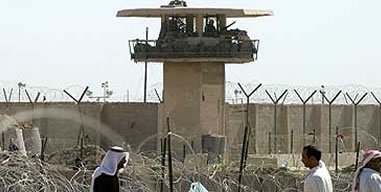 is also known to be the ideological preserver of the organization and a micro society upon which it intends to build the future Iranian society. Thus, whatever the organization suggests for Iran has to have been already tested within its miniature model of promised utopia, Camp Ashraf.
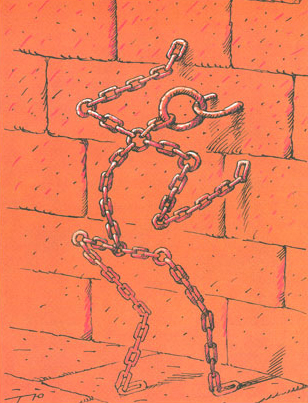 In his first organizational gathering after the initiation of the ideological revolution, Massoud Rajavi in depiction of the process to arrive at the intended utopia said: “All the discoveries are first made in a laboratory before being generalized. I hope we bring this wave to the surface of the society in the near future”. Of course, he meant his novel, unprecedented discoveries through an unconventional internal revolution that totally discarded traditional social values.
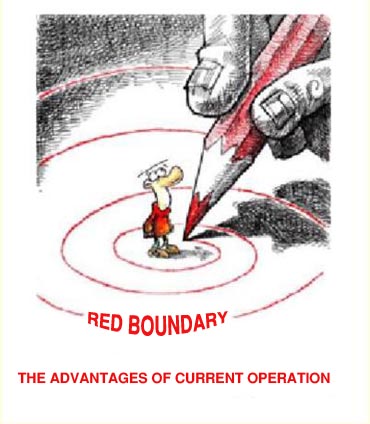 recruits so as not to make a free approval and disapproval of the cult they are invited to join. If the targets are to join and exist in the cult, they must conform to the rules even if they are not privately accepted. Once joined, the targets have to conform to the cult’s standards regardless of having developed an awareness of the existing discrepancy between personal and social standards and those of the cult’s.
 Mojahedin began their military operations in August 1971. Their first operations were designed to disrupt the extravagant celebrations of the 25-century anniversary of the monarchy. SAVAK [the Monarchy’s security-information apparatus] through one of the old member of Tudeh party, who was recruited by them, could infiltrate into Mojahedin and soon was able to arrest another sixty-six members. In the subsequent months, the group lost the whole of its original leadership through executions or street battles. 1
 Taking refuge in France, the Iranian Mojahedin-e Khalq Organization has shown its cult potentiality and to mobilize people for multiple protest demonstrations. In the course of Iran-US football match in Lyon in 1998, for example, and the visits of Iranian key officials to France, notably that of President Khatami in 1999 and Iranian members of parliament in February, 2001, the organization demonstrated the degree of its mass mobilizing threats that alarmed France. Reported by Associated Press, 21 June 1998, quoting some French authorities talking about some taken security measures before Iran-US football match, we read: