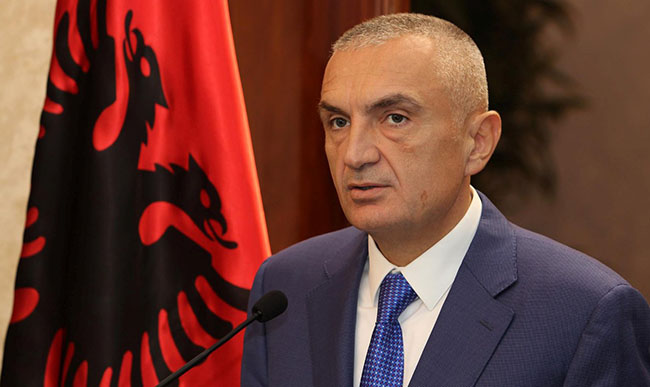
Open letter by former MEK member, Reza Sadeghi Jaballi to Albanian President Ilir Meta
My name is Reza Sadeghi Jaballi. I am a former member of the MEK and a human rights activist living in Brussels. On June 1981, I was shot and later arrested by the Iranian security services and spent five years in prison in Iran including of two years in solitary confinement. Once freed, I left Iran and worked in the MEK’s financial section in Canada and the United States. I also spent many years in the MEK’s military garrison Camp Ashraf in Iraq.
Recently you visited the MEK Camp in Tirana. As a former member, I would like to bring to your attention that the latest EU-Western Balkans Ministerial Forum on Justice and Home Affairs, held in Tirana in October 2018, recognized that terrorism and radicalization remain a common challenge for the European Union and the Western Balkan region.
The ministers representing the European Union, signed the Joint Action Plan on Counter Terrorism for the Western Balkans. It calls on Western Balkan partners and the European Union to take ambitious action in order to reach their counter-terrorism objectives. Ministers discussed their common challenges in responding to the security threat posed by violent extremism and agreed to work together to address its root causes and to build resilient and cohesive societies.
Considering the MEK’s past forty years record of assassinations and terrorist activities in Iran, Iraq and Europe, as a former member I must emphasize that the MEK presence in Tirana is and will be one of the greatest threats to your country as well as the European Union and also one of the main obstacles for Albania’s accession to the European Union.
Dear Mr President,
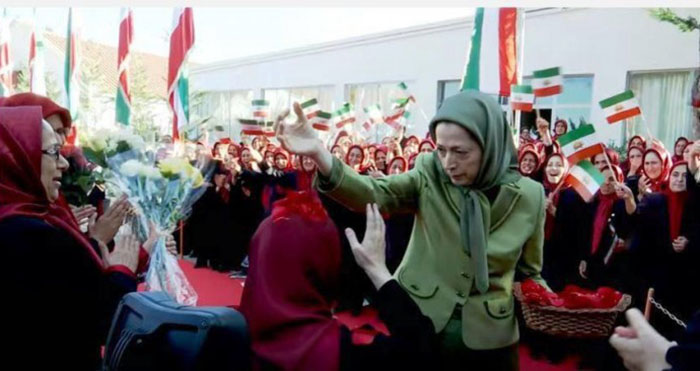
You have just met with Maryam Rajavi who is considered by Iranians to be one of the worst and most violent mafia-like terrorist cult leaders in Iran’s recent history.
Several incidents between members of the MEK and local communities in Albania reveal the pernicious danger of their secret activities.
Channel 4, a highly reputable British television news channel, recently travelled to Albania to find out about the daily life of the MEK members. The film crew was greeted by hostile private security forces outside the fortified camp at Manëz. Camp members physically attacked the Channel 4 camera crew (Shqiptarja.com, August 19). It was an unprecedented event that raised many questions about the activities at and inside the camp (Lapsi.al, August 19).
The event was widely reported by local media, which was also able to obtain a threat assessment on the group by Albania’s Intelligence Agency.
A prominent Iraqi politician described the Mojahedin-e Khalq Organization (MEK, also known as MKO, NCRI or PMOI) as a big cancerous tumor that Iraq had been afflicted with.
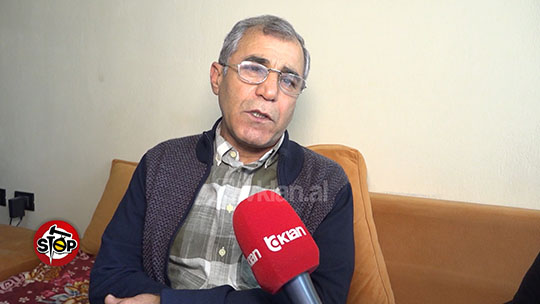
Olsi Jazexhi, an Albanian writer says “We are supposed to be living in a free and democratic country. But the MEK have built a state within a state that implements its own laws”.
Olsi Jazexhi : MEK Helping Albania Slide Toward AuthoritarianismOlsi Jazexhi : MEK Helping Albania Slide Toward Authoritarianism
MEP Ana Gomes speaking during the debate on Iran’s nuclear deal indicated “we must not turn a blind eye to the provocative activities of sects such as the MEK (Mojahedin-e Khalq), which act within this Parliament, and which last week even physically assaulted an opponent just outside the Parliament. This criminal act happened when the MEK leader Maryam Rajavi was in the Parliament. I demand from President Tajani the expulsion of MEK agents who work on EP premises. This is also a security matter for all of us”.
Martin Kobler, as head of UNAMI, tried to work out a solution in Iraq, but was “miserably” attacked by the MEK. He indicated “he could not get access to the members to find out what they wanted as individuals. The MEK would not allow the normal interviews that the UNHCR conduct”.
MEK behavior in Albania is like a mafia – breaking laws, blackmailing, paying people off, beating people, threatening defectors, accusing anyone who questions them of being an Iranian agent, controlling their members in the camp through Stalinist totalitarian methodology and not allowing members to call or visit their families.
In 2003, French anti-terrorism officers raided a dozen locations northwest of Paris in Auvers-sur-Oise, the MEK headquarters, at a time the MEK was classified as a terrorist organization by the United States, the European Union and Iran (1997-2012), and initially detained 165 people including the MEK leader Maryam Rajavi who immediately ordered a few members to burn themselves in protest in the streets of Europe. The attempts at self-immolation to protest against the arrest of Rajavi are proof of a fanaticism and terrorist group that does not respect our laws and our values.
Farid_Totounchi_Mahoutchi_MEK_Iraq_AlbaniaFarid Totounchi (Real name: Mahoutchi) Commander of Saddam’s Private army forcing Somayeh Mohammadi to do a “Forced confession” session in Terror camp in Albania
Dear President Meta,
The MEK was listed as a terrorist organization for a reason. It has carried out decades of brutal terrorist attacks, assassinations, and espionage against Iran’s government and its people (according to Rajavi’s own statement, the MEK killed more than 12000 people from 1981 to 1983), as well as targeting Americans including the attempted kidnapping of US Ambassador Douglas MacArthur II, the attempted assassination of USAF Brigadier General Harold Price, the successful assassination of Lieutenant Colonel Louis Lee Hawkins, the double assassinations of Colonel Paul Shaffer and Lieutenant Colonel Jack Turner, and the successful ambush and killing of American Rockwell International employees William Cottrell, Donald Smith, and Robert Krongard.
According to Ms Ebi Spahiu, the MEK presence in Albania – which continues to struggle with endemic corruption and organized crime and the emergence of religious radicalization as a regional security threat and potential sectarian rifts – may add to the list of challenges facing Albania’s political landscape.
In 2013 Maryam Rajavi said, we are going to Albania because it is a corrupt country and we will own this country in a short period of time, we have money and instead of paying few hundred thousand dollars to buy a western politician, there we can buy their president with one thousand dollars.
This is the true face of Maryam Rajavi.
Respectfully,
Reza Jaballi – Brussels
Albania
Why Did Saudis Decide to Expand Their Relations with Albania?
Although the presence of Islam in the Balkans dates back about eight hundred years ago to the 12th century, Takfiris’ existence in this region is rather a new phenomenon. It relates to the early 90s and the midst of the Bosnian War with the presence of the so-called Afghan Arabs. By the end of the Bosnian War, these Afghan Arabs gained Bosnian citizenship, and Wahhabism, as the central ideology of Takfirism, was promoted in the region by Saudi Arabia.
In recent days, the Saudi and Albanian media have announced the signing of a trade agreement between Saudi Arabia and Albania to develop economic relations. Head of the Saudi delegation, Ahmed al-Khumashi, said about good relations and shared interests between the two countries had and called for the development of economic and investment relations.
In February, Albanian Prime Minister Edi Rama had traveled to Saudi Arabia to meet with Saudi King and sign two agreements and a memorandum of cooperation in the fields of tourism and aviation.
Looking at the history of Riyadh-Tirana relations, one can find that association between the two countries is not a matter of history and dates back to recent years. As there is no significant book nor article on the relations between the two countries and the “Albanian-Saudi relation,” entry is only in Arabic. Interestingly, the content of the mentioned entry is just about the statistical comparison between the two countries is in terms of population, economics, and international organizations in which both countries are members, and there is not the slightest mention of the history of relationships.
There is a serious question that must be asked: why and how the Saudis decided to expand their relations with Albania? Especially with regard that the first and last period which Saudis seriously appeared in the region dates back to the immigration of Saudi and Arab citizens after the end of the Afghanistan war. At the same time, Saudis began a movement to build mosques and Islamic centers in the Balkans in different parts of the Balkans, especially Bosnia and Herzegovina, and many of these immigrants married Muslim and indigenous girls in the region.
In addition, trained Arab Salafi troops, who were bin Laden’s loyalists, gathered in the Balkans in 1993 under cover of the Bosnian War to establish a terrorist network inside European territory based in the Balkans.
By the end of the Bosnian War, major cities in the Balkans had become the center of Salafist extremists; for example, the Novi Pazar town in Sanjak area in Southern Serbia has become a core for Islamic fundamentalism, linked with Al-Qaeda cells. Novi Pazar was the focus of the Islamist attempt to build a land bridge from Albania and Kosovo to Bosnia.
Two decades after the presence of Arab extremists and the Saudi mosque-building movement in the region, which has been associated with the promotion of extremist Wahhabi thoughts, its effects became clear; when thousands of violent militias were deployed to Iraq and Syria to fight alongside the so-called Islamic State of Iraq and al-Sham (ISIS).
Along with ISIS’s seizing power in Iraq and Syria, Albanian citizens were surprised by the large volume of travel by some citizens of this country to the Middle East. Former Albanian Foreign Minister Detmir Bushati had initially said that about 300 Albanian citizens had left this country to join ISIS. In addition, some Imams in Albania used to support ISIS in their speeches.
Interestingly, the ISIS recruitment among Albanians was not limited to Albanian citizens, but it also included Albanians living in Western Europe, especially Germany and Switzerland. An issue that demonstrates to what extent is Albania influenced by imported ideas and how much is it capable of attracting such violent militia.
Furthermore, Albania’s poor economic conditions and its strategic position in Southeast Europe and the Balkans, as well as the corruption between its officials, have attracted the attention of some international actors to this country.
Under pressure from the Iraqi government and the country’s civil activists who demanded the expulsion of the MEK from Iraq, the U.S. government was forced to choose Albania, which was suffering from extremely weak economic conditions, as the final destination of the terrorist group. MEK’s history is so dark that no country was willing to take the group in as a whole. The Americans lured the Albanian officials into hosting the MEK by donating a $25 million package which was offered to Albania under the pretext of promoting reforms in the country. Furthermore, another $20 million was donated to the UN refugee agency by the U.S. to help resettle the MEK in Albania.
The MEK which had pledged to refrain from conducting any political activities against Iran in exchange for the group’s resettlement in Albania soon forgot its pledge and started massive constructions in its headquarters near Tirana where the group’s meetings with Albanian and European political figures were held later with an aim to hurt Tehran’s interests.
Albania has now turned from a fringe country to an important one for many actors. To the MEK, Albania is home to the majority of its members, to Iran, Albania is the host of its most significant opposition group, and to the U.S., it is an obedient state which has done something no other country would do; accepting a terrorist group on its soil at the request of the United States. Israel too, has fixed an eye on Albania since it would not be wise to turn a blind eye on an Iran opposition group with 2500 members enjoying notable military and security skills.
Saudi Arabia is another country with interests in Albania. Saudi relationships with the MEK became public when Prince Turki Al-Faisal, former chief of Saudi Arabai’s intelligence agency, praised the group after participating in MEK’s annual gatherings in 2016 and 2017 in Paris.
It could be argued now that after MEK’s relocation to Albania, the tiny Balkan country has turned into a playground for the confrontation of Iran and its rivals. But Iran could not endure much in this game as Tirana expelled its Ambassador and another one of Iran’s diplomats in December 2018 following a seemingly covert meddling from some rival countries or even the MEK itself.
The Iranian foreign ministry spokesman later announced the U.S., Israel and some anti-Iran terrorist groups were behind Albania’s expulsion of the Iranian Ambassador.
Edi Rama’s UN speech on December 27, 2019 in which he denounced Iran and praised the MEK, has raised speculations that the terrorist group influences Albanian officials. In addition, Ilir Meta, another member of Albania’s socialist party and the Albanian president, had also visited MEK’s headquarters in Manze earlier and met with the group’s leader Maryam Rajavi.
Obviously, the relatively peaceful Albania has now become a scene in which the Americans, Israelis and Saudis are acting. What they all share is their hostility with Iran and their tool in Albania is the MEK.
What the Albanian authorities do not consider in expanding their relations with Saudi Arabia, is that the Saudis do not hesitate to promote and spread their extremist ideology of Wahhabism among their new friends. Reports published by the Muslim World League, Riyadh’s principal tool in promoting fundamentalism globally, about its promotional activities in various regions around the world, distribution of religious books, and construction of Islamic centers and mosques, must be considered as a warning to the Albanians regarding promotion of Wahhabi extremism in their country.
Furthermore, the advocacy of Albanian authorities for the MEK, a group listed by the U.S. and the European Union for years as a terrorist group, could complicate Albania’s EU integration process.
Concerned about becoming accused of having ties with a terrorist group that has committed various crimes, including money laundering and fraud in the past, top Western officials still refuse to attend MEK events. But the Albanian officials have yet to understand how their ties with a terrorist group could hurt their public figure.
Finally, Tirana must be very alert in its dealings with the Saudis if it does not want to become a focal point for extremist ideas in the Balkans and Europe and a corridor for extremists to cross the continent. Perhaps the best option for this country is not being involved in the actors’ game.
BY Reza Alghurabi, ahtribune
A note to the representatives of the Government of Albania
Ladies and Gentlemen of the Government of Albania
I am Mansour Nazari. I have spent over twenty years in the Mojahedin Khalq Organization but I have now left the organization. I have a great deal of experience in this organization. Why am I saying this? Because what the MEK leaders are telling you is different from anything in the real world.
A few days ago, Mr. Ilir Meta, President of Albania, went to the MEK base and met with Maryam Rajavi, leader of the MEK. But she just told him lies. Why she is afraid to tell the truth?
The MEK has never been a popular group or had much support among Iranians. If they did, they would not try to hide their history in Iran and Iraq. The MEK is a cult and a destructive one at that, and it is run like a mafia gang. The fugitive leader of the Mojahedin Khalq Organisation (Rajavi Cult) Massoud Rajavi has been in hiding for the last 15 years. We ex-members can tell you why he is hiding. But you can ask Maryam Rajavi directly yourselves. Ask her about the prisons in Camp Ashraf in Iraq. Ask her how many prisoners they kept at any one time. Ask how many were tortured, how many died. Ask how many Iranian civilians and passers-by have been killed due to their blind and indiscriminate terrorist bombings and terrorism. The questions can go on and on.
President Ilir Meta has been to visit and lobby for Maryam Rajavi in the MEK terror HQ near Tirana. At the same time, no mother, father or family members are allowed to visit their loved ones there or even have a telephone conversation with them. Is this not a tragedy? What are the MEK leaders afraid of? Why would they be afraid of the families of their members? What are they hiding? Ask yourselves. Millions of Iranians live abroad but only a few tens of them would want anything to do with them. Is this not a dangerous sign to take notice of?
I urge you. Next time they invite you. Next time you have any opportunity. Ask Maryam Rajavi what are the “weekly ablutions” [compulsory confession sessions] she has invented to suppress the victims in the camp? Why don’t the victims and hostages in the camp have the right to contact their family? Is Camp Ashraf a prison? And if not, why there is no access to it?
And as an Iranian (or for that matter of any nationality) I can tell you this: remember that the MEK has betrayed and is betraying their own country and their own people, their own members, their own masters and benefactors over and over again. Be careful, they can betray you as well.
Yours Sincerely,
Mansour Nazari
End
The American ‘democratic alternative against Iran’ is helping Albania slide toward authoritarianism
The Balkans Post has conducted an interview with Dr. Olsi Jazexhi, a Canadian-Albanian historian who is specialized in the history of Islam, nationalism and religious reformation in Southeastern Europe. We discussed the latest developments in Albania and the MEK’s presence in the country.

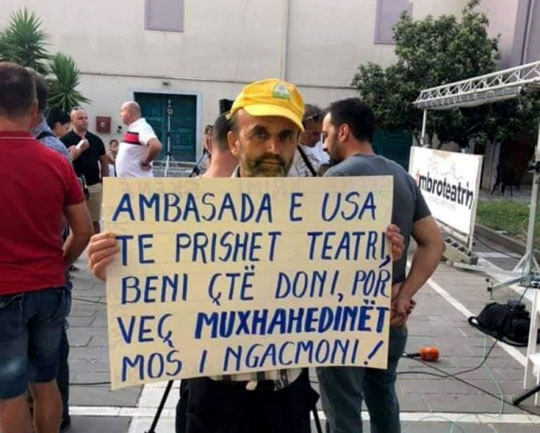
USA Embassy! Destroy the theater. Do anything you want.
Only the Mojaheedens should not be harassed!
The following is the full transcript of the interview:
BP: Dear Dr. Olsi Jazexhi. On June 30, 2019 Albania had municipal elections. These elections were boycotted by the opposition and the president. The ruling Socialist Party of Albania ran alone in this elections and Albania is looking more like North Korea rather than a European Democracy. What is going on with Albania?
OJ: Hello readers of Balkanpost.
The political situation of Albania has become very frightening in the last years. The Socialist Party of Albania which is headed by Prime Minister Edi Rama, a close friend of Tony Blair, Nicolas Sarkozy and George Soros is turning Albania into a one-party state like in the days of Enver Hoxha. Edi Rama, whose family belonged to communist nomenklatura has reinvented himself as a new autocrat of Albania. For this he has the backing of the Trump administration and top U.S. officials who do not care what goes on in Albania as long as the Rama government hosts the Mojahedin-e Khalq (MEK) and other extremist organizations in the country.
However, while during the era of communism, Albania was a social welfare and an independent state, nowadays the Socialist Party of Albania which Edi Rama leads is turning Albania into a frightening authoritarian state. Since his coming to power in 2013 the Rama government has destroyed many social welfare institutions of the country, the healthcare, universities, schools and other state institution. He has cut social support for the needy and has forced thousands of Albanians to pay for their healthcare like never before. He is mass-privatizing and selling state assets and people are suffering as a result of his attack on basic welfare institutions of the country. The best beaches and lands of Albania are being sold to oligarchs and the government is forcefully stealing private properties of many individuals.
By ending state subsidies for the poor, jailing Albanians who cannot afford to pay their electricity bill, stealing agricultural and touristic lands for the oligarchs, not providing jobs for the workers and mass taxing businesses and farmers many Albanians have been forced to leave the country and find jobs elsewhere. Many others have ended up as drug dealers – since this is the only way how the poor can feed their families in impoverished Albania. The Albanian government and its American backers do not care for the welfare of the Albanians and the economic situation is becoming similar to that of many nations in South America.
On the other hand, major drug and criminal gangs have sided with Rama’s government which has helped them to privatize and steal major state assets for their businesses. The municipality of Tirana is the most important state institution which is accused in the media of siding with these criminal gangs. The municipality is headed by Erion Veliaj, an ex-evangelical preacher whose rise to power came thanks to the support of the U.S. Department of State and Soros Foundation. Erion Veliaj is destroying the green spaces of Tirana by building unending towers in every park and garden that he finds. Many businessmen complain about the high level of bribe that his men take from the constructors for granting them building permits. However the justice system which is controlled by the Americans and the Socialist Party does nothing against the mass corruption and electoral fraud that the Socialists do in the country.
BP: What is the ideology of Edi Rama’s government? He claims to be a Socialist but he is siding with the Capitalist mafia. On the other hand Albania is a Muslim majority country. Do Muslims have anything to say in what is going on in the country?
OJ: Even though Edi Rama’s family comes from a Christian Orthodox background, Rama has converted himself into a Catholic. Many of his government ministers, advisers and other apparatchiks are either fundamentalist Catholics or Evangelical Christians. Muslims who are the majority have no power. They are discriminated by the Rama government and the Americans who closely monitor the Muslim community and its mosques in the country. The Muslim Community of Albania which is the ‘Church of Islam’ in the country is under the Fethullah Gulen Network’s control and their American supervisors.
Political power in Albania is at the hand of criminal and fundamentalist groups. The ideology of Edi Rama’s government can be described as American style capitalism mixed with evangelical ideology. The mayor of Tirana, Erion Velija and the head of Tirana’s municipality council Tony Gogu are both protestant preachers – like you have Mike Pence in the United States. They worship Israel and American imperialism.
Rama’s government is accused by many Albanian and international media of grave corruption and racketeering scandals. Major European media like the Bild newspaper in Germany have published many wiretappings from Albanian prosecutors’ office which show how Edi Rama’s Socialist Party steals and blackmails the Albanians to win the elections. However, the Americans who have taken control of Albania’s judicial system do not ‘encourage’ Albanian prosecutors to turn Albania into a normal functioning democracy and establish a real democratic system in the country.
They like Albania to stay as it is. A corrupt mafia-like state ruled by an autocratic ruler who is an obedient ally of the United States. Albania is turning into a second Porto Rico or Haiti.
BP: In recent years, Albania has become a European hub for the promotion of MEK propaganda. What’s your take on this? How do you see the relations between the MEK and European countries? And why did Albania choose to become a country that hosts such a terrorist organization?
OJ: As I have stated before, Albania is a country which according to our president Ilir Meta is run by major criminal organizations and foreign embassies. Our municipal elections of 30 June 2019 which were boycotted by the opposition and declared non-valid by the president – but were forcefully organized by the socialists, have shown to all the Albanians that democracy and rule of law has died in Albania. Prime Minister Edi Rama has become like the dictator of Tunisia, Ben Ali. The Americans and the British who cry for democracy and human rights for Hong Kong, Russia, China, Syria, Turkey and Iran, and who export democracy via B-2 Bombers to Iraq, Afghanistan and Libya do not complain about the mono-party elections of Albania in 2019, the mass-arrest of Albanian politicians, protestors and journalists by the Rama government. If what is happening in Albania were to happen in Turkey, Russia or Iran, the BBC, CNN and other western medias would have protested endlessly and have asked for foreign intervention to bring democracy in those countries.
The Americans do not care for democracy in Albania. The only interest that they have with Albania is to use it for any illegal activity that the United States does in Europe and in the Middle East. The MEK which contrary to Albanian and European laws runs a paramilitary camp in Albania is totally protected by the Albanian government and its ministers like Pandeli Majko. The MEK has created a state within a state in Albania like Osama bin Laden and al-Qaeda created in Afghanistan in the era of Mullah Omar. Albanian police, courts, prosecutors etc. have no power over the MEK. If any state body will ever dare to challenge what the MEK is doing – they will face the wrath of the Americans. By hosting the MEK and supporting its illegal activities the Americans have turned Albania into a kind of a European Guantanamo Bay.
The European Union and many European neighbors of Albania – the Italians, the Greeks, the French and the Germans who are not happy with what is going on with the MEK – do not dare to speak about it. As we have seen with the Iranian nuclear deal, Europe is no longer independent. Many European states do not enjoy freedom and independence in their foreign relations like France enjoyed during the era of Charles de Gaulle, or those that Russia, China and Iran enjoy nowadays.
BP: The Trump administration officials openly support the MEK as a “democratic alternative” to the current Iranian political system. Why is the White House supporting a group that does not have a social base among Iranians?
OJ: The Trump administration is supporting the MEK because they hate the democratic and independent system of Iran. They hate Iran because Iran supports Palestine and does not abandon the Palestinians, and because it has not allowed itself to become a dictatorial regime like Saudi Arabia or the United Arab Emirates.
While the MEK is a ruthless totalitarian cult, which keeps as slaves thousands of its soldiers and its democratic credentials are similar to those of Khmer Rougue in Cambodia, the Americans portray it as the “democratic alternative” to Iran’s democratically elected government. If you ask in private any Albanian politicians – including those who attend the MEK meetings with Maryam Rajavi – as to how much democratic MEK is, they will laugh. The most enthusiastic supporters of the MEK will tell you in private “we know that they are terrorists. But America has told us to support them and we do it.”
Those who consider the MEK a “democratic alternative” to Iran’s democratically elected government should also proclaim Abu Bakr al-Baghdadi and Muhamed bin Salman of Saudi Arabia as champions of democracy in the world.
BP: Backed by U.S. warmongers, Israelis and Saudis, the MEK’s aim is regime change in Iran. What’s your analysis on the role of these countries against the Islamic Republic, especially through their support for the MEK?
OJ: Well, from what we have seen in Albania, the MEK is a puppet terrorist organization which has no power to challenge the military might of Iran. The MEK is a paper tiger which is waved by the Americans and the Israelis to harass the Iranian society. Its 4000+ terrorist members that Albania hosts are not a serious challenge for the Islamic Republic of Iran in military terms. The jihadis of the MEK are mostly old, broken and abandoned by their families. They reside in Manza Camp which is a prison like paramilitary camp where most MEK soldiers are not allowed to go out, marry and live a free life. Many MEK soldiers suffer from cancer and other diseases. They live in fear for the crimes they have committed in the past. If they go out of Albania they have no place to hide. Turkey, Russia, China, Iraq, Lebanon, Iran etc. all consider them to be terrorists and they will end up in jail. The Americans do not give them asylum in the United States. For this reason they are “condemned” to live with Maryam Rajavi and the cult – because this is the only way they can feed themselves and find protection. The Americans, the British, the Israelis etc. will not take them into their countries. They are stateless desperate terrorist like the DAESH terrorists who hide in the deserts of Syria. The only difference between the MEK and DAESH is that the MEK are “our good terrorists” while DAESH are “not useful terrorists” anymore.
The Iranians, even those who do not like the present government, hate the MEK and will never humiliate themselves to associate with a lunatic cult like the MEK. The U.S. claim that the MEK represents a democratic alternative to the present Iranian government is a ludicrous claim, which only a lunatic who might see Ku Klus Klan (KKK) as the democratic alternative to the present U.S. government might believe. The MEK’s paid supporters like Rudy Giuliani, John Bolton, etc. do not even themselves believe in this idiocy. However, they need to prop up the myth of the MEK as a viable militant opposition against the government of Iran for their geopolitical reasons. The Americans have offered to Iran to hand the MEK back to Iran, if Iran would agree not to support Palestine. But Iranians have refused and for this reason they are stuck in Albania.
Through the scarecrow of the MEK, the Americans and their supporters milk the Saudis and Emiratis and convince the Wahhabi despots of the Middle East to continue to side with them and Israel against Iran and Palestine. If the MEK did not exits, the Americans and Israelis would have to invent one, like they did with DAESH and al-Nusra in Syria.
The only danger that the MEK currently represents for Iran is its espionage, propaganda and fake news against Iran. The MEK can also carry limited terrorist actions against Iran.
However Iran, Russia, China and the Europeans have so far shown that they do not take the MEK seriously.
BP: How is the response of the Albanian public towards MEK?
OJ: Well, our media in Albania do not dare to speak much about the MEK. In the past years the MEK has attacked many foreign and Albanian journalists and media by accusing them as “agents of Iran” when they exposed the slave-like conditions of their members. The MEK has complained to the Americans against these journalists and media and they have achieved some kind of success in destroying the freedom of the press in the country. In 2019, the Albanian media has censored much of its news about them – and have instead adapted the American jargon – by describing them as “the democratic opposition” of Iran. In 2018 our media investigated their abuses of their members, but now they do not do that anymore.
In private every Albanian hates the MEK and every journalist knows who they are. Even Sokol Balla a pro-MEK apologetic journalist whose TV has supported the illegal activities of the MEK and refuses to make an open debate about the MEK – because he does not want to upset the Americans, have asked “how the MEK members can live in isolation like they do” and abandon a civilian way of life. If you go on Facebook and many social forums you will see the outrage that the Albanians have with the MEK’s presence in Albania. They ask for their deportation. Even those whom the MEK pays or those who attend their meetings – in private accept that they are lunatics and dangerous but they do not dare to say that in public.
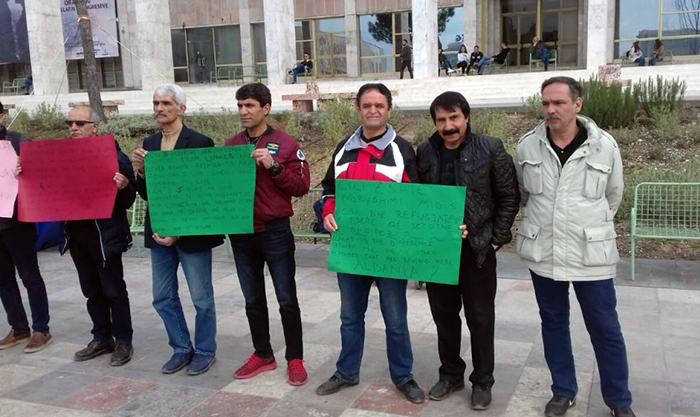
In the recent days when many artists and intellectuals are protesting in Tirana against the Edi Rama government – who is destroying the Italian built national theater of Tirana – some protestors who are upset with the American support for the autocratic regime of Edi Rama are using irony to protest the sad reality of their country. The Trump administration that describes the MEK as “the democratic alternative to the current Iranian political system” is helping Albania to slide toward authoritarianism.
A few days ago, one protestor against the Edi Rama government and the mayor of Tirana made an ironic poster towards the U.S. Embassy in Albania. In the poster he is telling to the Americans:
USA Embassy! Destroy the theater. Do anything you want.
Only the Mojaheedens should not be harassed!
This picture which talks more than 1000 words shows the desperate situation and the negative impact towards democracy that the MEK’s presence is creating in Albania. The Americans are supporting the Edi Rama government which is turning Albania into a one-party system. They are supporting the authoritarian policies and erosion of democracy because their major interest with Albania at present is the preservation of the MEK. They are supporting the destruction of the environment and the cultural heritage by the mayor of Tirana. The only thing that they are asking from the Albanian government is: Protect the MEK and do anything against your people and democracy.
The European Union, the Organization for Security and Cooperation in Europe, the Council of Europe etc. who must intervene and speak against the authoritarian regime of Edi Rama – like the cry wolf they do against Turkey and Iran – are keeping mum. The civil society of Albania feels abandoned. They are witnessing the destruction of the environment and democracy, while the Americans are using their country as a MEK terrorist base “to bring democracy” to Iran.
Many Albanians would like to ask the Americans: why do you want to export democracy in Iran, when you are supporting an authoritarian regime in our country? However, many Albanians have now understood that the democratic system that the Americans would like to install in Iran will look like the regime of Edi Rama or the cult of Maryam Rajavi. A “democracy” like the democracy of the time of Shah Mohammad Reza Pahlavi when the U.S. Embassy was determining the fate of the Iranian nation.
balkanspost.com
Good news, MEK formers have been issued work permits.
After all the pressure the MEK and the US exerted on the UNHCR to not only give no succour to these people but to leave Albania completely, and all the pressure exerted on the Albanian government not to help or facilitate the survival of these MEK formers, they have succeeded in their aim.
With the help of hunger strikes and demonstrations and the work of lawyers, the Albanian government has backed off and as a minimum has accepted that these people exist in their own right and are separate from the group supported by the US.

They are accepted as individuals, not as commodities.
The authorities have accepted they must issue work permits for these formers who live in Tirana. Many writing about this have said this is a huge setback for the MEK because they have used this lack of status to threaten people not to leave.
They tell members ‘you will be destitute if you leave the camp’.
Many write to congratulate the ex-members for their achievement and hard work over last few months.
Terrorism and Corruption: Albania’s Issues with EU Accession
Albania has been longing for joining the European Union for years, but the tiny Balkan nation still faces major challenges to its hopes of joining the bloc.
Extensive economic and administrative reforms, noninterference in the judicial procedures by the government, Election transparency and combating corruption are among Brussels’s top demands from Albania before its annexation to the EU.
However, corrupt political leaders and their alleged links to organized crime which have triggered protests by people from time to time, have played a key role in turning Albania’s wish for joining the EU into an unrealized dream.

For instance, German tabloid “BILD” leaked six wiretapped conversations in June indicating collusion between Socialist Party officials and members of a notorious criminal organization regarding coercing voters in the upcoming election.
The controversial audio file has sparked rage among the opposition parties leading to calls for Prime Minister Edi Rama’s resignation and an earlier general election. Albania’s opposition parties have accused the governing party of corruption and of doctoring the results of the 2017 parliamentary election. Leader of the opposition party, Lulzim Basha, accused the Socialists of coming into power “through the votes of the crime and the mafia.” Basha’s Democratic Party relinquished their seats in Parliament in protest, and declared a boycott of the June 30 vote.

The presence of the Mujahedin-e Khalq organization (MEK, a.k.a MKO, NCRI, PMOI), an exile Iranian group perceived by many experts as a terrorist cult, in a base around Tirana could also make Albania’s situation more complicated in its EU accession talks. The MEK was relocated to Albania under the U.S. pressure after no other countries took the group in following its expulsion from Iraq.
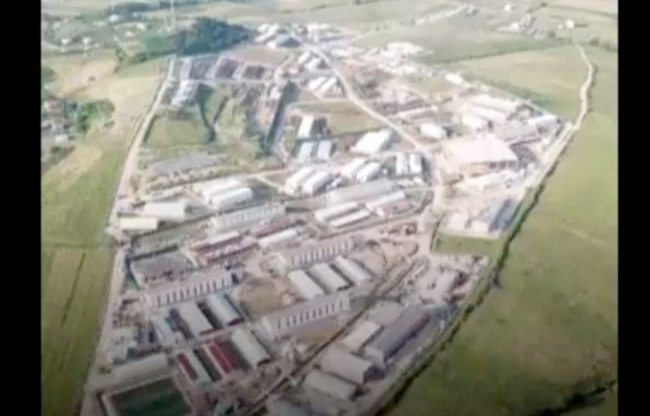
Listed for 17 years as a terrorist organization in the United States and the European Union, with various reports published about its violations of Human Rights and acts of violence and terror, the MEK enjoyed a significant increase in its activities during the first term of Prime Minister Edi Rama’s cabinet. Despite he was expected to limit MEK’s activities to its bases in Tirana, Edi Rama allowed the group to act freely in Albania and provided it with a huge land in Durres to construct its fortified headquarters.
MEK’s generous donations to the Albanian Police, journalists and political figures have been regularly reported by the local media. Making a name for itself in the government of Edi Rama, the MEK has been able to pay a number of Albanian political figures and Parliament members to advocate for the group in its events.
A recent tweet from PM Edi Rama in which he blames Iran for fueling tensions in the Middle East, indicating his support for Iran’s adversaries including Saudi Arabia, the UAE and the U.S., resembles MEK’s stance against Iran. Considering these facts, MEK’s aids to Rama against his political opponents must be thoroughly investigated ahead of the upcoming election in Albania.
Albania should have understood in the first place why no other countries, including MEK’s top sponsor, the United States, agreed to allow the group into their soil after its relocation from Iraq. Wherever it has been, the MEK has been involved in conducting illegal activities and sabotage acts. The group’s dark past and a long list of its misconducts including violating the human rights of hundreds of its members in Albania, could cause many troubles for Tirana in the near future.
After 5 years of residence in Albania, the MEK has now become a part of the corruption process in this country and a link to its corrupted authorities. It is not unlikely at all to see MEK promote the ruling party, with which it shares common thoughts and interests, in the upcoming Albanian election. The experiences of MEK’s numerous overt and covert interventions in the Iraqi Parliamentary elections in favor of specific people through spending huge sums of money, could easily repeat in Albania and mark a more controversial situation than the 2017 Parliamentary election in Albania.
Finally, it is the Albanian people who will be the true victims of their government’s friendly policies towards the infamous MEK which has been known as a terrorist group for a long time; The policies that could negatively impact Albania’s already complicated accession negotiations with the EU.
By Reza Alghurabi, Ahtribune.com
Reza Alghurabi is an Arab journalist who lives in Iran. He is a former researcher at the Beirut Center for Middle East Studies and an independent researcher and journalist writing in Iranian newspapers including the Khorasan daily.
“Will the Presence of Iran’s MEK Threaten Albania’s Already Shaky Stability?” wonders Frida Ghitis of the World Politics Review.
Frida Ghitis who is a world affairs columnist, a former CNN producer and correspondent and a regular contributor to CNN and The Washington Post warns about the threat of the presence of the Mujahedin Khalq Organization (the MKO/ MEK/ PMOI/ Cult of Rajavi) in Albania as a part of the already tremulous region of the Balkans:
It might have seemed like a barely consequential item amid another torrent of breaking news. But word that President Donald Trump’s lawyer, Rudy Giuliani, just attended the annual gathering of a controversial Iranian opposition group at its unlikely base in Albania should raise flags for many reasons, not least of which are concerns for Albania’s troubled and fragile democracy.

If Albania is now unexpectedly drawn into one of today’s most dangerous geopolitical conflicts—the one pitting Iran against the United States, Saudi Arabia and other Gulf states—the timing couldn’t be worse. The country is in the midst of a full-blown political crisis that has at times turned violent and whose outcome is still uncertain. A member of NATO, Albania has also been trying unsuccessfully to join the European Union for years; its current domestic turmoil makes that goal even more distant. To make matters worse, Albania’s infighting has turned it into an inviting target for malicious actors seeking to take advantage of a distracted, divided nation.
Giuliani, along with some other prominent figures, including former U.S. Sen. Joe Lieberman and British Conservative MP Matthew Offord, attended the annual “Free Iran” conference of the group known variously as the People’s Mojahedin Organization of Iran and Mujahedin-e Khalq, or MEK. A shadowy outfit committed to the overthrow of Iran’s theocratic regime, the MEK is often described as a cult and used to be classified by the State Department as a terrorist organization. Now, some of its leading backers work for Trump and his administration, putting Albania in the middle of the Iran file. Perhaps its biggest booster is John Bolton, Trump’s hawkish national security advisor, who wants the MEK to govern Iran.
The MEK has a strange and contentious history. It emerged as an Islamist-Marxist organization and militia in Iran in the 1960s and was staunchly anti-American. It killed members of the Shah’s police and played a key role in toppling him during the 1979 revolution. But it fell out with Iran’s new Islamist authorities after they took power, and was exiled from the country in the early 1980s. When Iraq under Saddam Hussein then went to war against Iran, the MEK—now fervently opposed to the Islamic Republic—sided with Baghdad and ended up building a base of operations in Iraq near the Iranian border, from which it staged attacks inside Iran.
Ghitis is concerned on the capacity of the MEK to turn into a tool in the hostile policies of Donald Trump against the Iranian Government despite the group’s unpopularity inside Iran. According to her analysis, this will draw Tehran’s attention to Tirana which is vulnerable enough to foreign meddling:
Since moving to Albania, the MEK had received only minor international attention. That changed with the Trump administration. Key administration figures have advocated for the group, some as paid supporters, others out of ideological conviction. Bolton and Giuliani in particular have promoted it as a legitimate government-in-exile that should eventually replace the Islamic Republic, even though it has little support inside Iran.
The Trump administration’s spotlight on the MEK is undoubtedly drawing the attention of Tehran at a perilous political moment in Albania. The Albanian government was plunged into crisis earlier this year when opposition parties withdrew from Parliament and demanded the resignation of Prime Minister Edi Rama, accusing him of corruption, election-rigging and ties to organized crime. Rama’s center-left Socialist Party holds a majority in Parliament, while the opposition is made up of parties to his left and right. Corruption has been endemic in Albania since the end of communist rule, but Rama generally enjoys the support of the U.S. and much of Europe.
Tensions in Tirana erupted last month after Bild, a German newspaper, leaked conversations from prosecutors’ wiretaps that suggested Rama and the Socialist Party were plotting with criminal groups to manipulate elections in 2016. Rama and his party deny any wrongdoing.
But their opponents took to the streets. Pitched battles ensued, with protesters lobbing Molotov cocktails and the police responding with water cannons. The situation got worse when the opposition declared it would boycott June’s municipal elections. President Ilir Meta then announced he was cancelling the vote and rescheduling it for October; without the opposition, he said, the elections would not be democratic.
Rama’s governing party, however, refused to accept the president’s move and said it would launch impeachment proceedings against him for it. Then it went ahead with the ballot. The turnout, unsurprisingly, was minuscule. With the elections’ winners ready to take their new posts across the country, some outgoing mayors refused to relinquish their offices.
The political scene remains tumultuous, full of tension, hyperbole and conspiracy. Meta has accused Rama of being a tool of the “deep state,” working with billionaire philanthropist George Soros to destabilize Albania and even establish a “dictatorship” encompassing Albania and Kosovo, “serving underground agendas.” The Albanian people, he told an interviewer, do not want to be a “colony in servitude of money-laundering and organized crime.” Instead, they want to be part of the democratic West, “to join NATO and the European Union.”
A deadline is looming for Albania: In October, the European Council will make a decision about formally launching accession talks with Albania. The street battles, the name-calling and the conspiracy theories all support the views of skeptics who say Albania’s democracy is not mature or stable enough to join the EU.
As if that wasn’t bad enough, trouble with Iran may be brewing over the MEK’s compound in Albania’s countryside, raising the risk of Iranian interference. Iran took notice of the gathering that Giuliani and others attended in Albania this week, with its state-backed media chastising the U.S. and other Western countries for siding with what it calls a terrorist organization…
The WPR correspondent finds the MEK and its violent approach against Iran a potential threat to democracy in Albania:
The MEK’s goal remains the overthrow of the Iranian regime, although it now says it has sworn off violence. The group’s rise in visibility amid the Trump administration’s standoff with Iran could make Albania more vulnerable than ever to outside meddling. The potential for a new crisis in Europe and within NATO, centered on Albania of all places, is very real.
World Politics Review
Once the relocation of members of the Mujahedin Khalq Organization (the MKO, MEK, PMOI, the Cult of Rajavi) from Camp Liberty Iraq, to Tirana Albania, started in 2013, members of the group were supposed to be recognized as refugees and Albania was supposed to be their permanent home before their final relocation in third countries.
Six years passed and about a thousand members left the MKO to live a normal life in the free world but their departure from the group resulted in legal problems for them. It seems that they are recognized as “refugees” only if they are members of the Cult of Rajavi.
In June 2013 when the first group of the MKO members were resettled in Albaniab, the US State Department stated, “The permanent relocation of residents is essential to ensure the safety and security of residents.” However, today those residents who are no more followers of Maryam Rajavi are left homeless and money less because the UN’s Refugee and Migrant Service in Albania (RAMSA) closed its office in Tirana.
The UN High Commissioner for Refugees allegedly relocated the MKO in Albania from Iraq on “humanitarian grounds.” “But, on their arrival they were not granted UN refugee status, nor have they been issued Albanian identity documents that would allow them to work or travel,” Ann and Massoud Khodabandeh wrote in Lobelog. “Lack of residency rights also means that they cannot register for a bank account. They have no identity papers whatsoever, except the flimsy piece of paper used to fly them through international airspace from Baghdad to Tirana.”
This means that the MKO defectors’ legal case is neither supervised by the UNHCR nor by the Albanian government. There is no perspective for them for moving to a third country and this is very pleasing for the MKO leaders. The UNHCR, the US and the Albanian government “humanitarian” aids are limited to the isolated barred members in the Cult of Rajavi.
The closure of RAMSA is a gift to the MKO leaders who fear the increasing defection from the group which ends in the collapse of their cult.
Mazda Parsi
A Live debate, ‘360 degrees’ hosted by Artur Zheji on Ora News asked – “2019, the best year for Albanians?” Guests included historians Dr Olsi Jazexhi and Dr Elena Kocaqi who both explained why the presence of the MEK terrorist group was damaging for their country. The corrupting and interfering presence of MEK in Albania is causing a backlash in civic society as well as damaging the political life of the country. After the independent reports of various UK and American media, the people of Albania now know who they are dealing with.
Historian Elena Kocaqi speaking on “360 Degrees” at Ora News, considers it wrong that the Iranian Mojahedin were taken in by Albania.
Kocaqi: Our government should not be involved at all with issues relating to Iran, and for me, the Mojahedin should not have been taken in by Albania at all. Taking thousands of people and thereby importing conflict is, for me, very wrong. Albanians have been so persecuted in the last two centuries, even by Europe, there is nowhere to go. Normally there would be a rise and not a drop, and you will protect those few Albanians who left Europe. The Albanian factor keeps the balance in the Balkans and is much more important than we think. From the secret letters of Austro-Hungary, they linked their empire to the existence of the Albanian nation. We will also become part of Europe.
Ora News, ‘360 Degrees’,Translated by Iran Interlink
The expulsion of the Iranian ambassador from Albania by order of the US Security Adviser John Bolton is an act that has seriously shaken Albanian politics. The Albanian government of Prime Minister Rama, Foreign Minister Ditmir Bushati and President Ilir Meta not only did not welcome the dictates of John Bolton, but until now have not made any official statement to welcome the expulsion of the ambassador. The fearful Albanian politicians have no other choice but to obey the American government which, after settling the Iranian Mojahedin terrorist organization there, is turning Albania into a second Afghanistan where the country is a battlefield between the MEK jihadists and Iran.
In the IMPAKT show, attorney Migena Balla, who has defended clients who have been raped by Maryam Rajavi’s cult, discusses with investigative journalist Gjergji Thanasi, analyst Alfred Cako and historian Dr Olsi Jazexhi the most recent diplomatic scandal in Albania that came after America commanded Albania to expel the Iranian ambassador from the country. Gjergji Thanasi, who knows the MEK well, shows that the decision to expel the Iranian ambassador was an American decision that did not bring Albania any benefit except for Edi Rama who hopes to organize a meeting with Trump and allow a free run by Americans to transport drugs. Speaking as a nationalist, Thanasi asks: what has Albania gained from this ban?
Dr Olsi Jazexhi, who has written for the international media about the risk that MEK has brought to Albania, exposes the fake news campaign that MEK is running from their Manza paramilitary camp and shows that the expulsion of the Iranian ambassador was in fact a demand that the terrorist group has been making in Albania for several months. Dr Jazexhi blames the MEK for this diplomatic scandal and analyses the defamatory campaign that MEK is running from Albania which accuses Iran of committing terrorist acts in Europe. He points out that the organization, which was brought to Albania on humanitarian grounds, has now hijacked Albanian politics and this group of magicians with their so-called president Maryam Rajavi are behaving as though they are kings of Albania and not some victims that began by wailing and seeking shelter and help.
Alfred Cako, who analyses Albania’s fealty to the great powers, exposes the war that is happening today in the US administration between the Zionist Jews and the American Trump administration. Cako thinks Trump is playing with Zionist extremists, and the expulsion of the Iranian ambassador was part of this game as Trump is co-operating behind the scene with Putin and Russia to end the rule of Jewish Zionists in the world and the US. During the debate Dr Jazexhi explained that MEK has not only managed to establish a firm hold in Albania, but demonstrates how, from its paramilitary camp, the MEK is organizing a fake news campaign, a campaign through which this group – which holds its members hostage, threatens the media, radicalizes its members, calls for jihad against Iran and which has in the past has committed acts of terrorism and murder – ironically presents itself as an Iranian opposition. The historian concludes that the MEK’s defamatory campaign is crazy since the MEK is a terrorist organization and the people of Iran do not see MEK as an Iranian opposition because Iran has democracy and hundreds of political parties take part in elections which divide power.
Gjergji Thanasi, who has been studying the MEK for years, explained how MEK has managed to build a state within the state in Albania. They have managed to take control of the police, the border, and carry out illegal acts in the country, while the Albanian government behave like fools in front of this elderly terrorist group. After visiting Iran several days ago, he shows how the government there serves the people of Iran and is more democratic and humane than the ruling government of Edi Rama and Pandeli Majko, and that the dreams of Maryam Rajavi and John Bolton for insurrection to overthrow the regime in Iran are in vain.
Returning to the local context, Dr Jazexhi shows how the MEK began scheming to influence Albanian domestic politics. They complain to the Americans against the government of Edi Rama and have begun to exploit the opposition’s position for their own interests. In the global context, Alfred Cako sees the US ambassador’s expulsion as part of a two-scenario game that Trump is playing against Iran. One scenario is that Trump might want to hit out at Iran, while the second scenario may be that the US government may sooner or later attack the Iranian Mojahedin, who are currently Israel’s forces, but that one day the Americans could expel from Albania.
The conclusion of the debate is that Albania has major problems with hosting these Iranian terrorists in the country, and the expulsion of the US ambassador was a scandal of international proportions. This scandal exposed Albania’s weakness and servility before the Americans, the threat that the MEK constitutes for the stability of Europe and Albania, and how the MEK’s fake news campaign has placed the country in a scandalous diplomatic situation.
Translated by Iran Interlink