
The anti-Iran terrorist group, Mojahedin-e Khalq Organization (MKO also known as the MEK, PMOI and NCR), has executed a group of its discontent members and commanders before the forced  evacuation of its main training camp in Northern Iraq.
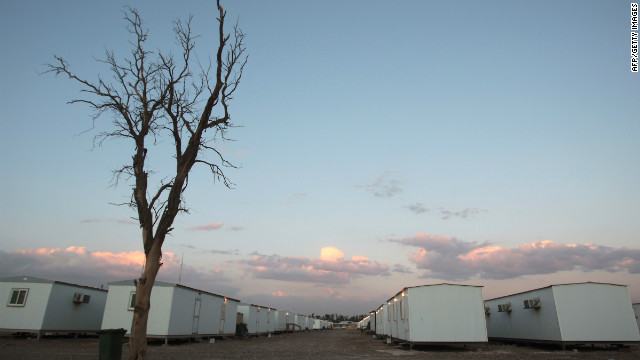
In September 2012, the last groups of the MKO terrorists left Camp Ashraf, their main training center in Iraq’s Diyala province. They have been transferred to Camp Liberty which lies Northeast of the Baghdad International Airport.
Camp Liberty is a transient settlement facility and a last station for the MKO in Iraq.
Now, a report by the website of the Habilian Association, a human rights NGO formed of the families of 17000 Iranian terror victims, said that .. a mass grave in Camp Ashraf (now the Camp of New Iraq) before leaving the place.
The report added that Seyed Taleb Mohammad Hassan, the head of Diyala provincial council, was quoted by Iraqi Kurdistan Navkho news agency as saying that "relevant bodies have investigated the corpses in the mass grave and found out that some of those buried in there had been executed by the MKO".
Further investigations showed that these murdered individuals "have been killed for criticizing or opposing the MKO", he added.
Earlier in January, Sadeq al-Husseini, the deputy chairman of Diyala Provincial
Council, said several mass graves had been unearthed in Camp Ashraf.
He said that the bodies were being examined in medical laboratories in Arbil Province, adding that human rights violations in the camp did not seem improbable.
In a 28-page report titled "No Exit: Human Rights Abuses Inside the MKO Camps," the Human Rights Watch described MKO camps in Iraq and the severe human rights violations committed by the group against its members.
The report says dissident members and those rank and files wishing to leave the organization were subject to "lengthy solitary confinements, severe beatings, and torture".
"The witnesses reported two cases of deaths under interrogation. Three dissident members – Abbas Sadeghinejad, Ali Ghashghavi, and Alireza Mir Asgari -witnessed the death of a fellow dissident, Parviz Ahmadi, inside their prison cell in Camp Ashraf."
Earlier this month, reports said a growing number of Mojahedin-e Khalq Organization members are leaving the terrorist group as MKO ringleaders are using all types of physical and mental tortures against members to prevent their mass defection.
"As far as I know, due to the MKO’s physical controls and psychological and mental pressures on the members, a large number high and mid-ranking members of the Organization in the transit camp (Camp Liberty) are after a suitable opportunity to escape and defect from the rogue cult as soon as possible," a defected member was quoted as saying by the Persian-language Neday-e-Haqiqat (the Voice of Truth) website.
According to the recent reports, tens of veteran MKO members in Camp Liberty (the transient settlement facility and a last station for the MKO in Iraq) have left the terrorist group during the last month.
The MKO is behind a slew of assassinations and bombings inside Iran, a number of EU parliamentarians said in a recent letter in which they slammed a British court decision to remove the MKO from the British terror list. The EU officials also added that the group has no public support within Iran because of their role in helping Saddam Hussein in the Iraqi imposed war on Iran (1980-1988).
Many of the MKO members abandoned the terrorist organization while most of those still remaining in the grouplet are said to be willing to quit but are under pressure and torture not to do so.
A May 2005 Human Rights Watch report accused the MKO of running prison camps in Iraq and committing human rights violations.
According to the Human Rights Watch report, the outlawed group puts defectors under torture and jail terms.
The group, founded in the 1960s, blended elements of Islamism and Stalinism and participated in the overthrow of the US-backed Shah of Iran in 1979. Ahead of the revolution, the MKO conducted attacks and assassinations against both Iranian and Western targets.
The group started assassination of the citizens and officials after the revolution in a bid to take control of the newly established Islamic Republic. It killed several of Iran’s new leaders in the early years after the revolution, including the then President, Mohammad Ali Rajayee, Prime Minister, Mohammad Javad Bahonar and the Judiciary Chief, Mohammad Hossein Beheshti who were killed in bomb attacks by MKO members in 1981.
The group fled to Iraq in 1986, where it was protected by Saddam Hussein and where it helped the Iraqi dictator suppress Shiite and Kurd uprisings in the country.
The terrorist group joined Saddam’s army during the Iraqi imposed war on Iran (1980-1988) and helped Saddam and killed thousands of Iranian civilians and soldiers during the US-backed Iraqi imposed war on Iran.
Since the 2003 US invasion of Iraq, the group, which now adheres to a pro-free-market philosophy, has been strongly backed by neo-conservatives in the United States, who argued for the MKO to be taken off the US terror list.
The US formally removed the MKO from its list of terror organizations in early September, one week after Secretary of State Hillary Clinton sent the US Congress a classified communication about the move. The decision made by Clinton enabled the group to have its assets under US jurisdiction unfrozen and do business with American entities, the State Department said in a statement at the time.
2013-01-13
http://english.farsnews.com/newstext.php?nn=9107135267
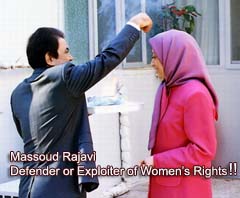 similar to that of the ideological drift in 1975 drafted by Taghi Shahram, who broke the seemingly Islamic ideology of the organization and officially announced it to be Marxism. Consequently, Shahram suppressed any protest and opposition and even plotted assassinations to liquidate opponents or as a method of silencing them.
 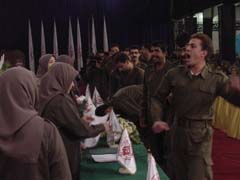 terrorist groups in the way each uses sophisticated psychological techniques to indoctrinate their devoted members. As a matter of fact, there exists a high potentiality in a terrorist group to actually change into a dangerous cult as it possesses cult features, because any group that challenges adopted norms that advocates moving against the current for sure it avails backdrop of a cult. In the same way, any cult has the potential to be a terrorist group. in the case of MKO it is not an exception.
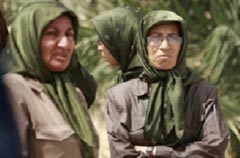
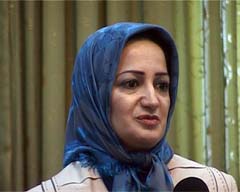 [Temporary Transit Location] where the last remaining members of MEK reside. Sanjabi`s review is important in regards to evaluating the situation of MEK members. She was an important and trusted figure in MEK and since decided to leave the cult like terrorist group, has remained active to help others inside. She has established a great contact with those who have managed to escape the camp and applied asylum from UN. In her article Sanjabi describes how MEK chain of command has made life in camp liberty as a concentration camp for people inside. She says that each individual has to get up at 5 am and follow a daily ordered program that is already set for them. The program consists of aimless labor till noon and from noon to night people are forced to attend ideological meeting.
 hat the structure and organization of cults are complex, but the terrible truth about many of them is that they can easily and immediately adapt, recover and rebuild their organizational setup, rather than withering away, if partly disintegrated or broken into smaller groups. That is mainly because order structure and the authoritatively established system of hierarchy within the organization of cults can guarantee the replacement of a leader and guru in his or her absence and demise. But there are solutions for certain to get rid of a cult and to push it to the edge of abyss and precipice of dissolution; the most working is the one that leads to wither in membership and accelerates the process of decline in the number of the insiders and members.
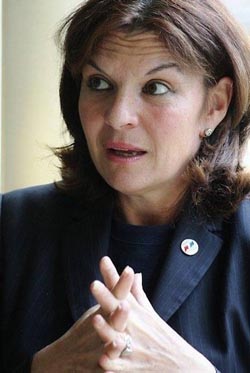 heart of the Republic" to warn her comrades in French Assembly and Senate about the threat of the cult of Mujahedin.