Download Silent Cry – part one
Download Silent Cry – part two


Download Silent Cry – part one
Download Silent Cry – part two
Martyr Sayyad Shirazi’s Son: we complained against Mojahedin-e Khalq in France
In an interview with martyr Lieutenant Gen. Sayyad Shirazi’s Son, reporter of Terror Victims information base, posed some questions in order to explore his assassination from a new angle and besides to take a look at his outstanding personal characteristics:
*What happened the night before his assassination between Martyr Sayyad Shirazi and the family?
I was in the third grade of high school that year and at the night of his martyrdom I had an exam, due to his proficiency in English and mathematics I referred to him to ask my questions.
He had recently come back from Mashhad and his mother’s visit, so he had a great spiritual morale and transferred this morale to family. Indeed he was always kind and affectionate towards family members.
*Did he say anything special that night?
Speaking to me, He emphasized on education and studying. Certainly he had some discussions with other family members too.
*You were present in the day of his assassination, how did it happen?
In the day of his assassination, my father was going to take me and my brother to school.
I went to the yard a bit earlier and saw my father leaving out the Hosseiniyeh, which is located in the lower floor of our house. He put two bags in the rear booth of his Toyota. I put my schoolbag in the car and opened the garage door. At 6:30 he drove the car out of garage. We waited for the arrival of my brother for a few seconds.
I was closing the garage door, Meantime I saw a man, wearing orange clothes which resembled to street sweepers. He was wearing a mask and carrying a broom. Sweeping the ground he approached my father and handled a letter to him. As my father was reading the letter, the sweeper took out a gun and fired four times on his head. He ran quickly to the ally below our house. Likely He was not alone because at that moment I heard the sound of a motorcycle.
When I heard the fire gunshots I rushed to the car and saw my father submerged in blood. Hearing the sound of firing, other members of family came to the house door and quickly we took him to the hospital. But as the bullets hit him on sensitive areas of body i.e. head, brain and skull, he was blessed with martyrdom.
*Regarding his case, what have your family, your lawyer and the government done?
At present, his case is being investigated and I follow it as complainant and witness. All the judicial institutions like Judiciary System, security institutions and armed forces general headquarters have made their best in this regard.
From four years ago this case is being followed in an international impartial court in France. At the beginning of this year, in early Farvardin [March] I had a one-week trip to France in order to set forth my family’s complaint and to explain the details of the assassination as a witness to the court officials. In addition I delivered the documents against this incident. But the result of the court is not yet clear.
*Have you taken legal action by yourself?
No, the complaint officially has been sued by the family four years ago, but before that our lawyers indicted the case in France.
Since 10 years ago by putting the case into the juridical process, our attorney has been appointed and due to the fact that Mojahedin-e Kahlq had claimed responsibility for the assassination, the complaints has been put forward against this organization. *Up to now, how many hearing sessions have been convened?
Many sessions have been convened with the presence of our attorneys but Farvardin’s session was the first hearing session that French court invited me to attend. Most of questions in this session were regarding the particulars of the assassination.
*How much time do you think is needed to conclude this case, and what measures have been done by France court?
We just inform the information that has been transferred to us and the problem is that the curt is being continued for the last 3 or 4 years with the same findings.
*What is your own analysis about concluding this case and arresting the agents of the assassination?
I talk about this issue based on the existed evidences and documents but the Mojaheedin-e Khalq organization has itself claimed responsibility for the attack through internet and video films. French court and the judiciary officials of this country have understood the case and now they are investigated the other aspects of the assassination.
The reason behind the assassination brought up by Mojahedin-e Khalq was confronting Monafeghin in Mersad operation. They have claimed it by film and some other documents.
*Has this organization attained its aim by assassinating martyr Sayyad Shirazi?
The aim of these people is the aim of their organization and they just pursue the interests of their group and organization. As they find individuals like martyr Sayyad Shirazi as a hinder for achievement of their goals, they try to suppress them.
Groups like Mojahedin-e Khalq are destructive terrorist organizations and unfortunately some groups which speak about human rights in the world, de-list Mojahedine- Khalq from the terrorist groups list. But we believe that all terrorist and the groups which train them should be find guilty and respond against their behaviors and acts.
*Claiming responsibility of the assassination by MKO is a symbol of what?
This shows that the assassination was not an instant decision but they had planned for it previously and martyr Sayyad Shirazi was among their terror list. Their aim was to facilitate they rout for conducting their plans. There is the possibility of planning for the attack from a long time ago. Maybe they were just waiting for the right time to put it in practice and the time that he didn’t have a driver or guard was the best time for the assassination.
*Why didn’t he have a driver or a guard?
He was driving himself at the time of martyrdom.
One of his characteristic features was that he didn’t like to bother others; therefore he didn’t have a drive or a guard.
I remember when others talked about this issue; he always said our protector is God. He tried to take responsibilities himself and cause less inconvenience or danger for others.
In addition protecting him could cause some limitations for his family and without the presence of guards he could be comfortable with his family.
Undoubtedly at that time and at present we believe that there had been some negligence in this regard. Today there is still a bit of carelessness about public outstanding characters and I believe that these people should be protected even unnoticeably.
*What kind of personal features have made him a public human character?
Other that being kind and sincere towards family and people of different social classes, he attended the Friday Prayers without standing in the line of high officials’ position. Rather he preferred to say prayers in the back lines along with people with various social classes.
Martyr Sayyad Shirazi attended in religious ceremonies without any special formalities. One of the meetings that he was interested in and attended in, was Haj Agha Mojtaba Tehrany’s sessions, he took notes from the educational points of it.
Martyr Sayyad Shirazi always thought about poor people and tried to help and support them materially and spiritually. He made his best effort to solve the problems of people and tried to never reject their requests.
*What kind of conditions brought about for you and your family after his martyrdom?
We loose him emotionally because he was not only our father but also our teacher. So if the terrorist be arrested and sentenced it would relief our family.
*What is the most important and everlasting memory of him in your mind?
All of the moments beside him are memories for us but all of the trips that I was in his company were quite useful and instructive and I could gain a lot of good experiences.
One of the places he took us with himself was the 8 Years Holy War operational regions. He emphasized on traveling to these areas and being in contact with those who had attended the war directly.
At that time he established the “War Education” group in Officers’ faculty in order to explain the war zones scientifically to the students.
*If someday you face the attacker of your father what will you say?
Just like now we will try to reasonably ask about his purpose and aims and refuse irrational behavior. We are just seeking the enforcement of Islamic law.
RAND National Defense Research Institute Corporation has published a comprehensive report on MEK in 2009. It may be considered the official position taking of the US toward MKO as a supplement to the statements of the US state department in 1997 as well as that of April 2009. All these reports focus on terrorist nature of the organization as a cult of personality. 
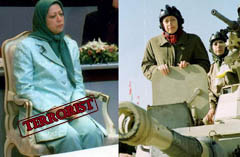
MEK leader Maryam Rajavi has established a "cult of personality." 1
The fact is that the US has failed to refer to a novel point regarding the organization in these statements yet has reiterated the analyses and viewpoints of separated members as well as political opposition trends that have managed to reveal some facts on the organization for more than two decades. However, the efforts made by the US to develop a realistic comprehension of NKO imply the well-intentioned inclination of the US in investigating the true nature of Mojahedin.
This article aims to elaborate on some ambiguities found in RAND report including the offered solution of repatriating MKO members to Iran. First of all it has to be pointed out that according to international bodies Mojahedin are an unknown group whose understanding depends on learning lessons from past experiences to avert the danger arising from MKO and other similar groups. According to the statements made by the US:
MEK leadership and members across the world maintain the capacity and will to commit terrorist acts in Europe, the Middle East, the United State, Canada, and beyond. 2
Therefore, finding solutions for avoiding the threat of such a terrorist group needs a full investigation. The more unknown an issue, the more study is necessary for its understanding.
Likewise, solutions proposed for escaping the danger of Mojahedin have to be of novel and unique nature. The solutions offered in RAND report are rarely feasible and also some result in the development of the organization. Surprisingly enough, it seems that the authors of the report aim mainly at shifting their own responsibility for providing a clear explanation of the reality onto other organs and bodies; as it was done by the US in neglecting its responsibility for eliminating the risk posed by Mojahedin in Iraqi soil and further putting the responsibility of making the final decision for the organization on the Iraqi government. However, it seems that Americans care not about the illegal actions of Mojahedin in Iraq.
Despite the focus of RAND report on the necessity of prosecuting and trying MKO leaders, it refrains to refer to this issue in its conclusions. It is not clear why the position taking of Iraqi government against MKO has been questioned in this report in spite of the fact that according to the constitution and sovereignty of Iraq, Iraqi government is rightful to maintain the interests of its citizens by fighting against those breaking its national rules. Another point to be noted is the issue of repatriating MKO members to Iran. According to the report:
Each MEK member who has been granted amnesty by the IRI should be repatriated to Iran. 3
A point confirmed by the following statement:
To date, however, there is no evidence that Iran has failed to honor its offer of amnesty for the former MEK members who have already returned to the country.4
However, the authors refuse to refer to the individual, voluntary and willful nature of the repatriation of a number of MKO members to Iran. This claim is made in a condition when the US has already acknowledged to the lack of public support and legitimacy for Mojahedin in Iran:
Following its participation in the 1979 Islamic Revolution, the group rapidly fell out of favor with the Iranian. 5
It is not clear if RAND report has taken a realistic and practical viewpoint when referring to Iran as the main alternative for giving refuge to MKO members. As it is put into words:
All evidence indicates that no country other than Iran will accept the group. 6
The question is that how a group failing to win the support of even one country in taking its members as political refugees suffering a lack of social support may be repatriated to Iran where according to the same report:
However, once it settled in Iraq and fought against Iranian forces in alliance with Saddam, the group incurred the ire of the Iranian people. 7
It is evident that the US is far from developing a realistic viewpoint and a clear position toward MKO failing to grasp its true nature and consequently resort to conservative policies in dealing with the organization. The solutions given in RAND report fail to solve the challenges met by Mojahedin and also refrain to decrease the potential fear of Mojahedin felt by the US.
The best way for ending the present crises is taking appropriate and feasible procedures for overcoming a group that according to the US is unreliable, incredible, unknown, deceptive and perverse. However, the US has never made an attempt to make Mojahedin submit to international rules and conventions nor withdraw its illegal claims against Iraqi government and its sovereignty.
References:
1. The US State Department’s statement, April 2007.
2. ibid.
3. The report made by RAND National Defense Research Institute on MKO, www.rand.org.
4. ibid.
5. The US State Department’s statement, April 2007.
6. The report made by RAND National Defense Research Institute on MKO, www.rand.org.
7. ibid.
The challenges posed against Iraq to persuade it to bypass the constitutional legitimacy of expelling terrorist groups, and in particular concerning MKO, can be regarded as a warning for those countries that have offered refuge to members of this organization or authorize its organizational activities. 
Currently, many MKO members individually or under the cover of organizational activity are residing in the European countries and France in particular as lawful or even unlawful political refugees. As Mojahedin have mostly concentrated their forces in France where they were provided with political refuge, its government has been confronted with many more problems compared to other European countries regarding the terrorist activities of this cultic group.
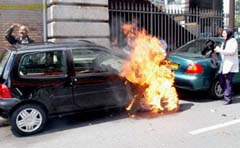
Mojahedin’s open dossier of 17 June is one of the main challenges the France government has kept fighting against. It is predictable that France has to go through a long and costly process regarding this challenge added to the considerable costs imposed on this government following the widespread immolations of a number of MKO members in Paris just after the arrest of Maryam Rajavi in June 2003. It seems that these costs will have many ups and downs up to the closing of this dossier and impeachment of its main defendants.
The negative consequences of the presence of Mojahedin in Iraq and its bitter conflicts for the Iraqi government can be regarded as a proof of the challenges caused by 17 June dossier for France. The anti-civil actions of Mojahedin in Iraq exemplify the general approach of Mojahedin toward governments willing to give refuge to its members. While there is a long way up to the final decision about the destiny of MKO in Iraq, its government has been faced with considerable political and financial costs as well as casualties including three dead and numerous injured Iraqi police officers. The recent disturbances in Iraq gives a strong warning to all European countries and France in particular to be on full alert regarding the potential dangers of the settlement of MKO members in their soil.
By the termination of the one-month ultimatum of Iraqi government to MKO, Iraqi officials are highly concerned about the intensification of anti-civil and cultic reactions of Mojahedin in camp Ashraf. It seems that in the next phase of the dealing of Iraqi government with MKO members, Iraq is faced with many more appalling actions on the part of Mojahedin like using Ashraf residents as human shield. These conflicts will continue up to the expelling of Mojahedin from Iraq yet what is of utmost importance is that European countries and France in particular are to monitor the anti-civil and cultic activities of Mojahedin in Iraq watchfully.
Evidently, the misbehavior of Mojahedin toward its host countries is a common procedure of this terrorist organization. They have dunned Iraqi government in many instances one of which is their claim of ownership of a part of Iraqi soil where they are settled under the cover of international conventions. Likewise, they may claim the possession of their settling in Auver-sur-Oise in France. Regardless of the basis of this claim, the significant point is that Mojahedin insist on it firmly even at the cost of members’ victimization.
The present position of Mojahedin in Iraq is the other side of the coin of their presence in France. As much as the legal basis of Mojahedin claims in Iraq is unclear, France government may not be aware of the reason why Maryam Rajavi was granted temporal freedom after her arrest in France in 2003. The current misdeeds of Mojahedin in Iraq are in fact renewing its terrorist attacks in France in June 2003 based on which the warning of Masoud Rajavi of the occurrence of a human disaster in camp Ashraf was predictable. According to the statements of MKO former members and confirmed by the suicide attacks of MKO members in France in 2003, the issue of using human shields has no red line.
According to the history of Mojahedin, they are not a reliable group. If the European governments and France in particular monitor the process of decision making on Mojahedin in Iraqi soil, they would be able to foresee their own challenges and problems in future regarding the presence of Mojahedin in their soil. In other words, the present stranglehold of Iraq in dealing with Mojahedin can be a mirror of the future situation of governments concerned with the settlement of MKO members. These governments should put precautionary actions on their agenda from the time being for preventing the negative consequences of accepting a cultic group.
On the occasion of the twenty-first anniversary of Eternal Light (Forough Javidan) Operation that caused the death of about 2700 members of Mujahedin Khalq Organization, Nejat Society held a meeting at Khuzestan Office where 15 defectors attended. In 1987, Eternal Light Operation was launched by MKO across Iranian borders after the cease-fire between Iran and Iraq. 
Hamid Dehdar Hassani (MKO Defector) began the meeting by speaking on the necessity of the active mutual relation between defectors and Nejat Society in order to denounce Rajavi’s crimes and to release captives of his cult.
Then Mr. Ali Ekrami (MKO defector) analyzed MKO’s strategy since July 21 until the case –fire (between Iran and Iraq) and the beginning of Eternal Light Operation. He revealed some untold facts about this black deadly tragedy. Stressing that Eternal Light was the outcome of Rajavi’s misinterpretation on the concrete situation of Iranian Society, Mr. Ekrami said that the crucial duty of separated forces is the relentless denunciation of Rajavi along with efforts to rescue those who are banned behind the bars of Ashraf base.
Mr. Maziyar Shirvani who is one of the recently defected members, also gave a report on the latest status of MKO in Iraq.
In addition, some of the defectors described their memoirs of Eternal Light Operation, and revealed the crimes Rajavi and his accomplice, Saddam Hussein committed through the mass murders during that operation.
At the end, they issued a statement in which Nejat Society declared its readiness to fight the illegitimate ambitious leadership of MKO. The statement ends with four articles:
1.We recognize Massoud Rajavi as the main agent to commit the crimes of this massacre in which the lives of a nation were targeted.
2.We appeal for the establishment of a trial for the investigation of war crimes Rajavi and his allies committed.
3.We ask Human Rights organizations to challenge MKO’s crimes, based on the testimonies made by a large number of live witnesses and documented facts.
4.As the defectors of the cult, who survived that tragedy, we declare our preparation to attend any court or human rights organization to accuse Rajavi as a war criminal.
Somebody doesn’t like me
Readers of this blog may not be aware that I am an agent of the Iranian regime. But Rabbi Daniel Zucker, an adjunct professor at Long Island University and long-time apologist for the anti-Iran terrorist organization known as the Mujahadeen-e-Khalq (MEK), has a lengthy and hilarious denunciation of me as such because I had the temerity — and naiveté, apparently — to point out in a recent piece for AntiWar.com that his beloved MEK is widely considered a terrorist cult.
The back story: late last month two American congressmen, Reps. Bob Filner (D-CA) and Dana Rohrabacher (R-CA), held a press conference in Washington, DC to call on the U.S. government to offer support to the MEK in an effort to overthrow the Iranian regime. As I wrote in my piece, the lawmakers’ call was rather astonishing given the fact that the U.S. State Department notes the MEK “was responsible for the assassination of several U.S. military personnel and civilians in the 1970’s. Further, as the Council on Foreign Relations observes, “Until 2003 the MEK received funds, arms, and state sponsorship from Saddam Hussein.” Indeed, during the eight year Iran-Iraq war, the MEK even allied itself with the Iraqi dictator’s regime to kill its fellow countrymen, a fact that I noted in the article likely did not endear them to the Iranian public.
And while the MEK’s defenders have claimed the group’s designation as a terrorist organization was a political gesture meant to appease the Iranian government, the Council on Foreign Relations suggests a less conspiratorial reason: "its attacks have often killed civilians." In fact, the more one reads about the MEK the clearer it becomes the group’s exclusion prior to 1997 from the list of groups considered terrorist organizations by the U.S. government was the actual politically motivated decision.
But according to Zucker, had I done my homework and not relied on “an old State Department report” — dated April 2007 — I’d have known that the MEK has “renounce[d] violence” since 2001 and is in fact innocent of all terrorism charges. To bolster his case, he cites the benign-sounding “Iran Policy Committee,” which the website Sourcewatch helpfully points out “is a pressure group meant to influence US government policy towards Iran . . . made up of former White House, State Department, Pentagon and CIA officials.” Many of its principals are also “affiliated to AIPAC and its related think tanks," which should give you a good idea of where Zucker is coming from.
Still, Zucker claims that while the MEK did “indeed receive Hussein’s support”, it came “in the form of asylum from the mullah regime in Tehran”, because Saddam was of course well known for protecting political dissidents (he was just that kind of guy). That the MEK was willing to murder their fellow Iranians — and helped suppress uprisings among Iraq’s Shia and Kurdish populations — I’m sure was just an afterthought.
“It would behoove Davis to study a little bit of Iranian history, at least of the last 30 years, before venturing to write about Iranians”, Zucker continues, taking me to task for following “the regime line that the [MEK] undermined its credibility with the Iranian masses by fighting against the regime in the Iran-Iraq War. However, he fails to explain how the [MEK] has so many supporters inside Iran that it can continually supply the West with revelations about Iran’s secret nuclear and missile programs, as well as extensive lists of Iranian agents in Iraq.”
That fighting against one’s own countrymen in a war that killed hundreds of thousands of people might undermine the MEK’s credibility within Iran is not something I feel needs citation, but what the hell. As the Jamestown Foundation notes — observing the obvious — “The [MEK’s] alliance with Iraq’s former Baathist regime during the Iran-Iraq war was a huge strategic blunder from which they could never hope to recover. The sight of [MEK] forces aiding the Iraqi war effort turned them into perennial traitors in the eyes of most Iranians. This perception of the [MEK] still persists, more than 15 year after the ending of the war.” Put another way, "the MEK is universally hated in Iran," as Mideast professor Juan Cole succinctly puts it.
As for the MEK’s ability to provide the West with “revelations about Iran’s secret nuclear and missile programs,” I’d just point out that the U.S. intelligence community doesn’t actually believe Iran has a secret nuclear program, as Director of National Intelligence Dennis Blair testified to Congress in March and which I’ve pointed out ad nauseam ever since.
It shouldn’t come as a surprise that the MEK has thanked Zucker for his slavish devotion to the group by inviting him "to Paris to address the 2005 and 2006 President Maryam Rajavi Freedom Convocations," as he notes in his bio. Rajavi is the leader of the MEK and declares herself "Iran’s future president for the transitional period following the mullahs’ overthrow."
Charles Davis, Cult Watch
http://charliedavis.blogspot.com/search/label/Cult%20Watch
The Obama administration should be doing more to support Iranian resistance groups — including the Mujahadeen-e-Khalq (MEK), a "cult-like" terrorist organization that has engaged in suicide attacks against their own countrymen, according to the U.S. State Department — in an all-out effort to affect regime change in Tehran, two American lawmakers said at a recent press conference in Washington, DC.
The lawmakers’ call for greater U.S. support for self-styled resistance groups opposed to Iran’s government comes as the Islamic regime has accused groups protesting the recent disputed presidential election of receiving Western backing.
At a Capitol Hill press conference on June 26th, Rep. Bob Filner (D-CA), chairman of the House Veterans’ Affairs Committee, declared that the U.S. government, which has imposed stringent economic sanctions on Iran since the 1979 Islamic revolution and supported Iraq’s invasion of the country in the 1980s, had too often sought "to mollify or appease those in charge" of that country. Instead, Filner argued the U.S. should explicitly side with Iranian "resistance groups", including the MEK, which he described as a "democratic, non-nuclear, secular group fighting for freedom for all the people in Iran."
The U.S. State Department notes that the MEK "advocates the violent overthrow of the Iranian regime and was responsible for the assassination of several U.S. military personnel and civilians in the 1970′s," and that the group maintains "the capacity and will to commit terrorist acts in Europe, the Middle East, the United States, Canada, and beyond."
Following the Iranian revolution the MEK fled Iran for neighboring Iraq, where it received support from Saddam Hussein’s regime to launch "suicidal, mass wave attacks against Iranian forces." The MEK’s fighting on behalf of the Iraqi regime in a war that killed hundreds of thousands of Iranians is generally seen as undermining their credibility among the Iranian public.
Human Rights Watch has also accused the group of perpetrating serious human rights abuses, including torture, at a number of secret prison camps.
Nonetheless, citing the internal unrest in Iran over last month’s disputed presidential election and the fact that an invasion "is not an option today," Filner said the U.S. government should be doing much more to support "one of the biggest resistance groups in Iraq, the so-called MEK.
"They say, ‘Let us do the job; get out of our — just get out of our way,’ because we have not helped the internal resistance movements," Filner said. "We can help internal resistance movements in Iran, and we should not stand in their way of trying to get rid of the present regime."
Joining Filner in the call for greater U.S. support for the MEK was Rep. Dana Rohrabacher (R-CA), who briefly fought alongside the Afghan mujahideen in their war against the Soviet Union. Though declared "freedom fighters" by the Reagan administration, the mujahideen proved to be fertile recruiting grounds for the Taliban and al-Qaeda.
Conceding that, like the Afghan mujahideen, the MEK is not "perfect," Rohrabacher said that "during the American revolution there were a lot of imperfect organizations around too. But the fact is, the mullahs are what now — they are the ones who are murdering their people. They are the ones who are threatening world peace."
Rohrabacher also rejected the premise of a question about whether overt U.S. support for terrorist groups opposed to the Iranian government might undermine future U.S.-Iran negotiations.
Filner and Rohrabacher appeared at the press conference with Soon Sansami, currently the executive director of the Women’s Freedom Forum. Previously she was the spokesperson for the National Council of Resistance, identified by Filner as "the umbrella Iranian internal resistance movement in the United States." The U.S. Treasury Department lists the group as a "Specially Designated Global Terrorist" organization and one of many "aliases of [the] MEK."
Antiwar .com
Iranian authorities say anti-Iran terrorist group MKO has been involved in the recent attack on the Iranian embassy near Stockholm in Sweden. 
The Iranian Embassy in Sweden came under attack on Friday when more than 150 people gathered outside its main building to protest the outcome of the June 12 presidential election.
One of the embassy personnel was seriously injured in the attack, police said.
Rasoul Emami, Iranian Ambassador to Sweden, said members of the terrorist Mujahedin Khalq Organization (MKO) were found to be among the assailants.
According to Emami, the terrorists have been caught on camera smashing the windows, breaking through the building, attacking embassy staff and tearing down the fence.
The remarks come only a week after Iranian security officials discovered that the terrorist Mujahedin Khalq Organization (MKO) had helped intensify the post-election violence in Iran.
According to the security officials, the arrested members had confessed that they were
extensively trained at their bases in Iraq’s camp Ashraf to create post-election mayhem in the country.
Founded in the 1960s, MKO is a guerilla group, which masterminded a slew of terrorist operations in Iran.
The terrorists are especially notorious for taking sides with former dictator Saddam Hussein during the war Iraq imposed on Iran (1980-1988).
The group masterminded a slew of terrorist operations in Iran and Iraq — one of which was the 1981 bombing of the offices of the Islamic Republic Party, in which more than 72 Iranian officials were killed.
A 2007 German intelligence report from the Federal Office for the Protection of the Constitution has identified the MKO as a "repressive, sect-like and Stalinist authoritarian organization which centers around the personality cult of [MKO leaders] Maryam and Masoud Rajavi".
In an interview in relation with recent confessions of the gang leader of Jundollah terrorist group about cooperating with MKO Secretary General of Habilian Association said: Terrorist groups such as People’s Mujahedeen and Jundollah follow the same approach and some western countries like United States and Britain are never expected to put a stop to the criminal activities of such groups because the sponsorship of terrorism would be carried out by the same two countries.
Calling the Iraqi government and people’s desire for the expulsion of MKO from their country as logic Hashemi Nejad also said: Today MKO collaboration with many other terrorist groups is absolutely certain for the Iraqi government and the Iraqi people know it very well that the presence of this band inside the country is the basis of insecurity and unrest in Iraq, therefore the Iraqi government’s determination to expel this terrorist organization according to the Iraqi constitution is quite understandable.
In response to a question about the possibility of Jundollah presence on the western borders because of their cooperation with the MKO Secretary General of Habilian Association said: Masterminding such a mobility is beyond the abilities of MKO which is now in a very crucial status, besides groups like PJAK in western Iran and Jundollah in the east are directly backed by the United States and Israel and MKO is only a tool for the implementation of America’s plans.
Hashemi Nejad reiterated once again the critical situation of the People’s Mujahedeen and said: After the fall of Saddam, Mujahedeen have lost their major supporter and now seek to postpone the closure of camp Ashraf at any rate and their cooperation with Jundollah is in an attempt to describe the situation crucial so as to draw a part of the attention of Iran and Iraq to other things.
This expert in the affairs of the People’s Mujahedeen continued: The course of action of the terrorist MKO and Jundollah is almost the same and they have many things in common and today the cooperation between them reveals that their difference is merely about the names; yet they have undertaken the same approach.
Rejecting the existence of democracy in MKO cult Hashemi Nejad said: there’s no place for the group to portray itself a democratic organization because terrorism is in its theory structure struggle for creating discord and riot is in its nature.
In response to a question about the possibility of MKO return to the terror list of European Union due to their cooperation with Jundollah son of Ayatollah Hashemi Nejad also said: MKO rearrival at the European Union list of terrorist groups does not change anything and will make no difference in the EU attitude towards the rebel group, therefore there is no need for trying to enlist them again; because such lists are only symbolic and would do nothing to reduce their miseries.
Underlining that MKO supporters are countries and individuals who are never after the actual meaning of Human Rights Hashemi Nejad went on and said: Thos who claim MKO has renounced terrorism are the same ones who remained silent at the time this terrorist cult openly carried out terrorist operations across Europe.
At the end Hashemi Nejad stated: MKO has recently staged clandestine efforts for the release of Abu Omar al-Baghdadi, top MKO leader in Iraq, which indicates the high point of terrorism in this cult.
Baroness Nicholson: It is for Iraq’s democratically elected government to fulfil its obligations under national and international law
SIR – Your article on the People’s Mujahedeen of Iran, also known as the Mujahedeen-e Khalq Organisation (MKO), was an accurate account of their past activities (“Where will they all go?”, April 11th). I was therefore surprised to read the letter from Lord Corbett attacking The Economist (May 2nd).
The Iraqi government has announced on a number of occasions that it has no intention of forcing the MKO members in Camp Ashraf, north of Baghdad, to leave for Iran or to go to any other country. In fact, it is my understanding that 1,015 people out of the 3,400 people in the camp hold residence permits for different countries, many of them in the European Union. In addition, some 2,000 inhabitants have registered with the UN’s High Commissioner for Refugees in the hope of being transferred to other countries ready to accept them.
For several years the Iraqi government has been working closely with UNHCR in order for this to happen. We in Europe, however, are not accepting these people, despite repeated requests by the Iraqi government. Why?
Most of Camp Ashraf’s inhabitants received military training under Saddam Hussein’s regime and took part with his Presidential Guard and other Iraqi security forces in crushing the Iraqi people’s uprising after the liberation of Kuwait in 1991. There is ample evidence that the MKO harmed the Iraqi people when the Iraqi army refused to carry out the killings that Hussein required. Many families of the victims in Iraq cannot forget this. The Iraqi constitution does not permit the presence of groups such as the MKO on its soil. You also mentioned allegations of a bizarre and disturbing cult of personality that the MKO inculcates into all its members.
It is for Iraq’s democratically elected government to fulfil its obligations under national and international law, which it is doing in respect of Camp Ashraf, and not to heed the voices that would promote a group that has committed atrocities against its people.
Baroness Nicholson of Winterbourne, MEP
House of Lords
London
http://www.economist.com/opinion/displaystory.cfm?story_id=13688130