
Following the protests in Iran, German broadcaster Deutsche Welle (DW) investigated the role of the Mujahedin-e Khalq (MEK) in the protest.
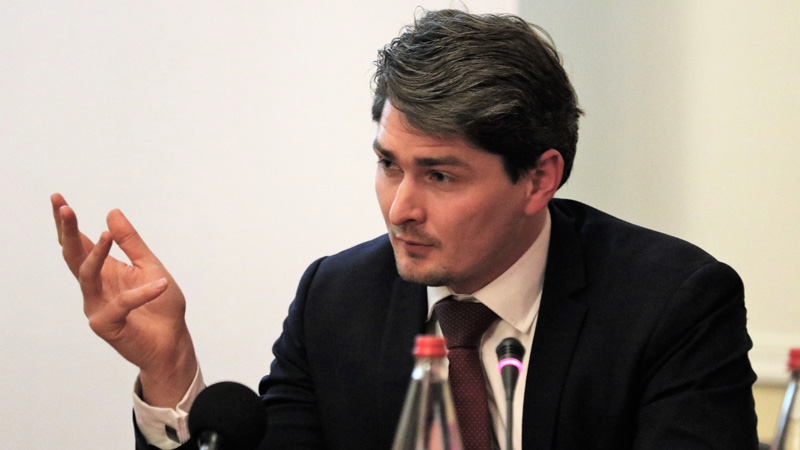
Elona Elezi, the Albanian correspondent of DW reporting from Tirana, interviewed a prominent Middle East Expert Andreas Kreig on the MEK as an Iranian opposition based in “a fortified camp in Manze, a small village in central Albania near the capital Tirana.”
Presenting a brief on the history of the MEK, Elezi develops the report by Kreig’s opinions on Iran, the protests and its oppositions including the MEK.
Andreas Kreig, the senior lecturer at the School of Security Studies at King’s College London, Royal College of Defence Studies, tells DW that in general the Iranian opposition is “fragmented”.
“Where the opposition stands is best understood as fragmentation rather than absence,” said Kreig, adding “inside Iran, collective action remains largely leaderless and networked: local mobilization, social ties, workplace dynamics, and university ecosystems produce burst of coordinated protest without an integrated national command structure.”
“Outside Iran the diaspora remains influential in narrative shaping and morale, but it is organizationally divided and often distrusted by people inside the country who fear both manipulation and a post-collapse vacuum,” said Andreas Krieg.
For Middle East expert Andreas Krieg, however, “when it comes to MEK, it is important to separate perceived reach from real on-the-ground traction.”
“The organization is disciplined, media-savvy, and able to generate noise, lobbying pressure and messaging volume abroad. However, it has deep legitimacy problems among many Iranians because of its history, internal-control allegations, and its long exile posture- factors that limit its ability to act as unifying opposition vehicle inside the country. It is why claims that it functions as a foreign ‘trojan Horse’ resonate.”
“The MEK is easy for multiple actors to instrumentalize in the information space, including anti-Iran hawks in the US and Israel. But the practical effect is more often reputational. It gives the regime a convenient foreign proxy frame. But it does not at all have any role to play in leading these protests.” Said Krieg.
Elona Elezi, DW
