Nejat Society
  • Home
  • Articles
  • Media
    • Cartoons
    • NewsPics
    • Photo Gallery
    • Videos
  • Publications
    • Books
    • Nejat NewsLetter
    • Pars Brief
  • About Us
  • Contact us
  • Editions
    • عربي
    • فارسی
    • Shqip
Nejat Society
Nejat Society
  • Home
  • Articles
  • Media
    • Cartoons
    • NewsPics
    • Photo Gallery
    • Videos
  • Publications
    • Books
    • Nejat NewsLetter
    • Pars Brief
  • About Us
  • Contact us
  • Editions
    • عربي
    • فارسی
    • Shqip
© 2003 - 2024 NEJAT Society. nejatngo.org
Bijar Rahimi
Former members of the MEK

Testimonies of Bijar Rahimi, the most recent defector of the MEK cult

Bijar Rahimi is the most recently defected member of the Mujahedin-e Khalq (MEK). He escaped the MEK’s isolated camp near Tirana, two weeks ago. He surrendered himself to the Albanian Police immediately after he left the MEK’s headquarters, Ashraf 3.

Bijar Rahimi joined the Association for the Support of Iranians Living in Albania (ASILA) after his defection. His brother Sarfaraz Rahimi, also defector of the MEK and his Albanian wife Erisa have been active members of ASILA since its foundation.

After his defection from the Cult of Rajavi, Bijar attended a conference titled “Voice of Mothers”, held by ASILA at Hotel Doro City, Tirana. He was one of the main speakers of the event. The audience were impressed by his heart-breaking memoirs of living in the MEK cult-like atmosphere.

Bijar Rahimi considers family as the main reason for his defection. “In the MEK, thinking of your family is forbidden,” he says. “If you think of your family you have to confess it in the daily self-criticism meetings.”

When the MEK was in Iraq, Sarfaraz and Bijar’s little brother went to Camp Ashraf, Iraq and asked for visiting him. The group leaders did not allow Bijar to meet his brother. “I could hear my brother calling my name, but I was not allowed to go and hug him.”

During the 21 years of imprisonment in Massoud Rajavi’s cult of personality, Bijar never could contact his family. “My mother, my father and two of my older brothers died in those years and I never forgive myself for my absence during their last days of life,” Bijar says with tears in his eyes.

The tragic story kept on when the MEK was transferred to Albania and Bijar’s brother, Sarfaraz, could manage to leave the group and build a normal life in Albania. “My brother left the group, got married to Erisa but the MEK leaders did not allow me to attend their wedding party while they were only a few kilometers away.”

He asked the group leaders to let him visit his brother but each time his request was declined. Today, he lives with his brother and his little family. He can hug his nephew, Ermolindo. “In the MEK the Internet and smart phones were forbidden,” he says with a smile on his face. “I do not know how to use a smart phone, my six-year-old nephew is teaching me!”

August 9, 2023 0 comments
FacebookTwitterPinterestWhatsappTelegramSkypeEmail
Radio Free Europe on MEK Camp ashraf3
Mujahedin Khalq as an Opposition Group

The double face of the MEK: between a moderate opposition party and a terrorist organization

While presenting itself as a moderate opposition force in the eyes of Western public opinion, the MEK continues to perpetrate terrorist actions in Iran for the overthrow of the Islamic Republic, as evidenced by their own official website, where the attacks are described as heroic acts.

In one of our previous articles, we summarized the history of the Mojahedin-e-Khalq, a political organization whose declared aim is the overthrow of the Islamic Republic of Iran, known by the acronym of MEK or PMOI (from the English People’s Mojahedin Organization of Iran). As we underlined in that article, in 1997, the United States included the MEK in the list of terrorist organizations, due to their modus operandi which actually closely resembled that of a terrorist organization that uses attacks to achieve its goals.

However, in 2012, the United States decided to start using the organization for its own purposes of destabilizing the Islamic Republic of Iran and, taking advantage of the military occupation of Iraq, a country where many MEK militants were located, entered into tacit agreements with them. Just in September 2012, Washington officially eliminated the name of the MEK from the list of terrorist organizations, with the same leadership of the organization officially acknowledging its past mistakes, declaring that it would later act solely as a political force in opposition to the Republic Islamic, renouncing the path of attacks.

This operation has had highly positive implications both for the United States and for the MEK itself. The Washington government, in fact, was able to support Mojahedin-e-Khalq openly in an anti-Iranian function, without having to worry too much about public opinion, indeed there are not a few exponents of the most recent administrations who have expressed their support in favour of the MEK in public occasions. For its part, the organization has cleaned up its image internationally, presenting itself as a legitimate force of moderate opposition to the Iranian government.

The MEK has tried in every possible way to attract the support of Western progressive political groups, which do not look kindly on a government like that of the Islamic Republic of Iran, by relying on media propaganda that exploits the pretext of human rights and the condition of women to stir up anti-Iranian sentiment in public opinion. For this reason, the official political program of the MEK presents points such as the establishment of a democratic republic, religious freedom, gender equality in every sphere of society, the legalization of alcoholic beverages, freedom of speech, association and expression, the right to choose whether or not to wear hijab, all arguments that can find general agreement among Western public opinion. Furthermore, the MEK is also proposing a close alliance of Iran with Western countries and the recognition of the State of Israel, which according to many sources, would support the organization militarily.

This facade of image-cleansing, however, hides a much darker reality, one that sees the MEK continue to carry out terrorist operations in Iran, causing serious damage and casualties both military and civilians in order to achieve its political goals. This dark face of the MEK is clearly kept silent in front of the Western public, to the point that the official website of the organization ( news.mojahedin.org ) does not report news about the terrorist attacks, except in its own version in the Persian language . While in the foreign language versions the MEK presents itself as an opposition political party with a moderate outlook, in Persian all this turns into an extremist raving.

In the Persian language version, the term “insurrection centres” (in Persian: Kanounhaye Shoureshi) frequently appears, which are nothing more than terrorist cells operating in Iran carrying out attacks in public places. These operations, which continuously affect the Iranian military and civilian population, are described as acts of heroism by MEK militants, but are then kept silent in front of the Western public, which certainly could not accept the support of their governments towards a terrorist group who brags about their bomb attacks.

For example, in July of this year the MEK carried out 23 terrorist operations to celebrate 35 years of what the organization calls Operation Forough Javidan (or “Eternal Light”), an attempted invasion of Iranian Kurdistan in course of war events between Iran and Iraq. On that operation, the MEK was defeated, suffering numerous losses, which in the language of the organization are called martyrs. As part of this wave of terrorist attacks, the MEK boasts, for example, of blowing up the Islamic Revolution Guard Corps barracks in Ravansar, the headquarters of the national news agency IRNA in Qazvin and numerous other public buildings across the country, as well as setting fire to images of Iranian revolutionary leaders.

Analysing the MEK website in Persian, there are really numerous episodes of this type that can be found in the year 2023 alone (year 1402 of the Persian calendar). Terrorist attacks are often organized on the occasion of anniversaries considered important in the history of the MEK, such as the aforementioned Operation Forough Javidan, or the establishment of the National Council of Resistance of Iran, an organization and political coalition founded on July 20, 1981 and strictly linked to the MEK. Also, on the occasion of this anniversary, in fact, there were terrorist attacks against the garrisons of the Revolution Guards and other episodes of violence throughout the country.

Browsing the official website of the MEK, it can also be seen that these terrorist attacks are not isolated episodes, as there are several of them every month, and they affect every area of ??the country. The main targets of these operations are headquarters of the Revolution Guards and other armed forces or of the Judiciary, and are described in pompous tones in an attempt to glorify the work of the terrorists, adorned with the title of “heroes”, all accompanied by celebratory videos disseminated through the organization’s Telegram channel. An image therefore very different from the one that is sold to Western public opinion, and of which we want to spread awareness through this article, so that don’t fall into the trap of supporting a terrorist organization like the MEK just yet.

By Giulio Chinappi


August 9, 2023 0 comments
FacebookTwitterPinterestWhatsappTelegramSkypeEmail
Mr. Bijar Rahimi's letter to the Minister of Interior of Albania
Albania

Bijar Rahimi’s letter to the Minister of Interior of Albania

His Excellency Mr. Taulant Balla
Honorable Interior Minister of the Republic of Albania

Greetings and regards
I am Bijar Rahimi, a former member of the Mojahedin-e Khalq Organization (MEK). I escaped from the organization’s camp on July 21, 2023, and on the same day, I approached the police station and introduced myself and announced that I do not wish to return to the camp and I want to join ASILA.

First of all, I have to thank the very good and reassuring assistance and treatment of the police, who, considering the fact that I had a lot of fear, assured me that I will be completely safe, and what the MEK said about ASILA and Nejat Society, and the conditions of outside the camp and the behavior of the Albanian police are completely false.

The idea of leaving the organization, which was already in my head, got stronger ever since my brother Sarfaraz Rahimi left the MEK. When the organization told me that I don’t have the right to contact and meet my brother and my brother’s wife, I decided to run away and I was always looking for an opportunity. They informed me that my brother had joined ASILA, and because of this, the organization was pressuring me and deploring me. When I went out, they watched me closely and rarely allowed me to leave the headquarters.
During the violent attack on ASILA’s book booth at a book fair in Durres, they told me that they had beaten my brother and his wife, which made me very upset and worried, and of course they proudly showed me the film. They claimed that after the arrest of 11 members in this regard, they were all released unconditionally, and they claimed that the police is fully cooperating with them and is against the former members.

I was trying to be able to see my brother Sarfaraz Rahimi at least once while traveling to Tirana. I was informed that he is married and has a son. They told me these things within the organization as my brother’s mistakes and crimes, and they blamed me and asked me why I wanted to see him. But I was extremely eager to hug my nephew.
On June 20, 2023, police officers came to our camp for inspection with prior notice. Just half an hour before the police came, all the members were told to leave their workplaces because the police wanted to come to Ashraf and search. We were all surprised as to why the police had entered the headquarters with this amount of force for inspection. We were always told that the Albanian police are always there for us. No one expected such a visit from the police.

All the members were in shock because they did not expect such an action from the police. The police had come several times before to check, but they came with one or two cars, did a superficial check and left. This was the idea of the authorities at first, but this time they came with a large and unbelievable number, which was new for the organization.
At first there was no problem and the search was going smoothly and it was assumed that they would leave soon. But as soon as they went to the computers, there was an order from the authorities that they should not let them take the computers at any cost. The people from whom the computers were taken were ordered by the commanders to resist and not allow the computers to be taken anyway. At this time, some members started to break and destroy the computers. Some attacked the police and tried to take the computers from them, and some even lied down in front of the police car to prevent the cars from moving to take the computers, which finally faced the reaction of the police force after several policemen were injured.

After this incident, I was inside the organization for a month and I would like to briefly let you know what happened in this one month:
The activities of the MEK were already completely focused on the interior of the country, which recruited the people inside the country through cyberspace. They were guided either as a team in the form of rebel centers or individually, through a very wide and unlimited internet connection from Albania. They encouraged and trained them to carry out propaganda and harmful and if possible, terrorist activities, and also send them money.

After the arrival of the police and the conflict that occurred, the internet of the headquarters was completely cut off for three days, which was said to be because the servers had a problem, but some said that the Albanian government had cut off the internet of the camp. After three days, the internet was established again, albeit weaker than before, which some said was taken via satellite internet. Because the organization did not want to stop working inside the country, it had made the communication in shifts during the day and night so that people could communicate with their teams inside Iran. Different sections were working with the internet 24 hours a day in turn, and the MEK’s TV broadcast reports, videos and news about the activities of the rebel groups every night in the news.

A public meeting was held by Zahra Merrikhi, the first secretary of the MEK, sometime after the release of the statement of the US Department of State, which supported Albania’s action regarding the MEK. After that, a number of online meetings were held by Maryam Rajavi, which was related to the Paris meeting. Maryam, who had already left Albania for France with a number of MEK officials, did not take any position in this regard. Later, a written message was given by Massoud Rajavi, the ideological leader of the MEK, which was read to the people.

In a public meeting for all members, Zahra Merrikhi spoke about the “brutal attack” by the “Albanian fascist police” and condemned American officials for issuing a statement from the US Department of State. Zahra Merrikhi held this meeting to encourage the members and to bring them out of despair. She pointed out that what the police took was of no importance. She said that the MEK has many influential supporters at the world level, and the Albanian police and judicial system cannot do a damn thing against us.
After three days, all work started with the same order as before. People were told to be strictly and fully engaged in affairs inside Iran and were assured that this matter, i.e., the visit of the police, would not happen again. For a while, a superficial inspection of the entry and exit of cars at the gate was carried out by the police, which was stopped later.
Also, after this incident, going outside the camp was prohibited for two days. On the third day, only people who had specialized medical appointments went to Tirana. From the fourth day, the routine returned to before the incident and people were moving outside and everything was the same as before.

Massoud Rajavi’s message was given after the change of the Minister of Interior of Albania, which was read in every headquarters. He pretended as if he had a role in this alteration. He said that the new interior minister of Albania in the government of Edi Rama is a close friend of the MEK, and in the past he visited the Ashraf 3 base in Albania and the museum, and he also met and talked with the MEK in the United States.

Massoud Rajavi added that: “you have experienced 14 years of stability in Ashraf and Liberty with the revolution of Maryam and your organization, and now you must be prepared for any conspiracy with the revolution, internship, war and battle with the enemy”. He called the action of the police a conspiracy against the MEK and condemned it.
Regarding the departure of Maryam Rajavi and a large number of her companions to France, it was mentioned in Massoud Rajavi’s message that: “I took a risk by sending Maryam to the meeting in Paris and I accepted this risk.” There are many people who are constantly commuting outside of Albania. These people also went with Maryam Rajavi.

The atmosphere of problems and requests to leave the MEK is increasing day by day, but after this incident, problems took a wider dimension. Many wanted to separate and leave. The organization threatened them that if they leave, they will be caught by the police who will mistreat them and take them to Karrec camp like ASILA members and they will have a hard life. The organization promised people who wanted to leave that it would take them to Greece or Germany.

The organization’s fear is that people will leave and then join ASILA, which is supported by the Nejat Society. When ASILA’s villa was searched by the police and their computers and mobile phones were seized, the organization celebrated and declared that being the end of ASILA. When six members of ASILA were taken to Karrec camp, the organization made a lot of propaganda to scare people, and it made a lot of maneuvers on deportation of Hasan Heirani to Greece and Ehsan Bidi to Iran. These police actions against ASILA made many people who could have left the organization and joined ASILA to give up, and this was a great help to the organization. We had believed that the Albanian police were all supporters of the MEK and against ASILA and former members.
They brainwash the members inside the organization. All the words of the officials are to give hope to the members to stay in the camp. They advertise against the families so much that some members consider the family as their main enemy. Massoud Rajavi is a scheming man who has hysterical antagonism with the families of the members. He considers families to be in conflict with his personal interests. The organization is very afraid of the families of the members coming to Albania because it will create a point of hope for the members.

Now there are people inside the camp who do not follow the rules as the organization wants and this is quite evident. For example, there are people who do not welcome revolutionary meetings at all and do not participate in revolutionary training committees and revolutionary semesters and do not read any reports about themselves. Or they don’t participate in Maryam Rajavi’s meetings that were online, especially internal meetings. Or they don’t pay attention to the rule of wearing official clothes in public meetings and participate in normal clothes. Or if they come to the meeting, they constantly go outside the meeting and talk to each other and spend time. They tried not to put pressure on these people because it was possible for them to escape.
Regarding the internal work, each section followed a specific province. My province, “Sistan and Baluchestan”, was also on the agenda. Several of them were responsible for recruitment in cyberspace and if a person was recruited, they would work on that person. They mostly used to set fire to government and administrative places, install placards, write slogans, and fill anti-Iran clips. These actions were performed by local forces all over Iran. These activities were called breaking the suffocation.

When an individual was recruited and then the person did some work and became trustworthy, that person was given the necessary training and this person entered the rebel centers. Those who are not reliable or who do not participate in activities were never included in the rebel centers and these people were only fed politically and they were used to take information and money for others.
Currently, all the sections inside the Ashraf 3 camp in Albania, except the facilities, kitchen, and administrative sections, are doing internal work (guiding the rebel centers inside the country). If there was a plan of a rebel center to set fire to a place, the person in charge of that center in Ashraf 3 should have sat behind his computer and directed the work until the end of the work and taking photos and videos and a complete report.

Many people inside the camp want to escape. They need support. Many want to contact their families, but the organization prevents them. The Albanian government should act in this regard and help those who want to separate. I request you to talk to these people and assure them like me that they will be safe outside the organization. I can give you their names. I will also be happy if I can help to free my other captive friends.

Also, the organization is extremely afraid of the presence of families in Tirana, especially behind the gates of Ashraf 3. The reason is that they know that if the family feelings revive in them and the effects of brainwashing disappear, they will hope for a life outside the cult and they will separate from the organization. I request you to give visas to the families to enter the country and closely follow the fate of their loved ones.

I do thank you in advance for paying attention
Regards,
Bijar Rahimi
Tirana – August 5, 2023

ASILA’s statement regarding my separation, as well as the declaration of separation that I have written in this regard, are attached to this letter.

August 8, 2023 0 comments
FacebookTwitterPinterestWhatsappTelegramSkypeEmail
Iranian judiciary's notice to MEK members
Iran

Moment of reckoning: Iranian judiciary’s notice to MKO terror cult members

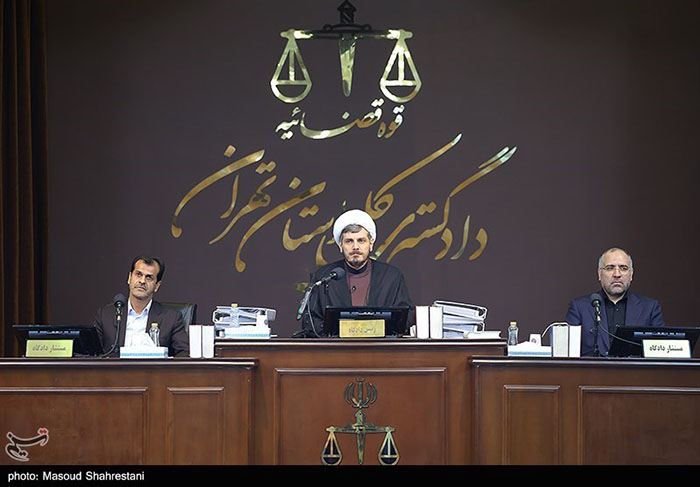
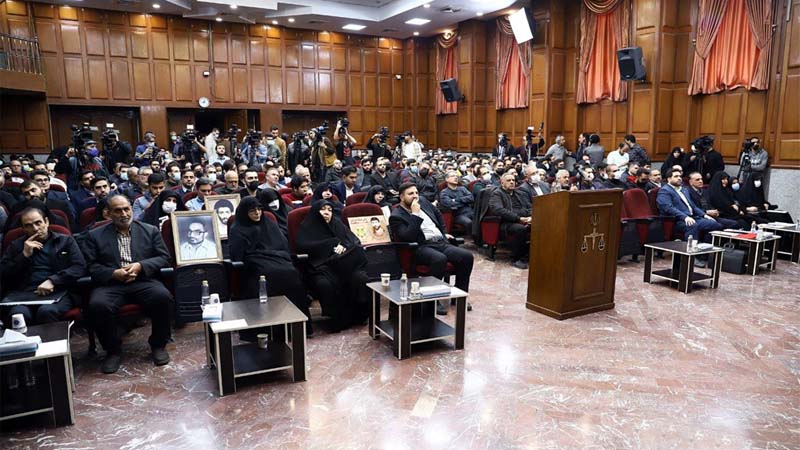
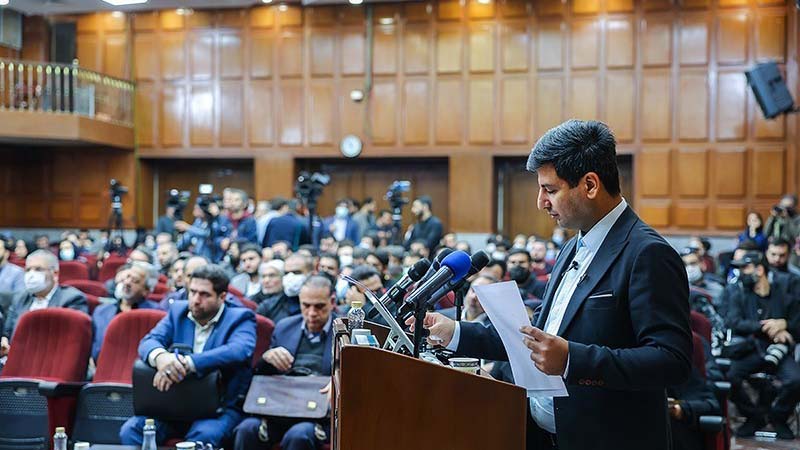
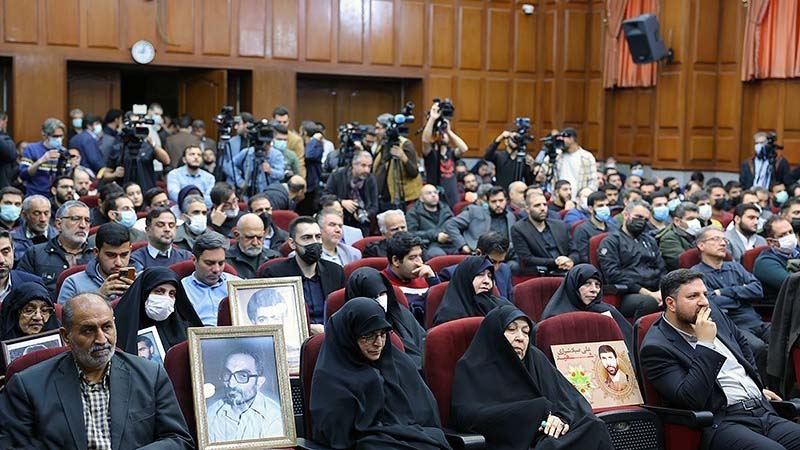
Last week, the Branch 1 of Tehran’s criminal court announced that 104 fugitive members of the Mujahedin-e-Khalq (MKO) terrorist group must introduce their attorneys to the court to represent the cases of their clients.

The historic judiciary statement noted that the named individuals would have one month to introduce their lawyers to the court, otherwise, the necessary decision would be taken in accordance with the law of the land.

Among the individuals named were Masoud Rajavi and Maryam Qajar Azedanlou (Rajavi), the ringleaders of the MKO terrorist cult, and Mehdi Abrishamchi, their right-hand man.

Earlier on June 21, Mohammad Dehqan, Iran’s vice president for legal affairs, announced that a series of measures have been taken to extradite MKO terror cult members, most of whom are currently based in Western countries.

Five days later, deputy chief of Iran’s judiciary (international affairs) Kazem Gharibabadi stated that legal measures have been initiated in various European countries against MKO members, criticizing the unnamed European nations for not properly pursuing Iran’s complaints.

Interestingly, days after the announcement, Albania banned the cult leader from entering the country, pointing to the beginning of the end of the cult’s Albania stint.

What are MKO terror cult crimes

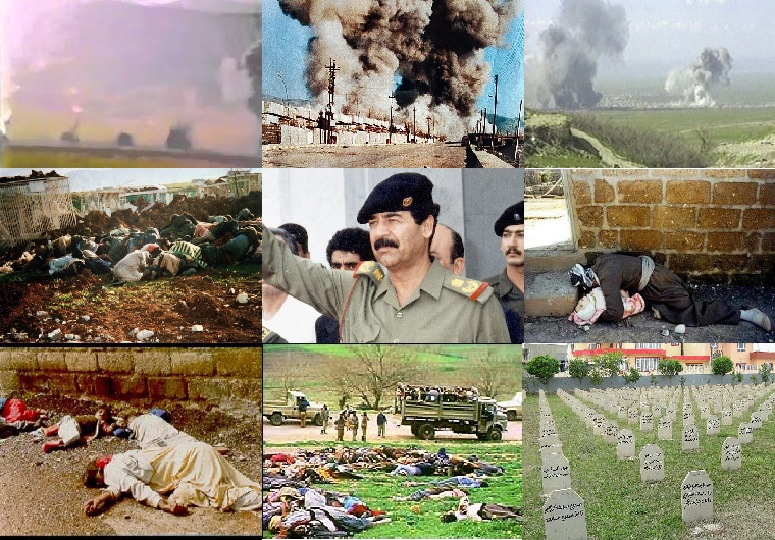
The horrendous crimes committed by the MKO terror cult are well documented and include terrorist attacks, sabotage of civilian infrastructure, participation in military aggression, and complicity in Baathist Iraq’s genocide of the Kurds.

In Iran alone, 17,161 victims of their terrorist actions have been documented, among them President Mohammad Ali Rajaee, Prime Minister Mohammad-Javad Bahonar, Judiciary Chief Ayatollah Mohammad Beheshti, as well as several lawmakers, ministers and scholars.

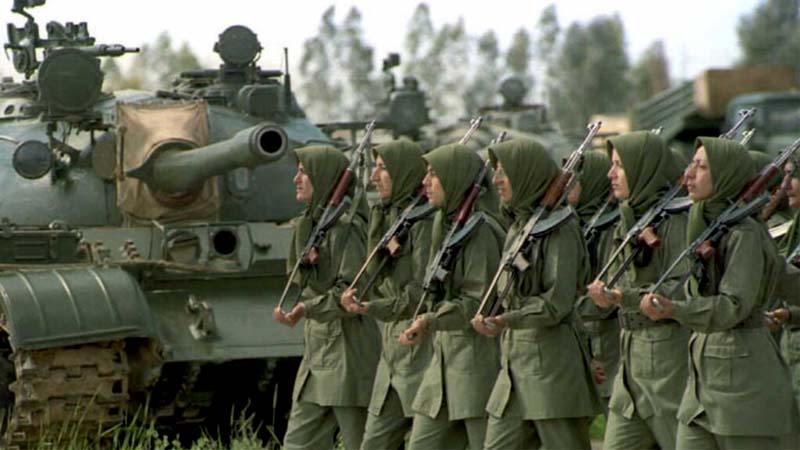
After failing to seize power and losing their socio-political base in Iran, the terror cult sought refuge in Baathist Iraq and participated in Saddam Hussein’s aggression against Iran, which was overtly backed by the West.

Post-Baathist Iraq acknowledged the former regime’s aggression against the Islamic Republic and Iraqi Kurds, convicted and punished many of those responsible, but none of the MKO members have so far been held accountable for their crimes, in Iraq or Western countries.

In only the 1988 operation against Iran, the terrorist group’s crimes included aggression and violation of UN resolutions, chemical attacks on Iranian villages with hundreds of victims, urbicide (city-killing) of Iranian cities and towns, and massacres of medics, voluntary helpers and others.

During the war and the subsequent Iraqi uprising against Saddam Hussain’s regime, MKO directly participated in genocidal campaigns against the Kurdish population, with over 4,000 victims in the vicinity of Kirkuk alone.

Testimonies from former MKO members confirm that Rajavis and senior MKO officers personally ordered the brutal massacre of Kurdish civilians, claiming that members of the Islamic Revolution Guards Corps (IRGC) were hiding in Kurdish traditional clothing, which was a blatant lie.

The same testimonies say many MKO members were horrified by the massacres but were not in a position to oppose their leaders because they would have risked their lives.

Experts believe that by brutalizing the Iraqi Kurds, the Rajavis desperately wanted to prove themselves useful to the Iraqi dictator, without whose support they would have been without the only base available at the time.

Iran’s experiences with extradition from West

Since the 1979 Islamic Revolution until today, Iran has had multiple negative experiences with Western countries regarding the extradition of those accused of serious crimes against the Iranian nation.

The most famous case is a request to Washington to extradite deposed dictator Mohammad Reza Pahlavi and return billions that he and his family stole from Iran and stacked in Western banks.

Although there is consensus among all Western historians that he ordered numerous atrocities against ordinary Iranians, the US government stubbornly refused to extradite him, as well as other regime officials, which only added to tensions between the two sides.

Another notable case is the request to Canada to extradite Mahmoud Reza Khavari, the former Melli Bank chairman who was accused of large-scale corruption and embezzlement of at least three billion dollars.

Since 2010, Khavari has been living as a Canadian citizen and his family runs a wealthy business empire in the country. Ottawa has always dismissed Tehran’s extradition requests.

In 2017, an Iranian court sentenced him to 20 years in prison and an international Interpol warrant was issued against him, but Canada refused to cooperate for political reasons.

The Western self-righteousness and flawed belief in the correctness of their judiciary, as well as the distorted understanding of the Iranian legal system, have often threatened the lives of their own citizens.

An example of this is Man Haron Monis, who received refugee status in Australia in 1996, then a political asylum, because Canberra accepted his fake story that he was persecuted in Iran because of his liberal interpretation of Islam.

Iran sought his extradition for years and warned Australian authorities that Monis was a criminal with a long history of fraud and violence, but they refused to pay heed.

Eighteen years later, Monis besieged the Lindt Cafe in Sydney, took ten customers and eight employees hostage, killed two, and was eventually killed in a police raid. The “liberal asylum seeker” was then dubbed a “Takfiri terrorist.”

Furthermore, Iranian diplomatic missions in Western countries have often experienced unsavory incidents involving violence, and the perpetrators most often have been individuals who were granted political asylum based on false stories.

How has Iran treated MKO penitents

Contrary to the unfounded claims that Iran imposes collective guilt on all MKO terror cult members for crimes and that they are therefore threatened with death or other severe punishments, actual case stories present a completely different picture.

Iran’s judiciary recognizes that many MKO members were misled, deceived or lured into the terrorist cult with threats, intimidation and coercion.

In tens of recorded cases, MKO penitents renounced cult membership, agreed to return to Iran, voluntarily participated in police and court sessions, and were eventually released, reunited with their families, and today live freely.

This defection process has been underway for years and has intensified in recent years as most of the members are aging and approaching death. They have finally woken up to the failed ideology of the terror cult and its false promises, and are desperate to reunite with their families.

According to the testimonies of former MKO members, they were not allowed private communication with their families and any contact would be attempted under strict control, to recruit relatives or ask for donations.

Due to these conditions, which befit a concentration camp, many MKO members did not see or hear from their closest family members, relatives or friends for decades.

The latest offer by the Iranian judiciary to more than a hundred MKO members to present their defense, even in absentia through a lawyer, allows them to embrace the truth.

By Ivan Kesic

August 7, 2023 0 comments
FacebookTwitterPinterestWhatsappTelegramSkypeEmail
Albania police takes control of MKO terrorists' camp
Albania

Albania police takes control of MKO’s camp

The Albanian police have imposed new restrictions on the base of the anti-Iran terrorist Mujahedin-e-Khalq Organization (MKO) in Tirana in order to take control of the terrorists’ camp.

Following Albania’s increased pressure on the MKO terrorists residing at the Ashraf-3 camp in Tirana, the country’s police have imposed new restrictions on them so that no one has the right to enter or leave the camp without the permission of the police.

The news comes as earlier in August, informed security sources told Tehran-based Tasnim News Agency that the MKO’s ringleader Maryam Rajavi was banned from entering Albania.

Albanian police forces entered the MKO camp, known as Ashraf-3, on June 20 due to its engagement in “terror and cyber-attacks” against foreign institutions. Authorities seized 150 computer devices linked to terrorist activities. At least one person was killed and dozens of others were injured during the clashes at the camp. More than a week later, police in Albania entered the Ashraf-3 camp again and security forces were deployed at the entrance to the camp and controlled all vehicles leaving the site.

On July 3rd, Chief of the Iranian Government’s Information Council Sepehr Khalaji announced that Iran has received part of the hard drives and computer cases that were seized from MKO terrorists by Albanian police.

Albania’s Prime Minister Edi Rama also said the MKO must leave the country if it wants to use Albanian soil to fight against Iran, adding that his country has no intention of being at war with Iran and “does not accept anyone who has abused our hospitality.”

In late July, A top Iranian criminal court said it’s planning to bring more than a hundred members of the anti-Iran terrorist cult Mujahedin-e-Khalq Organization (MKO), which has murdered tens of thousands of Iranian citizens, to trial. Branch 1 of Tehran’s Criminal Court announced that 104 MKO members, including the ringleader of the terror cult Maryam Rajavi, must introduce their lawyers to the court so that they will represent and protect the rights of the defendants.

Recently, Iranian Foreign Ministry Spokesperson Nasser Kan’ani stressed that Tehran’s efforts to pursue and prosecute anti-Iran MKO terrorists are ongoing.

“We did not spare any effort to prosecute those who committed terrorist crimes against the Iranian nation,” he noted.

The MKO has carried out numerous terrorist attacks against Iranian civilians and government officials since the victory of the Islamic Revolution in 1979. Out of the nearly 17,000 Iranians killed in terrorist attacks over the past four decades, about 12,000 have fallen victim to the MKO’s acts of terror.

August 7, 2023 0 comments
FacebookTwitterPinterestWhatsappTelegramSkypeEmail
The Voice of Families conference
Mujahedin Khalq Organization members' families

The Voice of Families conference was held in Tirana

On Friday, August 13, 1402, Asila Association held a conference titled “Voice of Families” in Tirana, Albania. The Association for the Support of Iranians living in Albania called the purpose of holding this public conference “to bring the voice of the waiting families of members of the Cult of Rajavi.”

The Voice of Families conference was held at Dora Hotel in Tirana and was welcomed by the guests. The executive director of the conference was Erisa Rahimi and the head organizer was Ella Dada.

Dashamir Mersuli, president of Asila, Aldo Solullari, media manager of Asila, Khalil Ansarian, Hamid Atabay, as well as Bijar Rahimi, a new member of Asila, who recently left the Mujahedin-e Khalq (MEK), spoke at the conference.

The Voice of Families conference

The Voice of Families conference

The conference also had guests from Iran: Soraya Abdullahi addressed the audience online, which was very impressive. Also, two video messages from Saeed Hosseini’s mother, Masoumeh Hosseini, and Fereydoon Nedai’s mother were played for the participants. The speeches of these mothers greatly impressed the guests.

The speeches of Bijar Rahimi, who had left the MEK a few days ago, and the facts he told from inside the camp of Cult of Rajavi were shocking for the audience.

The conference lasted three hours and at the end, the final statement was read by Hamid Atabay. It was then signed by all of the attendants of the conference.

Finally, Erisa Rahimi appreciated all of the families, Nejat Society and its CEO, Ebrahim Khodabandeh, for their support to Asila. He also thanked Dashamir Mersouli, the president of Asila, on behalf of the members and families.

The film of this conference will soon be made available to the public, especially the honorable families of Nejat Society in Iran.

August 6, 2023 0 comments
FacebookTwitterPinterestWhatsappTelegramSkypeEmail
Bijar Rahimi; MEK former member
Former members of the MEK

Bijar Rahimi: I was kept in the MEK against my will

Bijar Rahimi left the headquarters of the Mujahedin-e Khalq (MEK) after 21 years. In 2002, he had been smuggled from Iran to the MEK’s camp in Iraq by the group’s agents.

Bijar is from, Iranshahr, Sistan Baloochestan, Iran. He was 41 when an MEK’s smuggler promised to take him to Europe to have a high-income job. He trusted the MEK’s recruiter and eventually he was trafficked across Pakistan border, and he was then taken to Camp Ashraf, Iraq.

“At Baghdad airport, I was received by two Iranians,” Bijar recounts his story. “They drove me to a place where everyone was wearing military uniform.”
In response to his question about the location, he was told that it was the MEK’s headquarters: Camp Ashraf! “I asked if I would be taken to Europe from there and they answered that I had to stay there for a while waiting to be informed about when and how to be transferred to Europe,” he recalls.

Bijar was given a military uniform and forced to stay in the entrance unit of Camp Ashraf where he saw a large number of people who had been taken there with the promise of immigration to Europe and lucrative career, too.

During the first months, Bijar was still pursuing the issue of going to Europe. Once he was told that the French Police had raided the MEK’s base in Paris and had arrested Maryam Rajavi. “They told us that going to Europe is impossible”, he says.

After the US invasion to Iraq, the country was insecure, they had to stay in Camp Ashraf under the cult-like ruling of Massoud Rajavi. He was under the group’s manipulation system for 21 years. He was not allowed to contact his family during those years. “They would clearly say that the main enemy of a Mujahed-e Khalq is his or her family,” Bijar Rahimi testifies.

His family went to Camp Ashraf to visit Bijar but they were not allowed to meet him. The MEK leaders never told Bijar about that. “I just know about that after I left the group,” he says.

After the MEK’s relocation in Albania, the brainwashing system of the MEK kept on working, isolating members from the free world. “Ideological meetings, reporting on peers, self-criticism sessions and psychological suppression still continued in Albania,” Bijar states. “I just wanted to get rid of the pressure and to make the dream of contacting my family come true, so I decided to escape the group.”

Despite the lies fabricated by the MEK leaders about the Albanian Police and the Association for the Support of Iranians Living in Canada (ASILA), Bijar surrendered to the Police and then he was welcome by ASILA.

“My escape from the MEK was like running out to the darkness,” he says. “Despite my fears I was assured by ASILA and Nejat Society that what the MEK leaders say about them is pure lie.”

August 6, 2023 0 comments
FacebookTwitterPinterestWhatsappTelegramSkypeEmail
Maryam Rajavi
Maryam Rajavi

Maryam Rajavi Banned from Entering Albania

The government of Albania has banned Maryam Rajavi, the notorious ringleader of the terrorist Mujahedin-e-Khalq Organization (MKO), from entering the country, informed security sources told Tasnim.

The sources said Albania’s counter-terrorism court has issued the ban after reviewing evidence that shows the group has run terrorist activities in Iran.

Rajavi fled from Albania to France in late June, after Albanian police forces raided a camp hosting the MKO due to its engagement in “terror and cyber-attacks” against foreign institutions.

They seized 150 computer devices linked to terrorist activities.

At least one MKO terrorist was killed and dozens of others were injured during the clashes at the camp, known as Ashraf-3, in the northwest of the capital Tirana.

Reports suggest that the MKO terror group member killed in the raid was ‘Abdolvahhab Faraji’, a prominent commander of the terrorist group with expertise in military engineering operations who was in charge of technical and engineering activities during an operation launched by the MKO terrorists against Iran in July 1988.

MKO members spent many years in Iraq, where they were hosted and armed by the former Iraqi dictator Saddam Hussein. They sided with Saddam during the 1980-88 imposed war against Iran and then helped him quell domestic uprisings in various parts of the Arab country.

The notorious group is responsible for killing thousands of Iranian civilians and officials after the victory of the Islamic Revolution in 1979.

More than 17,000 Iranians, many of them civilians, have been killed at the hands of the MKO in different acts of terrorism including bombings in public places, and targeted killings.

August 5, 2023 0 comments
FacebookTwitterPinterestWhatsappTelegramSkypeEmail
Bijar Rahimi; MEK former member
Former members of the MEK

Statement of ASILA on the separation of another MEK member

Hereby, we inform our valued compatriots and respected families about the brave escape of Mr. Bijar Rahimi from the captivity of the Mojahedin-e Khalq Organization (MEK, MKO, Rajavi Cult) and we express our congratulations to the great family of Najat Society, particularly Mr. Rahimi’s family.
The joining of Mr. Bijar Rahimi to ASILA promises that despite all the problems the MEK created, ASILA is still a safe destination for those who no longer want to tolerate the new slavery in the isolated and remote camp of this organization and wish to save themselves from the mental and physical captivity of this destructive cult.

ASILA would like to appreciate the support of the Nejat Society and Families, especially Mr. Ebrahim Khodabandeh, the respected CEO of the society, in helping to rescue Mr. Bijar Rahimi. It is also necessary to thank the cooperation of the Albanian police for guaranteeing the security of the former members, including Mr. Bijar Rahimi.
Hoping for the release of other captives under the clutches of the Rajavi Cult.
Tirana, July 30, 2023

August 5, 2023 0 comments
FacebookTwitterPinterestWhatsappTelegramSkypeEmail
Bijar Rahimi; MEK former member
Former members of the MEK

Bijar Rahimi Left the MEK’s isolated Camp Ashraf 3

The Association for the Support of Iranians Living in Albania (ASILA) declared the defection of another member of the Mujahedin-e Khlaq (MEK). Bijar Rahimi succeeded to release himself from the bars of the Mek’s headquarters in Manez, Albania, Ashraf 3.

Immediately after his release, Bijar Rahimi joined ASILA. Publishing a statement, ASILA congratulates Bijar’s family and other families of Nejat Society on his salvation from the destructive Cult of Rajavi.

ASILA also appreciates the cooperation of the Albanian state Police to provide security for defectors of the MEK including Bijar Rahimi.

July 31, 2023 0 comments
FacebookTwitterPinterestWhatsappTelegramSkypeEmail
Newer Posts
Older Posts

Recent Posts

  • Rebranding, too Difficult for the MEK

    December 27, 2025
  • The black box of the torture camps of the MEK

    December 24, 2025
  • Pregnancy was taboo in the MEK

    December 22, 2025
  • MEPs who lack awareness about the MEK’s nature

    December 20, 2025
  • Why did Massoud Rajavi enforce divorces in the MEK?

    December 15, 2025
  • Facebook
  • Twitter
  • Instagram
  • Youtube

© 2003 - 2025 NEJAT Society . All Rights Reserved. NejatNGO.org


Back To Top
Nejat Society
  • Home
  • Articles
  • Media
    • Cartoons
    • NewsPics
    • Photo Gallery
    • Videos
  • Publications
    • Books
    • Nejat NewsLetter
    • Pars Brief
  • About Us
  • Contact us
  • Editions
    • عربي
    • فارسی
    • Shqip