Nejat Society
  • Home
  • Articles
  • Media
    • Cartoons
    • NewsPics
    • Photo Gallery
    • Videos
  • Publications
    • Books
    • Nejat NewsLetter
    • Pars Brief
  • About Us
  • Contact us
  • Editions
    • عربي
    • فارسی
    • Shqip
Nejat Society
Nejat Society
  • Home
  • Articles
  • Media
    • Cartoons
    • NewsPics
    • Photo Gallery
    • Videos
  • Publications
    • Books
    • Nejat NewsLetter
    • Pars Brief
  • About Us
  • Contact us
  • Editions
    • عربي
    • فارسی
    • Shqip
© 2003 - 2024 NEJAT Society. nejatngo.org
Former members of the MEK

Rajavi, self-immolations forces French authorities to withdraw

An interview with Batool Soltani on MKO self-immolations – Part fourteen

Sahar Family Foundation: Ms. Soltani, we intend to have a discourse on the issue of self-immolations in June 17, 2003. My first question is under what motives and ends were these incidents broached within the organization?

Batool Soltani: I was not present in the Europe at this phase, but the question was that the members’ main responsibility to repel the direct threat posed against the leadership’s interests was to make sacrifice in any possible way and degree.

SFF: I mean, through what clear process did the organization conduct such feats and what were the targets it directly aimed at?

BS: The main objective was to release Maryam Rajavi as fast as possible but hardly had they thought of possible controversial consequences of such operations. In the higher echelons there might have been a different analysis and conjectures concerning the incidents but in our membership level the stress was on the acceleration of Maryam’s release.

SFF: Maybe I have failed to properly phrase my purpose. So I phrase it anew with an explanation. The motives behind these self-immolations are a matter of dispute. It can be looked upon as a reaction against the leadership’s sacrilege. Or it can be a matter of infringing regulations, that is to say, if Maryam Rajavi’s case was to follow a legal process, especially with concern to the charges against her, she had to face legal trials and the consequent verdicts of punishments. Looking it from this aspect, could these anti-social deeds be challenging and charging Maryam Azodanloo with further allegations and their irreparable consequences? If you remember, prior to this session, you had a reference to Rajavi’s best position taking concerning Maryam’s arrest and explained that her arrest could have serious legal outcomes for her and the headquarters in Auvers-sur-Oise. Your reference to these deeds was from a precautionary point of view. The motives behind these self-immolations were only a reaction against the sacrilege to the leadership or coverage for allegations such as laundry, plot against the opponents and other charges of her case? Will you explain if in their inter-organizational analysis the issue was discussed from this aspect?

BS: What they mainly focused on in the organization was the very aspect of the leadership’s sacredness and that we had to do our best to force French judiciary into withdrawing or at least baffle their attempts to take serious decisions. Thus, it can be concluded that their principal objective was aftereffects of the arrest. If you may ask for the cause, the organization has already an experience of Rajavi’s expulsion from France. It happened at a time when Rajavi had resolved to join hands with Saddam and make an alliance. That is, the organization had prepared a de facto background to settle if expelled from France. Of course, there is also a possibility that France’s decision to expel Rajavi was in line of his own volition to leave France. That is why he showed the slightest resistance with the excuse that Iran and France had reached a compromise on his expulsion.
Naturally, when the expulsion by itself helped to actualize general objectives of the organization, it was in no way rational to show reactions like that of the 17 June immolations. Of course, such operations were on the agenda at that time but Rajavi had resolved on a willing decision to leave. But in the case of Maryam it was totally different; Camp Ashraf was no more a stable bastion to settle and her chance of relocation to Iraq had sank to zero. Furthermore, the strategy of the organization was to keep her in the Auvers and to fortify the new bastion there with her as the leader of a pro-democratic and counter-fundamentalist opposition. Naturally, accomplishment of such objectives required a timely decision and reaction. Just as the organization thought France was cozy up to her settlement there she was arrested on many charges that not only seemed to be a violation of the leadership’s sacredness but also could in itself lead to unpredicted consequences; she could even be possibly tried and expelled from France. There had to be taken a calculated risk since the organization lacked a brain at the top; one leader was absent and the other was arrested.
The immolations were the sole option to overcome the crisis, call it a reaction against violation of Maryam’s sanctity or anything else. What the organization needed at that critical moment was to strip members of their capacity for rational activity because it could not preach for them about the legal adverse consequences of Maryam’s apprehension. Then, what had to be done? It is already instilled into them to react whenever the leadership’s sanctity happens to come under direct violation regardless of any regulations they have to submit in the country wherein they are living. The sole goal becomes to release Maryam and they have nothing to do with the legal and illegal aspects of her arrest. The immolations were blind operation that could either aggravate the crisis or temporally tone it down.
It was all outside reflections. As soon as Maryam was arrested, Mozhgan Parsai held an extraordinary meeting in Camp Ashraf and announced that Massoud had delivered a message to inform the arrest of Maryam and a number of other rankings in France. The squall among the members of the Leadership Council disturbed the meeting but Mozhgan continued reading Massoud’s message saying he had insisted that for the release of Maryam, even one hour sooner, all the interests of the organization throughout the world, all its possessions and all the members failed to be enough to be set on fire. It was the reflection of her arrest inside Camp Ashraf. That is why I insist that the organization tried to keep the sacredness of the leadership infringed since it could easily stir the emotions if the sanctity was proclaimed to have been violated. As it was a question of the survival of the organization, leadership and ideology, Mozhgan persisted on emotional aspects of the issue to be magnified for the rank and file. She ended the meeting by saying we were all in our organizational preparedness.

SFF: What did she mean by organizational preparedness?

BS: Nothing in particular. It was only an emphasis on the normalization of the relations among the present members of the Leadership Council and that, all had to behave normally when encountering the lower ranks to pretend nothing serious had occurred. The mixed up appearance of the rankings, swollen red eyes and disorderly hair, could disturb and lower the rank and file’s morale.

SFF: How sincere do you think were the ranks in their emotional reactions?

BS: For myself, it was not sincerely at all. At that moment I had my own doubts. Among the members of the Leadership Council were those who had volunteered to set themselves on fire before Americans, but I believe it was nothing more than a histrionic behavior and there is no clear evidence to say if they were truthful in what they showed. In some cases, it was genuine emotions mixed with insincerity that had their impact on the others to create a homogeneous unity.

To be continued

September 5, 2009 0 comments
FacebookTwitterPinterestWhatsappTelegramSkypeEmail
Former members of the MEK

Rajavi’s interpretation of the holy and foul suicide

An interview with Batool Soltani on MKO self-immolations – Part thirteen

Sahar Family Foundation: Ms. Soltani, in our last session, you mainly focused on theoretic and tenable aspects of suicide operations. Your explanations were nice but it would be much better if you elucidate the practical instances of suicides and self-immolations you have personally witnessed. There are reports of some cases committed for a variety of reasons. I mean how Rajavi reacted to these acts and analyzed them. Your explanations will shed light on ambiguities especially if the names of the victims are mentioned.

Batool Soltani: Well, many of these cases can be found happened within the organization. In many cases Rajavi exclusively referred to some instances as proofs when trying to inoculate his mentalities.

Of course, as I have already pointed out, such discourses were held only in the meetings of the Leadership Council and never leaked out. Bear it in mind that he never intended to compare anything with the opponent side or infer anything from these instances of suicide when referring to them. It was an issue discussed within the organizational sphere and, of course, deductions were generally related to internal relations. The main focus was differentiating between the holy and sinful kinds of suicide with the emphasis on romanticizing the suicide and describing it as a noble act which Rajavi theorized according to his interpretations.

I have to point out that some of these suicides were committed just following these meetings like the suicide done by Mehri Moussavi just as some had been recorded before. Of the significance was his skill in presenting examples that could well help to differentiate between the two, that is to say, the presented standards and motivations, which the ranking members were well aware of, behind these suicides could well help to identify whether it was esteemed a holy suicide for the cause of the leader and interests of the organization or despised a sinful suicide for individual weaknesses, flaws and ambitions. Of the suicides that offended Rajavi and made him erupt furiously to hold consequent lengthy meeting with the members of the Leadership Council was the suicide committed by Kamal Haddadi long after the beginning of these discourses. He was a ranking member of the Central Council and that was the cause for Rajavi to be sensitive about the incident.

A look at the list of the members of the Central Council at the time, dissolved after the initiation of the ideological revolution, indicate that he was a ranking commander deposed of his responsibility after the ideological revolution. The emphasis on him as an officer of high ranking is to know how Rajavi degraded such people when treating them for organizational concerns. Kamal was reported to have established a relation with a woman under his command.
 
The relation could be any organizationally unauthorized relation regardless of being ideological, emotional, moral or even a love affair. They said it was a love affair and the case was sent to Rajavi and Maryam to be dealt with. At the time Rajavi was stationed in Camp Parsian. Before transferring Kamal to Camp Parsian, Mahvash Sepehri began further investigation of the case and put Kamal in a prison cell called ‘Bangal’, an isolated, solitary confinement where they kept the culpable to be judged. She pressed him with recriminations and accused him of immoral relations with the woman. So harsh and disdainfully she treated Kamal that he could easily anticipate what awaited him before Rajavi. He could tolerate no more and committed suicide in his cell.

At the time, I was a ranking deputy in the Leadership Council and was present in the meetings particularly dealing with such cases. I remember the first words stated by Rajavi concerning Kamal’s suicide. He was much enraged by Kamal’s act and said he threw his corpse on the leadership’s table. I have to point out that Kamal’s suicide was never mentioned among the rank and file who thought he had died of a natural death. But all the members of the Leadership Council knew that he had died of psychological pressures impressed by Sepehri. In the very same meeting, Rajavi appreciated Sepehri and said Kamal deserved to be treated so contemptibly and unworthy way to commit suicide. Rajavi never mentioned anything about ideological deviation that could have affected Kamal because it could raise questions. Kamal was shown to have no ideological problem and that he had chosen his path rightfully; his death had to be looked and analyzed from a different angle to preserve the good image of the organization.

What Rajavi depicted was so easy to perceive. Among the members are those who set themselves on fire for the sake of the organization and leader’s interests; in contrast, some others commit suicide for deviant, immoral causes and threw their corpses on the table before the leader. Then he compared the different motivations behind the two acts. Those who committed suicide for selfish causes not only committed sin but also led the organization to the midst of a big problem hard to deal with. The former suicides solved a problem in the course of accomplishing a holy cause while the latter suicides burdened problems on the shoulder of the leader. People from each group lose their lives on their own but it is the contradictory motives that decides who is blessed or condemned; the former has succeeded to release himself of his own self to become selfless and attach to an ideological source without; the latter is a slave of his own self and is reluctant to discharge introspections in the arranged weekly ablution sessions to clean his inside.

Taking opportunity of Kamal’s case to illustrate intended motives of suicide, Rajavi presupposed that following the US invasion, the destiny of Mojahedin would be vague. We would be dispersed and sent to different parts of the world; a group to Iran, another to France, America or any other place. In that case, could we possibly carry the potentiality of being a mobile bomb ready to detonate to safeguard the interests of the leadership? To ideologically justify the suicide operations, he again referred to Kamal’s case and other similar cases of suicide for personal motivations; one killing himself for sexual impulses, another disappointed, flawed and depressed, and Kamal Haddadi who was in contradiction with himself and failed to appear before other members to confess his sins and purge himself. None of them, he said, had committed suicide for the sake of leader and their attachment to him. No status and value could be so noble as compared to that of setting oneself on fire for the leadership and Maryam.

Although motives for suicide varied, what differentiated between the individual and ideological motives, the former described as a sin in the Quran and the latter romanticized and glorified for organizational causes, was the pivotal point where one’s self met and attached itself with that of the leader who well directed the act onto the right path. It was no more suicide but martyrdom and even exceeded it in value. To give further explanation, he said; consider in this very moment something suddenly threatens my life as your leader. One of you may imagine that the threat is removed if you set yourself on fire. In his opinion, the suicide had committed a sin in risking his life to save the leader because the act was non-ideological and performed under no command by the leader; the suicide was now a foul corpse cast before the leader.

It was one of the instances Rajavi delineated and formulated the ideological suicide that differentiated it with a foul and sinful one; the holy suicide has to be performed only and purely by the permission and the command of the leader, otherwise it will be considered a big sin the ideological motives have spurred it. Thus, it can be concluded that the 17 June self-immolations, in contrast to Maryam Rajavi’s rejection to be instigated by the organization, were organizationally planned and orchestrated and approved by the leadership. None of the volunteers set themselves on fire entirely of their own volition; their acts to be esteemed holy, they had to follow the decree and command of the leadership. Does it mean anything else when they glorified the acts of Neda (Hassani) and Marzeh (Mojaveri), both died of the burning injuries, as holy feats? Their self-immolation before anything indicated the degree of their loyalty and submission to the leadership. These instances along with Rajavi’s ideological interpretation as well as his reference to the Quran as a subterfuge to justify his egocentric ambitions may lead us to the bottom of truth.

To be continued

September 3, 2009 0 comments
FacebookTwitterPinterestWhatsappTelegramSkypeEmail
Massoud Rajavi

The fall of Ashraf: Collapse of Rajavi’s strategy

Years ago, when Rajavi’s strategy for “ cutting the regime’s finger tips” failed, he fled to Iraq and claimed a new strategy called “ New Liberating Struggle” and formed a tool to fulfill this strategy ; “ Iran Liberation Army”. This strategy was allegedly taken due to the particular situation ruling Iraq which was fighting Iran.

Liberation Army and Camp Ashraf were introduced by Rajavi as the symbols of the new strategy. Considering that Rajavi was always seeking for manipulating the members’ minds, labeled all his acts as ideological; he claimed himself as ideological leader; his so called Liberation Army was also the ideological aspect of his strategy.

Following the ceasefire between Iran and Iraq, the Liberating strategy and consequently, the existence of Liberation Army came under question. Thus Rajavi tried to remove the label of being remnant of the war, launching a deadly attack on Iran, through his “Eternal Light Operation”. The attack ended with heavy casualties for the group and expiration of that strategy but heavier casualties were collapsed on Massoud Rajavi as “owner of the theory.”

Rajavi couldn’t admit this fact so he continued his presence in Iraq and prolonged strategic existence of his organization in Iraqi territory. Camp Ashraf found a typical ideological aspect in Iraq.

When Saddam Hussein invaded Kuwait in 1992, Rajavi was disappointed since he could see no more hope for another war between Iran and Iraq. His NLA theory was blocked in Iraq that was attacked by the US in the first Gulf War.

Rajavi didn’t want to admit the failure of his strategy so urging on his so called armed struggle strategy he tried to heighten pressure on Iraqi internal relations and to band members from leaving the organization in order to cover his scandalous failure.

Second American invasion to Iraq, once more, pointed out the fact that NLA and also MEK’s existence in Iraqi territory was not feasible. Massoud Rajavi insisted on the presence of his disarmed NLA in Camp Ashraf, although he and his wife fled the Camp to France.

To flatter American forces, Rajavi ordered his members in Camp to sign an agreement with US army. The MEK were engaged to condemn any act of violence, but residents of the camp continued wearing military uniforms and chanting “Viva NLA, solid arm of heroic Iranian people.” however, NLA was an army neither in form nor in content.

The last step of Iraqi government to inform Rajavi that he can’t stay in Iraq any more, was the takeover of Iraqi security by Iraqi forces but Rajavi still forces his members to maintain Camp Ashraf.

Why does Rajavi never admit the failure of the so–called Liberating struggle insisting on it?

The reason is that Ashraf is the symbol of Rajavi’s strategy and ideology. Losing Ashraf results in losing everything, at least for a few years.
If Rajavi accepted to leave Iraq, he would accept the failure of many of his claims and slogans such as:

• Being the alternative to IRI
• Being the Leadership of new revolution or resistance
• Being the president elect of resistance

Now that Iraqi government has gained the sovereignty on its territory, the recent ultimatum to MKO for its expulsion from Iraq would leave Rajavi with many questions.

  • Why didn’t he leave the liberating struggle strategy in 1998 after the cease-fire between Iran and Iraq?
  • Why did he maintain his members in Iraq despite the fact that their presence in Iraq was of no use?
  • Why did he capture a large number of people physically and mentally for years?
  • Why did he encourage the residents to resist against Iraqi forces, causing them to die?

He might have left his slogans and accepted the failure of his strategy and ideology. Maryam Rajavi’s statement, on her conditional return to Iran, Massoud Rajavi’s letter to Experts Assembly, are signs of deviation in MKO’s strategy. The outcome of this deviation will end the Rajavis with disastrous problems including denouncification of the cruelty they impose on Ashraf residents, capturing them behind bars of their cult-like organization.

September 3, 2009 0 comments
FacebookTwitterPinterestWhatsappTelegramSkypeEmail
Iraq

Iraqi MP: Presence of PMOI in Iraq is causing many problems

The Iraqi Kurdistan Alliance MP Mahmoud Othman, asserted on the Expulsion of Mujahedeen Khalq, an Iranian opposition to leave Camp Ashraf in Iraqi territory.The Iraqi Kurdistan Alliance MP Mahmoud Othman, asserted on the Expulsion of Mujahedeen

"the presence of the PMOI’s Camp Ashraf in Diyala province is causing many problems, adding that it is best for Mujahedin to leave the Iraqi territory to end the tensions and complexities between the Iraqi government and the Mujahedin Khalq Organization,..” Othman said 
in an interview with an Iraqi News Agency.

Othman stressed that the events that took place in the camp was predictable because the organization is opposed to the Iranian regime and the Iraqi government has established a friendly relationship with Iran, and Tehran demands the government of Baghdad constantly to make MKO leave the Iraqi soil.

September 2, 2009 0 comments
FacebookTwitterPinterestWhatsappTelegramSkypeEmail
Former members of the MEK

Rajavi’s passion for women and his ambition for leadership

Memoirs of Ms. Batoul Soltani – Final Part

When the so called detachment between women and Rajavi was removed, they were completely comfortable to speak about any sort of problem in the meetings. In fact, the ease in the Rajavi's passion for women and his ambition for leadershiprelationships was the outcome of those arguments made by Maryam about “traditional woman “or “woman in quotation marks”. Massoud Rajavi never limited himself to present any sort of problem. Even before marrying every woman in the leadership council, he was always relaxed to ask his questions or to convey his arguments in a manner he desired.
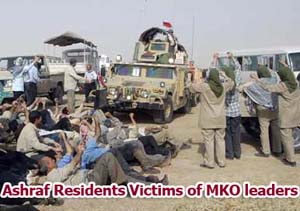
Even where there were some reports on immoral relationships in various levels of the organization, he simply asked detailed questions to know what he needed to know. He asked our opinion and what we knew about that immoral relationship. He never felt shameful among the members in every level of MKO to seek the details. He was totally open in his relations and behaviors.

Among the members, there were some people who left meetings after such cases were presented. It is worth knowing that Massoud’s reaction was so humiliating. He called them "peasants" or “mullahs”. Maryam also accused them of being superficial or reactionary.

Despite these reactions there were others who stood up and asked why they are saying so and that was not their problem. Thus they faced the case from a superior position. After some time gradually those so called "peasants" became relaxed in the meetings due to the process the leaders used in order to despise them.

As a matter of fact, those justification meetings lasted for around a hundred hours in order to achieve the desired result. The problem cannot be solved in a short-term meeting.

During the meetings some of the members protest, they leave the hall to think outside, and then they get back saying that they were wrong. They explain their reaction towards that case. The leader asks them what their problem is. They confess that they got angry regarding the discussed case.

To justify their reaction, Rajavi says that these thoughts are the remaining of the reactionary traditional thoughts of Mullahs. He relates the protests to different things and finally accuses the person of being under the influence of her ex-husband and then he concludes that “she hasn’t actually divorced her husband; her divorce is not a real one! She is basically problematic and that is why she doesn’t attend the meeting. She has to start from the beginning.” Such arguments sometimes last one to two hundred hours.

I think Rajavi stands on two virtual legs: One is his passion for women and the other is his ambition for leadership. These traits lead him to a totalitarian, power seeking personality.
I think he is able to achieve his ambitions using these two aspects of his personality. He is definitely capable of using them. I’ve already explained that he cannot bear the presence of a man among his so called leadership council. This certifies that he has a psychological problem. In a wide echelon (the leadership council) he gathers his passion for women with his ambition for leadership to accomplish what he wants.

Rajavi believes that a woman works more obediently than a man. He thinks that when he orders a man to do a job, he may ask why, but a woman never asks questions about the demands, she would immediately execute the order. And that’s exactly what Rajavi wants. This is the potential that he cannot see in his male members. What matters to him is that who the best to achieve his goals is. Comparing men with women, Rajavi believes that women are different phenomena whom he can invest on.

I think this approach has a very basic role and makes good tools to achieve further objectives.

Translated by Nejat Society

September 2, 2009 0 comments
FacebookTwitterPinterestWhatsappTelegramSkypeEmail
Members of the MEK

MKO agent arrested in Northern Iran

Iranian security forces have arrested an MKO ringleader and disbanded his cell in the northern city of Qazvin, a provincial judiciary official announced on Monday.

“An individual, affiliated with an anti-revolutionary party and active in anti-Islamic Republic propaganda, was arrested,”Seyfollah Maleki, Interrogator of Qazvin’s public and revolutionary court, told reporters.

Identifying the inmate as”A.J”, Maleki announced that the detainee who is a physician had arranged meetings to propagate against the Islamic Republic for the benefit of the anti-Iran terrorist group, the Mojahedin-e-Khalq Organization (MKO).

The detainee has also been charged with procuring and distributing statements to encourage and provoke people into illegal gatherings and rallies.

Insulting Iran’s leadership as well as the countries authorities and high-ranking clerics are among other charges filed against the 38-year old arrestee.

Maleki also announced that the security forces have arrested 20 individuals in connection with the case, adding that all the inmates have admitted to their crimes.

September 1, 2009 0 comments
FacebookTwitterPinterestWhatsappTelegramSkypeEmail
Former members of the MEK

MKO Leaders’ seditious acts condemned

Nejat Society,Western Azarbayjan Branch condemns MKO leaders’ seditious acts

The recent incidents at Camp Ashraf where a number of residents, incited and organized by the cult leaders, confronted the Iraqi Police, ended with the death and injury of some of them. The act once again showed the brutality of Rajavi’s gang in rising crisis and creating constant tension for their propaganda. They never matter the victimization of their rank and file but they only matter how to feed their deceitful propaganda machine as Secretary of State Hillary Clinton said about the move of Iraqi Police to Ashraf :"It is a matter now for the government of Iraq to resolve,"

We deeply believe that MKO leaders try to maintain Camp Ashraf as their ideological and strategic container by launching false propaganda and mongering crisis, they violate all international laws based on the right of sovereignty of the nations on their own territory.

We as the ex – members of MKO, who returned to our homeland and now are living in Iran peacefully, condemn MKO leaders’ plot to create crisis and tension by warmongering, terrorism and violation of international laws and finally victimizing Ashraf residents for their own inhumane cause. We know that MKO leaders are terrified by easy access of Iraqi police to their base since it will pave the way for the access of International human rights bodies and also residents’ families to them.
 
The ideological leader of MKO knows well that if their base is supervised by Iraqi officials, the release of captured members will be more likely. Therefore they try in any way to stop Iraqi supervision over the camp to prevent the decline of their forces.

Their anti-democratic acts contradict the most basic human rights.

We want them to stop crisis mongering in Camp Ashraf and provide the residents a peaceful relaxing atmosphere, without any control or supervision by their authorities, so that they can visit their families in mental security and can decide for their future by their own free will.

August 31, 2009 0 comments
FacebookTwitterPinterestWhatsappTelegramSkypeEmail
Iran

Mojahedin neither migrants nor refugees

Underlining that members of MKO terrorist cult in Iraq are never counted as migrants or refugees, Iran’s Ambassador to Iraq said: Even in the era of Saddam in power that MKO served the Iraqi dictator as mercenaries against Iran, they were denied form asylum.

Speaking to IRINN database Hassan Kazemi Qomi referred to the proven evil terrorist nature of MKO group and said: the MKO criminal leaders who are wanted by Interpol and courts of justice should be tried.

He added: MKO terrorists have so far committed numerous anti-human crimes inside and outside Iraq; so the Iraqi government and parliament as well as people of Iraq demand unanimously MKO expulsion from their country.

In response to a question about whether or not MKO has requested the Iraqi government for political asylum, the envoy also said: The Iraqi government will no way grant MKO terrorists political asylum.

Kazemi Qomi asserted: According to the Iraqi constitution, members of terrorist MKO cult can either go to a third country or voluntarily return to Iran under the supervision of the International Committee of the Red Cross; but they won’t be allowed by the Iraqi government to stay in Iraq.

Iranian ambassador to Iraq draw attention to the fact that MKO members in Iraq are never accepted as immigrants or refugees and stated: Even Saddam which used MKO against the Iranian nation refrained from granting them refugee status in Iraq.

August 31, 2009 0 comments
FacebookTwitterPinterestWhatsappTelegramSkypeEmail
Iraqi Authorities' stance on the MEK

MKO terrorists have put Iraq’s security at risk

Ayatollah Hani al-Tamimi: Iraqis have suffered a lot from MKO (Rajavi cult)

Secretary General of Habilian Association said: It’s been more than six years ago that Americans entered Iraq, but the people have not yet been able to see the peace in this country because of lack of security due to the presence of Americans and terrorists in this country.

According to the database of Habilian Association (terror victims family) in a meeting with a group of over 30 tribal leaders, doctors and teachers from the eastern Iraqi province of Diyali Seyyed Mohammad Javad Hashemi Nezhad also stated: Americans invaded Iraq on the pretext of bringing democracy to this country but after such a long time of over six years of their presence in Iraq, Iraqi people still have not seen peace and security
 

Ayatollah Hani al-Tamimi: Iraqis have suffered a lot from MKO

Over a million deaths outcome of America’s presence in Iraq

He expressed that: After the occupation of Iraq, Americans called themselves the security trustee in this country, but this presence has so far resulted in the killing of more than one million Iraqis. Now the question is that aren’t Americans really able to establish security in Iraq?

He also added: "Obviously a country like America that has a high capability could well react against terrorist threats in Iraq and return security to this country but the American officials preferred to link all the problems in Iraq to Iran, but the Iraqi people and government never accepted such a lie.

Hashemi Nezhad continued: Americans are well aware of the mass entrance and presence of terrorists in Iraq, but they need the existence of such terrorists to establish unrest and instability in Iraq and therefore justify their presence in this country and also to accuse Iran for the problems in Iraq.

America openly supports terrorists

Secretary General of Habilian Association went on and said: Supporting terrorists would have benefits for America. He said: The fact that MKO terrorists have so far killed over 12000 innocent people in Iran is undoubtedly of no importance for Americans or even the crimes Al Qaeda has committed will not make them stop supporting terrorists; the only thing which matters to them is supporting terrorist groups such as MKO and Al Qaeda. Such a support for terrorism would be of their first priorities in making the region insecure and to continue their presence in Iraq.

Hashemi Nezhad evaluated a good future for Iraq and clarified: certainly the Iraqi people will build a clear future for this country and we hope Iraqi people could reconstruct and develop their country using their own forces. We also hope that as the MKO headquarter of camp Ashraf is being closed in Iraq, this issue be followed up to the end and make happy the people of Iran and Iraq which had received numerous damages from this terrorist cult.

The most deserving action is to follow the way of martyrs

Another speaker to the meeting was Ayatollah Sistani’s representative who expressed his pleasure from being in Iran and praised martyr Hashemi Nezhad’s son and said: I’m so happy to see you’re following your father’s way and I hope other martyrs’ children continue the way of their fathers too. I think this would be the most deserving act.

Ayatollah Hani al- Tamimi added: "Resorting to Islam is the only way we could stand against colonialism and imperialism. We should be aware that colonialism always appears with a mask and uses the weapons of hypocrisy.

He said: We have received several damages from MKO terrorist cult too and our people have suffered a lot from their parasitic presence in Iraq.

He called Iranians a great nation and continued: Your country is the Islam’ land while the Iraqi people have also learned to resist the enemies and to achieve their causes with resistance.

MKO must be expelled from Iraq

Ayatollah al-Tamimi said: I have been living in Diyali province since 1970s and I know how the Islamic traditions are observed in this province.
He pointed to the representatives of Diyali who attended the meeting and said: The representatives of Diyali have repeatedly asked the Iraqi government to expel MKO from Iraq. We also staged a big rally in protest to MKO presence in Iraq.

Representative of Ayatollah Sistani then notified: We recently held a big celebration in the city of Khalis in which scholars and elders of this city demanded MKO to be expelled from Iraq.

Then he referred to the imperialism plots for interference in the internal affairs of the countries and creation of disunion and dissension and added: We must stand against our common enemies through unity and under the instructions of our religious scholars.

Sheikh Ghays Hassan Abd al-Amir was another speaker of the meeting. He said: In Diyali terrorists were on to stand against God but the people of Diyali stood against them and demanded their expulsion from Iraq.

He continued: We are happy to see the Iraqi government has granted our desire and that the Iraqi security forces have taken control over camp Ashraf.
At the end of the meeting Secretary General of Habilian association expressed once again his happiness from hosting the Iraqi delegation in the holy city of Mashahd and said:

MKO which has a long history of atrocities and crimes in both Iran and Iraq are now tying to fight against the domination of Iraqi army over Camp Ashraf by propagating as if they are being oppressed. This is while they have killed a number of Iraqi forces and have wounded some others during the recent takeover of the camp by Iraqi forces

August 30, 2009 0 comments
FacebookTwitterPinterestWhatsappTelegramSkypeEmail
Former members of the MEK

MKO former member open letter to Vidal-Quadras

I am responding to your recent speeches in the European Parliament in relation to Iran in which you express support for the Mojahedin-e Khalq organization led by Massoud Rajavi. As a former member, I have known this group since 1979. Because of them I spent five years of my youth in Mr. Sadeqi: As a former member, I have known MKO group since 1979Iranian prisons; including two years in solitary confinement in Gohar Dasht in Karaj. I also spent the years from 1997 to 2006 as a prisoner of the MKO in Camp Ashraf, Iraq.

I was sent to Camp Ashraf after several years of fundraising work for the MKO in Canada. I was originally sent for a six month military training stint, but in fact they never allowed me to leave. (As you know, none of the people at Camp Ashraf have any legal status in Iraq and their passports and personal documents are confiscated by the MKO leadership to prevent them leaving. Ref. RAND report.)

After considering your support for this military cult, I just want to ask you, and give you the benefit of the doubt, if you honestly and purely, as the freedom lover you make claim to be, believe in your own use of the term ‘democratic’ in relation to the MKO. How do you know that? By visiting Camp Ashraf?

I should remind you and your colleagues that these are visits carefully pre-arranged and organized by the MKO leadership. Where did you go while you were at Camp Ashraf, to whom did you speak? I was there while so many people like yourself and like Paulo Casaca visited. We saw by whom you were escorted and of course we were not allowed to approach you and talk to you. All those people around you were MKO intelligence and security personnel, the same people who are responsible for the suppression and mistreatment of rank and file members.

Did it ever occur to you that everybody you were introduced to and allowed to speak with was saying exactly the same things like a broken record. Maybe you didn’t think of this because when it comes to it the MKO are expert at manipulating and deceiving people with their red carpet treatment and their provision of gifts like Perisan rugs and fancy goods.

In your speech you used the words ‘pressure’ and ‘harrasment’. Do you have any idea what your Rajavi has done to us? The beatings, humiliation, swearing and constant mental pressure aimed at anyone who wants to leave, or even to say anything critical of what Rajavi has ever said. Where you then? Why has no one asked any international human rights organization to come and visit Ashraf independently?

Many tragedies have taken place within the confines of Camp Ashraf. But no more, not for the rank and file members like myself. On the contrary, with the takeover by the Government of Iraq in January 2009, and the recent publication of the RAND report, they see some light at the end of the tunnel at last.

But as for Rajavi and his high rank killing machine, of course you said that you recently visited Camp Ashraf and that such allegations are absolutely unfounded. Are you a man of your word? Are you prepared to return to Camp Ashraf with a different, non-MKO organized delegation to see if you are right or not? I make only one suggestion; that I be permitted to come along with that delegation and show you the real Camp Ashraf and take you to places so that you could freely talk to the rank and file members. What do you say about that? Since your speech is presumably not political and is purely humanitarian, so you should not have any objection to this suggestion. In fact, I am sure you will be happy to prove your words, especially as you think that everybody in Camp Ashraf is there voluntarily.

In the end however I have so many things to say and explain to you and your colleagues. But for now I just wanted to ask how you can be so sure of what you say? How many former members, or even ordinary Iranians have you spoken to before you came to your conclusions? I myself am ready to come and talk about freedom and democracy and voluntary action and anything else that you and your colleagues want to discuss.

Don’t you think for one moment how strange it is that everyone who backs the MKO repeats exactly and precisely what Rajavi himself says? But that when it comes to listening to what former members say both MKO backers and leaders alike scream their hearts out that they are all agents of the Iranian Intelligence ministry?
Why is that? Could it be that Rajavi doesn’t want people like yourself – western, liberal, democratic, freely elected representatives – to talk to people like me?
Rajavi knows that if you talk to us you will have to think twice before you repeat whatever they want you to.

If you are truly a freedom lover, I think it’s only fair, not for me, or even for the Iranian people, but first for yourself to take these steps. Because I believe that if you are a humanitarian person then one day, maybe not long from now, as events unfold, you will see the truth and you will think back to this day and wish that you had taken a different stand. I just want you and other purely humanitarian people to remember that, along with my fellow brothers and sisters, victims of the Rajavi cult, I would remind you that little streams will, at last, join the ocean.

Reza Sadeghi, Paris

August 30, 2009 0 comments
FacebookTwitterPinterestWhatsappTelegramSkypeEmail
Newer Posts
Older Posts

Recent Posts

  • Various Aspects of Massoud Rajavi’s Disappearance

    October 20, 2026
  • MEK agents near schools in Tirana, Albania

    October 17, 2026
  • Expectations of human rights bodies regarding censorship within the MEK

    October 13, 2026
  • The Jamalis’ Plea for Help: Save Our Brother from the MEK!

    October 11, 2026
  • Testimonies of Participants in the MEK’s Staged Propaganda Stunt in Karaj

    October 7, 2026
  • Facebook
  • Twitter
  • Instagram
  • Youtube

© 2003 - 2025 NEJAT Society . All Rights Reserved. NejatNGO.org


Back To Top
Nejat Society
  • Home
  • Articles
  • Media
    • Cartoons
    • NewsPics
    • Photo Gallery
    • Videos
  • Publications
    • Books
    • Nejat NewsLetter
    • Pars Brief
  • About Us
  • Contact us
  • Editions
    • عربي
    • فارسی
    • Shqip