Nejat Society
  • Home
  • Articles
  • Media
    • Cartoons
    • NewsPics
    • Photo Gallery
    • Videos
  • Publications
    • Books
    • Nejat NewsLetter
    • Pars Brief
  • About Us
  • Contact us
  • Editions
    • عربي
    • فارسی
    • Shqip
Nejat Society
Nejat Society
  • Home
  • Articles
  • Media
    • Cartoons
    • NewsPics
    • Photo Gallery
    • Videos
  • Publications
    • Books
    • Nejat NewsLetter
    • Pars Brief
  • About Us
  • Contact us
  • Editions
    • عربي
    • فارسی
    • Shqip
© 2003 - 2024 NEJAT Society. nejatngo.org
The MEK and Jundullah

US finances anti-Iran terrorist gang

Jundullah leader Abdulmalik Rigi received $100,000 from US operatives to fuel sectarianism in Iran in just one of their meetings, his brother has said.

"My brother Abdulmalik met several times with US forces in Pakistan," Abdulhamid Rigi told a group of tribal leaders and citizens in the town of Iranshahr in the southeastern province of Sistan and Baluchistan.

"I myself took part in one of those meetings, where we discussed recruitment, training, infiltrating Iran and methods of inflaming Sunni-Shia sectarianism for three hours. In that meeting, the Americans gave my brother $100,000," he added.

Abdulhamid also said that during the meeting in question, his brother had asked for computer and satellite equipment, which he used to recruit young Sunni Baluchies.

According to Jundullah’s former number two, young men were attracted to the group because it sought to portray itself as an Islamic and Jihadist movement.

He said that the group promoted the idea that killing two people from the Shia community would ensure entry to Paradise as they are infidels.

Abdulhamid said that he had shot his wife dead in the Pakistani city of Quetta while she was asleep, because his brother had said she must die for being a Shia and a government spy.
He added that Abdulmalik too had previously killed his own wife by slitting her throat for the same reason.

Abdulhamid Rigi had earlier confirmed that the ring leader had repeatedly met with US agents in the Pakistani cities of Islamabad and Karachi since 2005.

"In Pakistan, Malik [Abdulmalik Rigi] contacted an individual who resided in the US, who then put him through to the FBI," he said in a recent interview with Press TV.
Jundullah (meaning ‘God’s Army’) is a Pakistan-based terrorist group closely affiliated with the notorious al-Qaeda organization and is made up of disgruntled members of Iran’s Sunni Baluch community.

A 2007 Sunday Telegraph report revealed that the CIA had created Jundullah to achieve ‘regime change in Iran’.

The report said it was the very same US intelligence outfit that had tried to destabilize Iran by ‘supplying arms-length support’ and ‘money and weapons’ to Jundullah.

Another report posted by ABC also revealed that the US officials had ordered Jundullah to ‘stage deadly guerrilla raids inside the Islamic Republic, kidnap Iranian officials and execute them on camera’, all as part of a ‘programmatic objective to overthrow the Iranian government’.

Jundullah has carried out a number of bombings and other violent attacks in Iran resulting in many casualties. Some of the attacks for which it has claimed responsibility are the killings of at least 16 Iranian police officers in a 2008 attack, nine Iranian security guards in 2005, and another 11 in a 2007 bombing.

The group’s leader Abdulmalik Rigi has also publicly claimed responsibility for a bombing in May at a Shia mosque in the southeastern city of Zahedan, which left 25 worshipers dead and scores injured.

Soon after the attack, Abdulmalik Rigi admitted during an interview with a US-based satellite TV station that his group collaborated with another anti-Iranian terrorist group, the Mojahedin Khalq Organization (MKO).

"They (MKO) inform us about the regime’s activities in our areas of operations and let us know of the regime’s forces in these districts and send us most of the intelligence of our interest by email and messages," Rigi told the station.

MKO is listed as a terrorist organization by the US, Iran, and Iraq. Nevertheless, the US government has still not classified Jundullah as a proscribed terrorist organization.

July 11, 2009 0 comments
FacebookTwitterPinterestWhatsappTelegramSkypeEmail
The MEK and Jundullah

Rajavi-Rigi, a stereotypical image of terrorist alliance

Abdulmalik Rigi, the leader of the terrorist group of Jundullah in an interview with Rangarang TV has acknowledged his relations with MKO and the fact that he had received information from Rajavi-Rigi, a stereotypical image of terrorist allianceRajavi before launching terrorist attacks in Zahedan (an Iranian city) ending in 25 dead and tens of injured. There are some significant points to be noted in his statements:
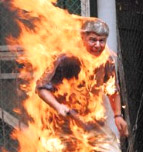
1.The silence of the organization on these statements proves its complicity in these attacks and an approbation of Rigi’s statements.

2.International bodies and the EU in particular are responsible for illegal activities of MKO.

3.Human rights organs, England and its supreme court as well as the western advocates of Mojahedin who have prompted MKO’s removal from the terrorist lists have to be held responsibile of these terrorist perpetrations.

The extent to which the statements of Abdulmalik Rigi on his relationship with MKO are enforceable depends first of all on the will and desire of Western politicians, organs and governments. It has to be pointed out that removing the name of Mojahedin from the EU terrorist list was basically coupled with the claims that the group had stopped its terrorist activities since June 2001.

However, there are many evidences disregarded by the judges that the organization has committed various terrorist attacks since then. This negligence, knowingly or unknowingly, implies that proving the terrorist nature of the organization is more a matter of political considerations than mere truth. Therefore, all attempts for showing the contradictions of this vote seems futile and even may pave the way for the organization to cooperate with other problematic trends in committing terrorist attacks against Iranian citizens.

The statements of Rigi at a time when MKO insists to remove its name form the terrorist list of the US State Department indicates that Mojahedin are well aware of mechanisms and levers to play with westerners. They realize the fact that the process of making any decision in the global scene is a long one when time has a determining role in their future. In other words, labeling a group as a terrorist one or removing it from terrorist lists necessitates a long process and time is the Achilles’ heel of international bodies misused by MKO under several pretexts.

Another point is that Mojahedin have always acted paradoxically. As they chant pro-democratic slogans, they rely in practice on their terrorist and violent levers and principles. However, they do so in a way unfamiliar for the culture of the West. For example, along with their removal from the EU terrorist list, they commemorated the events of 30 Khordad (20 June) as a symbol of the initiation of their terrorist activities. Furthermore, they respect armed struggle and emphasize that the achievement of their objectives is impossible unless through armed struggle, terror, and violence. They also accuse the critics of armed struggle, make threats against them and finally claim that they have been oppressed while they spare no effort for provoking violence and terrorism in the region.

Abdulmalik Rigi refers to a key point on the present situation of the organization. He implies that the reason why Mojahedin have stopped their armed struggle at the time being is that they have encountered a cul-de-sac in Iraq as well as Auver-sur-Oise rather than making a decision for changing their policy. As he states:

Of course we’d like to do whatever they (Mojahedin) are after, we can perform something and they can do something else. We are able to transfer their members but I think they have some limitations in this regard and cannot make any movement in their [host] countries.

Evidently, what he means by things to perform is terrorist attacks like those carried out in Iranian Province of Zahedan and killing innocent citizens and the role of Rajavi would be transferring information, planning the attacks and finally hiding behind the EU and initiating propaganda blitz. According to Rigi, the organization has been mired in Iraq and cannot take any action. It also refrains to consent to the transfer of its forces to Iran by Rigi for committing terrorist activities since Mojahedin have been disarmed in Iraq and all their activities and movements are under the severe control of Iraqi government. They can neither pursue their terrorist actions in France at the time being since they are after using international pressure-levers for seeking refuge therein. However, they cannot conceal their aggressive and violent nature and make their best to instigate those like Rigi to envenom the atmosphere inside Iran.

In this way, Rajavi can both pursue his objectives in Europe to convince international bodies and grab at his old strategy of armed struggle and violence. The statements of Rigi imply that his future activities may be plotted and organized by Rajavi too. Whatever the extent of the simple-mindedness, simplicity, and optimism of the Europeans on turning a terrorist group into a political party, they have to take a realistic position toward an organization that never consent to revise its deeply rooted organizational principles and manifestos due to a variety of extremely ideological, strategic, political, psychological, cultic, egocentric, totalitarian, and egoistic leanings. In Mojahedin’s terminology, terrorism has a different definition. They believe violence improves the value of their struggle for freedom and democracy. That is to say, when they perform, or glorify, violent acts upon others, they attempt to raise or defend their organizational or collective value as seen through their own eyes. No problem, let the outsiders call it terrorism or whatever they like!

July 11, 2009 0 comments
FacebookTwitterPinterestWhatsappTelegramSkypeEmail
Former members of the MEK

The red-line discriminating between word and action in suicide operation

An interview with Batool Soltani on MKO self-immolations – Part six
Sahar Family Foundation: Will you please specifically recount instances of what can be defined as classified information?

Batool Soltani: Well, what can be specifically referred to are those information that supply details on the locations of headquarters within Auver-sur-Oise and Camp Ashraf. That is to say, any geographical, security detail about these and other camps mostly concerning the compounds of the leadership. There is much more related information; the extent of security measures for the entrance and the control of inter-organizational affairs, the whereabouts of cadres situated inside the camps and their hierarchical relations, and information about those organizationally permitted to pass in or out of these places. Regular and irregular visits of these places by the leadership, the setting plan of the buildings and the sections in the camps and the people positioned in them, how the security systems work to control the cadres’ shifts and what are the defensive measures, human or mechanically controlled, to reduce or counter threats from the outside are all instances of classified information. Of other instances to name are the existing differences within the Auver-sur-Oise and Camp Ashraf, the security check-points to ensure safe passage in and out, internal offices that verify the validity of the passports and visas, the rankings in the charge of controlling and issuing ID cards for individuals to enter the camps or the cadres who leave on missions. Anybody entering Mojahedin’s enclave is regarded to have passed over the red-line of a highly secretive boundary that is totally concealed from the outside world.

SFF: We will talk on the issue further later on. But now let’s have a look on the issue that any suicide operation inevitably has its own consequences. The aggressive kind, for example, will willingly or unwillingly lead to the death of some innocents in the vicinity. For instance, when the organization plotted suicide operations to assassin the leaders of Friday-Prayer, many other innocent crowds were perished along with the main target. I want to know how does the organization justify such deeds and who are in charge of deciding to stop or carry out these operations. Better to say, where lays the drawn red-line that justifies such operations?

BS: Your question can be answered from many angles. First, we have to ascertain how the organization and Rajavi in particular draw the red-line between the word and theory for carrying out these operations. Second, we have to see to what extent the words are actually practical, and third, what is the position of the leadership concerning what should not have actually happened and how he has treated with the disobedient. They are all related to understand the question and its different aspects. First of all, the red-line and instances are drawn just by the leadership and all operational ranks have to submit to it. Nobody dispatched for an operation can defy Rajavi’s drawn red-line and any operation team knows well that accomplishment of mission eclipses any other priority. Now, it is important to distinguish between Rajavi’s red-line of word and action. The red-line in Rajavi’s word is taking heed of protecting the life and property of the public who have no role in the operations as well as public buildings and passages. Interestingly, no saboteur is permitted to desist from the plotted operation just because he/she is overstepping the red-line. The only person with the authority to halt the operations is Masoud Rajavi himself.

Now, the question is, and only Rajavi can give a proper answer, how it is possible exactly to stop crossing the red-line in the course of an operation that has to be unquestionably performed and which only Rajavi himself can order to be halted. The context and setting of some of these operations invariably requires sacrifice of innocent people in the vicinity. Once, for example, when a terror team was sent to assassin Asadollah Lajevardi in Tehran’s bazaar, the role of crowds in the bazaar can never be underestimated since they play the role of a deterrent factor both while targeting the victim and when escaping from the scene; there are always people in the scene who may in an automatic reaction interfere or hinder and the assassins see no other way but to shoot at them to open the way or one may come between the assassin and the target. Naturally, there are two options; either you have to abandon the operation and escape or accomplish the mission regardless of violating the red-line with whatever casualty.

The latter requires that you have to be serious in completely obliterating any obstacle on the way. And Rajavi himself knows all these truths that it is impossible to carry out an operation of assassination without harming other innocents. It is the same case with suicide operations with the difference that the agent knows he/she hardly returns alive which greatly helps to violate the red-lines. But in the former, a hope fosters in the assassin that he/she may escape the scene with the aid of people, a hope instilled into him/her by the organization itself. As a result, the assassin tries to tie his/her destiny to a little of overstepping the red-line since the organization had falsely ensured him/her that people would create a protecting shield for a member of the organization to escape safely. But it differs in a suicide operation; here the accomplishment of the operation is of the higher significance than the number of the casualties present at the scene. Besides, the suicide is no more alive to be counted responsible for the innocent killed. Thus, this kind of operation is excluded from our issue of discourse and remains the kind after which the team has to necessarily return to its base after the operation.

When Rajavi plotted assassination of people like Lajevardi or the army commander Sayad Shirazi, he knew well that killing was an inseparable part of a planned operation which could never be fulfilled unless through homicide. Then, it is absolutely absurd if he maneuvers and insists on vocalized principles of his drawn red-line since the nature of these operations necessitate killing and blood-shed. Consequently, the assassin is not the authority to decide to stop or continue, he/she is only executing a killing plan drawn by somebody else watching the operation from many hundred kilometers away. It is really in absolute contradiction to Rajavi’s stated red-line and out of the control of the operatives. At the end, we see that there is nobody to be held responsible for violation of the red-line that has caused many innocent deaths; in fact, it is one of those Rajavi’s adopted childish tactics.

Now let’s see what are Rajavi and the organization’s reaction against operation teams that may have inadvertently violated the red-lines in the course of the operation. Here, the operatives may have been killed, arrested or returned. But, in any case, they are not the ones to be held responsible but their commander in charge of the operation. Rajavi severely reprimands them for the killings that are considered a violation of the stated red-lines. Of course, he is well aware of the fact that he is the sole one to be held responsible for the crime, but that is how he deals with the fallout and condemns others calling them inefficient and else. But nothing more happens and nobody is punished and all ends in a room in an outburst of humiliating words and sever reprimand because all know that Rajavi himself had practically a better understanding of what might happen and which he had implicitly given his seal of approval to cross his own drawn red-lines. But somebody has to be held responsible for mere formality who, of course, fails to be the leadership. I have to add that such a performance of formality runs only when the organization is disclosed by undeniable facts that tie it to the incident which it must be held accountable for. However, in many other cases, the success of the operation never lets anything else take a back seat and overshadows anything that more often fails to be ever mentioned and is of marginal interest to the organization.
To be continued
Sahar Family Foundation, Baghdad, July 08, 2009
Translated by Mojahedin.ws

July 9, 2009 0 comments
FacebookTwitterPinterestWhatsappTelegramSkypeEmail
Mujahedin Khalq; A proxy force

How cost effective is western support for the MKO ?

How cost effective is western support for the Mojahedin Khalq (MKO, MEK, NCRI, …)?
Following the Iranian election, some in the western media gave their assessment; the ensuing popular protests conducted by ordinary people in Iran following the presidential election had “failed”.

Of course, ‘failure’ indicates that there was some prior agreed aim or achievement, which in this case was not fulfilled. And there can be little doubt in anyone’s mind that what these ‘experts’ mean is that what the Iranian people ‘failed’ to achieve was regime change.

In fact, recent events have exposed, if nothing else, that the real failure has been in outsiders’ understanding and assessment of Iranian society and politics.

Looking at Iran from outside and through the lens of ‘regime change’ has led many western analysts and politicians to a false perception of the country – one based on wishful thinking rather than facts on the ground.

Perhaps it is this generally upheld false perception which has allowed American politicians, in particular, to convince themselves to pursue unhelpful – even damaging – policies aimed at ‘supporting’ Iranian people’s desires for social change and political progress. This has continued for some time in spite of clear calls from Iranians themselves (many in the USA) to stop funding so-called ‘opposition’ groups – among which it has become axiomatic that American support for your cause is the ‘kiss of death’.

There is, however, one group which has actively courted American support and which indeed is entirely dependent upon it because it has no constituency among Iranians, whether inside or outside the country. Of all the CIA backed ‘regime change’ groups, the nefarious Mojahedin-e Khalq is markedly different. For one thing, the group is profoundly unpopular among right thinking Iranians wherever they live and whatever their politics. Indeed in western countries, post-election protestors of all persuasions have angrily and vigorously expelled MKO activists from their demonstrations. The roots of this unpopularity certainly go back to the MKO’s collaboration with Saddam Hussein during the Iran-Iraq war. But it can also be traced to the MKO’s ideological belief in violence, its quasi-religious status and its use of cult methodology to recruit and maintain its membership.

To cover up this lack of support the MKO held its annual ‘bigger than ever’ June 20 commemoration rally in Paris in order to ‘prove’ its credentials. The fact that it has to pay attendees and that it reports attendance at around 1000% greater than the capacity of the venue does not embarrass the group or its backers.

It may seem strange, even in the context of American ‘interfering politics’, that such an unpopular group has western backers. But clearly the MKO offers something which no other group does. In simple terms the MKO offers Camp Ashraf in Iraq.

Camp Ashraf was established by MKO leader Massoud Rajavi and Saddam Hussein during the Iran-Iraq war and remains the MKO’s main ideological and military training base.

What makes the MKO unique in the context of external opposition to the Islamic Republic of Iran is the group’s willingness to use violence. In all its bases, but in Camp Ashraf in particular, the group’s members are indoctrinated using cult methodology inthe group’s ideology of violence and self-sacrifice so that they will perform acts of violence, terrorism and assassination to order without question.

This naturally renders them a valuable asset for any external enemy of the IRI which is prepared to fund and facilitate that violence.

No wonder the regime change proponents refuse to let the group follow its natural path of diminution and dissolution. No wonder the American Army was tasked with protecting and maintaining the group in Iraq even after the same force had disarmed the group as a foreign terrorist entity in 2003, and even though the MKO has been on America’s own terrorism list since 1997.

So far so logical. But where the logic falls down is in the detail and that detail is the MKO’s actual track record. For thirty years the MKO has carved out a niche for itself by preying on the Iranian people’s legitimate struggle against the narrow constraints imposed on them by their successive governments by posing for an ignorant and gullible western audience as a their leading cohort.

Although allegedly implicated in the recent violence in Iran and in Sweden, in reality over the past thirty years the MKO has been unable to effect any change whatsoever inside Iran through any means. The group’s last viable attempt to overthrow the ruling system was in 1988 with the Eternal Light operation. The attempt failed and thousands of MKO civilians lost their lives. Since then the group has been impotent and has done little more than launch irritant terrorist attacks into Iran from neighbouring Iraq. (Ironically, Maryam Rajavi recently donned a green scarf supposedly to signal to Mir Hossein Moussavi’s supporters that she is ‘on their side’. The MKO appear to have conveniently forgotten that Mr Moussavi was Iran’s Prime Minister in 1988.)

Currently the Iraqi Government is acting upon its legal obligation to remove all foreign terrorist groups from the country. This means the MKO’s base Camp Ashraf is in the process of being dismantled. The former militants living there will be removed to third countries; namely Europe. Of course, the removal of Camp Ashraf does not mean that the MKO will no longer be able to provide mercenary forces for regime change proponents. The MKO’s foreign terrorists will relocate to Europe and will have to adapt their tactics accordingly.

What the MKO’s western backers might want to consider is the cost effectiveness of continued support for a group which has nothing but self-promoting propaganda to show for itself after thirty years.
By Ann Singleton

July 9, 2009 0 comments
FacebookTwitterPinterestWhatsappTelegramSkypeEmail
Saudi Arabia

Saudi intelligence chief meets Rajavi

Saudi intelligence chief meets Rajavi looking for an office to create move his terror base
Saudi intelligence chief Prince Muqrin bin Abdulaziz Al Saud, met recently in the Jordanian capital, Amman, Masoud Rajavi, head of the MKO terrorist organization, which the Iranians call "hypocrites."

Center of Islamic Haramain, according to informed sources, reported that Rajavi and some of the leaders of the organization who have left Iraq for Jordan in order to move to European capitals and take political asylum, met with a number of intelligence officials of Israel, Saudi Arabia, as well as Jordan, US and France.

The sources added that Saudi intelligence chief and head of terrorist Mujahedeen, Masoud Rajavi, disscused the latest incidents in Iran, and organizing projects for future iranian regime but Muqrin postponed a decision for Rajavi’s request to open an office of his organization in Riyadh to discuss the matter with other senior Saudi officials, while other reports say that Egypt In agreement with Saudi Arabia has offered to open an office for the Organization in Cairo.

July 9, 2009 0 comments
FacebookTwitterPinterestWhatsappTelegramSkypeEmail
Mujahedin Khalq as an Opposition Group

The MEK and the Iranian Protests

The MEK or MKO is a Marxist organisation with a long history of attempts to overthrow various Iranian governments. They helped Saddam Hussein in the war against Iraq. After the US invasion they were disarmed and confined to camps in Iraq. They are on a US list of terrorist organisations even though Europe recently delisted them. They are great organisers and lobbyists for their cause and have some supporters among US politicians who also want them removed from the US terror list. The group renounced the use of force some years ago.

The Iranian govt. believes that they are involved in demonstrations in Iran. Here is a piece from
http://www.presstv.ir/detail/98647.htm?sectionid=351020101

Sun, 21 Jun 2009
MKO Leader Maryam Rajavi has called the MKO as the real winner of Iran’s election. The terrorist Mujahedin Khalq Organization (MKO) has reportedly played a major role in intensifying the recent wave of street violence in Iran.

Iranian security officials reported Saturday that they have identified and arrested a large number of MKO members who were involved in recent riots in Iran’s capital.

According to the security officials, the arrested members had confessed that they were extensively trained in Iraq’s camp Ashraf to create post-election mayhem in the country.

They had also revealed that they have been given directions by the MKO command post in Britain.
Street protests broke out after defeated presidential candidate Mir-Hossein Mousavi rejected President Ahmadinejad’s decisive win in the June 12 election. His supporters have staged a series of illegal rallies ever since.

Iran’s deputy police commander, on Saturday, warned against the mass gatherings, asserting that those who engage in any such actions would be severely reprimanded.

Earlier on Saturday, MKO leader Maryam Rajavi had supported the recent wave of street violence in Iran during a Saturday address to supporters in Paris.

Rajavi had reportedly described the MKO terrorists as the real winners of the Iranian election.

The Mujahedin Khalq Organization is a Marxist guerilla group, which was founded in the 1960s.In the past two decades, MKO leaders have been resettled in the northern outskirts of Paris.

The terrorists are especially notorious for taking sides with former dictator Saddam Hussein during the war Iraq imposed on Iran (1980-1988).

The group masterminded a slew of terrorist operations in Iran and Iraq — one of which was the 1981 bombing of the offices of the Islamic Republic Party, in which more than 72 Iranian officials were killed.

A 2007 German intelligence report from the Federal Office for the Protection of the Constitution has identified the MKO as a "repressive, sect-like and Stalinist authoritarian organization which centers around the personality cult of [MKO leaders] Maryam and Masoud Rajavi".

Anne Singleton, an expert on the MKO and author of ‘Saddam’s Private Army’ explains that the West aims to keep the group afloat in order to use it in efforts to stage a regime change in Iran.

"With a new Administration in the White House a pre-emptive strike on Iran looks unlikely. Instead the MKO’s backers have put together a coalition of small irritant groups, the known minority and separatist groups, along with the MKO. These groups will be garrisoned around the border with Iran and their task is to launch terrorist attacks into Iran over the next few years to keep the fire hot," she explains.

"The role of the MKO is to train and manage these groups using the expertise they acquired from Saddam’s Republican Guard," Singleton added.

A May 2005 Human Rights Watch report also condemns the MKO for running prison camps in Iraq and committing human rights violations. According to report, the outlawed group puts defectors under torture and jail terms.

———- The group has a website that looks quite professional. I wonder where the money comes from. There is a long article by Jeremy Hammond detailing numerous organisations that the US has used as a means of regime change in various countries. He mentions the MEK (or MKO for Iranians) There is also a good article describing the camps in Iraq and illustrating the cult like character of the group. There is no doubt about their total commitment to their cause: http://www.mcclatchydc.com/103/story/58809.html Here are a few sections from the Foreign Policy Journal Article:

A former specialist on the Middle East from the National Security Council, Raymond Tanter suggested the U.S. could work with an Iranian opposition group, the Mujahideen-e-Khalq (MEK). “If we are serious about working with groups from within,” he said, “it will have to be with the MEK, because there’s no other opposition force the regime cares about.”

Mehdi Marand, a spokesman for the Council for Democratic Change in Iran, similarly said that some in the Congress were ready to remove the MEK from the terrorist list. “If the US really wants to help the democratic forces inside Iran,” he said, “the only way is to remove restrictions from the opposition.”

The problem is that the MEK is on the State Department’s list of terrorist organizations. Based in Iraq, the group came under the sway of the U.S. after the 2003 invasion that overthrew the regime of Saddam Hussein.

According to former U.N. weapons inspector Scott Ritter, who was among a few lone voices pointing out prior to the invasion of Iraq that there was no credible evidence the country still possessed weapons of mass destruction, the U.S. was already working with the MEK. Well prior, in 2005, Ritter wrote that the Bush administration had authorized a number of covert operations inside Iran. “The most visible of these”, he wrote, “is the CIA-backed actions recently undertaken by the Mujahideen-e-Khalq, or MEK, an Iranian opposition group, once run by Saddam Hussein’s dreaded intelligence services, but now working exclusively for the CIA’s Directorate of Operations.” The MEK’s CIA-backed operations within Iran included “terror bombings”, Ritter charged.

In July, Seymour Hersh repeated in an interview with NPR that the U.S. was supporting anti-regime terrorist groups including the MEK, Jundallah, and the Party of Free Life of Kurdistan (PJAK). “The strategic thinking behind this covert operation is to provoke enough trouble and chaos so that the Iranian government makes the mistake of taking aggressive action which will give the impression of a country in acute turmoil”, Hersh said, in order to give the White House a casus belli.

In a July 29 article, Scott Ritter wrote that “American taxpayer dollars are being used, with the permission of Congress, to fund activities that result in Iranians being killed and wounded, and Iranian property destroyed…. The CIA today provides material support to the actions of the MEK inside Iran. The recent spate of explosions in Iran … appears to be linked to an MEK operation….”

Hersh wrote another article in the New Yorker in November(note 2008) noting that the Pentagon was increasingly conducting covert operations that had traditionally been the CIA’s domain and giving further details about its activities in Iran. “In the past six months, Israel and the United States have been working together in support of a Kurdish resistance group known as the Party for Free Life in Kurdistan”, which has conducted raids into Iran. He repeated that the “Pentagon has established covert relationships with Kurdish, Azeri, and Balochi tribesman, and has encouraged their efforts to undermine the regime’s authority in northern and southeastern Iran.”

When asked whether the OIA was intended to promote regime change, a State Department senior official told CNN it was “to facilitate a change in Iranian policies and actions” before acknowledging, “Yes, one of the things we want to develop is a government that reflects the desires of the people, but that is a process for the Iranians.”
Then US ambassador to the United Nations John Bolton acknowledged in October 2006 that regime change was the “ultimate objective” of the U.S. sanctions policy, and adding that it “puts pressure on them internally” and “helps democratic forces” within the country and amongst the Iranian diaspora.

Administration officials told the New York Times that then Vice President Dick Cheney was promoting the “drive to bring Iranian scholars and students to America, blanket the country with radio and television broadcasts and support Iranian political dissidents.” The program was to be “overseen by Elizabeth Cheney, a principal deputy assistant secretary for Near Eastern affairs, who is also the vice president’s daughter.”

These are just snippets from a very interesting article. I have seen little in the mainstream press about the Iranian charge that the MKO is involved in the demonstrations probably with the aid of the US.
Iran finds US-backed MKO fingermarks in riots
Allvoices.com -By northsunm32 Brandon
http://www.allvoices.com/contributed-news/3520863-the-mek-and-the-iranian-protests

July 8, 2009 0 comments
FacebookTwitterPinterestWhatsappTelegramSkypeEmail
Former members of the MEK

Suicide, the ideal means to safeguard information

Sahar Family Foundation: Mrs. Soltani, let’s talk a little about defensive suicide operation, that is to say, when someone commits suicide only because of carrying sensitive or secrete information. Particularly, of what kind are these information and what are the means through which the individuals have to annihilate themselves when the time comes?

Batool Soltani: information can be divided in two. The first are those we carried when going from a place to another which mostly happened in Iraq. There were times when we drove from a base like Camp Ashraf to a second destination to meet leadership. We had also trips to France and other European countries from Iraq or even moved about in the Europe. In all these missions, protection of information had the highest priority. The second are the concentrated ones as we are settled in a place and there is a threat from without. It might be a regular inspecting measure done by the US forces in Ashraf for instance or by the Iraqi police for whatever security objective; all these were considered a threat against our community from outsiders. Or it happened that we were strolling about and police would simply suspect us which could lead to further problems.

It had turned to be a big concern especially after the 9/11 terrorist attack when counter-terrorist police had a free hand to arrest and interrogate whoever they came to suspect. It was really a hinder for members travelling in Europe. All the information stated were of the nature a member of the organization had instructions to deface before engaging in self-destroying. I intend to explain more for it is a matter of obscurity for people out of the organization.

I give an example of the year 2001 when the members of the Leadership Council were called to have a meeting with leadership in Parsian (where Rajavi held the meetings). Although it may seem a simple drive from Ashraf to the place, it required really complicated security measures. The main focus was on how to destroy the documents we carried if any challenge hit us en route. There was a general process to follow for destruction of documents before departure.

There was a head-responsible in charge of the security-check of information who at the time was Mohsen Niknami. He had other assistants who were in charge of smaller groups of cadres. Mohsen was the one who questioned me to ensure about my plans of destroying personal information now that I was included in the group about to set off for Parsian. According to already received instructions, I had to use a can of ethanol that I carried in forewarned circumstances like hearing gun-shots, tracking downs, sensing a siege and any fake accident or any other form that could be regarded a challenge to destroy my own documents and that of other members of the Leadership Council. That how these members were transported to the meeting place is another story.

The members had to be divided into small groups and drove on different buses at non-fixed intervals that sometimes took two hours. When the first bus left, the next waited to make sure its safe arrival which was the given green light for its own leave. It was the case with other waiting buses and all had to follow the rules. There were also strict rules for the group on each bus.

There was one in charge of destroying the bus in the event of any portentous sign of danger. Besides, one in any group of three was charged with the task of destroying his/her comrades’ documents that he/she was well aware of their hidden places. In spite of all these measures, we were individually responsible to destroy our documents and information as well as that of the one next to us if anything happened to our rankings in charge. The means to destroy them, as I pointed out, was the can of ethanol we all carried. The emphasis was on the destruction of the information before self-destruction. Now a question may form in your mind that of what significance were these documents and information that required such high precautionary measures to safeguard or destroy them before anyone could have access to them?

First of all, I have to point out that these documents contained none of the contents of the highly valued book of the Leadership Council. Nobody had the permission to have a record of its details in his/her notebook and all members had to read and memorize the contents while at the meeting. They distributed it in the course of the sessions and then it would be collected and thus, all information was in our mind and nothing on the paper to fear others lay hands on it. Neither did we carry any classified information. There Then, you may ask what all these security measures were for? All was done because of the private notebooks the members had with them in which they had noted down their daily affaires, the noted dates merely to do a task, a recorded detail of a task done, some verses of the Holy Quran and other ordinary and personal notes.

It also happened that we had written some notes while in a session, although it was absolutely forbidden, and they, with a member called Gity in the charge, would carefully explore our notebooks and personal belongings when we were about to leave the hall. But sometimes it happened that we managed to stealthy take the notes out; however, none of these notes could be considered classified information in its real concept. What they called secrete and classified information was absolutely different with its own special means of convey that we hardly knew anything about. Whatever means of transfer they used, for sure it was not by bus or other regular vehicles as they used for our transfer.

SFF: In fact, all these security measures that at end may lead to the destruction of a cadre and his/her information are due to these personal notebooks?

BS: Yes, they are. The contents of these notebooks, as I said, were nothing more than a few notes, dates, necessary phone numbers, or the date of a given pledge. I remember once in the Leadership Council I signed a paper that started with a verse from the Holy Quran which I noted down to memorize. Or details of a meeting that were of importance. The documents to be destroyed were all theses trivial notebooks containing worthless information. It was the same case even in the European countries when we were moving about and we had some written information with us. The information could be some phone number we had to contact if necessary. In our meetings there and when we were being transferred to a certain destination, it was forbidden to carry any paper or notebook that would indicate our membership in the organization or any relation with the people in our company.

The only thing we had permission to carry was some money and a phone number for an urgent call which all other companions knew where it was to destroy it if necessary. A phone number in a member’s pocket meant giving the police the opportunity to hook the first clue that well identified the connecting bridges. To thwart any attempt by police to obtain the very single phone number, we were instructed to tear it into small pieces or swallow it. It is how we destroyed information when out of Iraq. I mean to say that we were much cautious out of Iraq since at least in Iraq we had support of Saddam’s Estekhbarat (Intelligent and Information System) while we had restrictions in European countries especially after al-Qaeda’s terrorist attacks that had made police to become more sensitized to terrorist threats and consequently they intensified security measures. As a result, we had to follow strict precautionary measures to protect information and relations. However, the last solution was suicide according to organizational instructions.

SFF: Undoubtedly, there should have been real reasons under these practical circumspect.

BS: Yes, to some extents they had reasons to be cautious. Once, for instance, a member called Parviz Yaqubi escaped and surrendered himself to French police and informed on inter-organizational relations. He had asked to be granted asylum reasoning that his life was in danger. Of course, he returned to the organization and later separated again and now lives in total isolation. But his act of going and reporting to police had really frustrated Masoud Rajavi. It was in 1993 or 1994 I think and it cost the organization and Rajavi a lot. Consequently, it was decided that nobody in his/her travels out of Iraq had to carry passports and fake IDs cards and on the members’ arrival in the airport all their documents were collected and kept by the organization. Well, we thought it was well decided and, from then on, any member regardless of his/her rank had to hand over his/her passport on arrival to Europe.

To be continued
Translated by Mojahedin.ws

July 8, 2009 0 comments
FacebookTwitterPinterestWhatsappTelegramSkypeEmail
Auver-sur-Oise

MKO in search of an alternative Ashraf in Europe

One of the main priorities of MKO has been finding a new strategic spot after the fall of Saddam and being disarmed by the US forces. The reason why Rajavi moved to Iraq was the strategic closeness to Iranian soil that extended thousands kilometers of borders with it which facilitated an easy infiltration to launch across the border terrorist activities. The political conflict of Saddam with Iranian government as well as this strategic position led him to ally with Masoud Rajavi to exploit his so-called National Liberation Army (NLA). He also employed MKO members as infiltrators and spies to the point that Saddam and Rajavi soon recognized signs of ideological and blood kinship. However, the fall of Saddam disappointed all hopes of Rajavi and left him in a desperate attempt to look for a new place to settle his forces in a bid to accomplish his long failed objective of overthrowing the Iranian regime.

Nevertheless, the attempts of Rajavi in recent years have been futile failing in transferring MKO members from Iraq that is no more a safe haven for those who were once engaged in committing terrorist actions against Iraqi people on their own soil. The hostile position taken by Rajavi in Iraq despite his illegal settlement therein has been a warning for other countries not to let him and his organization in. Rajavi is well aware that at the time being no country consents to give refugee to Mojahedin due to their notorious terrorist nature and past history. However, he is looking to find an alternative Camp Ashraf with the same geographical merits. Turkey is a perfect options yet it is no more on the agenda of Mojahedin due to tens of political reasons. Furthermore, Pakistan and Afghanistan would never let Mojahedin enter their soil. On the other hand, Mojahedin have to leave Iraq and Masoud Rajavi must find another location for its organization and undergo a fundamental change in his policy based on the use of NLA. In the present conditions, Rajavi has to ignore the factor of geographical privilege and focuses more on finding a fixed abode wherever possible.

France may be an alternative for Mojahedin. The significance of France for Rajavi is twofold: First, a great number of MKO high rankings are refugees in France and can return there if necessary. It makes the organization pay due costs for transferring all its members to Auver-sur-Oise. Second, Auver-sur-Oise was the first residence of Mojahedin after their expulsion from Iran and now has adequate facilities to accommodate the remnant of MKO members. But it is what MKO wishes and hopes for while other factors and levers seem necessary. Will France ever risk letting a globally recognized terrorist group in? France in recent years has proved to be disinterested in MKO policies and it is highly probable that it would refrain to brook its transfer to its soil. However, Mojahedin have some levers at hand that may pave the way for their transfer to the West and France in particular. It is almost three decades that Mojahedin have misused the discords and conflicts of the western parties and leftists in particular to win the support of westerners. They have managed to expose themselves to the European countries by means of pro-democratic slogans of some leftists under the banner of supporting human rights.

The significance of Auver-sur-Oise for Rajavi lies in the fact that establishing another Camp Ashraf is almost impossible but in Auver. To this end, MKO is extending its territory therein by buying the houses next to the residence of Maryam Rajavi. It indicates that MKO is hopeful to transfer to Auver. This is a warning given in advance by many experts:
The People’s Mojahedin of Iran has hardly any choice but to begin moving their activities to Europe. To do this, they can count on active support from a certain”Progressive International”which has hoped for years to weaken the West. This ultra-Left has no roots in the traditional political currents of thought, even using the idea of”democracy”as bait to lead the unsuspecting into the maze of a kind of instinctive socialism.1
Mojahedin have other levers for paving the way for their transfer to Auver. According to an expert on terrorism:

The leaders of the PMOI have decreed what they call ‘a phase of patience’ and ‘judicial mobilisation’. This is to add the help of lawyers in assisting the PMOI members obtaining political refugee status so that they can enter Europe legally.

By small groups of five or six, they move into host countries under the cover of charitable organisations. The PMOI is reorganizing to turn itself into a machine for political combat. It would like to appear to have given up armed struggle, but it is truly incapable of thinking in any other way. For now, they want people to forget the shadow of Saddam Hussein”. 2
In a nutshell, Mojahedin can impose themselves on European countries and France in particular by means of some levers and factors. Fabricating a legal legitimacy for a terrorist group is a warning for the West that is carried out by a number of western left parties in a hostile reaction to the policy of their governments. The entrance of a terrorist group’s members to Europe not only spoils the continent’s prestige among the international community as following a double policy in combat against terrorism, but also exposes the host government to irreversible damages in its internal and external relations, not speaking of the costs that a full control over the activities of the organization will impose.

References:
1. Gessler, Antonie, Autopsy of an Ideological Drift, chapter 1: The end of tolerance.
2. ibid, chapter 24: Low Profile

July 8, 2009 0 comments
FacebookTwitterPinterestWhatsappTelegramSkypeEmail
Mujahedin Khalq; A proxy force

On the occasion of American Independence Day

All kinds of interesting news has been coming out of the USA during the past couple of weeks. Not least the news of large scale organised American support for Mirhossein Mousavi the defeated Iranian presidential candidate. Notably Mr Mousavi served as the Islamic Republic’s Prime Minister in the early years of the Islamic Republic when the same Americans were calling him the henchman of Ayatollah Khomeini, etc.

It is widely believed that this support for Mirhosein Mousavi under the banner of a so-called “green revolution” has been part of a failed coup orchestrated by the regime change advocates who intended to bring a puppet Middle Eastern style “President” to rule Iran. If this had happened, President Obama would be able to make his next message to the Moslem World under the new Iranian flag rather than under the Egyptian flag alongside “President” Mobarak. But it did not happen and perhaps it could not happen taking into consideration obvious facts on the ground, which have been ignored by the USA for the last 30 years.

There are, of course, others who simply believe that the hugely expensive and costly support of the US Government for the “green revolution of the people of Iran” is down to the commitment of the US Government to bringing DEMOCRACY and HUMAN RIGHTS (yes I am talking about the US of A) to countries across the globe. Whichever way you may look at it, I am sure you would agree that the most hilarious, and at the same time, sad position has been that taken by American law makers who advocate support for the same terrorists who have killed American servicemen.

On the occasion of American Independence Day, let us remember the people who lost their lives for their country and wonder at those people who stand today under the same flag only to LOBBY for the murderers of their servicemen.

“… At a Capitol Hill press conference on June 26th, Rep. Bob Filner (D-CA), chairman of the House Veterans’ Affairs Committee, declared the U.S. should explicitly side with Iranian”resistance groups”, including the MEK, which he described as a”democratic, non-nuclear, secular group fighting for freedom for all the people in Iran.”The U.S. State Department notes that the MEK”advocates the violent overthrow of the Iranian regime and was responsible for the assassination of several U.S. military personnel and civilians in the 1970’s,”and that the group maintains”the capacity and will to commit terrorist acts in Europe, the Middle East, the United States, Canada, and beyond …”
http://iran-interlink.org/?mod=view&id=6613

“… Lewis Lee Hawkins, the only son of Herman and Mary Webster Hawkins, was born in Chicago, Illinois on 8 August 1930. Herman and Mary would eventually move and raise their family in Plymouth, Indiana… His final assignment came in July 1972 when he was attached to the U.S. Military Assistance Advisory Group to the Imperial Iranian Armed Forces in Tehran, Iran. Annette and Lee joined Lewis in Tehran where they lived in the Abass-Abad neighborhood. On the morning of 2 June 1973, as Lewis was walking from his home to a street corner to be picked up by his driver, two terrorists riding a motorcycle fired at point-blank range and fired two or three shots killing Lewis instantly. Lewis was survived by his wife Annette; three sons, Terry, Ronald, and Lee; his parents, Herman and Mary Hawkins of Rowan, Iowa; and two sisters Mary Duran of Plymouth and Mona Crocker of Belmond, Iowa. His daughter preceded him in death…”

July 5, 2009 0 comments
FacebookTwitterPinterestWhatsappTelegramSkypeEmail
Former members of the MEK

Suicide operation, an ultimate solution to security dilemma

Sahar Family Foundation: Can you elaborate on classified information in the organization, as it may have different definition in terms of use?

Batool Soltani: It is the kind and degree of information that every member of the organization Suicide operation, an ultimate solution to security dilemmacarries concerning himself, his responsibility and his relation with other cells. More specifically, there were other ranks who, because of their organizational responsibilities, knew the residence of the leadership and his/her visiting locations. Of course, this classified information vary in terms of sensitiveness and secrecy according to the responsibility of the members and their contact with higher rankings but the importance lies on the concentration of the information in the hands of the members who form the linking ring between others.

The operation teams who came to Iran for armed operation, for instance, carried some related information, or it was the same with members residing in other European countries out of the headquarters in Auver-sur-Oise. They knew details about the location of the camps, the members and their responsibilities and even information about the launched operations or those at hand. As a result, the organization emphatically required the teams about to embark on operations to swallow their cyanide capsules as soon as they felt a risk of arrest.
 
The emphasis got stronger especially after the 9/11 terrorist incident when the traffic in European countries were under heavy surveillance and there was a high possibility of arrest that could lead to extraction of information under investigations. We had strict order, especially the members of the Leadership Council who carried a high volume of information, to commit suicide if anyone came to be a suspect in confrontation with Interpol.
 
The rankings travelling between Iraq and the Europe or between Auver-sur-Oise and other countries had strict instruction for self-annihilation. It can be said that the most secure and safest measure of protecting information devised by the organization was suicide. The important point to consider here is the cheap value of man within the organization.

SFF: Will further explain the responsibilities of the members of the Leadership Council concerning the classified information?

BS: The information that the members of the Leadership Council carried were classified as secrete. It was because of their relation with the leadership which was systematically regarded very important. It meant that they had to take the ultimate precautionary measures to protect themselves not because of their own life but as they carried foremost organizational information which made them suicide vanguards. They had always a guard accompanying them who had the responsibility of finishing the job if he/she refrained to commit suicide or possibly thought of a mischief or escape. A member of Leadership Council had to have a ready scheme of suicide being it with cyanide, gun or any other way.

But the priority was always laid on the destroying of the carried documents before doing away with yourself. The means depended on the circumstance and how you could prepare them as easy as possible. There was a time when the organization possessed no gun and cyanide was the best choice, but the time came when it was vice-versa. I was one of those who always carried a gun when in Camp Ashraf or whenever I had a trip to Baghdad. We had strict orders to shot ourselves when sensing the minimal danger of being attacked or arrested. Once I was in England and although I was not yet a member of the Leadership Council, I had instruction of committing suicide since I had second hand but sensitive information like the location of headquarters where the Rajavis lived or moved and the security measures concerning them. It was the same with the information about the headquarters in Auver-sur-Oise and in possibly in other countries.

Of course, some information were declassified within the organization as they happened to lose their secrecy and importance, but they remained classified for the outsiders. In some occasions when the carried information were of a very high secrecy, the members carried a mixed means of suicide, that is to say, both gun and cyanide because in some cases the cyanide had failed to act. Later it was decided to carry two cyanide capsules to ensure that one at least would work.

That is how they emphasized on measures of protecting information and were sensitive about them. All this complicated, systematic deeds happened in an atmosphere as if they were living in a different planet. That is why far from any rationale and logic, to guarantee the protection of the information, the organization grabs at a most secure way, suicide and self-annihilation.

SFF: You said in some cases the cyanide had failed to act. Can you explain about them?

BS: As far as I can remember it record in the related report, it was the time when Arash Sametipour had been sent to Iran for operation. He broke his cyanide when he was on the verge of arrest but the capsule failed to work and he went into a coma only to revive after a while. It had critical aftermath for the organization. Unaware of the arrest of Marjan Malek, for example, the organization first announced her martyrdom in the course of her operation and even Rajavi himself appreciated her as a heroine but later, when it was revealed that she had failed suicide and was in custody inside Iran, anything changed overnight and she was declared to be an agent of the Islamic Republic. The failure of suicides was thus very crucial and cost the organization a lot; it was commitment to these suicides that decided the organizational identity and the status of the individuals in the organization.

Noteworthy, following the reported cases of failure, there established a section whose responsibility was to check over the vehicles of suicide to ensure its efficacy. There were two kinds of check up, routinely done or case related. The former was done in a frequent period of a few months while the latter was a test of an operative’s cyanides before his dispatch to the mission. Once in Camp Ashraf, before the presence of Americans and when they had no limitation, they exclusively provided two cyanides for each member of the Leadership Council. But then everything changed and there came a time when cyanides and guns were not as abundant as before; the cyanides were all collected from among those who once had to carry them.

Instead, they innovated a new way of controlling members with sensitive and secrete information and members of the Leadership Council in particular. Now there was a special division with the responsibility of constant monitoring and surveillance of the members with highly classified information; they had the responsibility of helping them through any available means to eliminate themselves in case of facing any risk of arrest or else; the means could be a gun, cyanide, petrol, ethanol or anything else.
Translated by Mojahedin.ws

July 5, 2009 0 comments
FacebookTwitterPinterestWhatsappTelegramSkypeEmail
Newer Posts
Older Posts

Recent Posts

  • Various Aspects of Massoud Rajavi’s Disappearance

    October 20, 2026
  • MEK agents near schools in Tirana, Albania

    October 17, 2026
  • Expectations of human rights bodies regarding censorship within the MEK

    October 13, 2026
  • The Jamalis’ Plea for Help: Save Our Brother from the MEK!

    October 11, 2026
  • Testimonies of Participants in the MEK’s Staged Propaganda Stunt in Karaj

    October 7, 2026
  • Facebook
  • Twitter
  • Instagram
  • Youtube

© 2003 - 2025 NEJAT Society . All Rights Reserved. NejatNGO.org


Back To Top
Nejat Society
  • Home
  • Articles
  • Media
    • Cartoons
    • NewsPics
    • Photo Gallery
    • Videos
  • Publications
    • Books
    • Nejat NewsLetter
    • Pars Brief
  • About Us
  • Contact us
  • Editions
    • عربي
    • فارسی
    • Shqip