Nejat Society
  • Home
  • Articles
  • Media
    • Cartoons
    • NewsPics
    • Photo Gallery
    • Videos
  • Publications
    • Books
    • Nejat NewsLetter
    • Pars Brief
  • About Us
  • Contact us
  • Editions
    • عربي
    • فارسی
    • Shqip
Nejat Society
Nejat Society
  • Home
  • Articles
  • Media
    • Cartoons
    • NewsPics
    • Photo Gallery
    • Videos
  • Publications
    • Books
    • Nejat NewsLetter
    • Pars Brief
  • About Us
  • Contact us
  • Editions
    • عربي
    • فارسی
    • Shqip
© 2003 - 2024 NEJAT Society. nejatngo.org
Germany

Germany will not take in MKO members

A German official says the Berlin government will not house members of the terrorist Mujahedin Khalq Organization (MKO) currently based in Iraq. The Mujahedeen Khalq Organization (MKO) has claimed responsibility for numerous acts of terrorism against Iranian nationals and officials.

“No MKO member in Camp Ashraf is awarded with German residency. There are currently no plans to receive members of the group in Germany,” the German Foreign Ministry spokesperson was quoted saying by IRNA.

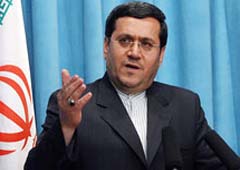
This is while Mohammad Javad Hasheminejad, head of the Habilian Association – an Iranian-based human rights group – says the MKO chiefs are systematically eliminating the disgruntled members.

“In his addresses to international circles, the Mujahedin Khalq Organization (MKO) leader, Masoud Rajavi has spoken of a looming humanitarian crisis in case Baghdad pushes further for the expulsion of the terror group,” Hasheminejad said.

“What the MKO leader was referring to as ‘humanitarian crisis’ was actually forced self-immolation.”

The human rights activist underlined that The MKO seeks to persuade international as well as Iraqi officials to forgo the drive for the group’s expulsion from the country.

The Mujahedin Khalq Organization, which identifies itself as a Marxist-Islamist guerilla army, was founded in Iran in the 1960s.

The terror group was exiled twenty years later for carrying out numerous acts of terrorism in the country and targeting Iranian government officials and civilians within the country and abroad.

Outlawed in Iran, the group was relocated in France before being expelled at the order of the then-prime minister Jacques Chirac. The organization, eventually, moved to Iraq, where it allegedly assisted former dictator Saddam Hussein in the massacre of thousands of Iraqi civilians in the 1990s.

Many countries including the US have blacklisted the MKO as a”terrorist”organization. The US State Department says that the MKO assassinated at least six US citizens in Iran, prior to the victory of the Islamic Revolution in 1979.

This is while earlier in January, the 27-nation European Union ruled against the MKO’s seven-year inclusion in the blacklist. The ruling is widely believed to be politically motivated and the result of legal developments combined with intense lobbying by the terrorist group.  

April 12, 2009 0 comments
FacebookTwitterPinterestWhatsappTelegramSkypeEmail
MEK Camp Ashraf

Iranian dissidents in Iraq. Where will they all go?

Iranians in Iraq who fought against the Islamic Republic face a shaky future

“IT WAS one of the strangest places I’d ever seen,” says one of the few Farsi-speaking Westerners to have spent weeks in Camp Ashraf, 65km (40 miles)Members are completely cut off from contact with their families. When wavering group members was enabled to talk to their some of their parents refused to believe it was their children, for they had been told by the PMOI that they were dead north-east of Baghdad, where some 3,400 Iranian dissidents are hunkered down and are now threatened with expulsion from Iraq, perhaps even back to Iran. It was “like a spiffy midsized town in Iran”, with parks, offices and buildings—but no children. It was “sterile, soulless and sad”. Nearly two decades ago, families living in the camp were “dissolved”, couples were forcibly divorced, and their children sent away, many of them to live with supporters living in the West, to be brought up in the faith of a movement widely described by independent observers as a cult.

For the past six years, the Americans have protected the camp, whose raison d’être is generally opposed by the surrounding Iraqi communities and by most Iranians, whether or not they are for or against the clerical regime in Tehran. But as American troops prepare to go home, the Iraqi government, which wants cosy ties with Iran, now says the camp must be closed and its inhabitants dispersed, probably back to Iran, where they would face an uncertain future, to put it mildly.

The group is variously known as the People’s Mujahedeen of Iran (PMOI) or the Mujahedeen-e Khalq Organisation (abbreviated as both MEK and MKO). Founded in 1965 as a youthful underground opposition to Iran’s Shah, it was usually described as “Islamic Marxist”. When the Shah fell it at first backed Ayatollah Khomeini but soon fell out with him, embarking on a campaign of violence and bombings which, on a single occasion, is reckoned to have killed 70 civilians, including several senior clerics; the withered arm of Iran’s current supreme leader, Ayatollah Ali Khamenei, was a result of that bomb. The group’s political umbrella is called the National Council of Resistance of Iran.

The PMOI’s leader, Massoud Rajavi, fled to France in 1981 but he and his followers, many of them women, relocated in 1986 to Iraq, where Saddam Hussein gave them a big base at Camp Ashraf, which is thought to be around 20km in circumference. Saddam abundantly supplied the PMOI with Brazilian and British tanks (captured from Iran during the war of 1980-1988) and Russian armoured personnel carriers, among other arms. In return, the PMOI made attacks on Iran itself, which is why Iranians of all stripes tend to regard the group as traitors. It is also said to have spearheaded Saddam’s attacks on rebellious Iraqi Kurds and Shias in 1991, after the first Gulf war, a charge it strongly denies.

Follow my leader

No less controversially, the PMOI is widely reviled by human-rights groups for nurturing a messianic cult of personality around Mr Rajavi and his wife, Maryam, and for enforcing a totalitarian discipline on its adherents. Several defectors testify, in the words of one of them, to a “constant bombardment of indoctrination” and a requirement to submit utterly and unquestioningly to the cause. No sources of news are allowed without the PMOI’s say-so. According to one defector, around 50 members who rebelled were sent to Saddam’s prison in Abu Ghraib, west of Baghdad.

Members are completely cut off from contact with their families. When the above-mentioned Farsi-speaking Westerner, who visited Ashraf in 2004, enabled wavering group members to talk to their families in Iran by satellite telephone, some of their parents refused to believe it was their children, for they had been told by the PMOI that they were dead.

No one is sure whether Mr Rajavi is alive but most think not; he has not been heard of since the American invasion of 2003. His wife, known as “the president-elect”, travels the world, soliciting support from a wide range of sympathisers, including some in the American Congress, the European Parliament and the British House of Lords. No one is sure who really controls the PMOI in Camp Ashraf. It is thought that nearly 400 residents have voluntarily returned to Iran, where they are said to have been treated adequately so far. But who can really tell? Several hundred more are seeking refugee status elsewhere. A few dozen have—or rather had—passports to Western countries, some of which have verified their bona fides.

In the past year, the European Parliament and Britain’s courts have removed the label of “terrorist” from the PMOI, mainly on the ground that the group says it has disavowed violence, is not known to have carried out any acts of terror since, at the latest, 2002, and surrendered its weapons (at any rate, its heavier ones) at Camp Ashraf after the American invasion. This has irritated several national governments, especially the British and French ones, which think the PMOI is a nasty nuisance and its presence on their soil bad for relations with both Iraq and Iran.

The outfit is still officially deemed a terrorist organisation in the United States but has a fierce lobby there too, backed by a mix of neoconservatives and leftists, that accepts at face value the group’s insistence that it is a secular and democratic movement with mass support in Iran and a real chance of eventually displacing the mullahs’ regime. Its lobby in Europe is much exercised by recent statements of Muwafaq al-Rubaie, Iraq’s national security adviser, who makes it plain he wants the camp disbanded and its people sent abroad, mostly to Iran, whose rulers have become more vociferous in calling its fellow reigning Shias in Baghdad to send them back.

The PMOI has a sophisticated network of ardent supporters. Without a doubt, its voice of despairing outrage will rise to a squeal if the Americans give way to Iraqi and Iranian demands to cut the movement loose. But it may happen.

The Economist print edition

http://www.economist.com/displaystory.cfm?story_id=13447429

April 11, 2009 0 comments
FacebookTwitterPinterestWhatsappTelegramSkypeEmail
MEK Camp Ashraf

Iranian opposition members refuse to leave Iraq outpost

Invited by Saddam: Iranian opposition members refuse to leave Iraq outpost

(Marriage here is forbidden. There have been no children for years) 

The isolated Camp Ashraf of MKO cult was visited by media workers after the Iraqi authorities took control of the Camp. Jane Arraf Correspondent of The Christian Science Monitor reported her visit including interviews with some Ashraf Residents. In her report she describes the isolated brainwashed members of Rajavi’s cult who allegedly “have left family life behind”. 


Texas-born Elham Kiamanesh seems thoroughly American, but in the last decade she’s spent working to overthrow the Iranian regime, this military camp with its tree-lined avenues and flower-filled parks north of Baghdad is the only home she’s known.

"You can call me Ellie, that’s my nickname," says Ms. Kiamanesh as she explains why she gave up normal life and her love of children to try to topple the government of a country she’s never visited.

Kiamanesh is one of some 3,400 residents, including several hundred Westerners, in the middle of one of the strangest episodes in the dramatic shift in relations between Iran, Iraq, and the United States.

In the 1980s, in the midst of Iraq’s bitter eight-year-war with Iran, Saddam Hussein invited the Iranian opposition to set up military operations here. When Saddam’s regime was toppled, US forces disarmed the group. In January, Camp Ashraf reverted to control by the Iraqi government, which plans to close the base as a sign of goodwill toward Iran.

Its residents – members of the People’s Mujahadeen (Mujahadeen e- Khalq, known by the Farsi acronyms MEK or MKO) – are either to return to Iran or to the third countries where they have citizenship. But to the Iraqi government’s consternation, they are not going willingly.

Militarily irrelevant, but still symbolic

Disarmed, Camp Ashraf has become militarily irrelevant. But as an embarrassment to both the Iranian and Iraqi governments, it still has considerable symbolic value.

In the first media visit granted by Iraqi authorities since they took control of the camp this year, residents told The Christian Science Monitor they would not voluntarily leave.

"I’ve decided to stay here until there’s a free Iran," says Hassan Mohammad. Mr. Mohammad lived in the camp with his mother until the age of eight and then was sent to Canada where the family had refugee status during the 1991 war over Kuwait. He returned here at the age of 17 and spent the next several years with a MEK tank unit in the south of Iraq.

Now, he spends his time here in computer classes and the evenings occasionally watching movies on the Iranian opposition’s television channel. "The last one was "Slum Dog Millionaire,’ " he says.

The sprawling camp, one of the biggest military bases in Iraq, has its own university classrooms and hospital. Men and women live in separate dormitories and for the most part study or work in segregated classes. The MEK’s philosophy is a mix of Marxism and Islam teaching with a dose of feminism and a very large element of control.

Marriage here is forbidden. There have been no children for years.

"We have left family life behind," says Hossein Madani, an urbane former aerospace instructor in Virginia and a senior official at Camp Ashraf.

Iraq: ‘The party is over’

Mr. Madani and other MEK officials invite guests into a cool, white reception room and serve tea and cake while producing a wide variety of documents and letters that do little to alleviate the ambiguity over the camp’s legal status.

Madani dismisses the issue of Iraqi law, which authorities say makes the MEK residents illegal foreigners in the country. Instead he cites the Geneva Conventions, under which the US military had recognized the MEK as noncombatants in the war and pledged to protect them.

"This is purely an agenda forced by the Iranian regime. Why do we have to give in to such a thing?" he says of the Iraqi government’s plan to shut down the camp and move residents to a more remote location in Iraq as a prelude to leaving the country.

Iraqi National Security Advisor Muwaffaq al-Rubaie has a simple answer for them.

"They have to understand that the party is over for them," Mr. Rubaie told journalists recently, after refuting allegations from the MEK that their members were being mistreated. "They need to understand that they have to leave. This is not [the era of] Saddam Hussein using them against Iran. We will never use them against Iran."

Describing the residents as "brainwashed cult members from a high- trained terrorist organization," Rubaie says Iraq does not intend to forcibly deport them but "if they resist and carry out this engineered crisis there will be some pain."

The Iraqi government is pressuring other countries to take back about one-third of the camp residents with either foreign passports or travel documents. The rest will be given the Iranian passports they are entitled to and a plane ticket home.

Plenty of places to go, but this is home

The residents include Americans, Canadians, Swedes, and Dutch. Rubaei says another 309 could legally return to France, where the MEK is based. While the US lists the group as a terrorist organization, the European Union has dropped that designation. As individuals, MEK members are also free to return to the US unless there are specific arrest warrants for them.

After 2003, the US military seized the MEK’s tanks and other weapons and confined its residents to the isolated base. All of the camp residents renounced violence and underwent background screening by US authorities.

MEK members argue that their cooperation entitles them to stay.

"We used our own money to build this, to plant every single tree and plant in this place," Madani says bitterly, driving past parks and streets punctuated with giant sculptures of tulips and birds. "This is their home. There are cemeteries, people who have died here, they are buried here, they have lived here.’

Outside the museum dedicated to Iranian atrocities, Kiamanesh sits with her friend, Gohar Mohajeri, on a walkway planted with flowers. Ms. Mohajeri was born in New York but grew up in Germany. She has never been to Iran.

"For outsiders, when they don’t know what our goal and aim is, obviously our life is abnormal for them," says Mohajeri. Kiamanesh translates for her from Farsi.

Neither seem to realize how isolated they are at the camp. "I do believe this is the greenest place in all of Iraq," says Kiamanesh, a former law student who without a headscarf would look like the girl next door. "Why would anyone ever want to leave this place

Jane Arraf Correspondent of The Christian Science Monitor

April 11, 2009 0 comments
FacebookTwitterPinterestWhatsappTelegramSkypeEmail
MEK Camp Ashraf

Access demanded to hundreds of MKO cult members who want out

Dire warnings are being issued in right wing western political circles that an American troop drawdown will leave Iran too influential in Iraq. The solution they are touting is to push for the reinstatement of Baathists into Iraq’s political establishment. This solution includes demands for the restoration of the terrorist Mojahedin-e Khalq (aka Saddam’s private army), which is still holed up in Camp Ashraf for this very purpose, as an ‘opposition’ force. (Is anyone in any doubt that the American soldiers who have remained at Camp Ashraf after the handover to Iraqi authorities are there for any other purpose than to protect the group’s leader Massoud Rajavi who has been in hiding there since 2003?)

The MKO’s backers do not specify at this stage what is meant by ‘opposition’ in the context of Iraq. One scenario is that Baathists in the Government of Iraq would be hostile to Iran and could provide political cover for the MKO to launch military attacks against Iranian targets. Another, more likely scenario is that the MKO would undertake political lobbying inside Iraq on behalf of anti-Iran groups just as they do in western democracies.

Certainly, the recent U.S. drive to create dialogue with Iran has been a blow to the MKO. Massoud and Maryam’s promise of ‘regime change’ lent the group popularity with western anti-Iran lobbies under the last U.S. president. Now, as the threat of military action against Iran has diminished to a few crumbs on the negotiating table, the role of the MKO has similarly diminished. The MKO’s place has been reduced to that of a nagging irritant sponsored by anti-Iran regimes and interests in the region and the west. Even then, they do not expect to have to fight, but merely to have their presence in Iraq act as an annoyance to Iran.

In the pro-MKO hype that is part of this solution the usual lies and deception are being regurgitated as fact – such as that the group is protected persons under the Fourth Geneva Convention, a status which the UN never granted and which in any case could not apply after 2007. Doomsday prophesies that the Government of Iraq would forcibly expel the group to Iran and that Iran would actually accept this group of sick, ageing, disturbed and brainwashed exiles have proven unfounded.

Instead, the Government of Iraq has put into action a sophisticated humanitarian plan to slowly, carefully dismantle the terrorist infrastructure of the group and detoxify its brainwashed members and restore their humanity.

Iraq has called not on Iran but on western governments to help in this plan. So far, the response has been underwhelming. Since the legal de-proscription of the MKO in Europe and the UK came into force in 2008 this surely is the only logical destination for members of the group who have renounced violence but who wish to continue democratic opposition to the Islamic Republic of Iran. Indeed, while the concept that a foreign terrorist mercenary group which belonged to Saddam Hussein and undertook the massacre of tens of hundreds of Iraqi Kurds in 1991 on his orders should be integrated into the new Iraqi political process must be treated with the withering contempt it deserves, the calls for removal of the MKO from America’s list of terrorism should be heeded. Allowing MKO members to take refuge in the U.S. is a minimum humanitarian gesture.

The Government of Iraq and the people of Iraq must make their own decisions about the political make-up of their country. But, the fate of the 3,400+ individuals in Camp Ashraf is of concern to the international community. Those lobbies intent on recruiting a fresh force to act against Iran must employ such people directly as mercenaries.

The existing MKO must not be ‘cut and pasted’ wholesale into this role. It is simply not acceptable to force people to be terrorists.

The Government of Iraq believes that every individual inside Camp Ashraf must be allowed to determine their own future. This freedom of choice is something the MKO leaders rigorously and even violently deny the members. The Government of Iraq is currently making efforts to facilitate the process of individual choice. Iraq’s national security advisor has explained that under his plan to “separate individuals from the all-encompassing domination by their leaders, we can allow them to begin to exercise their rights as individuals and make appropriate choices. That is, we hope to remove them from the toxic effects of their indoctrination and leaders.”

The MKO in turn have thrown up provocation, obstacles and staged demonstrations to delay this process. What is urgently needed is a temporary refuge for those who wish to leave Camp Ashraf but who because of western intransigence have no other place to go. The Government of Iraq must restore the temporary international protection facility (TIPF) adjacent to Camp Ashraf which was operated by the American army and which led to the successful rescue of around 800 former MKO members.

Groups campaigning to help the victims of MKO leaders have already helped many to escape the group. Sahar Family Foundation was established in Iraq to provide such help and most of those who left the TIPF when the American forces closed it precipitately in 2008, have been able to reach safety in Europe. The names of around two hundred more dissidents currently trapped inside Camp Ashraf are already known. Perhaps more want to leave. We will not know until someone gives them the freedom to choose.

Daily it is becoming clearer that the ordinary members of the MKO are being denied that freedom of choice and freedom of thought only because American soldiers have been tasked to protect Massoud Rajavi. The MKO leaders are threatening a ‘humanitarian disaster’ – which cult experts translate as acts of mass suicide – if the camp is opened up to external inspection and control. The Government of Iraq says that Camp Ashraf, its administration and its residents, must be subject to the rule of law.

The U.S. must withdraw its soldiers from the base – their presence is supporting the MKO’s outlandish resistance to the minimum exercise of control by Iraq’s elected government. The Government of Iraq must facilitate the establishment of a separate facility outside Camp Ashraf where individuals can initially take refuge before being transferred to third countries.

If President Obama’s promise of change is to have meaning beyond simply being words on the page, the standoff at Camp Ashraf is an ideal place to start putting words into action.

Anne Singleton, April 09, 2009

April 11, 2009 0 comments
FacebookTwitterPinterestWhatsappTelegramSkypeEmail
Iraq

Unwanted guests, Iraq’s controversial issue

Reported by Niqash  on 1 April 20 09, in an interview held with Saleh Mutlaq, leader of the Sunni oppositional list, to inquire about the front’s political position and the accusations posed against it.  Mutlaq is alleged to have played a role as a mediator between the Iraqi government and the dissolved Baath party. He is also a strong supporter of the terrorist Mujahedin-e Khalq organization (MEK) that the government is decisive to expel as a measure to restore peace and security to the country and combat terrorism.


Niqash: Why do you support the Mujahedin-e Khalq organization (MEK)?


Al-Mutlaq: The MEK is a complex topic and the government has issued a decision banning any cooperation with it. The decision describes everybody who supports or cooperates with MEK as a terrorist. We are against expelling the organization from Iraq for humanitarian reasons because of our Arab and Iraqi traditions and values of respecting guests, providing them with support and helping the oppressed. Of course, this issue is not at the top of our priorities. We should first defend Iraqis and their interests and find solutions to the problems of Iraqi widows, orphans and refugees abroad. But this does not mean that we shouldn’t say what we really believe in when it is necessary to do so.


After fleeing Iran in the early years after the 1979 Islamic Revolution, the MKO, after being expelled from France, took refuge in Saddam’s Iraq where it enjoyed full financial and political support and got involved in Saddam’s dirty work including the slaughter of Iraqi dissidents and their families, in particular Kurds and Shiites. MKO’s settlement in Iraq was not at all an issue of refugee’s case or accepted gusts but a matter of cooperation and bilateral interests.


In a secret meeting with the head of Saddam’s notorious security and information system, Mokhaberat, following the bloody crackdown of 1991’s uprising wherein MKO played the role of Saddam’s mercenaries, Massoud Rajavi addressed General Saber al-Duri saying:


In mind and heart, I cannot disengage our interests from that of yours; they are merged together exactly as one. We may have our differences in some points but the fact is that our interests are strongly intermingled. Please express my regards to the president [Saddam] and tell him we were, are and will be staying at your home as long as possibly we can. (Iran-interlink)


It seems that Mr. Mutlaq has misunderstood the meaning of gusts and mercenary terrorists. Neither the outcasts who are settled in another country are called gusts nor Mr. Mutlaq seems to be very respectful of Arabic traditions and values. Furthermore, Iraq is the home to its own nation and it is people and their legally elected authorities who can decide to keep gusts, as Mr. Mutlaq calls them, or expel them as they have turned to be thorns in the side of country.


Blacklisted as a terrorist group by many international organizations and countries, including the US, the MKO has claimed responsibility for a spate of deadly bombings, killings and attacks against Iranian officials and the common people over the past 30 years. Reported recently, the Iraqi courts have also drawn to prosecute top members of MKO on charges of killing Iraqi civilians. It has to be pointed out that Iraqi courts have already convicted 450 senior MKO agents on charges of killing and acts of sabotage. However, most of them are reported to have escaped from their headquarters and training center in Camp Ashraf with a handful remaining.


Of course, as Mr. Mutlaq defines, these convicted members are the oppressed who need to be provided with help and support. Where the interests of the nation stand and who is responsible to defend them, if they ever have any priority, is a question that none of the likes of Mr. Mutlaq can ever find a solution for. MKO might be a complex issue to deal with, but the Iraqi government has coped with it cleverly and will put an end to it whether its advocates like it or not.

April 9, 2009 0 comments
FacebookTwitterPinterestWhatsappTelegramSkypeEmail
The cult of Rajavi

Information Control within MKO Cult

To control cult members, cult leadership has to control the atmosphere surrounding the members. The primary step to control their environment is to monitor and control the information they get because if the members’ mind could get any new information, the world the cult leaders have created for them should be damaged. According to cult leaders the truth is only what the cult leaders say. To control cult members, cult leadership has to control the atmosphere surrounding the members. The primary step to control their environment is to monitor and control the information they get

CultWatch website gives a very clear picture of the way the cults control the information.

Those who control the information control the person. In a mind control cult any information from outside the cult is considered evil, especially if it is opposing the cult. Members are told not to read it or believe it. Only information supplied by the cult is true. One cult labels any information against it as”persecution”or”spiritual pornography”, another cult calls it”apostate literature”and will expel you from the group if you are caught with it. Cults train their members to instantly destroy any critical information given to them, and to not even entertain the thought that the information could be true.

Key Point

If you are instructed by a group not to read information critical of the group,then that is a sign of a cult.

As a mind control cult, Mujahedin Khalq has a long history of information control over its members, according to the testimonies of most former members of MKO Cult.

 Ms. Batoul Soltani, former member of MKO leadership Council describes the information system in her memoirs:

“After you entered the organization you couldn’t even have a pocket radio because it links you to the outside world. You cannot use any mass media except that of MKO. They never let the news of the other Media broadcast in the hall. Sometimes they even record, edit and censure the news and then show them, just to claim that they broadcast the news of CNN or Al Jazeera. They are very careful about the relationships between the members and people of the outside world such as Iraqis who come to the Camp.”

The way MKO leadership filters and censures the information demonizing the Iranian Regime, makes the MKO members think along with the objectives of the cult. So the information that supports the cult’s line is used to keep the members in.

Common sense tells us that a person who does not consider all information may make an unbalanced decision. Filtering the information available or trying to discredit it not on the basis of how true it is, but rather on the basis of how it supports the party line, is a common control method used throughout history.

Key Point

Legitimate groups have nothing to fear from their members reading critical information about them.

In the cult of Rajavi, criticizing the organization’s ideology, its decisions and approaches will end the members with mental and physical torture, solitary confinement, and imprisonment, most former members like, Masud Khodabande, Mohamamd Hussein Sobhani tolerated years of imprisonment just because they criticized the organization’s policies.

For the Rajavis any critical information equals with the loss of many members. Therefore, the principal method to control the members’ mind is to control the information they learn.

Mazda Parsi

Reference: Howcultswork


Also Read:

Mujahedin-e-Khalq as a religious political cult
Exclusivism in the mind control system of the cults
The Mind Control Gun of Mujahedin Leadership  
Cults, wonderful on the outside, manipulating on the inside 
PMOI’s Intimidating Leadership 
Required Recriuting Tool
April 9, 2009 0 comments
FacebookTwitterPinterestWhatsappTelegramSkypeEmail
Human Rights Abuse in the MEK

MKO denies members to choose next stay

The MKO denies its members the right to choose an alternative place to stay, as Baghdad starts a countdown to move the group out of Iraq.

The leaders of the Mujahedin Khalq Organization (MKO) have refused to allow a group affiliated to the Iraqi ministry of human rights to access the residents of Camp Ashraf, the MKO’s headquarters in the Iraqi province of Diyala, Farsnews agency reported on Monday.

According to the report, the human rights team was trying to get in contact with the members of the terrorist group to ask their opinion on an alternative place to go to as the Iraqi government has decided to shut down their headquarters in the near future.

Iraq has vowed to move MKO members to their country Iran or send them to a third country as it holds the anti-Iran group responsible for destabilizing Iraq through its terror attacks.

According to a late March report by the Iraqi al-Bayyina al-Jadida daily, Iraq has been in talks with Australia to convince it to accept MKO members.

Iraqi sources also revealed in February that several countries were considering granting entry permission to certain members of the terrorist group.

Egypt, they said, had agreed with a request by MKO leaders to establish a camp in the country.

The MKO is blacklisted as a terrorist organization by many international entities and countries, including the US.

The group was exiled from Iran after the Islamic Revolution and settled in Iraq in 1986, where it enjoyed the support of former Iraqi dictator Saddam Hussein.

The MKO is responsible for numerous acts of violence against Iranian civilians and government officials as well as Iraqis during the reign of Saddam.

Tehran has long called for the expulsion of MKO members from Iraq. Tehran says the members of the group who have not participated in terrorist activities can return home but others will need to stand trial.

April 8, 2009 0 comments
FacebookTwitterPinterestWhatsappTelegramSkypeEmail
Iraqi Authorities' stance on the MEK

An Interview with Iraq’s National Security Advisor about Camp Ashraf

An Interview with Iraq’s National Security Advisor Dr. Mowaffak al Rubaie

about Camp Ashraf by Anne Singleton

After 2003 the disarmed Iranian terrorist Mojahedin-e Khalq (MEK) organisationRubaie: mko is an indoctrinated and tightly disciplined organization of extremist zealots who have employed terrorism and at times even self-immolation to secure their aims. was consolidated from various locales in Iraq and protected by US forces at Camp Ashraf in Diyala province; a bizarre anomaly in Iraqi and coalition efforts to bring unity and peace to the country. The Government of Iraq has long regarded the MEK as a foreign terrorist group which continues to threaten internal security and is culpable for aiding Saddam Hussein in the violent suppression of Kurdish and Shia uprisings in 1991. Successive announcements in 2008 by President Jalal Talabani and Foreign Minister Hoshyar Zebari made clear their government’s determination to expel all the MEK members as soon as possible.

But solving the conundrum as to why the group has been protected and promoted by western interests for all this time has become clearer since January this year when responsibility for Camp Ashraf was handed over to the Government of Iraq by the Coalition Forces. As the Government of Iraq has moved swiftly to fulfil its decision to expel members of the MEK from the country, so the protests by those who have a stake in the continued presence of the group have intensified.

During March, three debates were held in the UK parliament by members supporting the MEK. In spite of being on the US terrorism list since 1997, CBS and CNN news channels have broadcast MEK films showing its personnel obstructing Iraqi authorities as they try to perform their duties. Additionally, the Washington Post has quoted an MEK spokesman in which he is threatening the Government of Iraq that “a human catastrophe" will follow further action.
 
Even though Europe and the UK have un-proscribed the group as it claims to no longer believe in violence, no moves have been made to have European and British citizens and those with residency rights removed from Camp Ashraf to safety. Instead, powerful lobbies who have used the MEK for their own interests are continuing their efforts to force the Government of Iraq to maintain the infrastructure of a terrorist organisation in its country. Keeping the group in Iraq can only serve the interests of those Saddamists who still believe the group will give them leverage over the Government of Iraq.

Spearheading Government plans to remove the MEK is Iraq’s national security advisor Dr. Mowaffak al Rubaie. His role is to advise the Government of Iraq and coordinate policies and activity in relation to national security and intelligence matters.

Over several months Dr. al Rubaie has fielded criticisms and attacks with repeated assurances that the residents of Camp Ashraf will be treated according to international human rights standards and that none would be forcibly repatriated. To date, nothing has occurred at Camp Ashraf to give any cause for concern to human rights organisations. In recent weeks two MEK members departed Camp Ashraf voluntarily. One confessed that he had been instructed to commit suicide in order to implicate Iraq’s Army. These two men, who were protected and comfortably accommodated by the Iraqi Government under observation by the ICRC and the Iraqi Ministry of Human Rights, spoke openly of the human rights violations perpetrated by the leaders on MEK members. It was partly in response to this information that Dr. al Rubaie has focused efforts to protect the individuals inside the camp.

Indeed Dr. al Rubaie’s plan for the difficult task of dismantling an extremist cult has revealed an enlightened, humanitarian approach which could become a blueprint for tackling similar organisations worldwide.

However, as the clamour continues, I asked Dr. al Rubaie for an interview in order to further clarify his Government’s approach to events at Camp Ashraf.

Anne Singleton: You want to move the residents from Camp Ashraf for their own protection, yet the MEK commanders say they must remain in Camp Ashraf. What do you think motivates them?

Mowaffak al Rubaie: The self-appointed leaders at Camp Ashraf will have to speak for themselves. What I will address is how the residents of Camp Ashraf have cooperated or not cooperated with the policies and decisions of the Government of Iraq. The GOI does not deal with the MEK as an organization. We deal with the residents as individuals. The GOI has informed them that as members of a foreign terrorist organization they cannot remain in Iraq and must choose whether to return to their country of citizenship or some other country. Remaining in Iraq is not an option. The GOI has taken steps to assure their security while beginning to exercise sovereignty at Camp Ashraf as we do in every other part of our country. Ashraf is not above the law. Any infractions of Iraqi law will be handled by the GOI authorities with attention to due process and humanitarian standards. To date, the residents of Camp Ashraf have created a series of obstacles to the legitimate exercise of sovereignty by the GOI and this will not be tolerated. They must cooperate in order to avoid obstructing our authorities carrying out their legitimate duties.

AS: Some observers speculate that MEK leader Massoud Rajavi is in the anti-nuclear bunker inside Camp Ashraf and that is why the commanders refuse to move. Do you think this is possible?

MR: We do not know exactly what is within the bounds of Camp Ashraf. The GOI has informed the residents that we will diligently and progressively examine all areas of Ashraf to ensure there is no contraband, that there are no illegal activities taking place, and that they must cooperate with this legitimate exercise of Iraqi sovereignty and enforcement of the rule of law.

AS: You have spoken of ‘detoxifying’ the people in Camp Ashraf. Could you explain what this means and why you feel it is necessary? What do you hope to achieve?

MR: As you know from observing the behavior of the MEK and from their history, this is an indoctrinated and tightly disciplined organization of extremist zealots who have employed terrorism and at times even self-immolation to secure their aims. In normal everyday language we can say that they have been "brainwashed". As is common in organizations of this type, the indoctrination and discipline rely on the continuous pressure of their leaders and the total control by them of their environment. Therefore, individuals have little ability to exercise their free will because they exist in this closed environment and fear for personal reprisals if they are discovered to have deviated from the approved line of responses. As we strive to determine from each individual where they wish to go since they cannot remain in Iraq, we are conducting individual surveys and a census which are open to oversight by the ICRC and the UN. We believe that if we can separate individuals from the all-encompassing domination by their leaders, we can allow them to begin to exercise their rights as individuals and make appropriate choices. That is, we hope to remove them from the toxic effects of their indoctrination and leaders.

AS: CBS and CNN have been broadcasting clips showing women shouting at and insulting Iraqi soldiers from behind closed gates. Could tell us more about what these scenes depict.

MR: You will have to ask CBS and CNN when and under what circumstances they obtained their filmed scenes. What I can tell you is that the Iraqi Army unit posted to defend and secure Camp Ashraf has been in full control since 20 February and has exercised patience and extreme restraint in spite of the staged provocations and demonstrations that Ashraf’s self-appointed leaders have launched in defiance of the legitimate exercise by the GOI of its sovereignty.

AS: Families are concerned about having access to their relatives without MEK minders being present. Do you see a time in the near future that such visits can be facilitated?

MR: The GOI has already facilitated visits by families and has provided the residents of Camp Ashraf written procedures which are fully permissive. Our security forces at Camp Ashraf have and will continue to facilitate legitimate family visits with no interference by either the MEK or anyone else. These visits are also completely open to ICRC and UN observation. The MEK have been the obstacle to establishing a comfortable facility for such family visits.

AS: The MEK claim that the Government of Iraq has not allowed medical personnel or medical supplies into the camp and that this has resulted in the deaths of some women and that others are dying. They want ICRC and UNHCR intervention. What is your response to this allegation?

MR: These allegations are false and baseless.

AS: The MEK’s supporters have paid millions in legal fees to have the group removed from the UK and European Council terrorism lists. Have any of the group’s western supporters offered to help remove these people to their countries?

MR: The GOI has communicated with ambassadors from the European Union and all other countries we suspect have citizens or persons with some claim to residency in their countries. We have asked them to offer to allow those with status in their countries to return and to consider hosting others who may want to reside in their countries. We have facilitated visits by representatives of these countries to Camp Ashraf. We are hopeful that this level of openness and transparency by the GOI will persuade these countries to allow such returns.

AS: In your view, what can the UK, European and other western governments do to help resettle the MEK?

MR: These governments can agree to allow their citizens and others who have status in their country to return.

AS: The Washington Post quoted MEK member Mohammad Mohaddessin clearly threatening that self-immolations similar to 2003 and other suicide acts would be performed by the residents of Camp Ashraf. What is your response to this?


MR:
We have and will continue to treat the residents of Camp Ashraf humanely and in accordance with Iraqi law and international law and conventions. We will not initiate acts of violence against them. We do expect them to cooperate in our efforts to exercise our sovereignty according to the rule of law. Should they choose extremist acts such as self-immolation, it will be their decision which we would regret.

Anne Singleton

April 7, 2009 0 comments
FacebookTwitterPinterestWhatsappTelegramSkypeEmail
The MEK Expulsion from Iraq

Iraqis preparing to expel MKO

TEHRAN – The Iraqi administration has made the necessary provisions to expel members of the terrorist Mojahedin Khalgh Organization (MKO) from Iraq, the Asharq Alawsat newspaper reported on Sunday.

The newspaper said Iraq’s National Security Advisor, Mowaffak al-Rubaie, has not allowed doctors to enter the Camp Ashraf, the MKO headquarters, to put pressure on the group to leave Iraq soon.

The Iraqi security officials have also made consultations with the Australian administration to accept MKO members, the paper added.

The Washington Post had earlier quoted al-Rubaie as saying that his government plans to move members of the Mojahedin Khalq Organization from its sanctuary to a location where leaders and “brainwashed cult members” will be separated and the latter “detoxified”.

The U.S. military has protected the group’s camp in Iraq since the 2003 invasion. It handed over control of the camp to Iraqi security forces in February

Saddam Hussein’s government used the group during his decade-long war against Iran in the 1980s, and it also played a role in Hussein’s bloody suppression of Shiite and Kurdish uprisings after the Persian Gulf War in 1991.

On a visit to Iran on Jan. 23, Rubaie said Camp Ashraf would be ""part of history within two months"".

Camp Ashraf, 40 miles north of Baghdad, houses 3,418 residents.

http://www.tehrantimes.com/index_View.asp?code=191544

April 7, 2009 0 comments
FacebookTwitterPinterestWhatsappTelegramSkypeEmail
Iraqi Authorities' stance on the MEK

Iraq’s National Security Advisor on MEK

Iraq’s National Security Advisor Dr. Mowaffak al Rubaie on Camp Ashraf, Massoud Rajavi and ‘Detoxifying’ MEK Members Iraq's National Security Advisor

LONDON, April 6 /PRNewswire/ — In an interview with Anne Singleton of Iran-Interlink, Dr. Mowaffak al Rubaie, Iraq ‘s national security advisor clarified his approach to the Government of Iraq’s decision to remove the Iranian terrorist Mojahedin-e Khalq (MEK, aka MKO, PMOI) from the country.

Responsibility for Camp Ashraf was handed over to the Government of Iraq by the Coalition Forces in January this year. Since then, Dr. al Rubaie’s plan for the difficult task of dismantling an extremist cult has revealed an enlightened, humanitarian approach which could become a blueprint for tackling similar organisations worldwide.

Dr. al Rubaie explained,”This is an indoctrinated and tightly disciplined organization of extremist zealots who have employed terrorism and at times even self-immolation to secure their aims. In normal everyday language we can say that they have been”brainwashed”. He added,”The Government of Iraq does not deal with the MEK as an organization. We deal with the residents as individuals.”

Under observation by the ICRC and the Iraqi Ministry of Human Rights, Dr. al Rubaie has focused efforts to protect the individuals inside the camp following allegations that human rights abuses are being perpetrated by MEK leaders against the residents. To this end he said,”We believe that if we can separate individuals from the all-encompassing domination by their leaders, we can allow them to begin to exercise their rights as individuals and make appropriate choices. That is, we hope to remove them from the toxic effects of their indoctrination and leaders.”

In response to the many obstacles thrown up by the MEK to their removal from Camp Ashraf, Dr al Rubaie told Iran-Interlink,”The Iraqi Army unit posted to defend and secure Camp Ashraf has exercised patience and extreme restraint in spite of the staged provocations and demonstrations that Ashraf’s self-appointed leaders have launched in defiance of the legitimate exercise by the Government of Iraq of its sovereignty.””Ashraf is not above the law,”said Dr. al Rubaie.

Asked what can the UK , European and other western governments do to help resettle the MEK, Dr. al Rubaie replied,”These governments can agree to allow their citizens and others who have status in their country to return.”

For the full interview see http://iran-Interlink.org

        Contact:

        Anne Singleton

        +44-1132780503

        +44-7876541150

        editor@iran-interlink.org

April 7, 2009 0 comments
FacebookTwitterPinterestWhatsappTelegramSkypeEmail
Newer Posts
Older Posts

Recent Posts

  • Pregnancy was taboo in the MEK

    December 22, 2025
  • MEPs who lack awareness about the MEK’s nature

    December 20, 2025
  • Why did Massoud Rajavi enforce divorces in the MEK?

    December 15, 2025
  • Massoud Rajavi and widespread sexual abuse of female members

    December 10, 2025
  • Farman Shafabin, MEK member who committed suicide

    December 3, 2025
  • Facebook
  • Twitter
  • Instagram
  • Youtube

© 2003 - 2025 NEJAT Society . All Rights Reserved. NejatNGO.org


Back To Top
Nejat Society
  • Home
  • Articles
  • Media
    • Cartoons
    • NewsPics
    • Photo Gallery
    • Videos
  • Publications
    • Books
    • Nejat NewsLetter
    • Pars Brief
  • About Us
  • Contact us
  • Editions
    • عربي
    • فارسی
    • Shqip